Article

Population Genetics and Anastomosis Group’s Geographical Distribution of Rhizoctonia solani Associated with Soybean


1
State Key Laboratory of Grassland Agroecosystems, Key Laboratory of Grassland Livestock Industry Innovation, Ministry of Agriculture and Rural Affairs, College of Pastoral Agriculture Science and Technology, Lanzhou University, Lanzhou 730000, China
2
College of Plant Sciences and Technology, Huazhong Agricultural University, Wuhan 430070, China
3
Department of Plant Pathology, Faculty of Agricultural Sciences and Technology, Bahauddin Zakariya University, Main Campus, Bosan Road, Multan 60800, Pakistan
4
State Key Laboratory for Conservation and Utilization of Subtropical Agro-Bioresources, Guangxi Key Laboratory of Sugarcane Biology, College of Agriculture, Guangxi University, Nanning 530021, China
5
College of Agriculture, Bahauddin Zakariya University, Multan, Bahadur Sub Campus, Layyah 31200, Pakistan
6
Instituto de Ciencias Biológicas, Universidad de Talca, Talca 3460000, Chile
7
Department of Biology, College of Science, Taif University, Taif 21944, Saudi Arabia
8
Department of Biology, Faculty of Science, King Khalid University, Abha 62529, Saudi Arabia
9
Department of Botany and Microbiology, Faculty of Science, South Valley University, Qena 83523, Egypt
10
Department of Life Sciences, College of Science and Art Mahyel Aseer, King Khalid University, Abha 62529, Saudi Arabia
11
Unit of Food Bacteriology, Central Laboratory of Food Hygiene, Ministry of Health, Branch in Zagazig, Sharkia 44511, Egypt
*
Authors to whom correspondence should be addressed.
Genes 2022, 13(12), 2417; https://doi.org/10.3390/genes13122417
Submission received: 25 November 2022 / Revised: 14 December 2022 / Accepted: 15 December 2022 / Published: 19 December 2022
(This article belongs to the Special Issue Phylogenetics, Genetics, and Breeding of Medicinal Plants)

Abstract

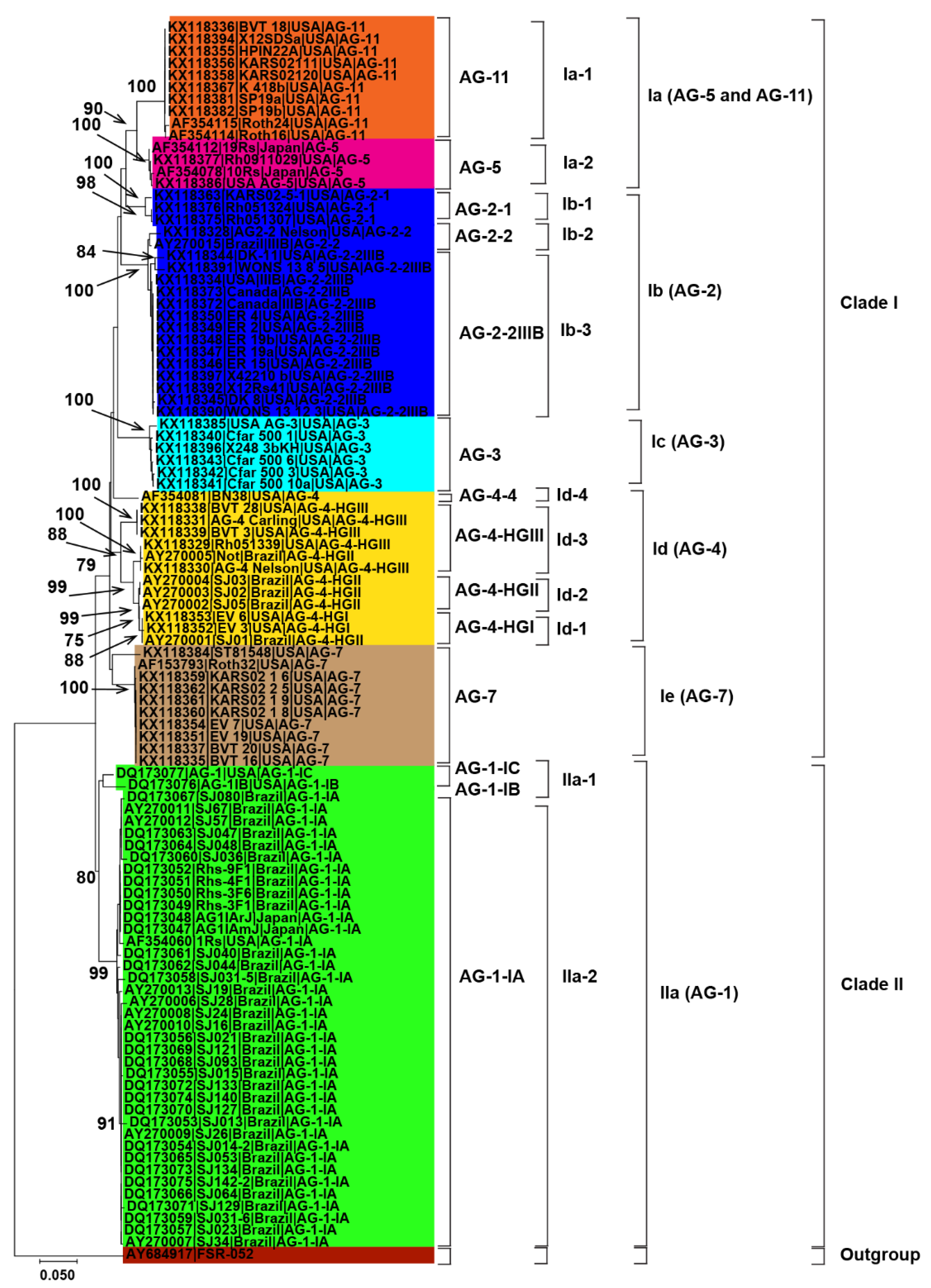
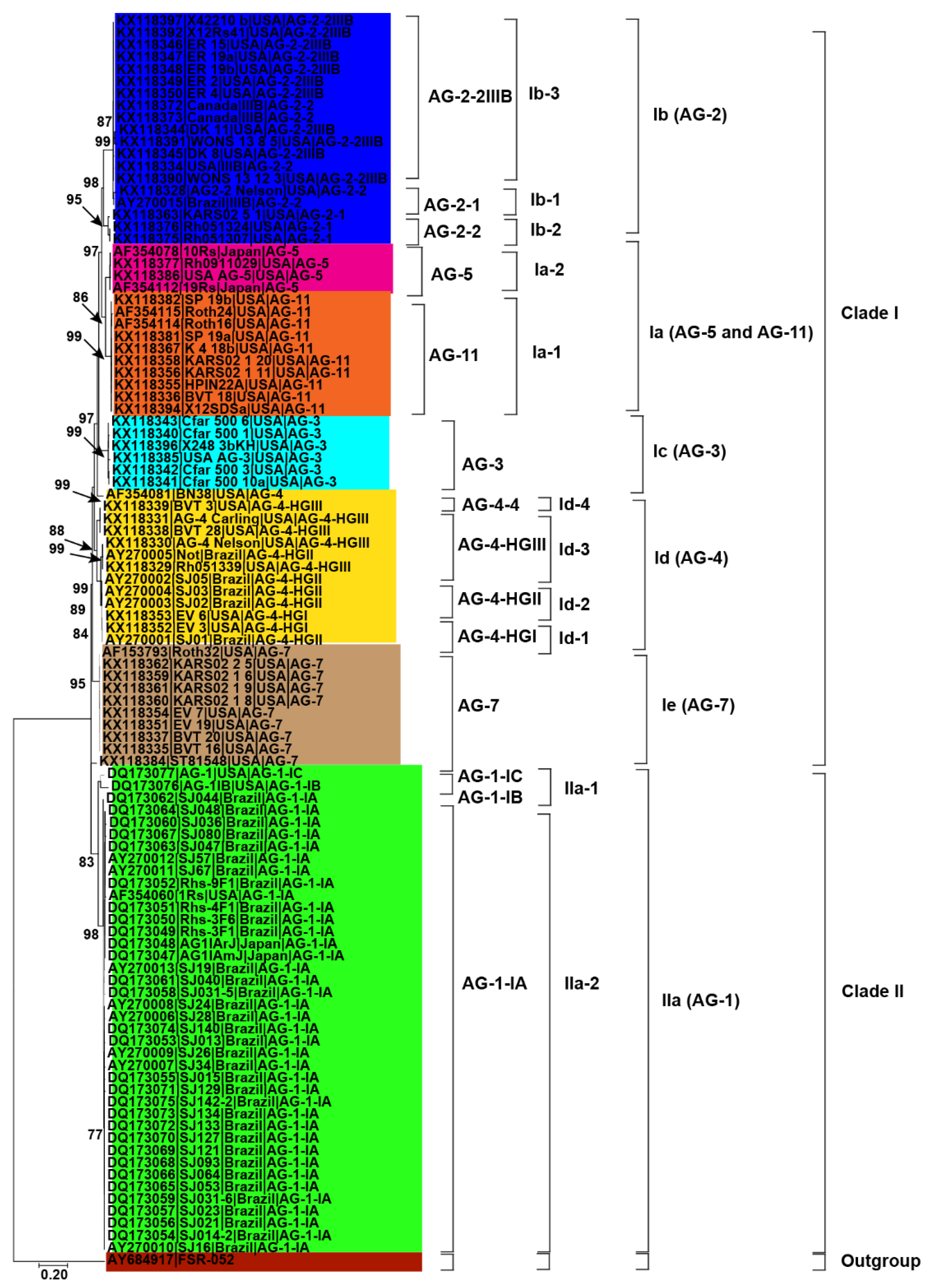
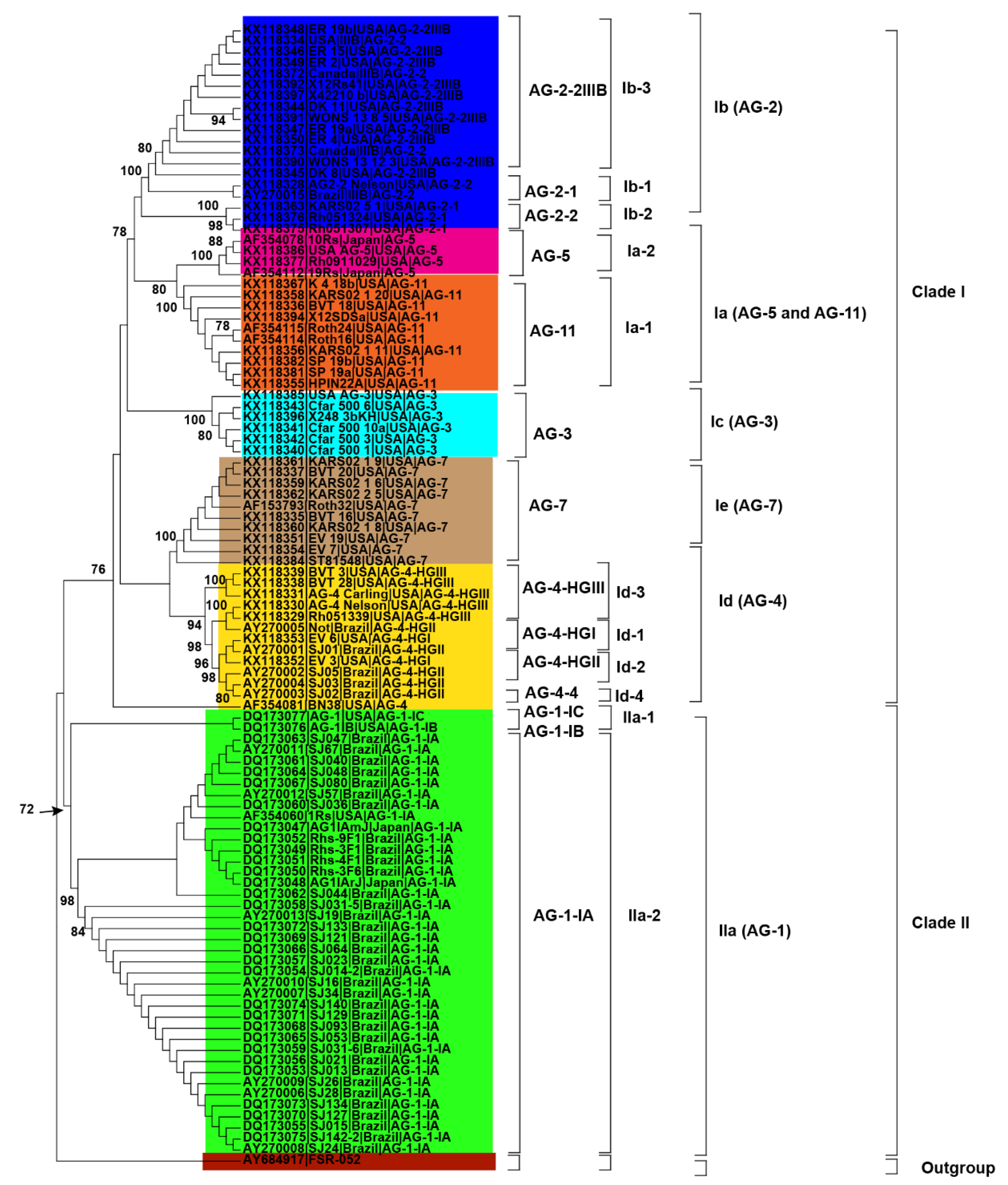
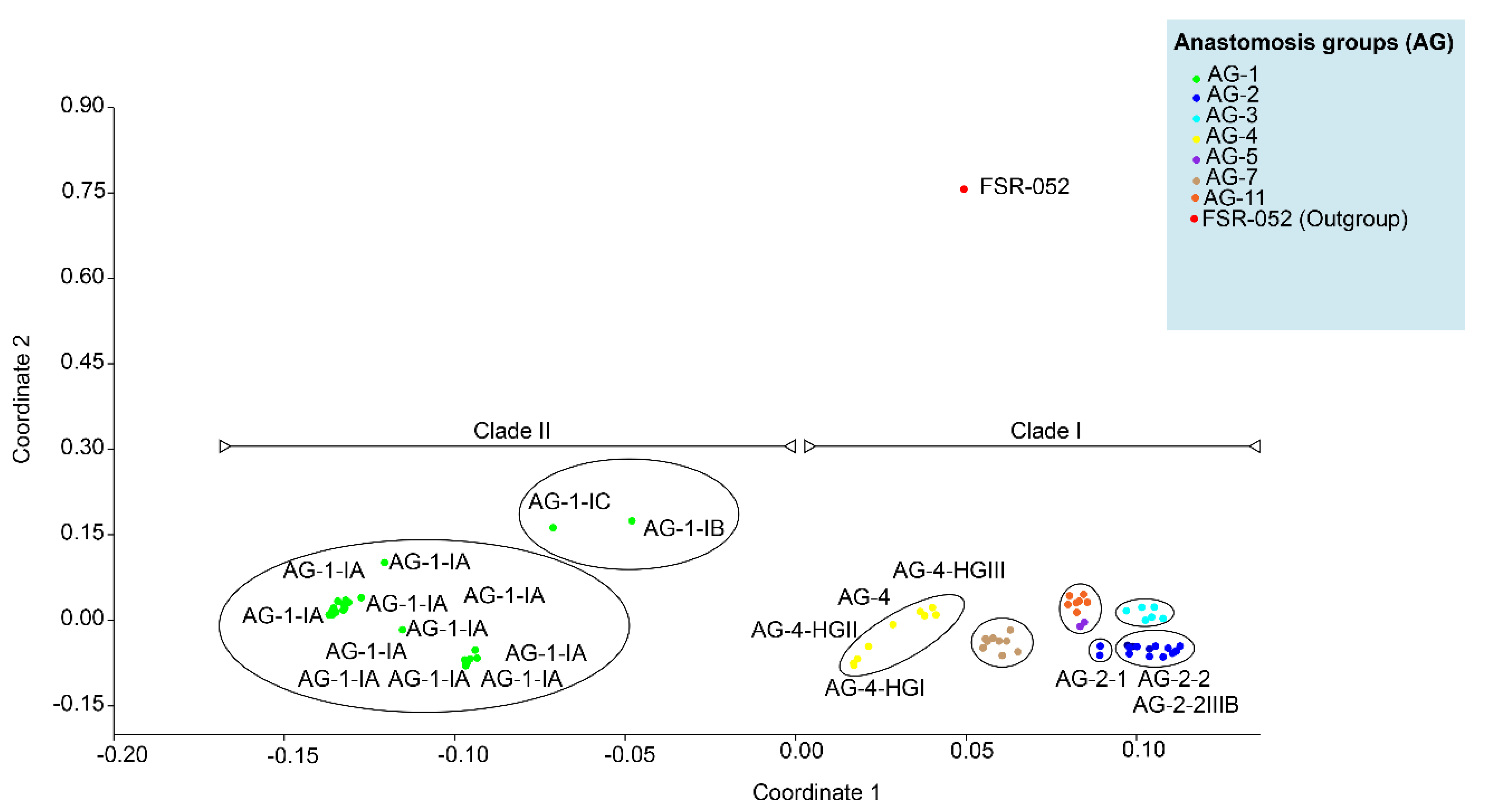
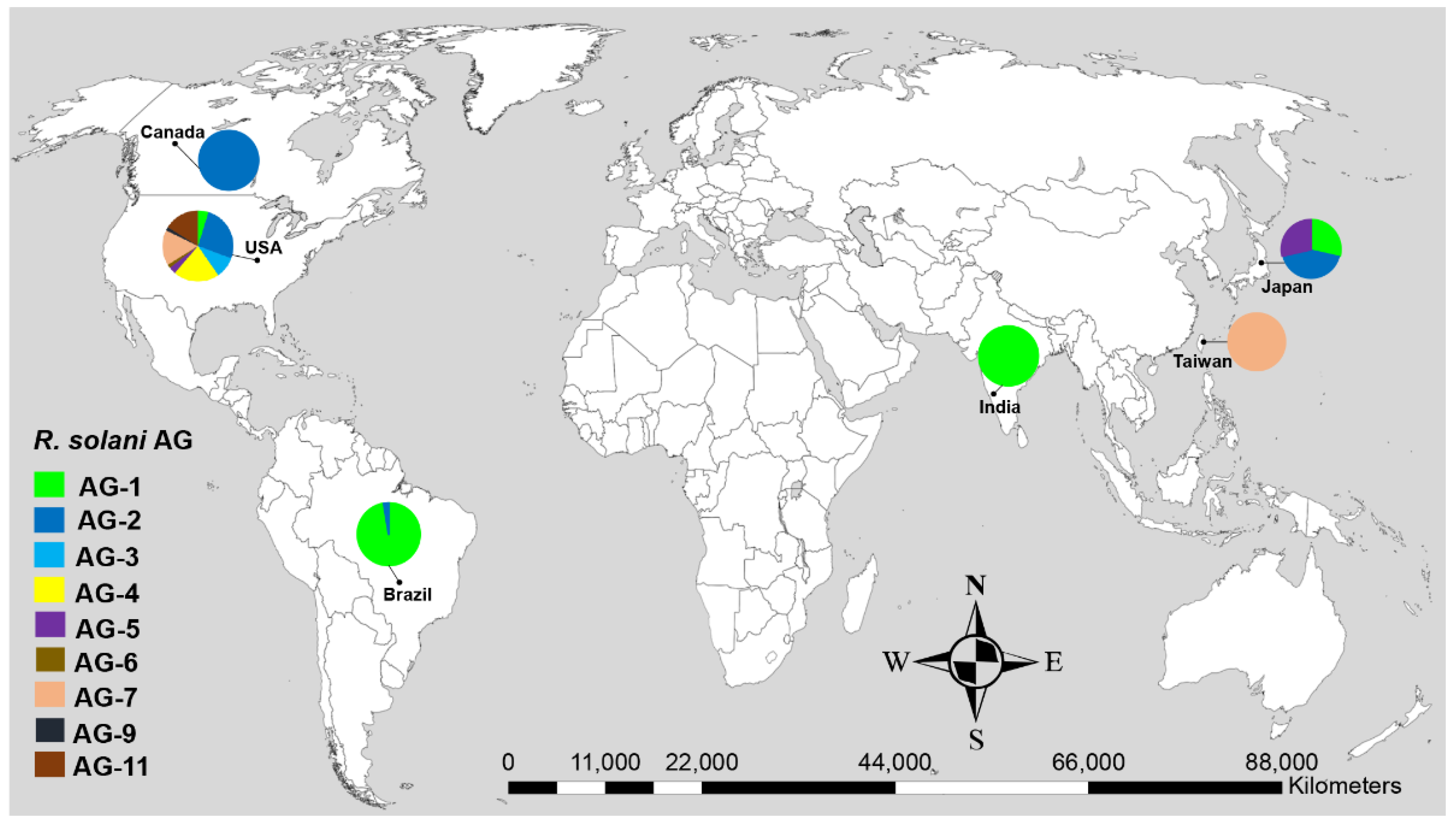
Rhizoctonia solani is a species complex composed of many genetically diverse anastomosis groups (AG) and their subgroups. It causes economically important diseases of soybean worldwide. However, the global genetic diversity and distribution of R. solani AG associated with soybean are unknown to date. In this study, the global genetic diversity and distribution of AG associated with soybean were investigated based on rDNA-ITS sequences deposited in GenBank and published literature. The most prevalent AG, was AG-1 (40%), followed by AG-2 (19.13%), AG-4 (11.30%), AG-7 (10.43%), AG-11 (8.70%), AG-3 (5.22%) and AG-5 (3.48%). Most of the AG were reported from the USA and Brazil. Sequence analysis of internal transcribed spacers of ribosomal DNA separated AG associated with soybean into two distinct clades. Clade I corresponded to distinct subclades containing AG-2, AG-3, AG-5, AG-7 and AG-11. Clade II corresponded to subclades of AG-1 subgroups. Furthermore, AG and/or AG subgroups were in close proximity without corresponding to their geographical origin. Moreover, AG or AG subgroups within clade or subclades shared higher percentages of sequence similarities. The principal coordinate analysis also supported the phylogenetic and genetic diversity analyses. In conclusion, AG-1, AG-2, and AG-4 were the most prevalent AG in soybean. The clade or subclades corresponded to AG or AG subgroups and did not correspond to the AG’s geographical origin. The information on global genetic diversity and distribution will be helpful if novel management measures are to be developed against soybean diseases caused by R. solani.
Keywords: soybean; R. solani; anastomosis groups; distribution; genetic diversity; phylogeny soybean; R. solani; anastomosis groups; distribution; genetic diversity; phylogeny