Article

MNBDR: A Module Network Based Method for Drug Repositioning


Hubei Key Laboratory of Agricultural Bioinformatics, College of Informatics, Huazhong Agricultural University, Wuhan 430070, China
*
Author to whom correspondence should be addressed.
Genes 2021, 12(1), 25; https://doi.org/10.3390/genes12010025
Submission received: 9 November 2020 / Revised: 21 December 2020 / Accepted: 24 December 2020 / Published: 27 December 2020
(This article belongs to the Section Technologies and Resources for Genetics)

Abstract

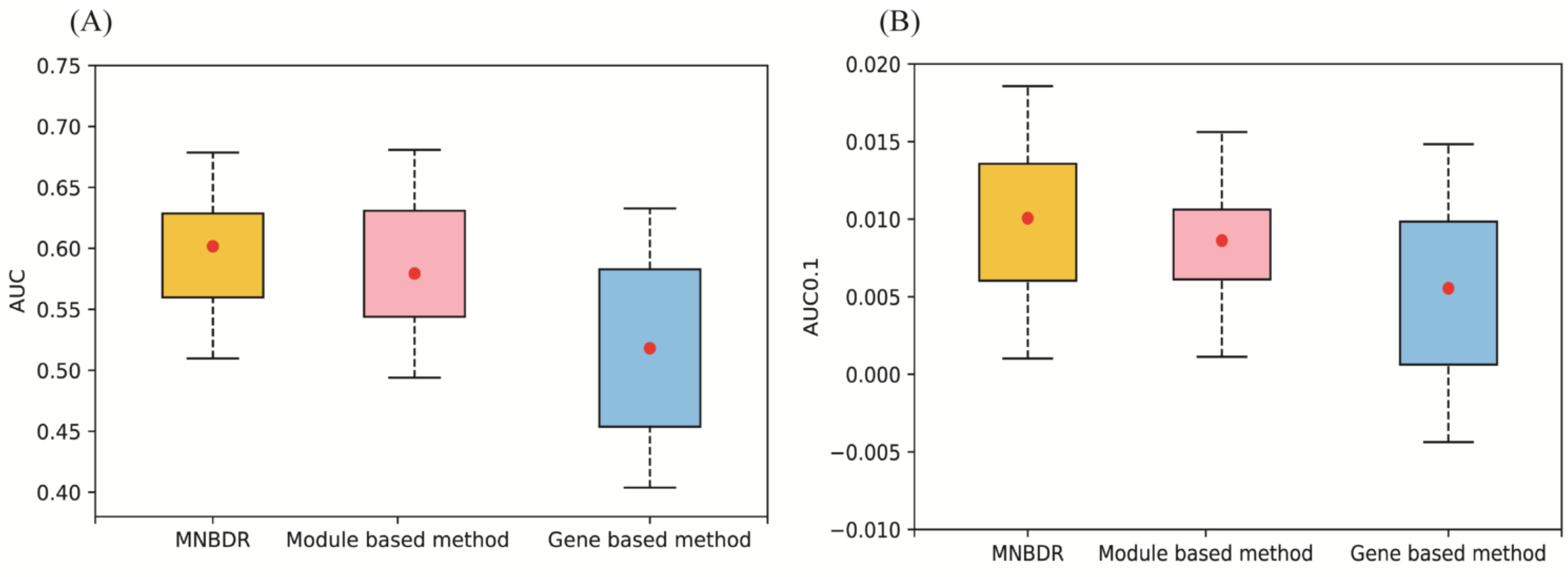
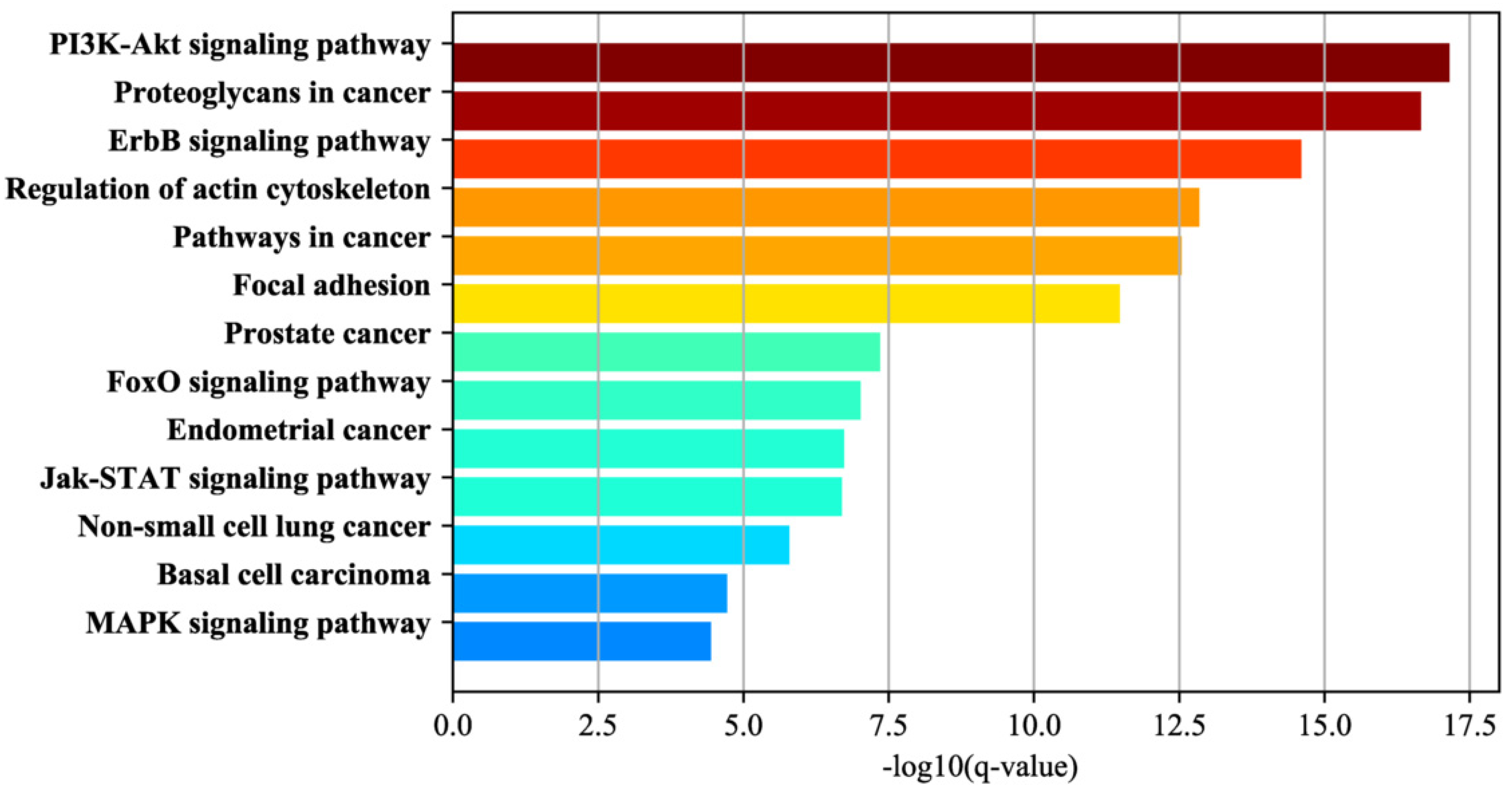
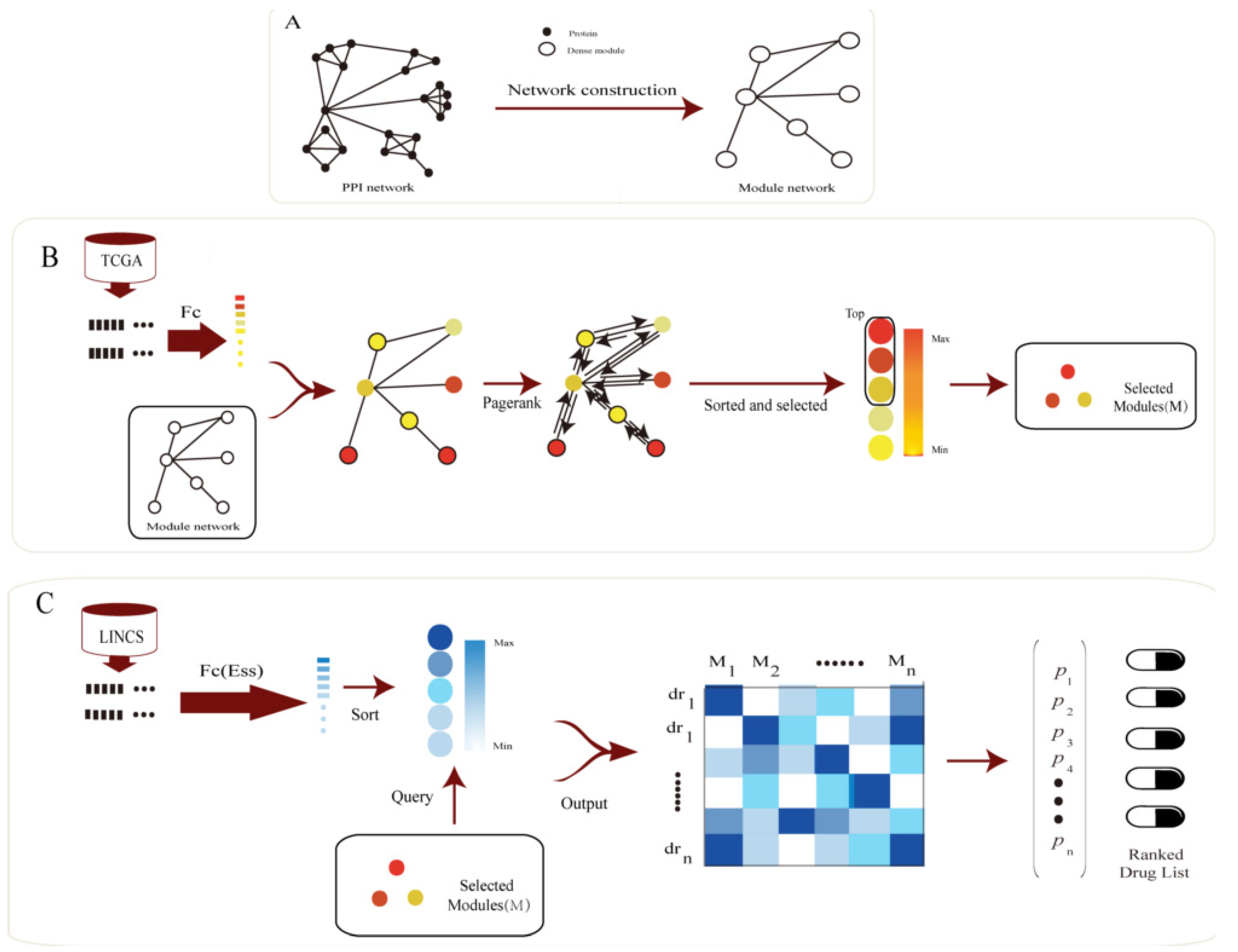
Drug repurposing/repositioning, which aims to find novel indications for existing drugs, contributes to reducing the time and cost for drug development. For the recent decade, gene expression profiles of drug stimulating samples have been successfully used in drug repurposing. However, most of the existing methods neglect the gene modules and the interactions among the modules, although the cross-talks among pathways are common in drug response. It is essential to develop a method that utilizes the cross-talks information to predict the reliable candidate associations. In this study, we developed MNBDR (Module Network Based Drug Repositioning), a novel method that based on module network to screen drugs. It integrated protein–protein interactions and gene expression profile of human, to predict drug candidates for diseases. Specifically, the MNBDR mined dense modules through protein–protein interaction (PPI) network and constructed a module network to reveal cross-talks among modules. Then, together with the module network, based on existing gene expression data set of drug stimulation samples and disease samples, we used random walk algorithms to capture essential modules in disease development and proposed a new indicator to screen potential drugs for a given disease. Results showed MNBDR could provide better performance than popular methods. Moreover, functional analysis of the essential modules in the network indicated our method could reveal biological mechanism in drug response.
Keywords: drug repositioning; module network; systems biology; random walk algorithm drug repositioning; module network; systems biology; random walk algorithm