Review

The Spectrum of Mutations of Homocystinuria in the MENA Region


by
Duaa W. Al-Sadeq
1,2,* and
Gheyath K. Nasrallah
1,3,*
1
Biomedical Research Center, Qatar University, P.O. Box 2713 Doha, Qatar
2
College of Medicine, Member of QU Health, Qatar University, P.O. Box 2713 Doha, Qatar
3
Department of Biomedical Science, College of Health Sciences, Qatar University, P.O. Box 2713 Doha, Qatar
*
Authors to whom correspondence should be addressed.
Genes 2020, 11(3), 330; https://doi.org/10.3390/genes11030330
Submission received: 20 February 2020 / Revised: 9 March 2020 / Accepted: 13 March 2020 / Published: 20 March 2020

Abstract

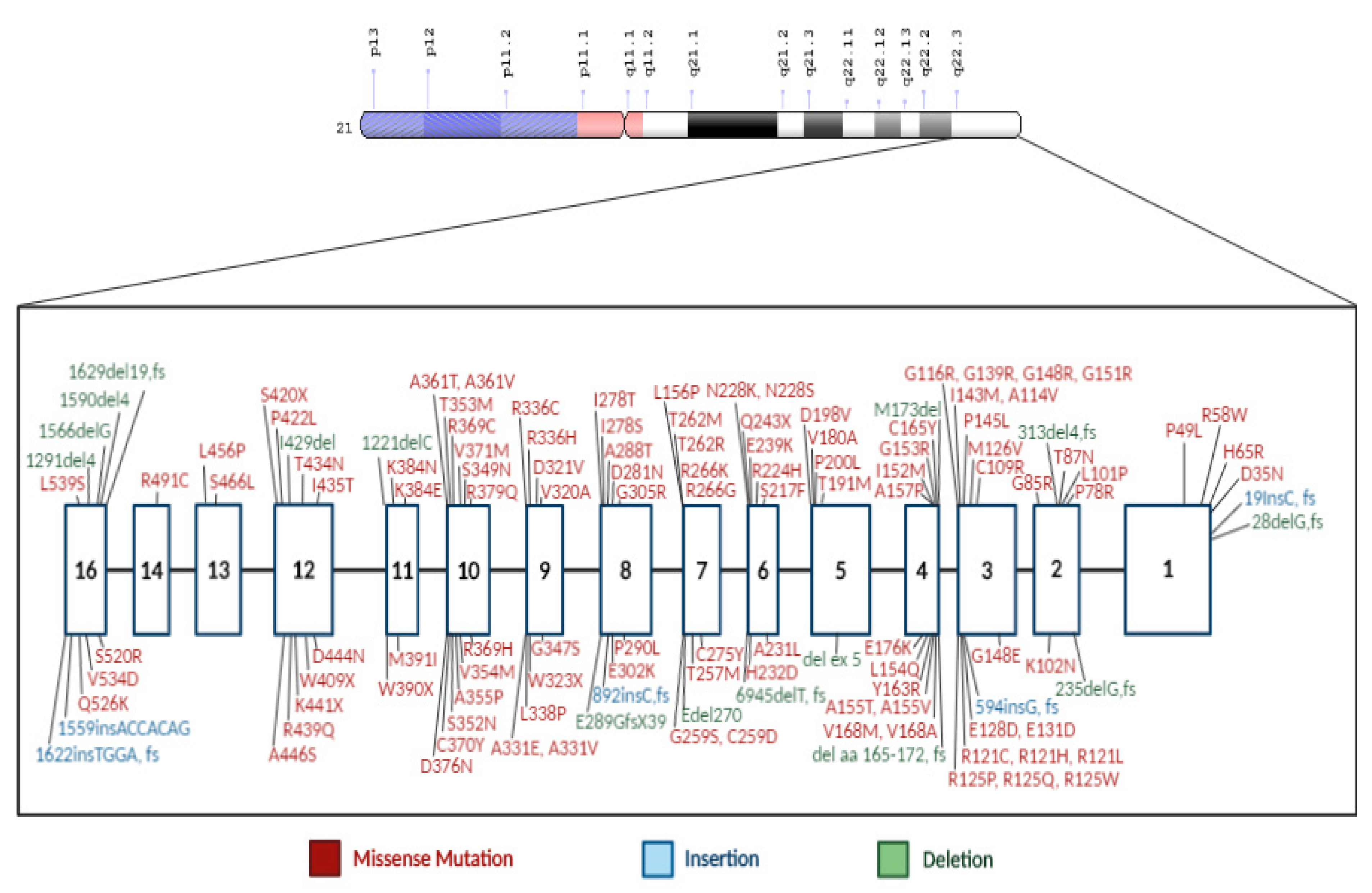
Homocystinuria is an inborn error of metabolism due to the deficiency in cystathionine beta-synthase (CBS) enzyme activity. It leads to the elevation of both homocysteine and methionine levels in the blood and urine. Consequently, this build-up could lead to several complications such as nearsightedness, dislocated eye lenses, a variety of psychiatric and behavioral disorders, as well as vascular system complications. The prevalence of homocystinuria is around 1/200,000 births worldwide. However, its prevalence in the Gulf region, notably Qatar, is exceptionally high and reached 1:1800. To date, more than 191 pathogenic CBS mutations have been documented. The majority of these mutations were identified in Caucasians of European ancestry, whereas only a few mutations from African-Americans or Asians were reported. Approximately 87% of all CBS mutations are missense and do not target the CBS catalytic site, but rather result in unstable misfolded proteins lacking the normal biological function, designating them for degradation. The early detection of homocystinuria along with low protein and methionine-restricted diet is the best treatment approach for all types of homocystinuria patients. Yet, less than 50% of affected individuals show a significant reduction in plasma homocysteine levels after treatment. Patients who fail to lower the elevated homocysteine levels, through high protein-restricted diet or by B6 and folic acid supplements, are at higher risk for cardiovascular diseases, neurodegenerative diseases, neural tube defects, and other severe clinical complications. This review aims to examine the mutations spectrum of the CBS gene, the disease management, as well as the current and potential treatment approaches with a greater emphasis on studies reported in the Middle East and North Africa (MENA) region.
Keywords: homocystinuria; cystathionine β-synthase; mutations; MENA homocystinuria; cystathionine β-synthase; mutations; MENA