Review

Phenotypical and Functional Polymorphism of Liver Resident Macrophages


by
Andrey V. Elchaninov
1,2,
Timur Kh. Fatkhudinov
3,4,*,
Polina A. Vishnyakova
1,
Anastasia V. Lokhonina
1,3 and
Gennady T. Sukhikh
1
1
National Medical Research Center for Obstetrics, Gynecology and Perinatology Named after Academician V.I. Kulakov of Ministry of Healthcare of Russian Federation, 4 Oparina Street, Moscow 117997, Russia
2
Histology, Embryology and Cytology Department, Ministry of Healthcare of The Russian Federation, Pirogov Russian National Research Medical University, 1 Ostrovitianov Street, Moscow 117997, Russia
3
Histology, Embryology and Cytology Department, Peoples’ Friendship University of Russia, 6 Miklukho-Maklaya Street, Moscow 117198, Russia
4
Scientific Research Institute of Human Morphology, 3 Tsurupa Street, Moscow 117418, Russia
*
Author to whom correspondence should be addressed.
Cells 2019, 8(9), 1032; https://doi.org/10.3390/cells8091032
Submission received: 18 August 2019 / Revised: 2 September 2019 / Accepted: 4 September 2019 / Published: 5 September 2019
(This article belongs to the Special Issue Recent Advances in Liver Repair Strategies)

Abstract

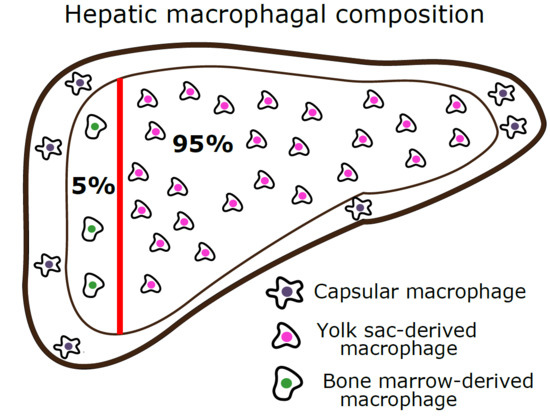
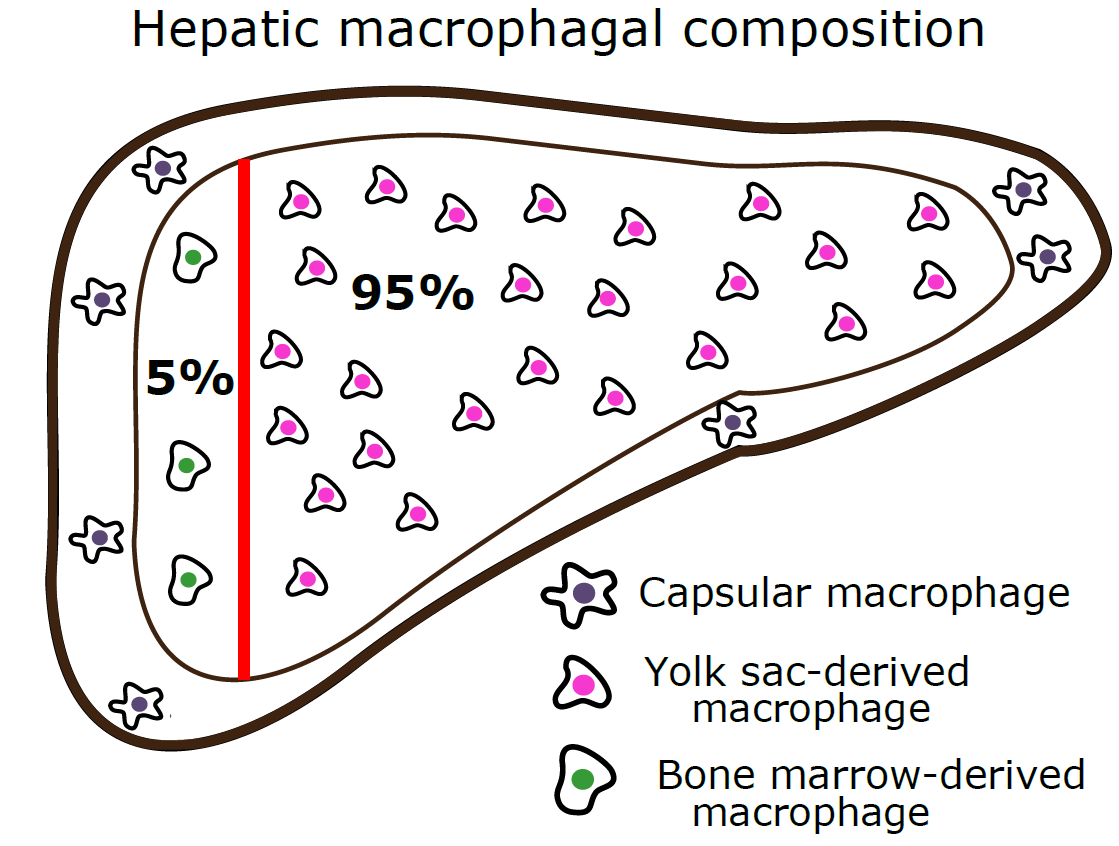
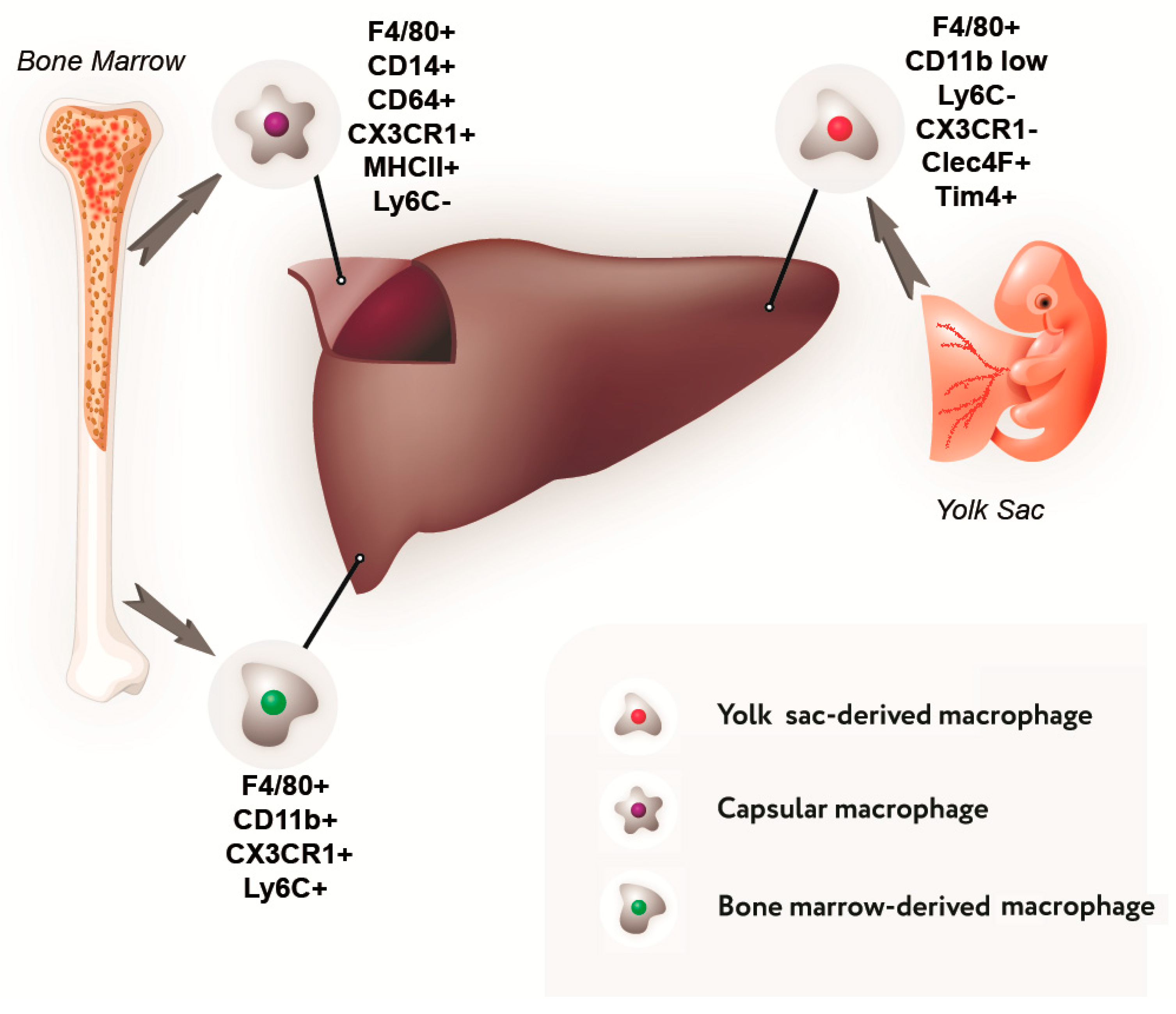
Liver diseases are one of the main causes of mortality. In this regard, the development of new ways of reparative processes stimulation is relevant. Macrophages play a leading role in the regulation of liver homeostasis in physiological conditions and in pathology. In this regard, the development of new liver treatment methods is impossible without taking into account this cell population. Resident macrophages of the liver, Kupffer cells, represent a unique cell population, first of all, due to their development. Most of the liver macrophages belong to the self-sustaining macrophage cell population, whose origin is not bone marrow. In addition, Kupffer cells are involved in such processes as regulation of hepatocyte proliferation and apoptosis, remodeling of the intercellular matrix, lipid metabolism, protective function, etc. Such a broad spectrum of liver macrophage functions indicates their high functional plasticity. The review summarizes recent data on the development, phenotypic and functional plasticity, and participation in the reparative processes of liver macrophages: resident macrophages (Kupffer cells) and bone marrow-derived macrophages.
Keywords: monocytes; macrophages; Kupffer cells monocytes; macrophages; Kupffer cells
Graphical Abstract