Review

Novel Aspects of Extracellular Vesicles as Mediators of Cancer-Associated Thrombosis


by
Vitor H. Almeida
,
Araci M. R. Rondon
,
Tainá Gomes
and
Robson Q. Monteiro
*
Institute of Medical Biochemistry Leopoldo de Meis, Federal University of Rio de Janeiro, 21941-160 Rio de Janeiro, Brazil
*
Author to whom correspondence should be addressed.
These authors contributed equally to this work.
Cells 2019, 8(7), 716; https://doi.org/10.3390/cells8070716
Submission received: 12 June 2019 / Revised: 9 July 2019 / Accepted: 11 July 2019 / Published: 13 July 2019
(This article belongs to the Section Intracellular and Plasma Membranes)

Abstract

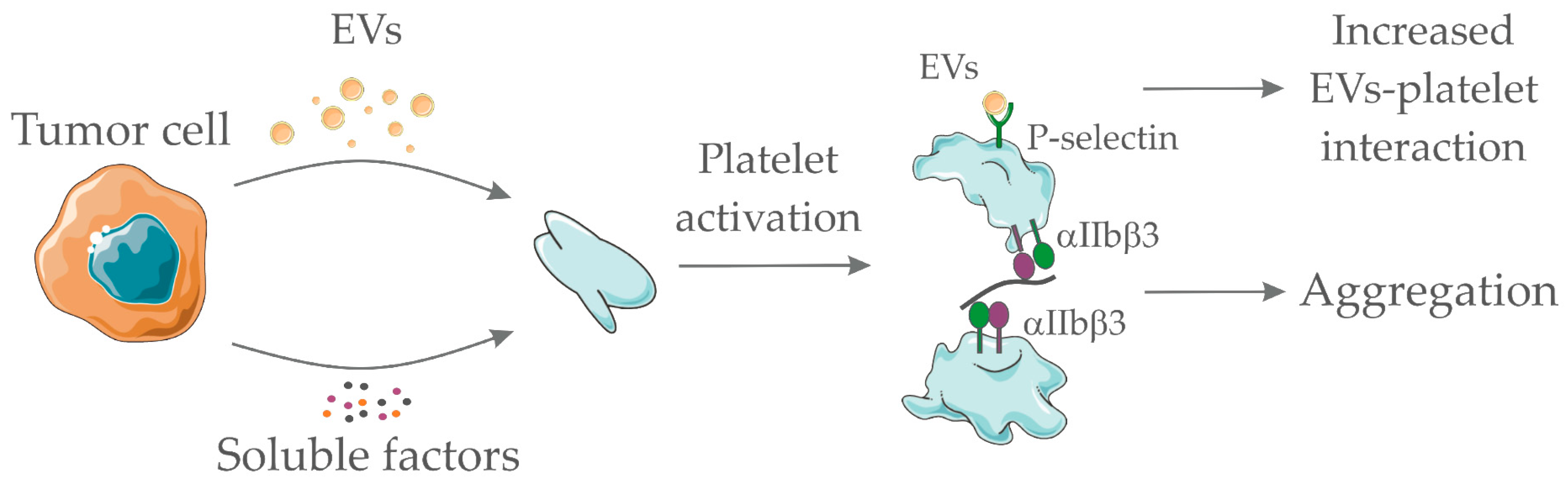
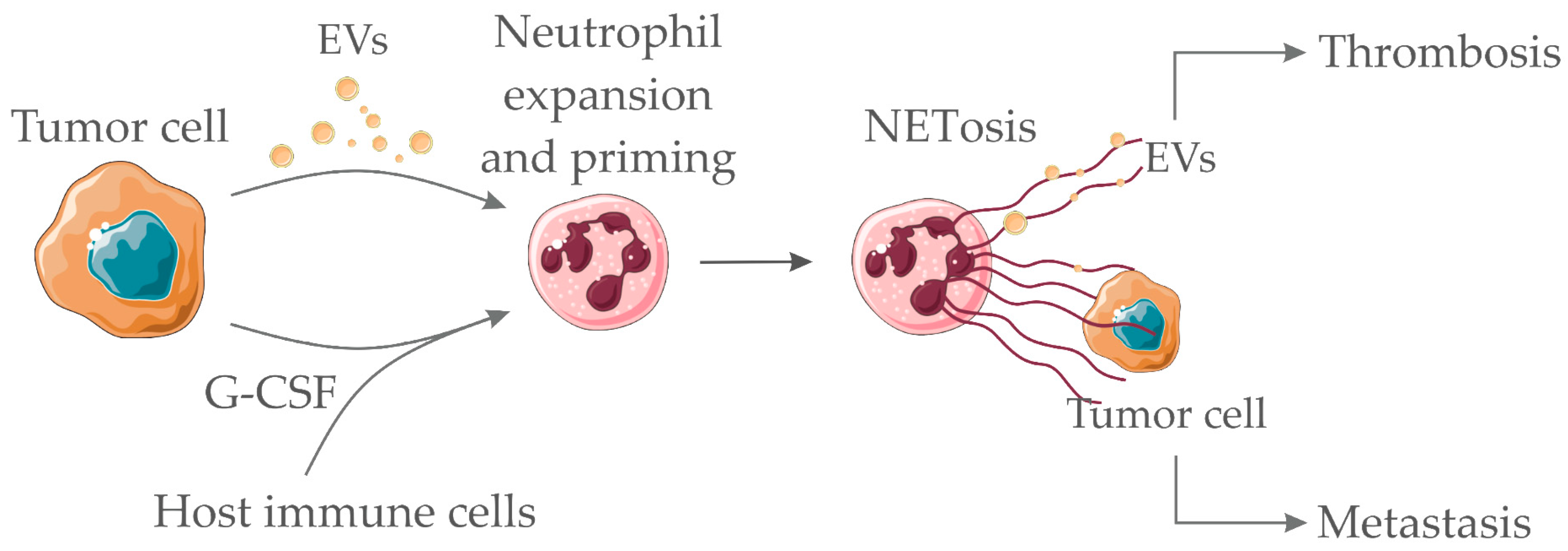
The establishment of prothrombotic states during cancer progression is well reported but the precise mechanisms underlying this process remain elusive. A number of studies have implicated the presence of the clotting initiator protein, tissue factor (TF), in circulating tumor-derived extracellular vesicles (EVs) with thrombotic manifestations in certain cancer types. Tumor cells, as well as tumor-derived EVs, may activate and promote platelet aggregation by TF-dependent and independent pathways. Cancer cells and their secreted EVs may also facilitate the formation of neutrophil extracellular traps (NETs), which may contribute to thrombus development. Alternatively, the presence of polyphosphate (polyP) in tumor-derived EVs may promote thrombosis through a TF-independent route. We conclude that the contribution of EVs to cancer coagulopathy is quite complex, in which one or more mechanisms may take place in a certain cancer type. In this context, strategies that could attenuate the crosstalk between the proposed pro-hemostatic routes could potentially reduce cancer-associated thrombosis.
Keywords: extracellular vesicles; microvesicles; exosomes; cancer; thrombosis; tissue factor; platelets; neutrophils; neutrophil extracellular traps; polyphosphate extracellular vesicles; microvesicles; exosomes; cancer; thrombosis; tissue factor; platelets; neutrophils; neutrophil extracellular traps; polyphosphate