Review

Wnt Signaling in Neural Crest Ontogenesis and Oncogenesis


1
Department of Biochemistry and Molecular Medicine & Comprehensive Cancer Center, University of California at Davis, School of Medicine, Sacramento, CA 95817, USA
2
Institute for Pediatric Regenerative Medicine, UC Davis School of Medicine and Shriners Hospitals for Children, Sacramento, CA 95817, USA
3
Graduate Program of Biochemistry, Molecular, Cellular and Developmental Biology, University of California, Davis, CA 95616, USA
4
Department of Molecular and Cellular Biology, University of California, Davis, CA 95616, USA
5
College of Letters & Science, University of California, Berkeley, CA 94720, USA
*
Authors to whom correspondence should be addressed.
Cells 2019, 8(10), 1173; https://doi.org/10.3390/cells8101173
Submission received: 30 August 2019 / Revised: 23 September 2019 / Accepted: 25 September 2019 / Published: 29 September 2019
(This article belongs to the Special Issue Wnt Signaling in Health and Diseases)

Abstract

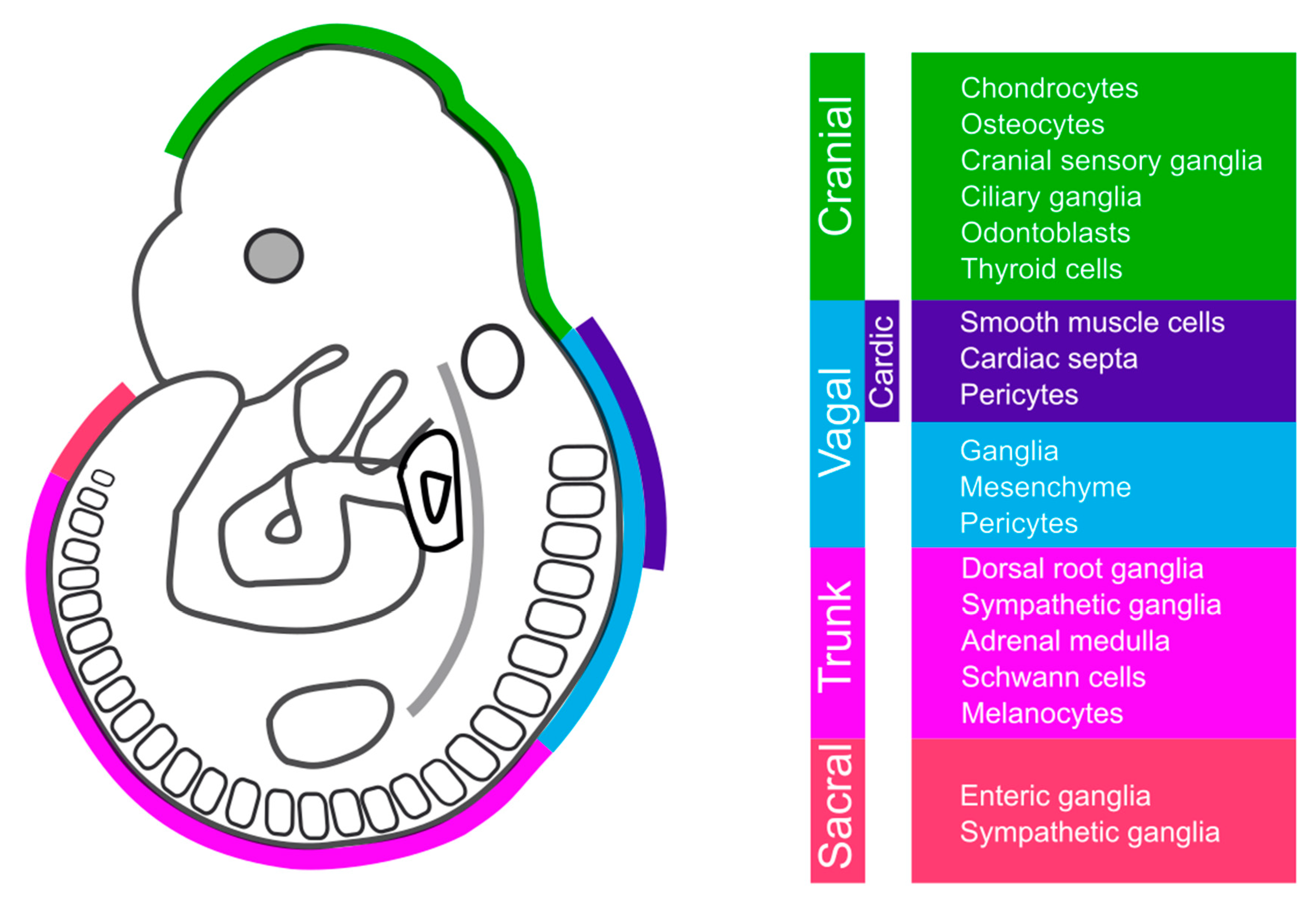
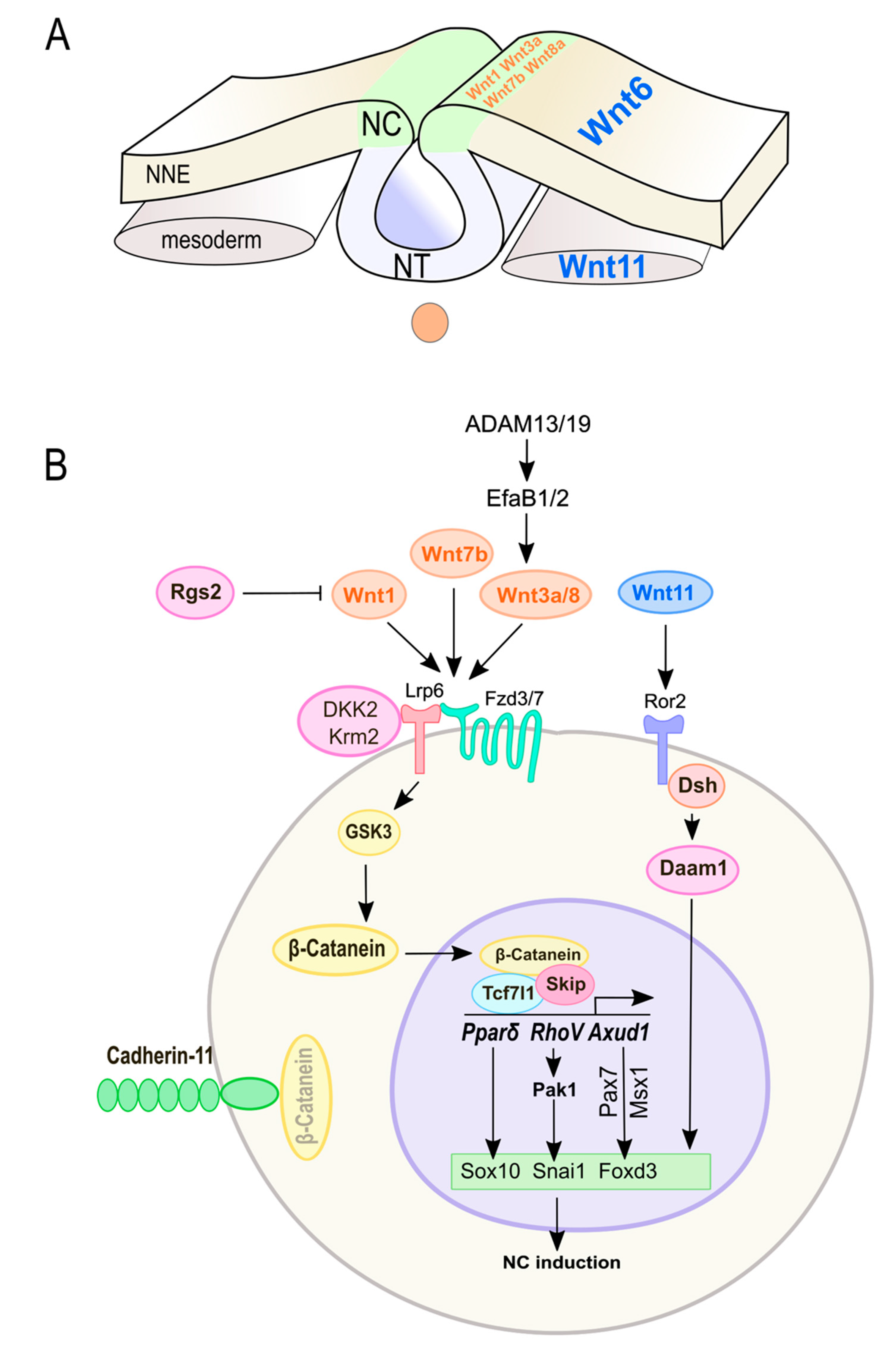
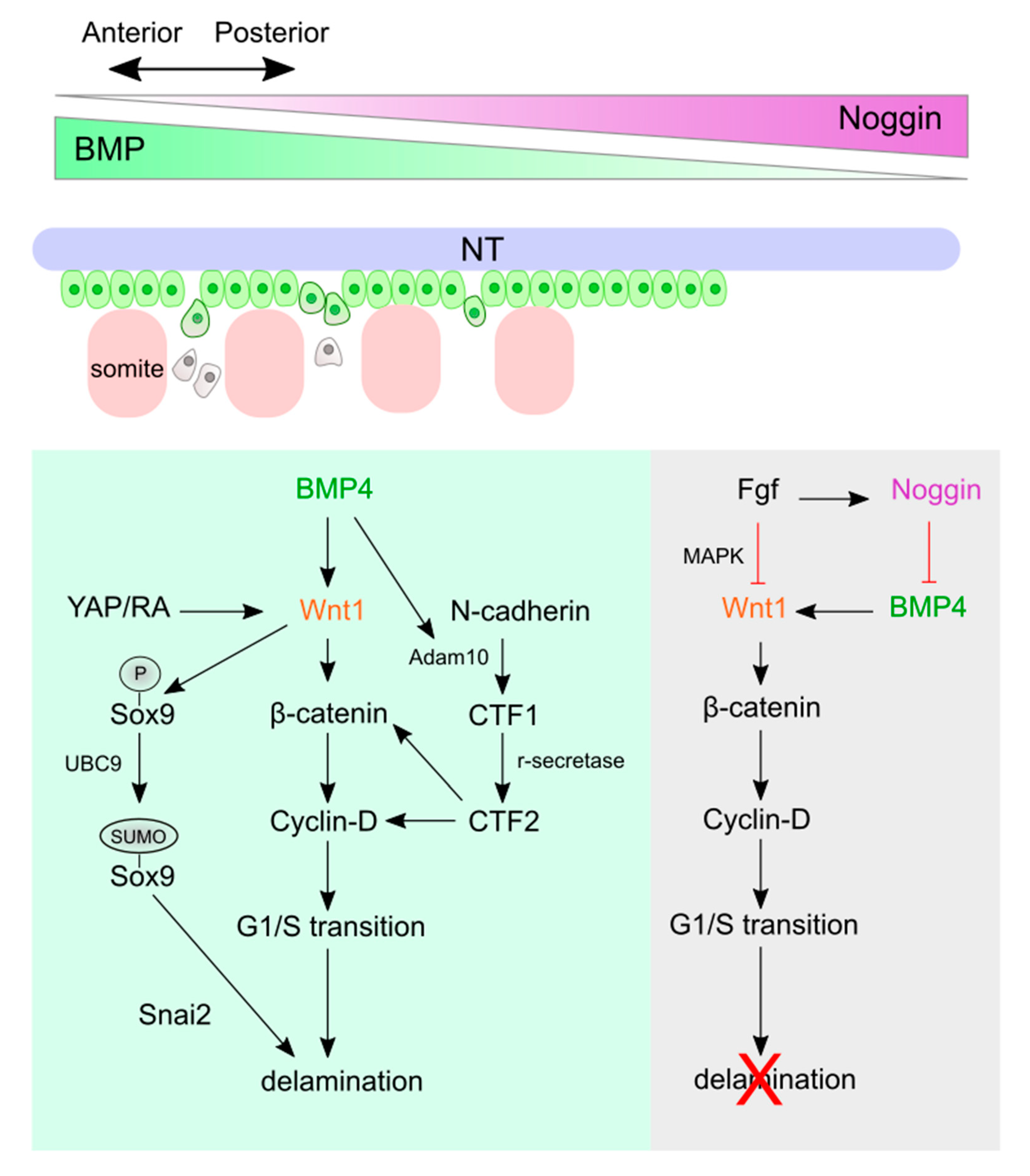
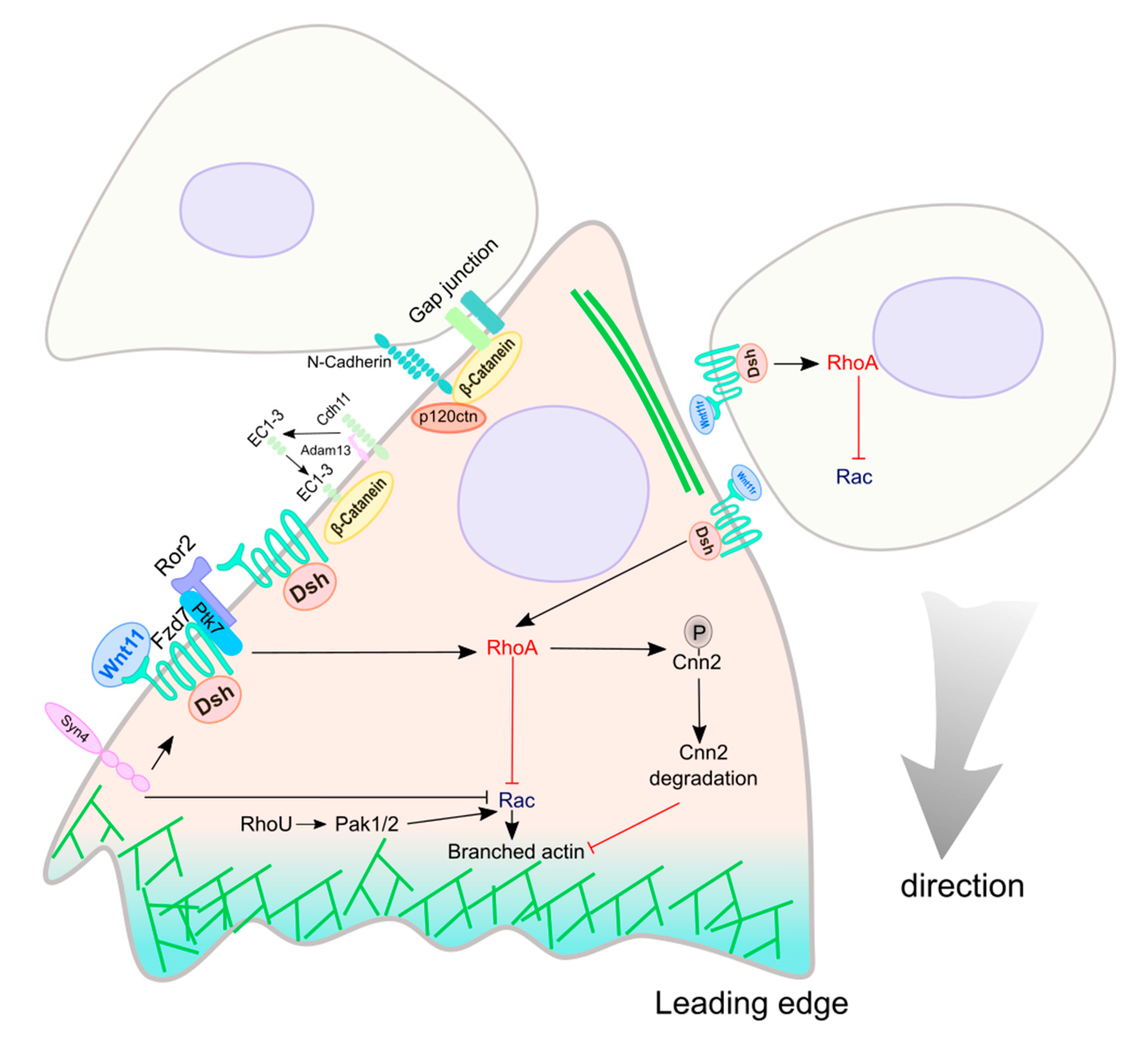
Neural crest (NC) cells are a temporary population of multipotent stem cells that generate a diverse array of cell types, including craniofacial bone and cartilage, smooth muscle cells, melanocytes, and peripheral neurons and glia during embryonic development. Defective neural crest development can cause severe and common structural birth defects, such as craniofacial anomalies and congenital heart disease. In the early vertebrate embryos, NC cells emerge from the dorsal edge of the neural tube during neurulation and then migrate extensively throughout the anterior-posterior body axis to generate numerous derivatives. Wnt signaling plays essential roles in embryonic development and cancer. This review summarizes current understanding of Wnt signaling in NC cell induction, delamination, migration, multipotency, and fate determination, as well as in NC-derived cancers.
Keywords: Wnt; neural crest stem cells; neural crest-derived cancer Wnt; neural crest stem cells; neural crest-derived cancer