Expression of Human CEACAM Receptors Promotes Inflammation and Organ Damage During Systemic Candida albicans Infection in Mice
 , , , , , , , ,
  and
and
Highlights
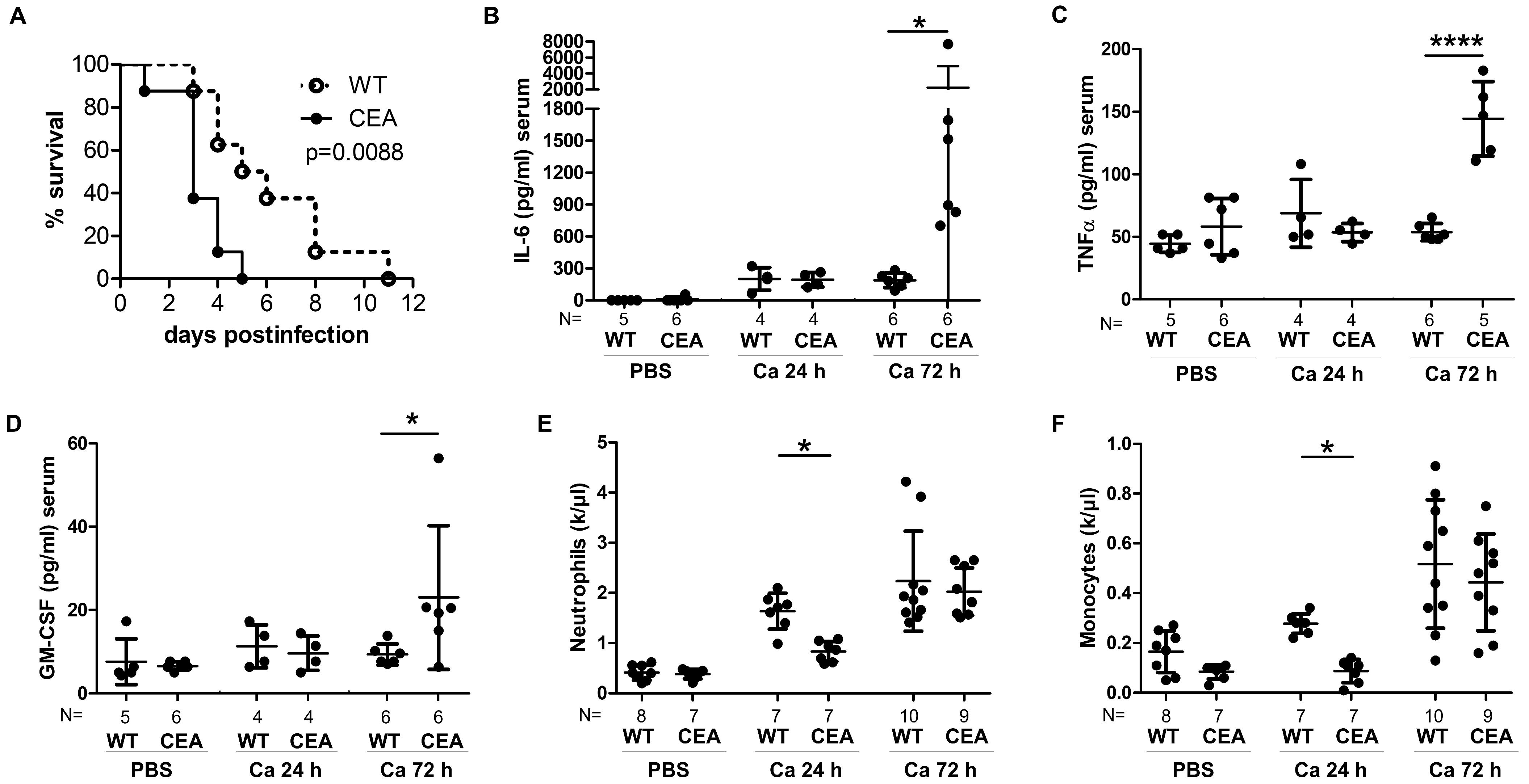
- In a murine C. albicans infection model, transgenic CEABAC10 mice expressing human CEACAM family receptors exhibited heightened systemic inflammation and reduced survival.
- In vivo and in vitro analyses indicated that expression of human CEACAM6 on monocytes in CEABAC10 mice led to elevated cytokine production and enhanced neutrophil recruitment, resulting in exacerbated inflammation and decreased survival.
- This study provides the first evidence that expression of human CEACAM6 on monocytes and macrophages in transgenic CEABAC10 mice plays a critical role in regulating host immune responses to (fungal) pathogens.
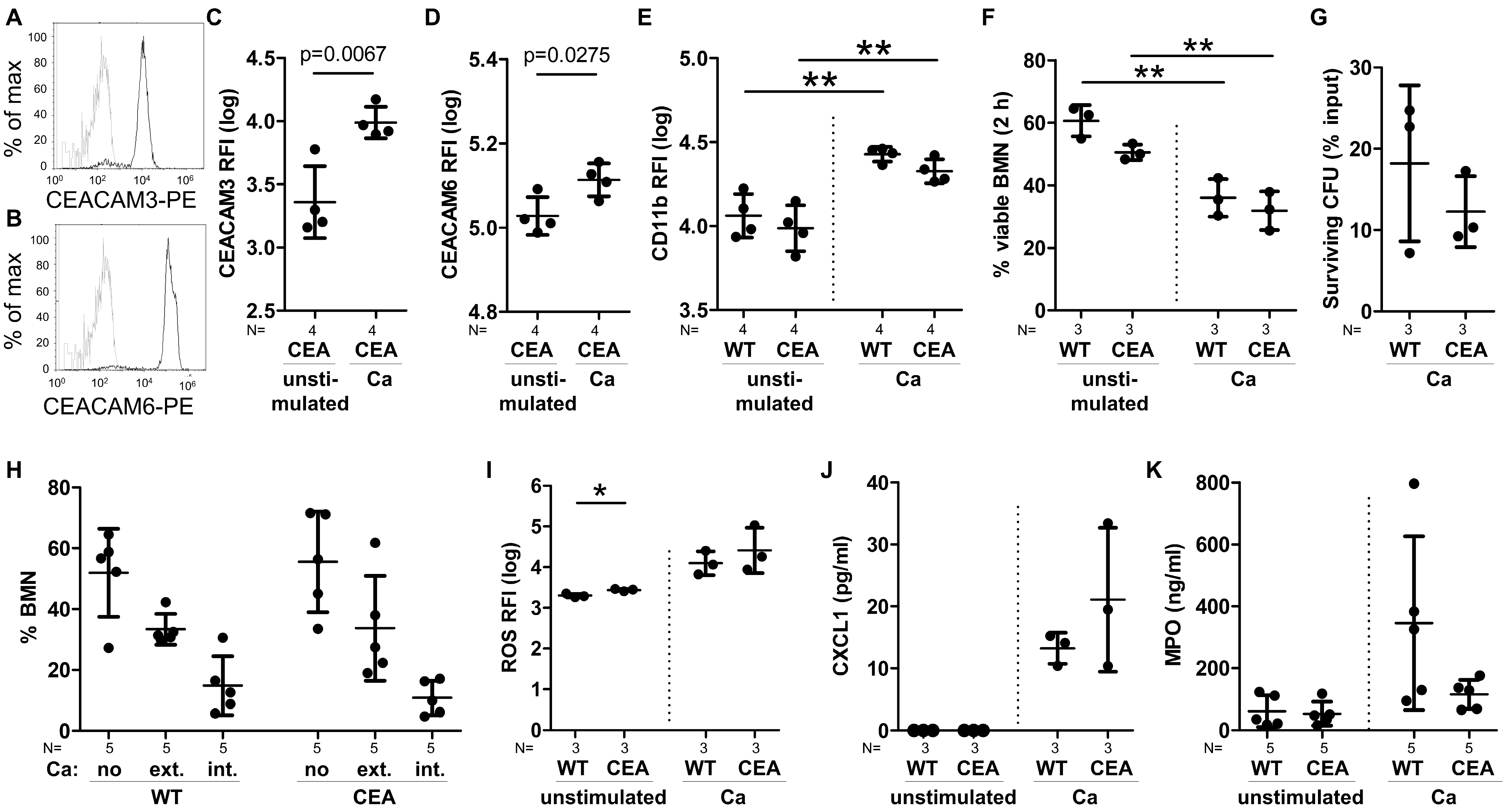
- During C. albicans infection, the expression of human CEACAM3 and CEACAM6 on murine neutrophils did not directly influence neutrophil responses.
Abstract
1. Introduction
2. Materials and Methods
3. Results
3.1. Human CEACAM-Transgenic CEABAC10 Mice Are More Susceptible to Systemic Candidiasis
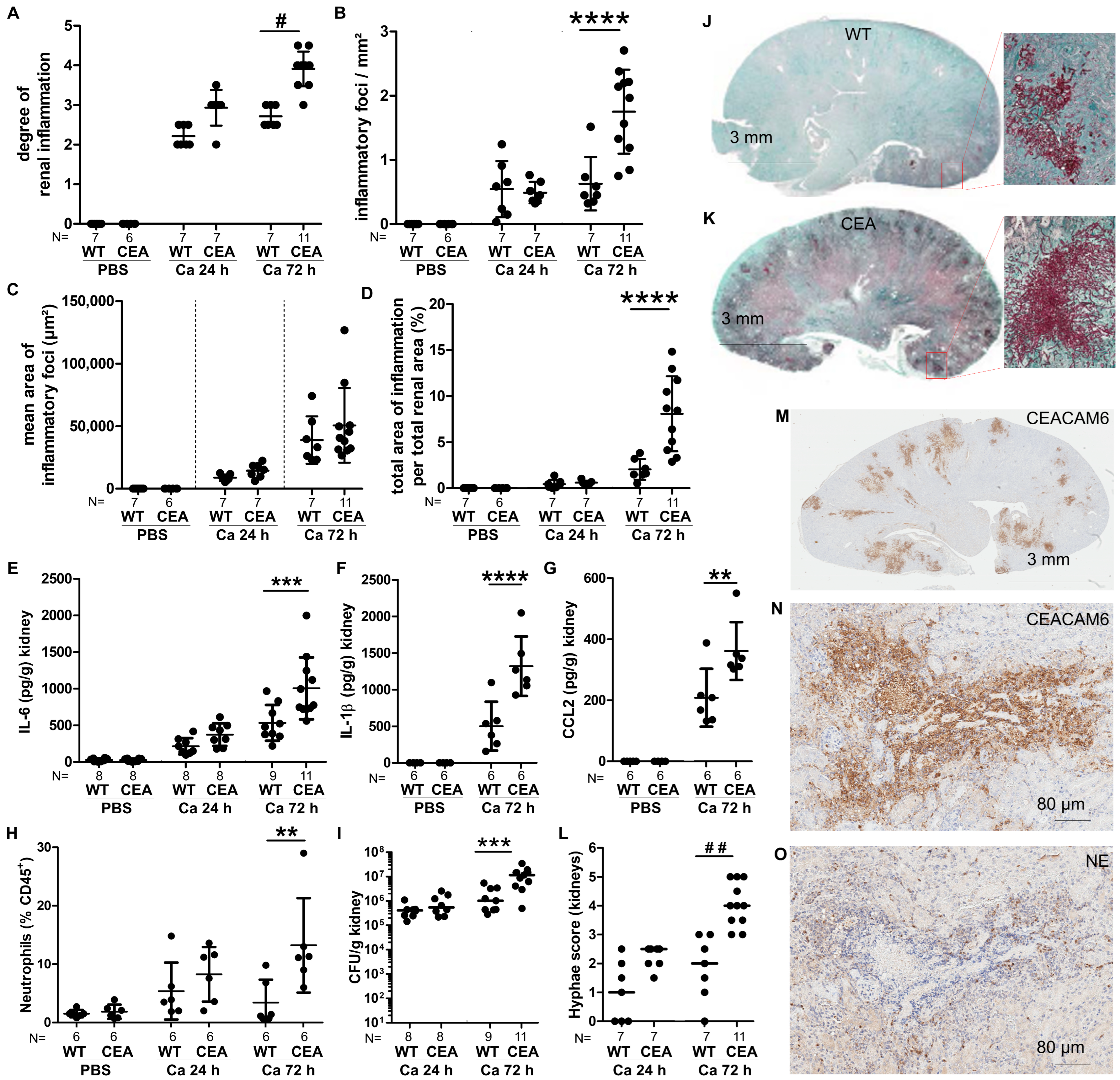
3.2. Infected Kidneys of CEABAC10 Mice Display Pronounced Purulent Necrotizing Nephritis 72 h p.i.
3.3. The Expression of Human CEACAM3 and CEACAM6 Does Not Alter the Response of Bone Marrow-Derived Neutrophils to C. albicans In Vitro
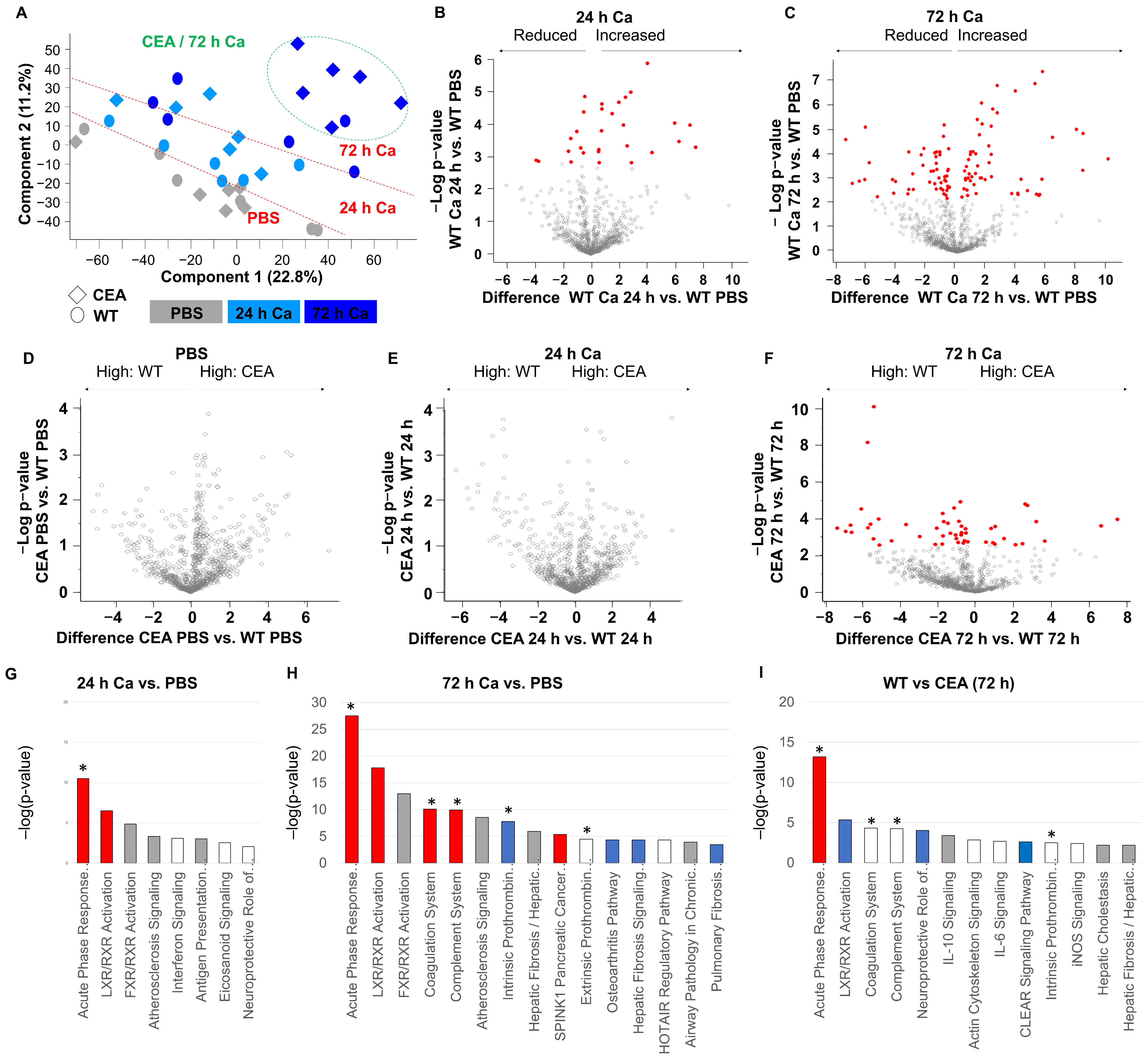
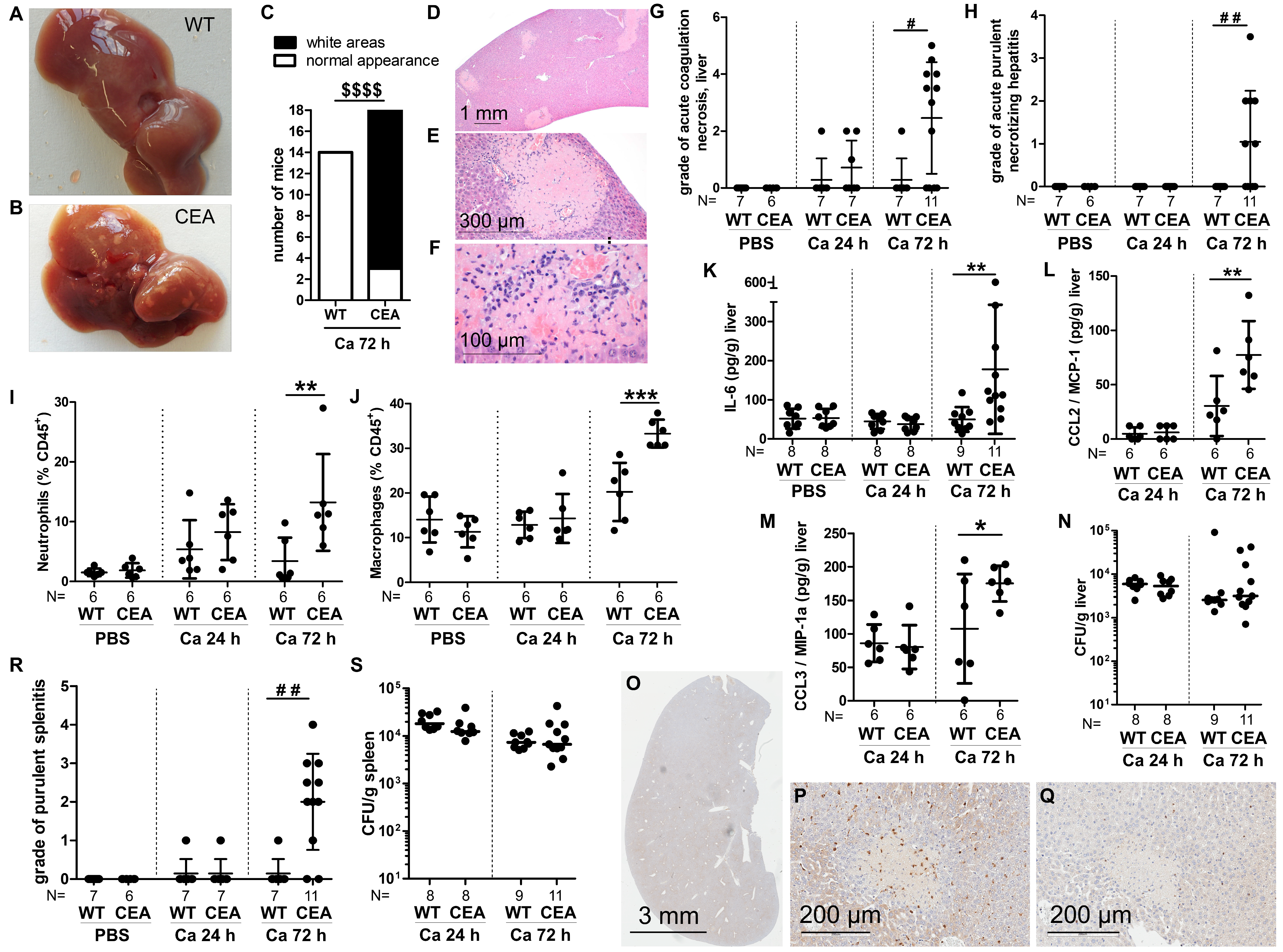
3.4. CEABAC10 Mice Develop Acute Hepatic Coagulation Necroses, Purulent Necrotizing Hepatitis, Purulent Splenitis, and Brain Hemorrhage During Systemic Candidiasis
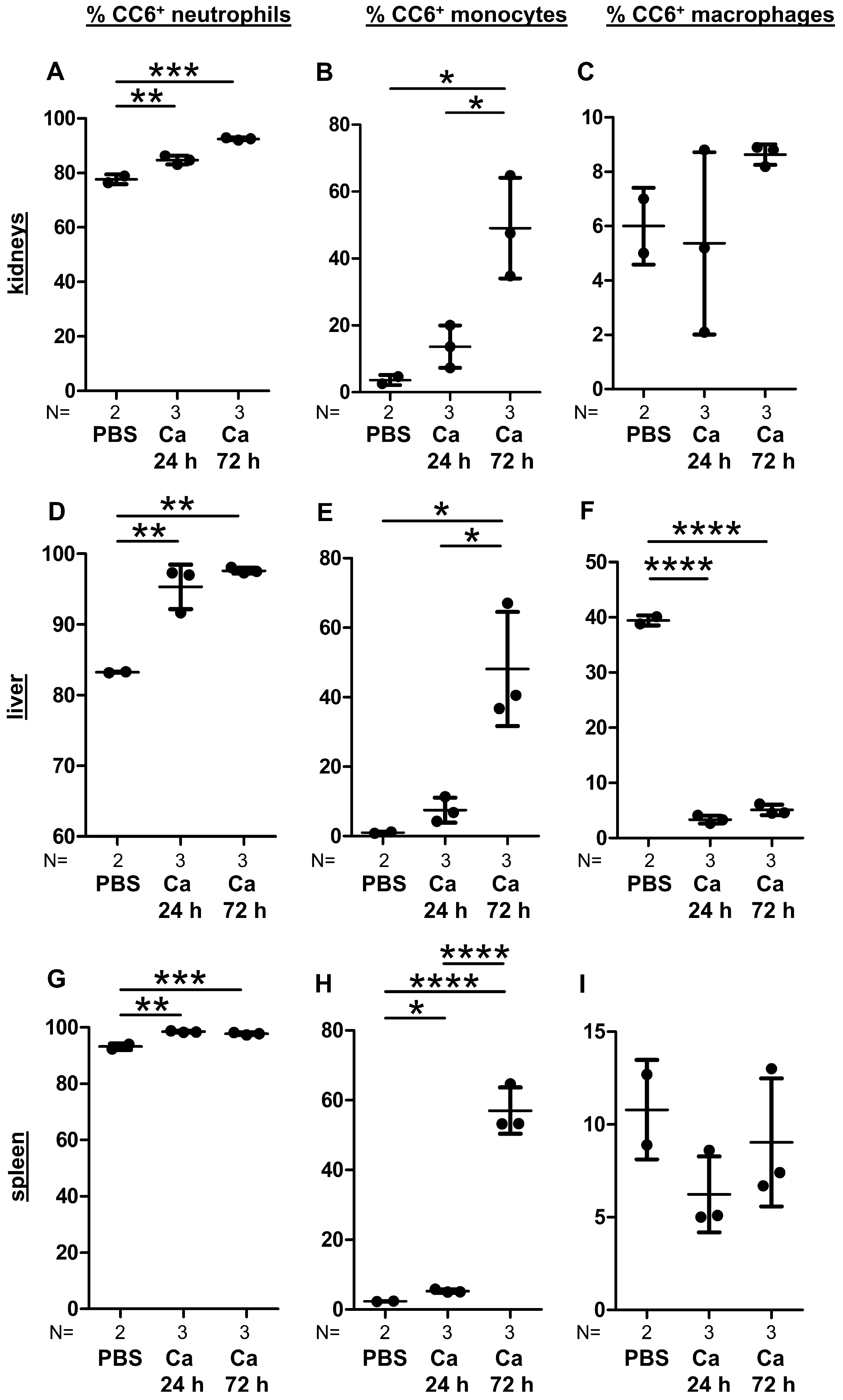
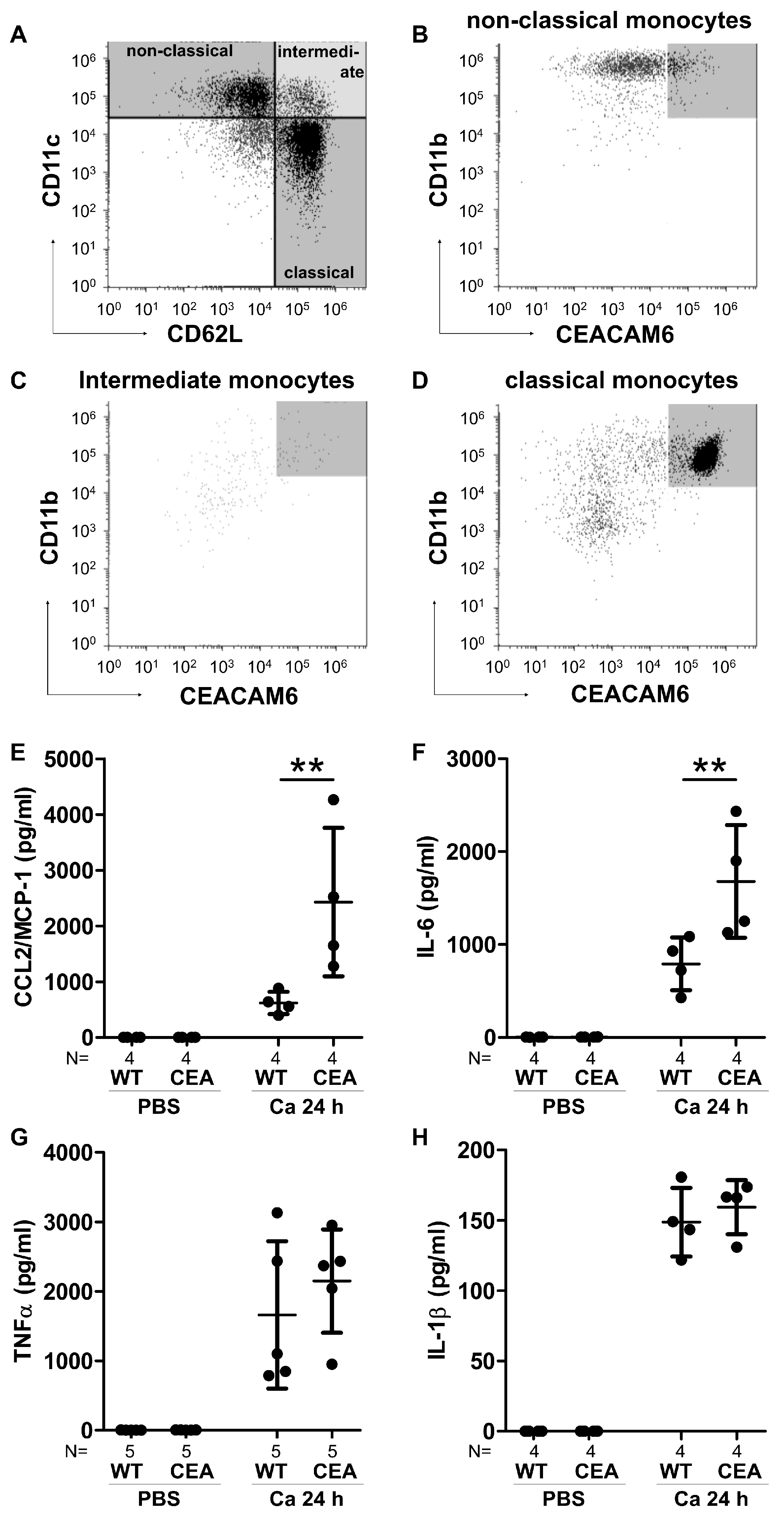
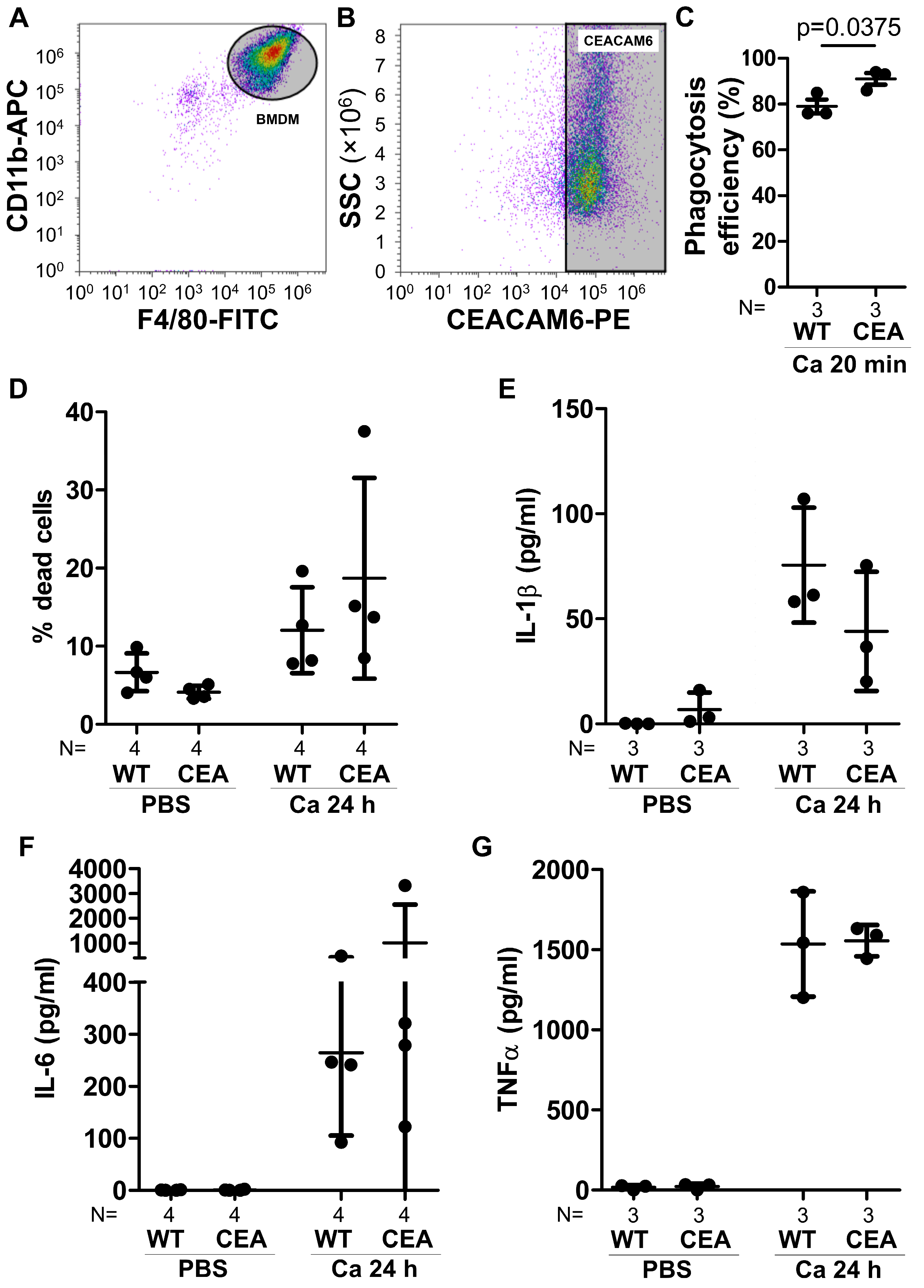
3.5. CEACAM6 Expression on Monocytes, but Not Macrophages, Leads to Increased Cytokine Production in Response to C. albicans
4. Discussion
Supplementary Materials
Author Contributions
Funding
Institutional Review Board Statement
Informed Consent Statement
Data Availability Statement
Acknowledgments
Conflicts of Interest
Abbreviations
| CEACAM | Carcinoembryonic antigen-related cell adhesion molecule |
| C. albicans | Candida albicans |
| CEABAC | CEACAM bacterial artificial chromosome (in CEABAC10 mice integrated ca. 10 times) |
| p.i. | Post-infection |
| WT | Wild type (littermate) |
References
- Eggimann, P.; Pittet, D. Candida colonization index and subsequent infection in critically ill surgical patients: 20 years later. Intensive Care Med. 2014, 40, 1429–1448. [Google Scholar] [CrossRef]
- Lopes, J.P.; Lionakis, M.S. Pathogenesis and virulence of Candida albicans. Virulence 2022, 13, 89–121. [Google Scholar] [CrossRef]
- Lionakis, M.S. New insights into innate immune control of systemic candidiasis. Med. Mycol. 2014, 52, 555–564. [Google Scholar] [CrossRef]
- Goyal, S.; Castrillon-Betancur, J.C.; Klaile, E.; Slevogt, H. The Interaction of Human Pathogenic Fungi with C-Type Lectin Receptors. Front. Immunol. 2018, 9, 1261. [Google Scholar] [CrossRef] [PubMed]
- Bourgeois, C.; Kuchler, K. Fungal pathogens—A sweet and sour treat for toll-like receptors. Front. Cell. Infect. Microbiol. 2012, 2, 142. [Google Scholar] [CrossRef] [PubMed]
- Klaile, E.; Muller, M.M.; Schafer, M.R.; Clauder, A.K.; Feer, S.; Heyl, K.A.; Stock, M.; Klassert, T.E.; Zipfel, P.F.; Singer, B.B.; et al. Binding of Candida albicans to Human CEACAM1 and CEACAM6 Modulates the Inflammatory Response of Intestinal Epithelial Cells. mBio 2017, 8, e02142-16. [Google Scholar] [CrossRef] [PubMed]
- Bonsignore, P.; Kuiper, J.W.P.; Adrian, J.; Goob, G.; Hauck, C.R. CEACAM3—A Prim(at)e Invention for Opsonin-Independent Phagocytosis of Bacteria. Front. Immunol. 2019, 10, 3160. [Google Scholar] [CrossRef]
- Tchoupa, A.K.; Schuhmacher, T.; Hauck, C.R. Signaling by epithelial members of the CEACAM family—Mucosal docking sites for pathogenic bacteria. Cell Commun. Signal. 2014, 12, 27. [Google Scholar] [CrossRef]
- Heinrich, A.; Heyl, K.A.; Klaile, E.; Muller, M.M.; Klassert, T.E.; Wiessner, A.; Fischer, K.; Schumann, R.R.; Seifert, U.; Riesbeck, K.; et al. Moraxella catarrhalis induces CEACAM3-Syk-CARD9-dependent activation of human granulocytes. Cell. Microbiol. 2016, 18, 1570–1582. [Google Scholar] [CrossRef]
- Ambrosi, C.; Scribano, D.; Sarshar, M.; Zagaglia, C.; Singer, B.B.; Palamara, A.T. Acinetobacter baumannii Targets Human Carcinoembryonic Antigen-Related Cell Adhesion Molecules (CEACAMs) for Invasion of Pneumocytes. mSystems 2020, 5, e00604-20. [Google Scholar] [CrossRef]
- Javaheri, A.; Kruse, T.; Moonens, K.; Mejias-Luque, R.; Debraekeleer, A.; Asche, C.I.; Tegtmeyer, N.; Kalali, B.; Bach, N.C.; Sieber, S.A.; et al. Erratum: Helicobacter pylori adhesin HopQ engages in a virulence-enhancing interaction with human CEACAMs. Nat. Microbiol. 2016, 2, 16243. [Google Scholar] [CrossRef]
- Tegtmeyer, N.; Ghete, T.D.; Schmitt, V.; Remmerbach, T.; Cortes, M.C.C.; Bondoc, E.M.; Graf, H.L.; Singer, B.B.; Hirsch, C.; Backert, S. Type IV secretion of Helicobacter pylori CagA into oral epithelial cells is prevented by the absence of CEACAM receptor expression. Gut Pathog. 2020, 12, 25. [Google Scholar] [CrossRef]
- Sarantis, H.; Gray-Owen, S.D. Defining the roles of human carcinoembryonic antigen-related cellular adhesion molecules during neutrophil responses to Neisseria gonorrhoeae. Infect. Immun. 2012, 80, 345–358. [Google Scholar] [CrossRef]
- Klaile, E.; Prada Salcedo, J.P.; Klassert, T.E.; Besemer, M.; Bothe, A.K.; Durotin, A.; Muller, M.M.; Schmitt, V.; Luther, C.H.; Dittrich, M.; et al. Antibody ligation of CEACAM1, CEACAM3, and CEACAM6, differentially enhance the cytokine release of human neutrophils in responses to Candida albicans. Cell. Immunol. 2022, 371, 104459. [Google Scholar] [CrossRef] [PubMed]
- Klaile, E.; Muller, M.M.; Zubiria-Barrera, C.; Brehme, S.; Klassert, T.E.; Stock, M.; Durotin, A.; Nguyen, T.D.; Feer, S.; Singer, B.B.; et al. Unaltered Fungal Burden and Lethality in Human CEACAM1-Transgenic Mice During Candida albicans Dissemination and Systemic Infection. Front. Microbiol. 2019, 10, 2703. [Google Scholar] [CrossRef]
- Hirai, A.; Ohtsuka, N.; Ikeda, T.; Taniguchi, R.; Blau, D.; Nakagaki, K.; Miura, H.S.; Ami, Y.; Yamada, Y.K.; Itohara, S.; et al. Role of mouse hepatitis virus (MHV) receptor murine CEACAM1 in the resistance of mice to MHV infection: Studies of mice with chimeric mCEACAM1a and mCEACAM1b. J. Virol. 2010, 84, 6654–6666. [Google Scholar] [CrossRef] [PubMed][Green Version]
- Zhang, Z.; La Placa, D.; Nguyen, T.; Kujawski, M.; Le, K.; Li, L.; Shively, J.E. CEACAM1 regulates the IL-6 mediated fever response to LPS through the RP105 receptor in murine monocytes. BMC Immunol. 2019, 20, 7. [Google Scholar] [CrossRef] [PubMed]
- Zoller, J.; Ebel, J.F.; Khairnar, V.; Schmitt, V.; Klopfleisch, R.; Meiners, J.; Seiffart, V.; Hansen, W.; Buer, J.; Singer, B.B.; et al. CEACAM1 regulates CD8(+) T cell immunity and protects from severe pathology during Citrobacter rodentium induced colitis. Gut Microbes 2020, 11, 1790–1805. [Google Scholar] [CrossRef] [PubMed]
- Zebhauser, R.; Kammerer, R.; Eisenried, A.; McLellan, A.; Moore, T.; Zimmermann, W. Identification of a novel group of evolutionarily conserved members within the rapidly diverging murine Cea family. Genomics 2005, 86, 566–580. [Google Scholar] [CrossRef] [PubMed]
- Chan, C.H.; Stanners, C.P. Novel mouse model for carcinoembryonic antigen-based therapy. Mol. Ther. 2004, 9, 775–785. [Google Scholar] [CrossRef]
- Carvalho, F.A.; Barnich, N.; Sivignon, A.; Darcha, C.; Chan, C.H.; Stanners, C.P.; Darfeuille-Michaud, A. Crohn’s disease adherent-invasive Escherichia coli colonize and induce strong gut inflammation in transgenic mice expressing human CEACAM. J. Exp. Med. 2009, 206, 2179–2189. [Google Scholar] [CrossRef]
- Denizot, J.; Sivignon, A.; Barreau, F.; Darcha, C.; Chan, H.F.; Stanners, C.P.; Hofman, P.; Darfeuille-Michaud, A.; Barnich, N. Adherent-invasive Escherichia coli induce claudin-2 expression and barrier defect in CEABAC10 mice and Crohn’s disease patients. Inflamm. Bowel Dis. 2012, 18, 294–304. [Google Scholar] [CrossRef]
- Sintsova, A.; Guo, C.X.; Sarantis, H.; Mak, T.W.; Glogauer, M.; Gray-Owen, S.D. Bcl10 synergistically links CEACAM3 and TLR-dependent inflammatory signalling. Cell. Microbiol. 2018, 20, e12788. [Google Scholar] [CrossRef]
- Hebecker, B.; Vlaic, S.; Conrad, T.; Bauer, M.; Brunke, S.; Kapitan, M.; Linde, J.; Hube, B.; Jacobsen, I.D. Dual-species transcriptional profiling during systemic candidiasis reveals organ-specific host-pathogen interactions. Sci. Rep. 2016, 6, 36055, Erratum in Sci Rep. 2016, 6, 39423. https://doi.org/10.1038/srep39423.. [Google Scholar] [CrossRef] [PubMed]
- Thomas, J.; Klebanov, A.; John, S.; Miller, L.S.; Vegesna, A.; Amdur, R.L.; Bhowmick, K.; Mishra, L. CEACAMS 1, 5, and 6 in disease and cancer: Interactions with pathogens. Genes Cancer 2023, 14, 12–29. [Google Scholar] [CrossRef] [PubMed]
- Burtin, P.; Quan, P.C.; Sabine, M.C. Nonspecific cross reacting antigen as a marker for human polymorphs, macrophages and monocytes. Nature 1975, 255, 714–716. [Google Scholar] [CrossRef]
- Bordes, M.; Knobel, S.; Martin, F. Carcinoembryonic antigen (CEA) and related antigens in blood cells and hematopoietic tissues. Eur. J. Cancer (1965) 1975, 11, 783–786. [Google Scholar] [CrossRef]
- Nap, M.; Hammarstrom, M.L.; Bormer, O.; Hammarstrom, S.; Wagener, C.; Handt, S.; Schreyer, M.; Mach, J.P.; Buchegger, F.; von Kleist, S.; et al. Specificity and affinity of monoclonal antibodies against carcinoembryonic antigen. Cancer Res. 1992, 52, 2329–2339. [Google Scholar]
- Jacobsen, I.D.; Luttich, A.; Kurzai, O.; Hube, B.; Brock, M. In vivo imaging of disseminated murine Candida albicans infection reveals unexpected host sites of fungal persistence during antifungal therapy. J. Antimicrob. Chemother. 2014, 69, 2785–2796. [Google Scholar] [CrossRef] [PubMed]
- Gerst, R.; Cseresnyes, Z.; Figge, M.T. JIPipe: Visual batch processing for ImageJ. Nat. Methods 2023, 20, 168–169. [Google Scholar] [CrossRef]
- Muller, M.M.; Lehmann, R.; Klassert, T.E.; Reifenstein, S.; Conrad, T.; Moore, C.; Kuhn, A.; Behnert, A.; Guthke, R.; Driesch, D.; et al. Global analysis of glycoproteins identifies markers of endotoxin tolerant monocytes and GPR84 as a modulator of TNFalpha expression. Sci. Rep. 2017, 7, 838. [Google Scholar] [CrossRef]
- Cox, J.; Mann, M. MaxQuant enables high peptide identification rates, individualized p.p.b.-range mass accuracies and proteome-wide protein quantification. Nat. Biotechnol. 2008, 26, 1367–1372. [Google Scholar] [CrossRef]
- Tyanova, S.; Temu, T.; Sinitcyn, P.; Carlson, A.; Hein, M.Y.; Geiger, T.; Mann, M.; Cox, J. The Perseus computational platform for comprehensive analysis of (prote)omics data. Nat. Methods 2016, 13, 731–740. [Google Scholar] [CrossRef] [PubMed]
- Benjamini, Y.; Drai, D.; Elmer, G.; Kafkafi, N.; Golani, I. Controlling the false discovery rate in behavior genetics research. Behav. Brain Res. 2001, 125, 279–284. [Google Scholar] [CrossRef] [PubMed]
- Perez-Riverol, Y.; Bandla, C.; Kundu, D.J.; Kamatchinathan, S.; Bai, J.; Hewapathirana, S.; John, N.S.; Prakash, A.; Walzer, M.; Wang, S.; et al. The PRIDE database at 20 years: 2025 update. Nucleic Acids Res. 2025, 53, D543–D553. [Google Scholar] [CrossRef]
- Iba, T.; Umemura, Y.; Wada, H.; Levy, J.H. Roles of Coagulation Abnormalities and Microthrombosis in Sepsis: Pathophysiology, Diagnosis, and Treatment. Arch. Med. Res. 2021, 52, 788–797. [Google Scholar] [CrossRef]
- Lionakis, M.S.; Lim, J.K.; Lee, C.C.; Murphy, P.M. Organ-specific innate immune responses in a mouse model of invasive candidiasis. J. Innate Immun. 2011, 3, 180–199. [Google Scholar] [CrossRef]
- Sonego, F.; Castanheira, F.V.; Ferreira, R.G.; Kanashiro, A.; Leite, C.A.; Nascimento, D.C.; Colon, D.F.; Borges Vde, F.; Alves-Filho, J.C.; Cunha, F.Q. Paradoxical Roles of the Neutrophil in Sepsis: Protective and Deleterious. Front. Immunol. 2016, 7, 155. [Google Scholar] [CrossRef] [PubMed]
- Metzemaekers, M.; Gouwy, M.; Proost, P. Neutrophil chemoattractant receptors in health and disease: Double-edged swords. Cell. Mol. Immunol. 2020, 17, 433–450. [Google Scholar] [CrossRef]
- Kuroki, M.; Yamanaka, T.; Matsuo, Y.; Oikawa, S.; Nakazato, H.; Matsuoka, Y. Immunochemical analysis of carcinoembryonic antigen (CEA)-related antigens differentially localized in intracellular granules of human neutrophils. Immunol. Investig. 1995, 24, 829–843. [Google Scholar] [CrossRef]
- Skubitz, K.M.; Skubitz, A.P. Two new synthetic peptides from the N-domain of CEACAM1 (CD66a) stimulate neutrophil adhesion to endothelial cells. Biopolymers 2011, 96, 25–31. [Google Scholar] [CrossRef]
- Skubitz, K.M.; Skubitz, A.P. Interdependency of CEACAM-1, -3, -6, and -8 induced human neutrophil adhesion to endothelial cells. J. Transl. Med. 2008, 6, 78. [Google Scholar] [CrossRef]
- Wu, X.; Hollingshead, N.; Roberto, J.; Knupp, A.; Kenerson, H.; Chen, A.; Strickland, I.; Horton, H.; Yeung, R.; Soysa, R.; et al. Human Liver Macrophage Subsets Defined by CD32. Front. Immunol. 2020, 11, 2108. [Google Scholar] [CrossRef] [PubMed]
- Baharom, F.; Rankin, G.; Blomberg, A.; Smed-Sorensen, A. Human Lung Mononuclear Phagocytes in Health and Disease. Front. Immunol. 2017, 8, 499. [Google Scholar] [CrossRef]
- Gray-Owen, S.D.; Blumberg, R.S. CEACAM1: Contact-dependent control of immunity. Nat. Rev. Immunol. 2006, 6, 433–446. [Google Scholar] [CrossRef]
- Behrens, I.K.; Busch, B.; Ishikawa-Ankerhold, H.; Palamides, P.; Shively, J.E.; Stanners, C.; Chan, C.; Leung, N.; Gray-Owen, S.; Haas, R. The HopQ-CEACAM Interaction Controls CagA Translocation, Phosphorylation, and Phagocytosis of Helicobacter pylori in Neutrophils. mBio 2020, 11, e03256-19. [Google Scholar] [CrossRef]
- Martinez-Medina, M.; Denizot, J.; Dreux, N.; Robin, F.; Billard, E.; Bonnet, R.; Darfeuille-Michaud, A.; Barnich, N. Western diet induces dysbiosis with increased E coli in CEABAC10 mice, alters host barrier function favouring AIEC colonisation. Gut 2014, 63, 116–124. [Google Scholar] [CrossRef]
- Spellberg, B.; Ibrahim, A.S.; Edwards, J.E., Jr.; Filler, S.G. Mice with disseminated candidiasis die of progressive sepsis. J. Infect. Dis. 2005, 192, 336–343. [Google Scholar] [CrossRef] [PubMed]
- Lionakis, M.S.; Fischer, B.G.; Lim, J.K.; Swamydas, M.; Wan, W.; Richard Lee, C.C.; Cohen, J.I.; Scheinberg, P.; Gao, J.L.; Murphy, P.M. Chemokine receptor Ccr1 drives neutrophil-mediated kidney immunopathology and mortality in invasive candidiasis. PLoS Pathog. 2012, 8, e1002865. [Google Scholar] [CrossRef] [PubMed]
- Lionakis, M.S.; Albert, N.D.; Swamydas, M.; Lee, C.R.; Loetscher, P.; Kontoyiannis, D.P. Pharmacological Blockade of the Chemokine Receptor CCR1 Protects Mice from Systemic Candidiasis of Hematogenous Origin. Antimicrob. Agents Chemother. 2017, 61, e02365-16. [Google Scholar] [CrossRef]
- Mantovani, A.; Cassatella, M.A.; Costantini, C.; Jaillon, S. Neutrophils in the activation and regulation of innate and adaptive immunity. Nat. Rev. Immunol. 2011, 11, 519–531. [Google Scholar] [CrossRef]
- Papayannopoulos, V. Neutrophil extracellular traps in immunity and disease. Nat. Rev. Immunol. 2018, 18, 134–147. [Google Scholar] [CrossRef]
- Chen, H.; Wang, Y.; Zippi, M.; Fiorino, S.; Hong, W. Oxidative stress, DAMPs, and immune cells in acute pancreatitis: Molecular mechanisms and therapeutic prospects. Front. Immunol. 2025, 16, 1608618. [Google Scholar] [CrossRef]
- Yano, J.; Peters, B.M.; Noverr, M.C.; Fidel, P.L., Jr. Novel Mechanism behind the Immunopathogenesis of Vulvovaginal Candidiasis: “Neutrophil Anergy”. Infect. Immun. 2018, 86, e00684-17. [Google Scholar] [CrossRef] [PubMed]
- Souto, F.O.; Castanheira, F.V.S.; Trevelin, S.C.; Lima, B.H.F.; Cebinelli, G.C.M.; Turato, W.M.; Auxiliadora-Martins, M.; Basile-Filho, A.; Alves-Filho, J.C.; Cunha, F.Q. Liver X Receptor Activation Impairs Neutrophil Functions and Aggravates Sepsis. J. Infect. Dis. 2020, 221, 1542–1553. [Google Scholar] [CrossRef] [PubMed]
- Wang, Y.Y.; Dahle, M.K.; Steffensen, K.R.; Reinholt, F.P.; Collins, J.L.; Thiemermann, C.; Aasen, A.O.; Gustafsson, J.A.; Wang, J.E. Liver X receptor agonist GW3965 dose-dependently regulates lps-mediated liver injury and modulates posttranscriptional TNF-alpha production and p38 mitogen-activated protein kinase activation in liver macrophages. Shock 2009, 32, 548–553. [Google Scholar] [CrossRef] [PubMed]
- Myhre, A.E.; Agren, J.; Dahle, M.K.; Tamburstuen, M.V.; Lyngstadaas, S.P.; Collins, A.J.; Foster, S.J.; Thiemermann, C.; Aasen, A.O.; Wang, J.E. Liver X receptor is a key regulator of cytokine release in human monocytes. Shock 2008, 29, 468–474. [Google Scholar] [CrossRef]
- Wang, B.; Wu, S.; Wang, T.; Ma, Z.; Liu, K. Bone Marrow-Derived Mesenchymal Stem Cells-Mediated Protection Against Organ Dysfunction in Disseminated Intravascular Coagulation Is Associated with Peripheral Immune Responses. J. Cell. Biochem. 2017, 118, 3184–3192. [Google Scholar] [CrossRef]
- Smeekens, S.P.; van de Veerdonk, F.L.; Joosten, L.A.; Jacobs, L.; Jansen, T.; Williams, D.L.; van der Meer, J.W.; Kullberg, B.J.; Netea, M.G. The classical CD14(+)(+) CD16(−) monocytes, but not the patrolling CD14(+) CD16(+) monocytes, promote Th17 responses to Candida albicans. Eur. J. Immunol. 2011, 41, 2915–2924. [Google Scholar] [CrossRef]
- Ngo, L.Y.; Kasahara, S.; Kumasaka, D.K.; Knoblaugh, S.E.; Jhingran, A.; Hohl, T.M. Inflammatory monocytes mediate early and organ-specific innate defense during systemic candidiasis. J. Infect. Dis. 2014, 209, 109–119. [Google Scholar] [CrossRef]
- Langenhorst, D.; Furst, A.L.; Alberter, K.; Vilhena, C.; Dasari, P.; Daud, M.; Heilig, L.; Luther, C.H.; Dittrich, M.; Reiher, N.; et al. Soluble Enolase 1 of Candida albicans and Aspergillus fumigatus Stimulates Human and Mouse B Cells and Monocytes. J. Immunol. 2023, 211, 804–815. [Google Scholar] [CrossRef] [PubMed]
- Ruiqi, W.; Xiaoli, F.; Leyu, Z.; Mengyi, S.; Qiaoyu, D.; Yanyi, Z.; Li, Y. Monocyte-derived macrophages contribute to the deterioration of immunological liver injury in mice. Int. Immunopharmacol. 2023, 124, 111036. [Google Scholar] [CrossRef]
- Austermeier, S.; Kasper, L.; Westman, J.; Gresnigt, M.S. I want to break free—Macrophage strategies to recognize and kill Candida albicans, and fungal counter-strategies to escape. Curr. Opin. Microbiol. 2020, 58, 15–23. [Google Scholar] [CrossRef]
- Zhang, X.; Liu, H.; Hashimoto, K.; Yuan, S.; Zhang, J. The gut-liver axis in sepsis: Interaction mechanisms and therapeutic potential. Crit. Care 2022, 26, 213. [Google Scholar] [CrossRef]
- Xu, S.; Shinohara, M.L. Tissue-Resident Macrophages in Fungal Infections. Front. Immunol. 2017, 8, 1798. [Google Scholar] [CrossRef]
- Lionakis, M.S.; Swamydas, M.; Fischer, B.G.; Plantinga, T.S.; Johnson, M.D.; Jaeger, M.; Green, N.M.; Masedunskas, A.; Weigert, R.; Mikelis, C.; et al. CX3CR1-dependent renal macrophage survival promotes Candida control and host survival. J. Clin. Investig. 2013, 123, 5035–5051. [Google Scholar] [CrossRef]
- Strnad, P.; Tacke, F.; Koch, A.; Trautwein, C. Liver—Guardian, modifier and target of sepsis. Nat. Rev. Gastroenterol. Hepatol. 2017, 14, 55–66. [Google Scholar] [CrossRef] [PubMed]
- Bauer, M.; Press, A.T.; Trauner, M. The liver in sepsis: Patterns of response and injury. Curr. Opin. Crit. Care 2013, 19, 123–127. [Google Scholar] [CrossRef] [PubMed]
- MacCallum, D.M.; Castillo, L.; Brown, A.J.; Gow, N.A.; Odds, F.C. Early-expressed chemokines predict kidney immunopathology in experimental disseminated Candida albicans infections. PLoS ONE 2009, 4, e6420. [Google Scholar] [CrossRef] [PubMed]
- Bloos, F.; Reinhart, K. Rapid diagnosis of sepsis. Virulence 2014, 5, 154–160. [Google Scholar] [CrossRef]
- Honda, S.; Sato, K.; Totsuka, N.; Fujiyama, S.; Fujimoto, M.; Miyake, K.; Nakahashi-Oda, C.; Tahara-Hanaoka, S.; Shibuya, K.; Shibuya, A. Marginal zone B cells exacerbate endotoxic shock via interleukin-6 secretion induced by Fcalpha/muR-coupled TLR4 signalling. Nat. Commun. 2016, 7, 11498. [Google Scholar] [CrossRef]
- Drummond, R.A.; Lionakis, M.S. Organ-specific mechanisms linking innate and adaptive antifungal immunity. Semin. Cell Dev. Biol. 2019, 89, 78–90. [Google Scholar] [CrossRef]
- Drummond, R.A. What fungal CNS infections can teach us about neuroimmunology and CNS-specific immunity. Semin. Immunol. 2023, 67, 101751. [Google Scholar] [CrossRef]
- Drummond, R.A.; Swamydas, M.; Oikonomou, V.; Zhai, B.; Dambuza, I.M.; Schaefer, B.C.; Bohrer, A.C.; Mayer-Barber, K.D.; Lira, S.A.; Iwakura, Y.; et al. CARD9(+) microglia promote antifungal immunity via IL-1beta- and CXCL1-mediated neutrophil recruitment. Nat. Immunol. 2019, 20, 559–570. [Google Scholar] [CrossRef] [PubMed]
- Gil, M.L.; Gozalbo, D. Role of Toll-like receptors in systemic Candida albicans infections. Front. Biosci. 2009, 14, 570–582. [Google Scholar] [CrossRef]
- Taylor, P.R.; Tsoni, S.V.; Willment, J.A.; Dennehy, K.M.; Rosas, M.; Findon, H.; Haynes, K.; Steele, C.; Botto, M.; Gordon, S.; et al. Dectin-1 is required for beta-glucan recognition and control of fungal infection. Nat. Immunol. 2007, 8, 31–38. [Google Scholar] [CrossRef] [PubMed]
- Dubey, S.; Khan, J.; Alishlash, A.S.; Matalon, S. The Cell with Many Faces: Lung Macrophage Plasticity and Function in Response to Environmental and Pathogenic Insults. Physiol. Rev. 2026; in press. [CrossRef] [PubMed]
- Yao, T.; Maccioni, L.; Guan, Y.; Rodrigues, R.M.; Gao, B. Liver as a key organ for systemic antimicrobial defense. Hepatol. Commun. 2025, 9, e0814. [Google Scholar] [CrossRef] [PubMed]
- Wasserman, S.; Hedges, L.V.; Olkin, I. Statistical Methods for Meta-Analysis. J. Educ. Stat. 1988, 13, 75. [Google Scholar] [CrossRef]
- Rueden, C.T.; Schindelin, J.; Hiner, M.C.; DeZonia, B.E.; Walter, A.E.; Arena, E.T.; Eliceiri, K.W. ImageJ2: ImageJ for the next generation of scientific image data. BMC Bioinform. 2017, 18, 529. [Google Scholar] [CrossRef]
- Wilkinson, M.D.; Dumontier, M.; Aalbersberg, I.J.; Appleton, G.; Axton, M.; Baak, A.; Blomberg, N.; Boiten, J.W.; da Silva Santos, L.B.; Bourne, P.E.; et al. The FAIR Guiding Principles for scientific data management and stewardship. Sci. Data 2016, 3, 160018. [Google Scholar] [CrossRef] [PubMed]
- Otsu, N. A Threshold Selection Method from Gray-Level Histograms. IEEE Trans. Syst. Man Cybern. 1979, 9, 62–66. [Google Scholar] [CrossRef]
- Badrinarayanan, V.; Kendall, A.; Cipolla, R. SegNet: A Deep Convolutional Encoder-Decoder Architecture for Image Segmentation. IEEE Trans. Pattern Anal. Mach. Intell. 2017, 39, 2481–2495. [Google Scholar] [CrossRef]
- Ronneberger, O.; Fischer, P.; Brox, T. U-Net: Convolutional Networks for Biomedical Image Segmentation. In Medical Image Computing and Computer-Assisted Intervention—MICCAI 2015; Springer: Cham, Switzerland, 2015. [Google Scholar]
- Legal-Ayala, H.A.; Facon, J. Image segmentation by learning approach. In Proceedings of the Seventh International Conference on Document Analysis and Recognition, Edinburgh, UK, 3–6 August 2003. [Google Scholar]
- Ridler, T.W.; Calvard, S. Picture Thresholding Using an Iterative Selection Method. IEEE Trans. Syst. Man Cybern. 1978, 8, 630–632. [Google Scholar]



Disclaimer/Publisher’s Note: The statements, opinions and data contained in all publications are solely those of the individual author(s) and contributor(s) and not of MDPI and/or the editor(s). MDPI and/or the editor(s) disclaim responsibility for any injury to people or property resulting from any ideas, methods, instructions or products referred to in the content. |
© 2026 by the authors. Licensee MDPI, Basel, Switzerland. This article is an open access article distributed under the terms and conditions of the Creative Commons Attribution (CC BY) license.
Share and Cite
Klaile, E.; Müller, M.M.; Sonnberger, J.; Bothe, A.-K.; Brehme, S.; Ehrenpfordt, J.; Klassert, T.E.; Kuhn, S.; Dietert, K.; Kershaw, O.; et al. Expression of Human CEACAM Receptors Promotes Inflammation and Organ Damage During Systemic Candida albicans Infection in Mice. Cells 2026, 15, 707. https://doi.org/10.3390/cells15080707
Klaile E, Müller MM, Sonnberger J, Bothe A-K, Brehme S, Ehrenpfordt J, Klassert TE, Kuhn S, Dietert K, Kershaw O, et al. Expression of Human CEACAM Receptors Promotes Inflammation and Organ Damage During Systemic Candida albicans Infection in Mice. Cells. 2026; 15(8):707. https://doi.org/10.3390/cells15080707
Chicago/Turabian StyleKlaile, Esther, Mario Marco Müller, Johannes Sonnberger, Anne-Katrin Bothe, Saskia Brehme, Juliet Ehrenpfordt, Tilman Eike Klassert, Sabina Kuhn, Kristina Dietert, Olivia Kershaw, and et al. 2026. "Expression of Human CEACAM Receptors Promotes Inflammation and Organ Damage During Systemic Candida albicans Infection in Mice" Cells 15, no. 8: 707. https://doi.org/10.3390/cells15080707
APA StyleKlaile, E., Müller, M. M., Sonnberger, J., Bothe, A.-K., Brehme, S., Ehrenpfordt, J., Klassert, T. E., Kuhn, S., Dietert, K., Kershaw, O., Praetorius, J.-P., Figge, M. T., Bauer, T., Gebhardt, A., Mall, G., Jacobsen, I. D., & Slevogt, H. (2026). Expression of Human CEACAM Receptors Promotes Inflammation and Organ Damage During Systemic Candida albicans Infection in Mice. Cells, 15(8), 707. https://doi.org/10.3390/cells15080707