Molecular and Cellular Effects of Therapies for Thyroid Eye Disease on Ocular Surface and Adnexal Homeostasis

 ,
,  , and
, and
Highlights
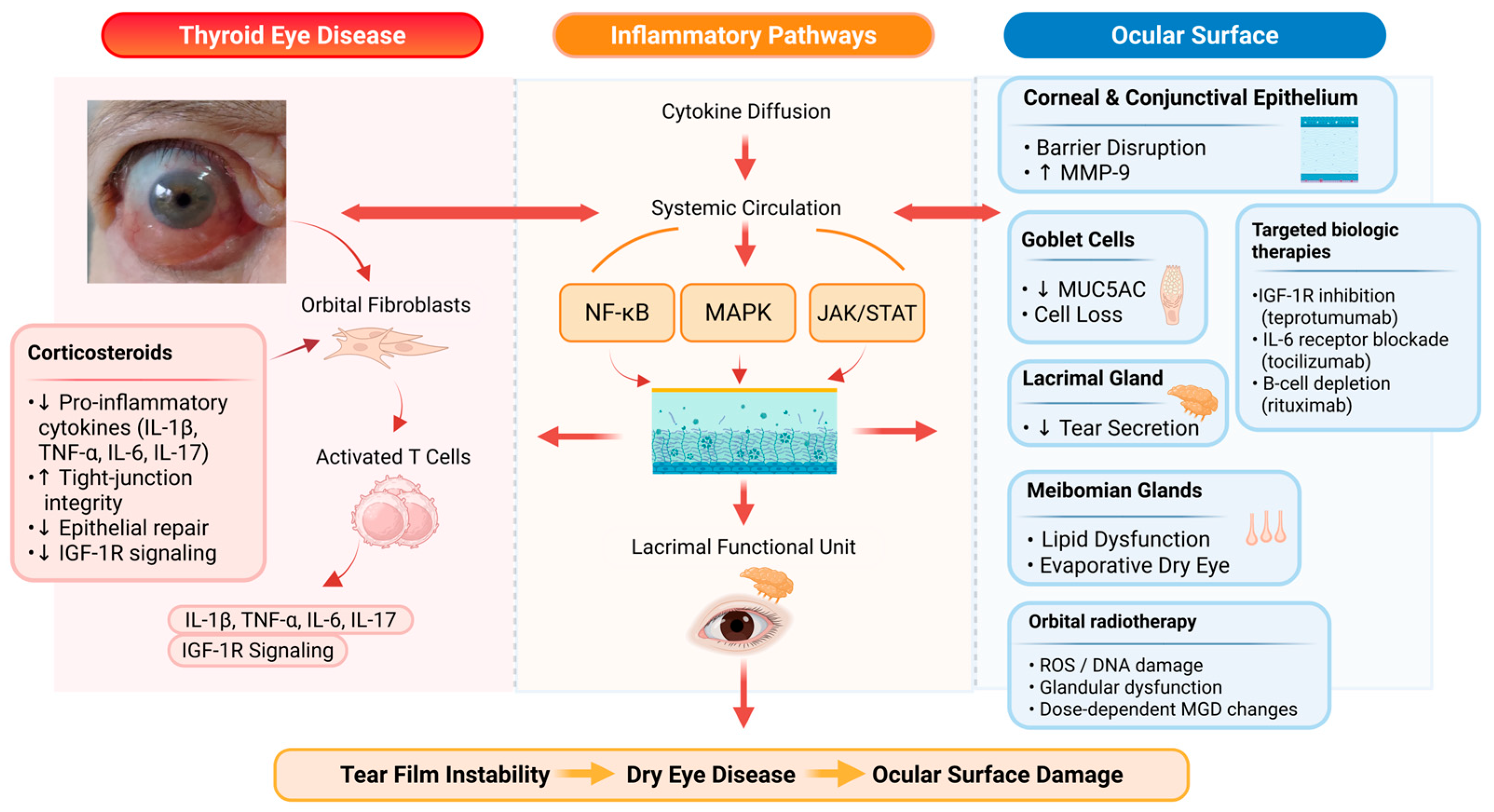
- Thyroid eye disease (TED)-associated ocular surface dysfunction arises from combined immune activation, epithelial stress, glandular impairment, and exposure-related mechanical factors.
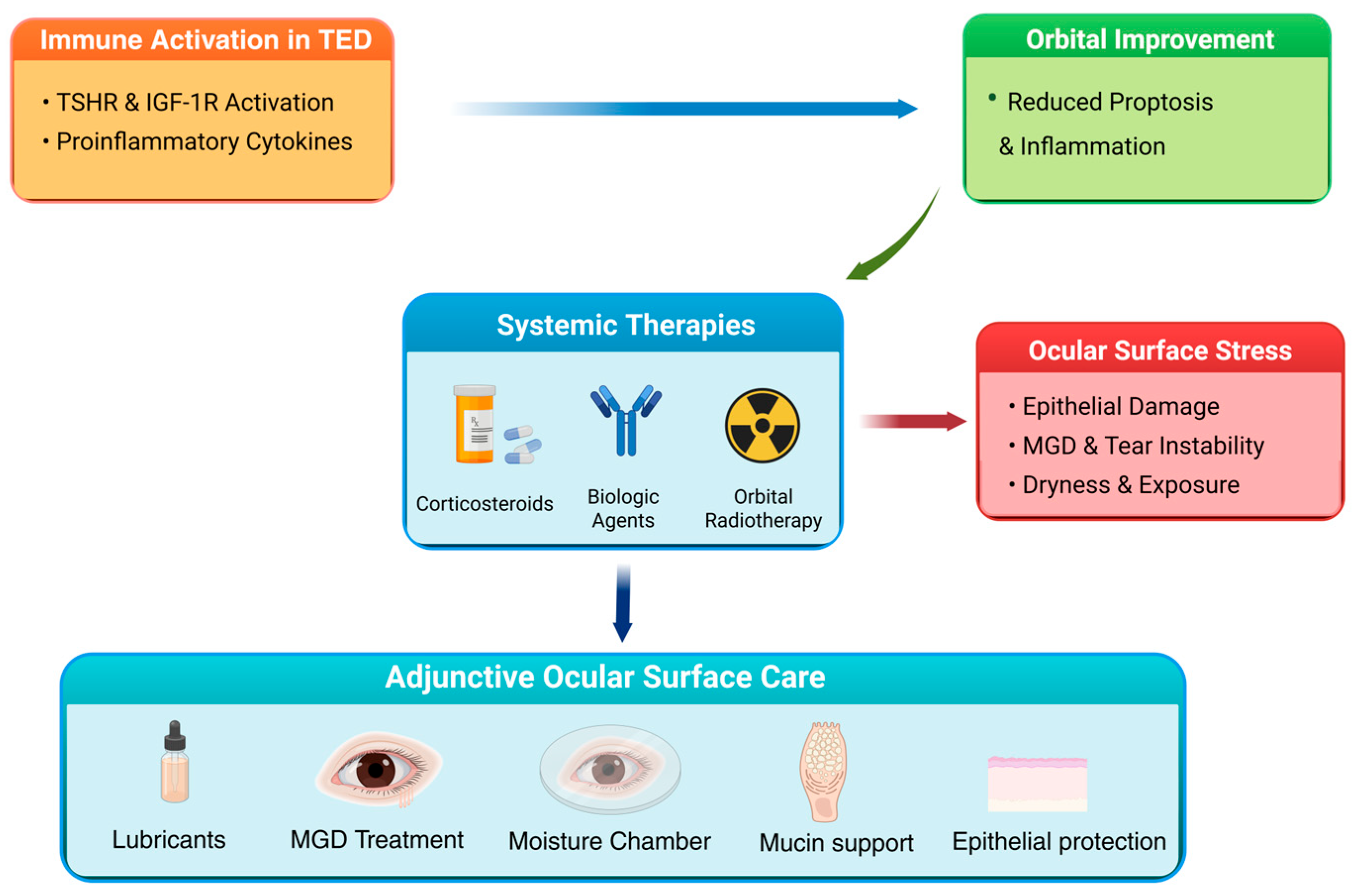
- Systemic therapies for TED reduce orbital inflammation but have heterogeneous and incompletely characterized effects on ocular surface and adnexal homeostasis.
- Targeted biologic therapies primarily modulate orbital inflammatory signaling, while direct evidence for improvement in ocular surface homeostasis remains limited.
- Corticosteroids provide rapid anti-inflammatory effects but may impair epithelial repair and tear film stability.
- Orbital radiotherapy may induce oxidative and glandular stress contributing to meibomian gland dysfunction and dry eye symptoms.
- Current therapies may have variable or limited effects on ocular surface health in TED.
- Integrated management combining disease-modifying therapy with ocular surface-directed care is important for optimizing long-term outcomes.
Abstract
1. Introduction
2. Ocular Surface Pathophysiology in Thyroid Eye Disease
2.1. Key Cell Types and Their Interactions at the Ocular Surface
2.1.1. Corneal and Conjunctival Epithelial Cells
2.1.2. Conjunctival Goblet Cells
2.1.3. Meibomian Glands
2.1.4. Lacrimal Glands
2.2. Molecular Signaling Pathways
2.2.1. Cytokine-Mediated Inflammatory Signaling
2.2.2. TSHR–IGF-1R Signaling Interactions
2.2.3. Pro-Fibrotic Pathways and Tissue Remodeling
2.2.4. Neuro-Inflammatory and Mechanical Stress Signaling
3. Biologic Therapies
3.1. IGF-1R Inhibition (Teprotumumab)
3.1.1. Molecular Mechanism of Receptor-Level Interference
3.1.2. Downstream Inflammatory Modulation
3.1.3. Potential Implications for Ocular Surface Homeostasis
3.2. IL-6 Receptor Blockade (Tocilizumab)
3.2.1. IL-6-Dependent Signaling Pathways
3.2.2. Ocular Surface Implications and Current Evidence Gap
3.3. B-Cell Depletion (Rituximab)
3.3.1. Immunologic Mechanism
3.3.2. Clinical Data and Ocular Surface Considerations
4. Systemic Corticosteroids
4.1. Mechanisms of Action
4.2. Suppression of Innate Immune Defense
4.3. Impaired Epithelial Proliferation and Wound Healing
4.4. Barrier Dysfunction and Altered Epithelial Differentiation
4.5. Reduced Goblet Cell Function and Mucin Availability (Tear Film Instability)
4.6. Altered Inflammatory Resolution vs. Chronic Surface Stress
4.7. Effects on Adnexal Tissues: Meibomian Gland Dysfunction (MGD) and Lipid Layer Changes
5. Orbital Radiotherapy
5.1. Radiation-Induced Cellular Stress and DNA Damage Responses
5.2. Epithelial Injury and Impaired Regenerative Capacity
5.3. Glandular Dysfunction: Lacrimal Acinar Injury and Meibomian Gland Alterations
5.4. Neuro-Epithelial Disruption and Altered Tear Reflexes
5.5. Clinical Correlates: Tear Film Instability and Persistent Dry Eye Symptoms
6. Clinical Implications and Management Strategies
7. Discussion
8. Future Directions
9. Conclusions
Author Contributions
Funding
Institutional Review Board Statement
Informed Consent Statement
Data Availability Statement
Acknowledgments
Conflicts of Interest
Abbreviations
| Abbreviation | Full term |
| CAS | Clinical Activity Score |
| CGRP | Calcitonin Gene-Related Peptide |
| DED | Dry Eye Disease |
| EGFR | Epidermal Growth Factor Receptor |
| ERK | Extracellular Signal-Regulated Kinase |
| FAK | Focal Adhesion Kinase |
| GR/NR3C1 | Glucocorticoid Receptor |
| IGF-1R | Insulin-Like Growth Factor 1 Receptor |
| IL-1β, IL-6, IL-8, IL-10 | Interleukins |
| JAK | Janus Kinase |
| JNK | c-Jun N-Terminal Kinase |
| MAPK | Mitogen-Activated Protein Kinase |
| MGD | Meibomian Gland Dysfunction |
| MUC5AC | Mucin 5AC |
| NF-κB | Nuclear Factor Kappa B |
| NGF | Nerve Growth Factor |
| OSD | Ocular Surface Disease |
| OSDI | Ocular Surface Disease Index |
| ROS | Reactive Oxygen Species |
| RT | Radiotherapy |
| STAT | Signal Transducer and Activator of Transcription |
| TBUT | Tear Break-Up Time |
| TED | Thyroid Eye Disease |
| TGF-β | Transforming Growth Factor Beta |
| TNF-α | Tumor Necrosis Factor Alpha |
| TSHR | Thyroid-Stimulating Hormone Receptor |
| VIP | Vasoactive intestinal peptide |
| ZO-1 | Zonula occludens-1 |
References
- Barman Kakil, Ş.; Arslan, N. Evaluation of Clinical and Ocular Surface Changes in Thyroid Eye Disease: Impact of Treatment and Risk Factors. Ther. Adv. Ophthalmol. 2025, 17, 25158414251393119. [Google Scholar] [CrossRef] [PubMed]
- Kulbay, M.; Tanya, S.M.; Tuli, N.; Dahoud, J.; Dahoud, A.; Alsaleh, F.; Arthurs, B.; El-Hadad, C. A Comprehensive Review of Thyroid Eye Disease Pathogenesis: From Immune Dysregulations to Novel Diagnostic and Therapeutic Approaches. Int. J. Mol. Sci. 2024, 25, 11628. [Google Scholar] [CrossRef] [PubMed]
- Ismailova, D.S.; Fedorov, A.A.; Grusha, Y.O. Ocular Surface Changes in Thyroid Eye Disease. Orbit 2013, 32, 87–90. [Google Scholar] [CrossRef] [PubMed]
- Bruscolini, A.; Abbouda, A.; Locuratolo, N.; Restivo, L.; Trimboli, P.; Romanelli, F. Dry Eye Syndrome in Non-Exophthalmic Graves’ Disease. Semin. Ophthalmol. 2015, 30, 372–376. [Google Scholar] [CrossRef]
- Stapleton, F.; Argüeso, P.; Asbell, P.; Azar, D.; Bosworth, C.; Chen, W.; Ciolino, J.B.; Craig, J.P.; Gallar, J.; Galor, A.; et al. TFOS DEWS III: Digest. Am. J. Ophthalmol. 2025, 279, 451–553. [Google Scholar] [CrossRef]
- Allam, I.Y.; Lazreg, S.; Shafik Shaheen, M.; Doheim, M.F.; Mohammed, M.A. Ocular Surface Changes in Patients with Thyroid Eye Disease: An Observational Clinical Study. Clin. Ophthalmol. 2021, 15, 2481–2488. [Google Scholar] [CrossRef]
- Lu, Y.; Li, Y.; Lin, T. Meibomian Gland Dysfunction in Patients with Thyroid-Associated Ophthalmopathy: A Systematic Review and Meta-Analysis. Front. Med. 2025, 12, 1709057. [Google Scholar] [CrossRef]
- Lo, C.; Yang, M.; Rootman, D. Natural History of Inflammatory and Non-Inflammatory Dry Eye in Thyroid Eye Disease. Orbit 2021, 40, 389–393. [Google Scholar] [CrossRef]
- Huang, D.; Xu, N.; Song, Y.; Wang, P.; Yang, H. Inflammatory Cytokine Profiles in the Tears of Thyroid-Associated Ophthalmopathy. Graefe’s Arch. Clin. Exp. Ophthalmol. 2012, 250, 619–625. [Google Scholar] [CrossRef]
- Xu, N.; Cui, Y.; Fu, D.; Sun, F. Tear Inflammatory Cytokines and Ocular Surface Changes in Patients with Active Thyroid Eye Disease Treated with High-Dose Intravenous Glucocorticoids. J. Endocrinol. Investig. 2020, 43, 901–910. [Google Scholar] [CrossRef]
- Call, C.B.; Wise, R.J.; Hansen, M.R.; Carter, K.D.; Allen, R.C. In Vivo Examination of Meibomian Gland Morphology in Patients with Facial Nerve Palsy Using Infrared Meibography. Ophthalmic Plast. Reconstr. Surg. 2012, 28, 396–400. [Google Scholar] [CrossRef]
- D’Souza, S.; Shetty, R.; Sethu, S. Understanding the Immunology of the Ocular Surface and Its Relevance to Clinical Practice. Indian J. Ophthalmol. 2025, 73, 516–520. [Google Scholar] [CrossRef]
- Wu, L.-Q.; Mou, P.; Chen, Z.-Y.; Cheng, J.-W.; Le, Q.-H.; Cai, J.-P.; Wei, R.-L. Altered Corneal Nerves in Chinese Thyroid-Associated Ophthalmopathy Patients Observed by In Vivo Confocal Microscopy. Med. Sci. Monit. 2019, 25, 1024–1031. [Google Scholar] [CrossRef]
- Villani, E.; Viola, F.; Sala, R.; Salvi, M.; Mapelli, C.; Currò, N.; Vannucchi, G.; Beck-Peccoz, P.; Ratiglia, R. Corneal Involvement in Graves’ Orbitopathy: An in Vivo Confocal Study. Investig. Ophthalmol. Vis. Sci. 2010, 51, 4574–4578. [Google Scholar] [CrossRef]
- Wei, Y.-H.; Chen, W.-L.; Hu, F.-R.; Liao, S.-L. In Vivo Confocal Microscopy of Bulbar Conjunctiva in Patients with Graves’ Ophthalmopathy. J. Formos. Med. Assoc. 2015, 114, 965–972. [Google Scholar] [CrossRef] [PubMed]
- Xu, N.; Huang, D.; Yang, H.; Lai, Z.; Luo, Q. Ocular Surface Characteristics and Impression Cytology in Patients with Active versus Inactive Thyroid Eye Disease. Eye Sci. 2012, 27, 64–68. [Google Scholar] [CrossRef] [PubMed]
- Matheis, N.; Grus, F.H.; Breitenfeld, M.; Knych, I.; Funke, S.; Pitz, S.; Ponto, K.A.; Pfeiffer, N.; Kahaly, G.J. Proteomics Differentiate Between Thyroid-Associated Orbitopathy and Dry Eye Syndrome. Investig. Ophthalmol. Vis. Sci. 2015, 56, 2649–2656. [Google Scholar] [CrossRef] [PubMed]
- Knop, N.; Knop, E. Meibomian glands. Part I: Anatomy, embryology and histology of the Meibomian glands. Ophthalmologe 2009, 106, 872–883. [Google Scholar] [CrossRef]
- Harris, M.A.; Realini, T.; Hogg, J.P.; Sivak-Callcott, J.A. CT Dimensions of the Lacrimal Gland in Graves Orbitopathy. Ophthalmic Plast. Reconstr. Surg. 2012, 28, 69–72. [Google Scholar] [CrossRef]
- Wong, A.S.; Chelnis, J.G. Systematic Review of Ocular Surface Treatments in the Setting of Thyroid Eye Disease. Front. Ophthalmol. 2024, 4, 1352355. [Google Scholar] [CrossRef]
- Rana, H.S.; Akella, S.S.; Clabeaux, C.E.; Skurski, Z.P.; Aakalu, V.K. Ocular Surface Disease in Thyroid Eye Disease: A Narrative Review. Ocul. Surf. 2022, 24, 67–73. [Google Scholar] [CrossRef] [PubMed]
- Wolffsohn, J.S.; Benítez-Del-Castillo, J.M.; Loya-Garcia, D.; Inomata, T.; Iyer, G.; Liang, L.; Pult, H.; Sabater, A.L.; Starr, C.E.; Vehof, J.; et al. TFOS DEWS III: Diagnostic Methodology. Am. J. Ophthalmol. 2025, 279, 387–450. [Google Scholar] [CrossRef]
- Ang, T.; Tong, J.Y.; Selva, D. Tear Inflammatory Cytokine Profiles in Thyroid-Associated Ophthalmopathy. Ophthalmic Plast. Reconstr. Surg. 2025. [Google Scholar] [CrossRef]
- Bron, A.J.; de Paiva, C.S.; Chauhan, S.K.; Bonini, S.; Gabison, E.E.; Jain, S.; Knop, E.; Markoulli, M.; Ogawa, Y.; Perez, V.; et al. TFOS DEWS II Pathophysiology Report. Ocul. Surf. 2017, 15, 438–510. [Google Scholar] [CrossRef]
- Wang, Y.; Smith, T.J. Current Concepts in the Molecular Pathogenesis of Thyroid-Associated Ophthalmopathy. Investig. Ophthalmol. Vis. Sci. 2014, 55, 1735–1748. [Google Scholar] [CrossRef]
- Fernando, R.; Diniz Grisolia, A.B.; Lu, Y.; Atkins, S.; Smith, T.J. Slit2 Modulates the Inflammatory Phenotype of Orbit-Infiltrating Fibrocytes in Graves’ Disease. J. Immunol. 2018, 200, 3942–3949. [Google Scholar] [CrossRef]
- Krieger, C.C.; Place, R.F.; Bevilacqua, C.; Marcus-Samuels, B.; Abel, B.S.; Skarulis, M.C.; Kahaly, G.J.; Neumann, S.; Gershengorn, M.C. TSH/IGF-1 Receptor Cross Talk in Graves’ Ophthalmopathy Pathogenesis. J. Clin. Endocrinol. Metab. 2016, 101, 2340–2347. [Google Scholar] [CrossRef]
- Smith, T.J. TSHR-IGF-IR Complex Drives Orbital Fibroblast Misbehavior in Thyroid Eye Disease. Curr. Opin. Endocrinol. Diabetes Obes. 2024, 31, 177–183. [Google Scholar] [CrossRef]
- Yang, S.; Wang, X.; Xiao, W.; Xu, Z.; Ye, H.; Sha, X.; Yang, H. Dihydroartemisinin Exerts Antifibrotic and Anti-Inflammatory Effects in Graves’ Ophthalmopathy by Targeting Orbital Fibroblasts. Front. Endocrinol. 2022, 13, 891922. [Google Scholar] [CrossRef] [PubMed]
- Bao, X.; Xu, Z.; Wang, X.; Zhang, T.; Ye, H.; Yang, H. Three-Dimensional Culture of Orbital Fibroblasts from Thyroid Eye Disease Induce In Vivo-Like Tissue Remodeling and Fibrosis. Investig. Ophthalmol. Vis. Sci. 2025, 66, 67. [Google Scholar] [CrossRef] [PubMed]
- Yuksel, N.; Balaban, M.; Sozeri, A.; Mendi, Z.N.; Guler, F. Lacrimal Gland Fibrosis in Patients with Moderate-to-Severe Thyroid Eye Disease. Ophthalmic Plast. Reconstr. Surg. 2026, 42, 65–70. [Google Scholar] [CrossRef] [PubMed]
- Huang, D.; Luo, Q.; Yang, H.; Mao, Y. Changes of Lacrimal Gland and Tear Inflammatory Cytokines in Thyroid-Associated Ophthalmopathy. Investig. Ophthalmol. Vis. Sci. 2014, 55, 4935–4943. [Google Scholar] [CrossRef]
- Acar, M.; Sabur, H.; Arslan, N. Ocular Surface and in Vivo Confocal Microscopic Findings in Patients with Active Tyhroid Eye Disease Treated with Glucocorticoids. Eur. J. Ophthalmol. 2023, 33, 1354–1360. [Google Scholar] [CrossRef]
- Guleser, U.Y.; Yildiz, A.; Sezer, H.; Ozisik, S.; Kesim, C.; Hasanreisoglu, M.; Deyneli, O.; Yazici, D.; Sahin, A. Investigation of Corneal Structural Changes by in Vivo Confocal Microscopy in Thyroid-Associated Ophthalmopathy Patients. Eur. J. Ophthalmol. 2025, 35, 1593–1603. [Google Scholar] [CrossRef]
- Puri, S.; Kenyon, B.M.; Hamrah, P. Immunomodulatory Role of Neuropeptides in the Cornea. Biomedicines 2022, 10, 1985. [Google Scholar] [CrossRef] [PubMed]
- Minth-Worby, C.A. Transcriptional Regulation of the Human Neuropeptide Y Gene by Nerve Growth Factor. J. Biol. Chem. 1994, 269, 15460–15468. [Google Scholar] [CrossRef]
- Belmonte, C.; Nichols, J.J.; Cox, S.M.; Brock, J.A.; Begley, C.G.; Bereiter, D.A.; Dartt, D.A.; Galor, A.; Hamrah, P.; Ivanusic, J.J.; et al. TFOS DEWS II Pain and Sensation Report. Ocul. Surf. 2017, 15, 404–437. [Google Scholar] [CrossRef]
- Salvi, A.M.; DeMali, K.A. Mechanisms Linking Mechanotransduction and Cell Metabolism. Curr. Opin. Cell Biol. 2018, 54, 114–120. [Google Scholar] [CrossRef]
- Li, Z.; Lee, H.; Zhu, C. Molecular Mechanisms of Mechanotransduction in Integrin-Mediated Cell-Matrix Adhesion. Exp. Cell Res. 2016, 349, 85–94. [Google Scholar] [CrossRef]
- Cruzat, A.; Qazi, Y.; Hamrah, P. In Vivo Confocal Microscopy of Corneal Nerves in Health and Disease. Ocul. Surf. 2017, 15, 15–47. [Google Scholar] [CrossRef] [PubMed]
- Douglas, R.S.; Wang, Y.; Dailey, R.A.; Harris, G.J.; Wester, S.T.; Schiffman, J.S.; Tang, R.A.; Fowler, B.; Fleming, J.; Smith, T.J. Teprotumumab in Clinical Practice: Recommendations and Considerations from the OPTIC Trial Investigators. J. Neuroophthalmol. 2021, 41, 461–468. [Google Scholar] [CrossRef]
- Bartalena, L.; Kahaly, G.J.; Baldeschi, L.; Dayan, C.M.; Eckstein, A.; Marcocci, C.; Marinò, M.; Vaidya, B.; Wiersinga, W.M.; EUGOGO. The 2021 European Group on Graves’ Orbitopathy (EUGOGO) Clinical Practice Guidelines for the Medical Management of Graves’ Orbitopathy. Eur. J. Endocrinol. 2021, 185, G43–G67. [Google Scholar] [CrossRef] [PubMed]
- Silkiss, R.Z.; Reier, A.; Coleman, M.; Lauer, S.A. Rituximab for Thyroid Eye Disease. Ophthalmic Plast. Reconstr. Surg. 2010, 26, 310–314. [Google Scholar] [CrossRef] [PubMed]
- Reichardt, S.D.; Amouret, A.; Muzzi, C.; Vettorazzi, S.; Tuckermann, J.P.; Lühder, F.; Reichardt, H.M. The Role of Glucocorticoids in Inflammatory Diseases. Cells 2021, 10, 2921. [Google Scholar] [CrossRef]
- McDermott, A.M. Defensins and Other Antimicrobial Peptides at the Ocular Surface. Ocul. Surf. 2004, 2, 229–247. [Google Scholar] [CrossRef]
- Kadmiel, M.; Janoshazi, A.; Xu, X.; Cidlowski, J.A. Glucocorticoid Action in Human Corneal Epithelial Cells Establishes Roles for Corticosteroids in Wound Healing and Barrier Function of the Eye. Exp. Eye Res. 2016, 152, 10–33. [Google Scholar] [CrossRef]
- Xu, K.; Yu, F.-S.X. Impaired Epithelial Wound Healing and EGFR Signaling Pathways in the Corneas of Diabetic Rats. Investig. Ophthalmol. Vis. Sci. 2011, 52, 3301–3308. [Google Scholar] [CrossRef]
- You, Y.; Chen, J.; Chen, H.; Wang, J.; Xie, H.; Pi, X.; Wang, X.; Jiang, F. Investigation of Conjunctival Goblet Cell and Tear MUC5AC Protein in Patients with Graves’ Ophthalmopathy. Transl. Vis. Sci. Technol. 2023, 12, 19. [Google Scholar] [CrossRef] [PubMed]
- Chuang, Y.-N.; Hsieh, H.-H.; Wang, L.-H.; Hung, K.-F.; Hsu, W.-C.; Sun, Y.-C. Restoring the Mucin Barrier: Advances in Secretagogue Therapies for Ocular Surface Disorders. Taiwan J. Ophthalmol. 2025, 15, 535–544. [Google Scholar] [CrossRef]
- Willcox, M.D.P.; Argüeso, P.; Georgiev, G.A.; Holopainen, J.M.; Laurie, G.W.; Millar, T.J.; Papas, E.B.; Rolland, J.P.; Schmidt, T.A.; Stahl, U.; et al. TFOS DEWS II Tear Film Report. Ocul. Surf. 2017, 15, 366–403. [Google Scholar] [CrossRef]
- Quaranta Leoni, F.M.; Marabottini, N.; Iuliano, A.; Strianese, D.; Savino, G. Eyelid Malpositions and Ocular Surface Disease: Clinical Correlations and Management Strategies. J. Clin. Med. 2025, 14, 8523. [Google Scholar] [CrossRef]
- Garcia-Queiruga, J.; Pena-Verdeal, H.; Sabucedo-Villamarin, B.; Paz-Tarrio, M.; Guitian-Fernandez, E.; Garcia-Resua, C.; Yebra-Pimentel, E.; Giraldez, M.J. Meibum Lipidomic Analysis in Evaporative Dry Eye Subjects. Int. J. Mol. Sci. 2024, 25, 4782. [Google Scholar] [CrossRef] [PubMed]
- Zheng, Z.; Su, J.; Bao, X.; Wang, H.; Bian, C.; Zhao, Q.; Jiang, X. Mechanisms and Applications of Radiation-Induced Oxidative Stress in Regulating Cancer Immunotherapy. Front. Immunol. 2023, 14, 1247268. [Google Scholar] [CrossRef]
- Guan, J.; Li, T.; Ma, F.; Wang, N.; Zhang, H.; Li, J.; Li, J.; Xu, C.; Liu, Q. DNA Damage-Dependent Mechanisms of Ionizing Radiation-Induced Cellular Senescence. PeerJ 2025, 13, e20087. [Google Scholar] [CrossRef]
- Rong, J.; Yu, Q.; Huang, G.; Wang, Y.; Zhang, N. Advances in Mitochondrial Dysfunction in Radiation Tissue Injury. Front. Physiol. 2025, 16, 1660330. [Google Scholar] [CrossRef]
- Shimura, T.; Takahashi, Y.; Saito, C.; Maida, R.; Sasatani, M.; Kunoh, T.; Ushiyama, A. Ionizing Radiation Triggers the Release of Mitochondrial DNA into the Cytosol as a Signal of Mitochondrial Damage. Sci. Rep. 2025, 15, 23191. [Google Scholar] [CrossRef]
- Rai, Y.; Anita; Kumari, N.; Singh, S.; Kalra, N.; Soni, R.; Bhatt, A.N. Mild Mitochondrial Uncoupling Protects from Ionizing Radiation Induced Cell Death by Attenuating Oxidative Stress and Mitochondrial Damage. Biochim. Biophys. Acta Bioenerg. 2021, 1862, 148325. [Google Scholar] [CrossRef]
- Yang, S.; Li, Y.; Zhang, J.; Shen, A.; Hu, B.; Yan, J. The Interplay between DNA Damage Response and Mitochondrial Dysfunction in Radiotherapy. Front. Oncol. 2025, 15, 1642100. [Google Scholar] [CrossRef] [PubMed]
- Stojanovic, B.; Jovanovic, I.; Dimitrijevic Stojanovic, M.; Stojanovic, B.S.; Kovacevic, V.; Radosavljevic, I.; Jovanovic, D.; Miletic Kovacevic, M.; Zornic, N.; Arsic, A.A.; et al. Oxidative Stress-Driven Cellular Senescence: Mechanistic Crosstalk and Therapeutic Horizons. Antioxidants 2025, 14, 987. [Google Scholar] [CrossRef]
- Fujishima, H.; Shimazaki, J.; Tsubota, K. Temporary Corneal Stem Cell Dysfunction after Radiation Therapy. Br. J. Ophthalmol. 1996, 80, 911–914. [Google Scholar] [CrossRef] [PubMed]
- Okazaki, R. Role of P53 in Regulating Radiation Responses. Life 2022, 12, 1099. [Google Scholar] [CrossRef]
- Arturi, F.J.; Arons, D.; Murphy, N.J.; Yu, C.; Panse, D.; Cherry, D.R.; Hsieh, K.; Bloom, J.R.; Nehlsen, A.D.; Resende Salgado, L.; et al. The Effects of Radiation Therapy on the Ocular Apparatus: Implications for Management. Cancers 2025, 17, 2605. [Google Scholar] [CrossRef]
- Chen, D.; Liu, X.; Li, Y.; Guan, H.; Zhang, F. Impact of Unilateral Orbital Radiotherapy on the Structure and Function of Bilateral Human Meibomian Gland. J. Ophthalmol. 2018, 2018, 9308649. [Google Scholar] [CrossRef]
- Chen, X.; Badian, R.A.; Hynne, H.; Amdal, C.D.; Herlofson, B.B.; Utheim, Ø.A.; Westgaard, K.L.; Fineide, F.; Jensen, J.L.; Utheim, T.P. Alterations in Meibomian Glands in Patients Treated with Intensity-Modulated Radiotherapy for Head and Neck Cancer. Sci. Rep. 2021, 11, 22419. [Google Scholar] [CrossRef] [PubMed]
- Yu, F.X.; Lee, P.S.Y.; Yang, L.; Gao, N.; Zhang, Y.; Ljubimov, A.V.; Yang, E.; Zhou, Q.; Xie, L. The Impact of Sensory Neuropathy and Inflammation on Epithelial Wound Healing in Diabetic Corneas. Prog. Retin. Eye Res. 2022, 89, 101039. [Google Scholar] [CrossRef] [PubMed]
- Takahashi, Y.; Vaidya, A.; Kakizaki, H. Changes in Dry Eye Status after Steroid Pulse and Orbital Radiation Therapies in Active Thyroid Eye Disease. J. Clin. Med. 2022, 11, 3604. [Google Scholar] [CrossRef]
- Akagunduz, O.O.; Yilmaz, S.G.; Tavlayan, E.; Baris, M.E.; Afrashi, F.; Esassolak, M. Radiation-Induced Ocular Surface Disorders and Retinopathy: Ocular Structures and Radiation Dose-Volume Effect. Cancer Res. Treat. 2022, 54, 417–423. [Google Scholar] [CrossRef] [PubMed]
- Durkin, S.R.; Roos, D.; Higgs, B.; Casson, R.J.; Selva, D. Ophthalmic and Adnexal Complications of Radiotherapy. Acta Ophthalmol. Scand. 2007, 85, 240–250. [Google Scholar] [CrossRef]
- Schaumberg, D.A.; Nichols, J.J.; Papas, E.B.; Tong, L.; Uchino, M.; Nichols, K.K. The International Workshop on Meibomian Gland Dysfunction: Report of the Subcommittee on the Epidemiology of, and Associated Risk Factors for, MGD. Investig. Ophthalmol. Vis. Sci. 2011, 52, 1994–2005. [Google Scholar] [CrossRef]
- Luo, L.; Li, D.-Q.; Doshi, A.; Farley, W.; Corrales, R.M.; Pflugfelder, S.C. Experimental Dry Eye Stimulates Production of Inflammatory Cytokines and MMP-9 and Activates MAPK Signaling Pathways on the Ocular Surface. Investig. Ophthalmol. Vis. Sci. 2004, 45, 4293–4301. [Google Scholar] [CrossRef]
- Moustardas, P.; Aberdam, D.; Lagali, N. MAPK Pathways in Ocular Pathophysiology: Potential Therapeutic Drugs and Challenges. Cells 2023, 12, 617. [Google Scholar] [CrossRef] [PubMed]



| Aspect | Systemic Corticosteroids | IGF-1R Inhibition (e.g., Teprotumumab) | IL-6 Pathway Blockade (e.g., Tocilizumab) | Rituximab |
|---|---|---|---|---|
| Level of intervention | Broad transcriptional regulation [44] | Receptor-level signaling | Cytokine receptor signaling | B-cell depletion |
| Primary target | GR/NR3C1 | IGF-1R–TSHR signaling complex | IL-6 receptor | CD20+ B cells |
| Cytokine modulation | Broad suppression of pro-inflammatory cytokine expression via NF-κB and AP-1 transrepression [10,44] | Downstream suppression | Direct IL-6 pathway inhibition | Indirect |
| Epithelial repair | Enhanced tight-junction organization but delayed epithelial migration and wound healing [46] | Neutral/indirect | Neutral/indirect | Not directly studied |
| Goblet cell effects | Potential reduction in MUC5AC-related tear film stability [48,49] | No direct evidence | No direct evidence | Not directly studied |
| Meibomian gland effects | Possible destabilization of lipid metabolism and exacerbation of evaporative dry eye in predisposed patients [6,52] | Limited data | Limited data | Not directly studied |
| Ocular surface specificity | Rapid anti-inflammatory effect but risk of impaired epithelial repair and tear film instability [42] | Moderate (indirect) | Moderate (indirect) | Very limited surface data |
| Therapy | Study | Study Design/Population | Ocular Surface Outcomes Assessed | Main Findings | Limitations |
|---|---|---|---|---|---|
| Systemic glucocorticoids | Xu et al. [10] | Clinical study in active TED treated with high-dose intravenous glucocorticoids | Tear inflammatory cytokines, ocular surface parameters | Glucocorticoid therapy was associated with reduced tear inflammatory cytokines and improvement in selected ocular surface findings | Limited direct assessment of epithelial complications; short-term ocular surface endpoints |
| Systemic glucocorticoids | Acar et al. [33] | Small open-label interventional case series in patients with active TED | Ocular surface findings, in vivo confocal microscopy | Improvement in ocular surface inflammatory findings and corneal nerve-related parameters after treatment | Limited sample size; no direct assessment of infectious complications |
| Biologic therapy (rituximab) | Silkiss et al. [43] | Prospective open-label study in active TED | No dedicated ocular surface endpoints | Reduction in CAS following rituximab therapy. | Ocular surface outcomes not systematically evaluated |
| Orbital radiotherapy | Chen et al. [64] | Observational case–control study | Meibomian gland loss, lipid layer thickness, TBUT, OSDI, corneal staining | Orbital radiotherapy was associated with meibomian gland damage, reduced lipid layer thickness, shortened TBUT, and higher OSDI scores. | Observational design; limited mechanistic correlation |
| Steroid pulse + orbital radiotherapy | Takahashi et al. [66] | Prospective observational study in active TED | Dry eye parameters, MGD measures | CAS improved, whereas most subjective and objective dry eye parameters showed little or no significant change at 6 months. | Small cohort; combined-treatment design limits attribution of effects |
| General TED management/mixed treatment context | Barman Kakil and Arslan [1] | Clinical observational study | TBUT, OSDI, corneal staining | Treatment was associated with improvement in TBUT, OSDI, and corneal staining; smoking worsened and prolonged dry eye manifestations | Not focused on one defined systemic therapy mechanism |
Disclaimer/Publisher’s Note: The statements, opinions and data contained in all publications are solely those of the individual author(s) and contributor(s) and not of MDPI and/or the editor(s). MDPI and/or the editor(s) disclaim responsibility for any injury to people or property resulting from any ideas, methods, instructions or products referred to in the content. |
© 2026 by the authors. Licensee MDPI, Basel, Switzerland. This article is an open access article distributed under the terms and conditions of the Creative Commons Attribution (CC BY) license.
Share and Cite
Sarnat-Kucharczyk, M.; Luboń, W.; Wyględowska-Promieńska, D.; Smędowski, A. Molecular and Cellular Effects of Therapies for Thyroid Eye Disease on Ocular Surface and Adnexal Homeostasis. Cells 2026, 15, 622. https://doi.org/10.3390/cells15070622
Sarnat-Kucharczyk M, Luboń W, Wyględowska-Promieńska D, Smędowski A. Molecular and Cellular Effects of Therapies for Thyroid Eye Disease on Ocular Surface and Adnexal Homeostasis. Cells. 2026; 15(7):622. https://doi.org/10.3390/cells15070622
Chicago/Turabian StyleSarnat-Kucharczyk, Monika, Wojciech Luboń, Dorota Wyględowska-Promieńska, and Adrian Smędowski. 2026. "Molecular and Cellular Effects of Therapies for Thyroid Eye Disease on Ocular Surface and Adnexal Homeostasis" Cells 15, no. 7: 622. https://doi.org/10.3390/cells15070622
APA StyleSarnat-Kucharczyk, M., Luboń, W., Wyględowska-Promieńska, D., & Smędowski, A. (2026). Molecular and Cellular Effects of Therapies for Thyroid Eye Disease on Ocular Surface and Adnexal Homeostasis. Cells, 15(7), 622. https://doi.org/10.3390/cells15070622