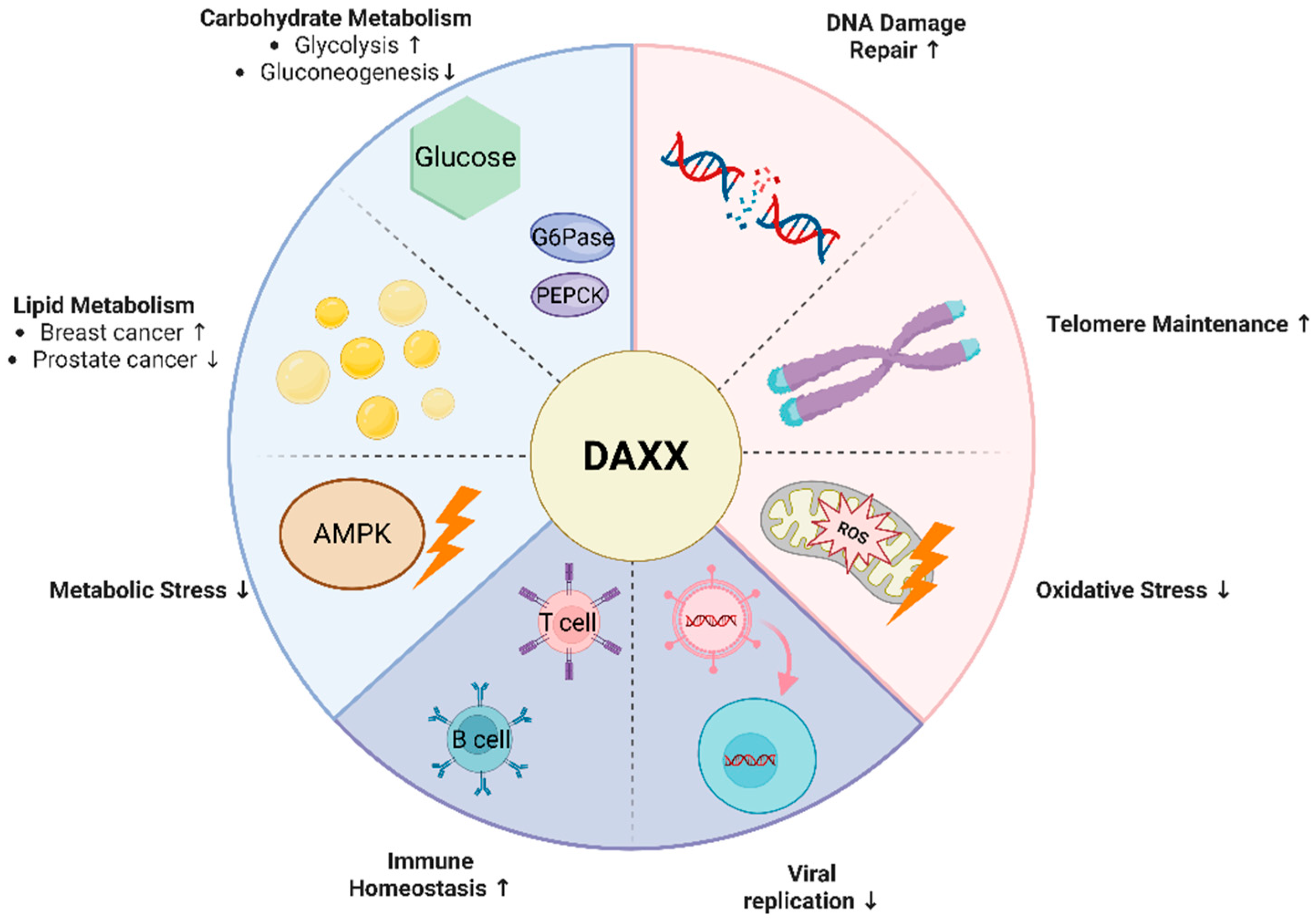
DAXX in Metabolic, Aging, and Immune Regulation: Recent Insights

Abstract
1. Introduction
2. Basic Functions of DAXX
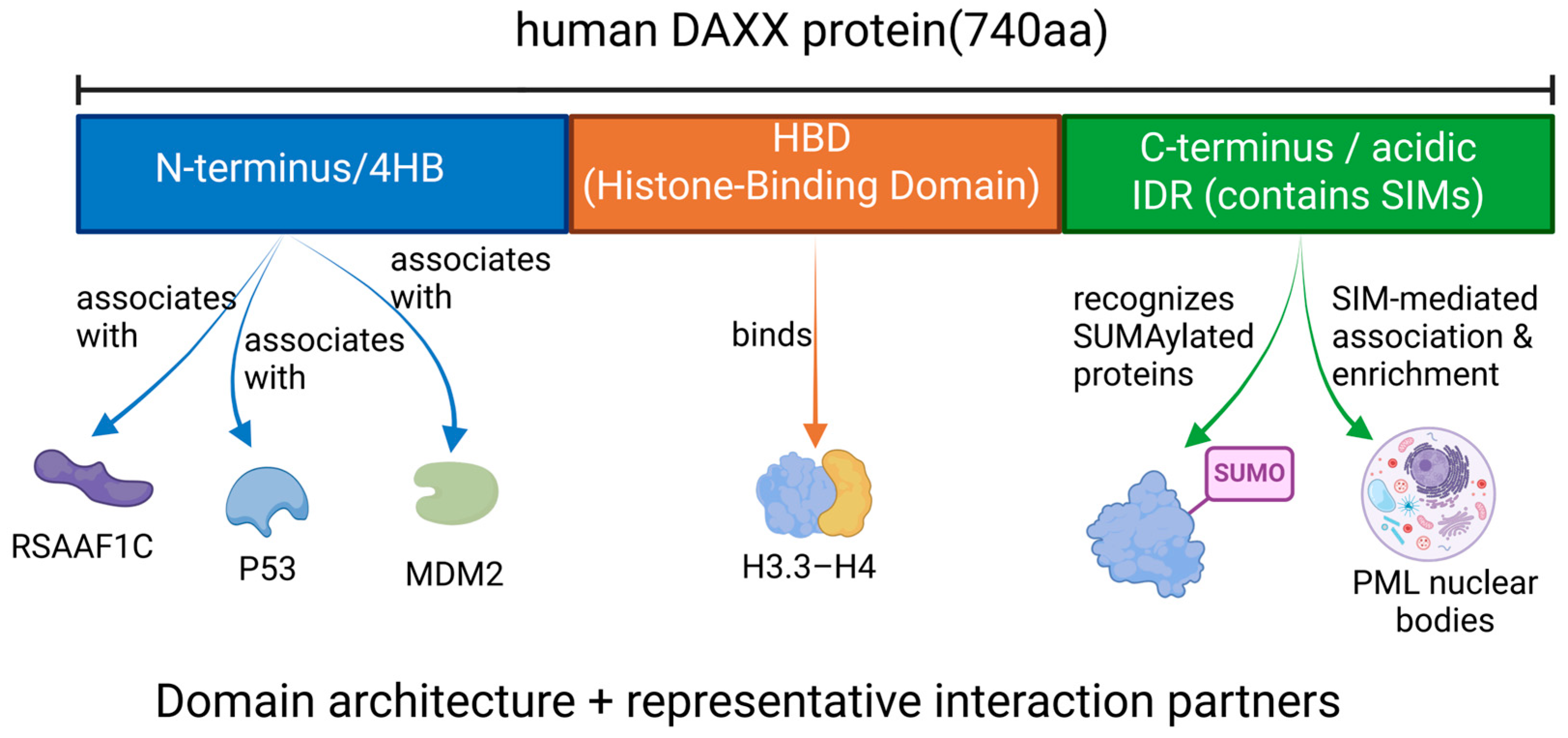
2.1. Molecular Structure and Functional Domain of DAXX
2.2. Nuclear Localization and Function of DAXX
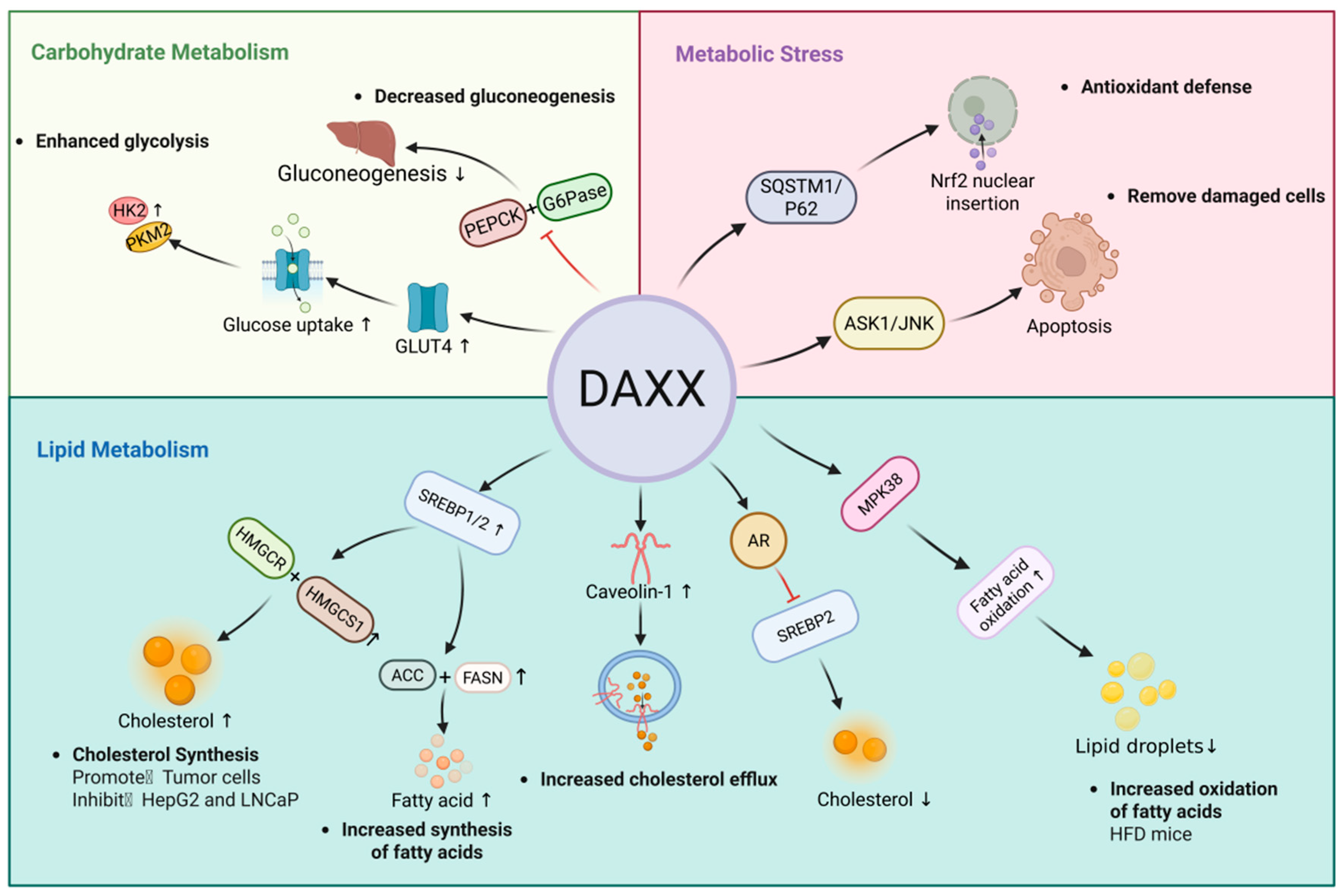
3. Regulatory Mechanism of DAXX in Metabolism
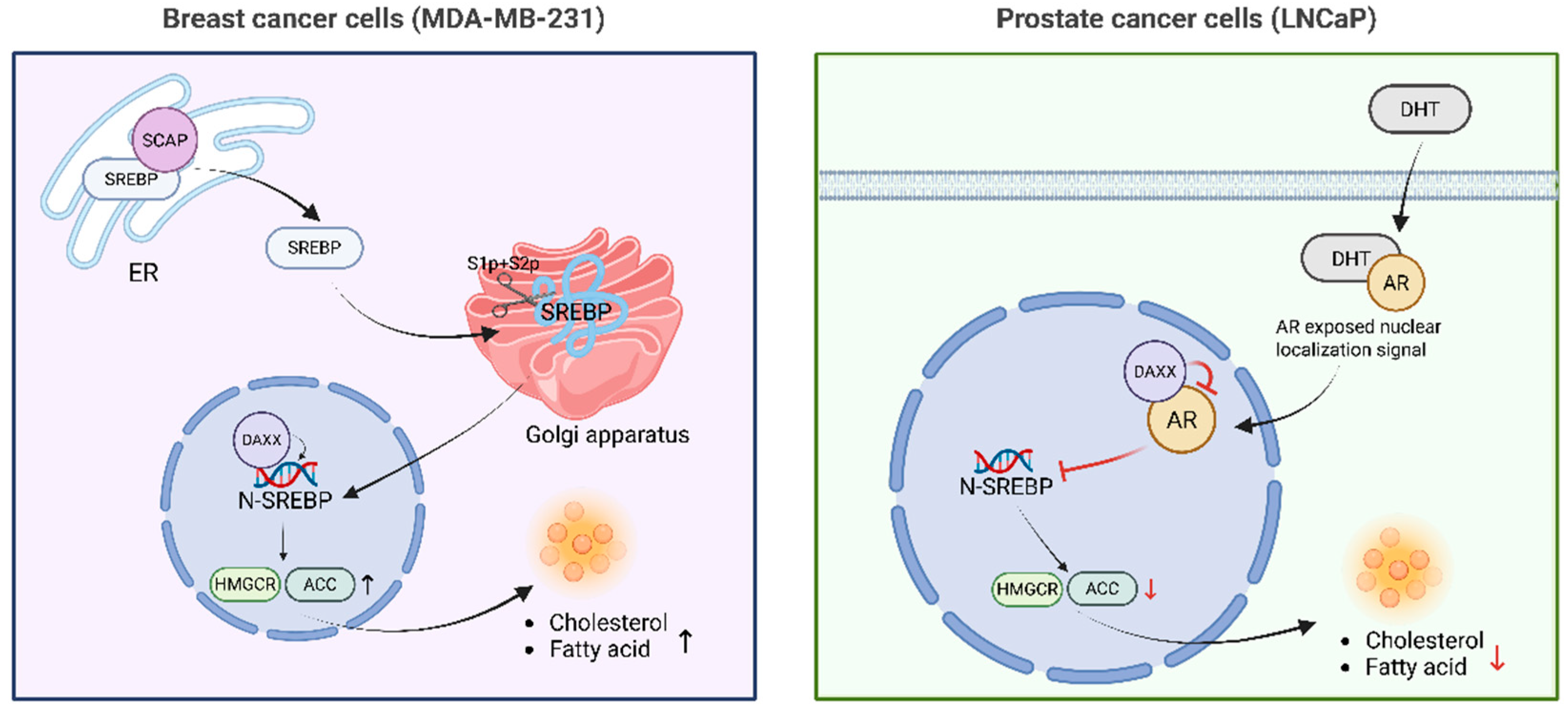
3.1. Lipid Metabolism
3.2. Glycometabolism
3.3. Antioxidant Response
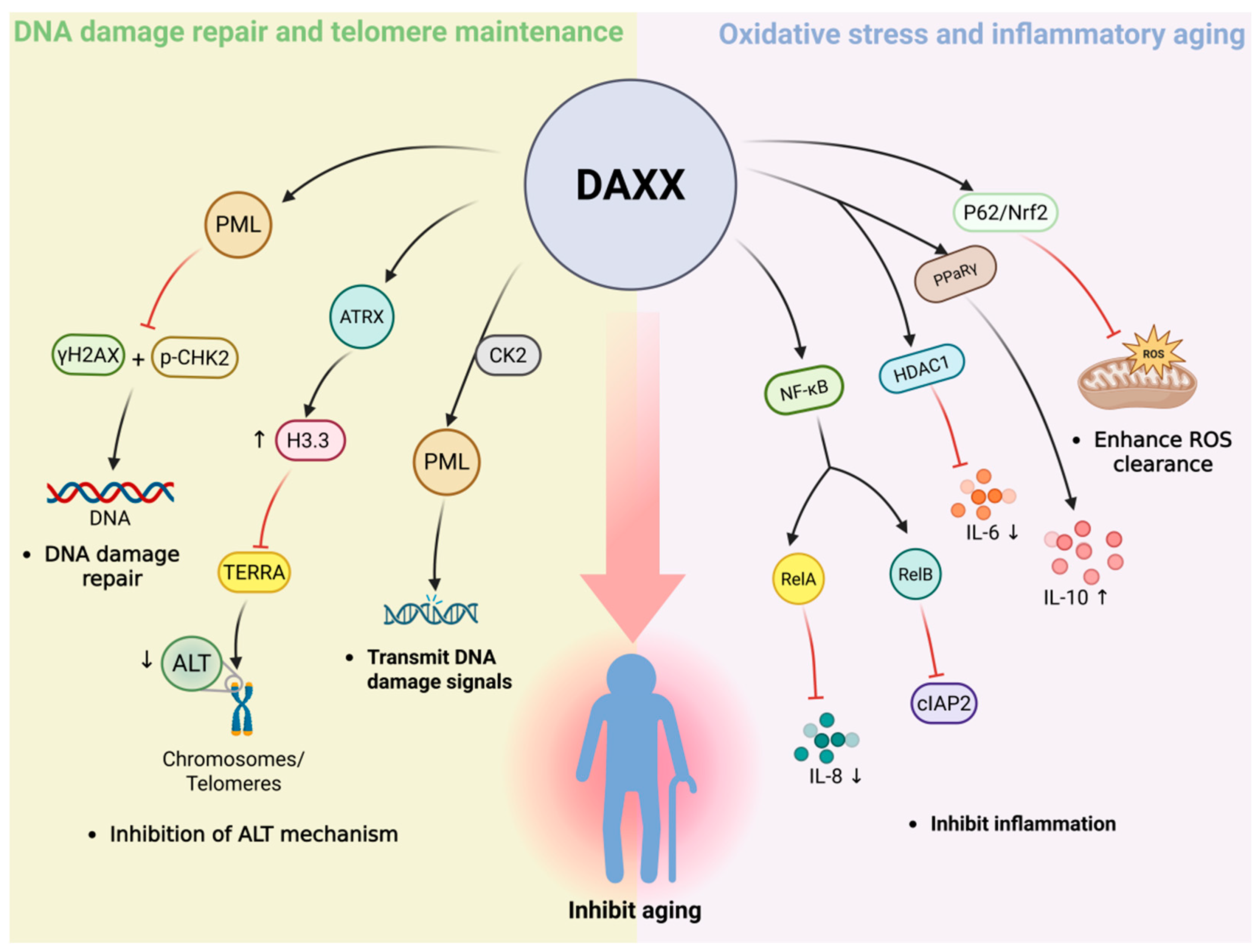
4. The Role of DAXX in the Aging Process
4.1. DNA Damage Repair
4.2. Maintenance of Telomeres
4.3. Oxidative Stress and Inflammatory Aging
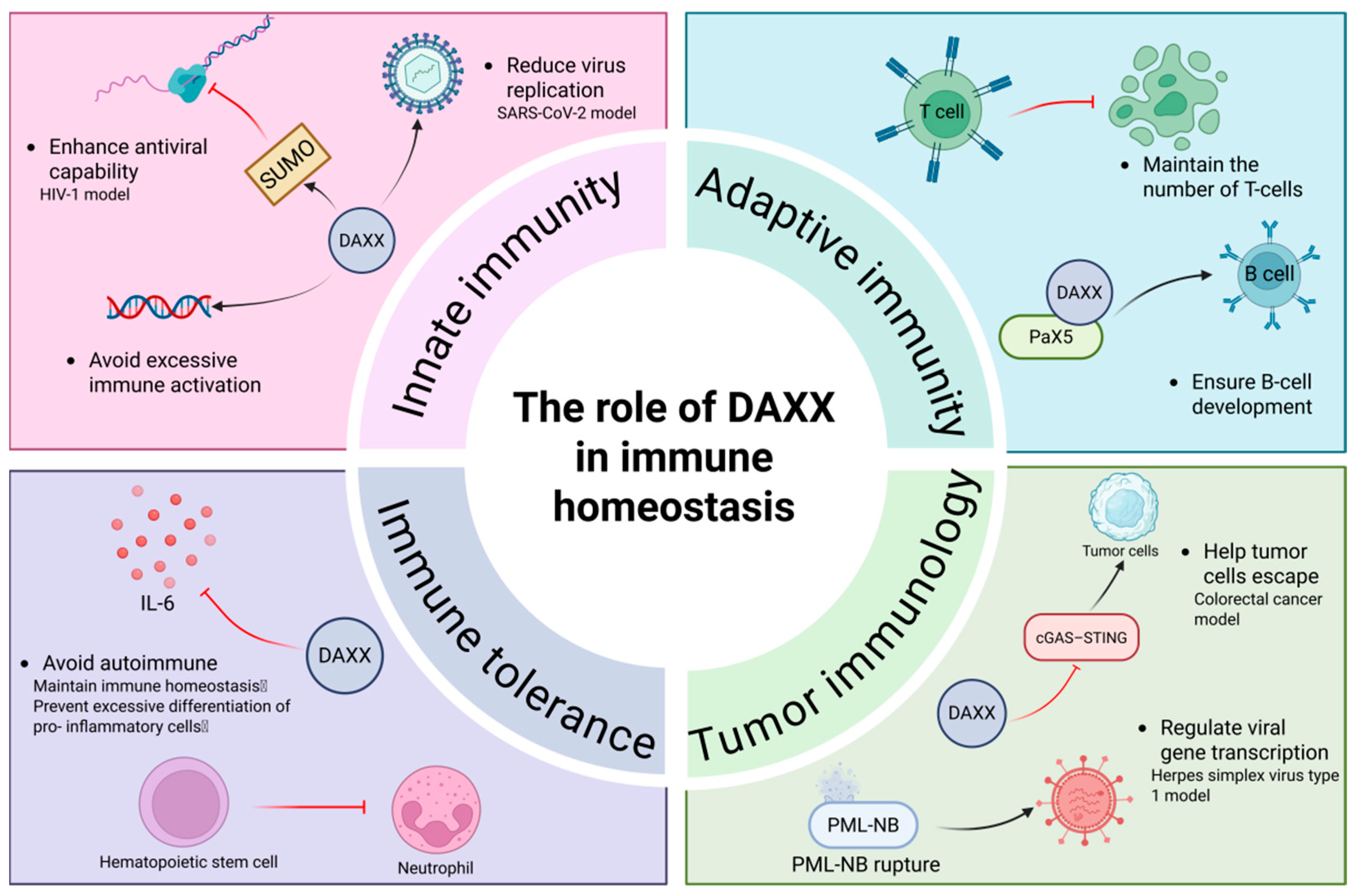
5. The Role of DAXX in Inflammation and Immune Homeostasis
6. DAXX-Associated Diseases and Potential Intervention Strategies
6.1. Metabolic Diseases
6.2. Aging-Related Diseases
6.3. Immune-Related Diseases
7. Conclusions
Author Contributions
Funding
Institutional Review Board Statement
Informed Consent Statement
Data Availability Statement
Acknowledgments
Conflicts of Interest
Abbreviations
| 4HB | Four-helix bundle |
| ACC | Acetyl-CoA carboxylase |
| ALT | Alternative lengthening of telomeres |
| AMPK | AMP-activated protein kinase |
| AR | Androgen receptor |
| ASK1 | Apoptosis signal-regulating kinase 1 |
| ATR | Ataxia telangiectasia and Rad3-related protein |
| ATRX | Alpha-thalassemia/mental retardation syndrome X-linked |
| AREs | Androgen response elements |
| CALML3-AS1 | CALML3 antisense RNA 1 |
| cGAS | Cyclic GMP-AMP synthase |
| CHK2 | Checkpoint kinase 2 |
| CK2 | Casein kinase 2 |
| CPT1A | Carnitine palmitoyltransferase 1A |
| DAXX | Death domain-associated protein 6 |
| DGAT | Diacylglycerol acyltransferase |
| DNMT1 | DNA methyltransferase 1 |
| DSB | DNA double-strand break |
| DHT | Dihydrotestosterone (DHT |
| ERV | Endogenous retrovirus |
| FASN | Fatty acid synthase |
| G6Pase | Glucose-6-phosphatase |
| GLUT | Glucose transporter |
| H3.3 | Histone H3 variant 3 |
| H3K4me3 | Trimethylation of histone H3 lysine 4 |
| H3K9me3 | Trimethylation of histone H3 lysine 9 |
| HDAC | Histone deacetylase |
| HBD | Histone-binding domain |
| HK | Hexokinase |
| HMGCR | 3-hydroxy-3-methylglutaryl-CoA reductase |
| HMGCS1 | 3-hydroxy-3-methylglutaryl-CoA synthase 1 |
| IFN-I | Type I interferon |
| JNK | c-Jun N-terminal kinase |
| KEAP1 | Kelch-like ECH-associated protein 1 |
| KIF5B | Kinesin family member 5B |
| LDLR | Low-density lipoprotein receptor |
| LLPS | Liquid–liquid phase separation |
| MASLD | Metabolic dysfunction-associated steatotic liver disease |
| MASH | Metabolic dysfunction-associated steatohepatitis |
| MDM2 | Mouse double minute 2 homolog |
| MPK38 | Maternal embryonic leucine zipper kinase (MELK) |
| mTOR | Mechanistic target of rapamycin |
| NF-κB | Nuclear factor kappa-light-chain-enhancer of activated B cells |
| Nrf2 | Nuclear factor erythroid 2-related factor 2 |
| PB1 | Phox and Bem1 domain |
| PEPCK | Phosphoenolpyruvate carboxykinase |
| PFK1 | Phosphofructokinase 1 |
| PK | Pyruvate kinase |
| PML | Promyelocytic leukemia protein |
| PML-NB | Promyelocytic leukemia nuclear body |
| PPARγ | Peroxisome proliferator-activated receptor gamma |
| RASSF1C | Ras association domain family member 1C |
| ROS | Reactive oxygen species |
| SCAP | SREBP cleavage-activating protein |
| SCD1 | Stearoyl-CoA desaturase 1 |
| S1p | Site 1 protease |
| S2p | Site 2 protease |
| SIM | SUMO-interacting motif |
| SQSTM1 | Sequestosome 1 |
| SREBP | Sterol regulatory element-binding protein |
| STING | Stimulator of interferon genes |
| SUMO | Small ubiquitin-like modifier |
| TAG | Triacylglycerol |
| TERRA | Telomeric repeat-containing RNA |
| TIN2 | TRF1-interacting nuclear factor 2 |
| TCR | T cell receptor |
References
- Kim, H.-H.; Dixit, V.D. Metabolic regulation of immunological aging. Nat. Aging 2025, 5, 1425–1440. [Google Scholar] [CrossRef] [Scilit]
- Franceschi, C.; Garagnani, P.; Parini, P.; Giuliani, C.; Santoro, A. Inflammaging: A new immune-metabolic viewpoint for age-related diseases. Nat. Rev. Endocrinol. 2018, 14, 576–590. [Google Scholar] [CrossRef] [Scilit]
- Allis, C.D.; Jenuwein, T. The molecular hallmarks of epigenetic control. Nat. Rev. Genet. 2016, 17, 487–500. [Google Scholar] [CrossRef] [Scilit]
- Choi, J.; Kim, T.; Cho, E.-J. HIRA vs. DAXX: The two axes shaping the histone H3.3 landscape. Exp. Mol. Med. 2024, 56, 251–263. [Google Scholar] [CrossRef] [Scilit] [PubMed]
- Mahmud, I.; Tian, G.; Wang, J.; Hutchinson, T.E.; Kim, B.J.; Awasthee, N.; Hale, S.; Meng, C.; Moore, A.; Zhao, L.; et al. DAXX drives de novo lipogenesis and contributes to tumorigenesis. Nat. Commun. 2023, 14, 1927. [Google Scholar] [CrossRef] [Scilit] [PubMed]
- Lewis, P.W.; Elsaesser, S.J.; Noh, K.-M.; Stadler, S.C.; Allis, C.D. Daxx is an H3.3-specific histone chaperone and cooperates with ATRX in replication-independent chromatin assembly at telomeres. Proc. Natl. Acad. Sci. USA 2010, 107, 14075–14080. [Google Scholar] [CrossRef] [Scilit] [PubMed]
- Wasylishen, A.R.; Sun, C.; Moyer, S.M.; Qi, Y.; Chau, G.P.; Aryal, N.K.; McAllister, F.; Kim, M.P.; Barton, M.C.; Estrella, J.S.; et al. Daxx maintains endogenous retroviral silencing and restricts cellular plasticity in vivo. Sci. Adv. 2020, 6, eaba8415. [Google Scholar] [CrossRef] [Scilit]
- Kiriakidou, M.; Driscoll, D.A.; Lopez-Guisa, J.M.; Strauss, J.F. Cloning and expression of primate Daxx cDNAs and mapping of the human gene to chromosome 6p21.3 in the MHC region. DNA Cell Biol. 1997, 16, 1289–1298. [Google Scholar] [CrossRef] [Scilit]
- Yang, X.; Khosravi-Far, R.; Chang, H.Y.; Baltimore, D. Daxx, a novel fas-binding protein that activates JNK and apoptosis. Cell 1997, 89, 1067–1076. [Google Scholar] [CrossRef] [Scilit]
- Escobar-Cabrera, E.; Lau, D.K.W.; Giovinazzi, S.; Ishov, A.M.; McIntosh, L.P. Structural characterization of the DAXX N-terminal helical bundle domain and its complex with Rassf1C. Structure 2010, 18, 1642–1653. [Google Scholar] [CrossRef] [Scilit]
- Clatterbuck Soper, S.F.; Walker, R.L.; Pineda, M.A.; Zhu, Y.J.; Dalgleish, J.L.T.; Wang, J.; Meltzer, P.S. Cancer-associated DAXX mutations reveal a critical role for ATRX localization in ALT suppression. Mol. Cell. Biol. 2025, 1–16. [Google Scholar] [CrossRef] [Scilit] [PubMed]
- Mahmud, I.; Liao, D. DAXX in cancer: Phenomena, processes, mechanisms and regulation. Nucleic Acids Res. 2019, 47, 7734–7752. [Google Scholar] [CrossRef] [Scilit] [PubMed]
- Bogolyubova, I.; Bogolyubov, D. DAXX is a crucial factor for proper development of mammalian oocytes and early embryos. Int. J. Mol. Sci. 2021, 22, 1313. [Google Scholar] [CrossRef] [Scilit] [PubMed]
- Lin, D.-Y.; Huang, Y.-S.; Jeng, J.-C.; Kuo, H.-Y.; Chang, C.-C.; Chao, T.-T.; Ho, C.-C.; Chen, Y.-C.; Lin, T.-P.; Fang, H.-I.; et al. Role of SUMO-interacting motif in Daxx SUMO modification, subnuclear localization, and repression of sumoylated transcription factors. Mol. Cell 2006, 24, 341–354. [Google Scholar] [CrossRef] [Scilit]
- Gao, J.; Liu, T.; Yang, D.; Tuo, Q. The dynamic regulation of Daxx-mediated transcriptional inhibition by SUMO and PML NBs. Int. J. Mol. Sci. 2025, 26, 6703. [Google Scholar] [CrossRef] [Scilit]
- Elsässer, S.J.; Huang, H.; Lewis, P.W.; Chin, J.W.; Allis, C.D.; Patel, D.J. DAXX envelops a histone H3.3-H4 dimer for H3.3-specific recognition. Nature 2012, 491, 560–565. [Google Scholar] [CrossRef] [Scilit]
- Chang, H.Y.; Nishitoh, H.; Yang, X.; Ichijo, H.; Baltimore, D. Activation of apoptosis signal-regulating kinase 1 (ASK1) by the adapter protein Daxx. Science 1998, 281, 1860–1863. [Google Scholar] [CrossRef] [Scilit]
- Pan, W.-W.; Zhou, J.-J.; Liu, X.-M.; Xu, Y.; Guo, L.-J.; Yu, C.; Shi, Q.-H.; Fan, H.-Y. Death domain-associated protein DAXX promotes ovarian cancer development and chemoresistance. J. Biol. Chem. 2013, 288, 13620–13630. [Google Scholar] [CrossRef] [Scilit]
- Carraro, M.; Hendriks, I.A.; Hammond, C.M.; Solis-Mezarino, V.; Völker-Albert, M.; Elsborg, J.D.; Weisser, M.B.; Spanos, C.; Montoya, G.; Rappsilber, J.; et al. DAXX adds a de novo H3.3K9me3 deposition pathway to the histone chaperone network. Mol. Cell 2023, 83, 1075–1092.e9. [Google Scholar] [CrossRef] [Scilit]
- Yeung, P.L.; Chen, L.-Y.; Tsai, S.-C.; Zhang, A.; Chen, J.D. Daxx contains two nuclear localization signals and interacts with importin alpha3. J. Cell. Biochem. 2008, 103, 456–470. [Google Scholar] [CrossRef] [Scilit]
- Trier, I.; Black, E.M.; Joo, Y.K.; Kabeche, L. ATR protects centromere identity by promoting DAXX association with PML nuclear bodies. Cell Rep. 2023, 42, 112495. [Google Scholar] [CrossRef] [Scilit] [PubMed]
- Torii, S.; Egan, D.A.; Evans, R.A.; Reed, J.C. Human Daxx regulates fas-induced apoptosis from nuclear PML oncogenic domains (PODs). EMBO J. 1999, 18, 6037–6049. [Google Scholar] [CrossRef] [Scilit] [PubMed]
- Chang, F.T.M.; McGhie, J.D.; Chan, F.L.; Tang, M.C.; Anderson, M.A.; Mann, J.R.; Andy Choo, K.H.; Wong, L.H. PML bodies provide an important platform for the maintenance of telomeric chromatin integrity in embryonic stem cells. Nucleic Acids Res. 2013, 41, 4447–4458. [Google Scholar] [CrossRef] [Scilit] [PubMed]
- Chen, C.; Sun, X.; Xie, W.; Chen, S.; Hu, Y.; Xing, D.; Xu, J.; Chen, X.; Zhao, Z.; Han, Z.; et al. Opposing biological functions of the cytoplasm and nucleus DAXX modified by SUMO-2/3 in gastric cancer. Cell Death Dis. 2020, 11, 514. [Google Scholar] [CrossRef] [Scilit]
- Santiago, A.; Godsey, A.C.; Hossain, J.; Zhao, L.Y.; Liao, D. Identification of two independent SUMO-interacting motifs in Daxx: Evolutionary conservation from drosophila to humans and their biochemical functions. Cell Cycle 2009, 8, 76–87. [Google Scholar] [CrossRef] [Scilit]
- Vladimirova, O.; De Leo, A.; Deng, Z.; Wiedmer, A.; Hayden, J.; Lieberman, P.M. Phase separation and DAXX redistribution contribute to LANA nuclear body and KSHV genome dynamics during latency and reactivation. PLoS Pathog. 2021, 17, e1009231. [Google Scholar] [CrossRef] [Scilit]
- Mascle, X.H.; Gagnon, C.; Wahba, H.M.; Lussier-Price, M.; Cappadocia, L.; Sakaguchi, K.; Omichinski, J.G. Acetylation of SUMO1 alters interactions with the SIMs of PML and Daxx in a protein-specific manner. Structure 2020, 28, 157–168.e5. [Google Scholar] [CrossRef] [Scilit]
- Lin, D.-Y.; Fang, H.-I.; Ma, A.-H.; Huang, Y.-S.; Pu, Y.-S.; Jenster, G.; Kung, H.-J.; Shih, H.-M. Negative modulation of androgen receptor transcriptional activity by Daxx. Mol. Cell. Biol. 2004, 24, 10529–10541. [Google Scholar] [CrossRef] [Scilit]
- Jung, Y.-S.; Kim, H.-Y.; Kim, J.; Lee, M.-G.; Pouysségur, J.; Kim, E. Physical interactions and functional coupling between Daxx and sodium hydrogen exchanger 1 in ischemic cell death. J. Biol. Chem. 2008, 283, 1018–1025. [Google Scholar] [CrossRef] [Scilit]
- Xiong, G.; Li, L.; Sun, S.; Li, T.; Liao, D.; Shu, C.; Tuo, Q. Subcellular localization of DAXX influence ox-LDL induced apoptosis in macrophages. Mol. Biol. Rep. 2014, 41, 7183–7190. [Google Scholar] [CrossRef] [Scilit]
- Gulve, N.; Su, C.; Deng, Z.; Soldan, S.S.; Vladimirova, O.; Wickramasinghe, J.; Zheng, H.; Kossenkov, A.V.; Lieberman, P.M. DAXX-ATRX regulation of p53 chromatin binding and DNA damage response. Nat. Commun. 2022, 13, 5033. [Google Scholar] [CrossRef] [Scilit] [PubMed]
- Pinto, L.M.; Pailas, A.; Bondarchenko, M.; Sharma, A.B.; Neumann, K.; Rizzo, A.J.; Jeanty, C.; Nicot, N.; Racca, C.; Graham, M.K.; et al. DAXX promotes centromeric stability independently of ATRX by preventing the accumulation of R-loop-induced DNA double-stranded breaks. Nucleic Acids Res. 2023, 52, 1136–1155. [Google Scholar] [CrossRef] [Scilit] [PubMed]
- Salsman, J.; Rapkin, L.M.; Margam, N.N.; Duncan, R.; Bazett-Jones, D.P.; Dellaire, G. Myogenic differentiation triggers PML nuclear body loss and DAXX relocalization to chromocentres. Cell Death Dis. 2017, 8, e2724. [Google Scholar] [CrossRef] [Scilit] [PubMed]
- Kalra, S.; Unnikrishnan, A.G.; Baruah, M.P.; Sahay, R.; Bantwal, G. Metabolic and energy imbalance in dysglycemia-based chronic disease. Diabetes Metab. Syndr. Obes. 2021, 14, 165–184. [Google Scholar] [CrossRef] [Scilit]
- Li, H.; Wang, S.; Wang, J.; Guo, X.; Song, Y.; Feng, K.; Guo, Z.; Liao, D.; Hu, W.; Yang, L. Energy metabolism in health and diseases. Signal Transduct. Target. Ther. 2025, 10, 69. [Google Scholar] [CrossRef] [Scilit]
- Dorosz, K.; Majewska, L.; Kijowski, J. Structure and function of PML nuclear bodies: A brief overview of key cellular roles. Biomolecules 2025, 15, 1291. [Google Scholar] [CrossRef] [Scilit]
- Chandel, N.S. Lipid metabolism. Cold Spring Harb. Perspect. Biol. 2021, 13, a040576. [Google Scholar]
- Hotamisligil, G.S. Inflammation, metaflammation and immunometabolic disorders. Nature 2017, 542, 177–185. [Google Scholar] [CrossRef] [Scilit]
- Zeng, J.; Lo, C.H. Editorial: Lipid metabolism dysregulation in obesity-related diseases and neurodegeneration. Front. Endocrinol. 2025, 16, 1564003. [Google Scholar] [CrossRef] [Scilit]
- Samuel, V.T.; Shulman, G.I. The pathogenesis of insulin resistance: Integrating signaling pathways and substrate flux. J. Clin. Investig. 2016, 126, 12–22. [Google Scholar] [CrossRef] [Scilit]
- Brown, M.S.; Goldstein, J.L. The SREBP pathway: Regulation of cholesterol metabolism by proteolysis of a membrane-bound transcription factor. Cell 1997, 89, 331–340. [Google Scholar] [CrossRef] [Scilit] [PubMed]
- Lee, S.H.; Lee, J.-H.; Im, S.-S. The cellular function of SCAP in metabolic signaling. Exp. Mol. Med. 2020, 52, 724–729. [Google Scholar] [CrossRef] [Scilit] [PubMed]
- Horton, J.D.; Goldstein, J.L.; Brown, M.S. SREBPs: Activators of the complete program of cholesterol and fatty acid synthesis in the liver. J. Clin. Investig. 2002, 109, 1125–1131. [Google Scholar] [CrossRef] [PubMed]
- Chandrasekaran, P.; Weiskirchen, R. The role of SCAP/SREBP as central regulators of lipid metabolism in hepatic steatosis. Int. J. Mol. Sci. 2024, 25, 1109. [Google Scholar] [CrossRef] [Scilit]
- Zhao, Q.; Lin, X.; Wang, G. Targeting SREBP-1-mediated lipogenesis as potential strategies for cancer. Front. Oncol. 2022, 12, 952371. [Google Scholar] [CrossRef] [Scilit]
- Eberlé, D.; Hegarty, B.; Bossard, P.; Ferré, P.; Foufelle, F. SREBP transcription factors: Master regulators of lipid homeostasis. Biochimie 2004, 86, 839–848. [Google Scholar] [CrossRef] [Scilit]
- Chen, F.; Li, H.; Wang, Y.; Tang, X.; Lin, K.; Li, Q.; Meng, C.; Shi, W.; Leo, J.; Liang, X.; et al. CHD1 loss reprograms SREBP2-driven cholesterol synthesis to fuel androgen-responsive growth and castration resistance in SPOP-mutated prostate tumors. Nat. Cancer 2025, 6, 854–873. [Google Scholar] [CrossRef] [Scilit]
- Li, C.; Cheng, D.; Li, P. Androgen receptor dynamics in prostate cancer: From disease progression to treatment resistance. Front. Oncol. 2025, 15, 1542811. [Google Scholar] [CrossRef] [Scilit]
- Li, T.-P.; Sun, S.-W.; Xiong, G.-Z.; Qiu, F.; Yang, D.-M.; Sun, S.-Y.; Xie, X.-J.; Liao, D.-F.; Chen, J.-X.; Tuo, Q.-H. Direct interaction of Daxx and androgen receptor is required for their regulatory activity in cholesterol biosynthesis. Pharmacology 2021, 106, 29–36. [Google Scholar] [CrossRef] [Scilit]
- Swinnen, J.V.; Verhoeven, G. Androgens and the control of lipid metabolism in human prostate cancer cells. J. Steroid Biochem. Mol. Biol. 1998, 65, 191–198. [Google Scholar] [CrossRef] [Scilit]
- Vertegaal, A.C.O. Signalling mechanisms and cellular functions of SUMO. Nat. Rev. Mol. Cell Biol. 2022, 23, 715–731. [Google Scholar] [CrossRef] [Scilit] [PubMed]
- Zhao, T.; Fan, J.; Abu-Zaid, A.; Burley, S.K.; Zheng, X.F.S. Nuclear mTOR signaling orchestrates transcriptional programs underlying cellular growth and metabolism. Cells 2024, 13, 781. [Google Scholar] [CrossRef] [Scilit] [PubMed]
- Hajirahimkhan, A.; Brown, K.A.; Clare, S.E.; Khan, S.A. SREBP1-dependent metabolism as a potential target for breast cancer risk reduction. Cancers 2025, 17, 1664. [Google Scholar] [CrossRef] [Scilit] [PubMed]
- Anand, S.; Patel, T.N. Integrating the metabolic and molecular circuits in diabetes, obesity and cancer: A comprehensive review. Discov. Oncol. 2024, 15, 779. [Google Scholar] [CrossRef] [Scilit] [PubMed]
- Rong, S.; Xia, M.; Vale, G.; Wang, S.; Kim, C.-W.; Li, S.; McDonald, J.G.; Radhakrishnan, A.; Horton, J.D. DGAT2 inhibition blocks SREBP-1 cleavage and improves hepatic steatosis by increasing phosphatidylethanolamine in the ER. Cell Metab. 2024, 36, 617–629.e7. [Google Scholar] [CrossRef] [Scilit] [PubMed]
- Juhl, A.D.; Wüstner, D. Pathways and mechanisms of cellular cholesterol efflux-insight from imaging. Front. Cell Dev. Biol. 2022, 10, 834408. [Google Scholar] [CrossRef] [Scilit]
- Chen, L.; Zhao, Z.-W.; Zeng, P.-H.; Zhou, Y.-J.; Yin, W.-J. Molecular mechanisms for ABCA1-mediated cholesterol efflux. Cell Cycle 2022, 21, 1121–1139. [Google Scholar] [CrossRef] [Scilit]
- Parton, R.G.; del Pozo, M.A. Caveolae as plasma membrane sensors, protectors and organizers. Nat. Rev. Mol. Cell Biol. 2013, 14, 98–112. [Google Scholar] [CrossRef] [Scilit]
- Tuo, Q.-H.; Liang, L.; Zhu, B.-Y.; Cao, X.; Liao, D.-F. Effect of Daxx on cholesterol accumulation in hepatic cells. World J. Gastroenterol. 2008, 14, 435–440. [Google Scholar] [CrossRef] [Scilit]
- Schlaepfer, I.R.; Joshi, M. CPT1A-mediated fat oxidation, mechanisms, and therapeutic potential. Endocrinology 2020, 161, bqz046. [Google Scholar] [CrossRef] [Scilit]
- Fang, C.; Pan, J.; Qu, N.; Lei, Y.; Han, J.; Zhang, J.; Han, D. The AMPK pathway in fatty liver disease. Front. Physiol. 2022, 13, 970292. [Google Scholar] [CrossRef] [Scilit]
- Seong, H.-A.; Manoharan, R.; Ha, H. DAXX ameliorates metabolic dysfunction in mice with diet-induced obesity by activating the AMP-activated protein kinase-related kinase MPK38/MELK. Biochem. Biophys. Res. Commun. 2021, 572, 164–170. [Google Scholar] [CrossRef] [Scilit] [PubMed]
- Ramatchandirin, B.; Pearah, A.; He, L. Regulation of liver glucose and lipid metabolism by transcriptional factors and coactivators. Life 2023, 13, 515. [Google Scholar] [CrossRef] [Scilit] [PubMed]
- Han, H.-S.; Kang, G.; Kim, J.S.; Choi, B.H.; Koo, S.-H. Regulation of glucose metabolism from a liver-centric perspective. Exp. Mol. Med. 2016, 48, e218. [Google Scholar] [CrossRef] [Scilit] [PubMed]
- Drobiova, H.; Alhamar, G.; Ahmad, R.; Al-Mulla, F.; Al Madhoun, A. GLUT4 trafficking and storage vesicles: Molecular architecture, regulatory networks, and their disruption in insulin resistance. Int. J. Mol. Sci. 2025, 26, 7568. [Google Scholar] [CrossRef] [Scilit]
- Richter, E.A.; Bilan, P.J.; Klip, A. A comprehensive view of muscle glucose uptake: Regulation by insulin, contractile activity, and exercise. Physiol. Rev. 2025, 105, 1867–1945. [Google Scholar] [CrossRef] [Scilit]
- Knudsen, J.R.; Persson, K.W.; Henriquez-Olguin, C.; Li, Z.; Di Leo, N.; Hesselager, S.A.; Raun, S.H.; Hingst, J.R.; Trouillon, R.; Wohlwend, M.; et al. Microtubule-mediated GLUT4 trafficking is disrupted in insulin-resistant skeletal muscle. eLife 2023, 12, e83338. [Google Scholar] [CrossRef] [Scilit]
- Mao, G.; Liu, J. CALML3-AS1 enhances malignancies and stemness of small cell lung cancer cells through interacting with DAXX protein and promoting GLUT4-mediated aerobic glycolysis. Toxicol. Appl. Pharmacol. 2025, 495, 117177. [Google Scholar] [CrossRef] [Scilit]
- Lalioti, V.S.; Vergarajauregui, S.; Tsuchiya, Y.; Hernandez-Tiedra, S.; Sandoval, I.V. Daxx functions as a scaffold of a protein assembly constituted by GLUT4, JNK1 and KIF5B. J. Cell. Physiol. 2009, 218, 416–426. [Google Scholar] [CrossRef] [Scilit]
- van Gerwen, J.; Shun-Shion, A.S.; Fazakerley, D.J. Insulin signalling and GLUT4 trafficking in insulin resistance. Biochem. Soc. Trans. 2023, 51, 1057–1069. [Google Scholar] [CrossRef] [Scilit]
- Lunt, S.Y.; Vander Heiden, M.G. Aerobic glycolysis: Meeting the metabolic requirements of cell proliferation. Annu. Rev. Cell Dev. Biol. 2011, 27, 441–464. [Google Scholar] [CrossRef] [Scilit] [PubMed]
- Zhao, J.; Jin, D.; Huang, M.; Ji, J.; Xu, X.; Wang, F.; Zhou, L.; Bao, B.; Jiang, F.; Xu, W.; et al. Glycolysis in the tumor microenvironment: A driver of cancer progression and a promising therapeutic target. Front. Cell Dev. Biol. 2024, 12, 1416472. [Google Scholar] [CrossRef] [Scilit] [PubMed]
- Knorr, S.; Skakkebæk, A.; Just, J.; Johannsen, E.B.; Trolle, C.; Vang, S.; Lohse, Z.; Bytoft, B.; Damm, P.; Højlund, K.; et al. Epigenetic and transcriptomic alterations in offspring born to women with type 1 diabetes (the EPICOM study). BMC Med. 2022, 20, 338. [Google Scholar] [CrossRef] [Scilit] [PubMed]
- Wang, H.; Fan, Z.; Shliaha, P.V.; Miele, M.; Hendrickson, R.C.; Jiang, X.; Helin, K. H3K4me3 regulates RNA polymerase II promoter-proximal pause-release. Nature 2023, 615, 339–348. [Google Scholar] [CrossRef] [Scilit]
- Pandya Thakkar, N.; Pereira, B.M.V.; Katakia, Y.T.; Ramakrishnan, S.K.; Thakar, S.; Sakhuja, A.; Rajeev, G.; Soorya, S.; Thieme, K.; Majumder, S. Elevated H3K4me3 through MLL2-WDR82 upon hyperglycemia causes jagged ligand dependent notch activation to interplay with differentiation state of endothelial cells. Front. Cell Dev. Biol. 2022, 10, 839109. [Google Scholar] [CrossRef] [Scilit]
- Zhong, W.; Hong, C.; Zhang, Y.; Li, Y.; Xiao, C.; Liu, X. ASH2L-mediated H3K4me3 drives diabetic nephropathy through HIPK2 and Notch1 pathway. Transl. Res. 2024, 264, 85–96. [Google Scholar] [CrossRef] [Scilit]
- Zhang, X.; Yang, S.; Chen, J.; Su, Z. Unraveling the Regulation of Hepatic Gluconeogenesis. Front. Endocrinol. 2018, 9, 802. [Google Scholar] [CrossRef] [Scilit]
- Ma, Q. Role of nrf2 in oxidative stress and toxicity. Annu. Rev. Pharmacol. Toxicol. 2013, 53, 401–426. [Google Scholar] [CrossRef] [Scilit]
- Hotamisligil, G.S. Endoplasmic reticulum stress and the inflammatory basis of metabolic disease. Cell 2010, 140, 900–917. [Google Scholar] [CrossRef] [Scilit]
- Masenga, S.K.; Kabwe, L.S.; Chakulya, M.; Kirabo, A. Mechanisms of oxidative stress in metabolic syndrome. Int. J. Mol. Sci. 2023, 24, 7898. [Google Scholar] [CrossRef] [Scilit]
- Fulda, S.; Gorman, A.M.; Hori, O.; Samali, A. Cellular stress responses: Cell survival and cell death. Int. J. Cell Biol. 2010, 2010, 214074. [Google Scholar] [CrossRef] [Scilit]
- Khelifi, A.F.; D’Alcontres, M.S.; Salomoni, P. Daxx is required for stress-induced cell death and JNK activation. Cell Death Differ. 2005, 12, 724–733. [Google Scholar] [CrossRef] [Scilit]
- Zhao, W.; Zhuang, P.; Chen, Y.; Wu, Y.; Zhong, M.; Lun, Y. “Double-edged sword” effect of reactive oxygen species (ROS) in tumor development and carcinogenesis. Physiol. Res. 2023, 72, 301–307. [Google Scholar] [CrossRef] [Scilit] [PubMed]
- Sykiotis, G.P.; Bohmann, D. Stress-activated cap’n’collar transcription factors in aging and human disease. Sci. Signal. 2010, 3, re3. [Google Scholar] [CrossRef] [Scilit] [PubMed]
- Sykiotis, G.P. Keap1/Nrf2 signaling pathway. Antioxidants 2021, 10, 828. [Google Scholar] [CrossRef] [Scilit] [PubMed]
- Yang, Y.; Willis, T.L.; Button, R.W.; Strang, C.J.; Fu, Y.; Wen, X.; Grayson, P.R.C.; Evans, T.; Sipthorpe, R.J.; Roberts, S.L.; et al. Cytoplasmic DAXX drives SQSTM1/p62 phase condensation to activate Nrf2-mediated stress response. Nat. Commun. 2019, 10, 3759. [Google Scholar] [CrossRef] [Scilit]
- Xia, Q.; Li, Y.; Xu, W.; Wu, C.; Zheng, H.; Liu, L.; Dong, L. Enhanced liquidity of p62 droplets mediated by Smurf1 links Nrf2 activation and autophagy. Cell Biosci. 2023, 13, 37. [Google Scholar] [CrossRef] [Scilit]
- Huang, X.; Zhang, J.; Yao, J.; Mi, N.; Yang, A. Phase separation of p62: Roles and regulations in autophagy. Trends Cell Biol. 2025, 35, 854–865. [Google Scholar] [CrossRef] [Scilit]
- Shreeya, T.; Ansari, M.S.; Kumar, P.; Saifi, M.; Shati, A.A.; Alfaifi, M.Y.; Elbehairi, S.E.I. Senescence: A DNA damage response and its role in aging and neurodegenerative diseases. Front. Aging 2023, 4, 1292053. [Google Scholar] [CrossRef] [Scilit]
- Rossiello, F.; Jurk, D.; Passos, J.F.; d’Adda di Fagagna, F. Telomere dysfunction in ageing and age-related diseases. Nat. Cell Biol. 2022, 24, 135–147. [Google Scholar] [CrossRef] [Scilit]
- Ngo, V.; Duennwald, M.L. Nrf2 and oxidative stress: A general overview of mechanisms and implications in human disease. Antioxidants 2022, 11, 2345. [Google Scholar] [CrossRef] [Scilit] [PubMed]
- Olivieri, F.; Prattichizzo, F.; Grillari, J.; Balistreri, C.R. Cellular senescence and inflammaging in age-related diseases. Mediators Inflamm. 2018, 2018, 9076485. [Google Scholar] [CrossRef] [Scilit] [PubMed]
- López-Otín, C.; Blasco, M.A.; Partridge, L.; Serrano, M.; Kroemer, G. The hallmarks of aging. Cell 2013, 153, 1194–1217. [Google Scholar] [CrossRef] [Scilit] [PubMed]
- d’Adda di Fagagna, F. Living on a break: Cellular senescence as a DNA-damage response. Nat. Rev. Cancer 2008, 8, 512–522. [Google Scholar] [CrossRef] [Scilit]
- Gong, P.; Guo, Z.; Wang, S.; Gao, S.; Cao, Q. Histone phosphorylation in DNA damage response. Int. J. Mol. Sci. 2025, 26, 2405. [Google Scholar] [CrossRef] [Scilit]
- Pan, W.-W.; Yi, F.-P.; Cao, L.-X.; Liu, X.-M.; Shen, Z.-F.; Bu, Y.-Q.; Xu, Y.; Fan, H.-Y.; Song, F.-Z. DAXX silencing suppresses mouse ovarian surface epithelial cell growth by inducing senescence and DNA damage. Gene 2013, 526, 287–294. [Google Scholar] [CrossRef] [Scilit]
- Bernardi, R.; Pandolfi, P.P. Structure, dynamics and functions of promyelocytic leukaemia nuclear bodies. Nat. Rev. Mol. Cell Biol. 2007, 8, 1006–1016. [Google Scholar] [CrossRef] [Scilit]
- Dellaire, G.; Ching, R.W.; Ahmed, K.; Jalali, F.; Tse, K.C.K.; Bristow, R.G.; Bazett-Jones, D.P. Promyelocytic leukemia nuclear bodies behave as DNA damage sensors whose response to DNA double-strand breaks is regulated by NBS1 and the kinases ATM, Chk2, and ATR. J. Cell Biol. 2006, 175, 55–66. [Google Scholar] [CrossRef] [Scilit]
- Fernandez, A.; O’Leary, C.; O’Byrne, K.J.; Burgess, J.; Richard, D.J.; Suraweera, A. Epigenetic mechanisms in DNA double strand break repair: A clinical review. Front. Mol. Biosci. 2021, 8, 685440. [Google Scholar] [CrossRef] [Scilit]
- Li, H.; Leo, C.; Zhu, J.; Wu, X.; O’Neil, J.; Park, E.J.; Chen, J.D. Sequestration and inhibition of Daxx-mediated transcriptional repression by PML. Mol. Cell. Biol. 2000, 20, 1784–1796. [Google Scholar] [CrossRef] [Scilit]
- Juhász, S.; Elbakry, A.; Mathes, A.; Löbrich, M. ATRX promotes DNA repair synthesis and sister chromatid exchange during homologous recombination. Mol. Cell 2018, 71, 11–24.e7. [Google Scholar] [CrossRef] [Scilit] [PubMed]
- Fan, H.-C.; Chen, C.-M.; Chi, C.-S.; Tsai, J.-D.; Chiang, K.-L.; Chang, Y.-K.; Lin, S.-Z.; Harn, H.-J. Targeting telomerase and ATRX/DAXX inducing tumor senescence and apoptosis in the malignant glioma. Int. J. Mol. Sci. 2019, 20, 200. [Google Scholar] [CrossRef] [Scilit] [PubMed]
- Teng, Y.-C.; Sundaresan, A.; O’Hara, R.; Gant, V.U.; Li, M.; Martire, S.; Warshaw, J.N.; Basu, A.; Banaszynski, L.A. ATRX promotes heterochromatin formation to protect cells from G-quadruplex DNA-mediated stress. Nat. Commun. 2021, 12, 3887. [Google Scholar] [CrossRef] [Scilit] [PubMed]
- Sato, K.; Knipscheer, P. G-quadruplex resolution: From molecular mechanisms to physiological relevance. DNA Repair 2023, 130, 103552. [Google Scholar] [CrossRef] [Scilit]
- Wulfridge, P.; Sarma, K. Intertwining roles of R-loops and G-quadruplexes in DNA repair, transcription and genome organization. Nat. Cell Biol. 2024, 26, 1025–1036. [Google Scholar] [CrossRef] [Scilit]
- Blackburn, E.H. Telomeres and telomerase: The means to the end (nobel lecture). Angew. Chem. 2010, 49, 7405–7421. [Google Scholar] [CrossRef] [Scilit]
- Azzalin, C.M. TERRA and the alternative lengthening of telomeres: A dangerous affair. FEBS Lett. 2025, 599, 157–165. [Google Scholar] [CrossRef] [Scilit]
- Gauchier, M.; Kan, S.; Barral, A.; Sauzet, S.; Agirre, E.; Bonnell, E.; Saksouk, N.; Barth, T.K.; Ide, S.; Urbach, S.; et al. SETDB1-dependent heterochromatin stimulates alternative lengthening of telomeres. Sci. Adv. 2019, 5, eaav3673. [Google Scholar] [CrossRef] [Scilit]
- Carson, L.M.; Flynn, R.L. Highlighting vulnerabilities in the alternative lengthening of telomeres pathway. Curr. Opin. Pharmacol. 2023, 70, 102380. [Google Scholar] [CrossRef] [Scilit]
- Mishra, A.; Patel, T.N. Locking the gates of immortality: Targeting alternative lengthening of telomeres (ALT) pathways. Med. Oncol. 2025, 42, 78. [Google Scholar] [CrossRef] [Scilit]
- Nera, B.; Huang, H.-S.; Lai, T.; Xu, L. Elevated levels of TRF2 induce telomeric ultrafine anaphase bridges and rapid telomere deletions. Nat. Commun. 2015, 6, 10132. [Google Scholar] [CrossRef] [Scilit]
- Kaur, P.; Barnes, R.; Pan, H.; Detwiler, A.C.; Liu, M.; Mahn, C.; Hall, J.; Messenger, Z.; You, C.; Piehler, J.; et al. TIN2 is an architectural protein that facilitates TRF2-mediated trans- and cis-interactions on telomeric DNA. Nucleic Acids Res. 2021, 49, 13000–13018. [Google Scholar] [CrossRef] [Scilit] [PubMed]
- Shi, Y.; Zhang, F.; Li, S.; Chen, W.; Wang, K.; Liu, D.; Wang, C.; He, Z.; Chen, Y.; Mao, W.; et al. TIN2 deficiency leads to ALT-associated phenotypes and differentiation defects in embryonic stem cells. Stem Cell Rep. 2022, 17, 765–779. [Google Scholar] [CrossRef] [Scilit] [PubMed]
- Andonian, B.J.; Hippensteel, J.A.; Abuabara, K.; Boyle, E.M.; Colbert, J.F.; Devinney, M.J.; Faye, A.S.; Kochar, B.; Lee, J.; Litke, R.; et al. Inflammation and aging-related disease: A transdisciplinary inflammaging framework. GeroScience 2025, 47, 515–542. [Google Scholar] [CrossRef] [Scilit] [PubMed]
- Ajoolabady, A.; Pratico, D.; Tang, D.; Zhou, S.; Franceschi, C.; Ren, J. Immunosenescence and inflammaging: Mechanisms and role in diseases. Ageing Res. Rev. 2024, 101, 102540. [Google Scholar] [CrossRef] [Scilit]
- Park, J.; Lee, J.H.; La, M.; Jang, M.J.; Chae, G.W.; Kim, S.B.; Tak, H.; Jung, Y.; Byun, B.; Ahn, J.K.; et al. Inhibition of NF-κB acetylation and its transcriptional activity by Daxx. J. Mol. Biol. 2007, 368, 388–397. [Google Scholar] [CrossRef] [Scilit]
- Croxton, R.; Puto, L.A.; de Belle, I.; Thomas, M.; Torii, S.; Hanaii, F.; Cuddy, M.; Reed, J.C. Daxx represses expression of a subset of antiapoptotic genes regulated by nuclear factor-kappaB. Cancer Res. 2006, 66, 9026–9035. [Google Scholar] [CrossRef] [Scilit]
- Singh, H.; Gupta, R.; Gupta, M.; Ahmad, A. Aging-induced alterations in microglial cells and their impact on neurodegenerative disorders. Mol. Biol. Rep. 2025, 52, 515. [Google Scholar] [CrossRef] [Scilit]
- Li, Y.; Zhan, B.; Zhuang, X.; Zhao, M.; Chen, X.; Wang, Q.; Liu, Q.; Zhang, L. Microglial Pdcd4 deficiency mitigates neuroinflammation-associated depression via facilitating Daxx mediated PPARγ/IL-10 signaling. J. Neuroinflamm. 2024, 21, 143. [Google Scholar] [CrossRef] [Scilit]
- Yao, Z.; Zhang, Q.; Li, X.; Zhao, D.; Liu, Y.; Zhao, K.; Liu, Y.; Wang, C.; Jiang, M.; Li, N.; et al. Death domain-associated protein 6 (Daxx) selectively represses IL-6 transcription through histone deacetylase 1 (HDAC1)-mediated histone deacetylation in macrophages. J. Biol. Chem. 2014, 289, 9372–9379. [Google Scholar] [CrossRef] [Scilit]
- Liu, Z.; Liang, Q.; Ren, Y.; Guo, C.; Ge, X.; Wang, L.; Cheng, Q.; Luo, P.; Zhang, Y.; Han, X. Immunosenescence: Molecular mechanisms and diseases. Signal Transduct. Target. Ther. 2023, 8, 200. [Google Scholar] [CrossRef] [Scilit]
- Chaplin, D.D. Overview of the immune response. J. Allergy Clin. Immunol. 2010, 125, S3–S23. [Google Scholar] [CrossRef] [Scilit] [PubMed]
- Xu, Y.; He, Z.; Du, J.; Chen, Z.; Creemers, J.W.M.; Wang, B.; Li, F.; Wang, Y. Epigenetic modulations of immune cells: From normal development to tumor progression. Int. J. Biol. Sci. 2023, 19, 5120–5144. [Google Scholar] [CrossRef] [Scilit] [PubMed]
- Maillet, S.; Fernandez, J.; Decourcelle, M.; El Koulali, K.; Blanchet, F.P.; Arhel, N.J.; Maarifi, G.; Nisole, S. Daxx inhibits HIV-1 reverse transcription and uncoating in a SUMO-dependent manner. Viruses 2020, 12, 636. [Google Scholar] [CrossRef] [Scilit] [PubMed]
- Boehmer, D.; Zanoni, I. Interferons in health and disease. Cell 2025, 188, 4480–4504. [Google Scholar] [CrossRef] [Scilit]
- Dopkins, N.; Nixon, D.F. Activation of human endogenous retroviruses and its physiological consequences. Nat. Rev. Mol. Cell Biol. 2024, 25, 212–222. [Google Scholar] [CrossRef] [Scilit]
- Mac Kain, A.; Maarifi, G.; Aicher, S.-M.; Arhel, N.; Baidaliuk, A.; Munier, S.; Donati, F.; Vallet, T.; Tran, Q.D.; Hardy, A.; et al. Identification of DAXX as a restriction factor of SARS-CoV-2 through a CRISPR/Cas9 screen. Nat. Commun. 2022, 13, 2442. [Google Scholar] [CrossRef] [Scilit]
- Sood, A. The cGAS-STING axis: A comprehensive review from immune defense to disease pathogenesis. Immunol. Res. 2025, 73, 91. [Google Scholar] [CrossRef] [Scilit]
- Ivashkiv, L.B.; Donlin, L.T. Regulation of type I interferon responses. Nat. Rev. Immunol. 2014, 14, 36–49. [Google Scholar] [CrossRef] [Scilit]
- Scherer, M.; Read, C.; Neusser, G.; Kranz, C.; Kuderna, A.K.; Müller, R.; Full, F.; Wörz, S.; Reichel, A.; Schilling, E.-M.; et al. Dual signaling via interferon and DNA damage response elicits entrapment by giant PML nuclear bodies. eLife 2022, 11, e73006. [Google Scholar] [CrossRef] [Scilit]
- Mai, J.; Nazari, M.; Stamminger, T.; Schreiner, S. Daxx and HIRA go viral—How chromatin remodeling complexes affect DNA virus infection. Tumour Virus Res. 2025, 19, 200317. [Google Scholar] [CrossRef] [Scilit]
- Saffert, R.T.; Kalejta, R.F. Inactivating a cellular intrinsic immune defense mediated by Daxx is the mechanism through which the human cytomegalovirus pp71 protein stimulates viral immediate-early gene expression. J. Virol. 2006, 80, 3863–3871. [Google Scholar] [CrossRef] [Scilit] [PubMed]
- Hwang, J.; Kalejta, R.F. Proteasome-dependent, ubiquitin-independent degradation of Daxx by the viral pp71 protein in human cytomegalovirus-infected cells. Virology 2007, 367, 334–338. [Google Scholar] [CrossRef] [Scilit] [PubMed]
- Glass, M.; Everett, R.D. Components of promyelocytic leukemia nuclear bodies (ND10) act cooperatively to repress herpesvirus infection. J. Virol. 2013, 87, 2174–2185. [Google Scholar] [CrossRef] [Scilit] [PubMed]
- Cuchet-Lourenço, D.; Boutell, C.; Lukashchuk, V.; Grant, K.; Sykes, A.; Murray, J.; Orr, A.; Everett, R.D. SUMO pathway dependent recruitment of cellular repressors to herpes simplex virus type 1 genomes. PLoS Pathog. 2011, 7, e1002123. [Google Scholar] [CrossRef] [Scilit]
- Boutell, C.; Cuchet-Lourenço, D.; Vanni, E.; Orr, A.; Glass, M.; McFarlane, S.; Everett, R.D. A viral ubiquitin ligase has substrate preferential SUMO targeted ubiquitin ligase activity that counteracts intrinsic antiviral defence. PLoS Pathog. 2011, 7, e1002245. [Google Scholar] [CrossRef] [Scilit]
- Tsai, K.; Thikmyanova, N.; Wojcechowskyj, J.A.; Delecluse, H.-J.; Lieberman, P.M. EBV tegument protein BNRF1 disrupts DAXX-ATRX to activate viral early gene transcription. PLoS Pathog. 2011, 7, e1002376. [Google Scholar] [CrossRef] [Scilit]
- Schreiner, S.; Wimmer, P.; Sirma, H.; Everett, R.D.; Blanchette, P.; Groitl, P.; Dobner, T. Proteasome-dependent degradation of Daxx by the viral E1B-55K protein in human adenovirus-infected cells. J. Virol. 2010, 84, 7029–7038. [Google Scholar] [CrossRef] [Scilit]
- Kyratsous, C.A.; Silverstein, S.J. Components of nuclear domain 10 bodies regulate varicella-zoster virus replication. J. Virol. 2009, 83, 4262–4274. [Google Scholar] [CrossRef] [Scilit]
- Kivipõld, P.; Võsa, L.; Ustav, M.; Kurg, R. DAXX modulates human papillomavirus early gene expression and genome replication in U2OS cells. Virol. J. 2015, 12, 104. [Google Scholar] [CrossRef] [Scilit]
- Chi, H.; Pepper, M.; Thomas, P.G. Principles and therapeutic applications of adaptive immunity. Cell 2024, 187, 2052–2078. [Google Scholar] [CrossRef] [Scilit] [PubMed]
- Li, J.; Qian, L.; Dowling, J.P.; Curcione, C.; Kurup, D.; Zhang, J. Daxx plays a novel role in T cell survival but is dispensable in fas-induced apoptosis. PLoS ONE 2017, 12, e0174011. [Google Scholar] [CrossRef] [Scilit] [PubMed]
- Medvedovic, J.; Ebert, A.; Tagoh, H.; Busslinger, M. Pax5: A master regulator of B cell development and leukemogenesis. Adv. Immunol. 2011, 111, 179–206. [Google Scholar] [PubMed]
- Emelyanov, A.V.; Kovac, C.R.; Sepulveda, M.A.; Birshtein, B.K. The interaction of Pax5 (BSAP) with Daxx can result in transcriptional activation in B cells. J. Biol. Chem. 2002, 277, 11156–11164. [Google Scholar] [CrossRef] [Scilit]
- Gongora, R.; Stephan, R.P.; Zhang, Z.; Cooper, M.D. An Essential Role for Daxx in the Inhibition of B Lymphopoiesis by Type I Interferons. Immunity 2001, 14, 727–737. [Google Scholar] [CrossRef] [Scilit]
- Michaelson, J.S.; Bader, D.; Kuo, F.; Kozak, C.; Leder, P. Loss of Daxx, a promiscuously interacting protein, results in extensive apoptosis in early mouse development. Genes Dev. 1999, 13, 1918–1923. [Google Scholar] [CrossRef] [Scilit]
- Hirano, T. Interleukin 6 in autoimmune and inflammatory diseases: A personal memoir. Proc. Jpn. Acad. Ser. B Phys. Biol. Sci. 2010, 86, 717–730. [Google Scholar] [CrossRef] [Scilit]
- Ross, J.B.; Myers, L.M.; Noh, J.J.; Collins, M.M.; Carmody, A.B.; Messer, R.J.; Dhuey, E.; Hasenkrug, K.J.; Weissman, I.L. Depleting myeloid-biased haematopoietic stem cells rejuvenates aged immunity. Nature 2024, 628, 162–170. [Google Scholar] [CrossRef] [Scilit]
- Chen, D.S.; Mellman, I. Elements of cancer immunity and the cancer-immune set point. Nature 2017, 541, 321–330. [Google Scholar] [CrossRef] [Scilit]
- Wang, Y.; Zhu, Y.; Cao, Y.; Li, Y.; Zhang, Z.; Fleishman, J.S.; Cheng, S.; Chen, J.; Ding, M. The activation of cGAS-STING pathway offers novel therapeutic opportunities in cancers. Front. Immunol. 2025, 16, 1579832. [Google Scholar] [CrossRef] [Scilit]
- Zhu, X.; Huang, K.; Kao, X.; Tang, Z.; Guo, W.; Wu, T.; Li, Q. Death domain-associated protein (Daxx) impairs colon cancer chemotherapy by inhibiting the cGAS-STING pathway. Oncol. Res. 2025, 33, 1149–1159. [Google Scholar] [CrossRef] [Scilit] [PubMed]
- Wu, C.; Ding, H.; Wang, S.; Li, Y.; Liu, S.-B.; Wang, X.; Zheng, J.; Xue, T.; Amin, H.M.; Song, Y.-H.; et al. DAXX inhibits cancer stemness and epithelial-mesenchymal transition in gastric cancer. Br. J. Cancer 2020, 122, 1477–1485. [Google Scholar] [CrossRef] [Scilit] [PubMed]
- Alandijany, T. Host intrinsic and innate intracellular immunity during herpes simplex virus type 1 (HSV-1) infection. Front. Microbiol. 2019, 10, 2611. [Google Scholar] [CrossRef] [Scilit] [PubMed]
- Kim, S.-M.; Hur, W.-H.; Kang, B.-Y.; Lee, S.-W.; Roh, P.-R.; Park, D.-J.; Sung, P.-S.; Yoon, S.-K. Death-associated protein 6 (Daxx) alleviates liver fibrosis by modulating Smad2 acetylation. Cells 2021, 10, 1742. [Google Scholar] [CrossRef] [Scilit]
- Huang, L.; Agrawal, T.; Zhu, G.; Yu, S.; Tao, L.; Lin, J.; Marmorstein, R.; Shorter, J.; Yang, X. DAXX represents a new type of protein-folding enabler. Nature 2021, 597, 132–137. [Google Scholar] [CrossRef] [Scilit]
- Schellnegger, M.; Hofmann, E.; Carnieletto, M.; Kamolz, L.-P. Unlocking longevity: The role of telomeres and its targeting interventions. Front. Aging 2024, 5, 1339317. [Google Scholar] [CrossRef] [Scilit]
- Peterson, P.; Nagamine, K.; Scott, H.; Heino, M.; Kudoh, J.; Shimizu, N.; Antonarakis, S.E.; Krohn, K.J. APECED: A monogenic autoimmune disease providing new clues to self-tolerance. Immunol. Today 1998, 19, 384–386. [Google Scholar] [CrossRef] [Scilit]
- Anderson, M.S.; Venanzi, E.S.; Klein, L.; Chen, Z.; Berzins, S.P.; Turley, S.J.; von Boehmer, H.; Bronson, R.; Dierich, A.; Benoist, C.; et al. Projection of an immunological self shadow within the thymus by the aire protein. Science 2002, 298, 1395–1401. [Google Scholar] [CrossRef] [Scilit]
- Meloni, A.; Fiorillo, E.; Corda, D.; Incani, F.; Serra, M.L.; Contini, A.; Cao, A.; Rosatelli, M.C. DAXX is a new AIRE-interacting protein. J. Biol. Chem. 2010, 285, 13012–13021. [Google Scholar] [CrossRef] [Scilit]
- Everett, R.D. Interactions between DNA viruses, ND10 and the DNA damage response. Cell. Microbiol. 2006, 8, 365–374. [Google Scholar] [CrossRef] [Scilit]
- Schreiner, S.; Bürck, C.; Glass, M.; Groitl, P.; Wimmer, P.; Kinkley, S.; Mund, A.; Everett, R.D.; Dobner, T. Control of human adenovirus type 5 gene expression by cellular Daxx/ATRX chromatin-associated complexes. Nucleic Acids Res. 2013, 41, 3532–3550. [Google Scholar] [CrossRef] [Scilit]



| Virus | Effect of DAXX on Viral Replication | Reported Step or Mechanism | Viral Countermeasure | Refs |
|---|---|---|---|---|
| HCMV | DAXX restricts viral immediate early gene expression and lytic infection | DAXX mediates intrinsic silencing of incoming viral genomes at nuclear bodies | pp71 promotes proteasome dependent loss of DAXX to relieve repression | [132,133] |
| HSV-1 | DAXX restricts viral gene expression and replication, strongest when ICP0 is absent | ND10 proteins including DAXX repress viral transcription at early stages | ICP0 disrupts ND10 based restriction and counteracts repressive factors | [134,135,136] |
| EBV | DAXX restricts early infection unless antagonized | DAXX ATRX chromatin repression on incoming viral genomes at nuclear bodies | BNRF1 binds DAXX and disrupts the DAXX ATRX restriction complex | [136,137] |
| HAdV-5 | DAXX restricts adenovirus replication and gene expression | DAXX imposes restrictions on viral growth and transcription | E1B 55K binds DAXX and induces proteasome dependent degradation of DAXX | [138] |
| VZV | DAXX restricts very early stages of replication | ND10 components including DAXX associate with viral genomes and limit early replication events | Viral antagonism of ND10 response is reported but a specific DAXX antagonist is not defined | [139] |
| HIV-1 | DAXX restricts early infection | DAXX inhibits uncoating and reverse transcription through SUMO dependent interactions | A specific viral antagonist of DAXX is not defined in that study | [124] |
| SARS-CoV-2 | DAXX restricts viral replication and infectious virus production | DAXX targets an early post entry step and relocalizes to cytoplasmic replication sites | PLpro induces proteasome dependent degradation of DAXX | [127] |
| HPV-18 | DAXX supports viral DNA replication and early transcription in the tested system | DAXX contributes to replication focus function in cell-based replication assays | A specific viral antagonist of DAXX is not defined in that study | [140] |
| Model (Mouse) | Type | Key In Vivo Phenotype (s) | Refs |
|---|---|---|---|
| Daxx germline knockout | Global knockout | Early embryonic lethality with extensive apoptosis | [146] |
| T cell specific DAXX conditional knockout | Conditional knockout in T cells | Reduced peripheral mature T cell numbers. Increased apoptosis after T cell receptor activation. Fas induced apoptosis remains intact | [142] |
| Pancreas lineage DAXX conditional knockout in vivo | Conditional knockout in pancreas lineage | Maintains endogenous retroviral silencing. Restricts cellular plasticity. Impaired pancreas recovery under inflammatory stress | [7] |
| Partner | Evidence | Context | Outcome | PTM | Refs |
|---|---|---|---|---|---|
| SREBP1/2 | Physical interaction | Lipid metabolism | Up-regulates HMGCR/HMGCS1 and promotes cholesterol accumulation; promotes fatty acid synthesis. | [5,42,43,44] | |
| AR | Physical interaction | Lipid metabolism | Inhibits SREBP2 activation and reduces downstream synthetic genes. | SUMOylation | [28,49,50] |
| Caveolin-1 | Functional association | Lipid metabolism | Promotes cholesterol efflux and prevents lipid deposition. | — | [57,58,59] |
| MPK38 | Physical interaction | Lipid metabolism | Increases fatty acid oxidation; reduces hepatocyte lipid droplets; reduces serum triglyceride and total cholesterol. | — | [62] |
| GLUT4 complex | Physical interaction | Glucose metabolism | Regulates GLUT4 membrane translocation and glucose intake; DAXX loss retains GLUT4 in endosomes and impairs glucose transport. | SUMOylation | [68,69,70] |
| PEPCK, G6Pase | Functional association | Glucose metabolism | Restoring the expression of DAXX can inhibit the expression of PEPCK and G6Pase, reduce the level of liver gluconeogenesis and improve the level of blood glucose [61]. | — | [62] |
| ASK1 | Functional association | Antioxidant Response | Promotes apoptosis to remove severely damaged cells. | — | [9] |
| SQSTM1/p62 complex | Physical interaction | Antioxidant Response | Stabilizes Nrf2 and promotes nuclear translocation to activate antioxidant genes. | — | [85,86] |
| PML-NB complex | Physical interaction | DNA damage repair | DAXX absence increases γH2ax/p-CHK2, p53 and p21, promoting premature senescence. | — | [96,97] |
| DNA damage repair | Intranuclear enrichment supports regulation of injury signaling. | Phosphorylation by CK2 | [15] | ||
| Innate immunity | Inhibits early viral gene transcription. | — | [131] | ||
| ATRX | Physical interaction | DNA damage repair | Ensures repair accuracy and genome stability. | — | [111] |
| Maintenance of telomeres | Limits aberrant ALT activation. | — | [111] | ||
| NF-κB (RelA) | Physical interaction | Inflammatory aging | Blocks transcription of pro-inflammatory genes. | Acetylation | [116] |
| NF-κB(RelB) | Physical interaction | Inflammatory aging | Inhibits cIAP2 expression and limits inflammatory signal activation/diffusion. | — | [117] |
| PPARγ | Physical interaction | Inflammation aging | Promotes IL-10 transcription; reduces inflammatory infiltration and alleviates phenotypes under LPS stimulation. | — | [119] |
| Pax5 | Functional association | Adaptive immunity | Intermediate role in early B-cell differentiation. | — | [144] |
| cGAS–STING | Functional association | Tumor immunity | Impairs immune effector molecule production and promotes tumor immune escape. | Phosphorylation of TBK1 and IRF3 | [151] |
Disclaimer/Publisher’s Note: The statements, opinions and data contained in all publications are solely those of the individual author(s) and contributor(s) and not of MDPI and/or the editor(s). MDPI and/or the editor(s) disclaim responsibility for any injury to people or property resulting from any ideas, methods, instructions or products referred to in the content. |
© 2026 by the authors. Licensee MDPI, Basel, Switzerland. This article is an open access article distributed under the terms and conditions of the Creative Commons Attribution (CC BY) license.
Share and Cite
Zhou, J.; Zhao, L.; Tuo, Q. DAXX in Metabolic, Aging, and Immune Regulation: Recent Insights. Cells 2026, 15, 425. https://doi.org/10.3390/cells15050425
Zhou J, Zhao L, Tuo Q. DAXX in Metabolic, Aging, and Immune Regulation: Recent Insights. Cells. 2026; 15(5):425. https://doi.org/10.3390/cells15050425
Chicago/Turabian StyleZhou, Jie, Liyan Zhao, and Qinhui Tuo. 2026. "DAXX in Metabolic, Aging, and Immune Regulation: Recent Insights" Cells 15, no. 5: 425. https://doi.org/10.3390/cells15050425
APA StyleZhou, J., Zhao, L., & Tuo, Q. (2026). DAXX in Metabolic, Aging, and Immune Regulation: Recent Insights. Cells, 15(5), 425. https://doi.org/10.3390/cells15050425