Immune Cell-Specific and Isoform-Selective Regulation of CD44 in Pancreatic Ductal Adenocarcinoma Links Lymph Node Variant Loss and Exosomal CD44 to Clinical Outcome in Pancreatic Ductal Adenocarcinoma

 , , ,
, , ,  , , , and add
Show full author list
, , , and add
Show full author list
Abstract
1. Introduction
2. Materials and Methods
2.1. Sample Collection
2.2. Sample Processing
2.3. Quantitative Polymerase Chain Reaction (qPCR)
2.4. Flow Cytometry Analysis
2.5. Enzyme-Linked Immunosorbent Assay (ELISA) of CD44
2.6. Exosome Isolation, Quantification, NTA, Immunogold Labeling and Electron Microscopy
2.7. MACSPlex Exosome Assay
2.8. Bioinformatic Analyses of CD44 Function in Pancreatic Cancer
2.9. Statistical Analysis
3. Results
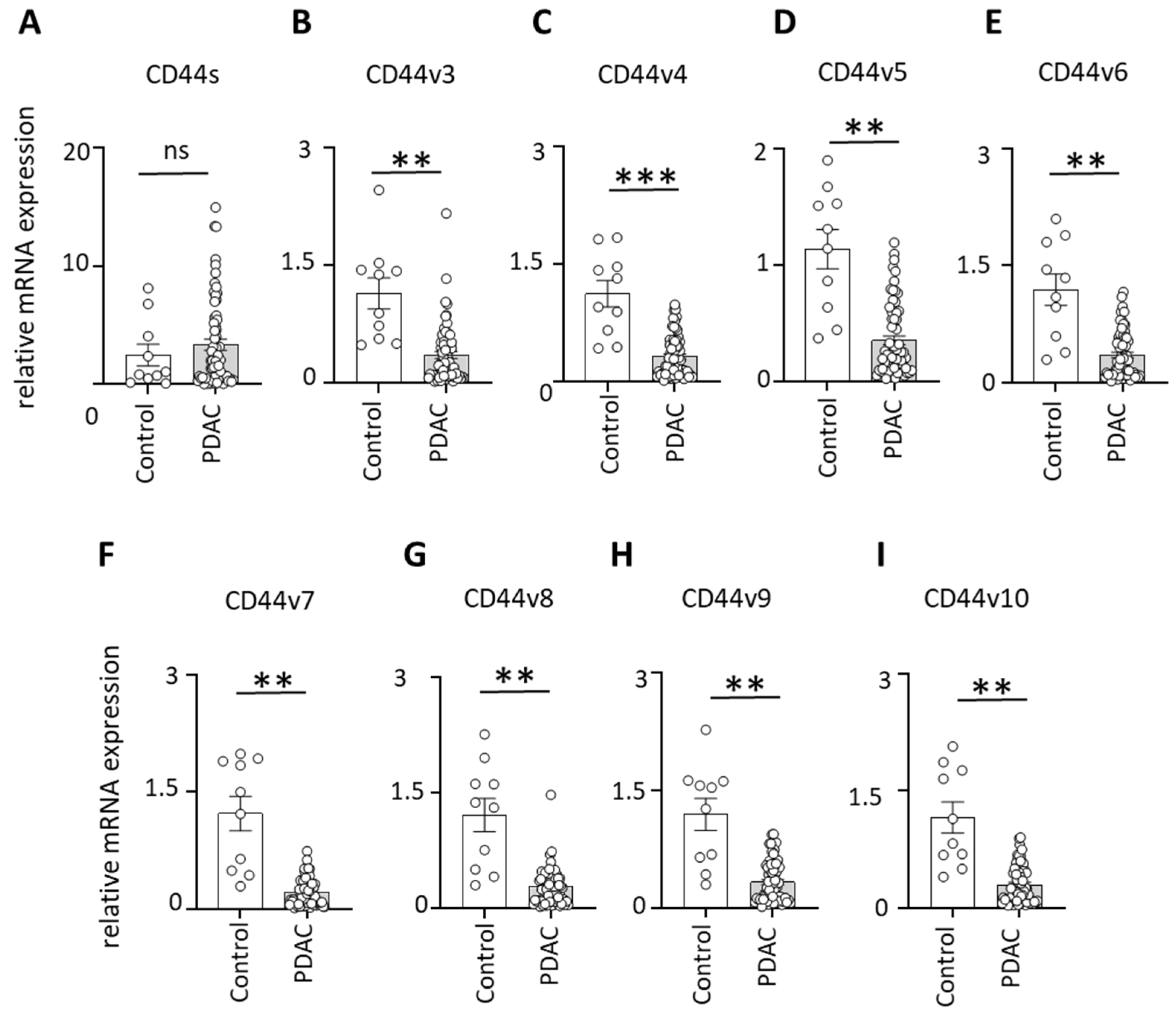
3.1. CD44 Standard Isoform Is Unchanged in PDAC Lymph Nodes, While CD44 Variant Isoforms Are Significantly Reduced
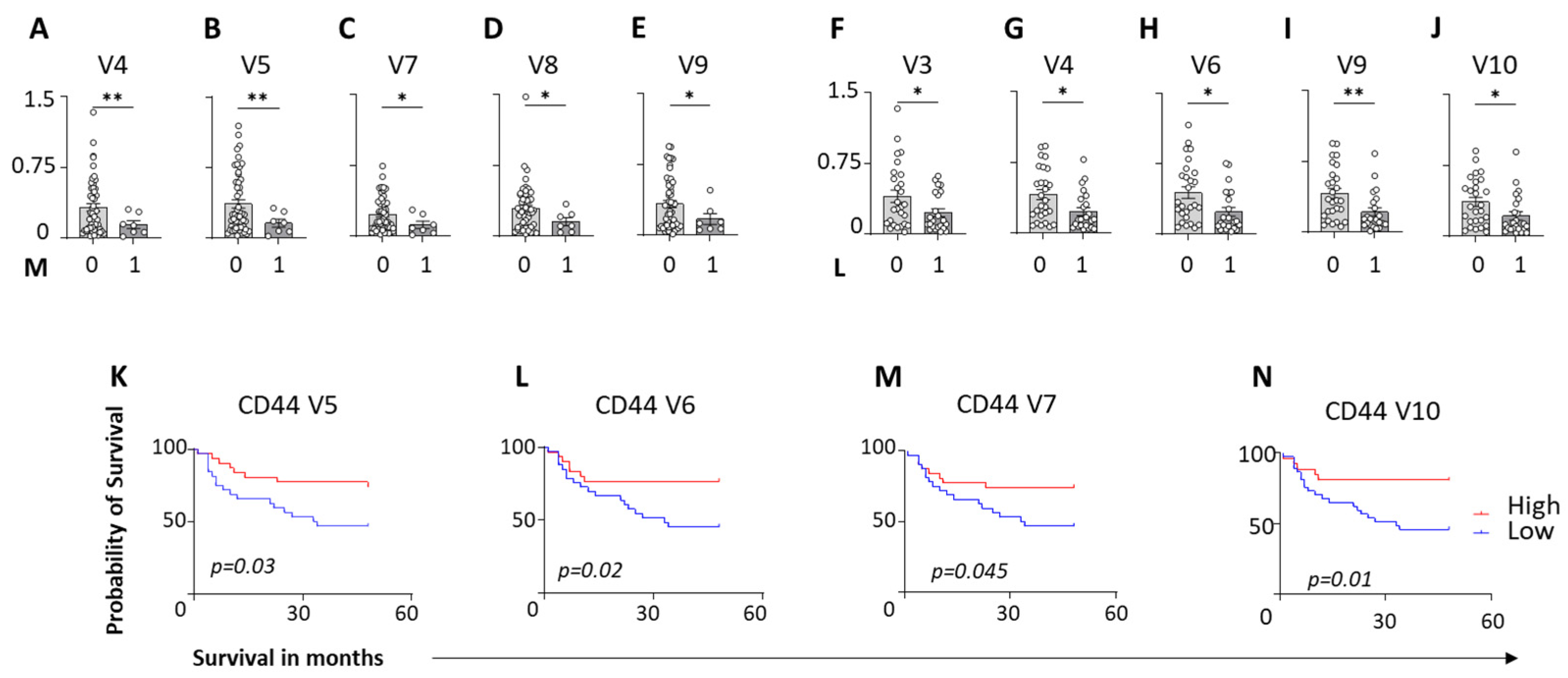
3.2. Loss of CD44 Variant Expression in Lymph Nodes Is Associated with Metastasis and Poor Survival in PDAC
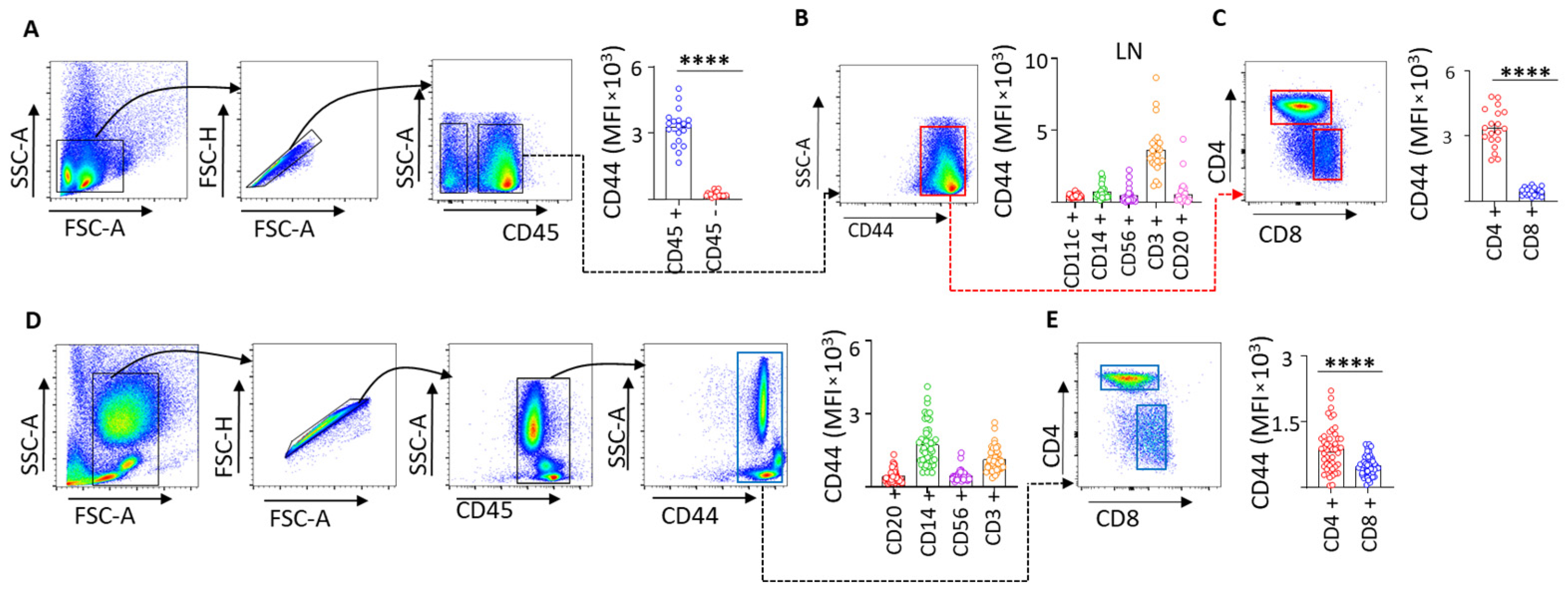
3.3. Immune Cell-Specific CD44 Expression in Lymph Nodes and Blood Supports Compartment-Specific CD44 Variant Regulation in PDAC
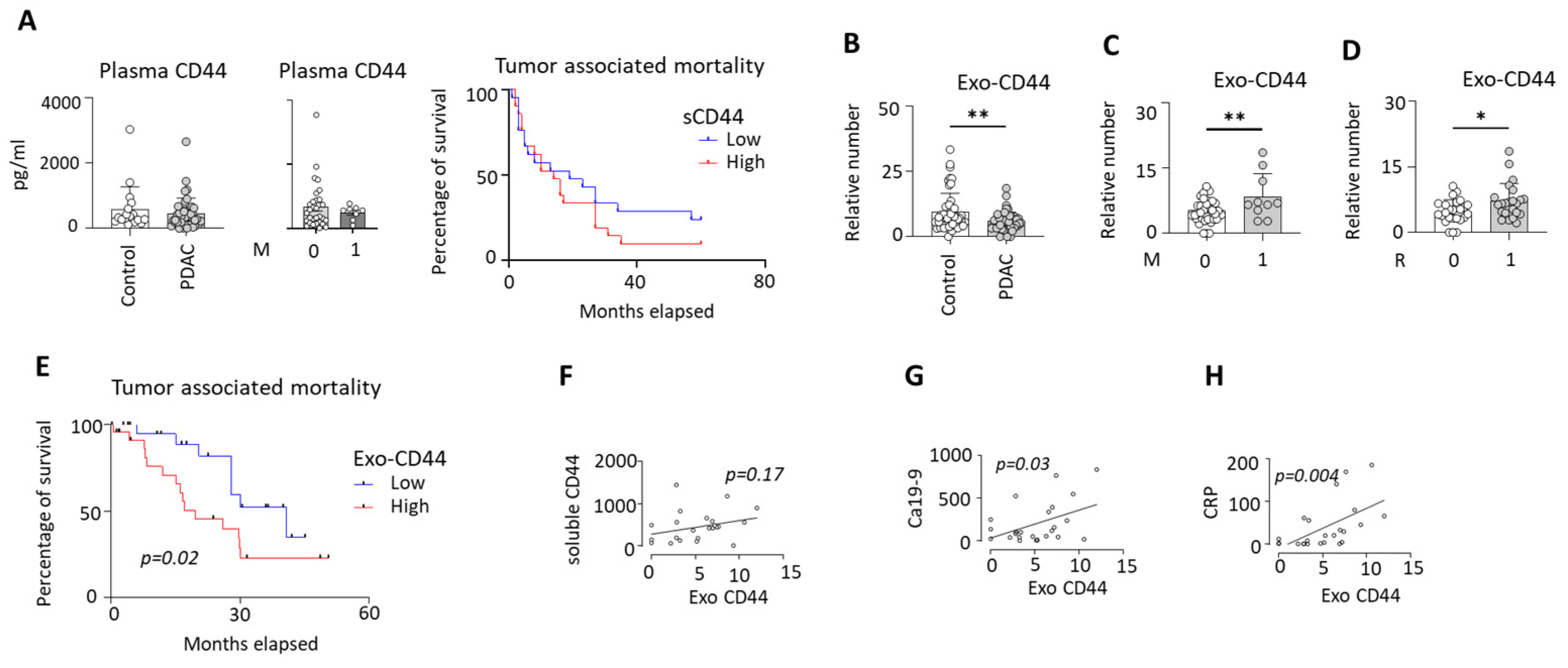
3.4. Soluble and Exosome-Associated CD44 Display Distinct Clinical Associations in PDAC
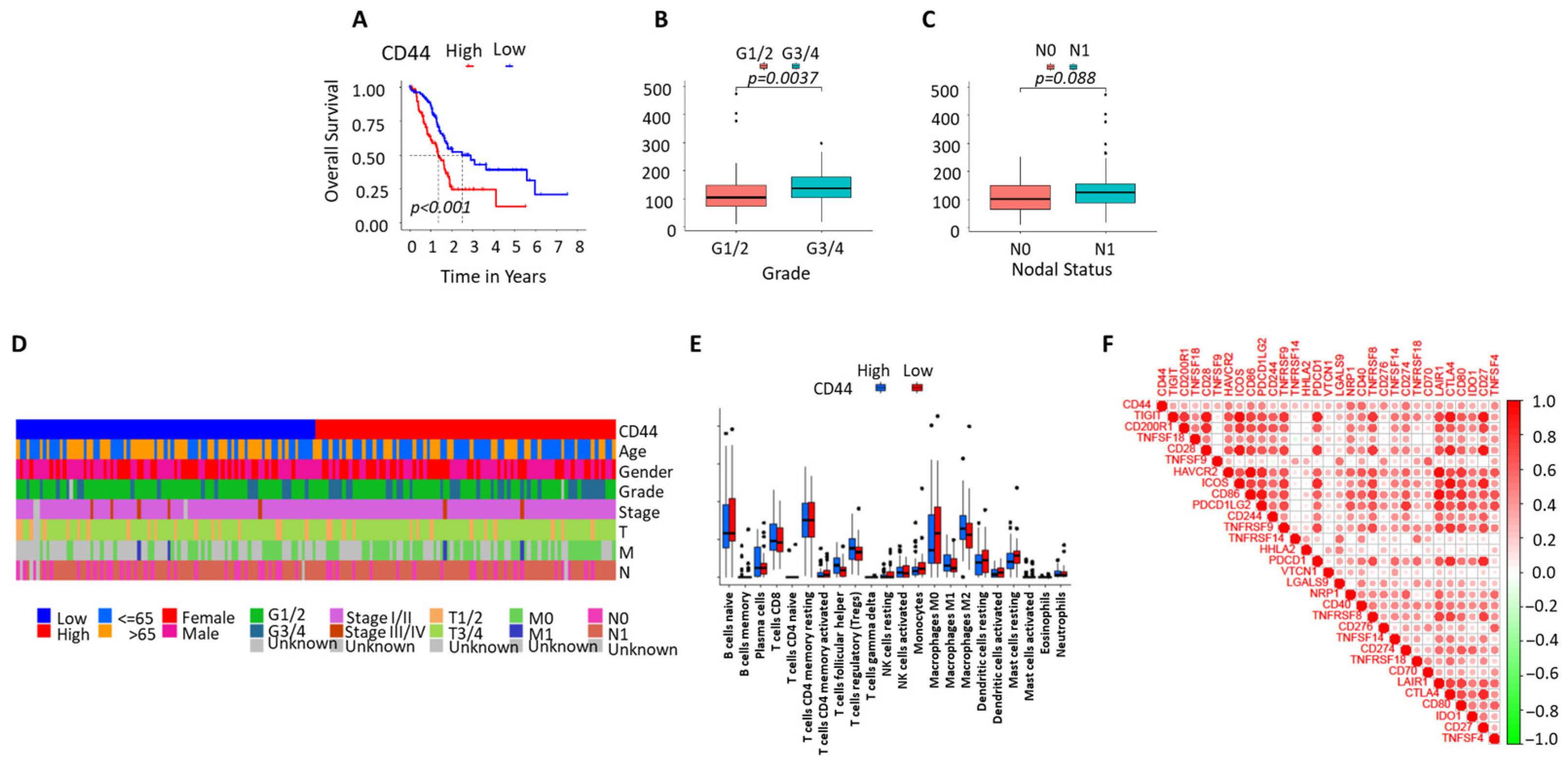
3.5. CD44 Expression Is Associated with Survival, Clinicopathological Features, and Immune Signatures in PDAC
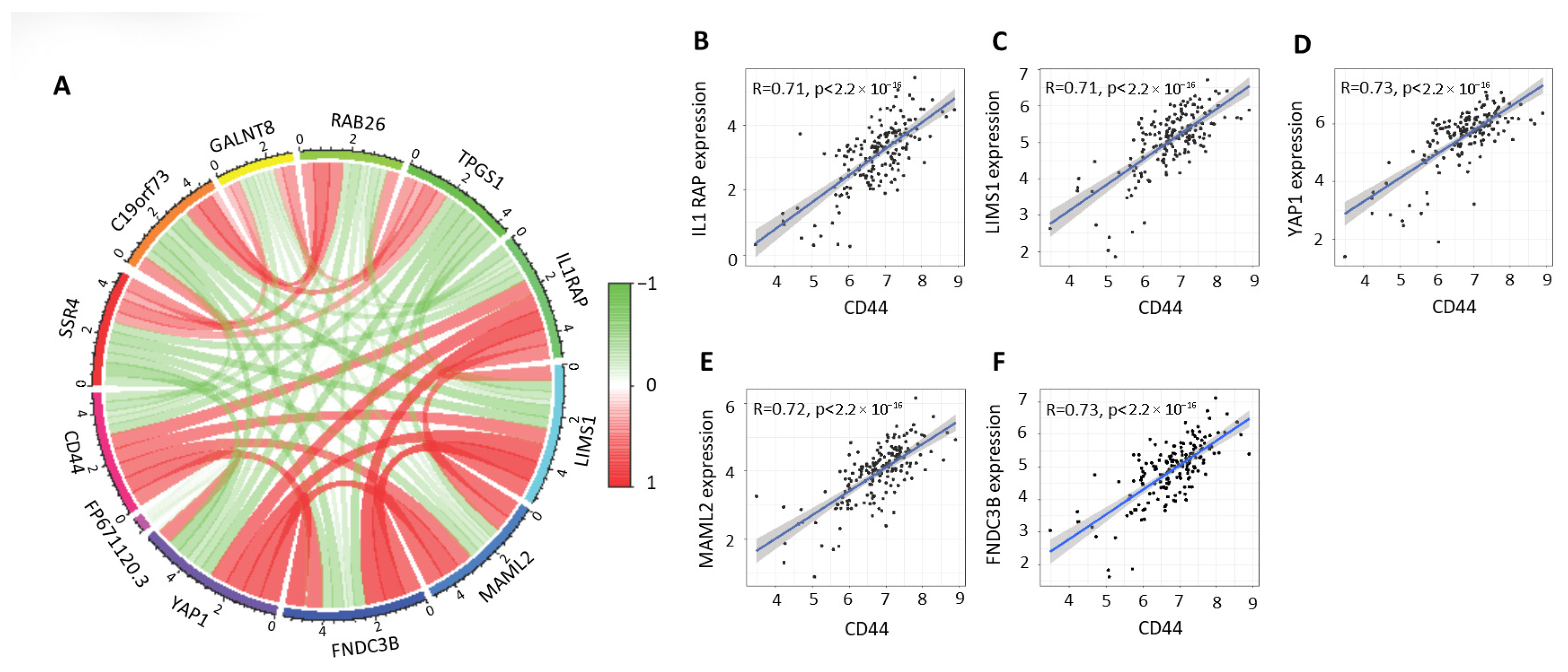
3.6. CD44 Co-Expression Networks and Immune-Related Gene Correlations in PDAC (TCGA-PAAD)
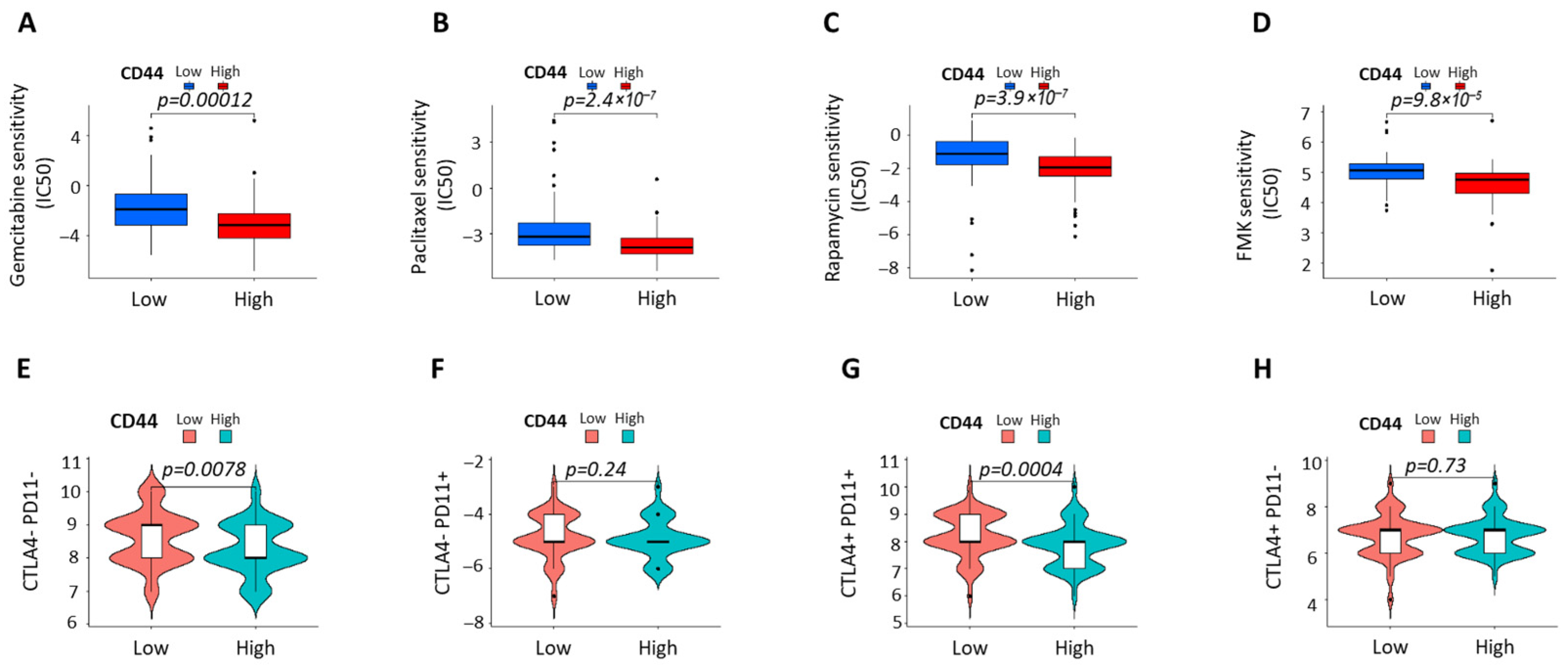
3.7. High CD44 Expression Is Associated with Reduced Drug Sensitivity and Distinct Immune Checkpoint Profiles in PDAC
4. Discussion
5. Conclusions
Supplementary Materials
Author Contributions
Funding
Institutional Review Board Statement
Informed Consent Statement
Data Availability Statement
Acknowledgments
Conflicts of Interest
Abbreviations
| PDAC | Pancreatic ductal adenocarcinoma |
| LNs | Lymph nodes |
| Exo-CD44 | Exosome-associated CD44 |
| TCGA-PAAD | The Cancer Genome Atlas—Pancreatic Adenocarcinoma |
| CD44v | CD44 variant isoforms |
| qPCR | Quantitative polymerase chain reaction |
| GAPDH | glyceraldehyde 3-phosphate dehydrogenase |
| ELISA | Enzyme-Linked Immunosorbent Assay |
| EV | extracellular vesicle |
| PE | phycoerythrin |
| FITC | fluorescein isothiocyanate |
| APC | allophycocyanin |
| GO | Gene Ontology |
| KEGG | Kyoto Encyclopedia of Genes and Genomes |
| ROC | Receiver operating characteristic |
| GSEA | Gene set enrichment analysis |
| TME | Tumor microenvironment |
| HR | Hazard ratio |
| MaGIC | Molecular and Genomics Informatics Core |
References
- Siegel, R.L.; Giaquinto, A.N.; Jemal, A. Cancer statistics, 2024. CA Cancer J. Clin. 2024, 74, 12–49. [Google Scholar] [CrossRef]
- Ho, W.J.; Jaffee, E.M.; Zheng, L. The tumour microenvironment in pancreatic cancer-clinical challenges and opportunities. Nat. Rev. Clin. Oncol. 2020, 17, 527–540. [Google Scholar] [CrossRef]
- Orth, M.; Metzger, P.; Gerum, S.; Mayerle, J.; Schneider, G.; Belka, C.; Schnurr, M.; Lauber, K. Pancreatic ductal adenocarcinoma: Biological hallmarks, current status, and future perspectives of combined modality treatment approaches. Radiat. Oncol. 2019, 14, 141. [Google Scholar] [CrossRef] [PubMed]
- Karamitopoulou, E. The Tumor Microenvironment of Pancreatic Cancer. Cancers 2020, 12, 3076. [Google Scholar] [CrossRef] [PubMed]
- Shi, H.; Qin, C.; Zhao, Y.; Zhao, B.; Li, Z.; Li, T.; Huang, L.; Wang, W. Lymphatic metastasis in pancreatic cancer: From bedside to bench and back. Cancer Metastasis Rev. 2025, 44, 79. [Google Scholar] [CrossRef] [PubMed]
- Reticker-Flynn, N.E.; Zhang, W.; Belk, J.A.; Basto, P.A.; Escalante, N.K.; Pilarowski, G.O.W.; Bejnood, A.; Martins, M.M.; Kenkel, J.A.; Linde, I.L.; et al. Lymph node colonization induces tumor-immune tolerance to promote distant metastasis. Cell 2022, 185, 1924–1942.e1923. [Google Scholar] [CrossRef]
- Chen, C.; Zhao, S.; Karnad, A.; Freeman, J.W. The biology and role of CD44 in cancer progression: Therapeutic implications. J. Hematol. Oncol. 2018, 11, 64. [Google Scholar] [CrossRef]
- Hassn Mesrati, M.; Syafruddin, S.E.; Mohtar, M.A.; Syahir, A. CD44: A Multifunctional Mediator of Cancer Progression. Biomolecules 2021, 11, 1850. [Google Scholar] [CrossRef]
- Li, X.P.; Zhang, X.W.; Zheng, L.Z.; Guo, W.J. Expression of CD44 in pancreatic cancer and its significance. Int. J. Clin. Exp. Pathol. 2015, 8, 6724–6731. [Google Scholar]
- Prochazka, L.; Tesarik, R.; Turanek, J. Regulation of alternative splicing of CD44 in cancer. Cell Signal. 2014, 26, 2234–2239. [Google Scholar] [CrossRef]
- Maltseva, D.; Tonevitsky, A. RNA-binding proteins regulating the CD44 alternative splicing. Front. Mol. Biosci. 2023, 10, 1326148. [Google Scholar] [CrossRef]
- Yanova, M.; Stepanova, E.; Maltseva, D.; Tonevitsky, A. CD44 variant exons induce chemoresistance by modulating cell death pathways. Front. Cell Dev. Biol. 2025, 13, 1508577. [Google Scholar] [CrossRef]
- Geloso, M.C.; Ria, F.; Corvino, V.; Di Sante, G. Expression of CD44 and Its Spliced Variants: Innate and Inducible Roles in Nervous Tissue Cells and Their Environment. Int. J. Mol. Sci. 2025, 26, 8223. [Google Scholar] [CrossRef]
- Zhao, S.; Chen, C.; Chang, K.; Karnad, A.; Jagirdar, J.; Kumar, A.P.; Freeman, J.W. CD44 Expression Level and Isoform Contributes to Pancreatic Cancer Cell Plasticity, Invasiveness, and Response to Therapy. Clin. Cancer Res. 2016, 22, 5592–5604. [Google Scholar] [CrossRef]
- Szatanek, R.; Baj-Krzyworzeka, M. CD44 and Tumor-Derived Extracellular Vesicles (TEVs). Possible Gateway to Cancer Metastasis. Int. J. Mol. Sci. 2021, 22, 1463. [Google Scholar] [CrossRef] [PubMed]
- Paskeh, M.D.A.; Entezari, M.; Mirzaei, S.; Zabolian, A.; Saleki, H.; Naghdi, M.J.; Sabet, S.; Khoshbakht, M.A.; Hashemi, M.; Hushmandi, K.; et al. Emerging role of exosomes in cancer progression and tumor microenvironment remodeling. J. Hematol. Oncol. 2022, 15, 83. [Google Scholar] [CrossRef]
- Mu, W.; Xu, Y.; Gu, P.; Wang, W.; Li, J.; Ge, Y.; Wang, H. Exosomal CD44 Cooperates with Integrin α6β4 to Support Organotropic Metastasis via Regulating Tumor Cell Motility and Target Host Cell Activation. Engineering 2021, 7, 1413–1423. [Google Scholar] [CrossRef]
- Kalluri, V.S.; Smaglo, B.G.; Mahadevan, K.K.; Kirtley, M.L.; McAndrews, K.M.; Mendt, M.; Yang, S.; Maldonado, A.S.; Sugimoto, H.; Salvatierra, M.E.; et al. Engineered exosomes with KrasG12D specific siRNA in pancreatic cancer: A phase I study with immunological correlates. Nat. Commun. 2025, 16, 8696. [Google Scholar] [CrossRef] [PubMed]
- Kalluri, R.; LeBleu, V.S. The biology, function, and biomedical applications of exosomes. Science 2020, 367, eaau6977. [Google Scholar] [CrossRef]
- David, P.; Kouhestani, D.; Hansen, F.J.; Paul, S.; Czubayko, F.; Karabiber, A.; Weisel, N.; Klösch, B.; Merkel, S.; Ole-Baur, J.; et al. Exosomal CD40, CD25, and Serum CA19-9 as Combinatory Novel Liquid Biopsy Biomarker for the Diagnosis and Prognosis of Patients with Pancreatic Ductal Adenocarcinoma. Int. J. Mol. Sci. 2025, 26, 1500. [Google Scholar] [CrossRef]
- Mittelstädt, A.; Anthuber, A.; David, P.; Podolska, M.; Bénard, A.; Brunner, M.; Krautz, C.; Jacobsen, A.; Denz, A.; Weber, K.; et al. Exosomal ROR1 in peritoneal fluid identifies peritoneal disseminated PDAC and is associated with poor survival. Front. Immunol. 2024, 15, 1253072. [Google Scholar] [CrossRef]
- Zhou, Y.; Lu, Y.; Czubayko, F.; Chen, J.; Zheng, S.; Mo, H.; Liu, R.; Weber, G.F.; Grützmann, R.; Pilarsky, C.; et al. Identification of Cancer Associated Fibroblasts Related Genes Signature to Facilitate Improved Prediction of Prognosis and Responses to Therapy in Patients with Pancreatic Cancer. Int. J. Mol. Sci. 2025, 26, 4876. [Google Scholar] [CrossRef]
- Becht, E.; Giraldo, N.A.; Lacroix, L.; Buttard, B.; Elarouci, N.; Petitprez, F.; Selves, J.; Laurent-Puig, P.; Sautès-Fridman, C.; Fridman, W.F.; et al. Estimating the population abundance of tissue-infiltrating immune and stromal cell populations using gene expression. Genome Biol. 2016, 17, 218. [Google Scholar] [CrossRef]
- Tang, Y.; Xu, A.; Xu, Z.; Xie, J.; Huang, W.; Zhang, L.; Chen, Y.; Yang, L.; Du, S.; Wang, K. Multi-omics analyses of the heterogenous immune microenvironment in triple-negative breast cancer implicate UQCRFS1 potentiates tumor progression. Exp. Hematol. Oncol. 2025, 14, 85. [Google Scholar] [CrossRef]
- Xu, Q.; Chen, S.; Hu, Y.; Huang, W. Landscape of Immune Microenvironment Under Immune Cell Infiltration Pattern in Breast Cancer. Front. Immunol. 2021, 12, 711433. [Google Scholar] [CrossRef]
- Jankowska, K.; Wójtowicz, W.; Wierzbinka, M.; Raszczok, K.; Bajdak-Rusinek, K. Isoform switching in the CD44/ESRP1 axis as a driver of EMT and cancer stemness across tumor types. Biochimie 2026, 240, 19–30. [Google Scholar] [CrossRef]
- Boman, B.M.; Viswanathan, V.; Facey, C.O.B.; Fields, J.Z.; Stave, J.W. The v8-10 variant isoform of CD44 is selectively expressed in the normal human colonic stem cell niche and frequently is overexpressed in colon carcinomas during tumor development. Cancer Biol. Ther. 2023, 24, 2195363. [Google Scholar] [CrossRef]
- Marzese, D.M.; Liu, M.; Huynh, J.L.; Hirose, H.; Donovan, N.C.; Huynh, K.T.; Kiyohara, E.; Chong, K.; Cheng, D.; Tanaka, R.; et al. Brain metastasis is predetermined in early stages of cutaneous melanoma by CD44v6 expression through epigenetic regulation of the spliceosome. Pigment. Cell Melanoma Res. 2015, 28, 82–93. [Google Scholar] [CrossRef] [PubMed]
- Mayr, L.; Pirker, C.; Lötsch, D.; Van Schoonhoven, S.; Windhager, R.; Englinger, B.; Berger, W.; Kubista, B. CD44 drives aggressiveness and chemoresistance of a metastatic human osteosarcoma xenograft model. Oncotarget 2017, 8, 114095–114108. [Google Scholar] [CrossRef] [PubMed]
- Paulis, Y.W.; Huijbers, E.J.; van der Schaft, D.W.; Soetekouw, P.M.; Pauwels, P.; Tjan-Heijnen, V.C.; Griffioen, A.W. CD44 enhances tumor aggressiveness by promoting tumor cell plasticity. Oncotarget 2015, 6, 19634–19646. [Google Scholar] [CrossRef] [PubMed]
- Sun, H.; Rana, S.; Wang, Z.; Zhao, K.; Schnölzer, M.; Provaznik, J.; Hackert, T.; Lv, Q.; Zöller, M. The Pancreatic Cancer-Initiating Cell Marker CD44v6 Affects Transcription, Translation, and Signaling: Consequences for Exosome Composition and Delivery. J. Oncol. 2019, 2019, 3516973. [Google Scholar] [CrossRef]
- Liu, Y.; Wu, T.; Lu, D.; Zhen, J.; Zhang, L. CD44 overexpression related to lymph node metastasis and poor prognosis of pancreatic cancer. Int. J. Biol. Markers 2018, 33, 308–313. [Google Scholar] [CrossRef]
- Zhu, Y.-J.; Li, S.-Y.; Yang, S.-S.; Du, Y.; Zhang, Z.-Y.; Liu, J.-Y. CD44 on cancer stem cell is a potential immunological and prognostic pan-cancer biomarker. Cancer Cell Int. 2025, 25, 134. [Google Scholar] [CrossRef] [PubMed]
- Xu, Y.; Bai, Z.; Lan, T.; Fu, C.; Cheng, P. CD44 and its implication in neoplastic diseases. MedComm 2024, 5, e554. [Google Scholar] [CrossRef] [PubMed]
- Tang, J.; Li, X.; Tang, N.; Lin, X.; Du, Y.; Zhang, S.; Li, Q.; Zhang, Y.; Zhang, Y.; Hang, H.; et al. CD44 identified as a diagnostic biomarker for highly malignant CA19-9 negative pancreatic cancer. Cancer Lett. 2025, 622, 217713. [Google Scholar] [CrossRef]
- Chang, C.-H.; Pauklin, S. Extracellular vesicles in pancreatic cancer progression and therapies. Cell Death Dis. 2021, 12, 973. [Google Scholar] [CrossRef]
- Gama, J.M.; Oliveira, R.C. CD44 and Its Role in Solid Cancers—A Review: From Tumor Progression to Prognosis and Targeted Therapy. Front. Biosci. 2025, 30, 24821. [Google Scholar] [CrossRef] [PubMed]
- Petterson, S.A.; Sørensen, M.D.; Burton, M.; Thomassen, M.; Kruse, T.A.; Michaelsen, S.R.; Kristensen, B.W. Differential expression of checkpoint markers in the normoxic and hypoxic microenvironment of glioblastomas. Brain Pathol. 2023, 33, e13111. [Google Scholar] [CrossRef] [PubMed]
- Liu, S.; Liu, Z.; Shang, A.; Xun, J.; Lv, Z.; Zhou, S.; Liu, C.; Zhang, Q.; Yang, Y. CD44 is a potential immunotherapeutic target and affects macrophage infiltration leading to poor prognosis. Sci. Rep. 2023, 13, 9657. [Google Scholar] [CrossRef]
- Baaten, B.J.G.; Li, C.-R.; Deiro, M.F.; Lin, M.M.; Linton, P.J.; Bradley, L.M. CD44 Regulates Survival and Memory Development in Th1 Cells. Immunity 2010, 32, 104–115. [Google Scholar] [CrossRef] [PubMed]
- Flynn, K.M.; Michaud, M.; Madri, J.A. CD44 Deficiency Contributes to Enhanced Experimental Autoimmune Encephalomyelitis: A Role in Immune Cells and Vascular Cells of the Blood–Brain Barrier. Am. J. Pathol. 2013, 182, 1322–1336. [Google Scholar] [CrossRef] [PubMed]
- Baaten, B.J.; Li, C.R.; Bradley, L.M. Multifaceted regulation of T cells by CD44. Commun. Integr. Biol. 2010, 3, 508–512. [Google Scholar] [CrossRef] [PubMed]
- Ishimoto, T.; Nagano, O.; Yae, T.; Tamada, M.; Motohara, T.; Oshima, H.; Oshima, M.; Ikeda, T.; Asaba, R.; Yagi, H.; et al. CD44 variant regulates redox status in cancer cells by stabilizing the xCT subunit of system xc− and thereby promotes tumor growth. Cancer Cell 2011, 19, 387–400. [Google Scholar] [CrossRef] [PubMed]
- Crea, F.; Duhagon, M.A.; Farrar, W.L.; Danesi, R. Pharmacogenomics and cancer stem cells: A changing landscape? Trends Pharmacol. Sci. 2011, 32, 487–494. [Google Scholar] [CrossRef][Green Version]
- Strecker, M.; Zohar, K.; Böttcher, M.; Wartmann, T.; Freudenstein, H.; Doelling, M.; Andric, M.; Shi, W.; Kakhlon, O.; Hippe, K.; et al. Patient-specific pharmacogenomics demonstrates xCT as predictive therapeutic target in colon cancer with possible implications in tumor connectivity. Mol. Oncol. 2025; early view. [Google Scholar] [CrossRef]
- News & Views in … Pharmacogenomics. Pharmacogenomics 2009, 10, 1035–1037. [CrossRef]
- Cain, J.W.; Hauptschein, R.S.; Stewart, J.K.; Bagci, T.; Sahagian, G.G.; Jay, D.G. Identification of CD44 as a surface biomarker for drug resistance by surface proteome signature technology. Mol. Cancer Res. 2011, 9, 637–647. [Google Scholar] [CrossRef]



| Clinical Control Patients | |
|---|---|
| Number | 11 |
| Mean age (in years [range]) | 61.83 (38–84) |
| Sex (male: female) | (4:7) |
| Cholecystectomy (CHE) | 11 |
| PDAC Patients | ||
|---|---|---|
| Number | 65 | |
| Mean age (in years [range]) | 68.43 (42–90) | |
| Sex (male: female) | (34:31) | |
| pT category | pT1 | 6 |
| pT2 | 21 | |
| pT3 | 16 | |
| pT4 | 1 | |
| Unknown/Unresectable | 21 | |
| pN category | pN0 | 12 |
| pN1,2 | 31 | |
| Unknown/Unresectable | 22 | |
| Venous invasion | V0 | 37 |
| V1 | 5 | |
| Unknown/Unresectable | 23 | |
| Lymphatic invasion | L0 | 23 |
| L1 | 21 | |
| Unknown/Unresectable | 21 | |
| Perineural invasion | Pn0 | 12 |
| Pn1 | 31 | |
| Unknown/Unresectable | 22 | |
| R classification | R0 | 46 |
| R1 | 3 | |
| R2/inoperable | 16 | |
| Grading | G1 | 3 |
| G2 | 9 | |
| G3 | 35 | |
| Unknown/Unresectable | 18 | |
| Distant metastasis | No | 56 |
| Yes | 9 | |
| UICC | I | 14 |
| II | 23 | |
| III | 14 | |
| IV | 9 | |
| Unknown/Unresectable | 5 | |
| Neoadjuvant treatment | No | 52 |
| Yes | 13 |
| Clinical Control Patients | PDAC | |
|---|---|---|
| Number | 51 | 49 |
| Mean Age (in years [range]) | 61.3 (38–86) | 68.7 (51–86) |
| Sex (Male:Female) | 26:25 | 25:24 |
| Performed surgery | ||
| Cholecystectomy | 11 | |
| Acute ulceritis | 8 | |
| Hernia | 5 | |
| Thoracic stomach | 2 | |
| Healthy volunteers | 24 |
| CD44 Plasma PDAC | Low | High | p-Value | |
|---|---|---|---|---|
| Number | 24 | 25 | ||
| Mean Age (in years [range]) | 65.8 (51–81) | 72.0 (52–86) | 0.0336 | |
| Sex | Female | 13 | 11 | 0.48 |
| Male | 11 | 14 | ||
| pT category | 1 | 1 | 1 | 0.38 |
| 2 | 5 | 7 | ||
| 3 | 10 | 4 | ||
| 4 | 1 | 1 | ||
| Unknown/unresectable | 7 | 12 | ||
| pN category | 0 | 5 | 5 | 0.50 |
| 1 | 6 | 5 | ||
| 2 | 6 | 3 | ||
| Unknown/Inoperable | 7 | 12 | ||
| Lymphatic invasion | L0 | 11 | 10 | 0.31 |
| L1 | 6 | 3 | ||
| Unknown/Inoperable | 7 | 12 | ||
| Venous invasion | V0 | 17 | 11 | 0.10 |
| V1 | 0 | 2 | ||
| Unknown/Inoperable | 7 | 12 | ||
| Perineural invasion | Pn0 | 5 | 5 | 0.35 |
| Pn1 | 12 | 8 | ||
| Unknown/Inoperable | 7 | 12 | ||
| R classification | R0 | 15 | 11 | 0.38 |
| R1 | 2 | 2 | ||
| R2 (inoperable) | 7 | 12 | ||
| Distant metastasis | M0 | 21 | 18 | 0.18 |
| M1 | 3 | 7 | ||
| UICC stage | I | 1 | 4 | 0.21 |
| II | 9 | 4 | ||
| III | 6 | 4 | ||
| IV | 3 | 7 | ||
| Unknown | 5 | 6 | ||
| Neoadjuvant treatment | Yes | 4 | 5 | 0.76 |
| No | 20 | 20 | ||
| Mean Preoperative CA19-9 (in u/mL [range]) | 157.0 (6.9–526.5) | 168.4 (14.8–392.9) | 0.8317 |
Disclaimer/Publisher’s Note: The statements, opinions and data contained in all publications are solely those of the individual author(s) and contributor(s) and not of MDPI and/or the editor(s). MDPI and/or the editor(s) disclaim responsibility for any injury to people or property resulting from any ideas, methods, instructions or products referred to in the content. |
© 2026 by the authors. Licensee MDPI, Basel, Switzerland. This article is an open access article distributed under the terms and conditions of the Creative Commons Attribution (CC BY) license.
Share and Cite
Karabiber, A.; Zhou, Y.; Mittelstädt, A.; Hansen, F.J.; Litau, M.; Kuchenreuther, I.; Mazurie, J.; Clausen, F.N.; Klöckner, S.; Czubayko, F.; et al. Immune Cell-Specific and Isoform-Selective Regulation of CD44 in Pancreatic Ductal Adenocarcinoma Links Lymph Node Variant Loss and Exosomal CD44 to Clinical Outcome in Pancreatic Ductal Adenocarcinoma. Cells 2026, 15, 411. https://doi.org/10.3390/cells15050411
Karabiber A, Zhou Y, Mittelstädt A, Hansen FJ, Litau M, Kuchenreuther I, Mazurie J, Clausen FN, Klöckner S, Czubayko F, et al. Immune Cell-Specific and Isoform-Selective Regulation of CD44 in Pancreatic Ductal Adenocarcinoma Links Lymph Node Variant Loss and Exosomal CD44 to Clinical Outcome in Pancreatic Ductal Adenocarcinoma. Cells. 2026; 15(5):411. https://doi.org/10.3390/cells15050411
Chicago/Turabian StyleKarabiber, Alara, Yong Zhou, Anke Mittelstädt, Frederik Johannes Hansen, Melanie Litau, Isabelle Kuchenreuther, Johanne Mazurie, Finn Niklas Clausen, Sebastian Klöckner, Franziska Czubayko, and et al. 2026. "Immune Cell-Specific and Isoform-Selective Regulation of CD44 in Pancreatic Ductal Adenocarcinoma Links Lymph Node Variant Loss and Exosomal CD44 to Clinical Outcome in Pancreatic Ductal Adenocarcinoma" Cells 15, no. 5: 411. https://doi.org/10.3390/cells15050411
APA StyleKarabiber, A., Zhou, Y., Mittelstädt, A., Hansen, F. J., Litau, M., Kuchenreuther, I., Mazurie, J., Clausen, F. N., Klöckner, S., Czubayko, F., Weisel, N., Klösch, B., Andert-Veres, T., Kröber, S., Merkel, S., Weiss, A. R. R., Brunner, M., Krautz, C., Grützmann, R., ... David, P. (2026). Immune Cell-Specific and Isoform-Selective Regulation of CD44 in Pancreatic Ductal Adenocarcinoma Links Lymph Node Variant Loss and Exosomal CD44 to Clinical Outcome in Pancreatic Ductal Adenocarcinoma. Cells, 15(5), 411. https://doi.org/10.3390/cells15050411