Regulation of Translation of ATF4 mRNA: A Focus on Translation Initiation Factors and RNA-Binding Proteins

Abstract
1. Introduction
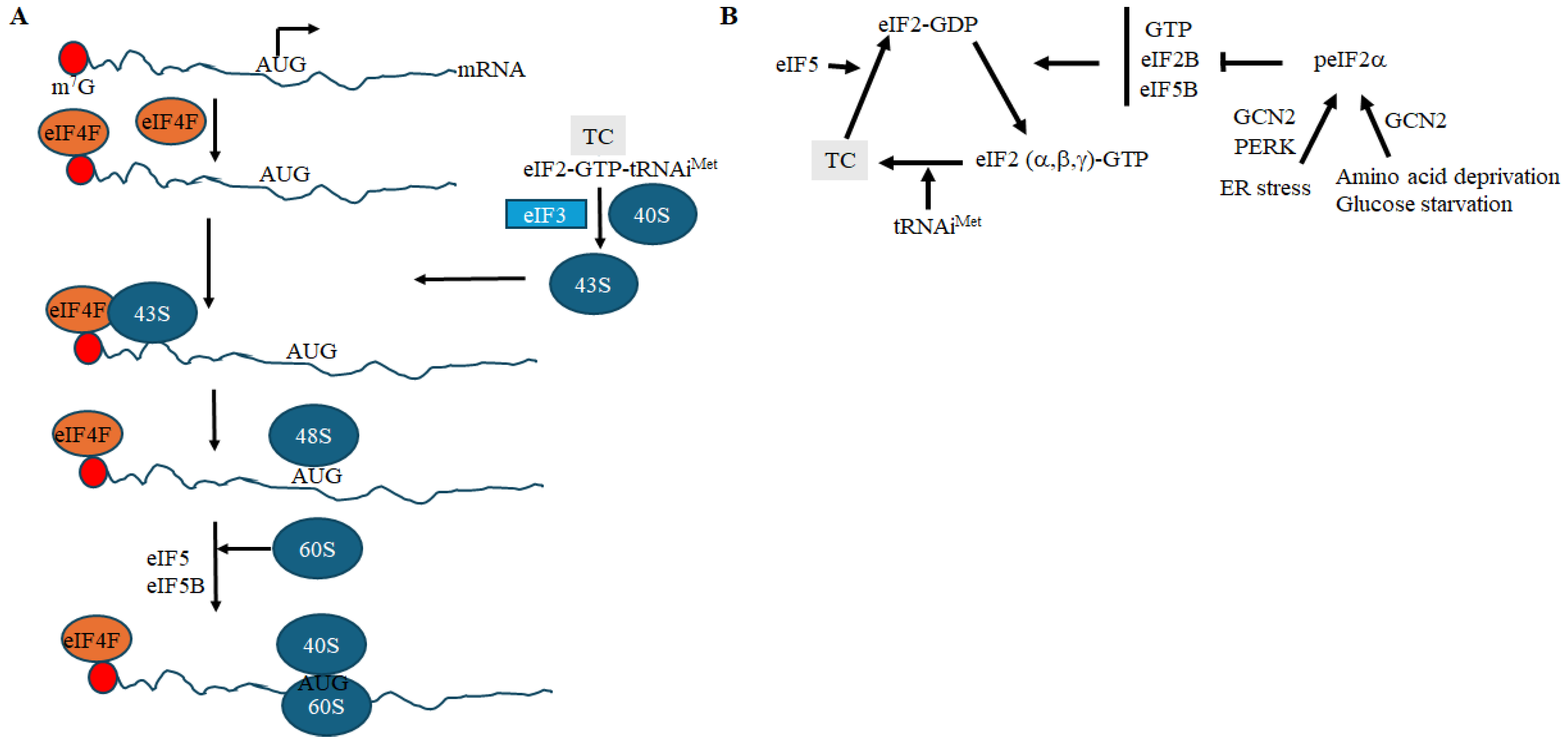
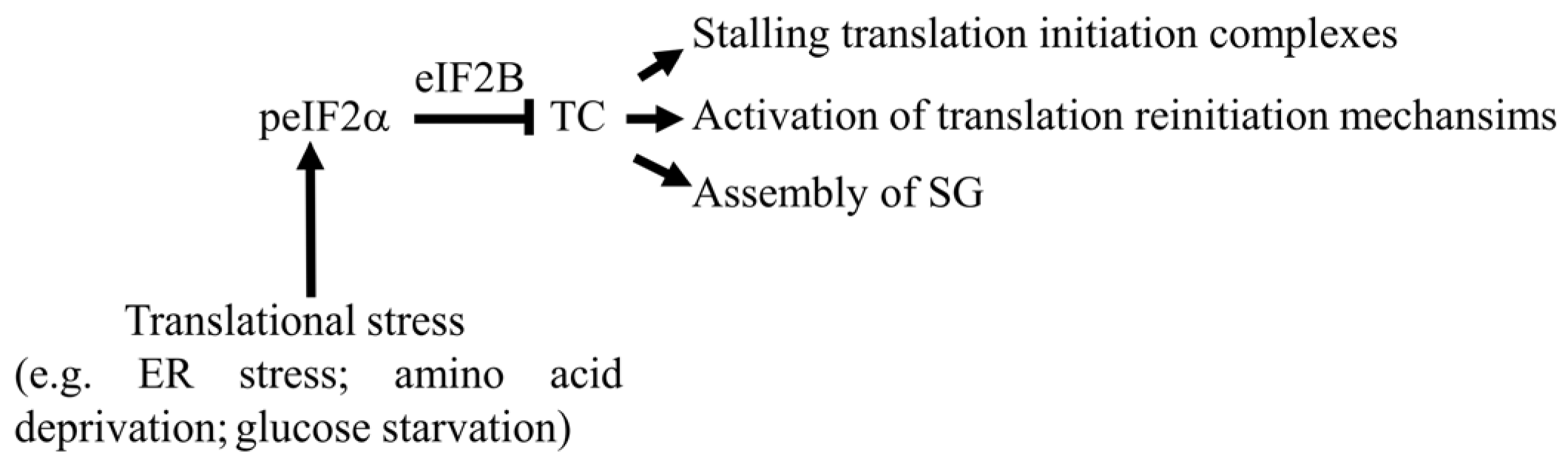
2. Brief Review of Translation and Its Regulation During Translational Stress
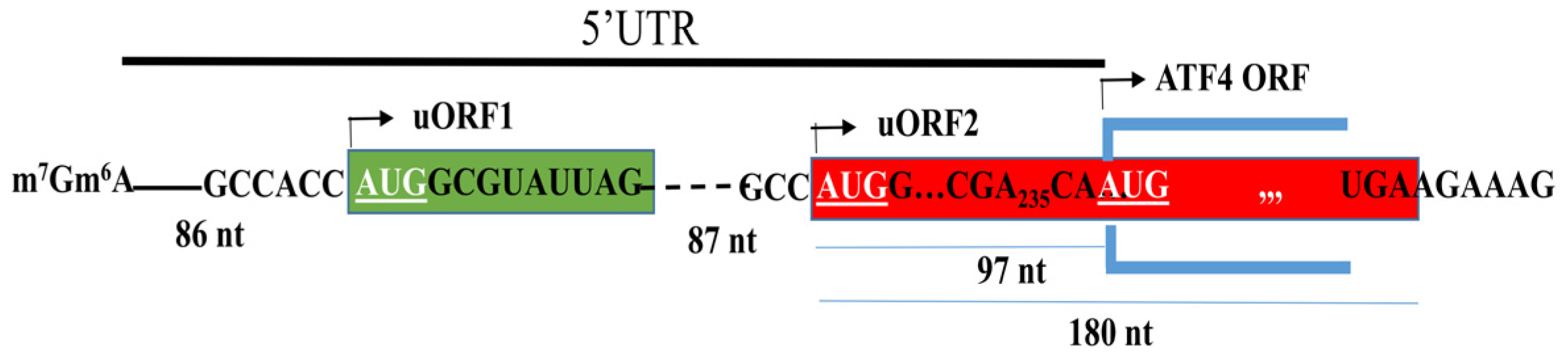
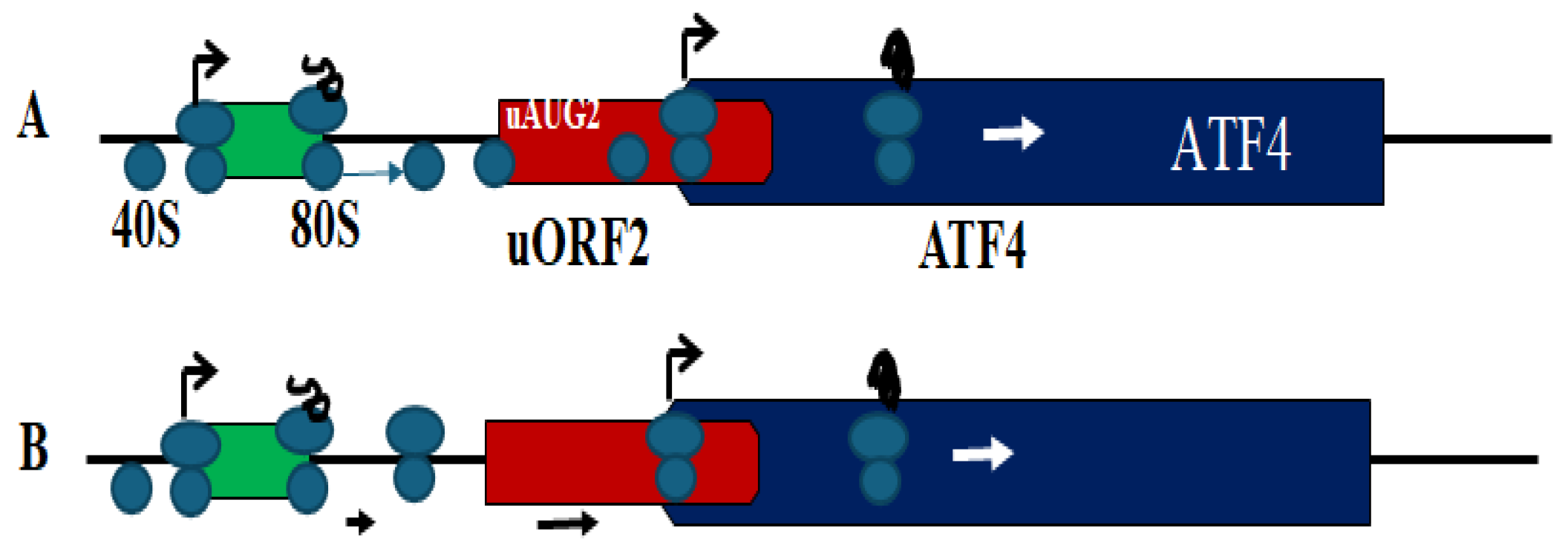
3. Regulation of ATF4 Translation by Its 5′UTR: An Overview
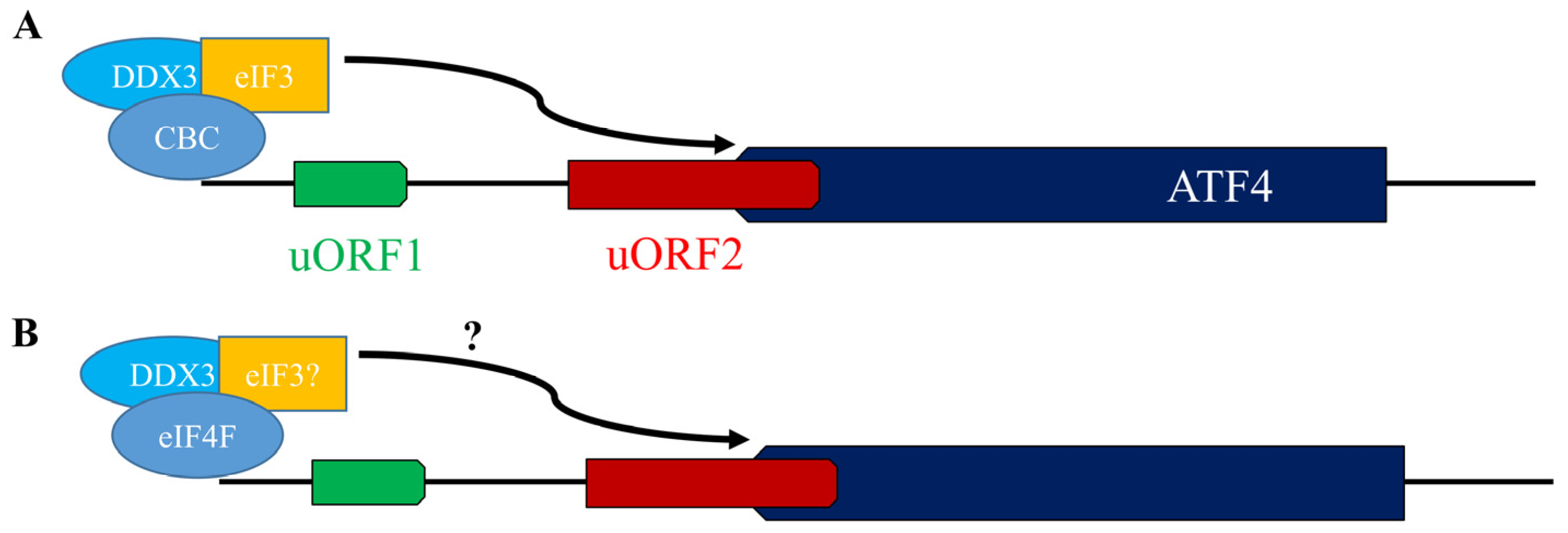
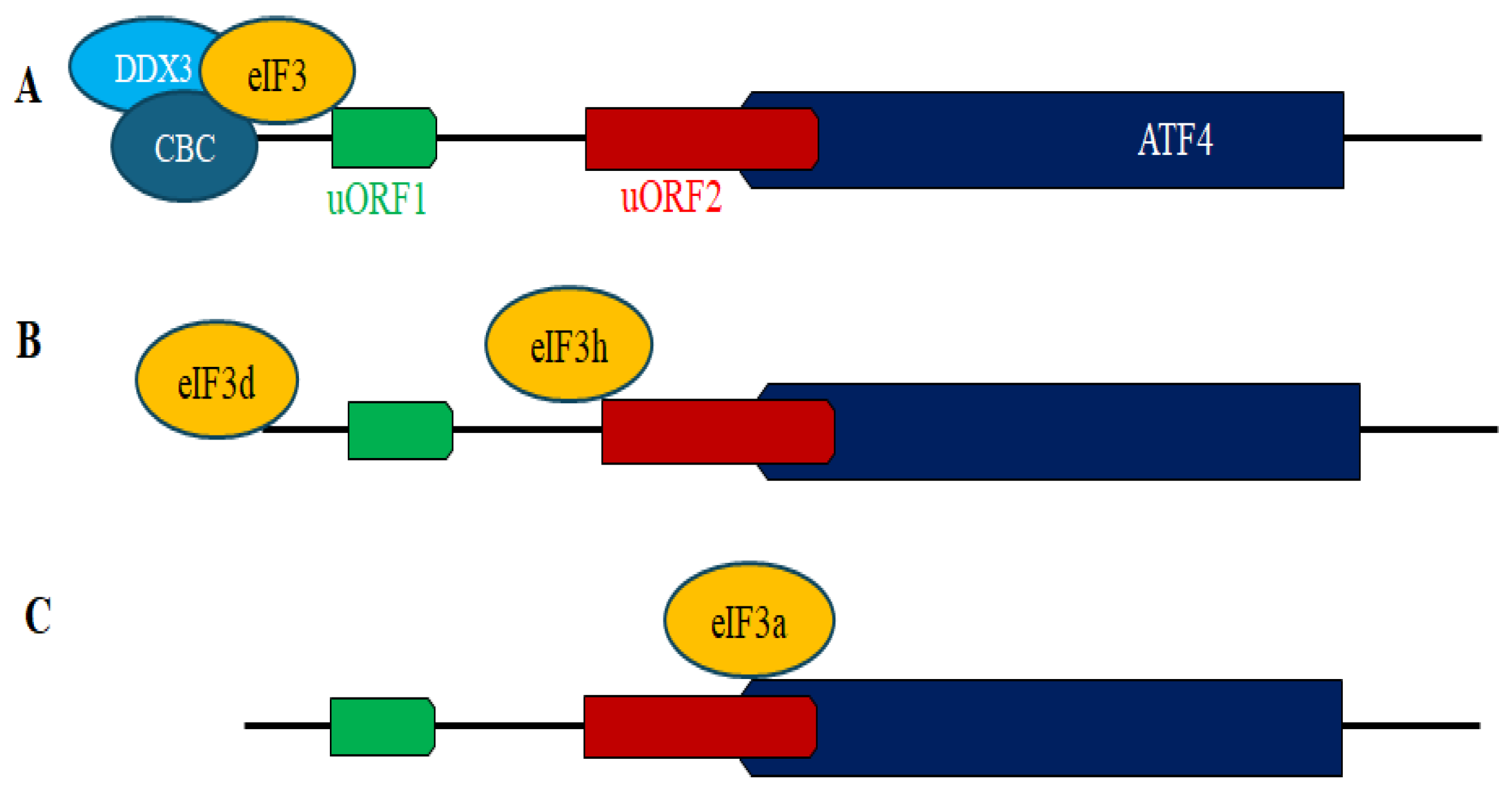
3.1. Cap-Binding Complexes
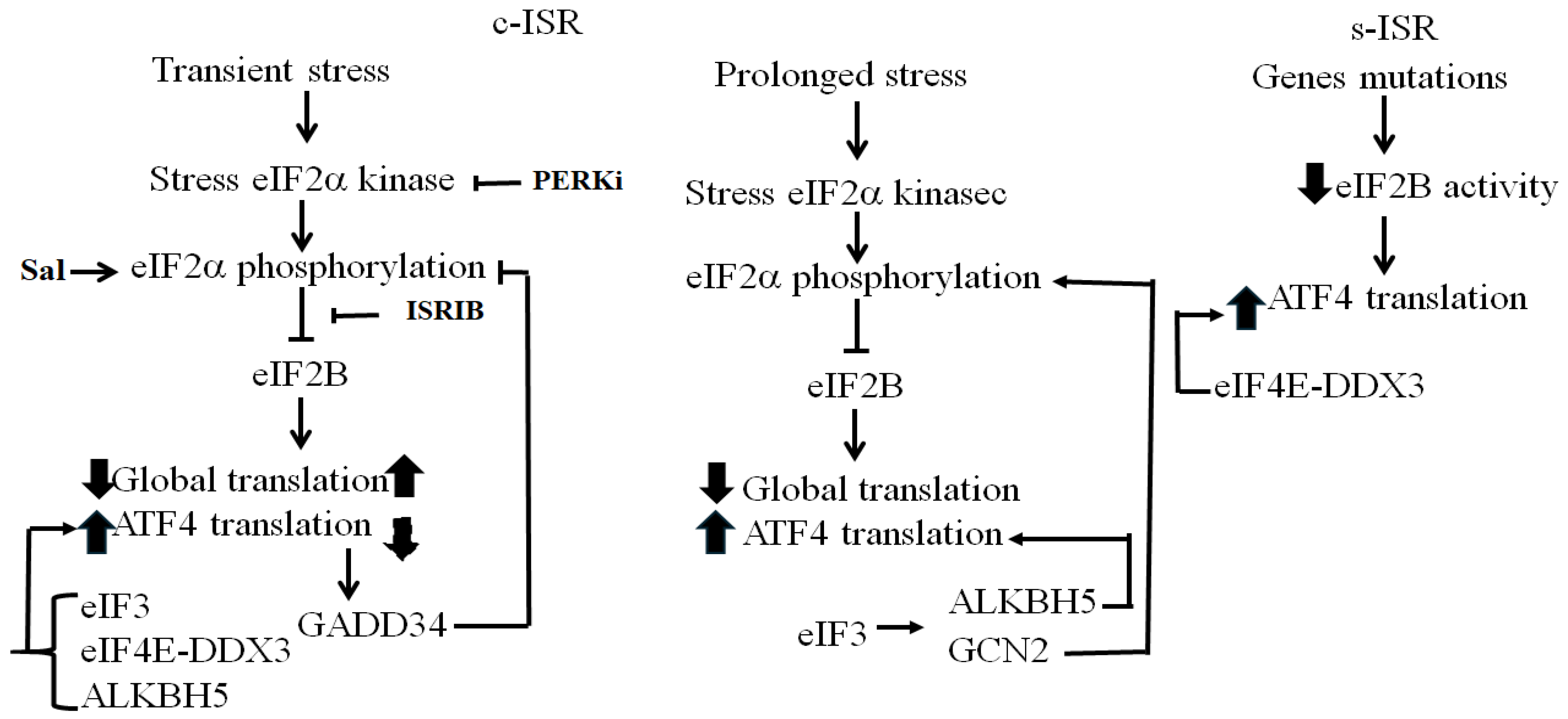
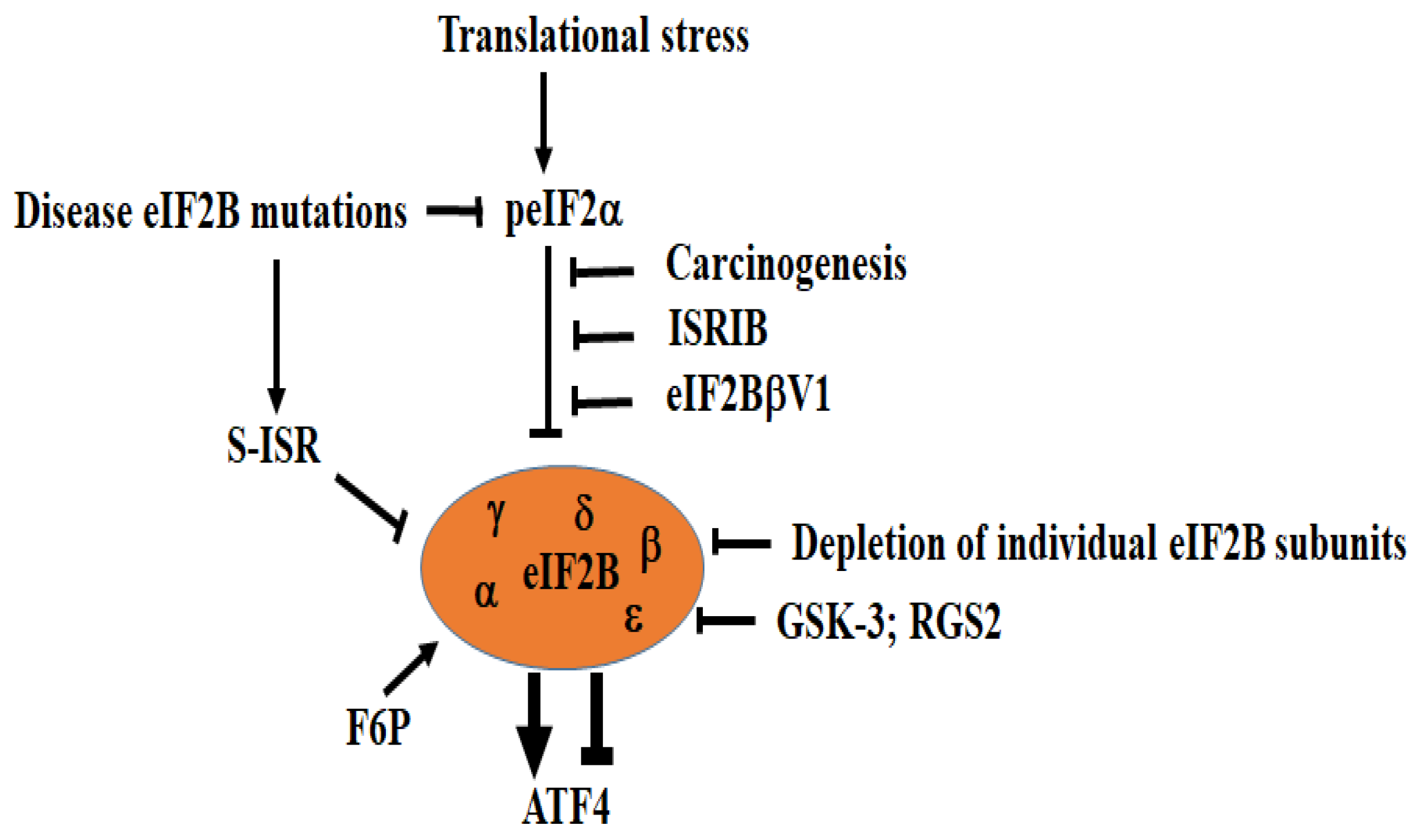
3.2. eIF2B
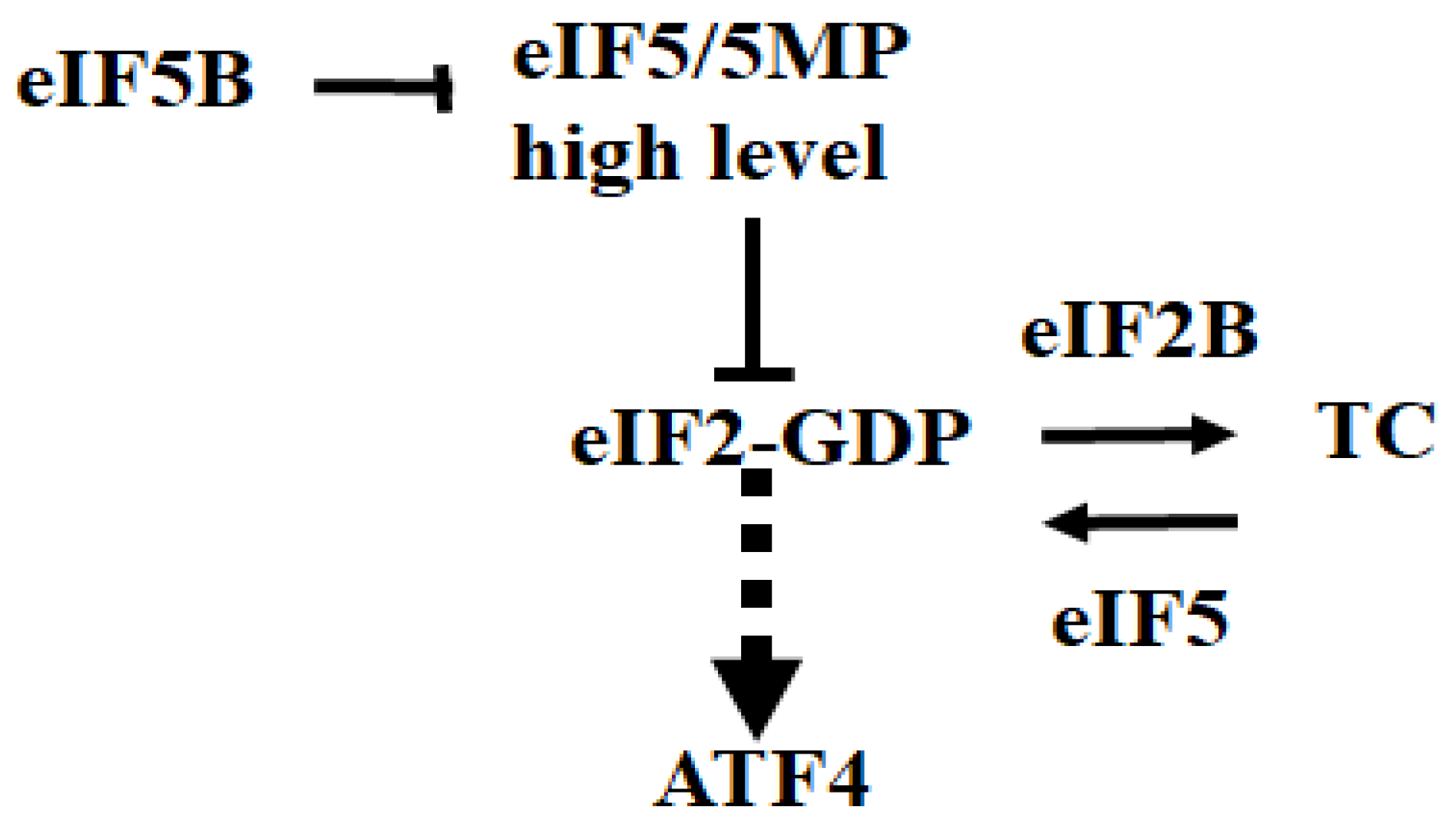
3.3. eIF5
3.4. eIF5B
3.5. eIF3
3.5.1. eIF3a
3.5.2. eIF3d
3.6. Non-Canonical (eIF2D, DENR, and MCTS1) eIFs
3.7. RNA-Modifying Enzymes
3.7.1. PUS7
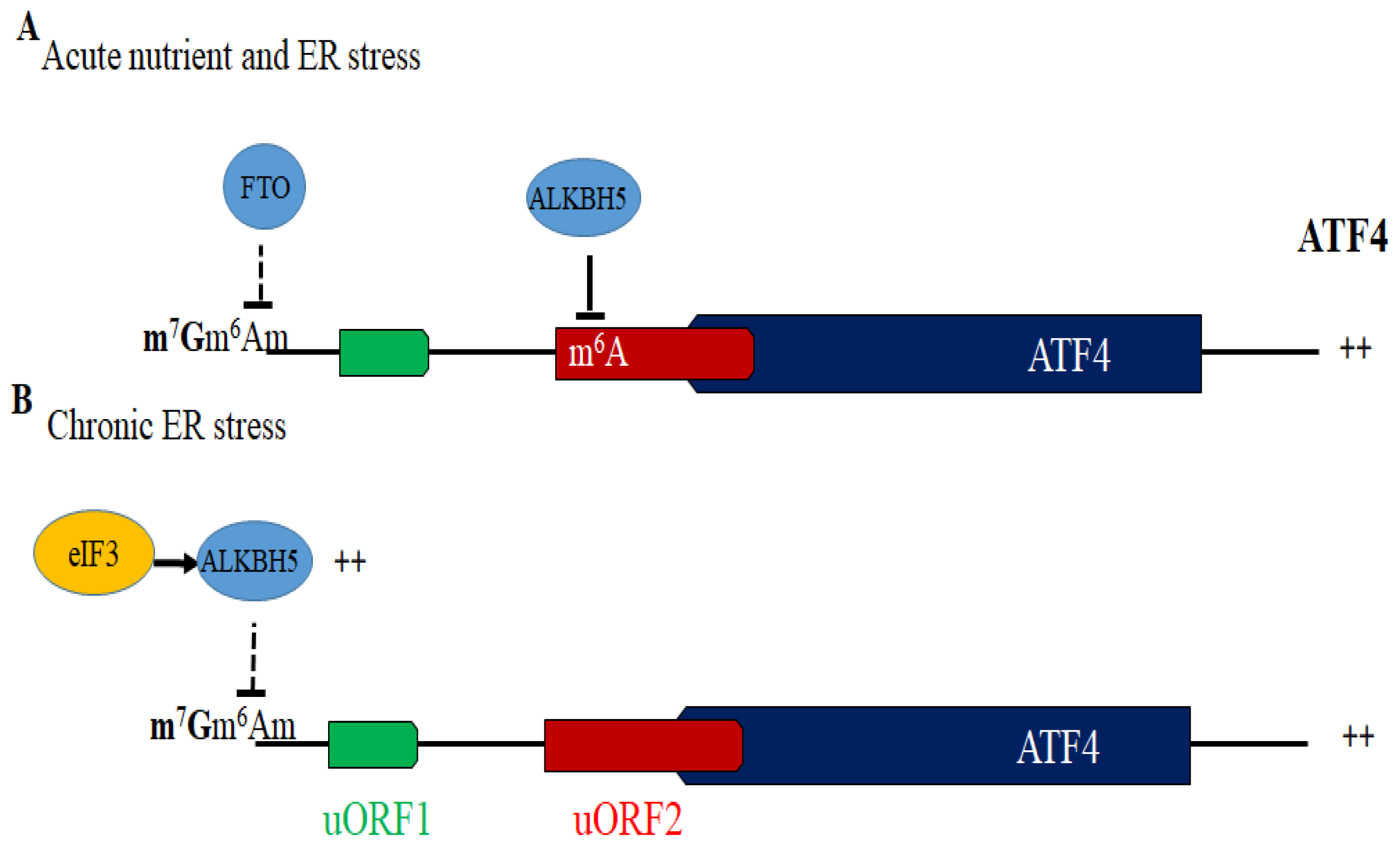
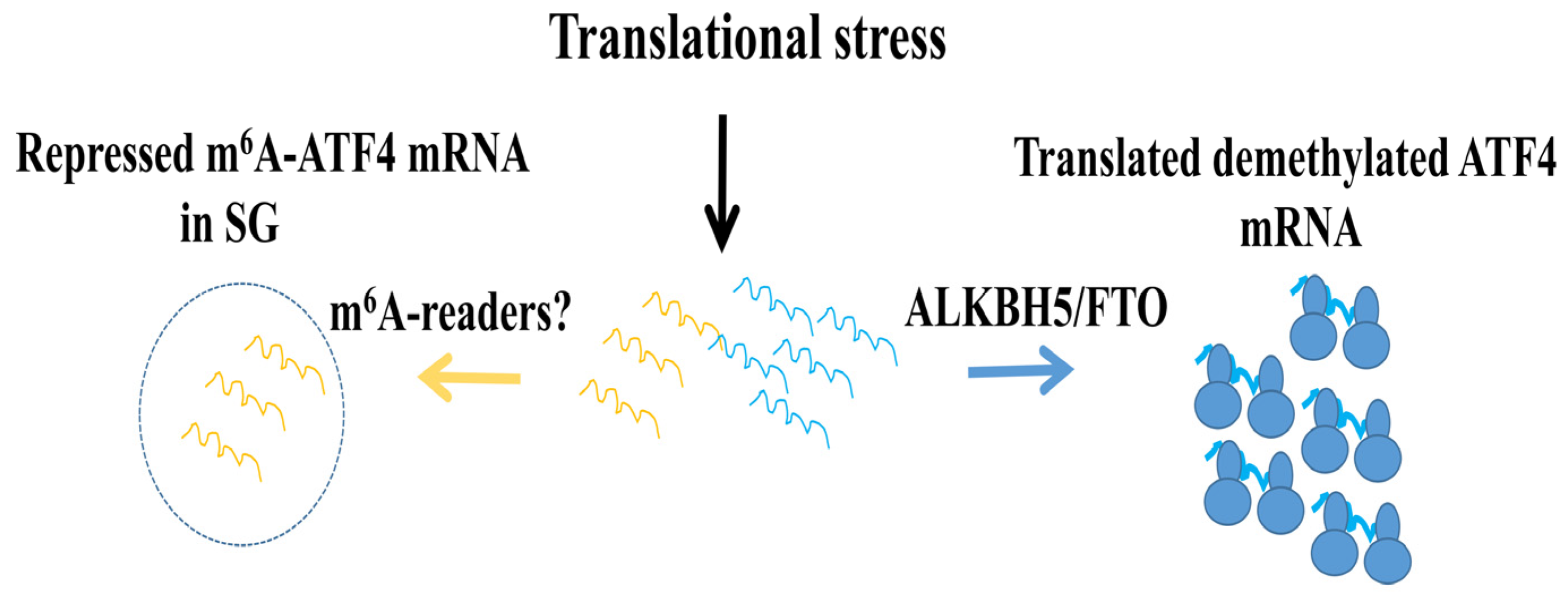
3.7.2. RNA Demethylases
4. Conclusions
Author Contributions
Funding
Data Availability Statement
Conflicts of Interest
References
- Andreev, D.E.; O’Connor, P.B.; Fahey, C.; Kenny, E.M.; Terenin, I.M.; Dmitriev, S.E.; Cormican, P.; Morris, D.W.; Shatsky, I.N.; Baranov, P.V. Translation of 5′ leaders is pervasive in genes resistant to eIF2 repression. eLife 2015, 4, e03971. [Google Scholar] [CrossRef] [Scilit] [PubMed]
- Costa-Mattioli, M.; Walter, P. The integrated stress response: From mechanism to disease. Science 2020, 368, eaat5314. [Google Scholar] [CrossRef] [Scilit] [PubMed]
- Harding, H.P.; Zhang, Y.; Zeng, H.; Novoa, I.; Lu, P.D.; Calfon, M.; Sadri, N.; Yun, C.; Popko, B.; Paules, R.; et al. An integrated stress response regulates amino acid metabolism and resistance to oxidative stress. Mol. Cell 2003, 11, 619–633. [Google Scholar] [CrossRef] [Scilit] [PubMed]
- Ingolia, N.T.; Ghaemmaghami, S.; Newman, J.R.; Weissman, J.S. Genome-wide analysis in vivo of translation with nucleotide resolution using ribosome profiling. Science 2009, 324, 218–223. [Google Scholar] [CrossRef] [Scilit]
- Vasudevan, D.; Neuman, S.D.; Yang, A.; Lough, L.; Brown, B.; Bashirullah, A.; Cardozo, T.; Ryoo, H.D. Translational induction of ATF4 during integrated stress response requires noncanonical initiation factors eIF2D and DENR. Nat. Commun. 2020, 11, 4677. [Google Scholar] [CrossRef] [Scilit]
- Singleton, D.C.; Harris, A.L. Targeting the ATF4 pathway in cancer therapy. Expert. Opin. Ther. Targets 2012, 16, 1189–1202. [Google Scholar] [CrossRef] [Scilit]
- Han, J.; Back, S.H.; Hur, J.; Lin, Y.H.; Gildersleeve, R.; Shan, J.; Yuan, C.L.; Krokowski, D.; Wang, S.; Hatzoglou, M.; et al. ER-stress-induced transcriptional regulation increases protein synthesis leading to cell death. Nat. Cell Biol. 2013, 15, 481–490. [Google Scholar] [CrossRef] [Scilit]
- Zhang, Z.; Yin, J.; Zhang, C.; Liang, N.; Bai, N.; Chang, A.; Liu, Y.; Li, Z.; Tan, X.; Li, N.; et al. Activating transcription factor 4 increases chemotherapeutics resistance of human hepatocellular carcinoma. Cancer Biol. Ther. 2012, 13, 435–442. [Google Scholar] [CrossRef] [Scilit]
- D’Aniello, C.; Fico, A.; Casalino, L.; Guardiola, O.; Di Napoli, G.; Cermola, F.; De Cesare, D.; Tate, R.; Cobellis, G.; Patriarca, E.J.; et al. A novel autoregulatory loop between the Gcn2-Atf4 pathway and (L)-Proline [corrected] metabolism controls stem cell identity. Cell Death Differ. 2015, 22, 1094–1105. [Google Scholar] [CrossRef] [Scilit]
- Pakos-Zebrucka, K.; Koryga, I.; Mnich, K.; Ljujic, M.; Samali, A.; Gorman, A.M. The integrated stress response. EMBO Rep. 2016, 17, 1374–1395. [Google Scholar] [CrossRef] [Scilit]
- Shan, J.; Hamazaki, T.; Tang, T.A.; Terada, N.; Kilberg, M.S. Activation of the amino acid response modulates lineage specification during differentiation of murine embryonic stem cells. Am. J. Physiol. Endocrinol. Metab. 2013, 305, E325–335. [Google Scholar] [CrossRef] [Scilit]
- Shan, J.; Ord, D.; Ord, T.; Kilberg, M.S. Elevated ATF4 expression, in the absence of other signals, is sufficient for transcriptional induction via CCAAT enhancer-binding protein-activating transcription factor response elements. J. Biol. Chem. 2009, 284, 21241–21248. [Google Scholar] [CrossRef] [Scilit] [PubMed]
- Alghusen, I.M.; Carman, M.S.; Wilkins, H.; Ephrame, S.J.; Qiang, A.; Dias, W.B.; Fedosyuk, H.; Denson, A.R.; Swerdlow, R.H.; Slawson, C. O-GlcNAc regulates the mitochondrial integrated stress response by regulating ATF4. Front. Aging Neurosci. 2023, 15, 1326127. [Google Scholar] [CrossRef] [Scilit] [PubMed]
- Weidling, I.; Swerdlow, R.H. Mitochondrial Dysfunction and Stress Responses in Alzheimer’s Disease. Biology 2019, 8, 39. [Google Scholar] [CrossRef] [Scilit] [PubMed]
- Dey, S.; Baird, T.D.; Zhou, D.; Palam, L.R.; Spandau, D.F.; Wek, R.C. Both transcriptional regulation and translational control of ATF4 are central to the integrated stress response. J. Biol. Chem. 2010, 285, 33165–33174. [Google Scholar] [CrossRef] [Scilit]
- Ye, J.; Koumenis, C. ATF4, an ER stress and hypoxia-inducible transcription factor and its potential role in hypoxia tolerance and tumorigenesis. Curr. Mol. Med. 2009, 9, 411–416. [Google Scholar] [CrossRef] [Scilit]
- Blais, J.D.; Filipenko, V.; Bi, M.; Harding, H.P.; Ron, D.; Koumenis, C.; Wouters, B.G.; Bell, J.C. Activating transcription factor 4 is translationally regulated by hypoxic stress. Mol. Cell. Biol. 2004, 24, 7469–7482. [Google Scholar] [CrossRef] [Scilit]
- Rzymski, T.; Milani, M.; Singleton, D.C.; Harris, A.L. Role of ATF4 in regulation of autophagy and resistance to drugs and hypoxia. Cell Cycle 2009, 8, 3838–3847. [Google Scholar] [CrossRef] [Scilit]
- Zong, S.; Li, W.; Li, H.; Han, S.; Liu, S.; Shi, Q.; Hou, F. Identification of hypoxia-regulated angiogenic genes in colorectal cancer. Biochem. Biophys. Res. Commun. 2017, 493, 461–467. [Google Scholar] [CrossRef] [Scilit]
- Broer, S.; Broer, A. Amino acid homeostasis and signalling in mammalian cells and organisms. Biochem. J. 2017, 474, 1935–1963. [Google Scholar] [CrossRef] [Scilit]
- Ryoo, H.D. The integrated stress response in metabolic adaptation. J. Biol. Chem. 2024, 300, 107151. [Google Scholar] [CrossRef] [Scilit] [PubMed]
- Cruz-Rodriguez, M.; Chevet, E.; Munoz-Pinedo, C. Glucose sensing and the unfolded protein response. FEBS J. 2025, 292, 3581–3595. [Google Scholar] [CrossRef] [Scilit] [PubMed]
- Wek, R.C.; Anthony, T.G.; Staschke, K.A. Surviving and Adapting to Stress: Translational Control and the Integrated Stress Response. Antioxid. Redox Signal. 2023, 39, 351–373. [Google Scholar] [CrossRef] [Scilit] [PubMed]
- Adjibade, P.; Grenier St-Sauveur, V.; Bergeman, J.; Huot, M.E.; Khandjian, E.W.; Mazroui, R. DDX3 regulates endoplasmic reticulum stress-induced ATF4 expression. Sci. Rep. 2017, 7, 13832. [Google Scholar] [CrossRef] [Scilit]
- Adjibade, P.; St-Sauveur, V.G.; Huberdeau, M.Q.; Fournier, M.J.; Savard, A.; Coudert, L.; Khandjian, E.W.; Mazroui, R. Sorafenib, a multikinase inhibitor, induces formation of stress granules in hepatocarcinoma cells. Oncotarget 2015, 6, 43927. [Google Scholar] [CrossRef] [Scilit]
- Chen, Y.; Gao, Q.; Wang, D.; Zou, X.; Li, X.; Ji, J.; Liu, B. An Overview of Research Advances in Oncology Regarding the Transcription Factor ATF4. Curr. Drug Targets 2025, 26, 59–72. [Google Scholar] [CrossRef] [Scilit]
- Chen, J.J. Translational control by heme-regulated eIF2alpha kinase during erythropoiesis. Curr. Opin. Hematol. 2014, 21, 172–178. [Google Scholar] [CrossRef] [Scilit]
- Kalinin, A.; Zubkova, E.; Menshikov, M. Integrated Stress Response (ISR) Pathway: Unraveling Its Role in Cellular Senescence. Int. J. Mol. Sci. 2023, 24, 17423. [Google Scholar] [CrossRef] [Scilit]
- Mitra, S.; Ryoo, H.D. The unfolded protein response in metazoan development. J. Cell Sci. 2019, 132, jcs217216. [Google Scholar] [CrossRef] [Scilit]
- Kumar, A.; Rahal, A.; Sohal, J.S.; Gupta, V.K. Bacterial stress response: Understanding the molecular mechanics to identify possible therapeutic targets. Expert. Rev. Anti Infect. Ther. 2021, 19, 121–127. [Google Scholar] [CrossRef] [Scilit]
- Liu, Y.; Wang, M.; Cheng, A.; Yang, Q.; Wu, Y.; Jia, R.; Liu, M.; Zhu, D.; Chen, S.; Zhang, S.; et al. The role of host eIF2alpha in viral infection. Virol. J. 2020, 17, 112. [Google Scholar] [CrossRef] [Scilit]
- Shahriari-Felordi, M.; Alikhani, H.K.; Hashemian, S.R.; Hassan, M.; Vosough, M. Mini review ATF4 and GRP78 as novel molecular targets in ER-Stress modulation for critical COVID-19 patients. Mol. Biol. Rep. 2022, 49, 1545–1549. [Google Scholar] [CrossRef] [Scilit] [PubMed]
- Holcik, M.; Sonenberg, N. Translational control in stress and apoptosis. Nat. Rev. Mol. Cell. Biol. 2005, 6, 318–327. [Google Scholar] [CrossRef] [Scilit] [PubMed]
- Koromilas, A.E. Roles of the translation initiation factor eIF2alpha serine 51 phosphorylation in cancer formation and treatment. Biochim. Biophys. Acta 2014, 1849, 871–880. [Google Scholar] [CrossRef] [Scilit] [PubMed]
- Wek, R.C.; Jiang, H.Y.; Anthony, T.G. Coping with stress: eIF2 kinases and translational control. Biochem. Soc. Trans. 2006, 34, 7–11. [Google Scholar] [CrossRef]
- Advani, V.M.; Ivanov, P. Translational Control under Stress: Reshaping the Translatome. Bioessays 2019, 41, e1900009. [Google Scholar] [CrossRef] [Scilit]
- Yamasaki, S.; Anderson, P. Reprogramming mRNA translation during stress. Curr. Opin. Cell Biol. 2008, 20, 222–226. [Google Scholar] [CrossRef] [Scilit]
- Chen, C.W.; Papadopoli, D.; Szkop, K.J.; Guan, B.J.; Alzahrani, M.; Wu, J.; Jobava, R.; Asraf, M.M.; Krokowski, D.; Vourekas, A.; et al. Plasticity of the mammalian integrated stress response. Nature 2025, 641, 1319–1328. [Google Scholar] [CrossRef] [Scilit]
- Gingras, A.C.; Raught, B.; Sonenberg, N. eIF4 initiation factors: Effectors of mRNA recruitment to ribosomes and regulators of translation. Annu. Rev. Biochem. 1999, 68, 913–963. [Google Scholar] [CrossRef] [Scilit]
- Jackson, R.J.; Hellen, C.U.; Pestova, T.V. The mechanism of eukaryotic translation initiation and principles of its regulation. Nat. Rev. Mol. Cell. Biol. 2010, 11, 113–127. [Google Scholar] [CrossRef] [Scilit]
- Sonenberg, N. eIF4E, the mRNA cap-binding protein: From basic discovery to translational research. Biochem. Cell Biol. 2008, 86, 178–183. [Google Scholar] [CrossRef] [Scilit]
- Sonenberg, N.; Dever, T.E. Eukaryotic translation initiation factors and regulators. Curr. Opin. Struct. Biol. 2003, 13, 56–63. [Google Scholar] [CrossRef] [Scilit] [PubMed]
- Marintchev, A. Exploring the interaction dynamics of eukaryotic translation initiation factor 2. Biochem. Soc. Trans. 2025, 53, 593–602. [Google Scholar] [CrossRef] [Scilit] [PubMed]
- Marintchev, A.; Wagner, G. Translation initiation: Structures, mechanisms and evolution. Q. Rev. Biophys. 2004, 37, 197–284. [Google Scholar] [CrossRef] [Scilit] [PubMed]
- Donnelly, N.; Gorman, A.M.; Gupta, S.; Samali, A. The eIF2alpha kinases: Their structures and functions. Cell. Mol. Life Sci. CMLS 2013, 70, 3493–3511. [Google Scholar] [CrossRef] [Scilit]
- Riggs, C.L.; Kedersha, N.; Ivanov, P.; Anderson, P. Mammalian stress granules and P bodies at a glance. J. Cell Sci. 2020, 133, jcs242487. [Google Scholar] [CrossRef] [Scilit]
- Baymiller, M.; Moon, S.L. Stress Granules as Causes and Consequences of Translation Suppression. Antioxid. Redox Signal. 2023, 39, 390–409. [Google Scholar] [CrossRef] [Scilit]
- Helton, N.S.; Dodd, B.; Moon, S.L. Ribosome association inhibits stress-induced gene mRNA localization to stress granules. Genes. Dev. 2025, 39, 826–848. [Google Scholar] [CrossRef] [Scilit]
- Moon, S.; Namkoong, S. Ribonucleoprotein Granules: Between Stress and Transposable Elements. Biomolecules 2023, 13, 1027. [Google Scholar] [CrossRef] [Scilit]
- Moon, S.L.; Morisaki, T.; Khong, A.; Lyon, K.; Parker, R.; Stasevich, T.J. Multicolour single-molecule tracking of mRNA interactions with RNP granules. Nat. Cell Biol. 2019, 21, 162–168. [Google Scholar] [CrossRef] [Scilit]
- Mateju, D.; Eichenberger, B.; Voigt, F.; Eglinger, J.; Roth, G.; Chao, J.A. Single-Molecule Imaging Reveals Translation of mRNAs Localized to Stress Granules. Cell 2020, 183, 1801–1812 e13. [Google Scholar] [CrossRef] [Scilit]
- Dever, T.E.; Ivanov, I.P.; Hinnebusch, A.G. Translational regulation by uORFs and start codon selection stringency. Genes. Dev. 2023, 37, 474–489. [Google Scholar] [CrossRef] [Scilit]
- Wek, R.C.; Cavener, D.R. Translational control and the unfolded protein response. Antioxid. Redox Signal. 2007, 9, 2357–2371. [Google Scholar] [CrossRef] [Scilit]
- Ingolia, N.T.; Brar, G.A.; Rouskin, S.; McGeachy, A.M.; Weissman, J.S. The ribosome profiling strategy for monitoring translation in vivo by deep sequencing of ribosome-protected mRNA fragments. Nat. Protoc. 2012, 7, 1534–1550. [Google Scholar] [CrossRef] [Scilit] [PubMed]
- Gao, X.; Wan, J.; Liu, B.; Ma, M.; Shen, B.; Qian, S.B. Quantitative profiling of initiating ribosomes in vivo. Nat. Methods 2015, 12, 147–153. [Google Scholar] [CrossRef] [Scilit] [PubMed]
- Harding, H.P.; Zeng, H.; Zhang, Y.; Jungries, R.; Chung, P.; Plesken, H.; Sabatini, D.D.; Ron, D. Diabetes mellitus and exocrine pancreatic dysfunction in perk-/- mice reveals a role for translational control in secretory cell survival. Mol. Cell 2001, 7, 1153–1163. [Google Scholar] [CrossRef] [Scilit] [PubMed]
- Renz, P.F.; Valdivia-Francia, F.; Sendoel, A. Some like it translated: Small ORFs in the 5′UTR. Exp. Cell Res. 2020, 396, 112229. [Google Scholar] [CrossRef] [Scilit]
- Chen, H.H.; Tarn, W.Y. uORF-mediated translational control: Recently elucidated mechanisms and implications in cancer. RNA Biol. 2019, 16, 1327–1338. [Google Scholar] [CrossRef] [Scilit]
- Vattem, K.M.; Wek, R.C. Reinitiation involving upstream ORFs regulates ATF4 mRNA translation in mammalian cells. Proc. Natl. Acad. Sci. USA 2004, 101, 11269–11274. [Google Scholar] [CrossRef] [Scilit]
- Starck, S.R.; Tsai, J.C.; Chen, K.; Shodiya, M.; Wang, L.; Yahiro, K.; Martins-Green, M.; Shastri, N.; Walter, P. Translation from the 5′ untranslated region shapes the integrated stress response. Science 2016, 351, aad3867. [Google Scholar] [CrossRef] [Scilit]
- Zhou, J.; Wan, J.; Shu, X.E.; Mao, Y.; Liu, X.M.; Yuan, X.; Zhang, X.; Hess, M.E.; Bruning, J.C.; Qian, S.B. N(6)-Methyladenosine Guides mRNA Alternative Translation during Integrated Stress Response. Mol. Cell 2018, 69, 636–647 e637. [Google Scholar] [CrossRef] [Scilit] [PubMed]
- Chen, H.H.; Yu, H.I.; Yang, M.H.; Tarn, W.Y. DDX3 Activates CBC-eIF3-Mediated Translation of uORF-Containing Oncogenic mRNAs to Promote Metastasis in HNSCC. Cancer Res. 2018, 78, 4512–4523. [Google Scholar] [CrossRef] [Scilit] [PubMed]
- Gonatopoulos-Pournatzis, T.; Cowling, V.H. Cap-binding complex (CBC). Biochem. J. 2014, 457, 231–242. [Google Scholar] [CrossRef] [Scilit] [PubMed]
- Guan, B.J.; van Hoef, V.; Jobava, R.; Elroy-Stein, O.; Valasek, L.S.; Cargnello, M.; Gao, X.H.; Krokowski, D.; Merrick, W.C.; Kimball, S.R.; et al. A Unique ISR Program Determines Cellular Responses to Chronic Stress. Mol. Cell 2017, 68, 885–900 e886. [Google Scholar] [CrossRef] [Scilit]
- Cadena Sandoval, M.; Heberle, A.M.; Rehbein, U.; Barile, C.; Ramos Pittol, J.M.; Thedieck, K. mTORC1 Crosstalk With Stress Granules in Aging and Age-Related Diseases. Front. Aging 2021, 2, 761333. [Google Scholar] [CrossRef] [Scilit]
- El-Naggar, A.M.; Sorensen, P.H. Translational control of aberrant stress responses as a hallmark of cancer. J. Pathol. 2018, 244, 650–666. [Google Scholar] [CrossRef] [Scilit]
- Fournier, M.J.; Coudert, L.; Mellaoui, S.; Adjibade, P.; Gareau, C.; Cote, M.F.; Sonenberg, N.; Gaudreault, R.C.; Mazroui, R. Inactivation of the mTORC1-eukaryotic translation initiation factor 4E pathway alters stress granule formation. Mol. Cell. Biol. 2013, 33, 2285–2301. [Google Scholar] [CrossRef] [Scilit]
- Gordiyenko, Y.; Schmidt, C.; Jennings, M.D.; Matak-Vinkovic, D.; Pavitt, G.D.; Robinson, C.V. eIF2B is a decameric guanine nucleotide exchange factor with a gamma2epsilon2 tetrameric core. Nat. Commun. 2014, 5, 3902. [Google Scholar] [CrossRef] [Scilit]
- Pavitt, G.D.; Ramaiah, K.V.; Kimball, S.R.; Hinnebusch, A.G. eIF2 independently binds two distinct eIF2B subcomplexes that catalyze and regulate guanine-nucleotide exchange. Genes. Dev. 1998, 12, 514–526. [Google Scholar] [CrossRef] [Scilit]
- Adomavicius, T.; Guaita, M.; Zhou, Y.; Jennings, M.D.; Latif, Z.; Roseman, A.M.; Pavitt, G.D. The structural basis of translational control by eIF2 phosphorylation. Nat. Commun. 2019, 10, 2136. [Google Scholar] [CrossRef] [Scilit]
- Gordiyenko, Y.; Llacer, J.L.; Ramakrishnan, V. Structural basis for the inhibition of translation through eIF2alpha phosphorylation. Nat. Commun. 2019, 10, 2640. [Google Scholar] [CrossRef] [Scilit]
- Kashiwagi, K.; Takahashi, M.; Nishimoto, M.; Hiyama, T.B.; Higo, T.; Umehara, T.; Sakamoto, K.; Ito, T.; Yokoyama, S. Crystal structure of eukaryotic translation initiation factor 2B. Nature 2016, 531, 122–125. [Google Scholar] [CrossRef] [Scilit]
- Kashiwagi, K.; Yokoyama, T.; Nishimoto, M.; Takahashi, M.; Sakamoto, A.; Yonemochi, M.; Shirouzu, M.; Ito, T. Structural basis for eIF2B inhibition in integrated stress response. Science 2019, 364, 495–499. [Google Scholar] [CrossRef] [Scilit] [PubMed]
- Kenner, L.R.; Anand, A.A.; Nguyen, H.C.; Myasnikov, A.G.; Klose, C.J.; McGeever, L.A.; Tsai, J.C.; Miller-Vedam, L.E.; Walter, P.; Frost, A. eIF2B-catalyzed nucleotide exchange and phosphoregulation by the integrated stress response. Science 2019, 364, 491–495. [Google Scholar] [CrossRef] [Scilit] [PubMed]
- Schoof, M.; Boone, M.; Wang, L.; Lawrence, R.; Frost, A.; Walter, P. eIF2B conformation and assembly state regulate the integrated stress response. eLife 2021, 10, e65703. [Google Scholar] [CrossRef] [Scilit] [PubMed]
- Singh, C.R.; Udagawa, T.; Lee, B.; Wassink, S.; He, H.; Yamamoto, Y.; Anderson, J.T.; Pavitt, G.D.; Asano, K. Change in nutritional status modulates the abundance of critical pre-initiation intermediate complexes during translation initiation in vivo. J. Mol. Biol. 2007, 370, 315–330. [Google Scholar] [CrossRef] [Scilit]
- Leegwater, P.A.; Vermeulen, G.; Konst, A.A.; Naidu, S.; Mulders, J.; Visser, A.; Kersbergen, P.; Mobach, D.; Fonds, D.; van Berkel, C.G.; et al. Subunits of the translation initiation factor eIF2B are mutant in leukoencephalopathy with vanishing white matter. Nat. Genet. 2001, 29, 383–388. [Google Scholar] [CrossRef] [Scilit]
- Richardson, J.P.; Mohammad, S.S.; Pavitt, G.D. Mutations causing childhood ataxia with central nervous system hypomyelination reduce eukaryotic initiation factor 2B complex formation and activity. Mol. Cell. Biol. 2004, 24, 2352–2363. [Google Scholar] [CrossRef] [Scilit]
- Begum, G.; Yan, H.Q.; Li, L.; Singh, A.; Dixon, C.E.; Sun, D. Docosahexaenoic acid reduces ER stress and abnormal protein accumulation and improves neuronal function following traumatic brain injury. J. Neurosci. 2014, 34, 3743–3755. [Google Scholar] [CrossRef] [Scilit]
- Chou, A.; Krukowski, K.; Jopson, T.; Zhu, P.J.; Costa-Mattioli, M.; Walter, P.; Rosi, S. Inhibition of the integrated stress response reverses cognitive deficits after traumatic brain injury. Proc. Natl. Acad. Sci. USA 2017, 114, E6420–E6426. [Google Scholar] [CrossRef] [Scilit]
- Lin, W.; Harding, H.P.; Ron, D.; Popko, B. Endoplasmic reticulum stress modulates the response of myelinating oligodendrocytes to the immune cytokine interferon-gamma. J. Cell Biol. 2005, 169, 603–612. [Google Scholar] [CrossRef] [Scilit] [PubMed]
- Petrov, T.; Underwood, B.D.; Braun, B.; Alousi, S.S.; Rafols, J.A. Upregulation of iNOS expression and phosphorylation of eIF-2alpha are paralleled by suppression of protein synthesis in rat hypothalamus in a closed head trauma model. J. Neurotrauma 2001, 18, 799–812. [Google Scholar] [CrossRef] [Scilit] [PubMed]
- Abbink, T.E.M.; Wisse, L.E.; Jaku, E.; Thiecke, M.J.; Voltolini-Gonzalez, D.; Fritsen, H.; Bobeldijk, S.; Ter Braak, T.J.; Polder, E.; Postma, N.L.; et al. Vanishing white matter: Deregulated integrated stress response as therapy target. Ann. Clin. Transl. Neurol. 2019, 6, 1407–1422. [Google Scholar] [CrossRef] [Scilit] [PubMed]
- Bugiani, M.; Boor, I.; van Kollenburg, B.; Postma, N.; Polder, E.; van Berkel, C.; van Kesteren, R.E.; Windrem, M.S.; Hol, E.M.; Scheper, G.C.; et al. Defective glial maturation in vanishing white matter disease. J. Neuropathol. Exp. Neurol. 2011, 70, 69–82. [Google Scholar] [CrossRef] [Scilit]
- Moon, S.L.; Parker, R. EIF2B2 mutations in vanishing white matter disease hypersuppress translation and delay recovery during the integrated stress response. RNA 2018, 24, 841–852. [Google Scholar] [CrossRef] [Scilit]
- Sekine, Y.; Zyryanova, A.; Crespillo-Casado, A.; Amin-Wetzel, N.; Harding, H.P.; Ron, D. Paradoxical Sensitivity to an Integrated Stress Response Blocking Mutation in Vanishing White Matter Cells. PLoS ONE 2016, 11, e0166278. [Google Scholar] [CrossRef] [Scilit]
- van Kollenburg, B.; Thomas, A.A.; Vermeulen, G.; Bertrand, G.A.; van Berkel, C.G.; Pronk, J.C.; Proud, C.G.; van der Knaap, M.S.; Scheper, G.C. Regulation of protein synthesis in lymphoblasts from vanishing white matter patients. Neurobiol. Dis. 2006, 21, 496–504. [Google Scholar] [CrossRef] [Scilit]
- Wong, Y.L.; LeBon, L.; Edalji, R.; Lim, H.B.; Sun, C.; Sidrauski, C. The small molecule ISRIB rescues the stability and activity of Vanishing White Matter Disease eIF2B mutant complexes. eLife 2018, 7, e32733. [Google Scholar] [CrossRef] [Scilit]
- Cabilly, Y.; Barbi, M.; Geva, M.; Marom, L.; Chetrit, D.; Ehrlich, M.; Elroy-Stein, O. Poor cerebral inflammatory response in eIF2B knock-in mice: Implications for the aetiology of vanishing white matter disease. PLoS ONE 2012, 7, e46715. [Google Scholar] [CrossRef] [Scilit]
- Skapik, I.P.; Giacomelli, C.; Hahn, S.; Deinlein, H.; Gallant, P.; Diebold, M.; Biayna, J.; Hendricks, A.; Olimski, L.; Otto, C.; et al. Maintenance of p-eIF2alpha levels by the eIF2B complex is vital for colorectal cancer. EMBO J. 2025, 44, 2075–2105. [Google Scholar] [CrossRef] [Scilit]
- Wang, X.; Paulin, F.E.; Campbell, L.E.; Gomez, E.; O’Brien, K.; Morrice, N.; Proud, C.G. Eukaryotic initiation factor 2B: Identification of multiple phosphorylation sites in the epsilon-subunit and their functions in vivo. EMBO J. 2001, 20, 4349–4359. [Google Scholar] [CrossRef] [Scilit] [PubMed]
- Welsh, G.I.; Miller, C.M.; Loughlin, A.J.; Price, N.T.; Proud, C.G. Regulation of eukaryotic initiation factor eIF2B: Glycogen synthase kinase-3 phosphorylates a conserved serine which undergoes dephosphorylation in response to insulin. FEBS Lett. 1998, 421, 125–130. [Google Scholar] [CrossRef] [Scilit] [PubMed]
- Williams, D.D.; Pavitt, G.D.; Proud, C.G. Characterization of the initiation factor eIF2B and its regulation in Drosophila melanogaster. J. Biol. Chem. 2001, 276, 3733–3742. [Google Scholar] [CrossRef] [Scilit] [PubMed]
- Weiss, C.S.; Ochs, M.M.; Hagenmueller, M.; Streit, M.R.; Malekar, P.; Riffel, J.H.; Buss, S.J.; Weiss, K.H.; Sadoshima, J.; Katus, H.A.; et al. DYRK2 negatively regulates cardiomyocyte growth by mediating repressor function of GSK-3beta on eIF2Bepsilon. PLoS ONE 2013, 8, e70848. [Google Scholar] [CrossRef] [Scilit]
- Meares, G.P.; Mines, M.A.; Beurel, E.; Eom, T.Y.; Song, L.; Zmijewska, A.A.; Jope, R.S. Glycogen synthase kinase-3 regulates endoplasmic reticulum (ER) stress-induced CHOP expression in neuronal cells. Exp. Cell Res. 2011, 317, 1621–1628. [Google Scholar] [CrossRef] [Scilit]
- Halliday, M.; Radford, H.; Sekine, Y.; Moreno, J.; Verity, N.; le Quesne, J.; Ortori, C.A.; Barrett, D.A.; Fromont, C.; Fischer, P.M.; et al. Partial restoration of protein synthesis rates by the small molecule ISRIB prevents neurodegeneration without pancreatic toxicity. Cell Death Dis. 2015, 6, e1672. [Google Scholar] [CrossRef] [Scilit]
- Rabouw, H.H.; Langereis, M.A.; Anand, A.A.; Visser, L.J.; de Groot, R.J.; Walter, P.; van Kuppeveld, F.J.M. Small molecule ISRIB suppresses the integrated stress response within a defined window of activation. Proc. Natl. Acad. Sci. USA 2019, 116, 2097–2102. [Google Scholar] [CrossRef] [Scilit]
- Sidrauski, C.; Acosta-Alvear, D.; Khoutorsky, A.; Vedantham, P.; Hearn, B.R.; Li, H.; Gamache, K.; Gallagher, C.M.; Ang, K.K.; Wilson, C.; et al. Pharmacological brake-release of mRNA translation enhances cognitive memory. eLife 2013, 2, e00498. [Google Scholar] [CrossRef] [Scilit]
- Sidrauski, C.; McGeachy, A.M.; Ingolia, N.T.; Walter, P. The small molecule ISRIB reverses the effects of eIF2alpha phosphorylation on translation and stress granule assembly. eLife 2015, 4, e05033. [Google Scholar] [CrossRef] [Scilit]
- Tsai, J.C.; Miller-Vedam, L.E.; Anand, A.A.; Jaishankar, P.; Nguyen, H.C.; Renslo, A.R.; Frost, A.; Walter, P. Structure of the nucleotide exchange factor eIF2B reveals mechanism of memory-enhancing molecule. Science 2018, 359, eaaq0939. [Google Scholar] [CrossRef] [Scilit]
- Zyryanova, A.F.; Kashiwagi, K.; Rato, C.; Harding, H.P.; Crespillo-Casado, A.; Perera, L.A.; Sakamoto, A.; Nishimoto, M.; Yonemochi, M.; Shirouzu, M.; et al. ISRIB Blunts the Integrated Stress Response by Allosterically Antagonising the Inhibitory Effect of Phosphorylated eIF2 on eIF2B. Mol. Cell 2021, 81, 88–103 e106. [Google Scholar] [CrossRef] [Scilit] [PubMed]
- Hao, Q.; Heo, J.M.; Nocek, B.P.; Hicks, K.G.; Stoll, V.S.; Remarcik, C.; Hackett, S.; LeBon, L.; Jain, R.; Eaton, D.; et al. Sugar phosphate activation of the stress sensor eIF2B. Nat. Commun. 2021, 12, 3440. [Google Scholar] [CrossRef] [Scilit] [PubMed]
- Nguyen, C.H.; Ming, H.; Zhao, P.; Hugendubler, L.; Gros, R.; Kimball, S.R.; Chidiac, P. Translational control by RGS2. J. Cell Biol. 2009, 186, 755–765. [Google Scholar] [CrossRef] [Scilit] [PubMed]
- Wang, C.J.; Chidiac, P. RGS2 promotes the translation of stress-associated proteins ATF4 and CHOP via its eIF2B-inhibitory domain. Cell. Signal. 2019, 59, 163–170. [Google Scholar] [CrossRef] [Scilit]
- Martin, L.; Kimball, S.R.; Gardner, L.B. Regulation of the unfolded protein response by eif2Bdelta isoforms. J. Biol. Chem. 2010, 285, 31944–31953. [Google Scholar] [CrossRef] [Scilit]
- Basak, J.; Rozpedek, W.; Pytel, D.; Majsterek, I. Potential therapeutic application of PERK inhibitors. Postep. Biochem. 2019, 65, 118–127. [Google Scholar] [CrossRef] [Scilit]
- da Silva, D.C.; Valentao, P.; Andrade, P.B.; Pereira, D.M. Endoplasmic reticulum stress signaling in cancer and neurodegenerative disorders: Tools and strategies to understand its complexity. Pharmacol. Res. 2020, 155, 104702. [Google Scholar] [CrossRef] [Scilit]
- Senee, V.; Vattem, K.M.; Delepine, M.; Rainbow, L.A.; Haton, C.; Lecoq, A.; Shaw, N.J.; Robert, J.J.; Rooman, R.; Diatloff-Zito, C.; et al. Wolcott-Rallison Syndrome: Clinical, genetic, and functional study of EIF2AK3 mutations and suggestion of genetic heterogeneity. Diabetes 2004, 53, 1876–1883. [Google Scholar] [CrossRef] [Scilit]
- Best, D.H.; Sumner, K.L.; Austin, E.D.; Chung, W.K.; Brown, L.M.; Borczuk, A.C.; Rosenzweig, E.B.; Bayrak-Toydemir, P.; Mao, R.; Cahill, B.C.; et al. EIF2AK4 mutations in pulmonary capillary hemangiomatosis. Chest 2014, 145, 231–236. [Google Scholar] [CrossRef] [Scilit]
- Emanuelli, G.; Nassehzadeh-Tabriz, N.; Morrell, N.W.; Marciniak, S.J. The integrated stress response in pulmonary disease. Eur. Respir. Rev. 2020, 29, 157. [Google Scholar] [CrossRef] [Scilit]
- Abdulkarim, B.; Nicolino, M.; Igoillo-Esteve, M.; Daures, M.; Romero, S.; Philippi, A.; Senee, V.; Lopes, M.; Cunha, D.A.; Harding, H.P.; et al. A Missense Mutation in PPP1R15B Causes a Syndrome Including Diabetes, Short Stature, and Microcephaly. Diabetes 2015, 64, 3951–3962. [Google Scholar] [CrossRef] [Scilit]
- Boyce, M.; Bryant, K.F.; Jousse, C.; Long, K.; Harding, H.P.; Scheuner, D.; Kaufman, R.J.; Ma, D.; Coen, D.M.; Ron, D.; et al. A selective inhibitor of eIF2alpha dephosphorylation protects cells from ER stress. Science 2005, 307, 935–939. [Google Scholar] [CrossRef] [Scilit] [PubMed]
- Asano, K.; Clayton, J.; Shalev, A.; Hinnebusch, A.G. A multifactor complex of eukaryotic initiation factors, eIF1, eIF2, eIF3, eIF5, and initiator tRNA(Met) is an important translation initiation intermediate in vivo. Genes. Dev. 2000, 14, 2534–2546. [Google Scholar] [CrossRef] [Scilit] [PubMed]
- Jennings, M.D.; Pavitt, G.D. eIF5 is a dual function GAP and GDI for eukaryotic translational control. Small GTPases 2010, 1, 118–123. [Google Scholar] [CrossRef] [Scilit] [PubMed]
- Jennings, M.D.; Pavitt, G.D. eIF5 has GDI activity necessary for translational control by eIF2 phosphorylation. Nature 2010, 465, 378–381. [Google Scholar] [CrossRef] [Scilit]
- Singh, C.R.; Curtis, C.; Yamamoto, Y.; Hall, N.S.; Kruse, D.S.; He, H.; Hannig, E.M.; Asano, K. Eukaryotic translation initiation factor 5 is critical for integrity of the scanning preinitiation complex and accurate control of GCN4 translation. Mol. Cell. Biol. 2005, 25, 5480–5491. [Google Scholar] [CrossRef] [Scilit]
- Sokabe, M.; Fraser, C.S.; Hershey, J.W. The human translation initiation multi-factor complex promotes methionyl-tRNAi binding to the 40S ribosomal subunit. Nucleic Acids Res. 2012, 40, 905–913. [Google Scholar] [CrossRef] [Scilit]
- Aumailley, L.; Dubois, M.J.; Brennan, T.A.; Garand, C.; Paquet, E.R.; Pignolo, R.J.; Marette, A.; Lebel, M. Serum vitamin C levels modulate the lifespan and endoplasmic reticulum stress response pathways in mice synthesizing a nonfunctional mutant WRN protein. FASEB J. 2018, 32, 3623–3640. [Google Scholar] [CrossRef] [Scilit]
- Kozel, C.; Thompson, B.; Hustak, S.; Moore, C.; Nakashima, A.; Singh, C.R.; Reid, M.; Cox, C.; Papadopoulos, E.; Luna, R.E.; et al. Overexpression of eIF5 or its protein mimic 5MP perturbs eIF2 function and induces ATF4 translation through delayed re-initiation. Nucleic Acids Res. 2016, 44, 8704–8713. [Google Scholar] [CrossRef] [Scilit]
- Singh, C.R.; Watanabe, R.; Zhou, D.; Jennings, M.D.; Fukao, A.; Lee, B.; Ikeda, Y.; Chiorini, J.A.; Campbell, S.G.; Ashe, M.P.; et al. Mechanisms of translational regulation by a human eIF5-mimic protein. Nucleic Acids Res. 2011, 39, 8314–8328. [Google Scholar] [CrossRef] [Scilit]
- Laursen, B.S.; Sorensen, H.P.; Mortensen, K.K.; Sperling-Petersen, H.U. Initiation of protein synthesis in bacteria. Microbiol. Mol. Biol. Rev. 2005, 69, 101–123. [Google Scholar] [CrossRef] [Scilit] [PubMed]
- Lee, J.H.; Choi, S.K.; Roll-Mecak, A.; Burley, S.K.; Dever, T.E. Universal conservation in translation initiation revealed by human and archaeal homologs of bacterial translation initiation factor IF2. Proc. Natl. Acad. Sci. USA 1999, 96, 4342–4347. [Google Scholar] [CrossRef] [Scilit] [PubMed]
- Lee, J.H.; Pestova, T.V.; Shin, B.S.; Cao, C.; Choi, S.K.; Dever, T.E. Initiation factor eIF5B catalyzes second GTP-dependent step in eukaryotic translation initiation. Proc. Natl. Acad. Sci. USA 2002, 99, 16689–16694. [Google Scholar] [CrossRef] [Scilit]
- Shin, B.S.; Maag, D.; Roll-Mecak, A.; Arefin, M.S.; Burley, S.K.; Lorsch, J.R.; Dever, T.E. Uncoupling of initiation factor eIF5B/IF2 GTPase and translational activities by mutations that lower ribosome affinity. Cell 2002, 111, 1015–1025. [Google Scholar] [CrossRef] [Scilit] [PubMed]
- Ho, J.J.D.; Balukoff, N.C.; Cervantes, G.; Malcolm, P.D.; Krieger, J.R.; Lee, S. Oxygen-Sensitive Remodeling of Central Carbon Metabolism by Archaic eIF5B. Cell Rep. 2018, 22, 17–26. [Google Scholar] [CrossRef] [Scilit]
- Choi, S.K.; Lee, J.H.; Zoll, W.L.; Merrick, W.C.; Dever, T.E. Promotion of met-tRNAiMet binding to ribosomes by yIF2, a bacterial IF2 homolog in yeast. Science 1998, 280, 1757–1760. [Google Scholar] [CrossRef] [Scilit]
- Ross, J.A.; Bressler, K.R.; Thakor, N. Eukaryotic Initiation Factor 5B (eIF5B) Cooperates with eIF1A and eIF5 to Facilitate uORF2-Mediated Repression of ATF4 Translation. Int. J. Mol. Sci. 2018, 19, 4032. [Google Scholar] [CrossRef] [Scilit]
- Bressler, K.R.; Ross, J.A.; Ilnytskyy, S.; Vanden Dungen, K.; Taylor, K.; Patel, K.; Zovoilis, A.; Kovalchuk, I.; Thakor, N. Depletion of eukaryotic initiation factor 5B (eIF5B) reprograms the cellular transcriptome and leads to activation of endoplasmic reticulum (ER) stress and c-Jun N-terminal kinase (JNK). Cell Stress Chaperones 2021, 26, 253–264. [Google Scholar] [CrossRef] [Scilit]
- Hronova, V.; Mohammad, M.P.; Wagner, S.; Panek, J.; Gunisova, S.; Zeman, J.; Poncova, K.; Valasek, L.S. Does eIF3 promote reinitiation after translation of short upstream ORFs also in mammalian cells? RNA Biol. 2017, 14, 1660–1667. [Google Scholar] [CrossRef] [Scilit]
- Valasek, L.S.; Zeman, J.; Wagner, S.; Beznoskova, P.; Pavlikova, Z.; Mohammad, M.P.; Hronova, V.; Herrmannova, A.; Hashem, Y.; Gunisova, S. Embraced by eIF3: Structural and functional insights into the roles of eIF3 across the translation cycle. Nucleic Acids Res. 2017, 45, 10948–10968. [Google Scholar] [CrossRef] [Scilit]
- Wagner, S.; Herrmannova, A.; Malik, R.; Peclinovska, L.; Valasek, L.S. Functional and biochemical characterization of human eukaryotic translation initiation factor 3 in living cells. Mol. Cell. Biol. 2014, 34, 3041–3052. [Google Scholar] [CrossRef] [Scilit] [PubMed]
- Wagner, S.; Herrmannova, A.; Sikrova, D.; Valasek, L.S. Human eIF3b and eIF3a serve as the nucleation core for the assembly of eIF3 into two interconnected modules: The yeast-like core and the octamer. Nucleic Acids Res. 2016, 44, 10772–10788. [Google Scholar] [CrossRef] [Scilit] [PubMed]
- Shu, X.E.; Mao, Y.; Jia, L.; Qian, S.B. Dynamic eIF3a O-GlcNAcylation controls translation reinitiation during nutrient stress. Nat. Chem. Biol. 2022, 18, 134–141. [Google Scholar] [CrossRef] [Scilit] [PubMed]
- Fang, E.F.; Hou, Y.; Palikaras, K.; Adriaanse, B.A.; Kerr, J.S.; Yang, B.; Lautrup, S.; Hasan-Olive, M.M.; Caponio, D.; Dan, X.; et al. Mitophagy inhibits amyloid-beta and tau pathology and reverses cognitive deficits in models of Alzheimer’s disease. Nat. Neurosci. 2019, 22, 401–412. [Google Scholar] [CrossRef] [Scilit]
- Martinez, M.R.; Dias, T.B.; Natov, P.S.; Zachara, N.E. Stress-induced O-GlcNAcylation: An adaptive process of injured cells. Biochem. Soc. Trans. 2017, 45, 237–249. [Google Scholar] [CrossRef] [Scilit]
- Ohn, T.; Kedersha, N.; Hickman, T.; Tisdale, S.; Anderson, P. A functional RNAi screen links O-GlcNAc modification of ribosomal proteins to stress granule and processing body assembly. Nat. Cell Biol. 2008, 10, 1224–1231. [Google Scholar] [CrossRef] [Scilit]
- Zhang, X.; Shu, X.E.; Qian, S.B. O-GlcNAc modification of eIF4GI acts as a translational switch in heat shock response. Nat. Chem. Biol. 2018, 14, 909–916. [Google Scholar] [CrossRef] [Scilit]
- Lee, A.S.; Kranzusch, P.J.; Doudna, J.A.; Cate, J.H. eIF3d is an mRNA cap-binding protein that is required for specialized translation initiation. Nature 2016, 536, 96–99. [Google Scholar] [CrossRef] [Scilit]
- Mukhopadhyay, S.; Amodeo, M.E.; Lee, A.S.Y. eIF3d controls the persistent integrated stress response. Mol. Cell 2023, 83, 3303–3313 e3306. [Google Scholar] [CrossRef] [Scilit]
- Lamper, A.M.; Fleming, R.H.; Ladd, K.M.; Lee, A.S.Y. A phosphorylation-regulated eIF3d translation switch mediates cellular adaptation to metabolic stress. Science 2020, 370, 853–856. [Google Scholar] [CrossRef] [Scilit]
- Roiuk, M.; Neff, M.; Teleman, A.A. eIF4E-independent translation is largely eIF3d-dependent. Nat. Commun. 2024, 15, 6692. [Google Scholar] [CrossRef] [Scilit] [PubMed]
- Boulias, K.; Toczydlowska-Socha, D.; Hawley, B.R.; Liberman, N.; Takashima, K.; Zaccara, S.; Guez, T.; Vasseur, J.J.; Debart, F.; Aravind, L.; et al. Identification of the m(6)Am Methyltransferase PCIF1 Reveals the Location and Functions of m(6)Am in the Transcriptome. Mol. Cell 2019, 75, 631–643 e638. [Google Scholar] [CrossRef] [Scilit] [PubMed]
- Adjibade, P.; Di-Marco, S.; Gallouzi, I.-E.; Mazroui, R. The RNA Demethylases ALKBH5 and FTO Regulate the Translation of ATF4 mRNA in Sorafenib-Treated Hepatocarcinoma Cells. Biomolecules 2024, 14, 932. [Google Scholar] [CrossRef] [Scilit] [PubMed]
- Dmitriev, S.E.; Terenin, I.M.; Andreev, D.E.; Ivanov, P.A.; Dunaevsky, J.E.; Merrick, W.C.; Shatsky, I.N. GTP-independent tRNA delivery to the ribosomal P-site by a novel eukaryotic translation factor. J. Biol. Chem. 2010, 285, 26779–26787. [Google Scholar] [CrossRef] [Scilit]
- Skabkin, M.A.; Skabkina, O.V.; Dhote, V.; Komar, A.A.; Hellen, C.U.; Pestova, T.V. Activities of Ligatin and MCT-1/DENR in eukaryotic translation initiation and ribosomal recycling. Genes. Dev. 2010, 24, 1787–1801. [Google Scholar] [CrossRef] [Scilit]
- Vaidya, A.T.; Lomakin, I.B.; Joseph, N.N.; Dmitriev, S.E.; Steitz, T.A. Crystal Structure of the C-terminal Domain of Human eIF2D and Its Implications on Eukaryotic Translation Initiation. J. Mol. Biol. 2017, 429, 2765–2771. [Google Scholar] [CrossRef] [Scilit]
- Bohlen, J.; Harbrecht, L.; Blanco, S.; Clemm von Hohenberg, K.; Fenzl, K.; Kramer, G.; Bukau, B.; Teleman, A.A. DENR promotes translation reinitiation via ribosome recycling to drive expression of oncogenes including ATF4. Nat. Commun. 2020, 11, 4676. [Google Scholar] [CrossRef] [Scilit]
- Ahmed, Y.L.; Schleich, S.; Bohlen, J.; Mandel, N.; Simon, B.; Sinning, I.; Teleman, A.A. DENR-MCTS1 heterodimerization and tRNA recruitment are required for translation reinitiation. PLoS Biol. 2018, 16, e2005160. [Google Scholar] [CrossRef] [Scilit]
- Adachi, H.; De Zoysa, M.D.; Yu, Y.T. Post-transcriptional pseudouridylation in mRNA as well as in some major types of noncoding RNAs. Biochim. Biophys. Acta Gene Regul. Mech. 2019, 1862, 230–239. [Google Scholar] [CrossRef] [Scilit]
- Borchardt, E.K.; Martinez, N.M.; Gilbert, W.V. Regulation and Function of RNA Pseudouridylation in Human Cells. Annu. Rev. Genet. 2020, 54, 309–336. [Google Scholar] [CrossRef] [Scilit]
- Rodell, R.; Robalin, N.; Martinez, N.M. Why U matters: Detection and functions of pseudouridine modifications in mRNAs. Trends Biochem. Sci. 2024, 49, 12–27. [Google Scholar] [CrossRef] [Scilit] [PubMed]
- Sun, H.; Li, K.; Liu, C.; Yi, C. Regulation and functions of non-m(6)A mRNA modifications. Nat. Rev. Mol. Cell Biol. 2023, 24, 714–731. [Google Scholar] [CrossRef] [Scilit] [PubMed]
- Ding, J.; Bansal, M.; Cao, Y.; Ye, B.; Mao, R.; Gupta, A.; Sudarshan, S.; Ding, H.F. MYC Drives mRNA Pseudouridylation to Mitigate Proliferation-Induced Cellular Stress during Cancer Development. Cancer Res. 2024, 84, 4031–4048. [Google Scholar] [CrossRef] [Scilit] [PubMed]
- Gupta, A.; Bansal, M.; Ding, J.; Karki, S.; Pandit, M.; Sudarshan, S.; Ding, H.F. DKC1-mediated pseudouridylation of rRNA targets hnRNP A1 to sustain IRES-dependent translation and ATF4-driven metabolic adaptation. Sci. Adv. 2025, 11, eadv9401. [Google Scholar] [CrossRef] [Scilit] [PubMed]
- Meyer, K.D.; Patil, D.P.; Zhou, J.; Zinoviev, A.; Skabkin, M.A.; Elemento, O.; Pestova, T.V.; Qian, S.B.; Jaffrey, S.R. 5′ UTR m(6)A Promotes Cap-Independent Translation. Cell 2015, 163, 999–1010. [Google Scholar] [CrossRef] [Scilit]
- Han, R.; Slobodin, B.; Agami, R. The methylated way to translation. Oncotarget 2017, 8, 93313–93314. [Google Scholar] [CrossRef] [Scilit]
- Slobodin, B.; Han, R.; Calderone, V.; Vrielink, J.; Loayza-Puch, F.; Elkon, R.; Agami, R. Transcription Impacts the Efficiency of mRNA Translation via Co-transcriptional N6-adenosine Methylation. Cell 2017, 169, 326–337 e312. [Google Scholar] [CrossRef] [Scilit]
- Lewis, C.J.; Pan, T.; Kalsotra, A. RNA modifications and structures cooperate to guide RNA-protein interactions. Nat. Rev. Mol. Cell Biol. 2017, 18, 202–210. [Google Scholar] [CrossRef] [Scilit]
- Sun, W.J.; Li, J.H.; Liu, S.; Wu, J.; Zhou, H.; Qu, L.H.; Yang, J.H. RMBase: A resource for decoding the landscape of RNA modifications from high-throughput sequencing data. Nucleic Acids Res. 2016, 44, D259–D265. [Google Scholar] [CrossRef] [Scilit]
- Xiong, X.; Hou, L.; Park, Y.P.; Molinie, B.; Consortium, G.T.; Gregory, R.I.; Kellis, M. Genetic drivers of m(6)A methylation in human brain, lung, heart and muscle. Nat. Genet. 2021, 53, 1156–1165. [Google Scholar] [CrossRef] [Scilit]
- Xuan, J.; Chen, L.; Chen, Z.; Pang, J.; Huang, J.; Lin, J.; Zheng, L.; Li, B.; Qu, L.; Yang, J. RMBase v3.0: Decode the landscape, mechanisms and functions of RNA modifications. Nucleic Acids Res. 2024, 52, D273–D284. [Google Scholar] [CrossRef] [Scilit] [PubMed]
- Smirnova, A.M.; Hronova, V.; Mohammad, M.P.; Herrmannova, A.; Gunisova, S.; Petrackova, D.; Halada, P.; Coufal, S.; Swirski, M.; Rendleman, J.; et al. Stem-loop-induced ribosome queuing in the uORF2/ATF4 overlap fine-tunes stress-induced human ATF4 translational control. Cell Rep. 2024, 43, 113976. [Google Scholar] [CrossRef] [Scilit] [PubMed]
- Mauer, J.; Luo, X.; Blanjoie, A.; Jiao, X.; Grozhik, A.V.; Patil, D.P.; Linder, B.; Pickering, B.F.; Vasseur, J.J.; Chen, Q.; et al. Reversible methylation of m(6)A(m) in the 5′ cap controls mRNA stability. Nature 2017, 541, 371–375. [Google Scholar] [CrossRef] [Scilit] [PubMed]
- Mauer, J.; Sindelar, M.; Despic, V.; Guez, T.; Hawley, B.R.; Vasseur, J.J.; Rentmeister, A.; Gross, S.S.; Pellizzoni, L.; Debart, F.; et al. FTO controls reversible m(6)Am RNA methylation during snRNA biogenesis. Nat. Chem. Biol. 2019, 15, 340–347. [Google Scholar] [CrossRef] [Scilit]
- Sendinc, E.; Valle-Garcia, D.; Dhall, A.; Chen, H.; Henriques, T.; Navarrete-Perea, J.; Sheng, W.; Gygi, S.P.; Adelman, K.; Shi, Y. PCIF1 Catalyzes m6Am mRNA Methylation to Regulate Gene Expression. Mol. Cell 2019, 75, 620–630 e9. [Google Scholar] [CrossRef] [Scilit]
- Tang, S.; Meng, J.; Tan, J.; Liu, X.; Zhou, H.; Li, N.; Hou, S. N6-methyladenosine demethylase FTO regulates inflammatory cytokine secretion and tight junctions in retinal pigment epithelium cells. Clin. Immunol. 2022, 241, 109080. [Google Scholar] [CrossRef] [Scilit]
- Han, S.; Zhu, L.; Zhu, Y.; Meng, Y.; Li, J.; Song, P.; Yousafzai, N.A.; Feng, L.; Chen, M.; Wang, Y.; et al. Targeting ATF4-dependent pro-survival autophagy to synergize glutaminolysis inhibition. Theranostics 2021, 11, 8464–8479. [Google Scholar] [CrossRef] [Scilit]
- Yu, F.; Wei, J.; Cui, X.; Yu, C.; Ni, W.; Bungert, J.; Wu, L.; He, C.; Qian, Z. Post-translational modification of RNA m6A demethylase ALKBH5 regulates ROS-induced DNA damage response. Nucleic Acids Res. 2021, 49, 5779–5797. [Google Scholar] [CrossRef] [Scilit]
- Yu, F.; Zheng, S.; Yu, C.; Gao, S.; Shen, Z.; Nar, R.; Liu, Z.; Huang, S.; Wu, L.; Gu, T.; et al. KRAS mutants confer platinum resistance by regulating ALKBH5 posttranslational modifications in lung cancer. J. Clin. Investig. 2025, 135, e185149. [Google Scholar] [CrossRef] [Scilit]
- Zhang, Y.; Liu, Q.; Ning, J.; Jiang, T.; Kang, A.; Li, L.; Pang, Y.; Zhang, B.; Huang, X.; Wang, Q.; et al. The proteasome-dependent degradation of ALKBH5 regulates ECM deposition in PM(2.5) exposure-induced pulmonary fibrosis of mice. J. Hazard. Mater. 2022, 432, 128655. [Google Scholar] [CrossRef] [Scilit]
- Faulds, K.J.; Egelston, J.N.; Sedivy, L.J.; Mitchell, M.K.; Garimella, S.; Kozlowski, H.; D’Alessandro, A.; Hansen, K.C.; Balsbaugh, J.L.; Phiel, C.J. Glycogen synthase kinase-3 (GSK-3) activity regulates mRNA methylation in mouse embryonic stem cells. J. Biol. Chem. 2018, 293, 10731–10743. [Google Scholar] [CrossRef] [Scilit] [PubMed]
- Marcinkowski, M.; Pilzys, T.; Garbicz, D.; Piwowarski, J.; Mielecki, D.; Nowaczyk, G.; Taube, M.; Gielnik, M.; Kozak, M.; Winiewska-Szajewska, M.; et al. Effect of Posttranslational Modifications on the Structure and Activity of FTO Demethylase. Int. J. Mol. Sci. 2021, 22, 4512. [Google Scholar] [CrossRef] [Scilit] [PubMed]
- Li, W.; Zhou, J.; Gu, Y.; Chen, Y.; Huang, Y.; Yang, J.; Zhu, X.; Zhao, K.; Yan, Q.; Zhao, Z.; et al. Lactylation of RNA m(6)A demethylase ALKBH5 promotes innate immune response to DNA herpesviruses and mpox virus. Proc. Natl. Acad. Sci. USA 2024, 121, e2409132121. [Google Scholar] [CrossRef] [Scilit] [PubMed]
- Zhang, L.; Liu, M.; Xie, Y.; Yuan, B.F.; Peng, Z.; Xiong, J.; Zhang, X.L. FTO O-GlcNAcylation promotes TRIM21-mediated FTO ubiquitination degradation to sustain the negative feedback control of macrophage inflammation. Front. Immunol. 2025, 16, 1593243. [Google Scholar] [CrossRef] [Scilit]
- Baltz, A.G.; Munschauer, M.; Schwanhausser, B.; Vasile, A.; Murakawa, Y.; Schueler, M.; Youngs, N.; Penfold-Brown, D.; Drew, K.; Milek, M.; et al. The mRNA-bound proteome and its global occupancy profile on protein-coding transcripts. Mol. Cell 2012, 46, 674–690. [Google Scholar] [CrossRef] [Scilit]
- Castello, A.; Fischer, B.; Eichelbaum, K.; Horos, R.; Beckmann, B.M.; Strein, C.; Davey, N.E.; Humphreys, D.T.; Preiss, T.; Steinmetz, L.M.; et al. Insights into RNA biology from an atlas of mammalian mRNA-binding proteins. Cell 2012, 149, 1393–1406. [Google Scholar] [CrossRef] [Scilit]
- Anders, M.; Chelysheva, I.; Goebel, I.; Trenkner, T.; Zhou, J.; Mao, Y.; Verzini, S.; Qian, S.B.; Ignatova, Z. Dynamic m(6)A methylation facilitates mRNA triaging to stress granules. Life Sci. Alliance 2018, 1, e201800113. [Google Scholar] [CrossRef] [Scilit]
- Jain, S.; Wheeler, J.R.; Walters, R.W.; Agrawal, A.; Barsic, A.; Parker, R. ATPase-Modulated Stress Granules Contain a Diverse Proteome and Substructure. Cell 2016, 164, 487–498. [Google Scholar] [CrossRef] [Scilit]
- Zhou, J.; Wan, J.; Gao, X.; Zhang, X.; Jaffrey, S.R.; Qian, S.B. Dynamic m(6)A mRNA methylation directs translational control of heat shock response. Nature 2015, 526, 591–594. [Google Scholar] [CrossRef] [Scilit]
- Adjibade, P.; Simoneau, B.; Ledoux, N.; Gauthier, W.N.; Nkurunziza, M.; Khandjian, E.W.; Mazroui, R. Treatment of cancer cells with Lapatinib negatively regulates general translation and induces stress granules formation. PLoS ONE 2020, 15, e0231894. [Google Scholar] [CrossRef] [Scilit]
- Fu, Y.; Zhuang, X. m(6)A-binding YTHDF proteins promote stress granule formation. Nat. Chem. Biol. 2020, 16, 955–963. [Google Scholar] [CrossRef] [Scilit]
- Dominissini, D.; Moshitch-Moshkovitz, S.; Schwartz, S.; Salmon-Divon, M.; Ungar, L.; Osenberg, S.; Cesarkas, K.; Jacob-Hirsch, J.; Amariglio, N.; Kupiec, M.; et al. Topology of the human and mouse m6A RNA methylomes revealed by m6A-seq. Nature 2012, 485, 201–206. [Google Scholar] [CrossRef] [Scilit]
- Amiri, M.; Kiniry, S.J.; Possemato, A.P.; Mahmood, N.; Basiri, T.; Dufour, C.R.; Tabatabaei, N.; Deng, Q.; Bellucci, M.A.; Harwalkar, K.; et al. Impact of eIF2alpha phosphorylation on the translational landscape of mouse embryonic stem cells. Cell Rep. 2024, 43, 113615. [Google Scholar] [CrossRef] [Scilit]
- Li, W.; Wang, Y. Stress granules: Potential therapeutic targets for infectious and inflammatory diseases. Front. Immunol. 2023, 14, 1145346. [Google Scholar] [CrossRef] [Scilit] [PubMed]
- Scheu, S.; Stetson, D.B.; Reinhardt, R.L.; Leber, J.H.; Mohrs, M.; Locksley, R.M. Activation of the integrated stress response during T helper cell differentiation. Nat. Immunol. 2006, 7, 644–651. [Google Scholar] [CrossRef] [Scilit] [PubMed]
- Yue, T.; Zhan, X.; Zhang, D.; Jain, R.; Wang, K.W.; Choi, J.H.; Misawa, T.; Su, L.; Quan, J.; Hildebrand, S.; et al. SLFN2 protection of tRNAs from stress-induced cleavage is essential for T cell-mediated immunity. Science 2021, 372, eaba4220. [Google Scholar] [CrossRef] [Scilit] [PubMed]
- Ghisolfi, L.; Dutt, S.; McConkey, M.E.; Ebert, B.L.; Anderson, P. Stress granules contribute to alpha-globin homeostasis in differentiating erythroid cells. Biochem. Biophys. Res. Commun. 2012, 420, 768–774. [Google Scholar] [CrossRef] [Scilit] [PubMed]
- Miles, R.R.; Amin, P.H.; Diaz, M.B.; Misra, J.; Aukerman, E.; Das, A.; Ghosh, N.; Guith, T.; Knierman, M.D.; Roy, S.; et al. The eIF2 kinase GCN2 directs keratinocyte collective cell migration during wound healing via coordination of reactive oxygen species and amino acids. J. Biol. Chem. 2021, 297, 101257. [Google Scholar] [CrossRef] [Scilit]






Disclaimer/Publisher’s Note: The statements, opinions and data contained in all publications are solely those of the individual author(s) and contributor(s) and not of MDPI and/or the editor(s). MDPI and/or the editor(s) disclaim responsibility for any injury to people or property resulting from any ideas, methods, instructions or products referred to in the content. |
© 2026 by the authors. Licensee MDPI, Basel, Switzerland. This article is an open access article distributed under the terms and conditions of the Creative Commons Attribution (CC BY) license.
Share and Cite
Adjibade, P.; Mazroui, R. Regulation of Translation of ATF4 mRNA: A Focus on Translation Initiation Factors and RNA-Binding Proteins. Cells 2026, 15, 188. https://doi.org/10.3390/cells15020188
Adjibade P, Mazroui R. Regulation of Translation of ATF4 mRNA: A Focus on Translation Initiation Factors and RNA-Binding Proteins. Cells. 2026; 15(2):188. https://doi.org/10.3390/cells15020188
Chicago/Turabian StyleAdjibade, Pauline, and Rachid Mazroui. 2026. "Regulation of Translation of ATF4 mRNA: A Focus on Translation Initiation Factors and RNA-Binding Proteins" Cells 15, no. 2: 188. https://doi.org/10.3390/cells15020188
APA StyleAdjibade, P., & Mazroui, R. (2026). Regulation of Translation of ATF4 mRNA: A Focus on Translation Initiation Factors and RNA-Binding Proteins. Cells, 15(2), 188. https://doi.org/10.3390/cells15020188