The Synergistic Effects of rhArg with Bcl-2 Inhibitors or Metformin Co-Treatment in Multiple Cancer Cell Models

 , and
, and
Abstract
1. Introduction
2. Materials and Methods
2.1. Recombinant Human Arginase (rhArg), Arginine Deiminase (ADI) and Asparaginase Preparation
2.2. Cell Culture
2.3. Chemicals and Reagents
2.4. Cell Viability and Analysis of Drug Combination
2.5. Western Blot Analysis
2.6. Cell Cycle Analysis
2.7. Annexin V Apoptosis Assay
2.8. Statistical Analysis
3. Results
3.1. Antiproliferative Effects of rhArg, Bcl-2 Inhibitors and Metformin in the Cancer Cell Lines
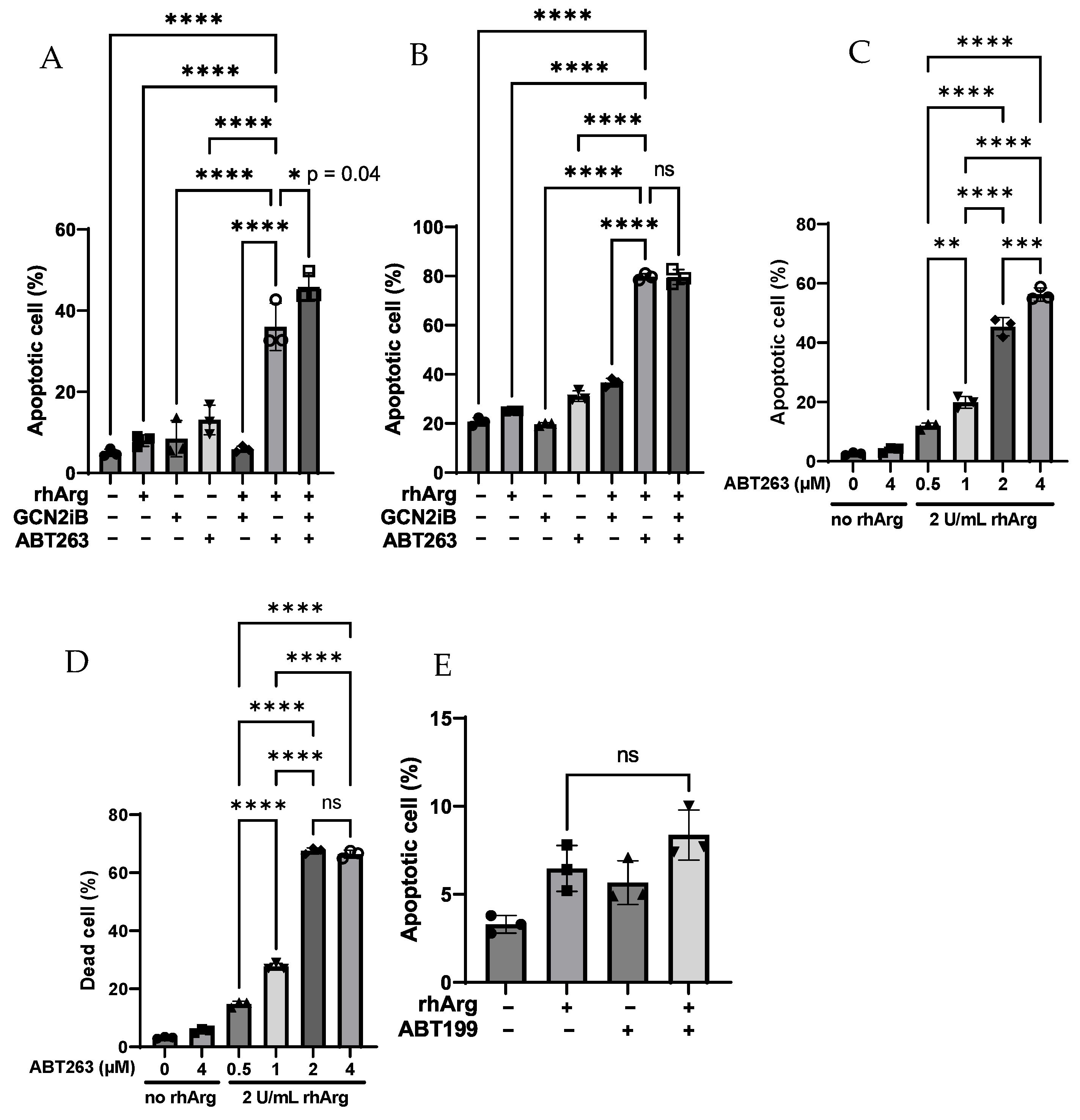
3.2. Combination of rhArg with ABT263 Exhibited Pronounced Synergistic Activity
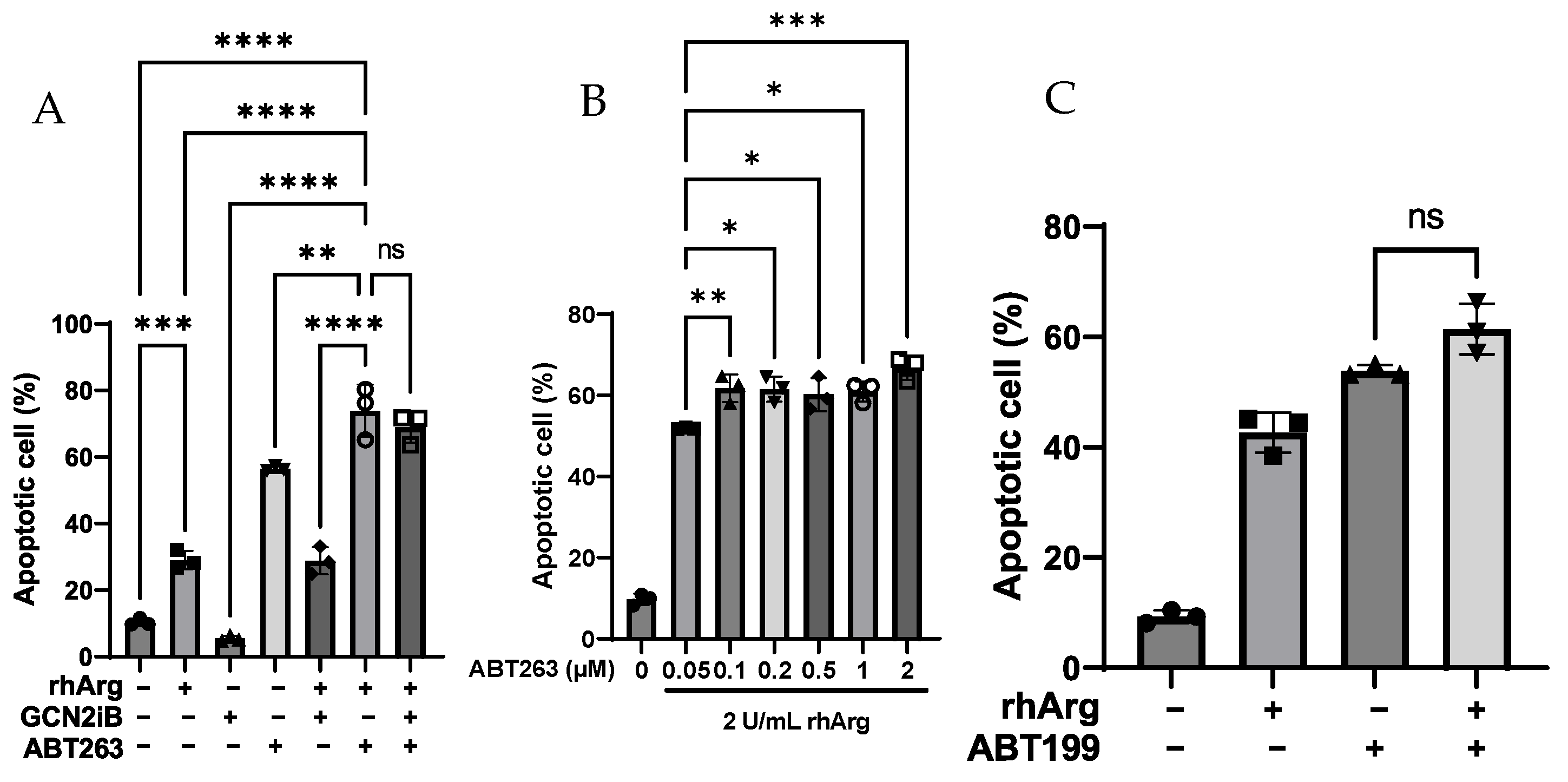
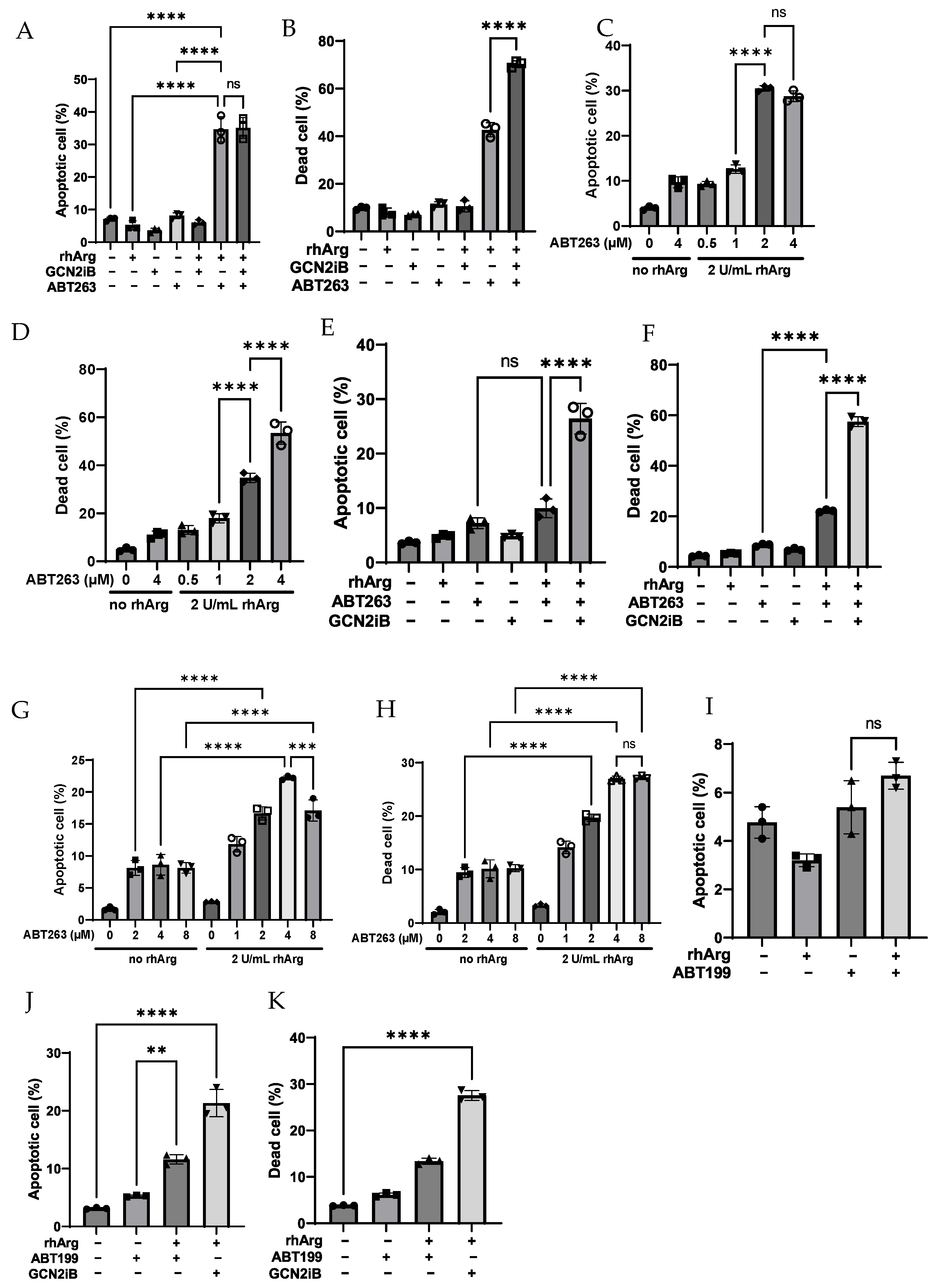
3.3. rhArg + ABT263 Exhibited Significant Cytotoxic Effect While rhArg + Metformin Blunted Colony Formation Ability in HT-29
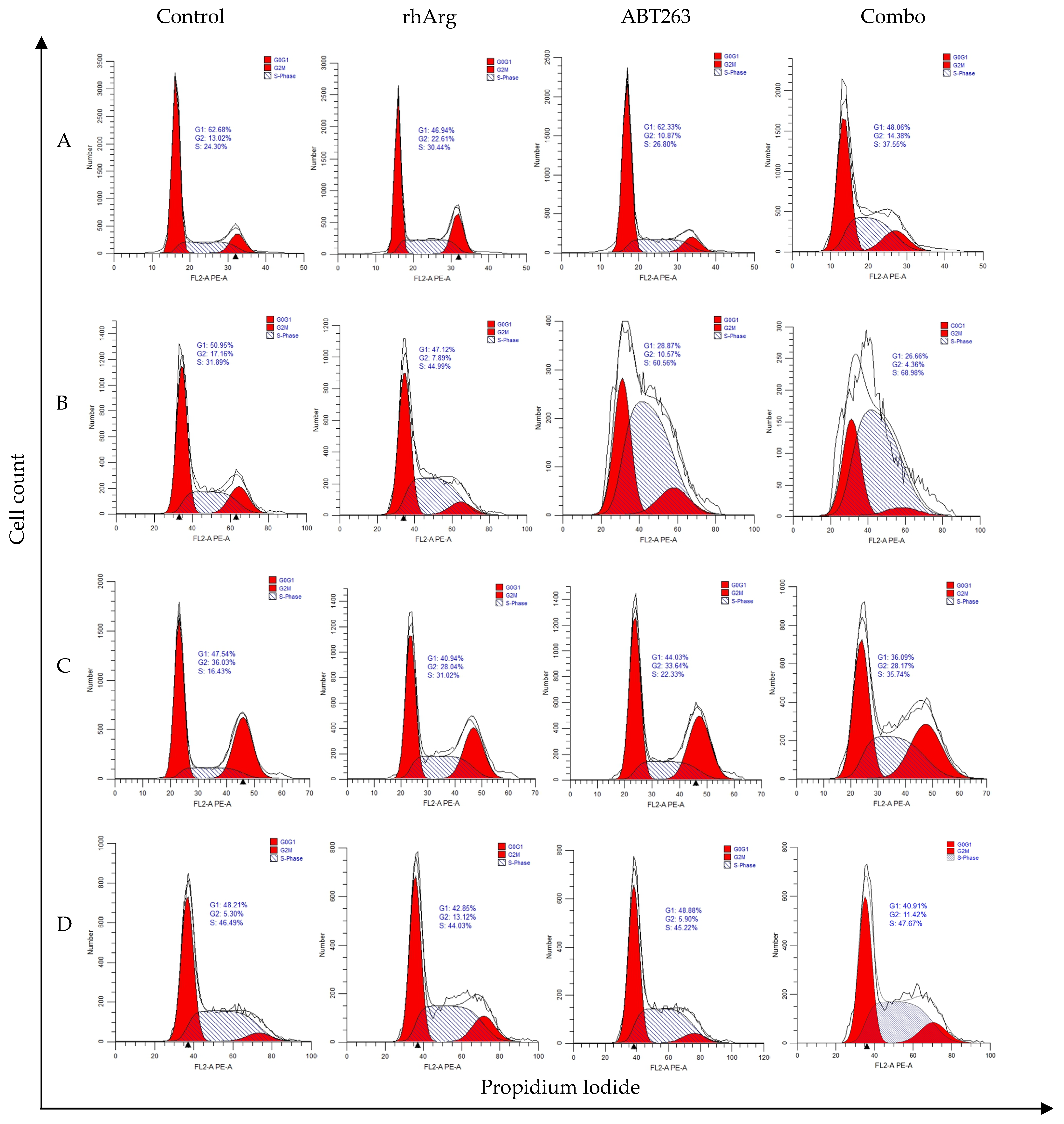
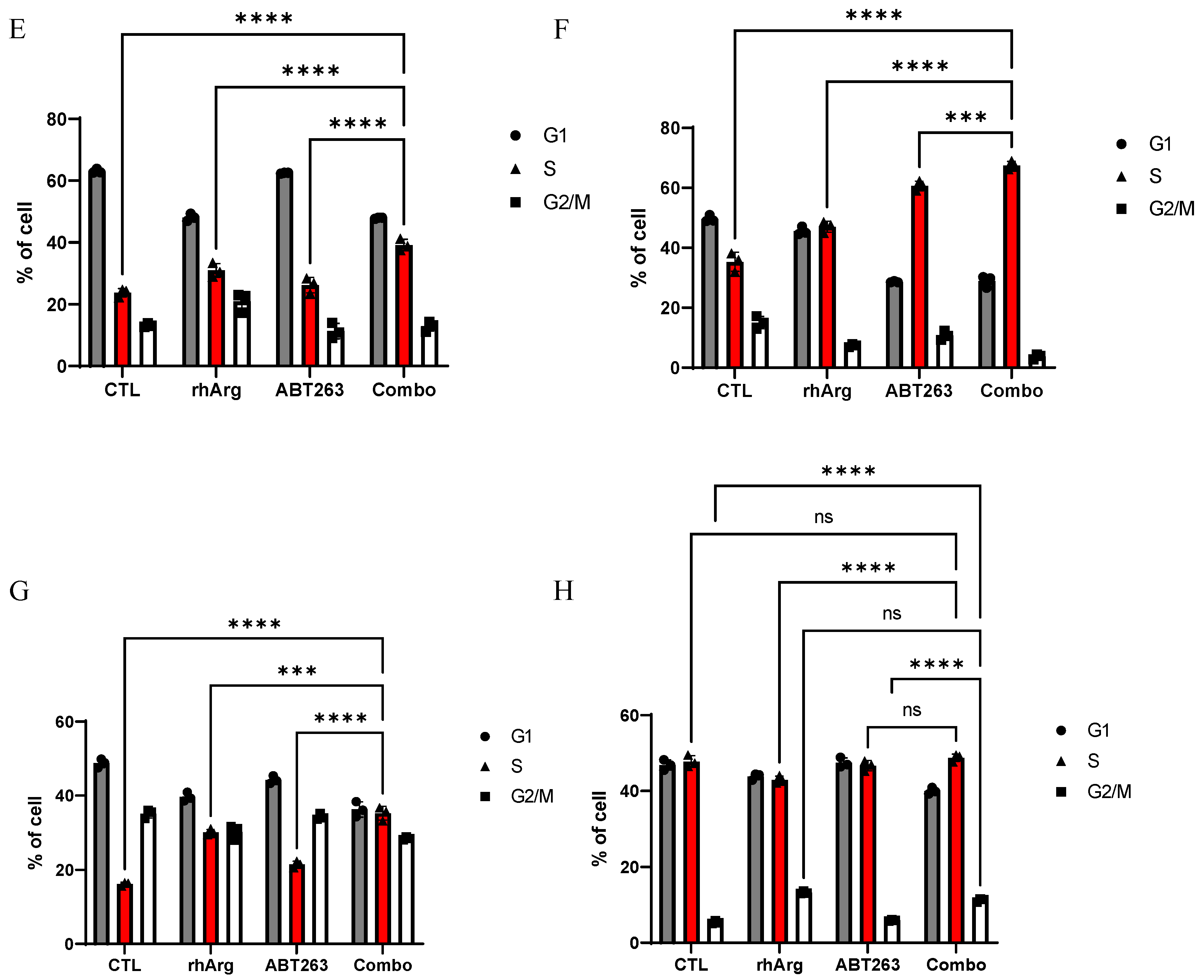
3.4. Cell Cycle Regulatory Effect of rhArg + ABT263
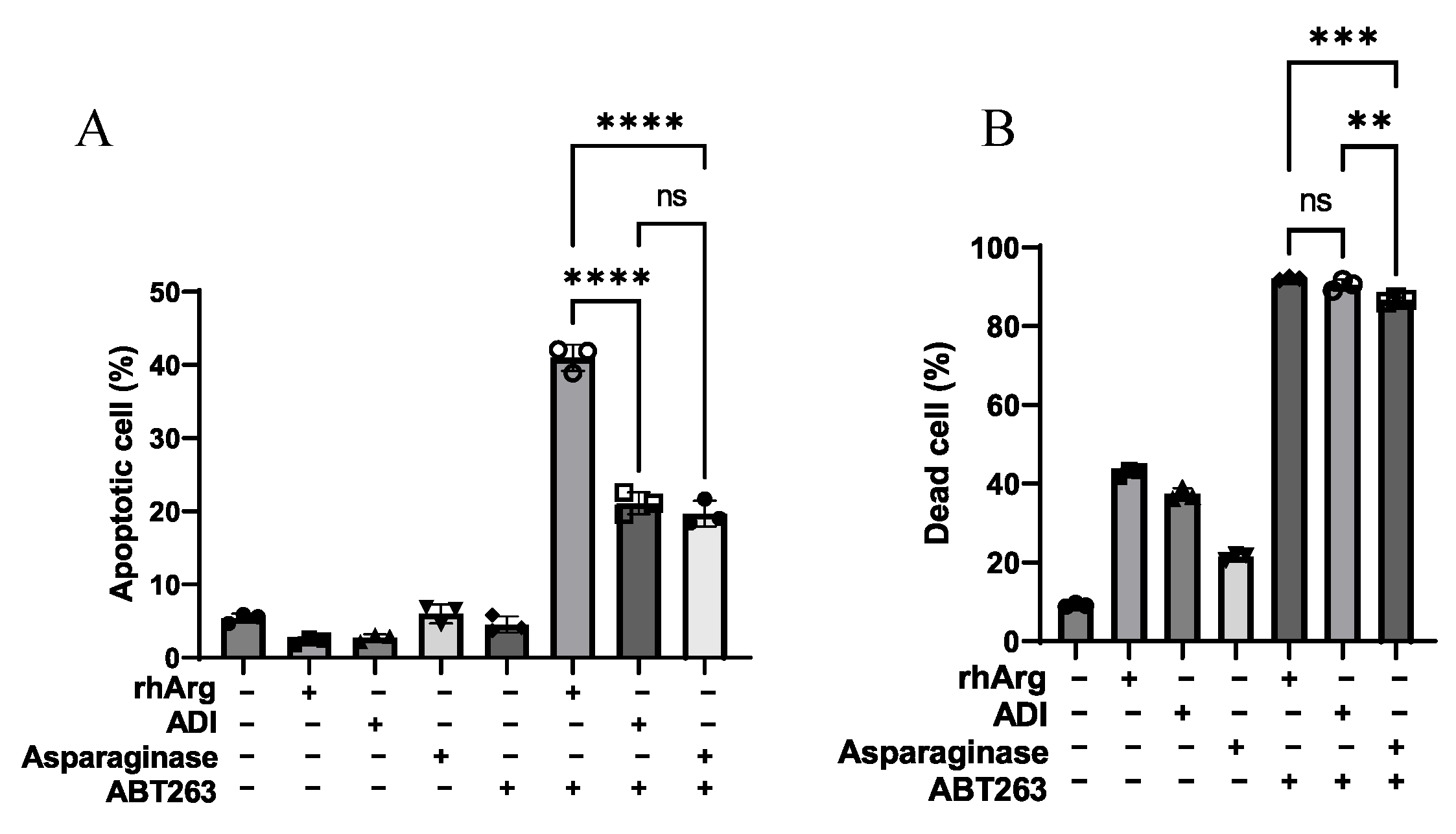
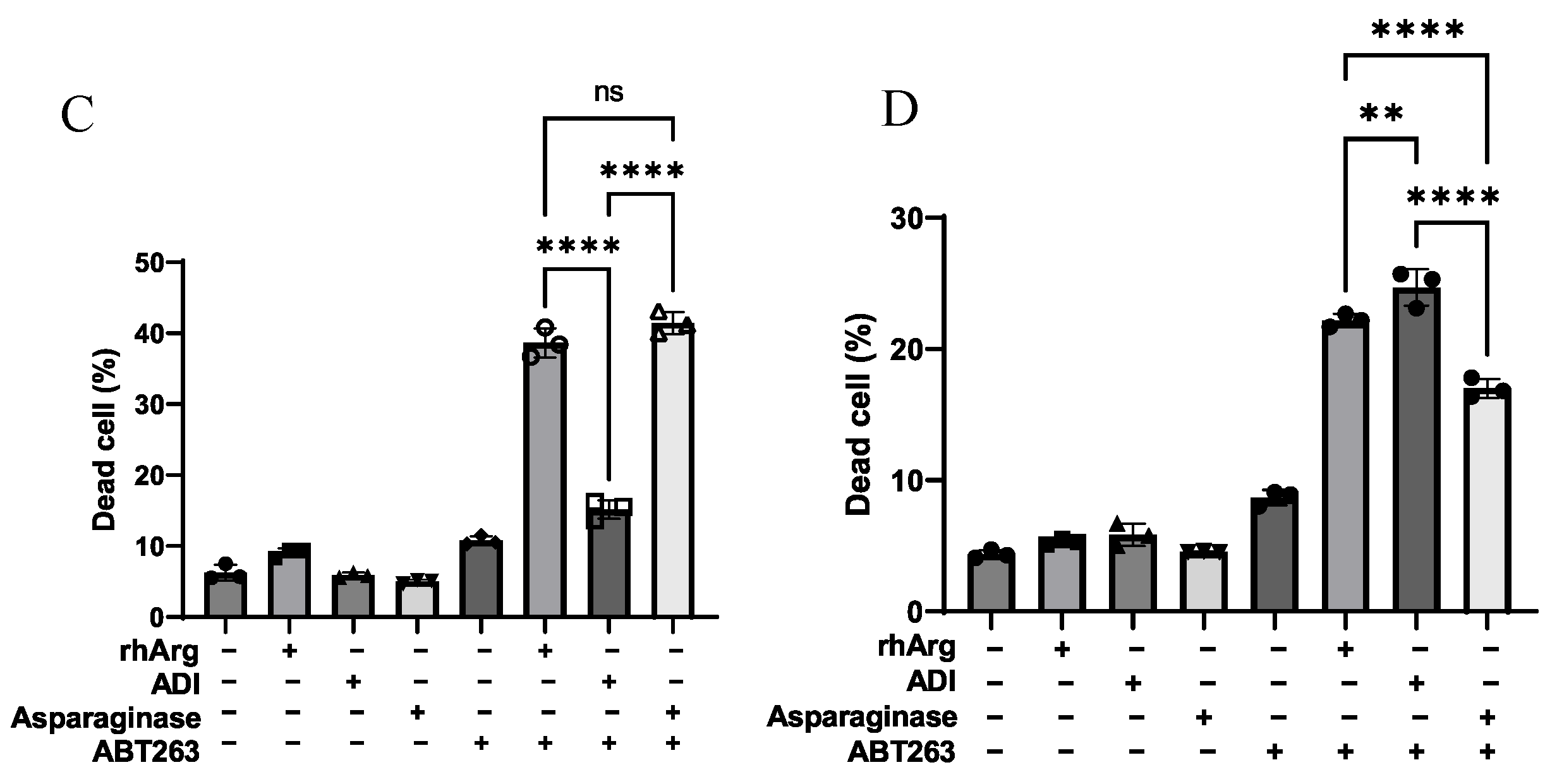
3.5. rhArg + ABT263 Outperformed Other Amino Acid Depletion Agents Combined with ABT263
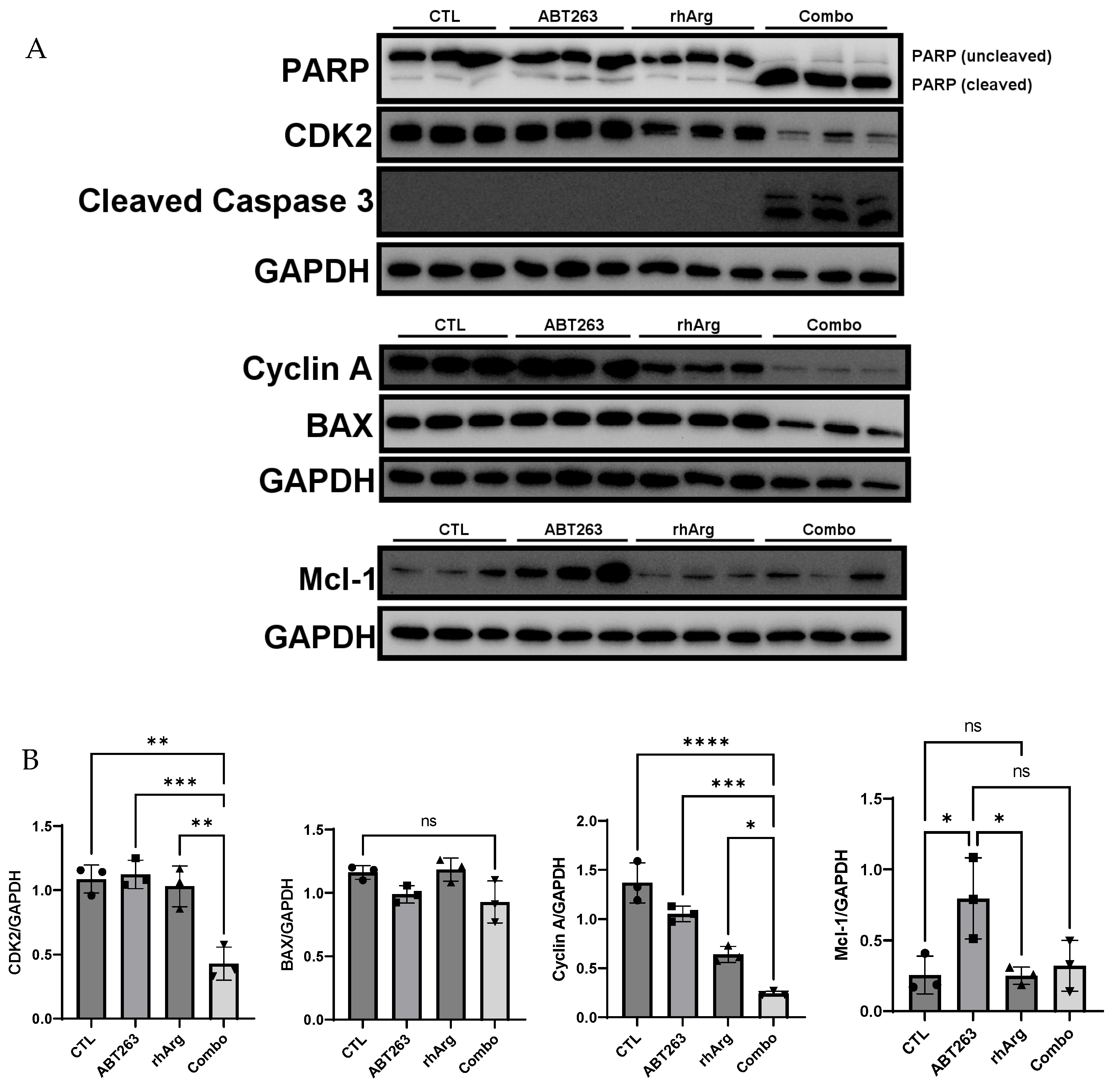
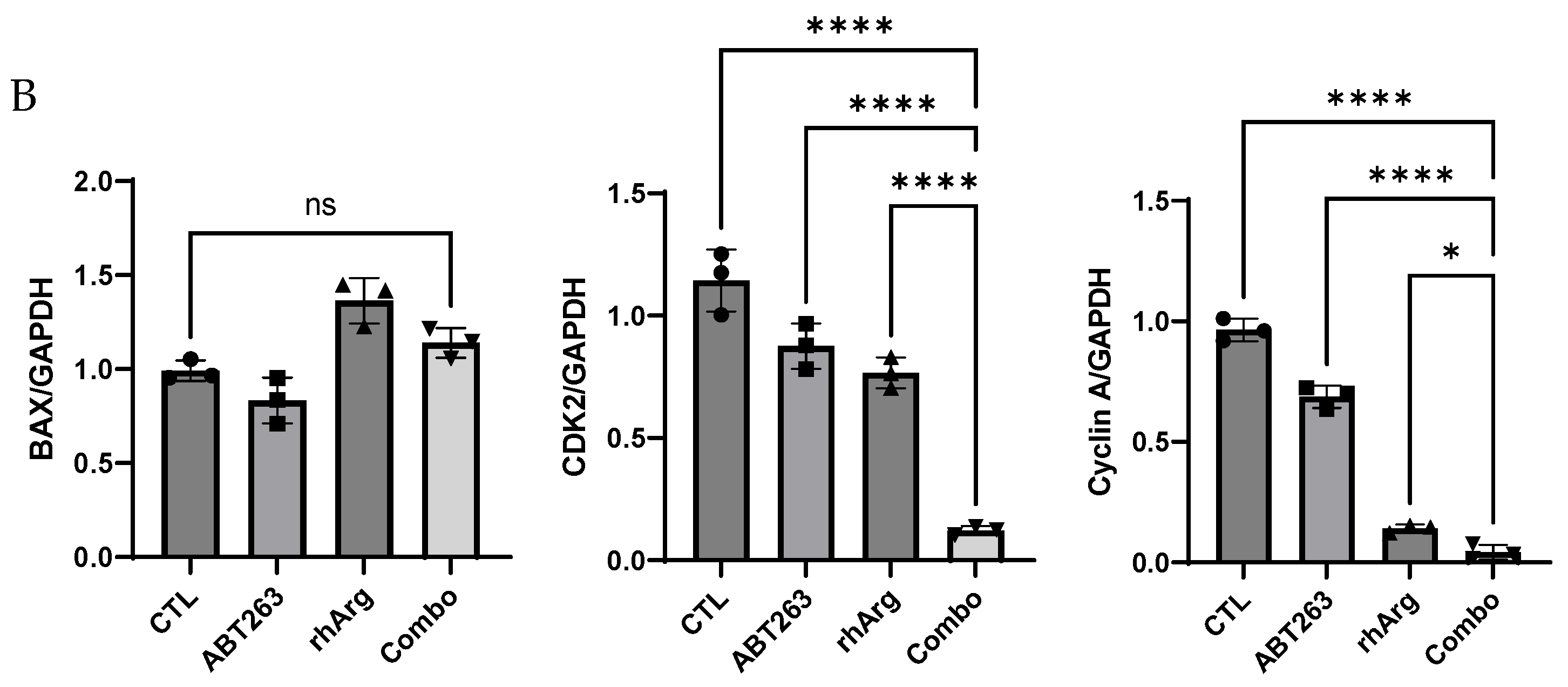
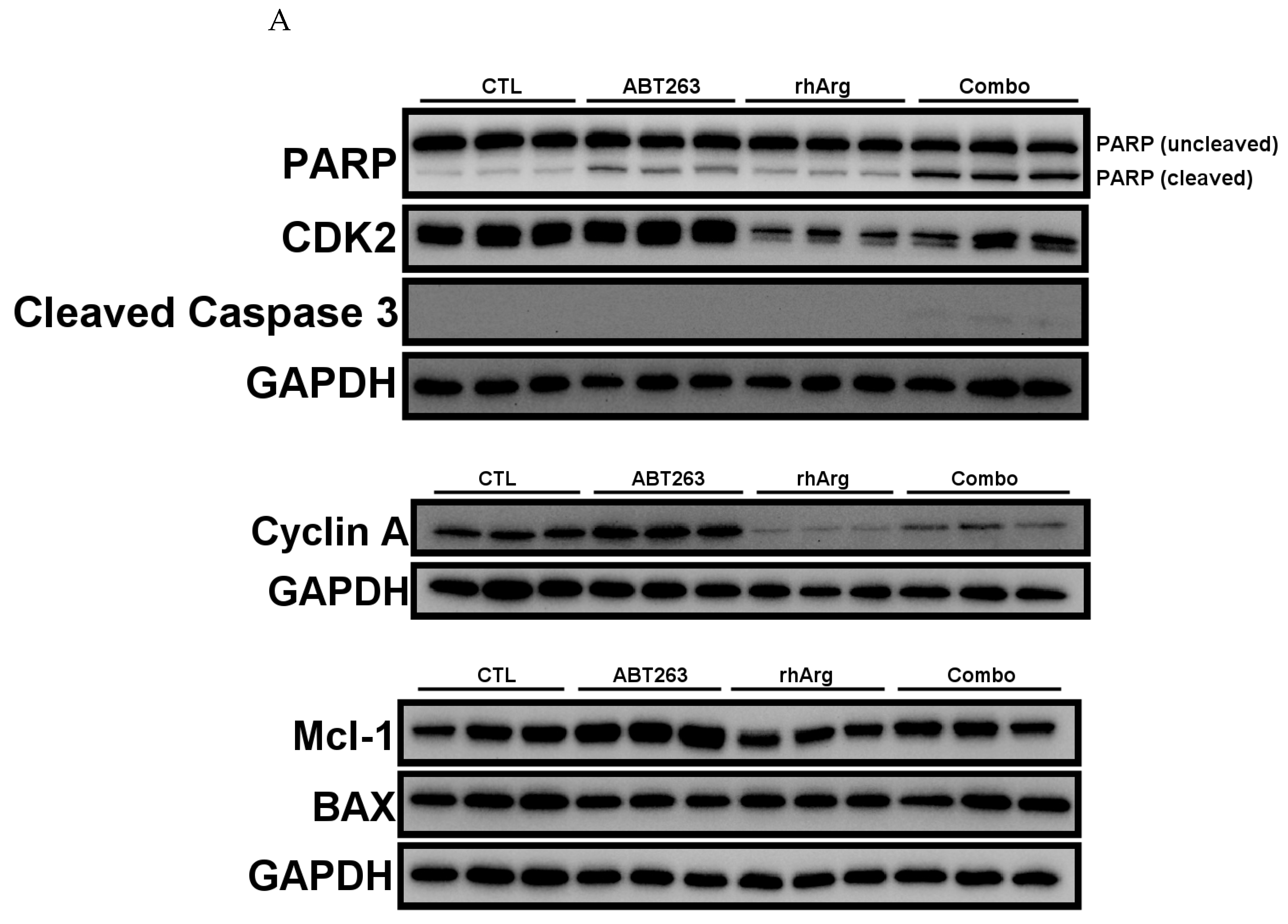
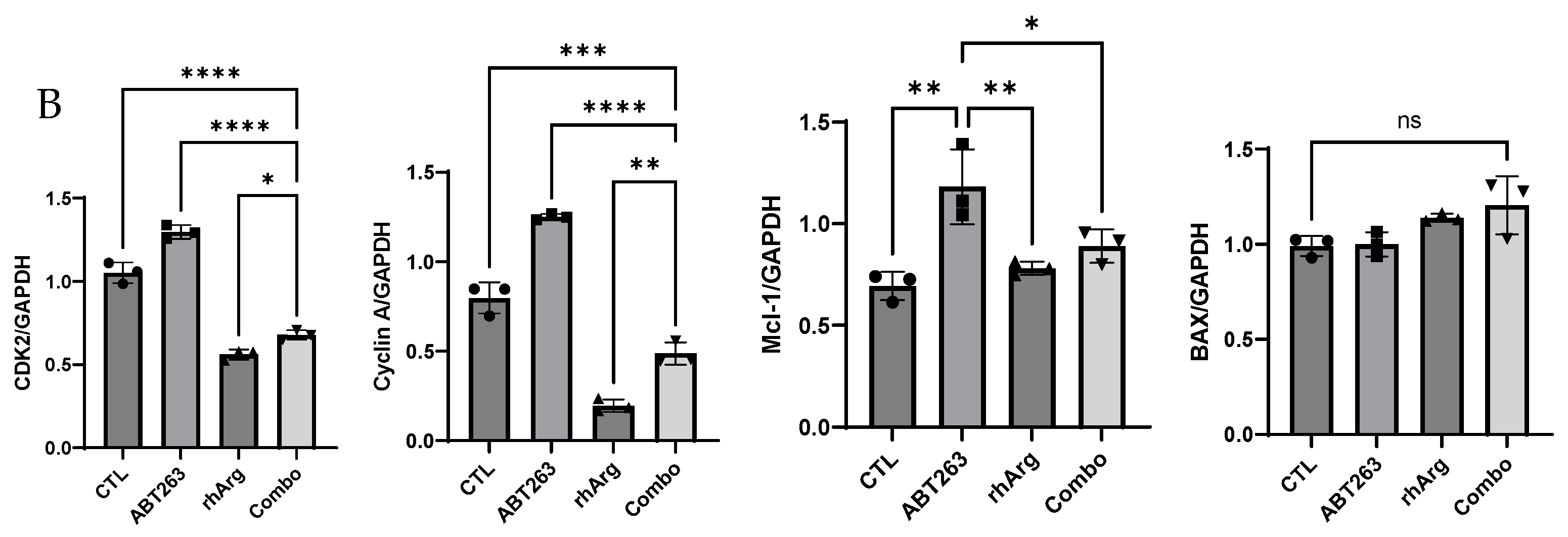
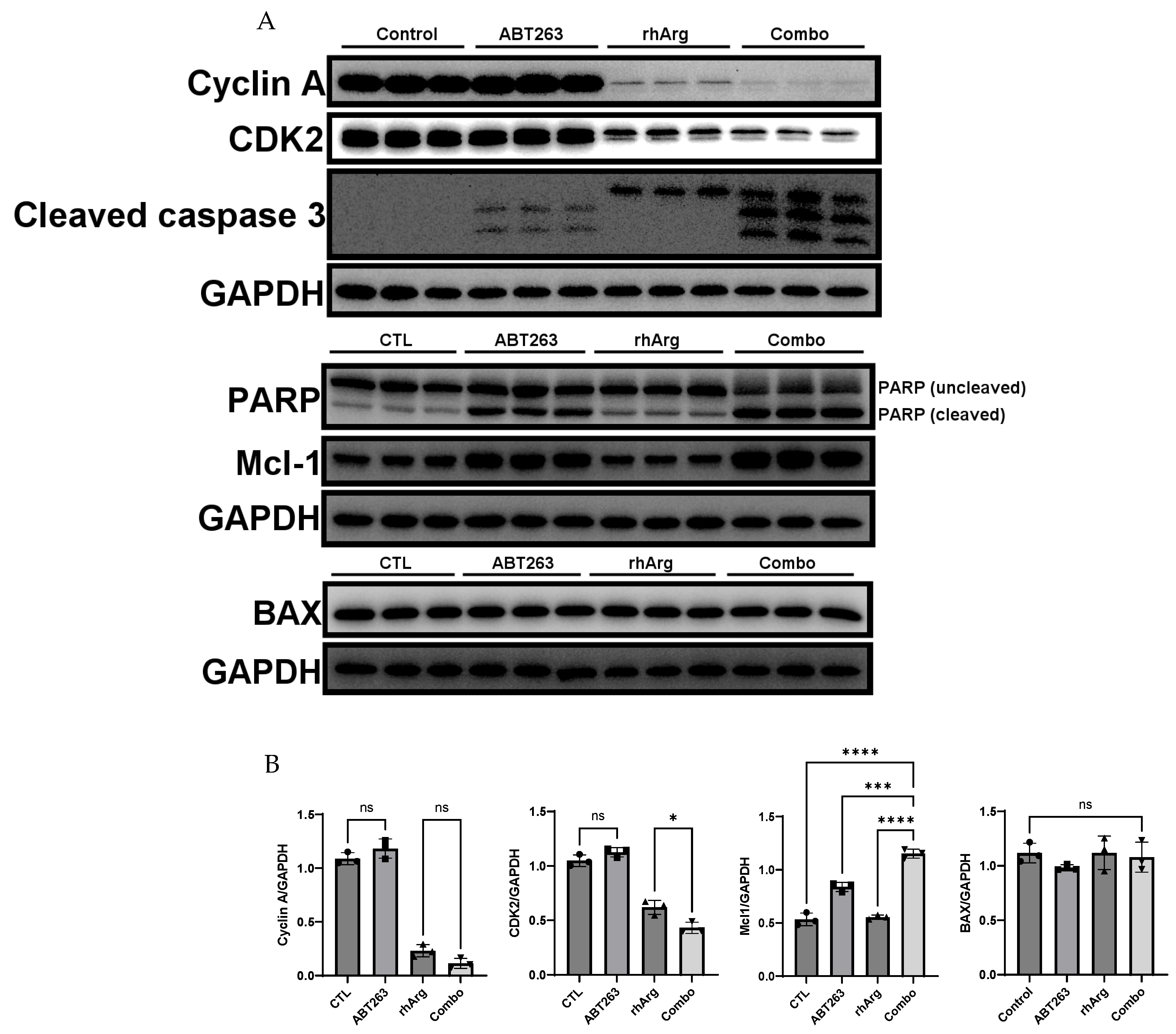
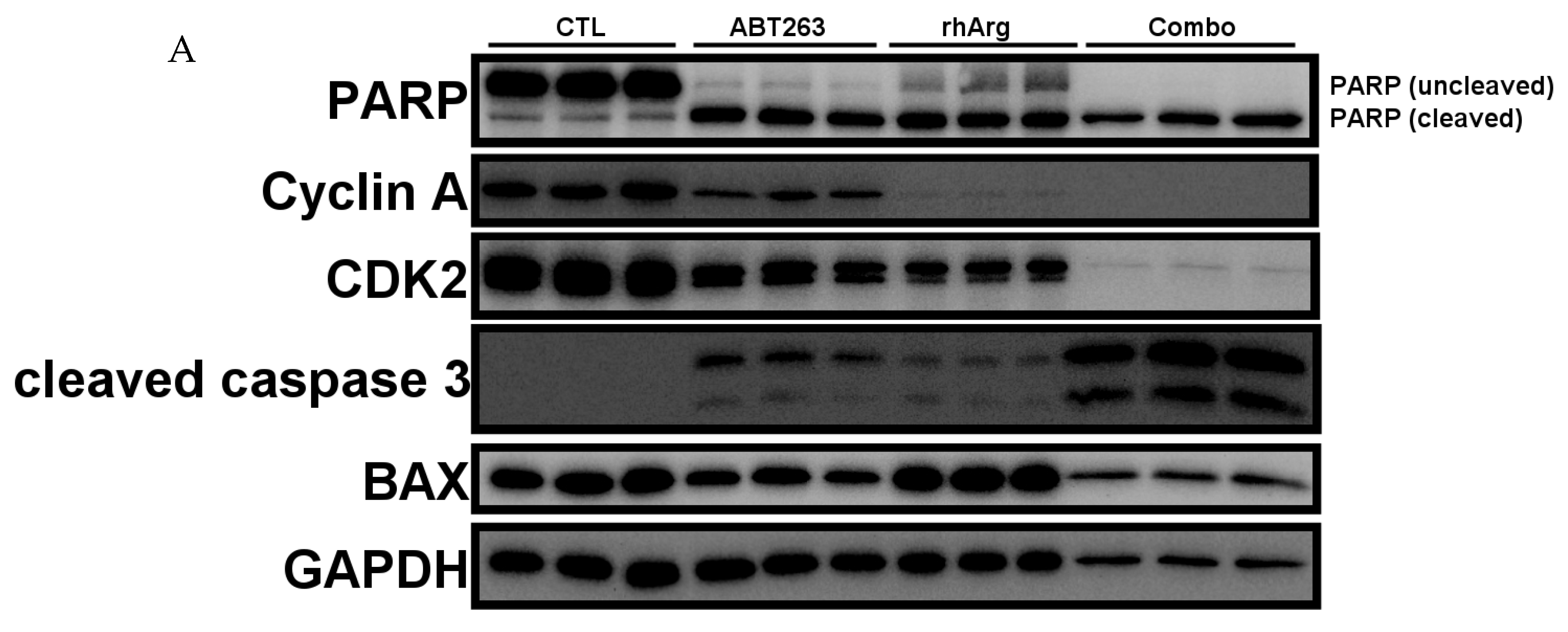
3.6. rhArg + ABT263 Produced the Most Pronounced Synergistic Effect with Elevated Apoptotic Markers and Downregulated the Expression of Cell Cycle Regulators
4. Discussion
5. Conclusions
Supplementary Materials
Author Contributions
Funding
Institutional Review Board Statement
Informed Consent Statement
Data Availability Statement
Conflicts of Interest
Abbreviations
| rhArg | Recombinant human arginase |
| PDAC | Pancreatic ductal carcinoma |
| TNBC | Triple-negative breast cancer |
| CRC | Colorectal cancer |
References
- McGuigan, A.; Kelly, P.; Turkington, R.C.; Jones, C.; Coleman, H.G.; McCain, R.S. Pancreatic cancer: A review of clinical diagnosis, epidemiology, treatment and outcomes. World J. Gastroenterol. 2018, 24, 4846–4861. [Google Scholar] [CrossRef]
- Rawla, P.; Sunkara, T.; Gaduputi, V. Epidemiology of Pancreatic Cancer: Global Trends, Etiology and Risk Factors. World J. Oncol. 2019, 10, 10–27. [Google Scholar] [CrossRef]
- Orrantia-Borunda, E.; Anchondo-Nuñez, P.; Acuña-Aguilar, L.E.; Gómez-Valles, F.O.; Ramírez-Valdespino, C.A. Subtypes of Breast Cancer. In Breast Cancer; Mayrovitz, H.N., Ed.; Springer Nature: New York, NY, USA, 2022. [Google Scholar]
- Simu, S.; Marcovici, I.; Dobrescu, A.; Malita, D.; Dehelean, C.A.; Coricovac, D.; Olaru, F.; Draghici, G.A.; Navolan, D. Insights into the Behavior of Triple-Negative MDA-MB-231 Breast Carcinoma Cells Following the Treatment with 17beta-Ethinylestradiol and Levonorgestrel. Molecules 2021, 26, 2776. [Google Scholar] [CrossRef]
- Wu, M.M.; Zhang, Z.; Tong, C.W.S.; Yan, V.W.; Cho, W.C.S.; To, K.K.W. Repurposing of niclosamide as a STAT3 inhibitor to enhance the anticancer effect of chemotherapeutic drugs in treating colorectal cancer. Life Sci. 2020, 262, 118522. [Google Scholar] [CrossRef]
- Pouyan, A.; Ghorbanlo, M.; Eslami, M.; Jahanshahi, M.; Ziaei, E.; Salami, A.; Mokhtari, K.; Shahpasand, K.; Farahani, N.; Meybodi, T.E.; et al. Glioblastoma multiforme: Insights into pathogenesis, key signaling pathways, and therapeutic strategies. Mol. Cancer 2025, 24, 58. [Google Scholar] [CrossRef]
- Shen, T.; Zhang, K.; Siegal, G.P.; Wei, S. Prognostic Value of E-Cadherin and beta-Catenin in Triple-Negative Breast Cancer. Am. J. Clin. Pathol. 2016, 146, 603–610. [Google Scholar] [CrossRef]
- Cheng, P.N.; Lam, T.L.; Lam, W.M.; Tsui, S.M.; Cheng, A.W.; Lo, W.H.; Leung, Y.C. Pegylated recombinant human arginase (rhArg-peg5000mw) inhibits the in vitro and in vivo proliferation of human hepatocellular carcinoma through arginine depletion. Cancer Res. 2007, 67, 309–317. [Google Scholar] [CrossRef]
- Fung, M.K.L.; Chan, S.; Sun, S.; De Zhang, P.; Leung, G.K.K.; Chan, G.C.F. The therapeutic potential of pegylated arginase I treatment in glioblastoma. Sci. Rep. 2025, 15, 28994. [Google Scholar] [CrossRef]
- Chung, S.F.; Tam, S.Y.; Kim, C.F.; Chong, H.C.; Lee, L.M.; Leung, Y.C. Mono-PEGylated thermostable Bacillus caldovelox arginase mutant (BCA-M-PEG20) induces apoptosis, autophagy, cell cycle arrest and growth inhibition in gastric cancer cells. Investig. New Drugs 2022, 40, 895–904. [Google Scholar] [CrossRef]
- Lam, T.L.; Wong, G.K.; Chong, H.C.; Cheng, P.N.; Choi, S.C.; Chow, T.L.; Kwok, S.Y.; Poon, R.T.; Wheatley, D.N.; Lo, W.H.; et al. Recombinant human arginase inhibits proliferation of human hepatocellular carcinoma by inducing cell cycle arrest. Cancer Lett. 2009, 277, 91–100. [Google Scholar] [CrossRef]
- Abou-Alfa, G.K.; Qin, S.; Ryoo, B.Y.; Lu, S.N.; Yen, C.J.; Feng, Y.H.; Lim, H.Y.; Izzo, F.; Colombo, M.; Sarker, D.; et al. Phase III randomized study of second line ADI-PEG 20 plus best supportive care versus placebo plus best supportive care in patients with advanced hepatocellular carcinoma. Ann. Oncol. 2018, 29, 1402–1408. [Google Scholar] [CrossRef]
- Sun, W.; Sanderson, P.E.; Zheng, W. Drug combination therapy increases successful drug repositioning. Drug Discov. Today 2016, 21, 1189–1195. [Google Scholar] [CrossRef]
- Szlosarek, P.W.; Creelan, B.C.; Sarkodie, T.; Nolan, L.; Taylor, P.; Olevsky, O.; Grosso, F.; Cortinovis, D.; Chitnis, M.; Roy, A.; et al. Pegargiminase Plus First-Line Chemotherapy in Patients with Nonepithelioid Pleural Mesothelioma: The ATOMIC-Meso Randomized Clinical Trial. JAMA Oncol. 2024, 10, 475–483. [Google Scholar] [CrossRef]
- Vogler, M.; Braun, Y.; Smith, V.M.; Westhoff, M.A.; Pereira, R.S.; Pieper, N.M.; Anders, M.; Callens, M.; Vervliet, T.; Abbas, M.; et al. The BCL2 family: From apoptosis mechanisms to new advances in targeted therapy. Signal Transduct. Target Ther. 2025, 10, 91. [Google Scholar] [CrossRef]
- Zhu, L.; Yang, K.; Ren, Z.; Yin, D.; Zhou, Y. Metformin as anticancer agent and adjuvant in cancer combination therapy: Current progress and future prospect. Transl. Oncol. 2024, 44, 101945. [Google Scholar] [CrossRef]
- Anakha, J.; Kawathe, P.S.; Datta, S.; Jawalekar, S.S.; Banerjee, U.C.; Pande, A.H. Human arginase 1, a Jack of all trades? 3 Biotech 2022, 12, 264. [Google Scholar] [CrossRef]
- Tam, S.Y.; Chung, S.F.; Kim, C.F.; To, J.C.; So, P.K.; Cheung, K.K.; Chung, W.H.; Wong, K.Y.; Leung, Y.C. Development of a bioengineered Erwinia chrysanthemi asparaginase to enhance its anti-solid tumor potential for treating gastric cancer. Int. J. Biol. Macromol. 2023, 253, 127742. [Google Scholar] [CrossRef]
- Chow, J.P.H.; Cai, Y.; Chow, D.T.L.; Chung, S.H.K.; Chau, K.C.; Ng, K.Y.; Leung, O.M.; Wong, R.M.H.; Law, A.W.L.; Leung, Y.O.; et al. A modified arginine-depleting enzyme NEI-01 inhibits growth of pancreatic cancer cells. PLoS ONE 2020, 15, e0231633. [Google Scholar] [CrossRef]
- Chou, T.-C. Theoretical Basis, Experimental Design, and Computerized Simulation of Synergism and Antagonism in Drug Combination Studies. Pharmacol. Rev. 2007, 59, 124. [Google Scholar] [CrossRef]
- Anderson, N.M.; Harrold, I.; Mansour, M.R.; Sanda, T.; McKeown, M.; Nagykary, N.; Bradner, J.E.; Lan Zhang, G.; Look, A.T.; Feng, H. BCL2-specific inhibitor ABT-199 synergizes strongly with cytarabine against the early immature LOUCY cell line but not more-differentiated T-ALL cell lines. Leukemia 2014, 28, 1145–1148. [Google Scholar] [CrossRef]
- Missiaen, R.; Anderson, N.M.; Kim, L.C.; Nance, B.; Burrows, M.; Skuli, N.; Carens, M.; Riscal, R.; Steensels, A.; Li, F.; et al. GCN2 inhibition sensitizes arginine-deprived hepatocellular carcinoma cells to senolytic treatment. Cell Metab. 2022, 34, 1151–1167.e7. [Google Scholar] [CrossRef]
- Li, H.; Xu, K.; Pian, G.; Sun, S. Artesunate and sorafenib: Combinatorial inhibition of liver cancer cell growth. Oncol. Lett. 2019, 18, 4735–4743. [Google Scholar] [CrossRef]
- Wu, H.; Huang, D.; Zhou, H.; Sima, X.; Wu, Z.; Sun, Y.; Wang, L.; Ruan, Y.; Wu, Q.; Wu, F.; et al. Metformin: A promising drug for human cancers. Oncol. Lett. 2022, 24, 204. [Google Scholar] [CrossRef]
- Hernandez, J.L.; Padilla, L.; Dakhel, S.; Coll, T.; Hervas, R.; Adan, J.; Masa, M.; Mitjans, F.; Martinez, J.M.; Coma, S.; et al. Therapeutic targeting of tumor growth and angiogenesis with a novel anti-S100A4 monoclonal antibody. PLoS ONE 2013, 8, e72480. [Google Scholar] [CrossRef]
- Silva, M.T. Secondary necrosis: The natural outcome of the complete apoptotic program. FEBS Lett. 2010, 584, 4491–4499. [Google Scholar] [CrossRef]
- Blachier, J.; Cleret, A.; Guerin, N.; Gil, C.; Fanjat, J.M.; Tavernier, F.; Vidault, L.; Gallix, F.; Rama, N.; Rossignol, R.; et al. L-asparaginase anti-tumor activity in pancreatic cancer is dependent on its glutaminase activity and resistance is mediated by glutamine synthetase. Exp. Cell Res. 2023, 426, 113568. [Google Scholar] [CrossRef]
- Porter, A.G.; Jänicke, R.U. Emerging roles of caspase-3 in apoptosis. Cell Death Differ. 1999, 6, 99–104. [Google Scholar] [CrossRef]
- Tewari, M.; Quan, L.T.; O’Rourke, K.; Desnoyers, S.; Zeng, Z.; Beidler, D.R.; Poirier, G.G.; Salvesen, G.S.; Dixit, V.M. Yama/CPP32 beta, a mammalian homolog of CED-3, is a CrmA-inhibitable protease that cleaves the death substrate poly(ADP-ribose) polymerase. Cell 1995, 81, 801–809. [Google Scholar] [CrossRef]
- Kaufmann, S.H.; Desnoyers, S.; Ottaviano, Y.; Davidson, N.E.; Poirier, G.G. Specific proteolytic cleavage of poly(ADP-ribose) polymerase: An early marker of chemotherapy-induced apoptosis. Cancer Res. 1993, 53, 3976–3985. [Google Scholar]
- Tu, Y.S.; Kang, X.L.; Zhou, J.G.; Lv, X.F.; Tang, Y.B.; Guan, Y.Y. Involvement of Chk1-Cdc25A-cyclin A/CDK2 pathway in simvastatin induced S-phase cell cycle arrest and apoptosis in multiple myeloma cells. Eur. J. Pharmacol. 2011, 670, 356–364. [Google Scholar] [CrossRef]
- Van Delft, M.F.; Wei, A.H.; Mason, K.D.; Vandenberg, C.J.; Chen, L.; Czabotar, P.E.; Willis, S.N.; Scott, C.L.; Day, C.L.; Cory, S.; et al. The BH3 mimetic ABT-737 targets selective Bcl-2 proteins and efficiently induces apoptosis via Bak/Bax if Mcl-1 is neutralized. Cancer Cell 2006, 10, 389–399. [Google Scholar] [CrossRef]
- Lin, X.; Morgan-Lappe, S.; Huang, X.; Li, L.; Zakula, D.M.; Vernetti, L.A.; Fesik, S.W.; Shen, Y. ‘Seed’ analysis of off-target siRNAs reveals an essential role of Mcl-1 in resistance to the small-molecule Bcl-2/Bcl-XL inhibitor ABT-737. Oncogene 2007, 26, 3972–3979. [Google Scholar] [CrossRef]
- Khoury, O.; Ghazale, N.; Stone, E.; El-Sibai, M.; Frankel, A.E.; Abi-Habib, R.J. Human recombinant arginase I (Co)-PEG5000 [HuArgI (Co)-PEG5000]-induced arginine depletion is selectively cytotoxic to human glioblastoma cells. J. Neurooncol. 2015, 122, 75–85. [Google Scholar] [CrossRef]
- Rudin, C.M.; Hann, C.L.; Garon, E.B.; Ribeiro de Oliveira, M.; Bonomi, P.D.; Camidge, D.R.; Chu, Q.; Giaccone, G.; Khaira, D.; Ramalingam, S.S.; et al. Phase II study of single-agent navitoclax (ABT-263) and biomarker correlates in patients with relapsed small cell lung cancer. Clin. Cancer Res. 2012, 18, 3163–3169. [Google Scholar] [CrossRef]
- Gandhi, L.; Camidge, D.R.; Ribeiro de Oliveira, M.; Bonomi, P.; Gandara, D.; Khaira, D.; Hann, C.L.; McKeegan, E.M.; Litvinovich, E.; Hemken, P.M.; et al. Phase I study of Navitoclax (ABT-263), a novel Bcl-2 family inhibitor, in patients with small-cell lung cancer and other solid tumors. J. Clin. Oncol. 2011, 29, 909–916. [Google Scholar] [CrossRef]
- Panda, P.K.; Paschoalini Mafra, A.C.; Bastos, A.C.S.; Cao, L.; Serra Bonet, M.; Brashears, C.B.; Chen, E.Y.; Benedict-Hamilton, H.M.; Ehrhardt, W.; Bomalaski, J.; et al. BCL-XL Protects ASS1-Deficient Cancers from Arginine Starvation-Induced Apoptosis. Clin. Cancer. Res. 2025, 31, 1333–1345. [Google Scholar] [CrossRef]
- Tahir, S.K.; Wass, J.; Joseph, M.K.; Devanarayan, V.; Hessler, P.; Zhang, H.; Elmore, S.W.; Kroeger, P.E.; Tse, C.; Rosenberg, S.H.; et al. Identification of expression signatures predictive of sensitivity to the Bcl-2 family member inhibitor ABT-263 in small cell lung carcinoma and leukemia/lymphoma cell lines. Mol. Cancer Ther. 2010, 9, 545–557. [Google Scholar] [CrossRef]
- Merino, D.; Khaw, S.L.; Glaser, S.P.; Anderson, D.J.; Belmont, L.D.; Wong, C.; Yue, P.; Robati, M.; Phipson, B.; Fairlie, W.D.; et al. Bcl-2, Bcl-x(L), and Bcl-w are not equivalent targets of ABT-737 and navitoclax (ABT-263) in lymphoid and leukemic cells. Blood 2012, 119, 5807–5816. [Google Scholar] [CrossRef]
- Lee, Y.C.; Wang, L.J.; Huang, C.H.; Shi, Y.J.; Chang, L.S. ABT-263-induced MCL1 upregulation depends on autophagy-mediated 4EBP1 downregulation in human leukemia cells. Cancer Lett. 2018, 432, 191–204. [Google Scholar] [CrossRef]
- Wang, B.; Ni, Z.; Dai, X.; Qin, L.; Li, X.; Xu, L.; Lian, J.; He, F. The Bcl-2/xL inhibitor ABT-263 increases the stability of Mcl-1 mRNA and protein in hepatocellular carcinoma cells. Mol. Cancer 2014, 13, 98. [Google Scholar] [CrossRef]
- Masuo, H.; Kubota, K.; Shimizu, A.; Notake, T.; Miyazaki, S.; Yoshizawa, T.; Sakai, H.; Hayashi, H.; Soejima, Y. Increased mitochondria are responsible for the acquisition of gemcitabine resistance in pancreatic cancer cell lines. Cancer Sci. 2023, 114, 4388–4400. [Google Scholar] [CrossRef]






| Drugs | IC50 µg/mL ± SD (µM) | |||
|---|---|---|---|---|
| HT-29 | MDA-MB-231 | U251 | Panc-1R | |
| GCN2iB | 7.47 ± 3.45 (16.53) | 39.69 ± 26.04 (87.84) | 21.40 ± 7.81 (47.36) | 23.11 ± 2.06 (51.15) |
| ABT263 | 11.64 ± 0.77 (11.94) | 2.14 ± 0.30 (2.20) | 9.22 ± 1.61 (9.46) | 14.60 ± 0.51 (14.98) |
| Metformin | 5634.00 ± 378.00 (17,842.7) | 2967.00 ± 216.00 (9396.4) | ND | ND |
| ABT199 | 20.93 ± 1.13 (24.10) | 14.70 ± 1.97 (16.93) | 13.61 ± 1.11 (15.67) | ND |
| IC50 of arginine depletion agents | ||||
| rhArg (µg/mL ± SD (U/mL)) | ||||
| ADI (µg/mL ± SD) | ||||
| rhArg | 0.32 ± 0.09 (0.062) | 0.24 ± 0.12 (0.047) | 0.96 ± 0.40 (0.186) | 0.21 ± 0.05 (0.041) |
| ADI | 0.00830 ± 0.0017 | 0.0071 ± 0.0015 | Resistant | 0.0085 ± 0.0026 |
| Cell Lines | Chemical Entities | Treatment Time | CI | DRI | |
|---|---|---|---|---|---|
| rhArg | Chemical Entities | ||||
| HT-29 | Metformin | 48 h | 1.27 ± 0.21 | 1.73 ± 0.27 | 1.52 ± 0.23 |
| 96 h | 0.65 ± 0.03 | 3.82 ± 0.17 | 2.58 ± 0.12 | ||
| ABT263 | 72 h | 0.71 ± 0.03 | 3.03 ± 0.11 | 2.64 ± 0.10 | |
| ABT199 | 72 h | 0.69 ± 0.04 | 2.99 ± 0.11 | 2.72 ± 0.10 | |
| MDA-MB-231 | Metformin | 48 h | 1.91 ± 0.46 | 1.16 ± 0.31 | 1.07 ± 0.29 |
| 96 h | 0.84 ± 0.07 | 2.68 ± 0.21 | 2.15 ± 0.17 | ||
| ABT263 | 72 h | 0.90 ± 0.03 | 2.31 ± 0.07 | 2.16 ± 0.07 | |
| ABT199 | 72 h | 0.88 ± 0.06 | 2.62 ± 0.16 | 2.02 ± 0.12 | |
| U251 | ABT199 | 72 h | 0.82 ± 0.04 | 2.52 ± 0.13 | 2.40 ± 0.12 |
| ABT263 | 72 h | 0.47 ± 0.02 | 4.13 ± 0.16 | 4.33 ± 0.16 | |
| Panc-1R | ABT263 | 72 h | 0.90 ± 0.02 | 1.60 ± 0.04 | 3.71 ± 0.10 |
| HT-29 | G1 (%) | S (%) | G2/M (%) |
| Control | 63.03 ± 0.55 | 23.77 ± 1.07 | 13.21 ± 0.52 |
| rhArg | 48.10 ± 0.96 | 30.94 ± 1.83 | 20.96 ± 2.58 |
| ABT263 | 62.48 ± 0.10 | 26.19 ± 2.06 | 11.33 ± 2.03 |
| Combo | 47.92 ± 0.20 | 39.17 ± 1.52 | 12.90 ± 1.33 |
| MDA-MB-231 | G1 (%) | S (%) | G2/M (%) |
| Control | 49.65 ± 0.92 | 35.32 ± 2.58 | 15.03 ± 1.70 |
| rhArg | 45.59 ± 1.10 | 47.03 ± 1.51 | 7.38 ± 0.43 |
| ABT263 | 28.63 ± 0.17 | 60.65 ± 1.30 | 10.72 ± 1.31 |
| Combo | 28.92 ± 1.60 | 67.41 ± 1.15 | 3.67 ± 0.68 |
| U251 | G1 (%) | S (%) | G2/M (%) |
| Control | 48.76 ± 0.95 | 16.19 ± 0.41 | 35.10 ± 0.96 |
| rhArg | 39.60 ± 0.99 | 30.14 ± 0.63 | 30.25 ± 1.58 |
| ABT263 | 44.23 ± 0.86 | 21.50 ± 0.69 | 34.26 ± 0.65 |
| Combo | 36.26 ± 1.69 | 35.21 ± 1.51 | 28.54 ± 0.34 |
| Panc-1R | G1 (%) | S (%) | G2/M (%) |
| Control | 46.83 ± 1.12 | 47.77 ± 1.26 | 5.39 ± 0.32 |
| rhArg | 43.85 ± 0.71 | 42.91 ± 0.82 | 13.24 ± 0.26 |
| ABT263 | 47.42 ± 1.06 | 46.67 ± 1.11 | 5.90 ± 0.17 |
| Combo | 39.98 ± 0.70 | 48.76 ± 0.78 | 11.23 ± 0.37 |
Disclaimer/Publisher’s Note: The statements, opinions and data contained in all publications are solely those of the individual author(s) and contributor(s) and not of MDPI and/or the editor(s). MDPI and/or the editor(s) disclaim responsibility for any injury to people or property resulting from any ideas, methods, instructions or products referred to in the content. |
© 2026 by the authors. Licensee MDPI, Basel, Switzerland. This article is an open access article distributed under the terms and conditions of the Creative Commons Attribution (CC BY) license.
Share and Cite
Sze, L.-P.; Ho, V.M.-K.; Fung, W.-K.; Law, K.-H.; Tu, Y.; So, Y.-H.; Chung, S.-F.; Wong, W.-L.; Liu, Z.; Shum, A.S.-W.; et al. The Synergistic Effects of rhArg with Bcl-2 Inhibitors or Metformin Co-Treatment in Multiple Cancer Cell Models. Cells 2026, 15, 164. https://doi.org/10.3390/cells15020164
Sze L-P, Ho VM-K, Fung W-K, Law K-H, Tu Y, So Y-H, Chung S-F, Wong W-L, Liu Z, Shum AS-W, et al. The Synergistic Effects of rhArg with Bcl-2 Inhibitors or Metformin Co-Treatment in Multiple Cancer Cell Models. Cells. 2026; 15(2):164. https://doi.org/10.3390/cells15020164
Chicago/Turabian StyleSze, Lai-Pan, Vicky Mei-Ki Ho, Wing-Ki Fung, Kin-Ho Law, Yifan Tu, Yik-Hing So, Sai-Fung Chung, Wing-Leung Wong, Zhen Liu, Alisa Sau-Wun Shum, and et al. 2026. "The Synergistic Effects of rhArg with Bcl-2 Inhibitors or Metformin Co-Treatment in Multiple Cancer Cell Models" Cells 15, no. 2: 164. https://doi.org/10.3390/cells15020164
APA StyleSze, L.-P., Ho, V. M.-K., Fung, W.-K., Law, K.-H., Tu, Y., So, Y.-H., Chung, S.-F., Wong, W.-L., Liu, Z., Shum, A. S.-W., Lee, L. M.-Y., & Leung, Y.-C. (2026). The Synergistic Effects of rhArg with Bcl-2 Inhibitors or Metformin Co-Treatment in Multiple Cancer Cell Models. Cells, 15(2), 164. https://doi.org/10.3390/cells15020164