Angiogenic Gene Therapy for Lower Extremity Ischemia: Experimental Advances and Clinical Experience

 ,
,  and
and 
Abstract
1. Introduction
2. Thrombo-Inflammatory and Metabolic Barriers to Therapeutic Angiogenesis in CLTI
3. Platelets and Therapeutic Angiogenesis in Ischemic Tissue
4. Diabetes-Associated Impairment of Therapeutic Angiogenesis in CLTI
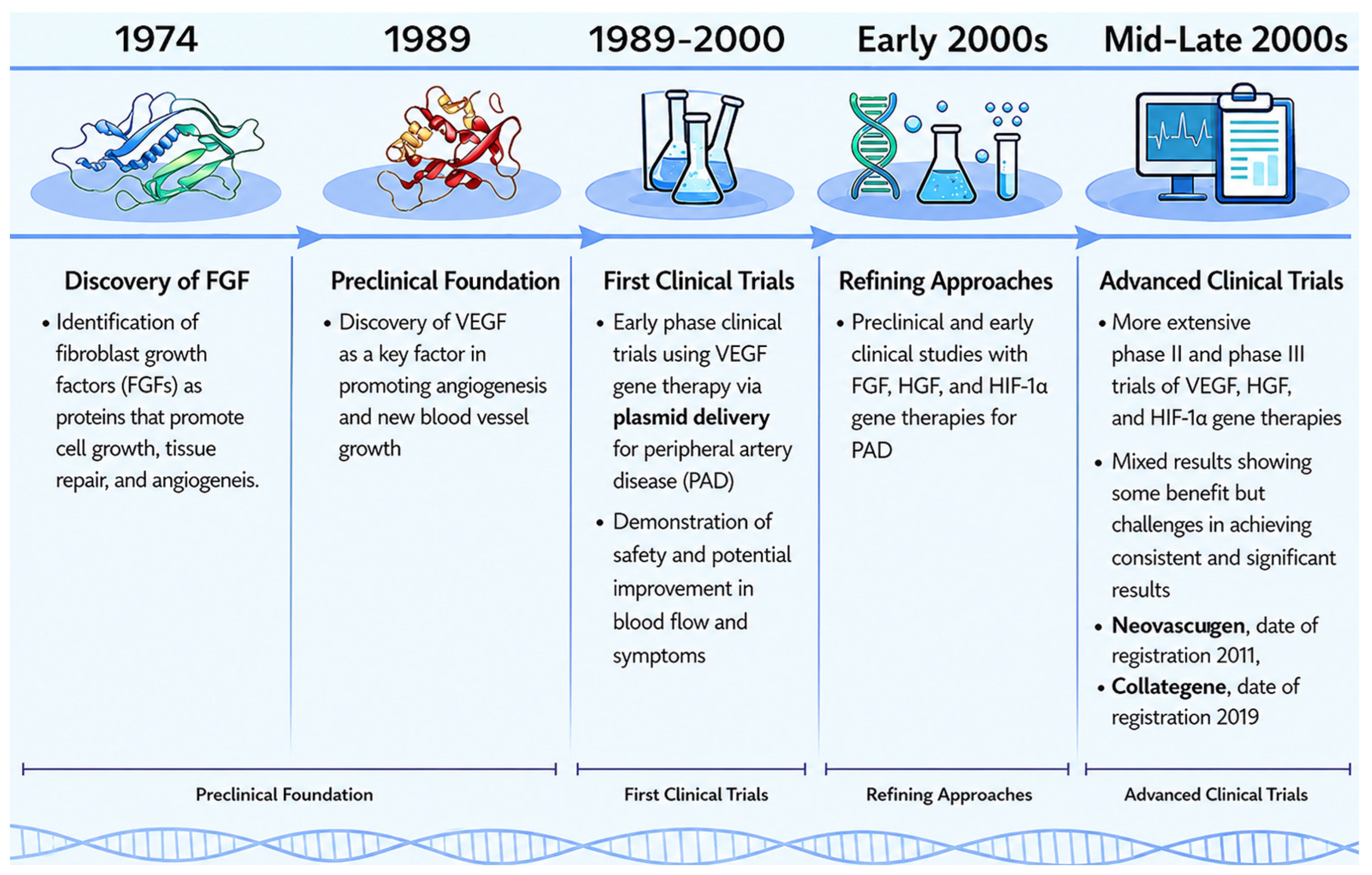
5. Key Historical Landmarks in Evolution of Gene Therapy in Lower Extremity Ischemia
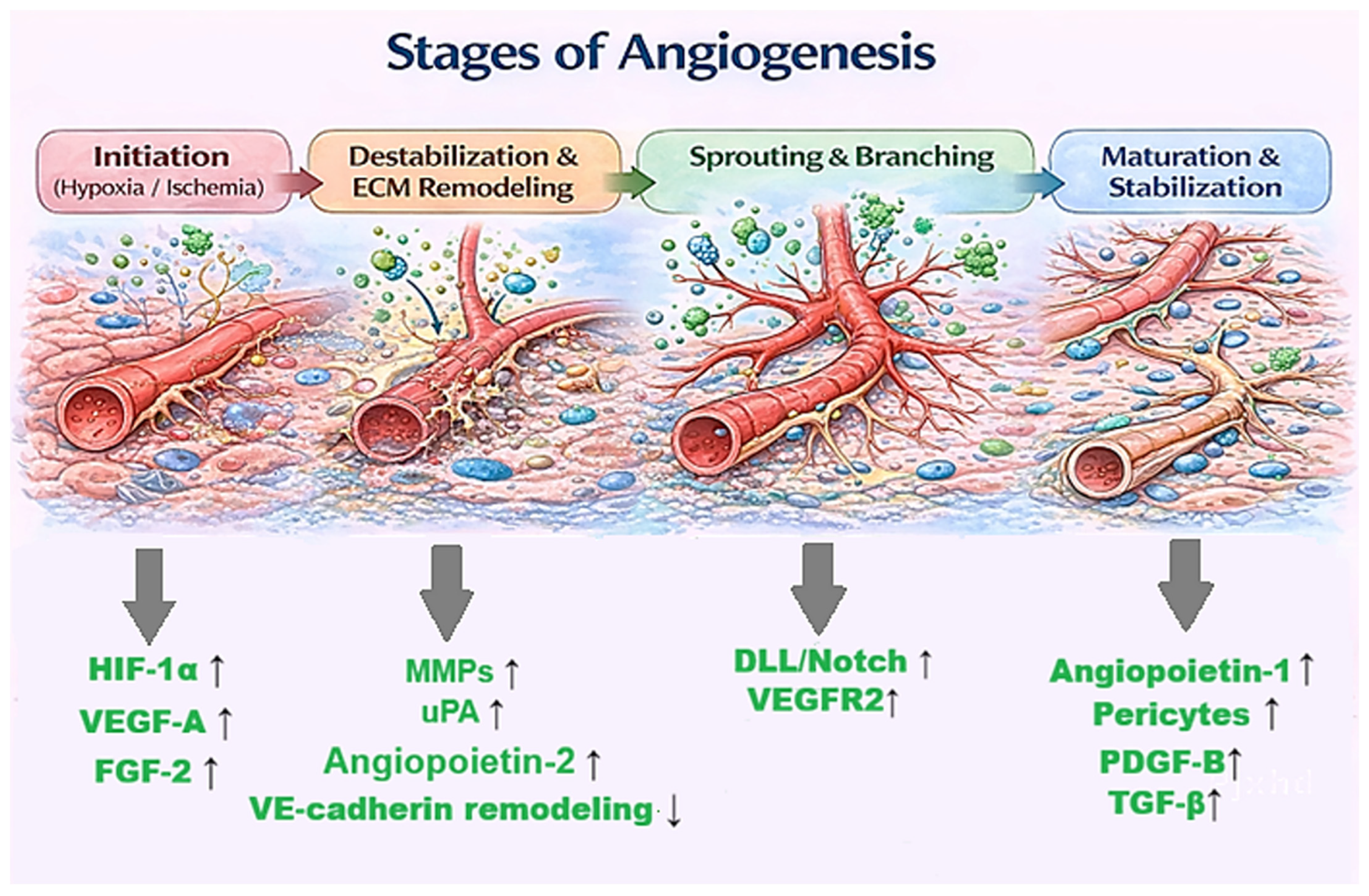
6. Key Angiogenic and Protective Factors VEGF
7. Gene Therapy
8. Conclusions
Author Contributions
Funding
Institutional Review Board Statement
Informed Consent Statement
Data Availability Statement
Conflicts of Interest
References
- Trenner, M.; Knappich, C.; Bohmann, B.; Heuberger, S.; Eckstein, H.H.; Kuehnl, A. Utilization and Regional Differences of In-Patient Services for Peripheral Arterial Disease and Acute Limb Ischemia in Germany: Secondary Analysis of Nationwide DRG Data. J. Clin. Med. 2022, 11, 2116. [Google Scholar] [CrossRef] [PubMed]
- Polonsky, T.S.; McDermott, M.M. Lower Extremity Peripheral Artery Disease Without Chronic Limb-Threatening Ischemia: A Review. JAMA 2021, 325, 2188–2198. [Google Scholar] [CrossRef] [PubMed]
- Fowkes, F.G.R.; Rudan, D.; Rudan, I.; Aboyans, V.; Denenberg, J.O.; McDermott, M.M.; Norman, P.E.; Sampson, U.K.A.; Williams, L.J.; Mensah, G.A.; et al. Comparison of global estimates of prevalence and risk factors for peripheral artery disease in 2000 and 2010: A systematic review and analysis. Lancet 2013, 382, 1329–1340. [Google Scholar] [CrossRef] [PubMed]
- Firnhaber, J.M.; Powell, C.S. Lower Extremity Peripheral Artery Disease: Diagnosis and Treatment. Am. Fam. Physician 2019, 99, 362–369. [Google Scholar] [PubMed]
- Levin, S.R.; Arinze, N.; Siracuse, J.J. Lower extremity critical limb ischemia: A review of clinical features and management. Trends Cardiovasc. Med. 2020, 30, 125–130. [Google Scholar] [CrossRef] [PubMed]
- Hirsch, A.T.; Haskal, Z.J.; Hertzer, N.R.; Bakal, C.W.; Creager, M.A.; Halperin, J.L.; Hiratzka, L.F.; Murphy, W.R.; Olin, J.W.; Puschett, J.B.; et al. ACC/AHA 2005 Practice Guidelines for the management of patients with peripheral arterial disease (lower extremity, renal, mesenteric, and abdominal aortic): A collaborative report from the American Association for Vascular Surgery/Society for Vascular Surgery, Society for Cardiovascular Angiography and Interventions, Society for Vascular Medicine and Biology, Society of Interventional Radiology, and the ACC/AHA Task Force on Practice Guidelines (Writing Committee to Develop Guidelines for the Management of Patients with Peripheral Arterial Disease): Endorsed by the American Association of Cardiovascular and Pulmonary Rehabilitation; National Heart, Lung, and Blood Institute; Society for Vascular Nursing; TransAtlantic Inter-Society Consensus; and Vascular Disease Foundation. Circulation 2006, 113, e463–e654. [Google Scholar] [CrossRef] [PubMed]
- Norgren, L.; Hiatt, W.R.; Dormandy, J.A.; Nehler, M.R.; Harris, K.A.; Fowkes, F.G.R. Inter-Society Consensus for the Management of Peripheral Arterial Disease (TASC II). J. Vasc. Surg. 2007, 45, S5–S67. [Google Scholar] [CrossRef] [PubMed]
- Annex, B.H. Therapeutic angiogenesis for critical limb ischaemia. Nat. Rev. Cardiol. 2013, 10, 387–396. [Google Scholar] [CrossRef] [PubMed]
- Conte, M.S.; Bradbury, A.W.; Kolh, P.; White, J.V.; Dick, F.; Fitridge, R.; Mills, J.L.; Ricco, J.-B.; Suresh, K.R.; Murad, M.H.; et al. Global vascular guidelines on the management of chronic limb-threatening ischemia. J. Vasc. Surg. 2019, 69, 3S–125S.e40. [Google Scholar] [CrossRef] [PubMed]
- Carmeliet, P. Angiogenesis in life, disease and medicine. Nature 2005, 438, 932–936. [Google Scholar] [CrossRef] [PubMed]
- Makarevich, P.I.; Dergilev, K.V.; Tsokolaeva, Z.I.; Boldyreva, M.A.; Shevchenko, E.K.; Gluhanyuk, E.V.; Gallinger, J.O.; Menshikov, M.Y.; Parfyonova, Y.V. Angiogenic and pleiotropic effects of VEGF165 and HGF combined gene therapy in a rat model of myocardial infarction. PLoS ONE 2018, 13, e0197566. [Google Scholar] [CrossRef] [PubMed]
- Kim, T.I.; Vartanian, S.S.; Schneider, P.A. A Review and Proposed Classification System for the No-Option Patient with Chronic Limb-Threatening Ischemia. J. Endovasc. Ther. Off. J. Int. Soc. Endovasc. Spec. 2021, 28, 183–193. [Google Scholar] [CrossRef]
- Rask-Madsen, C.; King, G.L. Vascular complications of diabetes: Mechanisms of injury and protective factors. Cell Metab. 2013, 17, 20–33. [Google Scholar] [CrossRef] [PubMed]
- Libby, P.; Ridker, P.M.; Hansson, G.K.; Leducq Transatlantic Network on Atherothrombosis. Inflammation in atherosclerosis: From pathophysiology to practice. J. Am. Coll. Cardiol. 2009, 54, 2129–2138. [Google Scholar] [CrossRef] [PubMed]
- Beckman, J.A.; Creager, M.A. Vascular Complications of Diabetes. Circ. Res. 2016, 118, 1771–1785. [Google Scholar] [CrossRef] [PubMed]
- Esmon, C.T. Basic mechanisms and pathogenesis of venous thrombosis. Blood Rev. 2009, 23, 225–229. [Google Scholar] [CrossRef] [PubMed]
- Potente, M.; Gerhardt, H.; Carmeliet, P. Basic and therapeutic aspects of angiogenesis. Cell 2011, 146, 873–887. [Google Scholar] [CrossRef] [PubMed]
- Losordo, D.W.; Dimmeler, S. Therapeutic angiogenesis and vasculogenesis for ischemic disease. Part I: Angiogenic cytokines. Circulation 2004, 109, 2487–2491. [Google Scholar] [CrossRef] [PubMed]
- Everts, P.A.; Lana, J.F.; Onishi, K.; Buford, D.; Peng, J.; Mahmood, A.; Fonseca, L.F.; van Zundert, A.; Podesta, L. Angiogenesis and Tissue Repair Depend on Platelet Dosing and Bioformulation Strategies Following Orthobiological Platelet-Rich Plasma Procedures: A Narrative Review. Biomedicines 2023, 11, 1922. [Google Scholar] [CrossRef] [PubMed]
- Scopelliti, F.; Cattani, C.; Dimartino, V.; Mirisola, C.; Cavani, A. Platelet Derivatives and the Immunomodulation of Wound Healing. Int. J. Mol. Sci. 2022, 23, 8370. [Google Scholar] [CrossRef] [PubMed]
- White, M.J.V.; Briquez, P.S.; White, D.A.V.; Hubbell, J.A. VEGF-A, PDGF-BB and HB-EGF engineered for promiscuous super affinity to the extracellular matrix improve wound healing in a model of type 1 diabetes. npj Regen. Med. 2021, 6, 76. [Google Scholar] [CrossRef] [PubMed]
- Forbes, J.M.; Cooper, M.E. Mechanisms of diabetic complications. Physiol. Rev. 2013, 93, 137–188. [Google Scholar] [CrossRef] [PubMed]
- Thangarajah, H.; Yao, D.; Chang, E.I.; Shi, Y.; Jazayeri, L.; Vial, I.N.; Galiano, R.D.; Du, X.-L.; Grogan, R.; Galvez, M.G.; et al. The molecular basis for impaired hypoxia-induced VEGF expression in diabetic tissues. Proc. Natl. Acad. Sci. USA 2009, 106, 13505–13510. [Google Scholar] [CrossRef] [PubMed]
- Geraldes, P.; King, G.L. Activation of protein kinase C isoforms and its impact on diabetic complications. Circ. Res. 2010, 106, 1319–1331. [Google Scholar] [CrossRef] [PubMed]
- Kessler, J.A.; Shaibani, A.; Sang, C.N.; Christiansen, M.; Kudrow, D.; Vinik, A.; Shin, N. Gene therapy for diabetic peripheral neuropathy: A randomized, placebo-controlled phase III study of VM202, a plasmid DNA encoding human hepatocyte growth factor. Clin. Transl. Sci. 2021, 14, 1176–1184. [Google Scholar] [CrossRef] [PubMed]
- Barć, P.; Antkiewicz, M.; Śliwa, B.; Frączkowska, K.; Guziński, M.; Dawiskiba, T.; Małodobra-Mazur, M.; Witkiewicz, W.; Kupczyńska, D.; Strzelec, B.; et al. Double VEGF/HGF Gene Therapy in Critical Limb Ischemia Complicated by Diabetes Mellitus. J. Cardiovasc. Transl. Res. 2021, 14, 409–415. [Google Scholar] [CrossRef] [PubMed]
- Folkman, J. Tumor angiogenesis: Therapeutic implications. N. Engl. J. Med. 1971, 285, 1182–1186. [Google Scholar] [CrossRef] [PubMed]
- Abraham, J.; Whang, J.; Tumolo, A.; Mergia, A.; Friedman, J.; Gospodarowicz, D.; Fiddes, J. Human basic fibroblast growth factor: Nucleotide sequence and genomic organization. EMBO J. 1986, 5, 2523–2528. [Google Scholar] [CrossRef] [PubMed]
- Gospodarowicz, D.; Bialecki, H.; Thakral, T.K. The angiogenic activity of the fibroblast and epidermal growth factor. Exp. Eye Res. 1979, 28, 501–514. [Google Scholar] [CrossRef] [PubMed]
- Böhlen, P.; Baird, A.; Esch, F.; Ling, N.; Gospodarowicz, D. Isolation and partial molecular characterization of pituitary fibroblast growth factor. Proc. Natl. Acad. Sci. USA 1984, 81, 5364–5368. [Google Scholar] [CrossRef] [PubMed]
- Senger, D.R.; Perruzzi, C.A.; Feder, J.; Dvorak, H.F. A highly conserved vascular permeability factor secreted by a variety of human and rodent tumor cell lines. Cancer Res. 1986, 46, 5629–5632. [Google Scholar] [PubMed]
- Ferrara, N.; Henzel, W.J. Pituitary follicular cells secrete a novel heparin-binding growth factor specific for vascular endothelial cells. Biochem. Biophys. Res. Commun. 2012, 425, 540–547. [Google Scholar] [CrossRef] [PubMed]
- Leung, D.W.; Cachianes, G.; Kuang, W.J.; Goeddel, D.V.; Ferrara, N. Vascular endothelial growth factor is a secreted angiogenic mitogen. Science 1989, 246, 1306–1309. [Google Scholar] [CrossRef] [PubMed]
- Keck, P.J.; Hauser, S.D.; Krivi, G.; Sanzo, K.; Warren, T.; Feder, J.; Connolly, D.T. Vascular permeability factor, an endothelial cell mitogen related to PDGF. Science 1989, 246, 1309–1312. [Google Scholar] [CrossRef] [PubMed]
- Plouët, J.; Schilling, J.; Gospodarowicz, D. Isolation and characterization of a newly identified endothelial cell mitogen produced by AtT-20 cells. EMBO J. 1989, 8, 3801–3806. [Google Scholar] [CrossRef] [PubMed]
- Shibuya, M.; Yamaguchi, S.; Yamane, A.; Ikeda, T.; Tojo, A.; Matsushime, H.; Sato, M. Nucleotide sequence and expression of a novel human receptor-type tyrosine kinase gene (flt) closely related to the fms family. Oncogene 1990, 5, 519–524. [Google Scholar] [PubMed]
- Terman, B.I.; Dougher-Vermazen, M.; Carrion, M.E.; Dimitrov, D.; Armellino, D.C.; Gospodarowicz, D.; Böhlen, P. Identification of the KDR tyrosine kinase as a receptor for vascular endothelial cell growth factor. Biochem. Biophys. Res. Commun. 1992, 187, 1579–1586. [Google Scholar] [CrossRef] [PubMed]
- Kaipainen, A.; Korhonen, J.; Pajusola, K.; Aprelikova, O.; Persico, M.G.; Terman, B.I.; Alitalo, K. The related FLT4, FLT1, and KDR receptor tyrosine kinases show distinct expression patterns in human fetal endothelial cells. J. Exp. Med. 1993, 178, 2077–2088. [Google Scholar] [CrossRef] [PubMed]
- Maglione, D.; Guerriero, V.; Viglietto, G.; Delli-Bovi, P.; Persico, M.G. Isolation of a human placenta cDNA coding for a protein related to the vascular permeability factor. Proc. Natl. Acad. Sci. USA 1991, 88, 9267–9271. [Google Scholar] [CrossRef] [PubMed]
- Joukov, V.; Pajusola, K.; Kaipainen, A.; Chilov, D.; Lahtinen, I.; Kukk, E.; Saksela, O.; Kalkkinen, N. A novel vascular endothelial growth factor, VEGF-C, is a ligand for the Flt4 (VEGFR-3) and KDR (VEGFR-2) receptor tyrosine kinases. EMBO J. 1996, 15, 1751. [Google Scholar] [CrossRef]
- Lindahl, P.; Johansson, B.R.; Levéen, P.; Betsholtz, C. Pericyte loss and microaneurysm formation in PDGF-B-deficient mice. Science 1997, 277, 242–245. [Google Scholar] [CrossRef] [PubMed]
- Hellström, M.; Kalén, M.; Lindahl, P.; Abramsson, A.; Betsholtz, C. Role of PDGF-B and PDGFR-beta in recruitment of vascular smooth muscle cells and pericytes during embryonic blood vessel formation in the mouse. Development 1999, 126, 3047–3055. [Google Scholar] [CrossRef] [PubMed]
- Runting, A.S.; Stacker, S.A.; Wilks, A.F. tie2, a putative protein tyrosine kinase from a new class of cell surface receptor. Growth Factors 1993, 9, 99–105. [Google Scholar] [PubMed]
- Davis, S.; Aldrich, T.H.; Jones, P.F.; Acheson, A.; Compton, D.L.; Jain, V.; Ryan, T.E.; Bruno, J.; Radziejewski, C.; Maisonpierre, P.C.; et al. Isolation of angiopoietin-1, a ligand for the TIE2 receptor, by secretion-trap expression cloning. Cell 1996, 87, 1161–1169. [Google Scholar] [CrossRef] [PubMed]
- Maisonpierre, P.C.; Suri, C.; Jones, P.F.; Bartunkova, S.; Wiegand, S.J.; Radziejewski, C.; Compton, D.; McClain, J.; Aldrich, T.H.; Papadopoulos, N.; et al. Angiopoietin-2, a natural antagonist for Tie2 that disrupts in vivo angiogenesis. Science 1997, 277, 55–60. [Google Scholar] [CrossRef] [PubMed]
- Takeshita, S.; Zheng, L.P.; Brogi, E.; Kearney, M.; Pu, L.Q.; Bunting, S.; Ferrara, N.; Symes, J.F.; Isner, J.M. Therapeutic angiogenesis. A single intraarterial bolus of vascular endothelial growth factor augments revascularization in a rabbit ischemic hind limb model. J. Clin. Investig. 1994, 93, 662–670. [Google Scholar] [CrossRef] [PubMed]
- Isner, J.M.; Walsh, K.; Symes, J.; Pieczek, A.; Takeshita, S.; Lowry, J.; Rosenfield, K.; Weir, L.; Brogi, E.; Jurayj, D. Arterial gene transfer for therapeutic angiogenesis in patients with peripheral artery disease. Hum. Gene Ther. 1996, 7, 959–988. [Google Scholar] [CrossRef] [PubMed]
- Isner, J.M.; Baumgartner, I.; Rauh, G.; Schainfeld, R.; Blair, R.; Manor, O.; Razvi, S.; Symes, J.F. Treatment of thromboangiitis obliterans (Buerger’s disease) by intramuscular gene transfer of vascular endothelial growth factor: Preliminary clinical results. J. Vasc. Surg. 1998, 28, 964–973. [Google Scholar] [CrossRef] [PubMed]
- Baumgartner, I.; Pieczek, A.; Manor, O.; Blair, R.; Kearney, M.; Walsh, K.; Isner, J.M. Constitutive expression of phVEGF165 after intramuscular gene transfer promotes collateral vessel development in patients with critical limb ischemia. Circulation 1998, 97, 1114–1123. [Google Scholar] [CrossRef] [PubMed]
- Lee, C.; Kim, M.J.; Kumar, A.; Lee, H.W.; Yang, Y.; Kim, Y. Vascular endothelial growth factor signaling in health and disease: From molecular mechanisms to therapeutic perspectives. Signal Transduct. Target. Ther. 2025, 10, 170. [Google Scholar] [CrossRef] [PubMed]
- Li, H.S.; Huang, X.G. Advances in the molecular signaling mechanisms of VEGF/VEGFR2 in fundus neovascularization disease (Review). Exp. Ther. Med. 2025, 30, 143. [Google Scholar] [CrossRef] [PubMed]
- Park, J.E.; Keller, G.A.; Ferrara, N. The vascular endothelial growth factor (VEGF) isoforms: Differential deposition into the subepithelial extracellular matrix and bioactivity of extracellular matrix-bound VEGF. Mol. Biol. Cell 1993, 4, 1317–1326. [Google Scholar] [CrossRef] [PubMed]
- Bates, D.O. Vascular endothelial growth factors and vascular permeability. Cardiovasc. Res. 2010, 87, 262–271. [Google Scholar] [CrossRef] [PubMed]
- Cao, R.; Eriksson, A.; Kubo, H.; Alitalo, K.; Cao, Y.; Thyberg, J. Comparative evaluation of FGF-2-, VEGF-A-, and VEGF-C-induced angiogenesis, lymphangiogenesis, vascular fenestrations, and permeability. Circ. Res. 2004, 94, 664–670. [Google Scholar] [CrossRef] [PubMed]
- Johnson, K.E.; Wilgus, T.A. Vascular Endothelial Growth Factor and Angiogenesis in the Regulation of Cutaneous Wound Repair. Adv. Wound Care 2014, 3, 647–661. [Google Scholar] [CrossRef] [PubMed]
- Toyota, E.; Warltier, D.C.; Brock, T.; Ritman, E.; Kolz, C.; O’malley, P.; Rocic, P.; Focardi, M.; Chilian, W.M. Vascular endothelial growth factor is required for coronary collateral growth in the rat. Circulation 2005, 112, 2108–2113. [Google Scholar] [CrossRef] [PubMed]
- Lee, S.; Chen, T.T.; Barber, C.L.; Jordan, M.C.; Murdock, J.; Desai, S.; Ferrara, N.; Nagy, A.; Roos, K.P.; Iruela-Arispe, M.L. Autocrine VEGF signaling is required for vascular homeostasis. Cell 2007, 130, 691–703. [Google Scholar] [CrossRef] [PubMed]
- Lin, Y.Y.; Warren, E.; Macklin, B.L.; Ramirez, L.; Gerecht, S. Endothelial-Pericyte Interactions Regulate Angiogenesis via VEGFR2 Signaling During Retinal Development and Disease. Investig. Ophthalmol. Vis. Sci. 2025, 66, 45. [Google Scholar] [CrossRef] [PubMed]
- Thompson, M.B.; Tirupattur, S.P.; Vishwakarma, N.; Katwa, L.C. Essential Pieces of the Puzzle: The Roles of VEGF and Dopamine in Aging. Cells 2025, 14, 1178. [Google Scholar] [CrossRef] [PubMed]
- de Gea, P.; Benkeder, S.; Bouvet, P.; Aimard, M.; Chounlamountri, N.; Honnorat, J.; Do, L.D.; Meissirel, C. VEGF controls microglial phagocytic response to amyloid-β. Front. Cell Neurosci. 2023, 17, 1264402. [Google Scholar] [CrossRef] [PubMed]
- Aksan, B.; Mauceri, D. Beyond vessels: Unraveling the impact of VEGFs on neuronal functions and structure. J. Biomed. Sci. 2025, 32, 33. [Google Scholar] [CrossRef] [PubMed]
- van der Mescht, M.A.; Steel, H.C.; Anderson, R.; Rossouw, T.M. Vascular endothelial growth factor A: Friend or foe in the pathogenesis of HIV and SARS-CoV-2 infections? Front. Cell Infect. Microbiol. 2024, 14, 1458195. [Google Scholar] [CrossRef]
- Schawe, L.; Raude, B.; Carstens, J.C.; Hinterseher, I.; Hein, R.D.; Omran, S.; Berger, G.; Hering, N.A.; Buerger, M.; Greiner, A.; et al. Effect of Revascularization on Intramuscular Vascular Endothelial Growth Factor Levels in Peripheral Arterial Disease. Biomedicines 2022, 10, 471. [Google Scholar] [CrossRef] [PubMed]
- Presta, M.; Dell’Era, P.; Mitola, S.; Moroni, E.; Ronca, R.; Rusnati, M. Fibroblast growth factor/fibroblast growth factor receptor system in angiogenesis. Cytokine Growth Factor. Rev. 2005, 16, 159–178. [Google Scholar] [CrossRef] [PubMed]
- Murakami, M.; Simons, M. Fibroblast growth factor regulation of neovascularization. Curr. Opin. Hematol. 2008, 15, 215–220. [Google Scholar] [CrossRef] [PubMed]
- Baum, O.; Djonov, V.; Ganster, M.; Widmer, M.; Baumgartner, I. Arteriolization of capillaries and FGF-2 upregulation in skeletal muscles of patients with chronic peripheral arterial disease. Microcirculation 2005, 12, 527–537. [Google Scholar] [CrossRef] [PubMed]
- Zhao, Y.; Ye, W.; Wang, Y.D.; Chen, W.D. HGF/c-Met: A Key Promoter in Liver Regeneration. Front. Pharmacol. 2022, 13, 808855. [Google Scholar] [CrossRef] [PubMed]
- Nakagami, H.; Morishita, R.; Yamamoto, K.; Taniyama, Y.; Aoki, M.; Matsumoto, K.; Nakamura, T.; Kaneda, Y.; Horiuchi, M.; Ogihara, T. Mitogenic and antiapoptotic actions of hepatocyte growth factor through ERK, STAT3, and AKT in endothelial cells. Hypertension 2001, 37, 581–586. [Google Scholar] [CrossRef] [PubMed]
- Tomita, N.; Morishita, R.; Taniyama, Y.; Koike, H.; Aoki, M.; Shimizu, H.; Matsumoto, K.; Nakamura, T.; Kaneda, Y.; Ogihara, T. Angiogenic property of hepatocyte growth factor is dependent on upregulation of essential transcription factor for angiogenesis, ets-1. Circulation 2003, 107, 1411–1417. [Google Scholar] [CrossRef] [PubMed]
- Ylä-Herttuala, S. Gene Therapy of Critical Limb Ischemia Enters Clinical Use. Mol. Ther. J. Am. Soc. Gene Ther. 2019, 27, 2053. [Google Scholar] [CrossRef] [PubMed]
- Lin, Y.M.; Huang, Y.L.; Fong, Y.C.; Tsai, C.H.; Chou, M.C.; Tang, C.H. Hepatocyte growth factor increases vascular endothelial growth factor-A production in human synovial fibroblasts through c-Met receptor pathway. PLoS ONE 2012, 7, e50924. [Google Scholar] [CrossRef] [PubMed]
- Li, B.; Khalil, A.M.; Abuhalimeh, L.; Shaikh, F.; Younes, H.; Abuhalimeh, B.; Zamzam, A.; Abdin, R.; Qadura, M. Association of Hepatocyte Growth Factor and Angiopoietin-2 with Systemic Cardiovascular Risk in Patients with Peripheral Artery Disease. J. Clin. Med. 2025, 14, 4031. [Google Scholar] [CrossRef] [PubMed]
- Miller, K.J.; Thaloor, D.; Matteson, S.; Pavlath, G.K. Hepatocyte growth factor affects satellite cell activation and differentiation in regenerating skeletal muscle. Am. J. Physiol. Cell Physiol. 2000, 278, C174–C181. [Google Scholar] [CrossRef] [PubMed]
- Yoshitomi, Y.; Kojima, S.; Umemoto, T.; Kubo, K.; Matsumoto, Y.; Yano, M.; Sugi, T.; Kuramochi, M. Serum hepatocyte growth factor in patients with peripheral arterial occlusive disease. J. Clin. Endocrinol. Metab. 1999, 84, 2425–2428. [Google Scholar] [CrossRef][Green Version]
- Kim, J.-J.; Park, J.-H.; Kim, H.; Sim, W.-S.; Hong, S.; Choi, Y.-J.; Kim, H.-J.; Lee, S.M.; Kim, D.; Kang, S.-W.; et al. Vascular regeneration and skeletal muscle repair induced by long-term exposure to SDF-1α derived from engineered mesenchymal stem cells after hindlimb ischemia. Exp. Mol. Med. 2023, 55, 2248–2259. [Google Scholar] [CrossRef] [PubMed]
- Wang, X.; Jiang, H.; Guo, L.; Wang, S.; Cheng, W.; Wan, L.; Zhang, Z.; Xing, L.; Zhou, Q.; Yang, X.; et al. SDF-1 secreted by mesenchymal stem cells promotes the migration of endothelial progenitor cells via CXCR4/PI3K/AKT pathway. J. Mol. Histol. 2021, 52, 1155–1164. [Google Scholar] [CrossRef] [PubMed]
- Cun, Y.; Diao, B.; Zhang, Z.; Wang, G.; Yu, J.; Ma, L.; Rao, Z. Role of the stromal cell derived factor-1 in the biological functions of endothelial progenitor cells and its underlying mechanisms. Exp. Ther. Med. 2021, 21, 39. [Google Scholar] [CrossRef] [PubMed]
- Ho, T.K.; Tsui, J.; Xu, S.; Leoni, P.; Abraham, D.J.; Baker, D.M. Angiogenic effects of stromal cell-derived factor-1 (SDF-1/CXCL12) variants in vitro and the in vivo expressions of CXCL12 variants and CXCR4 in human critical leg ischemia. J. Vasc. Surg. 2010, 51, 689–699. [Google Scholar] [CrossRef] [PubMed]
- Ho, T.K.; Shiwen, X.; Abraham, D.; Tsui, J.; Baker, D. Stromal-Cell-Derived Factor-1 (SDF-1)/CXCL12 as Potential Target of Therapeutic Angiogenesis in Critical Leg Ischaemia. Cardiol. Res. Pract. 2012, 2012, 143209. [Google Scholar] [CrossRef] [PubMed]
- Heo, J.-I.; Kim, K.I.; Woo, S.-K.; Kim, J.S.; Choi, K.J.; Lee, H.-J.; Kim, K.S. Stromal Cell-Derived Factor 1 Protects Brain Vascular Endothelial Cells from Radiation-Induced Brain Damage. Cells 2019, 8, 1230. [Google Scholar] [CrossRef] [PubMed]
- Fagiani, E.; Christofori, G. Angiopoietins in angiogenesis. Cancer Lett. 2013, 328, 18–26. [Google Scholar] [CrossRef] [PubMed]
- Felcht, M.; Luck, R.; Schering, A.; Seidel, P.; Srivastava, K.; Hu, J.; Bartol, A.; Kienast, Y.; Vettel, C.; Loos, E.K.; et al. Angiopoietin-2 differentially regulates angiogenesis through TIE2 and integrin signaling. J. Clin. Investig. 2012, 122, 1991–2005. [Google Scholar] [CrossRef] [PubMed]
- Akwii, R.G.; Sajib, M.S.; Zahra, F.T.; Mikelis, C.M. Role of Angiopoietin-2 in Vascular Physiology and Pathophysiology. Cells 2019, 8, 471. [Google Scholar] [CrossRef] [PubMed]
- Yeboah, K.; Agyekum, J.A.; Baafour, E.K.; Antwi, D.A.; Adjei, A.B.; Boima, V.; Gyan, B. Circulating Angiogenic Growth Factors in Diabetes Patients with Peripheral Arterial Disease and Exertional Leg Pain in Ghana. Int. J. Vasc. Med. 2017, 2017, 2390174. [Google Scholar] [CrossRef] [PubMed]
- Shestenko, O.P.; Nikonov, S.D.; Mertvetsov, N.P. Angiogenin and its role in angiogenesis. Mol. Biol. 2001, 35, 349–371. [Google Scholar] [CrossRef]
- Dickson, K.A.; Kang, D.-K.; Kwon, Y.S.; Kim, J.C.; Leland, P.A.; Kim, B.-M.; Chang, S.-I.; Raines, R.T. Ribonuclease inhibitor regulates neovascularization by human angiogenin. Biochemistry 2009, 48, 3804–3806. [Google Scholar] [CrossRef] [PubMed]
- Gao, X.; Xu, Z. Mechanisms of action of angiogenin. Acta Biochim. Biophys. Sin. 2008, 40, 619–624. [Google Scholar] [CrossRef] [PubMed]
- Kishimoto, K.; Liu, S.; Tsuji, T.; Olson, K.A.; Hu, G.F. Endogenous angiogenin in endothelial cells is a general requirement for cell proliferation and angiogenesis. Oncogene 2005, 24, 445–456. [Google Scholar] [CrossRef] [PubMed]
- Pyatibratov, M.G.; Kostyukova, A.S. New insights into the role of angiogenin in actin polymerization. Int. Rev. Cell Mol. Biol. 2012, 295, 175–198. [Google Scholar] [CrossRef] [PubMed]
- Höbaus, C.; Pesau, G.; Zierfuss, B.; Koppensteiner, R.; Schernthaner, G.H. Angiogenin-A Proposed Biomarker for Cardiovascular Disease-Is Not Associated with Long-Term Survival in Patients with Peripheral Artery Disease. Angiology 2021, 72, 855–860. [Google Scholar] [CrossRef] [PubMed]
- Bui, B.P.; Nguyen, P.L.; Lee, K.; Cho, J. Hypoxia-Inducible Factor-1: A Novel Therapeutic Target for the Management of Cancer, Drug Resistance, and Cancer-Related Pain. Cancers 2022, 14, 6054. [Google Scholar] [CrossRef] [PubMed]
- Zimna, A.; Kurpisz, M. Hypoxia-Inducible Factor-1 in Physiological and Pathophysiological Angiogenesis: Applications and Therapies. BioMed Res. Int. 2015, 2015, 549412. [Google Scholar] [CrossRef] [PubMed]
- Walton, C.B.; Ecker, J.; Anderson, C.D.; Outten, J.T.; Allison, R.Z.; Shohet, R.V. Cardiac angiogenesis directed by stable Hypoxia Inducible Factor-1. Vasc. Cell 2013, 5, 15. [Google Scholar] [CrossRef] [PubMed]
- Yücel, C.; Gürsoy, M.; Ketenciler, S.; Tenekeciğil, A.; Kızıltan, F.; Kayalar, N. Is Biochemical Follow Up Possible in Peripheral Arterial Disease Treatment: Hypoxia Inducible Factor-1 Alpha? Vasc. Spec. Int. 2021, 37, 29. [Google Scholar] [CrossRef] [PubMed]
- Kasivisvanathan, V.; Shalhoub, J.; Lim, C.S.; Shepherd, A.C.; Thapar, A.; Davies, A.H. Hypoxia-inducible factor-1 in arterial disease: A putative therapeutic target. Curr. Vasc. Pharmacol. 2011, 9, 333–349. [Google Scholar] [CrossRef] [PubMed]
- Catrina, S.B.; Zheng, X. Hypoxia and hypoxia-inducible factors in diabetes and its complications. Diabetologia 2021, 64, 709–716. [Google Scholar] [CrossRef] [PubMed]
- Lundstrom, K. Gene Therapy Cargoes Based on Viral Vector Delivery. Curr. Gene Ther. 2023, 23, 111–134. [Google Scholar] [CrossRef] [PubMed]
- Tros de Ilarduya, C.; Sun, Y.; Düzgüneş, N. Gene delivery by lipoplexes and polyplexes. Eur. J. Pharm. Sci. 2010, 40, 159–170. [Google Scholar] [CrossRef] [PubMed]
- Li, X.; Le, Y.; Zhang, Z.; Nian, X.; Liu, B.; Yang, X. Viral Vector-Based Gene Therapy. Int. J. Mol. Sci. 2023, 24, 7736. [Google Scholar] [CrossRef] [PubMed]
- Taniyama, Y.; Azuma, J.; Kunugiza, Y.; Iekushi, K.; Rakugi, H.; Morishita, R. Therapeutic option of plasmid-DNA based gene transfer. Curr. Top. Med. Chem. 2012, 12, 1630–1637. [Google Scholar] [CrossRef] [PubMed]
- Samatoshenkov, I.V.; Aimaletdinov, A.M.; Zakirova, E.Y.; Kalmykov, E.L.; Khodzhibaev, R.; Samatoshenkova, Y.M.; Ganiev, I.M.; Kadyrov, M.S.; Mukhamedshina, Y.O. Extended Toxicity, Genotoxicity, and Mutagenicity of Combination of pBudK-coVEGF-coANG and pBudK-coGDNF Plasmids in Preclinical Trials. Biomedicines 2025, 13, 1223. [Google Scholar] [CrossRef] [PubMed]
- Slobodkina, E.A.; Karagyaur, M.N.; Balabanyan, V.Y.; Makarevich, P.I. Gene therapy in regenerative medicine: Latest achievements and actual directions of development. Genes. Cells 2020, 15, 6–16. [Google Scholar] [CrossRef]
- Ferraro, B.; Cruz, Y.L.; Baldwin, M.; Coppola, D.; Heller, R. Increased perfusion and angiogenesis in a hindlimb ischemia model with plasmid FGF-2 delivered by noninvasive electroporation. Gene Ther. 2010, 17, 763–769. [Google Scholar] [CrossRef] [PubMed]
- Taniyama, Y.; Morishita, R.; Aoki, M.; Nakagami, H.; Yamamoto, K.; Yamazaki, K.; Matsumoto, K.; Nakamura, T.; Kaneda, Y.; Ogihara, T. Therapeutic angiogenesis induced by human hepatocyte growth factor gene in rat and rabbit hindlimb ischemia models: Preclinical study for treatment of peripheral arterial disease. Gene Ther. 2001, 8, 181–189. [Google Scholar] [CrossRef] [PubMed]
- Taniyama, Y.; Morishita, R.; Hiraoka, K.; Aoki, M.; Nakagami, H.; Yamasaki, K.; Matsumoto, K.; Nakamura, T.; Kaneda, Y.; Ogihara, T. Therapeutic angiogenesis induced by human hepatocyte growth factor gene in rat diabetic hind limb ischemia model: Molecular mechanisms of delayed angiogenesis in diabetes. Circulation 2001, 104, 2344–2350. [Google Scholar] [CrossRef] [PubMed]
- Olea, F.D.; Janavel, G.V.; Cuniberti, L.; Yannarelli, G.; Meckert, P.C.; Cors, J.; Valdivieso, L.; Lev, G.; Mendiz, O.; Bercovich, A.; et al. Repeated, but not single, VEGF gene transfer affords protection against ischemic muscle lesions in rabbits with hindlimb ischemia. Gene Ther. 2009, 16, 716–723. [Google Scholar] [CrossRef] [PubMed]
- Stafeev, I.I.S.; Boldyreva, M.A.; Michurina, S.S.; Agareva, M.Y.; Radnaeva, A.V.; Menshikov, M.Y.; Hu, Y.-C.; Makarevich, P.I.; Parfyonova, Y.V. The Efficacy of HGF/VEGF Gene Therapy for Limb Ischemia in Mice with Impaired Glucose Tolerance: Shift from Angiogenesis to Axonal Growth and Oxidative Potential in Skeletal Muscle. Cells 2022, 11, 3824. [Google Scholar] [CrossRef] [PubMed]
- Wang, P.; Di, X.; Li, F.; Rong, Z.; Lian, W.; Sun, G.; Liu, C.; Ni, L. Advancements in Gene-Based Therapeutic Angiogenesis for Chronic Limb-Threatening Ischemia. Hum. Gene Ther. 2025, 36, 787–800. [Google Scholar] [CrossRef] [PubMed]
- Barć, P.; Antkiewicz, M.; Frączkowska-Sioma, K.; Kupczyńska, D.; Lubieniecki, P.; Witkiewicz, W.; Małodobra-Mazur, M.; Baczyńska, D.; Janczak, D.; Skóra, J.P. Two-Stage Gene Therapy (VEGF, HGF and ANG1 Plasmids) as Adjunctive Therapy in the Treatment of Critical Lower Limb Ischemia in Diabetic Foot Syndrome. Int. J. Environ. Res. Public. Health 2022, 19, 12818. [Google Scholar] [CrossRef] [PubMed]
- Powell, R.J.; Goodney, P.; Mendelsohn, F.O.; Moen, E.K.; Annex, B.H.; HGF-0205 Trial Investigators. Safety and efficacy of patient specific intramuscular injection of HGF plasmid gene therapy on limb perfusion and wound healing in patients with ischemic lower extremity ulceration: Results of the HGF-0205 trial. J. Vasc. Surg. 2010, 52, 1525–1530. [Google Scholar] [CrossRef] [PubMed]
- Skóra, J.; Sadakierska-Chudy, A.; Pupka, A.; Bieguss, J.; Barć, P.; Baczyńska, D.; Janczak, D.; Zacharska, S.; Ugorski, M.; Dobosz, T.; et al. Application of VEGF165 plasmid in treatment of critical lower limb ischemia. Pol. Merkur. Lek. Organ. Pol. Tow. Lek. 2006, 20, 655–659. [Google Scholar]
- Kibbe, M.R.; Hirsch, A.T.; Mendelsohn, F.O.; Davies, M.G.; Pham, H.; Saucedo, J.; Marston, W.; Pyun, W.-B.; Min, S.-K.; Peterson, B.G.; et al. Safety and efficacy of plasmid DNA expressing two isoforms of hepatocyte growth factor in patients with critical limb ischemia. Gene Ther. 2016, 23, 306–312. [Google Scholar] [CrossRef] [PubMed]
- Ajroud-Driss, S.; Christiansen, M.; Allen, J.A.; Kessler, J.A. Phase 1/2 open-label dose-escalation study of plasmid DNA expressing two isoforms of hepatocyte growth factor in patients with painful diabetic peripheral neuropathy. Mol. Ther. J. Am. Soc. Gene Ther. 2013, 21, 1279–1286. [Google Scholar] [CrossRef] [PubMed]
- Hammad, T.A.; Rundback, J.; Bunte, M.; Miller, L.; Patel, P.D.; Sadanandan, S.; Fitzgerald, M.; Pastore, J.; Kashyap, V.; Henry, T.D.; et al. Stromal Cell-Derived Factor-1 Plasmid Treatment for Patients with Peripheral Artery Disease (STOP-PAD) Trial: Six-Month Results. J. Endovasc. Ther. Off. J. Int. Soc. Endovasc. Spec. 2020, 27, 669–675. [Google Scholar] [CrossRef] [PubMed]
- Nikol, S.; Baumgartner, I.; Van Belle, E.; Diehm, C.; Visoná, A.; Capogrossi, M.C.; Ferreira-Maldent, N.; Gallino, A.; Wyatt, M.G.; Wijesinghe, L.D.; et al. Therapeutic Angiogenesis with Intramuscular NV1FGF Improves Amputation-free Survival in Patients with Critical Limb Ischemia. Mol. Ther. J. Am. Soc. Gene Ther. 2008, 16, 972–978. [Google Scholar] [CrossRef] [PubMed]
- Belch, J.; Hiatt, W.R.; Baumgartner, I.; Driver, I.V.; Nikol, S.; Norgren, L.; Van Belle, E.; on behalf of the TAMARIS Committees and Investigators. Effect of fibroblast growth factor NV1FGF on amputation and death: A randomised placebo-controlled trial of gene therapy in critical limb ischaemia. Lancet 2011, 377, 1929–1937. [Google Scholar] [CrossRef] [PubMed]
- Shimamura, M.; Nakagami, H.; Koriyama, H.; Morishita, R. Gene therapy and cell-based therapies for therapeutic angiogenesis in peripheral artery disease. BioMed Res. Int. 2013, 2013, 186215. [Google Scholar] [CrossRef] [PubMed]
- Sanada, F.; Taniyama, Y.; Azuma, J.; Yuka, I.-I.; Kanbara, Y.; Iwabayashi, M.; Rakugi, H.; Morishita, R. Therapeutic Angiogenesis by Gene Therapy for Critical Limb Ischemia: Choice of Biological Agent. Immunol. Endocr. Metab. Agents Med. Chem. 2014, 14, 32–39. [Google Scholar] [CrossRef] [PubMed][Green Version]
- Hammer, A.; Steiner, S. Gene therapy for therapeutic angiogenesis in peripheral arterial disease—A systematic review and meta-analysis of randomized, controlled trials. VASA 2013, 42, 331–339. [Google Scholar] [CrossRef] [PubMed]
- Deev, R.; Plaksa, I.; Bozo, I.; Isaev, A. Results of an International Postmarketing Surveillance Study of pl-VEGF165 Safety and Efficacy in 210 Patients with Peripheral Arterial Disease. Am. J. Cardiovasc. Drugs 2017, 17, 235–242. [Google Scholar] [CrossRef] [PubMed]
- Deev, R.; Plaksa, I.; Bozo, I.; Mzhavanadze, N.; Suchkov, I.; Chervyakov, Y.; Staroverov, I.; Kalinin, R.; Isaev, A. Results of 5-year follow-up study in patients with peripheral artery disease treated with PL-VEGF165 for intermittent claudication. Ther. Adv. Cardiovasc. Dis. 2018, 12, 237–246. [Google Scholar] [CrossRef] [PubMed]
- Ye, L.; Haider, H.K.; Esa, W.B.; Su, L.; Law, P.K.; Zhang, W.; Lim, Y.; Poh, K.K.; Sim, E.K. Liposome-based vascular endothelial growth factor-165 transfection with skeletal myoblast for treatment of ischaemic limb disease. J. Cell Mol. Med. 2010, 14, 323–336. [Google Scholar] [CrossRef] [PubMed]
- Gowdak, L.H.; Poliakova, L.; Li, Z.; Grove, R.; Lakatta, E.G.; Talan, M. Induction of angiogenesis by cationic lipid-mediated VEGF165 gene transfer in the rabbit ischemic hindlimb model. J. Vasc. Surg. 2000, 32, 343–352. [Google Scholar] [CrossRef] [PubMed]
- Chen, Y.; Li, R.; Fu, X.; Guo, Y.; Yan, S.; Tian, L.; Zhou, Q.; Diao, Y.; Chen, W. “All in one” lipid-polymer nanodelivery system for gene therapy of ischemic diseases. Biomaterials 2025, 313, 122799. [Google Scholar] [CrossRef] [PubMed]
- Jang, E.; Albadawi, H.; Watkins, M.T.; Edelman, E.R.; Baker, A.B. Syndecan-4 proteoliposomes enhance fibroblast growth factor-2 (FGF-2)-induced proliferation, migration, and neovascularization of ischemic muscle. Proc. Natl. Acad. Sci. USA 2012, 109, 1679–1684. [Google Scholar] [CrossRef] [PubMed]
- Thomas, C.E.; Ehrhardt, A.; Kay, M.A. Progress and problems with the use of viral vectors for gene therapy. Nat. Rev. Genet. 2003, 4, 346–358. [Google Scholar] [CrossRef] [PubMed]
- Williams, P.D.; Ranjzad, P.; Kakar, S.J.; Kingston, P.A. Development of viral vectors for use in cardiovascular gene therapy. Viruses 2010, 2, 334–371. [Google Scholar] [CrossRef] [PubMed]
- Mingozzi, F.; High, K.A. Immune responses to AAV vectors: Overcoming barriers to successful gene therapy. Blood 2013, 122, 23–36. [Google Scholar] [CrossRef] [PubMed]
- Brunetti-Pierri, N.; Palmer, D.J.; Beaudet, A.L.; Carey, K.D.; Finegold, M.; Ng, P. Acute toxicity after high-dose systemic injection of helper-dependent adenoviral vectors into nonhuman primates. Hum. Gene Ther. 2004, 15, 35–46. [Google Scholar] [CrossRef] [PubMed]
- Rajagopalan, S.; Mohler, E.R.; Lederman, R.J.; Mendelsohn, F.O.; Saucedo, J.F.; Goldman, C.K.; Blebea, J.; Macko, J.; Kessler, P.D.; Rasmussen, H.S.; et al. Regional angiogenesis with vascular endothelial growth factor in peripheral arterial disease: A phase II randomized, double-blind, controlled study of adenoviral delivery of vascular endothelial growth factor 121 in patients with disabling intermittent claudication. Circulation 2003, 108, 1933–1938. [Google Scholar] [CrossRef] [PubMed]
- Milone, M.C.; O’Doherty, U. Clinical use of lentiviral vectors. Leukemia 2018, 32, 1529–1541. [Google Scholar] [CrossRef] [PubMed]
- Ylä-Herttuala, S. Endgame: Glybera finally recommended for approval as the first gene therapy drug in the European union. Mol. Ther. J. Am. Soc. Gene Ther. 2012, 20, 1831–1832. [Google Scholar] [CrossRef] [PubMed]
- Fischer, L.; Preis, M.; Weisz, A.; Koren, B.; Lewis, B.S.; Flugelman, M.Y. Viral vectors for vascular gene therapy. Exp. Clin. Cardiol. 2002, 7, 106–112. [Google Scholar] [PubMed]
- Shimpo, M.; Ikeda, U.; Maeda, Y.; Takahashi, M.; Miyashita, H.; Mizukami, H.; Urabe, M.; Kume, A.; Takizawa, T.; Shibuya, M.; et al. AAV-mediated VEGF gene transfer into skeletal muscle stimulates angiogenesis and improves blood flow in a rat hindlimb ischemia model. Cardiovasc. Res. 2002, 53, 993–1001. [Google Scholar] [CrossRef] [PubMed]
- Jazwa, A.; Tomczyk, M.; Taha, H.M.; Hytonen, E.; Stoszko, M.; Zentilin, L.; Giacca, M.; Yla-Herttuala, S.; Emanueli, C.; Jozkowicz, A.; et al. Arteriogenic therapy based on simultaneous delivery of VEGF-A and FGF4 genes improves the recovery from acute limb ischemia. Vasc. Cell 2013, 5, 13. [Google Scholar] [CrossRef] [PubMed]
- Patel, D.H.; Talele, D.; Talele, C. Gene delivery using viral vectors. In Challenges in Delivery of Therapeutic Genomics and Proteomics; Elsevier: Amsterdam, The Netherlands, 2025; pp. 137–188. [Google Scholar] [CrossRef]
- Wirth, G.; Juusola, G.; Laakso, H.; Laham-Karam, N.; Ylä-Herttuala, S.; Korpisalo, P. Sustained capillary enlargement induced by angiogenic gene therapy does not support post-ischemic muscle recovery of hyperlipidemic mice. Front. Bioeng. Biotechnol. 2025, 13, 1512962. [Google Scholar] [CrossRef] [PubMed]
- Vajanto, I.; Rissanen, T.T.; Rutanen, J.; Hiltunen, M.O.; Tuomisto, T.T.; Arve, K.; Närvänen, O.; Manninen, H.; Räsänen, H.; Hippeläinen, M.; et al. Evaluation of angiogenesis and side effects in ischemic rabbit hindlimbs after intramuscular injection of adenoviral vectors encoding VEGF and LacZ. J. Gene Med. 2002, 4, 371–380. [Google Scholar] [CrossRef] [PubMed]
- Sarkar, K.; Fox-Talbot, K.; Steenbergen, C.; Bosch-Marcé, M.; Semenza, G.L. Adenoviral transfer of HIF-1alpha enhances vascular responses to critical limb ischemia in diabetic mice. Proc. Natl. Acad. Sci. USA 2009, 106, 18769–18774. [Google Scholar] [CrossRef] [PubMed]
- Samatoshenkov, I.V.; Salafutdinov, I.I.; Zuravleva, M.N.; Kostennikov, A.A.; Rizvanov, A.A.; Chelyshev, Y.A. Adenoviral Vector Delivery of vegf, Angiogenin, and gdnf Genes Promotes Angiogenesis in Ischemic Skeletal Muscle. BioNanoScience 2020, 10, 540–547. [Google Scholar] [CrossRef]
- Askou, A.L.; Jakobsen, T.S.; Corydon, T.J. Toward lentiviral vectors for antiangiogenic ocular gene therapy. Mol. Ther. Methods Clin. Dev. 2023, 30, 443–446. [Google Scholar] [CrossRef] [PubMed]
- Van Pham, P.; Vu, N.B.; Nguyen, H.T.; Dao, T.T.-T.; Le, H.T.-N.; Phi, L.T.; Nguyen, O.T.-K.; Phan, N.K. ETV-2 activated proliferation of endothelial cells and attenuated acute hindlimb ischemia in mice. Vitr. Cell Dev. Biol. Anim. 2017, 53, 616–625. [Google Scholar] [CrossRef] [PubMed]
- Pham, P.V.; Vu, N.B.; Dao, T.T.T.; Le, H.T.N.; Phi, L.T.; Phan, N.K. Co-injection of ETV-2 and HGF viral vectors significantly improve angiogenesis in mice with hindlimb ischemia. Prog. Stem Cell 2017, 4, 189–200. [Google Scholar] [CrossRef]
- Wang, Z.; Gu, H.; Yang, F.; Xie, H.; Sheng, L.; Li, M. Intramuscular injection of lentivirus-mediated EPAS1 gene improves hind limb ischemia and its mechanism in a rat model of peripheral artery vascular disease. Xi Bao Yu Fen Zi Mian Yi Xue Za Zhi Chin. J. Cell Mol. Immunol. 2017, 33, 1539–1543. [Google Scholar]
- Creager, M.A.; Olin, J.W.; Belch, J.J.; Moneta, G.L.; Henry, T.D.; Rajagopalan, S.; Annex, B.H.; Hiatt, W.R. Effect of hypoxia-inducible factor-1alpha gene therapy on walking performance in patients with intermittent claudication. Circulation 2011, 124, 1765–1773. [Google Scholar] [CrossRef] [PubMed]
- Laakkonen, J.P.; Lähteenvuo, J.; Jauhiainen, S.; Heikura, T.; Ylä-Herttuala, S. Beyond endothelial cells: Vascular endothelial growth factors in heart, vascular anomalies and placenta. Vasc. Pharmacol. 2019, 112, 91–101. [Google Scholar] [CrossRef] [PubMed]
- Gavard, J.; Gutkind, J.S. VEGF Controls Endothelial-Cell Permeability by Promoting the Beta-Arrestin-Dependent Endocytosis of VE-Cadherin. Nat. Cell Biol. 2006, 8, 1223–1234. [Google Scholar] [CrossRef] [PubMed]
- de Vries, M.R.; Parma, L.; Peters, H.A.B.; Schepers, A.; Hamming, J.F.; Jukema, J.W.; Goumans, M.J.T.H.; Guo, L.; Finn, A.V.; Virmani, R.; et al. Blockade of vascular endothelial growth factor receptor 2 inhibits intraplaque haemorrhage by normalization of plaque neovessels. J. Intern. Med. 2019, 285, 59–74. [Google Scholar] [CrossRef] [PubMed]
- Couffinhal, T.; Silver, M.; Zheng, L.P.; Kearney, M.; Witzenbichler, B.; Isner, J.M. Mouse model of angiogenesis. Am. J. Pathol. 1998, 152, 1667–1679. [Google Scholar] [PubMed]
- Limbourg, A.; Korff, T.; Napp, L.C.; Schaper, W.; Drexler, H.; Limbourg, F.P. Evaluation of postnatal arteriogenesis and angiogenesis in a mouse model of hind-limb ischemia. Nat. Protoc. 2009, 4, 1737–1746. [Google Scholar] [CrossRef] [PubMed]
- Rivard, A.; Fabre, J.-E.; Silver, M.; Chen, D.; Murohara, T.; Kearney, M.; Magner, M.; Asahara, T.; Isner, J.M. Age-dependent impairment of angiogenesis. Circulation 1999, 99, 111–120. [Google Scholar] [CrossRef] [PubMed]
- Okonkwo, U.A.; DiPietro, L.A. Diabetes and Wound Angiogenesis. Int. J. Mol. Sci. 2017, 18, 1419. [Google Scholar] [CrossRef] [PubMed]
- Ozawa, C.R.; Banfi, A.; Glazer, N.L.; Thurston, G.; Springer, M.L.; Kraft, P.E.; McDonald, D.M.; Blau, H.M. Microenvironmental VEGF concentration, not total dose, determines a threshold between normal and aberrant angiogenesis. J. Clin. Investig. 2004, 113, 516–527. [Google Scholar] [CrossRef] [PubMed]
- Su, C.H.; Wu, Y.J.; Wang, H.H.; Yeh, H.I. Nonviral gene therapy targeting cardiovascular system. Am. J. Physiol.-Heart Circ. Physiol. 2012, 303, H629–H638. [Google Scholar] [CrossRef] [PubMed]
- Bulcha, J.T.; Wang, Y.; Ma, H.; Tai, P.W.L.; Gao, G. Viral vector platforms within the gene therapy landscape. Signal Transduct. Target. Ther. 2021, 6, 53. [Google Scholar] [CrossRef] [PubMed]
- Mingozzi, F.; High, K.A. Therapeutic in vivo gene transfer for genetic disease using AAV: Progress and challenges. Nat. Rev. Genet. 2011, 12, 341–355. [Google Scholar] [CrossRef] [PubMed]
- Cooke, J.P.; Losordo, D.W. Modulating the vascular response to limb ischemia: Angiogenic and cell therapies. Circ. Res. 2015, 116, 1561–1578. [Google Scholar] [CrossRef] [PubMed]
- Bian, X.; Ma, K.; Zhang, C.; Fu, X. Therapeutic angiogenesis using stem cell-derived extracellular vesicles: An emerging approach for treatment of ischemic diseases. Stem Cell Res. Ther. 2019, 10, 158. [Google Scholar] [CrossRef] [PubMed]
- Shigematsu, H.; Yasuda, K.; Iwai, T.; Sasajima, T.; Ishimaru, S.; Ohashi, Y.; Yamaguchi, T.; Ogihara, T.; Morishita, R. Randomized, double-blind, placebo-controlled clinical trial of hepatocyte growth factor plasmid for critical limb ischemia. Gene Ther. 2010, 17, 1152–1161. [Google Scholar] [CrossRef] [PubMed]
- Deev, R.V.; Bozo, I.Y.; Mzhavanadze, N.D.; Voronov, D.A.; Gavrilenko, A.V.; Chervyakov, Y.V.; Staroverov, I.N.; Kalinin, R.E.; Shvalb, P.G.; Isaev, A.A. pCMV-vegf165 Intramuscular Gene Transfer is an Effective Method of Treatment for Patients with Chronic Lower Limb Ischemia. J. Cardiovasc. Pharmacol. Ther. 2015, 20, 473–482. [Google Scholar] [CrossRef] [PubMed]
- Gu, Y.; Cui, S.; Wang, Q.; Liu, C.; Jin, B.; Guo, W.; Liu, C.; Chu, T.; Shu, C.; Zhang, F.; et al. A Randomized, Double-Blind, Placebo-Controlled Phase II Study of Hepatocyte Growth Factor in the Treatment of Critical Limb Ischemia. Mol. Ther. 2019, 27, 2158–2165. [Google Scholar] [CrossRef] [PubMed]
- Zhang, T.; Zhu, B.; Deng, S.; Qin, J.; Zhang, J.; Meng, S. SDF-1α mRNA therapy in peripheral artery disease. Angiogenesis 2025, 28, 26. [Google Scholar] [CrossRef] [PubMed]
- Toyonaga, H.; Arai, K.; Zhang, M.; Cheng, L.; Tanaka, H. mRNA-based in vivo induction of ETV2 to restore blood flow in a preclinical mouse hindlimb ischemia model. Mol. Ther. Nucleic Acids 2025, 36, 102592. [Google Scholar] [CrossRef] [PubMed]
- Yu, Z.; Witman, N.; Wang, W.; Li, D.; Yan, B.; Deng, M.; Wang, X.; Wang, H.; Zhou, G.; Liu, W.; et al. Cell-mediated delivery of VEGF modified mRNA enhances blood vessel regeneration and ameliorates murine critical limb ischemia. J. Control. Release 2019, 310, 103–114. [Google Scholar] [CrossRef] [PubMed]
- Wiklander, O.P.B.; Brennan, M.Á.; Lötvall, J.; Breakefield, X.O.; El Andaloussi, S. Advances in therapeutic applications of extracellular vesicles. Sci. Transl. Med. 2019, 11, eaav8521. [Google Scholar] [CrossRef] [PubMed]
- Liao, H.-K.; Hatanaka, F.; Araoka, T.; Reddy, P.; Wu, M.-Z.; Sui, Y.; Yamauchi, T.; Sakurai, M.; O’keefe, D.D.; Núñez-Delicado, E.; et al. In Vivo Target Gene Activation via CRISPR/Cas9-Mediated Trans-epigenetic Modulation. Cell 2017, 171, 1495–1507.e15. [Google Scholar] [CrossRef] [PubMed]
- Semenza, G.L. Hypoxia-inducible factors in physiology and medicine. Cell 2012, 148, 399–408. [Google Scholar] [CrossRef] [PubMed]
- Palomeque Chávez, J.C.; McGrath, M.; Kearney, C.J.; Browne, S.; O’Brien, F.J. Biomaterial scaffold-based gene delivery for the repair of complex wounds: Challenges, progress, and future perspectives. Cell Biomater. 2025, 1, 100073. [Google Scholar] [CrossRef]



| Genetic Construct, Phase, Administration, Dose | Number of Participants/Age/ Sex | Stage of Ischemia, Clinical Manifestations | Primary Endpoint | Follow-Up Duration | Blinding Status | Clinical Outcomes | Adverse Effects | Country | References/Clinical Trials |
|---|---|---|---|---|---|---|---|---|---|
| NONVIRAL METHODS | |||||||||
| VM202, Plasmid HGF728+ HGF723, Phase II, 16 intramuscular injections, (i/m. inj) (total dose 8–16 mg) | 50 patients, 18–90 years M, F | CLTI with skin lesions, Fontaine stage IV. | Change from baseline in Visual Analog Scale (VAS) for pain. | 12 months | Randomized, double-blind, placebo-controlled | Higher complete ulcer healing with high dose; ≥50% ulcer area reduction in both high- and low-dose groups; Improved TcPO2 at 12 months with high dose. | No serious gene-therapy-related adverse events. | USA, Republic of Korea | [112]; NCT01064440 |
| VM202 (ENGENSIS; plasmid HGF728/HGF723), Phase I/II, 2 sets of i/m. inj. in 2 weeks; 3 cohorts with dose 4; 8; 16 mg. (total dose 4–16 mg) | 28 patients, 58.8 ± 8.8 years M, F | CLTI with ischemic rest pain and/or ulcers, Fontaine stage III–IV | Safety and reduction in ischemic rest pain | 6 months | Randomized, double-blind, placebo-controlled | Improvement in ischemic pain | No serious treatment-related adverse events observed | USA | [113]; n.a. |
| HGF plasmid (HGF-0205), Phase II, 3 sets of 8 i/m. inj every 2 weeks; (total dose 4 mg) | 27 patients, M, F | CLTI with rest pain and with skin lesions, Fontaine stage III–IV | Wound healing; Reduction in major amputation; Change from baseline in Visual Analog Scale (VAS) for pain. TBI (Toe brachial index) improvement. | 6 months | Randomized, double-blind, placebo-controlled | No significant difference in wound healing; No significant difference in major amputation; TBI significantly improved; Pain reduction significantly improved. | No serious gene therapy-related adverse events; treatment generally well tolerated | USA | [110]; n.a. |
| HGF Plasmid (Kollategene), Phase III, 2 cycles, each consisting of 2 courses of i/m. inj Cycle 1: Day 0 and Month 3; Cycle 2: Month 9 and Month 12. Each course included 4–8 injections of 0.5 mg (total dose of 8–16 mg) | 44 patients, 40–90 years M, F | CLTI with skin lesions, Fontaine stage IV. | Reduction in major amputation or revascularization Change in ischemic rest Pain Ulcer improvement VAS improvement ABI improvement Changes in the quality of life | 18 months | Randomized, double-blind, placebo-controlled | Higher improvement in pain and ulcer healing in the HGF group; Complete ulcer healing in the ulcer subgroup with sustained effect over 12–24 weeks; Significant increase in ABI and reduction in rest pain; Trend toward improved limb salvage. | Rare peripheral edema; no serious gene-therapy-related adverse events. |
Canada
Netherlands Sweden Belgium Hungary USA Finland Denmark Poland Italy France | [159]; NCT02144610 |
| NV1FGF, Plasmid FGF1 (TALISMAN), Phase II, 8 i/m. inj (total dose ~16 mg) | 125 patients, ~72 years M, F | CLTI with skin lesions, Fontaine stage IV. | Ulcer healing | 12 months | Randomized, double-blind, placebo-controlled | Did not demonstrate a statistically significant improvement in ulcer healing; Reduced risk of total and major amputations; Trend toward decreased mortality, though not statistically significant. | No serious gene-therapy-related adverse events. | Belgium France Germany Italy Switzerland UK | [115]; NCT00368797 |
| NV1FGF, Plasmid FGF1 (TAMARIS), Phase III, 4 i/m. inj of 8 mg plasmid at 2-week intervals, (total dose ~16 mg) | 525 patients, 50–92 years M, F | CLTI with skin lesions, Fontaine stage IV. | Amputation-free survival | 12 months | Randomized, double-blind, placebo-controlled | Did not demonstrate a reduction in amputation or death in patients with critical limb ischaemia; Did not show a statistically significant improvement in ulcer healing; Trend toward reduced mortality, but it was not statistically significant. | No serious gene-therapy-related adverse events. |
United States
Argentina Australia Austria Belarus Belgium * | [116]; NCT00566657 |
| phVEGF165, Plasmid, Phase I, 2 i/m. inj (administration of 2 mg plasmid DNA followed by a second 2 mg dose 4 weeks later; total dose 4 mg) | 9 patients 59 ± 19 years M, F | CLTI with skin lesions, Fontaine stage IV. | Safety and feasibility of intramuscular plasmid gene transfer. | 6 month | Open-label; no placebo control | Improved ABI/TBI; Collateral vessel development; Ulcer healing; Pain reduction and limb salvage. | Main adverse effect was transient lower-extremity edema in 6 patients. | USA | [49]; n.a. |
| pCMV-VEGF165 (Neovasculgen) Phase 2b/3, 2 i/m. inj of 1.2 mg of pCMV-vegf165 (total dose 2.4 mg) | 100 patients, 40–70 years M, F | CLTI, Fontaine stage IIa–III. | Pain-free walking distance (PWD), ABI improvement | 24 months; additional 5-year follow-up reported separately | Randomized, controlled, open-label | Increased pain-free walking distance (PWD) at 6, 12, and 24 months; Significant improvement in ABI and blood flow velocity; No improvements observed in the control group. | No serious gene-therapy-related adverse events; treatment was generally well tolerated. | Russia | [160]; NCT03068585 |
| pCMV-VEGF165 (Neovasculgen), 5-year follow-up after Phase IIb/III trial, 2 i/m. inj of 1.2 mg of pCMV-vegf165 (total dose 2.4 mg) | 48 patients, 40–70 years M, F | CLTI, Fontaine stage IIa–III | PWD | 5 years | Open-label observational follow-up | Increased PWD; Significant improvement ABI; Significant improvement TcPO2. | No serious gene therapy-related adverse events; treatment was generally well tolerated. | Russia | [121]; NCT03068585 |
| JVS-100 (SDF-1/CXCL12 plasmid), Phase 2B, i/m. inj of 8 mg or 16 mg plasmid (total dose 8 mg or 16 mg) | 109 patients, ~71 years with evidence of persistent impaired forefoot perfusion following recent successful revascularization M, F | CLTI with skin lesions, Fontaine stage IV. | Complete wound healing | 6 months | Randomized, double-blind, placebo-controlled | No significant improvement in complete wound healing at 6 months across all groups; Increase in toe–brachial index within groups; No reduction in major adverse limb events (MALE). | No clear treatment-related safety signal but no benefit demonstrated | USA | [114]; NCT02544204 |
| pIRES/VEGF165/HGF, randomized controlled trial, ~80 i/m. inj (total dose 4 mg) | 28 patients, 40–85 years M, F | CLTI with skin lesions, Fontaine stage IV + patients with diabetes. | ABI improvement and collateral vessel formation | 3–6 months | Randomized controlled (open-label) | Significant increase in ABI from baseline; Elevated serum VEGF levels following treatment; Marked reduction in rest pain with no improvement in controls; Increased collateral vessel formation on imaging. | No serious gene-therapy-related adverse events. | Poland | [26]; n.a. |
| pCK-HGF-X7 plasmid (NL003), Phase II, 3 i/m. inj of 8 mg plasmid at day 0, 14, 28 (total dose 24 mg) | 197 patients ~68 years M, F | CLTI with skin lesions, Fontaine stage IV | Pain reduction Ulcer healing ABI improvement | 6 months | Randomized, double-blind, placebo-controlled | Significant reduction in pain severity across all doses; Higher complete ulcer healing rate in the high-dose group; No significant changes in ABI, TcPO2, or TBI. | Mild injection-site reactions; no serious gene-therapy-related adverse events. | China | [161]; NCT04275323, NCT04274049 |
| VIRAL METHODS | |||||||||
| RAVE Ad5-VEGF121 Phase II, single i/m. inj, Total dose: low (4 × 10⁹ vp)-high (4 × 10¹⁰ vp) | 105 patients, 40–80 years M, F | CLTI, Fontaine stage IIb | Change in Peak walking time | 12 weeks | Randomized, double-blind, placebo-controlled | No significant improvement in: Peak walking time; Claudication onset time; ABI; Quality-of-life scores. | Peripheral edema (dose-dependent), mild inflammatory reactions; no serious gene-therapy-related adverse events. | USA | [130]; n.a |
| Ad2/HIF-1α/VP16 Phase II, single i/m. inj, Total dose: (2 × 10⁹/1010 or 1011 vp) | 289 patients 40–80 years M, F | CLTI, Fontaine stage IIb | Change in peak walking time from baseline | 12 months | Randomized, double-blind, placebo-controlled | No significant improvement in: Claudication onset time; ABI; Quality-of-life scores. | No serious gene-therapy-related adverse events. | USA UK Germany | [145]; NCT00117650 |
Disclaimer/Publisher’s Note: The statements, opinions and data contained in all publications are solely those of the individual author(s) and contributor(s) and not of MDPI and/or the editor(s). MDPI and/or the editor(s) disclaim responsibility for any injury to people or property resulting from any ideas, methods, instructions or products referred to in the content. |
© 2026 by the authors. Licensee MDPI, Basel, Switzerland. This article is an open access article distributed under the terms and conditions of the Creative Commons Attribution (CC BY) license.
Share and Cite
Samatoshenkov, I.; Zakirova, E.; Samatoshenkova, J.; Rizvanov, A.; Mukhamedshina, Y. Angiogenic Gene Therapy for Lower Extremity Ischemia: Experimental Advances and Clinical Experience. Cells 2026, 15, 1104. https://doi.org/10.3390/cells15121104
Samatoshenkov I, Zakirova E, Samatoshenkova J, Rizvanov A, Mukhamedshina Y. Angiogenic Gene Therapy for Lower Extremity Ischemia: Experimental Advances and Clinical Experience. Cells. 2026; 15(12):1104. https://doi.org/10.3390/cells15121104
Chicago/Turabian StyleSamatoshenkov, Igor, Elena Zakirova, Julia Samatoshenkova, Albert Rizvanov, and Yana Mukhamedshina. 2026. "Angiogenic Gene Therapy for Lower Extremity Ischemia: Experimental Advances and Clinical Experience" Cells 15, no. 12: 1104. https://doi.org/10.3390/cells15121104
APA StyleSamatoshenkov, I., Zakirova, E., Samatoshenkova, J., Rizvanov, A., & Mukhamedshina, Y. (2026). Angiogenic Gene Therapy for Lower Extremity Ischemia: Experimental Advances and Clinical Experience. Cells, 15(12), 1104. https://doi.org/10.3390/cells15121104