Small-Molecule Targeting of VDAC Disrupts Mitochondrial Bioenergetics and Suppresses Melanoma Cell Survival and Migration

 , , ,
, , ,  and
and
Highlights
- The VDAC-targeting small molecule SC18 disrupts mitochondrial bioenergetics in melanoma cells.
- SC18 induces oxidative stress and impairs melanoma cell survival and migration, with greater sensitivity in low/amelanotic cells.
- VDAC-dependent mitochondrial metabolism represents a targetable metabolic vulnerability in melanoma.
- SC18 may serve as a redox-directed metabolic agent with potential for combination therapy.
Abstract
1. Introduction
2. Materials and Methods
2.1. Cell Lines and Reagents (Table A1)
2.2. Method Details
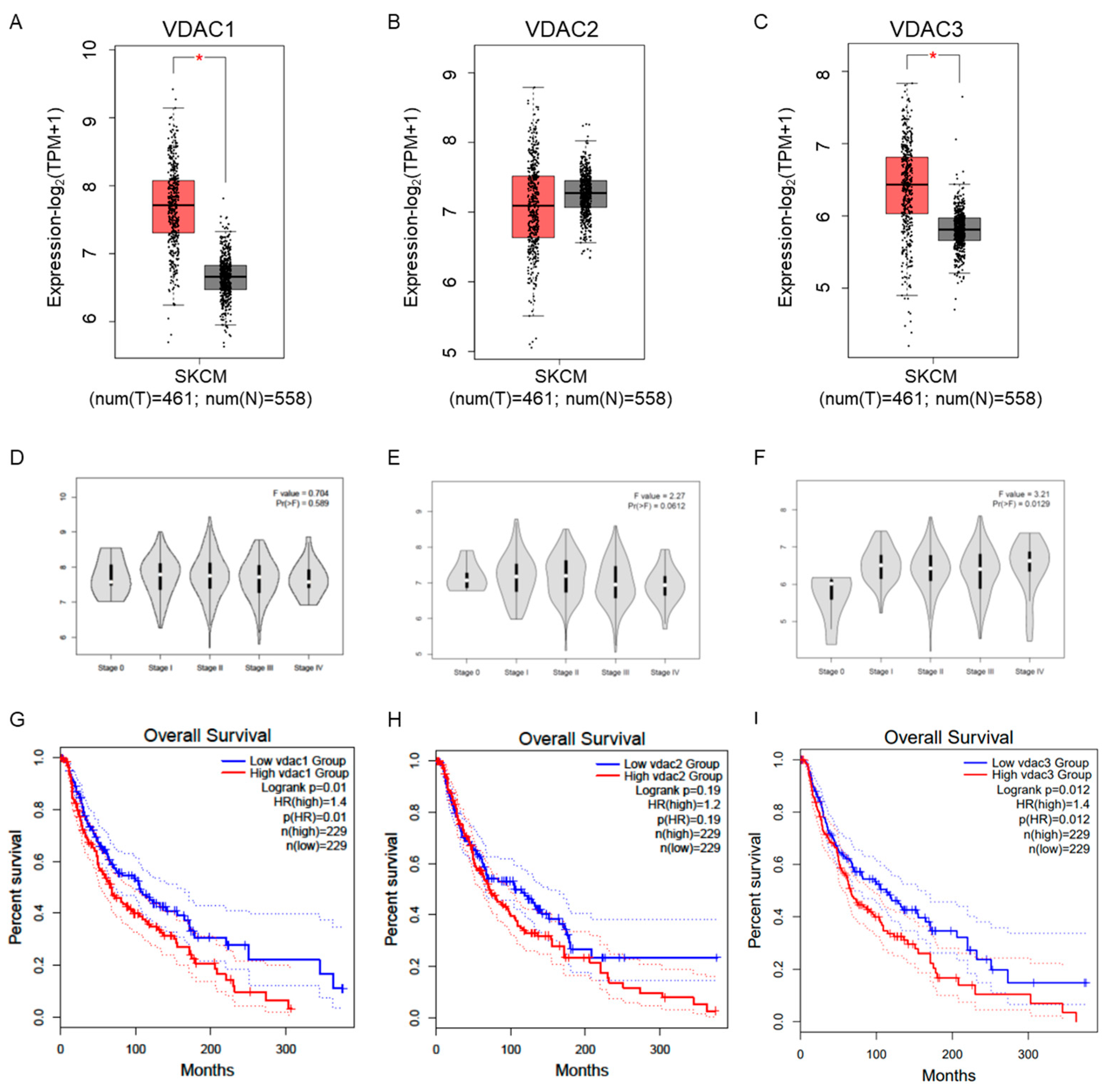
2.2.1. VDAC Expression and Survival Analysis Using GEPIA2
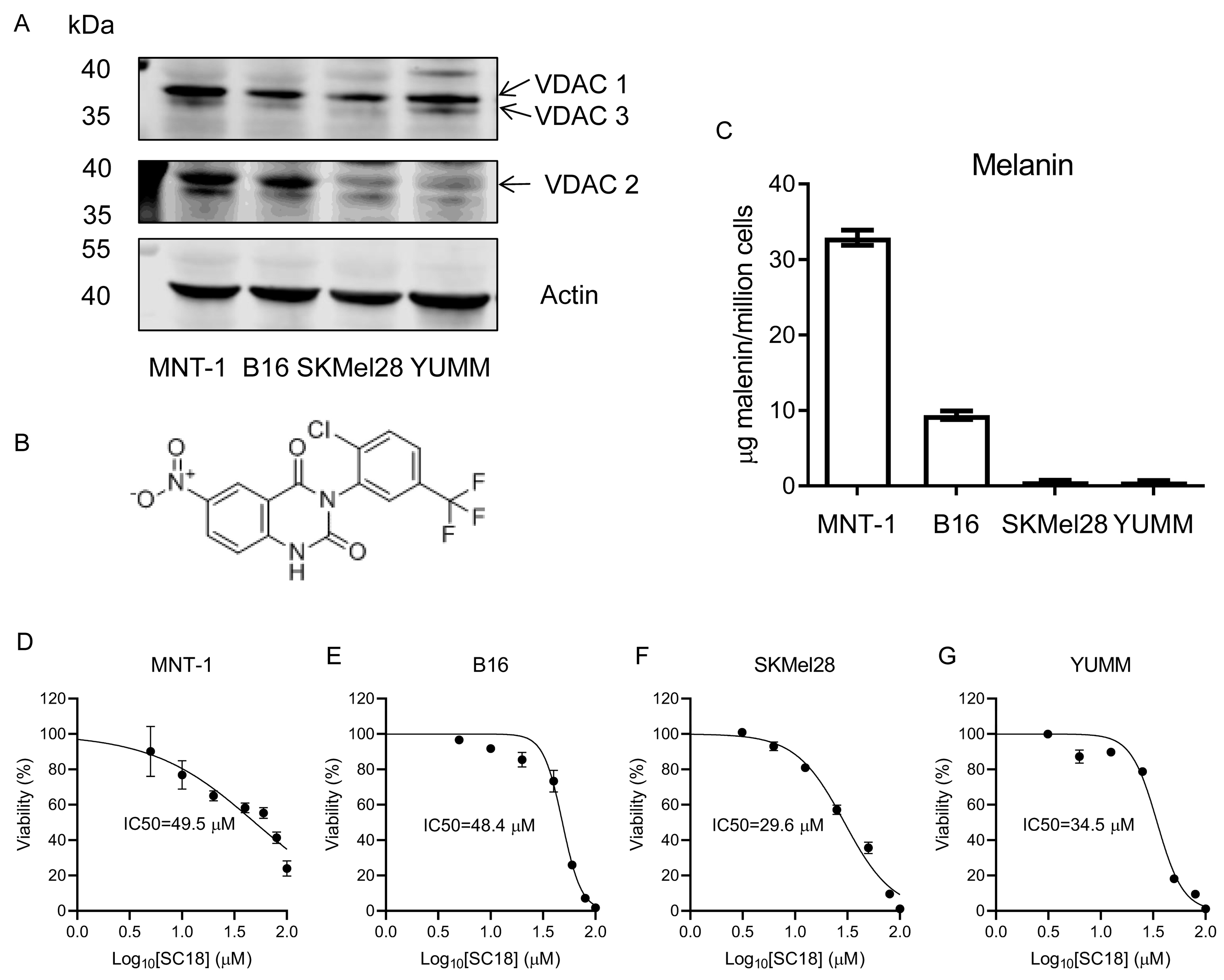
2.2.2. VDAC Expression in Melanoma Cells by Western Blot Analysis
2.3. Cellular Melanin Determination
2.4. Cytotoxicity Assay
2.5. Detection of Total Reactive Oxygen Species (ROS), Mitochondrial ROS, Lipid ROS, and Mitochondrial Membrane Potential
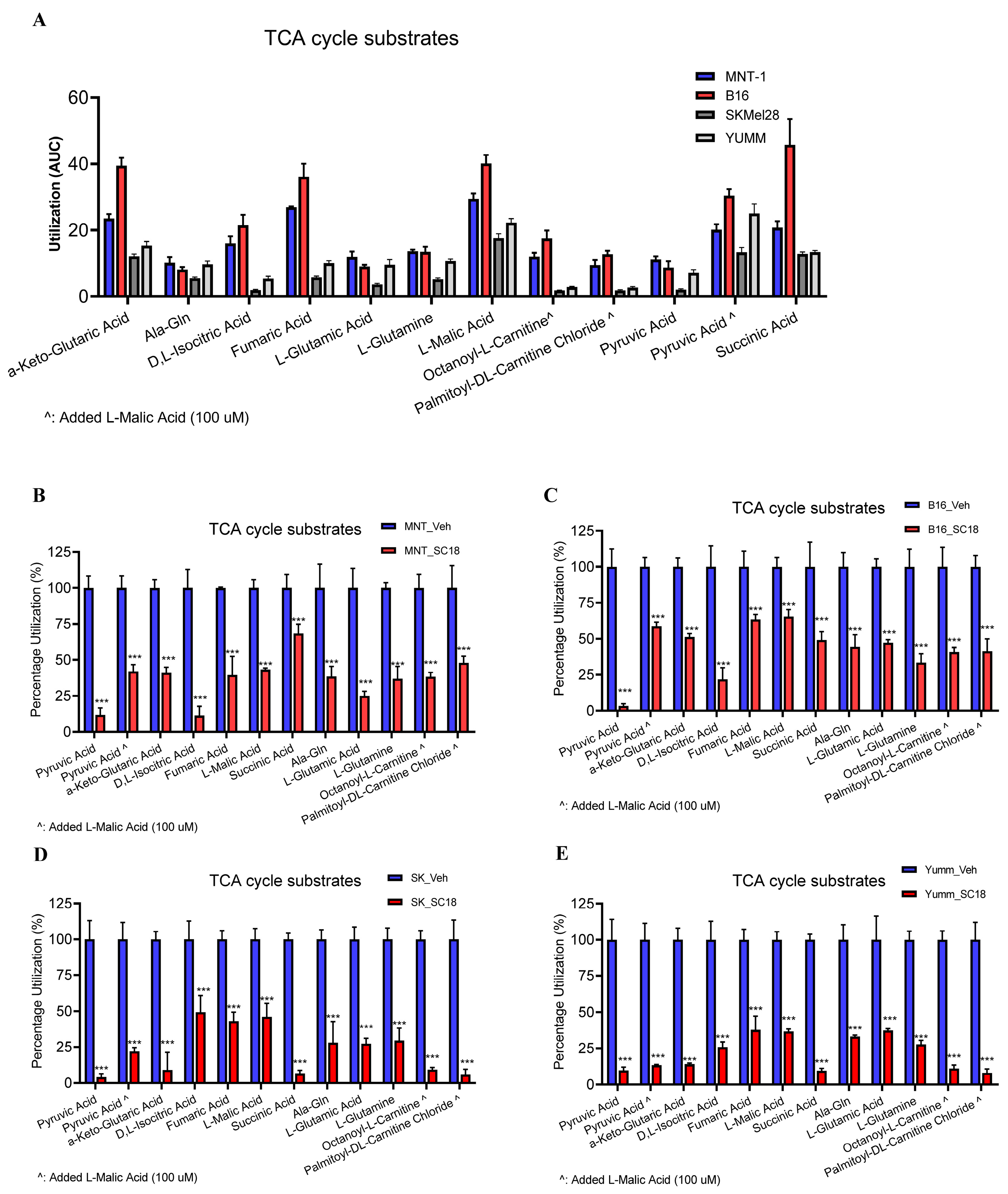
2.6. Mitochondrial Function Using Phenotype MicroArray MitoPlate S-1
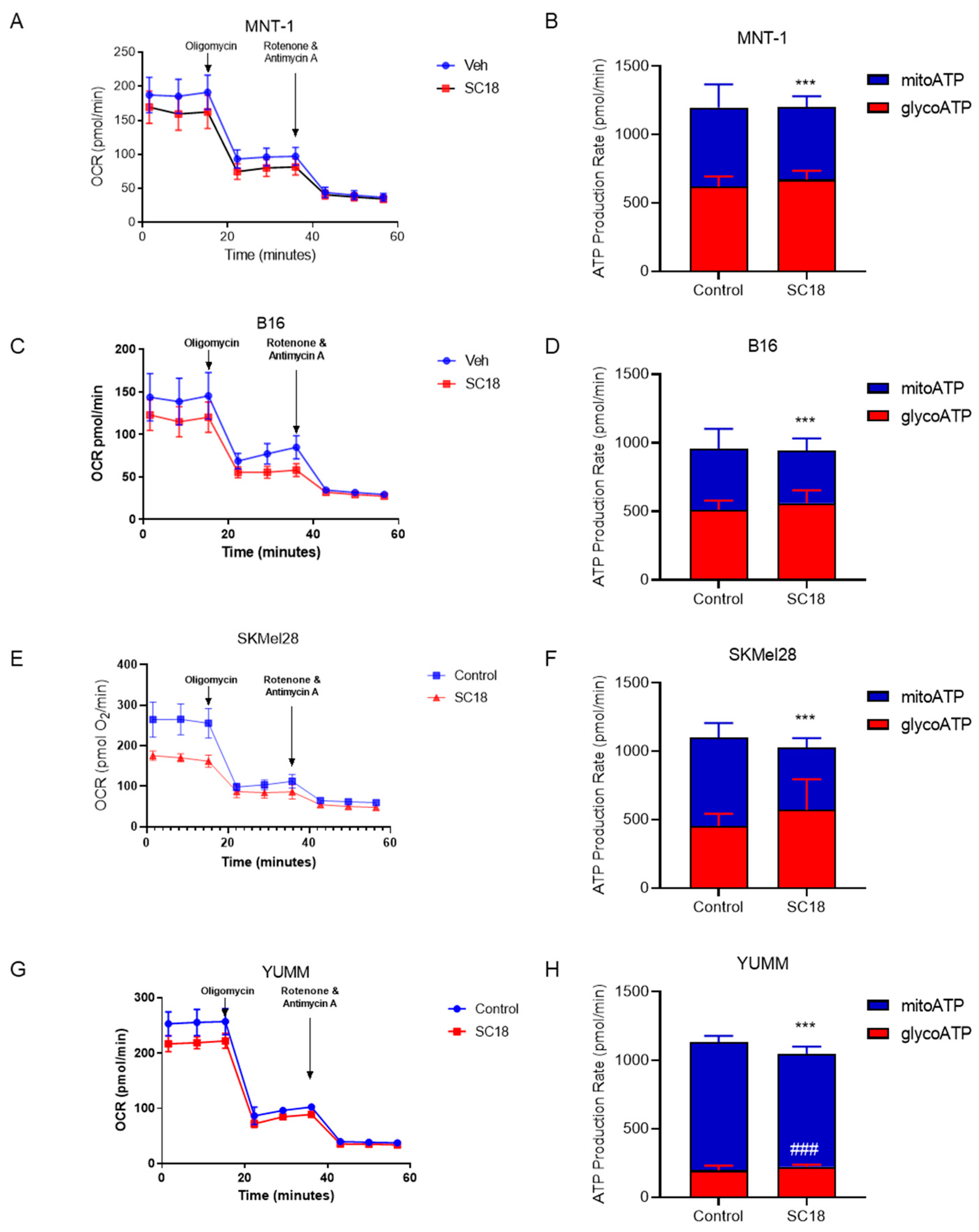
2.7. Seahorse XF ATP Rate Assay
2.8. Annexin V/PI Apoptosis Assay
2.9. Caspase-3 Activity Assay
2.10. Wound Healing Assay
2.11. Quantification and Statistical Analysis
3. Results
3.1. VDAC Expression Is Elevated in Skin Cutaneous Melanoma and Is Associated with Stage and Patient Outcome
3.2. Melanoma Models Show Robust but Isoform-Specific VDAC Expression
3.3. SC18 Suppresses Mitochondrial ATP Production and Triggers Compensatory Glycolysis, Causing Net ATP Depletion
3.4. MitoPlate S-1 Profiling in Permeabilized Melanoma Cells Reveals Pigmentation-Associated Substrate Oxidation and Broader SC18 Sensitivity in Amelanotic Models
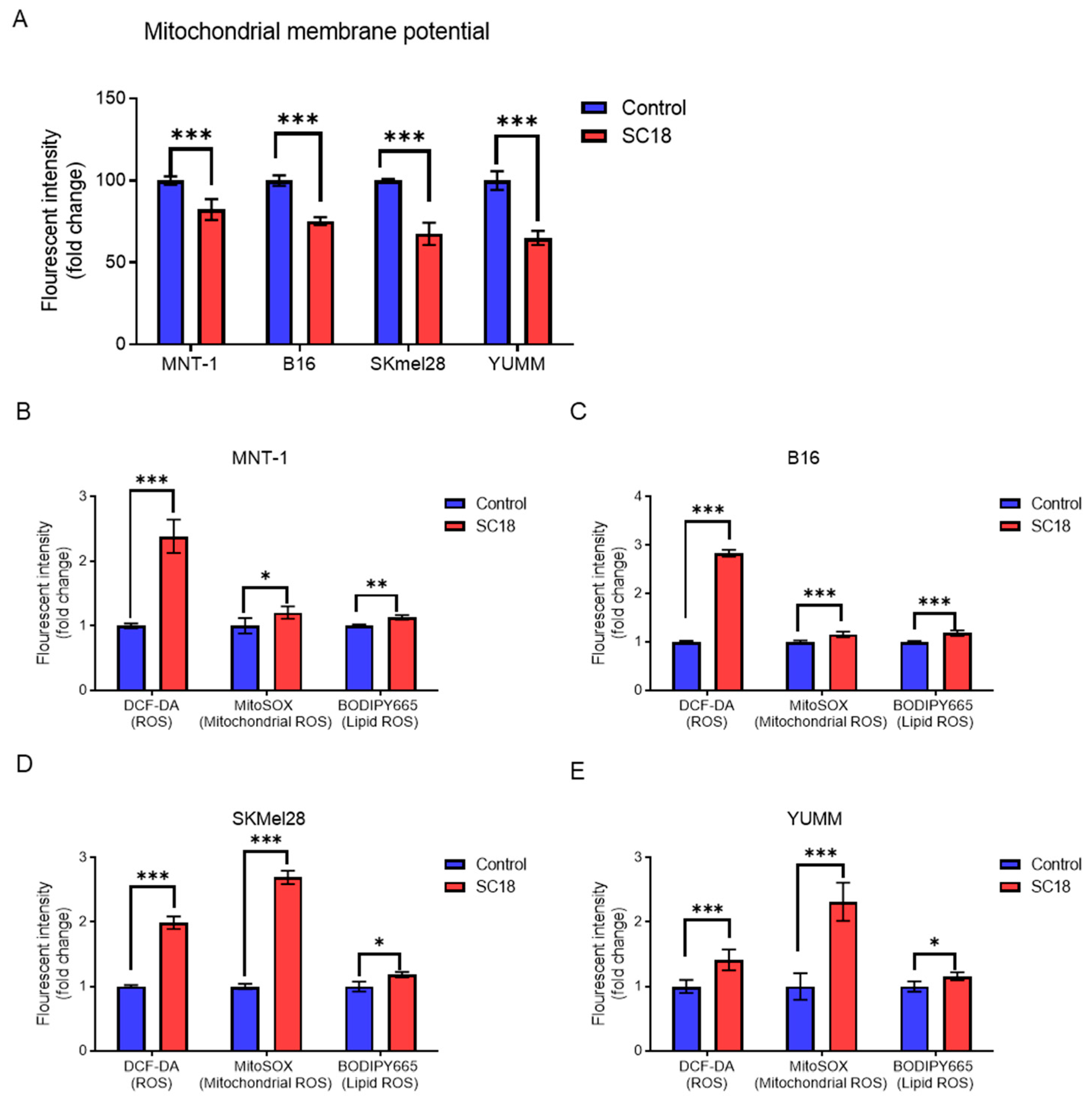
3.5. SC18 Depolarizes Mitochondria and Enhances Mitochondrial Superoxide, with Stronger MitoSOX Induction in Amelanotic Melanoma Cells
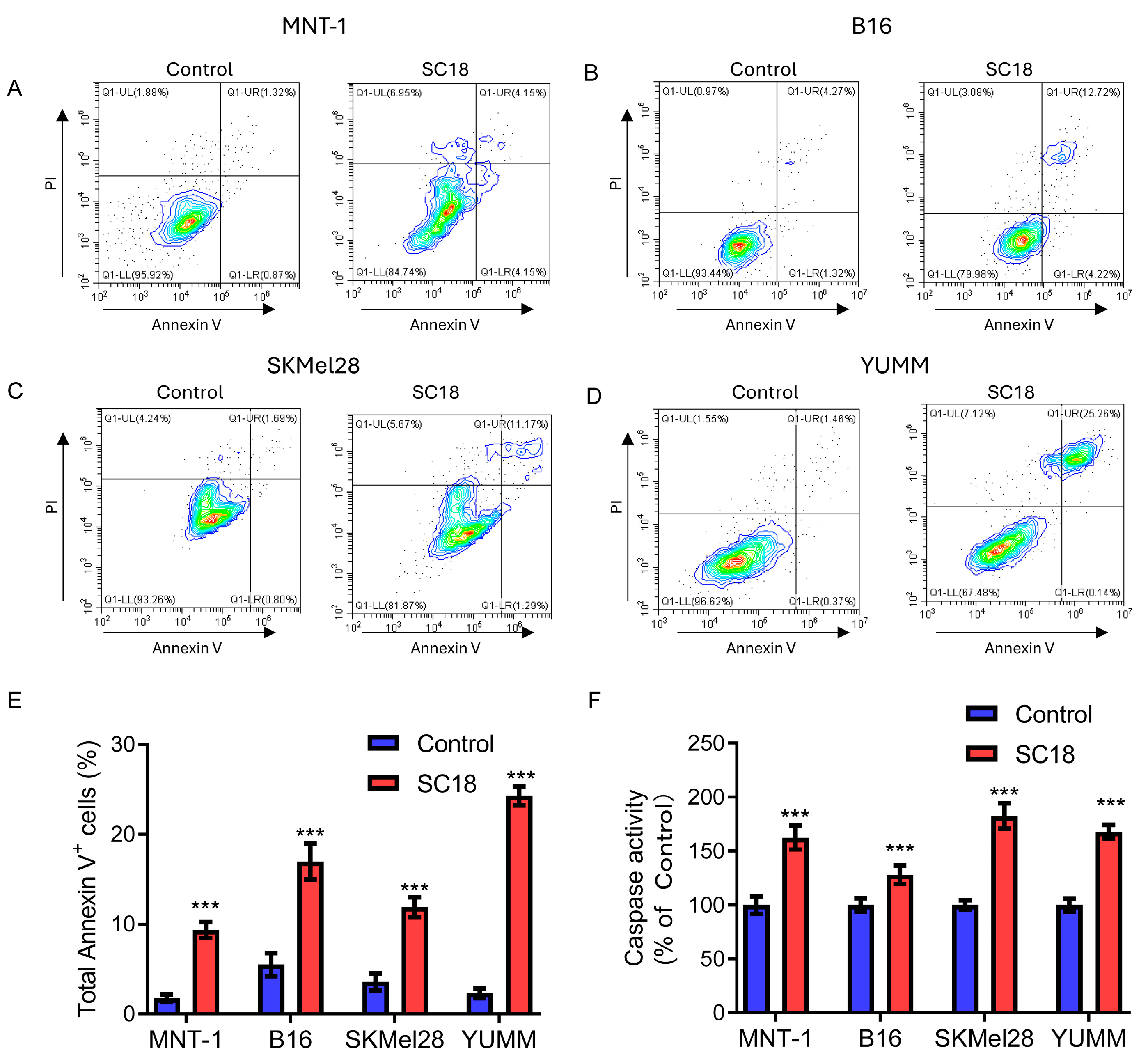
3.6. SC18 Induces Apoptosis in Melanoma Cells
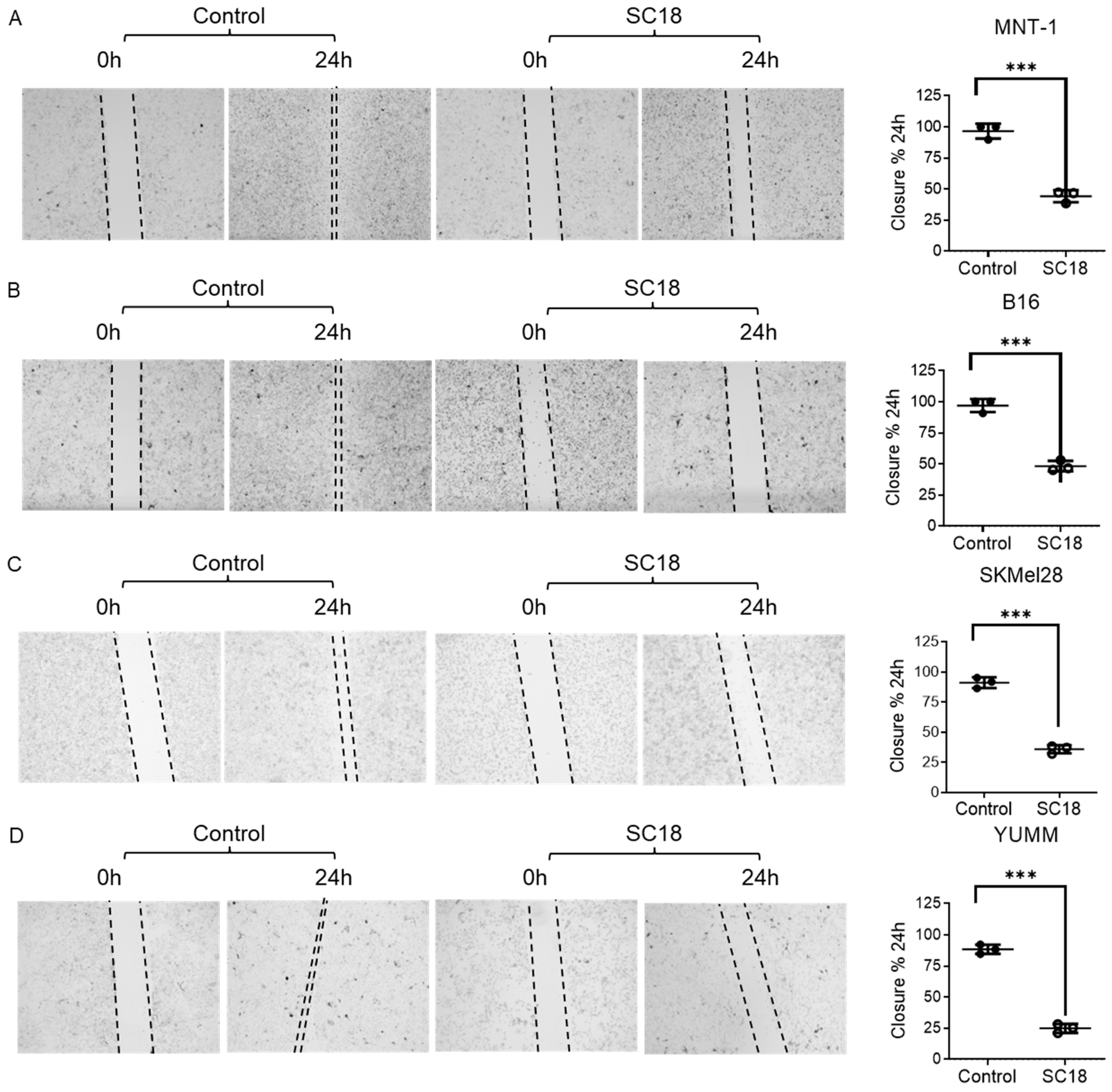
3.7. SC18 Suppresses Melanoma Cell Migration
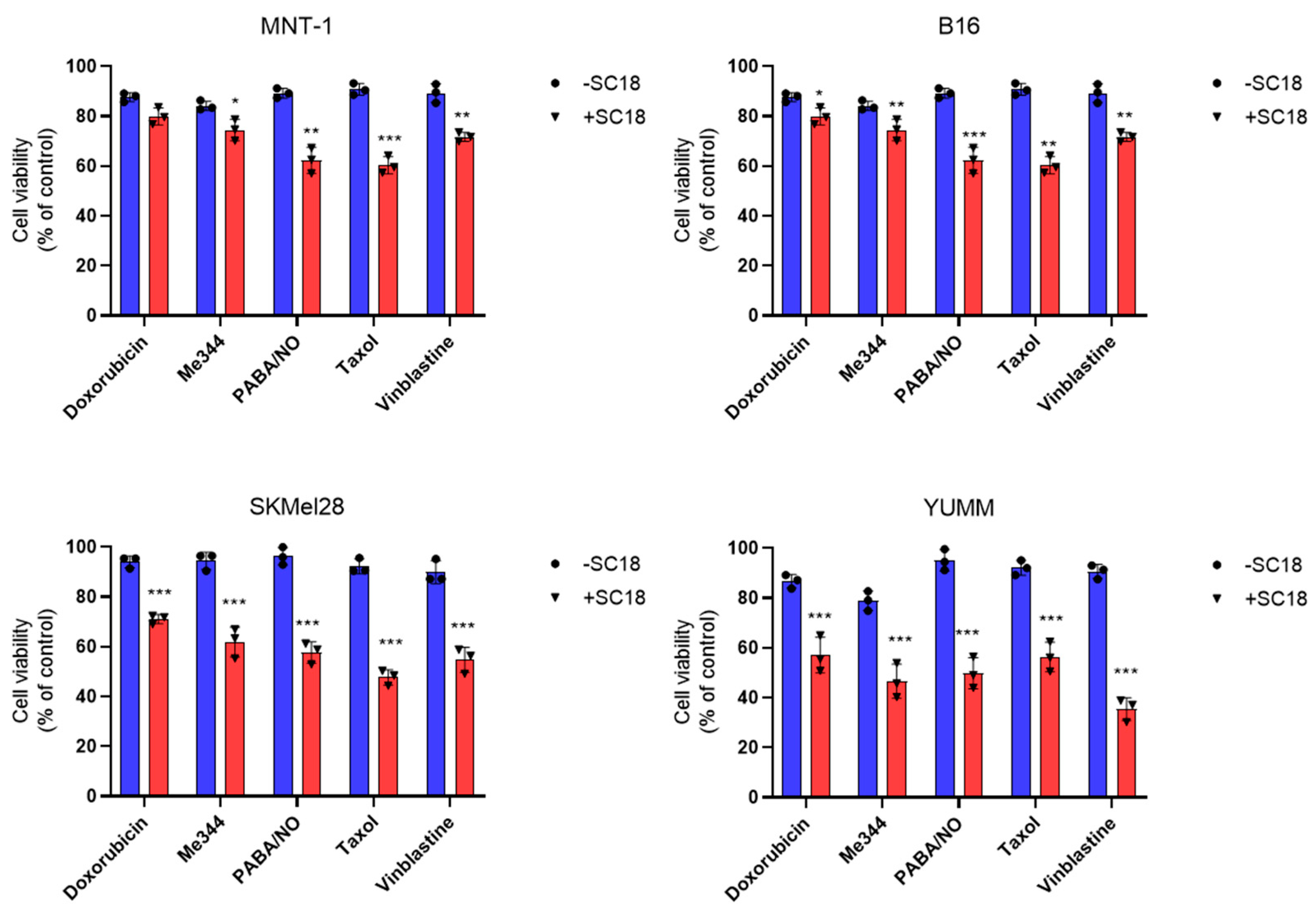
3.8. SC18 Enhances the Cytotoxic Efficacy of Multiple Anti-Tumor Agents in Melanoma Cells
4. Discussion
Author Contributions
Funding
Institutional Review Board Statement
Informed Consent Statement
Data Availability Statement
Conflicts of Interest
Abbreviations
Appendix A

| Reagent or Resource | Source | Identifier |
|---|---|---|
| Antibodies | ||
| Anti-VDAC1/VDAC3 | Abcam | Cat#AB14734 |
| Anti-VDAC2 | Abcam | Cat#AB37985 |
| Anti-beta actin | Sigma | Cat#A5441 |
| Anti-Mouse IRDye 680CW | LI-COR | Cat#926-68070 |
| Anti-Mouse IRDye 800CW | LI-COR | Cat#926-32210 |
| Anti-Rabbit IRDye 680CW | LI-COR | Cat#926-68071 |
| Anti-Rabbit IRDye 800CW | LI-COR | Cat#926-32211 |
| Chemicals | ||
| VDAC inhibitor SC18S | Probechem | Cat#PC-38524 |
| MTT (3-(4,5-Dimethylthiazol-2-yl)-2,5-Diphenyltetrazolium Bromide) | Sigma | M6494 |
| Tetramethylrhodamine | Sigma | T668 |
| MitoSOX™ Mitochondrial Superoxide Indicators | Thermo Fisher | M36008 |
| BODIPY™ 650/665 | Thermo Fisher | D10001 |
| H2DCFDA | Thermo Fisher | D399 |
| Oligomycin A | Sigma | O4876 |
| Rotenone | Sigma | R8875 |
| Antimycin A | Sigma | A8674 |
| Doxorubicin | Sigma | D1515 |
| Vinblastine | Sigma | PHR2698 |
| Paclitaxel | Selleck Chemicals | S1150 |
| PVDF Membrane, low fluorescence | Sigma | IPFL00010 |
| Melanin | MP Biomedicals | MFCD00131581 |
| Critical commercial assays | ||
| Seahorse XFe96/XF Pro FluxPak | Agilent Technologies | 103792-100 |
| DMEM medium | Agilent Technologies | 103575-100 |
| Glucose solution | Agilent Technologies | 103577-100 |
| L-glutamine solution | Agilent Technologies | 103579-100 |
| Sodium pyruvate solution | Agilent Technologies | 103578-100 |
| Pierce BCA protein assay kit | Thermo Fisher | 23225 |
| FITC Annexin V Apoptosis Detection Kit I | BD Pharmingen™ | 556547 |
| EnzChek Caspase-3 Assay Kit | Invitrogen | MP 13184 |
| Experimental models: cell lines | ||
| B16-F1 | ATCC | Cat#CRL-6323 |
| YUMM | ATCC | Cat#CRL-3362 |
| MNT-1 | ATCC | Cat#CRL-3450 |
| SKMel28 | Prof. P H. Howe, MUSC | N/A |
| Software and algorithms | ||
| GraphPad Prism v8 | GraphPad | N/A |
| CytExpert v2.1 | Beckman | N/A |
References
- Waseh, S.; Lee, J.B. Advances in melanoma: Epidemiology, diagnosis, and prognosis. Front. Med. 2023, 10, 1268479. [Google Scholar] [CrossRef]
- Arnold, M.; Singh, D.; Laversanne, M.; Vignat, J.; Vaccarella, S.; Meheus, F.; Cust, A.E.; de Vries, E.; Whiteman, D.C.; Bray, F. Global Burden of Cutaneous Melanoma in 2020 and Projections to 2040. JAMA Dermatol. 2022, 158, 495–503. [Google Scholar] [CrossRef]
- Jalil, A.; Donate, M.M.; Mattei, J. Exploring resistance to immune checkpoint inhibitors and targeted therapies in melanoma. Cancer Drug Resist. 2024, 7, 42. [Google Scholar] [CrossRef]
- Keller, H.R.; Zhang, X.; Li, L.; Schaider, H.; Wells, J.W. Overcoming resistance to targeted therapy with immunotherapy and combination therapy for metastatic melanoma. Oncotarget 2017, 8, 75675–75686. [Google Scholar] [CrossRef]
- Avagliano, A.; Fiume, G.; Pelagalli, A.; Sanita, G.; Ruocco, M.R.; Montagnani, S.; Arcucci, A. Metabolic Plasticity of Melanoma Cells and Their Crosstalk With Tumor Microenvironment. Front. Oncol. 2020, 10, 722. [Google Scholar] [CrossRef] [PubMed]
- Fischer, G.M.; Vashisht Gopal, Y.N.; McQuade, J.L.; Peng, W.; DeBerardinis, R.J.; Davies, M.A. Metabolic strategies of melanoma cells: Mechanisms, interactions with the tumor microenvironment, and therapeutic implications. Pigment. Cell Melanoma Res. 2018, 31, 11–30. [Google Scholar] [CrossRef] [PubMed]
- Shen, D.; Zhang, L.; Li, S.; Tang, L. Metabolic reprogramming in melanoma therapy. Cell Death Discov. 2025, 11, 308. [Google Scholar] [CrossRef]
- Tan, I.J.; Parikh, A.K.; Cohen, B.A. Melanoma Metabolism: Molecular Mechanisms and Therapeutic Implications in Cutaneous Oncology. Cancer Med. 2024, 13, e70386. [Google Scholar] [CrossRef]
- Kang, J.; Pervaiz, S. Mitochondria: Redox metabolism and dysfunction. Biochem. Res. Int. 2012, 2012, 896751. [Google Scholar] [CrossRef] [PubMed]
- Osellame, L.D.; Blacker, T.S.; Duchen, M.R. Cellular and molecular mechanisms of mitochondrial function. Best Pract. Res. Clin. Endocrinol. Metab. 2012, 26, 711–723. [Google Scholar] [CrossRef]
- Vakifahmetoglu-Norberg, H.; Ouchida, A.T.; Norberg, E. The role of mitochondria in metabolism and cell death. Biochem. Biophys. Res. Commun. 2017, 482, 426–431. [Google Scholar] [CrossRef]
- Zhang, J.; Ye, Z.W.; Brautigam, L.; Chakraborty, P.; Luo, Z.; Culpepper, J.; Aslam, M.; Zhang, L.; Johansson, K.; Haeggstrom, J.Z.; et al. A role for microsomal glutathione transferase 1 in melanin biosynthesis and melanoma progression. J. Biol. Chem. 2023, 299, 104920. [Google Scholar] [CrossRef]
- Zhang, J.; Ye, Z.W.; Chakraborty, P.; Luo, Z.; Culpepper, J.; Aslam, M.; Zhang, L.; Johansson, K.; Haeggstrom, J.Z.; Xu, J.; et al. Microsomal glutathione transferase 1 controls metastasis and therapeutic response in melanoma. Pharmacol. Res. 2023, 196, 106899. [Google Scholar] [CrossRef] [PubMed]
- Zhang, J.; Ye, Z.W.; Townsend, D.M.; Tew, K.D. Redox pathways in melanoma. Adv. Cancer Res. 2024, 162, 125–143. [Google Scholar] [CrossRef]
- Ashton, T.M.; McKenna, W.G.; Kunz-Schughart, L.A.; Higgins, G.S. Oxidative Phosphorylation as an Emerging Target in Cancer Therapy. Clin. Cancer Res. 2018, 24, 2482–2490. [Google Scholar] [CrossRef] [PubMed]
- McQuade, J.L.; Vashisht Gopal, Y. Counteracting oxidative phosphorylation-mediated resistance of melanomas to MAPK pathway inhibition. Mol. Cell Oncol. 2015, 2, e991610. [Google Scholar] [CrossRef] [PubMed]
- Salhi, A.; Jordan, A.C.; Bochaca, I.I.; Izsak, A.; Darvishian, F.; Houvras, Y.; Giles, K.M.; Osman, I. Oxidative Phosphorylation Promotes Primary Melanoma Invasion. Am. J. Pathol. 2020, 190, 1108–1117. [Google Scholar] [CrossRef]
- Fischer, G.M.; Guerrieri, R.A.; Hu, Q.; Joon, A.Y.; Kumar, S.; Haydu, L.E.; McQuade, J.L.; Vashisht Gopal, Y.N.; Knighton, B.; Deng, W.; et al. Clinical, molecular, metabolic, and immune features associated with oxidative phosphorylation in melanoma brain metastases. Neurooncol. Adv. 2021, 3, vdaa177. [Google Scholar] [CrossRef]
- Guerrieri, R.A.; Fischer, G.M.; Kircher, D.A.; Joon, A.Y.; Cortez, J.R.; Grossman, A.H.; Hudgens, C.W.; Ledesma, D.A.; Lazcano, R.; Onana, C.Y.; et al. Oxidative Phosphorylation (OXPHOS) Promotes the Formation and Growth of Melanoma Lung and Brain Metastases. bioRxiv 2025. [Google Scholar] [CrossRef]
- Rostovtseva, T.; Colombini, M. VDAC channels mediate and gate the flow of ATP: Implications for the regulation of mitochondrial function. Biophys. J. 1997, 72, 1954–1962. [Google Scholar] [CrossRef]
- Colombini, M. VDAC: The channel at the interface between mitochondria and the cytosol. Mol. Cell. Biochem. 2004, 256, 107–115. [Google Scholar] [CrossRef] [PubMed]
- Maldonado, E.N. VDAC-Tubulin, an Anti-Warburg Pro-Oxidant Switch. Front. Oncol. 2017, 7, 4. [Google Scholar] [CrossRef]
- Heslop, K.A.; Burger, P.; Kappler, C.; Solanki, A.K.; Gooz, M.; Peterson, Y.K.; Mills, C.; Benton, T.; Duncan, S.A.; Woster, P.M.; et al. Small molecules targeting the NADH-binding pocket of VDAC modulate mitochondrial metabolism in hepatocarcinoma cells. Biomed. Pharmacother. 2022, 150, 112928. [Google Scholar] [CrossRef]
- Ventura, C.; Junco, M.; Santiago Valtierra, F.X.; Gooz, M.; Zhiwei, Y.; Townsend, D.M.; Woster, P.M.; Maldonado, E.N. Synergism of small molecules targeting VDAC with sorafenib, regorafenib or lenvatinib on hepatocarcinoma cell proliferation and survival. Eur. J. Pharmacol. 2023, 957, 176034. [Google Scholar] [CrossRef] [PubMed]
- DeHart, D.N.; Fang, D.; Heslop, K.; Li, L.; Lemasters, J.J.; Maldonado, E.N. Opening of voltage dependent anion channels promotes reactive oxygen species generation, mitochondrial dysfunction and cell death in cancer cells. Biochem. Pharmacol. 2018, 148, 155–162. [Google Scholar] [CrossRef]
- Fang, D.; Maldonado, E.N. VDAC Regulation: A Mitochondrial Target to Stop Cell Proliferation. Adv. Cancer Res. 2018, 138, 41–69. [Google Scholar] [CrossRef] [PubMed]
- Slominski, A.; Kim, T.K.; Brozyna, A.A.; Janjetovic, Z.; Brooks, D.L.; Schwab, L.P.; Skobowiat, C.; Jozwicki, W.; Seagroves, T.N. The role of melanogenesis in regulation of melanoma behavior: Melanogenesis leads to stimulation of HIF-1alpha expression and HIF-dependent attendant pathways. Arch. Biochem. Biophys. 2014, 563, 79–93. [Google Scholar] [CrossRef]
- Meira, W.V.; Heinrich, T.A.; Cadena, S.; Martinez, G.R. Melanogenesis inhibits respiration in B16-F10 melanoma cells whereas enhances mitochondrial cell content. Exp. Cell Res. 2017, 350, 62–72. [Google Scholar] [CrossRef]
- Heslop, K.A.; Milesi, V.; Maldonado, E.N. VDAC Modulation of Cancer Metabolism: Advances and Therapeutic Challenges. Front. Physiol. 2021, 12, 742839. [Google Scholar] [CrossRef]
- Rozanowska, M.; Sarna, T.; Land, E.J.; Truscott, T.G. Free radical scavenging properties of melanin interaction of eu- and pheo-melanin models with reducing and oxidising radicals. Free Radic. Biol. Med. 1999, 26, 518–525. [Google Scholar] [CrossRef]
- Pilas, B.; Sarna, T.; Kalyanaraman, B.; Swartz, H.M. The effect of melanin on iron associated decomposition of hydrogen peroxide. Free Radic. Biol. Med. 1988, 4, 285–293. [Google Scholar] [CrossRef]
- Sarna, T.; Pilas, B.; Land, E.J.; Truscott, T.G. Interaction of radicals from water radiolysis with melanin. Biochim. Biophys. Acta 1986, 883, 162–167. [Google Scholar] [CrossRef]
- Shan, Z.; Liu, F. Targeting ferroptosis, pyroptosis and necroptosis for cancer immunotherapy in melanoma: Mechanistic insights and clinical perspectives. Front. Immunol. 2025, 16, 1629620. [Google Scholar] [CrossRef]
- Khorsandi, K.; Esfahani, H.; Ghamsari, S.K.; Lakhshehei, P. Targeting ferroptosis in melanoma: Cancer therapeutics. Cell Commun. Signal. 2023, 21, 337. [Google Scholar] [CrossRef] [PubMed]
- Zhang, L.; Zhang, J.; Ye, Z.; Townsend, D.M.; Tew, K.D. Pharmacology of ME-344, a novel cytotoxic isoflavone. Adv. Cancer Res. 2019, 142, 187–207. [Google Scholar] [CrossRef] [PubMed]
- Saavedra, J.E.; Srinivasan, A.; Buzard, G.S.; Davies, K.M.; Waterhouse, D.J.; Inami, K.; Wilde, T.C.; Citro, M.L.; Cuellar, M.; Deschamps, J.R.; et al. PABA/NO as an anticancer lead: Analogue synthesis, structure revision, solution chemistry, reactivity toward glutathione, and in vitro activity. J. Med. Chem. 2006, 49, 1157–1164. [Google Scholar] [CrossRef]
- DeWane, G.; Salvi, A.M.; DeMali, K.A. Fueling the cytoskeleton—Links between cell metabolism and actin remodeling. J. Cell Sci. 2021, 134, jcs248385. [Google Scholar] [CrossRef]
- Yadav, T.; Gau, D.; Roy, P. Mitochondria-actin cytoskeleton crosstalk in cell migration. J. Cell Physiol. 2022, 237, 2387–2403. [Google Scholar] [CrossRef]
- Hurd, T.R.; DeGennaro, M.; Lehmann, R. Redox regulation of cell migration and adhesion. Trends Cell Biol. 2012, 22, 107–115. [Google Scholar] [CrossRef] [PubMed]




Disclaimer/Publisher’s Note: The statements, opinions and data contained in all publications are solely those of the individual author(s) and contributor(s) and not of MDPI and/or the editor(s). MDPI and/or the editor(s) disclaim responsibility for any injury to people or property resulting from any ideas, methods, instructions or products referred to in the content. |
© 2026 by the authors. Licensee MDPI, Basel, Switzerland. This article is an open access article distributed under the terms and conditions of the Creative Commons Attribution (CC BY) license.
Share and Cite
Ye, Z.-W.; Zhang, L.; Zhang, X.; Culpepper, J.; Maldonado, E.N.; Tew, K.D.; Zhang, J.; Townsend, D.M. Small-Molecule Targeting of VDAC Disrupts Mitochondrial Bioenergetics and Suppresses Melanoma Cell Survival and Migration. Cells 2026, 15, 1066. https://doi.org/10.3390/cells15121066
Ye Z-W, Zhang L, Zhang X, Culpepper J, Maldonado EN, Tew KD, Zhang J, Townsend DM. Small-Molecule Targeting of VDAC Disrupts Mitochondrial Bioenergetics and Suppresses Melanoma Cell Survival and Migration. Cells. 2026; 15(12):1066. https://doi.org/10.3390/cells15121066
Chicago/Turabian StyleYe, Zhi-Wei, Leilei Zhang, Xuhong Zhang, John Culpepper, Eduardo N. Maldonado, Kenneth D. Tew, Jie Zhang, and Danyelle M. Townsend. 2026. "Small-Molecule Targeting of VDAC Disrupts Mitochondrial Bioenergetics and Suppresses Melanoma Cell Survival and Migration" Cells 15, no. 12: 1066. https://doi.org/10.3390/cells15121066
APA StyleYe, Z.-W., Zhang, L., Zhang, X., Culpepper, J., Maldonado, E. N., Tew, K. D., Zhang, J., & Townsend, D. M. (2026). Small-Molecule Targeting of VDAC Disrupts Mitochondrial Bioenergetics and Suppresses Melanoma Cell Survival and Migration. Cells, 15(12), 1066. https://doi.org/10.3390/cells15121066