Evaluation of a Room-Temperature Preservation Method Maintaining Viability and Function in Human Cardiac Organoids

 , , , , ,
Abstract
1. Introduction
2. Materials and Methods
2.1. Cell Culture
2.1.1. Organoids
2.1.2. Treatments
2.2. Preservation Method
2.2.1. Cryopreservation and Thawing
2.2.2. Room Temperature-Based Preservation
2.3. Immunofluorescence Imaging
2.3.1. Cryosections
2.3.2. Immunohistochemistry
2.4. Adenosine Triphosphate (ATP)-Level Quantification
2.5. Assessment of Functional Beating
2.6. Statistical Analyses
3. Results
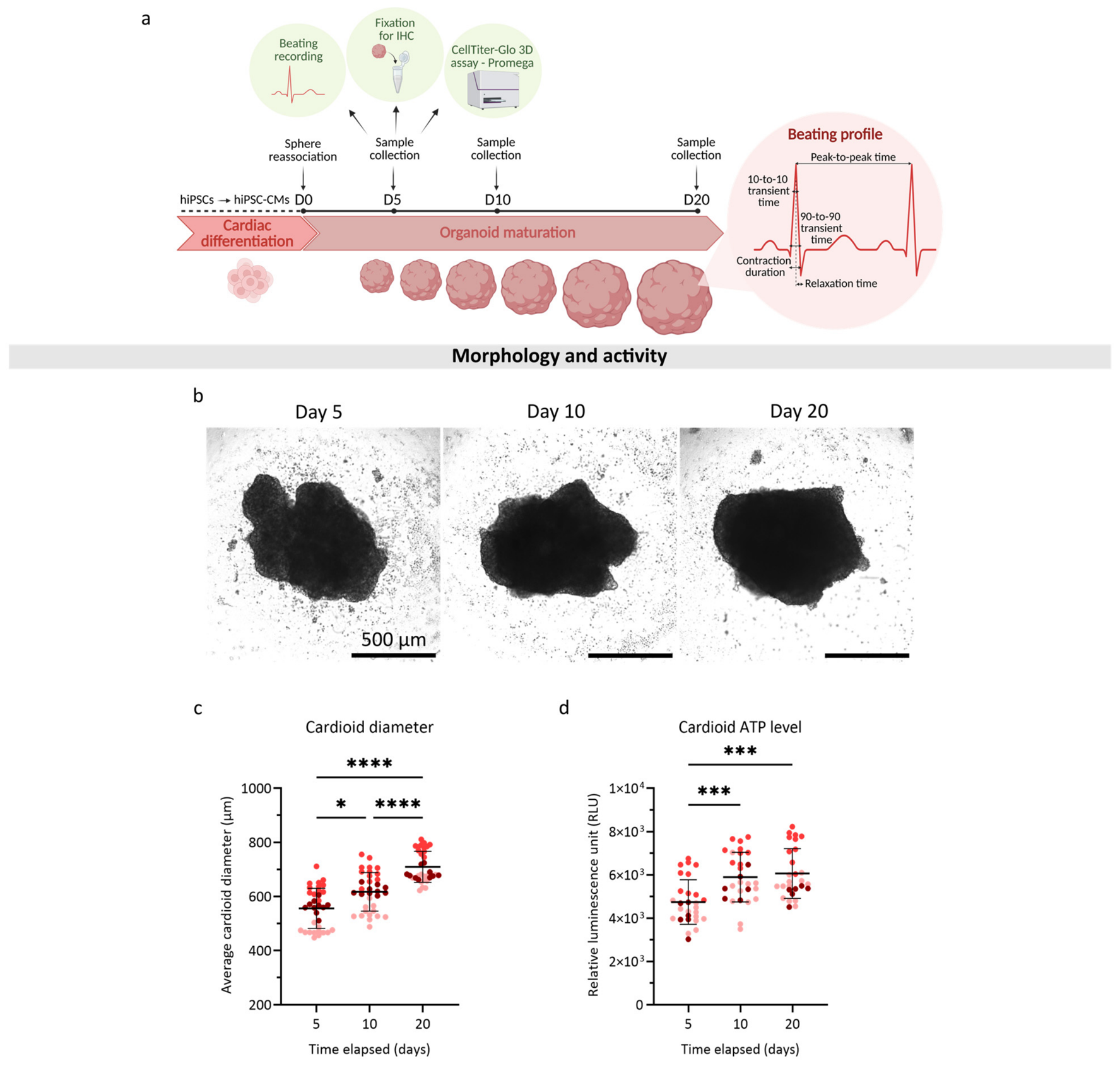
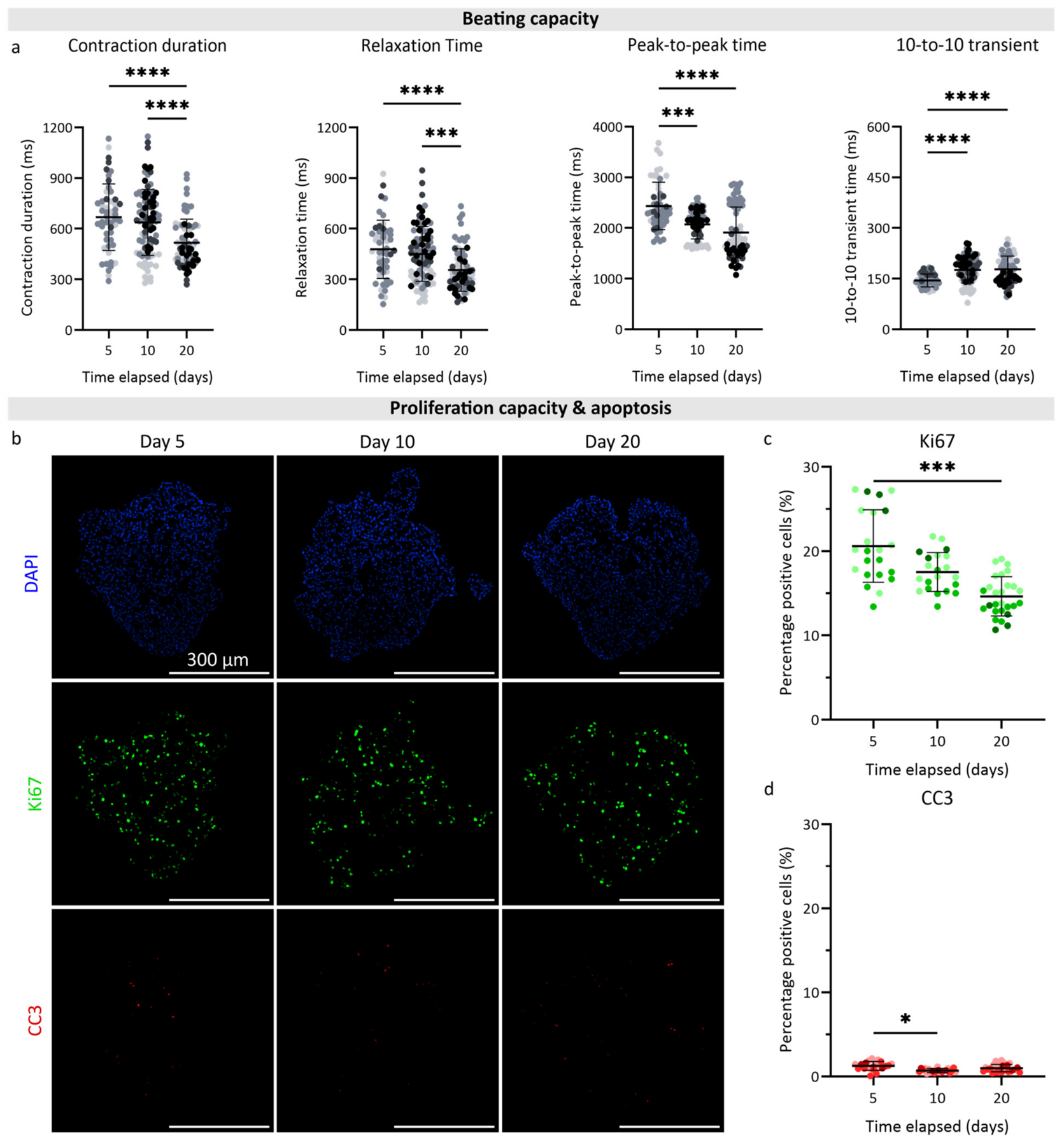
3.1. 3D Cardiac Model Validation
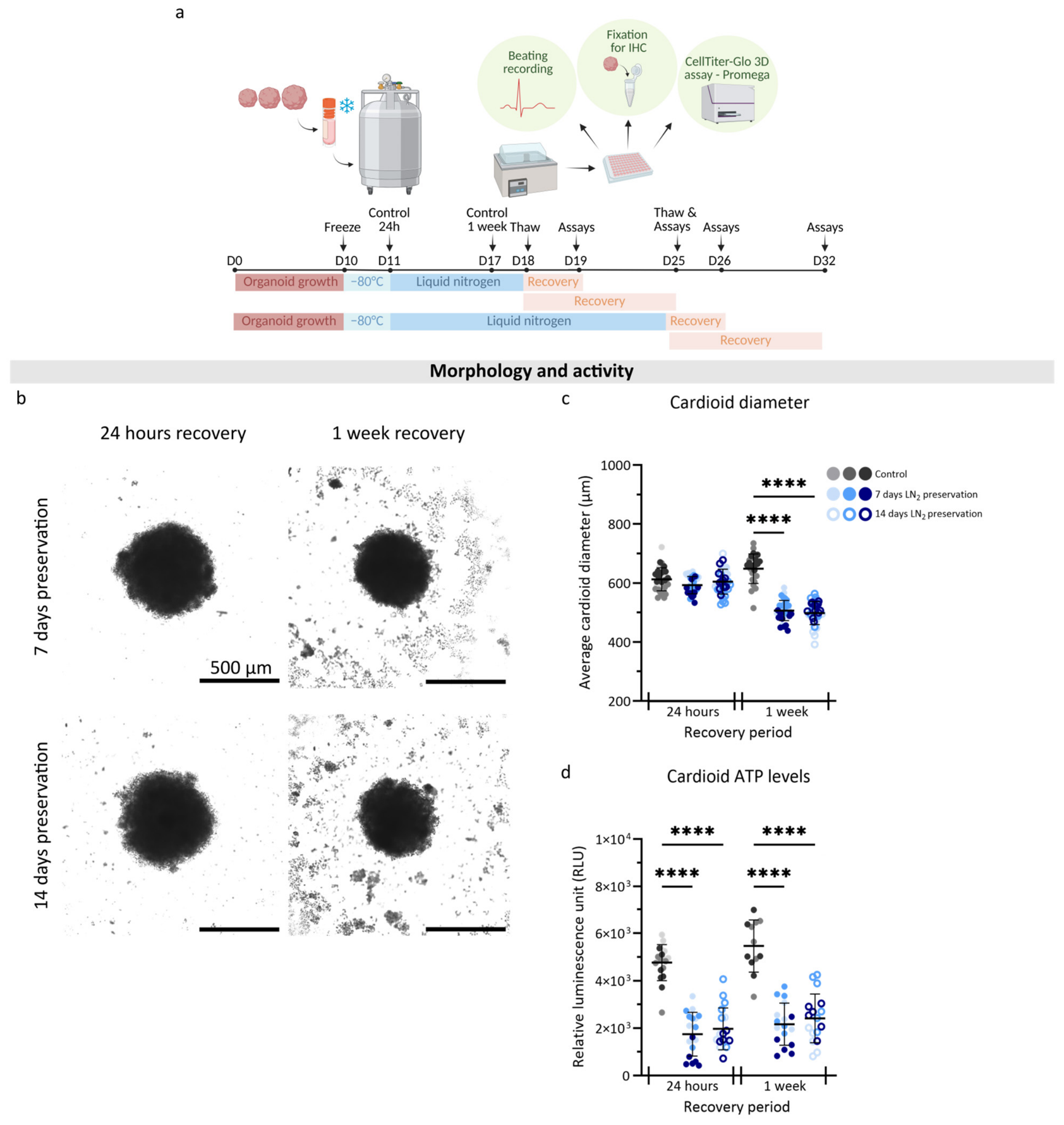
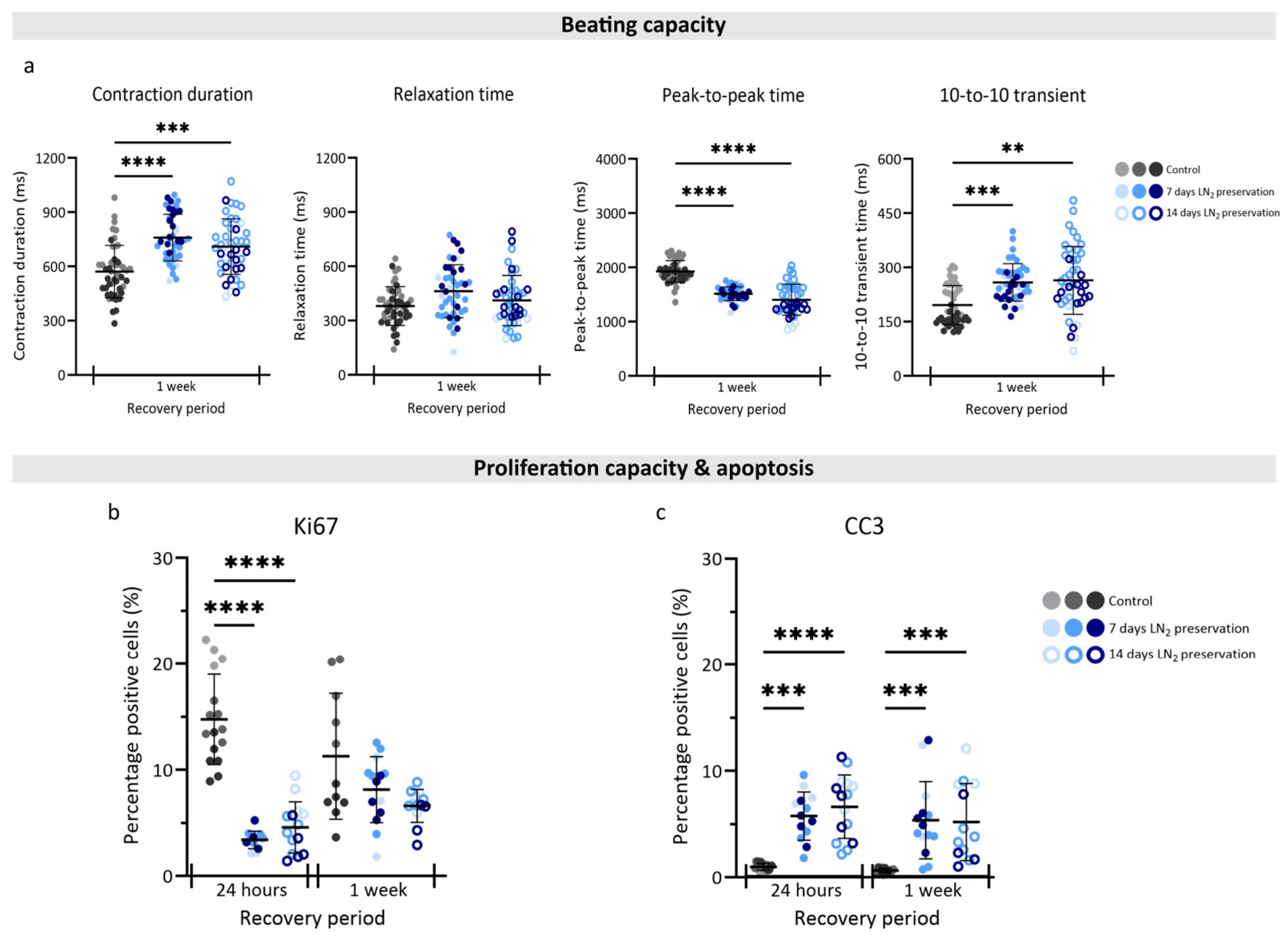
3.2. Effects of Cryopreservation on Cell Viability and Functionality
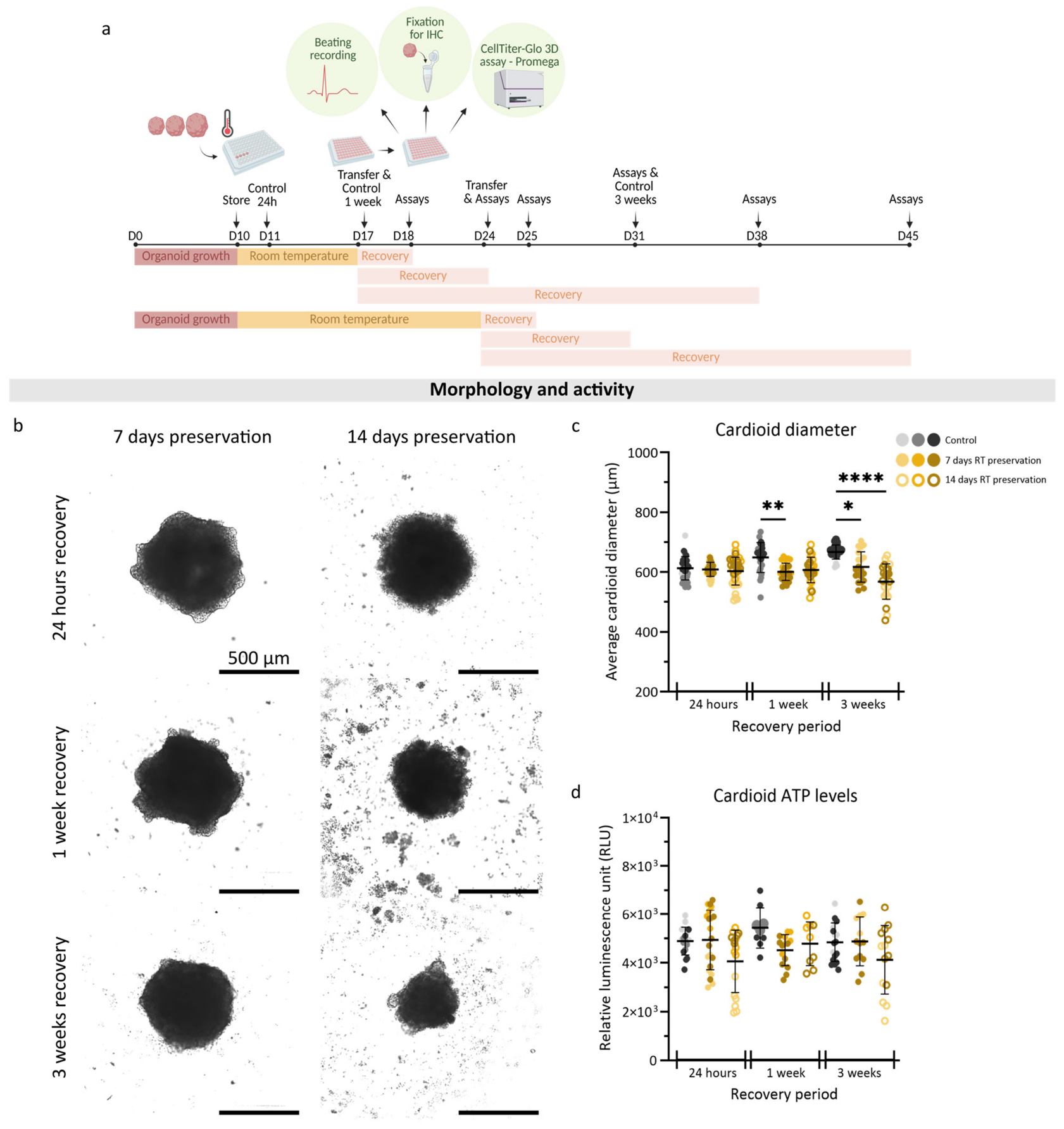
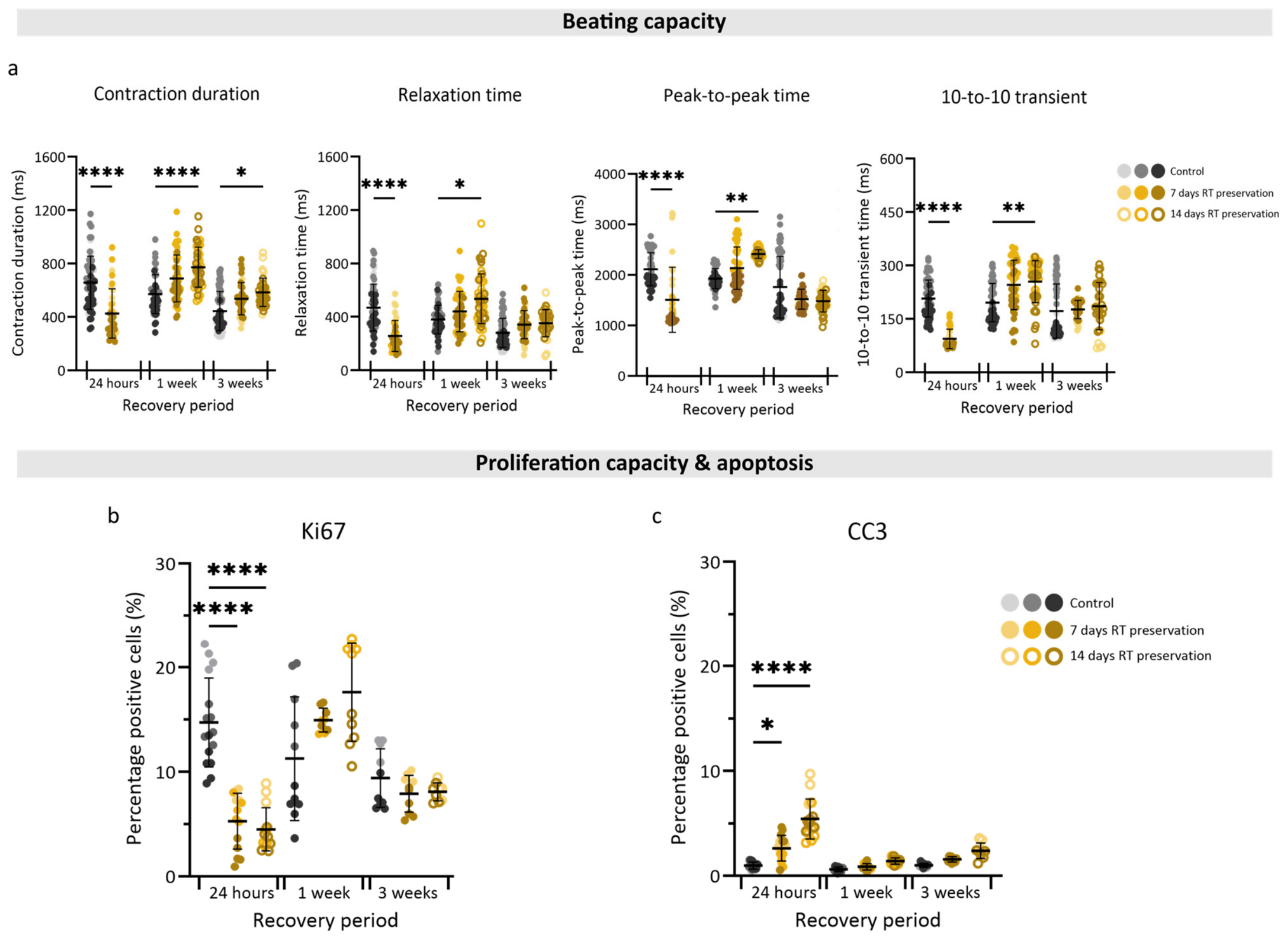
3.3. Effects of Room Temperature-Based Preservation on Cell Viability and Functionality
4. Discussion
5. Conclusions
Supplementary Materials
Author Contributions
Funding
Institutional Review Board Statement
Informed Consent Statement
Data Availability Statement
Acknowledgments
Conflicts of Interest
References
- Yaqinuddin, A.; Jabri, A.; Mhannayeh, A.; Taftafa, B.; Alsharif, M.; Abbad, T.; Khan, J.; Elsalti, A.; Chinnappan, R.; Alshehri, E.A.; et al. Cardiac organoids: A new tool for disease modeling and drug screening applications. Front. Cardiovasc. Med. 2025, 12, 1537730. [Google Scholar] [CrossRef]
- Yang, Y.; Yang, H.; Kiskin, F.N.; Zhang, J.Z. The new era of cardiovascular research: Revolutionizing cardiovascular research with 3D models in a dish. Med. Rev. 2024, 4, 68–85. [Google Scholar] [CrossRef] [PubMed]
- Zhang, H.; Qu, P.; Liu, J.; Cheng, P.; Lei, Q. Application of human cardiac organoids in cardiovascular disease research. Front. Cell Dev. Biol. 2025, 13, 1564889. [Google Scholar] [CrossRef]
- Groen, E.; Mummery, C.L.; Yiangou, L.; Davis, R.P. Three-dimensional cardiac models: A pre-clinical testing platform. Biochem. Soc. Trans. 2024, 52, 1045–1059. [Google Scholar] [CrossRef]
- Janssen, J.; Chirico, N.; Ainsworth, M.J.; Cedillo-Servin, G.; Viola, M.; Dokter, I.; Vermonden, T.; Doevendans, P.A.; Serra, M.; Voets, I.K.; et al. Hypothermic and cryogenic preservation of cardiac tissue-engineered constructs. Biomater. Sci. 2024, 12, 3866–3881. [Google Scholar] [CrossRef] [PubMed]
- Ashrafi, E.; Radisic, M.; Elliott, J.A.W. Systematic cryopreservation study of cardiac myoblasts in suspension. PLoS ONE 2024, 19, e0295131. [Google Scholar] [CrossRef]
- Lodrini, A.M.; Groeneveld, E.J.; Palmen, M.; Hjortnaes, J.; Smits, A.M.; Goumans, M.J. Cryopreservation of Human Adult Ventricular Tissue for the Preparation of Viable Myocardial Slices. Curr. Protoc. 2024, 4, e70068. [Google Scholar] [CrossRef]
- Janssen, J.; Chirico, N.; Ainsworth, M.; Viola, M.; Cedillo-Servin, G.; Vermonden, T.; Doevendans, P.; Serra, M.; Voets, I.; Malda, J.; et al. Short- and long term preservation of cardiac tissue-engineered constructs. Cardiovasc. Res. 2024, 120, cvae088.144. [Google Scholar] [CrossRef]
- Kim, Y.Y.; Ku, S.Y.; Liu, H.C.; Cho, H.J.; Oh, S.K.; Moon, S.Y.; Choi, Y.M. Cryopreservation of human embryonic stem cells derived-cardiomyocytes induced by BMP2 in serum-free condition. Reprod. Sci. 2011, 18, 252–260. [Google Scholar] [CrossRef]
- van den Brink, L.; Brandao, K.O.; Yiangou, L.; Mol, M.P.H.; Grandela, C.; Mummery, C.L.; Verkerk, A.O.; Davis, R.P. Cryopreservation of human pluripotent stem cell-derived cardiomyocytes is not detrimental to their molecular and functional properties. Stem Cell Res. 2020, 43, 101698. [Google Scholar] [CrossRef] [PubMed]
- Sampaio-Pinto, V.; Janssen, J.; Chirico, N.; Serra, M.; Alves, P.M.; Doevendans, P.A.; Voets, I.K.; Sluijter, J.P.G.; van Laake, L.W.; van Mil, A. A Roadmap to Cardiac Tissue-Engineered Construct Preservation: Insights from Cells, Tissues, and Organs. Adv. Mater. 2021, 33, 2008517. [Google Scholar] [CrossRef]
- Ziani, K.; Saenz-Del-Burgo, L.; Pedraz, J.L.; Ciriza, J. Advances in Cryopreservation Strategies for 3D Biofabricated Constructs: From Hydrogels to Bioprinted Tissues. Int. J. Mol. Sci. 2025, 26, 6908. [Google Scholar] [CrossRef]
- Preininger, M.K.; Singh, M.; Xu, C. Cryopreservation of Human Pluripotent Stem Cell-Derived Cardiomyocytes: Strategies, Challenges, and Future Directions. Adv. Exp. Med. Biol. 2016, 951, 123–135. [Google Scholar] [CrossRef]
- Best, B.P. Cryoprotectant Toxicity: Facts, Issues, and Questions. Rejuvenation Res. 2015, 18, 422–436. [Google Scholar] [CrossRef] [PubMed]
- Yang, T.; Lv, X.; Bai, Y.; Jiang, H.; Chang, X.; Wang, J.; Luo, G. An all-in-one microfluidic cryopreservation system and protocols with gradually increasing CPA concentration. Lab Chip 2025, 25, 565–576. [Google Scholar] [CrossRef]
- Powell-Palm, M.J.; Charwat, V.; Charrez, B.; Siemons, B.; Healy, K.E.; Rubinsky, B. Isochoric supercooled preservation and revival of human cardiac microtissues. Commun. Biol. 2021, 4, 1118. [Google Scholar] [CrossRef]
- Zheng, Y.; Zhao, G.; Zhang, Y.; Gao, R. On-chip loading and unloading of cryoprotectants facilitate cell cryopreservation by rapid freezing. Sens. Actuators B Chem. 2018, 255, 647–656. [Google Scholar] [CrossRef]
- Li, L.; Lv, X.; Guo, H.; Shi, X.; Liu, J. On-chip direct freezing and thawing of mammalian cells. RSC Adv. 2014, 4, 34443–34447. [Google Scholar] [CrossRef]
- Zou, Y.; Yin, T.; Chen, S.; Yang, J.; Huang, W. On-chip cryopreservation: A novel method for ultra-rapid cryoprotectant-free cryopreservation of small amounts of human spermatozoa. PLoS ONE 2013, 8, e61593. [Google Scholar] [CrossRef] [PubMed]
- He, W.; Sun, Q.; Ge, D.; Liu, Y.; Sun, B. Application of nanomaterials in organoid culture and cryopreservation. Nanoscale Adv. 2025, 7, 7483–7503. [Google Scholar] [CrossRef]
- Lee, S.G.; Kim, J.; Seok, J.; Kim, M.W.; Rhee, J.; Song, G.E.; Park, S.; Lee, S.; Jeong, Y.; Chung, H.M.; et al. Development of heart organoid cryopreservation method through Fe3O4 nanoparticles based nanowarming system. Biotechnol. J. 2024, 19, e2300311. [Google Scholar] [CrossRef]
- Han, Z.; Rao, J.S.; Gangwar, L.; Namsrai, B.E.; Pasek-Allen, J.L.; Etheridge, M.L.; Wolf, S.M.; Pruett, T.L.; Bischof, J.C.; Finger, E.B. Vitrification and nanowarming enable long-term organ cryopreservation and life-sustaining kidney transplantation in a rat model. Nat. Commun. 2023, 14, 3407. [Google Scholar] [CrossRef]
- Joshi, P.; Ehrlich, L.E.; Gao, Z.; Bischof, J.C.; Rabin, Y. Thermal Analyses of Nanowarming-Assisted Recovery of the Heart From Cryopreservation by Vitrification. J. Heat Transf. 2022, 144, 031202. [Google Scholar] [CrossRef] [PubMed]
- Chiu-Lam, A.; Staples, E.; Pepine, C.J.; Rinaldi, C. Perfusion, cryopreservation, and nanowarming of whole hearts using colloidally stable magnetic cryopreservation agent solutions. Sci. Adv. 2021, 7, eabe3005. [Google Scholar] [CrossRef]
- Ito, A.; Yoshioka, K.; Masumoto, S.; Sato, K.; Hatae, Y.; Nakai, T.; Yamazaki, T.; Takahashi, M.; Tanoue, S.; Horie, M. Magnetic heating of nanoparticles as a scalable cryopreservation technology for human induced pluripotent stem cells. Sci. Rep. 2020, 10, 13605. [Google Scholar] [CrossRef]
- Manuchehrabadi, N.; Gao, Z.; Zhang, J.; Ring, H.L.; Shao, Q.; Liu, F.; McDermott, M.; Fok, A.; Rabin, Y.; Brockbank, K.G.; et al. Improved tissue cryopreservation using inductive heating of magnetic nanoparticles. Sci. Transl. Med. 2017, 9, eaah4586. [Google Scholar] [CrossRef]
- Rogulska, O.; Havelkova, J.; Petrenko, Y. Cryopreservation of organoids. Cryoletters 2023, 44, 65–75. [Google Scholar] [CrossRef]
- Zhao, G.; Liu, X.; Zhu, K.; He, X. Hydrogel Encapsulation Facilitates Rapid-Cooling Cryopreservation of Stem Cell-Laden Core-Shell Microcapsules as Cell-Biomaterial Constructs. Adv. Healthc. Mater. 2017, 6, 1700988. [Google Scholar] [CrossRef]
- Zhang, C.; Zhou, Y.; Zhang, L.; Wu, L.; Chen, Y.; Xie, D.; Chen, W. Hydrogel Cryopreservation System: An Effective Method for Cell Storage. Int. J. Mol. Sci. 2018, 19, 3330. [Google Scholar] [CrossRef]
- Freitas-Ribeiro, S.; Carvalho, A.F.; Rodrigues, D.B.; Martins, L.; Pires, R.A.; Mendes, V.M.; Manadas, B.; Jarnalo, M.; Horta, R.; Reis, R.L.; et al. Cryogenic, but not hypothermic, preservation disrupts the extracellular matrix of cell sheets. Bioact. Mater. 2025, 46, 301–310. [Google Scholar] [CrossRef]
- Vackova, I.; Vavrinova, E.; Musilkova, J.; Havlas, V.; Petrenko, Y. Hypothermic Storage of 3D Cultured Multipotent Mesenchymal Stromal Cells for Regenerative Medicine Applications. Polymers 2022, 14, 2553. [Google Scholar] [CrossRef]
- Corwin, W.L.; Baust, J.M.; Baust, J.G.; Van Buskirk, R.G. Characterization and modulation of human mesenchymal stem cell stress pathway response following hypothermic storage. Cryobiology 2014, 68, 215–226. [Google Scholar] [CrossRef][Green Version]
- Correia, C.; Koshkin, A.; Carido, M.; Espinha, N.; Saric, T.; Lima, P.A.; Serra, M.; Alves, P.M. Effective Hypothermic Storage of Human Pluripotent Stem Cell-Derived Cardiomyocytes Compatible with Global Distribution of Cells for Clinical Applications and Toxicology Testing. Stem Cell Transl. Med. 2016, 5, 658–669. [Google Scholar] [CrossRef]
- Buick, E.; Mead, A.; Alhubaysh, A.; Bou Assi, P.; Das, P.; Dayus, J.; Turner, M.; Kowalski, L.; Murray, J.; Renshaw, D.; et al. CellShip: An Ambient Temperature Transport and Short-Term Storage Medium for Mammalian Cell Cultures. Biopreserv. Biobank. 2024, 22, 275–285. [Google Scholar] [CrossRef]
- Tessari, C.; Imran, S.J.; Akbar, N.; Gerosa, G. Tissue Preservation and Access: Modern Innovation in Biobanking Moving Forwards a Personalized Treatment. J. Pers. Med. 2025, 15, 190. [Google Scholar] [CrossRef]
- Ozgur, O.S.; Namsrai, B.E.; Pruett, T.L.; Bischof, J.C.; Toner, M.; Finger, E.B.; Uygun, K. Current practice and novel approaches in organ preservation. Front. Transplant. 2023, 2, 1156845. [Google Scholar] [CrossRef]
- Lewis-Israeli, Y.R.; Wasserman, A.H.; Aguirre, A. Heart Organoids and Engineered Heart Tissues: Novel Tools for Modeling Human Cardiac Biology and Disease. Biomolecules 2021, 11, 1277. [Google Scholar] [CrossRef]
- Vickers, A.E.M.; Saulnier, M.; Cruz, E.; Merema, M.T.; Rose, K.; Bentley, P.; Olinga, P. Organ Slice Viability Extended for Pathway Characterization: An in Vitro Model to Investigate Fibrosis. Toxicol. Sci. 2004, 82, 534–544. [Google Scholar] [CrossRef]
- Perocheau, D.; Gurung, S.; Touramanidou, L.; Duff, C.; Sharma, G.; Sebire, N.; Finn, P.F.; Cavedon, A.; Siddiqui, S.; Rice, L.; et al. Ex vivo precision-cut liver slices model disease phenotype and monitor therapeutic response for liver monogenic diseases. F1000Res 2023, 12, 1580. [Google Scholar] [CrossRef] [PubMed]
- Koziol-White, C.; Gebski, E.; Cao, G.; Panettieri, R.A., Jr. Precision cut lung slices: An integrated ex vivo model for studying lung physiology, pharmacology, disease pathogenesis and drug discovery. Respir. Res. 2024, 25, 231. [Google Scholar] [CrossRef] [PubMed]
- de Kanter, R.; Monshouwer, M.; Meijer, D.K.; Groothuis, G.M. Precision-cut organ slices as a tool to study toxicity and metabolism of xenobiotics with special reference to non-hepatic tissues. Curr. Drug Metab. 2002, 3, 39–59. [Google Scholar] [CrossRef]
- Caliandro, R.; Husetić, A.; Ligtermoet, M.L.; Boender, A.R.; Zentilin, L.; Boink, G.J.J.; Giacca, M.; Gladka, M.M. Living myocardial slices as a model for testing cardiac pro-reparative gene therapies. Mol. Ther. 2025, 33, 2990–2996. [Google Scholar] [CrossRef]
- de Graaf, I.A.M.; Olinga, P.; de Jager, M.H.; Merema, M.T.; de Kanter, R.; van de Kerkhof, E.G.; Groothuis, G.M.M. Preparation and incubation of precision-cut liver and intestinal slices for application in drug metabolism and toxicity studies. Nat. Protoc. 2010, 5, 1540–1551. [Google Scholar] [CrossRef]
- Hu, M.; Ling, Z.; Ren, X. Extracellular matrix dynamics: Tracking in biological systems and their implications. J. Biol. Eng. 2022, 16, 13. [Google Scholar] [CrossRef]
- Ge, H.; Tian, M.; Pei, Q.; Tan, F.; Pei, H. Extracellular Matrix Stiffness: New Areas Affecting Cell Metabolism. Front. Oncol. 2021, 11, 631991. [Google Scholar] [CrossRef] [PubMed]
- Petrova, V.; Annicchiarico-Petruzzelli, M.; Melino, G.; Amelio, I. The hypoxic tumour microenvironment. Oncogenesis 2018, 7, 10. [Google Scholar] [CrossRef]
- Grassian, A.R.; Coloff, J.L.; Brugge, J.S. Extracellular matrix regulation of metabolism and implications for tumorigenesis. Cold Spring Harb. Symp. Quant. Biol. 2011, 76, 313–324. [Google Scholar] [CrossRef]
- Mozneb, M.; Arzt, M.; Moses, J.; Escopete, S.; Wiegand, L.; Sharma, A. Stem cell research in space: Advancing regenerative medicine beyond Earth. Cell Stem Cell 2025, 32, 1491–1508. [Google Scholar] [CrossRef]
- Marotta, D.; Ijaz, L.; Barbar, L.; Nijsure, M.; Stein, J.; Pirjanian, N.; Kruglikov, I.; Clements, T.; Stoudemire, J.; Grisanti, P.; et al. Effects of microgravity on human iPSC-derived neural organoids on the International Space Station. Stem Cells Transl. Med. 2024, 13, 1186–1197. [Google Scholar] [CrossRef]
- Ghani, F.; Zubair, A.C. Discoveries from human stem cell research in space that are relevant to advancing cellular therapies on Earth. NPJ Microgravity 2024, 10, 88. [Google Scholar] [CrossRef] [PubMed]
- Alzaabi, A.A.; Alzaabi, F.M.; Siddiqui, R.W.; Siddiqui, T.W.; Sami, M.M. Review of microgravity’s impact on cardiovascular and nervous systems in space exploration. NPJ Microgravity 2025, 11, 77. [Google Scholar] [CrossRef]
- Gonzalez-Torres, L.F.; Grimm, D.; Kruger, M. The Effects of Microgravity on the Structure and Function of Cardiomyocytes. Biomolecules 2025, 15, 1261. [Google Scholar] [CrossRef] [PubMed]
- Hofbauer, P.; Jahnel, S.M.; Papai, N.; Giesshammer, M.; Deyett, A.; Schmidt, C.; Penc, M.; Tavernini, K.; Grdseloff, N.; Meledeth, C.; et al. Cardioids reveal self-organizing principles of human cardiogenesis. Cell 2021, 184, 3299–3317.e22. [Google Scholar] [CrossRef] [PubMed]
- Sala, L.; van Meer, B.J.; Tertoolen, L.G.J.; Bakkers, J.; Bellin, M.; Davis, R.P.; Denning, C.; Dieben, M.A.E.; Eschenhagen, T.; Giacomelli, E.; et al. MUSCLEMOTION: A Versatile Open Software Tool to Quantify Cardiomyocyte and Cardiac Muscle Contraction In Vitro and In Vivo. Circ. Res. 2018, 122, e5–e16. [Google Scholar] [CrossRef]
- Kijanska, M.; Kelm, J. In vitro 3D Spheroids and Microtissues: ATP-based Cell Viability and Toxicity Assays. In Assay Guidance Manual; Markossian, S., Grossman, A., Baskir, H., Arkin, M., Auld, D., Austin, C., Baell, J., Brimacombe, K., Chung, T.D.Y., Coussens, N.P., et al., Eds.; Eli Lilly & Company and the National Center for Advancing Translational Sciences: Bethesda, MD, USA, 2004. [Google Scholar]
- Bell, C.C.; Hendriks, D.F.; Moro, S.M.; Ellis, E.; Walsh, J.; Renblom, A.; Fredriksson Puigvert, L.; Dankers, A.C.; Jacobs, F.; Snoeys, J.; et al. Characterization of primary human hepatocyte spheroids as a model system for drug-induced liver injury, liver function and disease. Sci. Rep. 2016, 6, 25187. [Google Scholar] [CrossRef]
- Lewis-Israeli, Y.R.; Wasserman, A.H.; Gabalski, M.A.; Volmert, B.D.; Ming, Y.; Ball, K.A.; Yang, W.; Zou, J.; Ni, G.; Pajares, N.; et al. Self-assembling human heart organoids for the modeling of cardiac development and congenital heart disease. Nat. Commun. 2021, 12, 5142. [Google Scholar] [CrossRef]
- Scalise, M.; Marino, F.; Salerno, L.; Cianflone, E.; Molinaro, C.; Salerno, N.; De Angelis, A.; Viglietto, G.; Urbanek, K.; Torella, D. From Spheroids to Organoids: The Next Generation of Model Systems of Human Cardiac Regeneration in a Dish. Int. J. Mol. Sci. 2021, 22, 13180. [Google Scholar] [CrossRef]
- Lee, S.G.; Kim, Y.J.; Son, M.Y.; Oh, M.S.; Kim, J.; Ryu, B.; Kang, K.R.; Baek, J.; Chung, G.; Woo, D.H.; et al. Generation of human iPSCs derived heart organoids structurally and functionally similar to heart. Biomaterials 2022, 290, 121860. [Google Scholar] [CrossRef]
- Mills, R.J.; Titmarsh, D.M.; Koenig, X.; Parker, B.L.; Ryall, J.G.; Quaife-Ryan, G.A.; Voges, H.K.; Hodson, M.P.; Ferguson, C.; Drowley, L.; et al. Functional screening in human cardiac organoids reveals a metabolic mechanism for cardiomyocyte cell cycle arrest. Proc. Natl. Acad. Sci. USA 2017, 114, E8372–E8381. [Google Scholar] [CrossRef]
- Lu, K.; Seidel, T.; Cao-Ehlker, X.; Dorn, T.; Batcha, A.M.N.; Schneider, C.M.; Semmler, M.; Volk, T.; Moretti, A.; Dendorfer, A.; et al. Progressive stretch enhances growth and maturation of 3D stem-cell-derived myocardium. Theranostics 2021, 11, 6138–6153. [Google Scholar] [CrossRef] [PubMed]
- Ulmer, B.M.; Stoehr, A.; Schulze, M.L.; Patel, S.; Gucek, M.; Mannhardt, I.; Funcke, S.; Murphy, E.; Eschenhagen, T.; Hansen, A. Contractile Work Contributes to Maturation of Energy Metabolism in hiPSC-Derived Cardiomyocytes. Stem Cell Rep. 2018, 10, 834–847. [Google Scholar] [CrossRef]
- Richards, D.J.; Coyle, R.C.; Tan, Y.; Jia, J.; Wong, K.; Toomer, K.; Menick, D.R.; Mei, Y. Inspiration from heart development: Biomimetic development of functional human cardiac organoids. Biomaterials 2017, 142, 112–123. [Google Scholar] [CrossRef] [PubMed]
- Becker, F.; Martins, S.; Hernandez-Bautista, C.A.; Greber, B.; Zweigerdt, R.; Kogler, G. Improved cryopreservation of cardiomyocyte aggregates differentiated from GMP iPSC in a 3D culture format. Sci. Rep. 2026, 16, 1640. [Google Scholar] [CrossRef]
- Atala, A.; Bischof, J.C.; Chen, C.S.; Fisher, J.P.; Hermanson, D.L.; Howe, C.L.; Low, W.C.; Ma, Z.; McKenna, D.H.; Palecek, S.P.; et al. The need for an organoid manufacturing, preservation, and distribution center. Stem Cells Transl. Med. 2025, 14, szaf031. [Google Scholar] [CrossRef]
- Pfeilschifter, B.; Martinez-Vilchez, A.; Iqbal, Z.; Potue, P.; Fiegle, D.J.; Morhenn, K.; Schwoerer, A.P.; Volk, T.; Seidel, T. Cold storage of mouse hearts prior to cardiomyocyte isolation preserves electromechanical function, microstructure, and gene expression for 24 h. Basic. Res. Cardiol. 2025, 120, 1055–1074. [Google Scholar] [CrossRef] [PubMed]
- Yin, J.; Lees, J.G.; Gong, S.; Nguyen, J.T.; Phang, R.J.; Shi, Q.; Huang, Y.; Kong, A.M.; Dyson, J.M.; Lim, S.Y.; et al. Real-time electro-mechanical profiling of dynamically beating human cardiac organoids by coupling resistive skins with microelectrode arrays. Biosens. Bioelectron. 2025, 267, 116752. [Google Scholar] [CrossRef]
- Shin, T.H.; Noh, J.M.; Choi, S.C.; Song, M.; Kang, M.; Song, M.H.; Heo, R.; Jeon, Y.K.; Kim, S.J.; Kim, S.J.; et al. Three-dimensional magnetic torque stimulation enhances functional structural maturation in developing human cardiac organoids. Acta Biomater. 2025, 208, 350–361. [Google Scholar] [CrossRef]
- Zuo, J.; Fang, Y.; Wang, R.; Liang, S. High-throughput solutions in tumor organoids: From culture to drug screening. Stem Cells 2025, 43, sxae070. [Google Scholar] [CrossRef] [PubMed]
- Alver, C.G.; Drabbe, E.; Ishahak, M.; Agarwal, A. Roadblocks confronting widespread dissemination and deployment of Organs on Chips. Nat. Commun. 2024, 15, 5118. [Google Scholar] [CrossRef]
- Thomas, D.; Choi, S.; Alamana, C.; Parker, K.K.; Wu, J.C. Cellular and Engineered Organoids for Cardiovascular Models. Circ. Res. 2022, 130, 1780–1802. [Google Scholar] [CrossRef]
- Chan, A.H.P.; Huang, N.F. Engineering Cardiovascular Tissue Chips for Disease Modeling and Drug Screening Applications. Front. Bioeng. Biotechnol. 2021, 9, 673212. [Google Scholar] [CrossRef]
- Almeida, S.; Snyder, W.; Shah, M.; Fisher, J.; Marsh, C.; Hawkes, A.; Gorial, D.; DeWolf, S.; McKay, D.B. Revolutionizing deceased donor transplantation: How new approaches to machine perfusion broadens the horizon for organ donation. Transplant. Rep. 2024, 9, 100160. [Google Scholar] [CrossRef]
- Ran, Q.; Zhang, J.; Zhong, J.; Lin, J.; Zhang, S.; Li, G.; You, B. Organ preservation: Current limitations and optimization approaches. Front. Med. 2025, 12, 1566080. [Google Scholar] [CrossRef]
- Yemaneberhan, K.H.; Kang, M.; Jang, J.H.; Kim, J.H.; Kim, K.S.; Park, H.B.; Choi, D. Beyond the icebox: Modern strategies in organ preservation for transplantation. Clin. Transplant. Res. 2024, 38, 377–403. [Google Scholar] [CrossRef]
- Campo-Canaveral de la Cruz, J.L.; Gil Barturen, M.; Ali, A.; Hoetzenecker, K.; Cypel, M. Overcoming the Limits of Lung Transplantation: 10 degrees C Static Cold Preservation. Arch. Bronconeumol. 2023, 59, 282–283. [Google Scholar] [CrossRef]
- Shahzad, Z.; Rafay, R.H.; Bala, N.; Dogan, Y.E.; Alli, A.A. The Heart in Space: Effects of Microgravity on Different Cell Types and Their Functions in the Cardiovascular System. Biomedicines 2025, 13, 2336. [Google Scholar] [CrossRef] [PubMed]
- van den Nieuwenhof, D.W.A.; Moroni, L.; Chou, J.; Hinkelbein, J. Cellular response in three-dimensional spheroids and tissues exposed to real and simulated microgravity: A narrative review. NPJ Microgravity 2024, 10, 102. [Google Scholar] [CrossRef] [PubMed]
- Ma, C.; Duan, X.; Lei, X. 3D cell culture model: From ground experiment to microgravity study. Front. Bioeng. Biotechnol. 2023, 11, 1136583. [Google Scholar] [CrossRef]
- Rampoldi, A.; Forghani, P.; Li, D.; Hwang, H.; Armand, L.C.; Fite, J.; Boland, G.; Maxwell, J.; Maher, K.; Xu, C. Space microgravity improves proliferation of human iPSC-derived cardiomyocytes. Stem Cell Rep. 2022, 17, 2272–2285. [Google Scholar] [CrossRef]
- Bradbury, P.; Wu, H.; Choi, J.U.; Rowan, A.E.; Zhang, H.; Poole, K.; Lauko, J.; Chou, J. Modeling the Impact of Microgravity at the Cellular Level: Implications for Human Disease. Front. Cell Dev. Biol. 2020, 8, 96. [Google Scholar] [CrossRef]
- Doost, N.F.; Srivastava, S.K. A Comprehensive Review of Organ-on-a-Chip Technology and Its Applications. Biosensors 2024, 14, 225. [Google Scholar] [CrossRef]
- Leung, C.M.; de Haan, P.; Ronaldson-Bouchard, K.; Kim, G.-A.; Ko, J.; Rho, H.S.; Chen, Z.; Habibovic, P.; Jeon, N.L.; Takayama, S.; et al. A guide to the organ-on-a-chip. Nat. Rev. Methods Prim. 2022, 2, 33. [Google Scholar] [CrossRef]


Disclaimer/Publisher’s Note: The statements, opinions and data contained in all publications are solely those of the individual author(s) and contributor(s) and not of MDPI and/or the editor(s). MDPI and/or the editor(s) disclaim responsibility for any injury to people or property resulting from any ideas, methods, instructions or products referred to in the content. |
© 2026 by the authors. Licensee MDPI, Basel, Switzerland. This article is an open access article distributed under the terms and conditions of the Creative Commons Attribution (CC BY) license.
Share and Cite
Van Rompay, C.; Tabury, K.; Rehnberg, E.; Janssen, Z.; Baatout, S.; Carlon, M.S.; Solvas, X.C.i.; Baselet, B. Evaluation of a Room-Temperature Preservation Method Maintaining Viability and Function in Human Cardiac Organoids. Cells 2026, 15, 1065. https://doi.org/10.3390/cells15121065
Van Rompay C, Tabury K, Rehnberg E, Janssen Z, Baatout S, Carlon MS, Solvas XCi, Baselet B. Evaluation of a Room-Temperature Preservation Method Maintaining Viability and Function in Human Cardiac Organoids. Cells. 2026; 15(12):1065. https://doi.org/10.3390/cells15121065
Chicago/Turabian StyleVan Rompay, Cynthia, Kevin Tabury, Emil Rehnberg, Zoë Janssen, Sarah Baatout, Marianne S. Carlon, Xavier Casadevall i Solvas, and Bjorn Baselet. 2026. "Evaluation of a Room-Temperature Preservation Method Maintaining Viability and Function in Human Cardiac Organoids" Cells 15, no. 12: 1065. https://doi.org/10.3390/cells15121065
APA StyleVan Rompay, C., Tabury, K., Rehnberg, E., Janssen, Z., Baatout, S., Carlon, M. S., Solvas, X. C. i., & Baselet, B. (2026). Evaluation of a Room-Temperature Preservation Method Maintaining Viability and Function in Human Cardiac Organoids. Cells, 15(12), 1065. https://doi.org/10.3390/cells15121065