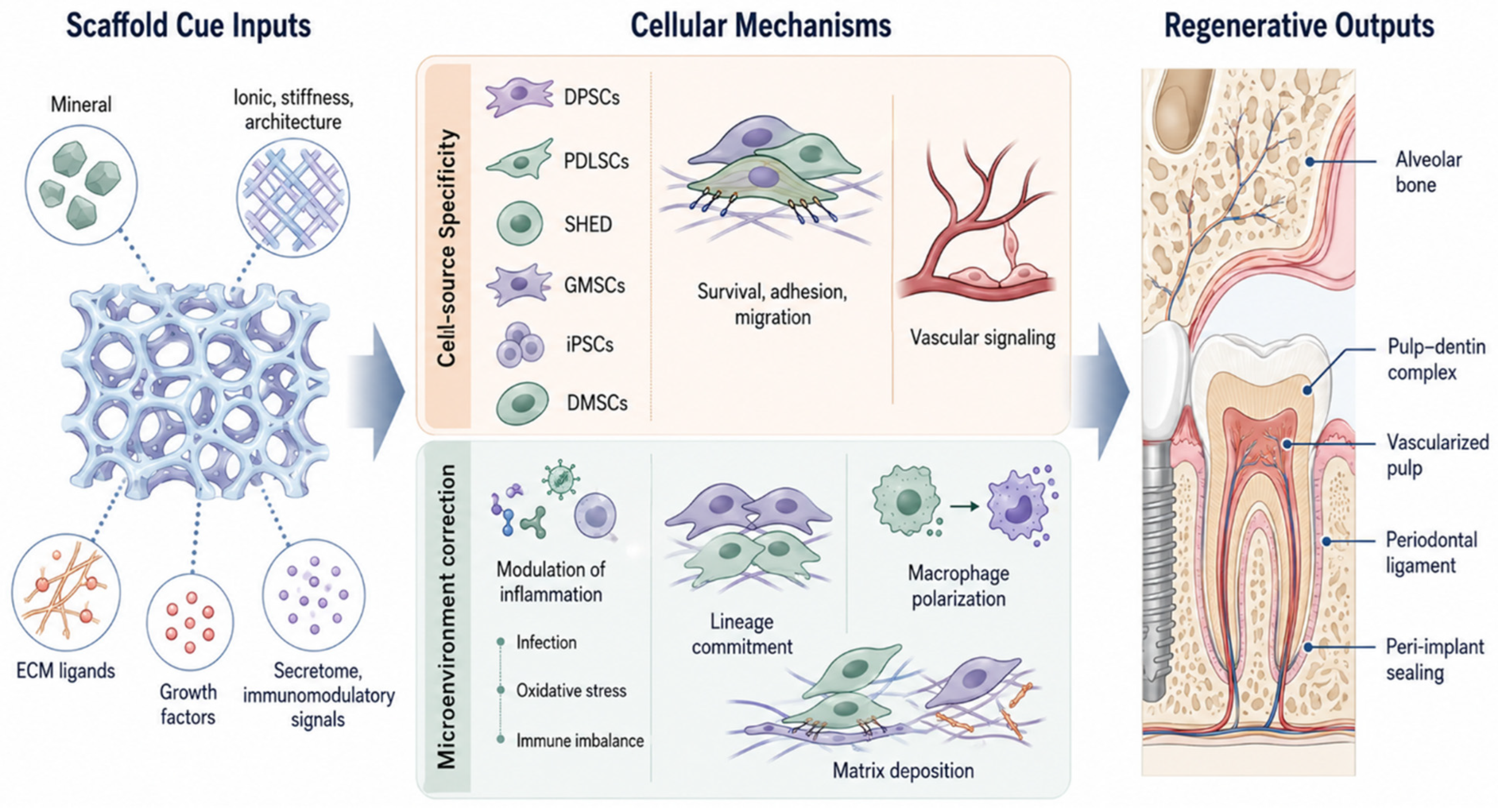
Smart Hydrogels for Craniofacial Regeneration


Abstract
1. Introduction
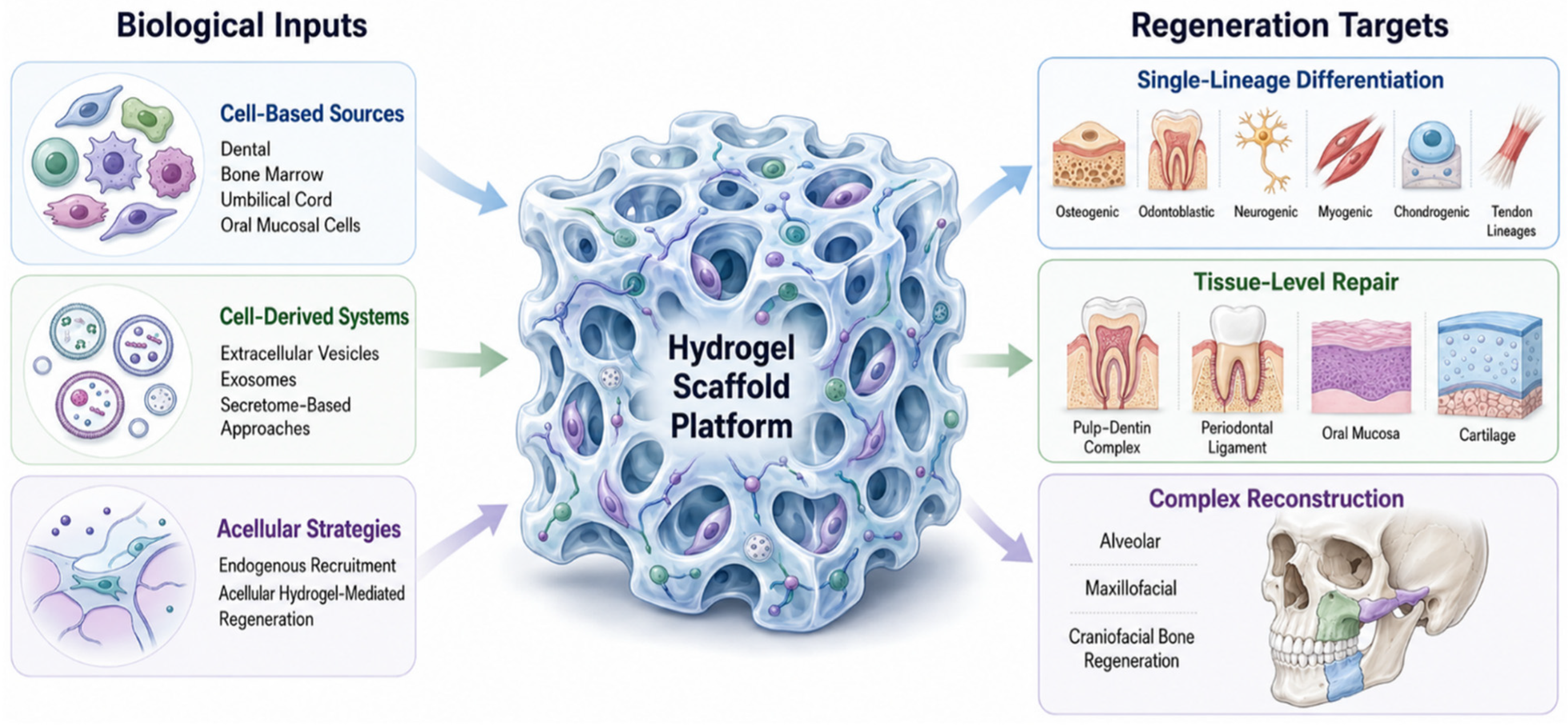
2. Cell Source, Biological Objective, and Target Lineage
2.1. Dental Pulp, Apical Papilla, and Deciduous Tooth-Derived Systems
2.2. Periodontal Ligament and Periodontal Complex-Derived Systems
2.3. Gingival and Oral Soft-Tissue-Derived Systems
2.4. Bone Marrow, Jawbone, Umbilical Cord, Endothelial, and Oral Mucosal Systems
2.5. Cell-Free, Acellular, and Broad Biological-Regeneration Targets
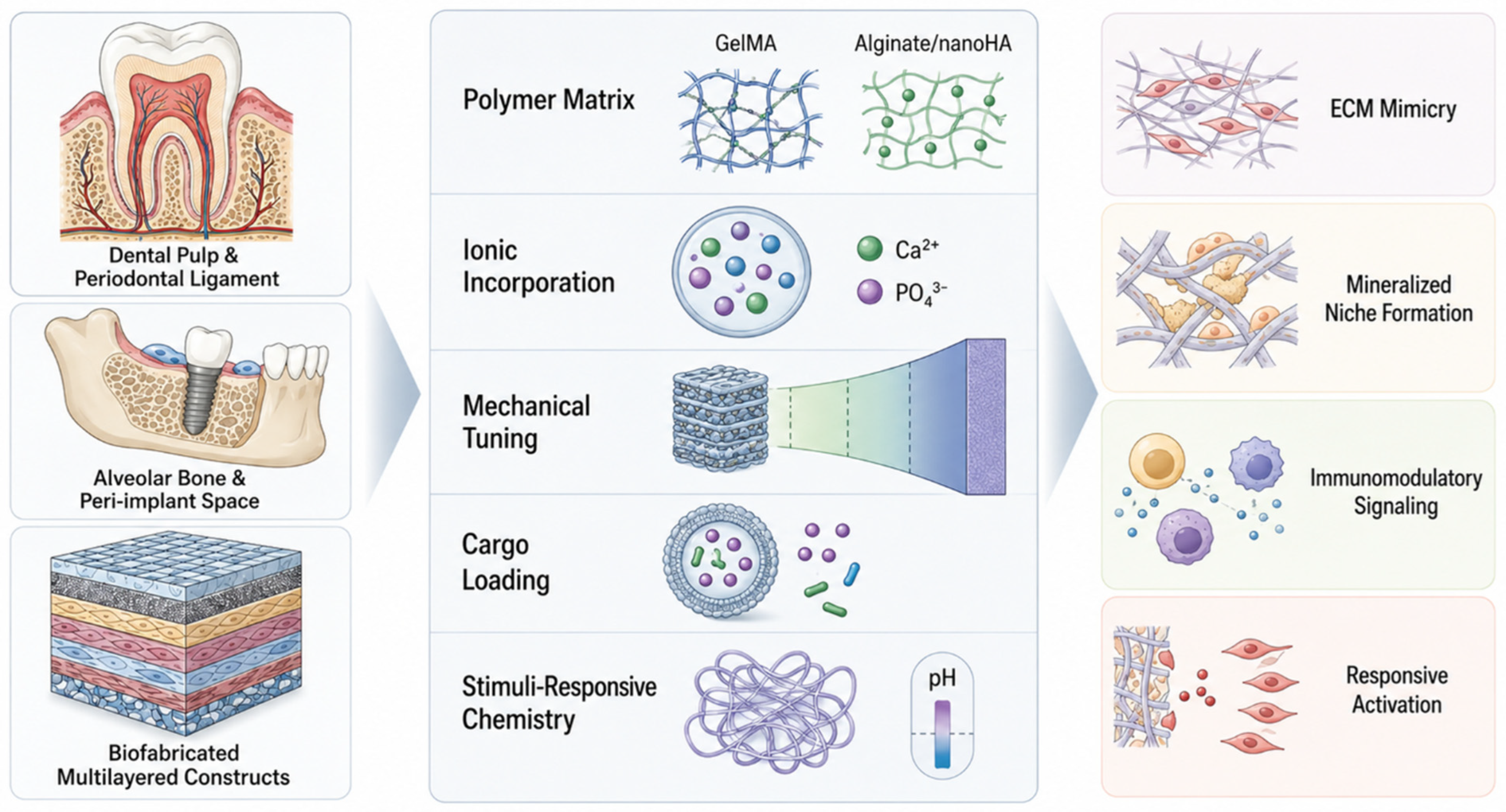
3. Hydrogel/Scaffold Composition and Bioactive Microenvironment
3.1. Alginate-Based and Mineralized Craniofacial Hydrogel Systems
3.2. Chitosan and Polysaccharide-Based Injectable or Release Systems
3.3. Peptide, Collagen, Fibrin, and Platelet-Derived Matrices
3.4. PEG, GelMA, Hyaluronic Acid, and Semisynthetic Tunable Hydrogels
3.5. Responsive, Conductive, Ionic, and Hierarchically Organized Scaffolds
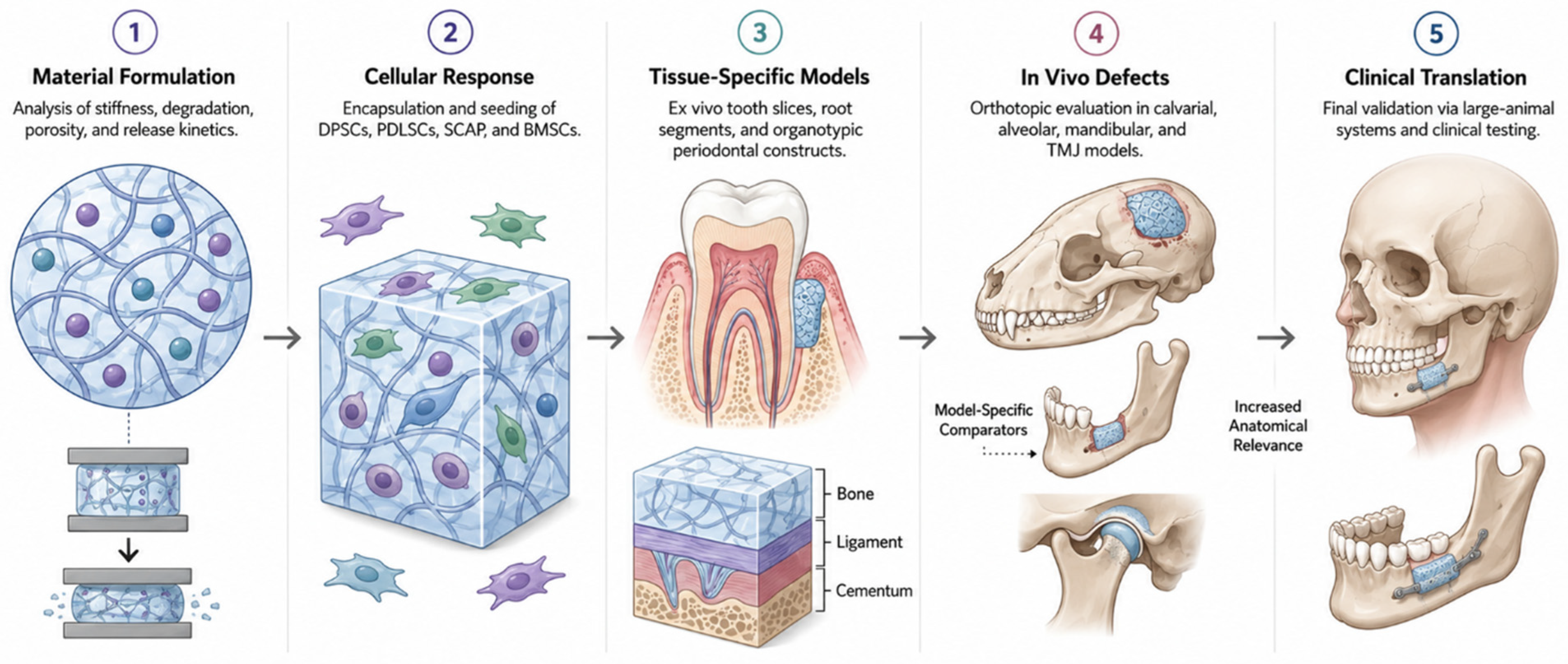
4. Experimental Model, Controls, and Analytical Methods
4.1. Experimental Model Hierarchy
4.2. Controls, Comparators, and Technical Design Features
4.3. Analytical Methods and Time Points
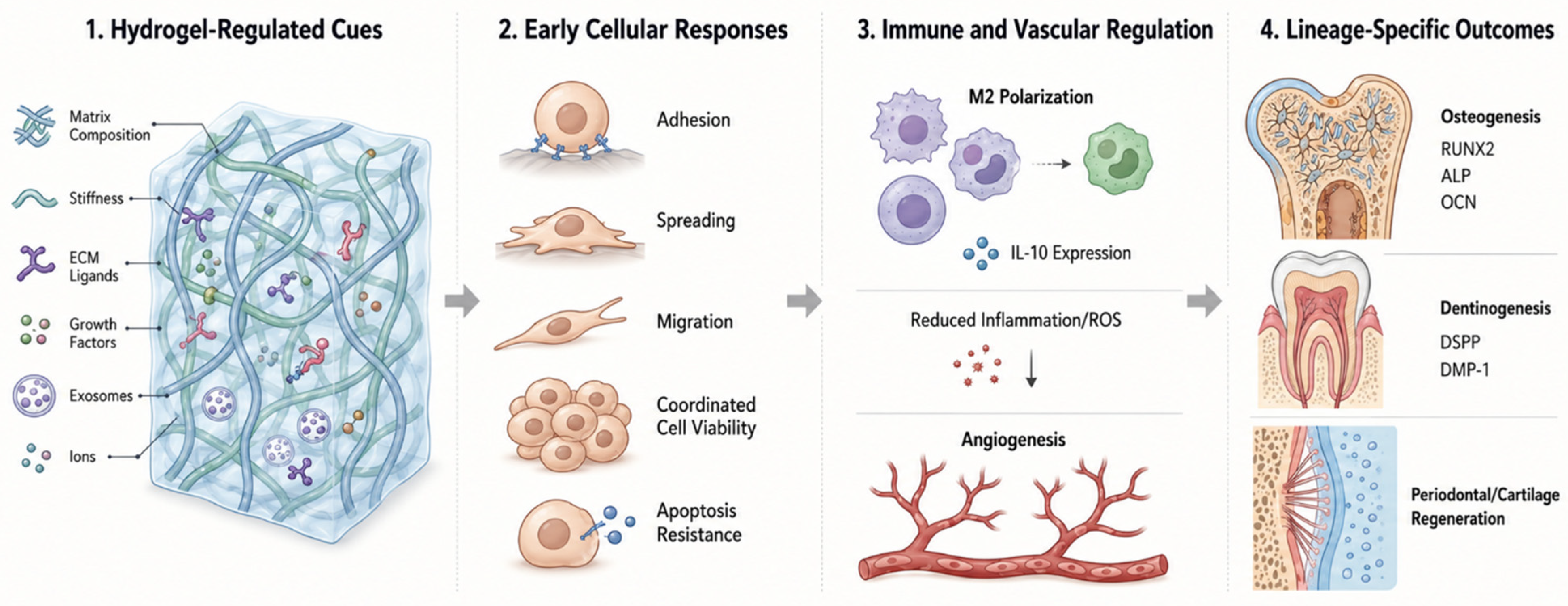
5. Cellular, Molecular, and Tissue-Level Outcomes
5.1. Cell Viability, Proliferation, Adhesion, and Early Cell–Matrix Behavior
5.2. Osteogenic Differentiation, Mineralization, and Craniofacial Bone Formation
5.3. Pulp–Dentin Complex and Vascularized Pulp-like Tissue Formation
5.4. Periodontal Complex, Cementum, Ligament, and Implant-Interface Outcomes
5.5. Immunomodulation, Inflammation Control, Angiogenesis, and Osteoimmune Regulation
5.6. Non-Osteogenic Lineage Differentiation and Craniofacial Soft-Tissue Outcomes
5.7. Context-Dependent and Comparative Biological Responses
6. Mechanistic Interpretation and Regenerative Significance
6.1. Mineralized and Ionic Hydrogel Niches
6.2. Matrix Mechanics, Architecture, and ECM-Mediated Cell Interaction
6.3. Bioactive Signaling Depots and Lineage-Specific Instruction
6.4. Immunomodulatory, Antioxidant, Antimicrobial, and Disease-Responsive Microenvironments
6.5. Vesicle, Secretome, and Gene-Enhanced Hydrogel Systems
6.6. Vascularized Pulp, Periodontal Patterning, and Cell-Source Specificity
7. Limitations and Future Perspectives
8. Conclusions
Author Contributions
Funding
Data Availability Statement
Acknowledgments
Conflicts of Interest
Abbreviations
References
- Alipour, M.; Firouzi, N.; Aghazadeh, Z.; Samiei, M.; Montazersaheb, S.; Khoshfetrat, A.B.; Aghazadeh, M. The osteogenic differentiation of human dental pulp stem cells in alginate-gelatin/Nano-hydroxyapatite microcapsules. BMC Biotechnol. 2021, 21, 6. [Google Scholar] [CrossRef] [Scilit]
- Cavalcanti, B.N.; Zeitlin, B.D.; Nör, J.E. A hydrogel scaffold that maintains viability and supports differentiation of dental pulp stem cells. Dent. Mater. 2013, 29, 97–102. [Google Scholar] [CrossRef] [Scilit]
- Galler, K.M.; Cavender, A.C.; Koeklue, U.; Suggs, L.J.; Schmalz, G.; D’Souza, R.N. Bioengineering of dental stem cells in a PEGylated fibrin gel. Regen. Med. 2011, 6, 191–200. [Google Scholar] [CrossRef] [Scilit] [PubMed]
- Han, Y.; Xu, J.; Chopra, H.; Zhang, Z.; Dubey, N.; Dissanayaka, W.L.; Nör, J.E.; Bottino, M.C. Injectable Tissue-Specific Hydrogel System for Pulp-Dentin Regeneration. J. Dent. Res. 2024, 103, 398–408. [Google Scholar] [CrossRef] [Scilit]
- Khayat, A.; Monteiro, N.; Smith, E.E.; Pagni, S.; Zhang, W.; Khademhosseini, A.; Yelick, P.C. GelMA-Encapsulated hDPSCs and HUVECs for Dental Pulp Regeneration. J. Dent. Res. 2017, 96, 192–199. [Google Scholar] [CrossRef] [Scilit] [PubMed]
- Tsukamoto, J.; Naruse, K.; Nagai, Y.; Kan, S.; Nakamura, N.; Hata, M.; Omi, M.; Hayashi, T.; Kawai, T.; Matsubara, T. (*) Efficacy of a Self-Assembling Peptide Hydrogel, SPG-178-Gel, for Bone Regeneration and Three-Dimensional Osteogenic Induction of Dental Pulp Stem Cells. Tissue Eng. Part A 2017, 23, 1394–1402. [Google Scholar] [CrossRef] [Scilit]
- Wang, W.; Zhu, Y.; Li, J.; Geng, T.; Jia, J.; Wang, X.; Yuan, C.; Wang, P. Bioprinting EphrinB2-Modified Dental Pulp Stem Cells with Enhanced Osteogenic Capacity for Alveolar Bone Engineering. Tissue Eng. Part A 2023, 29, 244–255. [Google Scholar] [CrossRef] [Scilit]
- Yu, H.; Zhang, X.; Song, W.; Pan, T.; Wang, H.; Ning, T.; Wei, Q.; Xu, H.H.K.; Wu, B.; Ma, D. Effects of 3-dimensional Bioprinting alginate/Gelatin Hydrogel Scaffold Extract on Proliferation and Differentiation of Human Dental Pulp Stem Cells. J. Endod. 2019, 45, 706–715. [Google Scholar] [CrossRef] [Scilit]
- Zhang, R.; Xie, L.; Wu, H.; Yang, T.; Zhang, Q.; Tian, Y.; Liu, Y.; Han, X.; Guo, W.; He, M.; et al. Alginate/laponite hydrogel microspheres co-encapsulating dental pulp stem cells and VEGF for endodontic regeneration. Acta Biomater. 2020, 113, 305–316. [Google Scholar] [CrossRef] [Scilit]
- Zhao, Y.; Song, L.; Li, M.; Peng, H.; Qiu, X.; Li, Y.; Zhu, B.; Liu, C.; Ren, S.; Miao, L. Injectable CNPs/DMP1-loaded self-assembly hydrogel regulating inflammation of dental pulp stem cells for dentin regeneration. Mater. Today Bio 2024, 24, 100907. [Google Scholar] [CrossRef] [Scilit] [PubMed]
- Zhu, L.; Dissanayaka, W.L.; Zhang, C. Dental pulp stem cells overexpressing stromal-derived factor-1α and vascular endothelial growth factor in dental pulp regeneration. Clin. Oral Investig. 2019, 23, 2497–2509. [Google Scholar] [CrossRef] [Scilit]
- Ammar, M.M.; Waly, G.H.; Saniour, S.H.; Moussa, T.A. Growth factor release and enhanced encapsulated periodontal stem cells viability by freeze-dried platelet concentrate loaded thermo-sensitive hydrogel for periodontal regeneration. Saudi Dent. J. 2018, 30, 355–364. [Google Scholar] [CrossRef] [Scilit]
- Ansari, S.; Diniz, I.M.; Chen, C.; Sarrion, P.; Tamayol, A.; Wu, B.M.; Moshaverinia, A. Human Periodontal Ligament- and Gingiva-derived Mesenchymal Stem Cells Promote Nerve Regeneration When Encapsulated in alginate/Hyaluronic Acid 3D Scaffold. Adv. Healthc. Mater. 2017, 6, 1700670. [Google Scholar] [CrossRef] [Scilit]
- Lan, X.; Wang, Y.; Yin, M. Enhancing Periodontal Ligament Regeneration via PDLSC Delivery Using Electrospun PCL/Collagen/Cellulose Acetate Scaffolds and Collagen Hydrogel Incorporated with Curcumin-Loaded ZIF-8 Nanoparticles. Int. J. Nanomed. 2025, 20, 887–906. [Google Scholar] [CrossRef] [Scilit]
- Moshaverinia, A.; Xu, X.; Chen, C.; Akiyama, K.; Snead, M.L.; Shi, S. Dental mesenchymal stem cells encapsulated in an lginate hydrogel co-delivery microencapsulation system for cartilage regeneration. Acta Biomater. 2013, 9, 9343–9350. [Google Scholar] [CrossRef] [Scilit]
- Moshaverinia, A.; Chen, C.; Xu, X.; Akiyama, K.; Ansari, S.; Zadeh, H.H.; Shi, S. Bone regeneration potential of stem cells derived from periodontal ligament or gingival tissue sources encapsulated in RGD-modified alginate scaffold. Tissue Eng. Part A 2014, 20, 611–621. [Google Scholar] [CrossRef] [Scilit] [PubMed]
- Moshaverinia, A.; Xu, X.; Chen, C.; Ansari, S.; Zadeh, H.H.; Snead, M.L.; Shi, S. Application of stem cells derived from the periodontal ligament or gingival tissue sources for tendon tissue regeneration. Biomaterials 2014, 35, 2642–2650. [Google Scholar] [CrossRef] [Scilit] [PubMed]
- Sowmya, S.; Mony, U.; Jayachandran, P.; Reshma, S.; Kumar, R.A.; Arzate, H.; Nair, S.V.; Jayakumar, R. Tri-Layered Nanocomposite Hydrogel Scaffold for the Concurrent Regeneration of Cementum, Periodontal Ligament, and Alveolar Bone. Adv. Healthc. Mater. 2017, 6, 1601251. [Google Scholar] [CrossRef] [Scilit] [PubMed]
- Wang, P.; Wang, W.; Geng, T.; Liu, Y.; Zhu, S.; Liu, Z.; Yuan, C. EphrinB2 regulates osteogenic differentiation of periodontal ligament stem cells and alveolar bone defect regeneration in beagles. J. Tissue Eng. 2019, 10, 2041731419894361. [Google Scholar] [CrossRef] [Scilit] [PubMed]
- Wang, Z.S.; Feng, Z.H.; Wu, G.F.; Bai, S.Z.; Dong, Y.; Chen, F.M.; Zhao, Y.M. The use of platelet-rich fibrin combined with periodontal ligament and jaw bone mesenchymal stem cell sheets for periodontal tissue engineering. Sci. Rep. 2016, 6, 28126. [Google Scholar] [CrossRef] [Scilit]
- Yin, J.; Lei, Q.; Luo, X.; Jiang, T.; Zou, X.; Schneider, A.; Xu, H.H.K.; Zhao, L.; Ma, D. Degradable hydrogel fibers encapsulate and deliver metformin and periodontal ligament stem cells for dental and periodontal regeneration. J. Appl. Oral Sci. 2023, 31, e20220447. [Google Scholar] [CrossRef] [Scilit]
- Zhao, Q.; Li, G.; Wang, T.; Jin, Y.; Lu, W.; Ji, J. Human Periodontal Ligament Stem Cells Transplanted with Nanohydroxyapatite/Chitosan/Gelatin 3D Porous Scaffolds Promote Jaw Bone Regeneration in Swine. Stem Cells Dev. 2021, 30, 548–559. [Google Scholar] [CrossRef] [Scilit] [PubMed]
- Ansari, S.; Chen, C.; Xu, X.; Annabi, N.; Zadeh, H.H.; Wu, B.M.; Khademhosseini, A.; Shi, S.; Moshaverinia, A. Muscle Tissue Engineering Using Gingival Mesenchymal Stem Cells Encapsulated in alginate Hydrogels Containing Multiple Growth Factors. Ann. Biomed. Eng. 2016, 44, 1908–1920. [Google Scholar] [CrossRef] [Scilit] [PubMed]
- Balaban, Y.E.; Akbaba, S.; Bozkurt, S.B.; Buyuksungur, A.; Akgun, E.E.; Gonen, Z.B.; Salkin, H.; Tezcaner, A.; Hakki, S.S. Local application of gingiva-derived mesenchymal stem cells on experimental periodontitis in rats. J. Periodontol. 2024, 95, 456–468. [Google Scholar] [CrossRef] [Scilit] [PubMed]
- Fawzy El-Sayed, K.M.; Mekhemar, M.K.; Beck-Broichsitter, B.E.; Bähr, T.; Hegab, M.; Receveur, J.; Heneweer, C.; Becker, S.T.; Wiltfang, J.; Dörfer, C.E. Periodontal regeneration employing gingival margin-derived stem/progenitor cells in conjunction with IL-1ra-hydrogel synthetic extracellular matrix. J. Clin. Periodontol. 2015, 42, 448–457. [Google Scholar] [CrossRef] [Scilit]
- Kandalam, U.; Kawai, T.; Ravindran, G.; Brockman, R.; Romero, J.; Munro, M.; Ortiz, J.; Heidari, A.; Thomas, R.; Kuriakose, S.; et al. Predifferentiated Gingival Stem Cell-Induced Bone Regeneration in Rat Alveolar Bone Defect Model. Tissue Eng. Part A 2021, 27, 424–436. [Google Scholar] [CrossRef] [Scilit]
- Li, J.; Yin, X.; Luan, Q. Comparative study of periodontal differentiation propensity of induced pluripotent stem cells from different tissue origins. J. Periodontol. 2018, 89, 1230–1240. [Google Scholar] [CrossRef] [Scilit]
- Li, Y.; Zhang, J.; Wang, C.; Jiang, Z.; Lai, K.; Wang, Y.; Yang, G. Porous composite hydrogels with improved MSC survival for robust epithelial sealing around implants and M2 macrophage polarization. Acta Biomater. 2023, 157, 108–123. [Google Scholar] [CrossRef] [Scilit]
- Ni, J.; Li, M.; Li, C.; Zhong, Z.; Xi, H.; Wu, Y. Stem-cell based soft tissue substitutes: Engineering of crosslinked polylysine-hyaluronic acid microspheres ladened with gingival mesenchymal stem cells for collagen tissue regeneration and angiogenesis. J. Periodontol. 2023, 94, 1436–1449. [Google Scholar] [CrossRef] [Scilit]
- Okawa, H.; Kayashima, H.; Sasaki, J.; Miura, J.; Kamano, Y.; Kosaka, Y.; Imazato, S.; Yatani, H.; Matsumoto, T.; Egusa, H. Scaffold-Free Fabrication of Osteoinductive Cellular Constructs Using Mouse Gingiva-Derived Induced Pluripotent Stem Cells. Stem Cells Int. 2016, 2016, 6240794. [Google Scholar] [CrossRef] [Scilit]
- Pouraghaei Sevari, S.; Kim, J.K.; Chen, C.; Nasajpour, A.; Wang, C.Y.; Krebsbach, P.H.; Khademhosseini, A.; Ansari, S.; Weiss, P.S.; Moshaverinia, A. Whitlockite-Enabled Hydrogel for Craniofacial Bone Regeneration. ACS Appl. Mater. Interfaces 2021, 13, 35342–35355. [Google Scholar] [CrossRef] [Scilit] [PubMed]
- Wang, W.; Wang, A.; Hu, G.; Bian, M.; Chen, L.; Zhao, Q.; Sun, W.; Wu, Y. Potential of an Aligned Porous Hydrogel Scaffold Combined with Periodontal Ligament Stem Cells or Gingival Mesenchymal Stem Cells to Promote Tissue Regeneration in Rat Periodontal Defects. ACS Biomater. Sci. Eng. 2023, 9, 1961–1975. [Google Scholar] [CrossRef] [Scilit] [PubMed]
- Anitua, E.; Zalduendo, M.; Troya, M.; Erezuma, I.; Lukin, I.; Hernáez-Moya, R.; Orive, G. Composite alginate-gelatin hydrogels incorporating PRGF enhance human dental pulp cell adhesion, chemotaxis and proliferation. Int. J. Pharm. 2022, 617, 121631. [Google Scholar] [CrossRef] [Scilit]
- Ansari, S.; Sarrion, P.; Hasani-Sadrabadi, M.M.; Aghaloo, T.; Wu, B.M.; Moshaverinia, A. Regulation of the fate of dental-derived mesenchymal stem cells using engineered alginate-GelMA hydrogels. J. Biomed. Mater. Res. A 2017, 105, 2957–2967. [Google Scholar] [CrossRef] [Scilit] [PubMed]
- Arpornmaeklong, P.; Sareethammanuwat, M.; Apinyauppatham, K.; Boonyuen, S. Characteristics and biologic effects of thermosensitive quercetin-chitosan/collagen hydrogel on human periodontal ligament stem cells. J. Biomed. Mater. Res. B Appl. Biomater. 2021, 109, 1656–1670. [Google Scholar] [CrossRef] [Scilit]
- Chen, Y.; Zhang, F.; Fu, Q.; Liu, Y.; Wang, Z.; Qi, N. In vitro proliferation and osteogenic differentiation of human dental pulp stem cells in injectable thermo-sensitive chitosan/β-glycerophosphate/hydroxyapatite hydrogel. J. Biomater. Appl. 2016, 31, 317–327. [Google Scholar] [CrossRef] [Scilit]
- Divband, B.; Aghazadeh, M.; Al-Qaim, Z.H.; Samiei, M.; Hussein, F.H.; Shaabani, A.; Shahi, S.; Sedghi, R. Bioactive chitosan biguanidine-based injectable hydrogels as a novel BMP-2 and VEGF carrier for osteogenesis of dental pulp stem cells. Carbohydr. Polym. 2021, 273, 118589. [Google Scholar] [CrossRef] [Scilit]
- Ferjaoui, Z.; López-Muñoz, R.; Akbari, S.; Chandad, F.; Mantovani, D.; Rouabhia, M.; Rouabhia, D.F. Design of alginate/Gelatin Hydrogels for Biomedical Applications: Fine-Tuning Osteogenesis in Dental Pulp Stem Cells While Preserving Other Cell Behaviors. Biomedicines 2024, 12, 1510. [Google Scholar] [CrossRef] [Scilit]
- Galler, K.M.; Hartgerink, J.D.; Cavender, A.C.; Schmalz, G.; D’Souza, R.N. A customized self-assembling peptide hydrogel for dental pulp tissue engineering. Tissue Eng. Part A 2012, 18, 176–184. [Google Scholar] [CrossRef] [Scilit]
- Gaudin, A.; Tolar, M.; Peters, O.A. Cytokine Production and Cytotoxicity of Calcium Silicate-based Sealers in 2- and 3-dimensional Cell Culture Models. J. Endod. 2020, 46, 818–826. [Google Scholar] [CrossRef] [Scilit]
- Ghandforoushan, P.; Hanaee, J.; Aghazadeh, Z.; Samiei, M.; Navali, A.M.; Khatibi, A.; Davaran, S. Novel nanocomposite scaffold based on gelatin/PLGA-PEG-PLGA hydrogels embedded with TGF-β1 for chondrogenic differentiation of human dental pulp stem cells in vitro. Int. J. Biol. Macromol. 2022, 201, 270–287. [Google Scholar] [CrossRef] [Scilit]
- Han, B.; Cao, C.; Wang, A.; Zhao, Y.; Jin, M.; Wang, Y.; Chen, S.; Yu, M.; Yang, Z.; Qu, X.; et al. Injectable Double-Network Hydrogel-Based Three-Dimensional Cell Culture Systems for Regenerating Dental Pulp. ACS Appl. Mater. Interfaces 2023, 15, 7821–7832. [Google Scholar] [CrossRef] [Scilit]
- Jones, T.D.; Kefi, A.; Sun, S.; Cho, M.; Alapati, S.B. An Optimized Injectable Hydrogel Scaffold Supports Human Dental Pulp Stem Cell Viability and Spreading. Adv. Med. 2016, 2016, 7363579. [Google Scholar] [CrossRef] [Scilit]
- La Gatta, A.; Tirino, V.; Cammarota, M.; La Noce, M.; Stellavato, A.; Pirozzi, A.V.A.; Portaccio, M.; Diano, N.; Laino, L.; Papaccio, G.; et al. Gelatin-biofermentative unsulfated glycosaminoglycans semi-interpenetrating hydrogels via microbial-transglutaminase crosslinking enhance osteogenic potential of dental pulp stem cells. Regen. Biomater. 2021, 8, rbaa052. [Google Scholar] [CrossRef] [Scilit]
- La Noce, M.; Stellavato, A.; Vassallo, V.; Cammarota, M.; Laino, L.; Desiderio, V.; Del Vecchio, V.; Nicoletti, G.F.; Tirino, V.; Papaccio, G.; et al. Hyaluronan-Based Gel Promotes Human Dental Pulp Stem Cells Bone Differentiation by Activating YAP/TAZ Pathway. Cells 2021, 10, 2899. [Google Scholar] [CrossRef] [Scilit] [PubMed]
- Ma, Y.; Ji, Y.; Huang, G.; Ling, K.; Zhang, X.; Xu, F. Bioprinting 3D cell-laden hydrogel microarray for screening human periodontal ligament stem cell response to extracellular matrix. Biofabrication 2015, 7, 044105. [Google Scholar] [CrossRef] [Scilit] [PubMed]
- Qiu, G.; Huang, M.; Liu, J.; Ma, T.; Schneider, A.; Oates, T.W.; Lynch, C.D.; Weir, M.D.; Zhang, K.; Zhao, L.; et al. Human periodontal ligament stem cell encapsulation in alginate-fibrin-platelet lysate microbeads for dental and craniofacial regeneration. J. Dent. 2022, 124, 104219. [Google Scholar] [CrossRef] [Scilit]
- Samiei, M.; Dalir Abdollahinia, E.; Amiryaghoubi, N.; Fathi, M.; Barar, J.; Omidi, Y. Injectable thermosensitive chitosan/gelatin hydrogel for dental pulp stem cells proliferation and differentiation. Bioimpacts 2023, 13, 63–72. [Google Scholar] [CrossRef] [Scilit]
- Wang, L.; Zhang, C.; Li, C.; Weir, M.D.; Wang, P.; Reynolds, M.A.; Zhao, L.; Xu, H.H. Injectable calcium phosphate with hydrogel fibers encapsulating induced pluripotent, dental pulp and bone marrow stem cells for bone repair. Mater. Sci. Eng. C Mater. Biol. Appl. 2016, 69, 1125–1136. [Google Scholar] [CrossRef] [Scilit] [PubMed]
- Zhou, H.; Xu, H.H. The fast release of stem cells from alginate-fibrin microbeads in injectable scaffolds for bone tissue engineering. Biomaterials 2011, 32, 7503–7513. [Google Scholar] [CrossRef] [Scilit]
- Barros, J.; Ferraz, M.P.; Azeredo, J.; Fernandes, M.H.; Gomes, P.S.; Monteiro, F.J. Alginate-nanohydroxyapatite hydrogel system: Optimizing the formulation for enhanced bone regeneration. Mater. Sci. Eng. C Mater. Biol. Appl. 2019, 105, 109985. [Google Scholar] [CrossRef] [Scilit] [PubMed]
- Lin, Z.; Wu, J.; Qiao, W.; Zhao, Y.; Wong, K.H.M.; Chu, P.K.; Bian, L.; Wu, S.; Zheng, Y.; Cheung, K.M.C.; et al. Precisely controlled delivery of magnesium ions thru sponge-like monodisperse PLGA/nano-MgO-alginate core-shell microsphere device to enable in-situ bone regeneration. Biomaterials 2018, 174, 1–16. [Google Scholar] [CrossRef] [Scilit]
- Zhou, H.; He, Z.; Cao, Y.; Chu, L.; Liang, B.; Yu, K.; Deng, Z. An injectable magnesium-loaded hydrogel releases hydrogen to promote osteoporotic bone repair via ROS scavenging and immunomodulation. Theranostics 2024, 14, 3739–3759. [Google Scholar] [CrossRef] [Scilit]
- Liang, C.; Wang, G.; Liang, C.; Li, M.; Sun, Y.; Tian, W.; Liao, L. Hierarchically patterned triple-layered gelatin-based electrospun membrane functionalized by cell-specific extracellular matrix for periodontal regeneration. Dent. Mater. 2024, 40, 90–101. [Google Scholar] [CrossRef] [Scilit]
- Yu, T.; Zhang, L.; Dou, X.; Bai, R.; Wang, H.; Deng, J.; Zhang, Y.; Sun, Q.; Li, Q.; Wang, X.; et al. Mechanically Robust Hydrogels Facilitating Bone Regeneration through Epigenetic Modulation. Adv. Sci. 2022, 9, e2203734. [Google Scholar] [CrossRef] [Scilit]
- Diniz, I.M.; Chen, C.; Ansari, S.; Zadeh, H.H.; Moshaverinia, M.; Chee, D.; Marques, M.M.; Shi, S.; Moshaverinia, A. Gingival Mesenchymal Stem Cell (GMSC) Delivery System Based on RGD-Coupled alginate Hydrogel with Antimicrobial Properties: A Novel Treatment Modality for Peri-Implantitis. J. Prosthodont. 2016, 25, 105–115. [Google Scholar] [CrossRef] [Scilit]
- Fang, X.; Wang, J.; Ye, C.; Lin, J.; Ran, J.; Jia, Z.; Gong, J.; Zhang, Y.; Xiang, J.; Lu, X.; et al. Polyphenol-mediated redox-active hydrogel with H(2)S gaseous-bioelectric coupling for periodontal bone healing in diabetes. Nat. Commun. 2024, 15, 9071. [Google Scholar] [CrossRef] [Scilit] [PubMed]
- He, X.; Chu, X.Y.; Chen, X.; Xiang, Y.L.; Li, Z.L.; Gao, C.Y.; Luan, Y.Y.; Yang, K.; Zhang, D.L. Dental pulp stem cell-derived extracellular vesicles loaded with hydrogels promote osteogenesis in rats with alveolar bone defects. Mol. Med. Rep. 2025, 31, 29. [Google Scholar] [CrossRef] [Scilit] [PubMed]
- Li, Z.; Li, G.; Xu, J.; Li, C.; Han, S.; Zhang, C.; Wu, P.; Lin, Y.; Wang, C.; Zhang, J.; et al. Hydrogel Transformed from Nanoparticles for Prevention of Tissue Injury and Treatment of Inflammatory Diseases. Adv. Mater. 2022, 34, e2109178. [Google Scholar] [CrossRef] [Scilit]
- Liu, S.; Wang, Y.N.; Ma, B.; Shao, J.; Liu, H.; Ge, S. Gingipain-Responsive Thermosensitive Hydrogel Loaded with SDF-1 Facilitates In Situ Periodontal Tissue Regeneration. ACS Appl. Mater. Interfaces 2021, 13, 36880–36893. [Google Scholar] [CrossRef] [Scilit]
- Ma, J.; Li, J.; Wei, S.; Ge, Q.; Wu, J.; Xue, L.; Qi, Y.; Xu, S.; Jin, H.; Gao, C.; et al. Delivery of dental pulp stem cells by an injectable ROS-responsive hydrogel promotes temporomandibular joint cartilage repair via enhancing anti-apoptosis and regulating microenvironment. J. Tissue Eng. 2024, 15, 1–17. [Google Scholar] [CrossRef] [Scilit]
- Park, S.H.; Kwon, J.S.; Lee, B.S.; Park, J.H.; Lee, B.K.; Yun, J.H.; Lee, B.Y.; Kim, J.H.; Min, B.H.; Yoo, T.H.; et al. BMP2-modified injectable hydrogel for osteogenic differentiation of human periodontal ligament stem cells. Sci. Rep. 2017, 7, 6603. [Google Scholar] [CrossRef] [Scilit]
- Shen, Z.; Kuang, S.; Zhang, Y.; Yang, M.; Qin, W.; Shi, X.; Lin, Z. Chitosan hydrogel incorporated with dental pulp stem cell-derived exosomes alleviates periodontitis in mice via a macrophage-dependent mechanism. Bioact. Mater. 2020, 5, 1113–1126. [Google Scholar] [CrossRef] [Scilit]
- Su, Y.; Ai, S.; Shen, Y.; Cheng, W.; Xu, C.; Sui, L.; Zhao, Y. Regulatory Effects of Three-Dimensional Cultured Lipopolysaccharide-Pretreated Periodontal Ligament Stem Cell-Derived Secretome on Macrophages. Int. J. Mol. Sci. 2023, 24, 6981. [Google Scholar] [CrossRef] [Scilit]
- Wang, L.; Wei, X.; He, X.; Xiao, S.; Shi, Q.; Chen, P.; Lee, J.; Guo, X.; Liu, H.; Fan, Y. Osteoinductive Dental Pulp Stem Cell-Derived Extracellular Vesicle-Loaded Multifunctional Hydrogel for Bone Regeneration. ACS Nano 2024, 18, 8777–8797. [Google Scholar] [CrossRef] [Scilit]
- Wang, Y.; Jin, S.; Guo, Y.; Zhu, L.; Lu, Y.; Li, J.; Heng, B.C.; Liu, Y.; Deng, X. Cordycepin-Loaded Dental Pulp Stem Cell-Derived Exosomes Promote Aged Bone Repair by Rejuvenating Senescent Mesenchymal Stem Cells and Endothelial Cells. Adv. Healthc. Mater. 2025, 14, e2402909. [Google Scholar] [CrossRef] [Scilit] [PubMed]
- Yu, Y.; Li, X.; Ying, Q.; Zhang, Z.; Liu, W.; Su, J. Synergistic Effects of Shed-Derived Exosomes, Cu2+, and an Injectable Hyaluronic Acid Hydrogel on Antibacterial, Anti-inflammatory, and Osteogenic Activity for Periodontal Bone Regeneration. ACS Appl. Mater. Interfaces 2024, 16, 33053–33069. [Google Scholar] [CrossRef] [Scilit] [PubMed]
- Zhang, J.; Tong, D.; Song, H.; Ruan, R.; Sun, Y.; Lin, Y.; Wang, J.; Hou, L.; Dai, J.; Ding, J.; et al. Osteoimmunity-Regulating Biomimetically Hierarchical Scaffold for Augmented Bone Regeneration. Adv. Mater. 2022, 34, e2202044. [Google Scholar] [CrossRef] [Scilit]
- Zhao, Y.; Gong, Y.; Liu, X.; He, J.; Zheng, B.; Liu, Y. The Experimental Study of Periodontal Ligament Stem Cells Derived Exosomes with Hydrogel Accelerating Bone Regeneration on Alveolar Bone Defect. Pharmaceutics 2022, 14, 2189. [Google Scholar] [CrossRef] [Scilit] [PubMed]
- Chamieh, F.; Collignon, A.M.; Coyac, B.R.; Lesieur, J.; Ribes, S.; Sadoine, J.; Llorens, A.; Nicoletti, A.; Letourneur, D.; Colombier, M.L.; et al. Accelerated craniofacial bone regeneration through dense collagen gel scaffolds seeded with dental pulp stem cells. Sci. Rep. 2016, 6, 38814. [Google Scholar] [CrossRef] [Scilit]
- Chen, L.; Shen, R.; Komasa, S.; Xue, Y.; Jin, B.; Hou, Y.; Okazaki, J.; Gao, J. Drug-Loadable Calcium alginate Hydrogel System for Use in Oral Bone Tissue Repair. Int. J. Mol. Sci. 2017, 18, 989. [Google Scholar] [CrossRef] [Scilit] [PubMed]
- Gothard, D.; Smith, E.L.; Kanczler, J.M.; Black, C.R.; Wells, J.A.; Roberts, C.A.; White, L.J.; Qutachi, O.; Peto, H.; Rashidi, H.; et al. In Vivo Assessment of Bone Regeneration in alginate/Bone ECM Hydrogels with Incorporated Skeletal Stem Cells and Single Growth Factors. PLoS ONE 2015, 10, e0145080. [Google Scholar] [CrossRef] [Scilit] [PubMed]
- Hasani-Sadrabadi, M.M.; Sarrion, P.; Pouraghaei, S.; Chau, Y.; Ansari, S.; Li, S.; Aghaloo, T.; Moshaverinia, A. An engineered cell-laden adhesive hydrogel promotes craniofacial bone tissue regeneration in rats. Sci. Transl. Med. 2020, 12, eaay6853. [Google Scholar] [CrossRef] [Scilit]
- Lekic, P.C.; Rajshankar, D.; Chen, H.; Tenenbaum, H.; McCulloch, C.A. Transplantation of labeled periodontal ligament cells promotes regeneration of alveolar bone. Anat. Rec. 2001, 262, 193–202. [Google Scholar] [CrossRef]
- Moshaverinia, A.; Chen, C.; Akiyama, K.; Xu, X.; Chee, W.W.; Schricker, S.R.; Shi, S. Encapsulated dental-derived mesenchymal stem cells in an injectable and biodegradable scaffold for applications in bone tissue engineering. J. Biomed. Mater. Res. A 2013, 101, 3285–3294. [Google Scholar] [CrossRef] [Scilit]
- Pan, J.; Deng, J.; Luo, Y.; Yu, L.; Zhang, W.; Han, X.; You, Z.; Liu, Y. Thermosensitive Hydrogel Delivery of Human Periodontal Stem Cells Overexpressing Platelet-Derived Growth Factor-BB Enhances Alveolar Bone Defect Repair. Stem Cells Dev. 2019, 28, 1620–1631. [Google Scholar] [CrossRef] [Scilit] [PubMed]
- Shivashankar, V.Y.; Johns, D.A.; Vidyanath, S.; Kumar, M.R. Platelet Rich Fibrin in the revitalization of tooth with necrotic pulp and open apex. J. Conserv. Dent. 2012, 15, 395–398. [Google Scholar] [CrossRef] [Scilit]
- Siddiqui, Z.; Sarkar, B.; Kim, K.K.; Kadincesme, N.; Paul, R.; Kumar, A.; Kobayashi, Y.; Roy, A.; Choudhury, M.; Yang, J.; et al. Angiogenic hydrogels for dental pulp revascularization. Acta Biomater. 2021, 126, 109–118. [Google Scholar] [CrossRef] [Scilit]
- Sousa, A.C.; Alvites, R.; Lopes, B.; Sousa, P.; Moreira, A.; Coelho, A.; Rêma, A.; Biscaia, S.; Cordeiro, R.; Faria, F.; et al. Hybrid scaffolds for bone tissue engineering: Integration of composites and bioactive hydrogels loaded with hDPSCs. Biomater. Adv. 2025, 166, 214042. [Google Scholar] [CrossRef] [Scilit]
- Chrepa, V.; Austah, O.; Diogenes, A. Evaluation of a Commercially Available Hyaluronic Acid Hydrogel (Restylane) as Injectable Scaffold for Dental Pulp Regeneration: An In Vitro Evaluation. J. Endod. 2017, 43, 257–262. [Google Scholar] [CrossRef] [Scilit]
- Novais, A.; Lesieur, J.; Sadoine, J.; Slimani, L.; Baroukh, B.; Saubaméa, B.; Schmitt, A.; Vital, S.; Poliard, A.; Hélary, C.; et al. Priming Dental Pulp Stem Cells from Human Exfoliated Deciduous Teeth with Fibroblast Growth Factor-2 Enhances Mineralization Within Tissue-Engineered Constructs Implanted in Craniofacial Bone Defects. Stem Cells Transl. Med. 2019, 8, 844–857. [Google Scholar] [CrossRef] [Scilit]
- Shirai, K.; Ishisaki, A.; Kaku, T.; Tamura, M.; Furuichi, Y. Multipotency of clonal cells derived from swine periodontal ligament and differential regulation by fibroblast growth factor and bone morphogenetic protein. J. Periodontal Res. 2009, 44, 238–247. [Google Scholar] [CrossRef] [Scilit]
- Westhrin, M.; Xie, M.; Olderøy, M.; Sikorski, P.; Strand, B.L.; Standal, T. Osteogenic differentiation of human mesenchymal stem cells in mineralized alginate matrices. PLoS ONE 2015, 10, e0120374. [Google Scholar] [CrossRef] [Scilit] [PubMed]
- Tabatabaei, F.; Moharamzadeh, K.; Tayebi, L. Fibroblast encapsulation in gelatin methacryloyl (GelMA) versus collagen hydrogel as substrates for oral mucosa tissue engineering. J. Oral Biol. Craniofac. Res. 2020, 10, 573–577. [Google Scholar] [CrossRef] [Scilit]
- Oliveira, M.B.; Bastos, H.X.S.; Mano, J.F. Sequentially Moldable and Bondable Four-Dimensional Hydrogels Compatible with Cell Encapsulation. Biomacromolecules 2018, 19, 2742–2749. [Google Scholar] [CrossRef] [Scilit]
- Shu, X.Z.; Zhu, K.J. A novel approach to prepare tripolyphosphate/chitosan complex beads for controlled release drug delivery. Int. J. Pharm. 2000, 201, 51–58. [Google Scholar] [CrossRef] [Scilit] [PubMed]
- Vinikoor, T.; Dzidotor, G.K.; Le, T.T.; Liu, Y.; Kan, H.M.; Barui, S.; Chorsi, M.T.; Curry, E.J.; Reinhardt, E.; Wang, H.; et al. Injectable and biodegradable piezoelectric hydrogel for osteoarthritis treatment. Nat. Commun. 2023, 14, 6257. [Google Scholar] [CrossRef] [Scilit]
- Wu, X.; Hu, Y.; Sheng, S.; Yang, H.; Li, Z.; Han, Q.; Zhang, Q.; Su, J. DNA-based hydrogels for bone regeneration: A promising tool for bone organoids. Mater. Today Bio 2025, 31, 101502. [Google Scholar] [CrossRef] [Scilit]
- Huang, F.M.; Yang, S.F.; Zhao, J.H.; Chang, Y.C. Platelet-rich fibrin increases proliferation and differentiation of human dental pulp cells. J. Endod. 2010, 36, 1628–1632. [Google Scholar] [CrossRef] [Scilit] [PubMed]
- Shen, S.; Zhang, Y.; Zhang, S.; Wang, B.; Shang, L.; Shao, J.; Lin, M.; Cui, Y.; Sun, S.; Ge, S. 6-Bromoindirubin-3′-oxime Promotes Osteogenic Differentiation of Periodontal Ligament Stem Cells and Facilitates Bone Regeneration in a Mouse Periodontitis Model. ACS Biomater. Sci. Eng. 2021, 7, 232–241. [Google Scholar] [CrossRef] [Scilit]
- Sevari, S.P.; Shahnazi, F.; Chen, C.; Mitchell, J.C.; Ansari, S.; Moshaverinia, A. Bioactive glass-containing hydrogel delivery system for osteogenic differentiation of human dental pulp stem cells. J. Biomed. Mater. Res. A 2020, 108, 557–564. [Google Scholar] [CrossRef] [Scilit]
- Arpornmaeklong, P.; Boonyuen, S.; Apinyauppatham, K.; Pripatnanont, P. Effects of Oral Cavity Stem Cell Sources and Serum-Free Cell Culture on Hydrogel Encapsulation of Mesenchymal Stem Cells for Bone Regeneration: An In Vitro Investigation. Bioengineering 2024, 11, 59. [Google Scholar] [CrossRef] [Scilit] [PubMed]
- Maioli, M.; Basoli, V.; Santaniello, S.; Cruciani, S.; Delitala, A.P.; Pinna, R.; Milia, E.; Grillari-Voglauer, R.; Fontani, V.; Rinaldi, S.; et al. Osteogenesis from Dental Pulp Derived Stem Cells: A Novel Conditioned Medium Including Melatonin within a Mixture of Hyaluronic, Butyric, and Retinoic Acids. Stem Cells Int. 2016, 2016, 2056416. [Google Scholar] [CrossRef] [Scilit] [PubMed]
- Moshaverinia, A.; Chen, C.; Akiyama, K.; Ansari, S.; Xu, X.; Chee, W.W.; Schricker, S.R.; Shi, S. Alginate hydrogel as a promising scaffold for dental-derived stem cells: An in vitro study. J. Mater. Sci. Mater. Med. 2012, 23, 3041–3051. [Google Scholar] [CrossRef] [Scilit] [PubMed]



| Hydrogel-Associated Biological Source | Source Identity/Defining Technical Detail | Craniofacial Regenerative Target or Lineage | Pattern Shown Within Hydrogel-Based Craniofacial Regeneration | Representative References |
|---|---|---|---|---|
| Dental pulp-derived cellular systems | Human dental pulp stem/stromal cells, DPSCs, and dental pulp cells derived from dental tissues | Regenerative endodontics, odontoblastic/odontogenic and dentinogenic differentiation, pulp-like tissue regeneration, pulp–dentin complex repair, dental tissue regeneration, craniofacial bone, and alveolar bone regeneration | Dental pulp-derived cells bridge endodontic soft-tissue regeneration with mineralized craniofacial bone, dentin, and pulp–dentin repair | [1,2,3,4,6,8,9,10,11] |
| Dental pulp-derived cell-free products | DPSC-derived EVs or exosomes | Alveolar bone regeneration, periodontal healing, extensive bone-defect repair, aged bone regeneration, and modulation of target cells such as Hertwig’s epithelial root sheath cells, BMSCs, and endothelial cells | DPSC-derived vesicle systems represent a cell-free extension of dental pulp-based hydrogel regeneration | [58,63,65,66] |
| Apical papilla and deciduous tooth-derived systems | Stem cells of the apical papilla; SHED; SHED-derived exosomes | Regenerative endodontics, odontoblastic differentiation, craniofacial bone repair, and periodontitis-related regeneration | Developmental dental sources are used more selectively for endodontic, craniofacial bone, and periodontal inflammatory repair contexts | [67,80,81] |
| Periodontal ligament and periodontal complex-derived systems | PDLSCs, periodontal ligament cells, rat periodontal cells, TesPDL3 swine periodontal ligament fibroblasts, PDLSC sheets, and dental follicle stem cells; one study used 2 × 10⁶ stem cells/mL when PDLSCs or dental mesenchymal stem cells were delivered | Periodontal tissue regeneration, periodontal ligament regeneration, alveolar and maxillofacial bone repair, osteogenesis, neurogenesis, chondrogenesis, tendon differentiation, vascular lineage potential, and cementum–periodontal ligament–alveolar bone regeneration | Periodontal-derived sources show the widest lineage range and are central to both periodontal reconstruction and craniofacial hard-tissue repair | [12,13,15,17,18,19,20,22,74,75,82] |
| Gingival and oral soft-tissue-derived systems | GMSCs, gingiva-derived MSCs, gingival margin-derived stem/progenitor cells, gingival fibroblast-derived iPSCs, and mouse gingival fibroblast-derived iPSCs; one study used 250,000 GFP-labeled GMSCs | Periodontal regeneration, alveolar bone repair, craniofacial or maxillofacial bone regeneration, peri-implant regeneration, epithelial sealing, re-epithelialization, soft-tissue repair, myogenic, neurogenic, chondrogenic, tendon-related, and cartilage-related objectives | Gingival sources function as accessible oral MSC reservoirs, particularly where periodontal, peri-implant, soft-tissue, and craniofacial bone repair intersect | [23,24,25,26,27,28,29,30,31,32] |
| Bone marrow, jawbone, umbilical cord, and general MSC systems | BMSCs, bone marrow stromal cells, jawbone MSCs, iPSC-derived MSCs, general human MSCs, human osteoblastic cells, and human umbilical cord MSCs; one study used 1 × 10⁶ hUCMSCs/mL | Osteogenic differentiation, bone engineering, craniofacial or oral bone repair, chondrogenesis, tendon regeneration, periodontal reconstruction, and bone substitute development | These systems mainly serve as comparator, auxiliary, or broader mesenchymal platforms for evaluating hydrogel-based craniofacial regeneration | [15,20,34,49,50,51,71,72,83] |
| Endothelial and oral mucosal tissue-forming systems | Human umbilical vein endothelial cells; human primary oral fibroblasts and keratinocytes isolated from gingival biopsies | Vascularized pulp-like tissue formation and oral mucosa tissue engineering | These sources expand the biological scope beyond stem-cell osteogenesis to vascular, epithelial, connective tissue, and oral mucosal reconstruction | [5,84] |
| Acellular, cell-free, or non-cell-specific hydrogel targets | Acellular hydrogel-mediated systems, secretome-based approaches, endogenous recruitment strategies, DNA-based hydrogel concepts, and non-cell-specific regenerative platforms | Pulp–dentin complex regeneration, vascularized pulp-like soft-tissue regeneration, localized tissue protection in periodontitis, cartilage healing, large-scale bone-defect repair, osteoporotic bone-defect regeneration, and broad tissue-regeneration applications | These studies show that hydrogel-based craniofacial regeneration can proceed through acellular, endogenous, or cell-derived strategies rather than direct transplantation of a named stem-cell source | [53,59,68,77,78,85,86,87,88] |
| Craniofacial Application Context | Dominant Scaffold Strategy | Key Formulation or Manufacturing Data Retained in This Section | Main Microenvironmental Cue Represented | Representative References |
|---|---|---|---|---|
| Dental pulp, endodontic, and pulp–dentin regeneration | Injectable peptide, collagen, HA, GelMA, alginate, and microsphere-based systems used in tooth slices, root segments, pulp spaces, or pulp-capping settings | PuraMatrix 0.05–0.25%; PuraMatrix 0.15–0.5%; Restylane HA gel; 5% GelMA; collagen at 3 and 10 mg/mL; VEGF or BMP-2 at 50 ng/mL; RGD-alginate/0.5% Lap microspheres of 350–450 μm with 28-day VEGF release; 6 mm tooth root segments; cerium oxide nanoparticle (CNP)/DMP1-loaded Fmoc-triphenylalanine hydrogel | ECM mimicry, HA injectability, collagen stiffness, VEGF/BMP-2 delivery, EV/exosome loading, dentin-associated molecular cues, and mineral-associated pulp-capping design | [2,4,5,9,10,11,39,40,80] |
| Periodontal ligament and periodontal defect regeneration | Chitosan, HA, alginate, collagen, PRF, aligned, and compartmentalized scaffolds for periodontal-pocket delivery, periodontal ligament (PDL) support, or periodontal-layer organization | Freeze-dried platelet concentrate (FDPC) at 5, 10, or 15 mg/mL; 2:1 wt/wt chitosan/collagen; BIO-loaded PLGA microspheres in HA with week-1 burst and sustained release to week 4; freeze-cast chitosan/oxidized chondroitin sulfate aligned hydrogel; trilayered chitin-PLGA/nBGC or FGF-2 compartments | Platelet-derived factors, quercetin delivery, BIO release, scaffold alignment, PRF matrix cues, and cementum–PDL–alveolar bone compartmentalization | [12,18,20,29,32,35,89] |
| Alveolar and craniofacial bone regeneration | Mineralized alginate, chitosan, calcium phosphate, collagen, magnesium, whitlockite, hydroxyapatite, and nanoHA scaffolds | alginate/nanoHA at 30–70 wt%; alginate/gelatin stiffness range of 11 ± 1 to 55 ± 3 kPa; calcium phosphate cement with 62% porosity; alginate-whitlockite microparticle hydrogel; nanoHA/chitosan/gelatin porous scaffolds; 2Mg@PEG-PLGA with 2 mg Mg; oxidized alginate-fibrin microbeads of 100–500 μm with 1 × 10⁶ cells/mL | Mineral ceramic phases, hydroxyapatite/nanoHA, Mg2+ or H2 release, whitlockite microparticles, calcium phosphate structure, and mineralizing alginate bead systems | [22,31,36,38,49,50,51,53] |
| Peri-implant, antimicrobial, inflammatory, and immunomodulatory craniofacial microenvironments | Responsive or antimicrobial hydrogels designed for infection-prone, oxidative, or inflammatory oral microenvironments | Silver lactate at 0.50 mg/mL in RGD-alginate microspheres; alginate/gelatin hydrogel with poly(3,4-ethylenedioxythiophene) (PEDOT)/polydopamine silk microfiber network and bovine serum albumin (BSA) nanoparticle-based H2S release; PEGPD@SDF-1 with gingipain-cleavable peptide module; SHED-Cu-HA containing Cu2+ and SHED-derived exosomes; ROS-responsive RDGel | Silver ion release, H2S delivery, conductive networks, gingipain-responsive antimicrobial peptide release, Cu2+ incorporation, exosome loading, and ROS responsiveness | [56,57,60,61,67] |
| Biofabricated, architecturally organized, and spatially patterned constructs | Bioprinted, electrospun, adhesive, multilayered, and hierarchical scaffolds designed to reproduce craniofacial spatial organization | Triple-layer electrospun aligned-random-aligned scaffold; aligned gelatin/PCL membrane with approximately 50° water contact angle; rigid PCL/nanoHA structure integrated with alginate/nanoHA/collagen bioink; 5% w/v GelMA bioink; GelMA/PEG dimethacrylate nanoliter-scale gradient arrays; trilayered scaffold for cementum, PDL, and alveolar bone | Structural alignment, printability, spatial gradients, mineralized polymer frameworks, adhesive or compartmentalized craniofacial scaffold architecture | [7,8,18,46,54,79] |
| Synthetic, semisynthetic, and mechanically tunable hydrogel platforms | PEG, GelMA, HA, gelatin, SilMA, PLGA-PEG-PLGA, and POSS/PEG/UPy networks for tuning mechanics, adhesiveness, and degradation | PEGSSDA 0.5–8.0% w/v; 2% w/v PEGSSDA-HA-Gn; HA:Gn ratios of 100:0 to 25:75; fibronectin at 0.1, 1.0, and 10.0 μg/mL; gelatin/PLGA-PEG-PLGA pore size of approximately 202.05 μm; heteropolysaccharide retention for 30 days; POSS core with six disulfide-linked PEG shells and two UPy groups | Cross-linking density, matrix stiffness, fibronectin-mediated adhesion, HA/GelMA hybridization, pH-responsive chemistry, mechanical reinforcement, and tunable degradation | [28,41,43,44,45,46,55] |
| Bioactive delivery and stimuli-responsive craniofacial scaffold systems | Hydrogel or scaffold platforms delivering growth factors, ions, vesicles, gases, drugs, or nucleic acid-based cues | PLGA-MgO/alginate microspheres with Mg2+ outflow of approximately 50 ppm for 2 weeks; MC-BMP-2 gelation almost immediately after injection; hPL at 1%, 2.5%, and 5%; metformin at 50 μm; DNA hydrogels formed as bulk hydrogels, microspheres, or three-dimensional printed structures | Growth factor immobilization or release, Mg2+ delivery, platelet-derived cues, small-molecule loading, and nucleic acid-based phosphate/plasmid/oligodeoxynucleotide/tetrahedral DNA nanostructure (TDN)/aptamer cues | [21,47,52,62,83,88] |
| Craniofacial Testing Context | Hydrogel Scaffold and Cell/Material Configuration | Experimental Model, Controls, and Key Technhical Details | Analytical Methods and Time Points | References |
|---|---|---|---|---|
| Pulp–dentin and regenerative endodontic systems | PuraMatrix, Restylane, Matrigel comparator systems, GelMA, collagen hydrogels, PEGylated fibrin, peptide nanofiber hydrogels, RGD-alginate/Lap microspheres, C/GP and C/GP/HAp, chitosan biguanidine/carboxymethylcellulose, 9-fluorenylmethoxycarbonyl (Fmoc)-triphenylalanine composites, and PuraMatrix-delivered gene-modified DPSCs or stem cells from the apical papilla (SCAP) | In vitro DPSC or SCAP culture; 0.05–0.25% PuraMatrix; 0.15–0.5% PuraMatrix sealer testing; 5% GelMA root segments; tooth-slice models; dentin cylinders; simulated root canals; 3 mg/mL and 10 mg/mL collagen hydrogels with 50 ng/mL VEGF or BMP-2; RGD-alginate/Lap microspheres of 350–450 μm with 0.5% laponite; 6 mm human tooth root segments; SCID/nude mouse implantation; controls included SCAP-only, Matrigel, acellular GelMA, empty root segments, alternative stiffness conditions, and growth factor- or gene-modified groups | WST-1, MTT, CCK-8, LDH, hemolysis, live/dead staining, confocal microscopy, SEM, qRT-PCR, real-time polymerase chain reaction, Western blotting, ALP, Alizarin Red S staining, histology, immunostaining, and micro-CT; time points included 6, 24, and 72 h; 7, 14, 21, and 28 days; 1 month; and 4–8 weeks | [2,3,4,5,9,10,11,36,37,39,40,41,42,80] |
| Periodontal and alveolar regeneration models | F/COS hydrogel, HA-sECM, PuraMatrix, RGD-alginate, chitosan/oxidized chondroitin sulfate, BIO-loaded HA, SHED-Cu-HA, DPSC-Exo/CS hydrogel, trilayered chitin-PLGA scaffold, PCL/collagen/cellulose acetate scaffold with collagen hydrogel, PDLSC/GMSC constructs, and PDGF-BB-overexpressing human periodontal ligament stem cell thermosensitive hydrogels | Rat and mouse experimental periodontitis; rat periodontal defects; rat PDL injury; rabbit maxillary periodontal defects; miniature-pig periodontal defects; rat peri-implantitis; beagle critical-sized alveolar defects; controls included healthy, periodontitis-only, F/COS-only, GMSC + F/COS, untreated defects, scaling and root planing, scaffold-only, ordinary hydrogels, blank controls, and material-only groups; quantitative design included n = 10 per group, eight miniature pigs with four randomized treatments per animal, and 250,000 GFP-labeled GMSCs in 50 μL hydrogel | Micro-CT, histology, hematoxylin–eosin (HE) staining, Masson staining, immunohistochemistry, immunofluorescence, ELISA, clinical/radiographic parameters, periodontal measurements, Gene Ontology enrichment, RT-PCR, Western blotting, and HRP penetration analysis; time points included 1–2 weeks, 2 and 8 weeks, 4 and 8 weeks, 16 weeks, and 1 and 3 months | [14,18,19,20,24,25,26,28,32,54,59,63,64,67,74,76,82,89] |
| Craniofacial bone, calvarial, mandibular, and jawbone models | Dense collagen scaffolds, calcium alginate hydrogels, alginate/gelatin/nanoHA, alginate-based nanoHA hydrogels, alginate/GelMA, ALG/ECM, RGD-alginate, alginate–whitlockite, PCL/nanoHA-alginate/nanoHA/collagen bioink hybrids, nanoHA/chitosan/gelatin porous scaffolds, SPG-178-Gel, EV- or exosome-loaded adhesive hydrogels, calcium phosphate cement (CPC) with hydrogel fibers, Mg@PEG-PLGA hydrogel, and deferoxamine (DFO)@PCL/MnCO/GelMA/PLA-HA hierarchical scaffolds | Rat critical-size calvarial defects; murine calvarial defects; athymic nude rat maxillary alveolar defects; rabbit mandibular bone defects; rabbit subcutaneous implantation; rat alveolar defects; rat femoral condyle defects; osteoporotic bone-defect models; aged-animal bone-injury models; minipig critical-sized jaw defects; controls included acellular scaffolds, PLA, untreated defects, hydrogel-only, material-only, negative controls, and alternative stem-cell or scaffold groups; technical details included two 5 mm calvarial defects, 7 × 1 × 1 mm maxillary defects, 5-mm constructs, 62% porosity CPC, and 48 jaw defects across 12 minipigs | Micro-CT, soft X-ray, histology, histomorphometry, HE staining, Masson staining, RUNX2 immunohistochemistry, SEM, X-ray diffraction, qRT-PCR, Western blotting, ALP, Alizarin Red S staining, RNA sequencing, ROS assays, macrophage-polarization assays, and release testing; time points included 1 and 14 days, 3 weeks, 4 and 8 weeks, 5 weeks, 8 weeks, up to 12 weeks, and 28 days | [1,6,16,22,26,31,34,49,51,52,53,58,62,65,66,68,69,70,71,72,79,81,83] |
| Subcutaneous and ectopic implantation systems | RGD-alginate microspheres, alginate/hyaluronic acid hydrogels, PEGylated fibrin, peptide nanofibers, ALG/ECM, oxidized alginate microbeads, TGF-β1- or TGF-β3-loaded microspheres, BMP-2-immobilized hydrogels, polylysine–hyaluronic acid microspheres, thermoresponsive hydrogel cell chambers, and dentin-cylinder constructs | Subcutaneous implantation in immunocompromised, nude, SCID, or immunodeficient mice or rats; constructs included dental pulp, periodontal ligament, gingival, bone marrow, STRO-1-enriched, SHED, iPSC-derived, or hBMMSC comparator cells; controls included alternative oral MSC sources, hBMMSCs, acellular/material controls, non-RGD controls, MC-Cl or mixed implants, and growth factor variants; technical details included 5 mm ALG/ECM constructs, 1 ± 0.1 mm microbeads with 2 × 10⁶ cells/mL, and ectopic implantation afterh in vitro induction | Histology, immunofluorescence, immunohistochemistry, histomorphometry, micro-CT, SEM, X-ray diffraction, qPCR, matrix staining, migration assays, and cell-recruitment assays; time points included 2 weeks, 28 days, 4 weeks, 5 weeks, and 8 weeks | [3,4,5,9,11,13,15,16,17,23,29,30,39,62,72,75] |
| Material optimization, fabrication, and release-focused testing | PEGDA/HA/gelatin hydrogels, alginate–gelatin stiffness hydrogels, quercetin β-glycerophosphate-chitosan/collagen hydrogels, FDPC-loaded chitosan/β-glycerophosphate, TPP/chitosan beads, four-dimensional polysaccharide hydrogels, microfluidic PLGA-MgO/alginate microspheres, pH-responsive transformable nanoparticles, DNA-based hydrogel fabrication approaches, oxidized alginate systems, and PNIPAAm-g-chitosan/gelatin hydrogels | In vitro or materials-focused testing of viscosity, swelling, degradation, stiffness, porosity, microstructure, release, injectability, transformation mechanics, bonding, and shape change; variables included 5–15 mg/mL FDPC, 2:1 chitosan/collagen ratio, 0.5–8.0% w/v PEGSSDA, HA:Gn ratios from 100:0 to 25:75, fibronectin at 0.1–10.0 μg/mL, low/high stiffness of 11 ± 1 and 55 ± 3 kPa, alginate microbead oxidation level, and 4 °C TPP/chitosan bead preparation | Viscosity testing from 25 to 37 °C, rheology, FTIR, SEM, water contact angle, swelling/degradation assays, release kinetics, phase transition, degradation in PBS at 37 °C, cross-sectional analysis, 0.9% NaCl and 10 mM PBS release testing, and fabrication-method review; time points included 1 h, 1 day, 1–2 weeks, 28 days, week 4, and >2 months for selected bead-release systems | [12,35,38,43,48,50,52,85,86,88,94] |
| Peri-implant, oral mucosal, and soft-tissue models | Adhesive photocrosslinkable alginate hydrogel, silver lactate RGD-alginate microspheres, porous GelMA/SilMA hydrogels, crosslinked polylysine–hyaluronic acid microspheres, collagen or GelMA oral mucosa constructs, and PCL/collagen/cellulose acetate scaffold–collagen hydrogel systems | Rat peri-implantitis or early implant-placement models; titanium-disc antimicrobial testing; suspension bacterial-load testing; six-well insert oral mucosa constructs; human primary oral fibroblasts and keratinocytes isolated from gingival biopsies; L-929/DMSC recruitment systems; subcutaneous soft-tissue models; controls included collagen versus GelMA, scaffold-only/hydrogel-only groups, and alternative scaffold–hydrogel combinations | PrestoBlue, antimicrobial assays against Aggregatibacter actinomycetemcomitans, titanium-disc assays, silver ion release for up to 2 weeks, migration assays, immunofluorescence, ELISA, histology, HRP penetration, macrophage-polarization assays, hemidesmosome-related gene/protein analysis, and tissue staining; time points included 1 and 3 days and 2 weeks | [14,28,29,56,73,84] |
| TMJ, cartilage, tendon, and osteochondral models | ROS-responsive RDGel with DPSCs, gelatin/PLGA-PEG-PLGA-TGF-β1 hydrogels, TGF-β1- or TGF-β3-loaded RGD-alginate microspheres, and ultrasound-activated piezoelectric collagen/PLLA hydrogels | In vitro chondrogenic or tendon induction; DPSCs, PDLSCs, DMSCs, and hBMMSC comparator cells; subcutaneous ectopic cartilage or tendon testing; TMJOA condylar cartilage-defect evaluation; rabbit osteochondral critical-size defects under targeted ultrasound activation; technical details included a scaffold pore size of approximately 202.05 μm and 4-week induction systems | Viability assays, phalloidin/4′,6-diamidino-2-phenylindole (DAPI), Alcian blue staining, real-time RT-PCR, qPCR, matrix staining, histochemical staining, immunofluorescence, histology, immunohistochemistry, histomorphometry, cartilage matrix assessment, subchondral bone assessment, and macrophage-polarization endpoints; time points included 21 days and 4 weeks | [15,17,41,61,87] |
| Large-animal and clinical translational models | Acellular angiogenic self-assembling peptide hydrogels and PRF-based endodontic revitalization | Canine orthotopic pulpminspace implantation after pulpectomy; clinical PRF case in a 9-year-old patient with a necrotic immature maxillary central incisor; clinical protocol included canal irrigation with 20 mL 5.25% sodium hypochlorite and 10 mL 0.2% chlorhexidine, 21-day triple-antibiotic paste dressing, PRF prepared from 12 mL blood centrifuged for 10 min, and 3 mm grey MTA placement | Orthotopic pulp-space tissue assessment, clinical testing, radiographic follow-up, cold/electric pulp testing, and 1-year follow-up | [77,78] |
| Craniofacial Regenerative Target | Dominant Biological Outcome Pattern | Key Endpoints and Representative Findings | Representative References |
|---|---|---|---|
| Craniofacial and alveolar bone regeneration | Hydrogel systems most consistently promoted osteogenic differentiation, mineralized matrix deposition, and bone repair. | Increased BMP-2, RUNX2, ALP, OCN, osteonectin, osteopontin (OPN), collagen type I (COL-I)/COL1α1, Sp7 transcription factor (SP7), bone gamma-carboxyglutamate protein (BGLAP), sclerostin (SOST), and DMP1; increased ALP activity, calcium deposition, mineralized nodules, trabecular bone formation, bone mineral density, BV/TV, trabecular thickness, and new bone volume. Representative quantitative findings include BMP-2 increases of 1.4- and 1.7-fold at 21 days and 2.5- and fourfold at 28 days; ALP activity of 44.1 ± 7.61 mU/mg in alginate + Fib + hPL; 14-fold mineralization increase at 14 days versus day 1; and 1.7-fold ALP activity with 2.6-fold mineral nodule formation after metformin delivery. | [1,16,21,22,47,49,52,65,70] |
| Periodontal complex regeneration | Periodontal repair involved coordinated regeneration of alveolar bone, PDL, cementum, collagenous matrix, epithelial interface, and inflammatory control rather than bone formation alone. | Outcomes included reduced long junctional epithelium, improved PDL organization, higher BV/TV, optimized ligament fiber orientation, new cementum, fibrous PDL, alveolar bone with trabeculae, improved bone–cementum integration, and enhanced epithelial-interface markers. Representative findings include significant new bone formation after delivery of 250,000 GFP-labeled GMSCs in 50 μL hydrogel; higher ΔCAL, ΔPD, ΔGR, PAL, CR, and BR with lower JE; and increased OPN, RUNX2, COL-I, LAMA3, and BP180/COL17A1. | [14,18,20,24,25,28,32,54] |
| Dental pulp–dentin complex regeneration | Hydrogels supported odontoblastic differentiation, dentinogenic marker expression, reparative dentin formation, and vascularized pulp-like tissue development. | Endpoints included DMP1, DSPP, matrix extracellular phosphoglycoprotein (MEPE), ALP, RUNX2, collagen type I, CD31, von Willebrand factor, VEGF, SDF-1α, fibronectin, and collagen I. Tissue-level findings included dentinal tubule infiltration, odontoblast-like layers adjacent to dentinal tubules, vascularized pulp-like connective tissue, microvessel formation, reparative dentin, reduced pulp necrosis, and preserved pulp vitality. Representative quantitative findings include hDPSC viability above 85% in RGD-alginate/0.5% laponite + VEGF microspheres and significantly higher VEGF/SDF-1α expression with increased regenerated pulp-like tissue length and vessel area density. | [2,3,4,5,9,10,11,78,80] |
| Craniofacial immunomodulation and vascularization | Several regenerative outcomes were associated with inflammatory suppression, macrophage phenotype shifts, oxidative-stress reduction, angiogenesis, and reduced osteoclastogenic activity. | Findings included increased IL-10 and IL-4 release, reduced cytotoxicity, suppression of inflammatory responses, M1-to-M2 macrophage conversion, enhanced macrophage migration, reduced ROS, reduced osteoclastogenesis, increased VEGF-associated vascular formation, neovasculature, revascularization, CD31 expression, and improved tissue integration. These effects were especially relevant in periodontal, pulp, peri-implant, bone, and inflammatory defect models. | [29,40,53,63,64,65,67,68] |
| TMJ cartilage, chondrogenic, tendon-like, myogenic, neurogenic, and oral mucosal outcomes | A smaller but important subset of systems directed non-osteogenic differentiation or supported craniofacial soft-tissue repair. | Chondrogenic outcomes included collagen type II, SOX9, aggrecan, cartilage-like matrix, hyaline-cartilage structure, and subchondral bone formation. Tendon-like outcomes included SCX, DCN, TNMD, and BGN expression with ectopic neo-tendon formation. Other outcomes included MyoD, Myf5, and MyoG expression; βIII-tubulin and GFAP expression; neurogenic structures; and stratified differentiated oral epithelium on collagen hydrogels. | [13,15,17,23,41,84,87] |
| Hydrogel Scaffold Mechanism | Craniofacial Regenerative Context | Key Cell-Regulatory Data Retained for Comparison | Mechanistic Pattern Revealed | Representative References |
|---|---|---|---|---|
| Mineralized and ion-releasing hydrogel niches | Alveolar, jaw, calvarial, craniofacial bone, and mineralized dental tissue regeneration | NanoHA-, HA-, CPC-, whitlockite-, Mg-, and ALP-mineralized systems promoted osteogenic differentiation, mineral deposition, and bone formation. NanoHA at 30 wt% enhanced osteogenesis, whereas 50–70 wt% reduced responses; Mg2+ release at approximately 50 ppm for 2 weeks enhanced osteoblastic activity and restored regenerated bone modulus to approximately 96% of mature bone. | Mineral and ionic cues act as osteogenic regulators, but concentration, release kinetics, and scaffold compatibility determine benefit. | [1,22,31,36,49,51,52,83] |
| Matrix stiffness, elasticity, and architecture | Bone, pulp–dentin complex, PDL, myogenic differentiation, and peri-implant tissue organization | High-stiffness alginate–gelatin hydrogels, 55 ± 3 kPa versus 11 ± 1 kPa, enhanced DPSC osteogenesis; Col3 at 735 Pa with VEGF favored vascular differentiation, whereas Col10 at 8142 Pa with BMP-2 favored odontogenic/osteogenic differentiation; aligned hydrogels promoted ordered PDL formation. | Hydrogel mechanics and spatial architecture guide lineage selection and tissue patterning rather than only providing structural support. | [4,23,32,34,38,54,55] |
| Adhesive and ECM-mimetic cell–matrix cues | Periodontal, pulpal, peri-implant, soft-tissue, and mineralized tissue regeneration | RGD, PRGF, fibronectin, collagen, HA/chondroitin, laponite, and cell-specific ECM improved adhesion, spreading, chemotaxis, migration, matrix deposition, and organized tissue formation. Fibronectin increased proliferation at 1.0 and 10.0 μg/mL and spreading at 0.1 μg/mL. | Craniofacial hydrogel performance depends on instructive ECM recognition, not only bulk material biocompatibility. | [9,29,33,43,44,45,54] |
| Growth factor, platelet-derived, and small-molecule signaling depots | Periodontal regeneration, pulp regeneration, dentin repair, tendon/chondrogenic differentiation, and craniofacial bone repair | FDPC released TGF-β1 and PDGF-BB for 2 weeks, with 10–15 mg/mL FDPC increasing PDLSC viability; 2.5% hPL improved hPDLSC osteogenic activity; metformin increased ALP activity 1.7-fold and mineral nodules 2.6-fold through Shh/Gli1 signaling. | Hydrogels act as localized signaling reservoirs that regulate cell fate through temporally controlled trophic, osteogenic, angiogenic, and lineage-specific cues. | [12,15,17,21,37,39,47,62,76,89,91] |
| Immunomodulatory, antioxidant, antimicrobial, and disease-responsive hydrogels | Periodontitis, peri-implantitis, diabetic periodontitis, TMJ cartilage repair, osteoporotic bone defects, and inflammatory craniofacial repair | Silver lactate at 0.50 mg/mL preserved cell viability while providing antimicrobial activity; RDGel inhibited p38/p53 mitochondrial apoptosis; Mg/H2 systems inhibited IκB/NF-κB signaling; gingipain-responsive and copper/HA-based systems reduced inflammation while supporting stem-cell function. | Regeneration requires remodeling diseased inflammatory, oxidative, or infectious niches, not only inducing differentiation. | [14,53,56,57,60,61,63,64,67,68] |
| EV-, exosome-, secretome-, and gene-enhanced hydrogel systems | Alveolar bone, periodontal repair, aged bone regeneration, and vascularized pulp regeneration | DPSC-, PDLSC-, and SHED-derived vesicles or secretomes regulated osteogenesis, angiogenesis, macrophage phenotype, inflammation, and anti-senescence effects. EphrinB2-, VEGF-, and SDF-1α-modified cells enhanced mineral deposition, vascular tube formation, regenerated pulp-like tissue length, and vessel density. | Hydrogel scaffolds can deliver molecular and paracrine instructions, bridging cell-based and cell-free craniofacial regeneration. | [7,11,19,58,63,64,65,66,69] |
| Vascularized pulp and pulp–dentin patterning | Regenerative endodontics, pulp-like tissue formation, odontoblastic differentiation, and revascularization | PuraMatrix supported DPSC survival for ≥21 days at 0.05–0.25%; Restylane supported SCAP survival over 72 h and odontoblastic differentiation by 7–14 days; RGD-alginate/0.5% laponite microspheres, 350–450 μm, sustained VEGF release for 28 days and maintained hDPSC viability above 85%. | Functional endodontic regeneration depends on combining stem-cell survival with vascular, odontoblastic, and dentin-associated organization. | [2,3,5,9,11,78,80] |
| Cell-source specificity and lineage memory within hydrogel scaffolds | PDL, alveolar bone, tendon/cartilage-like tissues, craniofacial bone, and multilayer periodontal constructs | PDLSCs, DMSCs, DPSCs, SHED, GMSCs, G-iPSCs, S-iPSCs, JBMSCs, and periodontal cells showed distinct lineage propensities. Periodontal cells contributed approximately 30–39% of regenerating alveolar bone cells and produced >40% more new bone than controls; PDLSCs outperformed DMSCs or hBMMSCs in several RGD-alginate systems. | Scaffold design must be matched to cell-source biology; hydrogels guide but do not erase intrinsic regenerative identity. | [15,16,17,20,27,74,81] |
Disclaimer/Publisher’s Note: The statements, opinions and data contained in all publications are solely those of the individual author(s) and contributor(s) and not of MDPI and/or the editor(s). MDPI and/or the editor(s) disclaim responsibility for any injury to people or property resulting from any ideas, methods, instructions or products referred to in the content. |
© 2026 by the authors. Licensee MDPI, Basel, Switzerland. This article is an open access article distributed under the terms and conditions of the Creative Commons Attribution (CC BY) license.
Share and Cite
Omidian, H.; Gill, E.J.; Kandalam, U. Smart Hydrogels for Craniofacial Regeneration. Cells 2026, 15, 1054. https://doi.org/10.3390/cells15121054
Omidian H, Gill EJ, Kandalam U. Smart Hydrogels for Craniofacial Regeneration. Cells. 2026; 15(12):1054. https://doi.org/10.3390/cells15121054
Chicago/Turabian StyleOmidian, Hossein, Erma J. Gill, and Umadevi Kandalam. 2026. "Smart Hydrogels for Craniofacial Regeneration" Cells 15, no. 12: 1054. https://doi.org/10.3390/cells15121054
APA StyleOmidian, H., Gill, E. J., & Kandalam, U. (2026). Smart Hydrogels for Craniofacial Regeneration. Cells, 15(12), 1054. https://doi.org/10.3390/cells15121054