Article

The ezrin Gene Regulates Early Cardiac Morphogenesis and Contractile Function in Zebrafish Through the Coordinated Regulation of Apoptosis, Calcium Homeostasis, and the MAPK Signaling Pathway

1
Hunan International Joint Laboratory of Animal Intestinal Ecology and Health, Laboratory of Animal Nutrition and Human Health, College of Life Sciences, Hunan Normal University, Changsha 410081, China
2
Hunan Provincial Key Laboratory of Animal Intestinal Function and Regulation, Hunan Normal University, Changsha 410081, China
3
Key Laboratory of Brain and Neuroendocrine Diseases, Hunan University of Medicine, Huaihua 418000, China
*
Author to whom correspondence should be addressed.
These authors contributed equally to this work.
Cells 2026, 15(12), 1046; https://doi.org/10.3390/cells15121046
Submission received: 30 April 2026 / Revised: 2 June 2026 / Accepted: 5 June 2026 / Published: 7 June 2026

Highlights

What is the main finding?
  • No overt developmental abnormalities were observed in ezra−/−, where only ezra was knocked out. The simultaneous deficiency of the ezra and ezrb genes resulted in pericardial edema, reduced cardiac chamber size, and atrioventricular valve developmental defects in embryos, accompanied by a decreased heart rate.
What is the implication of the main finding?
  • Functional redundancy was demonstrated between ezra and ezrb, and ezrin plays a critical role in cardiac morphogenesis and functional maintenance.

Abstract

Ezrin, expressed by the EZR gene, is a member of the ERM protein family that connects the plasma membrane to the actin cytoskeleton, participating in processes such as cell adhesion, migration, and signaling. However, its role in cardiac morphogenesis remains incompletely understood. In zebrafish (Danio rerio), two ezrin homologs, ezra and ezrb, are present. CRISPR/Cas9 gene editing technology was used to generate ezra knockout lines, and the simultaneous knockdown of ezra and ezrb was induced via morpholino oligonucleotides (MOs). To investigate the molecular mechanisms, transcriptome sequencing and bioinformatic analysis were conducted on 48 h post-fertilization (hpf) ezrin–MO embryos, with subsequent validation using a real-time quantitative polymerase chain reaction (RT-qPCR) and whole-mount in situ hybridization (WISH) experiment. The results showed that ezra−/− exhibited a compensatory upregulation of ezrb without overt developmental defects, whereas ezrin–MO embryos presented with pericardial edema, reduced cardiac chamber size, and atrioventricular valve malformations at 48 hpf. RNA-seq revealed that myocardial contraction-related genes were significantly dysregulated and apoptotic signaling pathways were activated in ezrin–MO embryos. These findings demonstrate that ezra and ezrb are functionally redundant in cardiac development and that the loss of ezrin function may lead to cardiac developmental defects and impaired myocardial contractility via the activation of apoptotic signaling pathways.

1. Introduction

During vertebrate organogenesis, the heart is the first organ to form and function [1]. Zebrafish (Danio rerio) heart development is initiated by the directed migration and aggregation of mesodermal cells from the anterior lateral plate, resulting in the formation of the primitive heart tube [2,3]. Subsequently, the heart tube is driven to form a functional organ by the coordinated action of cells from the first heart field (FHF) and the second heart field (SHF) [4]. This process can be divided into several sequential stages, including precursor cell migration (5–12 h post-fertilization, hpf) [5], heart tube assembly (15 hpf) and fusion (approximately 18 hpf) [6], cardiac chamber formation (approximately 22 hpf), linear heart tube formation (24 hpf) [7], and heart tube looping (post-24 hpf) [8], with looping largely complete by 48 hpf.
At approximately 24–30 hpf, the zebrafish heart presents as a double-layered, linear tubular structure [9], characterized by the separation of the endocardium and myocardium via the cardiac extracellular matrix (ECM) [10], which plays a critical role in extracellular signaling and cardiomyocyte migration [11]. At 37 hpf, atrioventricular valve formation initiates in zebrafish embryos; concurrently, the expression of bmp4 and versican is restricted to the myocardium of the atrioventricular canal (AVC) [12]. Following the dextral looping of the heart tube, the ECM within the AVC and outflow tract (OFT) regions undergoes localized thickening, and the junctional state between activated endocardial cells (EdCs) is altered, resulting in their separation [13]. Regulated by signaling molecules including TGFβ, bmp2/4/5 and notch1-4, endocardial cells undergo an epithelial–mesenchymal transition (EMT) [14]. These cells then migrate into the cardiac stroma, where the proliferation and secretion of extracellular matrix components occur to form the endocardial pad, which establishes the foundation for the subsequent morphogenesis of the atrioventricular valves [15,16]. Owing to its embryonic transparency [17,18], conserved cardiac development [19], facile genetic manipulation [20], and viability during early developmental stages even with severe cardiac defects [21], the zebrafish serves as an ideal model organism for investigating the mechanisms of early heart development.
Ezrin, encoded by the EZR gene, belongs to the highly conserved Ezrin/Radixin/Moesin (ERM) protein family [22]. Ezrin is composed of an N-terminal Four-point-one, Ezrin, Radixin, Moesin (FERM) domain; an intermediate α-helical domain; and a C-terminal ERM-associated domain (C-ERMAD) [23,24]. In its resting state, Ezrin maintains a closed conformation. Activation occurs via phosphorylation (e.g., by signaling molecules including PKC and Rho kinases at the Thr567 residue) [25,26], mediating the linkage between the plasma membrane and the cytoskeleton. Subsequent dephosphorylation results in reversion to the closed state. Furthermore, its activity is modulated by lipid molecules such as phosphatidylinositol 4,5-bisphosphate (PI(4,5)P2) and post-translational modifications, specifically acetylation and ubiquitination [27,28,29].
The Ezrin protein is primarily localized to submembrane regions, including microvilli, membrane folds, and pseudopods [30], where it functions as a “scaffold” by creating complexes of membrane proteins, Ezrin, and the cytoskeleton, and is involved in processes such as cell signaling, morphogenesis, and migration. Interactions between Ezrin and cell adhesion molecules, including CD44 and L-selectin, mediate their cross-linking with actin filaments and facilitate signal transduction between the cytoskeleton and adhesion proteins [31,32]. Ezrin promotes the formation of pseudopods during cell migration and invasion by regulating cytoskeletal reorganization, and it activates the RhoA/ROCK signaling pathway to enhance cell migration capacity [33,34,35]. During the epithelial–mesenchymal transition (EMT), Ezrin facilitates the depolarization of polarized epithelial cells and their conversion into mesenchymal cells [36]. Extensive tumor biology research has demonstrated that the EZR gene is aberrantly overexpressed in various cancer cells [37] and is intimately associated with tumor cell invasion and metastasis [38]. Furthermore, its function in immune regulation [39,40,41,42], modulation of B-cell immune responses [43], and initiation of B-cell receptor (BCR) activation [44,45,46,47]—whereby Ezrin deficiency ameliorates lupus phenotype via reduced B-cell activation levels [48]—along with its contribution to the morphogenesis of specialized structures including microvilli, inner ear cilia and primary cilia [49,50,51,52,53,54], has been extensively validated. Nevertheless, the specific function of Ezrin in cardiac development remains to be elucidated.
Ezrin is linked to the establishment of planar cell polarity (PCP) in previous studies. During zebrafish gastrulation, a marked reduction in total EZRB protein abundance and Thr567 phosphorylation is observed following the loss of vangl2 function. Consequently, the connection between the plasma membrane and cortical actin is attenuated, leading to the induction of vesicular protrusions in mesodermal and endodermal cells during late gastrulation and the inhibition of PCP establishment and directed migration [55]. Furthermore, zebrafish vangl2 homozygous mutants are characterized by the abnormal migration of cardiac precursor cells in the FHF, resulting in cardiac cleavage (the appearance of two short cardiac tubes at the midline), abnormal cardiac tube positioning [56], and looping defects [57]. In addition, as an effector of PCP signaling, vangl2 regulates outflow tract elongation through maintaining the polarity and epithelial characteristics of SHF cells [58]. Collectively, these findings suggest the potential involvement of Ezrin in early cardiac morphogenesis. EZR has been identified as a candidate gene integral to cardiac development through prior screening by our laboratory [59]. The zebrafish genome presents two ezrin paralogs, ezrin a (ezra) and ezrin b (ezrb), which are hypothesized to have functional redundancy during development. However, the specific functions of ezrin in cardiac development and functional regulation warrant further investigation.
To investigate the function of ezrin in cardiac development, an ezra knockout line and ezrin–MO embryos were generated using CRISPR/Cas9 gene editing and morpholino oligonucleotide knockdown, respectively. The RT-qPCR experiment results indicated that ezra knockout resulted in the upregulated expression of ezrb mRNA, and no obvious developmental defects were observed in embryogenesis, implying potential functional redundancy between these two genes. Next, ezrin–MO embryos displayed pericardial edema and diminished cardiac chamber size at 48 hpf, concomitant with valvular developmental defects. Further transcriptomic profiling and bioinformatic analysis were conducted on 48 hpf double-knockdown embryos. The results indicated that ezrin deficiency led to the aberrant activation of the apoptosis pathway and dysregulated expression of genes involved in myocardial contraction, implying that ezrin is implicated in early cardiac morphogenesis and the regulation of cardiac function in zebrafish embryos.
In summary, due to the high conservation of cardiac gene expression between zebrafish and humans (approximately 96% of cardiomyopathy-associated genes exhibit conserved expression [60]) and the notable regenerative capacity of zebrafish cardiac muscle [61,62], the role of ezrin in early cardiac morphogenesis and functional regulation was preliminarily elucidated. Furthermore, this paper offers a novel theoretical framework for the in-depth investigation of regulatory networks that affect cardiac development and for the modeling of human congenital heart abnormalities.

2. Materials and Methods

2.1. Zebrafish Breeding and Ethics

Tuebingen (TU), TL (nkx2.5:ZsYellow), Tg(kdrl:DsRed), and Tg(fli-1a:EGFP) zebrafish were provided by the Laboratory of Animal Nutrition and Human Health, College of Life Science, Hunan Normal University. Tg(fli-1a:EGFP) zebrafish were incrossed to generate embryos that express green fluorescence specifically in vascular endothelial cells. TL (nkx2.5:ZsYellow) were crossed with Tg(kdrl:DsRed) zebrafish to generate embryos that simultaneously expressed heart-specific green fluorescence and vascular-specific red fluorescence.
Embryos were cultured under the following conditions: the water temperature was 28.0 ± 0.5 °C, the pH was 6.5–7.5, salinity was 450–500 μS/cm, and the photoperiod was 14 h of light and 10 h of darkness. E3 solution was used to cultivate embryos at 28.5 °C. At the one-cell stage, micro-injection was carried out. All experiments were conducted in compliance with the guidelines authorized by the Hunan Normal University Animal Ethics Committee.

2.2. Generation of Zebrafish ezra Knockout Lines

The ezra knockout zebrafish lines were generated by CRISPR/Cas9 gene editing technology [63]. The mRNA and protein sequences of the ezra gene were retrieved from the NCBI database. The protein domain of EZRA was analyzed with the SMART online tool. The target sites for ezra were determined through the CRISPOR website and were situated inside exon 4. Two target sites were accessed: sequence 1 (ezra-sgRNA-F1) is 5′-GCGTAATACGACTCACTATAGGTGTCAGAGGAACTGATTCGTTTTAGAGCTAGAAATAG-3′, and sequence 2 (ezra-sgRNA-F2) is 5′-GCGTAATACGACTCACTATAGGACCTGAAACCCACAAAACGTTTTAGAGCTAGAAATAG-3′. The T7 promoter sequence was added to the 5′ terminus of each target sequence of the forward primers, and PCR was conducted utilizing the forward (ezra-sgRNA-F1/2) and reverse primer (sgRNA-R). The PCR products underwent DNA purification, transcription, and RNA purification to generate sgRNA. The purified sgRNAs were subsequently mixed with the Cas9 protein (ThermoFisher, Waltham, MA, USA) for micro-injection. Genomic DNA was retrieved from F0 embryos, and ezra mutations were identified using the genotyping primers ezra-GT-F (5′-AGTTTAAGTTTCGGGCCAAGC-3′) and ezra-GT-R (5′-TTATGATGAAGCGGGGTTGG-3′). To assess sgRNAs’ efficiency, injected and wild-type (WT) embryos were randomly chosen at 36 hpf. The WT amplicon measured 500 bp, and the two target sites were separated by 130 bp. If both sites of genomic DNA were edited effectively, a deletion of ~130 bp or a randomized insertion was observed, compared to the control. Subsequent to validating the sgRNAs’ efficiency, the remaining F0 embryos were raised to 45 dpf. Fish exhibiting DNA deletions or insertions were selected and crossed with the WT to generate F1. Genotyping was conducted on F1 individuals, and DNA fragments under 500 bp were extracted and submitted for Sanger sequencing. Homozygous ezra mutants (F2 generation, ezra−/−) were used for subsequent experiments.

2.3. Morpholino-Induced Targeted Knockdown of ezra and ezrb Genes

Morpholino oligonucleotides directed against ezra and ezrb were acquired from Gene Tools (Philomath, OR, USA) to block protein translation (ezra–MO: 5′-ACATTGATAGGCTTCGGCATTGTGA-3′; ezrb–MO: 5′-TTTTGATGTAGATGCCGATTCCTCT-3′). MOs were injected into WT embryos at the one-cell stage. Embryonic development was monitored regularly, and the incidence of malformed phenotypes was statistically analyzed.

2.4. Real-Time Quantitative Polymerase Chain Reaction (RT-qPCR)

Three independent biological replicates, each comprising 50 embryos at 48 hpf, were collected for each group (WT, ezra−/−, and ezrin–MO). All samples were frozen in liquid nitrogen and stored at −80 °C. Total RNA was obtained from embryos with TRIZOL (Takara, Kusatsu, Japan) according to the manufacturer’s guidelines. Subsequently, 1 μg of total RNA was reverse-transcribed into cDNA, applying reverse transcriptase (Takara) and oligonucleotide primers. RT-qPCR experiment was conducted utilizing 2× SYBR Green Master qPCR Mix (Vazyme, Nanjing, China) on a QuantStudio 3 real-time PCR system. The primers used for RT-qPCR experiment in this investigation are enumerated in Table S1. The RT-qPCR experiment results were evaluated by the ΔCt (2−ΔΔCt) method.

2.5. Whole-Mount in Situ Hybridization (WISH)

The mRNA sequences of the target genes were acquired from NCBI, and primer sequences for antisense RNA probes were generated. Antisense RNA probes targeting the cmlc1, cmlc2, nppa, gata4, nkx2.5, hand2, bmp4, notch1b, tnnt2a and tnni2b.1 genes were generated by in vitro transcription. For these genes, Table S2 contains the primer sequences. The specified developmental stages of the embryos were fixed in 4% paraformaldehyde (PFA) at 4 °C overnight, followed by two PBST washes, proteinase K treatment (10 mg/mL), post-fixation in 4% PFA, and PBST rinsing. After pre-hybridization for 1–4 h, the RNA probes were added to the embryos overnight at 68 °C. The second day, the embryos were incubated with anti-DIG antibody overnight after being successively rinsed with 50% formamide/2× SSCT, 2× SSCT, 0.2× SSCT, and MABT. Following three MABT washes, color development was carried out in the darkness at ambient temperature using the BCIP-NBT mixture. Using a Leica stereo microscope, images were captured.

2.6. RNA Sequencing (RNA-Seq) and Differential Expression Gene Analysis

Three biological replicates, each including 50 embryos at 48 hpf, were obtained for each group (WT and ezrin–MO). RNA sequencing was conducted by Shanghai Ouyi Biomedical Technology Co., Ltd. (Shanghai, China). The Agilent 2100 Bioanalyzer (Agilent Technologies, Inc., Santa Clara, CA, USA) was used to measure RNA integrity after total RNA was collected by the mirVana miRNA Separation Kit (Ambion, Waltham, MA, USA). Six cDNA libraries were established according to manufacturer guidelines and sequenced using the Illumina platform. Raw reads were processed via Trimmomatic and aligned to GRCz11 utilizing Hisat2. FPKM was derived from featureCounts output files. Genes exhibiting FPKM > 1 were deemed expressed. Thresholds of p < 0.05 and |log2FoldChange| > 1 were used to identify differentially expressed genes (DEGs). The distribution of DEGs was illustrated using volcano plots and heatmaps. Gene Ontology (GO) and Kyoto Encyclopedia of Genes and Genomes (KEGG) enrichment analyses were conducted utilizing the R package clusterProfiler (v4.8.3). The results were shown with the R package ggplot2 (v3.4.3) and the web platform Sangerbox 3.0. Furthermore, Gene Set Enrichment Analysis (GSEA) was carried out on the gene list prioritized by fold change. The enrichment in upregulated and downregulated gene sets in the KEGG pathways was assessed. Pathways with a normalized enrichment score (NES) > 0 were classified as upregulated, whereas those with an NES < 0 were classified as downregulated. biomaRt software (v3.2.0) was utilized to annotate key genes in each pathway. The GSEA results were illustrated using “GseaVis”.

2.7. Cardiac Physiological Analysis

The ventricular activity of zebrafish embryos at 48 hpf was recorded for 10 s at 150 frames s−1 using a high-speed EM-CCD camera under a 10× microscope (HAMAMATSU, Shizuoka-ken, Japan). The collected heartbeating movies were then analyzed with semi-automatic heartbeat analysis software (v 3.4.0.0) to obtain cardiac contraction-related parameters: heart rate (HR), heart period (HP), diastolic interval (DI), and systolic interval (SI). In addition, cross-sectional images were obtained from the heartbeat videos to visually illustrate the changes in the aforementioned cardiac cycle parameters. All data were also reflected in the generated M-mode images [64].

2.8. Statistical Analysis

All trials were conducted at least three times. Statistical analyses were performed using GraphPad Prism (v8.0.1). Significant differences across various embryo groups were evaluated by Student’s t-test.

3. Results

3.1. Spatiotemporal Expression of Zebrafish ezrin Gene

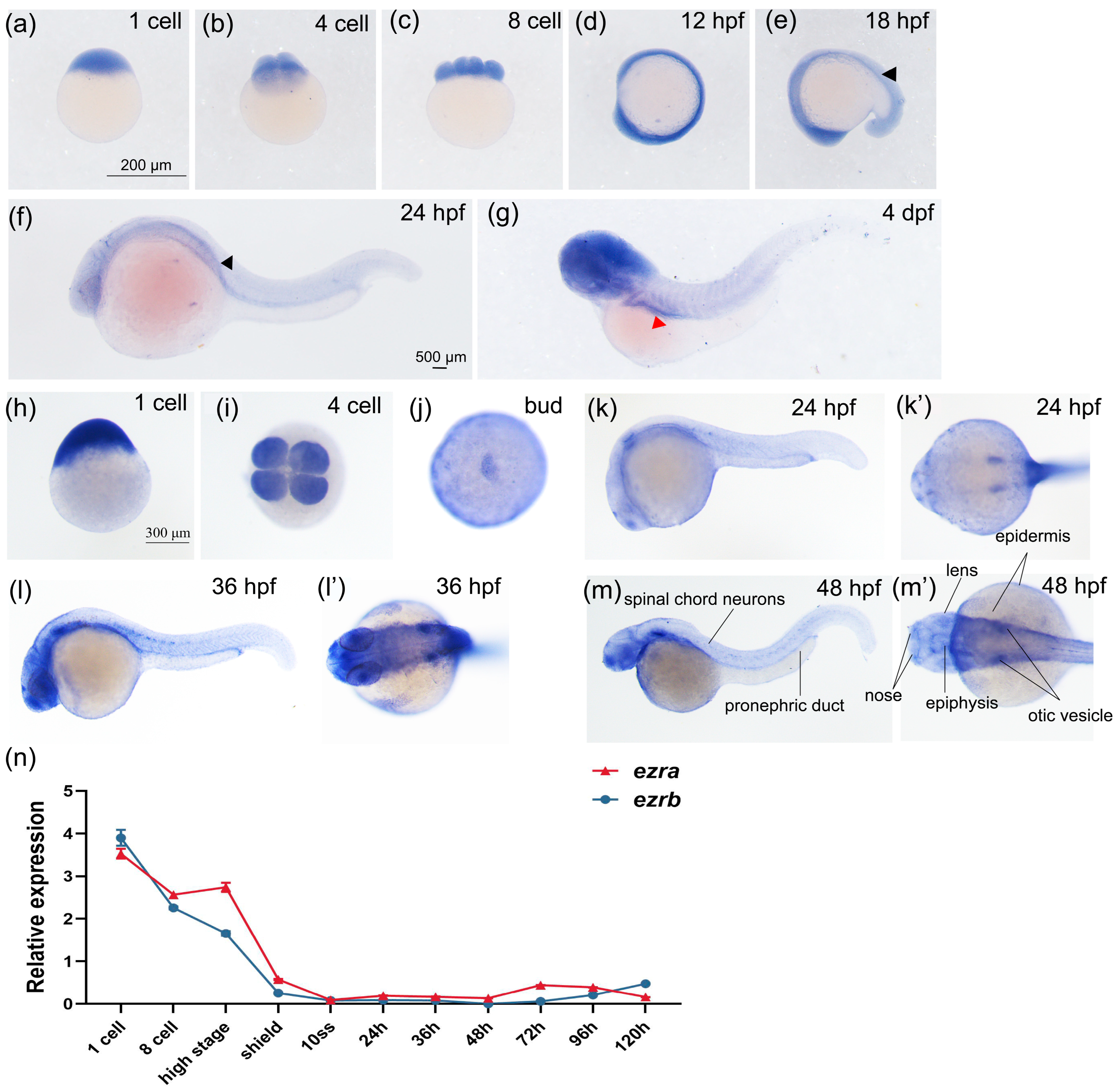
To explore the potential functions of ezra and ezrb in zebrafish development, WISH and RT-qPCR experiments were employed to investigate the spatiotemporal expression patterns of these genes. The WISH experimental results showed that ezra expression was detected during the 1–8-cell stages, suggesting maternal expression (Figure 1a–c). At 12 hpf, ezra was ubiquitously expressed (Figure 1d). Subsequently, at 18 hpf and 24 hpf, ezra expression was restricted to the notochord (Figure 1e,f), and at 4 dpf (days post-fertilization), specific expression was observed in the intestine (Figure 1g). Similarly, ezrb exhibited maternal expression (Figure 1h–i). During the tail bud stage, ezrb displayed broad expression (Figure 1j). In embryos at 24 hpf, 36 hpf, and 48 hpf, ezrb expression was localized to the lens, auditory vesicle, nose, epidermis, epiphyses, renal ducts, and notochord neurons (Figure 1k–m′). The RT-qPCR experiment results were consistent with the WISH experimental results (Figure 1n). ezra and ezrb mRNA levels were abundant in one-cell embryos, followed by a gradual decline until the 10-somite (10 ss) stage, where expression plateaued at a low level. These findings suggest that ezra and ezrb may play critical roles in early embryogenesis.

3.2. Knockout of Zebrafish ezra Gene Does Not Affect Overall Embryonic Development

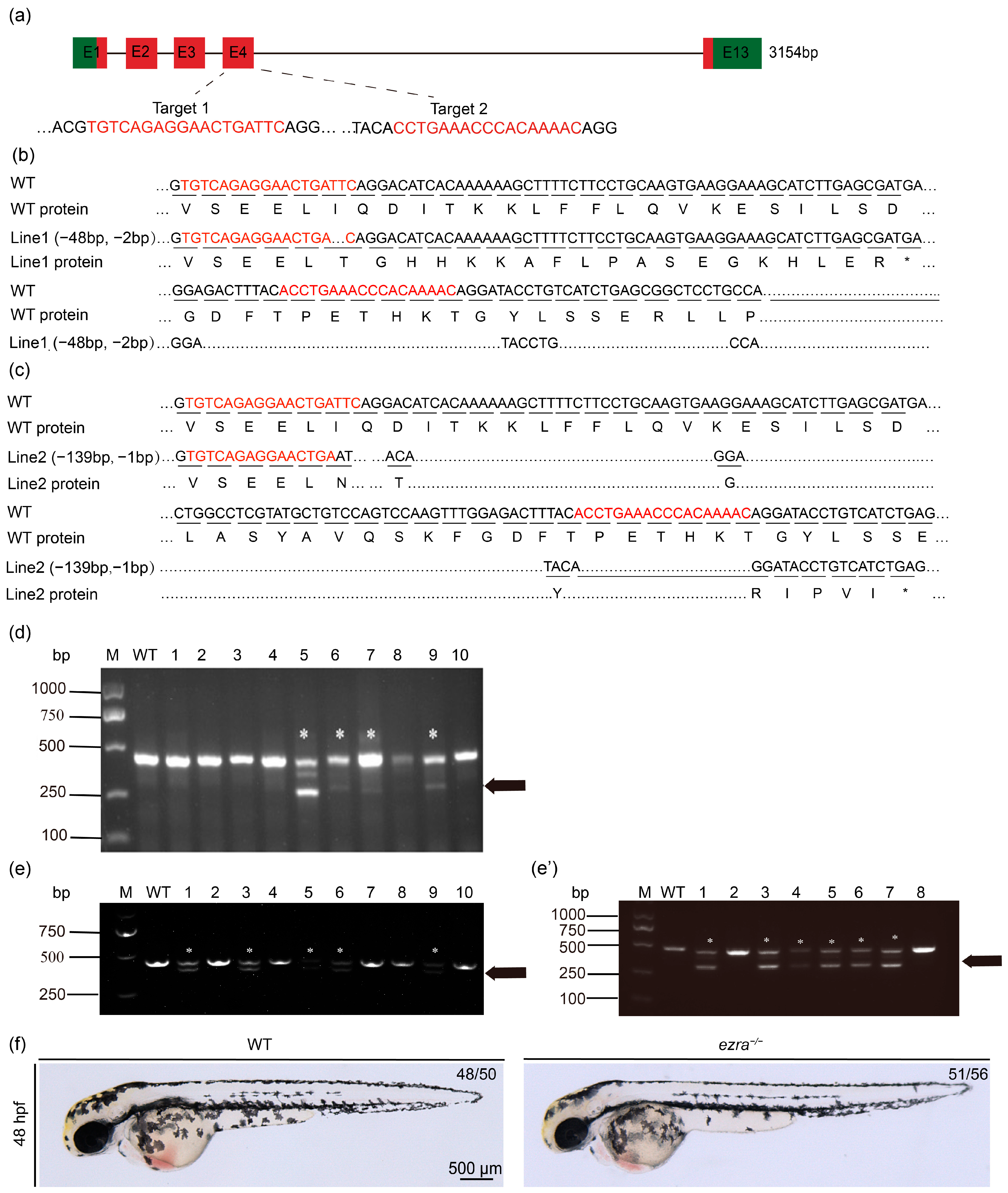
To investigate the role of ezrin, the CRISPR/Cas9 gene editing technique was employed to generate an ezra knockout mutant line by targeting the fourth exon of ezra (Figure 2a). After screening and genotyping, two independent ezra mutant lines were identified: mutant line 1 harbored a 50 bp deletion (−48 bp, −2 bp; Figure S1a), and mutant line 2 harbored a 140 bp deletion (−139 bp, −1 bp; Figure S1b). Both mutants resulted in a frameshift in protein translation. Amino acid sequence analysis showed that in ezra mutant line 1, the sequence was disrupted from position 94, resulting in a premature stop codon at amino acid 113 (Figure 2b). Similarly, mutant line 2 exhibited a frameshift starting at position 94, leading to premature translation termination at position 150 (Figure 2c). As protein translation terminated prematurely in both lines, the full-length EZRA protein was not produced, confirming that ezra function was lost. Heterozygous (Figure 2d–e′) and homozygous (Figure S1c,c’) individuals of the two mutant lines were identified by genotyping. The RT-qPCR experiment results revealed that in ezra homozygous mutants (ezra−/−), ezra mRNA was significantly downregulated, whereas ezrb mRNA was upregulated, compared to the WT (Figure S1d). Morphological observations further revealed that no significant developmental abnormalities were observed in ezra−/− when compared to the WT (Figure 2f).

3.3. ezrin Gene Deficiency Leads to Embryonic Cardiac Edema

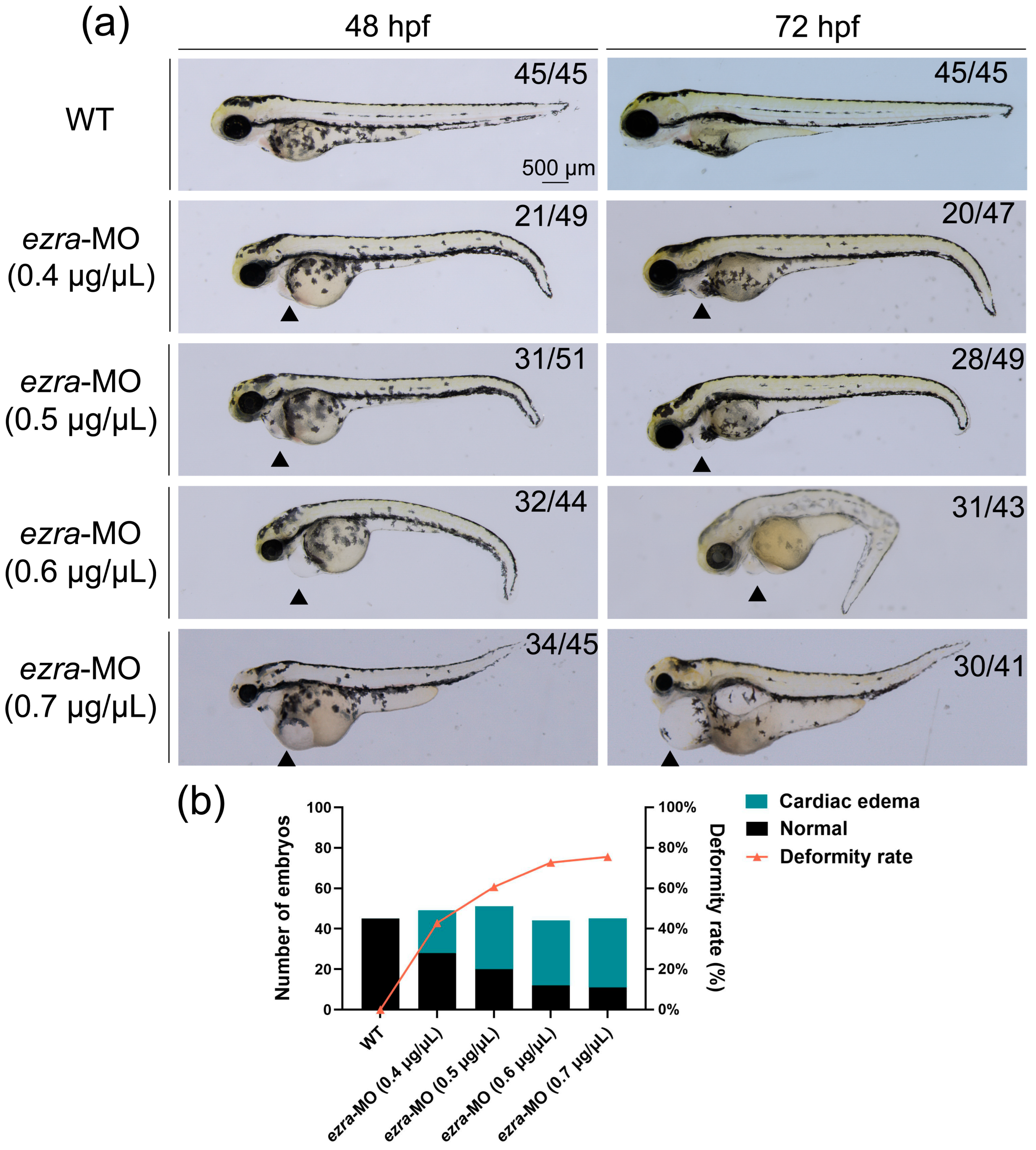
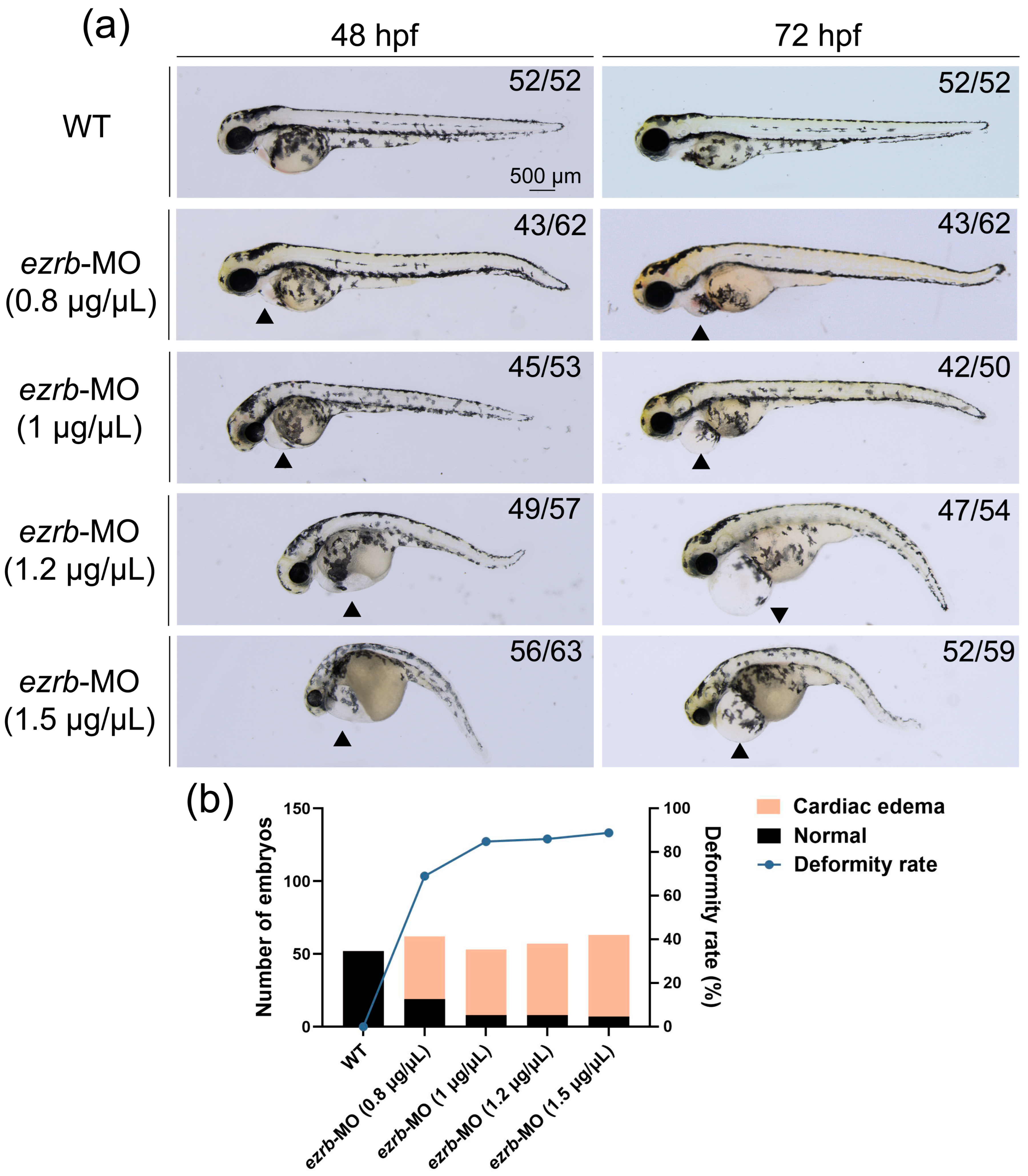
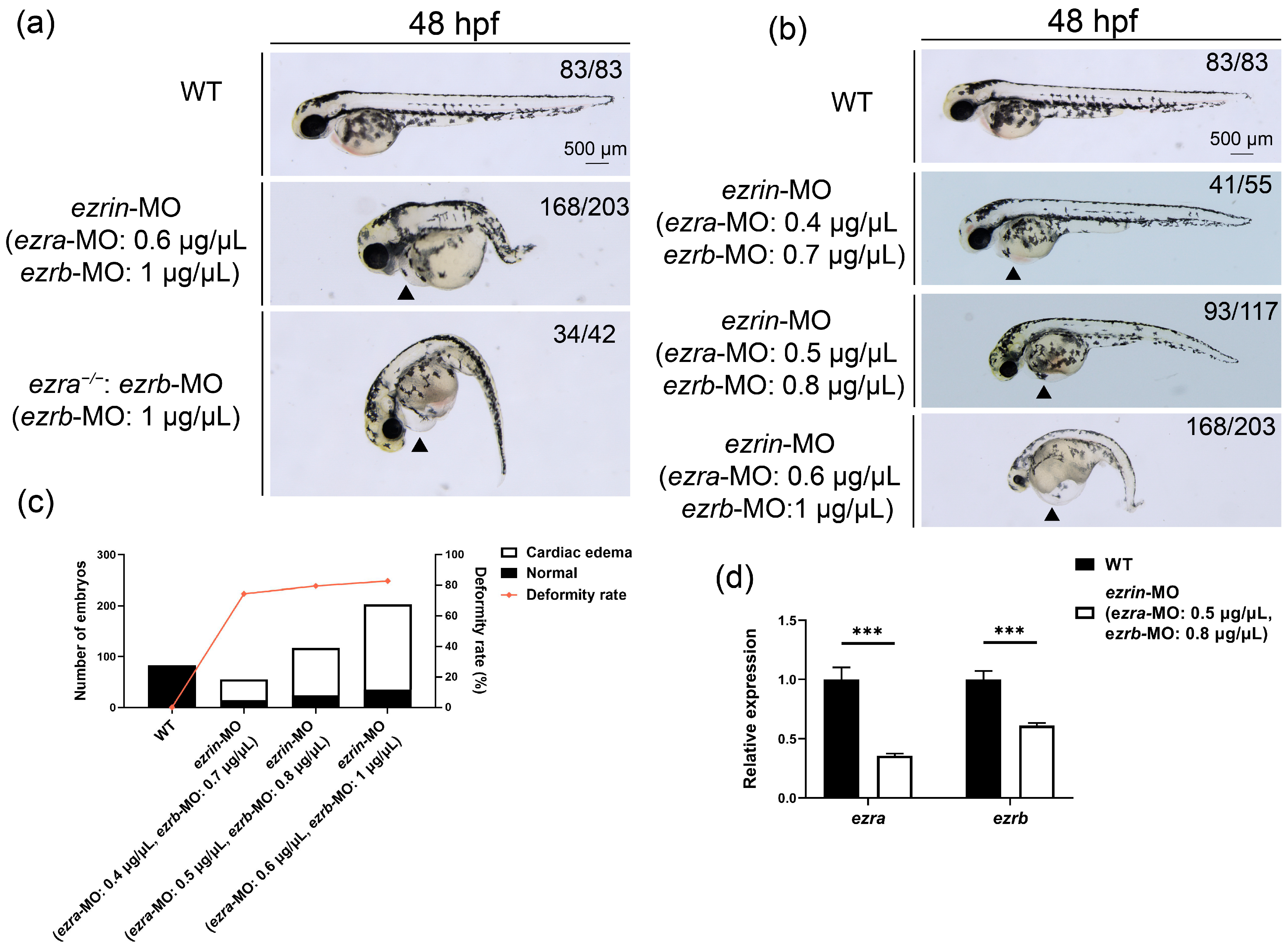
Given the upregulation of ezrb in ezra−/− embryos, it is probable that ezrb functions as a compensatory mechanism in response to ezra deficiency, suggesting potential functional redundancy between the two paralogs. To further investigate the function of ezrin in development, translation-blocking morpholino oligonucleotides (MOs) targeting the start codons of ezra and ezrb were synthesized by Gene Tools and used for gene knockdown experiments. To check the optimal injection concentration of ezra–MO, four concentrations (0.4, 0.5, 0.6, and 0.7 μg/μL) were micro-injected into one-cell-stage WT embryos. At 48 hpf, a pericardial edema phenotype was observed in ezra–MO-injected embryos, which became more pronounced at 72 hpf and increased in severity with higher doses (Figure 3a). A statistical analysis of the malformation rate (Figure 3b) revealed that 0.6 μg/μL induced a relatively stable phenotypic change; consequently, this concentration was selected as the optimal dose. Similarly, four concentrations (0.8, 1.0, 1.2, and 1.5 μg/μL) were evaluated for ezrb–MO. Phenotypic analysis revealed pericardial edema at 48 hpf, recapitulating the ezra–MO phenotype, with increased severity observed at 72 hpf. Specifically, mild trunk curvature and pericardial edema were observed in the 0.8 μg/μL group, whereas severe embryonic malformations were induced in the 1.5 μg/μL group (Figure 4a). Following statistical analysis, 1 μg/μL was established as the optimal injection concentration for ezrb–MO (Figure 4b).
Based on the optimal concentrations established in the single-gene knockdown experiments, ezra–MO and ezrb–MO were co-injected into WT embryos, and ezrb–MO was injected into ezra−/− embryos. At 48 hpf, embryos subjected to both treatments displayed trunk curvature and pericardial edema, with phenotypic severity exceeding that observed in single-knockdown embryos (Figure 5a), suggesting that this exacerbation was likely attributable to excessively high initial co-injection doses. To optimize co-injection conditions, a series of gradient concentrations of the ezra–MO and ezrb–MO mixture was evaluated. The results demonstrated that the co-injection of ezra–MO (0.5 μg/μL) and ezrb–MO (0.8 μg/μL) effectively induced pericardial edema while ensuring stable phenotypic penetrance (Figure 5b,c and Figure S2) (hereafter referred to as ezrin–MO, instead of a combination of ezra–MO [0.5 μg/μL] and ezrb–MO [0.8 μg/μL], unless otherwise specifically indicated). The RT-qPCR experiment results confirmed that the co-injection of ezra–MO and ezrb–MO significantly reduced ezra and ezrb mRNA levels, demonstrating that MOs effectively suppressed both genes (Figure 5d).

3.4. Effects of ezrin Gene Deletion on Cardiac Development

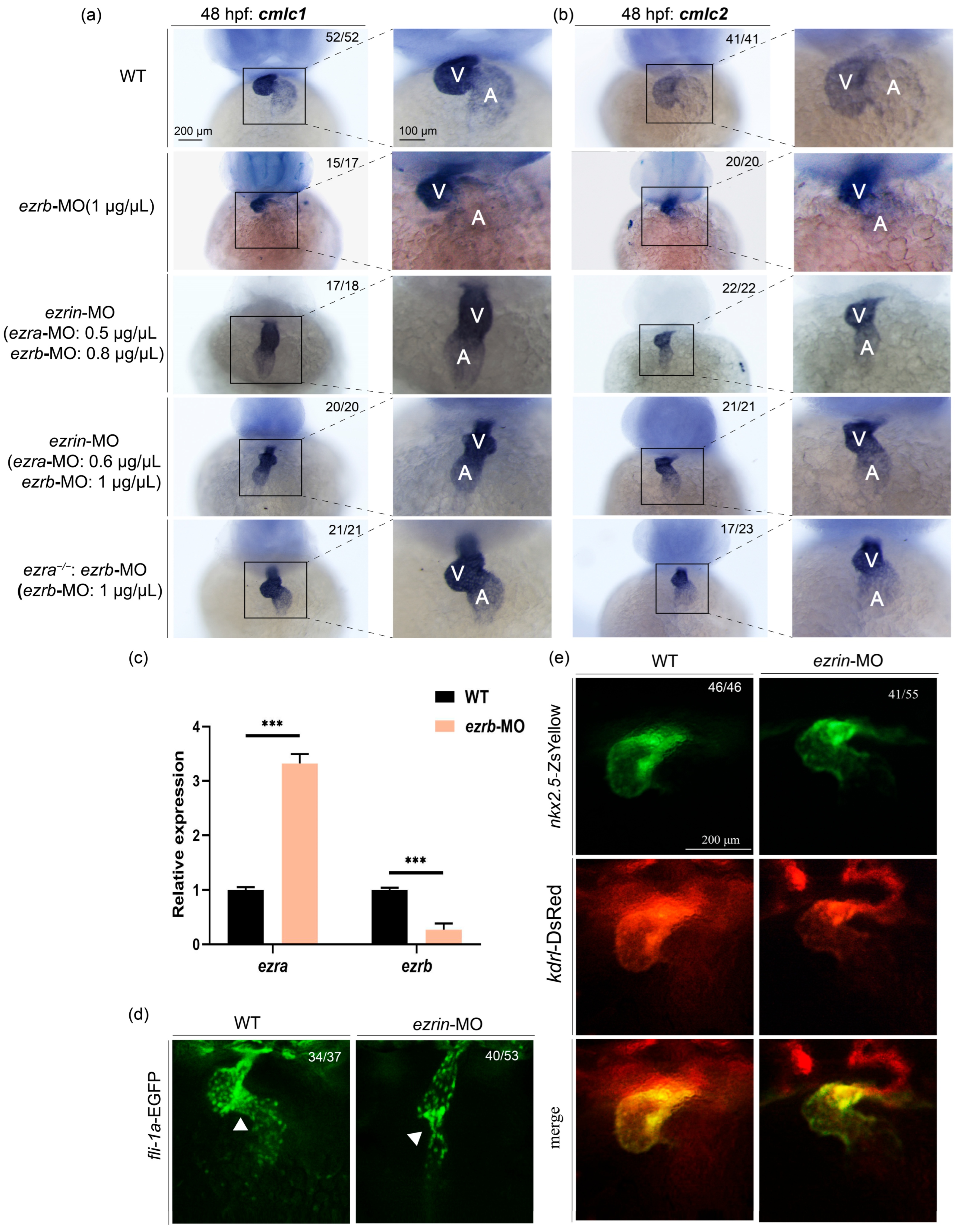
To investigate the impact of ezrin on heart development in zebrafish, WISH experiment was conducted using antisense RNA probes targeting the cardiac-specific marker genes cmlc1 and cmlc2. The WISH experimental results revealed that, compared to the control, hearts in ezrb–MO, ezrin–MO, and ezra−/−:ezrb–MO embryos were visibly reduced in size at 48 hpf, with the reduction being more pronounced in double-mutant embryos than in the single-knockdown embryos (Figure 6a,b). These results indicated early heart development in zebrafish embryos was affected by the complete loss of ezrin and that functional redundancy may exist between ezra and ezrb. To investigate this, RT-qPCR was performed on ezrb–MO embryos to quantify the mRNA expression of ezra and ezrb. The RT-qPCR experiment results showed that ezrb expression was decreased, whereas ezra expression was markedly upregulated. These findings provided preliminary evidence of functional redundancy between ezra and ezrb (Figure 6c). Furthermore, ezrin–MO embryos exhibited a phenotype identical to that of the ezra−/−:ezrb–MO embryos. Consequently, subsequent experiments utilized the double-knockdown embryos. To further characterize this phenotype, ezra–MO and ezrb–MO were co-injected into transgenic lines expressing green fluorescence in the heart (TL [nkx2.5:ZsYellow]), red fluorescence in endothelial cells (Tg [kdrl:DsRed]), and green fluorescence in vascular endothelial cells (Tg [fli-1a:EGFP]). Subsequent observations revealed that ezrin–MO embryos exhibited reduced cardiac chambers and abnormal atrioventricular valve development (Figure 6d,e).
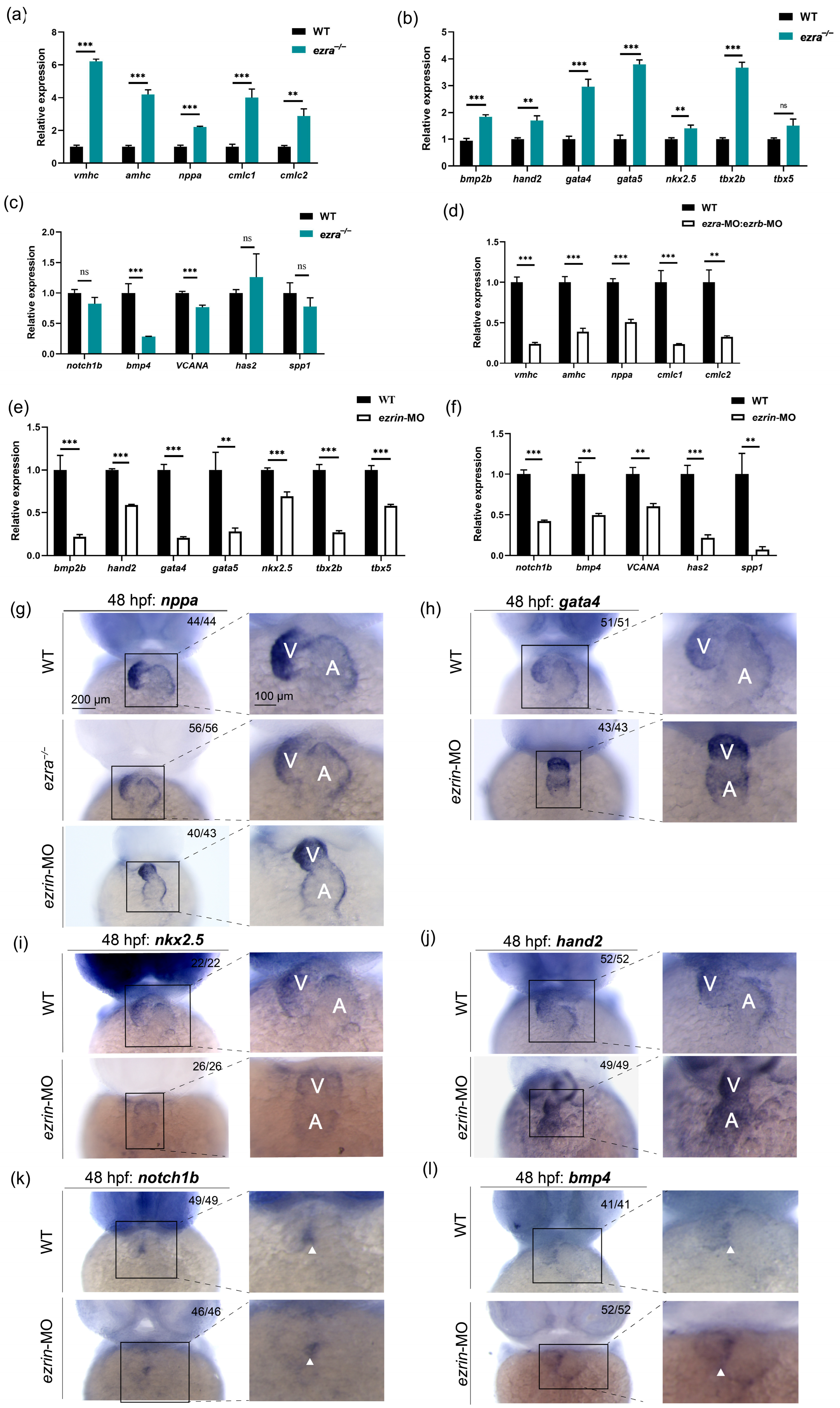
To further investigate the effects of ezrin deficiency on cardiac development, the expression of relevant genes was analyzed by RT-qPCR experiment as follows. (1) Cardiac marker genes: The ventricular marker vmhc, the atrial marker amhc, the cardiac myosin markers cmlc1/2 (facilitating cardiac contraction), and nppa (which negatively regulates cardiac hypertrophy and fibrosis). (2) Cardiac development regulatory genes: tbx2b, which inhibits chamber differentiation and proliferation [65]; tbx5, which guides the directed migration of cardiac progenitor cells [66]; bmp2b, a core transcription factor required for chamber contraction and morphogenesis; hand2, which promotes cardiomyocyte proliferation; gata4, which is essential for outflow tract formation [67]; gata5, a regulator of cardiomyocyte precursor development and cardiac primordium formation; and nkx2.5, an early cardiac lineage marker [68]. (3) Atrioventricular valve development marker genes: The atrioventricular canal endothelial marker notch1b, the atrioventricular canal myocardial markers bmp4 and VCANA (versican) [69,70], and the endocardial cushion markers has2 and spp1. The RT-qPCR experimental results showed that the expression of cardiac marker and development-related genes was upregulated in ezra−/− (Figure 7a,b), whereas the expression of the atrioventricular valve markers bmp4 and VCANA was downregulated (Figure 7c). In the ezrin–MO embryos, the expression levels of all aforementioned genes were significantly suppressed (Figure 7d–f). To validate the RT-qPCR experimental findings, WISH was employed to examine the expression of nppa, gata4, nkx2.5, hand2, bmp4, and notch1b. The WISH experimental results demonstrated that the spatial pattern of nppa in ezra−/− and WT embryos was similar, whereas in the ezrin–MO embryos, the expression of nppa, gata4, hand2, nkx2.5, bmp4, and notch1b was significantly downregulated (Figure 7g–i), consistent with the RT-qPCR experimental results. These observations suggest that the ezra and ezrb genes may function synergistically during cardiac development and that the loss of ezrin function may result in cardiac and atrioventricular valve development defects.

3.5. Effects of ezrin Gene Deletion on Zebrafish Transcriptome

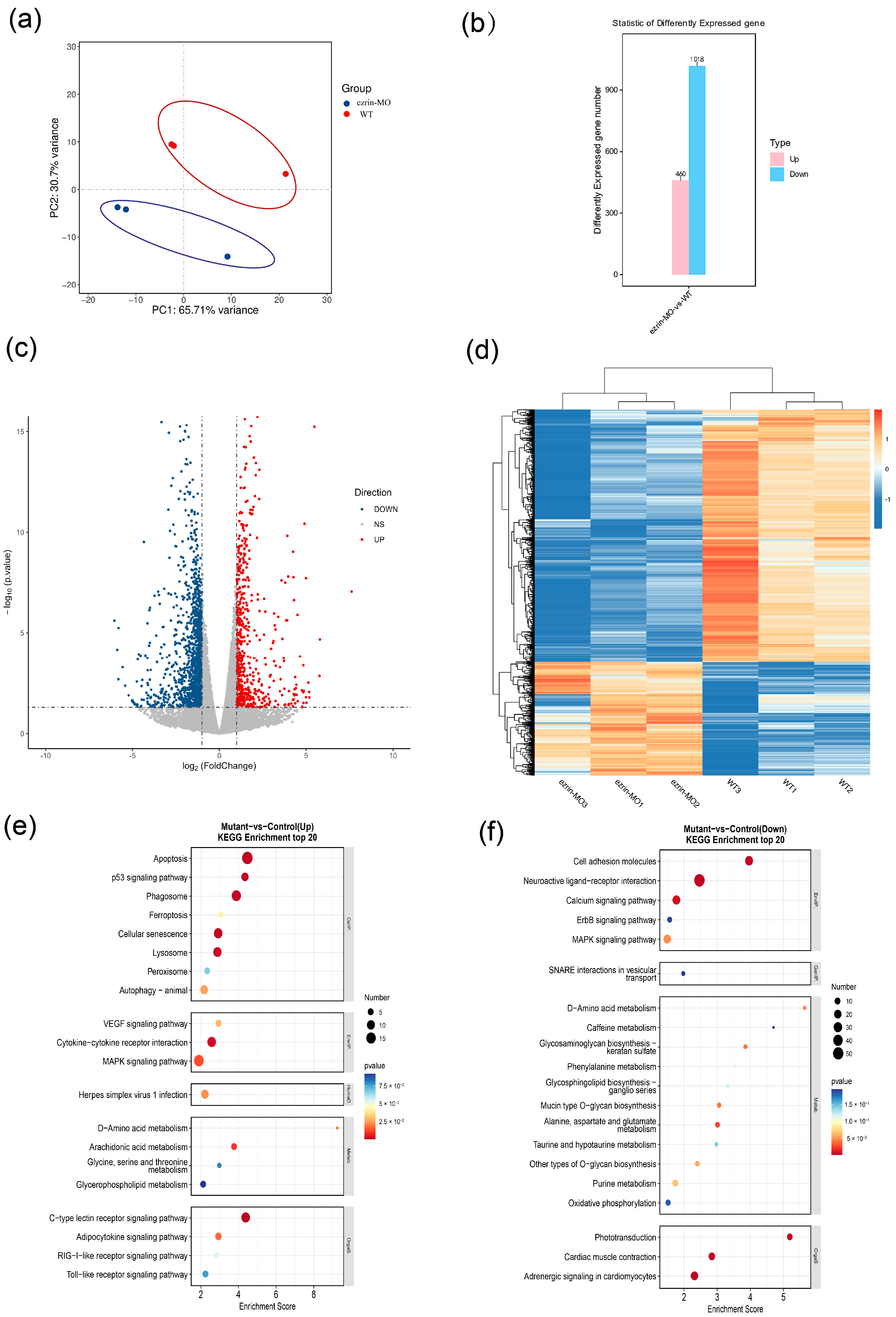
To investigate the molecular mechanisms underlying the cardiac developmental defects associated with ezrin deficiency in zebrafish, high-throughput RNA sequencing was conducted on 48 hpf WT and ezrin–MO embryos, with three biological replicates in each group. The quality of the sequencing data met the standards recommended by the ENCODE Consortium. Principal component analysis (PCA) was employed to evaluate sample heterogeneity. Analysis revealed a clear segregation between the experimental (ezrin–MO) and control (WT) groups, with high intragroup reproducibility (Figure 8a). Applying a threshold of |log2FoldChange| ≥ 1 and adjusted p ≤ 0.05, a total of 1478 DEGs were identified, comprising 460 upregulated and 1018 downregulated transcripts (Figure 8b). A volcano plot visualized the distribution of DEGs (Figure 8c), while a hierarchical clustering heatmap corroborated the significant divergence between samples (Figure 8d). KEGG pathway enrichment analysis displayed that upregulated DEGs were enriched in the p53 signaling pathway, apoptosis, and the MAPK signaling pathway (Figure 8e), whereas downregulated DEGs were primarily enriched in the cardiac muscle contraction pathway, adrenergic signaling in cardiomyocytes, and the calcium signaling pathway (Figure 8f).

3.6. ezrin Gene Deficiency Affects Cardiac Contraction and Activates Apoptotic Pathways

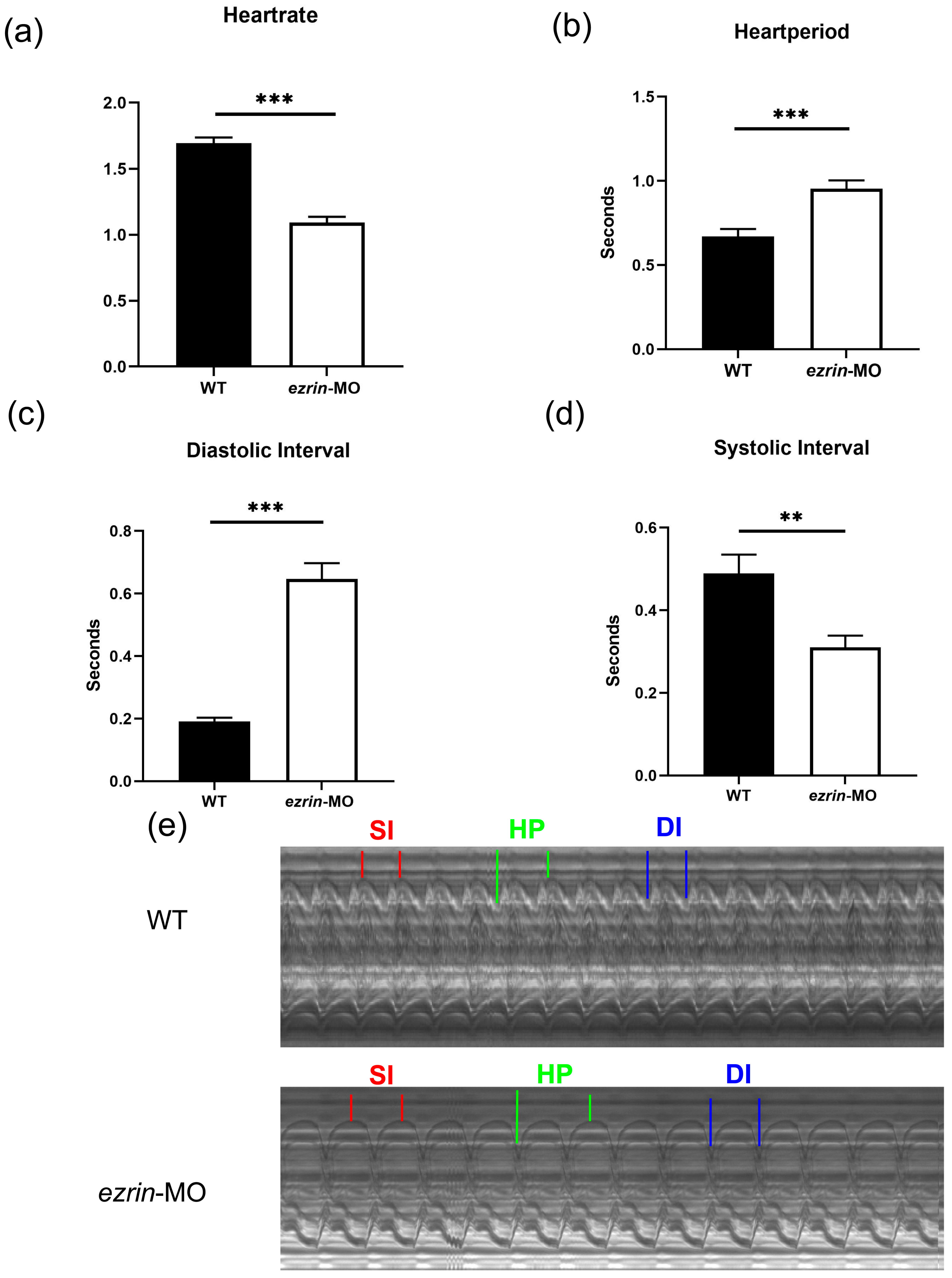
Given the enrichment in downregulated genes in cardiac contraction-related signaling pathways in the ezrin–MO embryos, the effects of ezrin deficiency on cardiac contractile function were further examined. The dynamic imaging of the ventricular region in 48 hpf embryos was acquired at 150 frames s−1 utilizing an EM-CCD. Each video spanned 10 s, with 20 embryos per group randomly chosen for imaging using a 10× objective. All video data were converted to M-mode tracings and processed using semi-automated heartbeat analysis software (v3.4.0.0) to quantify HR, HP, DI, and SI. The results are shown in Figure 9. Compared with the control group, ezrin–MO embryos displayed a significantly reduced heart rate (Figure 9a), concomitant with markedly prolonged HP (Figure 9b), DI (Figure 9c), and SI (Figure 9d). Representative M-mode images further demonstrated the altered cardiac cycle parameters (Figure 9e). These findings suggested that the simultaneous suppression of the ezra and ezrb genes impairs early cardiac contractile function, leading to bradycardia.
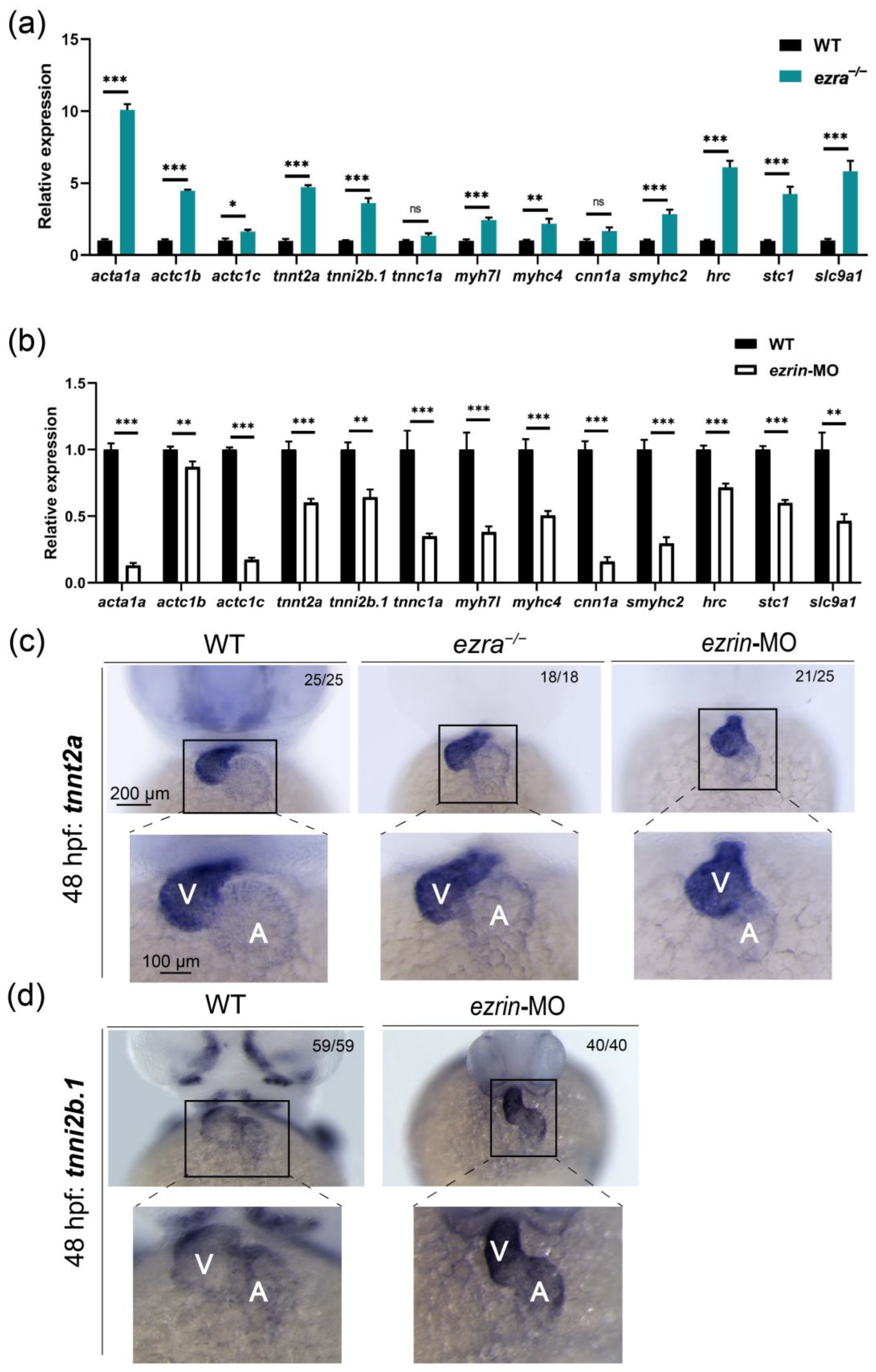
To investigate the molecular mechanisms underlying the observed contractile dysfunction, RT-qPCR experiment was employed to examine the expression of genes associated with myocardial contraction. The genes analyzed included acta1a, a regulator of cardiac myocyte differentiation; actc1b, which participates in troponin complex assembly; actc1c, which regulates skeletal muscle fiber formation; tnnt2a [71], which is required in the assembly of the myosin–troponin complex and is closely associated with the onset of cardiac diseases; tnni2b.1 and tnnc1a, which are involved in cardiac contraction and ventricular development; myh7l, which contributes to ventricular development and inhibits cardiac hypertrophy; myhc4, which is involved in actin filament binding; cnn1a, which mediates actin cytoskeletal organization; smyhc2, a slow-twitch marker gene involved in slow skeletal muscle fiber contraction; slc9a1, a sodium–potassium ion transmembrane transporter; hrc, which possesses calcium-binding activity; and stc1, which is involved in intracellular calcium homeostasis. The RT-qPCR experimental results revealed that, compared to WT embryos, the expression of these cardiac contraction-associated genes was significantly upregulated in ezra−/− embryos (Figure 10a), whereas their expression was uniformly and markedly suppressed in ezrin–MO embryos (Figure 10b).
WISH were further employed to validate the expression patterns of tnnt2a and tnni2b.1. The results demonstrated that tnnt2a expression in ezra−/− embryos was comparable to that in the WT. Conversely, in the ezrin–MO embryos, the expression of tnnt2a and tnni2b.1 was diminished (Figure 10c,d). Collectively, these findings suggest that ezrin may play a crucial regulatory role in cardiac and atrioventricular valve morphogenesis and the maintenance of normal myocardial contraction.
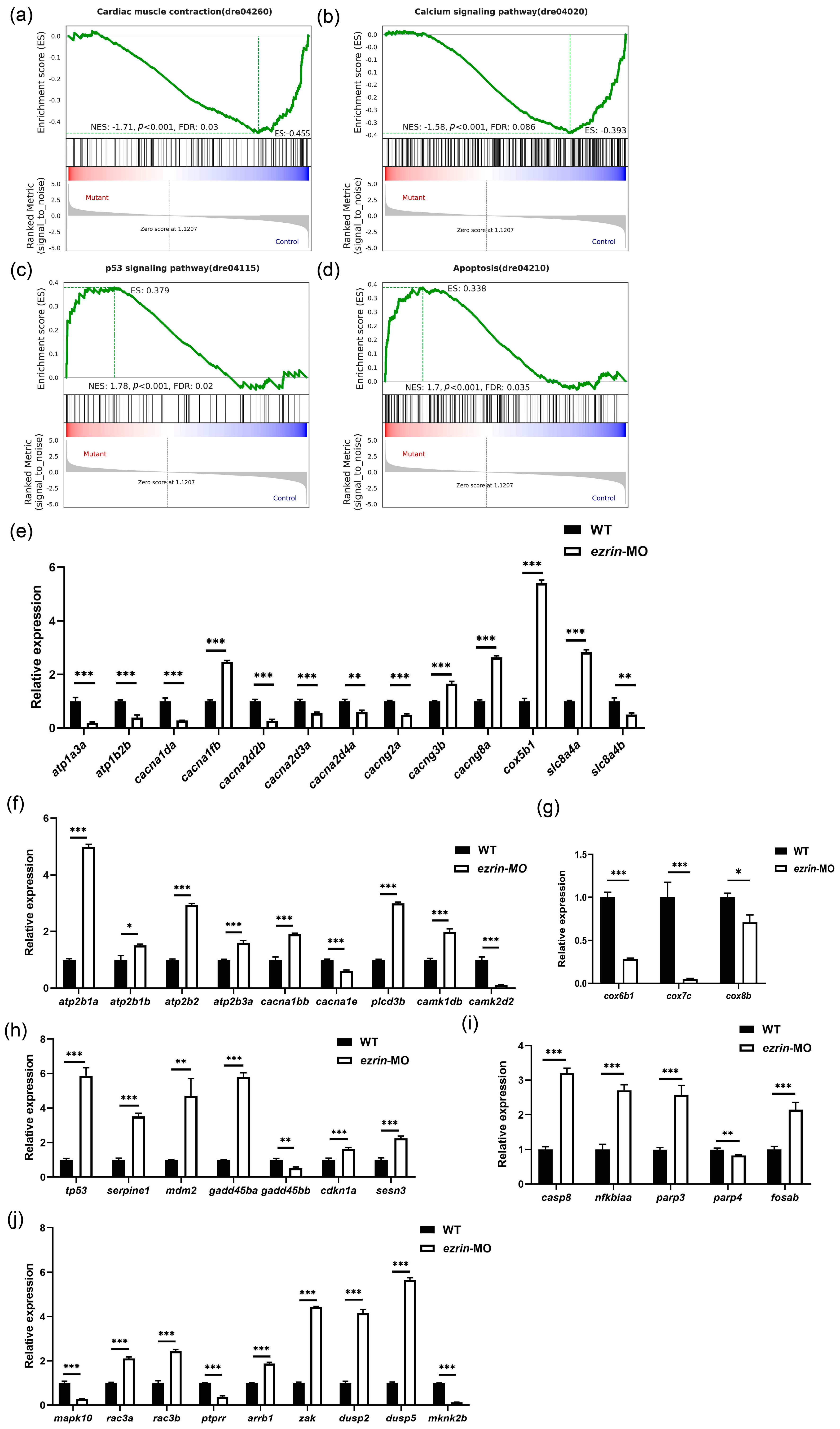
The RNA-seq results revealed that ezrin deficiency led to the aberrant expression of genes associated with myocardial contraction and promoted apoptosis, including cardiac muscle contraction, calcium signaling, p53 signaling, and the apoptosis pathway (Figure 11a–d). By integrating KEGG pathway enrichment analysis with phenotypic observations, RT-qPCR experiment was used to validate the expression changes in key genes in the cardiac muscle contraction pathway. Within this pathway, the expression of atp1a3a, which is involved in ventricular development, and atp1b2b, which is expressed in the zebrafish heart, was significantly downregulated. The voltage-gated calcium channel subunit genes cacna1da, cacna2d2b, cacna2d3a, cacna2d4a, and cacng2a were significantly downregulated, whereas cacna1fb, cacng3b, and cacng8a were upregulated. Additionally, the mitochondrial cytochrome C oxidase subunit gene cox5b1 and the sodium–calcium exchanger gene slc8a4a were upregulated, whereas slc8a4b was downregulated (Figure 11e). These results suggest that ezrin deficiency may impair embryonic heart development and contractile function by disrupting calcium homeostasis in cardiomyocytes. A further analysis of genes associated with the calcium signaling pathway and mitochondrial function revealed that the plasma membrane Ca2+-ATPase (PMCA) subunit genes atp2b1a, atp2b1b, atp2b2, and atp2b3a were significantly upregulated (Figure 11f). The primary function of PMCA is to extrude cytoplasmic Ca2+ against the concentration gradient, thereby maintaining intracellular Ca2+ homeostasis [72]. The voltage-gated calcium channel gene cacna1e was downregulated, whereas cacna1bb was upregulated. The calcium signaling downstream component plcd3b and the calmodulin-dependent protein kinase camk1db were upregulated, whereas camk2d2 was suppressed. Notably, mitochondrial electron transport chain-related genes cox6b1, cox7c, and cox8b were significantly downregulated (Figure 11g), further suggesting that ezrin deficiency may perturb calcium homeostasis and compromise mitochondrial function in cardiomyocytes.
Furthermore, KEGG pathway enrichment analysis revealed that the apoptosis, p53 signaling, and MAPK signaling pathways were activated. Within the p53 signaling pathway, significantly upregulated genes included tp53, a core regulator of intrinsic apoptosis; serpine1, an inhibitor of plasminogen activation; mdm2, an apoptosis inhibitor; gadd45ba, a DNA damage-induced pro-apoptotic factor; cdkn1a, a cell cycle inhibitor [73]; and sesn3, an antioxidant gene, whereas gadd45bb, associated with somatic development, was downregulated (Figure 11h). In the apoptosis pathway (Figure 11i), the expression of the extrinsic apoptosis regulator casp8 [74]; nfkbiaa, which is involved in overall cell survival; parp3, which participates in various cellular events (including genomic integrity, transcription, differentiation, cellular metabolism, and cell death); and fosab, which is involved in zebrafish cardiac tissue regeneration [75], was upregulated. In contrast, parp4, which catalyzes the ADP ribosylation of target proteins using NAD+ as a substrate, was downregulated. Within the MAPK signaling pathway, the expression of mapk10, a regulator of proliferation, differentiation, transcriptional regulation, and development; ptprr, a modulator of signal transduction via MAPK activity downregulation, and mknk2b, which possesses calcium/calmodulin-dependent protein kinase activity, was significantly downregulated. Conversely, upregulation was detected for rac3a, which possesses GTPase activity; rac3b, which participates in actin structure organization; zak, which implicates signal transduction and protein phosphorylation; arrb1, which encodes β-arrestin and replaces the heterotrimeric G protein (Gs) to induce signal transduction via the MAPK pathway; and dusp2 and dusp5, negative regulators of the MAPK signaling cascade (Figure 11j). These findings indicate that ezrin deficiency triggers the p53, apoptosis, and MAPK signaling pathways, potentially influencing cell fate determination and cardiac morphogenesis in concert.

4. Discussion

Using zebrafish as a model, our results demonstrated that the ezrin gene plays a crucial role in early cardiac morphogenesis and the maintenance of myocardial contractile function, revealing functional redundancy between ezra and ezrb. The WISH and RT-qPCR experiments results revealed that both ezra and ezrb are expressed maternally and ubiquitously in early developmental stages, suggesting that both genes may function in early embryogenesis. Although ezra-/- did not exhibit obvious morphological abnormalities, the RT-qPCR experiment results revealed that ezrb expression was upregulated in ezra−/− embryos. Conversely, ezra expression was compensatorily elevated in ezrb–MO embryos. However, the simultaneous knockdown of ezra and ezrb using translation-blocking MOs induced pericardial edema, diminished cardiac chamber size, and atrioventricular valve malformations. Phenotype severity correlated with MO dose and was substantially more severe than that observed in single-knockdown embryos. The mild trunk curvature and overall developmental delay observed in ezrin–MO embryos may be attributable to secondary effects arising from pericardial edema and cardiac developmental defects. These findings indicate that ezra and ezrb exhibit functional redundancy and likely act synergistically in regulating cardiac morphogenesis. The abrogation of both genes may lead to cardiac developmental abnormalities.
As the earliest functional organ to emerge during zebrafish embryogenesis, the heart undergoes complex morphogenetic remodeling regulated by key transcription factors and signaling molecules, including vmhc, nkx2.5, gata4/5, and nppa [76]. RT-qPCR experiment was employed to quantify the expression of cardiac marker genes (vmhc, amhc, cmlc1/2, etc.), cardiac developmental regulatory genes (tbx2b, gata4/5, nkx2.5, etc.), and atrioventricular valve marker genes (bmp4, notch1b, etc.). In ezra−/−, cardiac markers and developmental regulatory genes were significantly upregulated, suggesting that ezrb may be compensatorily activated following the loss of ezra to maintain cardiac developmental homeostasis. However, the atrioventricular valve markers bmp4 and VCANA were significantly downregulated in ezra−/−, implicating that ezra may be involved in the myocardial differentiation of the atrioventricular valve. In contrast, in ezrin–MO embryos, the expression of all the aforementioned genes was significantly downregulated. This suggests functional redundancy between ezra and ezrb; the simultaneous loss of both genes abolishes the compensatory mechanism, resulting in abnormal embryonic cardiac development and preliminarily reveals the importance of ezrin in maintaining normal cardiac morphology. The spatial expression analysis of genes such as nppa and nkx2.5 by WISH experiment further confirmed the reduced cardiac chamber size and atrioventricular valve developmental defects observed in ezrin–MO embryos, providing preliminary support for the hypothesis that ezrin may occupy a pivotal position within the cardiac developmental regulatory network.
To elucidate the molecular mechanism responsible for cardiac defects induced by ezrin deficiency, RNA-seq was conducted on ezrin–MO embryos, subsequently subjected to KEGG pathway enrichment analysis. Upregulated DEGs were enriched in the p53 signaling pathway, apoptosis pathway, and MAPK signaling pathway, whereas downregulated DEGs were predominantly enriched in cardiac muscle contraction and calcium signaling pathways. Concomitantly, cardiac physiology analysis demonstrated bradycardia and a significant prolongation of the heart period, diastolic period, and systolic period in the double knockdown. A panel of genes implicated in cardiac contractile function (including actc1b, tnnt2a, and hrc) was selected for RT-qPCR experiment validation. These contraction-associated genes were significantly upregulated in ezra−/− embryos, whereas their expression was suppressed in ezrin–MO embryos. WISH experimental result confirmed the diminished expression of tnnt2a and tnnt2b.1 in double-knockdown embryos. Integrated with previously observed phenotypes, such as diminished cardiac chamber size, these findings suggest that ezrin deficiency results in not only cardiac developmental malformations but also impaired myocardial contractility. This phenomenon may be mediated by a dual mechanism: first, the induction of cardiomyocyte apoptosis through pro-apoptosis signaling pathways, and second, the disruption of calcium homeostasis within cardiomyocytes via the dysregulation of calcium signaling.
At the level of myocardial contraction regulation, the dysregulation of calcium signaling may disturb calcium homeostasis within cardiomyocytes, thereby impairing myocardial contractility. Specifically, ezrin deficiency leads to the downregulation of the ventricular development genes atp1a3a and atp1b2b, indicating the impairment of normal embryonic heart development. Multiple voltage-gated calcium channel subunit genes (cacna1da, cacna2d2b, cacna2d3a, cacna2d4a, and cacng2a) [77] and the calcium transporter slc8a4b were downregulated, inhibiting calcium ion transmembrane transport and consequently impairing myocardial contractility. The upregulation of certain calcium channel-related genes (cacna1fb, cacng3b, and cacng8a, etc.) and the calcium transporter slc8a4a suggested that ezrin-deficient embryos attempted to maintain calcium homeostasis by activating other calcium channels; however, this compensatory response was clearly insufficient to rescue cardiac developmental defects. The upregulation of PMCA subunits (atp2b1a, atp2b1b, atp2b2, and atp2b3a) suggested that ezrin deficiency may activate P-type calcium transporters, leading to the excessive efflux of intracellular Ca2+ and consequently disrupting calcium homeostasis within cardiomyocytes. The upregulation of plcd3b, a downstream molecule of the calcium signaling pathway, and calmodulin-dependent protein kinase camk1db [78] suggested that the IP3-mediated endoplasmic reticulum calcium release pathway may be compensatorily activated to maintain intracellular calcium homeostasis, whereas the downregulation of camk2d2 [79] may limit the efficacy of this compensatory mechanism. Additionally, the expression of cox6b1, cox7c, and cox8b was significantly downregulated, suggesting potential energy metabolic disturbances in cardiomyocytes. This mitochondrial dysfunction may not only exacerbate the disruption of intracellular Ca2+ homeostasis but also impair myocardial contractility. The upregulation of cytochrome oxidase subunit cox5b1 [80] may represent a limited compensatory response to energy stress.
tp53, a central regulator of the p53 signaling pathway, has been implicated in diverse cellular processes, including apoptosis and cell cycle inhibition [81]. The upregulation of tp53 suggested that ezrin deficiency may activate cardiomyocyte apoptosis. gadd45ba and gadd45bb are growth arrest and DNA damage-induced genes; the former is involved in apoptosis, while the latter is associated with somatic cell differentiation. The upregulation of gadd45ba suggested that cardiomyocytes may undergo apoptosis, whereas the downregulation of gadd45bb indicated that cardiomyocyte differentiation may be inhibited. The upregulation of Cdkn1a, a cell cycle inhibitor associated with aortic development, suggested that cardiomyocyte proliferation and aortic development may be impaired. The upregulation of sesn3 suggested that the organism may enhance its resistance to oxidative stress by reducing intracellular reactive oxygen species. Concurrently, the upregulation of casp8 indicated the activation of the extrinsic apoptosis pathway [82]. Nfkbiaa, a gene involved in overall cell survival and serving as a key indicator of development, was upregulated, suggesting that it may affect the normal expression of anti-apoptotic genes by inhibiting NF-κB. Parp3 participates in various post-translational modifications to promote, control, or regulate numerous cellular events, including genomic integrity, transcription, differentiation, cellular metabolism, and cell death; its upregulation may indicate impaired DNA damage repair. The upregulation of fosab suggested that the organism attempted to compensate for cardiac developmental abnormalities caused by ezrin deficiency by regulating myocardial tissue regeneration. The MAPK signaling pathway may influence cardiac development through multiple mechanisms. For instance, the downregulation of mapk10 [83]—which participates in regulating proliferation and differentiation—and mknk2b, which possesses calcium/calmodulin-dependent protein kinase activity, suggested that the proliferation and differentiation of cardiomyocytes may be inhibited. The upregulation of zak and arrb1, which are involved in signal transduction, suggested that the JNK and p38 MAPK signaling pathways were activated. dusp2 and dusp5, as negative regulators in the MAPK signaling pathway, may influence the expression of the regenerative repair gene fosab by regulating the dephosphorylation of mapk10. Based on the synergistic changes in the aforementioned signaling pathways, it is hypothesized that ezrin deficiency may lead to cardiac morphological abnormalities and contractile dysfunction by activating pro-apoptotic signaling cascades and inhibiting cardiomyocyte proliferation and differentiation.
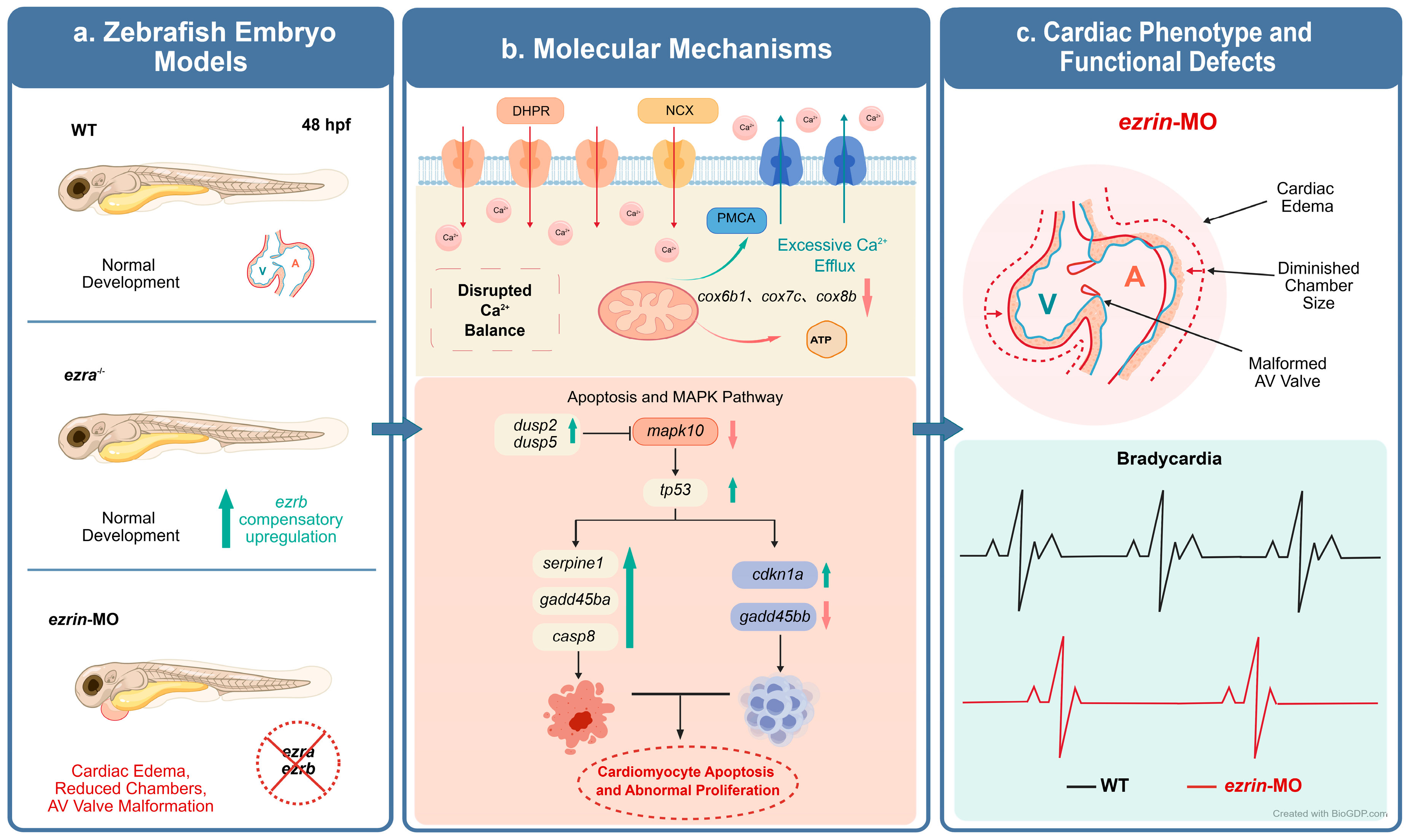
In summary, this study provides preliminary evidence that the ezrin gene plays a crucial role in zebrafish cardiac development and function and that functional redundancy exists between ezra and ezrb. Furthermore, by integrating transcriptomic profiling, cardiac physiological function analysis, and gene expression analysis, our results showed that ezrin deficiency may synergistically cause cardiac developmental defects and abnormal myocardial contractile function through the activation of apoptosis, dysregulation of calcium homeostasis within cardiomyocytes, and perturbation of the MAPK signaling pathway mediating cardiomyocyte proliferation and differentiation. These findings provide a new perspective on the role of the ezrin gene in cardiac development and offer a new framework for understanding the molecular basis of vertebrate heart development (Figure 12).

5. Conclusions

This study provides preliminary evidence that the ezrin gene is essential for cardiac morphogenesis and functional maintenance, with functional redundancy between ezra and ezrb. ezrin deficiency may lead to cardiac developmental defects and contractile dysfunction by activating apoptosis, disrupting calcium homeostasis, and perturbing the MAPK signaling pathway mediating cardiomyocyte proliferation and differentiation.

Supplementary Materials

The following supporting information can be downloaded at https://www.mdpi.com/article/10.3390/cells15121046/s1. Figure S1: ezra gene knockout; Figure S2: Morphological images of ezrin–MO embryos injected with different concentrations at 72 hpf; Table S1: Primers of RT-qPCR experiment; Table S2: WISH experiment probe primers.

Author Contributions

Conceptualization, H.X. (Huaping Xie) and T.Z.; project administration, J.L., T.Z., B.L. and H.X. (Huaping Xie); methodology, T.Z. and L.L.; formal analysis, J.L. and L.X.; investigation, J.L., T.Z. and B.L.; resources, L.X., Z.Z. and H.X. (Huaping Xie); data curation, J.L., B.L., L.Z. and H.X. (Hao Xie); writing—original draft preparation, J.L. and L.L.; writing—review and editing, J.L., L.Z., X.J. and H.X. (Huaping Xie); validation, H.X. (Hao Xie); visualization, B.L., X.J. and Z.Z.; software, L.L.; funding acquisition, H.X. (Huaping Xie); supervision, H.X. (Huaping Xie). All authors have read and agreed to the published version of the manuscript.

Funding

This research was funded by Xiaoxiang Scholar Distinguished Professor Startup Funding for H-p X, grant number 240602.

Institutional Review Board Statement

The animal study protocol was approved by the Biomedical Research Ethics Committee of Hunan Normal University (protocol code 2022/545 and 14 December 2022 of approval).

Informed Consent Statement

Not applicable.

Data Availability Statement

The datasets utilized and/or examined in this investigation are accessible from the corresponding author upon a reasonable request. The RNA sequencing data generated in this study were archived in the NCBI Sequence Read Archive (SRA) under the accession number PRJNA1459656.

Acknowledgments

All the members of Hunan Normal University’s Laboratory of Animal Nutrition and Human Health are warmly recognized for their cooperation and encouragement. DeepSeek (v4) was employed for language refinement while preparing this manuscript. The authors meticulously checked and revised the output and assume complete responsibility for the entire content of this publication.

Conflicts of Interest

The authors declare no conflicts of interest.

Abbreviations

The following abbreviations are used in this manuscript:
hpfhours post-fertilization
dpfdays post-fertilization
mRNAmessenger RNA
PAMprotospacer adjacent motif
sgRNAsingle-guide RNA
FHFfirst heart field
SHFsecond heart field
ECMextracellular matrix
bpbase pair
NCBINational Center for Biotechnology Information
BCIP5-bromo-4-chloro-3-indolyl phosphate p-toluidine salt
AVCatrioventricular canal
OFToutflow tract
Edcsendocardial cells
EMTepithelial–mesenchymal transition
BCRB-cell receptor
NBTNitrotetrazolium Blue chloride

References

  1. Huang, H.; Huang, G.N.; Payumo, A.Y. Two decades of heart regeneration research: Cardiomyocyte proliferation and beyond. WIREs Mech. Dis. 2024, 16, e1629. [Google Scholar] [CrossRef] [PubMed]
  2. Coppola, A.; Lombari, P.; Mazzella, E.; Capolongo, G.; Simeoni, M.; Perna, A.F.; Ingrosso, D.; Borriello, M. Zebrafish as a Model of Cardiac Pathology and Toxicity: Spotlight on Uremic Toxins. Int. J. Mol. Sci. 2023, 24, 5656. [Google Scholar] [CrossRef] [PubMed]
  3. Kim, H.; Wang, M.; Paik, D.T. Endothelial-Myocardial Angiocrine Signaling in Heart Development. Front. Cell Dev. Biol. 2021, 9, 697130. [Google Scholar] [CrossRef] [PubMed]
  4. Zhou, Y.; Cashman, T.J.; Nevis, K.R.; Obregon, P.; Carney, S.A.; Liu, Y.; Gu, A.; Mosimann, C.; Sondalle, S.; Peterson, R.E.; et al. Latent TGF-β binding protein 3 identifies a second heart field in zebrafish. Nature 2011, 474, 645–648. [Google Scholar] [CrossRef]
  5. Xie, H.; Ye, D.; Sepich, D.; Lin, F. S1pr2/Gα13 signaling regulates the migration of endocardial precursors by controlling endoderm convergence. Dev. Biol. 2016, 414, 228–243. [Google Scholar] [CrossRef]
  6. Yang, D.; Jian, Z.; Tang, C.; Chen, Z.; Zhou, Z.; Zheng, L.; Peng, X. Zebrafish Congenital Heart Disease Models: Opportunities and Challenges. Int. J. Mol. Sci. 2024, 25, 5943. [Google Scholar] [CrossRef]
  7. Hong, T.; Park, J.; An, G.; Song, J.; Song, G.; Lim, W. Evaluation of organ developmental toxicity of environmental toxicants using zebrafish embryos. Mol. Cells 2024, 47, 100144. [Google Scholar] [CrossRef]
  8. Lowe, V.; Wisniewski, L.; Pellet-Many, C. The Zebrafish Cardiac Endothelial Cell-Roles in Development and Regeneration. J. Cardiovasc. Dev. Dis. 2021, 8, 49. [Google Scholar] [CrossRef]
  9. Dye, B.; Lincoln, J. The Endocardium and Heart Valves. Cold Spring Harb. Perspect. Biol. 2020, 12, a036723. [Google Scholar]
  10. Derrick, C.J.; Noël, E.S. The ECM as a driver of heart development and repair. Development 2021, 148, dev191320. [Google Scholar] [CrossRef]
  11. Derrick, C.J.; Sánchez-Posada, J.; Hussein, F.; Tessadori, F.; Pollitt, E.J.G.; Savage, A.M.; Wilkinson, R.N.; Chico, T.J.; van Eeden, F.J.; Bakkers, J.; et al. Asymmetric Hapln1a drives regionalized cardiac ECM expansion and promotes heart morphogenesis in zebrafish development. Cardiovasc. Res. 2022, 118, 226–240. [Google Scholar] [CrossRef] [PubMed]
  12. Vignes, H.; Vagena-Pantoula, C.; Prakash, M.; Fukui, H.; Norden, C.; Mochizuki, N.; Jug, F.; Vermot, J. Extracellular mechanical forces drive endocardial cell volume decrease during zebrafish cardiac valve morphogenesis. Dev. Cell 2022, 57, 598–609.e595. [Google Scholar] [CrossRef]
  13. Gunawan, F.; Gentile, A.; Fukuda, R.; Tsedeke, A.T.; Jiménez-Amilburu, V.; Ramadass, R.; Iida, A.; Sehara-Fujisawa, A.; Stainier, D.Y.R. Focal adhesions are essential to drive zebrafish heart valve morphogenesis. J. Cell Biol. 2019, 218, 1039–1054. [Google Scholar] [CrossRef]
  14. Gunawan, F.; Gentile, A.; Gauvrit, S.; Stainier, D.Y.R.; Bensimon-Brito, A. Nfatc1 Promotes Interstitial Cell Formation During Cardiac Valve Development in Zebrafish. Circ. Res. 2020, 126, 968–984. [Google Scholar] [CrossRef] [PubMed]
  15. Fukui, H.; Chow, R.W.; Yap, C.H.; Vermot, J. Rhythmic forces shaping the zebrafish cardiac system. Trends Cell Biol. 2025, 35, 166–176. [Google Scholar] [CrossRef]
  16. Armstrong, E.J.; Bischoff, J. Heart valve development: Endothelial cell signaling and differentiation. Circ. Res. 2004, 95, 459–470. [Google Scholar] [CrossRef]
  17. Hong, T.; Park, J.; Park, H.; An, G.; Lee, H.; Song, G.; Lim, W. Exposure to acifluorfen induces developmental toxicity in the early life stage of zebrafish. Comp. Biochem. Physiol. Toxicol. Pharmacol. 2024, 281, 109909. [Google Scholar] [CrossRef]
  18. Patton, E.E.; Zon, L.I.; Langenau, D.M. Zebrafish disease models in drug discovery: From preclinical modelling to clinical trials. Nat. Rev. Drug Discov. 2021, 20, 611–628. [Google Scholar] [CrossRef]
  19. Giardoglou, P.; Beis, D. On Zebrafish Disease Models and Matters of the Heart. Biomedicines 2019, 7, 15. [Google Scholar] [CrossRef]
  20. Adhish, M.; Manjubala, I. Effectiveness of zebrafish models in understanding human diseases-A review of models. Heliyon 2023, 9, e14557. [Google Scholar] [CrossRef] [PubMed]
  21. Ali, S.; Zulfiqar, M.; Summer, M.; Arshad, M.; Noor, S.; Nazakat, L.; Javed, A. Zebrafish as an innovative model for exploring cardiovascular disease induction mechanisms and novel therapeutic interventions: A molecular insight. Mol. Biol. Rep. 2024, 51, 904. [Google Scholar] [CrossRef]
  22. Theoharides, T.C.; Kempuraj, D. Potential Role of Moesin in Regulating Mast Cell Secretion. Int. J. Mol. Sci. 2023, 24, 12081. [Google Scholar] [CrossRef] [PubMed]
  23. Kawaguchi, K.; Asano, S. Pathophysiological Roles of Actin-Binding Scaffold Protein, Ezrin. Int. J. Mol. Sci. 2022, 23, 3246. [Google Scholar] [CrossRef] [PubMed]
  24. Buenaventura, R.G.M.; Merlino, G.; Yu, Y. Ez-Metastasizing: The Crucial Roles of Ezrin in Metastasis. Cells 2023, 12, 1620. [Google Scholar] [CrossRef]
  25. Zaman, R.; Lombardo, A.; Sauvanet, C.; Viswanatha, R.; Awad, V.; Bonomo, L.E.; McDermitt, D.; Bretscher, A. Effector-mediated ERM activation locally inhibits RhoA activity to shape the apical cell domain. J. Cell Biol. 2021, 220, e202007146. [Google Scholar] [CrossRef]
  26. Chen, C.; Ye, C.; Xia, J.; Zhou, Y.; Wu, R. Ezrin T567 phosphorylation regulates migration and invasion of ectopic endometrial stromal cells by changing actin cytoskeleton. Life Sci. 2020, 254, 117681. [Google Scholar] [CrossRef]
  27. Song, Y.; Ma, X.; Zhang, M.; Wang, M.; Wang, G.; Ye, Y.; Xia, W. Ezrin Mediates Invasion and Metastasis in Tumorigenesis: A Review. Front. Cell Dev. Biol. 2020, 8, 588801. [Google Scholar] [CrossRef]
  28. Ramalho, J.J.; Sepers, J.J.; Nicolle, O.; Schmidt, R.; Cravo, J.; Michaux, G.; Boxem, M. C-terminal phosphorylation modulates ERM-1 localization and dynamics to control cortical actin organization and support lumen formation during Caenorhabditiselegans development. Development 2020, 147, dev188011. [Google Scholar] [CrossRef] [PubMed]
  29. Song, X.; Wang, W.; Wang, H.; Yuan, X.; Yang, F.; Zhao, L.; Mullen, M.; Du, S.; Zohbi, N.; Muthusamy, S.; et al. Acetylation of ezrin regulates membrane-cytoskeleton interaction underlying CCL18-elicited cell migration. J. Mol. Cell Biol. 2020, 12, 424–437. [Google Scholar] [CrossRef]
  30. Zhao, S.; Luo, J.; Hu, J.; Wang, H.; Zhao, N.; Cao, M.; Zhang, C.; Hu, R.; Liu, L. Role of Ezrin in Asthma-Related Airway Inflammation and Remodeling. Mediat. Inflamm. 2022, 2022, 6255012. [Google Scholar] [CrossRef]
  31. Freeman, S.A.; Vega, A.; Riedl, M.; Collins, R.F.; Ostrowski, P.P.; Woods, E.C.; Bertozzi, C.R.; Tammi, M.I.; Lidke, D.S.; Johnson, P.; et al. Transmembrane Pickets Connect Cyto- and Pericellular Skeletons Forming Barriers to Receptor Engagement. Cell 2018, 172, 305–317.e310. [Google Scholar] [CrossRef]
  32. Ivetic, A.; Hoskins Green, H.L.; Hart, S.J. L-selectin: A Major Regulator of Leukocyte Adhesion, Migration and Signaling. Front. Immunol. 2019, 10, 1068. [Google Scholar] [CrossRef]
  33. Bretscher, A. Regulation of cortical structure by the ezrin-radixin-moesin protein family. Curr. Opin. Cell Biol. 1999, 11, 109–116. [Google Scholar] [CrossRef]
  34. Gallop, J.L. Filopodia and their links with membrane traffic and cell adhesion. Semin. Cell Dev. Biol. 2020, 102, 81–89. [Google Scholar] [CrossRef]
  35. Ding, N.; Li, P.; Li, H.; Lei, Y.; Zhang, Z. The ROCK-ezrin signaling pathway mediates LPS-induced cytokine production in pulmonary alveolar epithelial cells. Cell Commun. Signal. 2022, 20, 65. [Google Scholar] [CrossRef]
  36. Li, M.J.; Xiong, D.; Huang, H.; Wen, Z.Y. Ezrin Promotes the Proliferation, Migration, and Invasion of Ovarian Cancer Cells. Biomed. Environ. Sci. 2021, 34, 139–151. [Google Scholar] [PubMed]
  37. Grecu, D.F.; Andreiana, B.C.; Mărgăritescu, C.; Grecu, A.F.; Zorilă, M.V.; Marinescu, D.; Stepan, A.E. Immunoexpression of E-cadherin, β-catenin and Ezrin in non-small cell lung carcinomas. Rom. J. Morphol. Embryol. 2024, 65, 661–669. [Google Scholar] [CrossRef]
  38. Barik, G.K.; Sahay, O.; Paul, D.; Santra, M.K. Ezrin gone rogue in cancer progression and metastasis: An enticing therapeutic target. Biochim. Biophys. Acta Rev. Cancer 2022, 1877, 188753. [Google Scholar] [CrossRef] [PubMed]
  39. Yu, Y. The Function of NK Cells in Tumor Metastasis and NK Cell-Based Immunotherapy. Cancers 2023, 15, 2323. [Google Scholar] [CrossRef] [PubMed]
  40. McCann, F.E.; Vanherberghen, B.; Eleme, K.; Carlin, L.M.; Newsam, R.J.; Goulding, D.; Davis, D.M. The Size of the Synaptic Cleft and Distinct Distributions of Filamentous Actin, Ezrin, CD43, and CD45 at Activating and Inhibitory Human NK Cell Immune Synapses 12. J. Immunol. 2003, 170, 2862–2870. [Google Scholar] [CrossRef]
  41. Ramoni, C.; Luciani, F.; Spadaro, F.; Lugini, L.; Lozupone, F.; Fais, S. Differential expression and distribution of ezrin, radixin and moesin in human natural killer cells. Eur. J. Immunol. 2002, 32, 3059–3065. [Google Scholar] [CrossRef]
  42. Ferreira, É.R.; Bonfim-Melo, A.; Cordero, E.M.; Mortara, R.A. ERM Proteins Play Distinct Roles in Cell Invasion by Extracellular Amastigotes of Trypanosoma cruzi. Front. Microbiol. 2017, 8, 2230. [Google Scholar] [CrossRef]
  43. García-Ortiz, A.; Serrador, J.M. ERM Proteins at the Crossroad of Leukocyte Polarization, Migration and Intercellular Adhesion. Int. J. Mol. Sci. 2020, 21, 1502. [Google Scholar] [CrossRef] [PubMed]
  44. Droubi, A.; Wallis, C.; Anderson, K.E.; Rahman, S.; de Sa, A.; Rahman, T.; Stephens, L.R.; Hawkins, P.T.; Lowe, M. The inositol 5-phosphatase INPP5B regulates B cell receptor clustering and signaling. J. Cell Biol. 2022, 221, e202112018. [Google Scholar] [CrossRef] [PubMed]
  45. Lipreri da Silva, J.C.; Saldanha-Araujo, F.; de Melo, R.C.B.; Vicari, H.P.; Silva-Carvalho, A.E.; Rego, E.M.; Buccheri, V.; Machado-Neto, J.A. Ezrin is highly expressed and a druggable target in chronic lymphocytic leukemia. Life Sci. 2022, 311, 121146. [Google Scholar] [CrossRef]
  46. Benoit, B.; Baillet, A.; Poüs, C. Cytoskeleton and Associated Proteins: Pleiotropic JNK Substrates and Regulators. Cancers 2021, 22, 8375. [Google Scholar] [CrossRef]
  47. Aysola, V.; Abd, C.; Kuo, A.H.; Gupta, N. Ezrin Promotes Antigen Receptor Diversity during B Cell Development by Supporting Ig H Chain Variable Gene Recombination. ImmunoHorizons 2022, 6, 722–729. [Google Scholar] [CrossRef]
  48. Pore, D.; Huang, E.; Dejanovic, D.; Parameswaran, N.; Cheung, M.B.; Gupta, N. Cutting Edge: Deletion of Ezrin in B Cells of Lyn-Deficient Mice Downregulates Lupus Pathology. J. Immunol. 2018, 201, 1353–1358. [Google Scholar] [CrossRef]
  49. Pelaseyed, T.; Bretscher, A. Regulation of actin-based apical structures on epithelial cells. J. Cell Sci. 2018, 131, jcs221853. [Google Scholar] [CrossRef] [PubMed]
  50. Kulkarni, S.S.; Griffin, J.N.; Date, P.P.; Liem, K.F.; Khokha, M.K. WDR5 Stabilizes Actin Architecture to Promote Multiciliated Cell Formation. Dev. Cell 2018, 46, 595–610.e593. [Google Scholar] [CrossRef]
  51. Zhang, X.; Flores, L.R.; Keeling, M.C.; Sliogeryte, K.; Gavara, N. Ezrin Phosphorylation at T567 Modulates Cell Migration, Mechanical Properties, and Cytoskeletal Organization. Int. J. Mol. Sci. 2020, 21, 435. [Google Scholar] [CrossRef]
  52. Epting, D.; Slanchev, K.; Boehlke, C.; Hoff, S.; Loges, N.T.; Yasunaga, T.; Indorf, L.; Nestel, S.; Lienkamp, S.S.; Omran, H.; et al. The Rac1 regulator ELMO controls basal body migration and docking in multiciliated cells through interaction with Ezrin. Development 2015, 142, 174–184. [Google Scholar] [CrossRef] [PubMed]
  53. Tomaz, L.B.; Liu, B.A.; Meroshini, M.; Ong, S.L.M.; Tan, E.K.; Tolwinski, N.S.; Williams, C.S.; Gingras, A.C.; Leushacke, M.; Dunn, N.R. MCC is a centrosomal protein that relocalizes to non-centrosomal apical sites during intestinal cell differentiation. J. Cell Sci. 2022, 135, jcs259272. [Google Scholar] [CrossRef]
  54. Beer, A.J.; González Delgado, J.; Steiniger, F.; Qualmann, B.; Kessels, M.M. The actin nucleator Cobl organises the terminal web of enterocytes. Sci. Rep. 2020, 10, 11156. [Google Scholar] [CrossRef]
  55. Prince, D.J.; Jessen, J.R. Dorsal convergence of gastrula cells requires Vangl2 and an adhesion protein-dependent change in protrusive activity. Development 2019, 146, dev182188. [Google Scholar] [CrossRef]
  56. Derrick, C.J.; Szenker-Ravi, E.; Santos-Ledo, A.; Alqahtani, A.; Yusof, A.; Eley, L.; Coleman, A.H.L.; Tohari, S.; Ng, A.Y.; Venkatesh, B.; et al. Functional analysis of germline VANGL2 variants using rescue assays of vangl2 knockout zebrafish. Hum. Mol. Genet. 2024, 33, 150–169. [Google Scholar] [CrossRef] [PubMed]
  57. Merks, A.M.; Swinarski, M.; Meyer, A.M.; Müller, N.V.; Özcan, I.; Donat, S.; Burger, A.; Gilbert, S.; Mosimann, C.; Abdelilah-Seyfried, S.; et al. Planar cell polarity signalling coordinates heart tube remodelling through tissue-scale polarisation of actomyosin activity. Nat. Commun. 2018, 9, 2161. [Google Scholar] [CrossRef] [PubMed]
  58. Henderson, D.J.; Long, D.A.; Dean, C.H. Planar cell polarity in organ formation. Curr. Opin. Cell Biol. 2018, 55, 96–103. [Google Scholar] [CrossRef]
  59. Zeng, T.; Liu, L.; Lv, J.; Xie, H.; Shi, Q.; Tao, G.; Zheng, X.; Zhu, L.; Xiong, L.; Xie, H. The Zebrafish miR-183 Family Regulates Endoderm Convergence and Heart Development via S1Pr2 Signaling Pathway. Biomolecules 2025, 15, 1434. [Google Scholar] [CrossRef]
  60. Marques, I.J.; Lupi, E.; Mercader, N. Model systems for regeneration: Zebrafish. Development 2019, 146, dev167692. [Google Scholar] [CrossRef]
  61. Ross Stewart, K.M.; Walker, S.L.; Baker, A.H.; Riley, P.R.; Brittan, M. Hooked on heart regeneration: The zebrafish guide to recovery. Cardiovasc. Res. 2022, 118, 1667–1679. [Google Scholar] [CrossRef] [PubMed]
  62. González-Rosa, J.M. Zebrafish Models of Cardiac Disease: From Fortuitous Mutants to Precision Medicine. Circ. Res. 2022, 130, 1803–1826. [Google Scholar] [CrossRef]
  63. Zeng, T.; Lv, J.; Liang, J.; Xie, B.; Liu, L.; Tan, Y.; Zhu, J.; Jiang, J.; Xie, H. Zebrafish cobll1a regulates lipid homeostasis via the RA signaling pathway. Front. Cell Dev. Biol. 2024, 12, 1381362. [Google Scholar] [CrossRef]
  64. Xie, H.; Fan, X.; Tang, X.; Wan, Y.; Chen, F.; Wang, X.; Wang, Y.; Li, Y.; Tang, M.; Liu, D.; et al. The LIM protein fhlA is essential for heart chamber development in zebrafish embryos. Curr. Mol. Med. 2013, 13, 979–992. [Google Scholar] [CrossRef] [PubMed]
  65. Min, K.D.; Asakura, M.; Shirai, M.; Yamazaki, S.; Ito, S.; Fu, H.Y.; Asanuma, H.; Asano, Y.; Minamino, T.; Takashima, S.; et al. ASB2 is a novel E3 ligase of SMAD9 required for cardiogenesis. Sci. Rep. 2021, 11, 23056. [Google Scholar] [CrossRef] [PubMed]
  66. Tessadori, F.; Tsingos, E.; Colizzi, E.S.; Kruse, F.; van den Brink, S.C.; van den Boogaard, M.; Christoffels, V.M.; Merks, R.M.; Bakkers, J. Twisting of the zebrafish heart tube during cardiac looping is a tbx5-dependent and tissue-intrinsic process. eLife 2021, 10, e61733. [Google Scholar] [CrossRef]
  67. Dobrzycki, T.; Lalwani, M.; Telfer, C.; Monteiro, R.; Patient, R. The roles and controls of GATA factors in blood and cardiac development. IUBMB Life 2020, 72, 39–44. [Google Scholar] [CrossRef]
  68. Wang, D.; Zhang, Y.; Li, J.; Dahlgren, R.A.; Wang, X.; Huang, H.; Wang, H. Risk assessment of cardiotoxicity to zebrafish (Danio rerio) by environmental exposure to triclosan and its derivatives. Environ. Pollut. 2020, 265, 114995. [Google Scholar] [CrossRef]
  69. Cai, C.; Sang, C.; Du, J.; Jia, H.; Tu, J.; Wan, Q.; Bao, B.; Xie, S.; Huang, Y.; Li, A.; et al. Knockout of tnni1b in zebrafish causes defects in atrioventricular valve development via the inhibition of the myocardial wnt signaling pathway. FASEB J. Off. Publ. Fed. Am. Soc. Exp. Biol. 2019, 33, 696–710. [Google Scholar] [CrossRef]
  70. Segert, J.; Schneider, I.; Berger, I.M.; Rottbauer, W.; Just, S. Mediator complex subunit Med12 regulates cardiac jelly development and AV valve formation in zebrafish. Prog. Biophys. Mol. Biol. 2018, 138, 20–31. [Google Scholar] [CrossRef]
  71. Salgado-Almario, J.; Vicente, M.; Molina, Y.; Martinez-Sielva, A.; Vincent, P.; Domingo, B.; Llopis, J. Simultaneous imaging of calcium and contraction in the beating heart of zebrafish larvae. Theranostics 2022, 12, 1012–1029. [Google Scholar] [CrossRef]
  72. Kurusamy, S.; López-Maderuelo, D.; Little, R.; Cadagan, D.; Savage, A.M.; Ihugba, J.C.; Baggott, R.R.; Rowther, F.B.; Martínez-Martínez, S.; Arco, P.G.; et al. Selective inhibition of plasma membrane calcium ATPase 4 improves angiogenesis and vascular reperfusion. J. Mol. Cell. Cardiol. 2017, 109, 38–47. [Google Scholar] [CrossRef]
  73. Silva, C.S.; Kudlyk, T.; Tryndyak, V.P.; Twaddle, N.C.; Robinson, B.; Gu, Q.; Beland, F.A.; Fitzpatrick, S.C.; Kanungo, J. Gene expression analyses reveal potential mechanism of inorganic arsenic-induced apoptosis in zebrafish. J. Appl. Toxicol. 2023, 43, 1872–1882. [Google Scholar] [CrossRef]
  74. Santos, D.; Luzio, A.; Félix, L.; Cabecinha, E.; Bellas, J.; Monteiro, S.M. Microplastics and copper induce apoptosis, alter neurocircuits, and cause behavioral changes in zebrafish (Danio rerio) brain. Ecotoxicol. Environ. Saf. 2022, 242, 113926. [Google Scholar] [CrossRef]
  75. Kubra, K.; Gaddu, G.K.; Liongue, C.; Heidary, S.; Ward, A.C.; Dhillon, A.S.; Basheer, F. Phylogenetic and Expression Analysis of Fos Transcription Factors in Zebrafish. Int. J. Mol. Sci. 2022, 23, 10098. [Google Scholar] [CrossRef] [PubMed]
  76. Fan, G.; Shen, T.; Jia, K.; Xiao, X.; Wu, Z.; Gong, F.; Lu, H. Pentachloronitrobenzene Reduces the Proliferative Capacity of Zebrafish Embryonic Cardiomyocytes via Oxidative Stress. Toxics 2022, 10, 299. [Google Scholar] [CrossRef] [PubMed]
  77. Liu, Y.; Jin, X.; Ye, Y.; Xu, Z.; Du, Z.; Hong, H.; Yu, H.; Lin, H.; Huang, X.; Sun, H. Emerging disinfection byproducts 3-bromine carbazole induces cardiac developmental toxicity via aryl hydrocarbon receptor activation in zebrafish larvae. Environ. Pollut. 2024, 346, 123609. [Google Scholar] [CrossRef]
  78. Zhang, M.; Liu, J.; Yu, C.; Tang, S.; Jiang, G.; Zhang, J.; Zhang, H.; Xu, J.; Xu, W. Berberine Regulation of Cellular Oxidative Stress, Apoptosis and Autophagy by Modulation of m(6)A mRNA Methylation through Targeting the Camk1db/ERK Pathway in Zebrafish-Hepatocytes. Antioxidants 2022, 11, 2370. [Google Scholar] [CrossRef]
  79. Roy, B.; Ferdous, J.; Ali, D.W. NMDA receptors on zebrafish Mauthner cells require CaMKII-α for normal development. Dev. Neurobiol. 2015, 75, 145–162. [Google Scholar] [CrossRef]
  80. Little, A.G.; Kocha, K.M.; Lougheed, S.C.; Moyes, C.D. Evolution of the nuclear-encoded cytochrome oxidase subunits in vertebrates. Physiol. Genom. 2010, 42, 76–84. [Google Scholar] [CrossRef] [PubMed]
  81. Lee, H.; An, G.; Park, J.; You, J.; Song, G.; Lim, W. Mevinphos induces developmental defects via inflammation, apoptosis, and altered MAPK and Akt signaling pathways in zebrafish. Comp. Biochem. Physiol. Toxicol. Pharmacol. 2024, 275, 109768. [Google Scholar] [CrossRef]
  82. Orning, P.; Lien, E. Multiple roles of caspase-8 in cell death, inflammation, and innate immunity. J. Leukoc. Biol. 2021, 109, 121–141. [Google Scholar] [CrossRef] [PubMed]
  83. Heanue, T.A.; Boesmans, W.; Bell, D.M.; Kawakami, K.; Vanden Berghe, P.; Pachnis, V. A Novel Zebrafish ret Heterozygous Model of Hirschsprung Disease Identifies a Functional Role for mapk10 as a Modifier of Enteric Nervous System Phenotype Severity. PLoS Genet. 2016, 12, e1006439. [Google Scholar] [CrossRef] [PubMed]
  84. Jiang, S.; Li, H.; Zhang, L.; Mu, W.; Zhang, Y.; Chen, T.; Wu, J.; Tang, H.; Zheng, S.; Liu, Y.; et al. Generic Diagramming Platform (GDP): A comprehensive database of high-quality biomedical graphics. Nucleic Acids Res. 2025, 53, D1670–D1676. [Google Scholar] [CrossRef] [PubMed]
Figure 1. The spatiotemporal patterns of ezra and ezrb in zebrafish. The WISH experiment results of ezra (ag) and ezrb (hm′) expression. ezra was detected during the 1–8-cell stages (ac), exhibited widespread expression at 12 hpf (d), and expressed in the notochord at 18 hpf (e) and 24 hpf (f) (black triangle), as well as the intestine at 4 dpf (red triangle); ezrb expression was detected during the 1–8-cell stages (h,i), ubiquitously expressed at the tail bud stage (j), and localized to the lens, auditory vesicle, nose, epidermis, epiphysis, renal ducts, and notochord neurons at 24 hpf (k,k′), 36 hpf (l,l′), and 48 hpf (m,m′). (n) The RT-qPCR experiment results of ezra and ezrb expression at different developmental stages, with ef1α used as the endogenous reference. In the RT-qPCR experiment, three independent biological replicates were established for the WT at each developmental time point, with each replicate containing 50 embryos at 48 hpf. Scale bar: 200 μm (ae); scale bar: 500 μm (f,g); scale bar: 300 μm (hm′).
Cells 15 01046 g001
Figure 2. Zebrafish ezra gene knockout. (a) A schematic of the CRISPR/Cas9 target site in the ezra gene. Green boxes indicate 3′-UTR and 5′-UTR, and red boxes represent exons; the target sequence is highlighted in red. (b,c) The genomic DNA and amino acid sequences of two independent mutant alleles. A 50 bp deletion was identified in the ezra mutant line 1 shown in (b), and a 140 bp deletion was identified in the ezra mutant line 2 shown in (c). Deleted bases are indicated by black dotted lines, the target sequence is highlighted in red, and the premature stop codon is denoted by an asterisk (*). (de′) The genotyping results for ezraline2 F0 adult fish, ezraline1 F1 adult fish (e), and ezraline2 F1 adult fish (e′). Identified mutant adult fish are marked by asterisks (*), M: DNA marker; black arrowheads indicate mutant bands. (f) ezra−/− exhibit normal development at 48 hpf; the fraction in the upper right corner of panel (f) indicates the number of embryos exhibiting the displayed phenotype relative to the total number of embryos examined.
Cells 15 01046 g002
Figure 3. Developmental malformations in zebrafish groups injected with ezra–MO. (a) Morphological images of embryos injected with different concentrations of ezra–MO at 48 hpf and 72 hpf; the fraction in the upper right corner of panels (a,b) indicates the number of embryos exhibiting the displayed phenotype relative to the total number of embryos examined. (b) The statistical results of pericardial edema incidence in ezra–MO injection groups at different concentrations are shown. Scale bar: 500 μm; black triangles indicate areas of pericardial edema.
Cells 15 01046 g003
Figure 4. Developmental malformations in zebrafish groups injected with ezrb–MO. (a) Morphological images of embryos injected with different concentrations of ezra–MO at 48 hpf and 72 hpf; the fraction in the upper right corner of panel (a) indicates the number of embryos exhibiting the displayed phenotype relative to the total number of embryos examined. (b) The statistical results of pericardial edema incidence in ezra–MO injection groups at different concentrations are shown. Scale bar: 500 μm; black triangular arrows indicate areas of pericardial edema.
Cells 15 01046 g004
Figure 5. Developmental abnormalities in the zebrafish ezrin–MO embryos and the ezra−/−:ezrb–MO embryos. (a) Morphological images of the ezrin–MO embryos and the ezra−/−:ezrb–MO embryos at 48 hpf. (b,c) Morphological images (b) and statistical results of pericardial edema incidence (c) in ezrin–MO embryos injected with different concentrations at 48 hpf. The fraction in the upper right corners of panels (a,b) indicates the number of embryos exhibiting the displayed phenotype relative to the total number of embryos examined. (d) The mRNA expression levels of ezra and ezrb in ezrin–MO embryos at 48 hpf. Scale bar: 500 μm; black triangle indicates areas of pericardial edema; t-test, ***: p < 0.001. For RT-qPCR experiments, three biological replicates were prepared for both WT and ezrin–MO embryos, with each replicate containing 50 embryos at 48 hpf.
Cells 15 01046 g005
Figure 6. Effects of simultaneous knockdown of ezra and ezrb genes on zebrafish cardiac development. (a,b) Ventral view of zebrafish embryos. WISH experiment was performed using cmlc1 (a) and cmlc2 (b) probes to investigate heart development in ezrb–MO embryos, ezrin–MO embryos, and ezra−/−: ezrb–MO embryos at 48 hpf. Right panels show magnifications of heart region. V: ventricle; A: atrium; scale bar: 200 μm; scale bar for magnified heart region: 100 μm. (c) mRNA expression levels of ezra and ezrb in ezrb–MO knockdown embryos. For RT-qPCR experiment, three independent biological replicates were prepared for both WT and ezrb–MO embryos, with each replicate consisting of 50 embryos at 48 hpf, t-test, ***: p< 0.001. (d,e) Expression of fli (d), nkx2.5, kdrl (e) in 48 hpf ezrin–MO embryos. Scale bar: 200 μm. White triangle indicate atrioventricular valve. Fractions in upper right corners of (a,b,d,e) indicate number of embryos with displayed phenotype out of total examined.
Cells 15 01046 g006
Figure 7. Abnormalities in cardiac and atrioventricular valve development in ezrin–MO embryos. (af) Expression levels of cardiac marker genes (a,d), cardiac developmental regulatory genes (b,e), and atrioventricular valve marker genes (c,f) in ezra−/− and ezrin–MO embryos at 48 hpf; t-test, ns: no significance, **: p < 0.01, ***: p < 0.001. For RT-qPCR experiment, three biological replicates were prepared for both WT and ezrin–MO embryos, with each replicate containing 50 embryos (48 hpf). (gi) Expression of nppa (g), gata4 (h), nkx2.5 (i), hand2 (j), notch1b (k), and bmp4 (l) in 48 hpf embryos; right panels show magnified views of heart region; V: ventricle; A: atrium; scale bar: 200 μm; scale bar for magnified heart region: 100 μm, the white triangle indicates the atrioventricular valve region. Fractions in upper right corners of panels (gl) indicate number of embryos exhibiting displayed phenotype relative to total number of embryos examined.
Cells 15 01046 g007
Figure 8. An analysis of DEGs between the ezrin–MO embryos and the WT at 48 hpf. (a) PCA was performed on WT and ezrin–MO embryo samples. (b) The number of DEGs between WT and ezrin–MO embryo samples is shown, with red indicating upregulated genes and blue indicating downregulated genes. (c) A volcano plot visualized the distribution of DEGs in WT and ezrin–MO embryo samples. The dashed line represents the fold change threshold. (d) A clustering heatmap of WT and ezrin–MO embryo samples. (e,f) The KEGG analysis of upregulated (e) and downregulated (f) DEGs shows significantly enriched pathways, with the x-axis representing the enrichment score and the y-axis representing the enriched pathway names.
Cells 15 01046 g008
Figure 9. Double knockdown of ezrin–MO affects embryonic cardiac contractile function. HR (a), HP (b), DI (c), and SI (d) in ezrin–MO embryos at 48 hpf. (e) M-mode traces from representative heartbeat videos of WT and ezrin–MO embryos; t-test, **: p < 0.01, ***: p < 0.001.
Cells 15 01046 g009
Figure 10. Simultaneous knockdown of ezra and ezrb leads to aberrant expression of genes associated with myocardial contraction. (a,b) Expression levels of myocardial contraction-related genes in ezra−/− (a) and ezrin–MO embryos (b) at 48 hpf. t-test, ns: no significance, *: p < 0.05, **: p < 0.01, ***: p < 0.001. For RT-qPCR experiment, three independent biological replicates were prepared for WT, ezra−/−, and ezrin–MO embryos, with each replicate consisting of 50 embryos at 48 hpf. (c,d) Expression of tnnt2a (c) and tnni2b.1 (d) in embryos at 48 hpf was examined using WISH experiment. Right panels show magnified views of heart region. V: ventricle; A: atrium; scale bar: 200 μm; scale bar for magnified heart region: 100 μm; fraction in upper right corners of panels (c,d) indicates number of embryos exhibiting displayed phenotype relative to total number of embryos examined.
Cells 15 01046 g010
Figure 11. ezrin is required for myocardial contractile function and apoptosis signaling pathways. (ad) GSEA enrichment plots for the cardiac muscle contraction pathway (a), calcium signaling pathway (b), p53 signaling pathway (c), and apoptosis signaling pathway (d). The left vertical axis represents the enrichment score and signal-to-noise ratio. The green curve indicates the enrichment profile, and the black lines in the middle represent the positions of individual genes. The green dashed line denotes the peak ES, the grey line represents ES = 0, and the color bar indicates the strength of gene–phenotype association, with red representing genes highly expressed in the Mutant and blue representing those highly expressed in the Control. NES, normalized enrichment score; FDR, false discovery rate; zero score, zero crossing. (ej) The expression levels of genes associated with the cardiac muscle contraction pathway (e), calcium signaling pathway (f), cytochrome C oxidase subunit (g), p53 signaling pathway (h), apoptosis signaling pathway (i), and MAPK signaling pathway in ezrin–MO embryos at 48 hpf. t-test, *: p < 0.05, **: p < 0.01, ***: p < 0.001. For RT-qPCR experiment analyses, three independent biological replicates were prepared for both WT and ezrin–MO embryos, with each replicate consisting of 50 embryos at 48 hpf.
Cells 15 01046 g011
Figure 12. The role of ezrin in cardiac morphogenesis and functional maintenance. (a) The zebrafish model was established in this study. (b) The molecular mechanism by which ezrin depletion affects cardiac development. (c) Embryonic phenotypes resulting from ezrin depletion. Green arrowheads indicate upregulation or activation; red arrowheads indicate downregulation or inhibition; red crosses indicate blocked gene translation. V: ventricle; A: atrium. Created with BioGDP.com [84].
Cells 15 01046 g012
Disclaimer/Publisher’s Note: The statements, opinions and data contained in all publications are solely those of the individual author(s) and contributor(s) and not of MDPI and/or the editor(s). MDPI and/or the editor(s) disclaim responsibility for any injury to people or property resulting from any ideas, methods, instructions or products referred to in the content.