Diverse Roles of Semaphorins on T Cell Activation, Differentiation, Migration, and Effector Functions


Highlights
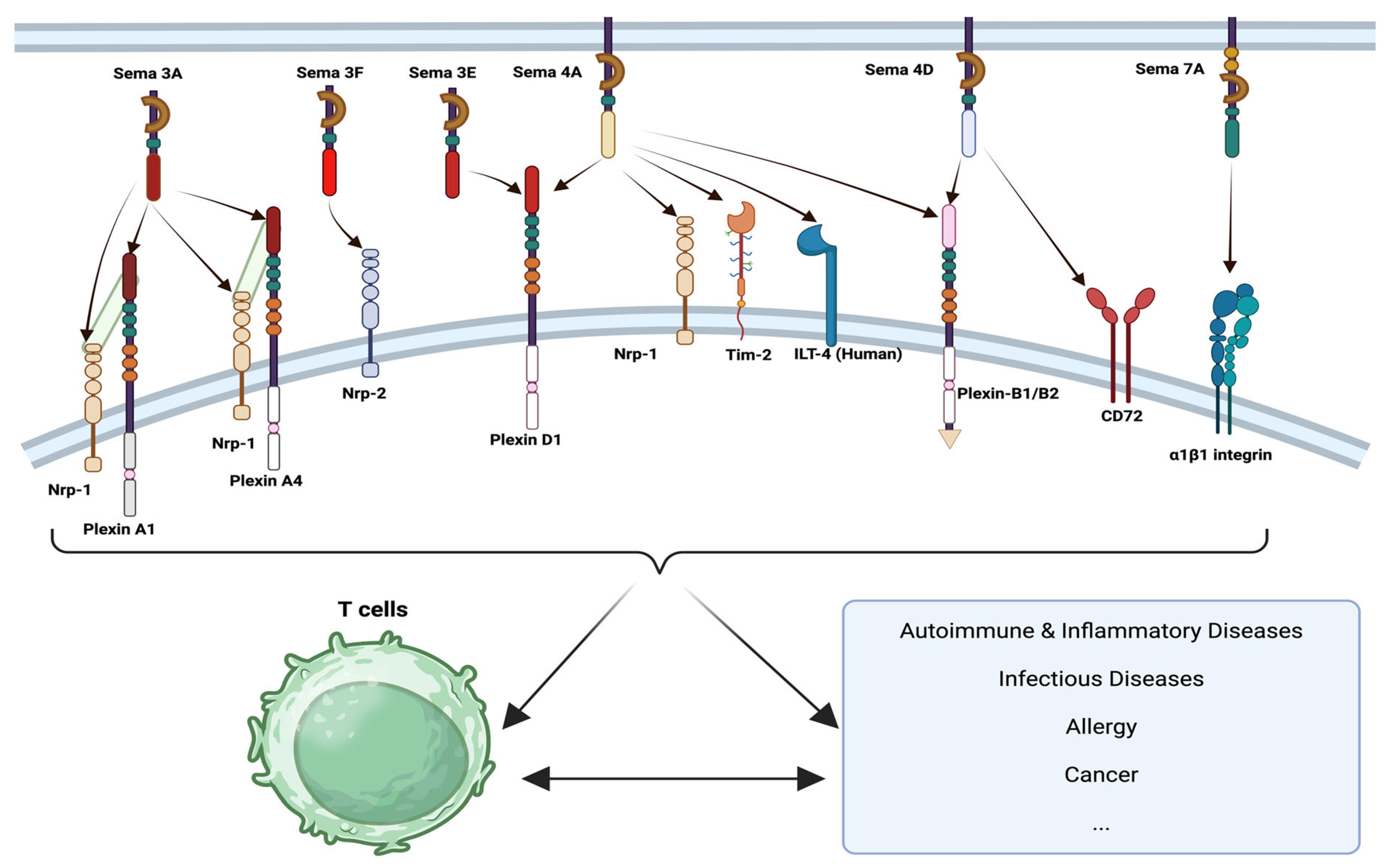
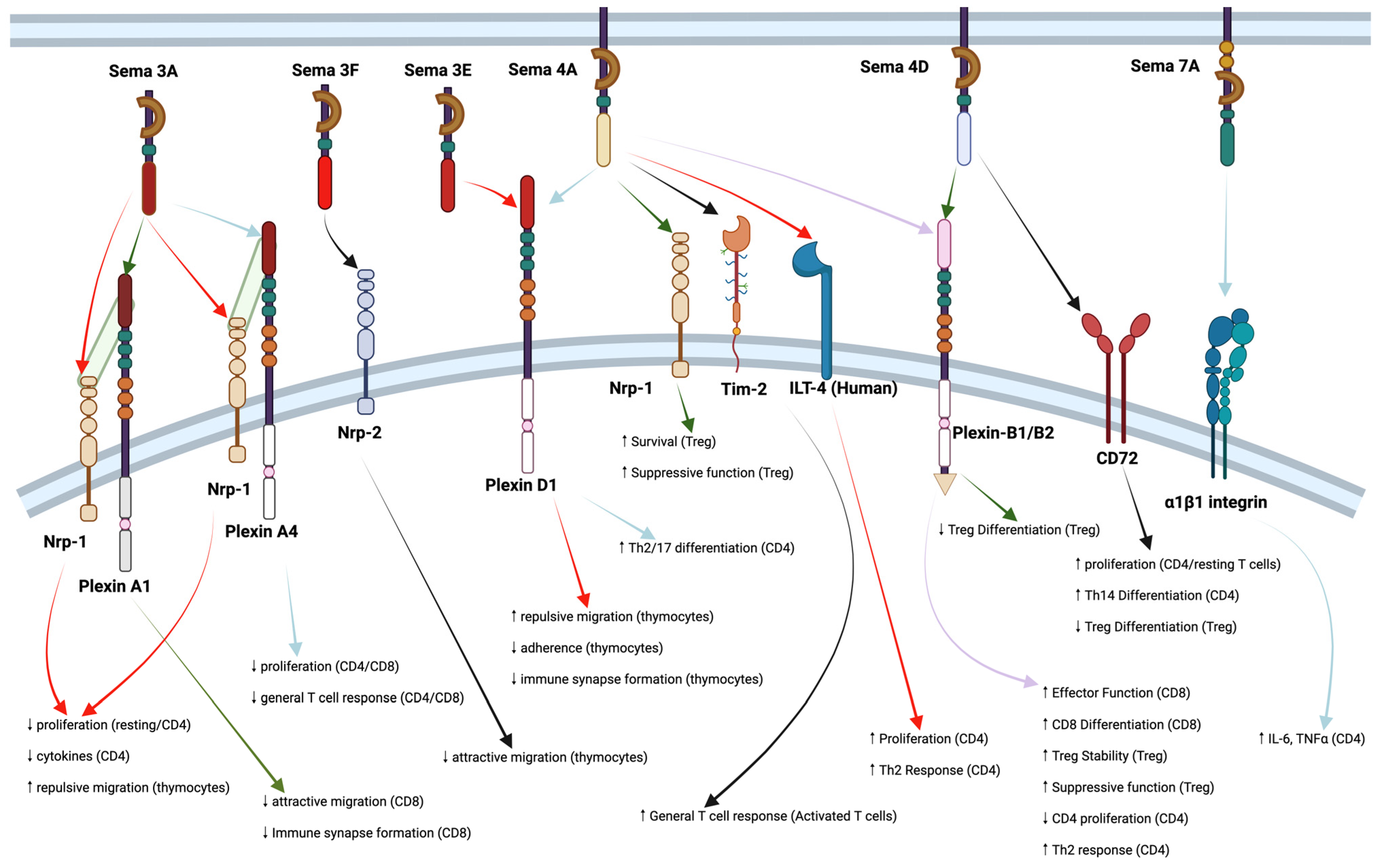
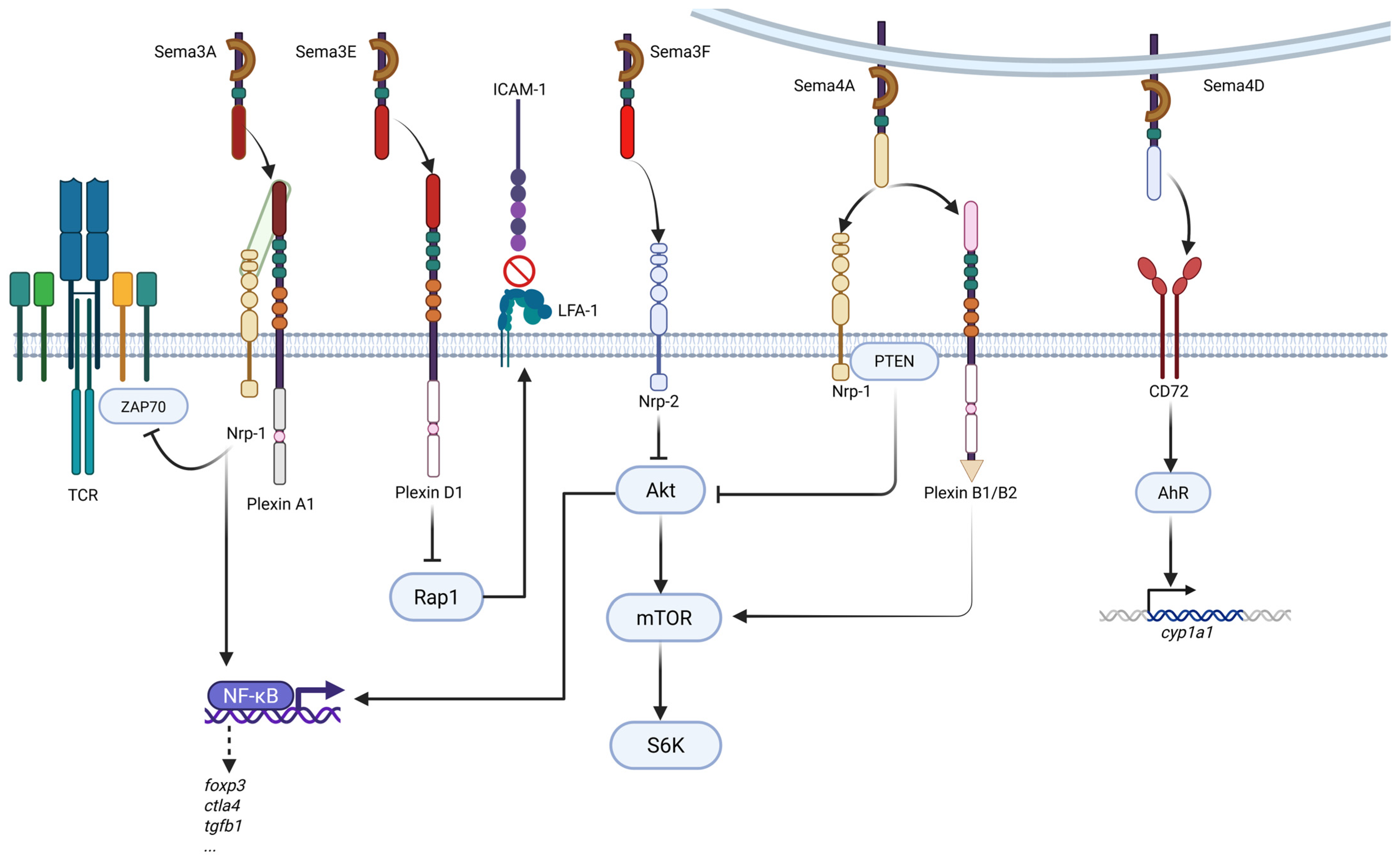
- Multiple members of semaphorin family are involved in regulating diverse T cell responses.
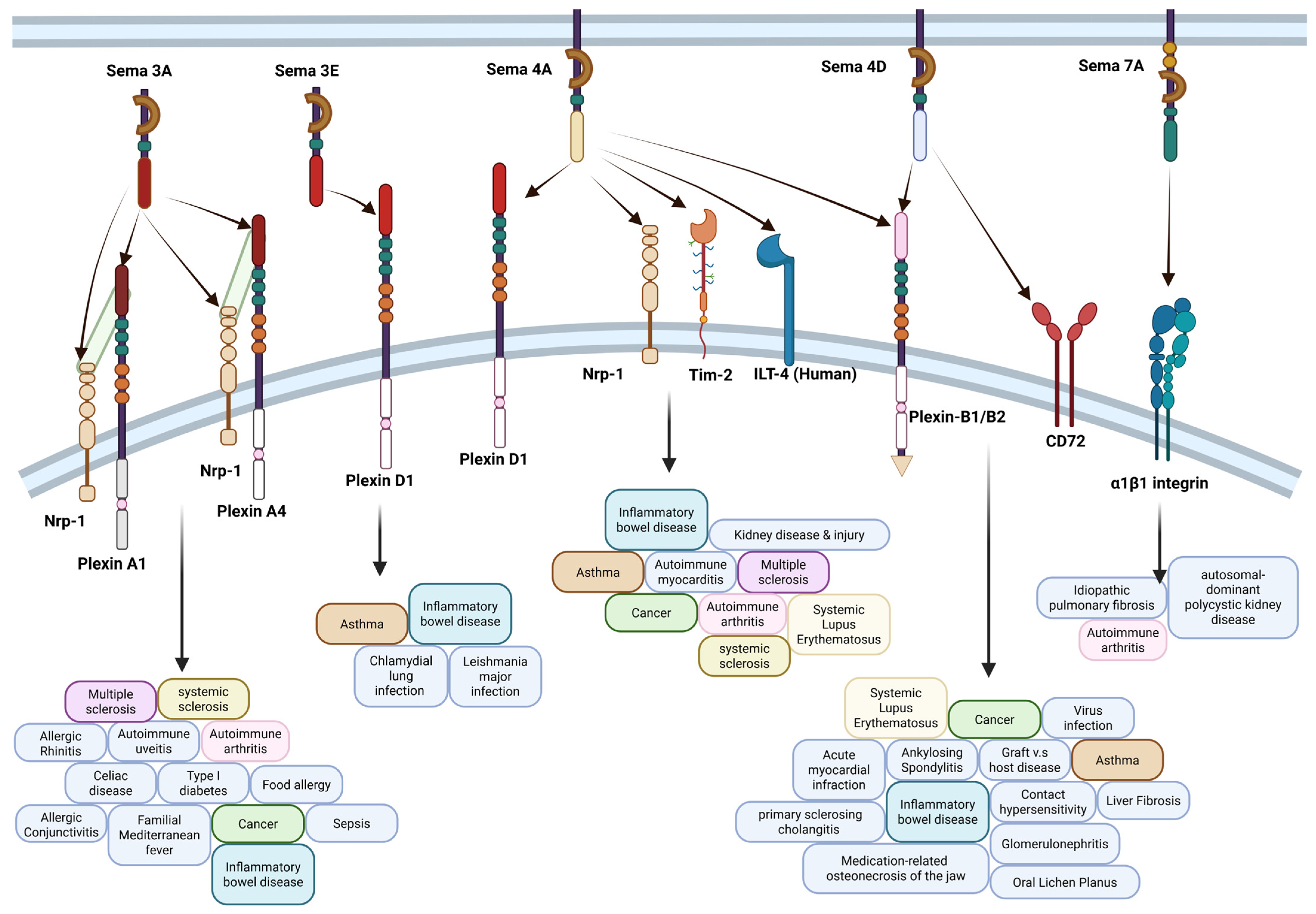
- Dys-regulation of the semaphorin associated with multiple human diseases.
- Similar novel immune-regulatory functions of semaphorins may exist in natural killer cells.
- A good understanding of the semaphorin and its cognate receptor(s) signaling pathway will reveal novel therapeutic targets.
Abstract
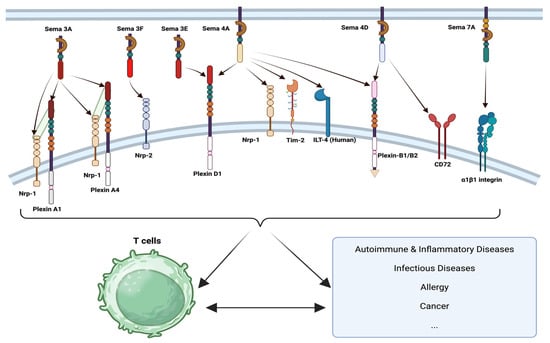
1. Introduction
2. Class 3 Semaphorins: Activation Dependent Modulation of T Cell Responses
2.1. Semaphorin 3A
2.2. Semaphorin 3E
2.3. Semaphorin 3F
3. Class 4 Semaphorins: Multifaceted Orchestrators of T Cell Activation, Differentiation, and Effector Function
3.1. Semaphorin 4A
3.2. Semaphorin 4D
4. Class 7 Semaphorins
Semaphorins 7A
5. Perspectives and Future Directions
6. Conclusions

| Semaphorin | Disease/Condition | Expression Change in Disease | Assessed Source | T Cell Alteration in the Disease | T Cell Related Effect of Sema Treatment | Evidence Type | Reference(s) |
|---|---|---|---|---|---|---|---|
| Sema3A | Allergic conjunctivitis | N/A | N/A | ↑ Th1/Th2 responses | ↓ T cell proliferation, ↓ IL-4, IL-5, IL-13, IL-17, TNFα, IFN γ, ↑ IL-10 by Sema3A treatment | Mouse | [16,136] |
| Allergic Rhinitis | ↓ | Serum | ↑ Th2 responses | ↓ T cell proliferation, ↓ Th17 response, ↑ Treg | Human + mouse | [6,17,137] | |
| Autoimmune arthritis | ↓ | T cell/PBMC | ↑ Nrp-1, Plexin-A1/A4 on CD4+ and CD8+ T cells | ↓ IFN γ, IL-17 ↑ IL-10 | Human + mouse | [10] | |
| Autoimmune uveitis | ↓ | Serum | ↑ IL-17, TNF-α, and IL-1β | ↓ Th17 by inhibitor of Sema3A-targeting miRNA | Mouse | [12] | |
| Cancer (COS-7, NY-ESO-1 tumor antigen) | Negatively correlates with T cell function | COS-7 Cell line | ↓ cytokine production and cytotoxicity, ↓ CD8 T cell adhesion and immune synapse formation | ↑ proliferation, cytokine production and target recognition | Human | [14,18] | |
| Celiac disease | ↑ | Serum/T cell | ↓ Treg expressed Sema3A, ↓ Serum IgA | N/A | Human | [13] | |
| Diabetes | ↓ | T cells | ↓ Total T cell count, ↓ DN thymocytes, ↑ CD4/CD8 SP T cells, ↓ Sema3A induced migration | N/A | Mouse | [27] | |
| Familial Mediterranean fever | ↓ | Serum/Treg | ↓ Treg percentage | N/A | Human | [9,138] | |
| Food allergy | N/A | N/A | ↑ ER stress in type 1 Treg (Tr1) | ↓ ER stress, ↑ regulatory ability of Tr1 | Human | [22] | |
| Inflammatory Bowel Disease | ↓ | Serum/Treg | ↑ CD4 T cell frequency in intestinal tissue | N/A | Human | [5,139] | |
| Multiple sclerosis | ↓ | Serum/Treg | ↑ Th1, Th17, and CD8+ T response | ↑ T cell migration by overexpression of Sema3A signal transducer protein CRMP2 | Human | [7,8,25,140] | |
| ↑ Sema3A signal Transducing protein CRMP2 | T cells | ||||||
| Sepsis | ↑ | Serum | ↑ T cell anergy, ↑ Sema3A expression by T cells, ↑ Foxp3 expression in CD4T cells | ↓ T cell anergy, ↓ Treg regulatory functions by blocking Sema3A/Nrp-1 Axis | Mouse | [20,21] | |
| Systemic sclerosis | ↓ | Serum/Treg | ↑ Th2, Th17; ↓ Treg frequency | N/A | Human | [8,141] | |
| Sema3C | Rheumatoid arthritis | ↑ | Synovial tissue/macrophage/synovial fibroblasts | ↑ Th1, Th17, Tph; ↓ Treg frequency | N/A | Human | [10,136,142,143] |
| Sema3E | Asthma | ↓ | Airway DCs/macrophages | ↑ Th2/Th17 response | ↓ Allergic cytokine and antibody responses, ↓ DC priming of co-cultured T cells | Mouse | [32,33,34,138] |
| IBD | ↓ colonic tissue | Serum | ↑ CD4 T cell frequency in intestinal tissue | ↓ IL-4/10 ↑ IL-17/IFN γ | Human + Mouse | [139,144] | |
| Chlamydial lung infection | ↑ | Lung tissue | ↑ Th1 Response under Sema3E Deficiency | ↓ Treg, ↓ IL-2, IL-10; ↑ IFN γ | Mouse | [36,37] | |
| Leishmania major Infection | ↑ | Cutaneous site of infection | ↑ CD4+ T cell response | ↓ Th1 differentiation | Mouse | [38] |
| Semaphorin | Disease/Condition | Expression Change in Disease | Assessed Source | T Cell Alteration in the Disease | Effect of Sema Treatment | Evidence Type | Reference |
|---|---|---|---|---|---|---|---|
| Sema4A | Asthma | ↑ | Lung tissue/DC/CD4 T cells | ↑ allergic airway response, ↑ Th2 response, ↓ Tregs, in Sema4A deficient mice | ↓ Th2 response, ↑ Tregs | Mouse | [54,55,58,59,140,145,146] |
| autoimmune myocarditis | N/A | N/A | ↑ IL-4 and IL-10 under Sema4A Deficient mice | N/A | Mouse | [46] | |
| Cancer (LUAD, HNSCC) | Positively correlates with survival | Tumor/T cells | ↑ CD8 activation/infiltration by overexpression of Sema4A; Treg mediated tumor tolorange by blocking Sema4A/Nrp-1 Axis | N/A | Human + mouse | [61,64] | |
| IBD | ↓ | Serum | ↑ CD4 T cell frequency in intestinal tissue | N/A | Human | [5,139] | |
| kidney ischemia reperfusion injury | N/A | N/A | ↑ Th1, Th17, and γδ T cell responses | ↓ TNFα, IL-6 and CCL-2, ↓ Akt-mTOR pathway, ↑ Treg | Mouse | [62,147] | |
| Multiple sclerosis | ↑ | Serum/DC/T cell | ↑ Th17 response ↓ Th2 response | N/A | Human + mouse | [7,47,48,49,50,140] | |
| Rheumatoid arthritis | ↑ | Serum/CD4+ T cells | ↑ Th1, Th17, Tph; ↓ Treg frequency | N/A | Human | [45,143] | |
| Systemic Lupus Erythematosus | ↑ | Serum/CD4+ T cells | ↑ CD4+ T cell activation and T cell help | N/A | Human | [45,148] | |
| Systemic sclerosis | ↑ | Serum/Monocytes/CD4+ T cells | ↑ Th17 response | N/A | Human | [51] | |
| Sema4D | Acute myocardial infarction | ↑ | serum | ↑ CD4+ T cell infiltration, Th1 response | ↑ CD8 T cell effector functions | Human | [89,149] |
| Ankylosing Spondylitis | Positively correlates with severity | serum | ↑ IL-17, ↑ C-reactive protein | ↑ CD4 T cell proliferation, ↑ Th17, ↓ Treg | Human | [84] | |
| Asthma | N/A | N/A | ↑ Th2/Th17 response | ↓ IL-13, IL-5, IL-6, IL-17a and TGF | Mouse | [32,33,34,81,138,146] | |
| Colitis | N/A | Showed expression on γδ T cells | ↑ CD4 T cell frequency in intestinal tissue | ↓ proliferation and γδT cells in Sema4D deficient mice | Mouse | [93,139] | |
| Contact hypersensitivity | N/A | N/A | ↑ Hapten specific T cells | ↓ CD4/CD8 T cell infiltration ↓ IL-1β, IL-6, IFNγ in Sema4D defecient mice | Mouse | [80,150] | |
| Glomerulonephritis | N/A | N/A | ↑ Th1, Th17 responses | ↓ IL-4/IL-10, ↓ CD4+ T cell ↓ T cell activation in Sema4D deficiency | Mouse | [69,151] | |
| Graft vs. Host Disease | Deficiency improves survival | T cells | ↑ Th1, Th17 responses | ↓ IL-2, IL-12, TNFα, IFNγ, ↓ T cell expansion under Sema4D deficiency | Mouse | [82,152] | |
| liver fibrosis | ↑ | liver tissue | ↑ Th17, ↓ Tregs | ↓ Th1, Th2, and Th17 populations, ↑ Tbet expression in Tregs in Sema4D deficient mice | Mouse | [83,153] | |
| Medication-related osteonecrosis of the jaw | N/A | N/A | ↑ Infiltration of γδT cells | ↓ TNFα in Sema4D deficient mice | Mouse | [94] | |
| Oral Lichen Planus | ↑ | OLP tissue/serum | ↑ CD8+ T cell infiltration, ↑ Th17/Treg ratio | ↑ CD8 T cell migration and infiltration | Human | [72,148,149,154,155] | |
| primary sclerosing cholangitis | K849T mutation of Sema4D | Autosom | ↑ T cell proliferation ↓ IFNγ production | N/A | Human | [74] | |
| Systemic Lupus Erythematosus | N/A | Serum/T cells/B cells | ↑ CD4+ T cell activation and T cell help | N/A | Mouse | [88,148] | |
| Cancer (multiple cancer types) | ↑ Membrane bound isoform | Tumor/T cells/Bcells | T cell response varies upon cancer types | ↑ CD8 T cell effector functions | Human | [100] | |
| Virus Infection | |||||||
| HBV | ↑ on cells, ↓ in soluble form | CD4, CD8 T cells/NK cells | ↓ CD8+ T cell | ↑ T cell response and viral clearance | Human + Mouse | [77,156] | |
| Hepatitis C | ↓ | CD8 T cells | ↓ CD8 T cells, ↓ effector/central memory ratio of CD8 T cells | N/A | Human | [99] | |
| HIV | Altered Differently in T cell subsets | T cells | Altered T cell activation, ↑ PD-1/PD-L1 on T cells | N/A | Human | [91,95,97] | |
| Human Hantaan Virus | ↑ | CD8 T cells | ↑ CD8lowCD100+ T. ↓ CD8low CD100− T cells | N/A | Human | [98] | |
| Lymphotropic Virus Type 1 | ↑ | CD4 T cells | Altered CD4+ T cell clonal expansion | N/A | Human | [96,157] |
| Semaphorin | Disease/Condition | Expression Change in Disease | Assessed Source | T Cell Alteration in the Disease | Effect of Sema Treatment | Evidence Type | Reference |
|---|---|---|---|---|---|---|---|
| Sema5A | Chronic Spontaneous Urticaria | ↑ | lesional skin tissue | ↑ IL-17a | ↑ IL-17a in healthy CD4 T cells treated by Sema5A | Human | [133] |
| Rheumatoid arthritis | ↑ | Serum/T cells/NK cells | ↑ Th1, Th17, Tph; ↓ Treg frequency | ↑ T cell proliferation, cytokine production, ↑ RORgt and T-bet in T cells | Human | [131,143] | |
| Sema7A | autosomal-dominant polycystic kidney disease | ↑ | Serum/ CD4 T cells | ↑ Renal CD8+ and CD4+ T cells | N/A | Human | [158,159] |
| Idiopathic pulmonary fibrosis | ↑ | Serum/CD4+ cells/CD19+ cells | ↑ Th2, Th17, Treg responses | ↑ IFNγ, IL-4, IL-17a, ↓ IL-10 | Human, Mouse | [109,160] | |
| Rheumatoid arthritis | Positively correlated with severity | Serum/CD4 T cells | ↑ IFNγ, IL-22, and IL-17 | ↑ RORgt and T-bet on CD4 T cells | Mouse | [107] |
| Common Cellular Functions Between T&NK Cells | T Cells | NK Cells |
|---|---|---|
| Pro-inflammatory cytokines (e.g., IFN-γ, TNF-α, IL-2, IL-7, etc.) | Sema3A↓ (ref: [3,6,10,16,17,18]) | Sema3A↑ (ref: [125]) |
| Sema3E↑ (ref: [36,37]) ↓ (ref: [33,34,35]) | ? | |
| Sema4A↑ (ref: [48,49,50,51,53,56,57,60]) ↓ (ref: [54,58,59]) | ? | |
| Sema4D↑ (ref: [72,74,76,77,80,81,82,83,89]) | Sema4D↑ (ref: [126,128]) | |
| Sema7A↑ (ref: [106,107]) | Sema7A↑ (ref: [132]) | |
| Anti-inflammatory cytokines (e.g., IL-10, TGFβ, etc.) | Sema3A↑ (ref: [6,10,19,20,21,22]) | ? |
| Sema3E↑ (ref: [38]) ↓ (ref: [36,37]) | ? | |
| Sema4A↑ (ref: [55,62,63,64]) ↓ (ref: [46]) | ? | |
| Sema4D↑ (ref: [78]) ↓ (ref: [81,90]) | ? | |
| Sema7A↓ (ref:109]) | ? | |
| Cell Differentiation | Sema3A↓ (ref: [11]) | ? |
| Sema3E↑ (ref: [36,37]) ↓ (ref: [38]) | ? | |
| Sema4A↑ (ref: [48,49,50,56,57]) | ? | |
| Sema4D↑ (ref: [69,71,80,81]) | ? | |
| Tumor infiltration | Sema3A↓ (ref: [14,15]) | Sema3A↑ (ref: [125]) |
| Sema4A↑ (ref: [61]) | ? | |
| Sema4D↓ (ref: [104]) | ? | |
| Cytotoxicity | Sema3A↓ (ref: [14,15]) | ? |
| Sema4D↑ (ref: [72,76,77]) | Sema4D↑ (ref: [126,130]) | |
| Migration | Sema3A↑ (ref: [24,25]) ↓ (ref: [26,27,28]) | ? |
| Sema3E↑ (thymocytes) (ref: [39]) | Sema3E↓ (ref: [124]) | |
| Sema3F↓ (ref: [41]) | ? | |
| Sema4D↑ (ref: [72,80]) ↓ (ref: [100,103]) | ? | |
| Proliferation | Sema3A↓ (ref: [11]) | ? |
| Sema4A↑ (ref: [50,51,55,56]) | ? | |
| Sema4D↑ (ref: [78,79]) | ? | |
| Sema5A↑ (ref: [131]) | Sema5A↑ (ref: [131]) | |
| Antigen presenting cell crosstalk | Sema3E↓ (ref: [40]) | ? |
| Sema3F↓ (ref: [43]) | ? | |
| Sema4A↑ (ref: [47]) | ? | |
| Sema4D↑ (ref: [78,79]) | ? | |
| Sema7A↑ (ref: [106]) | ? | |
| Exhaustion | Sema4D↑ (ref: [100]) | ? |
Author Contributions
Funding
Institutional Review Board Statement
Informed Consent Statement
Data Availability Statement
Acknowledgments
Conflicts of Interest
References
- Vadasz, Z.; Toubi, E. Semaphorins: Their dual role in regulating immune-mediated diseases. Clin. Rev. Allergy Immunol. 2014, 47, 17–25. [Google Scholar] [CrossRef]
- Koncina, E.; Roth, L.; Gonthier, B.; Bagnard, D. Role of semaphorins during axon growth and guidance. Adv. Exp. Med. Biol. 2007, 621, 50–64. [Google Scholar] [CrossRef]
- Lepelletier, Y.; Moura, I.C.; Hadj-Slimane, R.; Renand, A.; Fiorentino, S.; Baude, C.; Shirvan, A.; Barzilai, A.; Hermine, O. Immunosuppressive role of semaphorin-3A on T cell proliferation is mediated by inhibition of actin cytoskeleton reorganization. Eur. J. Immunol. 2006, 36, 1782–1793. [Google Scholar] [CrossRef]
- Cozacov, R.; Halasz, K.; Haj, T.; Vadasz, Z. Semaphorin 3A: Is a key player in the pathogenesis of asthma. Clin. Immunol. 2017, 184, 70–72. [Google Scholar] [CrossRef] [PubMed]
- Vadasz, Z.; Rainis, T.; Nakhleh, A.; Haj, T.; Bejar, J.; Halasz, K.; Toubi, E. The Involvement of Immune Semaphorins in the Pathogenesis of Inflammatory Bowel Diseases (IBDs). PLoS ONE 2015, 10, e0125860. [Google Scholar] [CrossRef] [PubMed]
- Xiang, R.; Xu, Y.; Zhang, W.; Kong, Y.G.; Tan, L.; Chen, S.M.; Deng, Y.Q.; Tao, Z. Z Semaphorin 3A inhibits allergic inflammation by regulating immune responses in a mouse model of allergic rhinitis. Int. Forum Allergy Rhinol. 2019, 9, 528–537. [Google Scholar] [CrossRef] [PubMed]
- Eiza, N.; Garty, M.; Staun-Ram, E.; Miller, A.; Vadasz, Z. The possible involvement of sema3A and sema4A in the pathogenesis of multiple sclerosis. Clin. Immunol. 2022, 238, 109017. [Google Scholar] [CrossRef]
- Rimar, D.; Nov, Y.; Rosner, I.; Slobodin, G.; Rozenbaum, M.; Halasz, K.; Haj, T.; Jiries, N.; Kaly, L.; Boulman, N.; et al. Semaphorin 3A: An immunoregulator in systemic sclerosis. Rheumatol. Int. 2015, 35, 1625–1630. [Google Scholar] [CrossRef]
- Rimar, D.; Rosner, I.; Slobodin, G.; Rozenbaum, M.; Halasz, K.; Jiries, N.; Kaly, L.; Boulman, N.; Vadasz, Z. Semaphorin 3A, a potential immune regulator in familial Mediterranean fever. Clin. Exp. Rheumatol. 2016, 34, S52–S55. [Google Scholar] [CrossRef]
- Catalano, A. The neuroimmune semaphorin-3A reduces inflammation and progression of experimental autoimmune arthritis. J. Immunol. 2010, 185, 6373–6383. [Google Scholar] [CrossRef]
- Solomon, B.D.; Mueller, C.; Chae, W.J.; Alabanza, L.M.; Bynoe, M.S. Neuropilin-1 attenuates autoreactivity in experimental autoimmune encephalomyelitis. Proc. Natl. Acad. Sci. USA 2011, 108, 2040–2045. [Google Scholar] [CrossRef]
- Li, M.; Gao, X.; Liu, K.; Bao, N.; Jiang, Z. MiR-379-5p aggravates experimental autoimmune uveitis in mice via the regulation of SEMA3A. Autoimmunity 2021, 54, 275–283. [Google Scholar] [CrossRef] [PubMed]
- Kessel, A.; Lin, C.; Vadasz, Z.; Peri, R.; Eiza, N.; Berkowitz, D. The association between semaphorin 3A levels and gluten-free diet in patients with celiac disease. Clin. Immunol. 2017, 184, 73–76. [Google Scholar] [CrossRef]
- Barnkob, M.B.; Michaels, Y.S.; André, V.; Macklin, P.S.; Gileadi, U.; Valvo, S.; Rei, M.; Kulicke, C.; Chen, J.L.; Jain, V.; et al. Semmaphorin 3 A causes immune suppression by inducing cytoskeletal paralysis in tumour-specific CD8+ T cells. Nat. Commun. 2024, 15, 3173. [Google Scholar] [CrossRef] [PubMed]
- Leclerc, M.; Voilin, E.; Gros, G.; Corgnac, S.; de Montpréville, V.; Validire, P.; Bismuth, G.; Mami-Chouaib, F. Regulation of antitumour CD8 T-cell immunity and checkpoint blockade immunotherapy by Neuropilin-1. Nat. Commun. 2019, 10, 3345. [Google Scholar] [CrossRef]
- Tanaka, J.; Tanaka, H.; Mizuki, N.; Nomura, E.; Ito, N.; Nomura, N.; Yamane, M.; Hida, T.; Goshima, Y.; Hatano, H.; et al. Semaphorin 3A controls allergic and inflammatory responses in experimental allergic conjunctivitis. Int. J. Ophthalmol. 2015, 8, 1–10. [Google Scholar] [CrossRef] [PubMed]
- Liu, H.; Xia, J.; Chen, Y.; Ai, J.; Wang, T.; Tan, G. Immunosuppressive Regulation of Dendritic Cells and T Cells in Allergic Rhinitis by Semaphorin 3A. Am. J. Rhinol. Allergy 2021, 35, 846–853. [Google Scholar] [CrossRef]
- Catalano, A.; Caprari, P.; Moretti, S.; Faronato, M.; Tamagnone, L.; Procopio, A. Semaphorin-3A is expressed by tumor cells and alters T-cell signal transduction and function. Blood 2006, 107, 3321–3329. [Google Scholar] [CrossRef]
- Gao, Y.; Li, L.; Liu, Y.; Li, W.; Wang, Z.; Shou, S.; Chai, Y. Effect of semaphorin-3A on the cellular stability of CD4+CD25+ regulatory T cells induced by lipopolysaccharide. Zhonghua Wei Zhong Bing Ji Jiu Yi Xue 2020, 32, 1454–1460. [Google Scholar] [CrossRef]
- Gao, Y.; Wang, C.; Wang, Z.; Li, W.; Liu, Y.; Shou, S.; Chai, Y. Semaphorin 3A contributes to sepsis-induced immunosuppression by impairing CD4+ T cell anergy. Mol. Med. Rep. 2021, 23, 302. [Google Scholar] [CrossRef]
- Gao, Y.L.; Wang, C.X.; Wang, Z.Y.; Li, W.J.; Liu, Y.C.; Shou, S.T.; Chai, Y.F. Targeting Neuropilin-1 Suppresses the Stability of CD4+ CD25+ Regulatory T Cells via the NF-κB Signaling Pathway in Sepsis. Infect. Immun. 2021, 89, e00399-20. [Google Scholar] [CrossRef]
- Gao, P.; Song, S.; Wang, Y.; Liu, H.; Wang, X.; Shu, Q.; Yang, P.; Zheng, P. Semaphorin 3 a restores the ability of type 1 regulatory T cells to suppress food allergy. Immunol. Res. 2024, 72, 320–330. [Google Scholar] [CrossRef]
- Lepelletier, Y.; Lecourt, S.; Renand, A.; Arnulf, B.; Vanneaux, V.; Fermand, J.P.; Menasché, P.; Domet, T.; Marolleau, J.P.; Hermine, O.; et al. Galectin-1 and semaphorin-3A are two soluble factors conferring T-cell immunosuppression to bone marrow mesenchymal stem cell. Stem Cells Dev. 2010, 19, 1075–1079. [Google Scholar] [CrossRef]
- Lepelletier, Y.; Smaniotto, S.; Hadj-Slimane, R.; Villa-Verde, D.M.; Nogueira, A.C.; Dardenne, M.; Hermine, O.; Savino, W. Control of human thymocyte migration by Neuropilin-1/Semaphorin-3A-mediated interactions. Proc. Natl. Acad. Sci. USA 2007, 104, 5545–5550. [Google Scholar] [CrossRef] [PubMed]
- Vincent, P.; Collette, Y.; Marignier, R.; Vuaillat, C.; Rogemond, V.; Davoust, N.; Malcus, C.; Cavagna, S.; Gessain, A.; Machuca-Gayet, I.; et al. A role for the neuronal protein collapsin response mediator protein 2 in T lymphocyte polarization and migration. J. Immunol. 2005, 175, 7650–7660. [Google Scholar] [CrossRef] [PubMed]
- Garcia, F.; Lepelletier, Y.; Smaniotto, S.; Hadj-Slimane, R.; Dardenne, M.; Hermine, O.; Savino, W. Inhibitory effect of semaphorin-3A, a known axon guidance molecule, in the human thymocyte migration induced by CXCL12. J. Leukoc. Biol. 2012, 91, 7–13. [Google Scholar] [CrossRef]
- Francelin, C.; Geniseli, I.; Nagib, P.; Gameiro, J.; Savino, W.; Verinaud, L. Semaphorin-3A-Related Reduction of Thymocyte Migration in Chemically Induced Diabetic Mice. Neuroimmunomodulation 2020, 27, 28–37. [Google Scholar] [CrossRef]
- Lins, M.P.; Silva, E.C.O.; Silva, G.R.; Souza, S.T.; Medeiros, N.C.; Fonseca, E.J.S.; Smaniotto, S. Association between biomechanical alterations and migratory ability of semaphorin-3A-treated thymocytes. Biochim. Biophys. Acta (BBA)-Gen. Subj. 2018, 1862, 816–824. [Google Scholar] [CrossRef]
- Matloubi, M.; Koussih, L.; Shan, L.; Lukawy, C.; Gounni, A.S. Targeting the Semaphorin3E-plexinD1 complex in allergic asthma. Pharmacol. Ther. 2023, 242, 108351. [Google Scholar] [CrossRef] [PubMed]
- Christensen, C.R.; Klingelhöfer, J.; Tarabykina, S.; Hulgaard, E.F.; Kramerov, D.; Lukanidin, E. Transcription of a novel mouse semaphorin gene, M-semaH, correlates with the metastatic ability of mouse tumor cell lines. Cancer Res. 1998, 58, 1238–1244. [Google Scholar]
- Eiza, N.; Sabag, A.D.; Kessler, O.; Neufeld, G.; Vadasz, Z. CD72-semaphorin3A axis: A new regulatory pathway in systemic lupus erythematosus. J. Autoimmun. 2023, 134, 102960. [Google Scholar] [CrossRef] [PubMed]
- Movassagh, H.; Shan, L.; Chakir, J.; McConville, J.F.; Halayko, A.J.; Koussih, L.; Gounni, A.S. Expression of semaphorin 3E is suppressed in severe asthma. J. Allergy Clin. Immunol. 2017, 140, 1176–1179. [Google Scholar] [CrossRef]
- Aktar, A.; Shan, L.; Koussih, L.; Almiski, M.S.; Basu, S.; Halayko, A.; Okwor, I.; Uzonna, J.E.; Gounni, A.S. PlexinD1 Deficiency in Lung Interstitial Macrophages Exacerbates House Dust Mite-Induced Allergic Asthma. J. Immunol. 2022, 208, 1272–1279. [Google Scholar] [CrossRef] [PubMed]
- Movassagh, H.; Shan, L.; Mohammed, A.; Halayko, A.J.; Gounni, A.S. Semaphorin 3E Deficiency Exacerbates Airway Inflammation, Hyperresponsiveness, and Remodeling in a Mouse Model of Allergic Asthma. J. Immunol. 2017, 198, 1805–1814. [Google Scholar] [CrossRef]
- Movassagh, H.; Koussih, L.; Shan, L.; Gounni, A.S. The regulatory role of semaphorin 3E in allergic asthma. Int. J. Biochem. Cell Biol. 2019, 106, 68–73. [Google Scholar] [CrossRef] [PubMed]
- Thomas, R.; Wang, S.; Rashu, R.; Peng, Y.; Gounni, A.S.; Yang, X. Exogenous Semaphorin 3E treatment protects against chlamydial lung infection in mice. Front. Immunol. 2022, 13, 882412. [Google Scholar] [CrossRef]
- Thomas, R.; Wang, S.; Shekhar, S.; Peng, Y.; Qiao, S.; Zhang, C.; Shan, L.; Movassagh, H.; Gounni, A.S.; Yang, J.; et al. Semaphorin 3E Protects against Chlamydial Infection by Modulating Dendritic Cell Functions. J. Immunol. 2021, 206, 1251–1265. [Google Scholar] [CrossRef]
- Ikeogu, N.M.; Edechi, C.A.; Akaluka, G.N.; Feiz-Barazandeh, A.; Zayats, R.R.; Salako, E.S.; Onwah, S.S.; Onyilagha, C.; Jia, P.; Mou, Z.; et al. Semaphorin 3E Promotes Susceptibility to Leishmania major Infection in Mice by Suppressing CD4+ Th1 Cell Response. J. Immunol. 2021, 206, 588–598. [Google Scholar] [CrossRef]
- Choi, Y.I.; Duke-Cohan, J.S.; Ahmed, W.B.; Handley, M.A.; Mann, F.; Epstein, J.A.; Clayton, L.K.; Reinherz, E.L. PlexinD1 glycoprotein controls migration of positively selected thymocytes into the medulla. Immunity 2008, 29, 888–898. [Google Scholar] [CrossRef]
- Ueda, Y.; Kondo, N.; Ozawa, M.; Yasuda, K.; Tomiyama, T.; Kinashi, T. Sema3e/Plexin D1 Modulates Immunological Synapse and Migration of Thymocytes by Rap1 Inhibition. J. Immunol. 2016, 196, 3019–3031. [Google Scholar] [CrossRef]
- Mendes-da-Cruz, D.A.; Brignier, A.C.; Asnafi, V.; Baleydier, F.; Messias, C.V.; Lepelletier, Y.; Bedjaoui, N.; Renand, A.; Smaniotto, S.; Canioni, D.; et al. Semaphorin 3F and neuropilin-2 control the migration of human T-cell precursors. PLoS ONE 2014, 9, e103405. [Google Scholar] [CrossRef]
- Nakayama, H.; Bruneau, S.; Kochupurakkal, N.; Coma, S.; Briscoe, D.M.; Klagsbrun, M. Regulation of mTOR Signaling by Semaphorin 3F-Neuropilin 2 Interactions In Vitro and In Vivo. Sci. Rep. 2015, 5, 11789. [Google Scholar] [CrossRef] [PubMed]
- Curreli, S.; Arany, Z.; Gerardy-Schahn, R.; Mann, D.; Stamatos, N.M. Polysialylated neuropilin-2 is expressed on the surface of human dendritic cells and modulates dendritic cell-T lymphocyte interactions. J. Biol. Chem. 2007, 282, 30346–30356. [Google Scholar] [CrossRef]
- Wang, Y.; Deng, W.; Liu, J.; Yang, Q.; Chen, Z.; Su, J.; Xu, J.; Liang, Q.; Li, T.; Liu, L.; et al. IKKβ increases neuropilin-2 and promotes the inhibitory function of CD9+ Bregs to control allergic diseases. Pharmacol. Res. 2022, 185, 106517. [Google Scholar] [CrossRef]
- Cavalcanti, C.A.J.; Germoglio, V.; de Azevêdo Silva, J.; Glesse, N.; Vianna, P.; Cechim, G.; Monticielo, O.A.; Xavier, R.M.; Brenol, J.C.T.; Brenol, C.V.; et al. T-cell specific upregulation of Sema4A as risk factor for autoimmunity in systemic lupus erythematosus and rheumatoid arthritis. Autoimmunity 2020, 53, 65–70. [Google Scholar] [CrossRef]
- Makino, N.; Toyofuku, T.; Takegahara, N.; Takamatsu, H.; Okuno, T.; Nakagawa, Y.; Kang, S.; Nojima, S.; Hori, M.; Kikutani, H.; et al. Involvement of Sema4A in the progression of experimental autoimmune myocarditis. FEBS Lett. 2008, 582, 3935–3940. [Google Scholar] [CrossRef]
- Leitner, D.F.; Todorich, B.; Zhang, X.; Connor, J.R. Semaphorin4A Is Cytotoxic to Oligodendrocytes and Is Elevated in Microglia and Multiple Sclerosis. ASN Neuro 2015, 7, 1759091415587502. [Google Scholar] [CrossRef]
- Nakatsuji, Y.; Okuno, T.; Moriya, M.; Sugimoto, T.; Kinoshita, M.; Takamatsu, H.; Nojima, S.; Kimura, T.; Kang, S.; Ito, D.; et al. Elevation of Sema4A implicates Th cell skewing and the efficacy of IFN-β therapy in multiple sclerosis. J. Immunol. 2012, 188, 4858–4865. [Google Scholar] [CrossRef] [PubMed]
- Koda, T.; Namba, A.; Kinoshita, M.; Nakatsuji, Y.; Sugimoto, T.; Sakakibara, K.; Tada, S.; Shimizu, M.; Yamashita, K.; Takata, K.; et al. Sema4A is implicated in the acceleration of Th17 cell-mediated neuroinflammation in the effector phase. J. Neuroinflamm. 2020, 17, 82. [Google Scholar] [CrossRef]
- Kumanogoh, A.; Marukawa, S.; Suzuki, K.; Takegahara, N.; Watanabe, C.; Ch’ng, E.; Ishida, I.; Fujimura, H.; Sakoda, S.; Yoshida, K.; et al. Class IV semaphorin Sema4A enhances T-cell activation and interacts with Tim-2. Nature 2002, 419, 629–633. [Google Scholar] [CrossRef] [PubMed]
- Carvalheiro, T.; Affandi, A.J.; Malvar-Fernández, B.; Dullemond, I.; Cossu, M.; Ottria, A.; Mertens, J.S.; Giovannone, B.; Bonte-Mineur, F.; Kok, M.R.; et al. Induction of Inflammation and Fibrosis by Semaphorin 4A in Systemic Sclerosis. Arthritis Rheumatol. 2019, 71, 1711–1722. [Google Scholar] [CrossRef]
- Yang, Y.; Wang, Q.; Wang, W.; Wei, S.; Zeng, Q.; Zhang, A. Semaphorin 4A antibody alleviates arsenic-induced hepatotoxicity in mice via inhibition of AKT2/NF-κB inflammatory signaling. Toxicol. Appl. Pharmacol. 2021, 410, 115364. [Google Scholar] [CrossRef]
- Lu, N.; Li, Y.; Zhang, Z.; Xing, J.; Sun, Y.; Yao, S.; Chen, L. Human Semaphorin-4A drives Th2 responses by binding to receptor ILT-4. Nat. Commun. 2018, 9, 742. [Google Scholar] [CrossRef]
- Morihana, T.; Goya, S.; Mizui, M.; Yasui, T.; Prasad, D.V.; Kumanogoh, A.; Tamura, M.; Shikina, T.; Maeda, Y.; Iwamoto, Y.; et al. An inhibitory role for Sema4A in antigen-specific allergic asthma. J. Clin. Immunol. 2013, 33, 200–209. [Google Scholar] [CrossRef]
- Lynch, J.P.; Werder, R.B.; Loh, Z.; Sikder, M.A.A.; Curren, B.; Zhang, V.; Rogers, M.J.; Lane, K.; Simpson, J.; Mazzone, S.B.; et al. Plasmacytoid dendritic cells protect from viral bronchiolitis and asthma through semaphorin 4a-mediated T reg expansion. J. Exp. Med. 2018, 215, 537–557. [Google Scholar] [CrossRef]
- Kumanogoh, A.; Shikina, T.; Suzuki, K.; Uematsu, S.; Yukawa, K.; Kashiwamura, S.; Tsutsui, H.; Yamamoto, M.; Takamatsu, H.; Ko-Mitamura, E.P.; et al. Nonredundant roles of Sema4A in the immune system: Defective T cell priming and Th1/Th2 regulation in Sema4A-deficient mice. Immunity 2005, 22, 305–316. [Google Scholar] [CrossRef]
- Carvalheiro, T.; Rafael-Vidal, C.; Malvar-Fernandez, B.; Lopes, A.P.; Pego-Reigosa, J.M.; Radstake, T.R.D.J.; Garcia, S. Semaphorin4A-Plexin D1 Axis Induces Th2 and Th17 While Represses Th1 Skewing in an Autocrine Manner. Int. J. Mol. Sci. 2020, 21, 6965. [Google Scholar] [CrossRef]
- Nkyimbeng-Takwi, E.H.; Shanks, K.; Smith, E.; Iyer, A.; Lipsky, M.M.; Detolla, L.J.; Kikutani, H.; Keegan, A.D.; Chapoval, S.P. Neuroimmune semaphorin 4A downregulates the severity of allergic response. Mucosal Immunol. 2012, 5, 409–419. [Google Scholar] [CrossRef]
- Mogie, G.; Shanks, K.; Nkyimbeng-Takwi, E.H.; Smith, E.; Davila, E.; Lipsky, M.M.; DeTolla, L.J.; Keegan, A.D.; Chapoval, S.P. Neuroimmune semaphorin 4A as a drug and drug target for asthma. Int. Immunopharmacol. 2013, 17, 568–575. [Google Scholar] [CrossRef]
- Ito, D.; Nojima, S.; Nishide, M.; Okuno, T.; Takamatsu, H.; Kang, S.; Kimura, T.; Yoshida, Y.; Morimoto, K.; Maeda, Y.; et al. mTOR Complex Signaling through the SEMA4A-Plexin B2 Axis Is Required for Optimal Activation and Differentiation of CD8+ T Cells. J. Immunol. 2015, 195, 934–943. [Google Scholar] [CrossRef]
- Naito, Y.; Koyama, S.; Masuhiro, K.; Hirai, T.; Uenami, T.; Inoue, T.; Osa, A.; Machiyama, H.; Watanabe, G.; Sax, N.; et al. Tumor-derived semaphorin 4A improves PD-1-blocking antibody efficacy by enhancing CD8+ T cell cytotoxicity and proliferation. Sci. Adv. 2023, 9, eade0718. [Google Scholar] [CrossRef]
- Xu, J.; Li, X.; Yuan, Q.; Wang, C.; Xu, L.; Wei, X.; Liu, H.; Yu, B.; An, Z.; Zhao, Y.; et al. The semaphorin 4A-neuropilin 1 axis alleviates kidney ischemia reperfusion injury by promoting the stability and function of regulatory T cells. Kidney Int. 2021, 100, 1268–1281. [Google Scholar] [CrossRef]
- Chapoval, S.P.; Hritzo, M.; Qi, X.; Tamagnone, L.; Golding, A.; Keegan, A.D. Semaphorin 4A Stabilizes Human Regulatory T Cell Phenotype via Plexin B1. Immunohorizons 2019, 3, 71–87. [Google Scholar] [CrossRef]
- Delgoffe, G.M.; Woo, S.R.; Turnis, M.E.; Gravano, D.M.; Guy, C.; Overacre, A.E.; Bettini, M.L.; Vogel, P.; Finkelstein, D.; Bonnevier, J.; et al. Stability and function of regulatory T cells is maintained by a neuropilin-1-semaphorin-4a axis. Nature 2013, 501, 252–256. [Google Scholar] [CrossRef]
- Hall, K.T.; Boumsell, L.; Schultze, J.L.; Boussiotis, V.A.; Dorfman, D.M.; Cardoso, A.A.; Bensussan, A.; Nadler, L.M.; Freeman, G.J. Human CD100, a novel leukocyte semaphorin that promotes B-cell aggregation and differentiation. Proc. Natl. Acad. Sci. USA 1996, 93, 11780–11785. [Google Scholar] [CrossRef]
- Herold, C.; Elhabazi, A.; Bismuth, G.; Bensussan, A.; Boumsell, L. CD100 is associated with CD45 at the surface of human T lymphocytes. Role in T cell homotypic adhesion. J. Immunol. 1996, 157, 5262–5268. [Google Scholar] [CrossRef]
- Bougeret, C.; Mansur, I.G.; Dastot, H.; Schmid, M.; Mahouy, G.; Bensussan, A.; Boumsell, L. Increased surface expression of a newly identified 150-kDa dimer early after human T lymphocyte activation. J. Immunol. 1992, 148, 318–323. [Google Scholar] [CrossRef]
- Chapoval, S.P.; Gao, H.; Fanaroff, R.; Keegan, A.D. Plexin B1 controls Treg numbers, limits allergic airway inflammation, and regulates mucins. Front. Immunol. 2023, 14, 1297354. [Google Scholar] [CrossRef]
- Chapoval, S.P.; Lee, M.; Lemmer, A.; Ajayi, O.; Qi, X.; Neuwald, A.F.; Keegan, A.D. Identifying Function Determining Residues in Neuroimmune Semaphorin 4A. Int. J. Mol. Sci. 2022, 23, 3024. [Google Scholar] [CrossRef]
- Dorfman, D.M.; Shahsafaei, A.; Nadler, L.M.; Freeman, G.J. The leukocyte semaphorin CD100 is expressed in most T-cell, but few B-cell, non-Hodgkin’s lymphomas. Am. J. Pathol. 1998, 153, 255–262. [Google Scholar] [CrossRef]
- Kuklina, E.M.; Nekrasova, I.V. New aspects of the Seam4D-dependent control of lymphocyte activation. Dokl. Biol. Sci. 2017, 473, 84–88. [Google Scholar] [CrossRef]
- Ke, Y.; Dang, E.; Shen, S.; Zhang, T.; Qiao, H.; Chang, Y.; Liu, Q.; Wang, G. Semaphorin4D Drives CD8+ T-Cell Lesional Trafficking in Oral Lichen Planus via CXCL9/CXCL10 Upregulations in Oral Keratinocytes. J. Investig. Dermatol. 2017, 137, 2396–2406. [Google Scholar] [CrossRef]
- Jiang, X.; Björkström, N.K.; Melum, E. Intact CD100-CD72 Interaction Necessary for TCR-Induced T Cell Proliferation. Front. Immunol. 2017, 8, 765. [Google Scholar] [CrossRef]
- Jiang, X.; Bergquist, A.; Löscher, B.S.; Venkatesh, G.; Mold, J.E.; Holm, K.; Laerdahl, J.K.; Skånland, S.S.; Maleki, K.T.; Cornillet, M.; et al. A heterozygous germline CD100 mutation in a family with primary sclerosing cholangitis. Sci. Transl. Med. 2021, 13, eabb0036. [Google Scholar] [CrossRef]
- Kuklina, E.; Nekrasova, I.; Glebezdina, N. Signaling from membrane semaphorin 4D in T lymphocytes. Mol. Immunol. 2021, 129, 56–62. [Google Scholar] [CrossRef]
- Wang, H.M.; Zhang, X.H.; Ye, L.Q.; Zhang, K.; Yang, N.N.; Geng, S.; Chen, J.; Zhao, S.X.; Yang, K.L.; Fan, F.F. Insufficient CD100 shedding contributes to suppression of CD8+ T-cell activity in non-small cell lung cancer. Immunology 2020, 160, 209–219. [Google Scholar] [CrossRef]
- Yang, S.; Wang, L.; Pan, W.; Bayer, W.; Thoens, C.; Heim, K.; Dittmer, U.; Timm, J.; Wang, Q.; Yu, Q.; et al. MMP2/MMP9-mediated CD100 shedding is crucial for inducing intrahepatic anti-HBV CD8 T cell responses and HBV clearance. J. Hepatol. 2019, 71, 685–698. [Google Scholar] [CrossRef]
- Li, M.; O’Sullivan, K.M.; Jones, L.K.; Semple, T.; Kumanogoh, A.; Kikutani, H.; Holdsworth, S.R.; Kitching, A.R. CD100 enhances dendritic cell and CD4+ cell activation leading to pathogenetic humoral responses and immune complex glomerulonephritis. J. Immunol. 2006, 177, 3406–3412. [Google Scholar] [CrossRef]
- Kumanogoh, A.; Suzuki, K.; Ch’ng, E.; Watanabe, C.; Marukawa, S.; Takegahara, N.; Ishida, I.; Sato, T.; Habu, S.; Yoshida, K.; et al. Requirement for the lymphocyte semaphorin, CD100, in the induction of antigen-specific T cells and the maturation of dendritic cells. J. Immunol. 2002, 169, 1175–1181. [Google Scholar] [CrossRef]
- Zhu, Z.; Luo, Y.; Yu, J.; Gao, J.; Zhang, Y.; Xiao, C.; Zhang, C.; Wang, G.; Liu, Y.; Fu, M.; et al. Sema4D is required in both the adaptive and innate immune responses of contact hypersensitivity. Mol. Immunol. 2016, 78, 98–104. [Google Scholar] [CrossRef]
- Shanks, K.; Nkyimbeng-Takwi, E.H.; Smith, E.; Lipsky, M.M.; DeTolla, L.J.; Scott, D.W.; Keegan, A.D.; Chapoval, S.P. Neuroimmune semaphorin 4D is necessary for optimal lung allergic inflammation. Mol. Immunol. 2013, 56, 480–487. [Google Scholar] [CrossRef]
- Duran-Struuck, R.; Tawara, I.; Lowler, K.; Clouthier, S.G.; Weisiger, E.; Rogers, C.; Luker, G.; Kumanogoh, A.; Liu, C.; Ferrara, J.L.; et al. A novel role for the semaphorin Sema4D in the induction of allo-responses. Biol. Blood Marrow Transplant. 2007, 13, 1294–1303. [Google Scholar] [CrossRef]
- Wang, L.; Li, D.; Zhu, Z.; Liao, Y.; Wu, J.; Liu, Y.; Yang, R.; Dai, H.; Wu, Z.; Sun, X. Knockout of Sema4D alleviates liver fibrosis by suppressing AOX1 expression. Pharmacol. Res. 2023, 195, 106886. [Google Scholar] [CrossRef]
- Xie, J.; Wang, Z.; Wang, W. Semaphorin 4D Induces an Imbalance of Th17/Treg Cells by Activating the Aryl Hydrocarbon Receptor in Ankylosing Spondylitis. Front. Immunol. 2020, 11, 2151. [Google Scholar] [CrossRef]
- Shi, W.; Kumanogoh, A.; Watanabe, C.; Uchida, J.; Wang, X.; Yasui, T.; Yukawa, K.; Ikawa, M.; Okabe, M.; Parnes, J.R.; et al. The class IV semaphorin CD100 plays nonredundant roles in the immune system: Defective B and T cell activation in CD100-deficient mice. Immunity 2000, 13, 633–642. [Google Scholar] [CrossRef]
- Kuklina, E.M.; Nekrasova, I.V.; Valieva, Y.V. Involvement of Semaphorin (Sema4D) in T-Dependent Activation of B Cells. Bull. Exp. Biol. Med. 2017, 163, 447–450. [Google Scholar] [CrossRef]
- Watanabe, C.; Kumanogoh, A.; Shi, W.; Suzuki, K.; Yamada, S.; Okabe, M.; Yoshida, K.; Kikutani, H. Enhanced immune responses in transgenic mice expressing a truncated form of the lymphocyte semaphorin CD100. J. Immunol. 2001, 167, 4321–4328. [Google Scholar] [CrossRef]
- Wang, X.; Kumanogoh, A.; Watanabe, C.; Shi, W.; Yoshida, K.; Kikutani, H. Functional soluble CD100/Sema4D released from activated lymphocytes: Possible role in normal and pathologic immune responses. Blood 2001, 97, 3498–3504. [Google Scholar] [CrossRef]
- Li, Y.; Qin, L.; Bai, Q.; Zhang, J.; Chen, R.; Song, K. CD100 modulates cytotoxicity of CD8+ T cells in patients with acute myocardial infarction. BMC Immunol. 2021, 22, 13. [Google Scholar] [CrossRef]
- Younis, R.H.; Han, K.L.; Webb, T.J. Human Head and Neck Squamous Cell Carcinoma-Associated Semaphorin 4D Induces Expansion of Myeloid-Derived Suppressor Cells. J. Immunol. 2016, 196, 1419–1429. [Google Scholar] [CrossRef]
- Eriksson, E.M.; Milush, J.M.; Ho, E.L.; Batista, M.D.; Holditch, S.J.; Keh, C.E.; Norris, P.J.; Keating, S.M.; Deeks, S.G.; Hunt, P.W.; et al. Expansion of CD8+ T cells lacking Sema4D/CD100 during HIV-1 infection identifies a subset of T cells with decreased functional capacity. Blood 2012, 119, 745–755. [Google Scholar] [CrossRef]
- Witherden, D.A.; Watanabe, M.; Garijo, O.; Rieder, S.E.; Sarkisyan, G.; Cronin, S.J.; Verdino, P.; Wilson, I.A.; Kumanogoh, A.; Kikutani, H.; et al. The CD100 receptor interacts with its plexin B2 ligand to regulate epidermal γδ T cell function. Immunity 2012, 37, 314–325. [Google Scholar] [CrossRef]
- Meehan, T.F.; Witherden, D.A.; Kim, C.H.; Sendaydiego, K.; Ye, I.; Garijo, O.; Komori, H.K.; Kumanogoh, A.; Kikutani, H.; Eckmann, L.; et al. Protection against colitis by CD100-dependent modulation of intraepithelial γδ T lymphocyte function. Mucosal Immunol. 2014, 7, 134–142. [Google Scholar] [CrossRef] [PubMed]
- Movila, A.; Mawardi, H.; Nishimura, K.; Kiyama, T.; Egashira, K.; Kim, J.Y.; Villa, A.; Sasaki, H.; Woo, S.B.; Kawai, T. Possible pathogenic engagement of soluble Semaphorin 4D produced by γδT cells in medication-related osteonecrosis of the jaw (MRONJ). Biochem. Biophys. Res. Commun. 2016, 480, 42–47. [Google Scholar] [CrossRef] [PubMed]
- Correa-Rocha, R.; Lopez-Abente, J.; Gutierrez, C.; Pérez-Fernández, V.A.; Prieto-Sánchez, A.; Moreno-Guillen, S.; Muñoz-Fernández, M.Á.; Pion, M. CD72/CD100 and PD-1/PD-L1 markers are increased on T and B cells in HIV-1+ viremic individuals, and CD72/CD100 axis is correlated with T-cell exhaustion. PLoS ONE 2018, 13, e0203419. [Google Scholar] [CrossRef] [PubMed]
- Quintremil, S.; Alberti, C.; Rivera, M.; Medina, F.; Puente, J.; Cartier, L.; Ramírez, E.; Tanaka, Y.; Valenzuela, M.A. Tax and Semaphorin 4D Released from Lymphocytes Infected with Human Lymphotropic Virus Type 1 and Their Effect on Neurite Growth. AIDS Res. Hum. Retrovir. 2016, 32, 68–79. [Google Scholar] [CrossRef]
- Puissant-Lubrano, B.; Apoil, P.A.; Gleizes, A.; Forestier, L.; Julien, R.; Winterton, P.; Pasquier, C.; Izopet, J.; Blancher, A. Modulation of gene expression in CD4+ T lymphocytes following in vitro HIV infection: A comparison between human and chimpanzee. Virusdisease 2015, 26, 62–69. [Google Scholar] [CrossRef]
- Liu, B.; Ma, Y.; Zhang, Y.; Zhang, C.; Yi, J.; Zhuang, R.; Yu, H.; Yang, A.; Zhang, Y.; Jin, B. CD8low CD100- T Cells Identify a Novel CD8 T Cell Subset Associated with Viral Control during Human Hantaan Virus Infection. J. Virol. 2015, 89, 11834–11844. [Google Scholar] [CrossRef]
- Li, B.J.; He, Y.; Zhang, Y.; Guo, Y.H.; Zhou, Y.; Zhang, P.X.; Wang, W.; Zhao, J.R.; Li, J.G.; Zuo, W.Z.; et al. Interferon-α-induced CD100 on naïve CD8+ T cells enhances antiviral responses to hepatitis C infection through CD72 signal transduction. J. Int. Med. Res. 2017, 45, 89–100. [Google Scholar] [CrossRef]
- Zeng, S.; Zhang, Z.; Ye, C.; Wang, J.; Jing, C.; Li, L. Mediating immunosuppressive functions: A new perspective on the complex immunological properties of SEMA4D in the tumor microenvironment. Front. Oncol. 2023, 13, 1171926. [Google Scholar] [CrossRef]
- Shafique, M.R.; Fisher, T.L.; Evans, E.E.; Leonard, J.E.; Pastore, D.R.E.; Mallow, C.L.; Smith, E.; Mishra, V.; Schröder, A.; Chin, K.M.; et al. A Phase Ib/II Study of Pepinemab in Combination with Avelumab in Advanced Non-Small Cell Lung Cancer. Clin. Cancer Res. 2021, 27, 3630–3640. [Google Scholar] [CrossRef] [PubMed]
- Clavijo, P.E.; Friedman, J.; Robbins, Y.; Moore, E.C.; Smith, E.; Zauderer, M.; Evans, E.E.; Allen, C.T. Semaphorin4D Inhibition Improves Response to Immune-Checkpoint Blockade via Attenuation of MDSC Recruitment and Function. Cancer Immunol. Res. 2019, 7, 282–291. [Google Scholar] [CrossRef] [PubMed]
- Delaire, S.; Billard, C.; Tordjman, R.; Chédotal, A.; Elhabazi, A.; Bensussan, A.; Boumsell, L. Biological activity of soluble CD100. II. Soluble CD100, similarly to H-SemaIII, inhibits immune cell migration. J. Immunol. 2001, 166, 4348–4354. [Google Scholar] [CrossRef]
- Evans, E.E.; Paris, M.; Smith, E.S.; Zauderer, M. Immunomodulation of the tumor microenvironment by neutralization of Semaphorin 4D. Oncoimmunology 2015, 4, e1054599. [Google Scholar] [CrossRef] [PubMed]
- Mine, T.; Harada, K.; Matsumoto, T.; Yamana, H.; Shirouzu, K.; Itoh, K.; Yamada, A. CDw108 expression during T-cell development. Tissue Antigens 2000, 55, 429–436. [Google Scholar] [CrossRef]
- Suzuki, K.; Okuno, T.; Yamamoto, M.; Pasterkamp, R.J.; Takegahara, N.; Takamatsu, H.; Kitao, T.; Takagi, J.; Rennert, P.D.; Kolodkin, A.L.; et al. Semaphorin 7A initiates T-cell-mediated inflammatory responses through alpha1beta1 integrin. Nature 2007, 446, 680–684. [Google Scholar] [CrossRef]
- Xie, J.; Wang, H. Semaphorin 7A as a potential immune regulator and promising therapeutic target in rheumatoid arthritis. Arthritis Res. Ther. 2017, 19, 10. [Google Scholar] [CrossRef]
- Gras, C.; Eiz-Vesper, B.; Seltsam, A.; Immenschuh, S.; Blasczyk, R.; Figueiredo, C. Semaphorin 7A protein variants differentially regulate T-cell activity. Transfusion 2013, 53, 270–283. [Google Scholar] [CrossRef]
- Reilkoff, R.A.; Peng, H.; Murray, L.A.; Peng, X.; Russell, T.; Montgomery, R.; Feghali-Bostwick, C.; Shaw, A.; Homer, R.J.; Gulati, M.; et al. Semaphorin 7a+ regulatory T cells are associated with progressive idiopathic pulmonary fibrosis and are implicated in transforming growth factor-β1-induced pulmonary fibrosis. Am. J. Respir. Crit. Care Med. 2013, 187, 180–188. [Google Scholar] [CrossRef]
- Glinka, Y.; Prud’homme, G.J. Neuropilin-1 is a receptor for transforming growth factor beta-1, activates its latent form, and promotes regulatory T cell activity. J. Leukoc. Biol. 2008, 84, 302–310. [Google Scholar] [CrossRef]
- Smaani, A.; Jafarzadeh, L.; Delisle, J. Semaphorin 4a, Plexin B2 and Neuropilin-1 Expression and Role In Human T-Lymphocytes. Cytotherapy 2024, 26, S196–S197. [Google Scholar] [CrossRef]
- Varshavsky, A.; Kessler, O.; Abramovitch, S.; Kigel, B.; Zaffryar, S.; Akiri, G.; Neufeld, G. Semaphorin-3B Is an Angiogenesis Inhibitor That Is Inactivated by Furin-Like Pro-Protein Convertases. Cancer Res. 2008, 68, 6922–6931. [Google Scholar] [CrossRef]
- Christensen, C.; Ambartsumian, N.; Gilestro, G.; Thomsen, B.; Comoglio, P.; Tamagnone, L.; Guldberg, P.; Lukanidin, E. Proteolytic Processing Converts the Repelling Signal Sema3E into an Inducer of Invasive Growth and Lung Metastasis. Cancer Res. 2005, 65, 6167–6177. [Google Scholar] [CrossRef]
- Toledano, S.; Lu, H.; Palacio, A.; Kigel, B.; Kessler, O.; Allon, G.; Barak, Y.; Neufeld, G.; Schaal, S. A SEMA3E mutant resistant to cleavage by furins (UNCL-SEMA3E) inhibits choroidal neovascularization. Exp. Eye Res. 2016, 153, 186–194. [Google Scholar] [CrossRef]
- Casazza, A.; Kigel, B.; Maione, F.; Capparuccia, L.; Kessler, O.; Giraudo, E.; Mazzone, M.; Neufeld, G.; Tamagnone, L. Tumour growth inhibition and anti-metastatic activity of a mutated furin-resistant Semaphorin 3E isoform. EMBO Mol. Med. 2012, 4, 234–250. [Google Scholar] [CrossRef]
- Sabag, A.D.; Bode, J.; Fink, D.; Kigel, B.; Kugler, W.; Neufeld, G. Semaphorin-3D and Semaphorin-3E Inhibit the Development of Tumors from Glioblastoma Cells Implanted in the Cortex of the Brain. PLoS ONE 2012, 7, e42912. [Google Scholar] [CrossRef]
- Parker, M.W.; Hellman, L.M.; Xu, P.; Fried, M.G.; Vander Kooi, C.W. Furin processing of semaphorin 3F determines its anti-angiogenic activity by regulating direct binding and competition for neuropilin. Biochemistry 2010, 49, 4068–4075. [Google Scholar] [CrossRef] [PubMed]
- Eiza, N.; Kessler, O.; Sabag, A.; Neufeld, G.; Jones, E.Y.; Vadasz, Z. Truncated-semaphorin3A is a potential regulatory molecule to restore immune homeostasis in immune-mediated diseases. Front. Pharmacol. 2022, 13, 1085892. [Google Scholar] [CrossRef]
- Esselens, C.; Malapeira, J.; Colomé, N.; Casal, C.; Rodríguez-Manzaneque, J.C.; Canals, F.; Arribas, J. The cleavage of semaphorin 3C induced by ADAMTS1 promotes cell migration. J. Biol. Chem. 2010, 285, 2463–2473. [Google Scholar] [CrossRef] [PubMed]
- Mou, P.; Zeng, Z.; Li, Q.; Liu, X.; Xin, X.; Wannemacher, K.M.; Ruan, C.; Li, R.; Brass, L.F.; Zhu, L. Identification of a calmodulin-binding domain in Sema4D that regulates its exodomain shedding in platelets. Blood 2013, 121, 4221–4230. [Google Scholar] [CrossRef]
- Lontos, K.; Adamik, J.; Tsagianni, A.; Galson, D.L.; Chirgwin, J.M.; Suvannasankha, A. The Role of Semaphorin 4D in Bone Remodeling and Cancer Metastasis. Front. Endocrinol. 2018, 9, 322. [Google Scholar] [CrossRef]
- Linder, G.E.; Chuntova, P.D.; McLelland, B.T.; Añó, L.; Obodo, U.C.; Crider, N.J.; Matthes, D.J.; García-Ojeda, M.E.; Manilay, J.O.; Chatterjea, D. Semaphorin 4A is dynamically regulated during thymocyte development in mice. Cell Immunol. 2013, 281, 150–158. [Google Scholar] [CrossRef]
- Lv, H.; Zhao, G.; Jiang, P.; Wang, H.; Wang, Z.; Yao, S.; Zhou, Z.; Wang, L.; Liu, D.; Deng, W.; et al. Deciphering the endometrial niche of human thin endometrium at single-cell resolution. Proc. Natl. Acad. Sci. USA 2022, 119, e2115912119. [Google Scholar] [CrossRef]
- Alamri, A.; Rahman, R.; Zhang, M.; Alamri, A.; Gounni, A.S.; Kung, S.K.P. Semaphorin-3E Produced by Immature Dendritic Cells Regulates Activated Natural Killer Cells Migration. Front. Immunol. 2018, 9, 1005. [Google Scholar] [CrossRef]
- Wallerius, M.; Wallmann, T.; Bartish, M.; Östling, J.; Mezheyeuski, A.; Tobin, N.P.; Nygren, E.; Pangigadde, P.; Pellegrini, P.; Squadrito, M.L.; et al. Guidance Molecule SEMA3A Restricts Tumor Growth by Differentially Regulating the Proliferation of Tumor-Associated Macrophages. Cancer Res. 2016, 76, 3166–3178. [Google Scholar] [CrossRef]
- Mizrahi, S.; Markel, G.; Porgador, A.; Bushkin, Y.; Mandelboim, O. CD100 on NK cells enhance IFNgamma secretion and killing of target cells expressing CD72. PLoS ONE 2007, 2, e818. [Google Scholar] [CrossRef]
- Elhabazi, A.; Lang, V.; Hérold, C.; Freeman, G.J.; Bensussan, A.; Boumsell, L.; Bismuth, G. The human semaphorin-like leukocyte cell surface molecule CD100 associates with a serine kinase activity. J. Biol. Chem. 1997, 272, 23515–23520. [Google Scholar] [CrossRef]
- He, Y.; Guo, Y.; Fan, C.; Lei, Y.; Zhou, Y.; Zhang, M.; Ye, C.; Ji, G.; Ma, L.; Lian, J.; et al. Interferon-α-Enhanced CD100/Plexin-B1/B2 Interactions Promote Natural Killer Cell Functions in Patients with Chronic Hepatitis C Virus Infection. Front. Immunol. 2017, 8, 1435. [Google Scholar] [CrossRef] [PubMed]
- Xuan, Z.; Zhang, Y.; Li, D.; Wang, K.; Huang, P.; Shi, J. PLXNB1/SEMA4D signals mediate interactions between malignant epithelial and immune cells to promote colorectal cancer liver metastasis. J. Cell Mol. Med. 2024, 28, e70142. [Google Scholar] [CrossRef] [PubMed]
- Zhang, Y.; Li, Q.; Zhuang, R.; Gao, Z.; Liu, J.; Li, J.; Yang, A.; Cheng, G.; Jin, B. Plexin-B1: A potential diagnostic biomarker for glioma and a future target for glioma immunotherapy. J. Neuroimmunol. 2012, 252, 113–117. [Google Scholar] [CrossRef] [PubMed]
- Gras, C.; Eiz-Vesper, B.; Jaimes, Y.; Immenschuh, S.; Jacobs, R.; Witte, T.; Blasczyk, R.; Figueiredo, C. Secreted semaphorin 5A activates immune effector cells and is a biomarker for rheumatoid arthritis. Arthritis Rheumatol. 2014, 66, 1461–1471. [Google Scholar] [CrossRef]
- Ghofrani, J.; Lucar, O.; Dugan, H.; Reeves, R.K.; Jost, S. Semaphorin 7A modulates cytokine-induced memory-like responses by human natural killer cells. Eur. J. Immunol. 2019, 49, 1153–1166. [Google Scholar] [CrossRef] [PubMed]
- Lobna, M.; Nasren, E.; Adi, S.; Jacob, B.; Maria, G.A.; Marcus, M.; Zahava, V. The Expression of IL-17, in Chronic Spontaneous Urticaria Is Linked to Semaphorin5A. Biomolecules 2021, 11, 373. [Google Scholar] [CrossRef]
- O’Connor, B.P.; Eun, S.Y.; Ye, Z.; Zozulya, A.L.; Lich, J.D.; Moore, C.B.; Iocca, H.A.; Roney, K.E.; Holl, E.K.; Wu, Q.P.; et al. Semaphorin 6D regulates the late phase of CD4+ T cell primary immune responses. Proc. Natl. Acad. Sci. USA 2008, 105, 13015–13020. [Google Scholar] [CrossRef]
- Kawano, T.; Zhou, J.; Anwar, S.; Salah, H.; Dayal, A.H.; Ishikawa, Y.; Boetel, K.; Takahashi, T.; Sharma, K.; Inoue, M. T cell infiltration into the brain triggers pulmonary dysfunction in murine Cryptococcus-associated IRIS. Nat. Commun. 2023, 14, 3831. [Google Scholar] [CrossRef]
- Irkec, M.T.; Bozkurt, B. Molecular immunology of allergic conjunctivitis. Curr. Opin. Allergy Clin. Immunol. 2012, 12, 534–539. [Google Scholar] [CrossRef]
- Eifan, A.O.; Durham, S.R. Pathogenesis of rhinitis. Clin. Exp. Allergy 2016, 46, 1139–1151. [Google Scholar] [CrossRef] [PubMed]
- Al, B.; Bruno, M.; Röring, R.J.; Moorlag, S.J.C.F.M.; Suen, T.K.; Klück, V.; Liu, R.; Debisarun, P.A.; Gaal, O.; Bhat, J.; et al. Peripheral T Cell Populations are Differentially Affected in Familial Mediterranean Fever, Chronic Granulomatous Disease, and Gout. J. Clin. Immunol. 2023, 43, 2033–2048. [Google Scholar] [CrossRef]
- Tindemans, I.; Joosse, M.E.; Samsom, J.N. Dissecting the Heterogeneity in T-Cell Mediated Inflammation in IBD. Cells 2020, 9, 110. [Google Scholar] [CrossRef]
- Verreycken, J.; Baeten, P.; Broux, B. Regulatory T cell therapy for multiple sclerosis: Breaching (blood-brain) barriers. Hum. Vaccines Immunother. 2022, 18, 2153534. [Google Scholar] [CrossRef] [PubMed]
- O’Reilly, S.; Hügle, T.; van Laar, J.M. T cells in systemic sclerosis: A reappraisal. Rheumatology 2012, 51, 1540–1549. [Google Scholar] [CrossRef]
- Miller, L.E.; Weidler, C.; Falk, W.; Angele, P.; Schaumburger, J.; Schölmerich, J.; Straub, R.H. Increased prevalence of semaphorin 3C, a repellent of sympathetic nerve fibers, in the synovial tissue of patients with rheumatoid arthritis. Arthritis Rheum. Off. J. Am. Coll. Rheumatol. 2004, 50, 1156–1163. [Google Scholar] [CrossRef]
- Chemin, K.; Gerstner, C.; Malmström, V. Effector Functions of CD4+ T Cells at the Site of Local Autoimmune Inflammation-Lessons From Rheumatoid Arthritis. Front. Immunol. 2019, 10, 353. [Google Scholar] [CrossRef]
- Kermarrec, L.; Eissa, N.; Wang, H.; Kapoor, K.; Diarra, A.; Gounni, A.S.; Bernstein, C.N.; Ghia, J.E. Semaphorin-3E attenuates intestinal inflammation through the regulation of the communication between splenic CD11C+ and CD4+CD25− T-cells. Br. J. Pharmacol. 2019, 176, 1235–1250. [Google Scholar] [CrossRef]
- Movassagh, H.; Shan, L.; Duke-Cohan, J.S.; Halayko, A.J.; Uzonna, J.E.; Gounni, A.S. Semaphorin 3E Alleviates Hallmarks of House Dust Mite-Induced Allergic Airway Disease. Am. J. Pathol. 2017, 187, 1566–1576. [Google Scholar] [CrossRef]
- Smith, E.P.; Shanks, K.; Lipsky, M.M.; DeTolla, L.J.; Keegan, A.D.; Chapoval, S.P. Expression of neuroimmune semaphorins 4A and 4D and their receptors in the lung is enhanced by allergen and vascular endothelial growth factor. BMC Immunol. 2011, 12, 30. [Google Scholar] [CrossRef]
- Lee, K.; Jang, H.R. Role of T cells in ischemic acute kidney injury and repair. Korean J. Intern. Med. 2022, 37, 534–550. [Google Scholar] [CrossRef]
- Chen, P.M.; Tsokos, G.C. T Cell Abnormalities in the Pathogenesis of Systemic Lupus Erythematosus: An Update. Curr. Rheumatol. Rep. 2021, 23, 12. [Google Scholar] [CrossRef]
- Liu, J.; Liu, F.; Liang, T.; Zhou, Y.; Su, X.; Li, X.; Zeng, J.; Qu, P.; Wang, Y.; Chen, F.; et al. The roles of Th cells in myocardial infarction. Cell Death Discov. 2024, 10, 287. [Google Scholar] [CrossRef]
- Saint-Mezard, P.; Berard, F.; Dubois, B.; Kaiserlian, D.; Nicolas, J.F. The role of CD4+ and CD8+ T cells in contact hypersensitivity and allergic contact dermatitis. Eur. J. Dermatol. 2004, 14, 131–138. [Google Scholar]
- Krebs, C.F.; Steinmetz, O.M. CD4+ T Cell Fate in Glomerulonephritis: A Tale of Th1, Th17, and Novel Treg Subtypes. Mediat. Inflamm. 2016, 2016, 5393894. [Google Scholar] [CrossRef]
- Jiang, H.; Fu, D.; Bidgoli, A.; Paczesny, S. T Cell Subsets in Graft Versus Host Disease and Graft Versus Tumor. Front. Immunol. 2021, 12, 761448. [Google Scholar] [CrossRef]
- Li, X.; Su, Y.; Hua, X.; Xie, C.; Liu, J.; Huang, Y.; Zhou, L.; Zhang, M.; Li, X.; Gao, Z. Levels of hepatic Th17 cells and regulatory T cells upregulated by hepatic stellate cells in advanced HBV-related liver fibrosis. J. Transl. Med. 2017, 15, 75. [Google Scholar] [CrossRef]
- Iijima, W.; Ohtani, H.; Nakayama, T.; Sugawara, Y.; Sato, E.; Nagura, H.; Yoshie, O.; Sasano, T. Infiltrating CD8+ T cells in oral lichen planus predominantly express CCR5 and CXCR3 and carry respective chemokine ligands RANTES/CCL5 and IP-10/CXCL10 in their cytolytic granules: A potential self-recruiting mechanism. Am. J. Pathol. 2003, 163, 261–268. [Google Scholar] [CrossRef]
- El-Howati, A.; Thornhill, M.H.; Colley, H.E.; Murdoch, C. Immune mechanisms in oral lichen planus. Oral. Dis. 2023, 29, 1400–1415. [Google Scholar] [CrossRef]
- Baudi, I.; Kawashima, K.; Isogawa, M. HBV-Specific CD8+ T-Cell Tolerance in the Liver. Front. Immunol. 2021, 12, 721975. [Google Scholar] [CrossRef]
- Bangham, C.R.M. HTLV-1 persistence and the oncogenesis of adult T-cell leukemia/lymphoma. Blood 2023, 141, 2299–2306. [Google Scholar] [CrossRef]
- Lee, Y.; Blount, K.L.; Dai, F.; Thompson, S.; Scher, J.K.; Bitterman, S.; Droher, M.; Herzog, E.L.; Moeckel, G.; Karihaloo, A.; et al. Semaphorin 7A in circulating regulatory T cells is increased in autosomal-dominant polycystic kidney disease and decreases with tolvaptan treatment. Clin. Exp. Nephrol. 2018, 22, 906–916. [Google Scholar] [CrossRef]
- Kleczko, E.K.; Marsh, K.H.; Tyler, L.C.; Kleczko, E.K.; Marsh, K.H.; Tyler, L.C.; Furgeson, S.B.; Bullock, B.L.; Altmann, C.J.; Miyazaki, M.; et al. CD8+ T cells modulate autosomal dominant polycystic kidney disease progression. Kidney Int. 2018, 94, 1127–1140. [Google Scholar] [CrossRef]
- Kang, H.X.; Fu, Y.F.; Wu, H.; Yan, X.L.; Wu, J.J.; Jiang, L.Z.; Wang, L.S.; Xiao, Y.R.; Zhang, Z.Z.; Yuan, F.L.; et al. The immune dysregulation of fibrosis: Insights into immune-fibrotic crosstalk and potential therapeutic targets. Front. Immunol. 2026, 17, 1770516. [Google Scholar] [CrossRef]


Disclaimer/Publisher’s Note: The statements, opinions and data contained in all publications are solely those of the individual author(s) and contributor(s) and not of MDPI and/or the editor(s). MDPI and/or the editor(s) disclaim responsibility for any injury to people or property resulting from any ideas, methods, instructions or products referred to in the content. |
© 2026 by the authors. Licensee MDPI, Basel, Switzerland. This article is an open access article distributed under the terms and conditions of the Creative Commons Attribution (CC BY) license.
Share and Cite
Ma, H.; Gounni, A.S.; Su, R.-C.; Kung, S.K.P. Diverse Roles of Semaphorins on T Cell Activation, Differentiation, Migration, and Effector Functions. Cells 2026, 15, 1047. https://doi.org/10.3390/cells15121047
Ma H, Gounni AS, Su R-C, Kung SKP. Diverse Roles of Semaphorins on T Cell Activation, Differentiation, Migration, and Effector Functions. Cells. 2026; 15(12):1047. https://doi.org/10.3390/cells15121047
Chicago/Turabian StyleMa, Heqing, Abdelilah S. Gounni, Ruey-Chyi Su, and Sam K. P. Kung. 2026. "Diverse Roles of Semaphorins on T Cell Activation, Differentiation, Migration, and Effector Functions" Cells 15, no. 12: 1047. https://doi.org/10.3390/cells15121047
APA StyleMa, H., Gounni, A. S., Su, R.-C., & Kung, S. K. P. (2026). Diverse Roles of Semaphorins on T Cell Activation, Differentiation, Migration, and Effector Functions. Cells, 15(12), 1047. https://doi.org/10.3390/cells15121047