Repurposing Antiretroviral Drugs for Urological Cancers: Differential Effects of Protease Inhibitors and NNRTIs on Prostate and Bladder Cancer Cells



Highlights
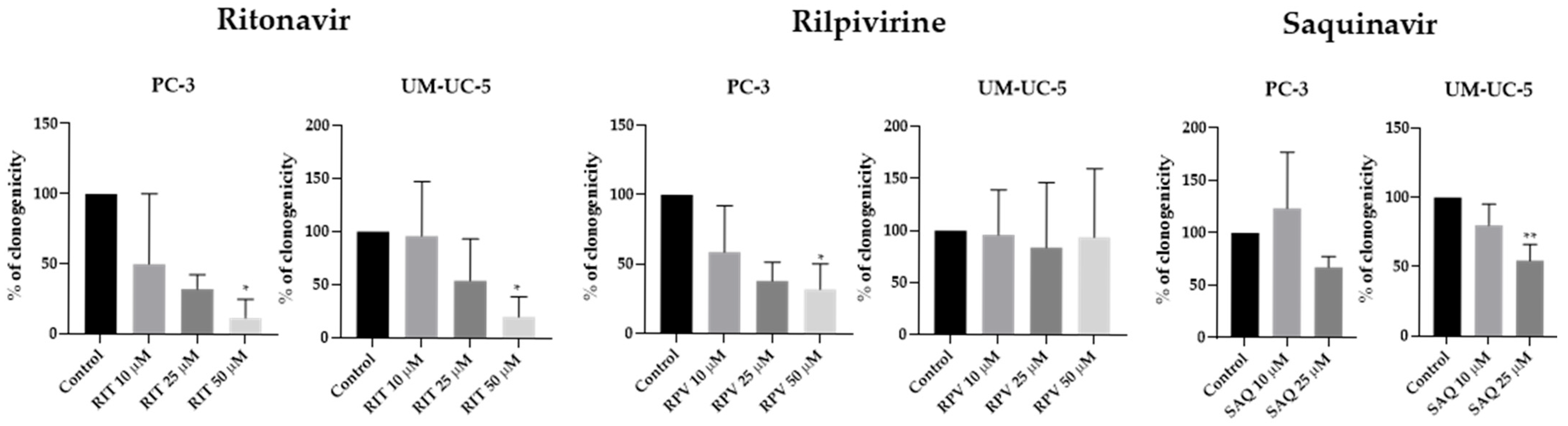
- Protease inhibitors (ritonavir and saquinavir) showed stronger antiproliferative and anti-clonogenic effects than the NNRTI rilpivirine in prostate (PC-3) and bladder (UM-UC-5) cancer cells.
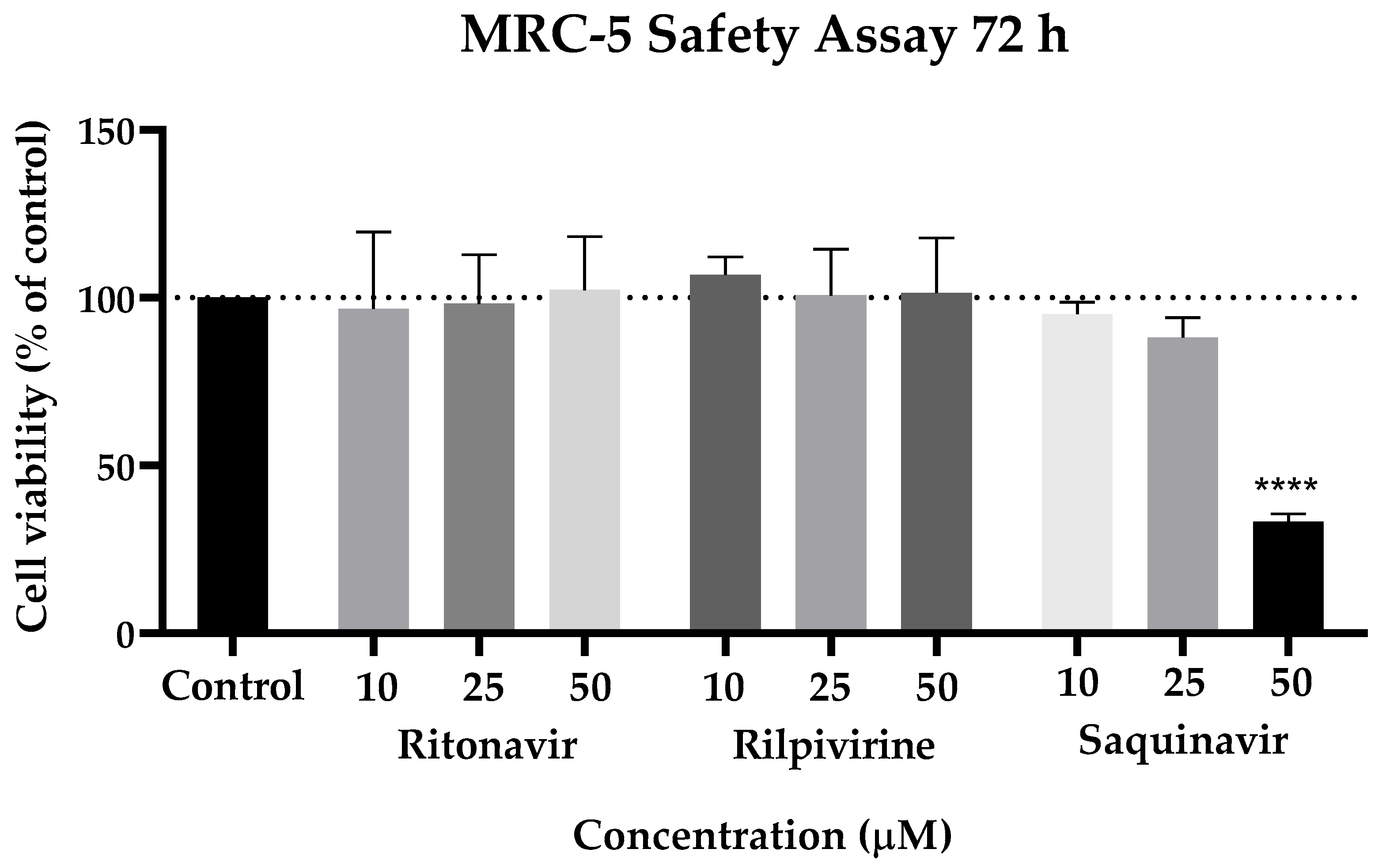
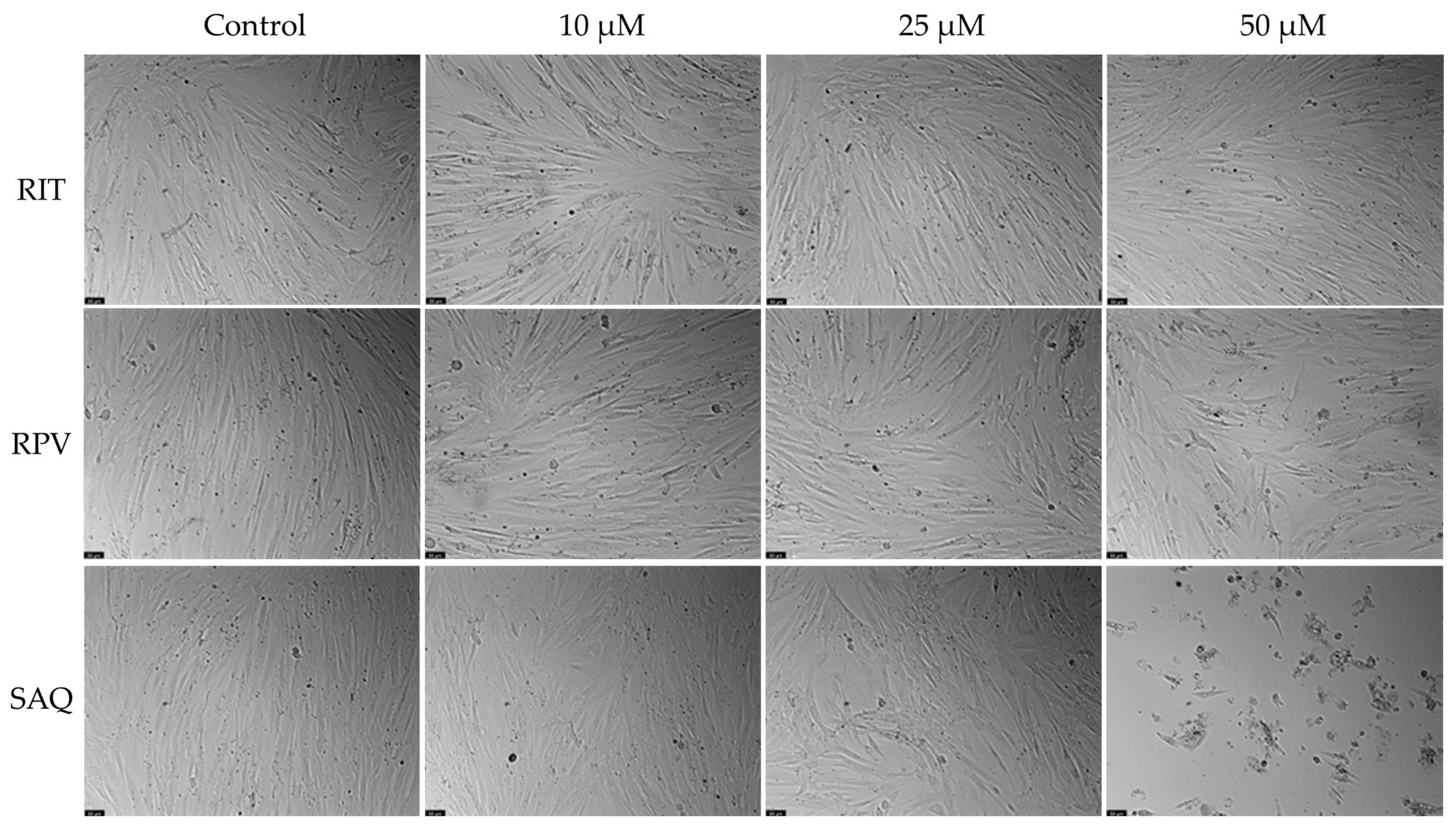
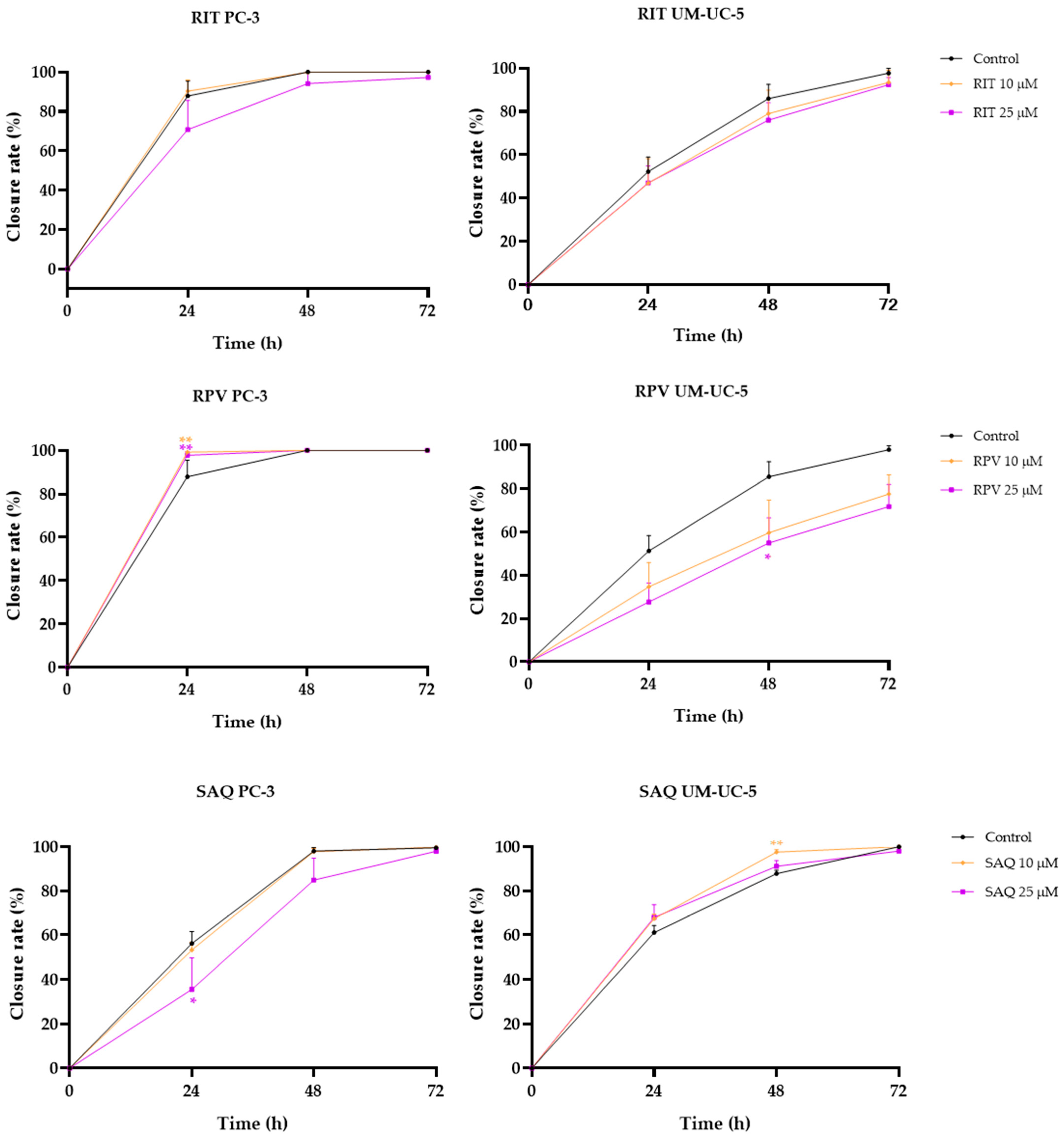
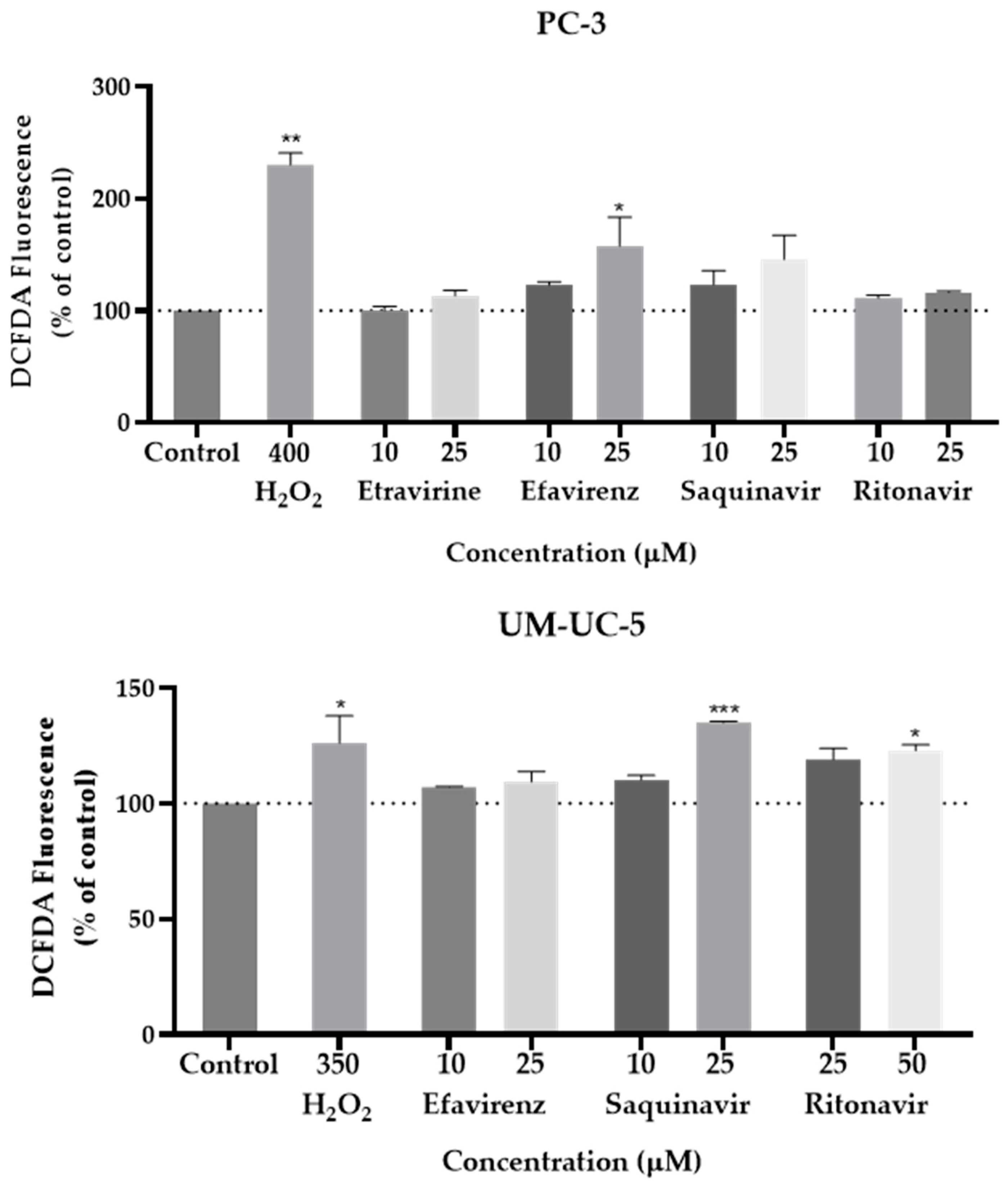
- Antiretroviral drugs had limited effects on cell migration but modulated intracellular ROS levels in a cell-dependent manner, with low toxicity in healthy cells.
- Antiretroviral drugs may preferentially target cancer cell-related proliferation and long-term survival rather than migration capacity.
- Their effects are concentration- and cell-line-dependent.
Abstract
1. Introduction
2. Materials and Methods
2.1. Cell Culture
2.2. Drug Treatment
2.3. Morphological Analysis
2.4. MTT Assay
2.5. Wound Healing (Gap Closure) Assay
2.6. Clonogenic Assay
2.7. DCFDA Assay
2.8. Statistical Analysis
3. Results
3.1. Cell Viability
3.2. Drug Safety Assay
3.3. Wound Healing (Gap Closure) Assay
3.4. Colony-Forming Assay
3.5. Intracellular ROS Production (DCFDA Assay)
4. Discussion
5. Conclusions
Author Contributions
Funding
Institutional Review Board Statement
Informed Consent Statement
Data Availability Statement
Acknowledgments
Conflicts of Interest
Abbreviations
| RIT | Ritonavir |
| SAQ | Saquinavir |
| RPV | Rilpivirine |
| EFV | Efavirenz |
| ETV | Etravirine |
| PC-3 | Human prostate cancer cell line |
| UM-UC-5 | Human bladder cancer cell line |
| MRC-5 | Human fetal lung fibroblast cell line |
| PI | Protease inhibitor |
| NNRTI | Non-nucleoside reverse transcriptase inhibitor |
| ROS | Reactive oxygen species |
| MTT | Thiazolyl blue tetrazolium bromide assay |
| DCFDA | 2′,7′-Dichlorofluorescein diacetate |
| IC50 | Half maximal inhibitory concentration |
| EC50 | Half maximal effective concentration |
| DMEM | Dulbecco’s Modified Eagle’s Medium |
| FBS | Fetal bovine serum |
| PBS | Phosphate-buffered saline |
| DMSO | Dimethyl sulfoxide |
| SEM | Standard error of the mean |
| ANOVA | Analysis of variance |
| H2O2 | Hydrogen peroxide |
| ATCC | American Type Culture Collection |
| ER | Endoplasmic Reticulum |
References
- Bray, F.; Laversanne, M.; Sung, H.; Ferlay, J.; Siegel, R.L.; Soerjomataram, I.; Jemal, A. Global cancer statistics 2022: GLOBOCAN estimates of incidence and mortality worldwide for 36 cancers in 185 countries. CA Cancer J. Clin. 2024, 74, 229–263. [Google Scholar] [CrossRef] [PubMed]
- Hushmandi, K.; Farahani, N.; Einollahi, B.; Salimimoghadam, S.; Alimohammadi, M.; Liang, L.; Liu, L.; Sethi, G. Deciphering molecular pathways in urological cancers: A gateway to precision therapeutics. J. Adv. Res. 2026, 81, 967–1003. [Google Scholar] [CrossRef]
- Akodad, S.; Niu, X.; Secades, B.; Stevens, H. Impact of drug repurposing between 1985 and 2024 on pharmaceutical innovation. Commun. Med. 2026, 6, 84. [Google Scholar] [CrossRef]
- Hu, M.; Yin, R.; Deng, K.; Xu, N. Drug repurposing of fostamatinib against cancer via potential cytotoxicity and immune checkpoint regulation. Front. Immunol. 2025, 16, 1602189. [Google Scholar] [CrossRef]
- Lin, Y.-T.; Wang, H.-C.; Tsai, M.-H.; Su, Y.-Y.; Yang, M.-Y.; Chien, C.-Y. Angiotensin II receptor blockers valsartan and losartan improve survival rate clinically and suppress tumor growth via apoptosis related to PI3K/AKT signaling in nasopharyngeal carcinoma. Cancer 2021, 127, 1606–1619. [Google Scholar] [CrossRef]
- Olayode, O.O.; Oladosu, T.J.; Abioye, A.I.; Oladeji, E.O.; Ogunoye, B.T. Drug repurposing in oncology: A systematic review of anticancer effects of Lanatoside C at the molecular level. BMC Cancer 2025, 25, 1601. [Google Scholar] [CrossRef] [PubMed]
- Chow, W.A.; Jiang, C.; Guan, M. Anti-HIV drugs for cancer therapeutics: Back to the future? Lancet Oncol. 2009, 10, 61–71. [Google Scholar] [CrossRef] [PubMed]
- Pfab, C.; Schnobrich, L.; Eldnasoury, S.; Gessner, A.; El-Najjar, N. Repurposing of Antimicrobial Agents for Cancer Therapy: What Do We Know? Cancers 2021, 13, 3193. [Google Scholar] [CrossRef]
- EMA. Norvir. Available online: www.ema.europa.eu/en/documents/product-information/norvir-epar-product-information_en.pdf (accessed on 11 July 2024).
- EMA. Invirase. Available online: https://www.ema.europa.eu/en/medicines/human/EPAR/invirase (accessed on 4 July 2022).
- EMA. Edurant. Available online: https://www.ema.europa.eu/en/medicines/human/EPAR/edurant (accessed on 15 November 2022).
- EMA. Intelence. Available online: https://www.ema.europa.eu/en/medicines/human/EPAR/intelence (accessed on 18 July 2023).
- EMA. Stocrin. Available online: https://www.ema.europa.eu/en/medicines/human/EPAR/stocrin (accessed on 19 March 2026).
- Bernstein, W.B.; Dennis, P.A. Repositioning HIV protease inhibitors as cancer therapeutics. Curr. Opin. HIV AIDS 2008, 3, 666–675. [Google Scholar] [CrossRef]
- Head, R.; Islam, S.; Martin, J.H. Approaches to repurposing reverse transcriptase antivirals in cancer. Br. J. Clin. Pharmacol. 2025, 91, 2494–2506. [Google Scholar] [CrossRef]
- Gratton, R.; Tricarico, P.M.; Guimaraes, R.L.; Celsi, F.; Crovella, S. Lopinavir/Ritonavir Treatment Induces Oxidative Stress and Caspaseindependent Apoptosis in Human Glioblastoma U-87 MG Cell Line. Curr. HIV Res. 2018, 16, 106–112. [Google Scholar] [CrossRef] [PubMed]
- Pajonk, F.; Himmelsbach, J.; Riess, K.; Sommer, A.; McBride, W.H. The human immunodeficiency virus (HIV)-1 protease inhibitor saquinavir inhibits proteasome function and causes apoptosis and radiosensitization in non-HIV-associated human cancer cells. Cancer Res. 2002, 62, 5230–5235. [Google Scholar]
- Nair, G.; Saraswathy, G.R.; Aranjani, J.M.; Ibrahim, R. Unraveling a novel therapeutic facet of Etravirine to confront Hepatocellular Carcinoma via disruption of cell cycle. Sci. Rep. 2025, 15, 4979. [Google Scholar] [CrossRef]
- Islam, S.; Teo, T.; Kumarasiri, M.; Slater, M.; Martin, J.H.; Wang, S.; Head, R. Combined In Silico and In Vitro Evidence Supporting an Aurora A Kinase Inhibitory Role of the Anti-Viral Drug Rilpivirine and an Anti-Proliferative Influence on Cancer Cells. Pharmaceuticals 2022, 15, 1186. [Google Scholar] [CrossRef] [PubMed]
- Radwan, M.O.; Toma, T.; Arakaki, Y.; Kamo, M.; Inoue, N.; Koga, R.; Otsuka, M.; Tateishi, H.; Fujita, M. New insight into the bioactivity of substituted benzimidazole derivatives: Repurposing from anti-HIV activity to cell migration inhibition targeting hnRNP M. Bioorganic Med. Chem. 2023, 86, 117294. [Google Scholar] [CrossRef]
- Pereira, M.; Vale, N. Repurposing Alone and in Combination of the Antiviral Saquinavir with 5-Fluorouracil in Prostate and Lung Cancer Cells. Int. J. Mol. Sci. 2022, 23, 12440. [Google Scholar] [CrossRef]
- Pereira, M.; Vale, N. Exploring Darunavir, Rilpivirine and Etravirine as Potential Therapies for Bladder Cancer: Efficacy and Synergistic Effects. Biomedicines 2024, 12, 647. [Google Scholar] [CrossRef] [PubMed]
- Alaei, M.; Nazari, S.E.; Pourali, G.; Asadnia, A.; Moetamani-Ahmadi, M.; Fiuji, H.; Tanzadehpanah, H.; Asgharzadeh, F.; Babaei, F.; Khojasteh-Leylakoohi, F.; et al. Therapeutic Potential of Targeting the Cytochrome P450 Enzymes Using Lopinavir/Ritonavir in Colorectal Cancer: A Study in Monolayers, Spheroids and In Vivo Models. Cancers 2023, 15, 3939. [Google Scholar] [CrossRef]
- Maggisano, V.; Gargano, A.; Maiuolo, J.; Ortuso, F.; De Amicis, F.; Alcaro, S.; Bulotta, S. Rational Identification of Ritonavir as IL-20 Receptor A Ligand Endowed with Antiproliferative Properties in Breast Cancer Cells. Int. J. Mol. Sci. 2025, 26, 1285. [Google Scholar] [CrossRef]
- Swami, D.; Mudaliar, P.; Bichu, Y.S.; Kumar Sahu, V.; Devarajan, S.; Basu, S.; Aich, J. Synergistic combination of ritonavir and cisplatin as an efficacious therapy in human cervical cancer cells: A computational drug discovery and in vitro insight. J. Biomol. Struct. Dyn. 2023, 41, 5802–5816. [Google Scholar] [CrossRef]
- van der Putten, E.; Wosikowski, K.; Beijnen, J.H.; Imre, G.; Freund, C.R. Ritonavir reverses resistance to docetaxel and cabazitaxel in prostate cancer cells with acquired resistance to docetaxel. Cancer Drug Resist. 2024, 7, 3. [Google Scholar] [CrossRef]
- Shaji, U.P.; Tuti, N.; Alim, S.K.; Mohan, M.; Das, S.; Meur, G.; Swamy, M.J.; Anindya, R. Inhibition of human DNA alkylation damage repair enzyme ALKBH2 by HIV protease inhibitor ritonavir. DNA Repair 2024, 141, 103732. [Google Scholar] [CrossRef]
- Li, J.; Lin, J.; Lin, J.R.; Farris, M.; Robbins, L.; Andrada, L.; Grohol, B.; Nong, S.; Liu, Y. Dolutegravir Inhibits Proliferation and Motility of BT-20 Tumor Cells Through Inhibition of Human Endogenous Retrovirus Type K. Cureus 2022, 14, e26525. [Google Scholar] [CrossRef]
- Namba, T.; Kodama, R.; Moritomo, S.; Hoshino, T.; Mizushima, T. Zidovudine, an anti-viral drug, resensitizes gemcitabine-resistant pancreatic cancer cells to gemcitabine by inhibition of the Akt-GSK3β-Snail pathway. Cell Death Dis. 2015, 6, e1795. [Google Scholar] [CrossRef] [PubMed]
- Moya, L.; Walpole, C.; Rae, F.; Srinivasan, S.; Seim, I.; Lai, J.; Nicol, D.; Williams, E.D.; Clements, J.A.; Batra, J. Characterisation of cell lines derived from prostate cancer patients with localised disease. Prostate Cancer Prostatic Dis. 2023, 26, 614–624. [Google Scholar] [CrossRef]
- Ribeiro, E.; Vale, N. Personalized Combination Therapy in Bladder Cancer: cAMP Modulators Synergize with 5-FU and Modulate Redox Programs. Cancers 2026, 18, 562. [Google Scholar] [CrossRef]
- Chai, A.C.; Robinson, A.L.; Chai, K.X.; Chen, L.-M. Ibuprofen regulates the expression and function of membrane-associated serine proteases prostasin and matriptase. BMC Cancer 2015, 15, 1025. [Google Scholar] [CrossRef] [PubMed]
- Goda, J.S.; Pachpor, T.; Basu, T.; Chopra, S.; Gota, V. Targeting the AKT pathway: Repositioning HIV protease inhibitors as radiosensitizers. Indian J. Med. Res. 2016, 143, 145–159. [Google Scholar] [CrossRef]
- Ganta, K.K.; Chaubey, B. Endoplasmic reticulum stress leads to mitochondria-mediated apoptosis in cells treated with anti-HIV protease inhibitor ritonavir. Cell Biol. Toxicol. 2019, 35, 189–204. [Google Scholar] [CrossRef]
- Besse, A.; Sedlarikova, L.; Buechler, L.; Kraus, M.; Yang, C.-H.; Strakova, N.; Soucek, K.; Navratil, J.; Svoboda, M.; Welm, A.L.; et al. HIV-protease inhibitors potentiate the activity of carfilzomib in triple-negative breast cancer. Br. J. Cancer 2024, 131, 918–930. [Google Scholar] [CrossRef] [PubMed]
- Subeha, M.R.; Telleria, C.M. The Anti-Cancer Properties of the HIV Protease Inhibitor Nelfinavir. Cancers 2020, 12, 3437. [Google Scholar] [CrossRef]
- Ikezoe, T.; Hisatake, Y.; Takeuchi, T.; Ohtsuki, Y.; Yang, Y.; Said, J.W.; Taguchi, H.; Koeffler, H.P. HIV-1 Protease Inhibitor, Ritonavir: A Potent Inhibitor of CYP3A4, Enhanced the Anticancer Effects of Docetaxel in Androgen-Independent Prostate Cancer Cells In vitro and In vivo. Cancer Res. 2004, 64, 7426–7431. [Google Scholar] [CrossRef]
- Sato, A.; Asano, T.; Okubo, K.; Isono, M.; Asano, T. Ritonavir and ixazomib kill bladder cancer cells by causing ubiquitinated protein accumulation. Cancer Sci. 2017, 108, 1194–1202. [Google Scholar] [CrossRef]
- Wilson, D.L.; Beharry, A.A.; Srivastava, A.; O’Connor, T.R.; Kool, E.T. Fluorescence Probes for ALKBH2 Allow the Measurement of DNA Alkylation Repair and Drug Resistance Responses. Angew. Chem. Int. Ed. Engl. 2018, 57, 12896–12900. [Google Scholar] [CrossRef] [PubMed]
- Fujii, T.; Shimada, K.; Anai, S.; Fujimoto, K.; Konishi, N. ALKBH2, a novel AlkB homologue, contributes to human bladder cancer progression by regulating MUC1 expression. Cancer Sci. 2013, 104, 321–327. [Google Scholar] [CrossRef]
- Cui, X.; Shen, D.; Kong, C.; Zhang, Z.; Zeng, Y.; Lin, X.; Liu, X. NF-κB suppresses apoptosis and promotes bladder cancer cell proliferation by upregulating survivin expression in vitro and in vivo. Sci. Rep. 2017, 7, 40723. [Google Scholar] [CrossRef]
- Plastaras, J.P.; Vapiwala, N.; Ahmed, M.S.; Gudonis, D.; Cerniglia, G.J.; Feldman, M.D.; Frank, I.; Gupta, A.K. Validation and toxicity of PI3K/Akt pathway inhibition by HIV protease inhibitors in humans. Cancer Biol. Ther. 2008, 7, 628–635. [Google Scholar] [CrossRef] [PubMed]
- Bacigalupo, I.; Palladino, C.; Leone, P.; Toschi, E.; Sgadari, C.; Ensoli, B.; Barillari, G. Inhibition of MMP-9 expression by ritonavir or saquinavir is associated with inactivation of the AKT/Fra-1 pathway in cervical intraepithelial neoplasia cells. Oncol. Lett. 2017, 13, 2903–2908. [Google Scholar] [CrossRef] [PubMed]
- He, Y.; Sun, M.M.; Zhang, G.G.; Yang, J.; Chen, K.S.; Xu, W.W.; Li, B. Targeting PI3K/Akt signal transduction for cancer therapy. Signal Transduct. Target. Ther. 2021, 6, 425. [Google Scholar] [CrossRef]
- Chang, L.; Graham, P.H.; Hao, J.; Ni, J.; Bucci, J.; Cozzi, P.J.; Kearsley, J.H.; Li, Y. PI3K/Akt/mTOR pathway inhibitors enhance radiosensitivity in radioresistant prostate cancer cells through inducing apoptosis, reducing autophagy, suppressing NHEJ and HR repair pathways. Cell Death Dis. 2014, 5, e1437. [Google Scholar] [CrossRef]
- Srirangam, A.; Mitra, R.; Wang, M.; Gorski, J.C.; Badve, S.; Baldridge, L.; Hamilton, J.; Kishimoto, H.; Hawes, J.; Li, L.; et al. Effects of HIV protease inhibitor ritonavir on Akt-regulated cell proliferation in breast cancer. Clin. Cancer Res. 2006, 12, 1883–1896. [Google Scholar] [CrossRef]
- Pomella, S.; D’Archivio, L.; Cassandri, M.; Aiello, F.A.; Melaiu, O.; Marampon, F.; Rota, R.; Barillari, G. The HIV Protease Inhibitor Ritonavir Reverts the Mesenchymal Phenotype Induced by Inflammatory Cytokines in Normal and Tumor Oral Keratinocytes to an Epithelial One, Increasing the Radiosensitivity of Tumor Oral Keratinocytes. Cancers 2025, 17, 2519. [Google Scholar] [CrossRef]
- Bandiera, E.; Todeschini, P.; Romani, C.; Zanotti, L.; Erba, E.; Colmegna, B.; Bignotti, E.; Santin, A.D.; Sartori, E.; Odicino, F.E.; et al. The HIV-protease inhibitor saquinavir reduces proliferation, invasion and clonogenicity in cervical cancer cell lines. Oncol. Lett. 2016, 12, 2493–2500. [Google Scholar] [CrossRef]
- Srirangam, A.; Milani, M.; Mitra, R.; Guo, Z.; Rodriguez, M.; Kathuria, H.; Fukuda, S.; Rizzardi, A.; Schmechel, S.; Skalnik, D.G.; et al. The human immunodeficiency virus protease inhibitor ritonavir inhibits lung cancer cells, in part, by inhibition of survivin. J. Thorac. Oncol. 2011, 6, 661–670. [Google Scholar] [CrossRef] [PubMed]
- Hecht, M.; Erber, S.; Harrer, T.; Klinker, H.; Roth, T.; Parsch, H.; Fiebig, N.; Fietkau, R.; Distel, L.V. Efavirenz Has the Highest Anti-Proliferative Effect of Non-Nucleoside Reverse Transcriptase Inhibitors against Pancreatic Cancer Cells. PLoS ONE 2015, 10, e0130277. [Google Scholar] [CrossRef]
- Gomes, N.P.; Frederick, B.; Jacobsen, J.R.; Chapnick, D.; Su, T.T. A High Throughput Screen with a Clonogenic Endpoint to Identify Radiation Modulators of Cancer. Radiat. Res. 2023, 199, 132–147. [Google Scholar] [CrossRef]
- Merino-Casallo, F.; Gomez-Benito, M.J.; Hervas-Raluy, S.; Garcia-Aznar, J.M. Unravelling cell migration: Defining movement from the cell surface. Cell Adhes. Migr. 2022, 16, 25–64. [Google Scholar] [CrossRef]
- Ghasemi, M.; Turnbull, T.; Sebastian, S.; Kempson, I. The MTT Assay: Utility, Limitations, Pitfalls, and Interpretation in Bulk and Single-Cell Analysis. Int. J. Mol. Sci. 2021, 22, 12827. [Google Scholar] [CrossRef] [PubMed]
- Baguley, B.C.; Hicks, K.O.; Wilson, W.R. Chapter 15—Tumor Cell Cultures in Drug Development. In Anticancer Drug Development; Baguley, B.C., Kerr, D.J., Eds.; Academic Press: San Diego, CA, USA, 2002; pp. 269–284. [Google Scholar]
- Hecht, M.; Harrer, T.; Körber, V.; Sarpong, E.O.; Moser, F.; Fiebig, N.; Schwegler, M.; Stürzl, M.; Fietkau, R.; Distel, L.V. Cytotoxic effect of Efavirenz in BxPC-3 pancreatic cancer cells is based on oxidative stress and is synergistic with ionizing radiation. Oncol. Lett. 2018, 15, 1728–1736. [Google Scholar] [CrossRef]
- Pereira, M.; Vale, N. Exploring Potential for Repurposing Antiretroviral Drugs Etravirine and Efavirenz in Prostate and Bladder Cancer. Pharmaceuticals 2025, 18, 1404. [Google Scholar] [CrossRef] [PubMed]
- Kang, B.-G.; Shende, M.; Inci, G.; Park, S.-H.; Jung, J.-S.; Kim, S.B.; Kim, J.H.; Mo, Y.W.; Seo, J.-H.; Feng, J.-H.; et al. Combination of metformin/efavirenz/fluoxetine exhibits profound anticancer activity via a cancer cell-specific ROS amplification. Cancer Biol. Ther. 2023, 24, 2161803. [Google Scholar] [CrossRef]
- Kraus, M.; Müller-Ide, H.; Rückrich, T.; Bader, J.; Overkleeft, H.; Driessen, C. Ritonavir, nelfinavir, saquinavir and lopinavir induce proteotoxic stress in acute myeloid leukemia cells and sensitize them for proteasome inhibitor treatment at low micromolar drug concentrations. Leuk. Res. 2014, 38, 383–392. [Google Scholar] [CrossRef]
- Guo, Y.; Chu, X.; Parrott, N.J.; Brouwer, K.L.R.; Hsu, V.; Nagar, S.; Matsson, P.; Sharma, P.; Snoeys, J.; Sugiyama, Y.; et al. Advancing Predictions of Tissue and Intracellular Drug Concentrations Using In Vitro, Imaging and Physiologically Based Pharmacokinetic Modeling Approaches. Clin. Pharmacol. Ther. 2018, 104, 865–889. [Google Scholar] [CrossRef]
- Ford, J.; Boffito, M.; Wildfire, A.; Hill, A.; Back, D.; Khoo, S.; Nelson, M.; Moyle, G.; Gazzard, B.; Pozniak, A. Intracellular and plasma pharmacokinetics of saquinavir-ritonavir, administered at 1,600/100 milligrams once daily in human immunodeficiency virus-infected patients. Antimicrob. Agents Chemother. 2004, 48, 2388–2393. [Google Scholar] [CrossRef]
- Kalyanaraman, B. NAC, NAC, Knockin’ on Heaven’s door: Interpreting the mechanism of action of N-acetylcysteine in tumor and immune cells. Redox Biol. 2022, 57, 102497. [Google Scholar] [CrossRef]
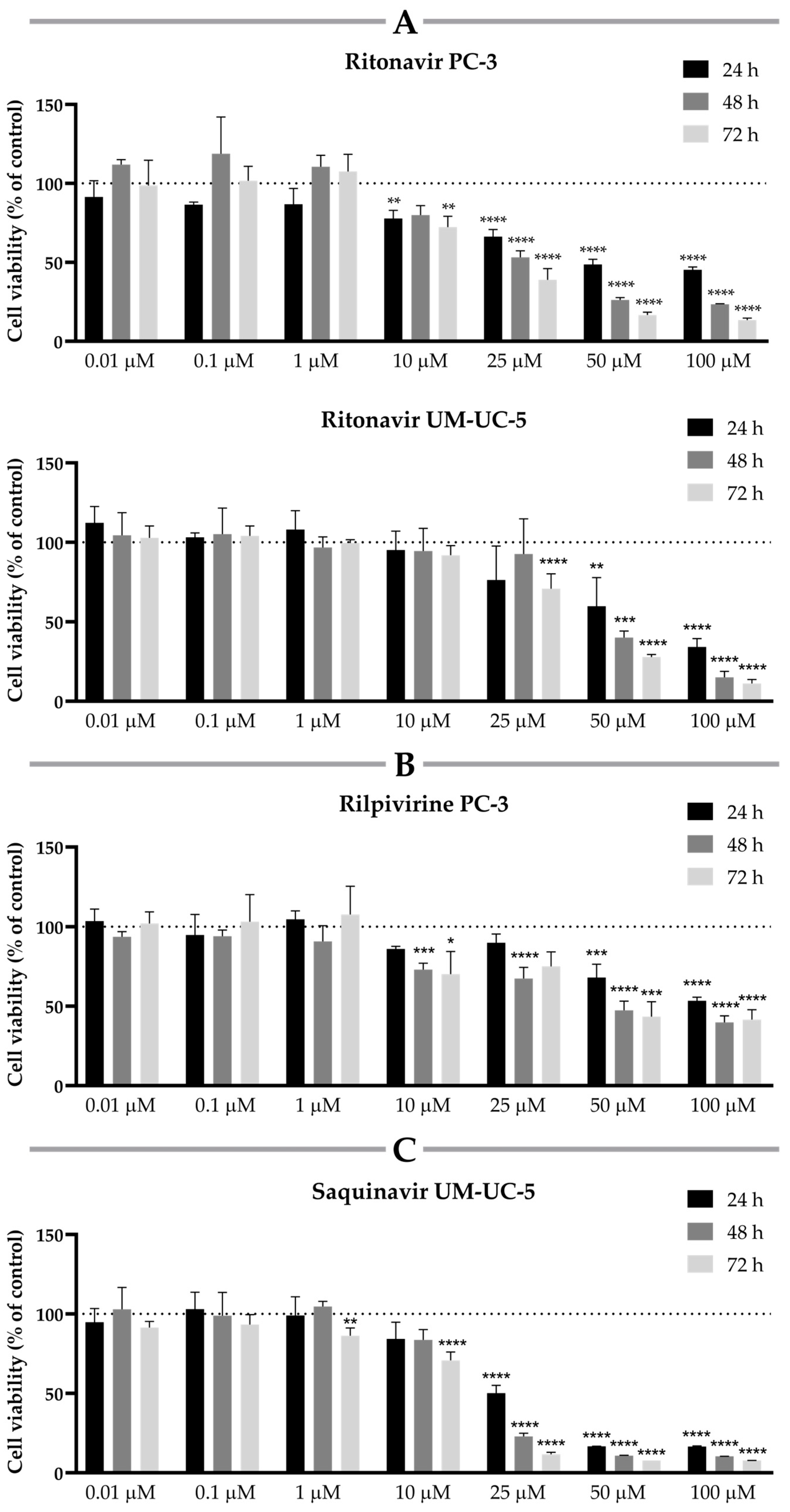



| Time | PC-3 IC50 (µM) | UM-UC-5 IC50 (µM) | ||
|---|---|---|---|---|
| Rilpivirine | Ritonavir | Ritonavir | Saquinavir | |
| 24 h | 113.2 | 78.49 | 63.42 | 24.66 |
| 48 h | 54.03 | 27.83 | 46.51 | 17.21 |
| 72 h | 53.77 | 18.94 | 35.03 | 13.40 |
Disclaimer/Publisher’s Note: The statements, opinions and data contained in all publications are solely those of the individual author(s) and contributor(s) and not of MDPI and/or the editor(s). MDPI and/or the editor(s) disclaim responsibility for any injury to people or property resulting from any ideas, methods, instructions or products referred to in the content. |
© 2026 by the authors. Licensee MDPI, Basel, Switzerland. This article is an open access article distributed under the terms and conditions of the Creative Commons Attribution (CC BY) license.
Share and Cite
Pereira, M.; Vale, N. Repurposing Antiretroviral Drugs for Urological Cancers: Differential Effects of Protease Inhibitors and NNRTIs on Prostate and Bladder Cancer Cells. Cells 2026, 15, 1045. https://doi.org/10.3390/cells15121045
Pereira M, Vale N. Repurposing Antiretroviral Drugs for Urological Cancers: Differential Effects of Protease Inhibitors and NNRTIs on Prostate and Bladder Cancer Cells. Cells. 2026; 15(12):1045. https://doi.org/10.3390/cells15121045
Chicago/Turabian StylePereira, Mariana, and Nuno Vale. 2026. "Repurposing Antiretroviral Drugs for Urological Cancers: Differential Effects of Protease Inhibitors and NNRTIs on Prostate and Bladder Cancer Cells" Cells 15, no. 12: 1045. https://doi.org/10.3390/cells15121045
APA StylePereira, M., & Vale, N. (2026). Repurposing Antiretroviral Drugs for Urological Cancers: Differential Effects of Protease Inhibitors and NNRTIs on Prostate and Bladder Cancer Cells. Cells, 15(12), 1045. https://doi.org/10.3390/cells15121045