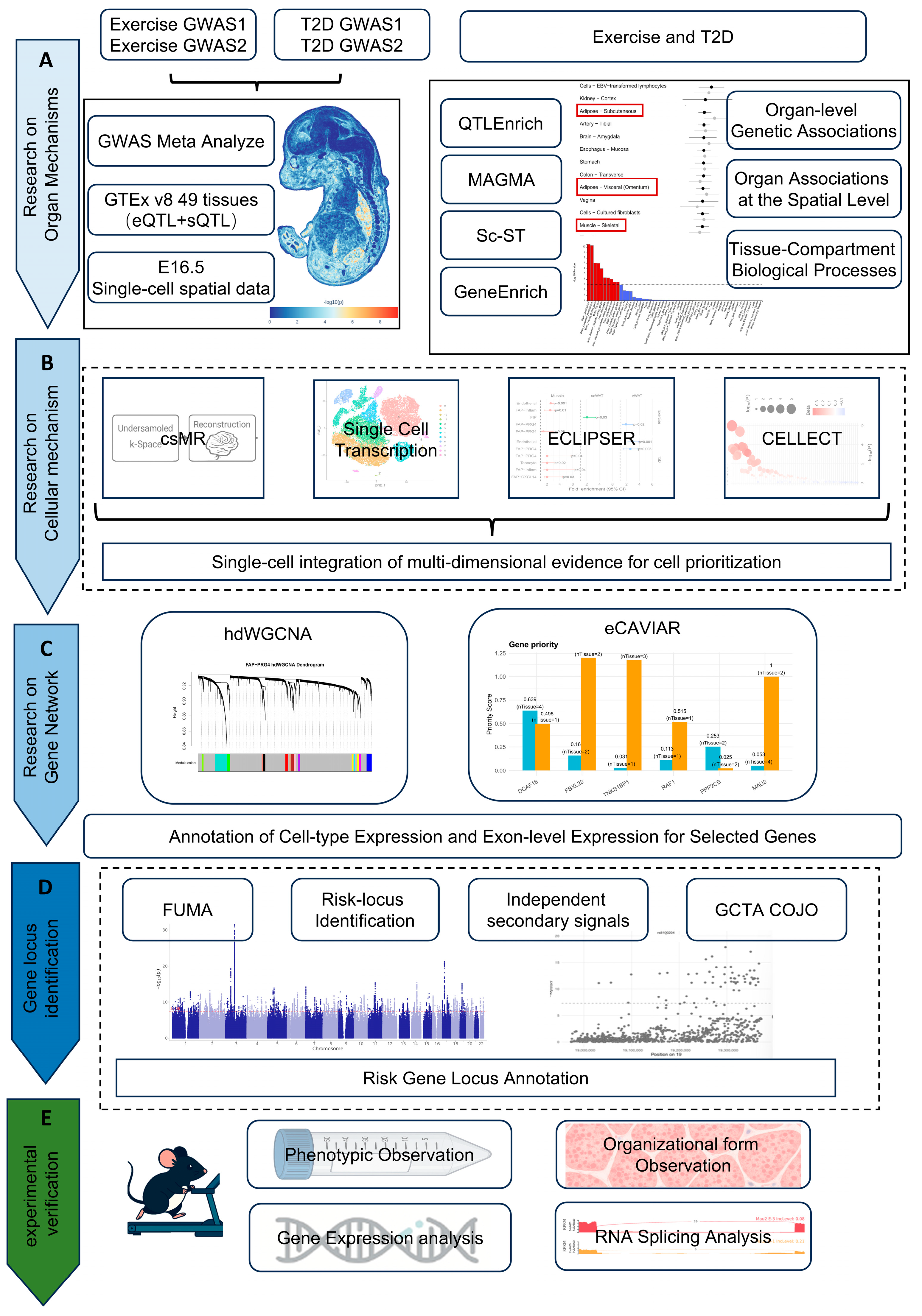
Integrative Multi-Omics Analysis Identifies Tissue, Cellular and Splicing Programs Associated with Exercise-Mediated Improvement in Type 2 Diabetes

 , , and
Highlights
- Cross-tissue and single-cell analyses highlighted skeletal muscle and adipose tissue as major tissues involved in exercise–T2D crosstalk.
- Candidate cell populations, pathways, and splicing changes associated with exercise-responsive metabolic remodeling were identified and supported by mouse data.
- The results refine current understanding of how exercise-related regulatory programs may be linked to T2D biology across multiple levels.
- The prioritized tissues, cell types, and pathways provide a basis for future functional validation and intervention studies.
Abstract
1. Introduction
2. Materials and Methods
2.1. Sources of Genome-Wide Summary Statistics
2.2. Single-Cell Transcriptomic Data
2.3. Quality Control
2.4. Genome-Wide Meta-Analysis
2.5. Tissue-Specific eQTL/sQTL Enrichment for Exercise and T2D Using QTLEnrich
2.6. Tissue-Specific Spatial Enrichment of Exercise- and T2D-Associated Signals in Single-Cell Spatial Transcriptomics
2.7. GeneEnrich Analysis of Biological Processes in Adipose Tissue and Skeletal Muscle Related to Exercise and T2D
2.8. Single-Cell Cell Type-Specific Mendelian Randomization (csMR) Analysis
2.9. Identification of Exercise- and T2D-Related Cellular Signals: Annotation of the Single-Cell Transcriptomic Atlas
2.10. Identification of Exercise- and T2D-Related Cellular Signals Using ECLIPSER
2.11. Identification of Exercise- and T2D-Related Cellular Signals Using CELLECT
2.12. Methods for Integrated Single-Cell Evidence and Cell Type Prioritization
2.13. Weighted Gene Co-Expression Network Analysis in Prioritized Cell Types to Identify Core Module Genes
2.14. Genomic Risk Locus Analysis for Exercise and T2D
2.15. Conditional Analysis of Genomic Risk Loci for Exercise and T2D
2.16. eCAVIAR Analysis of Genomic Colocalization for Exercise and T2D
2.17. fastENLOC Analysis of Genomic Colocalization for Exercise and T2D
2.18. Cell-Type Expression Annotation and Exon-Level Expression Analysis of Prioritized Genes
2.19. Experimental Animals
2.20. Glucose and Insulin Tolerance Tests
2.21. Hematoxylin and Eosin Staining
2.22. RNA Sequencing
2.23. RT-qPCR
2.24. Statistical Analysis for Animal Experiments
3. Results
3.1. Genome-Wide Meta-Analysis of Exercise and T2D
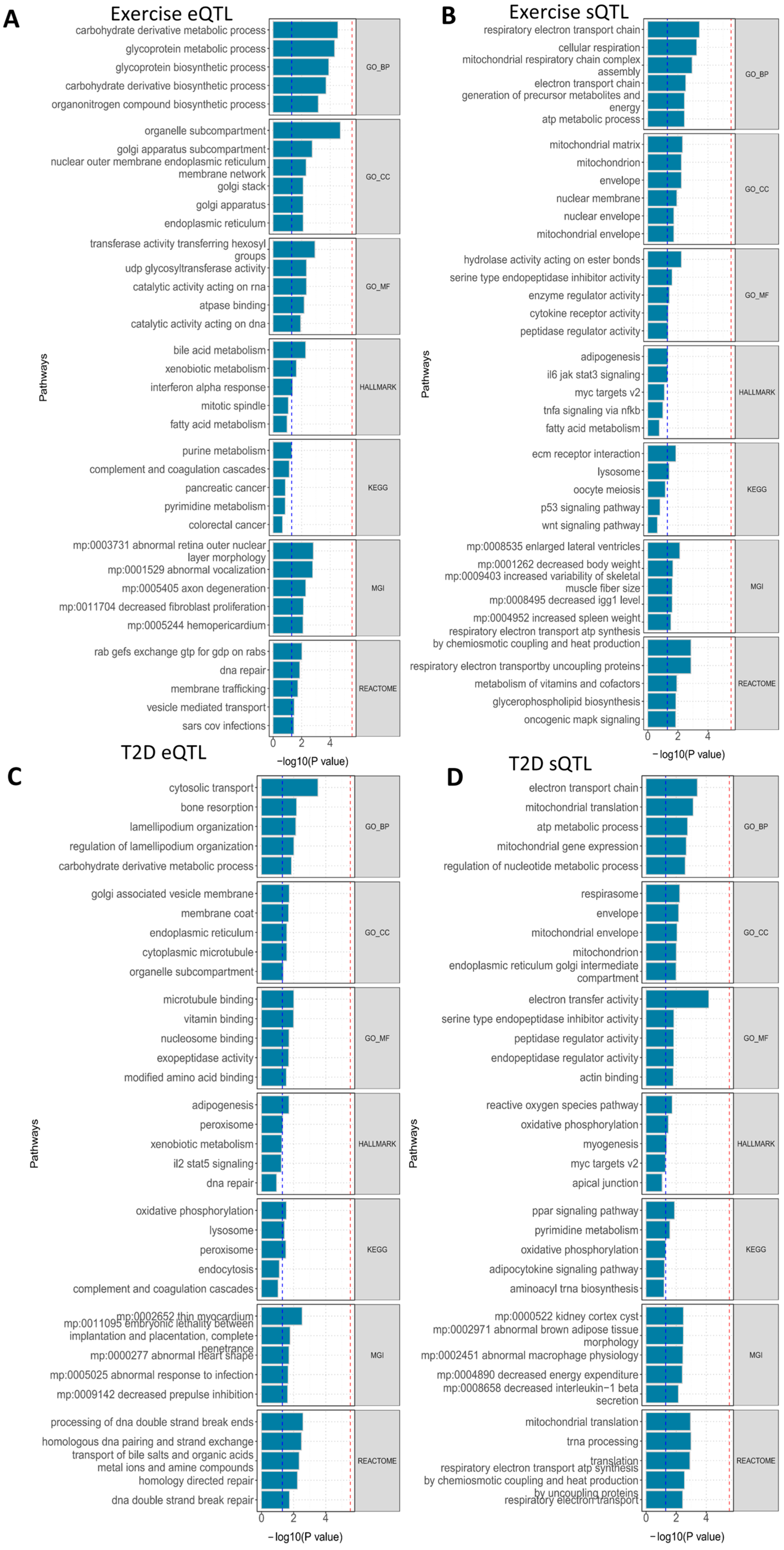
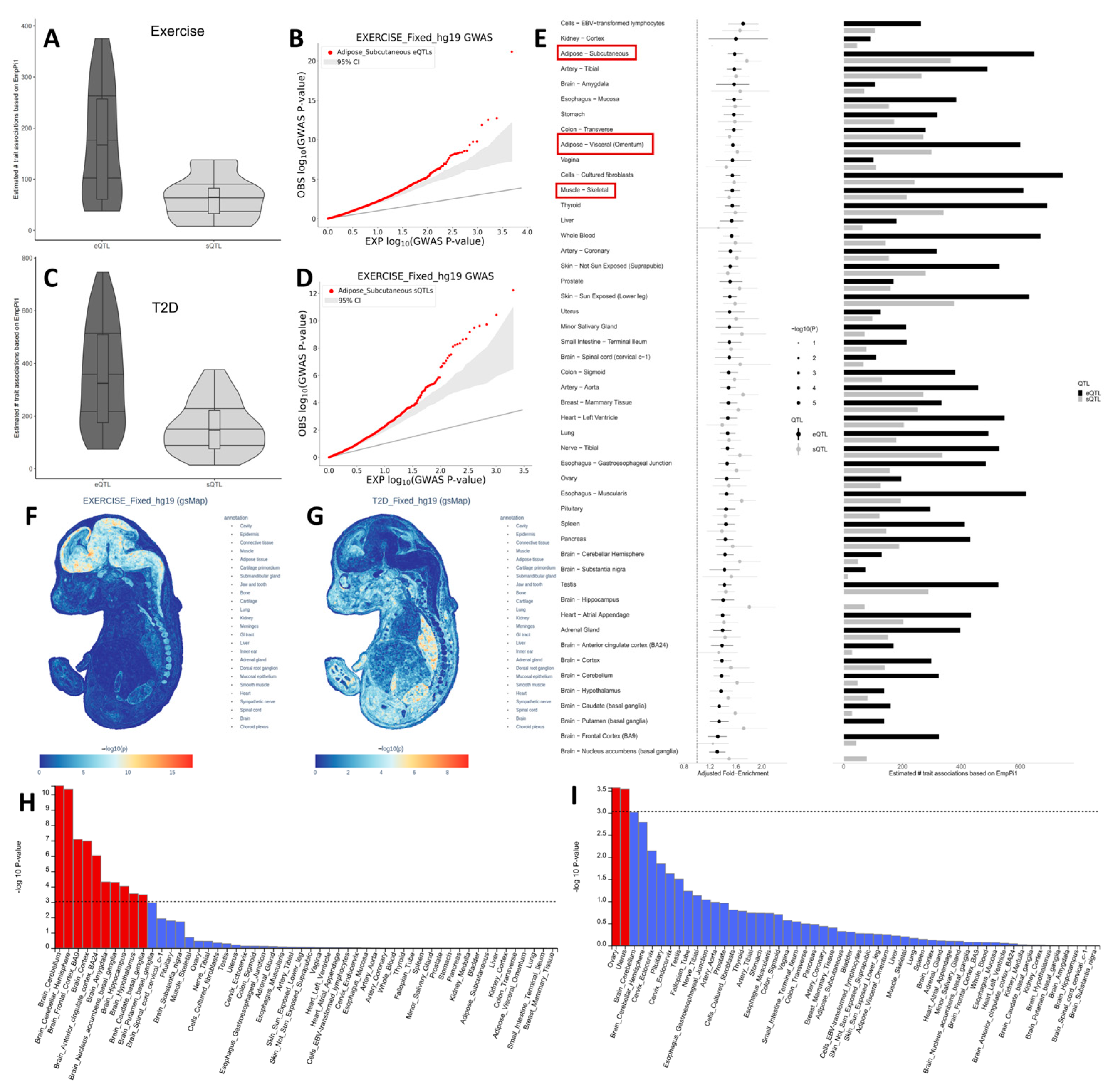
3.2. Enrichment of Exercise- and T2D-Associated Signals in eQTL and sQTL
3.3. MAGMA Enrichment and Spatial Transcriptomic Mapping Reveal Distinct Tissue Architecture for Exercise and T2D
3.4. Gene Function Enrichment Reveals Region-Specific Biological Processes
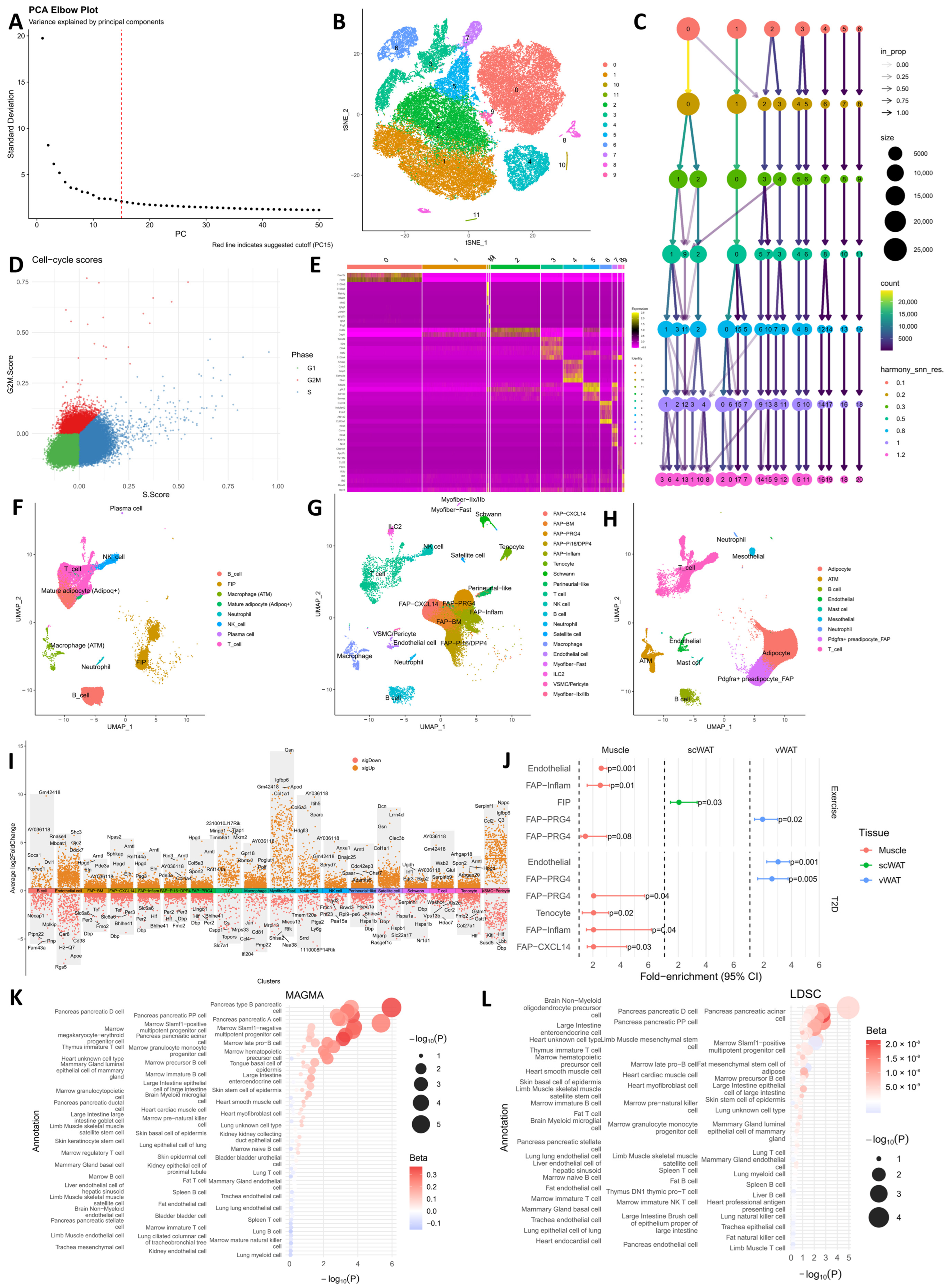
3.5. Cellular Composition and Prioritization of Cell Types for Exercise and T2D
3.6. Integrated Single-Cell Evidence for Cell Type Prioritization
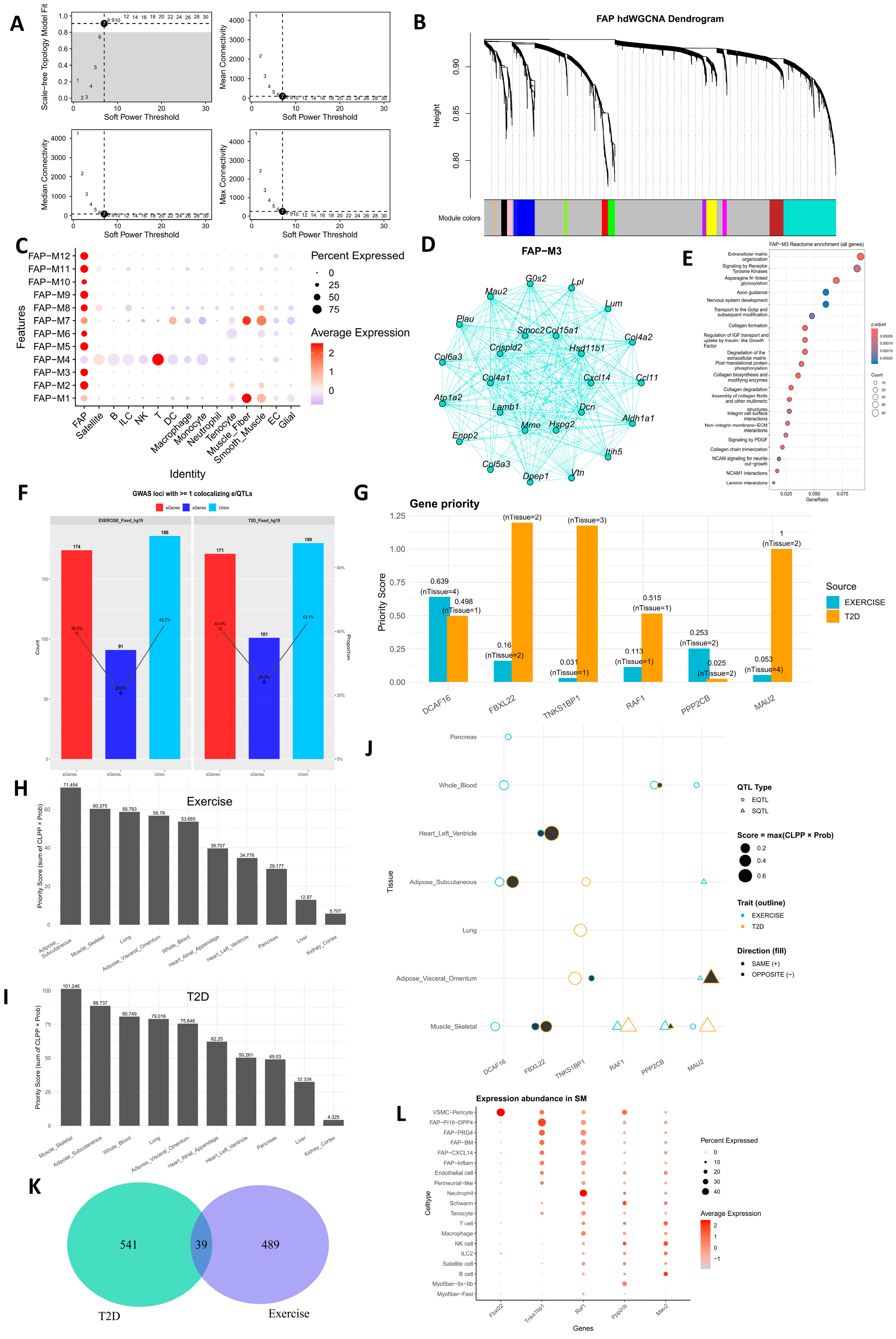
3.7. Candidate Gene Network
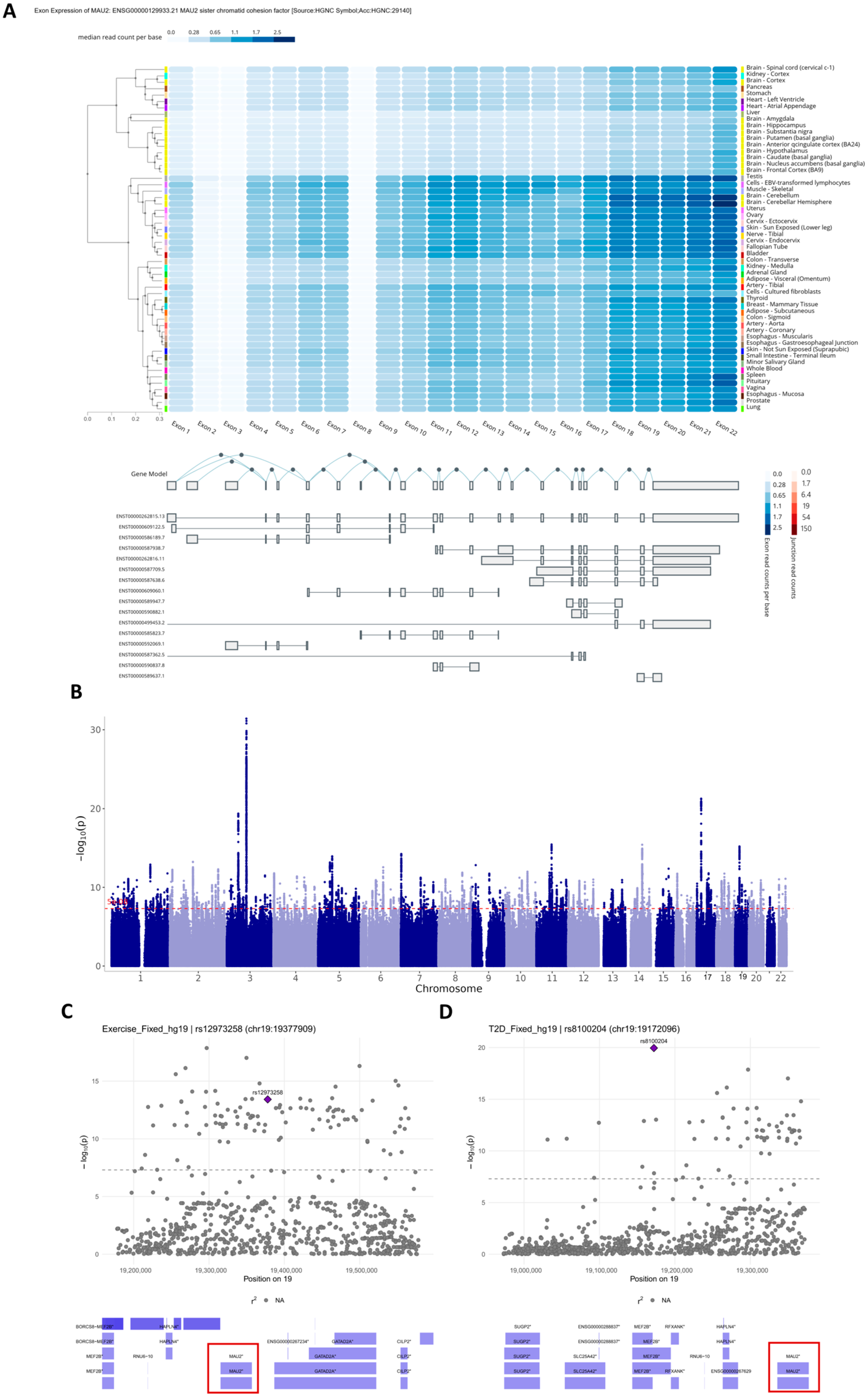
3.8. Cell-Type Expression Annotation and Exon-Level Splicing Analysis of Prioritized Genes
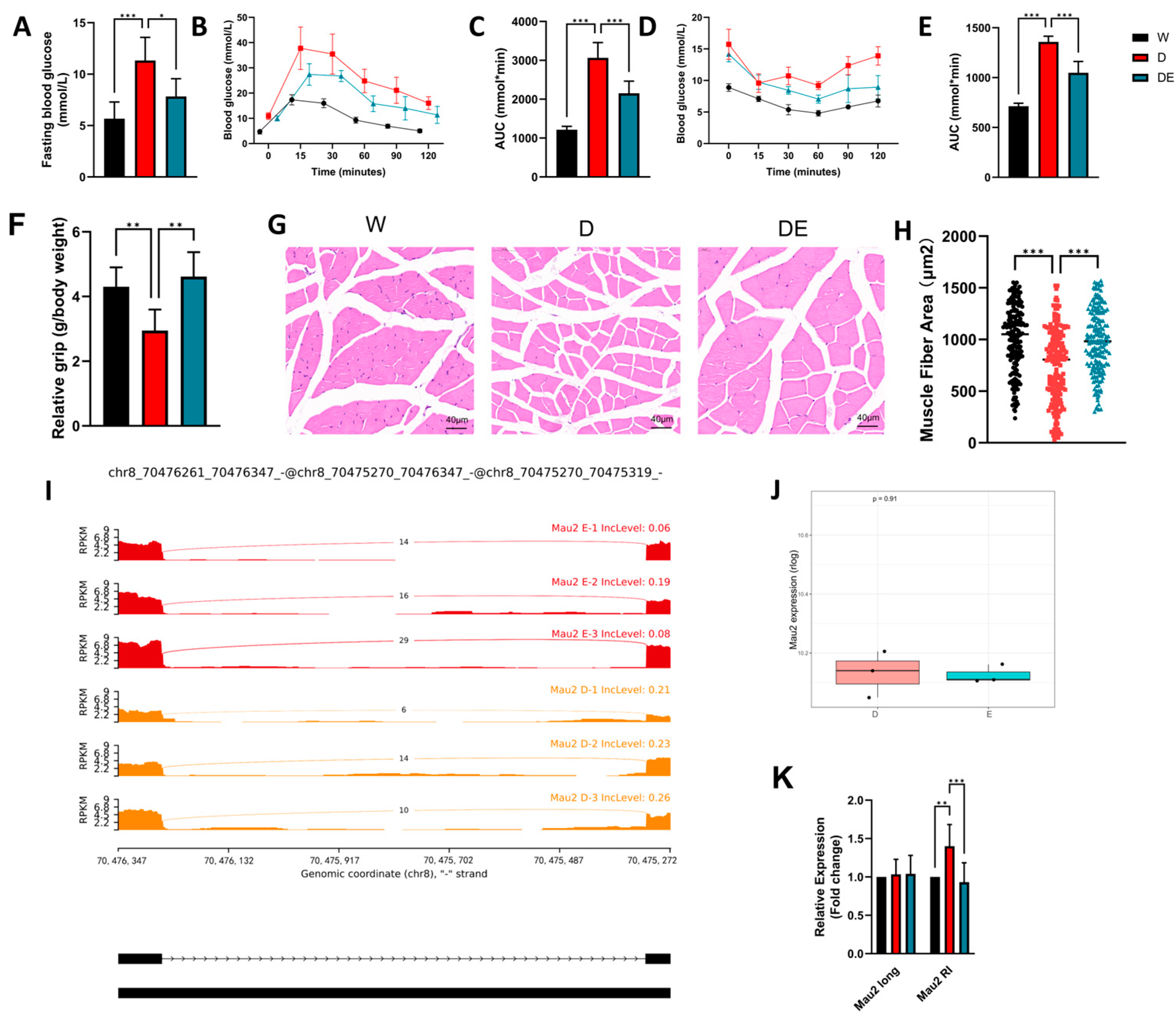
3.9. Exercise Reduces Mau2 Intron Retention in Skeletal Muscle of Diabetic Mice
4. Discussion
4.1. Convergence of Genetic Risk in Metabolic Tissues Suggests Peripheral Regulatory Involvement
4.2. FAP-Associated Extracellular Matrix Programs in Exercise–T2D Tissue Remodeling
4.3. Mau2/Mau2 Splicing as a Candidate Molecular Feature Linking Exercise- and T2D-Related Regulatory Signals
4.4. Limitations
5. Conclusions
Supplementary Materials
Author Contributions
Funding
Institutional Review Board Statement
Informed Consent Statement
Data Availability Statement
Acknowledgments
Conflicts of Interest
Abbreviations
| T2D | Type 2 diabetes |
| GWAS | Genome-wide association study |
| SNP | Single-nucleotide polymorphism |
| eQTL | Expression quantitative trait locus |
| sQTL | Splicing quantitative trait locus |
| GTEx | Genotype-Tissue Expression |
| scRNA-seq | Single-cell RNA sequencing |
| sc-ST | Single-cell spatial transcriptomics |
| csMR | Cell type-specific Mendelian randomization |
| FAPs | Fibro-adipogenic progenitors |
| QTLEnrich | Quantitative trait locus enrichment analysis |
| MAGMA | Multi-marker Analysis of GenoMic Annotation |
| ECLIPSER | Enrichment of Causal Loci and Identification of Relevant Cell Types in Single Cell Expression and Regulation data |
| CELLECT | Cell type Expression-specific integration for Complex Traits |
| hdWGCNA | High-dimensional weighted gene co-expression network analysis |
| eCAVIAR | Exact Causal Variants Identification in Associated Regions |
| FUMA | Functional Mapping and Annotation |
| GCTA-COJO | Genome-wide Complex Trait Analysis—Conditional and Joint analysis |
| CLPP | Colocalization posterior probability |
| RCP | Regional colocalization probability |
| MAF | Minor allele frequency |
| LD | Linkage disequilibrium |
| MHC | Major histocompatibility complex |
| GO | Gene Ontology |
| KEGG | Kyoto Encyclopedia of Genes and Genomes |
| MSigDB | Molecular Signatures Database |
| MGI | Mouse Genome Informatics |
| PCA | Principal component analysis |
| t-SNE | t-distributed stochastic neighbor embedding |
| UMI | Unique molecular identifier |
| GEO | Gene Expression Omnibus |
| RNA-seq | RNA sequencing |
| RT-qPCR | Reverse transcription quantitative polymerase chain reaction |
| GTT | Glucose tolerance test |
| ITT | Insulin tolerance test |
| AUC | Area under the curve |
| H&E | Hematoxylin and eosin |
| FDR | False discovery rate |
| PSI | Percent spliced in |
| SE | Skipped exon |
| RI | Retained intron |
| A5SS | Alternative 5′ splice site |
| A3SS | Alternative 3′ splice site |
| MXE | Mutually exclusive exons |
| ECM | Extracellular matrix |
| PDGF | Platelet-derived growth factor |
| IGF | Insulin-like growth factor |
References
- Pinto, A.J.; Bergouignan, A.; Dempsey, P.C.; Roschel, H.; Owen, N.; Gualano, B.; Dunstan, D.W. Physiology of sedentary behavior. Physiol. Rev. 2023, 103, 2561–2622. [Google Scholar] [CrossRef]
- Jia, D.; Tian, Z.; Wang, R. Exercise mitigates age-related metabolic diseases by improving mitochondrial dysfunction. Ageing Res. Rev. 2023, 91, 102087. [Google Scholar] [CrossRef] [PubMed]
- Memme, J.M.; Erlich, A.T.; Phukan, G.; Hood, D.A. Exercise and mitochondrial health. J. Physiol. 2021, 599, 803–817. [Google Scholar] [CrossRef] [PubMed]
- Yu, M.; Yu, B.; Chen, D. The effects of gut microbiota on appetite regulation and the underlying mechanisms. Gut Microbes 2024, 16, 2414796. [Google Scholar] [CrossRef] [PubMed]
- Arena, R.; Guazzi, M.; Lianov, L.; Whitsel, L.; Berra, K.; Lavie, C.J.; Kaminsky, L.; Williams, M.; Hivert, M.-F.; Cherie Franklin, N.; et al. Healthy lifestyle interventions to combat noncommunicable disease—A novel nonhierarchical connectivity model for key stakeholders: A policy statement from the American Heart Association, European Society of Cardiology, European Association for Cardiovascular Prevention and Rehabilitation, and American College of Preventive Medicine. Eur. Heart J. 2015, 36, 2097–2109. [Google Scholar] [CrossRef]
- Li, M.; Chi, X.; Wang, Y.; Setrerrahmane, S.; Xie, W.; Xu, H. Trends in insulin resistance: Insights into mechanisms and therapeutic strategy. Signal Transduct. Target. Ther. 2022, 7, 216. [Google Scholar] [CrossRef]
- Eizirik, D.L.; Pasquali, L.; Cnop, M. Pancreatic β-cells in type 1 and type 2 diabetes mellitus: Different pathways to failure. Nat. Rev. Endocrinol. 2020, 16, 349–362. [Google Scholar] [CrossRef]
- Rohm, T.V.; Meier, D.T.; Olefsky, J.M.; Donath, M.Y. Inflammation in obesity, diabetes, and related disorders. Immunity 2022, 55, 31–55. [Google Scholar] [CrossRef]
- Xourafa, G.; Korbmacher, M.; Roden, M. Inter-organ crosstalk during development and progression of type 2 diabetes mellitus. Nat. Rev. Endocrinol. 2024, 20, 27–49. [Google Scholar] [CrossRef]
- Ahmed, B.; Sultana, R.; Greene, M.W. Adipose tissue and insulin resistance in obese. Biomed. Pharmacother. 2021, 137, 111315. [Google Scholar] [CrossRef]
- Bo, T.; Gao, L.; Yao, Z.; Shao, S.; Wang, X.; Proud, C.G.; Zhao, J. Hepatic selective insulin resistance at the intersection of insulin signaling and metabolic dysfunction-associated steatotic liver disease. Cell Metab. 2024, 36, 947–968. [Google Scholar] [CrossRef]
- Mambrini, S.P.; Grillo, A.; Colosimo, S.; Zarpellon, F.; Pozzi, G.; Furlan, D.; Amodeo, G.; Bertoli, S. Diet and physical exercise as key players to tackle MASLD through improvement of insulin resistance and metabolic flexibility. Front. Nutr. 2024, 11, 1426551. [Google Scholar] [CrossRef]
- Battista, F.; Ermolao, A.; van Baak, M.A.; Beaulieu, K.; Blundell, J.E.; Busetto, L.; Carraça, E.V.; Encantado, J.; Dicker, D.; Farpour-Lambert, N. Effect of exercise on cardiometabolic health of adults with overweight or obesity: Focus on blood pressure, insulin resistance, and intrahepatic fat—A systematic review and meta-analysis. Obes. Rev. 2021, 22, e13269. [Google Scholar] [CrossRef]
- Klimczak, S.; Śliwińska, A. Epigenetic regulation of inflammation in insulin resistance. Semin. Cell Dev. Biol. 2022, 154, 185–192. [Google Scholar] [CrossRef]
- Malin, S.K.; Stewart, N.R.; Ude, A.A.; Alderman, B.L. Brain insulin resistance and cognitive function: Influence of exercise. J. Appl. Physiol. 2022, 133, 1368–1380. [Google Scholar] [CrossRef]
- McKeegan, K.; Mason, S.A.; Trewin, A.J.; Keske, M.A.; Wadley, G.D.; Della Gatta, P.A.; Nikolaidis, M.G.; Parker, L. Reactive oxygen species in exercise and insulin resistance: Working towards personalized antioxidant treatment. Redox Biol. 2021, 44, 102005. [Google Scholar] [CrossRef] [PubMed]
- Yaribeygi, H.; Maleki, M.; Sathyapalan, T.; Jamialahmadi, T.; Sahebkar, A. Pathophysiology of physical inactivity-dependent insulin resistance: A theoretical mechanistic review emphasizing clinical evidence. J. Diabetes Res. 2021, 2021, 7796727. [Google Scholar] [CrossRef]
- Williams, C.J.; Li, Z.; Harvey, N.; Lea, R.A.; Gurd, B.J.; Bonafiglia, J.T.; Papadimitriou, I.; Jacques, M.; Croci, I.; Stensvold, D.; et al. Genome wide association study of response to interval and continuous exercise training: The Predict-HIIT study. J. Biomed. Sci. 2021, 28, 37. [Google Scholar] [CrossRef] [PubMed]
- Galimberti, M.; Levey, D.F.; Deak, J.D.; Adhikari, K.; Overstreet, C.; Gupta, P.; Nitin, R.; Zhou, H.; Lake, N.J.; Harrington, K.M.; et al. A contextual genomic perspective on physical activity and its relationship to health, well being and illness. Nat. Genet. 2025, 57, 1860–1871. [Google Scholar] [CrossRef] [PubMed]
- Yang, J.; Vamvini, M.; Nigro, P.; Ho, L.L.; Galani, K.; Alvarez, M.; Tanigawa, Y.; Renfro, A.; Carbone, N.P.; Laakso, M.; et al. Single-cell dissection of the obesity-exercise axis in adipose-muscle tissues implies a critical role for mesenchymal stem cells. Cell Metab. 2022, 34, 1578–1593.e6. [Google Scholar] [CrossRef] [PubMed]
- Hao, R.H.; Zhang, T.P.; Jiang, F.; Liu, J.H.; Dong, S.S.; Li, M.; Guo, Y.; Yang, T.L. Revealing brain cell-stratified causality through dissecting causal variants according to their cell-type-specific effects on gene expression. Nat. Commun. 2024, 15, 4890. [Google Scholar] [CrossRef]
- Li, Y.; Dang, X.; Chen, R.; Teng, Z.; Wang, J.; Li, S.; Yue, Y.; Mitchell, B.L.; Zeng, Y.; Yao, Y.G.; et al. Cross-ancestry genome-wide association study and systems-level integrative analyses implicate new risk genes and therapeutic targets for depression. Nat. Hum. Behav. 2025, 9, 806–823. [Google Scholar] [CrossRef]
- Baduini, I.R.; Castro Vildosola, J.E.; Kavehmoghaddam, S.; Kiliç, F.; Nadeem, S.A.; Nizama, J.J.; Rowand, M.A.; Annapureddy, D.; Bryan, C.A.; Do, L.H.; et al. Type 2 diabetes mellitus and neurodegenerative disorders: The mitochondrial connection. Pharmacol. Res. 2024, 209, 107439. [Google Scholar] [CrossRef]
- Fuchsberger, C.; Flannick, J.; Teslovich, T.M.; Mahajan, A.; Agarwala, V.; Gaulton, K.J.; Ma, C.; Fontanillas, P.; Moutsianas, L.; McCarthy, D.J.; et al. The genetic architecture of type 2 diabetes. Nature 2016, 536, 41–47. [Google Scholar] [CrossRef] [PubMed]
- Stevens, J.W.; Khunti, K.; Harvey, R.; Johnson, M.; Preston, L.; Woods, H.B.; Davies, M.; Goyder, E. Preventing the progression to type 2 diabetes mellitus in adults at high risk: A systematic review and network meta-analysis of lifestyle, pharmacological and surgical interventions. Diabetes Res. Clin. Pract. 2015, 107, 320–331. [Google Scholar] [CrossRef] [PubMed]
- Maina, J.G.; Balkhiyarova, Z.; Nouwen, A.; Pupko, I.; Ulrich, A.; Boissel, M.; Bonnefond, A.; Froguel, P.; Khamis, A.; Prokopenko, I.; et al. Bidirectional Mendelian Randomization and Multiphenotype GWAS Show Causality and Shared Pathophysiology Between Depression and Type 2 Diabetes. Diabetes Care 2023, 46, 1707–1714. [Google Scholar] [CrossRef]
- Kim, H.; Westerman, K.E.; Smith, K.; Chiou, J.; Cole, J.B.; Majarian, T.; von Grotthuss, M.; Kwak, S.H.; Kim, J.; Mercader, J.M.; et al. High-throughput genetic clustering of type 2 diabetes loci reveals heterogeneous mechanistic pathways of metabolic disease. Diabetologia 2023, 66, 495–507. [Google Scholar] [CrossRef] [PubMed]
- Yoshino, M.; Yoshino, J.; Kayser, B.D.; Patti, G.J.; Franczyk, M.P.; Mills, K.F.; Sindelar, M.; Pietka, T.; Patterson, B.W.; Imai, S.I.; et al. Nicotinamide mononucleotide increases muscle insulin sensitivity in prediabetic women. Science 2021, 372, 1224–1229. [Google Scholar] [CrossRef]
- Lisco, G.; Disoteo, O.E.; De Tullio, A.; De Geronimo, V.; Giagulli, V.A.; Monzani, F.; Jirillo, E.; Cozzi, R.; Guastamacchia, E.; De Pergola, G.; et al. Sarcopenia and Diabetes: A Detrimental Liaison of Advancing Age. Nutrients 2023, 16, 63. [Google Scholar] [CrossRef]
- Williams, K.; Ingerslev, L.R.; Bork-Jensen, J.; Wohlwend, M.; Hansen, A.N.; Small, L.; Ribel-Madsen, R.; Astrup, A.; Pedersen, O.; Auwerx, J.; et al. Skeletal muscle enhancer interactions identify genes controlling whole-body metabolism. Nat. Commun. 2020, 11, 2695. [Google Scholar] [CrossRef]
- Öhman, T.; Teppo, J.; Datta, N.; Mäkinen, S.; Varjosalo, M.; Koistinen, H.A. Skeletal muscle proteomes reveal downregulation of mitochondrial proteins in transition from prediabetes into type 2 diabetes. iScience 2021, 24, 102712. [Google Scholar] [CrossRef] [PubMed]
- Gavin, T.P.; Ernst, J.M.; Kwak, H.B.; Caudill, S.E.; Reed, M.A.; Garner, R.T.; Nie, Y.; Weiss, J.A.; Pories, W.J.; Dar, M.; et al. High Incomplete Skeletal Muscle Fatty Acid Oxidation Explains Low Muscle Insulin Sensitivity in Poorly Controlled T2D. J. Clin. Endocrinol. Metab. 2018, 103, 882–889. [Google Scholar] [CrossRef]
- Unamuno, X.; Gómez-Ambrosi, J.; Ramírez, B.; Rodríguez, A.; Becerril, S.; Valentí, V.; Moncada, R.; Silva, C.; Salvador, J.; Frühbeck, G.; et al. NLRP3 inflammasome blockade reduces adipose tissue inflammation and extracellular matrix remodeling. Cell. Mol. Immunol. 2021, 18, 1045–1057. [Google Scholar] [CrossRef]
- Gilani, A.; Stoll, L.; Homan, E.A.; Lo, J.C. Adipose Signals Regulating Distal Organ Health and Disease. Diabetes 2024, 73, 169–177. [Google Scholar] [CrossRef]
- Ou, M.Y.; Zhang, H.; Tan, P.C.; Zhou, S.B.; Li, Q.F. Adipose tissue aging: Mechanisms and therapeutic implications. Cell Death Dis. 2022, 13, 300. [Google Scholar] [CrossRef]
- Molina, T.; Fabre, P.; Dumont, N.A. Fibro-adipogenic progenitors in skeletal muscle homeostasis, regeneration and diseases. Open Biol. 2021, 11, 210110. [Google Scholar] [CrossRef]
- Liu, M.; Ng, M.; Phu, T.; Bouchareychas, L.; Feeley, B.T.; Kim, H.T.; Raffai, R.L.; Liu, X. Polarized macrophages regulate fibro/adipogenic progenitor (FAP) adipogenesis through exosomes. Stem Cell Res. Ther. 2023, 14, 321. [Google Scholar] [CrossRef]
- Davidson, I.F.; Bauer, B.; Goetz, D.; Tang, W.; Wutz, G.; Peters, J.M. DNA loop extrusion by human cohesin. Science 2019, 366, 1338–1345. [Google Scholar] [CrossRef]
- Wei, S.; He, L.; Zhang, Y.; Li, X.; Zhong, S.; Xiao, L.; Shen, R.; Lu, X.; Shu, Z.; Quan, Y.; et al. Decoding the triglyceride-glucose index in metabolic dysfunction-associated steatotic liver disease: Integrative insights from mendelian randomization, cross-tissue transcriptomics, and spatial multi-omics. Int. J. Surg. 2025, 112, 94–109. [Google Scholar] [CrossRef] [PubMed]
- Jacob, A.G.; Smith, C.W.J. Intron retention as a component of regulated gene expression programs. Hum. Genet. 2017, 136, 1043–1057. [Google Scholar] [CrossRef]




| Gene Name | Forward Primer | Reverse Primer |
|---|---|---|
| Mau2 long | CATGTGGGAACGCCATGGAT | GGGGGTGGGCCATCGTAA |
| Mau2 RI | CACCTGACCTCATTGCACC | CTCCATCAACAGCAGCTAGA |
| Actb | CCAACCGTGAAAAGATGACC | ACCAGAGGCATACAGGGACA |
| Cell Type | Single-Cell Atlas Skeleton Muscle | Single-Cell Atlas Adipose Tissue | csMR | ECLIPSER | CELLECT | Total Score |
|---|---|---|---|---|---|---|
| FAP | 1 | 1 | 0 | 1 | 1 | 4 |
| Endothelial cells | 1 | 1 | 0 | 1 | 1 | 4 |
| T cells | 0 | 0 | 0 | 1 | 1 | 2 |
| FIP | 1 | 0 | 0 | 0 | 1 | 2 |
| Pancreas-related cells | 0 | 0 | 0 | 1 | 1 | 2 |
Disclaimer/Publisher’s Note: The statements, opinions and data contained in all publications are solely those of the individual author(s) and contributor(s) and not of MDPI and/or the editor(s). MDPI and/or the editor(s) disclaim responsibility for any injury to people or property resulting from any ideas, methods, instructions or products referred to in the content. |
© 2026 by the authors. Licensee MDPI, Basel, Switzerland. This article is an open access article distributed under the terms and conditions of the Creative Commons Attribution (CC BY) license.
Share and Cite
Xiao, J.; Ding, Y.; Li, S.; Yan, Y.; Yu, Z.; Fu, P.; Xu, C.; Gong, L. Integrative Multi-Omics Analysis Identifies Tissue, Cellular and Splicing Programs Associated with Exercise-Mediated Improvement in Type 2 Diabetes. Cells 2026, 15, 979. https://doi.org/10.3390/cells15110979
Xiao J, Ding Y, Li S, Yan Y, Yu Z, Fu P, Xu C, Gong L. Integrative Multi-Omics Analysis Identifies Tissue, Cellular and Splicing Programs Associated with Exercise-Mediated Improvement in Type 2 Diabetes. Cells. 2026; 15(11):979. https://doi.org/10.3390/cells15110979
Chicago/Turabian StyleXiao, Jingzhe, Yuwei Ding, Songbo Li, Yi Yan, Ziyue Yu, Pengyu Fu, Chunyan Xu, and Lijing Gong. 2026. "Integrative Multi-Omics Analysis Identifies Tissue, Cellular and Splicing Programs Associated with Exercise-Mediated Improvement in Type 2 Diabetes" Cells 15, no. 11: 979. https://doi.org/10.3390/cells15110979
APA StyleXiao, J., Ding, Y., Li, S., Yan, Y., Yu, Z., Fu, P., Xu, C., & Gong, L. (2026). Integrative Multi-Omics Analysis Identifies Tissue, Cellular and Splicing Programs Associated with Exercise-Mediated Improvement in Type 2 Diabetes. Cells, 15(11), 979. https://doi.org/10.3390/cells15110979