Metabolic Stress and Adaptation in Pancreatic β-Cells to Hypoxia: Mechanisms, Modulators, and Implications for Transplantation

 , , and
Abstract
1. Introduction
2. Cellular Hypoxia
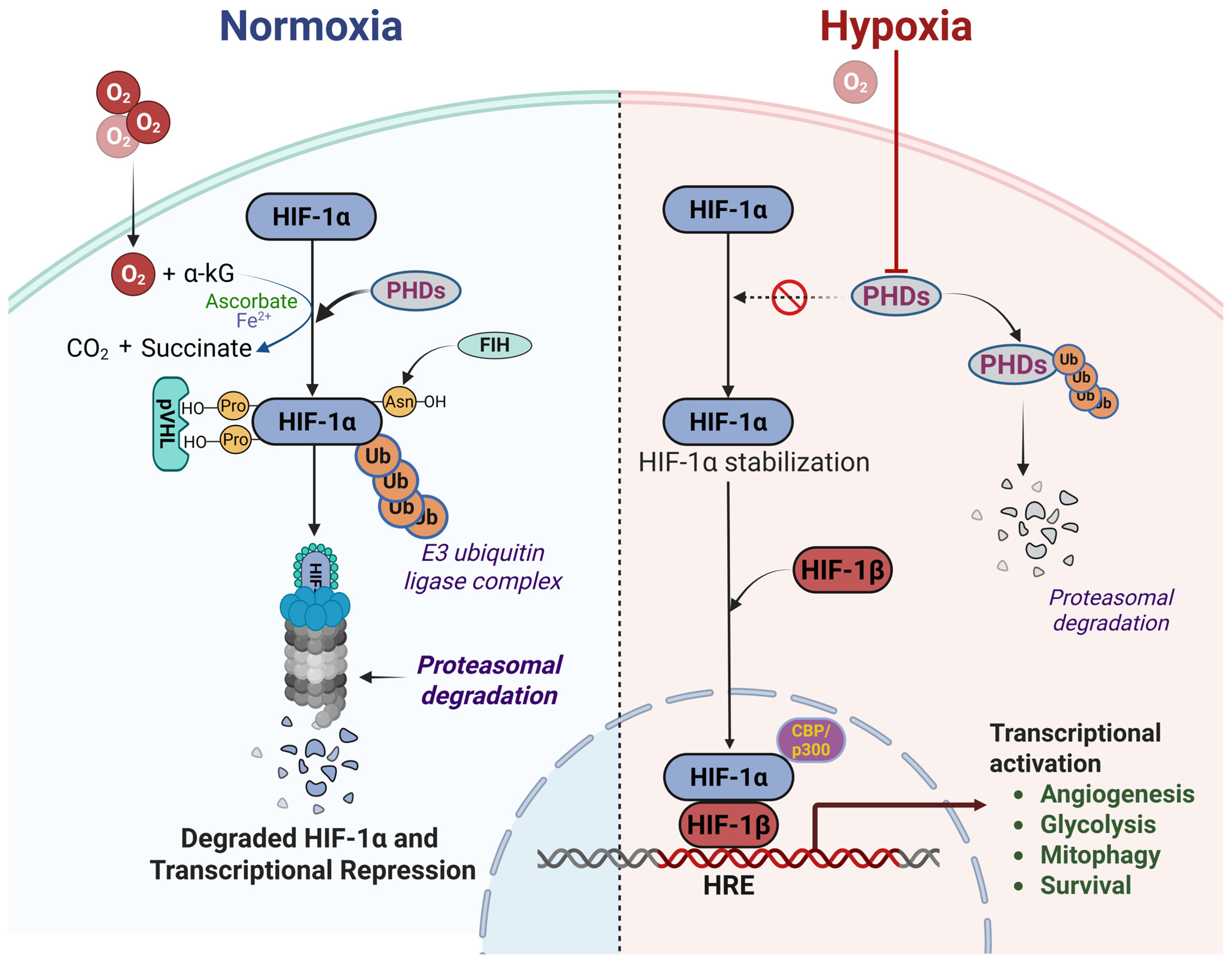
2.1. Oxygen-Sensitive Regulation of HIF-1α Expression and Function
2.2. Hypoxia and HIF in Pancreatic β-Cells
2.3. β-Cell Metabolic Aging: FOXO1–HIF Cross Talk and the Roles of HIF-1 and HIF-2
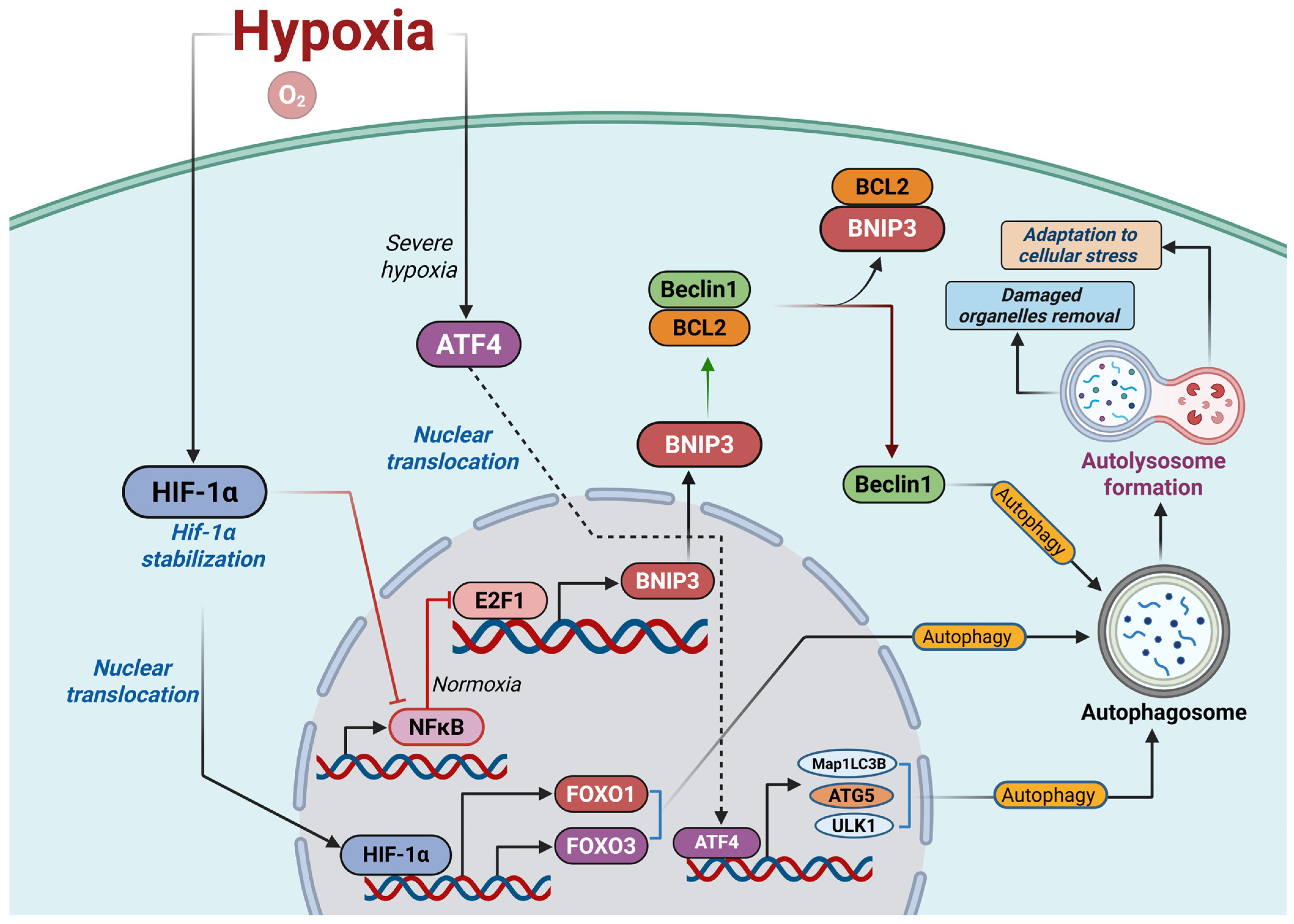
2.4. Hypoxia–Autophagy Transcriptional Control Beyond FOXO1
3. Metabolic Pathways and β-Cell Function Under Normoxia
3.1. Glucose Sensing
3.2. Mitochondrial Oxidation
3.3. Cellular Metabolite—Glutamate Enhances β-Cell Function
4. Hypoxia-Related Metabolic Stress and Mitochondrial Dysfunction in Pancreatic β-Cells
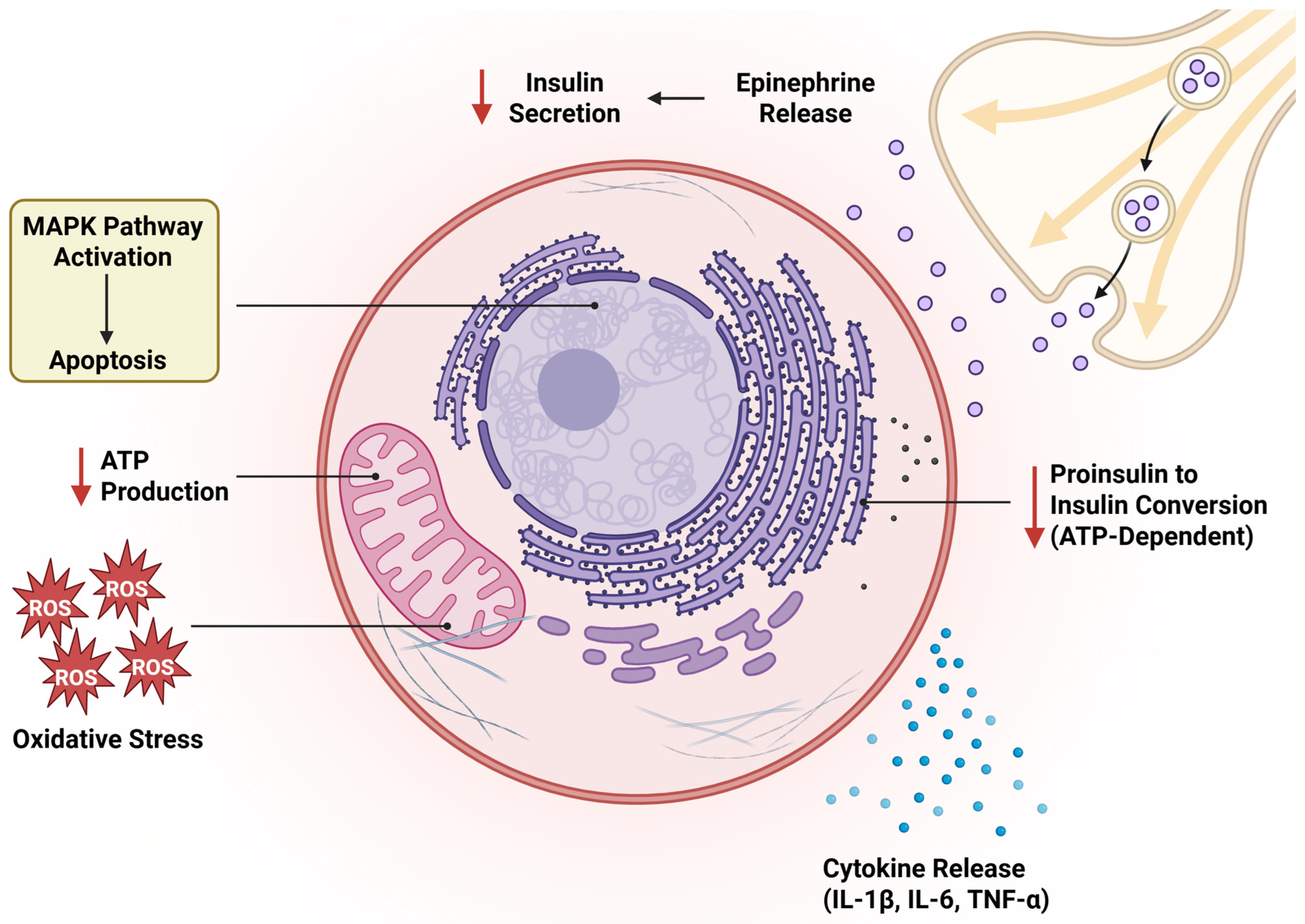
4.1. Hypoxia in Obstructive Sleep Apnoea (OSA): Impact on β-Cell Function and Insulin Maturation
4.2. Hypoxia-Induced Mitochondrial Dysfunction and Oxidative Stress in Pancreatic β-Cells
5. Adaptive and Protective Responses to Hypoxia in Pancreatic β-Cells
5.1. HIF-1α–Mediated Islet Angiogenesis in Hypoxic Environments
5.2. Maternal–Fetal Hypoxia Programming and Neonatal Islet Adaptations
5.2.1. Maternal Metabolic Stress, Placental HIFs, and Fetal β-Cell Programming
5.2.2. Intrinsic Biological Adaptations of Neonatal Islets to Hypoxia
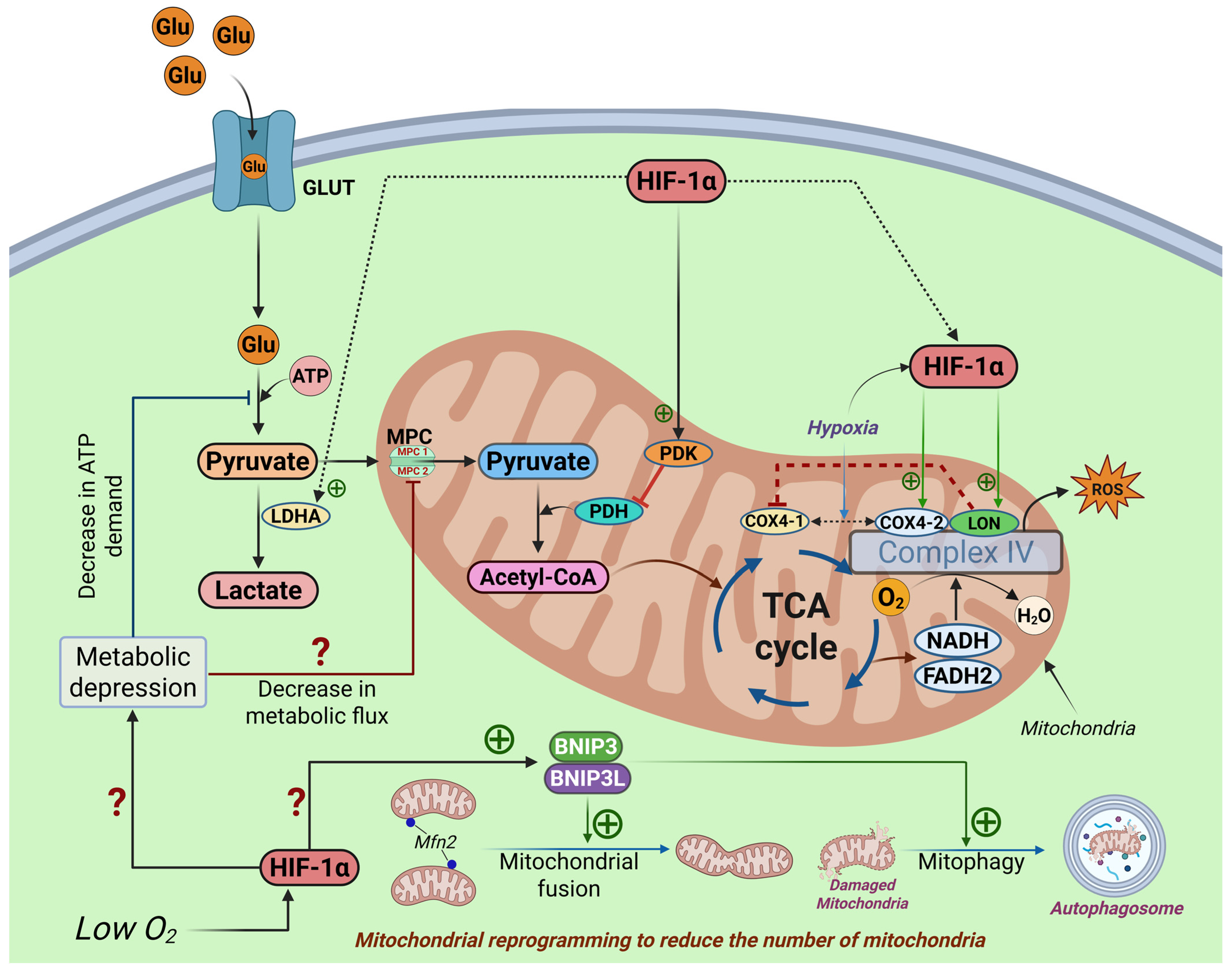
5.3. Metabolic Reprogramming Under Nutrient and Oxidative Stress: Can β-Cells Apply Similar Strategies in Hypoxia?
5.4. Mitophagy as an Adaptive Response to Hypoxic Stress in β-Cells
5.5. HIF-1α–Mediated Oxygen Utilization Strategies: Do β-Cells Employ Similar Mechanisms to Other Hypoxia-Adapted Cells?
5.6. Molecular Regulators Supporting β-Cell Survival in Hypoxia
5.6.1. Redox Regulation via Glutathione Peroxidase (GPx)
5.6.2. Growth Factor Modulation via IGFBP1
5.6.3. Protein Synthesis Control via DDIT4/REDD1
5.6.4. Cell Adhesion Mechanisms Supporting Hypoxia Tolerance
6. Endogenous and Exogenous Regulatory Factors Supporting β-Cell Survival Under Hypoxic Stress
6.1. GABAergic Neuronal Signaling: Potential for Enhancing β-Cell Function During Hypoxia
6.2. β-Cell–Generated Serotonin: An Autocrine-Paracrine Modulator of Survival and Metabolic Adaptation in Hypoxia
6.3. Erythropoietin-Mediated Cytoprotection in Hypoxic β-Cells
6.4. The Islet Microvascular Bed: Endothelial–Pericyte Interplay in β-Cell Survival
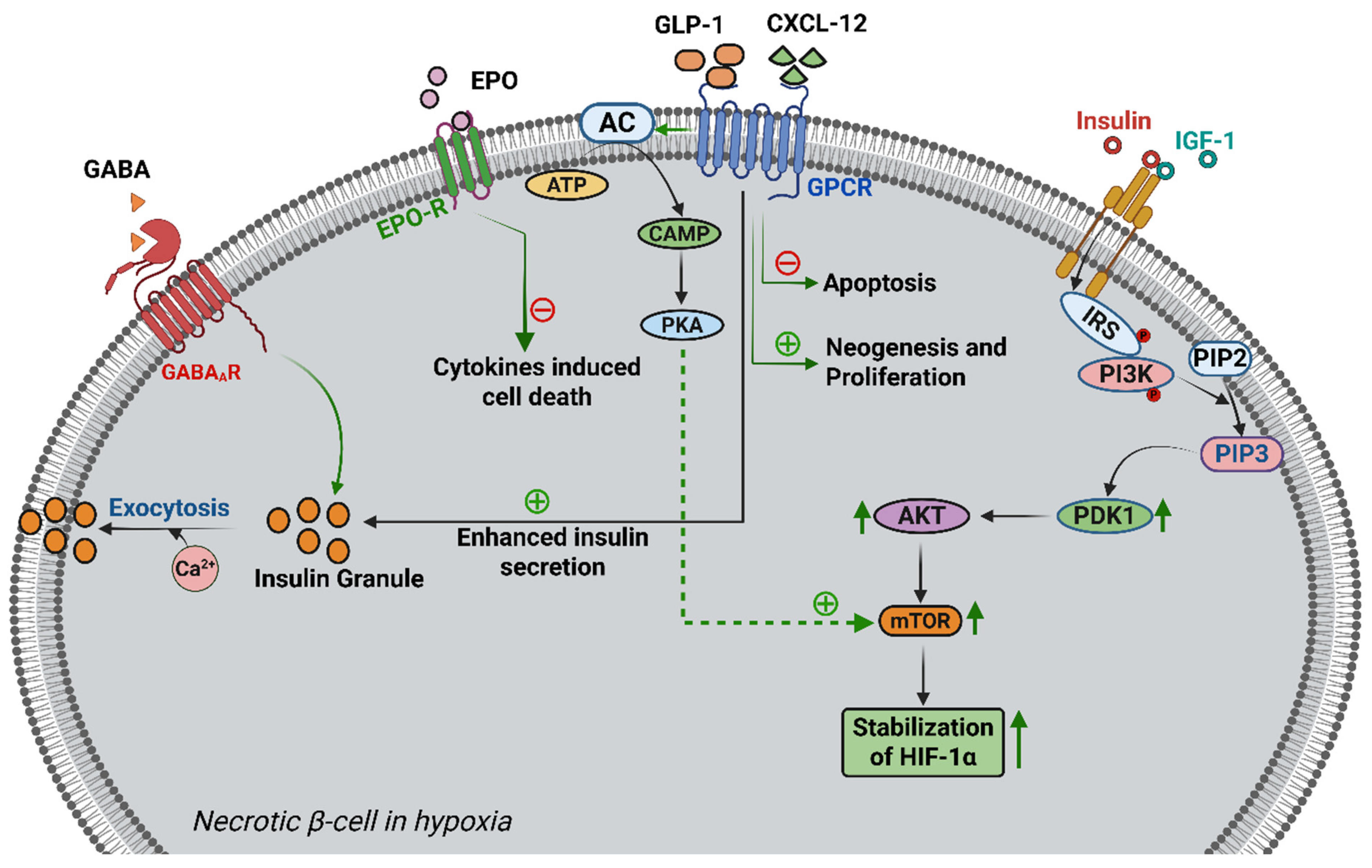
6.5. Incretin Hormones and Cytokines: Augmenting β-Cell Activity and Survival in Hypoxia
6.6. cAMP–mTOR Signaling and HIF-1α Stabilization in β-Cells Under Hypoxic Stress
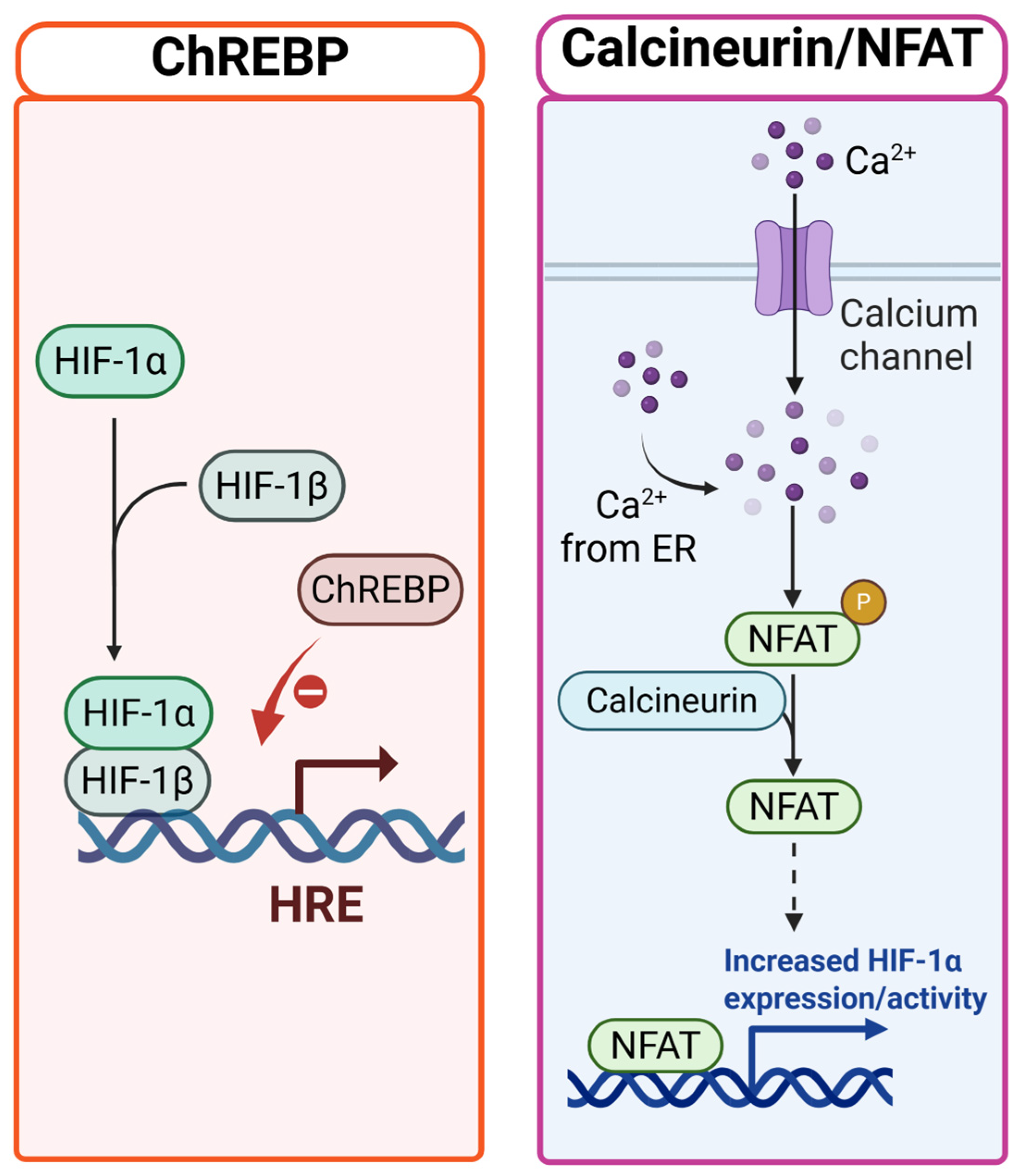
6.7. Pharmacological Inhibition of ChREBP to Enhance ARNT/HIF-1β Activity in Hypoxic β-Cells
6.8. Calcineurin–NFAT Signaling: Can It Be Harnessed to Regulate HIF-1α in Hypoxic β-Cells?
6.9. Neuroglobin and Cytoglobin Activation: Potential Oxygen-Handling Mechanisms in Hypoxic β-Cells
7. Strategies to Mitigate Hypoxia in Pancreatic β-Cell and Islet Transplantation
7.1. Pre-Transplantation Hypoxia and Hyperoxia: Balancing Oxygen Supply for Islet Viability
7.2. Oxygenation Strategies for Pancreatic Islets to Improve Transplant Outcomes
7.3. Ischemic (Hypoxia) Preconditioning: Enhancing β-Cell Functional Capacity Before Transplantation
7.4. Pharmacological Modulation of HIF-1α and Pro-Angiogenic Pathways
7.5. Oxygen Transporter Technologies for Delivering Oxygen to Hypoxic Graft Sites
7.6. Extracellular Matrix Enhancement Strategies
7.7. Mesenchymal Stem Cell–Derived Components and Exosomes: Protecting Islets from Hypoxia During Transplantation
7.8. Islet Encapsulation Technologies to Protect Against Hypoxia and Immune Attack
7.9. Combination and Multi-Modal Strategies
7.10. Limitations of Current Experimental Models and Translation Challenges
8. Conclusions and Future Perspectives
Author Contributions
Funding
Data Availability Statement
Conflicts of Interest
References
- Sato, Y.; Endo, H.; Okuyama, H.; Takeda, T.; Iwahashi, H.; Imagawa, A.; Yamagata, K.; Shimomura, I.; Inoue, M. Cellular Hypoxia of Pancreatic β-Cells Due to High Levels of Oxygen Consumption for Insulin Secretion In Vitro. J. Biol. Chem. 2011, 286, 12524–12532. [Google Scholar] [CrossRef] [PubMed]
- Bensellam, M.; Duvillié, B.; Rybachuk, G.; Laybutt, D.R.; Magnan, C.; Guiot, Y.; Pouysségur, J.; Jonas, J.-C. Glucose-Induced O2 Consumption Activates Hypoxia Inducible Factors 1 and 2 in Rat Insulin-Secreting Pancreatic Beta-Cells. PLoS ONE 2012, 7, e29807. [Google Scholar] [CrossRef] [PubMed]
- Lenzen, S.; Drinkgern, J.; Tiedge, M. Low Antioxidant Enzyme Gene Expression in Pancreatic Islets Compared with Various Other Mouse Tissues. Free Radic. Biol. Med. 1996, 20, 463–466. [Google Scholar] [CrossRef] [PubMed]
- Robertson, R.P.; Harmon, J.S. Pancreatic Islet Β-cell and Oxidative Stress: The Importance of Glutathione Peroxidase. FEBS Lett. 2007, 581, 3743–3748. [Google Scholar] [CrossRef]
- Wang, N.; Shi, X.-F.; Khan, S.A.; Wang, B.; Semenza, G.L.; Prabhakar, N.R.; Nanduri, J. Hypoxia-Inducible Factor-1 Mediates Pancreatic β-Cell Dysfunction by Intermittent Hypoxia. Am. J. Physiol.-Cell Physiol. 2020, 319, C922–C932. [Google Scholar] [CrossRef]
- Tsuyama, T.; Sato, Y.; Yoshizawa, T.; Matsuoka, T.; Yamagata, K. Hypoxia Causes Pancreatic Β-cell Dysfunction and Impairs Insulin Secretion by Activating the Transcriptional Repressor BHLHE40. EMBO Rep. 2023, 24, e56227. [Google Scholar] [CrossRef]
- Zheng, X.; Zheng, X.; Wang, X.; Ma, Z.; Gupta Sunkari, V.; Botusan, I.; Takeda, T.; Björklund, A.; Inoue, M.; Catrina, S.-B.; et al. Acute Hypoxia Induces Apoptosis of Pancreatic β-Cell by Activation of the Unfolded Protein Response and Upregulation of CHOP. Cell Death Dis. 2012, 3, e322. [Google Scholar] [CrossRef]
- Ma, Z.; Moruzzi, N.; Catrina, S.-B.; Hals, I.; Oberholzer, J.; Grill, V.; Björklund, A. Preconditioning with Associated Blocking of Ca2+ Inflow Alleviates Hypoxia-Induced Damage to Pancreatic β-Cells. PLoS ONE 2013, 8, e67498. [Google Scholar] [CrossRef]
- Zhang, D.; Liu, Y.; Tang, Y.; Wang, X.; Li, Z.; Li, R.; Ti, Z.; Gao, W.; Bai, J.; Lv, Y. Increased Mitochondrial Fission Is Critical for Hypoxia-Induced Pancreatic Beta Cell Death. PLoS ONE 2018, 13, e0197266. [Google Scholar] [CrossRef]
- Wang, N.; Khan, S.A.; Prabhakar, N.R.; Nanduri, J. Impairment of Pancreatic Β-cell Function by Chronic Intermittent Hypoxia. Exp. Physiol. 2013, 98, 1376–1385. [Google Scholar] [CrossRef]
- Hals, I.K.; Bruerberg, S.G.; Ma, Z.; Scholz, H.; Björklund, A.; Grill, V. Mitochondrial Respiration in Insulin-Producing β-Cells: General Characteristics and Adaptive Effects of Hypoxia. PLoS ONE 2015, 10, e0138558. [Google Scholar] [CrossRef]
- Lum, J.J.; Bui, T.; Gruber, M.; Gordan, J.D.; DeBerardinis, R.J.; Covello, K.L.; Simon, M.C.; Thompson, C.B. The Transcription Factor HIF-1α Plays a Critical Role in the Growth Factor-Dependent Regulation of Both Aerobic and Anaerobic Glycolysis. Genes Dev. 2007, 21, 1037–1049. [Google Scholar] [CrossRef] [PubMed]
- Komatsu, H.; Kandeel, F.; Mullen, Y. Impact of Oxygen on Pancreatic Islet Survival. Pancreas 2018, 47, 533–543. [Google Scholar] [CrossRef] [PubMed]
- Lazard, D.; Vardi, P.; Bloch, K. Induction of Beta-cell Resistance to Hypoxia and Technologies for Oxygen Delivery to Transplanted Pancreatic Islets. Diabetes Metab. Res. Rev. 2012, 28, 475–484. [Google Scholar] [CrossRef] [PubMed]
- Wang, W.; Upshaw, L.; Strong, D.M.; Robertson, R.P.; Reems, J.A. Increased Oxygen Consumption Rates in Response to High Glucose Detected by a Novel Oxygen Biosensor System in Non-Human Primate and Human Islets. J. Endocrinol. 2005, 185, 445–455. [Google Scholar] [CrossRef]
- Gerber, P.A.; Rutter, G.A. The Role of Oxidative Stress and Hypoxia in Pancreatic Beta-Cell Dysfunction in Diabetes Mellitus. Antioxid. Redox Signal. 2017, 26, 501–518. [Google Scholar] [CrossRef]
- Cantley, J.; Grey, S.T.; Maxwell, P.H.; Withers, D.J. The Hypoxia Response Pathway and β-Cell Function. Diabetes Obes. Metab. 2010, 12, 159–167. [Google Scholar] [CrossRef]
- Semenza, G.L. Hydroxylation of HIF-1: Oxygen Sensing at the Molecular Level. Physiology 2004, 19, 176–182. [Google Scholar] [CrossRef]
- Mahon, P.C.; Hirota, K.; Semenza, G.L. FIH-1: A Novel Protein That Interacts with HIF-1alpha and VHL to Mediate Repression of HIF-1 Transcriptional Activity. Genes Dev. 2001, 15, 2675–2686. [Google Scholar] [CrossRef]
- Lando, D.; Peet, D.J.; Whelan, D.A.; Gorman, J.J.; Whitelaw, M.L. Asparagine Hydroxylation of the HIF Transactivation Domain a Hypoxic Switch. Science 2002, 295, 858–861. [Google Scholar] [CrossRef]
- Pan, Y.; Mansfield, K.D.; Bertozzi, C.C.; Rudenko, V.; Chan, D.A.; Giaccia, A.J.; Simon, M.C. Multiple Factors Affecting Cellular Redox Status and Energy Metabolism Modulate Hypoxia-Inducible Factor Prolyl Hydroxylase Activity In Vivo and In Vitro. Mol. Cell. Biol. 2007, 27, 912–925. [Google Scholar] [CrossRef]
- MacKenzie, E.D.; Selak, M.A.; Tennant, D.A.; Payne, L.J.; Crosby, S.; Frederiksen, C.M.; Watson, D.G.; Gottlieb, E. Cell-Permeating α-Ketoglutarate Derivatives Alleviate Pseudohypoxia in Succinate Dehydrogenase-Deficient Cells. Mol. Cell. Biol. 2007, 27, 3282–3289. [Google Scholar] [CrossRef] [PubMed]
- Cheng, K.; Ho, K.; Stokes, R.; Scott, C.; Lau, S.M.; Hawthorne, W.J.; O’Connell, P.J.; Loudovaris, T.; Kay, T.W.; Kulkarni, R.N.; et al. Hypoxia-Inducible Factor-1α Regulates β Cell Function in Mouse and Human Islets. J. Clin. Investig. 2010, 120, 2171–2183. [Google Scholar] [CrossRef] [PubMed]
- Ilegems, E.; Bryzgalova, G.; Correia, J.; Yesildag, B.; Berra, E.; Ruas, J.L.; Pereira, T.S.; Berggren, P.-O. HIF-1α Inhibitor PX-478 Preserves Pancreatic β Cell Function in Diabetes. Sci. Transl. Med. 2022, 14, eaba9112. [Google Scholar] [CrossRef] [PubMed]
- Yu, J.; Lalwani, A.; Gunton, J.E. β-Cell Deletion of Hypoxia-Inducible Factor 1α (HIF-1α) Increases Pancreatic β-Cell Susceptibility to Streptozotocin. Int. J. Mol. Sci. 2024, 25, 13451. [Google Scholar] [CrossRef]
- Heinis, M.; Simon, M.-T.; Ilc, K.; Mazure, N.M.; Pouysségur, J.; Scharfmann, R.; Duvillié, B. Oxygen Tension Regulates Pancreatic β-Cell Differentiation Through Hypoxia-Inducible Factor 1α. Diabetes 2010, 59, 662–669. [Google Scholar] [CrossRef]
- Liu, N.; Cai, X.; Liu, T.; Zou, J.; Wang, L.; Wang, G.; Liu, Y.; Ding, X.; Zhang, B.; Sun, P.; et al. Hypoxia-Inducible Factor-1α Mediates the Expression of Mature β Cell-Disallowed Genes in Hypoxia-Induced β Cell Dedifferentiation. Biochem. Biophys. Res. Commun. 2020, 523, 382–388. [Google Scholar] [CrossRef]
- Yamagata, K.; Tsuyama, T.; Sato, Y. Roles of β-Cell Hypoxia in the Progression of Type 2 Diabetes. Int. J. Mol. Sci. 2024, 25, 4186. [Google Scholar] [CrossRef]
- Haataja, L.; Gurlo, T.; Huang, C.J.; Butler, P.C. Islet Amyloid in Type 2 Diabetes, and the Toxic Oligomer Hypothesis. Endocr. Rev. 2008, 29, 303–316. [Google Scholar] [CrossRef]
- Montemurro, C.; Nomoto, H.; Pei, L.; Parekh, V.S.; Vongbunyong, K.E.; Vadrevu, S.; Gurlo, T.; Butler, A.E.; Subramaniam, R.; Ritou, E.; et al. IAPP Toxicity Activates HIF1α/PFKFB3 Signaling Delaying β-Cell Loss at the Expense of β-Cell Function. Nat. Commun. 2019, 10, 2679. [Google Scholar] [CrossRef]
- Montane, J.; Klimek-Abercrombie, A.; Potter, K.J.; Westwell-Roper, C.; Bruce Verchere, C. Metabolic Stress, IAPP and Islet Amyloid. Diabetes Obes. Metab. 2012, 14, 68–77. [Google Scholar] [CrossRef] [PubMed]
- Talchai, C.; Xuan, S.; Lin, H.V.; Sussel, L.; Accili, D. Pancreatic β Cell Dedifferentiation as a Mechanism of Diabetic β Cell Failure. Cell 2012, 150, 1223–1234. [Google Scholar] [CrossRef] [PubMed]
- Li, X.; Wan, T.; Li, Y. Role of FoxO1 in Regulating Autophagy in Type 2 Diabetes Mellitus (Review). Exp. Ther. Med. 2021, 22, 707. [Google Scholar] [CrossRef] [PubMed]
- Kim-Muller, J.Y.; Fan, J.; Kim, Y.J.R.; Lee, S.-A.; Ishida, E.; Blaner, W.S.; Accili, D. Aldehyde Dehydrogenase 1a3 Defines a Subset of Failing Pancreatic β Cells in Diabetic Mice. Nat. Commun. 2016, 7, 12631. [Google Scholar] [CrossRef]
- Cinti, F.; Bouchi, R.; Kim-Muller, J.Y.; Ohmura, Y.; Sandoval, P.R.; Masini, M.; Marselli, L.; Suleiman, M.; Ratner, L.E.; Marchetti, P.; et al. Evidence of β-Cell Dedifferentiation in Human Type 2 Diabetes. J. Clin. Endocrinol. Metab. 2016, 101, 1044–1054. [Google Scholar] [CrossRef]
- Pullen, T.J.; Huising, M.O.; Rutter, G.A. Analysis of Purified Pancreatic Islet Beta and Alpha Cell Transcriptomes Reveals 11β-Hydroxysteroid Dehydrogenase (Hsd11b1) as a Novel Disallowed Gene. Front. Genet. 2017, 8, 41. [Google Scholar] [CrossRef]
- Zehetner, J.; Danzer, C.; Collins, S.; Eckhardt, K.; Gerber, P.A.; Ballschmieter, P.; Galvanovskis, J.; Shimomura, K.; Ashcroft, F.M.; Thorens, B.; et al. PVHL Is a Regulator of Glucose Metabolism and Insulin Secretion in Pancreatic β Cells. Genes Dev. 2008, 22, 3135–3146. [Google Scholar] [CrossRef]
- Liang, R.; Liu, N.; Cao, J.; Liu, T.; Sun, P.; Cai, X.; Zhang, L.; Liu, Y.; Zou, J.; Wang, L.; et al. HIF-1α/FOXO1 Axis Regulated Autophagy Is Protective for β Cell Survival under Hypoxia in Human Islets. Biochim. Biophys. Acta BBA-Mol. Basis Dis. 2022, 1868, 166356. [Google Scholar] [CrossRef]
- Mohammadi-Motlagh, H.-R.; Sadeghalvad, M.; Yavari, N.; Primavera, R.; Soltani, S.; Chetty, S.; Ganguly, A.; Regmi, S.; Fløyel, T.; Kaur, S.; et al. β Cell and Autophagy: What Do We Know? Biomolecules 2023, 13, 649. [Google Scholar] [CrossRef]
- Wang, Z.; Yu, T.; Huang, P. Post-Translational Modifications of FOXO Family Proteins. Mol. Med. Rep. 2016, 14, 4931–4941. [Google Scholar] [CrossRef]
- Kim-Muller, J.Y.; Kim, Y.J.R.; Fan, J.; Zhao, S.; Banks, A.S.; Prentki, M.; Accili, D. FoxO1 Deacetylation Decreases Fatty Acid Oxidation in β-Cells and Sustains Insulin Secretion in Diabetes. J. Biol. Chem. 2016, 291, 10162–10172. [Google Scholar] [CrossRef] [PubMed]
- Moon, J.-S.; Riopel, M.; Seo, J.B.; Herrero-Aguayo, V.; Isaac, R.; Lee, Y.S. HIF-2α Preserves Mitochondrial Activity and Glucose Sensing in Compensating β-Cells in Obesity. Diabetes 2022, 71, 1508–1524. [Google Scholar] [CrossRef] [PubMed]
- Bellot, G.; Garcia-Medina, R.; Gounon, P.; Chiche, J.; Roux, D.; Pouysségur, J.; Mazure, N.M. Hypoxia-Induced Autophagy Is Mediated through Hypoxia-Inducible Factor Induction of BNIP3 and BNIP3L via Their BH3 Domains. Mol. Cell. Biol. 2009, 29, 2570–2581. [Google Scholar] [CrossRef] [PubMed]
- Pike, L.R.G.; Singleton, D.C.; Buffa, F.; Abramczyk, O.; Phadwal, K.; Li, J.-L.; Simon, A.K.; Murray, J.T.; Harris, A.L. Transcriptional Up-Regulation of ULK1 by ATF4 Contributes to Cancer Cell Survival. Biochem. J. 2013, 449, 389–400. [Google Scholar] [CrossRef]
- Rzymski, T.; Milani, M.; Pike, L.; Buffa, F.; Mellor, H.R.; Winchester, L.; Pires, I.; Hammond, E.; Ragoussis, I.; Harris, A.L. Regulation of Autophagy by ATF4 in Response to Severe Hypoxia. Oncogene 2010, 29, 4424–4435. [Google Scholar] [CrossRef]
- Rouschop, K.M.A.; van den Beucken, T.; Dubois, L.; Niessen, H.; Bussink, J.; Savelkouls, K.; Keulers, T.; Mujcic, H.; Landuyt, W.; Voncken, J.W.; et al. The Unfolded Protein Response Protects Human Tumor Cells during Hypoxia through Regulation of the Autophagy Genes MAP1LC3B and ATG5. J. Clin. Investig. 2010, 120, 127–141. [Google Scholar] [CrossRef]
- Tracy, K.; Dibling, B.C.; Spike, B.T.; Knabb, J.R.; Schumacker, P.; Macleod, K.F. BNIP3 Is an RB/E2F Target Gene Required for Hypoxia-Induced Autophagy. Mol. Cell. Biol. 2007, 27, 6229–6242. [Google Scholar] [CrossRef]
- Polager, S.; Ofir, M.; Ginsberg, D. E2F1 Regulates Autophagy and the Transcription of Autophagy Genes. Oncogene 2008, 27, 4860–4864. [Google Scholar] [CrossRef]
- Liang, C.; Dong, Z.; Cai, X.; Shen, J.; Xu, Y.; Zhang, M.; Li, H.; Yu, W.; Chen, W. Hypoxia Induces Sorafenib Resistance Mediated by Autophagy via Activating FOXO3a in Hepatocellular Carcinoma. Cell Death Dis. 2020, 11, 1017. [Google Scholar] [CrossRef]
- Schmitz, O.; Rungby, J.; Edge, L.; Juhl, C.B. On High-Frequency Insulin Oscillations. Ageing Res. Rev. 2008, 7, 301–305. [Google Scholar] [CrossRef]
- Fu, Z.; Gilbert, E.R.; Liu, D. Regulation of Insulin Synthesis and Secretion and Pancreatic Beta-Cell Dysfunction in Diabetes. Curr. Diabetes Rev. 2013, 9, 25. [Google Scholar] [CrossRef] [PubMed]
- Matschinsky, F.; Liang, Y.; Kesavan, P.; Wang, L.; Froguel, P.; Velho, G.; Cohen, D.; Permutt, M.A.; Tanizawa, Y.; Jetton, T.L.; et al. Glucokinase as Pancreatic Beta Cell Glucose Sensor and Diabetes Gene. J. Clin. Investig. 1993, 92, 2092. [Google Scholar] [CrossRef] [PubMed]
- Matschinsky, F.M. Glucokinase as Glucose Sensor and Metabolic Signal Generator in Pancreatic β-Cells and Hepatocytes. Diabetes 1990, 39, 647–652. [Google Scholar] [CrossRef] [PubMed]
- Tiedge, M. Neue Aspekte Zur Betazelle Und Mögliche Therapieansätze. DMW-Dtsch. Med. Wochenschr. 2006, 131, S226–S230. [Google Scholar] [CrossRef]
- Newsholme, P.; Gaudel, C.; McClenaghan, N.H. Nutrient Regulation of Insulin Secretion and β-Cell Functional Integrity. In The Islets of Langerhans; Springer: Dordrecht, The Netherlands, 2010; pp. 91–114. [Google Scholar]
- Rutter, G.A.; Georgiadou, E.; Martinez-Sanchez, A.; Pullen, T.J. Metabolic and Functional Specialisations of the Pancreatic Beta Cell: Gene Disallowance, Mitochondrial Metabolism and Intercellular Connectivity. Diabetologia 2020, 63, 1990–1998. [Google Scholar] [CrossRef]
- Jörns, A.; Tiedge, M.; Lenzen, S. Nutrient-Dependent Distribution of Insulin and Glucokinase Immunoreactivities in Rat Pancreatic Beta Cells. Virchows Arch. 1999, 434, 75–82. [Google Scholar] [CrossRef]
- Corradi, J.; Thompson, B.; Fletcher, P.A.; Bertram, R.; Sherman, A.S.; Satin, L.S. K ATP Channel Activity and Slow Oscillations in Pancreatic Beta Cells Are Regulated by Mitochondrial ATP Production. J. Physiol. 2023, 601, 5655–5667. [Google Scholar] [CrossRef]
- Rutter, G.A.; Sidarala, V.; Kaufman, B.A.; Soleimanpour, S.A. Mitochondrial Metabolism and Dynamics in Pancreatic Beta Cell Glucose Sensing. Biochem. J. 2023, 480, 773–789. [Google Scholar] [CrossRef]
- Rossetti, G.; Ermer, J.A.; Stentenbach, M.; Siira, S.J.; Richman, T.R.; Milenkovic, D.; Perks, K.L.; Hughes, L.A.; Jamieson, E.; Xiafukaiti, G.; et al. A Common Genetic Variant of a Mitochondrial RNA Processing Enzyme Predisposes to Insulin Resistance. Sci. Adv. 2021, 7, eabi7514. [Google Scholar] [CrossRef]
- Zu, Y.; Mikhael, M.; Andrade, J.; Scoggin, S.; Yosofvand, M.; Moussa, H.; Festuccia, W.T.; Moustaid-Moussa, N. Effects of Eicosapentaenoic Acid in Glycerol Phosphate Shuttle GPD2 Regulated Inflammatory and Thermogenic Responses; Springer Science and Business Media LLC: Berlin/Heidelberg, Germany, 2024. [Google Scholar]
- Bermont, F.; Hermant, A.; Benninga, R.; Chabert, C.; Jacot, G.; Santo-Domingo, J.; Kraus, M.R.-C.; Feige, J.N.; De Marchi, U. Targeting Mitochondrial Calcium Uptake with the Natural Flavonol Kaempferol, to Promote Metabolism/Secretion Coupling in Pancreatic β-Cells. Nutrients 2020, 12, 538. [Google Scholar] [CrossRef]
- Maechler, P. Glutamate Pathways of the Beta-Cell and the Control of Insulin Secretion. Diabetes Res. Clin. Pract. 2017, 131, 149–153. [Google Scholar] [CrossRef] [PubMed]
- Gheni, G.; Ogura, M.; Iwasaki, M.; Yokoi, N.; Minami, K.; Nakayama, Y.; Harada, K.; Hastoy, B.; Wu, X.; Takahashi, H.; et al. Glutamate Acts as a Key Signal Linking Glucose Metabolism to Incretin/CAMP Action to Amplify Insulin Secretion. Cell Rep. 2014, 9, 661–673. [Google Scholar] [CrossRef] [PubMed]
- MacDonald, M.J.; Fahien, L.A. Glutamate Is Not a Messenger in Insulin Secretion. J. Biol. Chem. 2000, 275, 34025–34027. [Google Scholar] [CrossRef] [PubMed]
- Vetterli, L.; Carobbio, S.; Pournourmohammadi, S.; Martin-del-Rio, R.; Skytt, D.M.; Waagepetersen, H.S.; Tamarit-Rodriguez, J.; Maechler, P. Delineation of Glutamate Pathways and Secretory Responses in Pancreatic Islets with β-Cell–Specific Abrogation of the Glutamate Dehydrogenase. Mol. Biol. Cell 2012, 23, 3851–3862. [Google Scholar] [CrossRef] [PubMed]
- Haigis, M.C.; Mostoslavsky, R.; Haigis, K.M.; Fahie, K.; Christodoulou, D.C.; Murphy, A.J.; Valenzuela, D.M.; Yancopoulos, G.D.; Karow, M.; Blander, G.; et al. SIRT4 Inhibits Glutamate Dehydrogenase and Opposes the Effects of Calorie Restriction in Pancreatic β Cells. Cell 2006, 126, 941–954. [Google Scholar] [CrossRef]
- Li, C.; Allen, A.; Kwagh, J.; Doliba, N.M.; Qin, W.; Najafi, H.; Collins, H.W.; Matschinsky, F.M.; Stanley, C.A.; Smith, T.J. Green Tea Polyphenols Modulate Insulin Secretion by Inhibiting Glutamate Dehydrogenase. J. Biol. Chem. 2006, 281, 10214–10221. [Google Scholar] [CrossRef]
- Broca, C.; Brennan, L.; Petit, P.; Newsholme, P.; Maechler, P. Mitochondria-derived Glutamate at the Interplay between Branched-chain Amino Acid and Glucose-induced Insulin Secretion. FEBS Lett. 2003, 545, 167–172. [Google Scholar] [CrossRef]
- Han, G.; Takahashi, H.; Murao, N.; Gheni, G.; Yokoi, N.; Hamamoto, Y.; Asahara, S.; Seino, Y.; Kido, Y.; Seino, S. Glutamate Is an Essential Mediator in Glutamine-amplified Insulin Secretion. J. Diabetes Investig. 2021, 12, 920–930. [Google Scholar] [CrossRef]
- Fonseca, V.A. Defining and Characterizing the Progression of Type 2 Diabetes. Diabetes Care 2009, 32, S151–S156. [Google Scholar] [CrossRef]
- Osman, A.M.; Carter, S.G.; Carberry, J.C.; Eckert, D.J. Obstructive Sleep Apnea: Current Perspectives. Nat. Sci. Sleep 2018, 10, 21–34. [Google Scholar] [CrossRef]
- Sleep-Related Breathing Disorders in Adults: Recommendations for Syndrome Definition and Measurement Techniques in Clinical Research. The Report of an American Academy of Sleep Medicine Task Force-PubMed. Available online: https://pubmed.ncbi.nlm.nih.gov/10450601/ (accessed on 28 September 2022).
- Drager, L.F.; Togeiro, S.M.; Polotsky, V.Y.; Lorenzi-Filho, G. Obstructive Sleep Apnea: A Cardiometabolic Risk in Obesity and the Metabolic Syndrome. J. Am. Coll. Cardiol. 2013, 62, 569. [Google Scholar] [CrossRef]
- Punjabi, N.M.; Beamer, B.A. Alterations in Glucose Disposal in Sleep-Disordered Breathing. Am. J. Respir. Crit. Care Med. 2009, 179, 235. [Google Scholar] [CrossRef] [PubMed]
- Drager, L.F.; Li, J.; Reinke, C.; Bevans-Fonti, S.; Jun, J.C.; Polotsky, V.Y. Intermittent Hypoxia Exacerbates Metabolic Effects of Diet-Induced Obesity. Obesity 2011, 19, 2167–2174. [Google Scholar] [CrossRef] [PubMed]
- Polotsky, V.Y.; Li, J.; Punjabi, N.M.; Rubin, A.E.; Smith, P.L.; Schwartz, A.R.; O’Donnell, C.P. Intermittent Hypoxia Increases Insulin Resistance in Genetically Obese Mice. J. Physiol. 2003, 552, 253–264. [Google Scholar] [CrossRef] [PubMed]
- Trombetta, I.C.; Maki-Nunes, C.; Toschi-Dias, E.; Alves, M.J.N.N.; Rondon, M.U.P.B.; Cepeda, F.X.; Drager, L.F.; Braga, A.M.F.W.; Lorenzi-Filho, G.; Negrao, C.E. Obstructive Sleep Apnea Is Associated with Increased Chemoreflex in Patients with Metabolic Syndrome. Sleep 2013, 36, 41. [Google Scholar] [CrossRef]
- Prabhakar, N.R.; Kumar, G.K.; Peng, Y.J. Sympatho-Adrenal Activation by Chronic Intermittent Hypoxia. J. Appl. Physiol 2012, 113, 1304–1310. [Google Scholar] [CrossRef]
- Deibert, D.C.; DeFronzo, R.A. Epinephrine-Induced Insulin Resistance in Man. J. Clin. Investig. 1980, 65, 717–721. [Google Scholar] [CrossRef]
- Byun, J.I.; Cha, K.S.; Jun, J.E.; Kim, T.J.; Jung, K.Y.; Jeong, I.K.; Shin, W.C. Dynamic Changes in Nocturnal Blood Glucose Levels Are Associated with Sleep-Related Features in Patients with Obstructive Sleep Apnea. Sci. Rep. 2020, 10, 17877. [Google Scholar] [CrossRef]
- Bialasiewicz, P.; Czupryniak, L.; Pawlowski, M.; Nowak, D. Sleep Disordered Breathing in REM Sleep Reverses the Downward Trend in Glucose Concentration. Sleep Med. 2011, 12, 76–82. [Google Scholar] [CrossRef]
- Teitelman, G. Heterogeneous Expression of Proinsulin Processing Enzymes in Beta Cells of Non-Diabetic and Type 2 Diabetic Humans. J. Histochem. Cytochem. 2019, 67, 385. [Google Scholar] [CrossRef]
- Pallayova, M.; Lazurova, I.; Donic, V. Hypoxic Damage to Pancreatic Beta Cells--the Hidden Link between Sleep Apnea and Diabetes. Med. Hypotheses 2011, 77, 930–934. [Google Scholar] [CrossRef] [PubMed]
- Ohga, E.; Nagase, T.; Tomita, T.; Teramoto, S.; Matsuse, T.; Katayama, H.; Ouchi, Y. Increased Levels of Circulating ICAM-1, VCAM-1, and L-Selectin in Obstructive Sleep Apnea Syndrome. J. Appl. Physiol. 1999, 87, 10–14. [Google Scholar] [CrossRef] [PubMed]
- Alberti, A.; Sarchielli, P.; Gallinella, E.; Floridi, A.; Floridi, A.; Mazzotta, G.; Gallai, V. Plasma Cytokine Levels in Patients with Obstructive Sleep Apnea Syndrome: A Preliminary Study. J. Sleep Res. 2003, 12, 305–311. [Google Scholar] [CrossRef] [PubMed]
- El-Solh, A.A.; Mador, M.J.; Sikka, P.; Dhillon, R.S.; Amsterdam, D.; Grant, B.J.B. Adhesion Molecules in Patients with Coronary Artery Disease and Moderate-to-Severe Obstructive Sleep Apnea. Chest 2002, 121, 1541–1547. [Google Scholar] [CrossRef]
- Lee, E.J.; Heo, W.; Kim, J.Y.; Kim, H.; Kang, M.J.; Kim, B.R.; Kim, J.H.; Park, D.Y.; Kim, C.H.; Yoon, J.H.; et al. Alteration of Inflammatory Mediators in the Upper and Lower Airways under Chronic Intermittent Hypoxia: Preliminary Animal Study. Mediat. Inflamm. 2017, 2017, 4327237. [Google Scholar] [CrossRef]
- Wieser, V.; Moschen, A.R.; Tilg, H. Inflammation, Cytokines and Insulin Resistance: A Clinical Perspective. Arch. Immunol. Ther. Exp. 2013, 61, 119–125. [Google Scholar] [CrossRef]
- Wang, Y.; Hai, B.; Niu, X.; Ai, L.; Cao, Y.; Li, R.; Li, Y. Chronic Intermittent Hypoxia Disturbs Insulin Secretion and Causes Pancreatic Injury via the MAPK Signaling Pathway. Biochem. Cell Biol. 2017, 95, 415–420. [Google Scholar] [CrossRef]
- Wali, J.A.; Masters, S.L.; Thomas, H.E. Linking Metabolic Abnormalities to Apoptotic Pathways in Beta Cells in Type 2 Diabetes. Cells 2013, 2, 266. [Google Scholar] [CrossRef]
- Kowaltowski, A.J.; de Souza-Pinto, N.C.; Castilho, R.F.; Vercesi, A.E. Mitochondria and Reactive Oxygen Species. Free Radic. Biol. Med. 2009, 47, 333–343. [Google Scholar] [CrossRef]
- Brand, M.D. The Sites and Topology of Mitochondrial Superoxide Production. Exp. Gerontol. 2010, 45, 466–472. [Google Scholar] [CrossRef]
- Park, K.; Lim, H.; Kim, J.; Hwang, Y.; Lee, Y.S.; Bae, S.H.; Kim, H.; Kim, H.; Kang, S.-W.; Kim, J.Y.; et al. Lysosomal Ca2+-Mediated TFEB Activation Modulates Mitophagy and Functional Adaptation of Pancreatic β-Cells to Metabolic Stress. Nat. Commun. 2022, 13, 1300. [Google Scholar] [CrossRef]
- Aoyagi, K.; Yamashita, S.-I.; Akimoto, Y.; Nishiwaki, C.; Nakamichi, Y.; Udagawa, H.; Abe, M.; Sakimura, K.; Kanki, T.; Ohara-Imaizumi, M. A New Beta Cell-Specific Mitophagy Reporter Mouse Shows That Metabolic Stress Leads to Accumulation of Dysfunctional Mitochondria despite Increased Mitophagy. Diabetologia 2023, 66, 147–162. [Google Scholar] [CrossRef] [PubMed]
- De Giusti, V.C.; Caldiz, C.I.; Ennis, I.L.; Pérez, N.G.; Cingolani, H.E.; Aiello, E.A. Mitochondrial Reactive Oxygen Species (ROS) as Signaling Molecules of Intracellular Pathways Triggered by the Cardiac Renin-Angiotensin II-Aldosterone System (RAAS). Front. Physiol. 2013, 4, 126. [Google Scholar] [CrossRef]
- Wang, L.; Azad, N.; Kongkaneramit, L.; Chen, F.; Lu, Y.; Jiang, B.-H.; Rojanasakul, Y. The Fas Death Signaling Pathway Connecting Reactive Oxygen Species Generation and FLICE Inhibitory Protein Down-Regulation. J. Immunol. 2008, 180, 3072–3080. [Google Scholar] [CrossRef] [PubMed]
- Circu, M.L.; Aw, T.Y. Reactive Oxygen Species, Cellular Redox Systems, and Apoptosis. Free Radic. Biol. Med. 2010, 48, 749–762. [Google Scholar] [CrossRef] [PubMed]
- Deng, Y.; Ren, X.; Yang, L.; Lin, Y.; Wu, X. A JNK-Dependent Pathway Is Required for TNFalpha-Induced Apoptosis. Cell 2003, 115, 61–70. [Google Scholar] [CrossRef]
- Hattori, K.; Naguro, I.; Runchel, C.; Ichijo, H. The Roles of ASK Family Proteins in Stress Responses and Diseases. Cell Commun. Signal. 2009, 7, 9. [Google Scholar] [CrossRef]
- Sinha, K.; Das, J.; Pal, P.B.; Sil, P.C. Oxidative Stress: The Mitochondria-Dependent and Mitochondria-Independent Pathways of Apoptosis. Arch. Toxicol. 2013, 87, 1157–1180. [Google Scholar] [CrossRef]
- Brand, M.D. The Contribution of the Leak of Protons across the Mitochondrial Inner Membrane to Standard Metabolic Rate. J. Theor. Biol. 1990, 145, 267–286. [Google Scholar] [CrossRef]
- Jastroch, M.; Divakaruni, A.S.; Mookerjee, S.; Treberg, J.R.; Brand, M.D. Mitochondrial Proton and Electron Leaks. Essays Biochem. 2010, 47, 53–67. [Google Scholar] [CrossRef]
- Čater, M.; Križančić Bombek, L. Protective Role of Mitochondrial Uncoupling Proteins against Age-Related Oxidative Stress in Type 2 Diabetes Mellitus. Antioxidants 2022, 11, 1473. [Google Scholar] [CrossRef]
- Krauss, S.; Zhang, C.-Y.; Scorrano, L.; Dalgaard, L.T.; St-Pierre, J.; Grey, S.T.; Lowell, B.B. Superoxide-Mediated Activation of Uncoupling Protein 2 Causes Pancreatic Beta Cell Dysfunction. J. Clin. Investig. 2003, 112, 1831–1842. [Google Scholar] [CrossRef] [PubMed]
- Affourtit, C.; Brand, M.D. On the Role of Uncoupling Protein-2 in Pancreatic Beta Cells. Biochim. Biophys. Acta 2008, 1777, 973–979. [Google Scholar] [CrossRef] [PubMed]
- Inoue, R.; Tsuno, T.; Togashi, Y.; Okuyama, T.; Sato, A.; Nishiyama, K.; Kyohara, M.; Li, J.; Fukushima, S.; Kin, T.; et al. Uncoupling Protein 2 and Aldolase B Impact Insulin Release by Modulating Mitochondrial Function and Ca2+ Release from the ER. iScience 2022, 25, 104603. [Google Scholar] [CrossRef] [PubMed]
- Supale, S.; Li, N.; Brun, T.; Maechler, P. Mitochondrial Dysfunction in Pancreatic β Cells. Trends Endocrinol. Metab. 2012, 23, 477–487. [Google Scholar] [CrossRef]
- Wu, Z.; Puigserver, P.; Andersson, U.; Zhang, C.; Adelmant, G.; Mootha, V.; Troy, A.; Cinti, S.; Lowell, B.; Scarpulla, R.C.; et al. Mechanisms Controlling Mitochondrial Biogenesis and Respiration through the Thermogenic Coactivator PGC-1. Cell 1999, 98, 115–124. [Google Scholar] [CrossRef]
- Toda, C.; Diano, S. Mitochondrial UCP2 in the Central Regulation of Metabolism. Best Pract. Res. Clin. Endocrinol. Metab. 2014, 28, 757–764. [Google Scholar] [CrossRef]
- Robson-Doucette, C.A.; Sultan, S.; Allister, E.M.; Wikstrom, J.D.; Koshkin, V.; Bhattacharjee, A.; Prentice, K.J.; Sereda, S.B.; Shirihai, O.S.; Wheeler, M.B. Beta-Cell Uncoupling Protein 2 Regulates Reactive Oxygen Species Production, Which Influences Both Insulin and Glucagon Secretion. Diabetes 2011, 60, 2710–2719. [Google Scholar] [CrossRef]
- Benáková, Š.; Holendová, B.; Plecitá-Hlavatá, L. Redox Homeostasis in Pancreatic β-Cells: From Development to Failure. Antioxidants 2021, 10, 526. [Google Scholar] [CrossRef]
- Li, N.; Li, B.; Brun, T.; Deffert-Delbouille, C.; Mahiout, Z.; Daali, Y.; Ma, X.-J.; Krause, K.-H.; Maechler, P. NADPH Oxidase NOX2 Defines a New Antagonistic Role for Reactive Oxygen Species and CAMP/PKA in the Regulation of Insulin Secretion. Diabetes 2012, 61, 2842–2850. [Google Scholar] [CrossRef]
- KS, P.K.; Jyothi, M.N.; Prashant, A. Mitochondrial DNA Variants in the Pathogenesis and Metabolic Alterations of Diabetes Mellitus. Mol. Genet. Metab. Rep. 2025, 42, 101183. [Google Scholar] [CrossRef]
- Nissanka, N.; Moraes, C.T. Mitochondrial DNA Damage and Reactive Oxygen Species in Neurodegenerative Disease. FEBS Lett. 2018, 592, 728–742. [Google Scholar] [CrossRef] [PubMed]
- Pugh, C.W.; Ratcliffe, P.J. Regulation of Angiogenesis by Hypoxia: Role of the HIF System. Nat. Med. 2003, 9, 677–684. [Google Scholar] [CrossRef] [PubMed]
- Semenza, G.L. Targeting Hypoxia-Inducible Factor 1 to Stimulate Tissue Vascularization. J. Investig. Med. 2016, 64, 361–363. [Google Scholar] [CrossRef] [PubMed]
- Semenza, G.L. Hypoxia-Inducible Factors in Physiology and Medicine. Cell 2012, 148, 399–408. [Google Scholar] [CrossRef]
- Bakleh, M.Z.; Al Haj Zen, A. The Distinct Role of HIF-1α and HIF-2α in Hypoxia and Angiogenesis. Cells 2025, 14, 673. [Google Scholar] [CrossRef]
- Hashimoto, T.; Shibasaki, F. Hypoxia-Inducible Factor as an Angiogenic Master Switch. Front. Pediatr. 2015, 3, 33. [Google Scholar] [CrossRef]
- Yamakawa, M.; Liu, L.X.; Date, T.; Belanger, A.J.; Vincent, K.A.; Akita, G.Y.; Kuriyama, T.; Cheng, S.H.; Gregory, R.J.; Jiang, C. Hypoxia-Inducible Factor-1 Mediates Activation of Cultured Vascular Endothelial Cells by Inducing Multiple Angiogenic Factors. Circ. Res. 2003, 93, 664–673. [Google Scholar] [CrossRef]
- Stokes, R.A.; Cheng, K.; Deters, N.; Lau, S.M.; Hawthorne, W.J.; O’connell, P.J.; Stolp, J.; Grey, S.; Loudovaris, T.; Kay, T.W.; et al. Hypoxia-Inducible Factor-1α (HIF-1α) Potentiates β-Cell Survival after Islet Transplantation of Human and Mouse Islets. Cell Transpl. 2013, 22, 253–266. [Google Scholar] [CrossRef]
- Sankar, K.S.; Altamentova, S.M.; Rocheleau, J.V. Hypoxia Induction in Cultured Pancreatic Islets Enhances Endothelial Cell Morphology and Survival While Maintaining Beta-Cell Function. PLoS ONE 2019, 14, e0222424. [Google Scholar] [CrossRef]
- Büchler, P.; Gazdhar, A.; Schubert, M.; Giese, N.; Reber, H.A.; Hines, O.J.; Giese, T.; Ceyhan, G.O.; Müller, M.; Büchler, M.W.; et al. The Notch Signaling Pathway Is Related to Neurovascular Progression of Pancreatic Cancer. Ann. Surg. 2005, 242, 791–801. [Google Scholar] [CrossRef]
- Langlois, A.; Mura, C.; Bietiger, W.; Seyfritz, E.; Dollinger, C.; Peronet, C.; Maillard, E.; Pinget, M.; Jeandidier, N.; Sigrist, S. In Vitro and In Vivo Investigation of the Angiogenic Effects of Liraglutide during Islet Transplantation. PLoS ONE 2016, 11, e0147068. [Google Scholar] [CrossRef] [PubMed]
- Langmia, I.M.; Kräker, K.; Weiss, S.E.; Haase, N.; Schütte, T.; Herse, F.; Dechend, R. Cardiovascular Programming During and After Diabetic Pregnancy: Role of Placental Dysfunction and IUGR. Front. Endocrinol. 2019, 10, 215. [Google Scholar] [CrossRef]
- Zhu, Z.; Cao, F.; Li, X. Epigenetic Programming and Fetal Metabolic Programming. Front. Endocrinol. 2019, 10, 764. [Google Scholar] [CrossRef] [PubMed]
- Hyder, A.; Laue, C.; Schrezenmeir, J. Metabolic Aspects of Neonatal Rat Islet Hypoxia Tolerance. Transpl. Int. 2010, 23, 80–89. [Google Scholar] [CrossRef] [PubMed]
- Sato, Y.; Inoue, M.; Yoshizawa, T.; Yamagata, K. Moderate Hypoxia Induces β-Cell Dysfunction with HIF-1–Independent Gene Expression Changes. PLoS ONE 2014, 9, e114868. [Google Scholar] [CrossRef]
- Jermendy, A.; Toschi, E.; Aye, T.; Koh, A.; Aguayo-Mazzucato, C.; Sharma, A.; Weir, G.C.; Sgroi, D.; Bonner-Weir, S. Rat Neonatal Beta Cells Lack the Specialised Metabolic Phenotype of Mature Beta Cells. Diabetologia 2011, 54, 594–604. [Google Scholar] [CrossRef]
- Peterson, M.; Gauvin, M.; Pillai, S.; Jones, A.; McFadden, K.; Cameron, K.; Reed, S.; Zinn, S.; Govoni, K. Maternal Under- and Over-Nutrition during Gestation Causes Islet Hypertrophy and Sex-Specific Changes to Pancreas DNA Methylation in Fetal Sheep. Animals 2021, 11, 2531. [Google Scholar] [CrossRef]
- Fajersztajn, L.; Veras, M.M. Hypoxia: From Placental Development to Fetal Programming. Birth Defects Res. 2017, 109, 1377–1385. [Google Scholar] [CrossRef]
- Tarry-Adkins, J.L.; Ozanne, S.E. Mechanisms of Early Life Programming: Current Knowledge and Future Directions. Am. J. Clin. Nutr. 2011, 94, S1765–S1771. [Google Scholar] [CrossRef]
- Deodati, A.; Inzaghi, E.; Cianfarani, S. Epigenetics and In Utero Acquired Predisposition to Metabolic Disease. Front. Genet. 2020, 10, 1270. [Google Scholar] [CrossRef]
- Hyder, A.; Laue, C.; Schrezenmeir, J. Effect of Extracellular PH on Insulin Secretion and Glucose Metabolism in Neonatal and Adult Rat Pancreatic Islets. Acta Diabetol. 2001, 38, 171–178. [Google Scholar] [CrossRef]
- Emamaullee, J.A.; Shapiro, A.M.J.; Rajotte, R.V.; Korbutt, G.; Elliott, J.F. Neonatal Porcine Islets Exhibit Natural Resistance to Hypoxia-Induced Apoptosis. Transplantation 2006, 82, 945–952. [Google Scholar] [CrossRef] [PubMed]
- Boschero, A.C.; Bordin, S.; Sener, A.; Malaisse, W.J. D-Glucose and l-Leucine Metabolism in Neonatal and Adult Cultured Rat Pancreatic Islets. Mol. Cell. Endocrinol. 1990, 73, 63–71. [Google Scholar] [CrossRef] [PubMed]
- Liu, B.; Hua, D.; Shen, L.; Li, T.; Tao, Z.; Fu, C.; Tang, Z.; Yang, J.; Zhang, L.; Nie, A.; et al. NPC1 Is Required for Postnatal Islet β Cell Differentiation by Maintaining Mitochondria Turnover. Theranostics 2024, 14, 2058–2074. [Google Scholar] [CrossRef] [PubMed]
- Sidarala, V.; Pearson, G.L.; Parekh, V.S.; Thompson, B.; Christen, L.; Gingerich, M.A.; Zhu, J.; Stromer, T.; Ren, J.; Reck, E.C.; et al. Mitophagy Protects β Cells from Inflammatory Damage in Diabetes. JCI Insight 2020, 5, e141138. [Google Scholar] [CrossRef]
- Richardson, C.C.; Hussain, K.; Jones, P.M.; Persaud, S.; Löbner, K.; Boehm, A.; Clark, A.; Christie, M.R. Low Levels of Glucose Transporters and K+ ATP Channels in Human Pancreatic Beta Cells Early in Development. Diabetologia 2007, 50, 1000–1005. [Google Scholar] [CrossRef]
- Scaglia, L.; Cahill, C.J.; Finegood, D.T.; Bonner-Weir, S. Apoptosis Participates in the Remodeling of the Endocrine Pancreas in the Neonatal Rat. Endocrinology 1997, 138, 1736–1741. [Google Scholar] [CrossRef]
- Hanke, J. Apoptosis and Occurrence of Bcl-2, Bak, Bax, Fas and FasL in the Developing and Adult Rat Endocrine Pancreas. Anat. Embryol. 2000, 202, 303–312. [Google Scholar] [CrossRef]
- Prentki, M.; Peyot, M.-L.; Masiello, P.; Madiraju, S.R.M. Nutrient-Induced Metabolic Stress, Adaptation, Detoxification, and Toxicity in the Pancreatic β-Cell. Diabetes 2020, 69, 279–290. [Google Scholar] [CrossRef]
- Haythorne, E.; Lloyd, M.; Walsby-Tickle, J.; Tarasov, A.I.; Sandbrink, J.; Portillo, I.; Exposito, R.T.; Sachse, G.; Cyranka, M.; Rohm, M.; et al. Altered Glycolysis Triggers Impaired Mitochondrial Metabolism and MTORC1 Activation in Diabetic β-Cells. Nat. Commun. 2022, 13, 6754. [Google Scholar] [CrossRef] [PubMed]
- Alhazzaa, R.; Antonei, C. The Role of Epigenetic Changes in Pancreatic Beta Cells in Diabetes. FASEB J. 2019, 33, lb139. [Google Scholar] [CrossRef]
- Varghese, S.S.; Dhawan, S. Polycomb Repressive Complexes: Shaping Pancreatic Beta-Cell Destiny in Development and Metabolic Disease. Front. Cell Dev. Biol. 2022, 10, 868592. [Google Scholar] [CrossRef] [PubMed]
- Jo, S.; Pritchard, S.; Wong, A.; Avula, N.; Essawy, A.; Hanover, J.; Alejandro, E.U. Pancreatic β-Cell Hyper-O-GlcNAcylation Leads to Impaired Glucose Homeostasis in Vivo. Front. Endocrinol. 2022, 13, 1040014. [Google Scholar] [CrossRef]
- Mohan, R.; Jo, S.; Da Sol Chung, E.; Oribamise, E.; Lockridge, A.; Abrahante-Lloréns, J.E.; Ruan, H.-B.; Yang, X.-Y.; Alejandro, E.U. Pancreatic β-Cell O-GlcNAc Transferase Overexpression Increases Susceptibility to Metabolic Stressors in Female Mice. Cells 2021, 10, 2801. [Google Scholar] [CrossRef]
- Durning, S.P.; Flanagan-Steet, H.; Prasad, N.; Wells, L. O-Linked β-N-Acetylglucosamine (O-GlcNAc) Acts as a Glucose Sensor to Epigenetically Regulate the Insulin Gene in Pancreatic Beta Cells. J. Biol. Chem. 2016, 291, 2107–2118. [Google Scholar] [CrossRef]
- Baidwan, S.; Chekuri, A.; Hynds, D.L.; Kowluru, A. Glucotoxicity Promotes Aberrant Activation and Mislocalization of Ras-Related C3 Botulinum Toxin Substrate 1 [Rac1] and Metabolic Dysfunction in Pancreatic Islet β-Cells: Reversal of Such Metabolic Defects by Metformin. Apoptosis 2017, 22, 1380–1393. [Google Scholar] [CrossRef]
- Chundru, S.A.; Harajli, A.; Hali, M.; Gleason, N.; Gamage, S.; Kowluru, A. RhoG-Rac1 Signaling Pathway Mediates Metabolic Dysfunction of the Pancreatic Beta-Cells Under Chronic Hyperglycemic Conditions. Cell. Physiol. Biochem. 2021, 55, 180–192. [Google Scholar] [CrossRef]
- Tseng, W.-W.; Chu, C.-H.; Lee, Y.-J.; Zhao, S.; Chang, C.; Ho, Y.-P.; Wei, A.-C. Metabolic Regulation of Mitochondrial Morphologies in Pancreatic Beta Cells: Coupling of Bioenergetics and Mitochondrial Dynamics. Commun. Biol. 2024, 7, 1267. [Google Scholar] [CrossRef]
- Brun, T.; Maechler, P. Beta-Cell Mitochondrial Carriers and the Diabetogenic Stress Response. Biochim. Biophys. Acta BBA-Mol. Cell Res. 2016, 1863, 2540–2549. [Google Scholar] [CrossRef]
- Fu, A.; Robitaille, K.; Faubert, B.; Reeks, C.; Dai, X.-Q.; Hardy, A.B.; Sankar, K.S.; Ogrel, S.; Al-Dirbashi, O.Y.; Rocheleau, J.V.; et al. LKB1 Couples Glucose Metabolism to Insulin Secretion in Mice. Diabetologia 2015, 58, 1513–1522. [Google Scholar] [CrossRef] [PubMed]
- Chang, C.-C.; Houng, J.-Y.; Wang, S.-W.; Hsuan, C.-F.; Lu, Y.-C.; Chang, T.-H.; Chen, Y.-L. Protective Effect of Siegesbeckia Orientalis on Pancreatic β-Cells under High Glucose-Induced Glucotoxicity. Appl. Sci. 2021, 11, 10963. [Google Scholar] [CrossRef]
- Bensellam, M.; Maxwell, E.L.; Chan, J.Y.; Luzuriaga, J.; West, P.K.; Jonas, J.-C.; Gunton, J.E.; Laybutt, D.R. Hypoxia Reduces ER-to-Golgi Protein Trafficking and Increases Cell Death by Inhibiting the Adaptive Unfolded Protein Response in Mouse Beta Cells. Diabetologia 2016, 59, 1492–1502. [Google Scholar] [CrossRef] [PubMed]
- Heinis, M.; Soggia, A.; Bechetoille, C.; Simon, M.; Peyssonnaux, C.; Rustin, P.; Scharfmann, R.; Duvillié, B. HIF1α and Pancreatic Β-cell Development. FASEB J. 2012, 26, 2734–2742. [Google Scholar] [CrossRef]
- Catrina, S.-B.; Zheng, X. Hypoxia and Hypoxia-Inducible Factors in Diabetes and Its Complications. Diabetologia 2021, 64, 709–716. [Google Scholar] [CrossRef]
- Chen, Y.; Liu, M.; Niu, Y.; Wang, Y. Romance of the Three Kingdoms in Hypoxia: HIFs, Epigenetic Regulators, and Chromatin Reprogramming. Cancer Lett. 2020, 495, 211–223. [Google Scholar] [CrossRef]
- Choudhry, H.; Harris, A.L. Advances in Hypoxia-Inducible Factor Biology. Cell Metab. 2018, 27, 281–298. [Google Scholar] [CrossRef]
- Oh, S.-J.; Park, K.; Sonn, S.K.; Oh, G.T.; Lee, M.-S. Pancreatic β-Cell Mitophagy as an Adaptive Response to Metabolic Stress and the Underlying Mechanism That Involves Lysosomal Ca2+ Release. Exp. Mol. Med. 2023, 55, 1922–1932. [Google Scholar] [CrossRef]
- Hoshino, A.; Ariyoshi, M.; Okawa, Y.; Kaimoto, S.; Uchihashi, M.; Fukai, K.; Iwai-Kanai, E.; Ikeda, K.; Ueyama, T.; Ogata, T.; et al. Inhibition of P53 Preserves Parkin-Mediated Mitophagy and Pancreatic β-Cell Function in Diabetes. Proc. Natl. Acad. Sci. USA 2014, 111, 3116–3121. [Google Scholar] [CrossRef]
- Wang, L.; Song, Y.; Zhang, P.; Chen, W.; Xiao, F.; Zhou, P.; Yang, X.; Dai, H. Hypoxia-inducible Factor Prolyl Hydroxylase Inhibitor Alleviates Heatstroke-induced Acute Kidney Injury by Activating BNIP3-mediated Mitophagy. FASEB J. 2024, 38, e23723. [Google Scholar] [CrossRef]
- Deng, R.; Wang, Y.; Bu, Y.; Wu, H. BNIP3 Mediates the Different Adaptive Responses of Fibroblast-like Synovial Cells to Hypoxia in Patients with Osteoarthritis and Rheumatoid Arthritis. Mol. Med. 2022, 28, 64. [Google Scholar] [CrossRef]
- Soleimanpour, S.A.; Gupta, A.; Bakay, M.; Ferrari, A.M.; Groff, D.N.; Fadista, J.; Spruce, L.A.; Kushner, J.A.; Groop, L.; Seeholzer, S.H.; et al. The Diabetes Susceptibility Gene Clec16a Regulates Mitophagy. Cell 2014, 157, 1577–1590. [Google Scholar] [CrossRef]
- Shim, J.Y.; Chung, J.O.; Jung, D.; Kang, P.S.; Park, S.-Y.; Kendi, A.T.; Lowe, V.J.; Lee, S. Parkin-Mediated Mitophagy Is Negatively Regulated by FOXO3A, Which Inhibits Plk3-Mediated Mitochondrial ROS Generation in STZ Diabetic Stress-Treated Pancreatic β Cells. PLoS ONE 2023, 18, e0281496. [Google Scholar] [CrossRef] [PubMed]
- Park, K.; Sonn, S.K.; Seo, S.; Kim, J.; Hur, K.Y.; Oh, G.T.; Lee, M.-S. Impaired TFEB Activation and Mitophagy as a Cause of PPP3/Calcineurin Inhibitor-Induced Pancreatic β-Cell Dysfunction. Autophagy 2023, 19, 1444–1458. [Google Scholar] [CrossRef] [PubMed]
- Kim, J.; Tchernyshyov, I.; Semenza, G.L.; Dang, C.V. HIF-1-Mediated Expression of Pyruvate Dehydrogenase Kinase: A Metabolic Switch Required for Cellular Adaptation to Hypoxia. Cell Metab. 2006, 3, 177–185. [Google Scholar] [CrossRef] [PubMed]
- Semba, H.; Takeda, N.; Isagawa, T.; Sugiura, Y.; Honda, K.; Wake, M.; Miyazawa, H.; Yamaguchi, Y.; Miura, M.; Jenkins, D.M.R.; et al. HIF-1α-PDK1 Axis-Induced Active Glycolysis Plays an Essential Role in Macrophage Migratory Capacity. Nat. Commun. 2016, 7, 11635. [Google Scholar] [CrossRef]
- Goda, N.; Kanai, M. Hypoxia-Inducible Factors and Their Roles in Energy Metabolism. Int. J. Hematol. 2012, 95, 457–463. [Google Scholar] [CrossRef]
- Sugden, M.C.; Holness, M.J. Mechanisms Underlying Regulation of the Expression and Activities of the Mammalian Pyruvate Dehydrogenase Kinases. Arch. Physiol. Biochem. 2006, 112, 139–149. [Google Scholar] [CrossRef]
- Valvona, C.J.; Fillmore, H.L.; Nunn, P.B.; Pilkington, G.J. The Regulation and Function of Lactate Dehydrogenase A: Therapeutic Potential in Brain Tumor. Brain Pathol. 2016, 26, 3–17. [Google Scholar] [CrossRef]
- Zhao, C.; Rutter, G.A. Overexpression of Lactate Dehydrogenase A Attenuates Glucose-induced Insulin Secretion in Stable MIN-6 Β-cell Lines. FEBS Lett. 1998, 430, 213–216. [Google Scholar] [CrossRef]
- Ainscow, E.K.; Zhao, C.; Rutter, G.A. Acute Overexpression of Lactate Dehydrogenase-A Perturbs Beta-Cell Mitochondrial Metabolism and Insulin Secretion. Diabetes 2000, 49, 1149–1155. [Google Scholar] [CrossRef] [PubMed]
- Cantley, J.; Selman, C.; Shukla, D.; Abramov, A.Y.; Forstreuter, F.; Esteban, M.A.; Claret, M.; Lingard, S.J.; Clements, M.; Harten, S.K.; et al. Deletion of the von Hippel–Lindau Gene in Pancreatic β Cells Impairs Glucose Homeostasis in Mice. J. Clin. Investig. 2008, 119, 125–135. [Google Scholar] [CrossRef] [PubMed]
- Puri, S.; Cano, D.A.; Hebrok, M. A Role for von Hippel-Lindau Protein in Pancreatic β-Cell Function. Diabetes 2009, 58, 433–441. [Google Scholar] [CrossRef] [PubMed]
- Thomas, J.L.; Pham, H.; Li, Y.; Hall, E.; Perkins, G.A.; Ali, S.S.; Patel, H.H.; Singh, P. Hypoxia-Inducible Factor-1α Activation Improves Renal Oxygenation and Mitochondrial Function in Early Chronic Kidney Disease. Am. J. Physiol.-Ren. Physiol. 2017, 313, F282–F290. [Google Scholar] [CrossRef]
- Ali, S.S.; Hsiao, M.; Zhao, H.W.; Dugan, L.L.; Haddad, G.G.; Zhou, D. Hypoxia-Adaptation Involves Mitochondrial Metabolic Depression and Decreased ROS Leakage. PLoS ONE 2012, 7, e36801. [Google Scholar] [CrossRef]
- Madhu, V.; Boneski, P.K.; Silagi, E.; Qiu, Y.; Kurland, I.; Guntur, A.R.; Shapiro, I.M.; Risbud, M.V. Hypoxic Regulation of Mitochondrial Metabolism and Mitophagy in Nucleus Pulposus Cells Is Dependent on HIF-1α–BNIP3 Axis. J. Bone Miner. Res. 2020, 35, 1504–1524. [Google Scholar] [CrossRef]
- Papandreou, I.; Cairns, R.A.; Fontana, L.; Lim, A.L.; Denko, N.C. HIF-1 Mediates Adaptation to Hypoxia by Actively Downregulating Mitochondrial Oxygen Consumption. Cell Metab. 2006, 3, 187–197. [Google Scholar] [CrossRef]
- ROBERTSON, R.P.; TANAKA, Y.; TAKAHASHI, H.; TRAN, P.O.T.; HARMON, J.S. Prevention of Oxidative Stress by Adenoviral Overexpression of Glutathione-Related Enzymes in Pancreatic Islets. Ann. N. Y. Acad. Sci. 2005, 1043, 513–520. [Google Scholar] [CrossRef]
- Nimker, C.; Kaur, G.; Revo, A.; Chaudhary, P.; Bansal, A. Ethyl 3,4-Dihydroxy Benzoate, a Unique Preconditioning Agent for Alleviating Hypoxia-Mediated Oxidative Damage in L6 Myoblasts Cells. J. Physiol. Sci. 2015, 65, 77–87. [Google Scholar] [CrossRef]
- Sheldon, R.A.; Aminoff, A.; Lee, C.L.; Christen, S.; Ferriero, D.M. Hypoxic Preconditioning Reverses Protection After Neonatal Hypoxia-Ischemia in Glutathione Peroxidase Transgenic Murine Brain. Pediatr. Res. 2007, 61, 666–670. [Google Scholar] [CrossRef]
- Krümmel, B.; Plötz, T.; Jörns, A.; Lenzen, S.; Mehmeti, I. The Central Role of Glutathione Peroxidase 4 in the Regulation of Ferroptosis and Its Implications for Pro-Inflammatory Cytokine-Mediated Beta-Cell Death. Biochim. Biophys. Acta BBA-Mol. Basis Dis. 2021, 1867, 166114. [Google Scholar] [CrossRef] [PubMed]
- Koulajian, K.; Ivovic, A.; Ye, K.; Desai, T.; Shah, A.; George Fantus, I.; Ran, Q.; Giacca, A. Overexpression of Glutathione Peroxidase 4 Prevents β-Cell Dysfunction Induced by Prolonged Elevation of Lipids in Vivo. Am. J. Physiol.-Endocrinol. Metab. 2013, 305, E254–E262. [Google Scholar] [CrossRef] [PubMed]
- Adeghate, E.; Lotfy, M.; Singh, J. Incretins Increase the Tissue Level of Endogenous Antioxidants in Experimental Diabetes Mellitus. FASEB J. 2015, 29, 621.4. [Google Scholar] [CrossRef]
- Baxter, R.C. Insulin-like Growth Factor (IGF)-Binding Proteins: Interactions with IGFs and Intrinsic Bioactivities. Am. J. Physiol.-Endocrinol. Metab. 2000, 278, E967–E976. [Google Scholar] [CrossRef]
- Lin, Y.-W.; Weng, X.-F.; Huang, B.-L.; Guo, H.-P.; Xu, Y.-W.; Peng, Y.-H. IGFBP-1 in Cancer: Expression, Molecular Mechanisms, and Potential Clinical Implications. Am. J. Transl. Res. 2021, 13, 813–832. [Google Scholar]
- Baxter, R.C. Signaling Pathways of the Insulin-like Growth Factor Binding Proteins. Endocr. Rev. 2023, 44, 753–778. [Google Scholar] [CrossRef]
- Koga, T.; Endo, H.; Miyamoto, Y.; Mukai, M.; Akira, S.; Inoue, M. IGFBPs Contribute to Survival of Pancreatic Cancer Cells under Severely Hypoxic Conditions. Cancer Lett. 2008, 268, 82–88. [Google Scholar] [CrossRef]
- Scharf, J.-G.; Unterman, T.G.; Kietzmann, T. Oxygen-Dependent Modulation of Insulin-Like Growth Factor Binding Protein Biosynthesis in Primary Cultures of Rat Hepatocytes. Endocrinology 2005, 146, 5433–5443. [Google Scholar] [CrossRef]
- Fardini, Y.; Masson, E.; Boudah, O.; Jouira, R.B.; Cosson, C.; Pierre-Eugene, C.; Kuo, M.; Issad, T. O-GlcNAcylation of FoxO1 in Pancreatic β Cells Promotes Akt Inhibition through an IGFBP1-mediated Autocrine Mechanism. FASEB J. 2014, 28, 1010–1021. [Google Scholar] [CrossRef]
- Krishnamurthy, M.; Li, J.; Fellows, G.F.; Rosenberg, L.; Goodyer, C.G.; Wang, R. Integrin A3, But Not Β1, Regulates Islet Cell Survival and Function via PI3K/Akt Signaling Pathways. Endocrinology 2011, 152, 424–435. [Google Scholar] [CrossRef]
- Lu, J.; Liu, K.; Schulz, N.; Karampelias, C.; Charbord, J.; Hilding, A.; Rautio, L.; Bertolino, P.; Östenson, C.; Brismar, K.; et al. IGFBP 1 Increases Β-cell Regeneration by Promoting A- to Β-cell Transdifferentiation. EMBO J. 2016, 35, 2026–2044. [Google Scholar] [CrossRef] [PubMed]
- Shoshani, T.; Faerman, A.; Mett, I.; Zelin, E.; Tenne, T.; Gorodin, S.; Moshel, Y.; Elbaz, S.; Budanov, A.; Chajut, A.; et al. Identification of a Novel Hypoxia-Inducible Factor 1-Responsive Gene, RTP801, Involved in Apoptosis. Mol. Cell. Biol. 2002, 22, 2283. [Google Scholar] [CrossRef] [PubMed]
- Ellisen, L.W.; Ramsayer, K.D.; Johannessen, C.M.; Yang, A.; Beppu, H.; Minda, K.; Oliner, J.D.; McKeon, F.; Haber, D.A. REDD1, a Developmentally Regulated Transcriptional Target of P63 and P53, Links P63 to Regulation of Reactive Oxygen Species. Mol. Cell 2002, 10, 995–1005. [Google Scholar] [CrossRef] [PubMed]
- Lipina, C.; Hundal, H.S. Is REDD1 a Metabolic Éminence Grise? Trends Endocrinol. Metab. 2016, 27, 868–880. [Google Scholar] [CrossRef]
- Britto, F.A.; Dumas, K.; Giorgetti-Peraldi, S.; Ollendorff, V.; Favier, F.B. Is REDD1 a Metabolic Double Agent? Lessons from Physiology and Pathology. Am. J. Physiol. Cell Physiol. 2020, 319, 807–824. [Google Scholar] [CrossRef]
- Gordon, B.S.; Steiner, J.L.; Williamson, D.L.; Lang, C.H.; Kimball, S.R. Emerging Role for Regulated in Development and DNA Damage 1 (REDD1) in the Regulation of Skeletal Muscle Metabolism. Am. J. Physiol. Endocrinol. Metab. 2016, 311, E157. [Google Scholar] [CrossRef]
- Baumel-Alterzon, S.; Scott, D.K. Regulation of Pdx1 by Oxidative Stress and Nrf2 in Pancreatic Beta-Cells. Front. Endocrinol. 2022, 13, 1011187. [Google Scholar] [CrossRef]
- Kato, H.; Salgado, M.; Mendez, D.; Gonzalez, N.; Rawson, J.; Ligot, D.; Balandran, B.; Orr, C.; Quijano, J.C.; Omori, K.; et al. Biological Hypoxia in Pre-Transplant Human Pancreatic Islets Induces Transplant Failure in Diabetic Mice. Sci. Rep. 2024, 14, 12402. [Google Scholar] [CrossRef]
- Sigmundsson, K.; Ojala, J.R.M.; Öhman, M.K.; Österholm, A.M.; Moreno-Moral, A.; Domogatskaya, A.; Chong, L.Y.; Sun, Y.; Chai, X.; Steele, J.A.M.; et al. Culturing Functional Pancreatic Islets on A5-Laminins and Curative Transplantation to Diabetic Mice. Matrix Biol. 2018, 70, 5–19. [Google Scholar] [CrossRef]
- Lembert, N.; Wesche, J.; Petersen, P.; Doser, M.; Zschocke, P.; Becker, H.D.; Ammon, H.P.T. Encapsulation of Islets in Rough Surface, Hydroxymethylated Polysulfone Capillaries Stimulates VEGF Release and Promotes Vascularization after Transplantation. Cell Transpl. 2005, 14, 97–108. [Google Scholar] [CrossRef]
- Herrenknecht, K.; Ozawa, M.; Eckerskorn, C.; Lottspeich, F.; Lenter, M.; Kemler, R. The Uvomorulin-Anchorage Protein Alpha Catenin Is a Vinculin Homologue. Proc. Natl. Acad. Sci. USA 1991, 88, 9156–9160. [Google Scholar] [CrossRef]
- Knudsen, K.A.; Wheelock, M.J. Plakoglobin, or an 83-KD Homologue Distinct from Beta-Catenin, Interacts with E-Cadherin and N-Cadherin. J. Cell Biol. 1992, 118, 671–679. [Google Scholar] [CrossRef] [PubMed]
- Beavon, I.R.G. Regulation of E-Cadherin: Does Hypoxia Initiate the Metastatic Cascade? Mol. Pathol. 1999, 52, 179–188. [Google Scholar] [CrossRef]
- McPherson, J.D.; Morton, R.A.; Ewing, C.M.; Wasmuth, J.J.; Overhauser, J.; Nagafuchi, A.; Tsukita, S.; Isaacs, W.B. Assignment of the Human Alpha-Catenin Gene (CTNNA1) to Chromosome 5q21-Q22. Genomics 1994, 19, 188–190. [Google Scholar] [CrossRef] [PubMed]
- Rutter, G.A. GABA Signaling: A Route to New Pancreatic β Cells. Cell Res. 2017, 27, 309–310. [Google Scholar] [CrossRef] [PubMed]
- Braun, M.; Ramracheya, R.; Bengtsson, M.; Clark, A.; Walker, J.N.; Johnson, P.R.; Rorsman, P. γ-Aminobutyric Acid (GABA) Is an Autocrine Excitatory Transmitter in Human Pancreatic β-Cells. Diabetes 2010, 59, 1694–1701. [Google Scholar] [CrossRef]
- Purwana, I.; Zheng, J.; Li, X.; Deurloo, M.; Son, D.O.; Zhang, Z.; Liang, C.; Shen, E.; Tadkase, A.; Feng, Z.-P.; et al. GABA Promotes Human β-Cell Proliferation and Modulates Glucose Homeostasis. Diabetes 2014, 63, 4197–4205. [Google Scholar] [CrossRef]
- Soltani, N.; Qiu, H.; Aleksic, M.; Glinka, Y.; Zhao, F.; Liu, R.; Li, Y.; Zhang, N.; Chakrabarti, R.; Ng, T.; et al. GABA Exerts Protective and Regenerative Effects on Islet Beta Cells and Reverses Diabetes. Proc. Natl. Acad. Sci. USA 2011, 108, 11692–11697. [Google Scholar] [CrossRef]
- Prud’homme, G.J.; Glinka, Y.; Hasilo, C.; Paraskevas, S.; Li, X.; Wang, Q. GABA Protects Human Islet Cells against the Deleterious Effects of Immunosuppressive Drugs and Exerts Immunoinhibitory Effects Alone. Transplantation 2013, 96, 616–623. [Google Scholar] [CrossRef]
- Tian, J.; Dang, H.; Chen, Z.; Guan, A.; Jin, Y.; Atkinson, M.A.; Kaufman, D.L. γ-Aminobutyric Acid Regulates Both the Survival and Replication of Human β-Cells. Diabetes 2013, 62, 3760–3765. [Google Scholar] [CrossRef]
- Korol, S.V.; Jin, Z.; Jin, Y.; Bhandage, A.K.; Tengholm, A.; Gandasi, N.R.; Barg, S.; Espes, D.; Carlsson, P.-O.; Laver, D.; et al. Functional Characterization of Native, High-Affinity GABAA Receptors in Human Pancreatic β Cells. EBioMedicine 2018, 30, 273–282. [Google Scholar] [CrossRef]
- Pae, E.-K.; Chung, M.-K.; Harper, R.M. Intermittent Hypoxia Interferes with Autocrine Effects of GABA on Insulin Secretion in Postnatal Rodents-Implications for Pediatric Obstructive Sleep Apnea. Children 2022, 9, 1305. [Google Scholar] [CrossRef] [PubMed]
- Kim, H.; Toyofuku, Y.; Lynn, F.C.; Chak, E.; Uchida, T.; Mizukami, H.; Fujitani, Y.; Kawamori, R.; Miyatsuka, T.; Kosaka, Y.; et al. Serotonin Regulates Pancreatic Beta Cell Mass during Pregnancy. Nat. Med. 2010, 16, 804–808. [Google Scholar] [CrossRef] [PubMed]
- El-Merahbi, R.; Löffler, M.; Mayer, A.; Sumara, G. The Roles of Peripheral Serotonin in Metabolic Homeostasis. FEBS Lett. 2015, 589, 1728–1734. [Google Scholar] [CrossRef] [PubMed]
- Ohara-Imaizumi, M.; Kim, H.; Yoshida, M.; Fujiwara, T.; Aoyagi, K.; Toyofuku, Y.; Nakamichi, Y.; Nishiwaki, C.; Okamura, T.; Uchida, T.; et al. Serotonin Regulates Glucose-Stimulated Insulin Secretion from Pancreatic β Cells during Pregnancy. Proc. Natl. Acad. Sci. USA 2013, 110, 19420–19425. [Google Scholar] [CrossRef]
- Oh, C.-M.; Park, S.; Kim, H. Serotonin as a New Therapeutic Target for Diabetes Mellitus and Obesity. Diabetes Metab. J. 2016, 40, 89. [Google Scholar] [CrossRef]
- Almaça, J.; Molina, J.; Menegaz, D.; Pronin, A.N.; Tamayo, A.; Slepak, V.; Berggren, P.-O.; Caicedo, A. Human Beta Cells Produce and Release Serotonin to Inhibit Glucagon Secretion from Alpha Cells. Cell Rep. 2016, 17, 3281–3291. [Google Scholar] [CrossRef]
- Ohta, Y.; Kosaka, Y.; Kishimoto, N.; Wang, J.; Smith, S.B.; Honig, G.; Kim, H.; Gasa, R.M.; Neubauer, N.; Liou, A.; et al. Convergence of the Insulin and Serotonin Programs in the Pancreatic β-Cell. Diabetes 2011, 60, 3208–3216. [Google Scholar] [CrossRef]
- Obara, N.; Suzuki, N.; Kim, K.; Nagasawa, T.; Imagawa, S.; Yamamoto, M. Repression via the GATA Box Is Essential for Tissue-Specific Erythropoietin Gene Expression. Blood 2008, 111, 5223–5232. [Google Scholar] [CrossRef]
- Fenjves, E.S.; Ochoa, M.S.; Cabrera, O.; Mendez, A.J.; Kenyon, N.S.; Inverardi, L.; Ricordi, C. Human, Nonhuman Primate, and Rat Pancreatic Islets Express Erythropoietin Receptors. Transplantation 2003, 75, 1356–1360. [Google Scholar] [CrossRef]
- Fenjves, E.S.; Ochoa, M.S.; Gay-Rabinstein, C.; Molano, R.D.; Pileggi, A.; Mendez, A.J.; Inverardi, L.; Ricordi, C. Adenoviral Gene Transfer of Erythropoietin Confers Cytoprotection to Isolated Pancreatic Islets. Transplantation 2004, 77, 13–18. [Google Scholar] [CrossRef] [PubMed]
- Menger, M.M.; Nalbach, L.; Roma, L.P.; Körbel, C.; Wrublewsky, S.; Glanemann, M.; Laschke, M.W.; Menger, M.D.; Ampofo, E. Erythropoietin Accelerates the Revascularization of Transplanted Pancreatic Islets. Br. J. Pharmacol. 2020, 177, 1651–1665. [Google Scholar] [CrossRef] [PubMed]
- Burganova, G.; Bridges, C.; Thorn, P.; Landsman, L. The Role of Vascular Cells in Pancreatic Beta-Cell Function. Front. Endocrinol. 2021, 12, 667170. [Google Scholar] [CrossRef] [PubMed]
- Sakhneny, L.; Epshtein, A.; Landsman, L. Pericytes Contribute to the Islet Basement Membranes to Promote Beta-Cell Gene Expression. Sci. Rep. 2021, 11, 2378. [Google Scholar] [CrossRef]
- Almaça, J.; Caicedo, A.; Landsman, L. Beta Cell Dysfunction in Diabetes: The Islet Microenvironment as an Unusual Suspect. Diabetologia 2020, 63, 2076–2085. [Google Scholar] [CrossRef]
- Degn, K.B.; Juhl, C.B.; Sturis, J.; Jakobsen, G.; Brock, B.; Chandramouli, V.; Rungby, J.; Landau, B.R.; Schmitz, O. One Week’s Treatment with the Long-Acting Glucagon-like Peptide 1 Derivative Liraglutide (NN2211) Markedly Improves 24-h Glycemia and Alpha- and Beta-Cell Function and Reduces Endogenous Glucose Release in Patients with Type 2 Diabetes. Diabetes 2004, 53, 1187–1194. [Google Scholar] [CrossRef]
- Kahn, S.E.; Halban, P.A. Release of Incompletely Processed Proinsulin Is the Cause of the Disproportionate Proinsulinemia of NIDDM. Diabetes 1997, 46, 1725–1732. [Google Scholar] [CrossRef]
- Madsbad, S.; Schmitz, O.; Ranstam, J.; Jakobsen, G.; Matthews, D.R. Improved Glycemic Control with No Weight Increase in Patients with Type 2 Diabetes after Once-Daily Treatment with the Long-Acting Glucagon-like Peptide 1 Analog Liraglutide (NN2211): A 12-Week, Double-Blind, Randomized, Controlled Trial. Diabetes Care 2004, 27, 1335–1343. [Google Scholar] [CrossRef]
- Vilsbøll, T.; Brock, B.; Perrild, H.; Levin, K.; Lervang, H.H.; Kølendorf, K.; Krarup, T.; Schmitz, O.; Zdravkovic, M.; Le-Thi, T.; et al. Liraglutide, a Once-Daily Human GLP-1 Analogue, Improves Pancreatic B-Cell Function and Arginine-Stimulated Insulin Secretion during Hyperglycaemia in Patients with Type 2 Diabetes Mellitus. Diabet. Med. 2008, 25, 152–156. [Google Scholar] [CrossRef]
- Buteau, J.; El-Assaad, W.; Rhodes, C.J.; Mosenberg, L.; Joly, E.; Prentki, M. Glucagon-like Peptide-1 Prevents Beta Cell Glucolipotoxicity. Diabetologia 2004, 47, 806–815. [Google Scholar] [CrossRef]
- Carlsson, P.O.; Palm, F.; Andersson, A.; Liss, P. Markedly Decreased Oxygen Tension in Transplanted Rat Pancreatic Islets Irrespective of the Implantation Site. Diabetes 2001, 50, 489–495. [Google Scholar] [CrossRef]
- Cechin, S.R.; Pérez-Álvarez, I.; Fenjves, E.; Molano, R.D.; Pileggi, A.; Berggren, P.O.; Ricordi, C.; Pastori, R.L. Anti-Inflammatory Properties of Exenatide in Human Pancreatic Islets. Cell Transpl. 2012, 21, 633–648. [Google Scholar] [CrossRef] [PubMed]
- Demidenko, Z.N.; Blagosklonny, M.V. The Purpose of the HIF-1/PHD Feedback Loop: To Limit MTOR-Induced HIF-1α. Cell Cycle 2011, 10, 1557–1562. [Google Scholar] [CrossRef] [PubMed]
- Van de Velde, S.; Hogan, M.F.; Montminy, M. MTOR Links Incretin Signaling to HIF Induction in Pancreatic Beta Cells. Proc. Natl. Acad. Sci. USA 2011, 108, 16876–16882. [Google Scholar] [CrossRef] [PubMed]
- Wang, J.; Yang, X.; Zhang, J. Bridges between Mitochondrial Oxidative Stress, ER Stress and MTOR Signaling in Pancreatic β Cells. Cell. Signal. 2016, 28, 1099–1104. [Google Scholar] [CrossRef]
- Bae, S.-H.; Jeong, J.-W.; Park, J.A.; Kim, S.-H.; Bae, M.-K.; Choi, S.-J.; Kim, K.-W. Sumoylation Increases HIF-1alpha Stability and Its Transcriptional Activity. Biochem. Biophys. Res. Commun. 2004, 324, 394–400. [Google Scholar] [CrossRef]
- Li, F.; Sonveaux, P.; Rabbani, Z.N.; Liu, S.; Yan, B.; Huang, Q.; Vujaskovic, Z.; Dewhirst, M.W.; Li, C.-Y. Regulation of HIF-1alpha Stability through S-Nitrosylation. Mol. Cell 2007, 26, 63–74. [Google Scholar] [CrossRef]
- Jhala, U.S.; Canettieri, G.; Screaton, R.A.; Kulkarni, R.N.; Krajewski, S.; Reed, J.; Walker, J.; Lin, X.; White, M.; Montminy, M. CAMP Promotes Pancreatic Beta-Cell Survival via CREB-Mediated Induction of IRS2. Genes Dev. 2003, 17, 1575–1580. [Google Scholar] [CrossRef]
- Odom, D.T.; Zizlsperger, N.; Gordon, D.B.; Bell, G.W.; Rinaldi, N.J.; Murray, H.L.; Volkert, T.L.; Schreiber, J.; Rolfe, P.A.; Gifford, D.K.; et al. Control of Pancreas and Liver Gene Expression by HNF Transcription Factors. Science 2004, 303, 1378–1381. [Google Scholar] [CrossRef]
- Gunton, J.E.; Kulkarni, R.N.; Yim, S.; Okada, T.; Hawthorne, W.J.; Tseng, Y.-H.; Roberson, R.S.; Ricordi, C.; O’Connell, P.J.; Gonzalez, F.J.; et al. Loss of ARNT/HIF1beta Mediates Altered Gene Expression and Pancreatic-Islet Dysfunction in Human Type 2 Diabetes. Cell 2005, 122, 337–349. [Google Scholar] [CrossRef]
- Noordeen, N.A.; Khera, T.K.; Sun, G.; Longbottom, E.R.; Pullen, T.J.; da Silva Xavier, G.; Rutter, G.A.; Leclerc, I. Carbohydrate-Responsive Element-Binding Protein (ChREBP) Is a Negative Regulator of ARNT/HIF-1beta Gene Expression in Pancreatic Islet Beta-Cells. Diabetes 2010, 59, 153–160. [Google Scholar] [CrossRef] [PubMed]
- Chang, M.-L.; Chiu, C.-J.; Shang, F.; Taylor, A. High Glucose Activates ChREBP-Mediated HIF-1α and VEGF Expression in Human RPE Cells under Normoxia. Adv. Exp. Med. Biol. 2014, 801, 609–621. [Google Scholar] [CrossRef] [PubMed]
- Dentin, R.; Benhamed, F.; Hainault, I.; Fauveau, V.; Foufelle, F.; Dyck, J.R.B.; Girard, J.; Postic, C. Liver-Specific Inhibition of ChREBP Improves Hepatic Steatosis and Insulin Resistance in Ob/Ob Mice. Diabetes 2006, 55, 2159–2170. [Google Scholar] [CrossRef] [PubMed]
- Park, Y.-J.; Yoo, S.-A.; Kim, M.; Kim, W.-U. The Role of Calcium-Calcineurin-NFAT Signaling Pathway in Health and Autoimmune Diseases. Front. Immunol. 2020, 11, 195. [Google Scholar] [CrossRef]
- Heit, J.J.; Apelqvist, A.A.; Gu, X.; Winslow, M.M.; Neilson, J.R.; Crabtree, G.R.; Kim, S.K. Calcineurin/NFAT Signalling Regulates Pancreatic Beta-Cell Growth and Function. Nature 2006, 443, 345–349. [Google Scholar] [CrossRef]
- Soleimanpour, S.A.; Crutchlow, M.F.; Ferrari, A.M.; Raum, J.C.; Groff, D.N.; Rankin, M.M.; Liu, C.; De León, D.D.; Naji, A.; Kushner, J.A.; et al. Calcineurin Signaling Regulates Human Islet {beta}-Cell Survival. J. Biol. Chem. 2010, 285, 40050–40059. [Google Scholar] [CrossRef]
- Liu, Y.V.; Hubbi, M.E.; Pan, F.; McDonald, K.R.; Mansharamani, M.; Cole, R.N.; Liu, J.O.; Semenza, G.L. Calcineurin Promotes Hypoxia-Inducible Factor 1alpha Expression by Dephosphorylating RACK1 and Blocking RACK1 Dimerization. J. Biol. Chem. 2007, 282, 37064–37073. [Google Scholar] [CrossRef]
- Geuens, E.; Brouns, I.; Flamez, D.; Dewilde, S.; Timmermans, J.-P.; Moens, L. A Globin in the Nucleus! J. Biol. Chem. 2003, 278, 30417–30420. [Google Scholar] [CrossRef]
- Burmester, T.; Gerlach, F.; Hankeln, T. Regulation and Role of Neuroglobin and Cytoglobin under Hypoxia. Adv. Exp. Med. Biol. 2007, 618, 169–180. [Google Scholar] [CrossRef]
- Li, R.C.; Lee, S.K.; Pouranfar, F.; Brittian, K.R.; Clair, H.B.; Row, B.W.; Wang, Y.; Gozal, D. Hypoxia Differentially Regulates the Expression of Neuroglobin and Cytoglobin in Rat Brain. Brain Res. 2006, 1096, 173–179. [Google Scholar] [CrossRef]
- Fordel, E.; Geuens, E.; Dewilde, S.; Rottiers, P.; Carmeliet, P.; Grooten, J.; Moens, L. Cytoglobin Expression Is Upregulated in All Tissues upon Hypoxia: An in Vitro and in Vivo Study by Quantitative Real-Time PCR. Biochem. Biophys. Res. Commun. 2004, 319, 342–348. [Google Scholar] [CrossRef] [PubMed]
- Stagner, J.I.; Parthasarathy, S.N.; Wyler, K.; Parthasarathy, R.N. Protection from Ischemic Cell Death by the Induction of Cytoglobin. Transpl. Proc. 2005, 37, 3452–3453. [Google Scholar] [CrossRef] [PubMed]
- Stagner, J.I.; Seelan, R.S.; Parthasarathy, R.N.; White, K. Reduction of Ischemic Cell Death in Cultured Islets of Langerhans by the Induction of Cytoglobin. Islets 2009, 1, 50–54. [Google Scholar] [CrossRef] [PubMed][Green Version]
- Fordel, E.; Thijs, L.; Martinet, W.; Schrijvers, D.; Moens, L.; Dewilde, S. Anoxia or Oxygen and Glucose Deprivation in SH-SY5Y Cells: A Step Closer to the Unraveling of Neuroglobin and Cytoglobin Functions. Gene 2007, 398, 114–122. [Google Scholar] [CrossRef]
- Jansson, L.; Hellerström, C. Stimulation by Glucose of the Blood Flow to the Pancreatic Islets of the Rat. Diabetologia 1983, 25, 45–50. [Google Scholar] [CrossRef]
- Finegood, D.T.; Scaglia, L.; Bonner-Weir, S. Dynamics of β-Cell Mass in the Growing Rat Pancreas: Estimation With a Simple Mathematical Model. Diabetes 1995, 44, 249–256. [Google Scholar] [CrossRef]
- Komatsu, H.; Cook, C.; Wang, C.-H.; Medrano, L.; Lin, H.; Kandeel, F.; Tai, Y.-C.; Mullen, Y. Oxygen Environment and Islet Size Are the Primary Limiting Factors of Isolated Pancreatic Islet Survival. PLoS ONE 2017, 12, e0183780. [Google Scholar] [CrossRef]
- Suszynski, T.M.; Avgoustiniatos, E.S.; Papas, K.K. Intraportal Islet Oxygenation. J. Diabetes Sci. Technol. 2014, 8, 575. [Google Scholar] [CrossRef]
- Sweet, I.R.; Gilbert, M.; Scott, S.; Todorov, I.; Jensen, R.; Nair, I.; Al-Abdullah, I.; Rawson, J.; Kandeel, F.; Ferreri, K. Glucose-Stimulated Increment in Oxygen Consumption Rate as a Standardized Test of Human Islet Quality. Am. J. Transpl. 2008, 8, 183–192. [Google Scholar] [CrossRef]
- Keshtkar, S.; Kaviani, M.; Jabbarpour, Z.; Geramizadeh, B.; Motevaseli, E.; Nikeghbalian, S.; Shamsaeefar, A.; Motazedian, N.; Al-Abdullah, I.H.; Ghahremani, M.H.; et al. Protective Effect of Nobiletin on Isolated Human Islets Survival and Function against Hypoxia and Oxidative Stress-Induced Apoptosis. Sci. Rep. 2019, 9, 11701. [Google Scholar] [CrossRef]
- Barkai, U.; Weir, G.C.; Colton, C.K.; Ludwig, B.; Bornstein, S.R.; Brendel, M.D.; Neufeld, T.; Bremer, C.; Leon, A.; Evron, Y.; et al. Enhanced Oxygen Supply Improves Islet Viability in a New Bioartificial Pancreas. Cell Transpl. 2013, 22, 1463–1476. [Google Scholar] [CrossRef] [PubMed]
- Bruni, A.; Gala-Lopez, B.; Pepper, A.R.; Abualhassan, N.S.; Shapiro, A.M.J. Islet Cell Transplantation for the Treatment of Type 1 Diabetes: Recent Advances and Future Challenges. Diabetes Metab. Syndr. Obes. 2014, 7, 211. [Google Scholar] [CrossRef] [PubMed]
- Lau, J.; Henriksnäs, J.; Svensson, J.; Carlsson, P.O. Oxygenation of Islets and Its Role in Transplantation. Curr. Opin. Organ Transpl. 2009, 14, 688–693. [Google Scholar] [CrossRef] [PubMed]
- Coronel, M.M.; Geusz, R.; Stabler, C.L. Mitigating Hypoxic Stress on Pancreatic Islets via in Situ Oxygen Generating Biomaterial. Biomaterials 2017, 129, 139–151. [Google Scholar] [CrossRef]
- Coronel, M.M.; Liang, J.-P.; Li, Y.; Stabler, C.L. Oxygen Generating Biomaterial Improves the Function and Efficacy of Beta Cells within a Macroencapsulation Device. Biomaterials 2019, 210, 1–11. [Google Scholar] [CrossRef]
- Evron, Y.; Zimermann, B.; Ludwig, B.; Barkai, U.; Colton, C.K.; Weir, G.C.; Arieli, B.; Maimon, S.; Shalev, N.; Yavriyants, K.; et al. Oxygen Supply by Photosynthesis to an Implantable Islet Cell Device. Horm. Metab. Res. 2015, 47, 24–30. [Google Scholar] [CrossRef]
- Hausenloy, D.J.; Yellon, D.M. The Therapeutic Potential of Ischemic Conditioning: An Update. Nat. Rev. Cardiol. 2011, 8, 619–629. [Google Scholar] [CrossRef]
- Brandhorst, D.; Brandhorst, H.; Acreman, S.; Johnson, P.R.V. The Ischaemic Preconditioning Paradox and Its Implications for Islet Isolation from Heart-Beating and Non Heart-Beating Donors. Sci. Rep. 2022, 12, 19321. [Google Scholar] [CrossRef]
- Rosati, B.; McKinnon, D. Regulation of Ion Channel Expression. Circ. Res. 2004, 94, 874–883. [Google Scholar] [CrossRef]
- Scheffert, J.L.; Raza, K. Immunosuppression in Lung Transplantation. J. Thorac. Dis. 2014, 6, 1039. [Google Scholar] [CrossRef]
- Kolesnik, Y.M.; Seredenko, M.M.; Abramov, A.V. Adaptation to Hypoxia Stimulates the Pancreatic Islet Apparatus in Intact and Diabetic Rats. Bull. Exp. Biol. Med. 1995, 120, 1183–1185. [Google Scholar] [CrossRef]
- Ota, H.; Itaya-Hironaka, A.; Yamauchi, A.; Sakuramoto-Tsuchida, S.; Miyaoka, T.; Fujimura, T.; Tsujinaka, H.; Yoshimoto, K.; Nakagawara, K.I.; Tamaki, S.; et al. Pancreatic β Cell Proliferation by Intermittent Hypoxia via Up-Regulation of Reg Family Genes and HGF Gene. Life Sci. 2013, 93, 664–672. [Google Scholar] [CrossRef] [PubMed]
- Lehmann, R.; Zuellig, R.A.; Kugelmeier, P.; Baenninger, P.B.; Moritz, W.; Perren, A.; Clavien, P.A.; Weber, M.; Spinas, G.A. Superiority of Small Islets in Human Islet Transplantation. Diabetes 2007, 56, 594–603. [Google Scholar] [CrossRef] [PubMed]
- Gruener, S.; Wallacher, D.; Greulich, S.; Busch, M.; Huber, P. Hydraulic Transport across Hydrophilic and Hydrophobic Nanopores: Flow Experiments with Water and n-Hexane. Phys. Rev. E 2016, 93, 013102. [Google Scholar] [CrossRef] [PubMed]
- Komatsu, H.; Cook, C.A.; Gonzalez, N.; Medrano, L.; Salgado, M.; Sui, F.; Li, J.; Kandeel, F.; Mullen, Y.; Tai, Y.-C. Oxygen Transporter for the Hypoxic Transplantation Site. Biofabrication 2018, 11, 015011. [Google Scholar] [CrossRef]
- Koydemir, H.C.; Külah, H.; Özgen, C. Solvent Compatibility of Parylene C Film Layer. J. Microelectromechanical Syst. 2014, 23, 298–307. [Google Scholar] [CrossRef]
- Pinkse, G.G.M.; Bouwman, W.P.; Jiawan-Lalai, R.; Terpstra, O.T.; Bruijn, J.A.; de Heer, E. Integrin Signaling via RGD Peptides and Anti-Β1 Antibodies Confers Resistance to Apoptosis in Islets of Langerhans. Diabetes 2006, 55, 312–317. [Google Scholar] [CrossRef]
- Llacua, L.A.; Faas, M.M.; de Vos, P. Extracellular Matrix Molecules and Their Potential Contribution to the Function of Transplanted Pancreatic Islets. Diabetologia 2018, 61, 1261–1272. [Google Scholar] [CrossRef]
- Chen, J.; Chen, J.; Cheng, Y.; Fu, Y.; Zhao, H.; Tang, M.; Zhao, H.; Lin, N.; Shi, X.; Lei, Y.; et al. Mesenchymal Stem Cell-Derived Exosomes Protect Beta Cells against Hypoxia-Induced Apoptosis via MiR-21 by Alleviating ER Stress and Inhibiting P38 MAPK Phosphorylation. Stem Cell Res. Ther. 2020, 11, 97. [Google Scholar] [CrossRef]
- Xu, Y.; Tan, M.; Ma, X.; Li, H.; He, X.; Chen, Z.; Tan, Y.; Nie, W.; Rong, P.; Wang, W. Human Mesenchymal Stem Cells–Derived Conditioned Medium Inhibits Hypoxia-Induced Death of Neonatal Porcine Islets by Inducing Autophagy. Xenotransplantation 2019, 27, e12556. [Google Scholar] [CrossRef]
- Keshtkar, S.; Kaviani, M.; Sarvestani, F.S.; Ghahremani, M.H.; Aghdaei, M.H.; Al-Abdullah, I.H.; Azarpira, N. Exosomes Derived from Human Mesenchymal Stem Cells Preserve Mouse Islet Survival and Insulin Secretion Function. EXCLI J. 2020, 19, 1064–1080. [Google Scholar] [CrossRef] [PubMed]
- Jiao, Y.-R.; Chen, K.-X.; Tang, X.; Tang, Y.-L.; Yang, H.-L.; Yin, Y.-L.; Li, C.-J. Exosomes Derived from Mesenchymal Stem Cells in Diabetes and Diabetic Complications. Cell Death Dis. 2024, 15, 271. [Google Scholar] [CrossRef] [PubMed]
- Kim, M.J.; Lee, Y.; Jon, S.; Lee, D.Y. PEGylated Bilirubin Nanoparticle as an Anti-Oxidative and Anti-Inflammatory Demulcent in Pancreatic Islet Xenotransplantation. Biomaterials 2017, 133, 242–252. [Google Scholar] [CrossRef]
- Yang, J.; Lou, S.; Kong, D.; Li, C. Surface Engineering of Pancreatic Islets with a Heparinized StarPEG Nanocoating. J. Vis. Exp. 2018, e56879. [Google Scholar] [CrossRef] [PubMed]
- Salvatori, M.; Katari, R.; Patel, T.; Peloso, A.; Mugweru, J.; Owusu, K.; Orlando, G. Extracellular Matrix Scaffold Technology for Bioartificial Pancreas Engineering. J. Diabetes Sci. Technol. 2014, 8, 159–169. [Google Scholar] [CrossRef]
- Shimoda, M.; Chen, S.; Noguchi, H.; Matsumoto, S.; Grayburn, P.A. In Vivo Non-Viral Gene Delivery of Human Vascular Endothelial Growth Factor Improves Revascularisation and Restoration of Euglycaemia after Human Islet Transplantation into Mouse Liver. Diabetologia 2010, 53, 1669–1679. [Google Scholar] [CrossRef]
- Weaver, J.D.; Headen, D.M.; Aquart, J.; Johnson, C.T.; Shea, L.D.; Shirwan, H.; García, A.J. Vasculogenic Hydrogel Enhances Islet Survival, Engraftment, and Function in Leading Extrahepatic Sites. Sci. Adv. 2017, 3, e1700184. [Google Scholar] [CrossRef]
- Pepper, A.R.; Gala-Lopez, B.; Ziff, O.; Shapiro, A.M.J. Revascularization of Transplanted Pancreatic Islets and Role of the Transplantation Site. J. Immunol. Res. 2013, 2013, 352315. [Google Scholar] [CrossRef]
- Lemaire, F.; Sigrist, S.; Brassard, J.; Demini, L.; Zal, F.; Jeandidier, N.; Pinget, M.; Maillard, E. Beneficial Effects of Two Marine Oxygen Carriers, M101 and M201, on Human Islet Quality in Hypoxic Culture Conditions. Cell Transpl. 2023, 32, 1–11. [Google Scholar] [CrossRef]
- Rackham, C.L.; Hubber, E.L.; Czajka, A.; Malik, A.N.; King, A.J.F.; Jones, P.M. Optimizing Beta Cell Function through Mesenchymal Stromal Cell-Mediated Mitochondria Transfer. Stem Cells 2020, 38, 574–584. [Google Scholar] [CrossRef]
- Coronel, M.M.; Martin, K.E.; Hunckler, M.D.; Barber, G.; O’Neill, E.B.; Medina, J.D.; Opri, E.; McClain, C.A.; Batra, L.; Weaver, J.D.; et al. Immunotherapy via PD-L1-Presenting Biomaterials Leads to Long-Term Islet Graft Survival. Sci. Adv. 2020, 6, eaba5573. [Google Scholar] [CrossRef] [PubMed]
- Jeyagaran, A.; Urbanczyk, M.; Carvajal-Berrio, D.; Baldissera, T.; Kaiser, P.D.; Kuhlburger, L.; Czemmel, S.; Nahnsen, S.; Duffy, G.P.; Brucker, S.Y.; et al. ECM Proteins Nidogen-1 and Decorin Restore Functionality of Human Islets of Langerhans upon Hypoxic Conditions. Adv. Heal. Mater. 2024, 14, 2403017. [Google Scholar] [CrossRef] [PubMed]
- Kim, A.; Miller, K.; Jo, J.; Kilimnik, G.; Wojcik, P.; Hara, M. Islet Architecture: A Comparative Study. Islets 2009, 1, 129–136. [Google Scholar] [CrossRef]
- Brissova, M.; Fowler, M.J.; Nicholson, W.E.; Chu, A.; Hirshberg, B.; Harlan, D.M.; Powers, A.C. Assessment of Human Pancreatic Islet Architecture and Composition by Laser Scanning Confocal Microscopy. J. Histochem. Cytochem. 2005, 53, 1087–1097. [Google Scholar] [CrossRef] [PubMed]
- Meier, J.J.; Butler, A.E.; Saisho, Y.; Monchamp, T.; Galasso, R.; Bhushan, A.; Rizza, R.A.; Butler, P.C. β-Cell Replication Is the Primary Mechanism Subserving the Postnatal Expansion of β-Cell Mass in Humans. Diabetes 2008, 57, 1584–1594. [Google Scholar] [CrossRef]
- Brissova, M.; Aamodt, K.; Brahmachary, P.; Prasad, N.; Hong, J.-Y.; Dai, C.; Mellati, M.; Shostak, A.; Poffenberger, G.; Aramandla, R.; et al. Islet Microenvironment, Modulated by Vascular Endothelial Growth Factor-A Signaling, Promotes β Cell Regeneration. Cell Metab. 2014, 19, 498–511. [Google Scholar] [CrossRef]
- Hering, B.J.; Clarke, W.R.; Bridges, N.D.; Eggerman, T.L.; Alejandro, R.; Bellin, M.D.; Chaloner, K.; Czarniecki, C.W.; Goldstein, J.S.; Hunsicker, L.G.; et al. Phase 3 Trial of Transplantation of Human Islets in Type 1 Diabetes Complicated by Severe Hypoglycemia. Diabetes Care 2016, 39, 1230–1240. [Google Scholar] [CrossRef]
- Merani, S.; Toso, C.; Emamaullee, J.; Shapiro, A.M.J. Optimal Implantation Site for Pancreatic Islet Transplantation. Br. J. Surg. 2008, 95, 1449–1461. [Google Scholar] [CrossRef]
- Delaune, V.; Berney, T.; Lacotte, S.; Toso, C. Intraportal Islet Transplantation: The Impact of the Liver Microenvironment. Transpl. Int. 2017, 30, 227–238. [Google Scholar] [CrossRef]
- Liang, J.-P.; Accolla, R.P.; Soundirarajan, M.; Emerson, A.; Coronel, M.M.; Stabler, C.L. Engineering a Macroporous Oxygen-Generating Scaffold for Enhancing Islet Cell Transplantation within an Extrahepatic Site. Acta Biomater. 2021, 130, 268–280. [Google Scholar] [CrossRef]
- Papas, K.K.; Avgoustiniatos, E.S.; Tempelman, L.A.; Weir, G.C.; Colton, C.K.; Pisania, A.; Rappel, M.J.; Friberg, A.S.; Bauer, A.C.; Hering, B.J. High-Density Culture of Human Islets on Top of Silicone Rubber Membranes. Transpl. Proc. 2005, 37, 3412–3414. [Google Scholar] [CrossRef]
- ISO 10993-1; Biological Evaluation of Medical Devices. International Organization for Standardization (ISO): Geneva, Switzerland, 2025.
- Song, W.; Chiu, A.; Wang, L.-H.; Schwartz, R.E.; Li, B.; Bouklas, N.; Bowers, D.T.; An, D.; Cheong, S.H.; Flanders, J.A.; et al. Engineering Transferrable Microvascular Meshes for Subcutaneous Islet Transplantation. Nat. Commun. 2019, 10, 4602. [Google Scholar] [CrossRef]
- Hogrebe, N.J.; Ishahak, M.; Millman, J.R. Developments in Stem Cell-Derived Islet Replacement Therapy for Treating Type 1 Diabetes. Cell Stem Cell 2023, 30, 530–548. [Google Scholar] [CrossRef]
- Witwer, K.W.; Van Balkom, B.W.M.; Bruno, S.; Choo, A.; Dominici, M.; Gimona, M.; Hill, A.F.; De Kleijn, D.; Koh, M.; Lai, R.C.; et al. Defining Mesenchymal Stromal Cell (MSC)-derived Small Extracellular Vesicles for Therapeutic Applications. J. Extracell. Vesicles 2019, 8, 1609206. [Google Scholar] [CrossRef] [PubMed]



| Response (Short) | Mechanism/Markers | Short-Term Effect (Adaptive) | Long-Term Effect (Maladaptive) | Readout/Markers to Measure | Translational Levers (Examples) |
|---|---|---|---|---|---|
| HIF-1α glycolytic switch | ↑HIF-1α → ↑PDK1, ↑LDH-A, ↑GLUT1 | Maintains ATP when O2 low; supports survival. | Chronic PDH inhibition → ↓TCA flux, loss of GSIS, lactate accumulation. | HIF-1α, PDK1, LDH-A mRNA/protein; lactate; PDH activity | Temporally tuned HIF stabilizers (early graft), PDK inhibitors (if chronic) |
| Mitophagy/BNIP3/PINK1-Parkin | BNIP3, PINK1 stabilization; TFEB activation | Removes damaged mitochondria → lowers mtROS, preserves ATP coupling. | Excessive mitophagy → loss of mitochondrial mass, impaired bioenergetics. | LC3 flux, BNIP3, PINK1, Parkin, mitophagy reporters (mtKeima) | TFEB activators, mitophagy modulators; careful dosing to avoid over-clearance. |
| Mitochondrial dynamics (fission/fusion) | ↑DRP1-mediated fission under stress | Isolates damaged mitochondria for removal. | Excessive fission → fragmented network, reduced ATP, apoptosis. | DRP1 phosphorylation, MFN1/2 levels, mitochondrial morphology | DRP1 inhibitors (short window), promote fusion (MFN agonists) |
| Redox buffering (GPx, glutathione) | ↑antioxidant enzymes; GPX4 protects membranes | Limits lipid peroxidation and ferroptosis; preserves integrity. | If insufficient → overwhelming ROS → protein/mtDNA damage, apoptosis. | GSH:GSSG ratio, GPx activity, lipid peroxides (MDA), 4-HNE | Boost antioxidants (GLP-1 effectors, GPx mimetics), ferroptosis inhibitors. |
| ER/UPR response | Adaptive UPR (HSPA5/BiP) vs. DDIT3/CHOP activation | Restores proteostasis, supports proinsulin processing. | Persistent UPR → DDIT3/CHOP → impaired ER-to-Golgi trafficking, apoptosis. | HSPA5, CHOP/DDIT3, XBP1 splicing, proinsulin:insulin ratio | Enhance adaptive UPR (HSPA5 overexpression in models), reduce ER stress (chemical chaperones). |
| Metabolic depression/energy saving | Downregulate ATP-consuming processes, adjust ion pumps | Lowers O2 demand, buys time for revascularization. | Chronic depression → loss of secretory responsiveness (reduced GSIS). | ATP/ADP ratio, KATP activity, gene signature of metabolic downregulation | Temporary metabolic depression strategies for transplant window; reversible modulators. |
| Angiogenesis (VEGF via HIF) | HIF → VEGF, Notch signaling → neovascularization | Restores perfusion and oxygenation (good for grafts). | Dysregulated angiogenesis → leaky vessels, fibrosis, maladaptive remodeling. | VEGF expression, capillary density, vessel maturity markers | Controlled pro-angiogenic therapy (timed VEGF delivery, MSC paracrine support). |
| Neuroglobin/Cytoglobin upregulation | ↑Ngb/Cygb expression (oxygen binding/scavenging) | Improved O2 handling, ROS scavenging in hypoxia | Unknown long-term; potential metabolic tradeoffs | Ngb/Cygb expression; oxygen consumption assays | Consider globin-based carriers or gene upregulation in grafts. |
| Stage/Strategy | Intervention Molecules/Devices | Mechanistic Details (How Hypoxia Is Mitigated) | Key Benefits | Main Challenges | References |
|---|---|---|---|---|---|
| Pre-transplant hypoxia/hyperoxia | Controlled O2 tension (hypoxic vs. hyperoxic culture), cytoprotective agents | Tuning pre-culture O2 (e.g., 35–50% O2) to maintain viability while limiting oxidative damage; cytoprotective agents reduce ROS and apoptosis during isolation and culture | Maintains islet viability and function; reduces central necrosis in large islets | Narrow therapeutic window between hypoxia and hyperoxia; oxidative stress at very high pO2 | [264,265,266] |
| Oxygen-generating and oxygen-carrying systems | OxySite (CaO2/calcium peroxide-containing alginate scaffolds); photosynthetic cyanobacteria (Synechococcus lividus); marine oxygen carriers (M101, M201); perfluorocarbon-based carriers | Local, sustained O2 release via hydrolysis of peroxides; light-driven photosynthesis; high-solubility synthetic O2 carriers that limit HIF-1α stabilization and apoptosis | Sustains aerobic metabolism, reduces inflammatory cytokines, improves graft viability and function; may lower required islet mass | Controlling O2 release kinetics; risk of hyperoxia and oxidative damage; device complexity and regulatory issues | [267,268,292] |
| Ischemic/hypoxia preconditioning | Intermittent hypoxia; brief non-lethal ischemia–reperfusion | Activates IL-6–Reg/HGF axis, pro-survival pathways, and mitochondrial targets; enhances β-cell proliferation and inhibits apoptosis; improves endothelial cell survival | Enhances β-cell function, insulin synthesis and secretion, and islet recovery after cold ischemia | Defining optimal duration/intensity; variable responses across species and islet preparations | [123,270,272,273,274,275] |
| Implantable oxygen transporters | Silicone/Parylene-based implantable oxygen transporter devices | Passive diffusion of atmospheric O2 through tubing to a subcutaneous islet-containing chamber, increasing local pO2 >120 mmHg during revascularization | Improves graft oxygenation and function in vivo without systemic O2 carriers | Surgical implantation, risk of infection, device durability and patient acceptability | [279,283] |
| MSC-based support | Mesenchymal stem cells (MSCs); MSC-conditioned media; MSC-derived exosomes | Paracrine secretion of VEGF, HGF, cytokines, ECM proteins and microRNAs; activation of PI3K/Akt, ERK1/2 and HIF-1α/PFKFB3 pathways; reduced oxidative stress, apoptosis and autophagy; enhanced angiogenesis | Improves islet viability and insulin secretion; enhances hypoxia tolerance and revascularization; enables cell-free “exosome” therapy | Standardizing MSC sources, dosing and preconditioning; long-term safety and manufacturing complexity | [282,283,284,293] |
| Islet encapsulation and surface engineering | Polymeric hydrogel microcapsules (e.g., alginate variants); amphiphilic PEG–bilirubin nanoparticles (BRNPs); Hep-PEG (heparinized starPEG nanocoating); oxygenated macroencapsulation devices with in situ O2 generation or electrolysis | Semi-permeable matrices allow nutrient/insulin diffusion but block immune cells; BRNPs scavenge ROS and suppress macrophage cytokine production; Hep-PEG nanofilms reduce inflammatory signalling and support islet viability; macrodevices integrate O2-generating biomaterials or continuous electrolysis-based O2 supply | Protects from immune attack and hypoxia; preserves insulin secretory function; can enable high-density islet packing with continuous oxygenation | Fibrotic overgrowth; ensuring uniform encapsulation and mass transport; large-scale manufacturing and long-term device retrieval | [268,286,287,294] |
| ECM and niche engineering | ECM proteins (Nidogen-1, Decorin); tailored hydrogel scaffolds | Restore β-cell–ECM interactions, upregulate glycolytic and pro-survival genes, reduce DNA fragmentation under hypoxia; support vascular ingrowth | Improves β-cell survival and function under hypoxic culture; may reduce required islet dose | Complexity of ECM composition; translation from in vitro to clinical-grade products | [295] |
Disclaimer/Publisher’s Note: The statements, opinions and data contained in all publications are solely those of the individual author(s) and contributor(s) and not of MDPI and/or the editor(s). MDPI and/or the editor(s) disclaim responsibility for any injury to people or property resulting from any ideas, methods, instructions or products referred to in the content. |
© 2025 by the authors. Licensee MDPI, Basel, Switzerland. This article is an open access article distributed under the terms and conditions of the Creative Commons Attribution (CC BY) license (https://creativecommons.org/licenses/by/4.0/).
Share and Cite
Akram, J.; Menezes, P.; Idris, N.I.; Thomas, J.E.; Darwish, R.; Tania, A.; Butler, A.E.; Moin, A.S.M. Metabolic Stress and Adaptation in Pancreatic β-Cells to Hypoxia: Mechanisms, Modulators, and Implications for Transplantation. Cells 2025, 14, 2014. https://doi.org/10.3390/cells14242014
Akram J, Menezes P, Idris NI, Thomas JE, Darwish R, Tania A, Butler AE, Moin ASM. Metabolic Stress and Adaptation in Pancreatic β-Cells to Hypoxia: Mechanisms, Modulators, and Implications for Transplantation. Cells. 2025; 14(24):2014. https://doi.org/10.3390/cells14242014
Chicago/Turabian StyleAkram, Jannat, Prianna Menezes, Noorul Ibtesam Idris, Joanna Eliza Thomas, Radwan Darwish, Afrin Tania, Alexandra E. Butler, and Abu Saleh Md Moin. 2025. "Metabolic Stress and Adaptation in Pancreatic β-Cells to Hypoxia: Mechanisms, Modulators, and Implications for Transplantation" Cells 14, no. 24: 2014. https://doi.org/10.3390/cells14242014
APA StyleAkram, J., Menezes, P., Idris, N. I., Thomas, J. E., Darwish, R., Tania, A., Butler, A. E., & Moin, A. S. M. (2025). Metabolic Stress and Adaptation in Pancreatic β-Cells to Hypoxia: Mechanisms, Modulators, and Implications for Transplantation. Cells, 14(24), 2014. https://doi.org/10.3390/cells14242014