Lactylation in Vascular Diseases: A Double-Edged Sword


Highlights
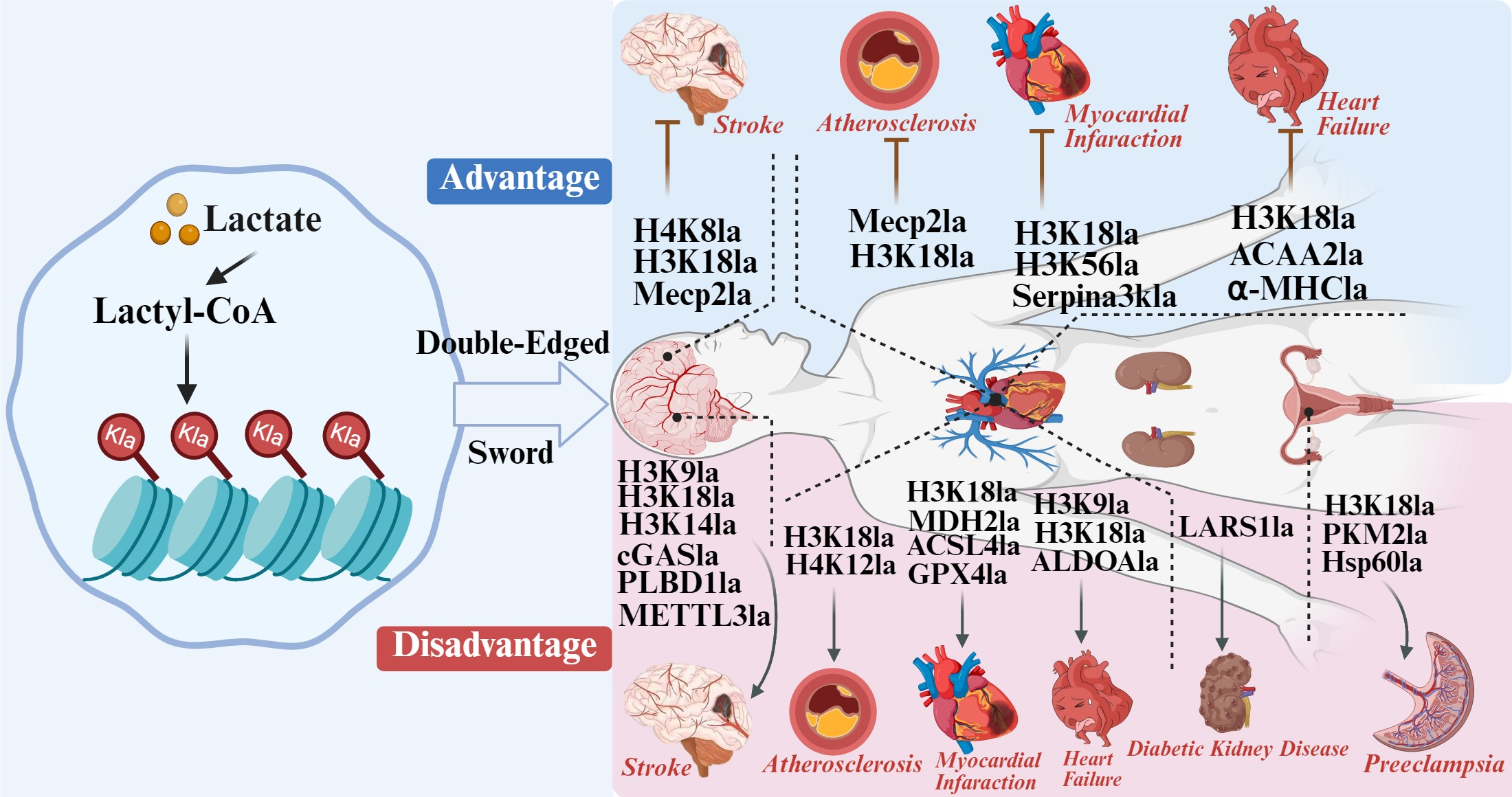
- Lactate-derived lactylation functions as a key metabolic sensor that couples glycolytic flux with epigenetic remodeling and protein regulation in the vascular system. This review highlights the “double-edged sword” nature of lactylation across multiple vascular diseases.
- The pro-disease or protective effects of lactylation depend on disease stage and the cellular microenvironment.
- These findings deepen the understanding of lactylation as a critical epigenetic modification linking metabolic reprogramming with the pathophysiological mechanisms of vascular diseases.
- Targeting specific regulatory nodes within the lactate-lactylation process—including writers, erasers, and metabolic enzymes—provides a novel conceptual framework for developing diagnostic biomarkers and precision therapies for vascular diseases.
Abstract
1. Introduction
2. Search Strategy and Selection Criteria
3. Overview of Lactylation
3.1. Discovery of Lactylation
3.2. Mode of Lactylation
3.3. Regulatory Mechanisms of Lactylation
3.3.1. Lactate Production Promotes Lactylation
3.3.2. Lactate Transport Affects Lactylation
3.3.3. Lactyltransferases and Lactate Removing Enzyme of Lactylation
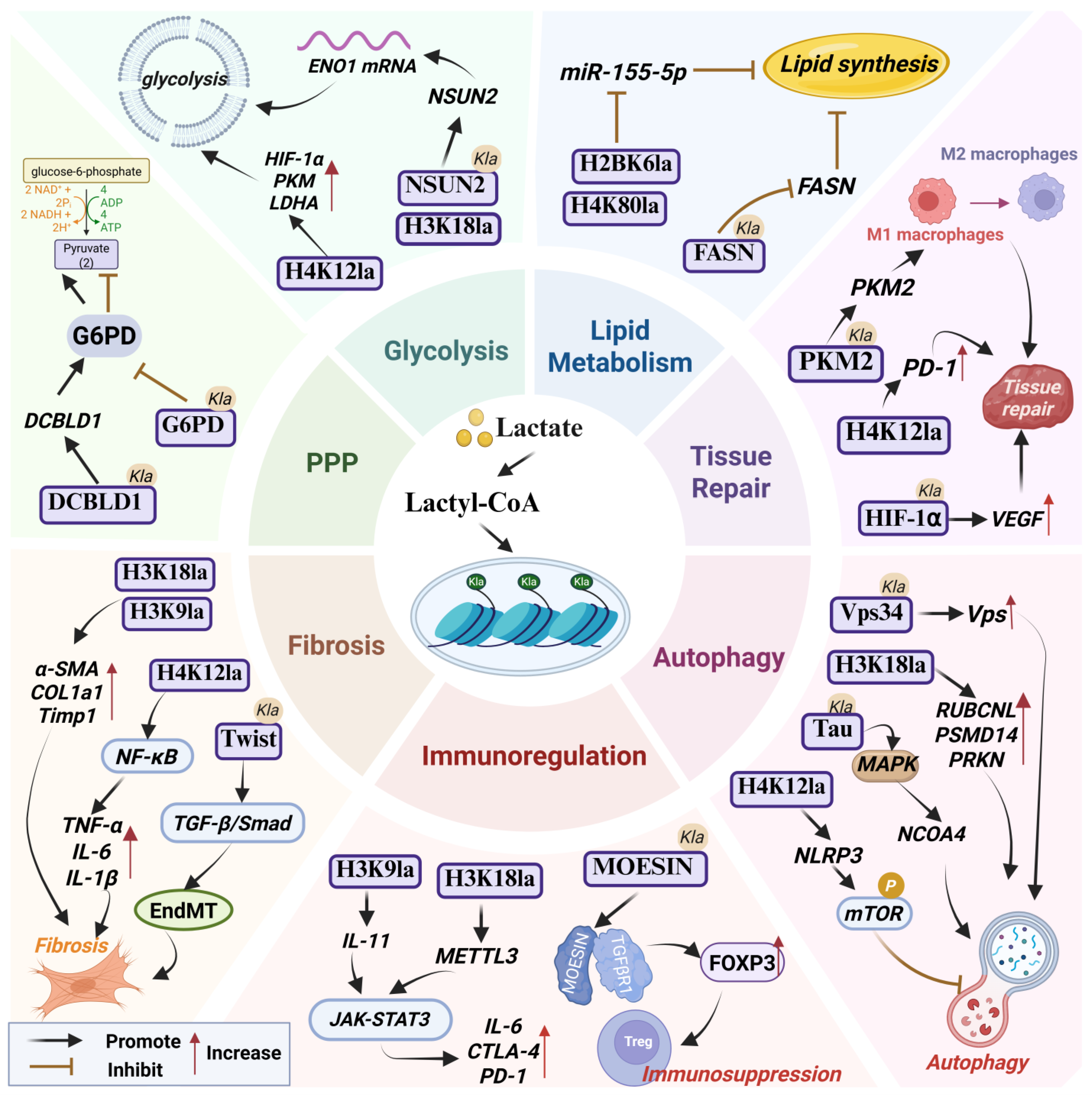
3.4. Pathophysiological Roles of Lactylation
3.4.1. Lactylation and Tissue Repair
3.4.2. Lactylation and Cellular Metabolism
3.4.3. Lactylation and Immune Regulation
3.4.4. Lactylation and Autophagy
3.4.5. Lactylation and Fibrosis
4. Lactylation in Vascular Diseases: A Double-Edged Sword
4.1. Cardiovascular Disease
4.1.1. Atherosclerosis
4.1.2. Myocardial Ischemia–Reperfusion Injury (MIRI)
4.1.3. Heart Failure (HF)
4.1.4. Other Cardiovascular Conditions

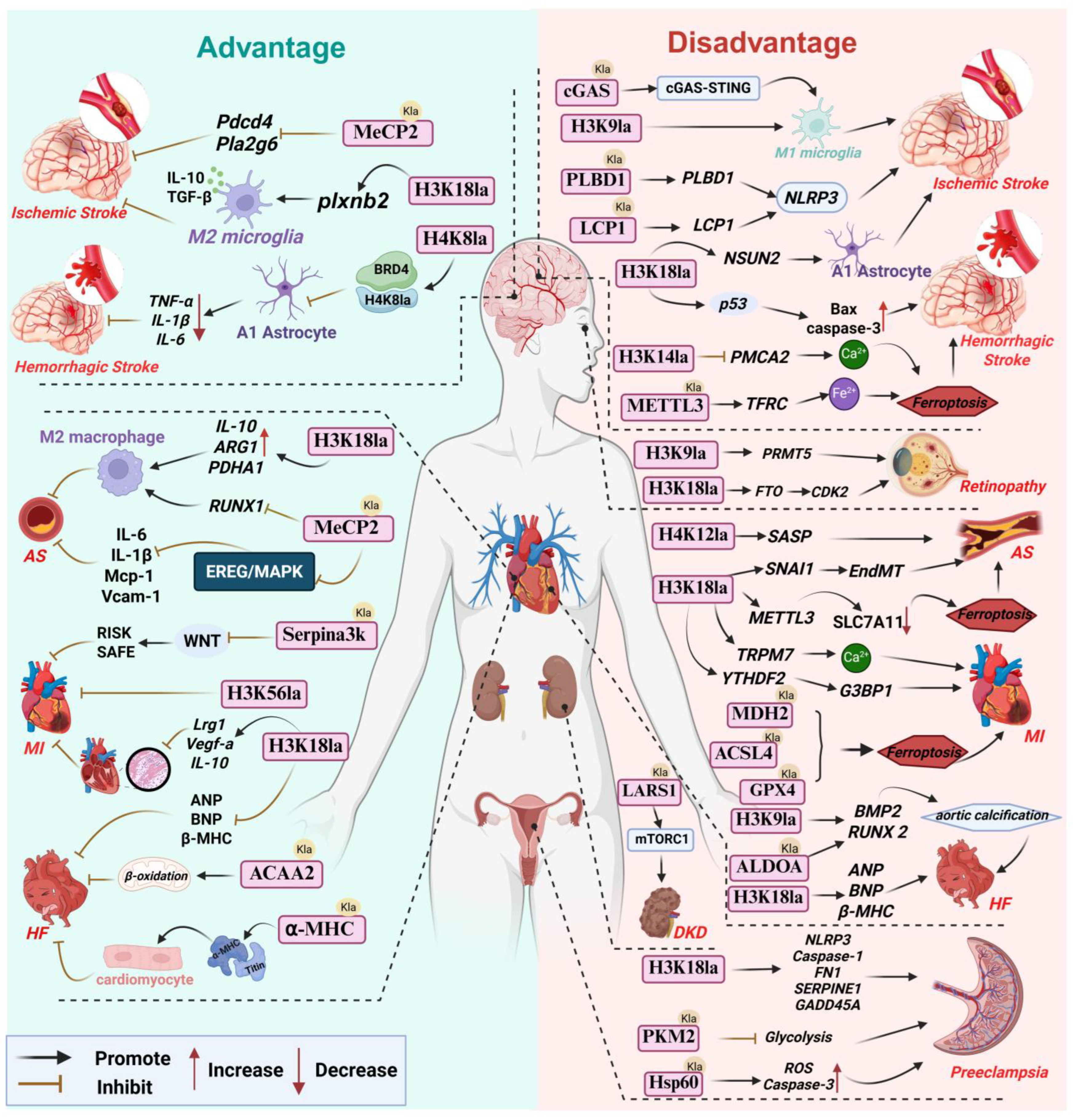
| Disease | Lactylation Site | Cell Type | Mechanism | Reference |
|---|---|---|---|---|
| Atherosclerosis | H3 (K18) | Macrophages | Promotes expression of repair genes, drives macrophage polarization toward M2 phenotype, reduces plaque area | [82] |
| MeCP2 (K271) | ECs | Inhibits Ereg and blocks EREG/MAPK pathway, downregulating inflammatory cytokine expression | [16] | |
| MeCP2 (K271) | Macrophages | Promotes macrophage polarization to M2 type, enhances plaque stability | [83] | |
| MIRI | H3 (K18) | Macrophages | Enhances anti-inflammatory and pro-angiogenic activity of monocyte–macrophage axis, promotes cardiac repair | [11] |
| H3 (K56) | Cardiomyocytes | Alleviates myocardial ischemia–reperfusion injury | [88] | |
| Serpina3k (K351) | Cardiac fibroblasts | Inhibits WNT pathway, activates RISK/SAFE pathway, suppresses cardiomyocyte apoptosis, reduces infarct size | [15] | |
| HF | α-MHC (K1897) | Cardiomyocytes | Enhances interaction with Titin, maintains sarcomere structure and contractile function | [97] |
| H3 (K18) | Cardiomyocytes | Decreases β-MHC, ANP, BNP expression, alleviates cardiac remodeling | [98] | |
| ACAA2 | Cardiomyocytes | Improves fatty acid β-oxidation and mitochondrial function, reduces cardiac hypertrophy | [99] | |
| Cardiomyocyte regeneration | H3 (K18) | Cardiomyocytes | Downregulates cell-cycle-inhibitory genes, releases cell-cycle arrest, promotes cardiomyocyte proliferation and regeneration | [104,105] |
| Ischemic stroke | H3 (K18) | Microglia | Upregulates PLXNB2, drives anti-inflammatory phenotype conversion, inhibits neuronal apoptosis | [108] |
| MeCP2 (K210, K249) | Neurons | Suppresses transcription of apoptotic genes, reduces neuronal apoptosis | [109] | |
| SAH | H4 (K8) | Astrocytes | Inhibits A1 astrocyte polarization, decreases release of inflammatory cytokines | [110] |
4.2. Cerebrovascular Diseases
4.2.1. Ischemic Stroke
4.2.2. Hemorrhagic Stroke
4.3. Other Vascular Diseases
4.3.1. Diabetes-Associated Vascular Disease
4.3.2. Preeclampsia
4.3.3. Others
5. Translational Prospects: From Bench to Bedside
5.1. Lactylation as a Novel Biomarker
5.2. Therapeutic Strategies Targeting the Lactate–Lactylation Process
5.3. Unresolved Questions and Future Directions
6. Conclusions
Author Contributions
Funding
Institutional Review Board Statement
Informed Consent Statement
Data Availability Statement
Acknowledgments
Conflicts of Interest
Abbreviations
| 2-DG | 2-deoxy-D-glucose |
| α-MHC | α-myosin heavy chain |
| ACSS2 | acetyl-CoA synthetase 2 |
| AD | Alzheimer’s disease/Aortic dissection |
| ALDH2 | aldehyde dehydrogenase 2 |
| ALDOA | aldolase A |
| ARRB1 | β-arrestin1 |
| BRD4 | bromodomain-containing protein 4 |
| CAVD | calcific aortic valve disease |
| DHAP | dihydroxyacetone phosphate |
| DKD | Diabetic Kidney Disease |
| DR | diabetic retinopathy |
| EAU | experimental autoimmune uveitis |
| ECs | endothelial cells |
| EndMT | endothelial-to-mesenchymal transition |
| FASN | fatty acid synthase |
| G6PD | glucose-6-phosphate dehydrogenase |
| GCGR | glucagon receptor |
| GLO1 | glyoxalase 1 |
| GLP1R | glucagon-like peptide-1 receptor |
| HF | Heart Failure |
| HK2 | hexokinase 2 |
| HSCs | hepatic stellate cells |
| ICH | intracerebral hemorrhage |
| IFN-1 | interferon 1 |
| IGF2BP2 | insulin-like growth factor 2 mRNA-binding protein 2 |
| Kla | lysine lactylation |
| LCP1 | lymphocyte cytosolic protein 1 |
| LDHA | lactate dehydrogenase A |
| LGSH | lactoyl-glutathione |
| MCT | monocarboxylate transporter |
| MDH2 | malate dehydrogenase 2 |
| MGO | methylglyoxal |
| MI | Myocardial infarction |
| MIRI | myocardial ischemia–reperfusion injury |
| MPC1 | mitochondrial pyruvate carrier 1 |
| MeCP2 | methyl CpG binding protein 2 |
| NAFLD | non-alcoholic fatty liver disease |
| NR4A3 | Nuclear receptor subfamily 4 group A member 3 |
| PBMCs | peripheral blood mononuclear cells |
| PD-L1 | programmed death-ligand 1 |
| PFK1 | phosphofructokinase-1 |
| PHB2 | prohibitin 2 |
| PKM2 | pyruvate kinase M2 |
| PLBD1 | phospholipase B domain containing 1 |
| PPP | the pentose phosphate pathway |
| PTM | post-translational modification |
| RA | rheumatoid arthritis |
| SAH | subarachnoid hemorrhage |
| SASP | senescence-associated secretory phenotype |
| SCI | spinal cord injury |
| SF3B1 | splicing factor 3B subunit 1 |
| SLE | systemic lupus erythematosus |
| SLG | S-D-lactoylglutathione |
| TBI | traumatic brain injury |
| TFRC | transferrin receptor |
| TME | tumor microenvironment |
| VSMCs | vascular smooth muscle cells |
| ZGA | zygotic-genome activation |
| hVICs | human aortic valvular interstitial cells |
References
- Brooks, G.A. Lactate shuttles in nature. Biochem. Soc. Trans. 2002, 30, 258–264. [Google Scholar] [CrossRef]
- Zhang, D.; Tang, Z.; Huang, H.; Zhou, G.; Cui, C.; Weng, Y.; Liu, W.; Kim, S.; Lee, S.; Perez-Neut, M.; et al. Metabolic regulation of gene expression by histone lactylation. Nature 2019, 574, 575–580. [Google Scholar] [CrossRef]
- Tian, M.; Li, X.; Yu, L.; Qian, J.; Bai, X.; Yang, J.; Deng, R.; Lu, C.; Zhao, H.; Liu, Y. Glycosylation as an intricate post-translational modification process takes part in glycoproteins related immunity. Cell Commun. Signal. 2025, 23, 214. [Google Scholar] [CrossRef]
- Tripathi, S.; Sharma, Y.; Kumar, D. Unveiling the link between chronic inflammation and cancer. Metab. Open 2025, 25, 100347. [Google Scholar] [CrossRef] [PubMed]
- Khalaf, O.; Gräff, J. Structural, Synaptic, and Epigenetic Dynamics of Enduring Memories. Neural Plast. 2016, 2016, 3425908. [Google Scholar] [CrossRef] [PubMed]
- Verbrugge, F.H.; Tang, W.H.; Hazen, S.L. Protein carbamylation and cardiovascular disease. Kidney Int. 2015, 88, 474–478. [Google Scholar] [CrossRef]
- Lankin, V.Z.; Tikhaze, A.K. Role of Oxidative Stress in the Genesis of Atherosclerosis and Diabetes Mellitus: A Personal Look Back on 50 Years of Research. Curr. Aging Sci. 2017, 10, 18–25. [Google Scholar] [CrossRef]
- Gaffney, D.O.; Jennings, E.Q.; Anderson, C.C.; Marentette, J.O.; Shi, T.; Schou Oxvig, A.M.; Streeter, M.D.; Johannsen, M.; Spiegel, D.A.; Chapman, E.; et al. Non-Enzymatic Lysine Lactoylation of Glycolytic Enzymes. Cell Chem. Biol. 2020, 27, 206–213.e6. [Google Scholar] [CrossRef] [PubMed]
- Pan, Y.; Liu, J.; Ren, J.; Luo, Y.; Sun, X. Epac: A Promising Therapeutic Target for Vascular Diseases: A Review. Front. Pharmacol. 2022, 13, 929152. [Google Scholar] [CrossRef]
- Chen, J.; Liu, Z.; Yue, Z.; Tan, Q.; Yin, H.; Wang, H.; Chen, Z.; Zhu, Y.; Zheng, J. EP300-mediated H3K18la regulation of METTL3 promotes macrophage ferroptosis and atherosclerosis through the m6A modification of SLC7A11. Biochim. Biophys. Acta Gen. Subj. 2025, 1869, 130838. [Google Scholar] [CrossRef]
- Wang, N.; Wang, W.; Wang, X.; Mang, G.; Chen, J.; Yan, X.; Tong, Z.; Yang, Q.; Wang, M.; Chen, L.; et al. Histone Lactylation Boosts Reparative Gene Activation Post-Myocardial Infarction. Circ. Res. 2022, 131, 893–908. [Google Scholar] [CrossRef] [PubMed]
- He, Y.; Zhou, C.; Huang, M.; Tang, C.; Liu, X.; Yue, Y.; Diao, Q.; Zheng, Z.; Liu, D. Glyoxalase system: A systematic review of its biological activity, related-diseases, screening methods and small molecule regulators. Biomed. Pharmacother. 2020, 131, 110663. [Google Scholar] [CrossRef] [PubMed]
- Sheng, X.; Lin, H.; Cole, P.A.; Zhao, Y. Biochemistry and regulation of histone lysine L-lactylation. Nat. Rev. Mol. Cell Biol. 2025. online ahead of print. [Google Scholar] [CrossRef] [PubMed]
- Gao, J.; Liu, R.; Huang, K.; Li, Z.; Sheng, X.; Chakraborty, K.; Han, C.; Zhang, D.; Becker, L.; Zhao, Y. Dynamic investigation of hypoxia-induced L-lactylation. Proc. Natl. Acad. Sci. USA 2025, 122, e2404899122. [Google Scholar] [CrossRef]
- Wang, L.; Li, D.; Yao, F.; Feng, S.; Tong, C.; Rao, R.; Zhong, M.; Wang, X.; Feng, W.; Hu, Z.; et al. Serpina3k lactylation protects from cardiac ischemia reperfusion injury. Nat. Commun. 2025, 16, 1012. [Google Scholar] [CrossRef]
- Wang, Y.; Chen, L.; Zhang, M.; Li, X.; Yang, X.; Huang, T.; Ban, Y.; Li, Y.; Li, Q.; Zheng, Y.; et al. Exercise-induced endothelial Mecp2 lactylation suppresses atherosclerosis via the Ereg/MAPK signalling pathway. Atherosclerosis 2023, 375, 45–58. [Google Scholar] [CrossRef]
- Allaman, I.; Bélanger, M.; Magistretti, P.J. Methylglyoxal, the dark side of glycolysis. Front. Neurosci. 2015, 9, 23. [Google Scholar] [CrossRef]
- Rabbani, N.; Xue, M.; Thornalley, P.J. Activity, regulation, copy number and function in the glyoxalase system. Biochem. Soc. Trans. 2014, 42, 419–424. [Google Scholar] [CrossRef]
- Han, S.; Bao, X.; Zou, Y.; Wang, L.; Li, Y.; Yang, L.; Liao, A.; Zhang, X.; Jiang, X.; Liang, D.; et al. d-lactate modulates M2 tumor-associated macrophages and remodels immunosuppressive tumor microenvironment for hepatocellular carcinoma. Sci. Adv. 2023, 9, eadg2697. [Google Scholar] [CrossRef]
- Castillo, X.; Rosafio, K.; Wyss, M.T.; Drandarov, K.; Buck, A.; Pellerin, L.; Weber, B.; Hirt, L. A probable dual mode of action for both L- and D-lactate neuroprotection in cerebral ischemia. J. Cereb. Blood Flow Metab. 2015, 35, 1561–1569. [Google Scholar] [CrossRef]
- Laroche, S.; Stil, A.; Germain, P.; Cherif, H.; Chemtob, S.; Bouchard, J.F. Participation of L-Lactate and Its Receptor HCAR1/GPR81 in Neurovisual Development. Cells 2021, 10, 1640. [Google Scholar] [CrossRef] [PubMed]
- Hutson, S.M.; Van Dop, C.; Lardy, H.A. Mitochondrial metabolism of pyruvate in bovine spermatozoa. J. Biol. Chem. 1977, 252, 1309–1315. [Google Scholar] [CrossRef] [PubMed]
- Chen, J.; He, J.; Wang, X.; Bai, L.; Yang, X.; Chen, J.; He, Y.; Chen, K. Glis1 inhibits RTEC cellular senescence and renal fibrosis by downregulating histone lactylation in DKD. Life Sci. 2025, 361, 123293. [Google Scholar] [CrossRef]
- You, X.; Xie, Y.; Tan, Q.; Zhou, C.; Gu, P.; Zhang, Y.; Yang, S.; Yin, H.; Shang, B.; Yao, Y.; et al. Glycolytic reprogramming governs crystalline silica-induced pyroptosis and inflammation through promoting lactylation modification. Ecotoxicol. Environ. Saf. 2024, 283, 116952. [Google Scholar] [CrossRef]
- Li, W.; Zhou, C.; Yu, L.; Hou, Z.; Liu, H.; Kong, L.; Xu, Y.; He, J.; Lan, J.; Ou, Q.; et al. Tumor-derived lactate promotes resistance to bevacizumab treatment by facilitating autophagy enhancer protein RUBCNL expression through histone H3 lysine 18 lactylation (H3K18la) in colorectal cancer. Autophagy 2024, 20, 114–130. [Google Scholar] [CrossRef]
- Enerson, B.E.; Drewes, L.R. Molecular features, regulation, and function of monocarboxylate transporters: Implications for drug delivery. J. Pharm. Sci. 2003, 92, 1531–1544. [Google Scholar] [CrossRef]
- Bröer, S.; Schneider, H.P.; Bröer, A.; Rahman, B.; Hamprecht, B.; Deitmer, J.W. Characterization of the monocarboxylate transporter 1 expressed in Xenopus laevis oocytes by changes in cytosolic pH. Biochem. J. 1998, 333, 167–174. [Google Scholar] [CrossRef]
- Bröer, S.; Bröer, A.; Schneider, H.P.; Stegen, C.; Halestrap, A.P.; Deitmer, J.W. Characterization of the high-affinity monocarboxylate transporter MCT2 in Xenopus laevis oocytes. Biochem. J. 1999, 341, 529–535. [Google Scholar] [CrossRef]
- Wilson, M.C.; Jackson, V.N.; Heddle, C.; Price, N.T.; Pilegaard, H.; Juel, C.; Bonen, A.; Montgomery, I.; Hutter, O.F.; Halestrap, A.P. Lactic acid efflux from white skeletal muscle is catalyzed by the monocarboxylate transporter isoform MCT3. J. Biol. Chem. 1998, 273, 15920–15926. [Google Scholar] [CrossRef]
- Read, J.A.; Winter, V.J.; Eszes, C.M.; Sessions, R.B.; Brady, R.L. Structural basis for altered activity of M- and H-isozyme forms of human lactate dehydrogenase. Proteins 2001, 43, 175–185. [Google Scholar] [CrossRef] [PubMed]
- Yang, K.; Fan, M.; Wang, X.; Xu, J.; Wang, Y.; Tu, F.; Gill, P.S.; Ha, T.; Liu, L.; Williams, D.L.; et al. Lactate promotes macrophage HMGB1 lactylation, acetylation, and exosomal release in polymicrobial sepsis. Cell Death Differ. 2022, 29, 133–146. [Google Scholar] [CrossRef]
- Zhang, X.; Mao, Y.; Wang, B.; Cui, Z.; Zhang, Z.; Wang, Z.; Chen, T. Screening, expression, purification and characterization of CoA-transferases for lactoyl-CoA generation. J. Ind. Microbiol. Biotechnol. 2019, 46, 899–909. [Google Scholar] [CrossRef]
- Li, H.; Liu, C.; Li, R.; Zhou, L.; Ran, Y.; Yang, Q.; Huang, H.; Lu, H.; Song, H.; Yang, B.; et al. AARS1 and AARS2 sense L-lactate to regulate cGAS as global lysine lactyltransferases. Nature 2024, 634, 1229–1237. [Google Scholar] [CrossRef]
- Zong, Z.; Xie, F.; Wang, S.; Wu, X.; Zhang, Z.; Yang, B.; Zhou, F. Alanyl-tRNA synthetase, AARS1, is a lactate sensor and lactyltransferase that lactylates p53 and contributes to tumorigenesis. Cell 2024, 187, 2375–2392.e33. [Google Scholar] [CrossRef]
- Mao, Y.; Zhang, J.; Zhou, Q.; He, X.; Zheng, Z.; Wei, Y.; Zhou, K.; Lin, Y.; Yu, H.; Zhang, H.; et al. Hypoxia induces mitochondrial protein lactylation to limit oxidative phosphorylation. Cell Res. 2024, 34, 13–30. [Google Scholar] [CrossRef]
- Zhu, R.; Ye, X.; Lu, X.; Xiao, L.; Yuan, M.; Zhao, H.; Guo, D.; Meng, Y.; Han, H.; Luo, S.; et al. ACSS2 acts as a lactyl-CoA synthetase and couples KAT2A to function as a lactyltransferase for histone lactylation and tumor immune evasion. Cell Metab. 2025, 37, 361–376.e7. [Google Scholar] [CrossRef] [PubMed]
- Varner, E.L.; Trefely, S.; Bartee, D.; von Krusenstiern, E.; Izzo, L.; Bekeova, C.; O’Connor, R.S.; Seifert, E.L.; Wellen, K.E.; Meier, J.L.; et al. Quantification of lactoyl-CoA (lactyl-CoA) by liquid chromatography mass spectrometry in mammalian cells and tissues. Open Biol. 2020, 10, 200187. [Google Scholar] [CrossRef] [PubMed]
- Moreno-Yruela, C.; Zhang, D.; Wei, W.; Bæk, M.; Liu, W.; Gao, J.; Danková, D.; Nielsen, A.L.; Bolding, J.E.; Yang, L.; et al. Class I histone deacetylases (HDAC1-3) are histone lysine delactylases. Sci. Adv. 2022, 8, eabi6696. [Google Scholar] [CrossRef] [PubMed]
- Irizarry-Caro, R.A.; McDaniel, M.M.; Overcast, G.R.; Jain, V.G.; Troutman, T.D.; Pasare, C. TLR signaling adapter BCAP regulates inflammatory to reparatory macrophage transition by promoting histone lactylation. Proc. Natl. Acad. Sci. USA 2020, 117, 30628–30638. [Google Scholar] [CrossRef]
- Wang, J.; Yang, P.; Yu, T.; Gao, M.; Liu, D.; Zhang, J.; Lu, C.; Chen, X.; Zhang, X.; Liu, Y. Lactylation of PKM2 Suppresses Inflammatory Metabolic Adaptation in Pro-inflammatory Macrophages. Int. J. Biol. Sci. 2022, 18, 6210–6225. [Google Scholar] [CrossRef]
- Wei, W.; Qu, Z.L.; Lei, L.; Zhang, P. TREM2-mediated Macrophage Glycolysis Promotes Skin Wound Angiogenesis via the Akt/mTOR/HIF-1α Signaling Axis. Curr. Med. Sci. 2024, 44, 1280–1292. [Google Scholar] [CrossRef] [PubMed]
- Hu, X.; Huang, J.; Li, Z.; Li, J.; Ouyang, F.; Chen, Z.; Li, Y.; Zhao, Y.; Wang, J.; Yu, S.; et al. Lactate promotes microglial scar formation and facilitates locomotor function recovery by enhancing histone H4 lysine 12 lactylation after spinal cord injury. J. Neuroinflamm. 2024, 21, 193. [Google Scholar] [CrossRef]
- Wu, Y.; Wang, X.; Zhang, Y.; Wen, Z.; Li, Y.; Zhang, K.; Gosar, N.; Li, Q.; Mao, J.; Gong, S. Proanthocyanidins Ameliorate LPS-Inhibited Osteogenesis of PDLSCs by Restoring Lysine Lactylation. Int. J. Mol. Sci. 2024, 25, 2947. [Google Scholar] [CrossRef]
- Pan, R.Y.; He, L.; Zhang, J.; Liu, X.; Liao, Y.; Gao, J.; Liao, Y.; Yan, Y.; Li, Q.; Zhou, X.; et al. Positive feedback regulation of microglial glucose metabolism by histone H4 lysine 12 lactylation in Alzheimer’s disease. Cell Metab. 2022, 34, 634–648.e6. [Google Scholar] [CrossRef]
- Chen, B.; Deng, Y.; Hong, Y.; Fan, L.; Zhai, X.; Hu, H.; Yin, S.; Chen, Q.; Xie, X.; Ren, X.; et al. Metabolic Recoding of NSUN2-Mediated m(5)C Modification Promotes the Progression of Colorectal Cancer via the NSUN2/YBX1/m(5)C-ENO1 Positive Feedback Loop. Adv. Sci. 2024, 11, e2309840. [Google Scholar] [CrossRef]
- Li, Y.; Cao, Q.; Hu, Y.; He, B.; Cao, T.; Tang, Y.; Zhou, X.P.; Lan, X.P.; Liu, S.Q. Advances in the interaction of glycolytic reprogramming with lactylation. Biomed. Pharmacother. 2024, 177, 116982. [Google Scholar] [CrossRef]
- Meng, Q.; Sun, H.; Zhang, Y.; Yang, X.; Hao, S.; Liu, B.; Zhou, H.; Xu, Z.X.; Wang, Y. Lactylation stabilizes DCBLD1 activating the pentose phosphate pathway to promote cervical cancer progression. J. Exp. Clin. Cancer Res. 2024, 43, 36. [Google Scholar] [CrossRef] [PubMed]
- Meng, Q.; Zhang, Y.; Sun, H.; Yang, X.; Hao, S.; Liu, B.; Zhou, H.; Wang, Y.; Xu, Z.X. Human papillomavirus-16 E6 activates the pentose phosphate pathway to promote cervical cancer cell proliferation by inhibiting G6PD lactylation. Redox Biol. 2024, 71, 103108. [Google Scholar] [CrossRef] [PubMed]
- Chen, X.; Huang, W.; Zhang, J.; Li, Y.; Xing, Z.; Guo, L.; Jiang, H.; Zhang, J. High-intensity interval training induces lactylation of fatty acid synthase to inhibit lipid synthesis. BMC Biol. 2023, 21, 196. [Google Scholar] [CrossRef]
- Gao, R.; Li, Y.; Xu, Z.; Zhang, F.; Xu, J.; Hu, Y.; Yin, J.; Yang, K.; Sun, L.; Wang, Q.; et al. Mitochondrial pyruvate carrier 1 regulates fatty acid synthase lactylation and mediates treatment of nonalcoholic fatty liver disease. Hepatology 2023, 78, 1800–1815. [Google Scholar] [CrossRef]
- Yin, X.; Li, M.; Wang, Y.; Zhao, G.; Yang, T.; Zhang, Y.; Guo, J.; Meng, T.; Du, R.; Li, H.; et al. Herbal medicine formula Huazhuo Tiaozhi granule ameliorates dyslipidaemia via regulating histone lactylation and miR-155-5p biogenesis. Clin. Epigenet. 2023, 15, 175. [Google Scholar] [CrossRef] [PubMed]
- Ouyang, L.; Wang, J.; Zhu, H.; Wu, Y.; Wei, L. Integration of Epigenome and Lactylome Reveals the Regulation of Lipid Production in Nannochloropsis oceanica. J. Agric. Food Chem. 2024, 72, 13785–13800. [Google Scholar] [CrossRef] [PubMed]
- Wang, J.; Ouyang, L.; Wei, L. Novel Insight of Nitrogen Deprivation Affected Lipid Accumulation by Genome-Wide Lactylation in Nannochloropsis oceanica. J. Agric. Food Chem. 2023, 71, 10107–10123. [Google Scholar] [CrossRef] [PubMed]
- Fu, W.; Wang, T.; Lu, Y.; Shi, T.; Yang, Q. The role of lactylation in plasma cells and its impact on rheumatoid arthritis pathogenesis: Insights from single-cell RNA sequencing and machine learning. Front. Immunol. 2024, 15, 1453587. [Google Scholar] [CrossRef]
- Fan, W.; Wang, X.; Zeng, S.; Li, N.; Wang, G.; Li, R.; He, S.; Li, W.; Huang, J.; Li, X.; et al. Global lactylome reveals lactylation-dependent mechanisms underlying T(H)17 differentiation in experimental autoimmune uveitis. Sci. Adv. 2023, 9, eadh4655. [Google Scholar] [CrossRef]
- Zhang, J.; Ji, H.; Liu, M.; Zheng, M.; Wen, Z.; Shen, H. Mitochondrial DNA Programs Lactylation of cGAS to Induce IFN Responses in Patients with Systemic Lupus Erythematosus. J. Immunol. 2024, 213, 795–807. [Google Scholar] [CrossRef]
- Tong, H.; Jiang, Z.; Song, L.; Tan, K.; Yin, X.; He, C.; Huang, J.; Li, X.; Jing, X.; Yun, H.; et al. Dual impacts of serine/glycine-free diet in enhancing antitumor immunity and promoting evasion via PD-L1 lactylation. Cell Metab. 2024, 36, 2493–2510.e9. [Google Scholar] [CrossRef]
- Wang, R.; Li, C.; Cheng, Z.; Li, M.; Shi, J.; Zhang, Z.; Jin, S.; Ma, H. H3K9 lactylation in malignant cells facilitates CD8+ T cell dysfunction and poor immunotherapy response. Cell Rep. 2024, 43, 114686. [Google Scholar] [CrossRef]
- Gu, J.; Zhou, J.; Chen, Q.; Xu, X.; Gao, J.; Li, X.; Shao, Q.; Zhou, B.; Zhou, H.; Wei, S.; et al. Tumor metabolite lactate promotes tumorigenesis by modulating MOESIN lactylation and enhancing TGF-β signaling in regulatory T cells. Cell Rep. 2022, 39, 110986. [Google Scholar] [CrossRef]
- Xiong, J.; He, J.; Zhu, J.; Pan, J.; Liao, W.; Ye, H.; Wang, H.; Song, Y.; Du, Y.; Cui, B.; et al. Lactylation-driven METTL3-mediated RNA m(6)A modification promotes immunosuppression of tumor-infiltrating myeloid cells. Mol. Cell 2022, 82, 1660–1677.e10. [Google Scholar] [CrossRef]
- Lopez Krol, A.; Nehring, H.P.; Krause, F.F.; Wempe, A.; Raifer, H.; Nist, A.; Stiewe, T.; Bertrams, W.; Schmeck, B.; Luu, M.; et al. Lactate induces metabolic and epigenetic reprogramming of pro-inflammatory Th17 cells. EMBO Rep. 2022, 23, e54685. [Google Scholar] [CrossRef]
- Zhao, Q.; Wang, Q.; Yao, Q.; Yang, Z.; Li, W.; Cheng, X.; Wen, Y.; Chen, R.; Xu, J.; Wang, X.; et al. Nonenzymatic lysine D-lactylation induced by glyoxalase II substrate SLG dampens inflammatory immune responses. Cell Res. 2025, 35, 97–116. [Google Scholar] [CrossRef]
- Sun, W.; Jia, M.; Feng, Y.; Cheng, X. Lactate is a bridge linking glycolysis and autophagy through lactylation. Autophagy 2023, 19, 3240–3241. [Google Scholar] [CrossRef] [PubMed]
- Jia, M.; Yue, X.; Sun, W.; Zhou, Q.; Chang, C.; Gong, W.; Feng, J.; Li, X.; Zhan, R.; Mo, K.; et al. ULK1-mediated metabolic reprogramming regulates Vps34 lipid kinase activity by its lactylation. Sci. Adv. 2023, 9, eadg4993. [Google Scholar] [CrossRef] [PubMed]
- Xu, L.; Ye, Y.; Gu, W.; Xu, X.; Chen, N.; Zhang, L.; Cai, W.; Hu, J.; Wang, T.; Chao, H.; et al. Histone lactylation stimulated upregulation of PSMD14 alleviates neuron PANoptosis through deubiquitinating PKM2 to activate PINK1-mediated mitophagy after traumatic brain injury. Autophagy 2025, 21, 1473–1491. [Google Scholar] [CrossRef] [PubMed]
- Deng, X.; Huang, Y.; Zhang, J.; Chen, Y.; Jiang, F.; Zhang, Z.; Li, T.; Hou, L.; Tan, W.; Li, F. Histone lactylation regulates PRKN-Mediated mitophagy to promote M2 Macrophage polarization in bladder cancer. Int. Immunopharmacol. 2025, 148, 114119. [Google Scholar] [CrossRef]
- Zhang, Y.; Huang, Z.; Han, W.; Wu, J.; Li, S.; Qin, T.; Zhang, C.; Shi, M.; Han, S.; Gao, B.; et al. Glutamine suppresses senescence and promotes autophagy through glycolysis inhibition-mediated AMPKα lactylation in intervertebral disc degeneration. Commun. Biol. 2024, 7, 325. [Google Scholar] [CrossRef]
- Wang, H.; Xia, H.; Bai, J.; Wang, Z.; Wang, Y.; Lin, J.; Cheng, C.; Chen, W.; Zhang, J.; Zhang, Q.; et al. H4K12 lactylation-regulated NLRP3 is involved in cigarette smoke-accelerated Alzheimer-like pathology through mTOR-regulated autophagy and activation of microglia. J. Hazard. Mater. 2025, 488, 137310. [Google Scholar] [CrossRef]
- An, X.; He, J.; Xie, P.; Li, C.; Xia, M.; Guo, D.; Bi, B.; Wu, G.; Xu, J.; Yu, W.; et al. The effect of tau K677 lactylation on ferritinophagy and ferroptosis in Alzheimer’s disease. Free Radic. Biol. Med. 2024, 224, 685–706. [Google Scholar] [CrossRef]
- Li, J.; Shi, X.; Xu, J.; Wang, K.; Hou, F.; Luan, X.; Chen, L. Aldehyde Dehydrogenase 2 Lactylation Aggravates Mitochondrial Dysfunction by Disrupting PHB2 Mediated Mitophagy in Acute Kidney Injury. Adv. Sci. 2025, 12, e2411943. [Google Scholar] [CrossRef]
- Weng, W.; He, Z.; Ma, Z.; Huang, J.; Han, Y.; Feng, Q.; Qi, W.; Peng, Y.; Wang, J.; Gu, J.; et al. Tufm lactylation regulates neuronal apoptosis by modulating mitophagy in traumatic brain injury. Cell Death Differ. 2025, 32, 530–545. [Google Scholar] [CrossRef]
- Rho, H.; Terry, A.R.; Chronis, C.; Hay, N. Hexokinase 2-mediated gene expression via histone lactylation is required for hepatic stellate cell activation and liver fibrosis. Cell Metab. 2023, 35, 1406–1423.e8. [Google Scholar] [CrossRef] [PubMed]
- Zhou, Y.; Yan, J.; Huang, H.; Liu, L.; Ren, L.; Hu, J.; Jiang, X.; Zheng, Y.; Xu, L.; Zhong, F.; et al. The m(6)A reader IGF2BP2 regulates glycolytic metabolism and mediates histone lactylation to enhance hepatic stellate cell activation and liver fibrosis. Cell Death Dis. 2024, 15, 189. [Google Scholar] [CrossRef]
- Wu, S.; Li, J.; Zhan, Y. H3K18 lactylation accelerates liver fibrosis progression through facilitating SOX9 transcription. Exp. Cell Res. 2024, 440, 114135. [Google Scholar] [CrossRef] [PubMed]
- Wang, Y.; Li, H.; Jiang, S.; Fu, D.; Lu, X.; Lu, M.; Li, Y.; Luo, D.; Wu, K.; Xu, Y.; et al. The glycolytic enzyme PFKFB3 drives kidney fibrosis through promoting histone lactylation-mediated NF-κB family activation. Kidney Int. 2024, 106, 226–240. [Google Scholar] [CrossRef]
- Xiang, T.; Wang, X.; Huang, S.; Zhou, K.; Fei, S.; Zhou, B.; Yue, K.; Li, Q.; Xue, S.; Dai, Y.; et al. Inhibition of PKM2 by shikonin impedes TGF-β1 expression by repressing histone lactylation to alleviate renal fibrosis. Phytomedicine 2025, 136, 156324. [Google Scholar] [CrossRef]
- Xu, Y.; Ma, X.; Ni, W.; Zheng, L.; Lin, Z.; Lai, Y.; Yang, N.; Dai, Z.; Yao, T.; Chen, Z.; et al. PKM2-Driven Lactate Overproduction Triggers Endothelial-To-Mesenchymal Transition in Ischemic Flap via Mediating TWIST1 Lactylation. Adv. Sci. 2024, 11, e2406184. [Google Scholar] [CrossRef] [PubMed]
- Liu, H.; Hong, Y.; Chen, H.; Wang, X.; Dong, J.; Li, X.; Shi, Z.; Zhao, Q.; Zhou, L.; Wang, J.; et al. Dual activation of GCGR/GLP1R signaling ameliorates intestinal fibrosis via metabolic regulation of histone H3K9 lactylation in epithelial cells. Acta Pharm. Sinica. B 2025, 15, 278–295. [Google Scholar] [CrossRef]
- Baumer, Y.; McCurdy, S.; Weatherby, T.M.; Mehta, N.N.; Halbherr, S.; Halbherr, P.; Yamazaki, N.; Boisvert, W.A. Hyperlipidemia-induced cholesterol crystal production by endothelial cells promotes atherogenesis. Nat. Commun. 2017, 8, 1129. [Google Scholar] [CrossRef]
- Vassiliou, E.; Farias-Pereira, R. Impact of Lipid Metabolism on Macrophage Polarization: Implications for Inflammation and Tumor Immunity. Int. J. Mol. Sci. 2023, 24, 12032. [Google Scholar] [CrossRef]
- Melton, D.W.; Lei, X.; Gelfond, J.A.; Shireman, P.K. Dynamic macrophage polarization-specific miRNA patterns reveal increased soluble VEGF receptor 1 by miR-125a-5p inhibition. Physiol. Genom. 2016, 48, 345–360. [Google Scholar] [CrossRef]
- Zhang, Y.; Jiang, H.; Dong, M.; Min, J.; He, X.; Tan, Y.; Liu, F.; Chen, M.; Chen, X.; Yin, Q.; et al. Macrophage MCT4 inhibition activates reparative genes and protects from atherosclerosis by histone H3 lysine 18 lactylation. Cell Rep. 2024, 43, 114180. [Google Scholar] [CrossRef]
- Chen, L.; Zhang, M.; Yang, X.; Wang, Y.; Huang, T.; Li, X.; Ban, Y.; Li, Q.; Yang, Q.; Zhang, Y.; et al. Methyl-CpG-binding 2 K271 lactylation-mediated M2 macrophage polarization inhibits atherosclerosis. Theranostics 2024, 14, 4256–4277. [Google Scholar] [CrossRef]
- Dong, M.; Zhang, Y.; Chen, M.; Tan, Y.; Min, J.; He, X.; Liu, F.; Gu, J.; Jiang, H.; Zheng, L.; et al. ASF1A-dependent P300-mediated histone H3 lysine 18 lactylation promotes atherosclerosis by regulating EndMT. Acta Pharm. Sinica. B 2024, 14, 3027–3048. [Google Scholar] [CrossRef] [PubMed]
- Li, X.; Chen, M.; Chen, X.; He, X.; Li, X.; Wei, H.; Tan, Y.; Min, J.; Azam, T.; Xue, M.; et al. TRAP1 drives smooth muscle cell senescence and promotes atherosclerosis via HDAC3-primed histone H4 lysine 12 lactylation. Eur. Heart J. 2024, 45, 4219–4235. [Google Scholar] [CrossRef] [PubMed]
- Boersma, E.; Mercado, N.; Poldermans, D.; Gardien, M.; Vos, J.; Simoons, M.L. Acute myocardial infarction. Lancet 2003, 361, 847–858. [Google Scholar] [CrossRef] [PubMed]
- Fitridge, R.; Thompson, M. (Eds.) Mechanisms of Vascular Disease: A Reference Book for Vascular Specialists; University of Adelaide Press: Adelaide, Australia, 2011. [Google Scholar]
- Yu, W.; Kong, Q.; Jiang, S.; Li, Y.; Wang, Z.; Mao, Q.; Zhang, X.; Liu, Q.; Zhang, P.; Li, Y.; et al. HSPA12A maintains aerobic glycolytic homeostasis and Histone3 lactylation in cardiomyocytes to attenuate myocardial ischemia/reperfusion injury. JCI Insight 2024, 9, e169125. [Google Scholar] [CrossRef]
- Fang, L.; Yu, Z.; Qian, X.; Fang, H.; Wang, Y. LDHA exacerbates myocardial ischemia-reperfusion injury through inducing NLRP3 lactylation. BMC Cardiovasc. Disord. 2024, 24, 651. [Google Scholar] [CrossRef]
- Hu, S.; Liu, G.; Xiang, H.; Shao, J.; Lan, W.; Luo, C.; Shi, Y.; Liu, W.; Li, C.; Tang, Y.; et al. Myocardial ischemia/reperfusion-induced glycolysis enhances damage through TRPM7 histone lactylation. Toxicol. Appl. Pharmacol. 2025, 504, 117508. [Google Scholar] [CrossRef]
- Xu, G.E.; Yu, P.; Hu, Y.; Wan, W.; Shen, K.; Cui, X.; Wang, J.; Wang, T.; Cui, C.; Chatterjee, E.; et al. Exercise training decreases lactylation and prevents myocardial ischemia-reperfusion injury by inhibiting YTHDF2. Basic Res. Cardiol. 2024, 119, 651–671. [Google Scholar] [CrossRef]
- Kabłak-Ziembicka, A.; Badacz, R.; Okarski, M.; Wawak, M.; Przewłocki, T.; Podolec, J. Cardiac microRNAs: Diagnostic and therapeutic potential. Arch. Med. Sci. 2023, 19, 1360–1381. [Google Scholar] [CrossRef]
- Fan, M.; Yang, K.; Wang, X.; Chen, L.; Gill, P.S.; Ha, T.; Liu, L.; Lewis, N.H.; Williams, D.L.; Li, C. Lactate promotes endothelial-to-mesenchymal transition via Snail1 lactylation after myocardial infarction. Sci. Adv. 2023, 9, eadc9465. [Google Scholar] [CrossRef]
- She, H.; Hu, Y.; Zhao, G.; Du, Y.; Wu, Y.; Chen, W.; Li, Y.; Wang, Y.; Tan, L.; Zhou, Y.; et al. Dexmedetomidine Ameliorates Myocardial Ischemia-Reperfusion Injury by Inhibiting MDH2 Lactylation via Regulating Metabolic Reprogramming. Adv. Sci. 2024, 11, e2409499. [Google Scholar] [CrossRef] [PubMed]
- Lv, J.; Yin, M.; Jin, H. Hypoxia Aggravates Myocardial Ischemia/Reperfusion Injury Through the Promotion of Ferroptosis via ACSL4 Lactylation. J. Cardiovasc. Transl. Res. 2025, 18, 1132–1145. [Google Scholar] [CrossRef]
- Wang, Y.; Yue, Q.; Song, X.; Du, W.; Liu, R. Hypoxia/reoxygenation-induced Glycolysis Mediates Myocardial Ischemia-reperfusion Injury Through Promoting the Lactylation of GPX4. J. Cardiovasc. Transl. Res. 2025, 18, 762–774. [Google Scholar] [CrossRef] [PubMed]
- Zhang, N.; Zhang, Y.; Xu, J.; Wang, P.; Wu, B.; Lu, S.; Lu, X.; You, S.; Huang, X.; Li, M.; et al. α-myosin heavy chain lactylation maintains sarcomeric structure and function and alleviates the development of heart failure. Cell Res. 2023, 33, 679–698. [Google Scholar] [CrossRef] [PubMed]
- Chen, Z.; Zhong, M.; Lin, Y.; Zhang, W.; Zhu, Y.; Chen, L.; Huang, Z.; Luo, K.; Lu, Z.; Huang, Z.; et al. METTL7B-induced histone lactylation prevents heart failure by ameliorating cardiac remodelling. J. Mol. Cell. Cardiol. 2025, 202, 64–80. [Google Scholar] [CrossRef]
- Guo, Y.; Zhang, M.; Li, W.; Xu, M.; Li, D.; Lu, Y.; Chen, Y.; Xu, F.; Li, J.; Tang, Q. ACAA2 lactylation and expression mediate mitochondrial dysfunction in phenylephrine-induced cardiomyocyte hypertrophy. Biochem. Biophys. Res. Commun. 2025, 781, 152518. [Google Scholar] [CrossRef]
- Wu, J.; Wang, S.; Gao, P.; Wang, S.; Yu, H.; Du, Q.; Liu, M.; Hou, S.; Jiang, S.; Xu, H.; et al. Jatrorrhizine Alleviates Calcific Aortic Valve Disease via Interfering with Glycolysis Targeting ALDOA K42 Lactylation. Phytother. Res. 2025, 39, 3212–3224. [Google Scholar] [CrossRef]
- Zhang, Y.; Wang, S.; Wu, J.; Du, Q.; Yu, H.; Yang, L.; Liu, X.; Xu, K.; Wang, C.; Feng, F. Gastrodin mitigates aortic valve calcification by inhibiting glycolysis and histone lactylation through interfering with valve interstitial cells. Front. Pharmacol. 2025, 16, 1547716. [Google Scholar] [CrossRef]
- Wang, C.; Liu, Z.; Zhou, T.; Wu, J.; Feng, F.; Wang, S.; Chi, Q.; Sha, Y.; Zha, S.; Shu, S.; et al. Gut microbiota-derived butyric acid regulates calcific aortic valve disease pathogenesis by modulating GAPDH lactylation and butyrylation. IMeta 2025, 4, e70048. [Google Scholar] [CrossRef]
- Zhao, S.S.; Liu, J.; Wu, Q.C.; Zhou, X.L. Lactate regulates pathological cardiac hypertrophy via histone lactylation modification. J. Cell. Mol. Med. 2024, 28, e70022. [Google Scholar] [CrossRef]
- Zhang, H.; Feng, Z.; Tang, K.; Zhang, L.; Qiu, Z.; Qian, L. 12-HEPE promotes cardiomyocyte proliferation by activating glycolysis and histone lactylation via Hippo signaling. Eur. J. Pharmacol. 2025, 1003, 177880. [Google Scholar] [CrossRef]
- Zhang, T.; Zhu, Y.; Wang, X.; Chong, D.; Wang, H.; Bu, D.; Zhao, M.; Fang, L.; Li, C. The characterization of protein lactylation in relation to cardiac metabolic reprogramming in neonatal mouse hearts. J. Genet. Genom. 2024, 51, 735–748. [Google Scholar] [CrossRef] [PubMed]
- Yu, T.; Li, X.; Wang, C.; Yang, Y.; Fu, X.; Li, T.; Wang, W.; Liu, X.; Jiang, X.; Wei, D.; et al. Lactylation of Mitochondrial Adenosine Triphosphate Synthase Subunit Alpha Regulates Vascular Remodeling and Progression of Aortic Dissection. Research 2025, 8, 0799. [Google Scholar] [CrossRef]
- Li, Y.E.; Liu, S.; Wang, L.; Du, Y.; Wu, L.; Chen, H.; Zhu, T.; Lin, J.; Xiong, S.; Wang, Y.; et al. March2 Alleviates Aortic Aneurysm/Dissection by Regulating PKM2 Polymerization. Circ. Res. 2025, 136, e73–e93. [Google Scholar] [CrossRef]
- Li, P.; Wang, Y.; Xu, Y.; Feng, L.; Jiang, N.; Fang, Y.; Song, G.; Yu, L.; Xu, L.; Zhu, Z.; et al. Histone H3 lysine 18 lactylation attenuates neuroinflammation and neurological damage by regulating microglial plxnb2 after ischemic stroke. Neurobiol. Dis. 2025, 215, 107061. [Google Scholar] [CrossRef] [PubMed]
- Sun, M.; Zhang, Y.; Mao, R.; Chen, Y.; Liu, P.; Ye, L.; Xu, S.; Jia, J.; Shu, S.; Li, H.; et al. MeCP2 Lactylation Protects against Ischemic Brain Injury by Transcriptionally Regulating Neuronal Apoptosis. Adv. Sci. 2025, 12, e2415309. [Google Scholar] [CrossRef] [PubMed]
- Zhang, F.; Zhou, J.; Lu, P.; Zhang, X.; Yang, L.; Wu, J.; Zhang, L.; Zhang, L.; Pang, J.; Xie, H.; et al. Lactylation of histone by BRD4 regulates astrocyte polarization after experimental subarachnoid hemorrhage. J. Neuroinflamm. 2024, 21, 186. [Google Scholar] [CrossRef]
- Annoni, F.; Peluso, L.; Gouvêa Bogossian, E.; Creteur, J.; Zanier, E.R.; Taccone, F.S. Brain Protection after Anoxic Brain Injury: Is Lactate Supplementation Helpful? Cells 2021, 10, 1714. [Google Scholar] [CrossRef]
- Plourde, G.; Roumes, H.; Suissa, L.; Hirt, L.; Doche, É.; Pellerin, L.; Bouzier-Sore, A.K.; Quintard, H. Neuroprotective effects of lactate and ketone bodies in acute brain injury. J. Cereb. Blood Flow Metab. 2024, 44, 1078–1088. [Google Scholar] [CrossRef]
- Zhou, F.; Chen, G.; Li, X.; Yu, X.; Yang, Y. Lactylation of PLBD1 Facilitates Brain Injury Induced by Ischemic Stroke. J. Integr. Neurosci. 2025, 24, 25949. [Google Scholar] [CrossRef]
- Zhang, W.; Xu, L.; Yu, Z.; Zhang, M.; Liu, J.; Zhou, J. Inhibition of the Glycolysis Prevents the Cerebral Infarction Progression Through Decreasing the Lactylation Levels of LCP1. Mol. Biotechnol. 2023, 65, 1336–1345. [Google Scholar] [CrossRef]
- Si, W.Y.; Yang, C.L.; Wei, S.L.; Du, T.; Li, L.K.; Dong, J.; Zhou, Y.; Li, H.; Zhang, P.; Liu, Q.J.; et al. Therapeutic potential of microglial SMEK1 in regulating H3K9 lactylation in cerebral ischemia-reperfusion. Commun. Biol. 2024, 7, 1701. [Google Scholar] [CrossRef]
- Wang, L.; Cai, Z.; Gu, Q.; Xu, C. cGAS Deficiency Regulates the Phenotypic Polarization and Glycolysis of Microglia Through Lactylation in Hypoxic-Ischemic Encephalopathy Cell Model. Biochem. Genet. 2024, 62, 3961–3976. [Google Scholar] [CrossRef]
- Xiong, X.Y.; Pan, X.R.; Luo, X.X.; Wang, Y.F.; Zhang, X.X.; Yang, S.H.; Zhong, Z.Q.; Liu, C.; Chen, Q.; Wang, P.F.; et al. Astrocyte-derived lactate aggravates brain injury of ischemic stroke in mice by promoting the formation of protein lactylation. Theranostics 2024, 14, 4297–4317. [Google Scholar] [CrossRef]
- Wang, J.; Zhang, T.; Zhang, X.; Yang, Q.; Cui, W. Histone lactylation exacerbates cerebral ischemia-reperfusion injury via NSUN2-mediated epigenetic activation of astrocytic neuroinflammation. Neurol. Res. 2025, 1–14. [Google Scholar] [CrossRef]
- Zhou, J.; Zhang, L.; Peng, J.; Zhang, X.; Zhang, F.; Wu, Y.; Huang, A.; Du, F.; Liao, Y.; He, Y.; et al. Astrocytic LRP1 enables mitochondria transfer to neurons and mitigates brain ischemic stroke by suppressing ARF1 lactylation. Cell Metab. 2024, 36, 2054–2068.e14. [Google Scholar] [CrossRef]
- Xiong, X.Y.; Tang, Y.; Yang, Q.W. Metabolic changes favor the activity and heterogeneity of reactive astrocytes. Trends Endocrinol. Metab. 2022, 33, 390–400. [Google Scholar] [CrossRef]
- Mi, K.; Chen, Z.; He, J.; Jiang, C.; Xia, Y.; Peng, J. P300-Mediated ARRB1 Lactylation Promotes Mitochondrial Dysfunction and Neuronal Apoptosis in Subarachnoid Hemorrhage Via Upregulating S100A9. Neurochem. Res. 2025, 50, 174. [Google Scholar] [CrossRef]
- Sun, T.; Zhang, J.N.; Lan, T.; Shi, L.; Hu, L.; Yan, L.; Wei, C.; Hei, L.; Wu, W.; Luo, Z.; et al. H3K14 lactylation exacerbates neuronal ferroptosis by inhibiting calcium efflux following intracerebral hemorrhagic stroke. Cell Death Dis. 2025, 16, 553. [Google Scholar] [CrossRef]
- Zhang, L.; Wang, X.; Che, W.; Zhou, S.; Feng, Y. METTL3 silenced inhibited the ferroptosis development via regulating the TFRC levels in the Intracerebral hemorrhage progression. Brain Res. 2023, 1811, 148373. [Google Scholar] [CrossRef]
- Zhang, L.; Wang, X.; Zhou, S.; Feng, Y. LDHA enhances brain injury and apoptosis after intracerebral hemorrhage by promoting P53 transcription through increasing P53 lactylation. Brain Res. Bull. 2025, 224, 111292. [Google Scholar] [CrossRef]
- Zhu, Y.; Chen, J.C.; Zhang, J.L.; Wang, F.F.; Liu, R.P. A new mechanism of arterial calcification in diabetes: Interaction between H3K18 lactylation and CHI3L1. Clin. Sci. 2025, 139, 115–130. [Google Scholar] [CrossRef]
- Chen, X.; Wang, Y.; Wang, J.N.; Zhang, Y.C.; Zhang, Y.R.; Sun, R.X.; Qin, B.; Dai, Y.X.; Zhu, H.J.; Zhao, J.X.; et al. Lactylation-driven FTO targets CDK2 to aggravate microvascular anomalies in diabetic retinopathy. EMBO Mol. Med. 2024, 16, 294–318. [Google Scholar] [CrossRef]
- Fan, Z.; Zhang, Y.; Yuan, L.; Gao, Y.; Tian, X.; Tian, J.; Wan, J.; Li, B.; Wang, X.; Wang, S.; et al. LARS1 lactylation inhibits autophagy by activating mTORC1 to promote podocytes injury in diabetic kidney disease. Cell. Signal. 2025, 134, 111955. [Google Scholar] [CrossRef]
- Phipps, E.A.; Thadhani, R.; Benzing, T.; Karumanchi, S.A. Pre-eclampsia: Pathogenesis, novel diagnostics and therapies. Nat. Rev. Nephrol. 2019, 15, 275–289. [Google Scholar] [CrossRef]
- Lu, X.; Long, Y.; Liao, M.; Fu, X.; Wu, M.; Xiao, L.; He, G.; Zeng, Y. HK2-mediated augmentation of endothelial cell glycolysis promotes placental vascular disorders through lactylation and pyroptosis. Acta Biochim. Biophys. Sin. 2025, 57, 1–12. [Google Scholar] [CrossRef]
- Gong, H.; Hu, Y.; Xu, H.; Zhang, D. Hypoxia regulates fibrosis-related genes in the placentas of patients with preeclampsia: It credits to histone lactylation? J. Hypertens. 2024, 42, 380–381. [Google Scholar] [CrossRef]
- Li, X.; Wang, Q.; Fei, J.; Jin, Z.; Wu, Y.; Tao, Y.; Jiang, C.; Wang, X.; Yang, N.; Ding, B.; et al. Lactate promotes premature aging of preeclampsia placentas through histone lactylation-regulated GADD45A. Placenta 2025, 161, 39–51. [Google Scholar] [CrossRef]
- Xu, R.; Huang, Y.; Xie, W.; Luo, D.; Mei, J.; Liu, X.; Liu, F.; Luo, F. HLA-F regulates the proliferation of trophoblast via PKM2-dependent glycolysis in the pathogenesis of preeclampsia. Mol. Med. 2025, 31, 142. [Google Scholar] [CrossRef]
- Xu, J.; Wang, X.; Qin, Z.; Liu, J.; Chen, J.; Li, Q.; Wang, X.; Zhuang, L. Hsp60 lactylation promotes mitochondrial dysfunction and trophoblast apoptosis in preeclampsia. Biochem. Biophys. Res. Commun. 2025, 778, 152379. [Google Scholar] [CrossRef] [PubMed]
- Lanzer, P.; Hannan, F.M.; Lanzer, J.D.; Janzen, J.; Raggi, P.; Furniss, D.; Schuchardt, M.; Thakker, R.; Fok, P.W.; Saez-Rodriguez, J.; et al. Medial Arterial Calcification: JACC State-of-the-Art Review. J. Am. Coll. Cardiol. 2021, 78, 1145–1165. [Google Scholar] [CrossRef]
- Ma, W.; Jia, K.; Cheng, H.; Xu, H.; Li, Z.; Zhang, H.; Xie, H.; Sun, H.; Yi, L.; Chen, Z.; et al. Orphan Nuclear Receptor NR4A3 Promotes Vascular Calcification via Histone Lactylation. Circ. Res. 2024, 134, 1427–1447. [Google Scholar] [CrossRef]
- Ma, Y.; Zhang, Z.; Cao, X.; Guo, D.; Huang, S.; Xie, L.; Wu, M.; Li, J.; Li, C.; Chu, Y.; et al. Semaphorin 6A phase separation sustains a histone lactylation-dependent lactate buildup in pathological angiogenesis. Proc. Natl. Acad. Sci. USA 2025, 122, e2423677122. [Google Scholar] [CrossRef]
- Peng, J.; Jiang, Z.; Song, J.; Chen, J.; Fu, Z.; Zhang, H.; Zhen, J.; Tuerdi, M.; Luo, M.; Wu, J.; et al. Identification of lactylation-related hub genes as novel therapeutic and diagnostic targets for thoracic aortic dissection. Cell. Signal. 2025, 134, 111944. [Google Scholar] [CrossRef] [PubMed]
- Liu, G.; Song, Y.; Yin, S.; Zhang, B.; Han, P. Machine learning using scRNA-seq Combined with bulk-seq to identify lactylation-related hub genes in carotid arteriosclerosis. Sci. Rep. 2025, 15, 17794. [Google Scholar] [CrossRef]
- Zhu, D.; Zhang, X.; Fang, Y.; Xu, Z.; Yu, Y.; Zhang, L.; Yang, Y.; Li, S.; Wang, Y.; Jiang, C.; et al. Identification of a lactylation-related gene signature as the novel biomarkers for early diagnosis of acute myocardial infarction. Int. J. Biol. Macromol. 2024, 282, 137431. [Google Scholar] [CrossRef]


| Disease | Lactylation Site | Cell Type | Mechanism | Reference |
|---|---|---|---|---|
| Atherosclerosis | H3 (K18) | ECs | Promotes SNAI1 expression, induces endothelial-to-mesenchymal transition | [84] |
| H3 (K18) | Macrophages | Promotes METTL3 expression, accelerates SLC7A11 mRNA degradation via YTHDF2-dependent m6A, induces ferroptosis | [10] | |
| H4 (K12) | VSMCs | Enriches at SASP gene promoters, promotes SASP expression, exacerbates VSMC senescence | [85] | |
| MIRI | Snail1 | ECs | Upregulates TGF-β expression and activates TGF-β/Smad2 pathway, promotes EndMT and myocardial fibrosis | [93] |
| NLRP3 (K245) | Cardiomyocytes | Enhances NLRP3 stability and activation, promotes IL-1β and IL-18 release, exacerbates pyroptosis | [89] | |
| H3 (K18) | Cardiomyocytes | Enriched at TRPM7 promoter, promotes TRPM7 expression, causes Ca2+ overload and apoptosis | [90] | |
| H3 (K18) | Cardiomyocytes | Promotes YTHDF2 transcription and upregulates G3BP1, leading to hypertrophy and apoptosis | [91] | |
| MDH2 (K241) ACSL4 (K83) GPX4 (K218, K228) | Cardiomyocytes | Promotes myocardial cell ferroptosis and aggravates MIRI | [94,95,96] | |
| HF | H3 (K9) ALDOA (K42) GAPDH | hVICs | Stimulates the differentiation of hVICs into osteoblast-like cells and promotes valve calcification | [100,101,102] |
| H3 (K18) | Cardiomyocytes | Upregulates β-MHC, ANP, BNP, induces hypertrophy and fibrosis, worsens cardiac function | [103] | |
| Aortic dissection | ATP5F1A (K531) | VSMCs | Reduces ATP synthase activity, impairs mitochondrial function, promotes VSMC synthetic switch and aortic dissection progression | [106] |
| H3 (K18) | VSMCs | Enriches at p53 promoter, promotes p53 expression and VSMC apoptosis, facilitating aortic dissection | [107] | |
| Ischemic stroke | PLBD1 (K155) | Microglia | Stabilizes PLBD1, activates NLRP3 inflammasome, promotes pyroptosis and inflammation | [113] |
| LCP1 | Neurons | Increases LCP1 stability, promotes immune cell infiltration and inflammation, worsening tissue damage | [114] | |
| H3 (K9) | Microglia | Enhances glycolytic gene transcription, drives M1 polarization and neuroinflammation | [115] | |
| cGAS (K162) | Microglia | Activates cGAS-STING pathway, promotes M1 polarization | [116] | |
| H3 (K18) | Astrocytes | Promotes NSUN2 expression, activates A1 astrocyte polarization | [118] | |
| ARF1 (K73) | Astrocytes | Upregulates ARF1, disrupts vesicular transport, inhibits mitochondrial transfer to neurons, thus worsening energy deficit | [119] | |
| ICH | H3 (K14) METTL3 | Neurons | Promote neuronal ferroptosis and exacerbate neuronal damage | [122,123] |
| H3 (K18) | Neurons | Enhances p53 activity, upregulates pro-apoptotic proteins, promoting neuronal apoptosis | [124] | |
| SAH | ARRB1 (K195) | Neurons, Astrocytes, Microglia | Promotes ARRB1 interaction with S100A9, inhibits PGC-1α/NRF1 signaling, causes mitochondrial dysfunction and neuronal apoptosis | [121] |
| Diabetic arterial calcification | H3 (K18) | VSMCs | Upregulates CHI3L1 expression, activates IL-13/IL-13Ra2/JAK1/STAT3 axis, promotes osteogenic differentiation and calcification | [125] |
| Diabetic retinopathy | H3 (K18) | Retinal endothelial cells | Upregulates FTO expression, disrupts m6A homeostasis, stabilizes CDK2 mRNA, promotes endothelial proliferation and neovascularization | [126] |
| Diabetic kidney disease | LARS1 (K970) | Podocytes | Activates mTORC1, inhibits autophagy and promotes podocyte apoptosis | [127] |
| Preeclampsia | H3 (K18) | Placental endothelial cells | Activates NLRP3 inflammasome and caspase-1 pyroptosis, causing placental endothelial injury | [129] |
| H3 (K18) | Trophoblasts | Enriches at Fibronectin 1 and SERPINE1 promoters, upregulates fibrosis genes and impairs vascular remodeling | [130] | |
| H3 (K18) | Trophoblasts | Promotes GADD45A transcription, induces trophoblast premature senescence | [131] | |
| PKM2 (K305) | Trophoblasts | Inhibits PKM2 activity, impairs glycolysis and trophoblast proliferation | [132] | |
| Hsp60 (K469, K473) | Trophoblasts | Promotes mitochondrial fission, oxidative stress and trophoblast apoptosis, hindering placental vascular remodeling | [133] | |
| Arterial medial calcification | H3 (K18) | Vascular-associated cells | Upregulates Phospho1, accelerates inorganic phosphate release and calcium–phosphate deposition | [135] |
| Pathological retinal neovascularization | H3 (K9), H3 (K18) | Endothelial cells | Activates PRMT5 transcription, forming a positive feedback loop sustaining pathological angiogenesis | [136] |
Disclaimer/Publisher’s Note: The statements, opinions and data contained in all publications are solely those of the individual author(s) and contributor(s) and not of MDPI and/or the editor(s). MDPI and/or the editor(s) disclaim responsibility for any injury to people or property resulting from any ideas, methods, instructions or products referred to in the content. |
© 2025 by the authors. Licensee MDPI, Basel, Switzerland. This article is an open access article distributed under the terms and conditions of the Creative Commons Attribution (CC BY) license (https://creativecommons.org/licenses/by/4.0/).
Share and Cite
Luo, S.; Wang, Y.; Luo, Z.; Dai, A.; Dai, Q. Lactylation in Vascular Diseases: A Double-Edged Sword. Cells 2025, 14, 1987. https://doi.org/10.3390/cells14241987
Luo S, Wang Y, Luo Z, Dai A, Dai Q. Lactylation in Vascular Diseases: A Double-Edged Sword. Cells. 2025; 14(24):1987. https://doi.org/10.3390/cells14241987
Chicago/Turabian StyleLuo, Siyao, Yafang Wang, Zhimo Luo, Aiguo Dai, and Qing Dai. 2025. "Lactylation in Vascular Diseases: A Double-Edged Sword" Cells 14, no. 24: 1987. https://doi.org/10.3390/cells14241987
APA StyleLuo, S., Wang, Y., Luo, Z., Dai, A., & Dai, Q. (2025). Lactylation in Vascular Diseases: A Double-Edged Sword. Cells, 14(24), 1987. https://doi.org/10.3390/cells14241987