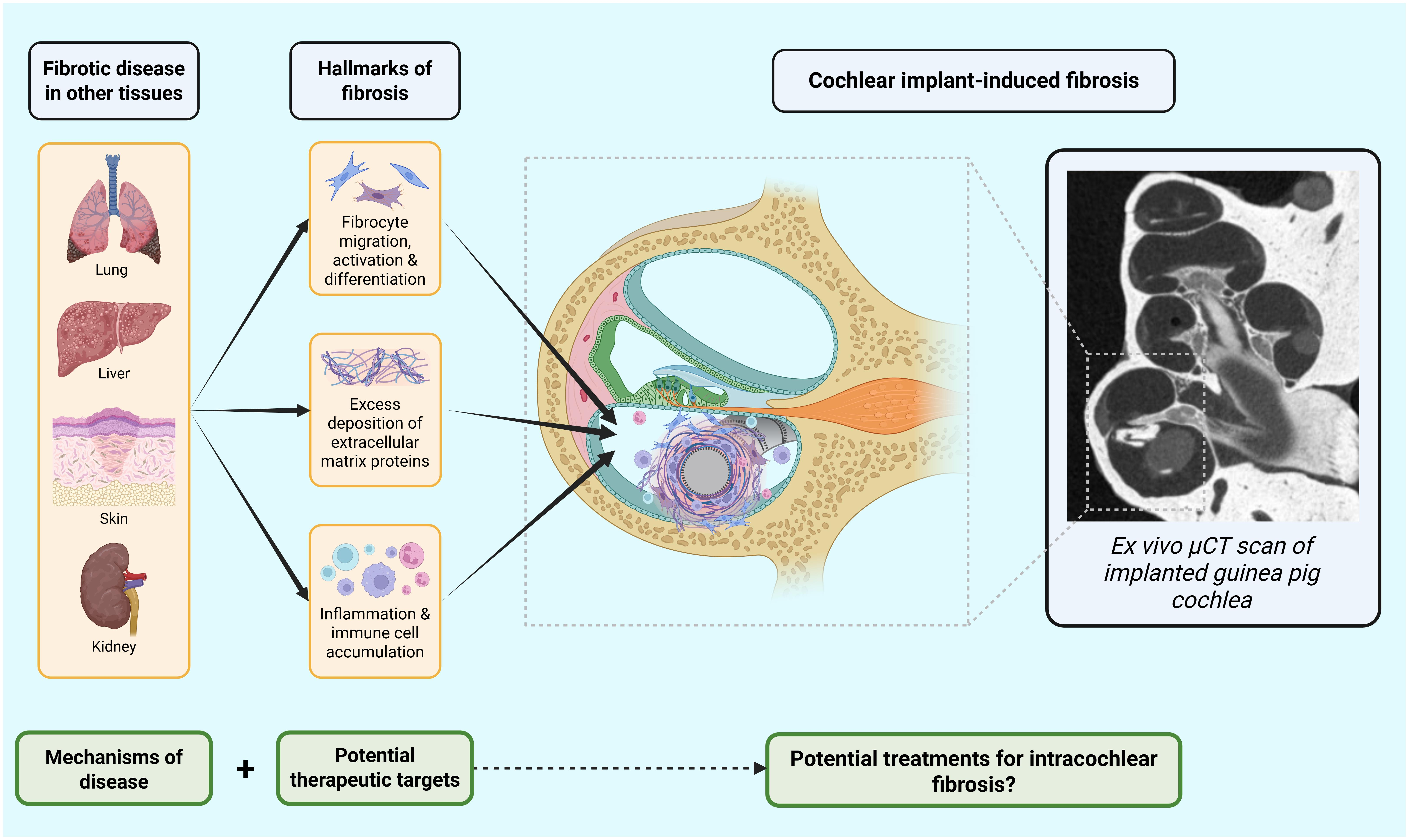
Understanding the Mechanisms Driving Fibrosis Following Cochlear Implantation—Lessons from Other Tissues

 , and
, and 
Abstract
1. Introduction
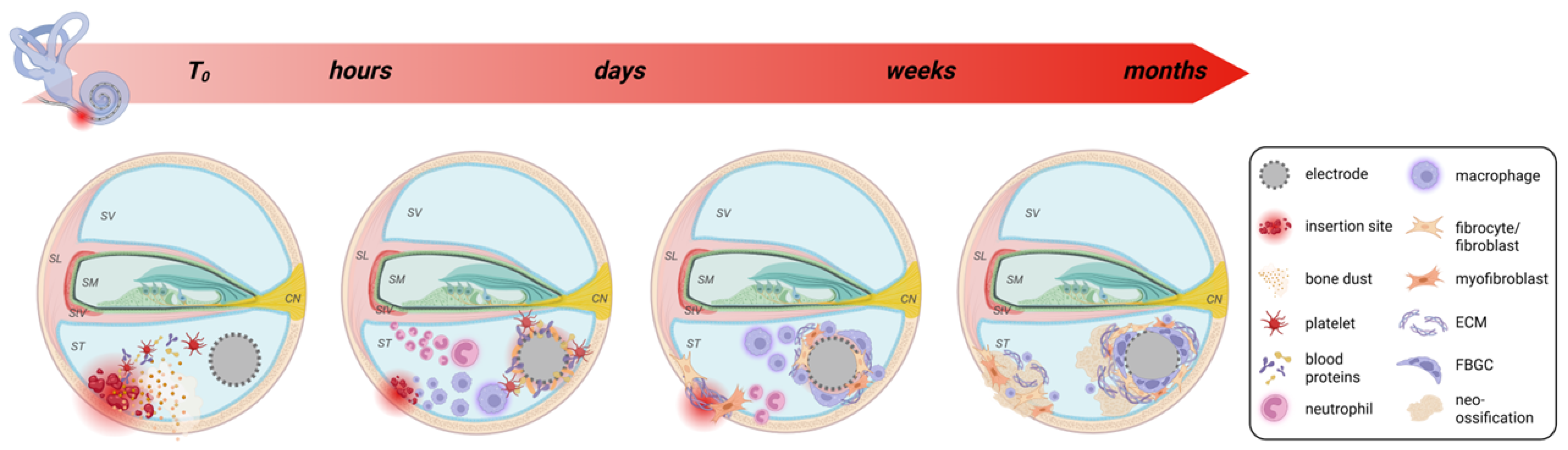
2. Fibrosis in the Inner Ear
3. Neo-Ossification
4. Fibrosis in Other Tissues
5. Mechanisms of Fibrosis
6. Current Prevention and Treatments for Cochlear Implant-Mediated Fibrosis
6.1. Surgical
6.2. Corticosteroids
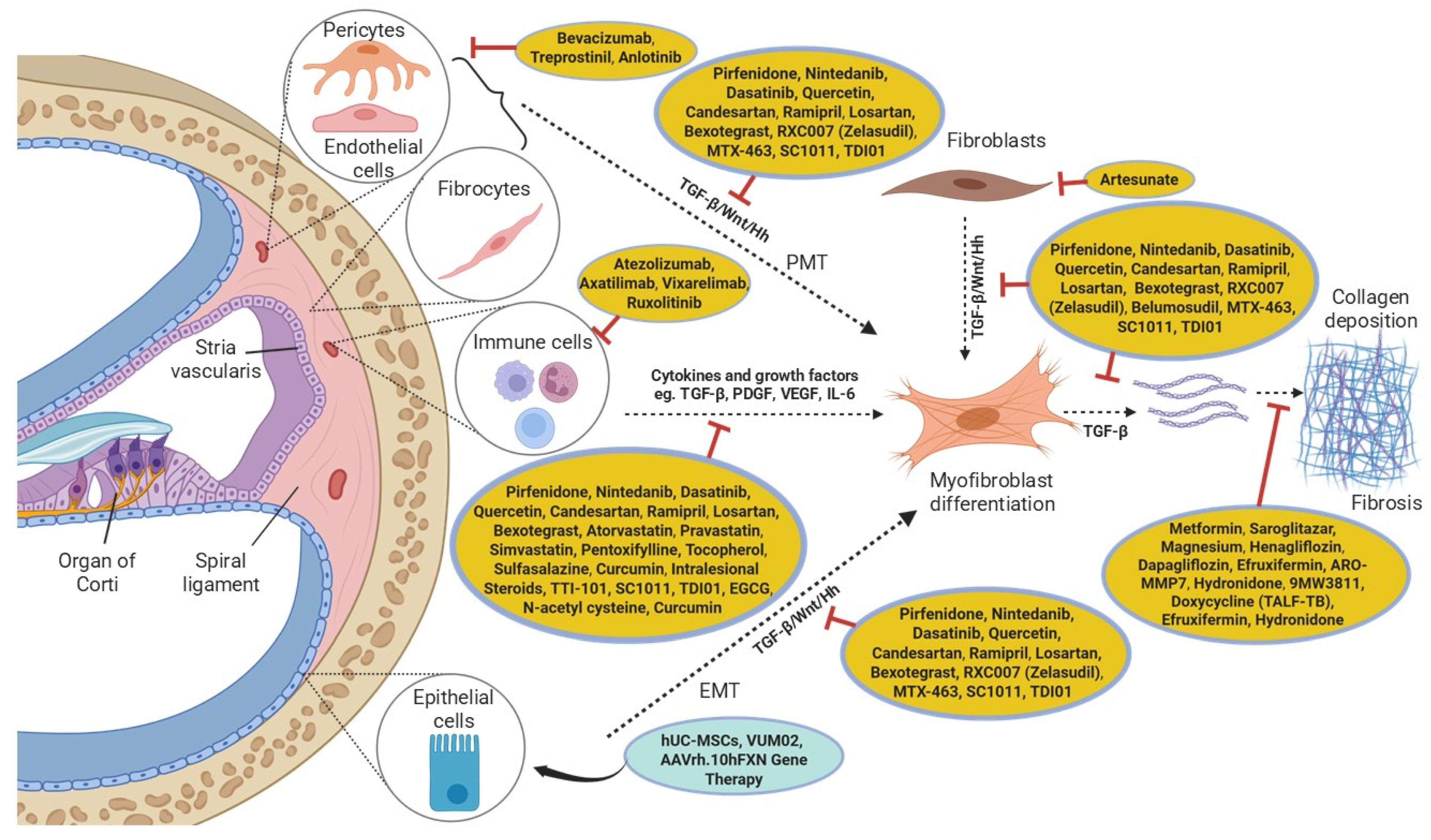
7. Novel Therapeutic Approaches for Cochlear Fibrosis Informed by Insights from Other Tissues
7.1. Inflammation
7.2. TGF-β/Smad Pathway
7.3. Wnt Pathway
7.4. Tyrosine Kinases
8. Therapeutic Strategies and Challenges: Implications for the Ear
Pharmacological Delivery to the Inner Ear
9. Conclusions
Funding
Data Availability Statement
Conflicts of Interest
Abbreviations
| AEC | Airway epithelial cell |
| αSMA | Alpha smooth muscle actin |
| BMP4 | Bone morphogenic protein 4 |
| CN | Cochlear nerve |
| CTGF | Connective tissue growth factor |
| DAMPs | Danger-associated molecular patterns |
| ECM | Extracellular matrix |
| EMT | Epithelial-to-mesenchymal transition |
| FBGCs | Foreign body giant cells |
| FBR | Foreign body response |
| FDA | Food and Drug Administration |
| FGF | Fibroblast growth factor |
| IL | Interleukin |
| IPF | Idiopathic pulmonary fibrosis |
| JAK | Janus kinase |
| LRP | Low-density lipoprotein receptor-related protein |
| MAPK | Mitogen-activated protein kinase |
| MCP-1 | Monocyte chemoattractant protein 1 |
| MesoMT | Mesothelial-to-mesenchymal transition |
| MMT | Macrophage-to-myofibroblast transition |
| NADPH | Nicotinamide adenine dinucleotide phosphate |
| NTD | Nintedanib |
| PFD | Pirfenidone |
| PI3K | Phosphatidylinositol-3-kinase |
| RAGE | Receptor for advance glycation end products |
| RW | Round window |
| SGN | Spiral ganglion neurons |
| SL | Piral ligament |
| SM | Scala media |
| Smad | Mothers against decapentaplegic homologue |
| sRAGE | Soluble receptor for advance glycation end products |
| SSc | Systemic sclerosis |
| ST | Scala tympani |
| Stat | Signal transducer and activator of transcription |
| StV | Stria vascularis |
| SV | Scala vestibuli |
| TGF-β | Transforming growth factor beta |
| TGF-βR | Transforming growth factor beta receptor |
| TK | Tyrosine kinase |
| TKI | Tyrosine kinase inhibitor |
| TNF | Tumour necrosis factor |
| VEGF | Vascular endothelial growth factor |
References
- Mudry, A.; Mills, M. The early history of the cochlear implant: A retrospective. JAMA Otolaryngol. Head Neck Surg. 2013, 139, 446–453. [Google Scholar] [CrossRef] [PubMed]
- Walia, A.; Shew, M.A.; Kallogjeri, D.; Wick, C.C.; Durakovic, N.; Lefler, S.M.; Ortmann, A.J.; Herzog, J.A.; Buchman, C.A. Electrocochleography and cognition are important predictors of speech perception outcomes in noise for cochlear implant recipients. Sci. Rep. 2022, 12, 3083. [Google Scholar] [CrossRef] [PubMed]
- Messersmith, J.J.; Entwisle, L.; Warren, S.; Scott, M. Clinical Practice Guidelines: Cochlear Implants. J. Am. Acad. Audiol. 2019, 30, 827–844. [Google Scholar] [CrossRef] [PubMed]
- Danielian, A.; Ishiyama, G.; Lopez, I.A.; Ishiyama, A. Predictors of Fibrotic and Bone Tissue Formation With 3-D Reconstructions of Post-implantation Human Temporal Bones. Otol. Neurotol. 2021, 42, e942–e948. [Google Scholar] [CrossRef]
- Fayad, J.N.; Makarem, A.O.; Linthicum, F.H., Jr. Histopathologic assessment of fibrosis and new bone formation in implanted human temporal bones using 3D reconstruction. Otolaryngol. Head Neck Surg. 2009, 141, 247–252. [Google Scholar] [CrossRef]
- Geerardyn, A.; Zhu, M.; Wu, P.; O’MAlley, J.T.; Nadol, J.B.; Liberman, M.C.; Nakajima, H.H.; Verhaert, N.; Quesnel, A.M. Three-dimensional quantification of fibrosis and ossification after cochlear implantation via virtual re-sectioning: Potential implications for residual hearing. Hear. Res. 2023, 428, 108681. [Google Scholar] [CrossRef]
- Ishiyama, A.; Ishiyama, G.; Lopez, I.A.; Linthicum, F.H., Jr. Temporal Bone Histopathology of First-Generation Cochlear Implant Electrode Translocation. Otol. Neurotol. 2019, 40, e581–e591. [Google Scholar] [CrossRef]
- Linthicum, F.H., Jr.; Doherty, J.K.; Lopez, I.A.; Ishiyama, A. Cochlear implant histopathology. World J. Otorhinolaryngol. Head Neck Surg. 2017, 3, 211–213. [Google Scholar] [CrossRef]
- Linthicum, F.H., Jr.; Fayad, J.; Otto, S.R.; Galey, F.R.; House, W.F. Cochlear implant histopathology. Am. J. Otol. 1991, 12, 245–311. [Google Scholar] [CrossRef]
- Seyyedi, M.; Nadol, J.B., Jr. Intracochlear inflammatory response to cochlear implant electrodes in humans. Otol. Neurotol. 2014, 35, 1545–1551. [Google Scholar] [CrossRef]
- Mutsaers, S.E.; Bishop, J.E.; McGrouther, G.; Laurent, G.J. Mechanisms of tissue repair: From wound healing to fibrosis. Int. J. Biochem. Cell Biol. 1997, 29, 5–17. [Google Scholar] [CrossRef]
- Diseases, G.B.D.; Injuries, C. Global burden of 369 diseases and injuries in 204 countries and territories, 1990–2019: A systematic analysis for the Global Burden of Disease Study 2019. Lancet 2020, 396, 1204–1222. [Google Scholar]
- Zhao, X.; Kwan, J.Y.Y.; Yip, K.; Liu, P.P.; Liu, F.F. Targeting metabolic dysregulation for fibrosis therapy. Nat. Rev. Drug Discov. 2020, 19, 57–75. [Google Scholar] [CrossRef] [PubMed]
- Ge, N.N.; Brodie, H.A.; Tinling, S.P. Long-term hearing loss in gerbils with bacterial meningitis treated with superoxide dismutase. Otol. Neurotol. 2008, 29, 1061–1067. [Google Scholar] [CrossRef] [PubMed]
- Orzan, E.; Muzzi, E.; Caregnato, I.; Cossu, P.; Marchi, R.; Ghiselli, S. Uncommon Post-Meningitis Hearing Threshold Improvement: A Case Report. J. Int. Adv. Otol. 2018, 14, 484–487. [Google Scholar] [CrossRef]
- Lucas, M.J.; Brouwer, M.C.; van de Beek, D. Neurological sequelae of bacterial meningitis. J. Infect. 2016, 73, 18–27. [Google Scholar] [CrossRef]
- Mook-Kanamori, B.B.; Geldhoff, M.; van der Poll, T.; van de Beek, D. Pathogenesis and pathophysiology of pneumococcal meningitis. Clin. Microbiol. Rev. 2011, 24, 557–591. [Google Scholar] [CrossRef]
- Li, X.; Shi, X.; Wang, C.; Niu, H.; Zeng, L.; Qiao, Y.; Xu, K. Pathological changes of the inner ear cochlea in different time windows of murine cytomegalovirus-induced hearing loss in a mouse model. Acta Otolaryngol. 2015, 135, 536–541. [Google Scholar] [CrossRef]
- Schraff, S.A.; Schleiss, M.R.; Brown, D.K.; Meinzen-Derr, J.; Choi, K.Y.; Greinwald, J.H.; Choo, D.I. Macrophage inflammatory proteins in cytomegalovirus-related inner ear injury. Otolaryngol. Head Neck Surg. 2007, 137, 612–618. [Google Scholar] [CrossRef]
- Keithley, E.M.; Chen, M.C.; Linthicum, F. Clinical diagnoses associated with histologic findings of fibrotic tissue and new bone in the inner ear. Laryngoscope 1998, 108, 87–91. [Google Scholar] [CrossRef]
- Maciaszczyk, K.; Waszczykowska, E.; Pajor, A.; Bartkowiak-Dziankowska, B.; Durko, T. Hearing organ disorders in patients with systemic sclerosis. Rheumatol. Int. 2011, 31, 1423–1428. [Google Scholar] [CrossRef]
- Abou-Taleb, A.; Linthicum, F.H., Jr. Scleroderma and hearing loss: (histopathology of a case). J. Laryngol. Otol. 1987, 101, 656–662. [Google Scholar] [CrossRef]
- Santarelli, R.; Scimemi, P.; Dal Monte, E.; Genovese, E.; Arslan, E. Auditory neuropathy in systemic sclerosis: A speech perception and evoked potential study before and after cochlear implantation. Eur. Arch. Otorhinolaryngol. 2006, 263, 809–815. [Google Scholar] [CrossRef]
- Sieskiewicz, M.; Rebacz, D.; Sieskiewicz, A. Hearing impairment in systemic sclerosis patients-what do we really know? Front. Med. 2024, 11, 1322170. [Google Scholar] [CrossRef]
- Foggia, M.J.; Quevedo, R.V.; Hansen, M.R. Intracochlear fibrosis and the foreign body response to cochlear implant biomaterials. Laryngoscope Investig. Otolaryngol. 2019, 4, 678–683. [Google Scholar] [CrossRef] [PubMed]
- Canzano, F.; Di Lella, F.; Guida, M.; Pasanisi, E.; Govoni, M.; Falcioni, M. Revision cochlear implant surgery for clinical reasons. Acta Otorhinolaryngol. Ital. 2023, 43, 65–73. [Google Scholar] [CrossRef] [PubMed]
- Kamakura, T.; Nadol, J.B., Jr. Correlation between word recognition score and intracochlear new bone and fibrous tissue after cochlear implantation in the human. Hear. Res. 2016, 339, 132–141. [Google Scholar] [CrossRef] [PubMed]
- Li, P.M.; Somdas, M.A.; Eddington, D.K.; Nadol, J.B., Jr. Analysis of intracochlear new bone and fibrous tissue formation in human subjects with cochlear implants. Ann. Otol. Rhinol. Laryngol. 2007, 116, 731–738. [Google Scholar] [CrossRef]
- Mancini, P.; Atturo, F.; Di Mario, A.; Portanova, G.; Ralli, M.; De Virgilio, A.; de Vincentiis, M.; Greco, A. Hearing loss in autoimmune disorders: Prevalence and therapeutic options. Autoimmun. Rev. 2018, 17, 644–652. [Google Scholar] [CrossRef]
- Araki, S.; Kawano, A.; Seldon, H.L.; Shepherd, R.K.; Funasaka, S.; Clark, G.M. Effects of intracochlear factors on spiral ganglion cells and auditory brain stem response after long-term electrical stimulation in deafened kittens. Otolaryngol. Head Neck Surg. 2000, 122, 425–433. [Google Scholar] [CrossRef]
- Bas, E.; Bohorquez, J.; Goncalves, S.; Perez, E.; Dinh, C.T.; Garnham, C.; Hessler, R.; Eshraghi, A.A.; Van De Water, T.R. Electrode array-eluted dexamethasone protects against electrode insertion trauma induced hearing and hair cell losses, damage to neural elements, increases in impedance and fibrosis: A dose response study. Hear. Res. 2016, 337, 12–24. [Google Scholar] [CrossRef]
- O’Leary, S.J.; Monksfield, P.; Kel, G.; Connolly, T.; Souter, M.; Chang, A.; Marovic, P.; O’LEary, J.; Richardson, R.; Eastwood, H. Relations between cochlear histopathology and hearing loss in experimental cochlear implantation. Hear. Res. 2013, 298, 27–35. [Google Scholar] [CrossRef] [PubMed]
- Quesnel, A.M.; Nakajima, H.H.; Rosowski, J.J.; Hansen, M.R.; Gantz, B.J.; Nadol, J.B. Delayed loss of hearing after hearing preservation cochlear implantation: Human temporal bone pathology and implications for etiology. Hear. Res. 2016, 333, 225–234. [Google Scholar] [CrossRef] [PubMed]
- Scheperle, R.A.; Tejani, V.D.; Omtvedt, J.K.; Brown, C.J.; Abbas, P.J.; Hansen, M.R.; Gantz, B.J.; Oleson, J.J.; Ozanne, M.V. Delayed changes in auditory status in cochlear implant users with preserved acoustic hearing. Hear. Res. 2017, 350, 45–57. [Google Scholar] [CrossRef] [PubMed]
- Barbara, M.; Mattioni, A.; Monini, S.; Chiappini, I.; Ronchetti, F.; Ballantyne, D.; Mancini, P.; Filipo, R. Delayed loss of residual hearing in Clarion cochlear implant users. J. Laryngol. Otol. 2003, 117, 850–853. [Google Scholar] [CrossRef]
- Gerbert, M.; Ernst, A.; Seidl, R.; Decker, L.; Scholz, S.; Lauer, G.; Mittmann, P. Preservation of Residual Hearing: Long-Term Results With a Mid-Scala Electrode. J. Otolaryngol. Head Neck Surg. 2024, 53, 19160216241250351. [Google Scholar] [CrossRef]
- Kim, J.S. Electrocochleography in Cochlear Implant Users with Residual Acoustic Hearing: A Systematic Review. Int. J. Environ. Res. Public Health 2020, 17, 7043. [Google Scholar] [CrossRef]
- Salmon, M.K.; Quimby, A.E.; Bartellas, M.; Kaufman, H.S.; Bigelow, D.C.; Brant, J.A.; Ruckenstein, M.J. Long-Term Hearing Outcomes After Hybrid Cochlear Implantation. Otol. Neurotol. 2023, 44, 679–683. [Google Scholar] [CrossRef]
- Incerti, P.V.; Ching, T.Y.; Cowan, R. A systematic review of electric-acoustic stimulation: Device fitting ranges, outcomes, and clinical fitting practices. Trends Amplif. 2013, 17, 3–26. [Google Scholar] [CrossRef]
- Miranda, P.C.; Sampaio, A.L.; Lopes, R.A.; Ramos Venosa, A.; de Oliveira, C.A. Hearing preservation in cochlear implant surgery. Int. J. Otolaryngol. 2014, 2014, 468515. [Google Scholar] [CrossRef]
- Parkinson, A.J.; Rubinstein, J.T.; Drennan, W.R.; Dodson, C.; Nie, K. Hybrid Music Perception Outcomes: Implications for Melody and Timbre Recognition in Cochlear Implant Recipients. Otol. Neurotol. 2019, 40, e283–e289. [Google Scholar] [CrossRef]
- Choi, C.H.; Oghalai, J.S. Predicting the effect of post-implant cochlear fibrosis on residual hearing. Hear. Res. 2005, 205, 193–200. [Google Scholar] [CrossRef] [PubMed]
- Braack, K.J.; Miles, T.; Amat, F.; Brown, D.J.; Atlas, M.D.; Kuthubutheen, J.; Mulders, W.H.; Prêle, C.M. Using x-ray micro computed tomography to quantify intracochlear fibrosis after cochlear implantation in a Guinea pig model. Heliyon 2023, 9, e19343. [Google Scholar] [CrossRef] [PubMed]
- Chen, A.; Chen, D.; Lv, K.; Li, G.; Pan, J.; Ma, D.; Tang, J.; Zhang, H. Zwitterionic Polymer/Polydopamine Coating of Electrode Arrays Reduces Fibrosis and Residual Hearing Loss after Cochlear Implantation. Adv. Healthc. Mater. 2023, 12, e2200807. [Google Scholar] [CrossRef]
- Colesa, D.J.; Devare, J.; Swiderski, D.L.; Beyer, L.A.; Raphael, Y.; Pfingst, B.E. Development of a chronically-implanted mouse model for studies of cochlear health and implant function. Hear. Res. 2021, 404, 108216. [Google Scholar] [CrossRef] [PubMed]
- Hyzer, J.M.; Hill, J.D.; He, W.; Burwood, G.W.S.; Fettig, A.K.; Reiss, L.A.J. Effects of Cochlear Implantation and Steroids on the Aging Guinea Pig Cochlea. Otolaryngol. Head Neck Surg. 2024, 171, 530–537. [Google Scholar] [CrossRef] [PubMed]
- Lee, J.; Ismail, H.; Lee, J.H.; Kel, G.; O’leary, J.; Hampson, A.; Eastwood, H.; O’leary, S.J. Effect of both local and systemically administered dexamethasone on long-term hearing and tissue response in a Guinea pig model of cochlear implantation. Audiol. Neurootol. 2013, 18, 392–405. [Google Scholar] [CrossRef]
- Rowe, D.; Chambers, S.; Hampson, A.; Eastwood, H.; Campbell, L.; O’Leary, S. Delayed low frequency hearing loss caused by cochlear implantation interventions via the round window but not cochleostomy. Hear. Res. 2016, 333, 49–57. [Google Scholar] [CrossRef]
- Bester, C.; Dalbert, A.; Collins, A.; Razmovski, T.; Gerard, J.-M.; O’Leary, S. Electrocochleographic Patterns Predicting Increased Impedances and Hearing Loss after Cochlear Implantation. Ear Hear. 2022, 44, 710–720. [Google Scholar] [CrossRef]
- Needham, K.; Stathopoulos, D.; Newbold, C.; Leavens, J.; Risi, F.; Manouchehri, S.; Durmo, I.; Cowan, R. Electrode impedance changes after implantation of a dexamethasone-eluting intracochlear array. Cochlear Implant. Int. 2020, 21, 98–109. [Google Scholar] [CrossRef]
- Heutink, F.; Klabbers, T.M.; Huinck, W.J.; Lucev, F.; van der Woude, W.J.; Mylanus, E.A.M.; Verbist, B.M. Ultra-High-Resolution CT to Detect Intracochlear New Bone Formation after Cochlear Implantation. Radiology 2022, 302, 605–612. [Google Scholar] [CrossRef]
- Kotzias, S.A.; Linthicum, F.H., Jr. Labyrinthine ossification: Differences between two types of ectopic bone. Am. J. Otol. 1985, 6, 490–494. [Google Scholar]
- Vashishth, A.; Fulcheri, A.; Prasad, S.C.; Bassi, M.; Rossi, G.; Caruso, A.; Sanna, M. Cochlear Implantation in Cochlear Ossification: Retrospective Review of Etiologies, Surgical Considerations, and Auditory Outcomes. Otol. Neurotol. 2018, 39, 17–28. [Google Scholar] [CrossRef]
- Hodge, S.E.; Ishiyama, G.; Lopez, I.A.; Ishiyama, A. Histopathologic Analysis of Temporal Bones With Otosclerosis Following Cochlear Implantation. Otol. Neurotol. 2021, 42, 1492–1498. [Google Scholar] [CrossRef] [PubMed]
- Lansley, S.M.; Searles, R.G.; Hoi, A.; Thomas, C.; Moneta, H.; Herrick, S.E.; Thompson, P.J.; Mark, N.; Sterrett, G.F.; Prêle, C.M.; et al. Mesothelial cell differentiation into osteoblast- and adipocyte-like cells. J. Cell. Mol. Med. 2011, 15, 2095–2105. [Google Scholar] [CrossRef] [PubMed]
- Bas, E.; Anwar, M.R.; Van De Water, T.R. TGF beta-1 and WNT Signaling Pathways Collaboration Associated with Cochlear Implantation Trauma-Induced Fibrosis. Anat. Rec. 2020, 303, 608–618. [Google Scholar] [CrossRef] [PubMed]
- Xiao, A.Y.; Lopez, I.A.; Ishiyama, G.; Ishiyama, A. Expression of TGFbeta-1 and CTGF in the Implanted Cochlea and its Implication on New Tissue Formation. Otol. Neurotol. 2024, 45, 810–817. [Google Scholar] [CrossRef]
- Ngaage, M.; Agius, M. The Psychology of Scars: A Mini-Review. Psychiatr. Danub. 2018, 30, 633–638. [Google Scholar]
- He, Y.; Deng, Z.; Alghamdi, M.; Lu, L.; Fear, M.W.; He, L. From genetics to epigenetics: New insights into keloid scarring. Cell Prolif. 2017, 50, e12326. [Google Scholar] [CrossRef]
- Hashimoto, H.; Olson, E.N.; Bassel-Duby, R. Therapeutic approaches for cardiac regeneration and repair. Nat. Rev. Cardiol. 2018, 15, 585–600. [Google Scholar] [CrossRef]
- Martinez, F.J.; Collard, H.R.; Pardo, A.; Raghu, G.; Richeldi, L.; Selman, M.; Swigris, J.J.; Taniguchi, H.; Wells, A.U. Idiopathic pulmonary fibrosis. Nat. Rev. Dis. Primers 2017, 3, 17074. [Google Scholar] [CrossRef]
- Sandhu, U.; Alkukhun, L.; Kheiri, B.; Hodovan, J.; Chiang, K.; Splanger, T.; Castellvi, Q.; Zhao, Y.; Nazer, B. In vivo pulsed-field ablation in healthy vs. chronically infarcted ventricular myocardium: Biophysical and histologic characterization. Europace 2023, 25, 1503–1509. [Google Scholar] [CrossRef]
- Younis, A.; Zilberman, I.; Krywanczyk, A.; Higuchi, K.; Yavin, H.D.; Sroubek, J.; Anter, E. Effect of Pulsed-Field and Radiofrequency Ablation on Heterogeneous Ventricular Scar in a Swine Model of Healed Myocardial Infarction. Circ. Arrhythm. Electrophysiol. 2022, 15, e011209. [Google Scholar] [CrossRef]
- Fu, Y.; Shi, J.; Qian, H.; Qin, C.; Liu, L.; Shen, J.; Ma, H.; Ma, L.; Liao, B.; Guo, Y. Alleviation of cardiac fibrosis using acellular peritoneal matrix-loaded pirfenidone nanodroplets after myocardial infarction in rats. Eur. J. Pharmacol. 2022, 933, 175238. [Google Scholar] [CrossRef] [PubMed]
- Lewis, G.A.; Dodd, S.; Clayton, D.; Bedson, E.; Eccleson, H.; Schelbert, E.B.; Naish, J.H.; Jimenez, B.D.; Williams, S.G.; Cunnington, C.; et al. Pirfenidone in heart failure with preserved ejection fraction: A randomized phase 2 trial. Nat. Med. 2021, 27, 1477–1482. [Google Scholar] [CrossRef] [PubMed]
- Li, N.; Hang, W.; Shu, H.; Zhou, N. Pirfenidone alleviates cardiac fibrosis induced by pressure overload via inhibiting TGF-beta1/Smad3 signalling pathway. J. Cell. Mol. Med. 2022, 26, 4548–4555. [Google Scholar] [CrossRef] [PubMed]
- Meyer, F.E.U.; Santos, G.L.; Doan, T.P.; DeGrave, A.N.; Bues, B.; Lutz, S. Pirfenidone affects human cardiac fibroblast proliferation and cell cycle activity in 2D cultures and engineered connective tissues. Naunyn Schmiedebergs Arch. Pharmacol. 2023, 396, 1687–1699. [Google Scholar] [CrossRef]
- Yamagami, K.; Oka, T.; Wang, Q.; Ishizu, T.; Lee, J.-K.; Miwa, K.; Akazawa, H.; Naito, A.T.; Sakata, Y.; Komuro, I. Pirfenidone exhibits cardioprotective effects by regulating myocardial fibrosis and vascular permeability in pressure-overloaded hearts. Am. J. Physiol. Heart Circ. Physiol. 2015, 309, H512–H522. [Google Scholar] [CrossRef]
- Aimo, A.; Spitaleri, G.; Nieri, D.; Tavanti, L.M.; Meschi, C.; Panichella, G.; Lupón, J.; Pistelli, F.; Carrozzi, L.; Bayes-Genis, A.; et al. Pirfenidone for Idiopathic Pulmonary Fibrosis and Beyond. Card. Fail. Rev. 2022, 8, e12. [Google Scholar] [CrossRef]
- Rangarajan, S.; Kurundkar, A.; Kurundkar, D.; Bernard, K.; Sanders, Y.Y.; Ding, Q.; Antony, V.B.; Zhang, J.; Zmijewski, J.; Thannickal, V.J. Novel Mechanisms for the Antifibrotic Action of Nintedanib. Am. J. Respir. Cell Mol. Biol. 2016, 54, 51–59. [Google Scholar] [CrossRef]
- Finnerty, J.P.; Ponnuswamy, A.; Dutta, P.; Abdelaziz, A.; Kamil, H. Efficacy of antifibrotic drugs, nintedanib and pirfenidone, in treatment of progressive pulmonary fibrosis in both idiopathic pulmonary fibrosis (IPF) and non-IPF: A systematic review and meta-analysis. BMC Pulm. Med. 2021, 21, 411. [Google Scholar] [CrossRef]
- He, M.; Yang, T.; Zhou, J.; Wang, R.; Li, X. A real-world study of antifibrotic drugs-related adverse events based on the United States food and drug administration adverse event reporting system and VigiAccess databases. Front. Pharmacol. 2024, 15, 1310286. [Google Scholar] [CrossRef]
- Mackintosh, J.A.; Keir, G.; Troy, L.K.; Holland, A.E.; Grainge, C.; Chambers, D.C.; Sandford, D.; Jo, H.E.; Glaspole, I.; Wilsher, M.; et al. Treatment of idiopathic pulmonary fibrosis and progressive pulmonary fibrosis: A position statement from the Thoracic Society of Australia and New Zealand 2023 revision. Respirology 2024, 29, 105–135. [Google Scholar] [CrossRef]
- Djudjaj, S.; Boor, P. Cellular and molecular mechanisms of kidney fibrosis. Mol. Asp. Med. 2019, 65, 16–36. [Google Scholar] [CrossRef]
- Duffield, J.S. Cellular and molecular mechanisms in kidney fibrosis. J. Clin. Investig. 2014, 124, 2299–2306. [Google Scholar] [CrossRef] [PubMed]
- Huang, R.; Fu, P.; Ma, L. Kidney fibrosis: From mechanisms to therapeutic medicines. Signal Transduct. Target. Ther. 2023, 8, 129. [Google Scholar] [CrossRef]
- Roehlen, N.; Crouchet, E.; Baumert, T.F. Liver Fibrosis: Mechanistic Concepts and Therapeutic Perspectives. Cells 2020, 9, 875. [Google Scholar] [CrossRef] [PubMed]
- Tsuchida, T.; Friedman, S.L. Mechanisms of hepatic stellate cell activation. Nat. Rev. Gastroenterol. Hepatol. 2017, 14, 397–411. [Google Scholar] [CrossRef] [PubMed]
- Li, J.; Tuo, B. Current and Emerging Approaches for Hepatic Fibrosis Treatment. Gastroenterol. Res. Pract. 2021, 2021, 6612892. [Google Scholar] [CrossRef]
- Herrick, S.E.; Mutsaers, S.E.; Ozua, P.; Sulaiman, H.; Omer, A.; Boulos, P.; Foster, M.L.; Laurent, G.J. Human peritoneal adhesions are highly cellular, innervated, and vascularized. J. Pathol. 2000, 192, 67–72. [Google Scholar] [CrossRef]
- Sulaiman, H.; Gabella, G.; Davis, C.M.; Mutsaers, S.E.; Boulos, P.M.; Laurent, G.J.; Herrick, S.E. Presence and distribution of sensory nerve fibers in human peritoneal adhesions. Ann. Surg. 2001, 234, 256–261. [Google Scholar] [CrossRef] [PubMed]
- Herrick, S.E.; Mutsaers, S.E. The potential of mesothelial cells in tissue engineering and regenerative medicine applications. Int. J. Artif. Organs 2007, 30, 527–540. [Google Scholar] [CrossRef] [PubMed]
- Mutsaers, S.E.; Birnie, K.; Lansley, S.; Herrick, S.E.; Lim, C.B.; Prêle, C.M. Mesothelial cells in tissue repair and fibrosis. Front. Pharmacol. 2015, 6, 113. [Google Scholar] [CrossRef] [PubMed]
- Perry, L.; Karp, F.; Hauch, K.; Ratner, B.D. Explanted pacemakers: Observations of the long-term foreign body response. Interface 2007, 4, 11. [Google Scholar]
- Anderson, J.M.; Rodriguez, A.; Chang, D.T. Foreign body reaction to biomaterials. Semin. Immunol. 2008, 20, 86–100. [Google Scholar] [CrossRef]
- Gurtner, G.C.; Werner, S.; Barrandon, Y.; Longaker, M.T. Wound repair and regeneration. Nature 2008, 453, 314–321. [Google Scholar] [CrossRef]
- Hung, C.F. Origin of Myofibroblasts in Lung Fibrosis. Curr. Tissue Microenviron. Rep. 2020, 1, 155–162. [Google Scholar] [CrossRef]
- Virk, H.S.; Biddle, M.S.; Smallwood, D.T.; Weston, C.A.; Castells, E.; Bowman, V.W.; McCarthy, J.; Amrani, Y.; Duffy, S.M.; Bradding, P.; et al. TGFbeta1 induces resistance of human lung myofibroblasts to cell death via down-regulation of TRPA1 channels. Br. J. Pharmacol. 2021, 178, 2948–2962. [Google Scholar] [CrossRef]
- Waters, D.W.; Blokland, K.E.C.; Pathinayake, P.S.; Burgess, J.K.; Mutsaers, S.E.; Prele, C.M.; Schuliga, M.; Grainge, C.L.; Knight, D.A. Fibroblast senescence in the pathology of idiopathic pulmonary fibrosis. Am. J. Physiol. Lung Cell. Mol. Physiol. 2018, 315, L162–L172. [Google Scholar] [CrossRef]
- Hinz, B.; Lagares, D. Evasion of apoptosis by myofibroblasts: A hallmark of fibrotic diseases. Nat. Rev. Rheumatol. 2020, 16, 11–31. [Google Scholar] [CrossRef]
- Waters, D.W.; Schuliga, M.; Pathinayake, P.S.; Wei, L.; Tan, H.-Y.; Blokland, K.E.C.; Jaffar, J.; Westall, G.P.; Burgess, J.K.; Prêle, C.M.; et al. A Senescence Bystander Effect in Human Lung Fibroblasts. Biomedicines 2021, 9, 1162. [Google Scholar] [CrossRef]
- Moustakas, A.; Heldin, C.H. Mechanisms of TGFbeta-Induced Epithelial-Mesenchymal Transition. J. Clin. Med. 2016, 5, 63. [Google Scholar] [CrossRef] [PubMed]
- Vierhout, M.; Ayoub, A.; Naiel, S.; Yazdanshenas, P.; Revill, S.D.; Reihani, A.; Dvorkin-Gheva, A.; Shi, W.; Ask, K. Monocyte and macrophage derived myofibroblasts: Is it fate? A review of the current evidence. Wound Repair. Regen. 2021, 29, 548–562. [Google Scholar] [CrossRef] [PubMed]
- Terri, M.; Trionfetti, F.; Montaldo, C.; Cordani, M.; Tripodi, M.; Lopez-Cabrera, M.; Strippoli, R. Mechanisms of Peritoneal Fibrosis: Focus on Immune Cells-Peritoneal Stroma Interactions. Front. Immunol. 2021, 12, 607204. [Google Scholar] [CrossRef] [PubMed]
- Akkiz, H.; Gieseler, R.K.; Canbay, A. Liver Fibrosis: From Basic Science towards Clinical Progress, Focusing on the Central Role of Hepatic Stellate Cells. Int. J. Mol. Sci. 2024, 25, 7873. [Google Scholar] [CrossRef]
- Bianchetti, L.; Barczyk, M.; Cardoso, J.; Schmidt, M.; Bellini, A.; Mattoli, S. Extracellular matrix remodelling properties of human fibrocytes. J. Cell. Mol. Med. 2012, 16, 483–495. [Google Scholar] [CrossRef]
- Strieter, R.M.; Keeley, E.C.; Hughes, M.A.; Burdick, M.D.; Mehrad, B. The role of circulating mesenchymal progenitor cells (fibrocytes) in the pathogenesis of pulmonary fibrosis. J. Leukoc. Biol. 2009, 86, 1111–1118. [Google Scholar] [CrossRef]
- Jia, H.; François, F.; Bourien, J.; Eybalin, M.; Lloyd, R.; Van De Water, T.; Puel, J.-L.; Venail, F. Prevention of trauma-induced cochlear fibrosis using intracochlear application of anti-inflammatory and antiproliferative drugs. Neuroscience 2016, 316, 261–278. [Google Scholar] [CrossRef]
- Zhang, D.; Chen, D.; Wang, K.; Pan, J.; Tang, J.; Zhang, H. Electrical stimulation of cochlear implant promotes activation of macrophages and fibroblasts under inflammation. Laryngoscope Investig. Otolaryngol. 2023, 8, 1390–1400. [Google Scholar] [CrossRef]
- Bas, E.; Goncalves, S.; Adams, M.; Dinh, C.T.; Bas, J.M.; Van De Water, T.R.; Eshraghi, A.A. Spiral ganglion cells and macrophages initiate neuro-inflammation and scarring following cochlear implantation. Front. Cell. Neurosci. 2015, 9, 303. [Google Scholar] [CrossRef]
- Bas, E.; Dinh, C.T.; Ojo, R.; Eshraghi, A.A.; Van De Water, T.R. Loss of Residual Hearing Initiated by Cochlear Implantation: Role of Inflammation-Initiated Cell Death Pathways, Wound Healing and Fibrosis Pathways, and Potential Otoprotective Therapies. In Free Radicals in ENT Pathology; Miller, J., Le Prell, C., Rybak, L., Eds.; Humana Press: Totowa, NJ, USA; Springer: New York, NY, USA, 2015; pp. 395–421. [Google Scholar]
- Claussen, A.D.; Quevedo, R.V.; Kirk, J.R.; Higgins, T.; Mostaert, B.; Rahman, M.T.; Oleson, J.; Hernandez, R.; Hirose, K.; Hansen, M.R. Chronic cochlear implantation with and without electric stimulation in a mouse model induces robust cochlear influx of CX3CR1(+/GFP) macrophages. Hear. Res. 2022, 426, 108510. [Google Scholar] [CrossRef]
- Satoh, H.; Billings, P.; Firestein, G.S.; Harris, J.P.; Keithley, E.M. Transforming growth factor beta expression during an inner ear immune response. Ann. Otol. Rhinol. Laryngol. 2006, 115, 81–88. [Google Scholar] [CrossRef]
- Zhang, H.; Stark, G.; Reiss, L. Changes in Gene Expression and Hearing Thresholds After Cochlear Implantation. Otol. Neurotol. 2015, 36, 1157–1165. [Google Scholar] [CrossRef]
- Rahman, M.T.; Mostaert, B.J.; Hunger, B.; Saha, U.; Claussen, A.D.; Razu, I.; Nasrin, F.; Khan, N.A.; Eckard, P.; Coleman, S.; et al. Contribution of macrophages to neural survival and intracochlear tissue remodeling responses following cochlear implantation. J. Neuroinflamm. 2023, 20, 266. [Google Scholar] [CrossRef] [PubMed]
- Nadol, J.B., Jr.; O’Malley, J.T.; Burgess, B.J.; Galler, D. Cellular immunologic responses to cochlear implantation in the human. Hear. Res. 2014, 318, 11–17. [Google Scholar] [CrossRef] [PubMed]
- Nadol, J.B., Jr.; Burgess, B.J.; Gantz, B.J.; Coker, N.J.; Ketten, D.R.; Kos, I.; Roland, J.T.; Shiao, J.Y.; Eddington, D.K.; Montandon, P.; et al. Histopathology of cochlear implants in humans. Ann. Otol. Rhinol. Laryngol. 2001, 110, 883–891. [Google Scholar] [CrossRef] [PubMed]
- Lehnhardt, E. Intracochlear placement of cochlear implant electrodes in soft surgery technique. HNO 1993, 41, 356–359. [Google Scholar]
- Berrettini, S.; Forli, F.; Passetti, S. Preservation of residual hearing following cochlear implantation: Comparison between three surgical techniques. J. Laryngol. Otol. 2008, 122, 246–252. [Google Scholar] [CrossRef]
- Ishai, R.; Herrmann, B.S.; Nadol, J.B., Jr.; Quesnel, A.M. The pattern and degree of capsular fibrous sheaths surrounding cochlear electrode arrays. Hear. Res. 2017, 348, 44–53. [Google Scholar] [CrossRef]
- Gu, P.; Jiang, Y.; Gao, X.; Huang, S.; Yuan, Y.; Wang, G.; Li, B.; Xi, X.; Dai, P. Effects of cochlear implant surgical technique on post-operative electrode impedance. Acta Otolaryngol. 2016, 136, 677–681. [Google Scholar] [CrossRef]
- Reichardt, S.D.; Amouret, A.; Muzzi, C.; Vettorazzi, S.; Tuckermann, J.P.; Lühder, F.; Reichardt, H.M. The Role of Glucocorticoids in Inflammatory Diseases. Cells 2021, 10, 2921. [Google Scholar] [CrossRef]
- Ryu, K.A.; Lyu, A.-R.; Park, H.; Choi, J.W.; Hur, G.M.; Park, Y.-H. Intracochlear Bleeding Enhances Cochlear Fibrosis and Ossification: An Animal Study. PLoS ONE 2015, 10, e0136617. [Google Scholar] [CrossRef]
- Kuthubutheen, J.; Coates, H.; Rowsell, C.; Nedzelski, J.; Chen, J.M.; Lin, V. The role of extended preoperative steroids in hearing preservation cochlear implantation. Hear. Res. 2015, 327, 257–264. [Google Scholar] [CrossRef] [PubMed]
- Kuthubutheen, J.; Joglekar, S.; Smith, L.; Friesen, L.; Smilsky, K.; Millman, T.; Ng, A.; Shipp, D.; Coates, H.; Arnoldner, C.; et al. The Role of Preoperative Steroids for Hearing Preservation Cochlear Implantation: Results of a Randomized Controlled Trial. Audiol. Neurootol. 2017, 22, 292–302. [Google Scholar] [CrossRef] [PubMed]
- Briggs, R.; O’Leary, S.; Birman, C.; Plant, K.; English, R.; Dawson, P.; Risi, F.; Gavrilis, J.; Needham, K.; Cowan, R. Comparison of electrode impedance measures between a dexamethasone-eluting and standard Cochlear Contour Advance(R) electrode in adult cochlear implant recipients. Hear. Res. 2020, 390, 107924. [Google Scholar] [CrossRef] [PubMed]
- Wilk, M.; Hessler, R.; Mugridge, K.; Jolly, C.; Fehr, M.; Lenarz, T.; Scheper, V. Impedance Changes and Fibrous Tissue Growth after Cochlear Implantation Are Correlated and Can Be Reduced Using a Dexamethasone Eluting Electrode. PLoS ONE 2016, 11, e0147552. [Google Scholar] [CrossRef]
- Pimentel de Morais, C.; Branco, P.; Pereira, A.; Castelhano, L.; Donato, M.; Correia, F.; O’Neill, A.; Santos, R.; Escada, P. The Role of Steroids in the Preservation of Hearing and Vestibular Function in Cochlear Implantation. Laryngoscope 2024, 134, 3458–3465. [Google Scholar] [CrossRef]
- Scheper, V.; Hessler, R.; Hütten, M.; Wilk, M.; Jolly, C.; Lenarz, T.; Paasche, G. Local inner ear application of dexamethasone in cochlear implant models is safe for auditory neurons and increases the neuroprotective effect of chronic electrical stimulation. PLoS ONE 2017, 12, e0183820. [Google Scholar] [CrossRef]
- De Ceulaer, G.; Johnson, S.; Yperman, M.; Daemers, K.; Offeciers, F.E.; O’Donoghue, G.M.; Govaerts, P.J. Long-term evaluation of the effect of intracochlear steroid deposition on electrode impedance in cochlear implant patients. Otol. Neurotol. 2003, 24, 769–774. [Google Scholar] [CrossRef]
- Choi, J.; Payne, M.R.; Campbell, L.J.; Bester, C.W.; Newbold, C.; Eastwood, H.; O’Leary, S.J. Electrode Impedance Fluctuations as a Biomarker for Inner Ear Pathology After Cochlear Implantation. Otol. Neurotol. 2017, 38, 1433–1439. [Google Scholar] [CrossRef]
- Chambers, S.; Newbold, C.; Stathopoulos, D.; Needham, K.; Miller, C.; Risi, F.; Enke, Y.L.; Timbol, G.; Cowan, R. Protecting against electrode insertion trauma using dexamethasone. Cochlear Implant. Int. 2019, 20, 1–11. [Google Scholar] [CrossRef]
- Manrique-Huarte, R.; Zulueta-Santos, C.; Calavia, D.; de Linera-Alperi, M.Á.; Gallego, M.A.; Jolly, C.; Manrique, M. Cochlear Implantation With a Dexamethasone Eluting Electrode Array: Functional and Anatomical Changes in Non-Human Primates. Otol. Neurotol. 2020, 41, e812–e822. [Google Scholar] [CrossRef] [PubMed]
- Prenzler, N.; Salcher, R.; Büchner, A.; Warnecke, A.; Kley, D.; Batsoulis, C.; Vormelcher, S.; Mitterberger-Vogt, M.; Morettini, S.; Schilp, S.; et al. Cochlear implantation with a dexamethasone-eluting electrode array: First-in-human safety and performance results. Hear. Res. 2025, 461, 109255. [Google Scholar] [CrossRef] [PubMed]
- Rahman, M.T.; Mostaert, B.; Eckard, P.; Fatima, S.M.; Scheperle, R.; Razu, I.; Hunger, B.; Olszewski, R.T.; Gu, S.; Garcia, C.; et al. Cochlear implants with dexamethasone-eluting electrode arrays reduce foreign body response in a murine model of cochlear implantation and human subjects. medRxiv 2024. [Google Scholar] [CrossRef] [PubMed]
- Borthwick, L.A.; Wynn, T.A.; Fisher, A.J. Cytokine mediated tissue fibrosis. Biochim. Biophys. Acta 2013, 1832, 1049–1060. [Google Scholar] [CrossRef]
- Knight, D.; Mutsaers, S.E.; Prele, C.M. STAT3 in tissue fibrosis: Is there a role in the lung? Pulm. Pharmacol. Ther. 2011, 24, 193–198. [Google Scholar] [CrossRef]
- Wynn, T.A.; Ramalingam, T.R. Mechanisms of fibrosis: Therapeutic translation for fibrotic disease. Nat. Med. 2012, 18, 1028–1040. [Google Scholar] [CrossRef]
- Antar, S.A.; Ashour, N.A.; Marawan, M.E.; Al-Karmalawy, A.A. Fibrosis: Types, Effects, Markers, Mechanisms for Disease Progression, and Its Relation with Oxidative Stress, Immunity, and Inflammation. Int. J. Mol. Sci. 2023, 24, 4004. [Google Scholar] [CrossRef]
- Mack, M. Inflammation and fibrosis. Matrix Biol. 2018, 68–69, 106–121. [Google Scholar] [CrossRef]
- Mutsaers, S.E.; Miles, T.; Prele, C.M.; Hoyne, G.F. Emerging role of immune cells as drivers of pulmonary fibrosis. Pharmacol. Ther. 2023, 252, 108562. [Google Scholar] [CrossRef]
- Machahua, C.; Montes-Worboys, A.; Planas-Cerezales, L.; Buendia-Flores, R.; Molina-Molina, M.; Vicens-Zygmunt, V. Serum AGE/RAGEs as potential biomarker in idiopathic pulmonary fibrosis. Respir. Res. 2018, 19, 215. [Google Scholar] [CrossRef] [PubMed]
- Yamaguchi, K.; Iwamoto, H.; Mazur, W.; Miura, S.; Sakamoto, S.; Horimasu, Y.; Masuda, T.; Miyamoto, S.; Nakashima, T.; Ohshimo, S.; et al. Reduced endogenous secretory RAGE in blood and bronchoalveolar lavage fluid is associated with poor prognosis in idiopathic pulmonary fibrosis. Respir. Res. 2020, 21, 145. [Google Scholar] [CrossRef] [PubMed]
- Englert, J.M.; Hanford, L.E.; Kaminski, N.; Tobolewski, J.M.; Tan, R.J.; Fattman, C.L.; Ramsgaard, L.; Richards, T.J.; Loutaev, I.; Nawroth, P.P.; et al. A role for the receptor for advanced glycation end products in idiopathic pulmonary fibrosis. Am. J. Pathol. 2008, 172, 583–591. [Google Scholar] [CrossRef] [PubMed]
- He, Y.; Zhu, J.; Huang, Y.; Gao, H.; Zhao, Y. Advanced glycation end product (AGE)-induced hepatic stellate cell activation via autophagy contributes to hepatitis C-related fibrosis. Acta Diabetol. 2015, 52, 959–969. [Google Scholar] [CrossRef]
- Wang, X.W.; Li, W.D.; Xia, J.R.; Li, Z.; Cai, X.G. Small interfering RNA targeting receptor for advanced glycation end products suppresses the generation of proinflammatory cytokines. Exp. Ther. Med. 2015, 10, 584–590. [Google Scholar] [CrossRef][Green Version]
- Cai, X.G.; Xia, J.-R.; Li, W.-D.; Lu, F.-L.; Liu, J.; Lu, Q.; Zhi, H. Anti-fibrotic effects of specific-siRNA targeting of the receptor for advanced glycation end products in a rat model of experimental hepatic fibrosis. Mol. Med. Rep. 2014, 10, 306–314. [Google Scholar] [CrossRef]
- Frangogiannis, N. Transforming growth factor-beta in tissue fibrosis. J. Exp. Med. 2020, 217, e20190103. [Google Scholar] [CrossRef]
- Budi, E.H.; Schaub, J.R.; Decaris, M.; Turner, S.; Derynck, R. TGF-beta as a driver of fibrosis: Physiological roles and therapeutic opportunities. J. Pathol. 2021, 254, 358–373. [Google Scholar] [CrossRef]
- Ong, C.H.; Tham, C.L.; Harith, H.H.; Firdaus, N.; Israf, D.A. TGF-beta-induced fibrosis: A review on the underlying mechanism and potential therapeutic strategies. Eur. J. Pharmacol. 2021, 911, 174510. [Google Scholar] [CrossRef]
- Aashaq, S.; Batool, A.; Mir, S.A.; Beigh, M.A.; Andrabi, K.I.; Shah, Z.A. TGF-beta signaling: A recap of SMAD-independent and SMAD-dependent pathways. J. Cell. Physiol. 2022, 237, 59–85. [Google Scholar] [CrossRef]
- Hawinkels, L.J.; Ten Dijke, P. Exploring anti-TGF-beta therapies in cancer and fibrosis. Growth Factors 2011, 29, 140–152. [Google Scholar] [CrossRef]
- Yu, L.; Hebert, M.C.; Zhang, Y.E. TGF-beta receptor-activated p38 MAP kinase mediates Smad-independent TGF-beta responses. EMBO J. 2002, 21, 3749–3759. [Google Scholar] [CrossRef]
- Bhowmick, N.A.; Ghiassi, M.; Bakin, A.; Aakre, M.; Lundquist, C.A.; Engel, M.E.; Arteaga, C.L.; Moses, H.L. Transforming growth factor-beta1 mediates epithelial to mesenchymal transdifferentiation through a RhoA-dependent mechanism. Mol. Biol. Cell 2001, 12, 27–36. [Google Scholar] [CrossRef]
- Liu, R.M.; Desai, L.P. Reciprocal regulation of TGF-beta and reactive oxygen species: A perverse cycle for fibrosis. Redox Biol. 2015, 6, 565–577. [Google Scholar] [CrossRef] [PubMed]
- Bracey, N.A.; Gershkovich, B.; Chun, J.; Vilaysane, A.; Meijndert, H.C.; Wright, J.R.; Fedak, P.W.; Beck, P.L.; Muruve, D.A.; Duff, H.J. Mitochondrial NLRP3 protein induces reactive oxygen species to promote Smad protein signaling and fibrosis independent from the inflammasome. J. Biol. Chem. 2014, 289, 19571–19584. [Google Scholar] [CrossRef] [PubMed]
- Finnson, K.W.; Almadani, Y.; Philip, A. Non-canonical (non-SMAD2/3) TGF-beta signaling in fibrosis: Mechanisms and targets. Semin. Cell Dev. Biol. 2020, 101, 115–122. [Google Scholar] [CrossRef] [PubMed]
- Tang, L.Y.; Heller, M.; Meng, Z.; Yu, L.-R.; Tang, Y.; Zhou, M.; Zhang, Y.E. Transforming Growth Factor-beta (TGF-beta) Directly Activates the JAK1-STAT3 Axis to Induce Hepatic Fibrosis in Coordination with the SMAD Pathway. J. Biol. Chem. 2017, 292, 4302–4312. [Google Scholar] [CrossRef]
- Breitkopf, K.; Haas, S.; Wiercinska, E.; Singer, M.V.; Dooley, S. Anti-TGF-beta strategies for the treatment of chronic liver disease. Alcohol. Clin. Exp. Res. 2005, 29, 121S–131S. [Google Scholar] [CrossRef]
- Denis, M. Neutralization of transforming growth factor-beta 1 in a mouse model of immune-induced lung fibrosis. Immunology 1994, 82, 584–590. [Google Scholar]
- Varga, J.; Pasche, B. Transforming growth factor beta as a therapeutic target in systemic sclerosis. Nat. Rev. Rheumatol. 2009, 5, 200–206. [Google Scholar] [CrossRef]
- Park, C.H.; Yoo, T.H. TGF-beta Inhibitors for Therapeutic Management of Kidney Fibrosis. Pharmaceuticals 2022, 15, 1485. [Google Scholar] [CrossRef] [PubMed]
- Peng, D.; Fu, M.; Wang, M.; Wei, Y.; Wei, X. Targeting TGF-beta signal transduction for fibrosis and cancer therapy. Mol. Cancer 2022, 21, 104. [Google Scholar] [CrossRef] [PubMed]
- Lan, H.Y. Smad7 as a therapeutic agent for chronic kidney diseases. Front. Biosci. 2008, 13, 4984–4992. [Google Scholar] [CrossRef] [PubMed]
- O’Donoghue, R.J.; Knight, D.A.; Richards, C.D.; Prêle, C.M.; Lau, H.L.; Jarnicki, A.G.; Jones, J.; Bozinovski, S.; Vlahos, R.; Thiem, S.; et al. Genetic partitioning of interleukin-6 signalling in mice dissociates Stat3 from Smad3-mediated lung fibrosis. EMBO Mol. Med. 2012, 4, 939–951. [Google Scholar] [CrossRef]
- Roberts, A.B.; Russo, A.; Felici, A.; Flanders, K.C. Smad3: A key player in pathogenetic mechanisms dependent on TGF-beta. Ann. N. Y. Acad. Sci. 2003, 995, 1–10. [Google Scholar] [CrossRef]
- Cai, H.; Liang, Z.; Huang, W.; Wen, L.; Chen, G. Engineering PLGA nano-based systems through understanding the influence of nanoparticle properties and cell-penetrating peptides for cochlear drug delivery. Int. J. Pharm. 2017, 532, 55–65. [Google Scholar] [CrossRef]
- Marwitz, S.; Turkowski, K.; Nitschkowski, D.; Weigert, A.; Brandenburg, J.; Reiling, N.; Thomas, M.; Reck, M.; Drömann, D.; Seeger, W.; et al. The Multi-Modal Effect of the Anti-fibrotic Drug Pirfenidone on NSCLC. Front. Oncol. 2019, 9, 1550. [Google Scholar] [CrossRef]
- Lopez-de la Mora, D.A.; Sanchez-Roque, C.; Montoya-Buelna, M.; Sanchez-Enriquez, S.; Lucano-Landeros, S.; Macias-Barragan, J.; Armendariz-Borunda, J. Role and New Insights of Pirfenidone in Fibrotic Diseases. Int. J. Med. Sci. 2015, 12, 840–847. [Google Scholar] [CrossRef]
- Schaefer, C.J.; Ruhrmund, D.W.; Pan, L.; Seiwert, S.D.; Kossen, K. Antifibrotic activities of pirfenidone in animal models. Eur. Respir. Rev. 2011, 20, 85–97. [Google Scholar] [CrossRef]
- Myllarniemi, M.; Kaarteenaho, R. Pharmacological treatment of idiopathic pulmonary fibrosis-preclinical and clinical studies of pirfenidone, nintedanib, and N-acetylcysteine. Eur. Clin. Respir. J. 2015, 2, 26385. [Google Scholar] [CrossRef]
- Bagheri, L.; Javanbakht, M.; Malekian, S.; Ghahderijani, B.H.; Taghipour, S.; Tanha, F.D.; Ranjkesh, M.; Cegolon, L.; Zhao, S. Antifibrotic therapeutic strategies in systemic sclerosis: Critical role of the Wnt/beta-catenin and TGF-beta signal transduction pathways as potential targets. Eur. J. Pharmacol. 2025, 999, 177607. [Google Scholar] [CrossRef] [PubMed]
- Gumede, D.B.; Abrahamse, H.; Houreld, N.N. Targeting Wnt/beta-catenin signaling and its interplay with TGF-beta and Notch signaling pathways for the treatment of chronic wounds. Cell Commun. Signal. 2024, 22, 244. [Google Scholar] [CrossRef] [PubMed]
- Yousefi, F.; Shabaninejad, Z.; Vakili, S.; Derakhshan, M.; Movahedpour, A.; Dabiri, H.; Ghasemi, Y.; Mahjoubin-Tehran, M.; Nikoozadeh, A.; Savardashtaki, A.; et al. TGF-beta and WNT signaling pathways in cardiac fibrosis: Non-coding RNAs come into focus. Cell Commun. Signal. 2020, 18, 87. [Google Scholar] [CrossRef] [PubMed]
- Konigshoff, M.; Balsara, N.; Pfaff, E.-M.; Kramer, M.; Chrobak, I.; Seeger, W.; Eickelberg, O. Functional Wnt signaling is increased in idiopathic pulmonary fibrosis. PLoS ONE 2008, 3, e2142. [Google Scholar] [CrossRef]
- Liu, L.; Carron, B.; Yee, H.T.; Yie, T.-A.; Hajjou, M.; Rom, W.N. Wnt pathway in pulmonary fibrosis in the bleomycin mouse model. J. Environ. Pathol. Toxicol. Oncol. 2009, 28, 99–108. [Google Scholar] [CrossRef]
- Shi, J.; Li, F.; Luo, M.; Wei, J.; Liu, X. Distinct Roles of Wnt/beta-Catenin Signaling in the Pathogenesis of Chronic Obstructive Pulmonary Disease and Idiopathic Pulmonary Fibrosis. Mediat. Inflamm. 2017, 2017, 3520581. [Google Scholar] [CrossRef]
- Cao, H.; Wang, C.; Chen, X.; Hou, J.; Xiang, Z.; Shen, Y.; Han, X. Inhibition of Wnt/beta-catenin signaling suppresses myofibroblast differentiation of lung resident mesenchymal stem cells and pulmonary fibrosis. Sci. Rep. 2018, 8, 13644. [Google Scholar] [CrossRef]
- Henderson, W.R., Jr.; Chi, E.Y.; Ye, X.; Nguyen, C.; Tien, Y.-T.; Zhou, B.; Borok, Z.; Knight, D.A.; Kahn, M. Inhibition of Wnt/beta-catenin/CREB binding protein (CBP) signaling reverses pulmonary fibrosis. Proc. Natl. Acad. Sci. USA 2010, 107, 14309–14314. [Google Scholar] [CrossRef]
- Oda, K.; Yatera, K.; Izumi, H.; Ishimoto, H.; Yamada, S.; Nakao, H.; Hanaka, T.; Ogoshi, T.; Noguchi, S.; Mukae, H. Profibrotic role of WNT10A via TGF-beta signaling in idiopathic pulmonary fibrosis. Respir. Res. 2016, 17, 39. [Google Scholar] [CrossRef]
- Okazaki, H.; Sato, S.; Koyama, K.; Morizumi, S.; Abe, S.; Azuma, M.; Chen, Y.; Goto, H.; Aono, Y.; Ogawa, H.; et al. The novel inhibitor PRI-724 for Wnt/beta-catenin/CBP signaling ameliorates bleomycin-induced pulmonary fibrosis in mice. Exp. Lung Res. 2019, 45, 188–199. [Google Scholar] [CrossRef]
- Osawa, Y.; Oboki, K.; Imamura, J.; Kojika, E.; Hayashi, Y.; Hishima, T.; Saibara, T.; Shibasaki, F.; Kohara, M.; Kimura, K. Inhibition of Cyclic Adenosine Monophosphate (cAMP)-response Element-binding Protein (CREB)-binding Protein (CBP)/beta-Catenin Reduces Liver Fibrosis in Mice. EBioMedicine 2015, 2, 1751–1758. [Google Scholar] [CrossRef] [PubMed]
- Yamaji, K.; Iwabuchi, S.; Tokunaga, Y.; Hashimoto, S.; Yamane, D.; Toyama, S.; Kono, R.; Kitab, B.; Tsukiyama-Kohara, K.; Osawa, Y.; et al. Molecular insights of a CBP/beta-catenin-signaling inhibitor on nonalcoholic steatohepatitis-induced liver fibrosis and disorder. Biomed. Pharmacother. 2023, 166, 115379. [Google Scholar] [CrossRef] [PubMed]
- Madan, B.; Patel, M.B.; Zhang, J.; Bunte, R.M.; Rudemiller, N.P.; Griffiths, R.; Virshup, D.M.; Crowley, S.D. Experimental inhibition of porcupine-mediated Wnt O-acylation attenuates kidney fibrosis. Kidney Int. 2016, 89, 1062–1074. [Google Scholar] [CrossRef] [PubMed]
- Paul, M.A.; Wainwright, C.L.; Hector, E.E.; Ryberg, E.; Leslie, S.J.; Walsh, S.K. Short-Term Oral Administration of the Porcupine Inhibitor, Wnt-c59, Improves the Structural and Functional Features of Experimental HFpEF. Pharmacol. Res. Perspect. 2025, 13, e70054. [Google Scholar] [CrossRef]
- Chen, C.W.; Beyer, C.; Liu, J.; Maier, C.; Li, C.; Trinh-Minh, T.; Xu, X.; Cole, S.H.; Hsieh, M.H.; Ng, N.; et al. Pharmacological inhibition of porcupine induces regression of experimental skin fibrosis by targeting Wnt signalling. Ann. Rheum. Dis. 2017, 76, 773–778. [Google Scholar] [CrossRef]
- Flanagan, D.J.; Barker, N.; Di Costanzo, N.S.; Mason, E.A.; Gurney, A.; Meniel, V.S.; Koushyar, S.; Austin, C.R.; Ernst, M.; Pearson, H.B.; et al. Frizzled-7 Is Required for Wnt Signaling in Gastric Tumors with and Without Apc Mutations. Cancer Res. 2019, 79, 970–981. [Google Scholar] [CrossRef]
- Köstler, W.J. Targeting Receptor Tyrosine Kinases in Cancer. In Receptor Tyrosine Kinases: Structure, Functions and Role in Human Disease; Wheeler, D., Yarden, Y., Eds.; Springer: New York, NY, USA, 2015; pp. 225–278. [Google Scholar]
- Beyer, C.; Distler, J.H. Tyrosine kinase signaling in fibrotic disorders: Translation of basic research to human disease. Biochim. Biophys. Acta 2013, 1832, 897–904. [Google Scholar] [CrossRef]
- Mendoza, F.A.; Piera-Velazquez, S.; Jimenez, S.A. Tyrosine kinases in the pathogenesis of tissue fibrosis in systemic sclerosis and potential therapeutic role of their inhibition. Transl. Res. 2021, 231, 139–158. [Google Scholar] [CrossRef]
- Mazzei, M.E.; Richeldi, L.; Collard, H.R. Nintedanib in the treatment of idiopathic pulmonary fibrosis. Ther. Adv. Respir. Dis. 2015, 9, 121–129. [Google Scholar] [CrossRef]
- Li, Z.; Liu, X.; Wang, B.; Nie, Y.; Wen, J.; Wang, Q.; Gu, C. Pirfenidone suppresses MAPK signalling pathway to reverse epithelial-mesenchymal transition and renal fibrosis. Nephrology 2017, 22, 589–597. [Google Scholar] [CrossRef]
- Huang, J.; Beyer, C.; Palumbo-Zerr, K.; Zhang, Y.; Ramming, A.; Distler, A.; Gelse, K.; Distler, O.; Schett, G.; Wollin, L.; et al. Nintedanib inhibits fibroblast activation and ameliorates fibrosis in preclinical models of systemic sclerosis. Ann. Rheum. Dis. 2016, 75, 883–890. [Google Scholar] [CrossRef]
- Bellamri, N.; Morzadec, C.; Joannes, A.; Lecureur, V.; Wollin, L.; Jouneau, S.; Vernhet, L. Alteration of human macrophage phenotypes by the anti-fibrotic drug nintedanib. Int. Immunopharmacol. 2019, 72, 112–123. [Google Scholar] [CrossRef]
- Li, X.; Liu, X.; Deng, R.; Gao, S.; Yu, H.; Huang, K.; Jiang, Q.; Liu, R.; Li, X.; Zhang, L.; et al. Nintedanib Inhibits Wnt3a-Induced Myofibroblast Activation by Suppressing the Src/beta-Catenin Pathway. Front. Pharmacol. 2020, 11, 310. [Google Scholar]
- Liu, F.; Bayliss, G.; Zhuang, S. Application of nintedanib and other potential anti-fibrotic agents in fibrotic diseases. Clin. Sci. 2019, 133, 1309–1320. [Google Scholar] [CrossRef] [PubMed]
- Beham-Schmid, C.; Apfelbeck, U.; Sill, H.; Tsybrovsky, O.; Höfler, G.; Haas, O.A.; Linkesch, W. Treatment of chronic myelogenous leukemia with the tyrosine kinase inhibitor STI571 results in marked regression of bone marrow fibrosis. Blood 2002, 99, 381–383. [Google Scholar] [CrossRef] [PubMed]
- Fraticelli, P.; Gabrielli, B.; Pomponio, G.; Valentini, G.; Bosello, S.; Riboldi, P.; Gerosa, M.; Faggioli, P.; Giacomelli, R.; Del Papa, N.; et al. Low-dose oral imatinib in the treatment of systemic sclerosis interstitial lung disease unresponsive to cyclophosphamide: A phase II pilot study. Arthritis Res. Ther. 2014, 16, R144. [Google Scholar] [CrossRef]
- Spiera, R.F.; Gordon, J.K.; Mersten, J.N.; Magro, C.M.; Mehta, M.; Wildman, H.F.; Kloiber, S.; Kirou, K.A.; Lyman, S.; Crow, M.K. Imatinib mesylate (Gleevec) in the treatment of diffuse cutaneous systemic sclerosis: Results of a 1-year, phase IIa, single-arm, open-label clinical trial. Ann. Rheum. Dis. 2011, 70, 1003–1009. [Google Scholar] [CrossRef]
- Daniels, C.E.; Lasky, J.A.; Limper, A.H.; Mieras, K.; Gabor, E.; Schroeder, D.R. Imatinib treatment for idiopathic pulmonary fibrosis: Randomized placebo-controlled trial results. Am. J. Respir. Crit. Care Med. 2010, 181, 604–610. [Google Scholar] [CrossRef]
- Mansour, J.; Coleman, C.; Mendoza, F.; Lammi, M.; Saketkoo, L.A. Nephrogenic systemic fibrosis-related pulmonary restriction: An under-appreciated manifestation potentially reversible with imatinib therapy. J. Scleroderma Relat. Disord. 2022, 7, NP7–NP11. [Google Scholar] [CrossRef]
- Kanemaru, R.; Takahashi, F.; Kato, M.; Mitsuishi, Y.; Tajima, K.; Ihara, H.; Hidayat, M.; Wirawan, A.; Koinuma, Y.; Hayakawa, D.; et al. Dasatinib Suppresses TGFbeta-Mediated Epithelial-Mesenchymal Transition in Alveolar Epithelial Cells and Inhibits Pulmonary Fibrosis. Lung 2018, 196, 531–541. [Google Scholar] [CrossRef]
- Cavalcante, M.B.; Saccon, T.D.; Nunes, A.D.; Kirkland, J.L.; Tchkonia, T.; Schneider, A.; Masternak, M.M. Dasatinib plus quercetin prevents uterine age-related dysfunction and fibrosis in mice. Aging 2020, 12, 2711–2722. [Google Scholar] [CrossRef]
- Nambiar, A.; Kellogg, D.; Justice, J.; Goros, M.; Gelfond, J.; Pascual, R.; Hashmi, S.; Masternak, M.; Prata, L.; LeBrasseur, N.; et al. Senolytics dasatinib and quercetin in idiopathic pulmonary fibrosis: Results of a phase I, single-blind, single-center, randomized, placebo-controlled pilot trial on feasibility and tolerability. EBioMedicine 2023, 90, 104481. [Google Scholar] [CrossRef] [PubMed]
- Jahnke, K. The fine structure of freeze-fractured intercellular junctions in the guinea pig inner ear. Acta Otolaryngol. Suppl. 1975, 336, 1–40. [Google Scholar] [CrossRef] [PubMed]
- Coffin, A.B.; Boney, R.; Hill, J.; Tian, C.; Steyger, P.S. Detecting Novel Ototoxins and Potentiation of Ototoxicity by Disease Settings. Front. Neurol. 2021, 12, 725566. [Google Scholar] [CrossRef] [PubMed]
- Seyyedi, M.; Viana, L.M.; Nadol, J.B., Jr. Within-subject comparison of word recognition and spiral ganglion cell count in bilateral cochlear implant recipients. Otol. Neurotol. 2014, 35, 1446–1450. [Google Scholar] [CrossRef]
- Van de Heyning, P.H.; Dazert, S.; Gavilan, J.; Lassaletta, L.; Lorens, A.; Rajan, G.P.; Skarzynski, H.; Skarzynski, P.H.; Tavora-Vieira, D.; Topsakal, V.; et al. Systematic Literature Review of Hearing Preservation Rates in Cochlear Implantation Associated With Medium- and Longer-Length Flexible Lateral Wall Electrode Arrays. Front. Surg. 2022, 9, 893839. [Google Scholar] [CrossRef]
- Choe, W.T.; Chinosornvatana, N.; Chang, K.W. Prevention of cisplatin ototoxicity using transtympanic N-acetylcysteine and lactate. Otol. Neurotol. 2004, 25, 910–915. [Google Scholar] [CrossRef]
- Fetoni, A.R.; Eramo, S.L.M.; Di Pino, A.; Rolesi, R.; Paciello, F.; Grassi, C.; Troiani, D.; Paludetti, G. The Antioxidant Effect of Rosmarinic Acid by Different Delivery Routes in the Animal Model of Noise-Induced Hearing Loss. Otol. Neurotol. 2018, 39, 378–386. [Google Scholar] [CrossRef]
- Zou, J.; Yoshida, T.; Ramadan, U.A.; Pyykko, I. Dynamic enhancement of the rat inner ear after ultra-small-volume administration of Gd-DOTA to the medial wall of the middle ear cavity. ORL J. Otorhinolaryngol. Relat. Spec. 2011, 73, 275–281. [Google Scholar] [CrossRef]
- Ghossaini, S.N.; Liu, J.P.; Phillips, B. Round window membrane permeability to golimumab in guinea pigs: A pilot study. Laryngoscope 2013, 123, 2840–2844. [Google Scholar] [CrossRef]
- Staecker, H.; Morelock, M.; Kramer, T.; Chrbolka, P.; Ahn, J.H.; Meyer, T. Safety of Repeated-Dose Intratympanic Injections with AM-101 in Acute Inner Ear Tinnitus. Otolaryngol. Head Neck Surg. 2017, 157, 478–487. [Google Scholar] [CrossRef] [PubMed]
- Chavkin, U.; Pitaro, J.; Gavriel, H.; Taha, A.; Kalmovich, L.M.; Shilo, S.; Handzel, O.; Muhanna, N.; Warshavsky, A.; Horowitz, G.; et al. The impact of eustachian tube function on intra-tympanic steroid administration. Eur. Arch. Otorhinolaryngol. 2023, 280, 143–149. [Google Scholar] [CrossRef] [PubMed]
- Alzamil, K.S.; Linthicum, F.H., Jr. Extraneous round window membranes and plugs: Possible effect on intratympanic therapy. Ann. Otol. Rhinol. Laryngol. 2000, 109, 30–32. [Google Scholar] [CrossRef] [PubMed]
- Goycoolea, M.V.; Lundman, L. Round window membrane. Structure function and permeability: A review. Microsc. Res. Tech. 1997, 36, 201–211. [Google Scholar] [CrossRef]
- Liao, A.H.; Shih, C.-P.; Li, M.-W.; Lin, Y.-C.; Chuang, H.-C.; Wang, C.-H. Development of thermosensitive poloxamer 407-based microbubble gel with ultrasound mediation for inner ear drug delivery. Drug Deliv. 2021, 28, 1256–1271. [Google Scholar] [CrossRef] [PubMed]
- Gausterer, J.C.; Saidov, N.; Ahmadi, N.; Zhu, C.; Wirth, M.; Reznicek, G.; Arnoldner, C.; Gabor, F.; Honeder, C. Intratympanic application of poloxamer 407 hydrogels results in sustained N-acetylcysteine delivery to the inner ear. Eur. J. Pharm. Biopharm. 2020, 150, 143–155. [Google Scholar] [CrossRef]
- Miwa, T.; Saito, H.; Akita, H. Lipid nanoparticles-encapsulated brain-derived neurotrophic factor mRNA delivered through the round window niche in the cochleae of guinea pigs. Exp. Brain Res. 2021, 239, 425–433. [Google Scholar] [CrossRef]
- Praetorius, M.; Limberger, A.; Müller, M.; Lehner, R.; Schick, B.; Zenner, H.-P.; Plinkert, P.; Knipper, M. A novel microperfusion system for the long-term local supply of drugs to the inner ear: Implantation and function in the rat model. Audiol. Neurootol. 2001, 6, 250–258. [Google Scholar] [CrossRef]
- Jaudoin, C.; Carré, F.; Gehrke, M.; Sogaldi, A.; Steinmetz, V.; Hue, N.; Cailleau, C.; Tourrel, G.; Nguyen, Y.; Ferrary, E.; et al. Transtympanic injection of a liposomal gel loaded with N-acetyl-L-cysteine: A relevant strategy to prevent damage induced by cochlear implantation in guinea pigs? Int. J. Pharm. 2021, 604, 120757. [Google Scholar] [CrossRef]
- Rousset, F.; Kokje, V.B.C.; Coelho, M.D.C.; Mugnier, T.; Belissa, E.; Gabriel, D.; Gurny, R.; Krause, K.H.; Senn, P. Poly-Lactic Acid-Based Biopolymer Formulations Are Safe for Sustained Intratympanic Dexamethasone Delivery. Otol. Neurotol. 2019, 40, e739–e746. [Google Scholar] [CrossRef]
- Oishi, N.; Chen, F.Q.; Zheng, H.W.; Sha, S.H. Intra-tympanic delivery of short interfering RNA into the adult mouse cochlea. Hear. Res. 2013, 296, 36–41. [Google Scholar] [CrossRef]
- Lichtenhan, J.T.; Hartsock, J.; Dornhoffer, J.R.; Donovan, K.M.; Salt, A.N. Drug delivery into the cochlear apex: Improved control to sequentially affect finely spaced regions along the entire length of the cochlear spiral. J. Neurosci. Methods 2016, 273, 201–209. [Google Scholar] [CrossRef]
- Saber, A.; Strand, S.P.; Ulfendahl, M. Use of the biodegradable polymer chitosan as a vehicle for applying drugs to the inner ear. Eur. J. Pharm. Sci. 2010, 39, 110–115. [Google Scholar] [CrossRef]
- Borden, R.C.; Saunders, J.E.; Berryhill, W.E.; Krempl, G.A.; Thompson, D.M.; Queimado, L. Hyaluronic acid hydrogel sustains the delivery of dexamethasone across the round window membrane. Audiol. Neurootol. 2011, 16, 1–11. [Google Scholar] [CrossRef] [PubMed]
- Mikulec, A.A.; Plontke, S.K.; Hartsock, J.J.; Salt, A.N. Entry of substances into perilymph through the bone of the otic capsule after intratympanic applications in guinea pigs: Implications for local drug delivery in humans. Otol. Neurotol. 2009, 30, 131–138. [Google Scholar] [CrossRef] [PubMed]
- Kanzaki, S.; Fujioka, M.; Yasuda, A.; Shibata, S.; Nakamura, M.; Okano, H.J.; Ogawa, K.; Okano, H. Novel in vivo imaging analysis of an inner ear drug delivery system in mice: Comparison of inner ear drug concentrations over time after transtympanic and systemic injections. PLoS ONE 2012, 7, e48480. [Google Scholar] [CrossRef] [PubMed]
- Wang, Y.; Han, L.; Diao, T.; Jing, Y.; Wang, L.; Zheng, H.; Ma, X.; Qi, J.; Yu, L. A comparison of systemic and local dexamethasone administration: From perilymph/cochlea concentration to cochlear distribution. Hear. Res. 2018, 370, 1–10. [Google Scholar] [CrossRef]
- Coleman, J.K.; Littlesunday, C.; Jackson, R.; Meyer, T. AM-111 protects against permanent hearing loss from impulse noise trauma. Hear. Res. 2007, 226, 70–78. [Google Scholar] [CrossRef]
- Jaffredo, M.; Duchamp, O.; Touya, N.; Bouleau, Y.; Dulon, D.; Devillard, R.; Bonnard, D. Proof of concept of intracochlear drug administration by laser-assisted bioprinting in mice. Hear. Res. 2023, 438, 108880. [Google Scholar] [CrossRef]
- Lundy, L.; Karatayli Ozgursoy, S.; Kleindienst, S. Intratympanic Dexamethasone via Saturated Gelfoam for Idiopathic Sudden Sensorineural Hearing Loss. Otolaryngol. Head Neck Surg. 2019, 160, 361–363. [Google Scholar] [CrossRef]
- Wang, J.; Youngblood, R.; Cassinotti, L.; Skoumal, M.; Corfas, G.; Shea, L. An injectable PEG hydrogel controlling neurotrophin-3 release by affinity peptides. J. Control Release 2021, 330, 575–586. [Google Scholar] [CrossRef] [PubMed]
- Kim, D.H.; Nguyen, T.N.; Han, Y.-M.; Tran, P.; Rho, J.; Lee, J.-Y.; Son, H.-Y.; Park, J.-S. Local drug delivery using poly(lactic-co-glycolic acid) nanoparticles in thermosensitive gels for inner ear disease treatment. Drug Deliv. 2021, 28, 2268–2277. [Google Scholar] [CrossRef]
- Paulson, D.P.; Abuzeid, W.; Jiang, H.; Oe, T.; O’Malley, B.W.; Li, D. A novel controlled local drug delivery system for inner ear disease. Laryngoscope 2008, 118, 706–711. [Google Scholar] [CrossRef] [PubMed]
- Yoon, J.Y.; Yang, K.J.; Park, S.N.; Kim, D.K.; Kim, J.D. The effect of dexamethasone/cell-penetrating peptide nanoparticles on gene delivery for inner ear therapy. Int. J. Nanomed. 2016, 11, 6123–6134. [Google Scholar] [CrossRef] [PubMed]
- Creber, N.J.; Eastwood, H.T.; Hampson, A.J.; Tan, J.; O’Leary, S.J. Adjuvant agents enhance round window membrane permeability to dexamethasone and modulate basal to apical cochlear gradients. Eur. J. Pharm. Sci. 2019, 126, 69–81. [Google Scholar] [CrossRef]
- Eastwood, H.; Chang, A.; Kel, G.; Sly, D.; Richardson, R.; O’Leary, S.J. Round window delivery of dexamethasone ameliorates local and remote hearing loss produced by cochlear implantation into the second turn of the guinea pig cochlea. Hear. Res. 2010, 265, 25–29. [Google Scholar] [CrossRef]
- Scheper, V.; Seidel-Effenberg, I.; Lenarz, T.; Stover, T.; Paasche, G. Consecutive Treatment with Brain-Derived Neurotrophic Factor and Electrical Stimulation Has a Protective Effect on Primary Auditory Neurons. Brain Sci. 2020, 10, 559. [Google Scholar] [CrossRef]
- Salt, A.N.; Hartsock, J.; Plontke, S.; LeBel, C.; Piu, F. Distribution of dexamethasone and preservation of inner ear function following intratympanic delivery of a gel-based formulation. Audiol. Neurootol. 2011, 16, 323–335. [Google Scholar] [CrossRef]
- Wang, X.; Chen, Y.; Tao, Y.; Gao, Y.; Yu, D.; Wu, H. A666-conjugated nanoparticles target prestin of outer hair cells preventing cisplatin-induced hearing loss. Int. J. Nanomed. 2018, 13, 7517–7531. [Google Scholar] [CrossRef]
- Wang, X.; Dellamary, L.; Fernandez, R.; Harrop, A.; Keithley, E.M.; Harris, J.P.; Ye, Q.; Lichter, J.; LeBel, C.; Piu, F. Dose-dependent sustained release of dexamethasone in inner ear cochlear fluids using a novel local delivery approach. Audiol. Neurootol. 2009, 14, 393–401. [Google Scholar] [CrossRef]
- Forouzandeh, F.; Borkholder, D.A. Microtechnologies for inner ear drug delivery. Curr. Opin. Otolaryngol. Head Neck Surg. 2020, 28, 323–328. [Google Scholar] [CrossRef]
- Salt, A.N. Pharmacokinetics of Drug Entry into Cochlear Fluids. Volta. Rev. 2005, 105, 277–298. [Google Scholar]


Disclaimer/Publisher’s Note: The statements, opinions and data contained in all publications are solely those of the individual author(s) and contributor(s) and not of MDPI and/or the editor(s). MDPI and/or the editor(s) disclaim responsibility for any injury to people or property resulting from any ideas, methods, instructions or products referred to in the content. |
© 2025 by the authors. Licensee MDPI, Basel, Switzerland. This article is an open access article distributed under the terms and conditions of the Creative Commons Attribution (CC BY) license (https://creativecommons.org/licenses/by/4.0/).
Share and Cite
Prêle, C.M.; Braack, K.J.; Atlas, M.; Kuthubutheen, J.; Miles, T.; Mulders, W.H.A.M.; Mutsaers, S.E. Understanding the Mechanisms Driving Fibrosis Following Cochlear Implantation—Lessons from Other Tissues. Cells 2025, 14, 1924. https://doi.org/10.3390/cells14231924
Prêle CM, Braack KJ, Atlas M, Kuthubutheen J, Miles T, Mulders WHAM, Mutsaers SE. Understanding the Mechanisms Driving Fibrosis Following Cochlear Implantation—Lessons from Other Tissues. Cells. 2025; 14(23):1924. https://doi.org/10.3390/cells14231924
Chicago/Turabian StylePrêle, Cecilia M., Kady J. Braack, Marcus Atlas, Jafri Kuthubutheen, Tylah Miles, Wilhelmina H. A. M. Mulders, and Steven E. Mutsaers. 2025. "Understanding the Mechanisms Driving Fibrosis Following Cochlear Implantation—Lessons from Other Tissues" Cells 14, no. 23: 1924. https://doi.org/10.3390/cells14231924
APA StylePrêle, C. M., Braack, K. J., Atlas, M., Kuthubutheen, J., Miles, T., Mulders, W. H. A. M., & Mutsaers, S. E. (2025). Understanding the Mechanisms Driving Fibrosis Following Cochlear Implantation—Lessons from Other Tissues. Cells, 14(23), 1924. https://doi.org/10.3390/cells14231924