Thermogenic Differentiation of Human Adipocyte Precursors in Culture: A Systematic Review


Abstract
1. Introduction
2. Materials and Methods
2.1. Statement and Registration
2.2. Search Strategy
2.3. Eligibility Criteria, Study Selection, and Data Extraction
2.4. Quality Appraisal
2.5. Qualitative Analysis
3. Results
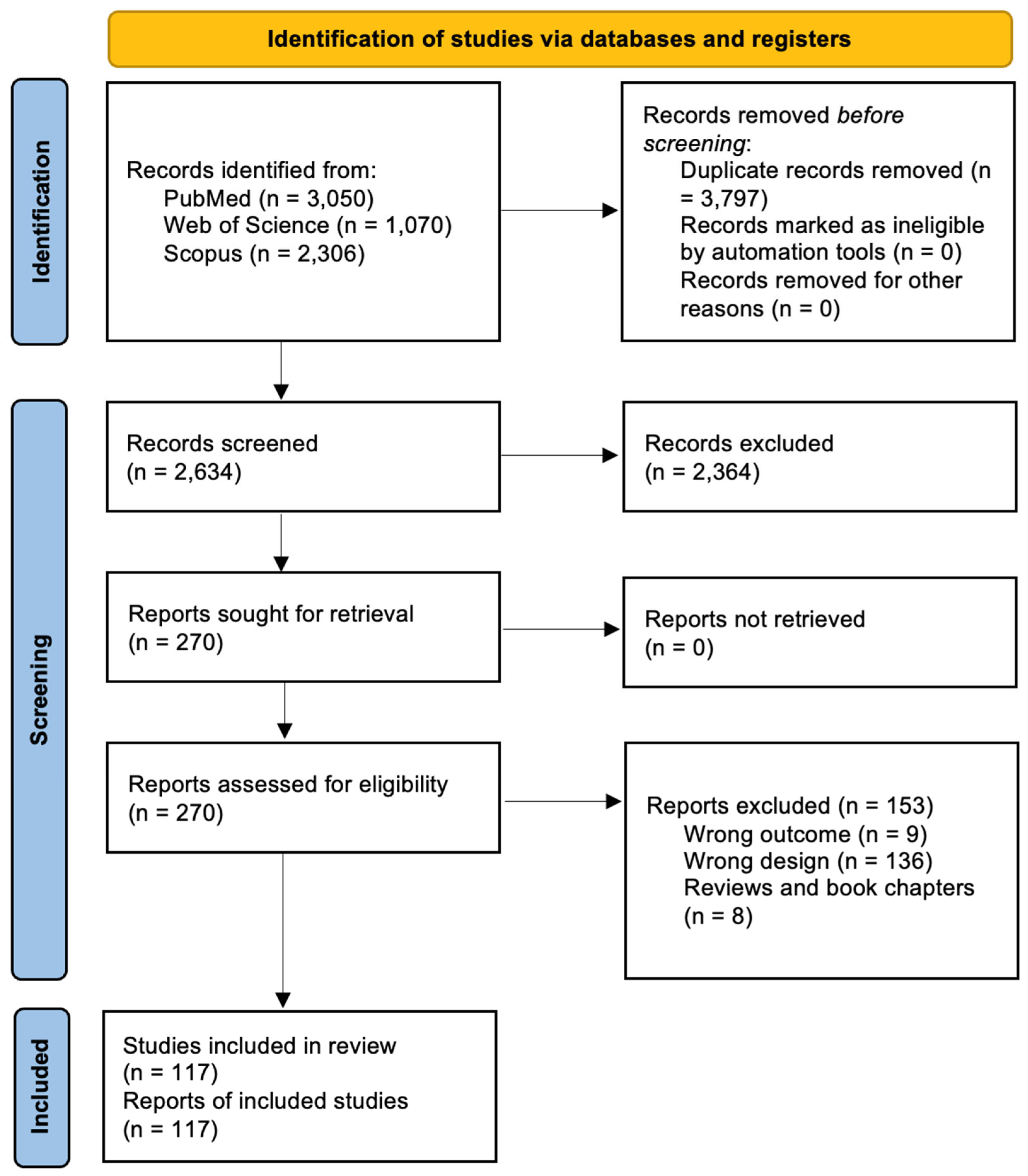
3.1. Study Selection
3.2. Characteristics of the Protocols to Induce Differentiation of Adipocyte Precursors into Thermogenic Adipocytes
3.3. Characteristics of Thermogenic Adipocytes in the Included Studies
3.4. Risk of Bias in Individual Studies
4. Discussion
5. Conclusions
Supplementary Materials
Author Contributions
Funding
Institutional Review Board Statement
Informed Consent Statement
Data Availability Statement
Conflicts of Interest
Abbreviations
| AMP | Adenosine monophosphate |
| BAT | Brown adipose tissue |
| C/EBP-β | C/EBPβ: CCAAT enhancer binding protein delta |
| C/EBP-α | C/EBPβ: CCAAT enhancer binding protein alpha |
| C/EBP-δ | C/EBPβ: CCAAT enhancer binding protein beta |
| DMEM | Dulbecco’s Modified Eagle’s Medium |
| F12 | Nutrient F-12 |
| FBS | Fetal bovine serum |
| FNDC5 | fibronectin type III domain-containing protein 5 |
| IBMX | Isobutylmethylxanthine |
| PGC-1α | Peroxisome proliferator-activated receptor gamma coactivator 1-alpha |
| PICOS | Population, intervention, control, outcome, study type |
| PPARγ | Peroxisome proliferator-activated receptor |
| PRISMA | Preferred Reporting Items for Systematic reviews and Meta-Analysis |
| PROSPERO | International Prospective Register of Systematic Reviews |
| SREBP-1C | Sterol regulatory element-binding protein 1c |
| SVF | Stromal vascular fraction |
| T3 | Triiodothyronine |
| TfR1 | transferrin receptor 1 |
| UCP1 | Uncoupling protein 1 |
| US NTP/OHAT | National Toxicology Program’s Office of Health Assessment and Translation |
| WAT | White adipose tissue |
References
- Blüher, M. Obesity: Global epidemiology and pathogenesis. Nat. Rev. Endocrinol. 2019, 15, 288–298. [Google Scholar] [CrossRef]
- Katya, P.; Mark, E. Review on obesity management: Diet, exercise and pharmacotherapy. BMJ Public Health 2024, 2, e000246. [Google Scholar] [CrossRef]
- Zheng, Z.; Zong, Y.; Ma, Y.; Tian, Y.; Pang, Y.; Zhang, C.; Gao, J. Glucagon-like peptide-1 receptor: Mechanisms and advances in therapy. Signal Transduct. Target. Ther. 2024, 9, 234. [Google Scholar] [CrossRef] [PubMed]
- Pontzer, H.; Durazo-Arvizu, R.; Dugas, L.R.; Plange-Rhule, J.; Bovet, P.; Forrester, T.E.; Lambert, E.V.; Cooper, R.S.; Schoeller, D.A.; Luke, A. Constrained Total Energy Expenditure and Metabolic Adaptation to Physical Activity in Adult Humans. Curr. Biol. 2016, 26, 410–417. [Google Scholar] [CrossRef] [PubMed]
- Cohen, P.; Kajimura, S. The cellular and functional complexity of thermogenic fat. Nat. Rev. Mol. Cell Biol. 2021, 22, 393–409. [Google Scholar] [CrossRef] [PubMed]
- Cypess, A.M.; Cannon, B.; Nedergaard, J.; Kazak, L.; Chang, D.C.; Krakoff, J.; Tseng, Y.-H.; Schéele, C.; Boucher, J.; Petrovic, N.; et al. Emerging debates and resolutions in brown adipose tissue research. Cell Metab. 2025, 37, 12–33. [Google Scholar] [CrossRef]
- Page, M.J.; McKenzie, J.E.; Bossuyt, P.M.; Boutron, I.; Hoffmann, T.C.; Mulrow, C.D.; Shamseer, L.; Tetzlaff, J.M.; Akl, E.A.; Brennan, S.E.; et al. The PRISMA 2020 statement: An updated guideline for reporting systematic reviews. BMJ 2021, 372, n71. [Google Scholar] [CrossRef]
- Ouzzani, M.; Hammady, H.; Fedorowicz, Z.; Elmagarmid, A. Rayyan—A web and mobile app for systematic reviews. Syst. Rev. 2016, 5, 210. [Google Scholar] [CrossRef]
- Kulebyakin, K.; Tyurin-Kuzmin, P.; Efimenko, A.; Voloshin, N.; Kartoshkin, A.; Karagyaur, M.; Grigorieva, O.; Novoseletskaya, E.; Sysoeva, V.; Makarevich, P.; et al. Decreased Insulin Sensitivity in Telomerase-Immortalized Mesenchymal Stem Cells Affects Efficacy and Outcome of Adipogenic Differentiation in vitro. Front. Cell Dev. Biol. 2021, 9, 662078. [Google Scholar] [CrossRef]
- Rooney, A.A.; Boyles, A.L.; Wolfe, M.S.; Bucher, J.R.; Thayer, K.A. Systematic review and evidence integration for literature-based environmental health science assessments. Environ. Health Perspect. 2014, 122, 711–718. [Google Scholar] [CrossRef]
- Batrow, P.L.; Roux, C.H.; Gautier, N.; Martin, L.; Sibille, B.; Guillou, H.; Postic, C.; Langin, D.; Mothe-Satney, I.; Amri, E.Z. Regulation of UCP1 expression by PPARα and pemafibrate in human beige adipocytes. Life Sci. 2025, 363, 123406. [Google Scholar] [CrossRef]
- Desai, A.; Loureiro, Z.Y.; DeSouza, T.; Yang, Q.; Solivan-Rivera, J.; Corvera, S. cAMP driven UCP1 induction in human adipocytes requires ATGL-catalyzed lipolysis. Mol. Metab. 2024, 90, 102051. [Google Scholar] [CrossRef]
- Díez-Sainz, E.; Milagro, F.I.; Aranaz, P.; Riezu-Boj, J.I.; Batrow, P.L.; Contu, L.; Gautier, N.; Amri, E.Z.; Mothe-Satney, I.; Lorente-Cebrián, S. Human miR-1 Stimulates Metabolic and Thermogenic-Related Genes in Adipocytes. Int. J. Mol. Sci. 2024, 26, 276. [Google Scholar] [CrossRef]
- Wu, H.; Adebesin, A.M.; Falck, J.R.; Xu, X.; Chen, J.; Masi, T.J.; Stephenson, S.M.; Zhao, L. Effects of 17,18-EEQ analog (TZ-1) on brown adipogenesis and browning of human adipose-derived stromal cells. Biochem. Biophys. Res. Commun. 2024, 734, 150660. [Google Scholar] [CrossRef]
- Colson, C.; Batrow, P.L.; Dieckmann, S.; Contu, L.; Roux, C.H.; Balas, L.; Vigor, C.; Fourmaux, B.; Gautier, N.; Rochet, N.; et al. Effects of Fatty Acid Metabolites on Adipocytes Britening: Role of Thromboxane A2. Cells 2023, 12, 446. [Google Scholar] [CrossRef]
- Giroud, M.; Kotschi, S.; Kwon, Y.; Le Thuc, O.; Hoffmann, A.; Gil-Lozano, M.; Karbiener, M.; Higareda-Almaraz, J.C.; Khani, S.; Tews, D.; et al. The obesity-linked human lncRNA AATBC stimulates mitochondrial function in adipocytes. EMBO Rep. 2023, 24, e57600. [Google Scholar] [CrossRef]
- Palani, N.P.; Horvath, C.; Timshel, P.N.; Folkertsma, P.; Grønning, A.G.B.; Henriksen, T.I.; Peijs, L.; Jensen, V.H.; Sun, W.; Jespersen, N.Z.; et al. Adipogenic and SWAT cells separate from a common progenitor in human brown and white adipose depots. Nat. Metab. 2023, 5, 996–1013. [Google Scholar] [CrossRef]
- Shon, D.H.; Park, S.J.; Yoon, S.J.; Ryu, Y.H.; Ko, Y. Identification of Browning in Human Adipocytes by Partial Least Squares Regression (PLSR), Infrared Spectral Biomarkers, and Partial Least Squares Discriminant Analysis (PLS-DA) Using FTIR Spectroscopy. Photonics 2023, 10, 2. [Google Scholar] [CrossRef]
- Suchacki, K.J.; Ramage, L.E.; Kwok, T.C.; Kelman, A.; McNeill, B.T.; Rodney, S.; Keegan, M.; Gray, C.; MacNaught, G.; Patel, D.; et al. The serotonin transporter sustains human brown adipose tissue thermogenesis. Nat. Metab. 2023, 5, 1319–1336. [Google Scholar] [CrossRef] [PubMed]
- Vámos, A.; Arianti, R.; Vinnai, B.; Alrifai, R.; Shaw, A.; Póliska, S.; Guba, A.; Csősz, É.; Csomós, I.; Mocsár, G.; et al. Human abdominal subcutaneous-derived active beige adipocytes carrying FTO rs1421085 obesity-risk alleles exert lower thermogenic capacity. Front. Cell Dev. Biol. 2023, 11, 1155673. [Google Scholar] [CrossRef]
- Vinnai, B.; Arianti, R.; Győry, F.; Bacso, Z.; Fésüs, L.; Kristóf, E. Extracellular thiamine concentration influences thermogenic competency of differentiating neck area-derived human adipocytes. Front. Nutr. 2023, 10, 1207394. [Google Scholar] [CrossRef]
- Wu, R.; Park, J.; Qian, Y.; Shi, Z.; Hu, R.; Yuan, Y.; Xiong, S.; Wang, Z.; Yan, G.; Ong, S.G.; et al. Genetically prolonged beige fat in male mice confers long-lasting metabolic health. Nat. Commun. 2023, 14, 2731. [Google Scholar] [CrossRef]
- Di Maio, G.; Alessio, N.; Peluso, G.; Perrotta, S.; Monda, M.; Di Bernardo, G. Molecular and Physiological Effects of Browning Agents on White Adipocytes from Bone Marrow Mesenchymal Stromal Cells. Int. J. Mol. Sci. 2022, 23, 12151. [Google Scholar] [CrossRef]
- Farrar, J.S.; Martin, R.K. Isolation of the Stromal Vascular Fraction from Adipose Tissue and Subsequent Differentiation into White or Beige Adipocytes. In Non-Alcoholic Steatohepatitis; Sarkar, D., Ed.; Methods in Molecular Biology; Humana: New York, NY, USA, 2022; Volume 2455, pp. 103–115. [Google Scholar] [CrossRef]
- Fu, T.; Li, C.; Sun, Z.; Yan, B.; Wu, Y.; Huang, Z.; Yin, X. Integrin αV Mediates the Effects of Irisin on Human Mature Adipocytes. Obes. Facts 2022, 15, 442–450. [Google Scholar] [CrossRef] [PubMed]
- Guillemet, D.; Belles, C.; Gomes, A.; Azalbert, V.; André, M.; Faresse, N.; Burcelin, R.; Lagarde, J.M.; Lacasa, D.; Kéophiphath, M. Screening for anti-adipogenic, pro-lipolytic and thermogenic plant extracts by models associating intestinal epithelial cells with human adipose cells. Eur. J. Nutr. 2022, 61, 2201–2215. [Google Scholar] [CrossRef]
- He, Y.; Liang, Z.; Wang, J.; Tang, H.; Li, J.; Cai, J.; Liao, Y. Ceiling culture of human mature white adipocytes with a browning agent: A novel approach to induce transdifferentiation into beige adipocytes. Front. Bioeng. Biotechnol. 2022, 10, 905194. [Google Scholar] [CrossRef] [PubMed]
- Herbers, E.; Patrikoski, M.; Wagner, A.; Jokinen, R.; Hassinen, A.; Heinonen, S.; Miettinen, S.; Peltoniemi, H.; Pirinen, E.; Pietiläinen, K.H. Preventing White Adipocyte Browning during Differentiation in Vitro: The Effect of Differentiation Protocols on Metabolic and Mitochondrial Phenotypes. Stem Cells Int. 2022, 3308194. [Google Scholar] [CrossRef]
- Lin, C.; He, X.; Chen, X.; Liu, L.; Guan, H.; Xiao, H.; Li, Y. MiR-1275 Inhibits Human Omental Adipose-Derived Stem Cells Differentiation Toward the Beige Phenotype via PRDM16. Stem Cells Dev. 2022, 31, 799–809. [Google Scholar] [CrossRef]
- Nagy, L.; Rauch, B.; Szerafin, T.; Uray, K.; Tóth, A.; Bai, P. Nicotinamide-riboside shifts the differentiation of human primary white adipocytes to beige adipocytes impacting substrate preference and uncoupling respiration through SIRT1 activation and mitochondria-derived reactive species production. Front. Cell Dev. Biol. 2022, 10, 979330. [Google Scholar] [CrossRef] [PubMed]
- Ngono Ayissi, K.; Gorwood, J.; Le Pelletier, L.; Bourgeois, C.; Beaupère, C.; Auclair, M.; Foresti, R.; Motterlini, R.; Atlan, M.; Barrail-Tran, A.; et al. Inhibition of Adipose Tissue Beiging by HIV Integrase Inhibitors, Dolutegravir and Bictegravir, Is Associated with Adipocyte Hypertrophy, Hypoxia, Elevated Fibrosis, and Insulin Resistance in Simian Adipose Tissue and Human Adipocytes. Cells 2022, 11, 1841. [Google Scholar] [CrossRef]
- Niemann, B.; Haufs-Brusberg, S.; Puetz, L.; Feickert, M.; Jaeckstein, M.Y.; Hoffmann, A.; Zurkovic, J.; Heine, M.; Trautmann, E.M.; Müller, C.E.; et al. Apoptotic brown adipocytes enhance energy expenditure via extracellular inosine. Nature 2022, 609, 361–368. [Google Scholar] [CrossRef]
- Park, S.J.; Shon, D.H.; Kim, J.H.; Ryu, Y.H.; Ko, Y. SAMM50 Regulates Thermogenesis of Beige Adipocytes Differentiated from Human Adipose-Derived Stem Cells by Balancing Mitochondrial Dynamics. Int. J. Mol. Sci. 2022, 23, 6764. [Google Scholar] [CrossRef]
- Park, S.J.; Shon, D.H.; Ryu, Y.H.; Ko, Y. Extract of Ephedra sinica Stapf Induces Browning of Mouse and Human White Adipocytes. Foods 2022, 11, 1028. [Google Scholar] [CrossRef]
- Porras, M.G.A.; Stojkova, K.; Acosta, F.M.; Rathbone, C.R.; Brey, E.M. Engineering Human Beige Adipose Tissue. Front. Bioeng. Biotechnol. 2022, 10, 906395. [Google Scholar] [CrossRef]
- Takeda, Y.; Dai, P. Capsaicin directly promotes adipocyte browning in the chemical compound-induced brown adipocytes converted from human dermal fibroblasts. Sci. Rep. 2022, 12, 6612. [Google Scholar] [CrossRef] [PubMed]
- Vámos, A.; Shaw, A.; Varga, K.; Csomós, I.; Mocsár, G.; Balajthy, Z.; Lányi, C.; Bacso, Z.; Szatmári-Tóth, M.; Kristóf, E. Mitophagy Mediates the Beige to White Transition of Human Primary Subcutaneous Adipocytes Ex Vivo. Pharmaceuticals 2022, 15, 363. [Google Scholar] [CrossRef] [PubMed]
- Bokhari, M.H.; Halleskog, C.; Åslund, A.; Boulet, N.; Casadesús Rendos, E.; de Jong, J.M.A.; Csikasz, R.; Amri, E.Z.; Shabalina, I.; Bengtsson, T. Isothermal microcalorimetry measures UCP1-mediated thermogenesis in mature brite adipocytes. Commun. Biol. 2021, 4, 1108. [Google Scholar] [CrossRef] [PubMed]
- Cero, C.; Lea, H.J.; Zhu, K.Y.; Shamsi, F.; Tseng, Y.H.; Cypess, A.M. β3-Adrenergic receptors regulate human brown/beige adipocyte lipolysis and thermogenesis. JCI Insight 2021, 6, e139160. [Google Scholar] [CrossRef]
- Di Maio, G.; Alessio, N.; Demirsoy, I.H.; Peluso, G.; Perrotta, S.; Monda, M.; Di Bernardo, G. Evaluation of Browning Agents on the White Adipogenesis of Bone Marrow Mesenchymal Stromal Cells: A Contribution to Fighting Obesity. Cells 2021, 10, 403. [Google Scholar] [CrossRef]
- Jiao, Y.; Liu, L.; Gu, H.; Liang, X.; Meng, X.; Gao, J.; Xu, Y.; Nuermaimaiti, N.; Guan, Y. Ad36 promotes differentiation of hADSCs into brown adipocytes by up-regulating LncRNA ROR. Life Sci. 2021, 265, 118762. [Google Scholar] [CrossRef]
- Nascimento, E.B.M.; Moonen, M.P.B.; Remie, C.M.E.; Gariani, K.; Jörgensen, J.A.; Schaart, G.; Hoeks, J.; Auwerx, J.; van Marken Lichtenbelt, W.D.; Schrauwen, P. Nicotinamide Riboside Enhances In Vitro Beta-adrenergic Brown Adipose Tissue Activity in Humans. J. Clin. Endocrinol. Metab. 2021, 106, 1437–1447. [Google Scholar] [CrossRef]
- Tsagkaraki, E.; Nicoloro, S.M.; DeSouza, T.; Solivan-Rivera, J.; Desai, A.; Lifshitz, L.M.; Shen, Y.; Kelly, M.; Guilherme, A.; Henriques, F.; et al. CRISPR-enhanced human adipocyte browning as cell therapy for metabolic disease. Nat. Commun. 2021, 12, 6931. [Google Scholar] [CrossRef]
- Xia, J.; Zhu, H.; Zhu, S.; Ge, J.; Wang, Z.; Lu, F.; Liao, Y.; Cai, J. Induced Beige Adipocytes Improved Fat Graft Retention by Promoting Adipogenesis and Angiogenesis. Plast. Reconstr. Surg. 2021, 148, 549–558. [Google Scholar] [CrossRef] [PubMed]
- Halbgebauer, D.; Dahlhaus, M.; Wabitsch, M.; Fischer-Posovszky, P.; Tews, D. Browning capabilities of human primary adipose-derived stromal cells compared to SGBS cells. Sci. Rep. 2020, 10, 9632. [Google Scholar] [CrossRef] [PubMed]
- Kroon, T.; Harms, M.; Maurer, S.; Bonnet, L.; Alexandersson, I.; Lindblom, A.; Ahnmark, A.; Nilsson, D.; Gennemark, P.; O’Mahony, G.; et al. PPARγ and PPARα synergize to induce robust browning of white fat in vivo. Mol. Metab. 2020, 36, 100964. [Google Scholar] [CrossRef]
- Li, H.; Shen, L.; Zhang, L.; Yan, B.; Sun, T.; Guo, F.; Yin, X. Reduced Beige Adipogenic Potential in Subcutaneous Adipocytes Derived from Obese Chinese Individuals. Diabetes Metab. Syndr. Obes. 2020, 13, 2551–2562. [Google Scholar] [CrossRef]
- Markan, K.R.; Boland, L.K.; King-McAlpin, A.Q.; Claflin, K.E.; Leaman, M.P.; Kemerling, M.K.; Stonewall, M.M.; Amendt, B.A.; Ankrum, J.A.; Potthoff, M.J. Adipose TBX1 regulates β-adrenergic sensitivity in subcutaneous adipose tissue and thermogenic capacity in vivo. Mol. Metab. 2020, 36, 100965. [Google Scholar] [CrossRef] [PubMed]
- Michurina, S.; Stafeev, I.; Podkuychenko, N.; Sklyanik, I.; Shestakova, E.; Yah’yaev, K.; Yurasov, A.; Ratner, E.; Menshikov, M.; Parfyonova, Y.; et al. Decreased UCP-1 expression in beige adipocytes from adipose-derived stem cells of type 2 diabetes patients associates with mitochondrial ROS accumulation during obesity. Diabetes Res. Clin. Pract. 2020, 169, 108410. [Google Scholar] [CrossRef]
- Moon, H.; Choi, J.W.; Song, B.W.; Kim, I.K.; Lim, S.; Lee, S.; Hwang, K.C.; Kim, S.W. Isoliquiritigenin Enhances the Beige Adipocyte Potential of Adipose-Derived Stem Cells by JNK Inhibition. Molecules 2020, 25, 5660. [Google Scholar] [CrossRef]
- Nascimento, E.B.M.; Konings, M.; Schaart, G.; Groen, A.K.; Lütjohann, D.; van Marken Lichtenbelt, W.D.; Schrauwen, P.; Plat, J. In vitro effects of sitosterol and sitostanol on mitochondrial respiration in human brown adipocytes, myotubes and hepatocytes. Eur. J. Nutr. 2020, 59, 2039–2045. [Google Scholar] [CrossRef]
- Qiu, Y.; Sun, L.; Hu, X.; Zhao, X.; Shi, H.; Liu, Z.; Yin, X. Compromised browning plasticity of primary subcutaneous adipocytes derived from overweight Chinese adults. Diabetol. Metab. Syndr. 2020, 12, 91. [Google Scholar] [CrossRef] [PubMed]
- Saha, P.K.; Hamilton, M.P.; Rajapakshe, K.; Putluri, V.; Felix, J.B.; Masschelin, P.; Cox, A.R.; Bajaj, M.; Putluri, N.; Coarfa, C.; et al. miR-30a targets gene networks that promote browning of human and mouse adipocytes. Am. J. Physiol. Endocrinol. Metab. 2020, 319, E667–E677. [Google Scholar] [CrossRef] [PubMed]
- Singh, A.M.; Zhang, L.; Avery, J.; Yin, A.; Du, Y.; Wang, H.; Li, Z.; Fu, H.; Yin, H.; Dalton, S. Human beige adipocytes for drug discovery and cell therapy in metabolic diseases. Nat. Commun. 2020, 11, 2758. [Google Scholar] [CrossRef]
- Szatmári-Tóth, M.; Shaw, A.; Csomós, I.; Mocsár, G.; Fischer-Posovszky, P.; Wabitsch, M.; Balajthy, Z.; Lányi, C.; Győry, F.; Kristóf, E.; et al. Thermogenic Activation Downregulates High Mitophagy Rate in Human Masked and Mature Beige Adipocytes. Int. J. Mol. Sci. 2020, 21, 6640. [Google Scholar] [CrossRef]
- Tóth, B.B.; Arianti, R.; Shaw, A.; Vámos, A.; Veréb, Z.; Póliska, S.; Győry, F.; Bacso, Z.; Fésüs, L.; Kristóf, E. FTO Intronic SNP Strongly Influences Human Neck Adipocyte Browning Determined by Tissue and PPARγ Specific Regulation: A Transcriptome Analysis. Cells 2020, 9, 987. [Google Scholar] [CrossRef]
- Tran, K.V.; Brown, E.L.; DeSouza, T.; Jespersen, N.Z.; Nandrup-Bus, C.; Yang, Q.; Yang, Z.; Desai, A.; Min, S.Y.; Rojas-Rodriguez, R.; et al. Human thermogenic adipocyte regulation by the long noncoding RNA LINC00473. Nat. Metab. 2020, 2, 397–412. [Google Scholar] [CrossRef]
- Alessio, N.; Squillaro, T.; Monda, V.; Peluso, G.; Monda, M.; Melone, M.A.B.; Galderisi, U.; Di Bernardo, G. Circulating factors present in the sera of naturally skinny people may influence cell commitment and adipocyte differentiation of mesenchymal stromal cells. World J. Stem Cells 2019, 11, 180–195. [Google Scholar] [CrossRef] [PubMed]
- Hedesan, O.C.; Fenzl, A.; Digruber, A.; Spirk, K.; Baumgartner-Parzer, S.; Bilban, M.; Kenner, L.; Vierhapper, M.; Elbe-Bürger, A.; Kiefer, F.W. Parathyroid hormone induces a browning program in human white adipocytes. Int. J. Obes. 2019, 43, 1319–1324. [Google Scholar] [CrossRef]
- Jash, S.; Banerjee, S.; Lee, M.J.; Farmer, S.R.; Puri, V. CIDEA Transcriptionally Regulates UCP1 for Britening and Thermogenesis in Human Fat Cells. iScience 2019, 20, 73–89. [Google Scholar] [CrossRef]
- Jespersen, N.Z.; Feizi, A.; Andersen, E.S.; Heywood, S.; Hattel, H.B.; Daugaard, S.; Peijs, L.; Bagi, P.; Feldt-Rasmussen, B.; Schultz, H.S.; et al. Heterogeneity in the perirenal region of humans suggests presence of dormant brown adipose tissue that contains brown fat precursor cells. Mol. Metab. 2019, 24, 30–43. [Google Scholar] [CrossRef]
- Kim, H.L.; Park, J.; Jung, Y.; Ahn, K.S.; Um, J.Y. Platycodin D, a novel activator of AMP-activated protein kinase, attenuates obesity in db/db mice via regulation of adipogenesis and thermogenesis. Phytomedicine 2019, 52, 254–263. [Google Scholar] [CrossRef]
- Li, H.; Zhang, Y.; Wang, F.; Donelan, W.; Zona, M.C.; Li, S.; Reeves, W.; Ding, Y.; Tang, D.; Yang, L. Effects of irisin on the differentiation and browning of human visceral white adipocytes. Am. J. Transl. Res. 2019, 11, 7410–7421. [Google Scholar] [PubMed]
- Li, Y.; Wang, X.; Wang, F.; You, L.; Xu, P.; Cao, Y.; Chen, L.; Wen, J.; Guo, X.; Cui, X.; et al. Identification of intracellular peptides associated with thermogenesis in human brown adipocytes. J. Cell. Physiol. 2019, 234, 7104–7114. [Google Scholar] [CrossRef]
- Min, S.Y.; Desai, A.; Yang, Z.; Sharma, A.; DeSouza, T.; Genga, R.M.J.; Kucukural, A.; Lifshitz, L.M.; Nielsen, S.; Scheele, C.; et al. Diverse repertoire of human adipocyte subtypes develops from transcriptionally distinct mesenchymal progenitor cells. Proc. Natl. Acad. Sci. USA 2019, 116, 17970–17979. [Google Scholar] [CrossRef] [PubMed]
- Nagy, L.; Rauch, B.; Balla, N.; Ujlaki, G.; Kis, G.; Abdul-Rahman, O.; Kristóf, E.; Sipos, A.; Antal, M.; Tóth, A.; et al. Olaparib induces browning of in vitro cultures of human primary white adipocytes. Biochem. Pharmacol. 2019, 167, 76–85. [Google Scholar] [CrossRef] [PubMed]
- Velickovic, K.; Wayne, D.; Leija, H.A.L.; Bloor, I.; Morris, D.E.; Law, J.; Budge, H.; Sacks, H.; Symonds, M.E.; Sottile, V. Caffeine exposure induces browning features in adipose tissue in vitro and in vivo. Sci. Rep. 2019, 9, 9104. [Google Scholar] [CrossRef]
- Raajendiran, A.; Ooi, G.; Bayliss, J.; O’Brien, P.E.; Schittenhelm, R.B.; Clark, A.K.; Taylor, R.A.; Rodeheffer, M.S.; Burton, P.R.; Watt, M.J. Identification of Metabolically Distinct Adipocyte Progenitor Cells in Human Adipose Tissues. Cell Rep. 2019, 27, 1528–1540.e1527. [Google Scholar] [CrossRef]
- West, M.D.; Chang, C.F.; Larocca, D.; Li, J.; Jiang, J.J.; Sim, P.; Labat, I.; Chapman, K.B.; Wong, K.E.; Nicoll, J.; et al. Clonal derivation of white and brown adipocyte progenitor cell lines from human pluripotent stem cells. Stem Cell Res. Ther. 2019, 10, 7. [Google Scholar] [CrossRef]
- Wu, L.; Xia, M.; Duan, Y.; Zhang, L.; Jiang, H.; Hu, X.; Yan, H.; Zhang, Y.; Gu, Y.; Shi, H.; et al. Berberine promotes the recruitment and activation of brown adipose tissue in mice and humans. Cell Death Dis. 2019, 10, 468. [Google Scholar] [CrossRef]
- Ghandour, R.A.; Colson, C.; Giroud, M.; Maurer, S.; Rekima, S.; Ailhaud, G.; Klingenspor, M.; Amri, E.Z.; Pisani, D.F. Impact of dietary ω3 polyunsaturated fatty acid supplementation on brown and brite adipocyte function. J. Lip. Res. 2018, 59, 452–461. [Google Scholar] [CrossRef] [PubMed]
- Haynes, B.A.; Huyck, R.W.; James, A.J.; Carter, M.E.; Gaafar, O.U.; Day, M.; Pinto, A.; Dobrian, A.D. Isolation, Expansion, and Adipogenic Induction of CD34+CD31+ Endothelial Cells from Human Omental and Subcutaneous Adipose Tissue. J. Vis. Exp. 2018, 137, e57804. [Google Scholar] [CrossRef]
- Khanh, V.C.; Zulkifli, A.F.; Tokunaga, C.; Yamashita, T.; Hiramatsu, Y.; Ohneda, O. Aging impairs beige adipocyte differentiation of mesenchymal stem cells via the reduced expression of Sirtuin 1. Biochem. Biophys. Res. Comm. 2018, 500, 682–690. [Google Scholar] [CrossRef] [PubMed]
- Loh, R.K.C.; Formosa, M.F.; Eikelis, N.; Bertovic, D.A.; Anderson, M.J.; Barwood, S.A.; Nanayakkara, S.; Cohen, N.D.; La Gerche, A.; Reutens, A.T.; et al. Pioglitazone reduces cold-induced brown fat glucose uptake despite induction of browning in cultured human adipocytes: A randomised, controlled trial in humans. Diabetologia 2018, 61, 504–505. [Google Scholar] [CrossRef]
- Nascimento, E.B.M.; Sparks, L.M.; Divoux, A.; van Gisbergen, M.W.; Broeders, E.P.M.; Jörgensen, J.A.; Schaart, G.; Bouvy, N.D.; van Marken Lichtenbelt, W.D.; Schrauwen, P. Genetic Markers of Brown Adipose Tissue Identity and In Vitro Brown Adipose Tissue Activity in Humans. Obesity 2018, 26, 135–140. [Google Scholar] [CrossRef]
- Pisani, D.F.; Barquissau, V.; Chambard, J.C.; Beuzelin, D.; Ghandour, R.A.; Giroud, M.; Mairal, A.; Pagnotta, S.; Cinti, S.; Langin, D.; et al. Mitochondrial fission is associated with UCP1 activity in human brite/beige adipocytes. Mol. Metab. 2018, 7, 35–44. [Google Scholar] [CrossRef]
- Rashnonejad, A.; Ercan, G.; Gunduz, C.; Akdemir, A.; Tiftikcioglu, Y.O. Comparative analysis of human UCB and adipose tissue derived mesenchymal stem cells for their differentiation potential into brown and white adipocytes. Mol. Biol. Rep. 2018, 45, 233–244. [Google Scholar] [CrossRef] [PubMed]
- Velickovic, K.; Lugo Leija, H.A.; Bloor, I.; Law, J.; Sacks, H.; Symonds, M.; Sottile, V. Low temperature exposure induces browning of bone marrow stem cell derived adipocytes in vitro. Sci. Rep. 2018, 8, 4974. [Google Scholar] [CrossRef]
- Wang, X.; You, L.; Cui, X.; Li, Y.; Weng, X.; Xu, P.; Zhu, L.; Wen, J.; Pang, L.; Guo, X.; et al. Evaluation and optimization of differentiation conditions for human primary brown adipocytes. Sci. Rep. 2018, 8, 5304. [Google Scholar] [CrossRef]
- Su, S.; Guntur, A.R.; Nguyen, D.C.; Fakory, S.S.; Doucette, C.C.; Leech, C.; Lotana, H.; Kelley, M.; Kohli, J.; Martino, J.; et al. A Renewable Source of Human Beige Adipocytes for Development of Therapies to Treat Metabolic Syndrome. Cell Rep. 2018, 25, 3215–3228.e3219. [Google Scholar] [CrossRef] [PubMed]
- Zhang, C.; Wang, J.J.; He, X.; Wang, C.; Zhang, B.; Xu, J.; Xu, W.; Luo, Y.; Huang, K. Characterization and Beige Adipogenic Potential of Human Embryo White Adipose Tissue-Derived Stem Cells. Cell. Physiol. Biochem. 2018, 51, 2900–2915. [Google Scholar] [CrossRef]
- Berry, D.C.; Jiang, Y.; Arpke, R.W.; Close, E.L.; Uchida, A.; Reading, D.; Berglund, E.D.; Kyba, M.; Graff, J.M. Cellular Aging Contributes to Failure of Cold-Induced Beige Adipocyte Formation in Old Mice and Humans. Cell Metab. 2017, 25, 166–181. [Google Scholar] [CrossRef]
- Cambria, M.T.; Villaggio, G.; Federico, C.; Saccone, S.; Sinatra, F. Bone morphogenic protein BMP7 induces adipocyte differentiation and uncoupling protein UCP1 expression in human bone marrow mesenchymal stem cells. Rend. Lincei. 2017, 28, 635–641. [Google Scholar] [CrossRef]
- Jiang, J.; Emont, M.P.; Jun, H.; Qiao, X.; Liao, J.; Kim, D.I.; Wu, J. Cinnamaldehyde induces fat cell-autonomous thermogenesis and metabolic reprogramming. Metab.—Clin. Exp. 2017, 77, 58–64. [Google Scholar] [CrossRef]
- Kim, H.L.; Jung, Y.; Park, J.; Youn, D.H.; Lim, S.; Lee, B.S.; Jeong, M.Y.; Choe, S.K.; Park, R.; Ahn, K.S.; et al. Farnesol has an anti-obesity effect in high-fat diet-induced obese mice and induces the development of beige adipocytes in human adipose tissue derived-mesenchymal stem cells. Front. Pharmacol. 2017, 8, 654. [Google Scholar] [CrossRef] [PubMed]
- Lizcano, F.; Vargas, D.; Gómez, Á.; Torrado, A. Human ADMC-Derived Adipocyte Thermogenic Capacity Is Regulated by IL-4 Receptor. Stem Cells Int. 2017, 2767916. [Google Scholar] [CrossRef] [PubMed]
- Nyman, E.; Bartesaghi, S.; Melin Rydfalk, R.; Eng, S.; Pollard, C.; Gennemark, P.; Peng, X.R.; Cedersund, G. Systems biology reveals uncoupling beyond UCP1 in human white fat-derived beige adipocytes. NPJ Syst. Biol. Appl. 2017, 3, 29. [Google Scholar] [CrossRef]
- Pino, M.F.; Divoux, A.; Simmonds, A.V.; Smith, S.R.; Sparks, L.M. Investigating the effects of Orexin-A on thermogenesis in human deep neck brown adipose tissue. Int. J. Obes. 2017, 41, 1646–1653. [Google Scholar] [CrossRef]
- Rebello, C.J.; Greenway, F.L.; Johnson, W.D.; Ribnicky, D.; Poulev, A.; Stadler, K.; Coulter, A.A. Fucoxanthin and Its Metabolite Fucoxanthinol Do Not Induce Browning in Human Adipocytes. J. Agric. Food Chem. 2017, 65, 10915–10924. [Google Scholar] [CrossRef]
- Yang, J.P.; Anderson, A.E.; McCartney, A.; Ory, X.; Ma, G.; Pappalardo, E.; Bader, J.; Elisseeff, J.H. Metabolically Active Three-Dimensional Brown Adipose Tissue Engineered from White Adipose-Derived Stem Cells. Tissue Eng. Part A 2017, 23, 253–262. [Google Scholar] [CrossRef]
- Abdul-Rahman, O.; Kristóf, E.; Doan-Xuan, Q.M.; Vida, A.; Nagy, L.; Horváth, A.; Simon, J.; Maros, T.; Szentkirályi, I.; Palotás, L.; et al. AMP-Activated Kinase (AMPK) activation by AICAR in human white adipocytes derived from pericardial white adipose tissue stem cells induces a partial beige-like phenotype. PLoS ONE 2016, 11, e0157644. [Google Scholar] [CrossRef] [PubMed]
- Barbagallo, I.; Vanella, L.; Cambria, M.T.; Tibullo, D.; Godos, J.; Guarnaccia, L.; Zappala, A.; Li Volti, G. Silibinin Regulates Lipid Metabolism and Differentiation in Functional Human Adipocytes. Front. Pharmacol. 2016, 6, 309. [Google Scholar] [CrossRef]
- Barquissau, V.; Beuzelin, D.; Pisani, D.F.; Beranger, G.E.; Mairal, A.; Montagner, A.; Roussel, B.; Tavernier, G.; Marques, M.A.; Moro, C.; et al. White-to-brite conversion in human adipocytes promotes metabolic reprogramming towards fatty acid anabolic and catabolic pathways. Mol. Metab. 2016, 5, 352–365. [Google Scholar] [CrossRef] [PubMed]
- Fleckenstein-Elsen, M.; Dinnies, D.; Jelenik, T.; Roden, M.; Romacho, T.; Eckel, J. Eicosapentaenoic acid and arachidonic acid differentially regulate adipogenesis, acquisition of a brite phenotype and mitochondrial function in primary human adipocytes. Mol. Nut. Food Res. 2016, 60, 2065–2075. [Google Scholar] [CrossRef]
- Giroud, M.; Karbiener, M.; Pisani, D.F.; Ghandour, R.A.; Beranger, G.E.; Niemi, T.; Taittonen, M.; Nuutila, P.; Virtanen, K.A.; Langin, D.; et al. Let-7i-5p represses brite adipocyte function in mice and humans. Sci. Rep. 2016, 6, 28613. [Google Scholar] [CrossRef] [PubMed]
- Klepac, K.; Kilić, A.; Gnad, T.; Brown, L.M.; Herrmann, B.; Wilderman, A.; Balkow, A.; Glöde, A.; Simon, K.; Lidell, M.E.; et al. The Gq signalling pathway inhibits brown and beige adipose tissue. Nat. Commun. 2016, 7, 10895. [Google Scholar] [CrossRef] [PubMed]
- Kristóf, E.; Doan-Xuan, Q.M.; Sárvári, A.K.; Klusóczki, Á.; Fischer-Posovszky, P.; Wabitsch, M.; Bacso, Z.; Bai, P.; Balajthy, Z.; Fésüs, L. Clozapine modifies the differentiation program of human adipocytes inducing browning. Transl. Psychiatry 2016, 6, e963. [Google Scholar] [CrossRef]
- Lee, P.; Bova, R.; Schofield, L.; Bryant, W.; Dieckmann, W.; Slattery, A.; Govendir, M.A.; Emmett, L.; Greenfield, J.R. Brown Adipose Tissue Exhibits a Glucose-Responsive Thermogenic Biorhythm in Humans. Cell Metab. 2016, 23, 602–609. [Google Scholar] [CrossRef]
- Min, S.Y.; Kady, J.; Nam, M.; Rojas-Rodriguez, R.; Berkenwald, A.; Kim, J.H.; Noh, H.L.; Kim, J.K.; Cooper, M.P.; Fitzgibbons, T.; et al. Human ‘brite/beige’ adipocytes develop from capillary networks, and their implantation improves metabolic homeostasis in mice. Nat. Med. 2016, 22, 312–318. [Google Scholar] [CrossRef]
- Vargas, D.; Shimokawa, N.; Kaneko, R.; Rosales, W.; Parra, A.; Castellanos, Á.; Koibuchi, N.; Lizcano, F. Regulation of human subcutaneous adipocyte differentiation by EID1. J. Mol. Endocrinol. 2016, 56, 113–122. [Google Scholar] [CrossRef]
- Wang, Y.L.; Lin, S.P.; Hsieh, P.C.; Hung, S.C. Concomitant beige adipocyte differentiation upon induction of mesenchymal stem cells into brown adipocytes. Biochem. Biophys. Res. Commun. 2016, 478, 689–695. [Google Scholar] [CrossRef]
- Wu, N.N.; Zhang, C.H.; Lee, H.J.; Ma, Y.; Wang, X.; Ma, X.J.; Ma, W.; Zhao, D.; Feng, Y.M. Brown adipogenic potential of brown adipocytes and peri-renal adipocytes from human embryo. Sci. Rep. 2016, 6, 39193. [Google Scholar] [CrossRef] [PubMed]
- Xu, X.; Li, X.; Yan, R.; Jiang, H.; Wang, T.; Fan, L.; Wu, J.; Cao, J.; Li, W. Gene expression profiling of human bone marrow-derived mesenchymal stem cells during adipogenesis. Folia Histochem. Cytobiol. 2016, 54, 14–24. [Google Scholar] [CrossRef] [PubMed][Green Version]
- Barclay, J.L.; Agada, H.; Jang, C.; Ward, M.; Wetzig, N.; Ho, K.K. Effects of glucocorticoids on human brown adipocytes. J. Endocrinol. 2015, 224, 139–147. [Google Scholar] [CrossRef] [PubMed]
- Gustafson, B.; Hammarstedt, A.; Hedjazifar, S.; Hoffmann, J.M.; Svensson, P.A.; Grimsby, J.; Rondinone, C.; Smith, U. BMP4 and BMP Antagonists Regulate Human White and Beige Adipogenesis. Diabetes 2015, 64, 1670–1681. [Google Scholar] [CrossRef]
- Hartig, S.M.; Bader, D.A.; Abadie, K.V.; Motamed, M.; Hamilton, M.P.; Long, W.W.; York, B.; Mueller, M.; Wagner, M.; Trauner, M.; et al. Ubc9 Impairs Activation of the Brown Fat Energy Metabolism Program in Human White Adipocytes. Mol. Endocrinol. 2015, 29, 1320–1333. [Google Scholar] [CrossRef]
- Kouidhi, M.; Villageois, P.; Mounier, C.M.; Ménigot, C.; Rival, Y.; Piwnica, D.; Aubert, J.; Chignon-Sicard, B.; Dani, C. Characterization of human knee and chin adipose-derived stromal cells. Stem Cells Int. 2015, 592090. [Google Scholar] [CrossRef]
- Loft, A.; Forss, I.; Siersbæk, M.S.; Schmidt, S.F.; Larsen, A.S.; Madsen, J.G.; Pisani, D.F.; Nielsen, R.; Aagaard, M.M.; Mathison, A.; et al. Browning of human adipocytes requires KLF11 and reprogramming of PPARγ superenhancers. Genes Dev. 2015, 29, 7–22. [Google Scholar] [CrossRef]
- Okla, M.; Ha, J.H.; Temel, R.E.; Chung, S. BMP7 drives human adipogenic stem cells into metabolically active beige adipocytes. Lipids 2015, 50, 111–120. [Google Scholar] [CrossRef]
- Seiler, S.E.; Xu, D.; Ho, J.P.; Lo, K.A.; Buehrer, B.M.; Ludlow, Y.J.W.; Kovalik, J.P.; Sun, L. Characterization of a primary brown adipocyte culture system derived from human fetal interscapular fat. Adipocyte 2015, 4, 303–310. [Google Scholar] [CrossRef][Green Version]
- Van Den Beukel, J.C.; Grefhorst, A.; Hoogduijn, M.J.; Steenbergen, J.; Mastroberardino, P.G.; Dor, F.J.M.F.; Themmen, A.P.N. Women have more potential to induce browning of perirenal adipose tissue than men. Obesity 2015, 23, 1671–1679. [Google Scholar] [CrossRef]
- Vargas, D.; Rosales, W.; Lizcano, F. Modifications of Human Subcutaneous ADMSC after PPARγ Activation and Cold Exposition. Stem Cells Int. 2015, 2015, 196348. [Google Scholar] [CrossRef]
- Xue, R.; Lynes, M.D.; Dreyfuss, J.M.; Shamsi, F.; Schulz, T.J.; Zhang, H.; Huang, T.L.; Townsend, K.L.; Li, Y.; Takahashi, H.; et al. Clonal analyses and gene profiling identify genetic biomarkers of the thermogenic potential of human brown and white preadipocytes. Nat. Med. 2015, 21, 760–768. [Google Scholar] [CrossRef]
- Zhu, Y.; Yang, R.; McLenithan, J.; Yu, D.; Wang, H.; Wang, Y.; Singh, D.; Olson, J.; Sztalryd, C.; Zhu, D.; et al. Direct conversion of human myoblasts into brown-like adipocytes by engineered super-active PPARγ. Obesity 2015, 23, 1014–1021. [Google Scholar] [CrossRef]
- Di Franco, A.; Guasti, D.; Mazzanti, B.; Ercolino, T.; Francalanci, M.; Nesi, G.; Bani, D.; Forti, G.; Mannelli, M.; Valeri, A.; et al. Dissecting the origin of inducible brown fat in adult humans through a novel adipose stem cell model from adipose tissue surrounding pheochromocytoma. J. Clin. Endocrinol. Metab. 2014, 99, E1903–E1912. [Google Scholar] [CrossRef]
- Elsen, M.; Raschke, S.; Tennagels, N.; Schwahn, U.; Jelenik, T.; Roden, M.; Romacho, T.; Eckel, J. BMP4 and BMP7 induce the white-to-brown transition of primary human adipose stem cells. Am. J. Physiol. Cell Physiol. 2014, 306, C431–C440. [Google Scholar] [CrossRef]
- Karbiener, M.; Pisani, D.F.; Frontini, A.; Oberreiter, L.M.; Lang, E.; Vegiopoulos, A.; Mössenböck, K.; Bernhardt, G.A.; Mayr, T.; Hildner, F.; et al. MicroRNA-26 family is required for human adipogenesis and drives characteristics of brown adipocytes. Stem Cells 2014, 32, 1578–1590. [Google Scholar] [CrossRef]
- Kern, P.A.; Finlin, B.S.; Zhu, B.; Rasouli, N.; McGehee, R.E., Jr.; Westgate, P.M.; Dupont-Versteegden, E.E. The effects of temperature and seasons on subcutaneous white adipose tissue in humans: Evidence for thermogenic gene induction. J. Clin. Endocrinol. Metab. 2014, 99, E2772–E2779. [Google Scholar] [CrossRef] [PubMed]
- Silva, F.J.; Holt, D.J.; Vargas, V.; Yockman, J.; Boudina, S.; Atkinson, D.; Grainger, D.W.; Revelo, M.P.; Sherman, W.; Bull, D.A.; et al. Metabolically active human brown adipose tissue derived stem cells. Stem Cells 2014, 32, 572–581. [Google Scholar] [CrossRef] [PubMed]
- Murholm, M.; Isidor, M.S.; Basse, A.L.; Winther, S.; Sørensen, C.; Skovgaard-Petersen, J.; Nielsen, M.M.; Hansen, A.S.; Quistorff, B.; Hansen, J.B. Retinoic acid has different effects on UCP1 expression in mouse and human adipocytes. BMC Cell Biol. 2013, 14, 41. [Google Scholar] [CrossRef]
- Lee, J.Y.; Takahashi, N.; Yasubuchi, M.; Kim, Y.I.; Hashizaki, H.; Kim, M.J.; Sakamoto, T.; Goto, T.; Kawada, T. Triiodothyronine induces UCP-1 expression and mitochondrial biogenesis in human adipocytes. Am. J. Physiol. Cell Physiol. 2012, 302, C463–C472. [Google Scholar] [CrossRef] [PubMed]
- Jo, S.J.; Choi, W.W.; Lee, E.S.; Lee, J.Y.; Park, H.S.; Moon, D.W.; Eun, H.C.; Chung, J.H. Temporary increase of PPAR-γ and transient expression of UCP-1 in stromal vascular fraction isolated human adipocyte derived stem cells during adipogenesis. Lipids 2011, 46, 487–494. [Google Scholar] [CrossRef]
- Lee, P.; Swarbrick, M.M.; Zhao, J.T.; Ho, K.K.Y. Inducible brown adipogenesis of supraclavicular fat in adult humans. Endocrinology 2011, 152, 3597–3602. [Google Scholar] [CrossRef] [PubMed]
- Pisani, D.F.; Djedaini, M.; Beranger, G.E.; Elabd, C.; Scheideler, M.; Ailhaud, G.; Amri, E.Z. Differentiation of human adipose-derived stem cells into “brite” (brown-in-white) adipocytes. Front. Endocrinol. 2011, 2, 87. [Google Scholar] [CrossRef]
- Bogacka, I.; Ukropcova, B.; McNeil, M.; Gimble, J.M.; Smith, S.R. Structural and functional consequences of mitochondrial biogenesis in human adipocytes in vitro. J. Clin. Endocrinol. Metab. 2005, 90, 6650–6656. [Google Scholar] [CrossRef]
- Tiraby, C.; Tavernier, G.; Lefort, C.; Larrouy, D.; Bouillaud, F.; Ricquier, D.; Langin, D. Acquirement of brown fat cell features by human white adipocytes. J. Biol. Chem. 2003, 278, 33370–33376. [Google Scholar] [CrossRef]
- Digby, J.E.; Montague, C.T.; Sewter, C.P.; Sanders, L.; Wilkison, W.O.; O’Rahilly, S.; Prins, J.B. Thiazolidinedione exposure increases the expression of uncoupling protein 1 in cultured human preadipocytes. Diabetes 1998, 47, 138–141. [Google Scholar] [CrossRef]
- Kajimura, S.; Spiegelman, B.M.; Seale, P. Brown and Beige Fat: Physiological Roles beyond Heat Generation. Cell Metab. 2015, 22, 546–559. [Google Scholar] [CrossRef] [PubMed]
- Ikeda, K.; Maretich, P.; Kajimura, S. The Common and Distinct Features of Brown and Beige Adipocytes. Trends Endocrinol. Metab. 2018, 29, 191–200. [Google Scholar] [CrossRef]
- Blondin, D.P.; Nielsen, S.; Kuipers, E.N.; Severinsen, M.C.; Jensen, V.H.; Miard, S.; Jespersen, N.Z.; Kooijman, S.; Boon, M.R.; Fortin, M.; et al. Human Brown Adipocyte Thermogenesis Is Driven by β2-AR Stimulation. Cell Metab. 2020, 32, 287–300.e287. [Google Scholar] [CrossRef]
- Cypess, A.M.; Lehman, S.; Williams, G.; Tal, I.; Rodman, D.; Goldfine, A.B.; Kuo, F.C.; Palmer, E.L.; Tseng, Y.H.; Doria, A.; et al. Identification and importance of brown adipose tissue in adult humans. N. Engl. J. Med. 2009, 360, 1509–1517. [Google Scholar] [CrossRef] [PubMed]
- van Marken Lichtenbelt, W.D.; Vanhommerig, J.W.; Smulders, N.M.; Drossaerts, J.M.; Kemerink, G.J.; Bouvy, N.D.; Schrauwen, P.; Teule, G.J. Cold-activated brown adipose tissue in healthy men. N. Engl. J. Med. 2009, 360, 1500–1508. [Google Scholar] [CrossRef]
- Virtanen, K.A.; Lidell, M.E.; Orava, J.; Heglind, M.; Westergren, R.; Niemi, T.; Taittonen, M.; Laine, J.; Savisto, N.J.; Enerbäck, S.; et al. Functional brown adipose tissue in healthy adults. N. Engl. J. Med. 2009, 360, 1518–1525. [Google Scholar] [CrossRef] [PubMed]
- Ntambi, J.M.; Young-Cheul, K. Adipocyte Differentiation and Gene Expression. J. Nut. 2000, 130, 3122S–3126S. [Google Scholar] [CrossRef] [PubMed]
- Cristancho, A.G.; Lazar, M.A. Forming functional fat: A growing understanding of adipocyte differentiation. Nat. Rev. Mol. Cell Biol. 2011, 12, 722–734. [Google Scholar] [CrossRef]
- Obregon, M.J. Thyroid hormone and adipocyte differentiation. Thyroid 2008, 18, 185–195. [Google Scholar] [CrossRef]
- Mullur, R.; Liu, Y.Y.; Brent, G.A. Thyroid hormone regulation of metabolism. Physiol. Rev. 2014, 94, 355–382. [Google Scholar] [CrossRef]
- Bianco, A.C.; McAninch, E.A. The role of thyroid hormone and brown adipose tissue in energy homoeostasis. Lancet Diabetes Endocrinol. 2013, 1, 250–258. [Google Scholar] [CrossRef]
- Rubio, A.; Raasmaja, A.; Maia, A.L.; Kim, K.R.; Silva, J.E. Effects of thyroid hormone on norepinephrine signaling in brown adipose tissue. I. Beta 1- and beta 2-adrenergic receptors and cyclic adenosine 3′,5′-monophosphate generation. Endocrinology 1995, 136, 3267–3276. [Google Scholar] [CrossRef]
- Tontonoz, P.; Spiegelman, B.M. Fat and beyond: The diverse biology of PPARgamma. Annu. Rev. Biochem. 2008, 77, 289–312. [Google Scholar] [CrossRef] [PubMed]
- Styner, M.; Sen, B.; Xie, Z.; Case, N.; Rubin, J. Indomethacin promotes adipogenesis of mesenchymal stem cells through a cyclooxygenase independent mechanism. J. Cell. Biochem. 2010, 111, 1042–1050. [Google Scholar] [CrossRef]
- Overby, H.; Yang, Y.; Xu, X.; Wang, S.; Zhao, L. Indomethacin promotes browning and brown adipogenesis in both murine and human fat cells. Pharmacol. Res. Perspect. 2020, 8, e00592. [Google Scholar] [CrossRef]
- Levert, K.L.; Waldrop, G.L.; Stephens, J.M. A biotin analog inhibits acetyl-CoA carboxylase activity and adipogenesis. J. Biol. Chem. 2002, 277, 16347–16350. [Google Scholar] [CrossRef]
- Takeda, Y.; Dai, P. Functional roles of pantothenic acid, riboflavin, thiamine, and choline in adipocyte browning in chemically induced human brown adipocytes. Sci. Rep. 2024, 14, 18252. [Google Scholar] [CrossRef] [PubMed]
- Dietz, J.V.; Fox, J.L.; Khalimonchuk, O. Down the Iron Path: Mitochondrial Iron Homeostasis and Beyond. Cells 2021, 10, 2198. [Google Scholar] [CrossRef]
- Moreno-Navarrete, J.M.; Ortega, F.; Moreno, M.; Ricart, W.; Fernández-Real, J.M. Fine-tuned iron availability is essential to achieve optimal adipocyte differentiation and mitochondrial biogenesis. Diabetologia 2014, 57, 1957–1967. [Google Scholar] [CrossRef] [PubMed]
- Yook, J.S.; You, M.; Kim, Y.; Zhou, M.; Liu, Z.; Kim, Y.C.; Lee, J.; Chung, S. The thermogenic characteristics of adipocytes are dependent on the regulation of iron homeostasis. J. Biol. Chem. 2021, 296, 100452. [Google Scholar] [CrossRef]
- Shamsi, F.; Wang, C.-H.; Tseng, Y.-H. The evolving view of thermogenic adipocytes—Ontogeny, niche and function. Nat. Rev. Endocrinol. 2021, 17, 726–744. [Google Scholar] [CrossRef]
- Ye, L.; Wu, J.; Cohen, P.; Kazak, L.; Khandekar, M.J.; Jedrychowski, M.P.; Zeng, X.; Gygi, S.P.; Spiegelman, B.M. Fat cells directly sense temperature to activate thermogenesis. Proc. Natl. Acad. Sci. 2013, 110, 12480–12485. [Google Scholar] [CrossRef] [PubMed]
- Wu, L.; Cai, X.; Dong, H.; Jing, W.; Huang, Y.; Yang, X.; Wu, Y.; Lin, Y. Serum regulates adipogenesis of mesenchymal stem cells via MEK/ERK-dependent PPARγ expression and phosphorylation. J. Cell. Mol. Med. 2010, 14, 922–932. [Google Scholar] [CrossRef]
- Brand, M.D.; Nicholls, D.G. Assessing mitochondrial dysfunction in cells. Biochem. J. 2011, 435, 297–312. [Google Scholar] [CrossRef]
- Divakaruni, A.S.; Rogers, G.W.; Murphy, A.N. Measuring Mitochondrial Function in Permeabilized Cells Using the Seahorse XF Analyzer or a Clark-Type Oxygen Electrode. Curr. Protoc. Toxicol. 2014, 60, 25.2.1–25.2.16. [Google Scholar] [CrossRef]
- Li, Y.; Fromme, T. Uncoupling Protein 1 Does Not Produce Heat without Activation. Int. J. Mol. Sci. 2022, 23, 2406. [Google Scholar] [CrossRef]
- Laurila, S.; Sun, L.; Lahesmaa, M.; Schnabl, K.; Laitinen, K.; Klén, R.; Li, Y.; Balaz, M.; Wolfrum, C.; Steiger, K.; et al. Secretin activates brown fat and induces satiation. Nat. Metab. 2021, 3, 798–809. [Google Scholar] [CrossRef] [PubMed]
- Hill, B.G.; Benavides, G.A.; Lancaster, J.R.; Ballinger, S.; Dell’Italia, L.; Zhang, J.; Darley-Usmar, V.M. Integration of cellular bioenergetics with mitochondrial quality control and autophagy. Biol. Chem. 2012, 393, 1485–1512. [Google Scholar] [CrossRef]
- Ahfeldt, T.; Schinzel, R.T.; Lee, Y.-K.; Hendrickson, D.; Kaplan, A.; Lum, D.H.; Camahort, R.; Xia, F.; Shay, J.; Rhee, E.P.; et al. Programming human pluripotent stem cells into white and brown adipocytes. Nat. Cell Biol. 2012, 14, 209–219. [Google Scholar] [CrossRef] [PubMed]
- Roth, N.; Zilliacus, J.; Beronius, A. Development of the SciRAP Approach for Evaluating the Reliability and Relevance of in vitro Toxicity Data. Front. Toxicol. 2021, 3, 746430. [Google Scholar] [CrossRef]
- OECD. Guidance Document on Good In Vitro Method Practices (GIVIMP); OECD Series on Testing and Assessment, No. 286; OECD Publishing: Paris, France, 2018. [Google Scholar] [CrossRef]
- Yin, H.; Pasut, A.; Soleimani, V.D.; Bentzinger, C.F.; Antoun, G.; Thorn, S.; Seale, P.; Fernando, P.; van Ijcken, W.; Grosveld, F.; et al. MicroRNA-133 Controls Brown Adipose Determination in Skeletal Muscle Satellite Cells by Targeting Prdm16. Cell Metab. 2013, 17, 210–224. [Google Scholar] [CrossRef] [PubMed]
- Trajkovski, M.; Ahmed, K.; Esau, C.C.; Stoffel, M. MyomiR-133 regulates brown fat differentiation through Prdm16. Nat. Cell Biol. 2012, 14, 1330–1335. [Google Scholar] [CrossRef]
- Markussen, L.K.; Rondini, E.A.; Johansen, O.S.; Madsen, J.G.S.; Sustarsic, E.G.; Marcher, A.-B.; Hansen, J.B.; Gerhart-Hines, Z.; Granneman, J.G.; Mandrup, S. Lipolysis regulates major transcriptional programs in brown adipocytes. Nat. Commun. 2022, 13, 1–16. [Google Scholar] [CrossRef]
- Waldén, T.B.; Hansen, I.R.; Timmons, J.A.; Cannon, B.; Nedergaard, J. Recruited vs. nonrecruited molecular signatures of brown, “brite,” and white adipose tissues. Am. J. Physiol. Metab. 2012, 302, E19–E31. [Google Scholar] [CrossRef]
- Pilkington, A.-C.; Paz, H.A.; Wankhade, U.D. Beige Adipose Tissue Identification and Marker Specificity—Overview. Front. Endocrinol. 2021, 12, 599134. [Google Scholar] [CrossRef] [PubMed]
- Chen, Y.; Zeng, X.; Huang, X.; Serag, S.; Woolf, C.J.; Spiegelman, B.M. Crosstalk between KCNK3-Mediated Ion Current and Adrenergic Signaling Regulates Adipose Thermogenesis and Obesity. Cell 2017, 171, 836–848.e13. [Google Scholar] [CrossRef]
- Lee, K.Y.; Yamamoto, Y.; Boucher, J.; Winnay, J.N.; Gesta, S.; Cobb, J.; Blüher, M.; Kahn, C.R. Shox2 is a molecular determinant of depot-specific adipocyte function. Proc. Natl. Acad. Sci. 2013, 110, 11409–11414. [Google Scholar] [CrossRef]
- Fu, Q.; Wang, P.; Li, W.; Cai, Z.; Zhao, S.; Ling, W.; Li, M.; Tang, X.; Song, Z. Partial inhibition of adipose CIDEC improves insulin sensitivity and increases energy expenditure in high-fat diet-fed mice via activating ATGL-PPARα pathway. Biochim. et Biophys. Acta (BBA) - Mol. Cell Biol. Lipids 2025, 1870, 159659. [Google Scholar] [CrossRef]
- Politis-Barber, V.; Petrick, H.L.; Raajendiran, A.; DesOrmeaux, G.J.; Brunetta, H.S.; dos Reis, L.M.; A Mori, M.; Wright, D.C.; Watt, M.J.; Holloway, G.P. Ckmt1 is Dispensable for Mitochondrial Bioenergetics Within White/Beige Adipose Tissue. Function 2022, 3. [Google Scholar] [CrossRef] [PubMed]
- Maurer, S.F.; Fromme, T.; Grossman, L.I.; Hüttemann, M.; Klingenspor, M. The brown and brite adipocyte marker Cox7a1 is not required for non-shivering thermogenesis in mice. Sci. Rep. 2015, 5, 17704. [Google Scholar] [CrossRef]
- Paulo, E.; Wu, D.; Wang, Y.; Zhang, Y.; Wu, Y.; Swaney, D.L.; Soucheray, M.; Jimenez-Morales, D.; Chawla, A.; Krogan, N.J.; et al. Sympathetic inputs regulate adaptive thermogenesis in brown adipose tissue through cAMP-Salt inducible kinase axis. Sci. Rep. 2018, 8, 11001. [Google Scholar] [CrossRef] [PubMed]
- Lee, J.; Ellis, J.M.; Wolfgang, M.J. Adipose Fatty Acid Oxidation Is Required for Thermogenesis and Potentiates Oxidative Stress-Induced Inflammation. Cell Rep. 2015, 10, 266–279. [Google Scholar] [CrossRef] [PubMed]
- Whitehead, A.; Krause, F.N.; Moran, A.; MacCannell, A.D.V.; Scragg, J.L.; McNally, B.D.; Boateng, E.; Murfitt, S.A.; Virtue, S.; Wright, J.; et al. Brown and Beige Adipose Tissue Regulate Systemic Metabolism through a Metabolite Interorgan Signaling Axis. Nat. Commun. 2021, 12, 1905. [Google Scholar] [CrossRef]
- Hüttemann, M.; Frank, V.; Kadenbach, B. The possible role of isoforms of cytochrome c oxidase subunit VIa in mammalian thermogenesis. Cell. Mol. Life Sci. 1999, 55, 1482–1490. [Google Scholar] [CrossRef]
- de Jesus, L.A.; Carvalho, S.D.; Ribeiro, M.O.; Schneider, M.; Kim, S.-W.; Harney, J.W.; Larsen, P.R.; Bianco, A.C. The type 2 iodothyronine deiodinase is essential for adaptive thermogenesis in brown adipose tissue. J. Clin. Investig. 2001, 108, 1379–1385. [Google Scholar] [CrossRef]
- Angueira, A.R.; Shapira, S.N.; Ishibashi, J.; Sampat, S.; Sostre-Colón, J.; Emmett, M.J.; Titchenell, P.M.; Lazar, M.A.; Lim, H.-W.; Seale, P. Early B Cell Factor Activity Controls Developmental and Adaptive Thermogenic Gene Programming in Adipocytes. Cell Rep. 2020, 30, 2869–2878.e4. [Google Scholar] [CrossRef] [PubMed]
- Tan, C.Y.; Virtue, S.; Bidault, G.; Dale, M.; Hagen, R.; Griffin, J.L.; Vidal-Puig, A. Brown Adipose Tissue Thermogenic Capacity Is Regulated by Elovl6. Cell Rep. 2015, 13, 2039–2047. [Google Scholar] [CrossRef] [PubMed]
- Vergnes, L.; Chin, R.; Young, S.G.; Reue, K. Heart-type Fatty Acid-binding Protein Is Essential for Efficient Brown Adipose Tissue Fatty Acid Oxidation and Cold Tolerance. J. Biol. Chem. 2011, 286, 380–390. [Google Scholar] [CrossRef]
- Zhao, X.; Zhao, B.; Li, H.; Liu, Y.; Wang, B.; Li, A.; Zeng, T.; Hui, H.X.; Sun, J.; Cikes, D.; et al. MTCH2 Suppresses Thermogenesis by Regulating Autophagy in Adipose Tissue. Adv. Sci. 2025, 12, e2416598. [Google Scholar] [CrossRef]
- Bartelt, A.; Widenmaier, S.B.; Schlein, C.; Johann, K.; Goncalves, R.L.S.; Eguchi, K.; Fischer, A.W.; Parlakgül, G.; A Snyder, N.; Nguyen, T.B.; et al. Brown adipose tissue thermogenic adaptation requires Nrf1-mediated proteasomal activity. Nat. Med. 2018, 24, 292–303. [Google Scholar] [CrossRef] [PubMed]
- Sellayah, D.; Sikder, D. Orexin receptor-1 mediates brown fat developmental differentiation. Adipocyte 2012, 1, 58–63. [Google Scholar] [CrossRef]
- Razzoli, M.; McGonigle, S.; Sahu, B.S.; Rodriguez, P.; Svedberg, D.; Rao, L.; Ruocco, C.; Nisoli, E.; Vezzani, B.; Frontini, A.; et al. A key role for P2RX5 in brown adipocyte differentiation and energy homeostasis. Adipocyte 2024, 13, 2421745. [Google Scholar] [CrossRef]
- Shu, H.; Zhang, J.; Cheng, D.; Zhao, X.; Ma, Y.; Zhang, C.; Zhang, Y.; Jia, Z.; Liu, Z. The Role of Proton-Coupled Amino Acid Transporter 2 (SLC36A2) in Cold-Induced Thermogenesis of Mice. Nutrients 2023, 15, 3552. [Google Scholar] [CrossRef]
- Long, J.Z.; Svensson, K.J.; Bateman, L.A.; Lin, H.; Kamenecka, T.; Lokurkar, I.A.; Lou, J.; Rao, R.R.; Chang, M.R.; Jedrychowski, M.P.; et al. The Secreted Enzyme PM20D1 Regulates Lipidated Amino Acid Uncouplers of Mitochondria. Cell 2016, 166, 424–435. [Google Scholar] [CrossRef]
- Majeed, Y.; Halabi, N.; Madani, A.Y.; Engelke, R.; Bhagwat, A.M.; Abdesselem, H.; Agha, M.V.; Vakayil, M.; Courjaret, R.; Goswami, N.; et al. SIRT1 promotes lipid metabolism and mitochondrial biogenesis in adipocytes and coordinates adipogenesis by targeting key enzymatic pathways. Sci. Rep. 2021, 11, 1–19. [Google Scholar] [CrossRef]
- Arianti, R.; Vinnai, B.Á.; Tóth, B.B.; Shaw, A.; Csősz, É.; Vámos, A.; Győry, F.; Fischer-Posovszky, P.; Wabitsch, M.; Kristóf, E.; et al. ASC-1 transporter-dependent amino acid uptake is required for the efficient thermogenic response of human adipocytes to adrenergic stimulation. FEBS Lett. 2021, 595, 2085–2098. [Google Scholar] [CrossRef] [PubMed]
- Vernochet, C.; Mourier, A.; Bezy, O.; Macotela, Y.; Boucher, J.; Rardin, M.J.; An, D.; Lee, K.Y.; Ilkayeva, O.R.; Zingaretti, C.M.; et al. Adipose-Specific Deletion of TFAM Increases Mitochondrial Oxidation and Protects Mice against Obesity and Insulin Resistance. Cell Metab. 2012, 16, 765–776. [Google Scholar] [CrossRef] [PubMed]
- Kim, S.H.; Park, W.Y.; Kim, B.; Kim, J.-H.; Song, G.; Park, J.Y.; Jiao, W.; Jung, S.J.; Ahn, K.S.; Kwak, H.J.; et al. FXR-ApoC2 pathway activates UCP1-mediated thermogenesis by promoting the browning of white adipose tissues. J. Biol. Chem. 2025, 301, 108181. [Google Scholar] [CrossRef]
- Yu, J.; Gu, X.; Guo, Y.; Gao, M.; Cheng, S.; Meng, M.; Cui, X.; Zhang, Z.; Guo, W.; Yan, D.; et al. E3 ligase FBXW7 suppresses brown fat expansion and browning of white fat. Embo Rep. 2025, 26, 748–767. [Google Scholar] [CrossRef]
- Arianti, R.; Vinnai, B.Á.; Alrifai, R.; Karadsheh, G.; Al-Khafaji, Y.Q.; Póliska, S.; Győry, F.; Fésüs, L.; Kristóf, E. Upregulation of inhibitor of DNA binding 1 and 3 is important for efficient thermogenic response in human adipocytes. Sci. Rep. 2024, 14, 1–13. [Google Scholar] [CrossRef]
- Bahn, Y.J.; Wang, Y.; Dagur, P.; Scott, N.; Cero, C.; Long, K.T.; Nguyen, N.; Cypess, A.M.; Rane, S.G. TGF-β antagonism synergizes with PPARγ agonism to reduce fibrosis and enhance beige adipogenesis. Mol. Metab. 2024, 90, 102054. [Google Scholar] [CrossRef]
- Bolin, A.P.; Silva, F.d.F.; Salgueiro, R.B.; dos Santos, B.A.; Komino, A.C.M.; Andreotti, S.; de Sousa, É.; de Castro, É.; Real, C.C.; Faria, D.d.P.; et al. Glucocorticoid modulates oxidative and thermogenic function of rat brown adipose tissue and human brown adipocytes. J. Cell. Physiol. 2024, 239, 1–12. [Google Scholar] [CrossRef]
- Di Maio, G.; Alessio, N.; Ambrosino, A.; Al Sammarraie, S.H.A.; Monda, M.; Di Bernardo, G. Irisin influences the in vitro differentiation of human mesenchymal stromal cells, promoting a tendency toward beiging adipogenesis. J. Cell. Biochem. 2024, 125. [Google Scholar] [CrossRef] [PubMed]
- Hayato, R.; Matsumoto, T.; Higure, Y. Ca2+ Depletion in the ER Causes Store-Operated Ca2+ Entry via the TRPC6 Channel in Mouse Brown Adipocytes. Physiol. Res. 2024, 73, 69–80. [Google Scholar] [CrossRef]
- Hong, P.; Wang, D.; Wu, Y.; Zhang, Q.; Liu, P.; Pan, J.; Yu, M.; Tian, W. A novel long noncoding RNA AK029592 contributes to thermogenic adipocyte differentiation. STEM CELLS Transl. Med. 2024, 13, 985–1000. [Google Scholar] [CrossRef]
- Karanfil, A.S.; Louis, F.; Sowa, Y.; Matsusaki, M. Polyelectrolyte nanofilms on cell surface can induce brown adipogenic differentiation of DFATs. Biochem. Biophys. Res. Commun. 2024, 733, 150432. [Google Scholar] [CrossRef]
- Kim, S.; Yazawa, T.; Koide, A.; Yoneda, E.; Aoki, R.; Okazaki, T.; Tomita, K.; Watanabe, H.; Muroi, Y.; Testuka, M.; et al. Potential Role of Pig UCP3 in Modulating Adipocyte Browning via the Beta-Adrenergic Receptor Signaling Pathway. Biology 2024, 13, 284. [Google Scholar] [CrossRef]
- Ma, Y.; Liu, N.; Shao, X.; Shi, T.; Lin, J.; Liu, B.; Shen, T.; Guo, B.; Jiang, Q. Mechanical loading on osteocytes regulates thermogenesis homeostasis of brown adipose tissue by influencing osteocyte-derived exosomes. J. Orthop. Transl. 2024, 48, 39–52. [Google Scholar] [CrossRef] [PubMed]
- Reckziegel, P.; Petrovic, N.; Cannon, B.; Nedergaard, J. Perfluorooctanoate (PFOA) cell-autonomously promotes thermogenic and adipogenic differentiation of brown and white adipocytes. Ecotoxicol. Environ. Saf. 2024, 271, 115955. [Google Scholar] [CrossRef]
- Sakaki, M.; Kamatari, Y.; Kurisaki, A.; Funaba, M.; Hashimoto, O. Activin E upregulates uncoupling protein 1 and fibroblast growth factor 21 in brown adipocytes. Mol. Cell. Endocrinol. 2024, 592, 112326. [Google Scholar] [CrossRef] [PubMed]
- Takeda, Y.; Yoshikawa, T.; Dai, P. Angiotensin II participates in mitochondrial thermogenic functions via the activation of glycolysis in chemically induced human brown adipocytes. Sci. Rep. 2024, 14, 1–15. [Google Scholar] [CrossRef]
- Wang, Q.; Su, Y.; Sun, R.; Xiong, X.; Guo, K.; Wei, M.; Yang, G.; Ru, Y.; Zhang, Z.; Li, J.; et al. MIIP downregulation drives colorectal cancer progression through inducing peri-cancerous adipose tissue browning. Cell Biosci. 2024, 14, 1–22. [Google Scholar] [CrossRef] [PubMed]
- Wen, Q.; Xie, X.; Ren, Q.; Pan, R.; Du, Y. BDE-99 stimulates generation of aberrant brown/beige adipocytes. Environ. Pollut. 2024, 347, 123761. [Google Scholar] [CrossRef]
- Yadav, M.K.; Ishida, M.; Gogoleva, N.; Liao, C.-W.; Salim, F.N.; Kanai, M.; Kuno, A.; Hayashi, T.; Shahri, Z.J.; Kulathunga, K.; et al. MAFB in macrophages regulates cold-induced neuronal density in brown adipose tissue. Cell Rep. 2024, 43, 113978. [Google Scholar] [CrossRef]
- Majeed, S.A.; Dunzendorfer, H.; Weiner, J.; Heiker, J.T.; Kiess, W.; Körner, A.; Landgraf, K. COBL, MKX and MYOC Are Potential Regulators of Brown Adipose Tissue Development Associated with Obesity-Related Metabolic Dysfunction in Children. Int. J. Mol. Sci. 2023, 24, 3085. [Google Scholar] [CrossRef]
- Ali, U.; Wabitsch, M.; Tews, D.; Colitti, M. Effects of allicin on human Simpson-Golabi-Behmel syndrome cells in mediating browning phenotype. Front. Endocrinol. 2023, 14, 1141303. [Google Scholar] [CrossRef]
- Arianti, R.; Vinnai, B.Á.; Győry, F.; Guba, A.; Csősz, É.; Kristóf, E.; Fésüs, L. Availability of abundant thiamine determines efficiency of thermogenic activation in human neck area derived adipocytes. J. Nutr. Biochem. 2023, 119, 109385. [Google Scholar] [CrossRef]
- Bokhari, M.H.; Halleskog, C.; Shabalina, I.; Bengtsson, T. Use of Isothermal Microcalorimetry to Measure Cellular Heat Production in Thermogenic Adipocytes. Methods Mol Biol 2023, 2662, 77–85. [Google Scholar] [CrossRef]
- Carobbio, S.; Vidal-Puig, A. Differentiation of Human Pluripotent Stem Cells (hPSCs) into Brown-Like Adipocytes. Methods Mol Biol 2023, 2662, 1–9. [Google Scholar] [CrossRef]
- Cero, C.; Shu, W.; Reese, A.L.; Douglas, D.; Maddox, M.; Singh, A.P.; Ali, S.L.; Zhu, A.R.; Katz, J.M.; E Pierce, A.; et al. Standardized In Vitro Models of Human Adipose Tissue Reveal Metabolic Flexibility in Brown Adipocyte Thermogenesis. Endocrinology 2023, 164. [Google Scholar] [CrossRef]
- Dong, M.; An, K.; Mao, L. High levels of uric acid inhibit BAT thermogenic capacity through regulation of AMPK. Am. J. Physiol. Metab. 2023, 325, E376–E389. [Google Scholar] [CrossRef]
- Escudero, M.; Vaysse, L.; Eke, G.; Peyrou, M.; Villarroya, F.; Bonnel, S.; Jeanson, Y.; Boyer, L.; Vieu, C.; Chaput, B.; et al. Scalable Generation of Pre-Vascularized and Functional Human Beige Adipose Organoids. Adv. Sci. 2023, 10, e2301499. [Google Scholar] [CrossRef]
- Fu, T.; Sun, W.; Xue, J.; Zhou, Z.; Wang, W.; Guo, Q.; Chen, X.; Zhou, D.; Xu, Z.; Liu, L.; et al. Proteolytic rewiring of mitochondria by LONP1 directs cell identity switching of adipocytes. Nat. Cell Biol. 2023, 25, 848–864. [Google Scholar] [CrossRef]
- Michurina, S.; Stafeev, I.; Boldyreva, M.; Truong, V.A.; Ratner, E.; Menshikov, M.; Hu, Y.-C.; Parfyonova, Y. Transplantation of Adipose-Tissue-Engineered Constructs with CRISPR-Mediated UCP1 Activation. Int. J. Mol. Sci. 2023, 24, 3844. [Google Scholar] [CrossRef]
- Omran, F.; Murphy, A.M.; Younis, A.Z.; Kyrou, I.; Vrbikova, J.; Hainer, V.; Sramkova, P.; Fried, M.; Ball, G.; Tripathi, G.; et al. The impact of metabolic endotoxaemia on the browning process in human adipocytes. BMC Med. 2023, 21, 154. [Google Scholar] [CrossRef]
- Pagnotta, P.; Gantov, M.; Fletcher, S.; Lombardi, A.; Crosbie, M.L.; Santiso, N.; Ursino, A.; Frascarolli, C.; Amato, A.; Dreszman, R.; et al. Peritumoral adipose tissue promotes lipolysis and white adipocytes browning by paracrine action. Front. Endocrinol. 2023, 14, 1144016. [Google Scholar] [CrossRef]
- Rao, J.; Djeffal, Y.; Chal, J.; Marchianò, F.; Wang, C.-H.; Al Tanoury, Z.; Gapon, S.; Mayeuf-Louchart, A.; Glass, I.; Sefton, E.M.; et al. Reconstructing human brown fat developmental trajectory in vitro. Dev. Cell 2023, 58, 2359–2375.e8. [Google Scholar] [CrossRef] [PubMed]
- Spinelli, S.; Cossu, V.; Passalacqua, M.; Hansen, J.B.; Guida, L.; Magnone, M.; Sambuceti, G.; Marini, C.; Sturla, L.; Zocchi, E. The ABA/LANCL1/2 Hormone/Receptor System Controls Adipocyte Browning and Energy Expenditure. Int. J. Mol. Sci. 2023, 24, 3489. [Google Scholar] [CrossRef] [PubMed]
- Vaittinen, M.; Ilha, M.; Herbers, E.; Wagner, A.; Virtanen, K.A.; Pietiläinen, K.H.; Pirinen, E.; Pihlajamäki, J. Liraglutide demonstrates a therapeutic effect on mitochondrial dysfunction in human SGBS adipocytes in vitro. Diabetes Res. Clin. Pr. 2023, 199, 110635. [Google Scholar] [CrossRef] [PubMed]
- Acosta, F.M.; Stojkova, K.; Zhang, J.; Huitron, E.I.G.; Jiang, J.X.; Rathbone, C.R.; Brey, E.M. Engineering Functional Vascularized Beige Adipose Tissue from Microvascular Fragments of Models of Healthy and Type II Diabetes Conditions. J. Tissue Eng. 2022, 13. [Google Scholar] [CrossRef]
- Al-Ali, M.M.; Khan, A.A.; Fayyad, A.M.; Abdallah, S.H.; Khattak, M.N.K. Transcriptomic profiling of the telomerase transformed Mesenchymal stromal cells derived adipocytes in response to rosiglitazone. BMC Genet. 2022, 23, 17. [Google Scholar] [CrossRef]
- Algieri, C.; Bernardini, C.; Trombetti, F.; Schena, E.; Zannoni, A.; Forni, M.; Nesci, S. Cellular Metabolism and Bioenergetic Function in Human Fibroblasts and Preadipocytes of Type 2 Familial Partial Lipodystrophy. Int. J. Mol. Sci. 2022, 23, 8659. [Google Scholar] [CrossRef]
- Christen, L.; Broghammer, H.; Rapöhn, I.; Möhlis, K.; Strehlau, C.; Ribas-Latre, A.; Gebhardt, C.; Roth, L.; Krause, K.; Landgraf, K.; et al. Myoglobin-mediated lipid shuttling increases adrenergic activation of brown and white adipocyte metabolism and is as a marker of thermogenic adipocytes in humans. Clin. Transl. Med. 2022, 12, e1108. [Google Scholar] [CrossRef]
- Colitti, M.; Ali, U.; Wabitsch, M.; Tews, D. Transcriptomic analysis of Simpson Golabi Behmel syndrome cells during differentiation exhibit BAT-like function. Tissue Cell 2022, 77, 101822. [Google Scholar] [CrossRef]
- Cruciani, S.; Garroni, G.; Pala, R.; Coradduzza, D.; Cossu, M.L.; Ginesu, G.C.; Capobianco, G.; Dessole, S.; Ventura, C.; Maioli, M. Metformin and vitamin D modulate adipose-derived stem cell differentiation towards the beige phenotype. Adipocyte 2022, 11, 356–365. [Google Scholar] [CrossRef]
- Dani, V.; Yao, X.; Bruni-Favier, S.; Dani, C. Embryonic origins of the three types of adipocytes and novel in vitro models for studying the development of human adipocytes. Medecine des Maladies Metaboliques 2022, 16, 689–695. [Google Scholar] [CrossRef]
- Davies, M.R.; Garcia, S.; Liu, M.; Chi, H.; Kim, H.T.; Raffai, R.L.; Liu, X.; Feeley, B.T. Muscle-Derived Beige Adipose Precursors Secrete Promyogenic Exosomes That Treat Rotator Cuff Muscle Degeneration in Mice and Are Identified in Humans by Single-Cell RNA Sequencing. Am. J. Sports Med. 2022, 50, 2247–2257. [Google Scholar] [CrossRef]
- Ferrando, M.; Bruna, F.A.; Romeo, L.R.; Contador, D.; Moya-Morales, D.L.; Santiano, F.; Zyla, L.; Gomez, S.; Lopez-Fontana, C.M.; Calvo, J.C.; et al. Renal peritumoral adipose tissue undergoes a browning process and stimulates the expression of epithelial-mesenchymal transition markers in human renal cells. Sci. Rep. 2022, 12, 1–10. [Google Scholar] [CrossRef]
- Gavaldà-Navarro, A.; Mirra, S.; Manso, Y.; Sánchez-Infantes, D.; Giralt, M.; Soriano, E.; Villarroya, F. The armadillo-repeat containing X-linked protein 3, ARMCX3, is a negative regulator of the browning of adipose tissue associated with obesity. Int. J. Obes. 2022, 46, 1652–1661. [Google Scholar] [CrossRef] [PubMed]
- Guijas, C.; To, A.; Montenegro-Burke, J.R.; Domingo-Almenara, X.; Alipio-Gloria, Z.; Kok, B.P.; Saez, E.; Alvarez, N.H.; Johnson, K.A.; Siuzdak, G. Drug-Initiated Activity Metabolomics Identifies Myristoylglycine as a Potent Endogenous Metabolite for Human Brown Fat Differentiation. Metabolites 2022, 12, 749. [Google Scholar] [CrossRef] [PubMed]
- Hong, P.; Wu, Y.; Zhang, Q.; Liu, P.; Zhang, S.; Yu, M.; Tian, W. Identification of thermogenesis-related lncRNAs in small extracellular vesicles derived from adipose tissue. BMC Genom. 2022, 23, 660. [Google Scholar] [CrossRef]
- Jung, I.; Tu-Sekine, B.; Jin, S.; Anokye-Danso, F.; Ahima, R.S.; Brown, T.T.; Kim, S.F. Dolutegravir Suppresses Thermogenesis via Disrupting Uncoupling Protein 1 Expression and Mitochondrial Function in Brown/Beige Adipocytes in Preclinical Models. J. Infect. Dis. 2022, 226, 1626–1636. [Google Scholar] [CrossRef]
- Kasza, I.; Kühn, J.-P.; Völzke, H.; Hernando, D.; Xu, Y.G.; Siebert, J.W.; Gibson, A.L.F.; Yen, C.L.E.; Nelson, D.W.; MacDougald, O.A.; et al. Contrasting recruitment of skin-associated adipose depots during cold challenge of mouse and human. J. Physiol. 2021. [Google Scholar] [CrossRef]
- Monfort-Ferré, D.; Caro, A.; Menacho, M.; Martí, M.; Espina, B.; Boronat-Toscano, A.; Nuñez-Roa, C.; Seco, J.; Bautista, M.; Espín, E.; et al. The Gut Microbiota Metabolite Succinate Promotes Adipose Tissue Browning in Crohn’s Disease. J. Crohn’s Colitis 2022, 16, 1571–1583. [Google Scholar] [CrossRef]
- Nahmgoong, H.; Jeon, Y.G.; Park, E.S.; Choi, Y.H.; Han, S.M.; Park, J.; Ji, Y.; Sohn, J.H.; Han, J.S.; Kim, Y.Y.; et al. Distinct properties of adipose stem cell subpopulations determine fat depot-specific characteristics. Cell Metab. 2022, 34, 458–472.e6. [Google Scholar] [CrossRef]
- Scheele, C.; Henriksen, T.I.; Nielsen, S. Isolation and Characterization of Human Brown Adipocytes. In Methods in Molecular Biology; Humana: New York, NY, USA, 2022; Volume 2448, pp. 217–234. [Google Scholar]
- So, J.; Taleb, S.; Wann, J.; Strobel, O.; Kim, K.; Roh, H.C. Chronic cAMP activation induces adipocyte browning through discordant biphasic remodeling of transcriptome and chromatin accessibility. Mol. Metab. 2022, 66, 101619. [Google Scholar] [CrossRef]
- Solivan-Rivera, J.; Loureiro, Z.Y.; DeSouza, T.; Desai, A.; Pallat, S.; Yang, Q.; Rojas-Rodriguez, R.; Ziegler, R.; Skritakis, P.; Joyce, S.; et al. A neurogenic signature involving monoamine Oxidase-A controls human thermogenic adipose tissue development. eLife 2022, 11. [Google Scholar] [CrossRef] [PubMed]
- Wang, Q.; Li, H.; Tajima, K.; Verkerke, A.R.P.; Taxin, Z.H.; Hou, Z.; Cole, J.B.; Li, F.; Wong, J.; Abe, I.; et al. Post-translational control of beige fat biogenesis by PRDM16 stabilization. Nature 2022, 609, 151–158. [Google Scholar] [CrossRef] [PubMed]
- Yao, X.; Dani, C. A Simple Method for Generating, Clearing, and Imaging Pre-vascularized 3D Adipospheres Derived from Human iPS Cells. Methods Mol Biol 2022, 2454, 495–507. [Google Scholar] [CrossRef]
- Zhang, P.; Wu, W.; Du, C.; Ji, X.; Wang, Y.; Han, Q.; Xu, H.; Li, C.; Xu, Y. RNA-seq profiling of white and brown adipocyte differentiation treated with epigallocatechin gallate. Sci. Data 2022, 9, 1–8. [Google Scholar] [CrossRef] [PubMed]
- Bové, M.; Monto, F.; Guillem-Llobat, P.; Ivorra, M.D.; Noguera, M.A.; Zambrano, A.; Sirerol-Piquer, M.S.; Requena, A.C.; García-Alonso, M.; Tejerina, T.; et al. NT3/TrkC Pathway Modulates the Expression of UCP-1 and Adipocyte Size in Human and Rodent Adipose Tissue. Front. Endocrinol. 2021, 12, 630097. [Google Scholar] [CrossRef]
- Breining, P.; Pedersen, S.B.; Kjolby, M.; Hansen, J.B.; Jessen, N.; Richelsen, B. Parathyroid hormone receptor stimulation induces human adipocyte lipolysis and browning. Eur. J. Endocrinol. 2021, 184, 687–697. [Google Scholar] [CrossRef]
- Carobbio, S.; Guenantin, A.-C.; Bahri, M.; Rodriguez-Fdez, S.; Honig, F.; Kamzolas, I.; Samuelson, I.; Long, K.; Awad, S.; Lukovic, D.; et al. Unraveling the Developmental Roadmap toward Human Brown Adipose Tissue. Stem Cell Rep. 2021, 16, 641–655. [Google Scholar] [CrossRef]
- Chakraborty, S.; Ong, W.K.; Yau, W.W.Y.; Zhou, Z.; Prakash, K.N.B.; Toh, S.-A.; Han, W.; Yen, P.M.; Sugii, S. CD10 marks non-canonical PPARγ-independent adipocyte maturation and browning potential of adipose-derived stem cells. Stem Cell Res. Ther. 2021, 12, 1–13. [Google Scholar] [CrossRef]
- Chen, X.; He, X.; Guo, Y.; Liu, L.; Li, H.; Tan, J.; Feng, W.; Guan, H.; Cao, X.; Xiao, H.; et al. Glucose-dependent insulinotropic polypeptide modifies adipose plasticity and promotes beige adipogenesis of human omental adipose-derived stem cells. FASEB J. 2021, 35, e21534. [Google Scholar] [CrossRef]
- Lao-On, U.; Cliff, T.S.; Dalton, S.; Jitrapakdee, S. Pyruvate carboxylase supports basal ATP-linked respiration in human pluripotent stem cell-derived brown adipocytes. Biochem. Biophys. Res. Commun. 2021, 569, 139–146. [Google Scholar] [CrossRef]
- Meng, W.; Xiao, T.; Liang, X.; Wen, J.; Peng, X.; Wang, J.; Zou, Y.; Liu, J.; Bialowas, C.; Luo, H.; et al. The miR-182-5p/FGF21/acetylcholine axis mediates the crosstalk between adipocytes and macrophages to promote beige fat thermogenesis. J. Clin. Investig. 2021, 6. [Google Scholar] [CrossRef]
- Senamontree, S.; Lakthan, T.; Charoenpanich, P.; Chanchao, C.; Charoenpanich, A. Betulinic acid decreases lipid accumulation in adipogenesis-induced human mesenchymal stem cells with upregulation of PGC-1α and UCP-1 and post-transcriptional downregulation of adiponectin and leptin secretion. PeerJ 2021, 9, e12321. [Google Scholar] [CrossRef]
- Shaw, A.; Tóth, B.B.; Király, R.; Arianti, R.; Csomós, I.; Póliska, S.; Vámos, A.; Korponay-Szabó, I.R.; Bacso, Z.; Győry, F.; et al. Irisin Stimulates the Release of CXCL1 from Differentiating Human Subcutaneous and Deep-Neck Derived Adipocytes via Upregulation of NFκB Pathway. Front. Cell Dev. Biol. 2021, 9, 737872. [Google Scholar] [CrossRef]
- Takeda, Y.; Yoshikawa, T.; Dai, P. Transcriptome analysis reveals brown adipogenic reprogramming in chemical compound-induced brown adipocytes converted from human dermal fibroblasts. Sci. Rep. 2021, 11, 1–13. [Google Scholar] [CrossRef]
- van Krieken, P.P.; Odermatt, T.S.; Borsigova, M.; Blüher, M.; Wueest, S.; Konrad, D. Oncostatin M suppresses browning of white adipocytes via gp130-STAT3 signaling. Mol. Metab. 2021, 54, 101341. [Google Scholar] [CrossRef]
- Bai, N.; Ma, J.; Alimujiang, M.; Xu, J.; Hu, F.; Xu, Y.; Leng, Q.; Chen, S.; Li, X.; Han, J.; et al. Bola3 Regulates Beige Adipocyte Thermogenesis via Maintaining Mitochondrial Homeostasis and Lipolysis. Front. Endocrinol. 2021, 11, 592154. [Google Scholar] [CrossRef]
- Cattaneo, P.; Mukherjee, D.; Spinozzi, S.; Zhang, L.; Larcher, V.; Stallcup, W.B.; Kataoka, H.; Chen, J.; Dimmeler, S.; Evans, S.M.; et al. Parallel Lineage-Tracing Studies Establish Fibroblasts as the Prevailing In Vivo Adipocyte Progenitor. Cell Rep. 2020, 30, 571–582.e2. [Google Scholar] [CrossRef]
- Colson, C.; Batrow, P.-L.; Gautier, N.; Rochet, N.; Ailhaud, G.; Peiretti, F.; Amri, E.-Z. The Rosmarinus Bioactive Compound Carnosic Acid Is a Novel PPAR Antagonist That Inhibits the Browning of White Adipocytes. Cells 2020, 9, 2433. [Google Scholar] [CrossRef]
- Dahlhaus, M.; Roos, J.; Engel, D.; Tews, D.; Halbgebauer, D.; Funcke, J.-B.; Kiener, S.; Schuler, P.J.; Döscher, J.; Hoffmann, T.K.; et al. CD90 Is Dispensable for White and Beige/Brown Adipocyte Differentiation. Int. J. Mol. Sci. 2020, 21, 7907. [Google Scholar] [CrossRef]
- Ferrari, A.; Longo, R.; Peri, C.; Coppi, L.; Caruso, D.; Mai, A.; Mitro, N.; De Fabiani, E.; Crestani, M. Inhibition of class I HDACs imprints adipogenesis toward oxidative and brown-like phenotype. Biochim. et Biophys. Acta (BBA) - Mol. Cell Biol. Lipids 2020, 1865, 158594. [Google Scholar] [CrossRef]
- Frühbeck, G.; Fernández-Quintana, B.; Paniagua, M.; Hernández-Pardos, A.W.; Valentí, V.; Moncada, R.; Catalán, V.; Becerril, S.; Gómez-Ambrosi, J.; Portincasa, P.; et al. FNDC4, a novel adipokine that reduces lipogenesis and promotes fat browning in human visceral adipocytes. Metabolism 2020, 108, 154261. [Google Scholar] [CrossRef] [PubMed]
- Han, K.H.; Arlian, B.M.; Lin, C.-W.; Jin, H.Y.; Kang, G.-H.; Lee, S.; Lee, P.C.-W.; Lerner, R.A. Agonist Antibody Converts Stem Cells into Migrating Brown Adipocyte-Like Cells in Heart. Cells 2020, 9, 256. [Google Scholar] [CrossRef]
- Jung, Y.J.; Kim, H.K.; Cho, Y.; Choi, J.S.; Woo, C.H.; Lee, K.S.; Sul, J.H.; Lee, C.M.; Han, J.; Park, J.H.; et al. Cell reprogramming using extracellular vesicles from differentiating stem cells into white/beige adipocytes. Sci. Adv. 2020, 6, eaay6721. [Google Scholar] [CrossRef]
- Leménager, H.; Fiévet, L.M.A.; Guilloton, F.; Naji, A.; Descamps, J.-G.; Chaput, B.; Suganuma, N.; Pagès, J.-C.; Sensebé, L.; Carrière, A.; et al. Cell immaturity and white/beige adipocyte potential of primary human adipose-derived stromal cells are restrained by culture-medium TGFβ1. STEM CELLS 2020, 38, 782–796. [Google Scholar] [CrossRef] [PubMed]
- Leija, H.A.L.; Velickovic, K.; Bloor, I.; Sacks, H.; Symonds, M.E.; Sottile, V. Cold-induced beigeing of stem cell-derived adipocytes is not fully reversible after return to normothermia. J. Cell. Mol. Med. 2020, 24, 11434–11444. [Google Scholar] [CrossRef] [PubMed]
- Nilsen, M.S.; Jersin, R.Å.; Ulvik, A.; Madsen, A.; McCann, A.; Svensson, P.-A.; Svensson, M.K.; Nedrebø, B.G.; Gudbrandsen, O.A.; Tell, G.S.; et al. 3-Hydroxyisobutyrate, A Strong Marker of Insulin Resistance in Type 2 Diabetes and Obesity That Modulates White and Brown Adipocyte Metabolism. Diabetes 2020, 69, 1903–1916. [Google Scholar] [CrossRef]
- de Oliveira, M.; Mathias, L.S.; Rodrigues, B.M.; Mariani, B.G.; Graceli, J.B.; De Sibio, M.T.; Olimpio, R.M.C.; Moretto, F.C.F.; Deprá, I.C.; Nogueira, C.R. The roles of triiodothyronine and irisin in improving the lipid profile and directing the browning of human adipose subcutaneous cells. Mol. Cell. Endocrinol. 2020, 506, 110744. [Google Scholar] [CrossRef]
- Park, M.; Liao, J.; Kim, D. TC-E 5003, a protein methyltransferase 1 inhibitor, activates the PKA-dependent thermogenic pathway in primary murine and human subcutaneous adipocytes. FEBS Lett. 2020, 594, 2923–2930. [Google Scholar] [CrossRef]
- Takeda, Y.; Dai, P. A developed serum-free medium and an optimized chemical cocktail for direct conversion of human dermal fibroblasts into brown adipocytes. Sci. Rep. 2020, 10, 1–13. [Google Scholar] [CrossRef]
- Vasileva, L.V.; Savova, M.S.; Amirova, K.M.; Balcheva-Sivenova, Z.; Ferrante, C.; Orlando, G.; Wabitsch, M.; Georgiev, M.I. Caffeic and Chlorogenic Acids Synergistically Activate Browning Program in Human Adipocytes: Implications of AMPK- and PPAR-Mediated Pathways. Int. J. Mol. Sci. 2020, 21, 9740. [Google Scholar] [CrossRef] [PubMed]
- Zhang, L.; Avery, J.; Yin, A.; Singh, A.M.; Cliff, T.S.; Yin, H.; Dalton, S. Generation of Functional Brown Adipocytes from Human Pluripotent Stem Cells via Progression through a Paraxial Mesoderm State. Cell Stem Cell 2020, 27, 784–797.e11. [Google Scholar] [CrossRef] [PubMed]
- Zlatska, A.V.; Vasyliev, R.G.; Gordiienko, I.M.; Rodnichenko, A.E.; Morozova, M.A.; Vulf, M.A.; Zubov, D.O.; Novikova, S.N.; Litvinova, L.S.; Grebennikova, T.V.; et al. Effect of the deuterium on efficiency and type of adipogenic differentiation of human adipose-derived stem cells in vitro. Sci. Rep. 2020, 10, 1–16. [Google Scholar] [CrossRef]
- Wu, C.; Zhang, H.; Lin, X.; Zeng, Y.; Zhang, Y.; Ma, X.; Xue, Y.; Guan, M. Role of PDK4 in insulin signaling pathway in periadrenal adipose tissue of pheochromocytoma patients. Endocrine-Related Cancer 2020, 27, 583–589. [Google Scholar] [CrossRef]
- Chen, Y.; Ikeda, K.; Yoneshiro, T.; Scaramozza, A.; Tajima, K.; Wang, Q.; Kim, K.; Shinoda, K.; Sponton, C.H.; Brown, Z.; et al. Thermal stress induces glycolytic beige fat formation via a myogenic state. Nature 2019, 565, 180–185. [Google Scholar] [CrossRef] [PubMed]
- Comas, F.; Martínez, C.; Sabater, M.; Ortega, F.; Latorre, J.; Díaz-Sáez, F.; Aragonés, J.; Camps, M.; Gumà, A.; Ricart, W.; et al. Neuregulin 4 Is a Novel Marker of Beige Adipocyte Precursor Cells in Human Adipose Tissue. Front. Physiol. 2019, 10, 39. [Google Scholar] [CrossRef]
- Christian, M. In vitro models for study of brown adipocyte biology. In Handbook of Experimental Pharmacology; Springer: Cham, Switzerland, 2019; Volume 251, pp. 85–96. [Google Scholar]
- Fayyad, A.M.; Khan, A.A.; Abdallah, S.H.; Alomran, S.S.; Bajou, K.; Khattak, M.N.K. Rosiglitazone Enhances Browning Adipocytes in Association with MAPK and PI3-K Pathways During the Differentiation of Telomerase-Transformed Mesenchymal Stromal Cells into Adipocytes. Int. J. Mol. Sci. 2019, 20, 1618. [Google Scholar] [CrossRef]
- Harms, M.J.; Li, Q.; Lee, S.; Zhang, C.; Kull, B.; Hallen, S.; Thorell, A.; Alexandersson, I.; Hagberg, C.E.; Peng, X.-R.; et al. Mature Human White Adipocytes Cultured under Membranes Maintain Identity, Function, and Can Transdifferentiate into Brown-like Adipocytes. Cell Rep. 2019, 27, 213–225.e5. [Google Scholar] [CrossRef]
- Klusóczki, Á.; Veréb, Z.; Vámos, A.; Fischer-Posovszky, P.; Wabitsch, M.; Bacso, Z.; Fésüs, L.; Kristóf, E. Differentiating SGBS adipocytes respond to PPARγ stimulation, irisin and BMP7 by functional browning and beige characteristics. Sci. Rep. 2019, 9, 1–12. [Google Scholar] [CrossRef]
- Lee, M.-J.; Jash, S.; Jones, J.E.C.; Puri, V.; Fried, S.K. Rosiglitazone remodels the lipid droplet and britens human visceral and subcutaneous adipocytes ex vivo. J. Lipid Res. 2019, 60, 856–868. [Google Scholar] [CrossRef]
- Pellegrini, C.; Columbaro, M.; Schena, E.; Prencipe, S.; Andrenacci, D.; Iozzo, P.; Guzzardi, M.A.; Capanni, C.; Mattioli, E.; Loi, M.; et al. Altered adipocyte differentiation and unbalanced autophagy in type 2 Familial Partial Lipodystrophy: An in vitro and in vivo study of adipose tissue browning. Exp. Mol. Med. 2019, 51, 1–17. [Google Scholar] [CrossRef]
- Tews, D.; Pula, T.; Funcke, J.; Jastroch, M.; Keuper, M.; Debatin, K.; Wabitsch, M.; Fischer-Posovszky, P. Elevated UCP1 levels are sufficient to improve glucose uptake in human white adipocytes. Redox Biol. 2019, 26, 101286. [Google Scholar] [CrossRef]
- Hafner, A.L.; Mohsen-Kanson, T.; Dani, C. Differentiation of brown adipocyte progenitors derived from human induced pluripotent stem cells. In Methods in Molecular Biology; Humana: New York, NY, USA, 2018; Volume 1773, pp. 31–39. [Google Scholar]
- Hagberg, C.E.; Li, Q.; Kutschke, M.; Bhowmick, D.; Kiss, E.; Shabalina, I.G.; Harms, M.J.; Shilkova, O.; Kozina, V.; Nedergaard, J.; et al. Flow Cytometry of Mouse and Human Adipocytes for the Analysis of Browning and Cellular Heterogeneity. Cell Rep. 2018, 24, 2746–2756.e5. [Google Scholar] [CrossRef]
- Ju, L.; Chen, S.; Alimujiang, M.; Bai, N.; Yan, H.; Fang, Q.; Han, J.; Ma, X.; Yang, Y.; Jia, W. A novel role for Bcl2l13 in promoting beige adipocyte biogenesis. Biochem. Biophys. Res. Commun. 2018, 506, 485–491. [Google Scholar] [CrossRef] [PubMed]
- Montanari, T.; Colitti, M. Simpson–Golabi–Behmel syndrome human adipocytes reveal a changing phenotype throughout differentiation. Histochem. 2018, 149, 593–605. [Google Scholar] [CrossRef]
- Mukherjee, S.; Zhang, T.; Lacko, L.A.; Tan, L.; Xiang, J.Z.; Butler, J.M.; Chen, S. Derivation and characterization of a UCP1 reporter human ES cell line. Stem Cell Res. 2018, 30, 12–21. [Google Scholar] [CrossRef]
- Nakamura, K.; Kishida, T.; Ejima, A.; Tateyama, R.; Morishita, S.; Ono, T.; Murakoshi, M.; Sugiyama, K.; Nishino, H.; Mazda, O. Bovine lactoferrin promotes energy expenditure via the cAMP-PKA signaling pathway in human reprogrammed brown adipocytes. BioMetals 2018, 31, 415–424. [Google Scholar] [CrossRef]
- Schmidt, E.; Dhaouadi, I.; Gaziano, I.; Oliverio, M.; Klemm, P.; Awazawa, M.; Mitterer, G.; Fernandez-Rebollo, E.; Pradas-Juni, M.; Wagner, W.; et al. LincRNA H19 protects from dietary obesity by constraining expression of monoallelic genes in brown fat. Nat. Commun. 2018, 9, 1–16. [Google Scholar] [CrossRef] [PubMed]
- Tang, Y.; He, Y.; Li, C.; Mu, W.; Zou, Y.; Liu, C.; Qian, S.; Zhang, F.; Pan, J.; Wang, Y.; et al. RPS3A positively regulates the mitochondrial function of human periaortic adipose tissue and is associated with coronary artery diseases. Cell Discov. 2018, 4, 52. [Google Scholar] [CrossRef] [PubMed]
- Zahid, H.; Subbaramaiah, K.; Iyengar, N.M.; Zhou, X.K.; Chen, I.-C.; Bhardwaj, P.; Gucalp, A.; Morrow, M.; A Hudis, C.; Dannenberg, A.J.; et al. Leptin regulation of the p53-HIF1α/PKM2-aromatase axis in breast adipose stromal cells: A novel mechanism for the obesity–breast cancer link. Int. J. Obes. 2017, 42, 711–720. [Google Scholar] [CrossRef]
- Chechi, K.; Voisine, P.; Mathieu, P.; Laplante, M.; Bonnet, S.; Picard, F.; Joubert, P.; Richard, D. Functional characterization of the Ucp1-associated oxidative phenotype of human epicardial adipose tissue. Sci. Rep. 2017, 7, 1–15. [Google Scholar] [CrossRef]
- Finlin, B.S.; Zhu, B.; Confides, A.L.; Westgate, P.M.; Harfmann, B.D.; Dupont-Versteegden, E.E.; Kern, P.A. Mast Cells Promote Seasonal White Adipose Beiging in Humans. Diabetes 2017, 66, 1237–1246. [Google Scholar] [CrossRef]
- Guénantin, A.-C.; Briand, N.; Capel, E.; Dumont, F.; Morichon, R.; Provost, C.; Stillitano, F.; Jeziorowska, D.; Siffroi, J.-P.; Hajjar, R.J.; et al. Functional Human Beige Adipocytes from Induced Pluripotent Stem Cells. Diabetes 2017, 66, 1470–1478. [Google Scholar] [CrossRef] [PubMed]
- Hafner, A.L.; Dani, C. Adipocyte progenitors from human pluripotent stem cells. In Adipose Tissue Biology, 2nd ed.; Springer: Cham, Switzerland, 2017; pp. 61–68. [Google Scholar]
- Kriszt, R.; Arai, S.; Itoh, H.; Lee, M.H.; Goralczyk, A.G.; Ang, X.M.; Cypess, A.M.; White, A.P.; Shamsi, F.; Xue, R.; et al. Optical visualisation of thermogenesis in stimulated single-cell brown adipocytes. Sci. Rep. 2017, 7, 1383. [Google Scholar] [CrossRef]
- Markussen, L.K.; Isidor, M.S.; Breining, P.; Andersen, E.S.; Rasmussen, N.E.; Petersen, L.I.; Pedersen, S.B.; Richelsen, B.; Hansen, J.B.; Alemany, M. Characterization of immortalized human brown and white pre-adipocyte cell models from a single donor. PLoS ONE 2017, 12, e0185624. [Google Scholar] [CrossRef] [PubMed]
- Maurizi, G.; Poloni, A.; Mattiucci, D.; Santi, S.; Maurizi, A.; Izzi, V.; Giuliani, A.; Mancini, S.; Zingaretti, M.C.; Perugini, J.; et al. Human White Adipocytes Convert Into “Rainbow” Adipocytes In Vitro. J. Cell. Physiol. 2016, 232, 2887–2899. [Google Scholar] [CrossRef] [PubMed]
- Shamsi, F.; Tseng, Y.H. Protocols for Generation of Immortalized Human Brown and White Preadipocyte Cell Lines. Methods Mol Biol 2017, 1566, 77–85. [Google Scholar] [CrossRef]
- Takeda, Y.; Harada, Y.; Yoshikawa, T.; Dai, P. Direct conversion of human fibroblasts to brown adipocytes by small chemical compounds. Sci. Rep. 2017, 7, 1–11. [Google Scholar] [CrossRef]
- Tews, D.; Fromme, T.; Keuper, M.; Hofmann, S.; Debatin, K.; Klingenspor, M.; Wabitsch, M.; Fischer-Posovszky, P. Teneurin-2 (TENM2) deficiency induces UCP1 expression in differentiating human fat cells. Mol. Cell. Endocrinol. 2017, 443, 106–113. [Google Scholar] [CrossRef]
- Yeo, C.R.; Agrawal, M.; Hoon, S.; Shabbir, A.; Shrivastava, M.K.; Huang, S.; Khoo, C.M.; Chhay, V.; Yassin, M.S.; Tai, E.S.; et al. SGBS cells as a model of human adipocyte browning: A comprehensive comparative study with primary human white subcutaneous adipocytes. Sci. Rep. 2017, 7, 1–12. [Google Scholar] [CrossRef]
- Zou, Y.; Lu, P.; Shi, J.; Liu, W.; Yang, M.; Zhao, S.; Chen, N.; Chen, M.; Sun, Y.; Gao, A.; et al. IRX3 Promotes the Browning of White Adipocytes and Its Rare Variants are Associated with Human Obesity Risk. EBioMedicine 2017, 24, 64–75. [Google Scholar] [CrossRef] [PubMed]
- Adeniran-Catlett, A.E.; Weinstock, L.D.; Bozal, F.K.; Beguin, E.; Caraballo, A.T.; Murthy, S.K. Accelerated adipogenic differentiation of hMSCs in a microfluidic shear stimulation platform. Biotechnol. Prog. 2015, 32, 440–446. [Google Scholar] [CrossRef] [PubMed]
- Gavaldà-Navarro, A.; Moreno-Navarrete, J.M.; Quesada-López, T.; Cairó, M.; Giralt, M.; Fernández-Real, J.M.; Villarroya, F. Lipopolysaccharide-binding protein is a negative regulator of adipose tissue browning in mice and humans. Diabetologia 2016, 59, 2208–2218. [Google Scholar] [CrossRef]
- Ghandour, R.A.; Giroud, M.; Vegiopoulos, A.; Herzig, S.; Ailhaud, G.; Amri, E.-Z.; Pisani, D.F. IP-receptor and PPARs trigger the conversion of human white to brite adipocyte induced by carbaprostacyclin. Biochim. et Biophys. Acta (BBA) - Mol. Cell Biol. Lipids 2016, 1861, 285–293. [Google Scholar] [CrossRef] [PubMed]
- Giroud, M.; Pisani, D.F.; Karbiener, M.; Barquissau, V.; Ghandour, R.A.; Tews, D.; Fischer-Posovszky, P.; Chambard, J.-C.; Knippschild, U.; Niemi, T.; et al. miR-125b affects mitochondrial biogenesis and impairs brite adipocyte formation and function. Mol. Metab. 2016, 5, 615–625. [Google Scholar] [CrossRef]
- Hafner, A.-L.; Contet, J.; Ravaud, C.; Yao, X.; Villageois, P.; Suknuntha, K.; Annab, K.; Peraldi, P.; Binetruy, B.; Slukvin, I.I.; et al. Brown-like adipose progenitors derived from human induced pluripotent stem cells: Identification of critical pathways governing their adipogenic capacity. Sci. Rep. 2016, 6, 32490. [Google Scholar] [CrossRef]
- Hankir, M.K.; Kranz, M.; Gnad, T.; Weiner, J.; Wagner, S.; Deuther-Conrad, W.; Bronisch, F.; Steinhoff, K.; Luthardt, J.; Klöting, N.; et al. A novel thermoregulatory role for PDE 10A in mouse and human adipocytes. EMBO Mol. Med. 2016, 8, 796–812. [Google Scholar] [CrossRef]
- Huttala, O.; Mysore, R.; Sarkanen, J.R.; Heinonen, T.; Olkkonen, V.M.; Ylikomi, T. Differentiation of human adipose stromal cells in vitro into insulin-sensitive adipocytes. Cell Tissue Res. 2016, 366, 63–74. [Google Scholar] [CrossRef]
- Laiglesia, L.; Lorente-Cebrián, S.; Prieto-Hontoria, P.; Fernández-Galilea, M.; Ribeiro, S.; Sáinz, N.; Martínez, J.; Moreno-Aliaga, M. Eicosapentaenoic acid promotes mitochondrial biogenesis and beige-like features in subcutaneous adipocytes from overweight subjects. J. Nutr. Biochem. 2016, 37, 76–82. [Google Scholar] [CrossRef]
- Pisani, D.F.; Dumortier, O.; Beranger, G.E.; Casamento, V.; Ghandour, R.A.; Giroud, M.; Gautier, N.; Balaguer, T.; Chambard, J.-C.; Virtanen, K.A.; et al. Visfatin expression analysis in association with recruitment and activation of human and rodent brown and brite adipocytes. Adipocyte 2016, 5, 186–195. [Google Scholar] [CrossRef] [PubMed]
- Shukla, A.; Slater, J.H.; Culver, J.C.; Dickinson, M.E.; West, J.L. Biomimetic Surface Patterning Promotes Mesenchymal Stem Cell Differentiation. ACS Appl. Mater. Interfaces 2015, 8, 21883–21892. [Google Scholar] [CrossRef]
- Zhang, Y.; Xie, C.; Wang, H.; Foss, R.M.; Clare, M.; George, E.V.; Li, S.; Katz, A.; Cheng, H.; Ding, Y.; et al. Irisin exerts dual effects on browning and adipogenesis of human white adipocytes. Am. J. Physiol. Metab. 2016, 311, E530–E541. [Google Scholar] [CrossRef]
- Docanto, M.M.; Ham, S.; Corbould, A.; Brown, K.A. Obesity-Associated Inflammatory Cytokines and Prostaglandin E2 Stimulate Glucose Transporter mRNA Expression and Glucose Uptake in Primary Human Adipose Stromal Cells. J. Interf. Cytokine Res. 2015, 35, 600–605. [Google Scholar] [CrossRef] [PubMed]
- Fernández-Galilea, M.; Pérez-Matute, P.; Prieto-Hontoria, P.L.; Houssier, M.; Burrell, M.A.; Langin, D.; Martínez, J.A.; Moreno-Aliaga, M.J. α-Lipoic acid treatment increases mitochondrial biogenesis and promotes beige adipose features in subcutaneous adipocytes from overweight/obese subjects. Biochim. et Biophys. Acta (BBA) - Mol. Cell Biol. Lipids 2015, 1851, 273–281. [Google Scholar] [CrossRef] [PubMed]
- Guennoun, A.; Kazantzis, M.; Thomas, R.; Wabitsch, M.; Tews, D.; Sastry, K.S.; Abdelkarim, M.; Zilberfarb, V.; Strosberg, A.D.; Chouchane, L. Comprehensive molecular characterization of human adipocytes reveals a transient brown phenotype. J. Transl. Med. 2015, 13, 1–18. [Google Scholar] [CrossRef]
- Lin, W.-C.; Shih, P.-H.; Wang, W.; Wu, C.-H.; Hsia, S.-M.; Wang, H.-J.; Hwang, P.-A.; Wang, C.-Y.; Chen, S.-H.; Kuo, Y.-T. Inhibitory effects of high stability fucoxanthin on palmitic acid-induced lipid accumulation in human adipose-derived stem cells through modulation of long non-coding RNA. Food Funct. 2015, 6, 2215–2223. [Google Scholar] [CrossRef]
- Moisan, A.; Lee, Y.-K.; Zhang, J.D.; Hudak, C.S.; Meyer, C.A.; Prummer, M.; Zoffmann, S.; Truong, H.H.; Ebeling, M.; Kiialainen, A.; et al. White-to-brown metabolic conversion of human adipocytes by JAK inhibition. Nat. Cell Biol. 2014, 17, 57–67. [Google Scholar] [CrossRef]
- Moreno-Navarrete, J.M.; Ortega, F.; Moreno, M.; Xifra, G.; Ricart, W.; Fernández-Real, J.M. PRDM16 sustains white fat gene expression profile in human adipocytes in direct relation with insulin action. Mol. Cell. Endocrinol. 2015, 405, 84–93. [Google Scholar] [CrossRef]
- Nagano, G.; Ohno, H.; Oki, K.; Kobuke, K.; Shiwa, T.; Yoneda, M.; Kohno, N.; Bartolomucci, A. Activation of Classical Brown Adipocytes in the Adult Human Perirenal Depot Is Highly Correlated with PRDM16–EHMT1 Complex Expression. PLoS ONE 2015, 10, e0122584. [Google Scholar] [CrossRef]
- Shinoda, K.; Luijten, I.H.N.; Hasegawa, Y.; Hong, H.; Sonne, S.B.; Kim, M.; Xue, R.; Chondronikola, M.; Cypess, A.M.; Tseng, Y.-H.; et al. Genetic and functional characterization of clonally derived adult human brown adipocytes. Nat. Med. 2015, 21, 389–394. [Google Scholar] [CrossRef]
- Strong, A.L.; Ohlstein, J.F.; Biagas, B.A.; Rhodes, L.V.; Pei, D.T.; Tucker, H.A.; Llamas, C.; Bowles, A.C.; Dutreil, M.F.; Zhang, S.; et al. Leptin produced by obese adipose stromal/stem cells enhances proliferation and metastasis of estrogen receptor positive breast cancers. Breast Cancer Res. 2015, 17, 1–16. [Google Scholar] [CrossRef]
- Yoneshiro, T.; Saito, M. Activation and recruitment of brown adipose tissue as anti-obesity regimens in humans. Ann. Med. 2014, 47, 133–141. [Google Scholar] [CrossRef]
- Bugge, A.; Dib, L.; Collins, S. Measuring Respiratory Activity of Adipocytes and Adipose Tissues in Real Time. In Methods of Adipose Tissue Biology, Part B; Academic Press: Cambridge, MA, USA, 2014; Volume 538, pp. 233–247. [Google Scholar]
- De Sousa, M.; Porras, D.P.; Perry, C.G.R.; Seale, P.; Scimè, A. p107 Is a Crucial Regulator for Determining the Adipocyte Lineage Fate Choices of Stem Cells. STEM CELLS 2014, 32, 1323–1336. [Google Scholar] [CrossRef]
- Lee, Y.K.; Cowan, C.A. Differentiation of white and brown adipocytes from human pluripotent stem cells. Methods Enzymol 2014, 538, 35–47. [Google Scholar] [CrossRef]
- Li, Y.; Fromme, T.; Schweizer, S.; Schöttl, T.; Klingenspor, M. Taking control over intracellular fatty acid levels is essential for the analysis of thermogenic function in cultured primary brown and brite/beige adipocytes. Embo Rep. 2014, 15, 1069–1076. [Google Scholar] [CrossRef]
- Mohsen-Kanson, T.; Hafner, A.-L.; Wdziekonski, B.; Takashima, Y.; Villageois, P.; Carrière, A.; Svensson, M.; Bagnis, C.; Chignon-Sicard, B.; Svensson, P.-A.; et al. Differentiation of Human Induced Pluripotent Stem Cells into Brown and White Adipocytes: Role of Pax3. STEM CELLS 2014, 32, 1459–1467. [Google Scholar] [CrossRef]
- Obregon, M.-J. Changing white into brite adipocytes. Focus on “BMP4 and BMP7 induce the white-to-brown transition of primary human adipose stem cells”. Am. J. Physiol. Physiol. 2014, 306, C425–C427. [Google Scholar] [CrossRef]
- Aune, U.L.; Ruiz, L.; Kajimura, S. Isolation and Differentiation of Stromal Vascular Cells to Beige/Brite Cells. J. Vis. Exp. 2013, e50191. [Google Scholar] [CrossRef]
- Beranger, G.E.; Karbiener, M.; Barquissau, V.; Pisani, D.F.; Scheideler, M.; Langin, D.; Amri, E.-Z. In vitro brown and “brite”/“beige” adipogenesis: Human cellular models and molecular aspects. Biochim. et Biophys. Acta (BBA) - Mol. Cell Biol. Lipids 2013, 1831, 905–914. [Google Scholar] [CrossRef]
- Chung, S.; Okla, M.; Ha, J.-H.; Lee, M.A. Brown adipocyte commitment of primary human adipose stem cells in vitro. FASEB J. 2012, 26, 819.9. [Google Scholar] [CrossRef]
- Elefanty, A.G.; Stanley, E.G. Efficient generation of adipocytes in a dish. Nat. Cell Biol. 2012, 14, 126–127. [Google Scholar] [CrossRef]
- Nishio, M.; Yoneshiro, T.; Nakahara, M.; Suzuki, S.; Saeki, K.; Hasegawa, M.; Kawai, Y.; Akutsu, H.; Umezawa, A.; Yasuda, K.; et al. Production of Functional Classical Brown Adipocytes from Human Pluripotent Stem Cells using Specific Hemopoietin Cocktail without Gene Transfer. Cell Metab. 2012, 16, 394–406. [Google Scholar] [CrossRef]
- Huang, P.-I.; Chen, Y.-C.; Chen, L.-H.; Juan, C.-C.; Ku, H.-H.; Wang, S.-T.; Chiou, S.-H.; Chiou, G.-Y.; Chi, C.-W.; Hsu, C.-C.; et al. PGC-1α Mediates Differentiation of Mesenchymal Stem Cells to Brown Adipose Cells. J. Atheroscler. Thromb. 2011, 18, 966–980. [Google Scholar] [CrossRef]
- MacKay, D.L.; Tesar, P.J.; Liang, L.; Haynesworth, S.E. Characterizing medullary and human mesenchymal stem cell-derived adipocytes. J. Cell. Physiol. 2006, 207, 722–728. [Google Scholar] [CrossRef]
- Zilberfarb, V.; Piétri-Rouxel, F.; Jockers, R.; Krief, S.; Delouis, C.; Issad, T.; Strosberg, A.D. Human immortalized brown adipocytes express functional β3-adrenoceptor coupled to lipolysis. J. Cell Sci. 1997, 110, 801–807. [Google Scholar] [CrossRef]



| Characteristics 1 | No of Studies (%) |
|---|---|
| Precursor origin | |
| SVF | 70/117 (59.8) |
| Abdominal SC AT | 25 (35.7) |
| SC WAT | 21 (30) |
| Deep neck AT | 8 (11.4) |
| Subcutanous neck AT | 7 (10) |
| Supraclavicular AT | 6 (8.6) |
| Embryonic/fetal AT | 5 7.1) |
| Omental WAT | 4 (5.7) |
| Breast AT | 4 (5.7) |
| Perirenal AT | 4 (5.7) |
| Pericardial AT | 3 (4.3) |
| Periadrenal AT | 1 (1.4) |
| Mediastinal AT | 1 (1.4) |
| Mixture of AT depots | 1 (1.4) |
| Other (chin, thigh, knee, and subacromial AT) | 4 (5.7) |
| WAT (depot NR) | 1 (1.4) |
| NR | 3 (4.3) |
| ADSC | 16 (13.7) |
| MADSC | 11 (9.4) |
| Stromal cells | 8 (6.8) |
| BM | 6 (75) |
| Umbilical cord | 1 (12.5) |
| WAT SC | 1 (12.5) |
| Preadipocytes | 6 (5.1) |
| MSCs | 5 (4.3) |
| Other 2 | 9 (7.7) |
| Confluency at induction | |
| <100% | 14 (12.8) |
| At confluency | 48 (41) |
| After confluency | |
| 2 days | 26 (22.2) |
| 1 day | 1 (0.9) |
| NR | 28 (23.9) |
| FGF for proliferative phase (before induction) | 35 (29.9) |
| Medium for induction | |
| DMEM | 41 (35) |
| Serum free | 1 (2.4) |
| FBS | 32 (78) |
| Other type of serum (NCS, FCS) | 8 (19.5) |
| DMEM-F12 | 42 (35.9) |
| Serum free | 21 (50) |
| FBS | 16 (38.1) |
| Other type of serum (human, FCS) | 5 (11.9) |
| DMEM-F12-Ham’s | 20 (17.1) |
| Serum free | 15 (75) |
| FBS | 4 (20) |
| Other (FCS) | 1 (5) |
| MEMα | 4 (3.4) |
| Serum free | 0 (0) |
| FBS | 4 (100) |
| Commercial medium | 2 (1.2) |
| NR | 5 (4.3) |
| Other 3 | 4 (3.4) |
| Differentiation period | |
| <7 days | 5 (4.3) |
| 7–14 days | 67 (57.3) |
| >14 days | 38 (32.5) |
| Other ranges | 6 (5.1) |
| NR | 2 (1.7) |
| Differentiation stages | |
| One | 35 (29.9) |
| Two | 65 (55.6) |
| Three or more | 17 (14.5) |
| Characteristics | No of Studies (%) |
|---|---|
| IBMX—no (%) | 117 (100) |
| No IBMX—no (%) | 9 (7.7) |
| IMBX at induction—no (%) | 82 (70.1) |
| Concentration | 0.1–1 mM |
| Duration | 2–14 days |
| IMBX during whole differentiation—no (%) | 26 (22.2) |
| Concentration | 0.03–0.5 mM |
| Duration | 4–32 days |
| Dexamethasone—no (%) | 117 (100) |
| At induction | 71 (60.7) |
| Concentration | 0.1–25 μM |
| Duration | 2–14 days |
| During whole differentiation | 46 (39.3) |
| Concentration | 0.1–100 μM |
| Duration | 7–32 days |
| Insulin—no (%) | 114 (97.4) |
| At induction—no (%) | 16 (14.0) |
| Concentration | 1–1000 nM |
| Duration | 1–14 days |
| During whole differentiation—no (%) | 98 (86.0) |
| Concentration | 1–1000 nM |
| Duration | 7–32 days |
| T3—no (%) | 90 (76.9) |
| At induction—no (%) | 13 (14.4) |
| Concentration | 0.2–250 nM |
| Duration | 3–10 days |
| During whole differentiation—no (%) | 73 (81.1) |
| Concentration | 0.2–1000 nM |
| Duration | 6–32 days |
| After induction—no (%) | 4 (4.4) |
| Concentration | 0.2–1 nM |
| Duration | 6–10 days |
| Other browning agents—no (%) | 18 (15.3) |
| BMP4 or 7—no (%) | 12 (66.7) |
| FGF—no (%) | 4 (22.2) |
| Irisin—no (%) | 1 (5.5) |
| FNDC5—no (%) | 1 (5.5) |
| Rosiglitazone—no (%) | 89 (76.1) |
| At induction—no (%) | 25 (28.1) |
| Concentration | 0.2–5 μM |
| Duration | 3–14 days |
| During whole differentiation—no (%) | 41 (46.1) |
| Concentration | 0.1–10 μM |
| Duration | 3–32 days |
| At different time points—no (%) | 23 (25.8) |
| Concentration | 0.1–1 μM |
| Indomethacin—no (%) | 30 (25.6) |
| Concentration | 2–200 μM |
| At induction—no (%) | 18 (60) |
| During whole differentiation—no (%) | 12 (40) |
| Transferin—no (%) | 51 (43.6) |
| Concentration | 6.25–10 μg/mL |
| At induction—no (%) | 10 (19.6) |
| During whole differentiation—no (%) | 40 (78.4) |
| After induction—no (%) | 1 (2) |
| Biotin—no (%) | 37 (31.6) |
| Concentration | 3.3–330 μM |
| At induction—no (%) | 4 (10.8) |
| During whole differentiation—no (%) | 33 (89.2) |
| Pantothenate—no (%) | 34 (29.1) |
| Concentration | 17–20 μM |
| At induction—no (%) | 4 (11.8) |
| During whole differentiation—no (%) | 30 (88.2) |
| Adrenergic stimulation | |
| NE—no (%) | 12 (10.3) |
| Concentration | 1–10 μM |
| Acute (<12 h)—no (%) | 10 (83.3) |
| Chronic (>12 h)—no (%) | 2 (16.7) |
| Forskolin—no (%) | 12 (10.3) |
| Concentration | 1–50 μM |
| Acute (<12 h)—no (%) | 6 (50) |
| Chronic (>12 h)—no (%) | 6 (50) |
| CL 316,243—no (%) | 9 (7.7) |
| Concentration | 1–10 μM |
| Acute (<12 h)—no (%) | 3 (33.3) |
| Chronic (>12 h)—no (%) | 6 (66.7) |
| Isoproterenol | 6 (5.1) |
| Concentration | 0.1–100 μM |
| Acute (<12 h)—no (%) | 4 (66.7) |
| Chronic (>12 h)—no (%) | 1 16.7) |
| NR | 1 (16.7) |
| cAMP—no (%) | 4 (3.4) |
| Concentration | 0.5–1 mM |
| Acute (<12 h)—no (%) | 4 (100) |
| Chronic (>12 h)—no (%) | 1 (25) |
| Cold exposure—no (%) | 6 (5.1) |
| Temperature range | 16–32 °C |
| Acute (<12 h) | 5 (83.3) |
| Chronic (>12 h) | 1 (16.7) |
| Characteristics | No of Studies (%) |
|---|---|
| Outcomes | |
| RNA expression (thermogenic markers)—no (%) | 104/117 (88.9) |
| qPCR—no (%) | 102/104 (98.1) |
| Transcriptome—no (%) | 3/104 (2.9) |
| Protein expression (thermogenic markers)—no (%) | 70/117 (59.8) |
| Mitochondrial bioenergetics—no (%) | 48/117 (41) |
| Mitochondrial content—no (%) | 21/117 (17.9) |
| Comparison | 108/117 (92.3) |
| Thermogenic vs. white adipocytes—no (%) | 43/108 (39.8) |
| ↑ thermogenic markers (RNA) | 35/38 (92.1) |
| ↑ thermogenic markers (protein) | 25/28 (89.3) |
| ↑ mitochondrial activity | 10/12 (83.3) |
| ↑ mitochondrial content | 7/8 (87.5) |
| Stimulated vs. non-stimulated with adrenergic agonists/FSK/cAMP—no (%) | 28/108 (25.9) |
| ↑ thermogenic markers (RNA) | 21/28 (75) |
| ↑ thermogenic markers (protein) | 8/9 (88.9) |
| ↑ mitochondrial activity | 14/17 (82.4) |
| ↑ mitochondrial content | 2/2 (100) |
| Thermogenic adipocytes vs. undifferentiated cells—no (%) | 25/108 |
| ↑ thermogenic markers (RNA) | 19/21 (90.5) |
| ↑ thermogenic markers (protein) | 12/14 (85.7) |
| ↑ mitochondrial activity | 1/1 (100) |
| ↑ mitochondrial content | 4/4 (100) |
| Thermogenic adipocytes differentiated from precursors from different AT depots—no (%) | 19/117 (16.2) |
| Deep cervical vs. superficial cervical and other subcutaneous AT depots—no (%) | 6/19 (31.6) |
| ↑ thermogenic markers (RNA) | 4/4 (100) |
| ↑ thermogenic markers (protein) | 1/1 (100) |
| ↑ mitochondrial activity | 2/2 (100 |
| ↑ mitochondrial content | - |
| Supraclavicular vs. other subcutaneous AT depots—no (%) | 4/19 (21.1) |
| ↑ thermogenic markers (RNA) | 3/3 (100) |
| ↑ thermogenic markers (protein) | 2/2 (100 |
| ↑ mitochondrial activity | - |
| ↑ mitochondrial content | - |
| Periadrenal/perirenal vs. other subcutaneous AT depots—no (%) | 3/19 (15.8) |
| ↑ thermogenic markers (RNA) | 2/3 (66.7) |
| ↑ thermogenic markers (protein) | 1/1 (100) |
| ↑ mitochondrial activity | 1/1 (100) |
| ↑ mitochondrial content | - |
| Fetal/embryonic vs. adult AT depots—no (%) | 3/19 (15.8) |
| ↑ thermogenic markers (RNA) | 3/3 (100) |
| ↑ thermogenic markers (protein) | 2/2 (100) |
| ↑ mitochondrial activity | 1/1 (100) |
| ↑ mitochondrial content | 2/2 (100) |
| Cells not treated with glitazones—no (%) | 9/107 (8.4) |
| ↑ thermogenic markers (RNA) | 6/7 (85.7) |
| ↑ thermogenic markers (protein) | 4/4 (100) |
| ↑ mitochondrial activity | 2/2 (100) |
| ↑ mitochondrial content | 2/2 (100) |
| Adipocytes exposed to lower vs. higher temperature—no (%) | 6/107 (5.6) |
| ↑ thermogenic markers (RNA) | 2/4 (50) |
| ↑ thermogenic markers (protein) | 3/3 (100) |
| ↑ mitochondrial activity | - |
| ↑ mitochondrial content | - |
Disclaimer/Publisher’s Note: The statements, opinions and data contained in all publications are solely those of the individual author(s) and contributor(s) and not of MDPI and/or the editor(s). MDPI and/or the editor(s) disclaim responsibility for any injury to people or property resulting from any ideas, methods, instructions or products referred to in the content. |
© 2025 by the authors. Licensee MDPI, Basel, Switzerland. This article is an open access article distributed under the terms and conditions of the Creative Commons Attribution (CC BY) license (https://creativecommons.org/licenses/by/4.0/).
Share and Cite
Anatildes da Silva de Paula, G.L.; Correia Garcia, E.; Teles Soares Beserra, B.; Amorim Amato, A. Thermogenic Differentiation of Human Adipocyte Precursors in Culture: A Systematic Review. Cells 2025, 14, 1907. https://doi.org/10.3390/cells14231907
Anatildes da Silva de Paula GL, Correia Garcia E, Teles Soares Beserra B, Amorim Amato A. Thermogenic Differentiation of Human Adipocyte Precursors in Culture: A Systematic Review. Cells. 2025; 14(23):1907. https://doi.org/10.3390/cells14231907
Chicago/Turabian StyleAnatildes da Silva de Paula, Gislainy Lorrany, Erica Correia Garcia, Bruna Teles Soares Beserra, and Angelica Amorim Amato. 2025. "Thermogenic Differentiation of Human Adipocyte Precursors in Culture: A Systematic Review" Cells 14, no. 23: 1907. https://doi.org/10.3390/cells14231907
APA StyleAnatildes da Silva de Paula, G. L., Correia Garcia, E., Teles Soares Beserra, B., & Amorim Amato, A. (2025). Thermogenic Differentiation of Human Adipocyte Precursors in Culture: A Systematic Review. Cells, 14(23), 1907. https://doi.org/10.3390/cells14231907