Acute Myeloid Leukemia: A Key Role of DGKα and DGKζ in Cell Viability
 ,
,  ,
,  , ,
, ,  ,
,  , ,
, , 
Highlights
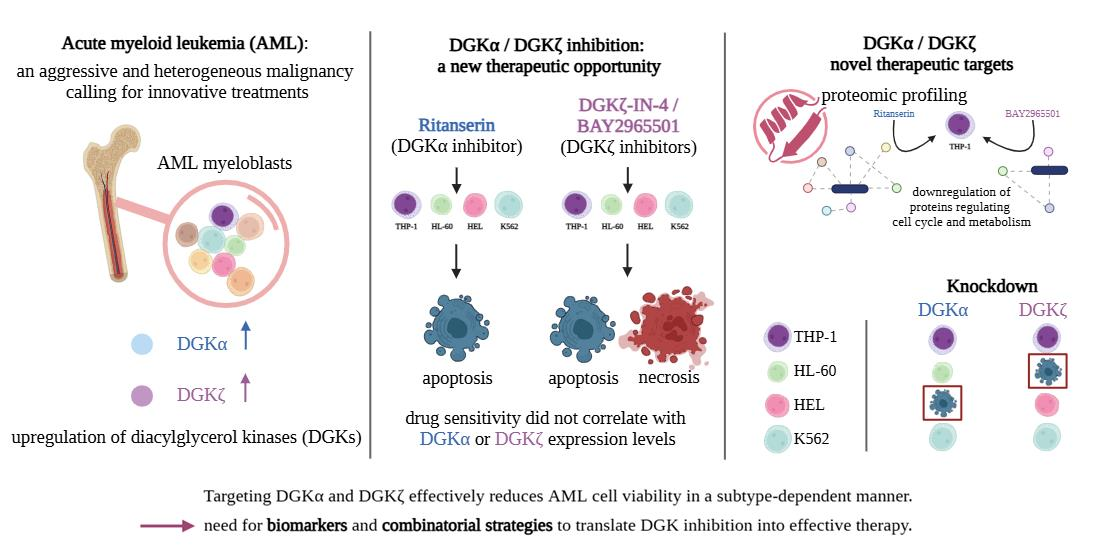
- DGK inhibition reduces AML cell viability in an isoform- and cell line-specific manner, independently of DGK expression levels.
- Selective inhibition of DGKα or DGKζ causes distinct proteomic changes, leading to commonly downregulated pathways.
- Therapeutic strategies targeting DGK should account for AML heterogeneity and isoform-specific effects.
- Effective DGK-targeted therapy will require biomarkers for patient stratification and combinatorial therapeutic approaches.
Abstract
1. Introduction
2. Materials and Methods
2.1. Cell Lines and Culture Conditions
2.2. Cell Viability Assays
2.3. Silencing
2.4. Quantitative Real-Time PCR
2.5. Western Blotting
2.6. Simulations
2.7. Proteomics
3. Results
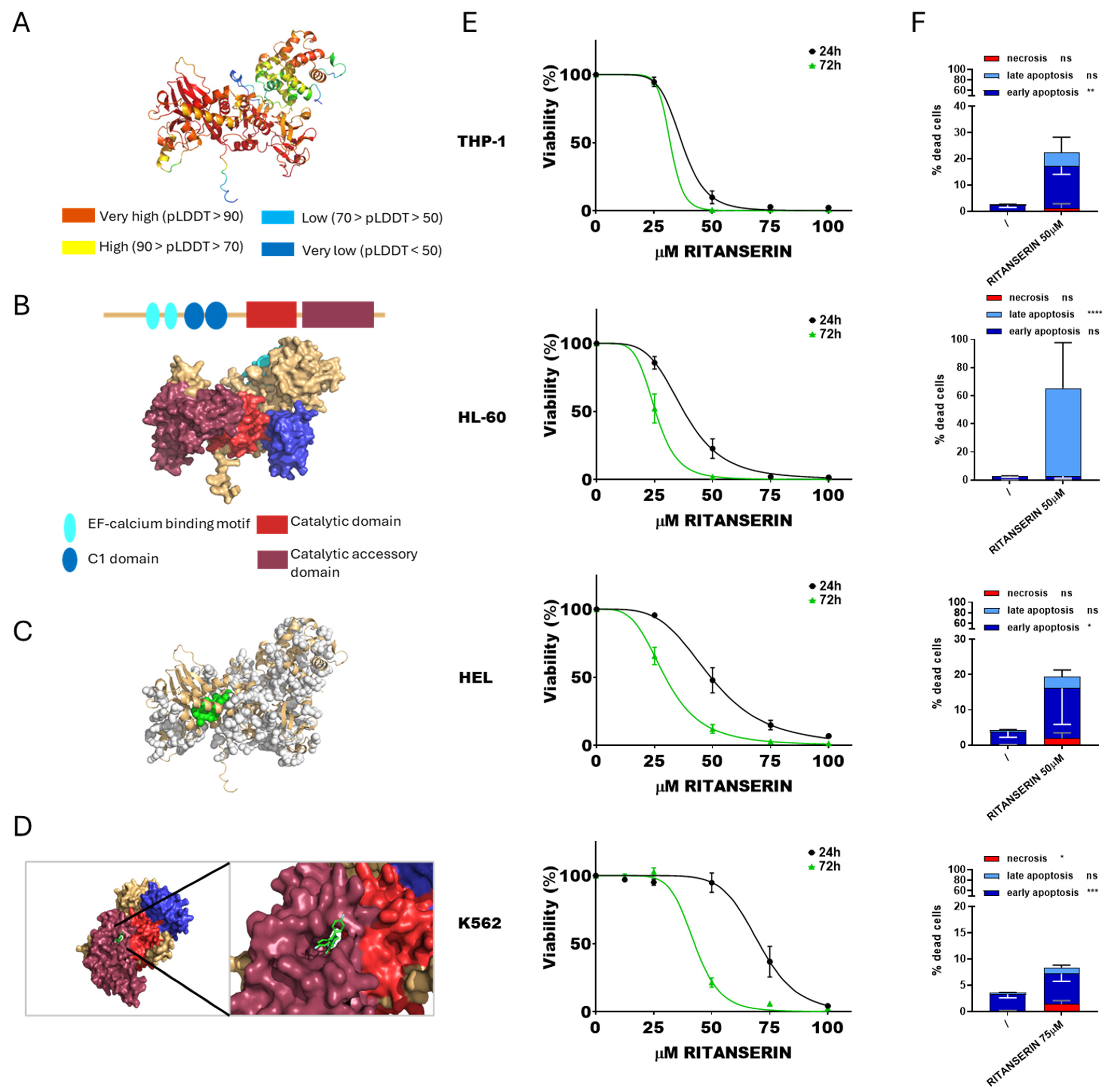
3.1. Ritanserin Is Cytotoxic and Induces Apoptosis in AML Cells
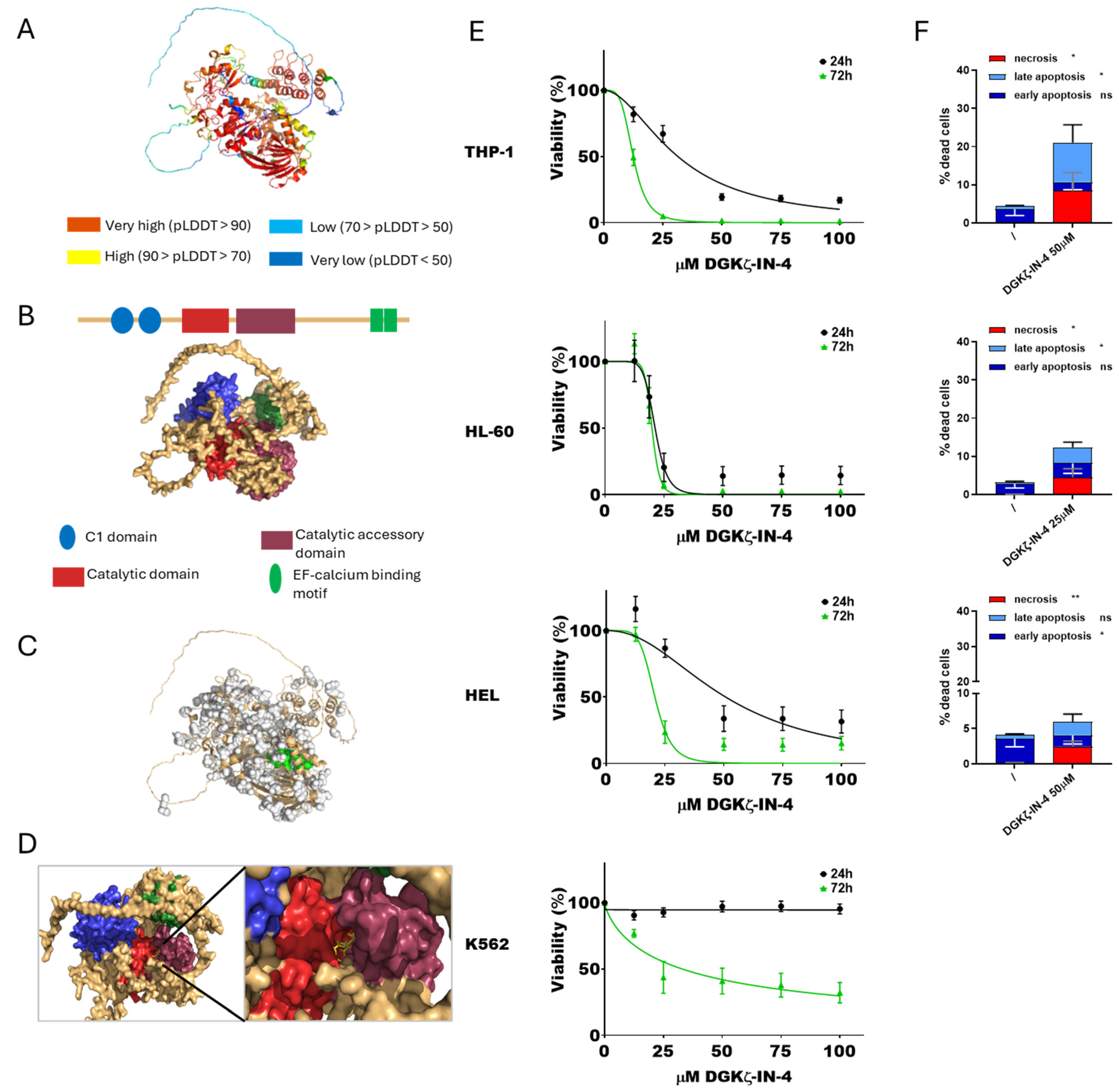
3.2. DGKζ-in-4 Has Heterogeneous Cytotoxic Effects and Induces Both Apoptosis and Necrosis in AML Cell Lines
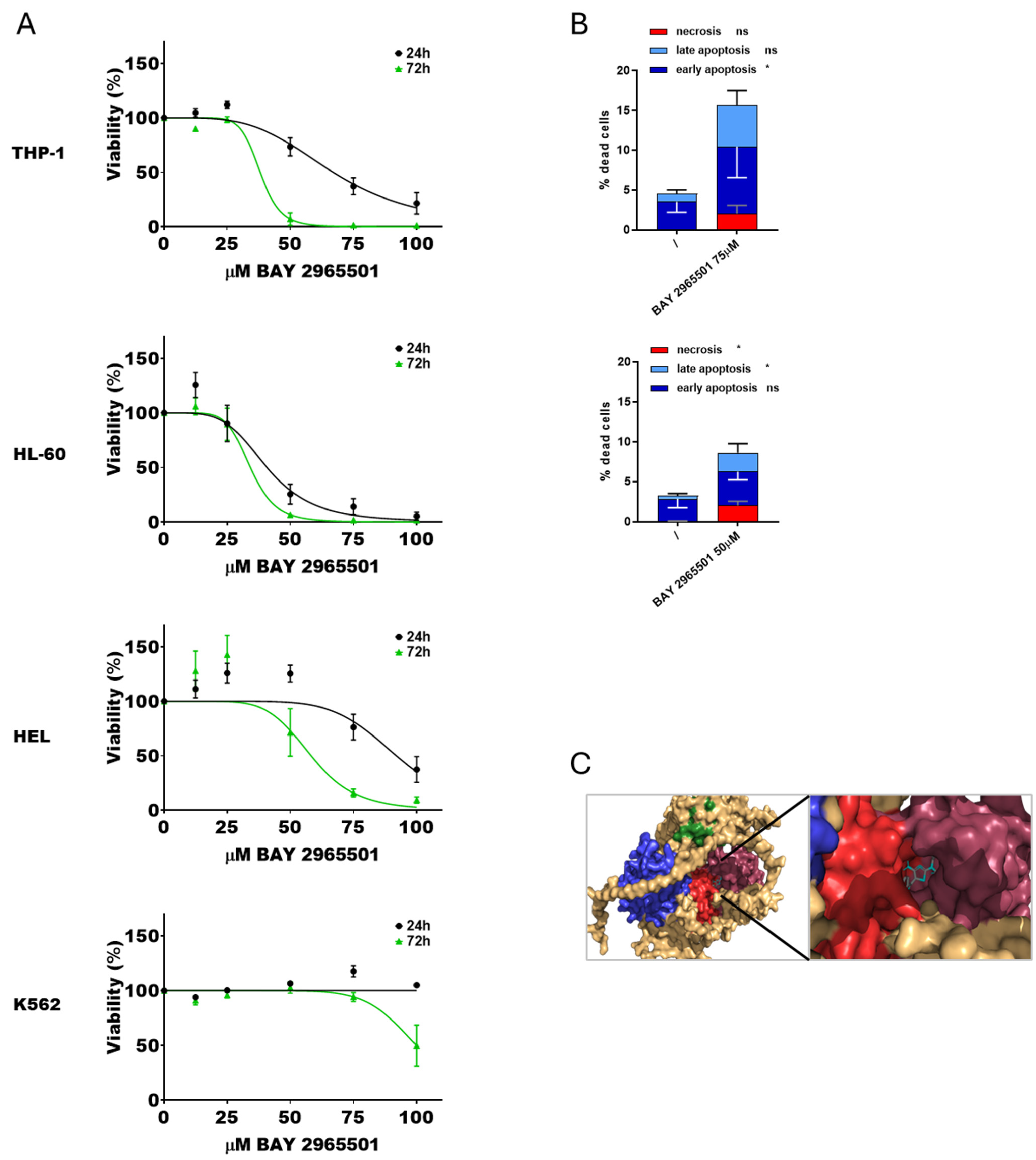
3.3. BAY 2965501 Displays Highly Heterogeneous Cytotoxic Effects and Induces Both Apoptosis and Necrosis in AML Cell Lines
3.4. Correlation Between DGK Isoforms Expression and Sensitivity to Isoform-Specific Inhibitors
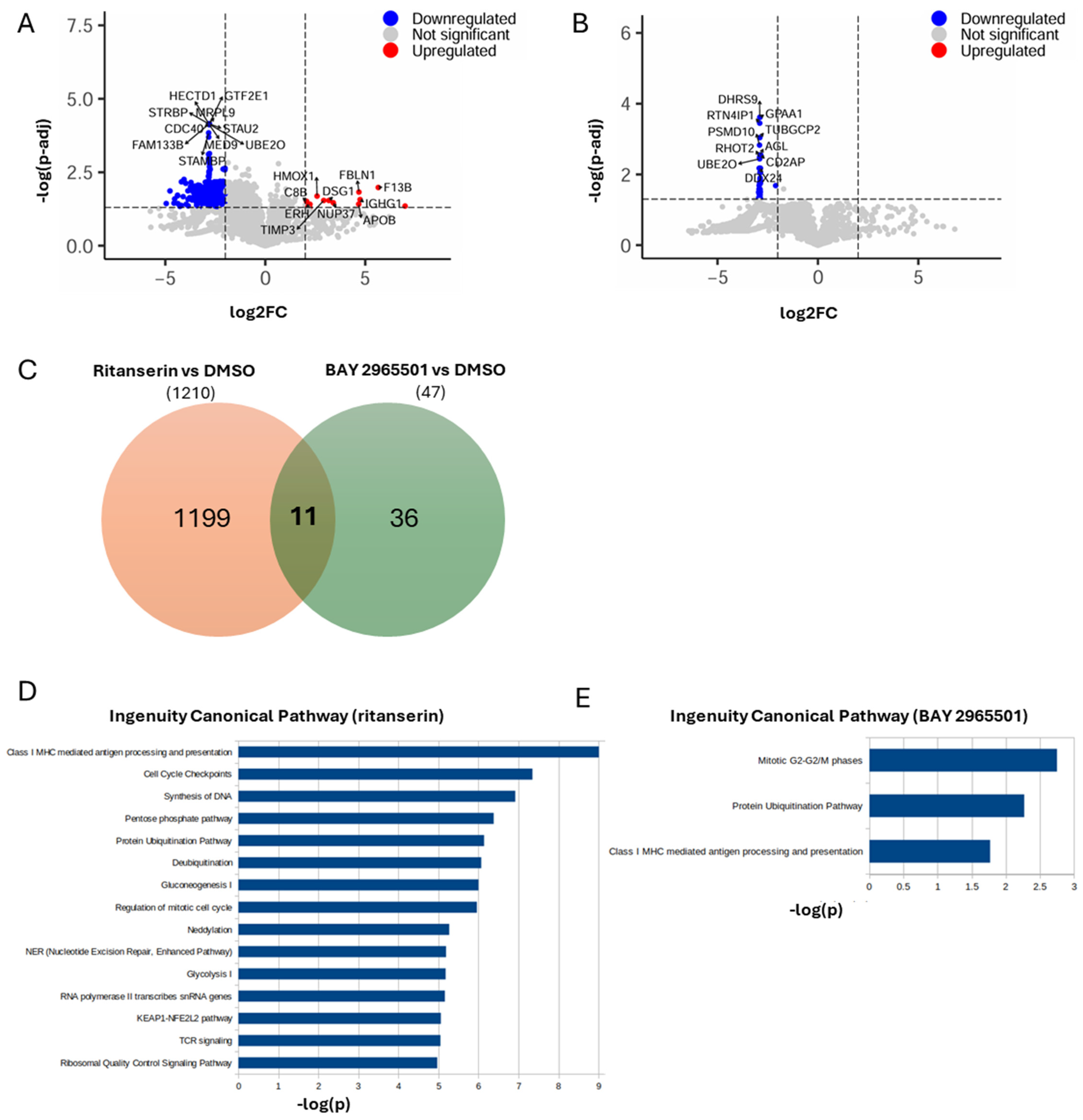
3.5. Mechanism of Action of DGK Inhibitors
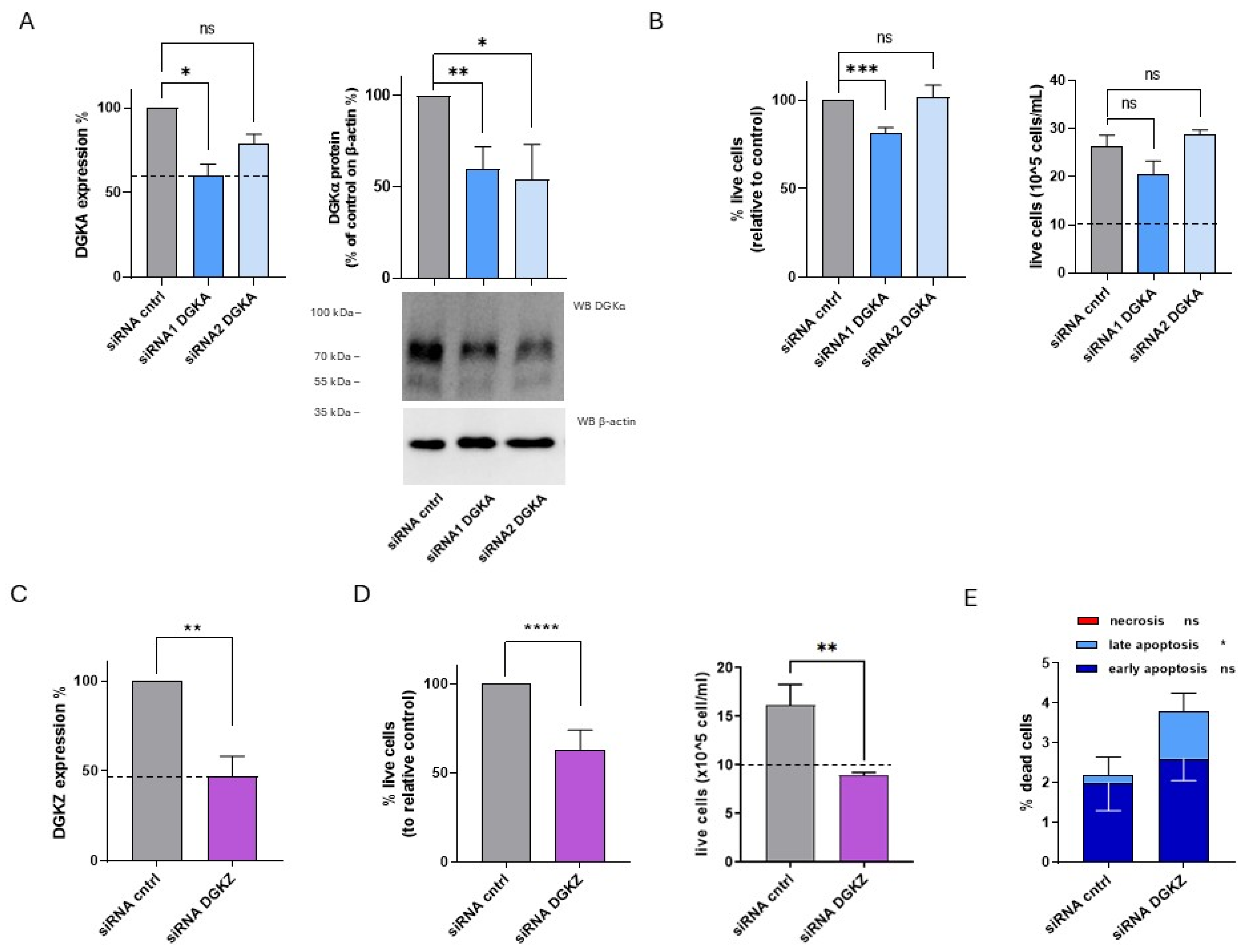
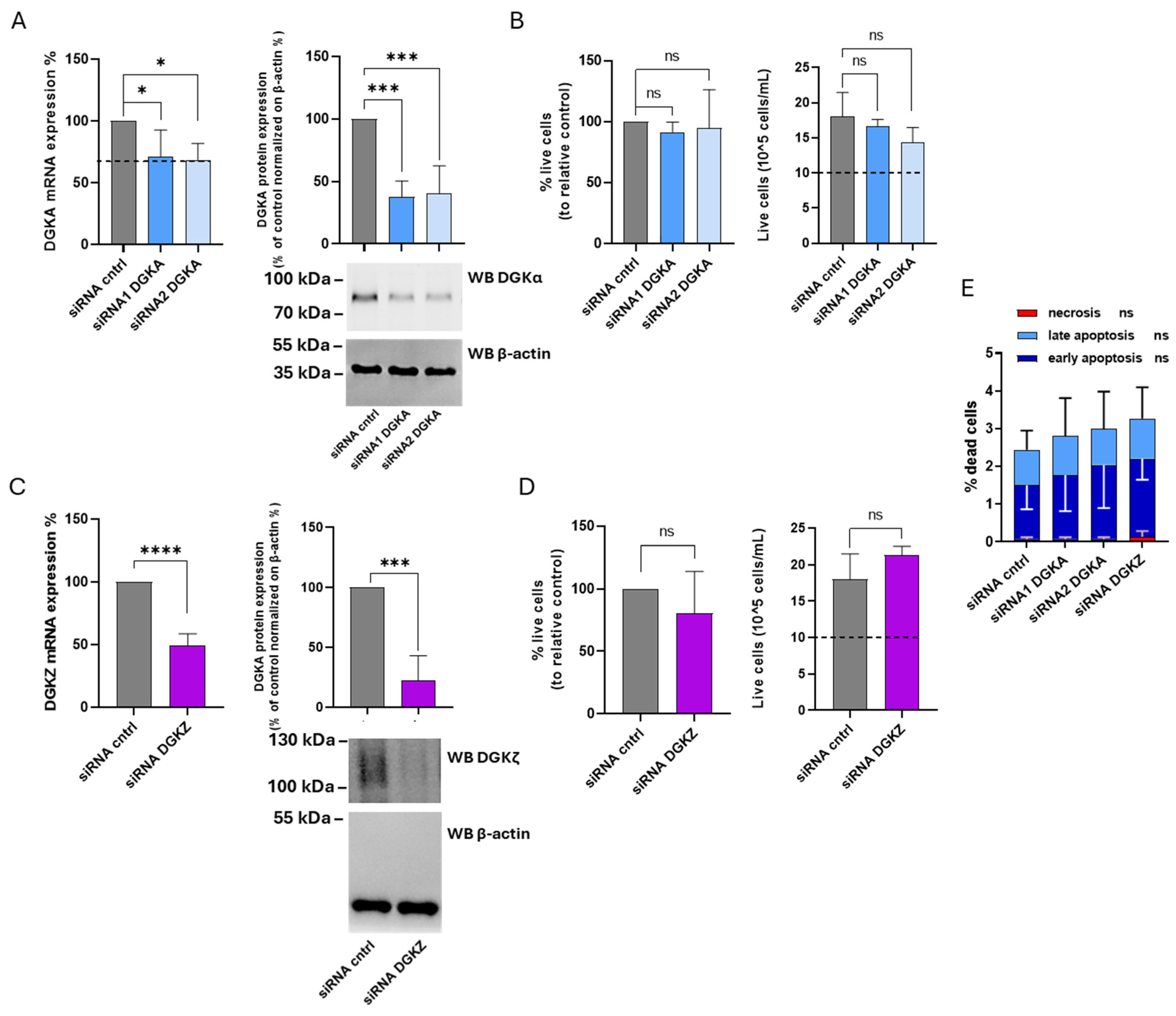
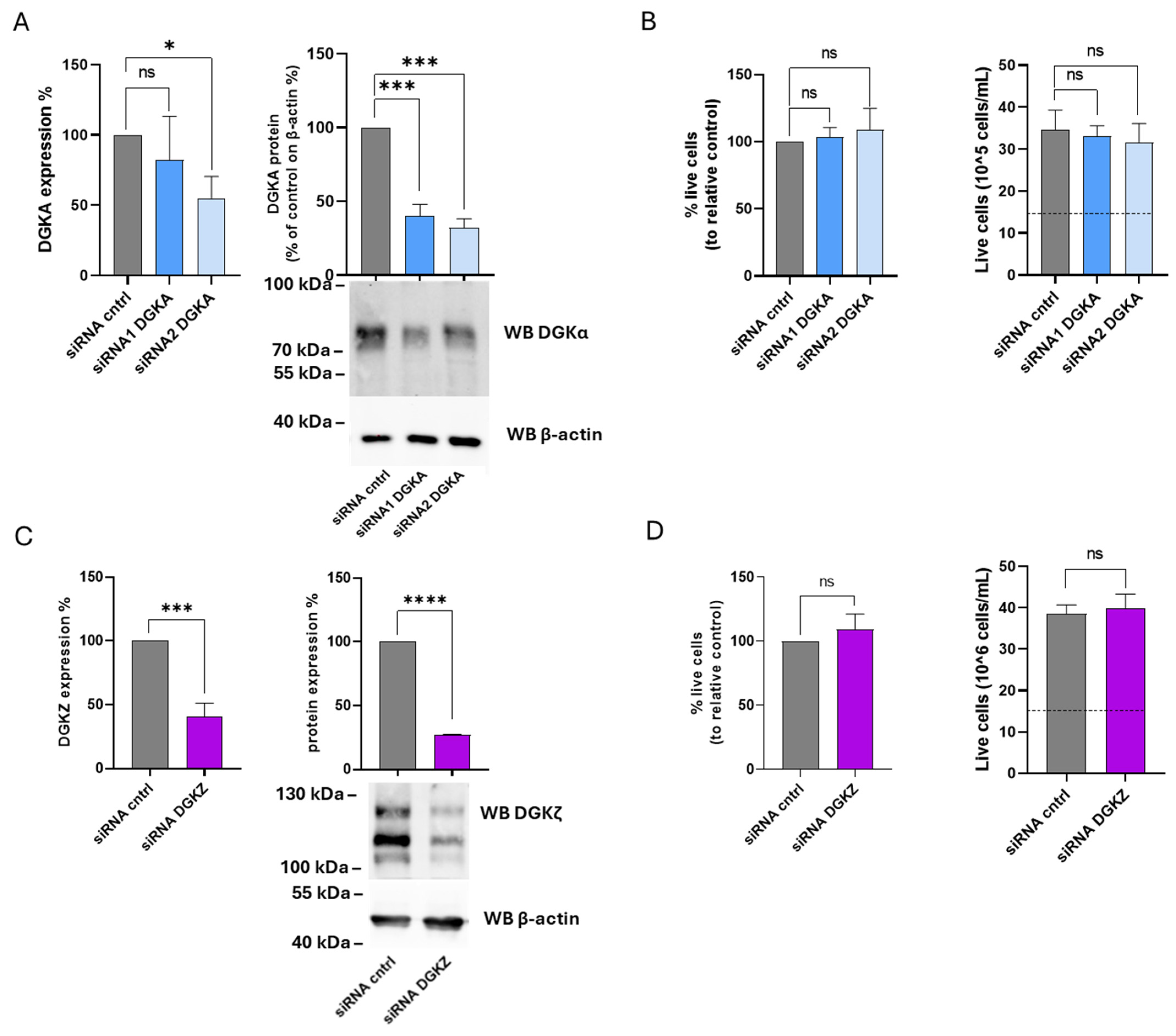
3.6. Role of DGKα and DGKζ in HL-60 Viability
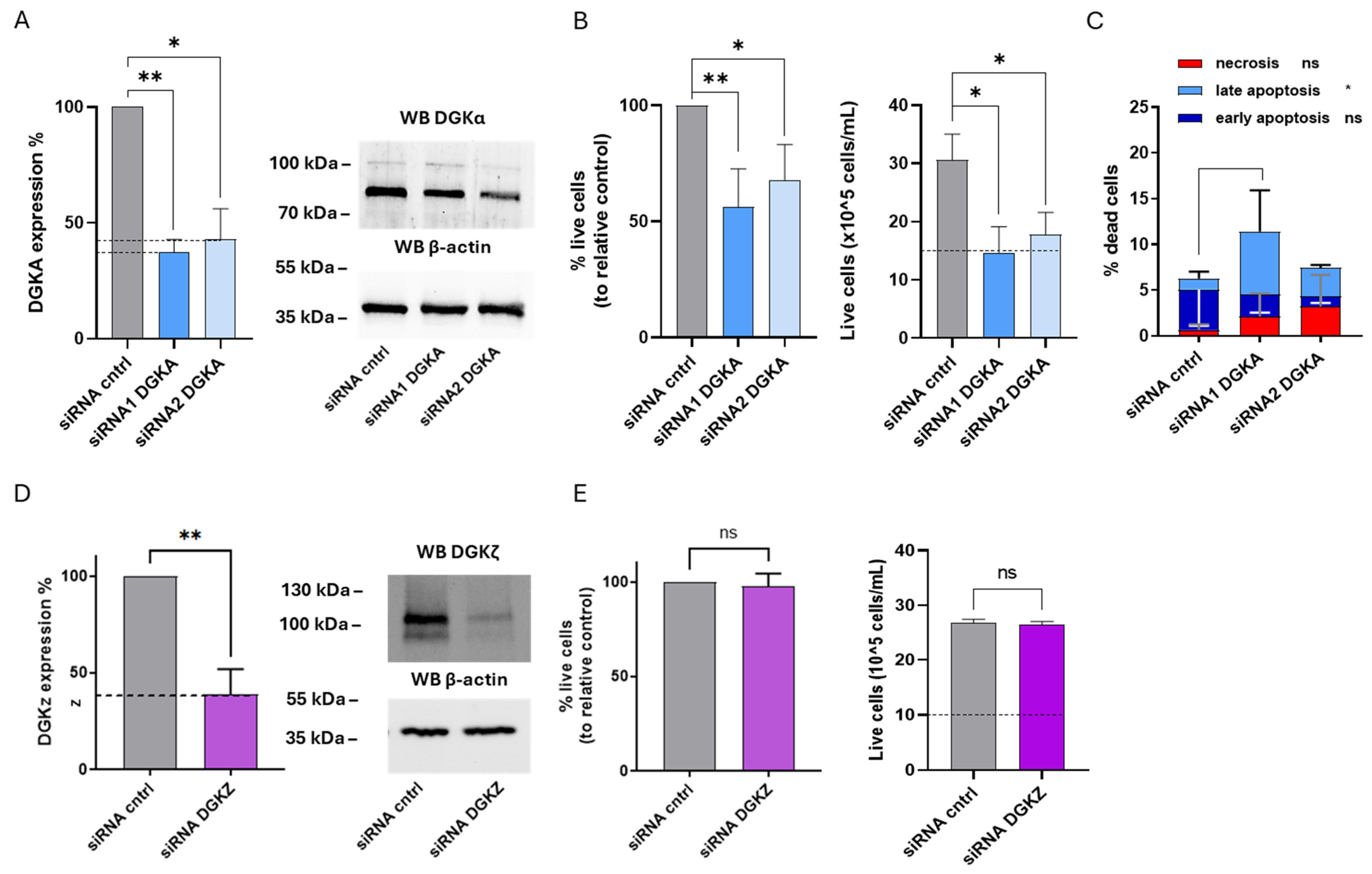
3.7. Role of DGKα and DGKζ in HEL Viability
3.8. Role of DGKα and DGKζ on THP-1 Viability
3.9. Role of DGKα and DGKζ in K562 Viability
4. Discussion
5. Conclusions
Supplementary Materials
Author Contributions
Funding
Institutional Review Board Statement
Informed Consent Statement
Data Availability Statement
Acknowledgments
Conflicts of Interest
Abbreviations
| AML | acute myeloid leukemia |
| CML | chronic myeloid leukemia |
| DGK | diacylglycerol kinase |
| DGKA | diacylglycerol kinase alpha gene |
| DGKα | diacylglycerol kinase alpha protein |
| DGKZ | diacylglycerol kinase zeta gene |
| DGKζ | diacylglycerol kinase zeta protein |
| DGKγ | diacylglycerol kinase gamma protein |
| DAG | diacylglycerol |
| DMSO | dimethyl sulfoxide |
| PA | phosphatidic acid |
| 7AAD | 7-aminoactinomycin D |
| GUSB | glucuronidase beta |
| DTT | dithiothreitol |
| PBLs | peripheral blood lymphocytes |
References
- Arber, D.A.; Orazi, A.; Hasserjian, R.P.; Borowitz, M.J.; Calvo, K.R.; Kvasnicka, H.M.; Wang, S.A.; Bagg, A.; Barbui, T.; Branford, S.; et al. International Consensus Classification of Myeloid Neoplasms and Acute Leukemias: Integrating morphologic, clinical, and genomic data. Blood 2022, 140, 1200–1228. [Google Scholar] [CrossRef] [Scilit]
- Shallis, R.M.; Wang, R.; Davidoff, A.; Ma, X.; Zeidan, A.M. Epidemiology of acute myeloid leukemia: Recent progress and enduring challenges. Blood Rev. 2019, 36, 70–87. [Google Scholar] [CrossRef] [Scilit]
- Döhner, H.; Wei, A.H.; Appelbaum, F.R.; Craddock, C.; DiNardo, C.D.; Dombret, H.; Ebert, B.L.; Fenaux, P.; Godley, L.A.; Hasserjian, R.P.; et al. Diagnosis and Management of AML in Adults: 2022 ELN Recommendations from an International Expert Panel. Blood 2022, 140, 1345–1377. [Google Scholar] [CrossRef] [Scilit] [PubMed]
- Wiese, M.; Daver, N. Unmet clinical needs and economic burden of disease in the treatment landscape of acute myeloid leukemia. Am. J. Manag. Care 2018, 24, S347–S355. [Google Scholar]
- Sim, J.A.; Kim, J.; Yang, D. Beyond Lipid Signaling: Pleiotropic Effects of Diacylglycerol Kinases in Cellular Signaling. Int. J. Mol. Sci. 2020, 21, 6861. [Google Scholar] [CrossRef] [Scilit] [PubMed]
- Baldanzi, G.; Bettio, V.; Malacarne, V.; Graziani, A. Diacylglycerol Kinases: Shaping Diacylglycerol and Phosphatidic Acid Gradients to Control Cell Polarity. Front. Cell Dev. Biol. 2016, 4, 140. [Google Scholar] [CrossRef] [Scilit]
- Zhou, H.; Huo, Y.; Yang, N.; Wei, T. Phosphatidic acid: From biophysical properties to diverse functions. FEBS J. 2024, 291, 1870–1885. [Google Scholar] [CrossRef] [Scilit]
- Mérida, I.; Avila-Flores, A.; García, J.; Merino, E.; Almena, M.; Torres-Ayuso, P. Diacylglycerol kinase alpha, from negative modulation of T cell activation to control of cancer progression. Adv. Enzyme Regul. 2009, 49, 174–188. [Google Scholar] [CrossRef] [Scilit]
- Carrasco, S.; Mérida, I. Diacylglycerol, when simplicity becomes complex. Trends Biochem. Sci. 2007, 32, 27–36. [Google Scholar] [CrossRef] [Scilit] [PubMed]
- Baldanzi, G.; Ragnoli, B.; Malerba, M. Potential role of diacylglycerol kinases in immune-mediated diseases. Clin. Sci. 2020, 134, 1637–1658. [Google Scholar] [CrossRef] [Scilit]
- Merida, I.; Arranz-Nicolás, J.; Torres-Ayuso, P.; Ávila-Flores, A. Diacylglycerol Kinase Malfunction in Human Disease and the Search for Specific Inhibitors. In Lipid Signaling in Human Diseases; Springer: Cham, Switzerland, 2020; Volume 259, pp. 133–162. [Google Scholar] [CrossRef] [Scilit]
- Gravina, T.; Boggio, C.M.T.; Gorla, E.; Racca, L.; Polidoro, S.; Centonze, S.; Ferrante, D.; Lunghi, M.; Graziani, A.; Corà, D.; et al. Role of Diacylglycerol Kinases in Acute Myeloid Leukemia. Biomedicines 2023, 11, 1877. [Google Scholar] [CrossRef] [Scilit] [PubMed]
- Tan, J.; Zhong, M.; Hu, Y.; Pan, G.; Yao, J.; Tang, Y.; Duan, H.; Jiang, Y.; Shan, W.; Lin, J.; et al. Ritanserin suppresses acute myeloid leukemia by inhibiting DGKα to downregulate phospholipase D and the Jak-Stat/MAPK pathway. Discov. Oncol. 2023, 14, 118. [Google Scholar] [CrossRef] [Scilit]
- Poli, A.; Fiume, R.; Baldanzi, G.; Capello, D.; Ratti, S.; Gesi, M.; Manzoli, L.; Graziani, A.; Suh, P.G.; Cocco, L.; et al. Nuclear Localization of Diacylglycerol Kinase Alpha in K562 Cells Is Involved in Cell Cycle Progression. J. Cell. Physiol 2016, 232, 2550–2557. [Google Scholar] [CrossRef] [Scilit]
- Liang, T.; Kong, Y.; Xue, H.; Wang, W.; Li, C.; Chen, C. Mutations of RAS genes identified in acute myeloid leukemia affect glycerophospholipid metabolism pathway. Front. Oncol. 2023, 13, 1280192. [Google Scholar] [CrossRef] [Scilit]
- Li, H.; Dong, C.; Tian, Y.; Li, X.; Wang, B.; Zhai, D.; Bai, Y.; Chao, X. Knockdown of diacylglycerol kinase zeta (DGKZ) induces apoptosis and G2/M phase arrest in human acute myeloid leukemia HL-60 cells through MAPK/survivin/caspase pathway. Pharmazie 2019, 74, 418–422. [Google Scholar] [CrossRef] [Scilit]
- Gallagher, R.; Collins, S.; Trujillo, J.; McCredie, K.; Ahearn, M.; Tsai, S.; Metzgar, R.; Aulakh, G.; Ting, R.; Ruscetti, F.; et al. Characterization of the continuous, differentiating myeloid cell line (HL-60) from a patient with acute promyelocytic leukemia. Blood 1979, 54, 713–733. [Google Scholar] [CrossRef] [Scilit] [PubMed]
- Rovera, G.; Santoli, D.; Damsky, C. Human promyelocytic leukemia cells in culture differentiate into macrophage-like cells when treated with a phorbol diester. Proc. Natl. Acad. Sci. USA 1979, 76, 2779–2783. [Google Scholar] [CrossRef] [Scilit] [PubMed]
- Yamada, K.; Sakane, F.; Imai, S.; Tsushima, S.; Murakami, T.; Kanoh, H. Regulatory role of diacylglycerol kinase gamma in macrophage differentiation of leukemia cells. Biochem. Biophys. Res. Commun. 2003, 305, 101–107. [Google Scholar] [CrossRef] [Scilit]
- Tanaka, H.; Abe, E.; Miyaura, C.; Shiina, Y.; Suda, T. 1 alpha,25-dihydroxyvitamin D3 induces differentiation of human promyelocytic leukemia cells (HL-60) into monocyte-macrophages, but not into granulocytes. Biochem. Biophys. Res. Commun. 1983, 117, 86–92. [Google Scholar] [CrossRef] [Scilit]
- Batista, E.L.; Warbington, M.; Badwey, J.A.; Van Dyke, T.E. Differentiation of HL-60 cells to granulocytes involves regulation of select diacylglycerol kinases (DGKs). J. Cell. Biochem. 2005, 94, 774–793. [Google Scholar] [CrossRef] [Scilit]
- Martin, P.; Papayannopoulou, T. HEL cells: A new human erythroleukemia cell line with spontaneous and induced globin expression. Science 1982, 216, 1233–1235. [Google Scholar] [CrossRef] [Scilit] [PubMed]
- Stavropoulou, V.; Kaspar, S.; Brault, L.; Sanders, M.A.; Juge, S.; Morettini, S.; Tzankov, A.; Iacovino, M.; Lau, I.J.; Milne, T.A.; et al. MLL-AF9 Expression in Hematopoietic Stem Cells Drives a Highly Invasive AML Expressing EMT-Related Genes Linked to Poor Outcome. Cancer Cell 2016, 30, 43–58. [Google Scholar] [CrossRef] [Scilit] [PubMed]
- Auwerx, J. The human leukemia cell line, THP-1: A multifacetted model for the study of monocyte-macrophage differentiation. Experientia 1991, 47, 22–31. [Google Scholar] [CrossRef] [Scilit]
- Bianchi, N.; Chiarabelli, C.; Borgatti, M.; Mischiati, C.; Fibach, E.; Gambari, R. Accumulation of gamma-globin mRNA and induction of erythroid differentiation after treatment of human leukaemic K562 cells with tallimustine. Br. J. Haematol. 2001, 113, 951–961. [Google Scholar] [CrossRef] [Scilit]
- Lu, Y.; Ma, W.B.; Ren, G.M.; Li, Y.T.; Wang, T.; Zhan, Y.Q.; Xiang, S.S.; Chen, H.; Gao, H.Y.; Zhao, K.; et al. GPS2 promotes erythroid differentiation in K562 erythroleukemia cells primarily via NCOR1. Int. J. Hematol. 2024, 120, 157–166. [Google Scholar] [CrossRef] [Scilit]
- Ding, L.; Chen, D.; Li, Y.; Xie, Y.; Sun, X.; Wang, D. Saracatinib prompts hemin-induced K562 erythroid differentiation but suppresses erythropoiesis of hematopoietic stem cells. Hum. Cell 2024, 37, 648–665. [Google Scholar] [CrossRef] [Scilit]
- Leysen, J.E.; Gommeren, W.; Van Gompel, P.; Wynants, J.; Janssen, P.F.; Laduron, P.M. Receptor-binding properties in vitro and in vivo of ritanserin: A very potent and long acting serotonin-S2 antagonist. Mol. Pharmacol. 1985, 27, 600–611. [Google Scholar] [CrossRef] [Scilit]
- Barone, J.A.; Bierman, R.H.; Cornish, J.W.; Hsuan, A.; Drake, N.D.; Colaizzi, J.L. Safety evaluation of ritanserin--an investigational serotonin antagonist. Drug Intell. Clin. Pharm. 1986, 20, 770–775. [Google Scholar] [CrossRef] [Scilit]
- Idzikowski, C.; Mills, F.J.; James, R.J. A dose-response study examining the effects of ritanserin on human slow wave sleep. Br. J. Clin. Pharmacol. 1991, 31, 193–196. [Google Scholar] [CrossRef] [Scilit]
- Velnati, S.; Ruffo, E.; Massarotti, A.; Talmon, M.; Varma, K.S.S.; Gesu, A.; Fresu, L.G.; Snow, A.L.; Bertoni, A.; Capello, D.; et al. Identification of a novel DGKα inhibitor for XLP-1 therapy by virtual screening. Eur. J. Med. Chem. 2019, 164, 378–390. [Google Scholar] [CrossRef] [Scilit] [PubMed]
- Boroda, S.; Niccum, M.; Raje, V.; Purow, B.W.; Harris, T.E. Dual activities of ritanserin and R59022 as DGKα inhibitors and serotonin receptor antagonists. Biochem. Pharmacol. 2017, 123, 29–39. [Google Scholar] [CrossRef] [Scilit]
- Offringa, R.; Olesch, C.; Cichon, F.; Grees, M.; Schmees, N.; Roehn, U.; Prinz, F.; Guenther, J.; Stoeckigt, D.; Erkelenz, M.; et al. Abstract ND04: BAY 2965501: A highly selective DGK- ζ inhibitor for cancer immuno-therapy with first-in-class potential. Cancer Res. 2023, 83, ND04. [Google Scholar] [CrossRef]
- Offringa, R.; Olesch, C.; Cichon, F.; Grees, M.; Schmees, N.; Roehn, U.; Prinz, F.; Stoeckigt, D.; Erkelenz, M.; Uyen Nguyen, T.T.; et al. 926 BAY 2965501: A highly selective DGK zeta inhibitor for cancer immunotherapy. J. Immunother. Cancer 2023, 11, A1029. [Google Scholar] [CrossRef] [Scilit]
- Consortium, U. UniProt: The Universal Protein Knowledgebase in 2025. Nucleic Acids Res. 2025, 53, D609–D617. [Google Scholar] [CrossRef] [Scilit]
- Jumper, J.; Evans, R.; Pritzel, A.; Green, T.; Figurnov, M.; Ronneberger, O.; Tunyasuvunakool, K.; Bates, R.; Žídek, A.; Potapenko, A.; et al. Highly accurate protein structure prediction with AlphaFold. Nature 2021, 596, 583–589. [Google Scholar] [CrossRef] [Scilit] [PubMed]
- Fleming, J.; Magana, P.; Nair, S.; Tsenkov, M.; Bertoni, D.; Pidruchna, I.; Lima Afonso, M.Q.; Midlik, A.; Paramval, U.; Žídek, A.; et al. AlphaFold Protein Structure Database and 3D-Beacons: New Data and Capabilities. J. Mol. Biol. 2025, 437, 168967. [Google Scholar] [CrossRef] [Scilit]
- Letunic, I.; Khedkar, S.; Bork, P. SMART: Recent updates, new developments and status in 2020. Nucleic Acids Res. 2021, 49, D458–D460. [Google Scholar] [CrossRef] [Scilit]
- Le Guilloux, V.; Schmidtke, P.; Tuffery, P. Fpocket: An open source platform for ligand pocket detection. BMC Bioinform. 2009, 10, 168. [Google Scholar] [CrossRef] [Scilit]
- Trott, O.; Olson, A.J. AutoDock Vina: Improving the speed and accuracy of docking with a new scoring function, efficient optimization, and multithreading. J. Comput. Chem. 2010, 31, 455–461. [Google Scholar] [CrossRef] [Scilit]
- Koes, D.R.; Baumgartner, M.P.; Camacho, C.J. Lessons learned in empirical scoring with smina from the CSAR 2011 benchmarking exercise. J. Chem. Inf. Model. 2013, 53, 1893–1904. [Google Scholar] [CrossRef] [Scilit]
- Krämer, A.; Green, J.; Pollard, J.; Tugendreich, S. Causal analysis approaches in Ingenuity Pathway Analysis. Bioinformatics 2014, 30, 523–530. [Google Scholar] [CrossRef] [Scilit]
- Racca, L.; Baldanzi, G.; Massarotti, A. Modulators of Diacylglycerol Kinase Activity: A Review of Advances and Challenges. Med. Res. Rev. 2025; early view. [CrossRef] [Scilit]
- Mendez, R.; Shaikh, M.; Lemke, M.C.; Yuan, K.; Libby, A.H.; Bai, D.L.; Ross, M.M.; Harris, T.E.; Hsu, K.L. Predicting small molecule binding pockets on diacylglycerol kinases using chemoproteomics and AlphaFold. RSC Chem. Biol. 2023, 4, 422–430. [Google Scholar] [CrossRef] [Scilit]
- Leysen, J.E.; Gommeren, W.; Eens, A.; de Chaffoy de Courcelles, D.; Stoof, J.C.; Janssen, P.A. Biochemical profile of risperidone, a new antipsychotic. J. Pharmacol. Exp. Ther. 1988, 247, 661–670. [Google Scholar] [CrossRef] [Scilit] [PubMed]
- Gralla, R.J. Metoclopramide. A review of antiemetic trials. Drugs 1983, 25 (Suppl. S1), 63–73. [Google Scholar] [CrossRef] [Scilit]
- Kristiansen, H.; Elfving, B.; Plenge, P.; Pinborg, L.H.; Gillings, N.; Knudsen, G.M. Binding characteristics of the 5-HT2A receptor antagonists altanserin and MDL 100907. Synapse 2005, 58, 249–257. [Google Scholar] [CrossRef] [Scilit]
- Ard, R.; Mulatz, K.; Abramovici, H.; Maillet, J.C.; Fottinger, A.; Foley, T.; Byham, M.R.; Iqbal, T.A.; Yoneda, A.; Couchman, J.R.; et al. Diacylglycerol kinase ζ regulates RhoA activation via a kinase-independent scaffolding mechanism. Mol. Biol. Cell 2012, 23, 4008–4019. [Google Scholar] [CrossRef] [Scilit] [PubMed]
- Torres-Ayuso, P.; Daza-Martín, M.; Martín-Pérez, J.; Ávila-Flores, A.; Mérida, I. Diacylglycerol kinase α promotes 3D cancer cell growth and limits drug sensitivity through functional interaction with Src. Oncotarget 2014, 5, 9710–9726. [Google Scholar] [CrossRef] [Scilit] [PubMed]
- Arranz-Nicolás, J.; Martin-Salgado, M.; Adán-Barrientos, I.; Liébana, R.; Del Carmen Moreno-Ortíz, M.; Leitner, J.; Steinberger, P.; Ávila-Flores, A.; Merida, I. Diacylglycerol kinase α inhibition cooperates with PD-1-targeted therapies to restore the T cell activation program. Cancer Immunol. Immunother. 2021, 70, 3277–3289. [Google Scholar] [CrossRef] [Scilit]
- Takao, S.; Akiyama, R.; Sakane, F. Combined inhibition/silencing of diacylglycerol kinase α and ζ simultaneously and synergistically enhances interleukin-2 production in T cells and induces cell death of melanoma cells. J. Cell. Biochem. 2021, 122, 494–506. [Google Scholar] [CrossRef] [Scilit]
- Arranz-Nicolás, J.; Martin-Salgado, M.; Rodríguez-Rodríguez, C.; Liébana, R.; Moreno-Ortiz, M.C.; Leitner, J.; Steinberger, P.; Ávila-Flores, A.; Merida, I. Diacylglycerol kinase ζ limits IL-2-dependent control of PD-1 expression in tumor-infiltrating T lymphocytes. J. Immunother. Cancer 2020, 8, e001521. [Google Scholar] [CrossRef] [Scilit]
- Yamaki, A.; Akiyama, R.; Murakami, C.; Takao, S.; Murakami, Y.; Mizuno, S.; Takahashi, D.; Kado, S.; Taketomi, A.; Shirai, Y.; et al. Diacylglycerol kinase α-selective inhibitors induce apoptosis and reduce viability of melanoma and several other cancer cell lines. J. Cell. Biochem. 2019, 120, 10043–10056. [Google Scholar] [CrossRef] [Scilit] [PubMed]
- Gu, X.; Wan, G.; Chen, N.; Li, J.; Chen, B.; Tang, Y.; Gu, W.; Jin, C.; Meng, J.; Zhang, P.; et al. DGKζ Plays Crucial Roles in the Proliferation and Tumorigenicity of Human glioblastoma. Int. J. Biol. Sci. 2019, 15, 1872–1881. [Google Scholar] [CrossRef] [Scilit] [PubMed]
- McCloud, R.L.; Franks, C.E.; Campbell, S.T.; Purow, B.W.; Harris, T.E.; Hsu, K.L. Deconstructing Lipid Kinase Inhibitors by Chemical Proteomics. Biochemistry 2018, 57, 231–236. [Google Scholar] [CrossRef] [Scilit]
- Flores, I.; Casaseca, T.; Martinez-A, C.; Kanoh, H.; Merida, I. Phosphatidic acid generation through interleukin 2 (IL-2)-induced alpha-diacylglycerol kinase activation is an essential step in IL-2-mediated lymphocyte proliferation. J. Biol. Chem. 1996, 271, 10334–10340. [Google Scholar] [CrossRef] [Scilit]
- Outram, S.V.; Crompton, T.; Merida, I.; Varas, A.; Martinez-A, C. Diacylglycerol kinase alpha activity promotes survival of CD4+ 8+ double positive cells during thymocyte development. Immunology 2002, 105, 391–398. [Google Scholar] [CrossRef] [Scilit]
- Miao, Y.; Lin, T.; Wang, B.; Xu, J.; Li, C.; Li, Z.; Zhang, X.; Zhou, C.; Aji, T.; Tan, M.; et al. Macrophage DGKζ-mediated phosphatidic acid remodeling aggravates acute liver failure. Acta Pharm. Sin. B 2025, 15, 4078–4095. [Google Scholar] [CrossRef] [Scilit]
- Li, A.J.; Park, J.H. Interpreting the clinical outcomes to date for AML-directed CAR T cell therapies. Curr. Opin. Oncol. 2025, 37, 658–668. [Google Scholar] [CrossRef] [Scilit] [PubMed]


| Condition | N° of Cells | Vitality (%) | Efficiency (%) | |
|---|---|---|---|---|
| HL-60 | 1300 V, 35 ms, 1 P | 500,000 | ||
| HEL | 1350 V, 20 ms, 2 P | 760,000 | 38 | 100 |
| THP-1 | 1550 V, 15 ms, 2 P | 750,000 | 89 | 81 |
| K562 | 1350 V, 10 ms, 4 P | 1,500,000 | 87 | 71 |
Disclaimer/Publisher’s Note: The statements, opinions and data contained in all publications are solely those of the individual author(s) and contributor(s) and not of MDPI and/or the editor(s). MDPI and/or the editor(s) disclaim responsibility for any injury to people or property resulting from any ideas, methods, instructions or products referred to in the content. |
© 2025 by the authors. Licensee MDPI, Basel, Switzerland. This article is an open access article distributed under the terms and conditions of the Creative Commons Attribution (CC BY) license (https://creativecommons.org/licenses/by/4.0/).
Share and Cite
Gorla, E.; Cartella, M.C.; Borghetti, E.; Lovati, G.; Racca, L.; Gravina, T.; Biazzo, G.; Bonello, G.; Malacarne, V.; De Giorgis, V.; et al. Acute Myeloid Leukemia: A Key Role of DGKα and DGKζ in Cell Viability. Cells 2025, 14, 1721. https://doi.org/10.3390/cells14211721
Gorla E, Cartella MC, Borghetti E, Lovati G, Racca L, Gravina T, Biazzo G, Bonello G, Malacarne V, De Giorgis V, et al. Acute Myeloid Leukemia: A Key Role of DGKα and DGKζ in Cell Viability. Cells. 2025; 14(21):1721. https://doi.org/10.3390/cells14211721
Chicago/Turabian StyleGorla, Elisa, Marco Cristiano Cartella, Edoardo Borghetti, Ginevra Lovati, Luisa Racca, Teresa Gravina, Giorgio Biazzo, Gabriele Bonello, Valeria Malacarne, Veronica De Giorgis, and et al. 2025. "Acute Myeloid Leukemia: A Key Role of DGKα and DGKζ in Cell Viability" Cells 14, no. 21: 1721. https://doi.org/10.3390/cells14211721
APA StyleGorla, E., Cartella, M. C., Borghetti, E., Lovati, G., Racca, L., Gravina, T., Biazzo, G., Bonello, G., Malacarne, V., De Giorgis, V., Corà, D., Manfredi, M., Massarotti, A., Graziani, A., & Baldanzi, G. (2025). Acute Myeloid Leukemia: A Key Role of DGKα and DGKζ in Cell Viability. Cells, 14(21), 1721. https://doi.org/10.3390/cells14211721