Review

Mitochondria in the Central Nervous System in Health and Disease: The Puzzle of the Therapeutic Potential of Mitochondrial Transplantation


by
Kuldeep Tripathi
and
Dorit Ben-Shachar
*
Laboratory of Psychobiology, Department of Neuroscience, The Ruth and Bruce Rappaport Faculty of Medicine, Technion—Israel Institute of Technology, P.O. Box 9649, Haifa 31096, Israel
*
Author to whom correspondence should be addressed.
Cells 2024, 13(5), 410; https://doi.org/10.3390/cells13050410
Submission received: 31 January 2024 / Revised: 21 February 2024 / Accepted: 23 February 2024 / Published: 27 February 2024

Abstract

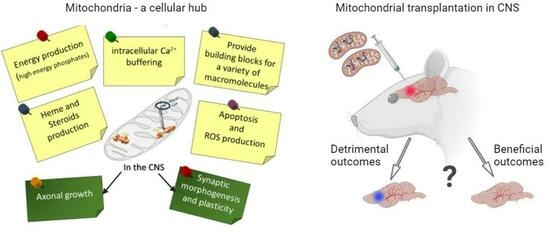
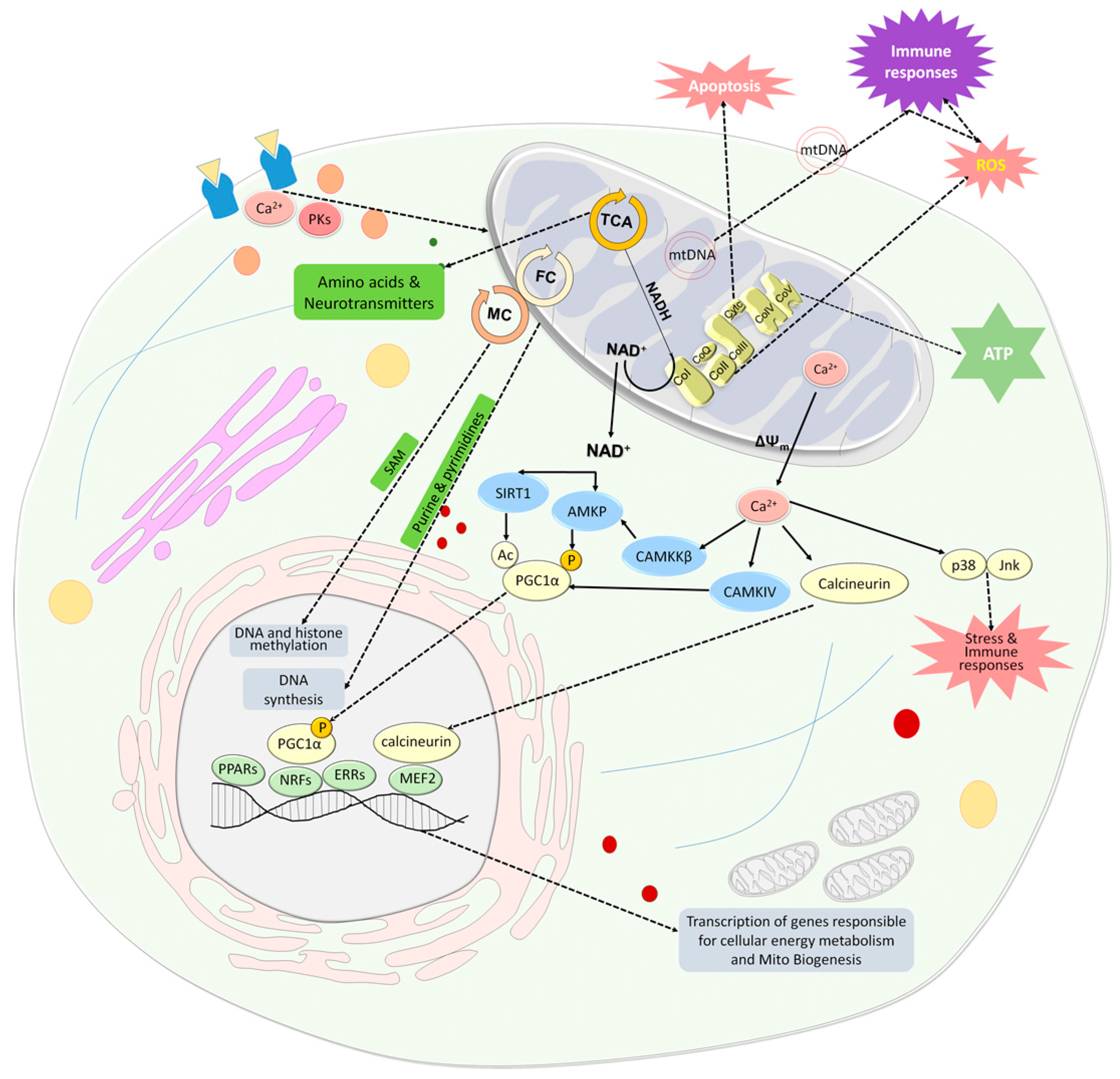
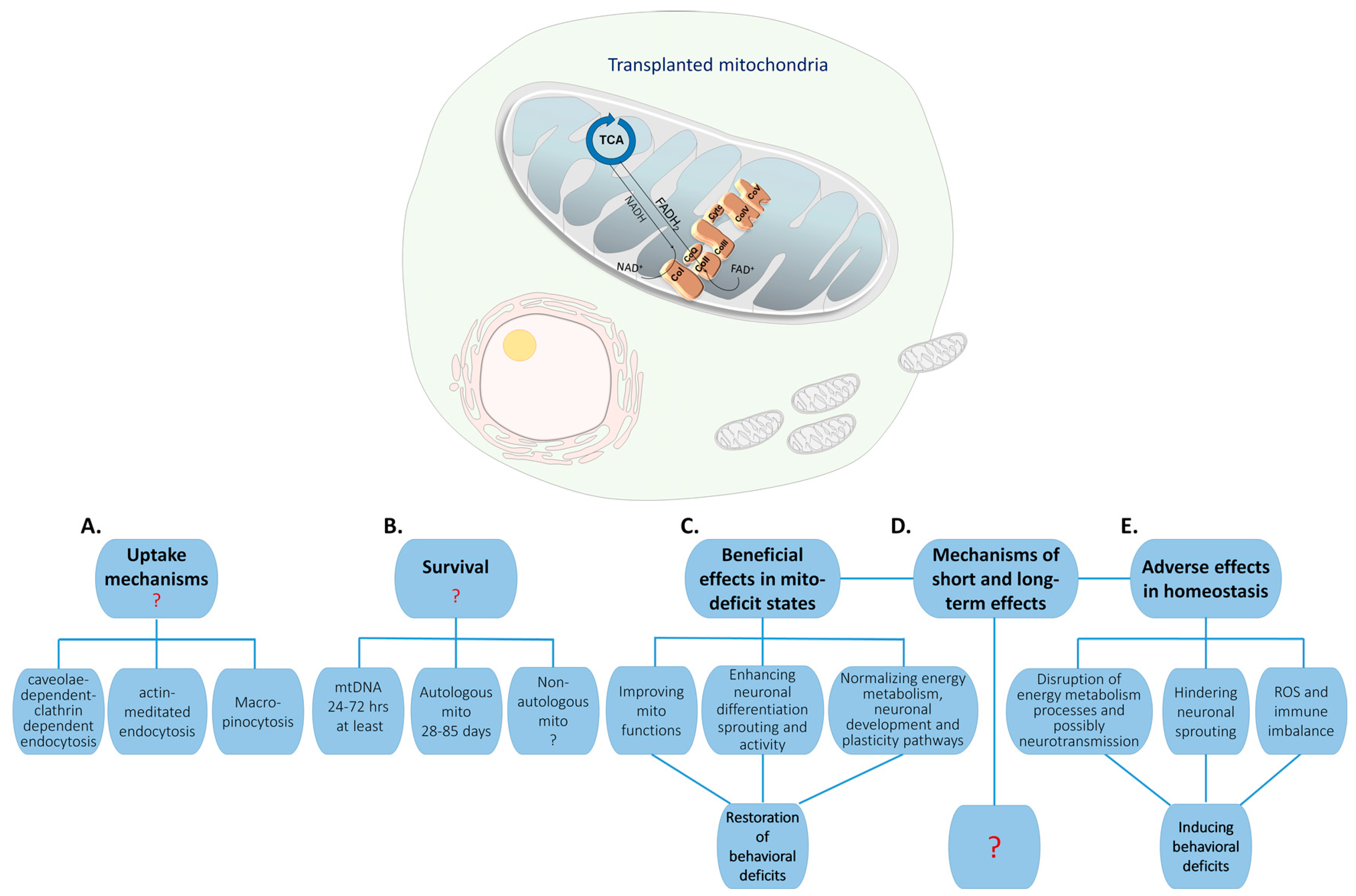
Mitochondria, the energy suppliers of the cells, play a central role in a variety of cellular processes essential for survival or leading to cell death. Consequently, mitochondrial dysfunction is implicated in numerous general and CNS disorders. The clinical manifestations of mitochondrial dysfunction include metabolic disorders, dysfunction of the immune system, tumorigenesis, and neuronal and behavioral abnormalities. In this review, we focus on the mitochondrial role in the CNS, which has unique characteristics and is therefore highly dependent on the mitochondria. First, we review the role of mitochondria in neuronal development, synaptogenesis, plasticity, and behavior as well as their adaptation to the intricate connections between the different cell types in the brain. Then, we review the sparse knowledge of the mechanisms of exogenous mitochondrial uptake and describe attempts to determine their half-life and transplantation long-term effects on neuronal sprouting, cellular proteome, and behavior. We further discuss the potential of mitochondrial transplantation to serve as a tool to study the causal link between mitochondria and neuronal activity and behavior. Next, we describe mitochondrial transplantation’s therapeutic potential in various CNS disorders. Finally, we discuss the basic and reverse—translation challenges of this approach that currently hinder the clinical use of mitochondrial transplantation.
Keywords: mitochondria; CNS; neural development and function; mitochondria and behavior; mitochondrial transplantation; neuropsychiatric disorders mitochondria; CNS; neural development and function; mitochondria and behavior; mitochondrial transplantation; neuropsychiatric disorders
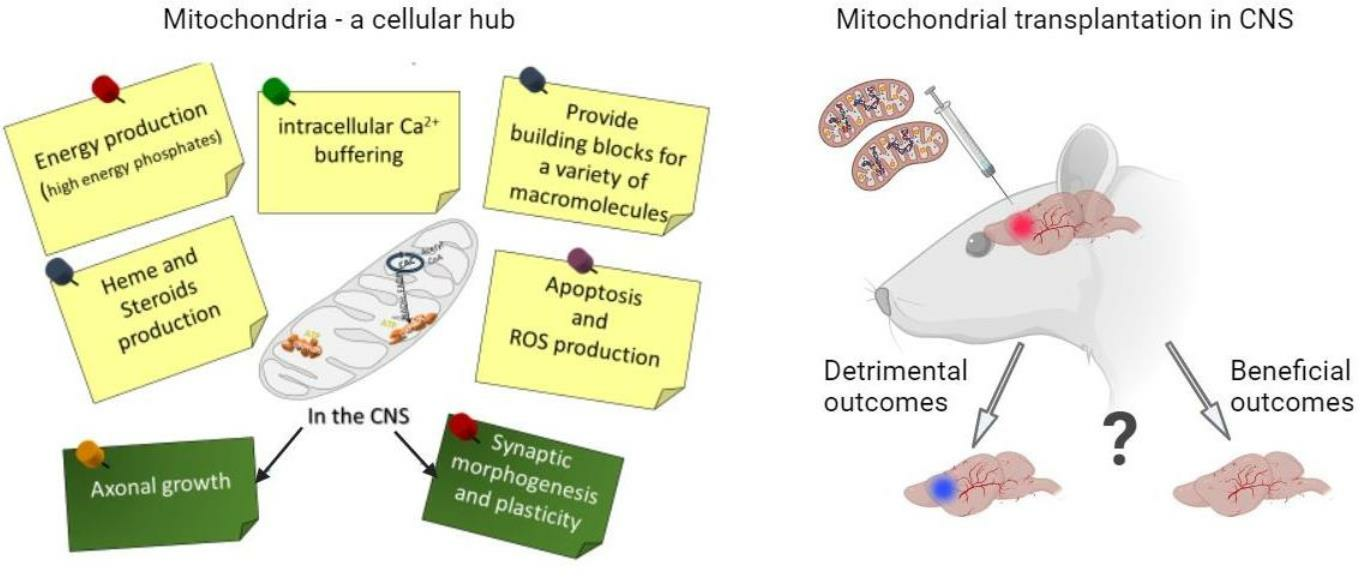
Graphical Abstract