Article

Quadra-Stable Dynamics of p53 and PTEN in the DNA Damage Response

1
Instituto de Matemática e Estatística, Departamento de Ciência da Computação, Universidade de São Paulo, Rua do Matão 1010, São Paulo 05508-090, SP, Brazil
2
Condensed Matter Theory Group, Materials Theory Division, Department of Physics and Astronomy, Uppsala University, P.O. Box 516, SE-751 20 Uppsala, Sweden
3
Children’s Cancer Institute, Porto Alegre 90620-110, RS, Brazil
4
Department of Physics, Indian Institute of Technology Ropar, Rupnagar 140001, Punjab, India
*
Author to whom correspondence should be addressed.
Cells 2023, 12(7), 1085; https://doi.org/10.3390/cells12071085
Submission received: 23 January 2023 / Revised: 23 March 2023 / Accepted: 29 March 2023 / Published: 4 April 2023
(This article belongs to the Special Issue Systems Biology of Apoptotic and Non-apoptotic Signaling)

Abstract

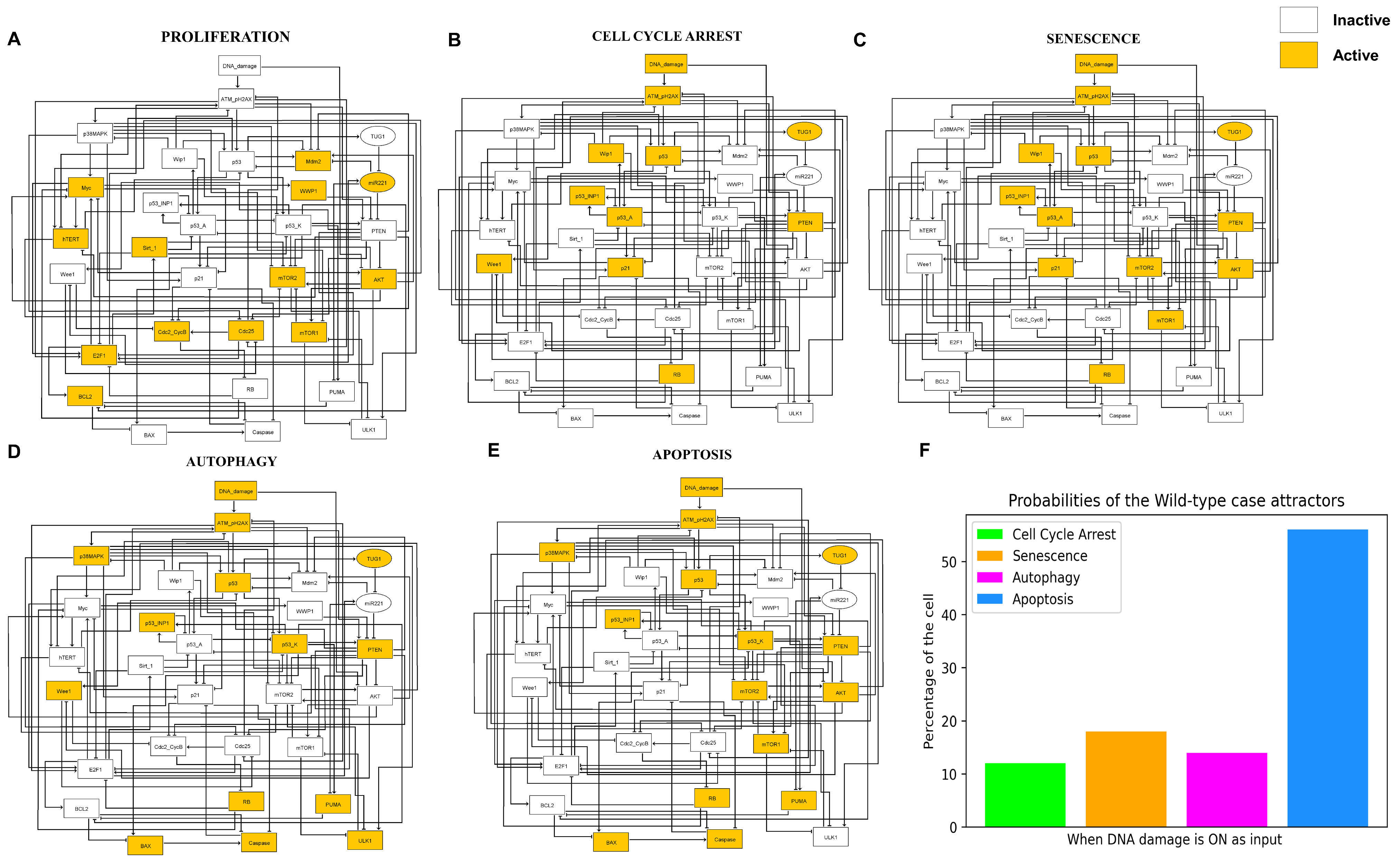
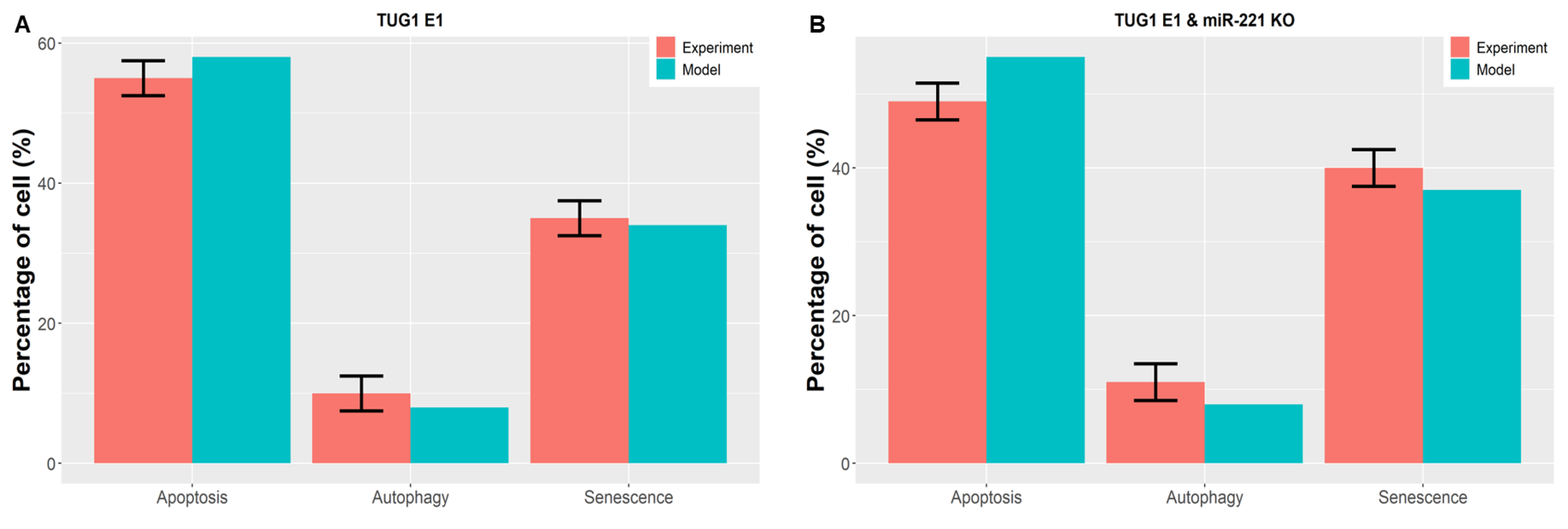
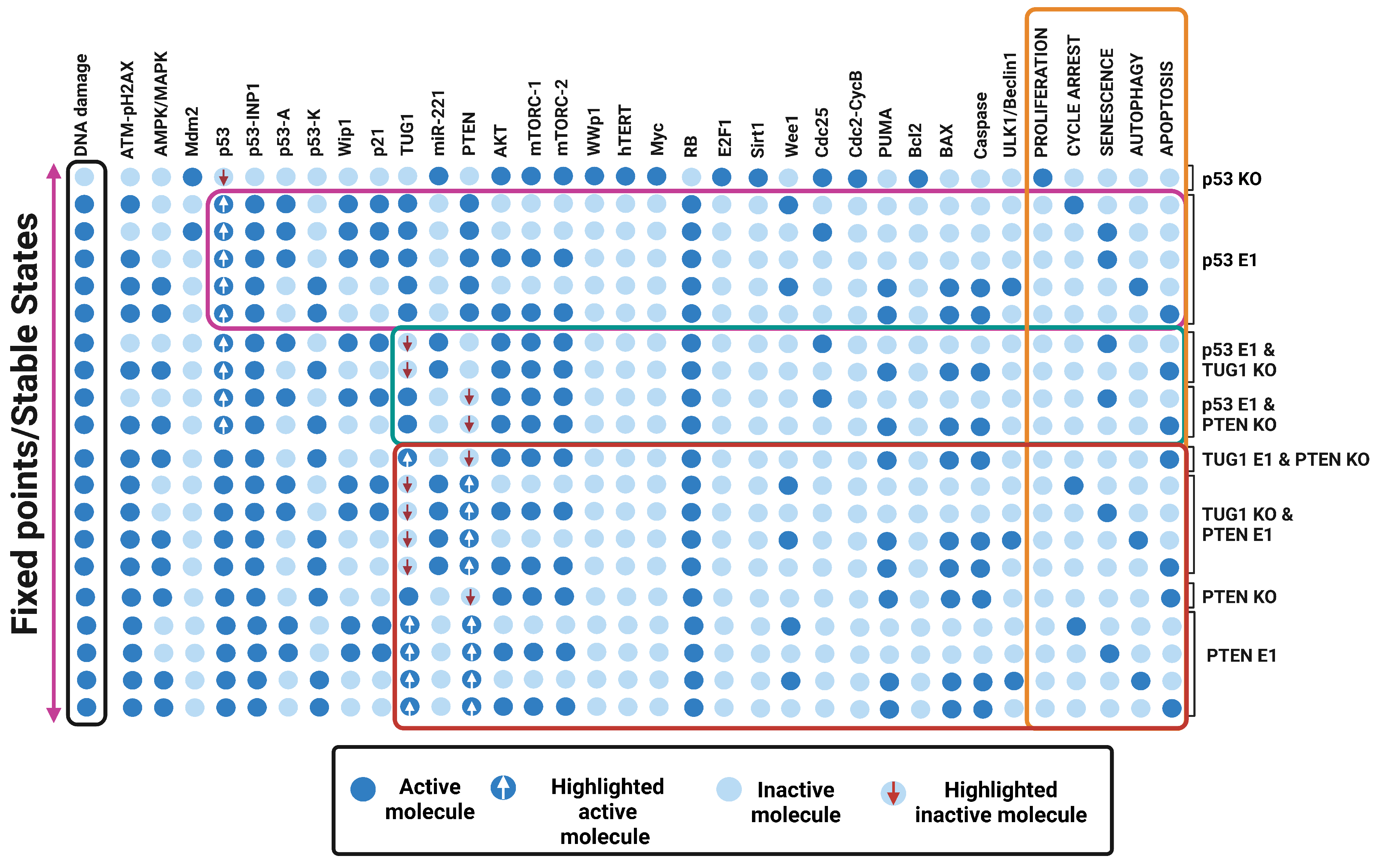
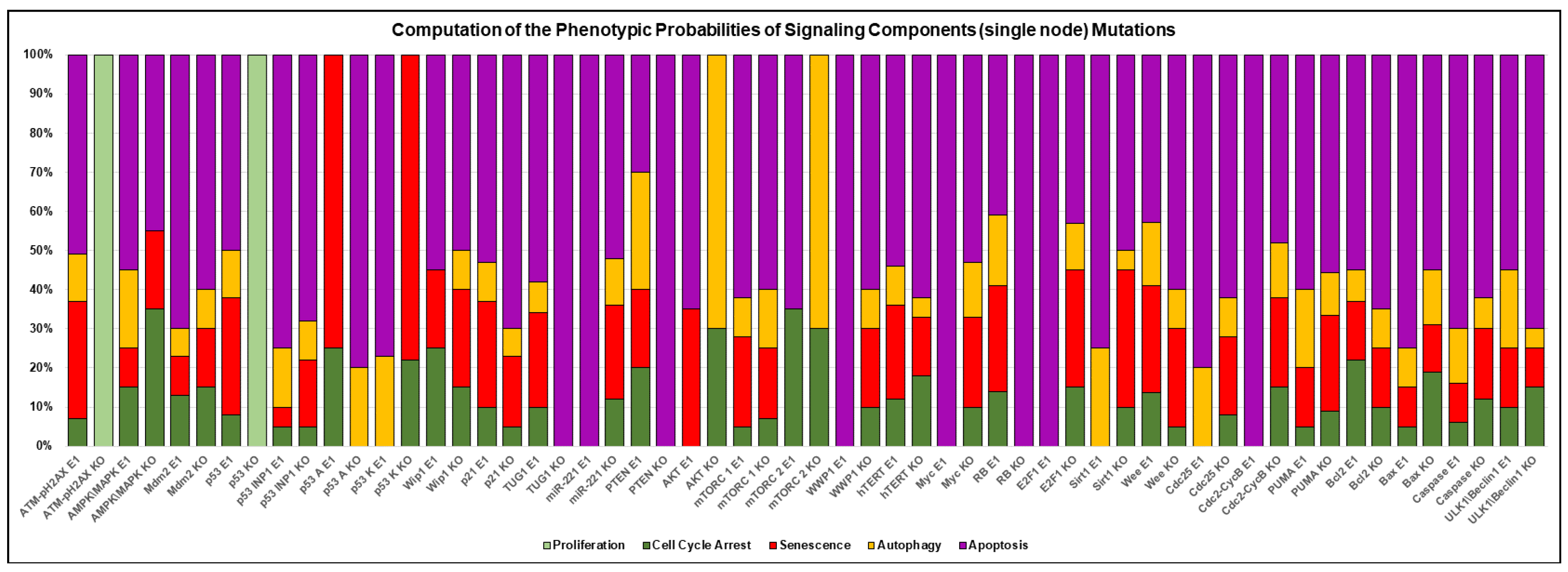
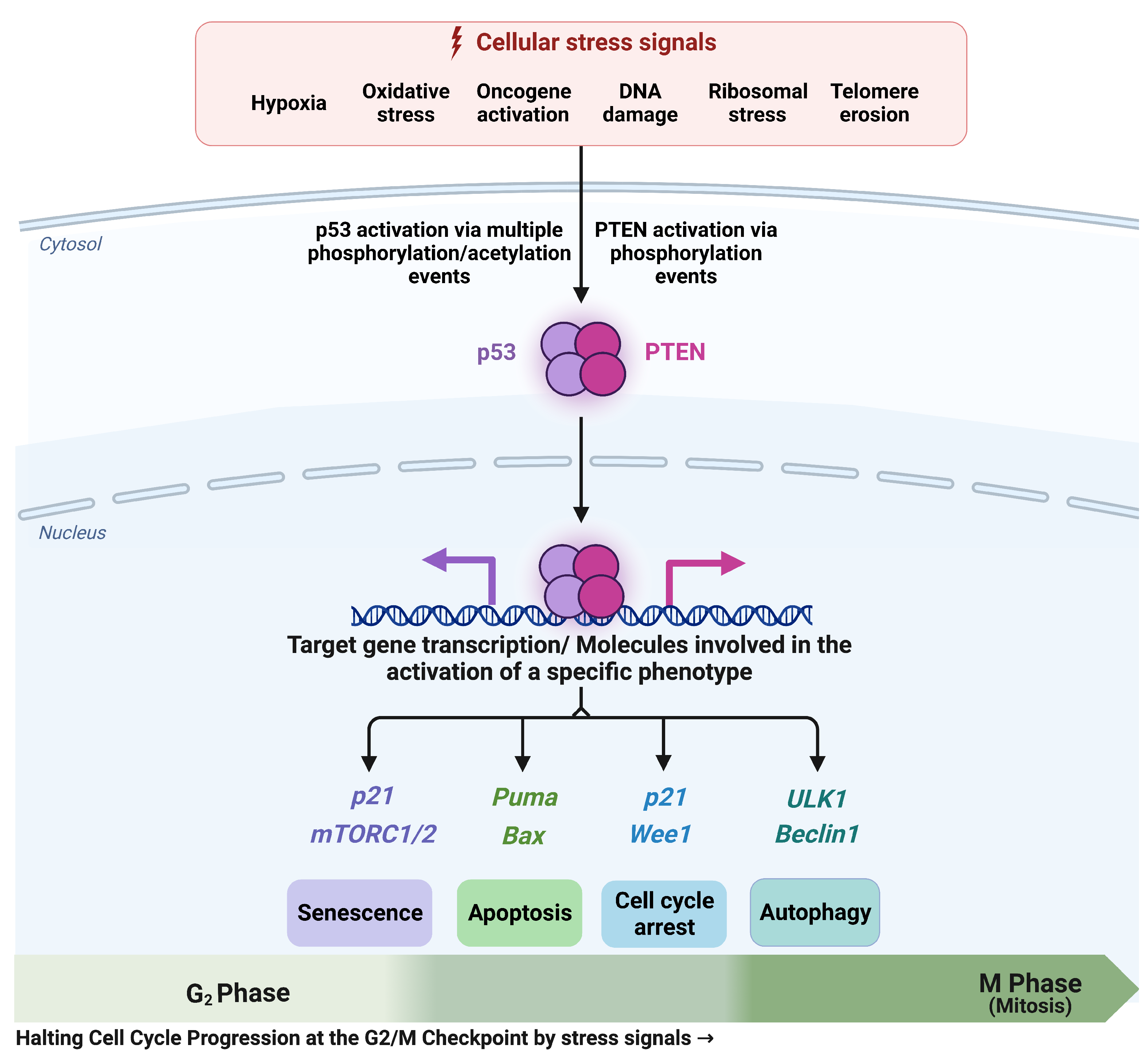
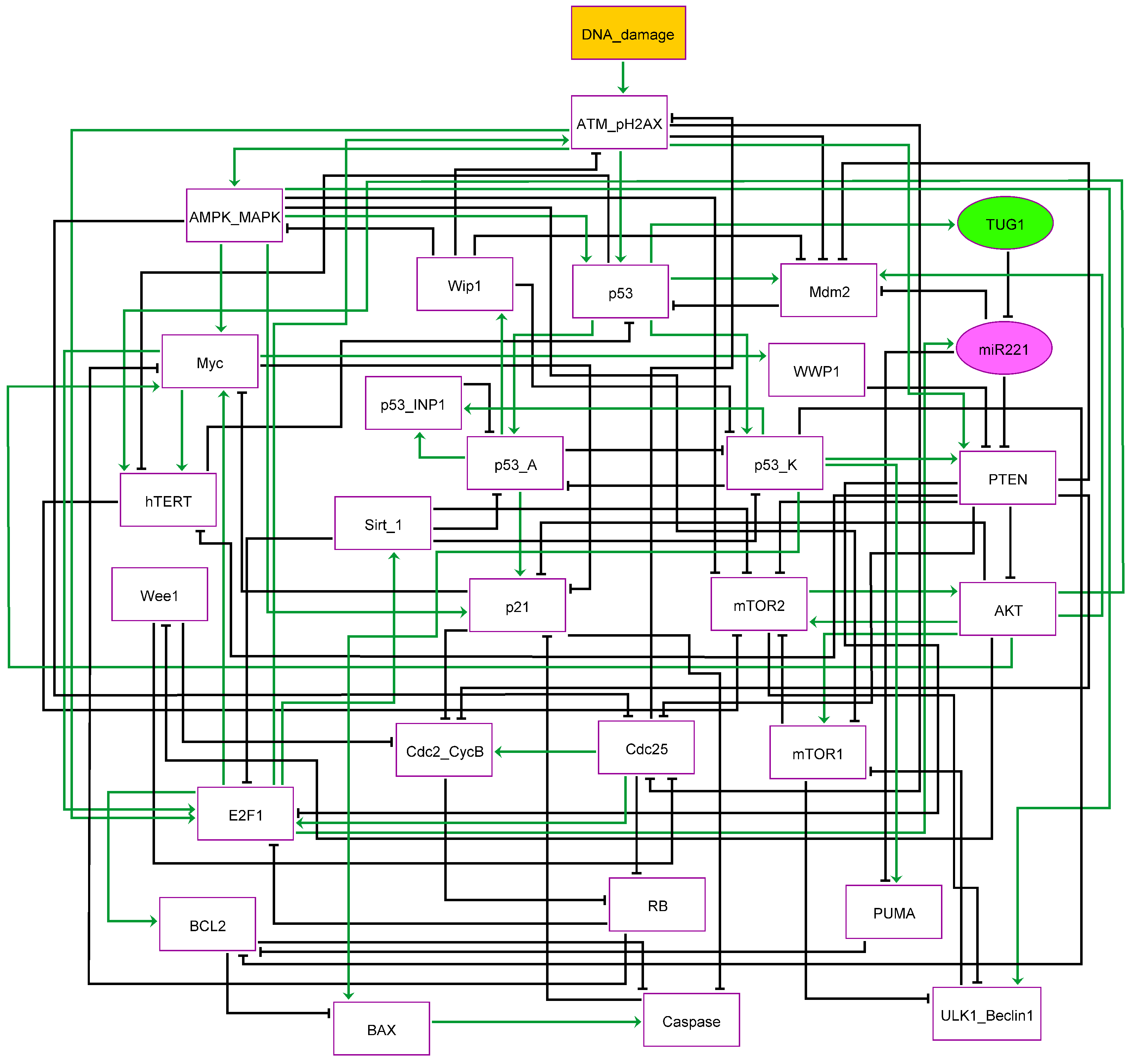
Cell fate determination is a complex process that is frequently described as cells traveling on rugged pathways, beginning with DNA damage response (DDR). Tumor protein p53 (p53) and phosphatase and tensin homolog (PTEN) are two critical players in this process. Although both of these proteins are known to be key cell fate regulators, the exact mechanism by which they collaborate in the DDR remains unknown. Thus, we propose a dynamic Boolean network. Our model incorporates experimental data obtained from NSCLC cells and is the first of its kind. Our network’s wild-type system shows that DDR activates the G2/M checkpoint, and this triggers a cascade of events, involving p53 and PTEN, that ultimately lead to the four potential phenotypes: cell cycle arrest, senescence, autophagy, and apoptosis (quadra-stable dynamics). The network predictions correspond with the gain-and-loss of function investigations in the additional two cell lines (HeLa and MCF-7). Our findings imply that p53 and PTEN act as molecular switches that activate or deactivate specific pathways to govern cell fate decisions. Thus, our network facilitates the direct investigation of quadruplicate cell fate decisions in DDR. Therefore, we concluded that concurrently controlling PTEN and p53 dynamics may be a viable strategy for enhancing clinical outcomes.
Keywords: DNA damage response; PTEN; P53; cell fate determination; G2/M checkpoint; NSCLC DNA damage response; PTEN; P53; cell fate determination; G2/M checkpoint; NSCLC