Article

Staphylococcus aureus Sensitivity to Membrane Disrupting Antibacterials Is Increased under Microgravity

School of Life Sciences, Ulsan National Institute of Science and Technology, Ulsan 44919, Republic of Korea
*
Authors to whom correspondence should be addressed.
Cells 2023, 12(14), 1907; https://doi.org/10.3390/cells12141907
Submission received: 30 June 2023 / Revised: 18 July 2023 / Accepted: 20 July 2023 / Published: 21 July 2023
(This article belongs to the Special Issue New Insights into Microgravity and Space Biology)

Abstract

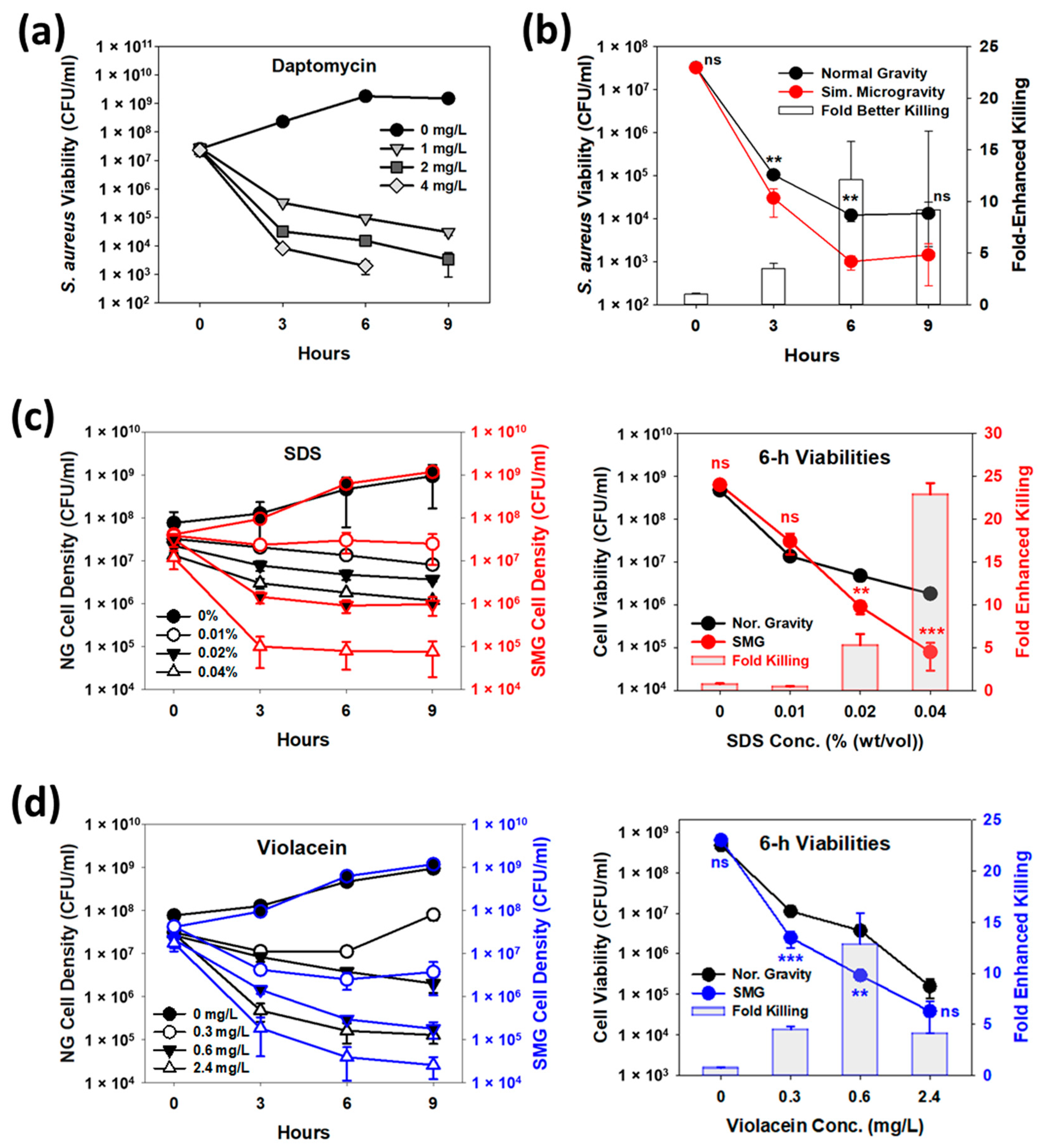
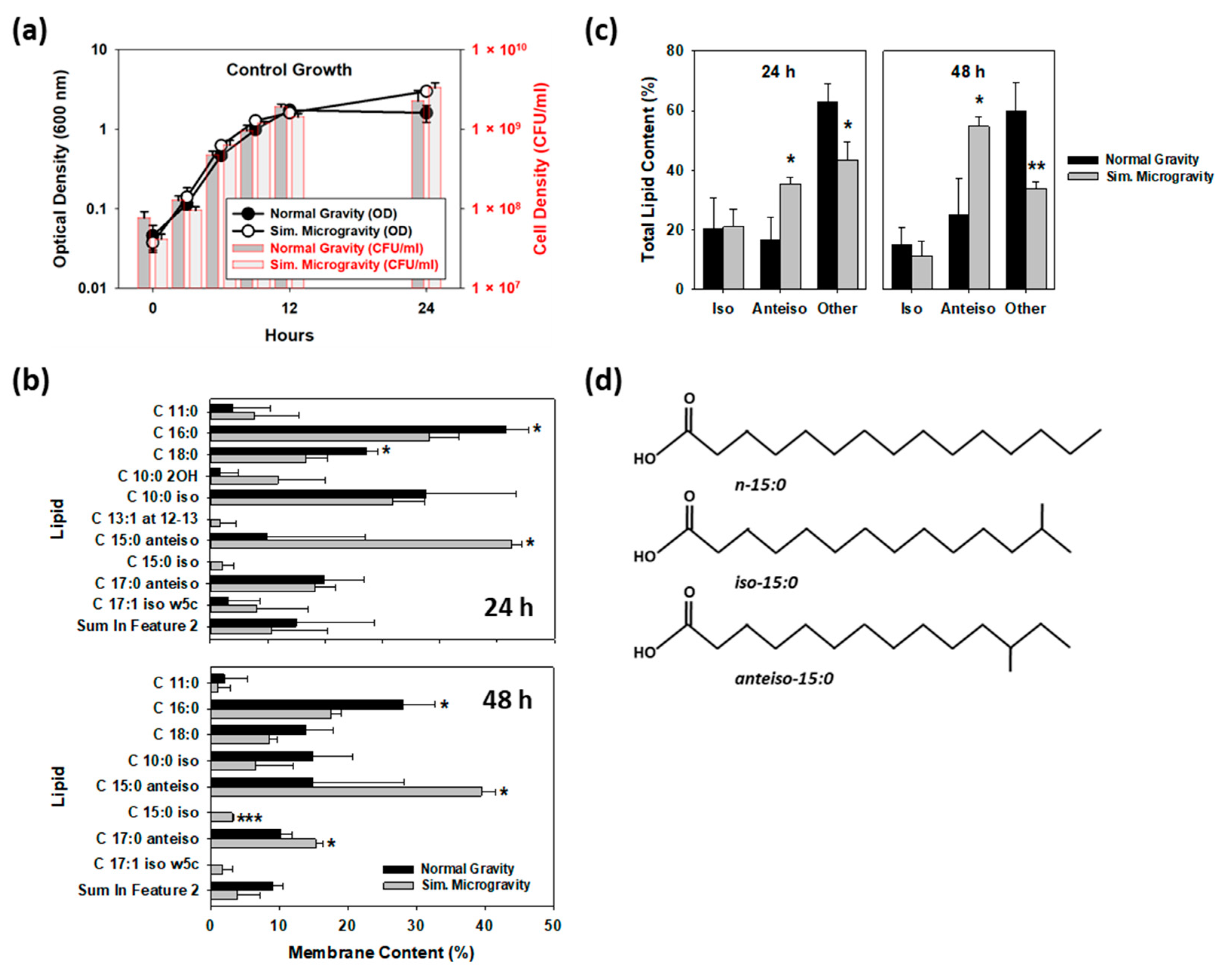
In a survey of the International Space Station (ISS), the most common pathogenic bacterium identified in samples from the air, water and surfaces was Staphylococcus aureus. While growth under microgravity is known to cause physiological changes in microbial pathogens, including shifts in antibacterial sensitivity, its impact on S. aureus is not well understood. Using high-aspect ratio vessels (HARVs) to generate simulated microgravity (SMG) conditions in the lab, we found S. aureus lipid profiles are altered significantly, with a higher presence of branch-chained fatty acids (BCFAs) (14.8% to 35.4%) with a concomitant reduction (41.3% to 31.4%) in straight-chain fatty acids (SCFAs) under SMG. This shift significantly increased the sensitivity of this pathogen to daptomycin, a membrane-acting antibiotic, leading to 12.1-fold better killing under SMG. Comparative assays with two additional compounds, i.e., SDS and violacein, confirmed S. aureus is more susceptible to membrane-disrupting agents, with 0.04% SDS and 0.6 mg/L violacein resulting in 22.9- and 12.8-fold better killing in SMG than normal gravity, respectively. As humankind seeks to establish permanent colonies in space, these results demonstrate the increased potency of membrane-active antibacterials to control the presence and spread of S. aureus, and potentially other pathogens.
Keywords: microgravity; Staphylococcus aureus; membrane; lipid profiles; antibiotic susceptibility; daptomycin; violacein; SDS microgravity; Staphylococcus aureus; membrane; lipid profiles; antibiotic susceptibility; daptomycin; violacein; SDS