Article

Loss of Pex1 in Inner Ear Hair Cells Contributes to Cochlear Synaptopathy and Hearing Loss

by
Stephanie A. Mauriac
1,2,
Thibault Peineau
1,2,
Aamir Zuberi
3,4,
Cathleen Lutz
3 and
Gwénaëlle S. G. Géléoc
1,2,*
1
Department of Otolaryngology, Boston Children’s Hospital, Boston, MA 02115, USA
2
Kirby Neurobiology Center, Harvard Medical School, Boston, MA 02115, USA
3
Rare Disease Translational Center, The Jackson Laboratory, Bar Harbor, ME 04609, USA
4
Technology Evaluation and Development Research Laboratory, The Jackson Laboratory, Bar Harbor, ME 04609, USA
*
Author to whom correspondence should be addressed.
Cells 2022, 11(24), 3982; https://doi.org/10.3390/cells11243982
Submission received: 13 November 2022 / Revised: 4 December 2022 / Accepted: 6 December 2022 / Published: 9 December 2022
(This article belongs to the Special Issue Exclusive Review Papers in Autophagy)

Abstract

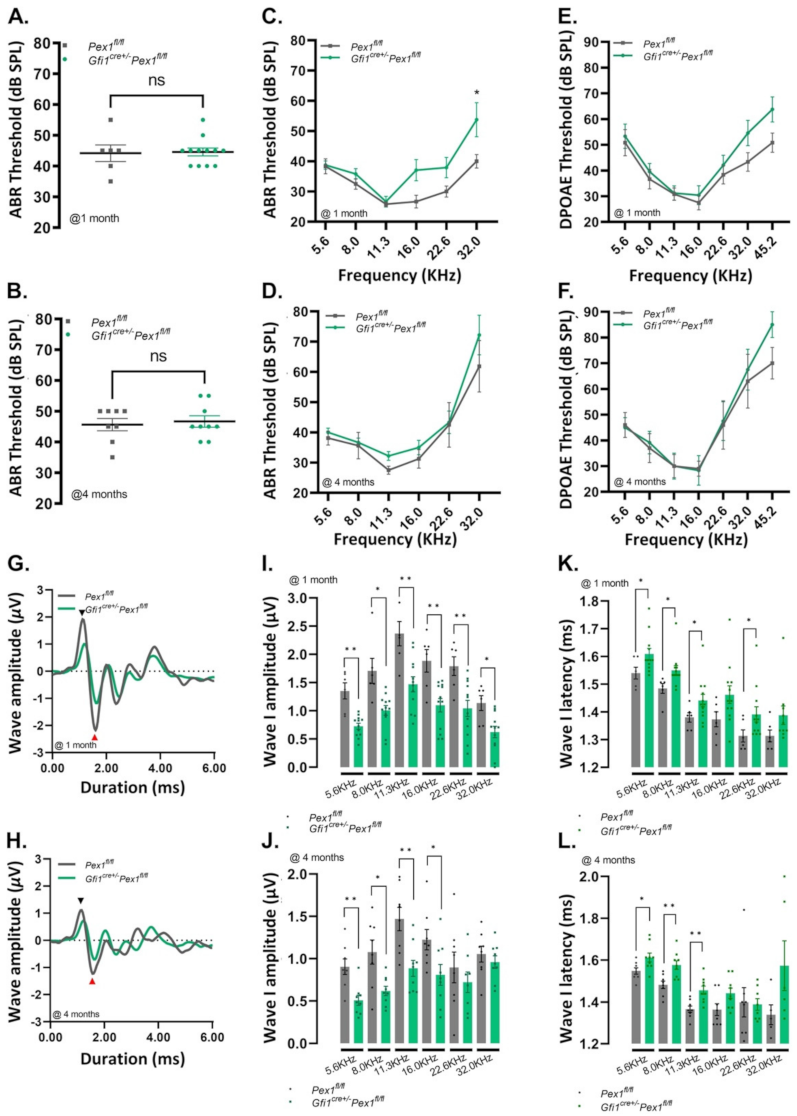
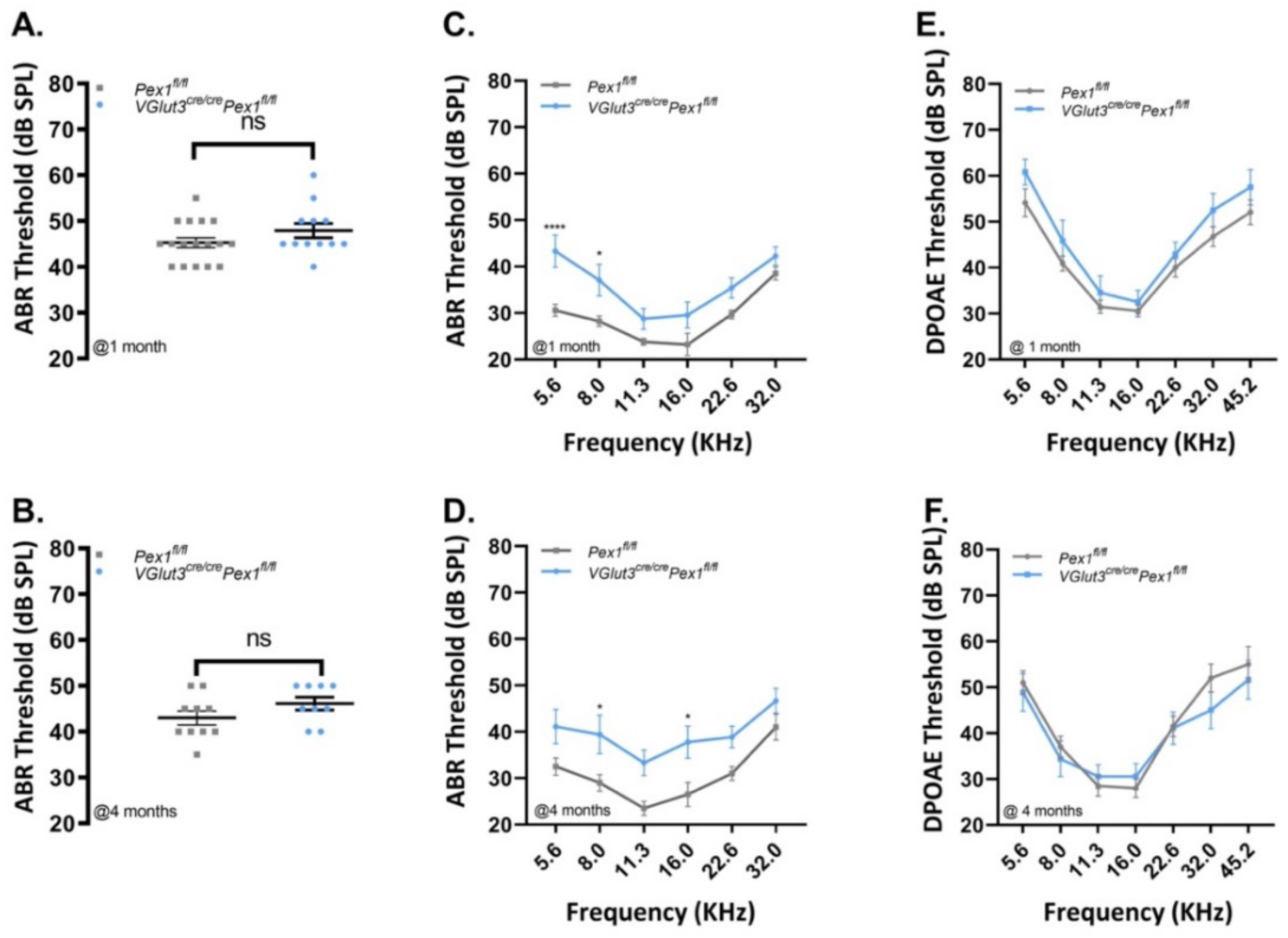
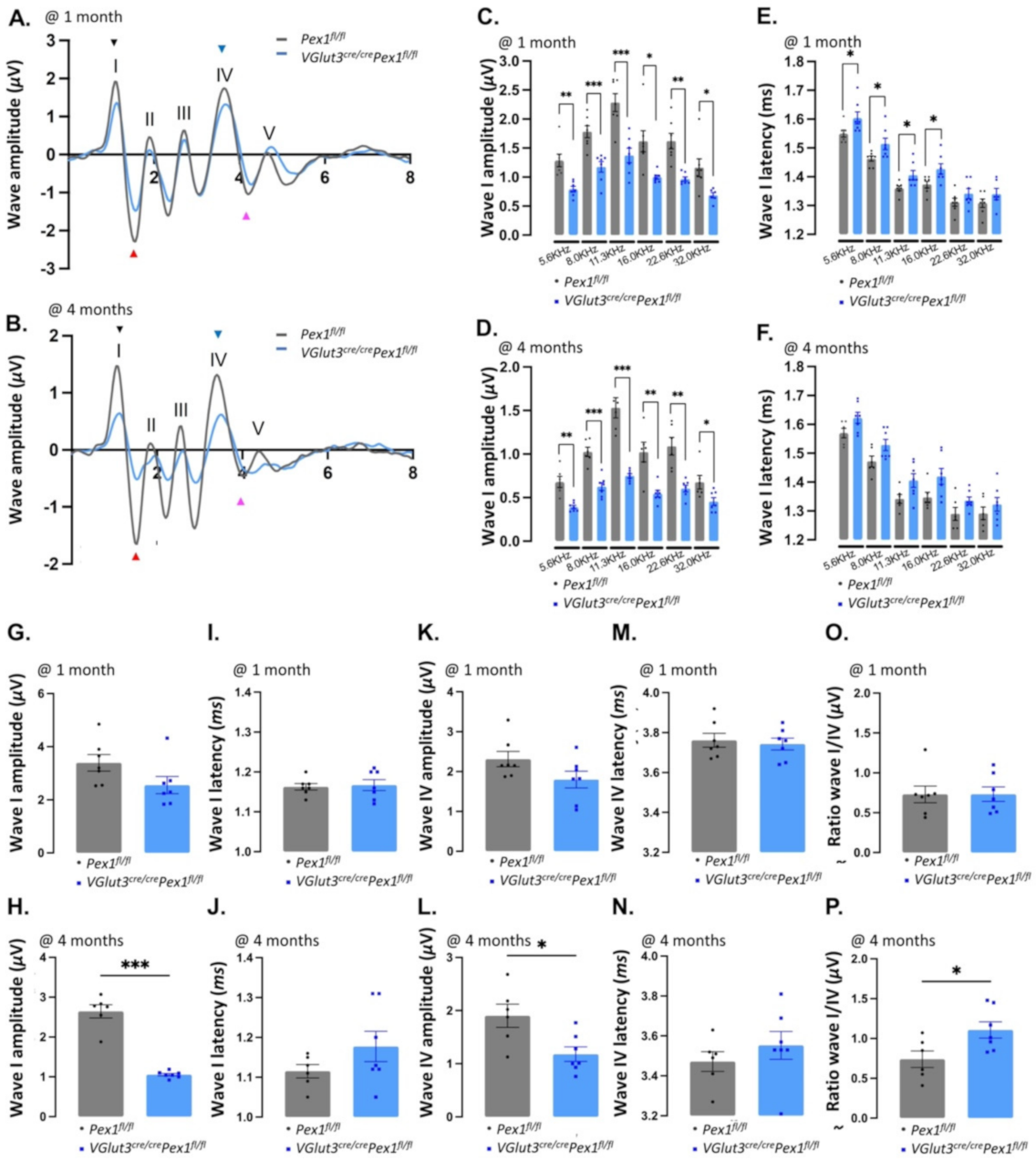
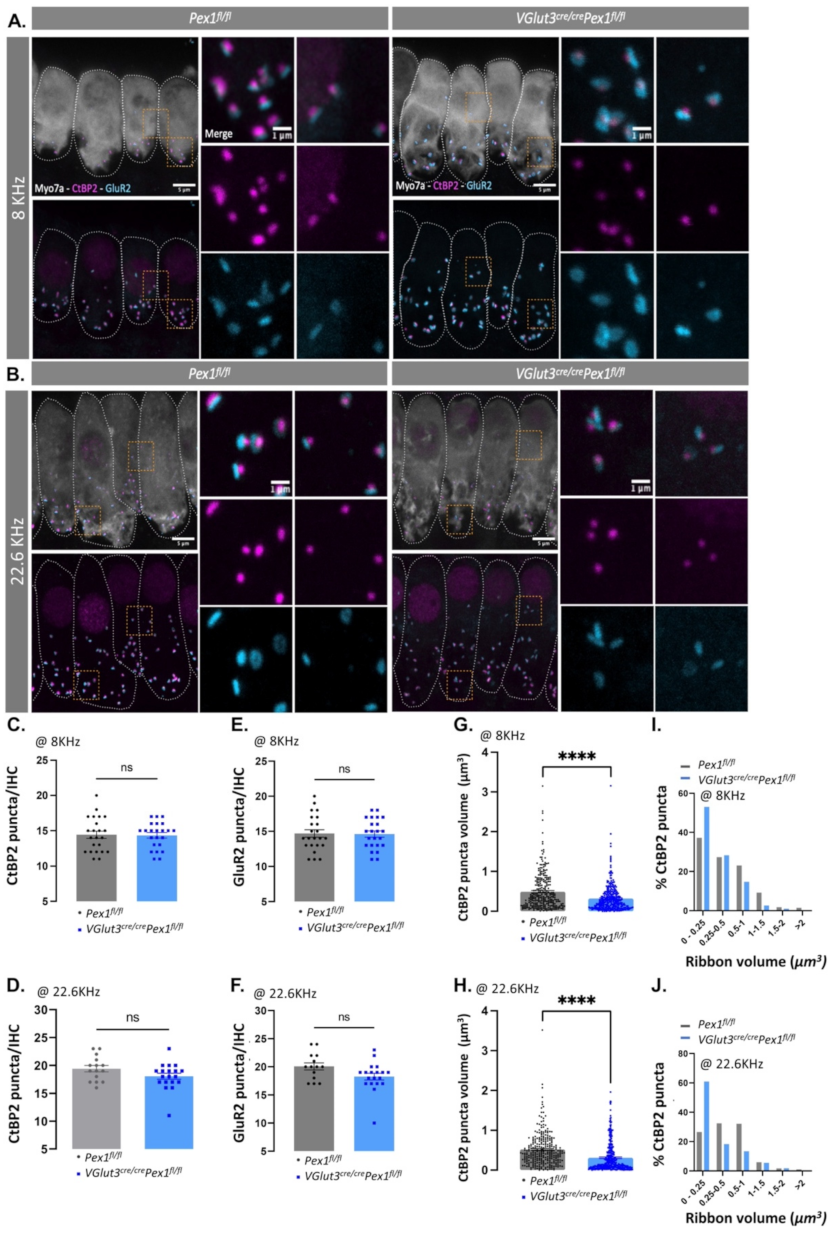
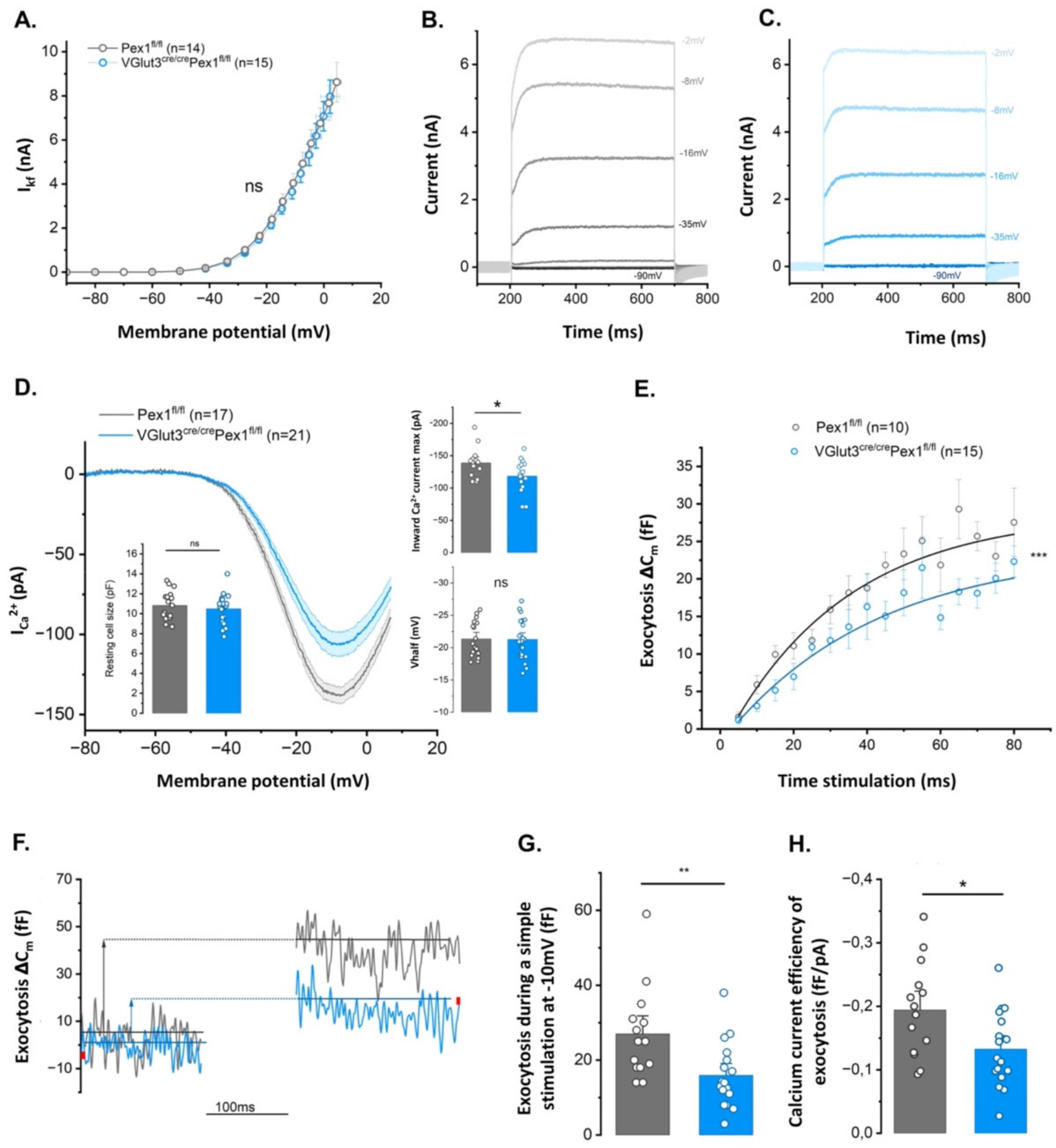
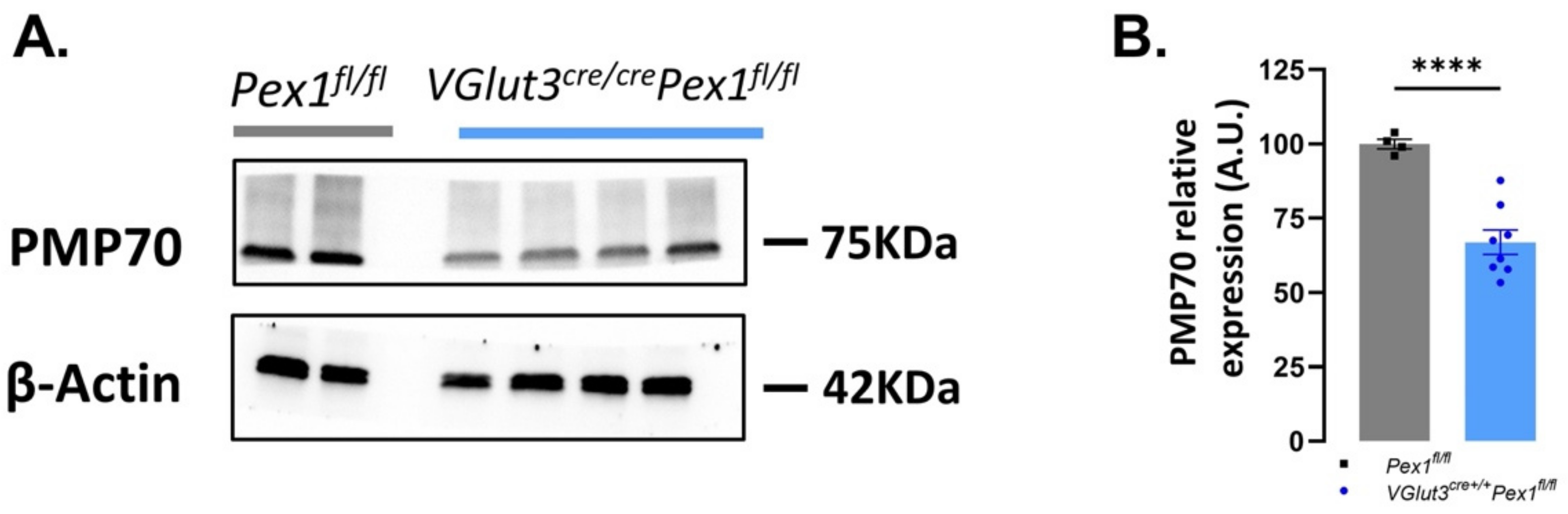
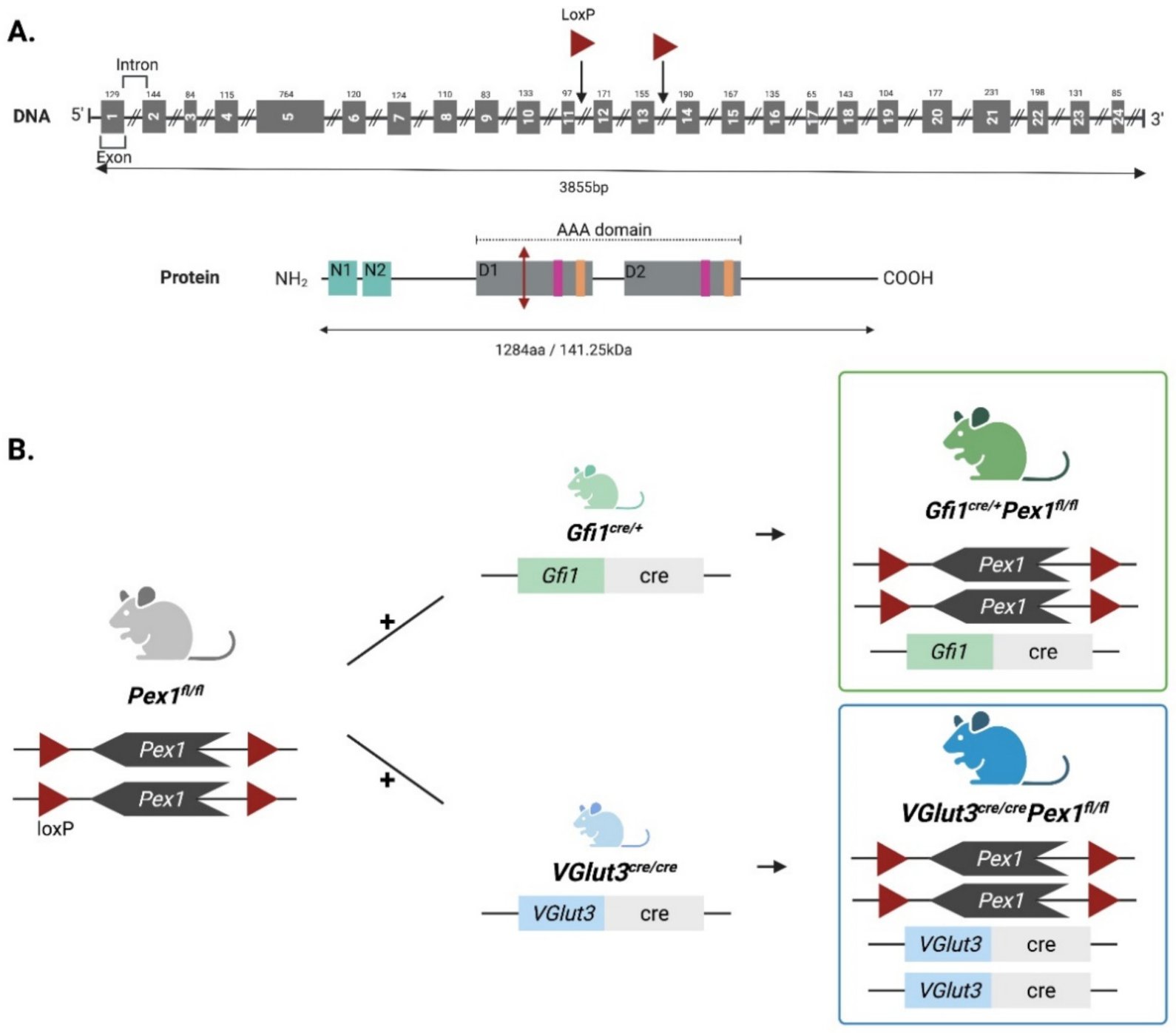
Peroxisome Biogenesis Disorders (PBD) and Zellweger syndrome spectrum disorders (ZSD) are rare genetic multisystem disorders that include hearing impairment and are associated with defects in peroxisome assembly, function, or both. Mutations in 13 peroxin (PEX) genes have been found to cause PBD-ZSD with ~70% of patients harboring mutations in PEX1. Limited research has focused on the impact of peroxisomal disorders on auditory function. As sensory hair cells are particularly vulnerable to metabolic changes, we hypothesize that mutations in PEX1 lead to oxidative stress affecting hair cells of the inner ear, subsequently resulting in hair cell degeneration and hearing loss. Global deletion of the Pex1 gene is neonatal lethal in mice, impairing any postnatal studies. To overcome this limitation, we created conditional knockout mice (cKO) using Gfi1Creor VGlut3Cre expressing mice crossed to floxed Pex1 mice to allow for selective deletion of Pex1 in the hair cells of the inner ear. We find that Pex1 excision in inner hair cells (IHCs) leads to progressive hearing loss associated with significant decrease in auditory brainstem responses (ABR), specifically ABR wave I amplitude, indicative of synaptic defects. Analysis of IHC synapses in cKO mice reveals a decrease in ribbon synapse volume and functional alterations in exocytosis. Concomitantly, we observe a decrease in peroxisomal number, indicative of oxidative stress imbalance. Taken together, these results suggest a critical function of Pex1 in development and maturation of IHC-spiral ganglion synapses and auditory function.
Keywords: Pex1; hearing loss; peroxisome; synapse; hair cells; PBD-ZSD Pex1; hearing loss; peroxisome; synapse; hair cells; PBD-ZSD