Article

Deep Molecular and In Silico Protein Analysis of p53 Alteration in Myelodysplastic Neoplasia and Acute Myeloid Leukemia


by
Kristóf Madarász
1,
János András Mótyán
2,
Judit Bedekovics
1,
Zsófia Miltényi
3,
Anikó Ujfalusi
4,
Gábor Méhes
1 and
Attila Mokánszki
1,*
1
Department of Pathology, Faculty of Medicine, University of Debrecen, 4032 Debrecen, Hungary
2
Department of Biochemistry and Molecular Biology, Faculty of Medicine, University of Debrecen, 4032 Debrecen, Hungary
3
Department of Hematology, Faculty of Medicine, University of Debrecen, 4032 Debrecen, Hungary
4
Department of Laboratory Medicine, Faculty of Medicine, University of Debrecen, 4032 Debrecen, Hungary
*
Author to whom correspondence should be addressed.
Cells 2022, 11(21), 3475; https://doi.org/10.3390/cells11213475
Submission received: 4 October 2022 / Revised: 29 October 2022 / Accepted: 31 October 2022 / Published: 2 November 2022

Abstract

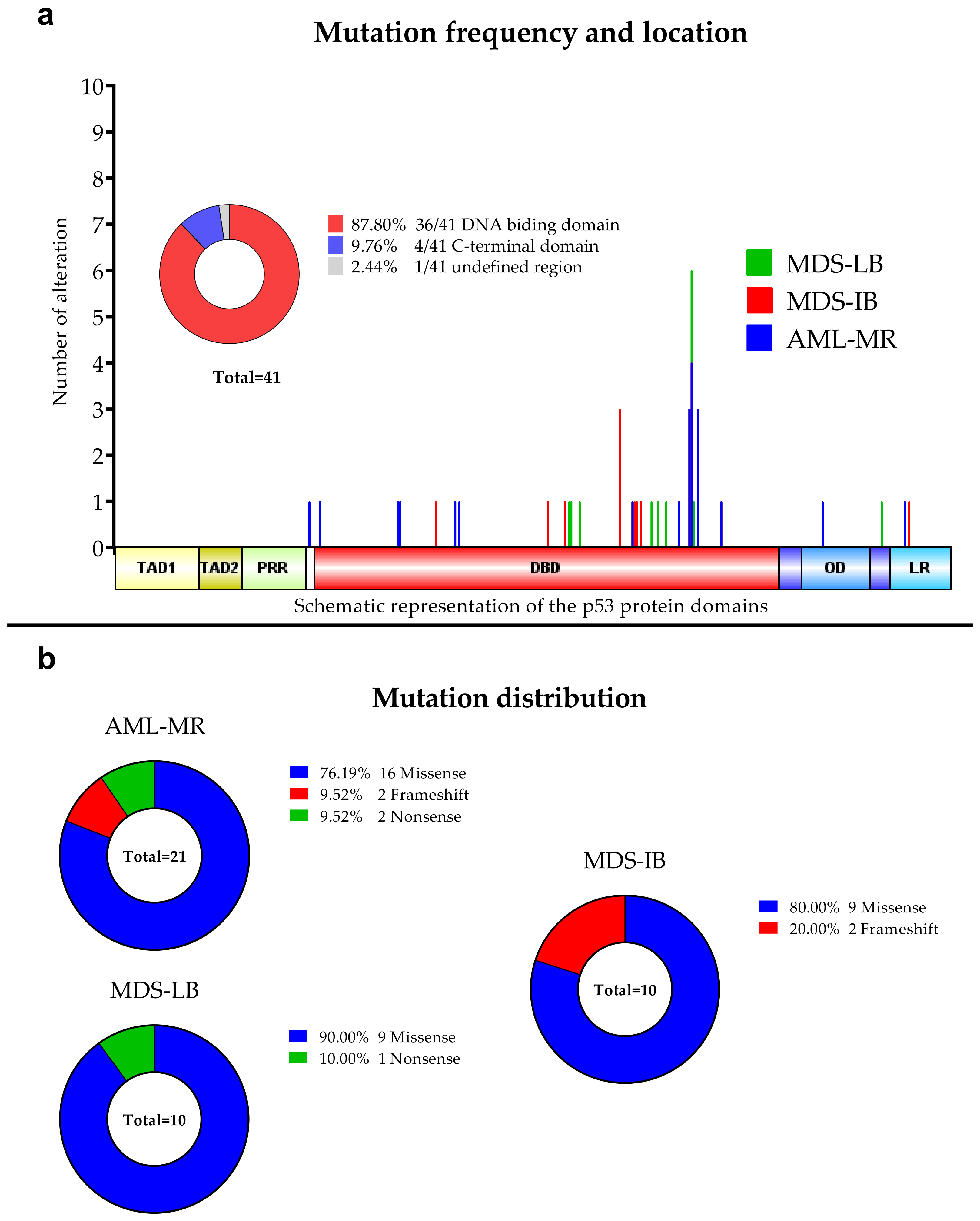
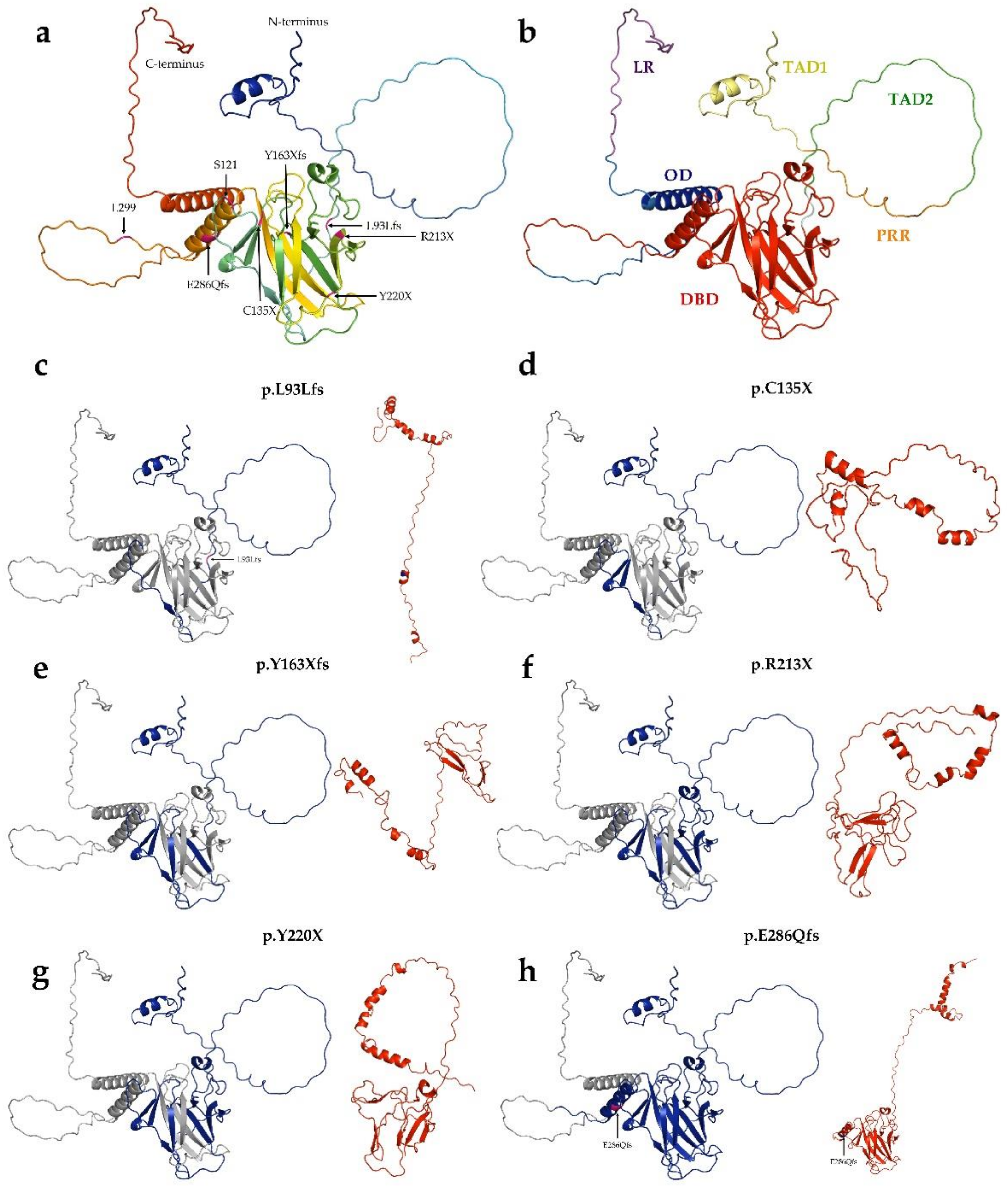
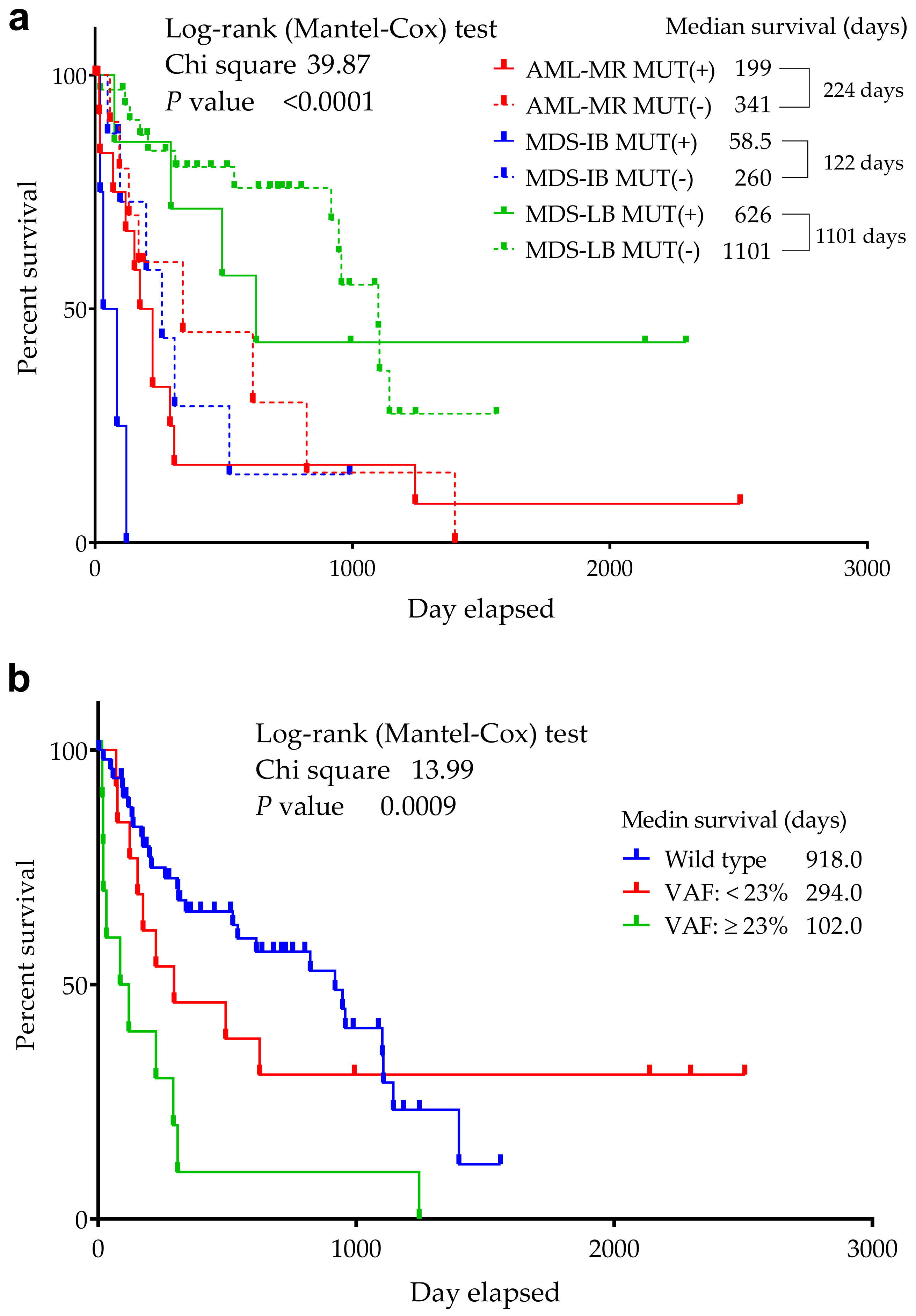
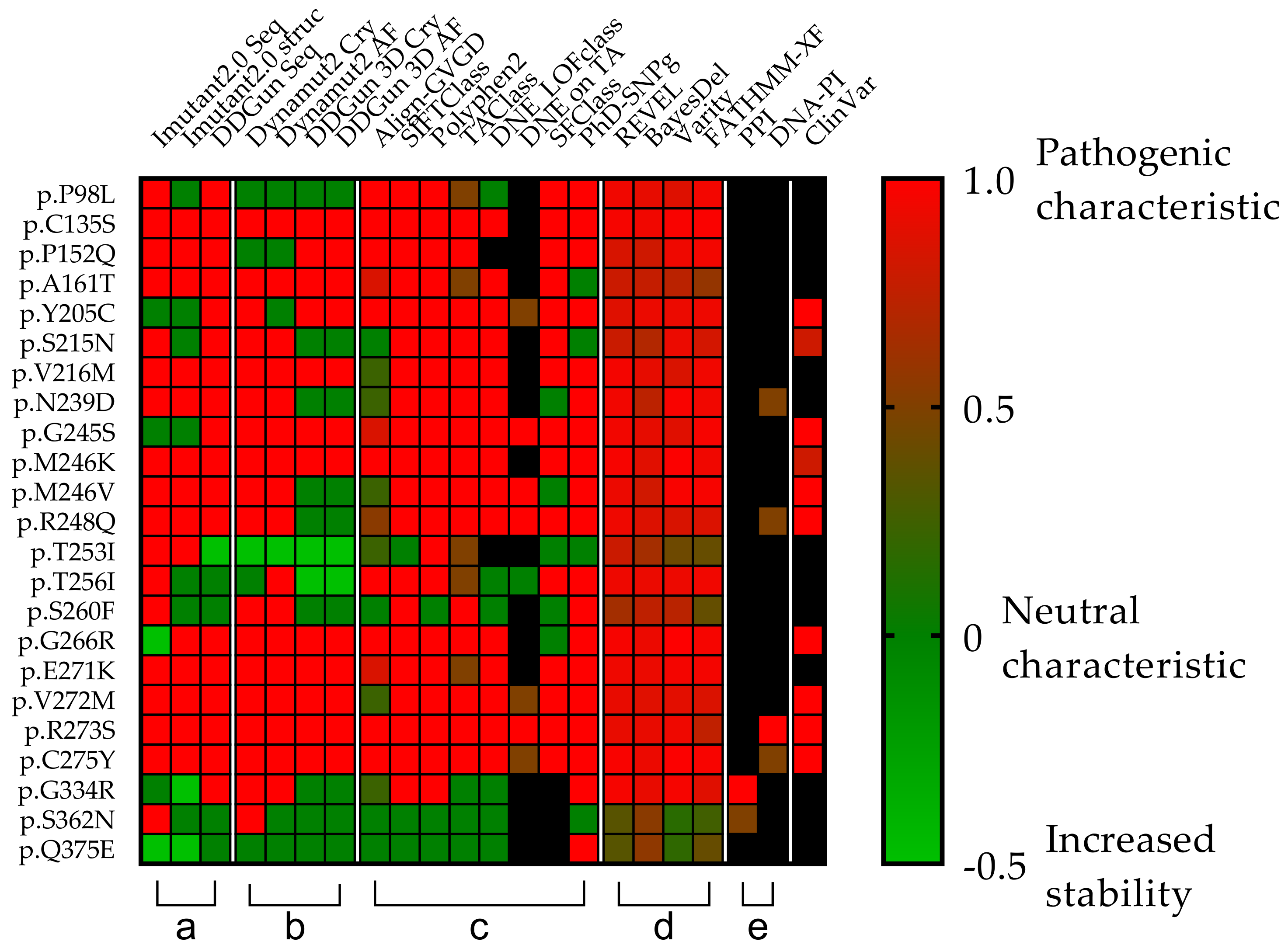
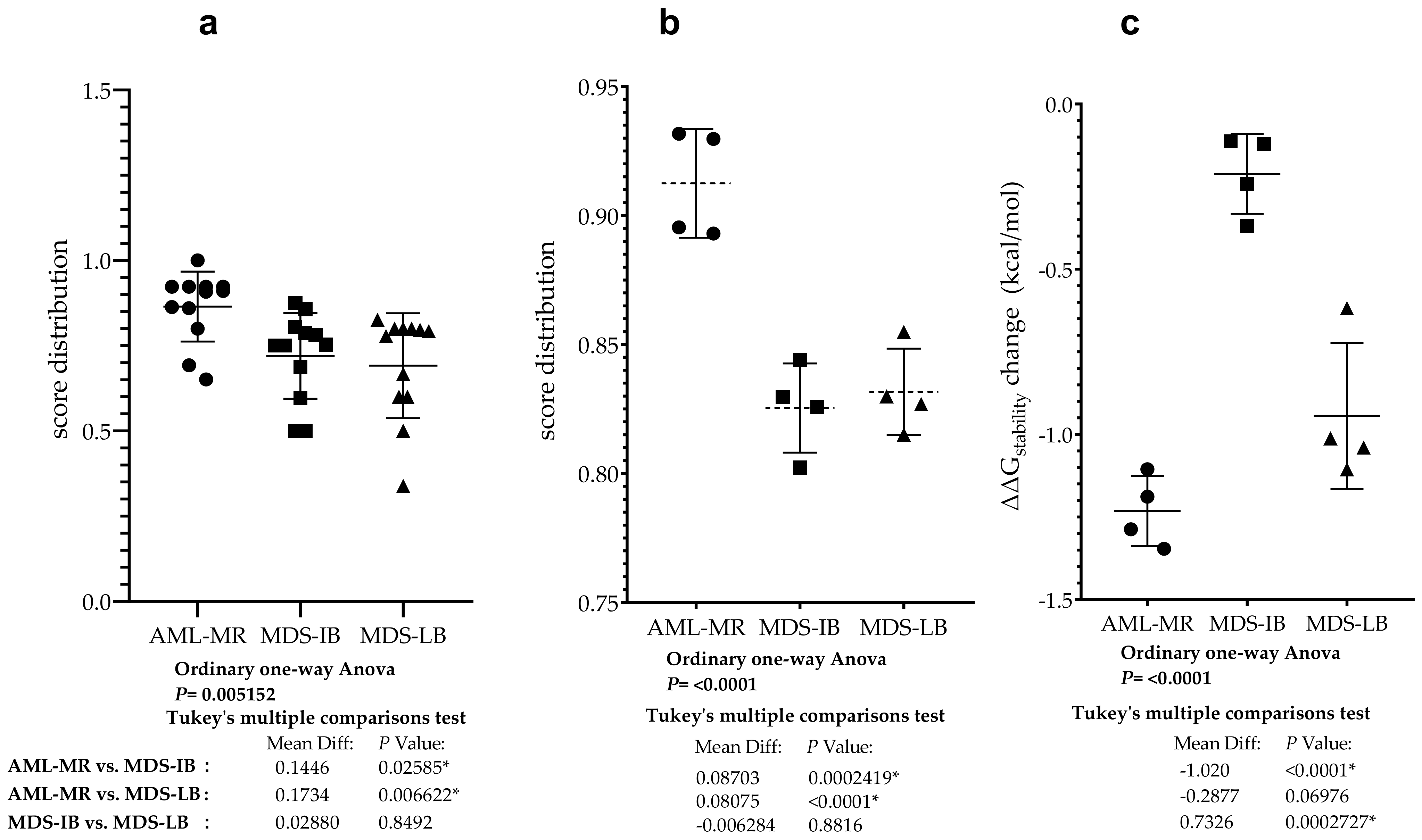
Background: Mutation of the TP53 gene is one of the major drivers of myelodysplastic neoplasias (MDS) and acute myeloid leukemia with myelodysplasia-related changes (AML-MR). TP53 mutations present in these hematopoietic malignancies form a distinct molecular genetic cluster with a worse prognosis than without the alteration. However, besides well-characterized hot-spot variants, a significant proportion of TP53 alterations are of uncertain clinical significance. Methods: To enlighten so far unknown aspects, bone-marrow samples from altogether 77 patients are analyzed retrospectively with the diagnosis of AML-MR (26 cases), MDS-IB (12 cases), and MDS-LB (39 cases) according to WHO 2022 guidelines. Next-generation sequencing results are correlated with histological, cytogenetic, and survival data. Results: Twenty out of the 30 TP53 mutation types detected by NGS are not categorized in current public databases; thus, their clinical significance remained mysterious. Because of the interpretation difficulties and the absence of clinical correlations, pathogenicity is established based on in silico approaches. The 12 pathogenicity classification systems, as well as protein stability, protein–DNA, protein–protein interaction, and post-translational modification analyses are applied. We found statistically significant differences between AML/MDS groups considering p53 pathogenicity, protein structural changes, and overall survival. The largest number of abnormalities with the most severe consequences are found in AML-MR cases. Conclusions: These molecular and in silico protein data further support that MDS with increased-blast (MDS-IB) is an intermediate group between AML-MR and MDS with low-blast (MDS-LB) patients, which frequently progresses to AML and is therefore considered a pre-leukemic condition.
Keywords: myelodysplastic neoplasias (MDS); acute myeloid leukemia (AML); TP53 gene; p53 protein; next-generation sequencing (NGS); in silico bioinformatic analysis myelodysplastic neoplasias (MDS); acute myeloid leukemia (AML); TP53 gene; p53 protein; next-generation sequencing (NGS); in silico bioinformatic analysis