Review

The Nuclear Receptor PXR in Chronic Liver Disease
1
Department of Surgery, Oncology and Gastroenterology, University of Padova, 35121 Padova, Italy
2
Department of Pharmaceutical and Pharmacological Sciences, University of Padova, 35121 Padova, Italy
*
Author to whom correspondence should be addressed.
Cells 2022, 11(1), 61; https://doi.org/10.3390/cells11010061
Submission received: 23 November 2021 / Revised: 21 December 2021 / Accepted: 24 December 2021 / Published: 27 December 2021

Abstract

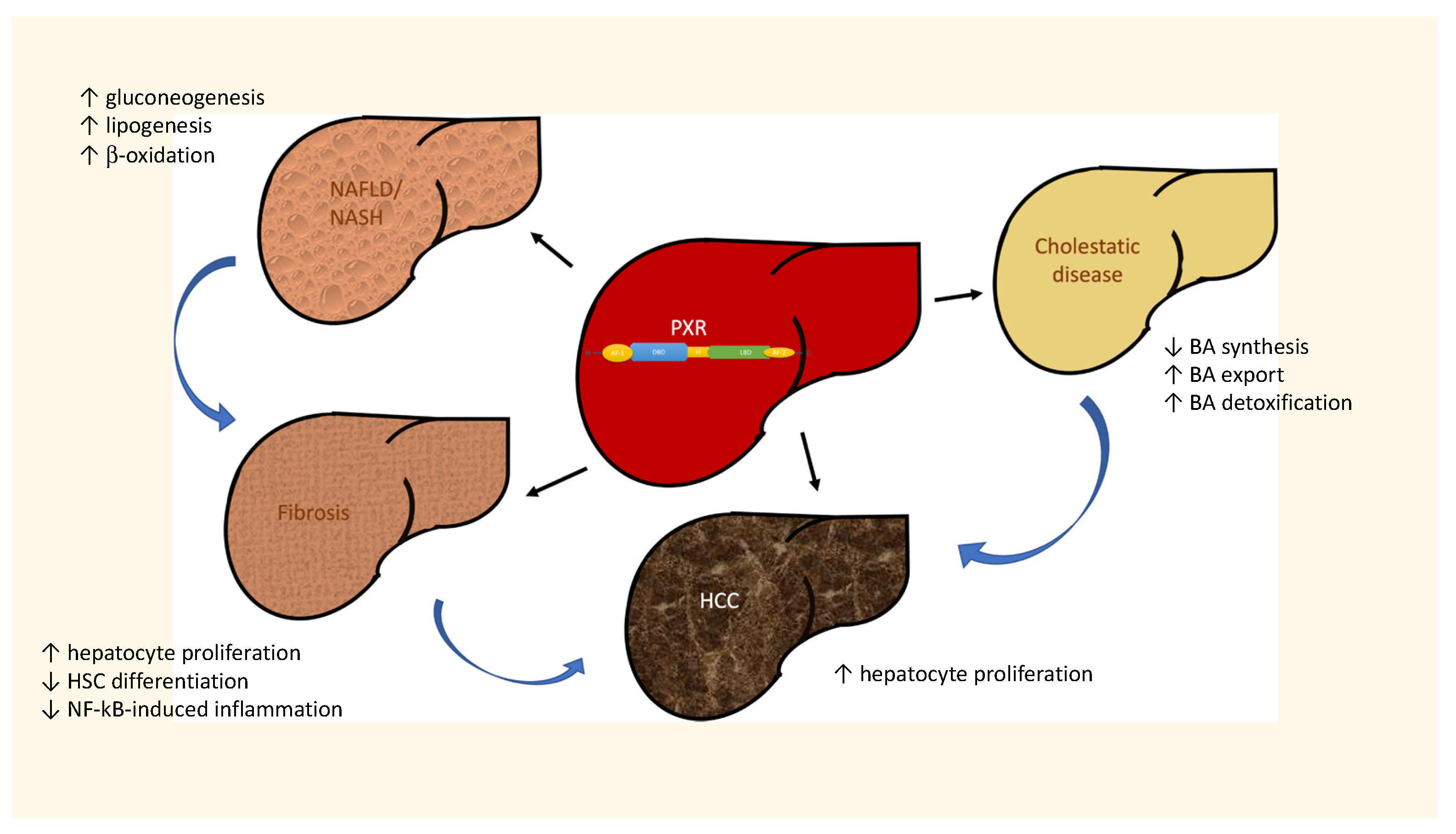
Pregnane X receptor (PXR), a nuclear receptor known for modulating the transcription of drug metabolizing enzymes and transporters (DMETs), such as cytochrome P450 3A4 and P-glycoprotein, is functionally involved in chronic liver diseases of different etiologies. Furthermore, PXR activity relates to that of other NRs, such as constitutive androstane receptor (CAR), through a crosstalk that in turn orchestrates a complex network of responses. Thus, besides regulating DMETs, PXR signaling is involved in both liver damage progression and repair and in the neoplastic transition to hepatocellular carcinoma. We here summarize the present knowledge about PXR expression and function in chronic liver diseases characterized by different etiologies and clinical outcome, focusing on the molecular pathways involved in PXR activity. Although many molecular details of these finely tuned networks still need to be fully understood, we conclude that PXR and its modulation could represent a promising pharmacological target for the identification of novel therapeutical approaches to chronic liver diseases.
Keywords: nuclear receptors; pregnane X receptor; liver disease; fibrosis; liver cancer; cholestasis; NAFLD; NASH nuclear receptors; pregnane X receptor; liver disease; fibrosis; liver cancer; cholestasis; NAFLD; NASH