Review

AGEs-Induced and Endoplasmic Reticulum Stress/Inflammation-Mediated Regulation of GLUT4 Expression and Atherogenesis in Diabetes Mellitus


by
Marisa Passarelli
1,2 and
Ubiratan Fabres Fabres Machado
3,*
1
Laboratório de Lípides (LIM-10), Hospital das Clínicas (HCFMUSP) da Faculdade de Medicina da Universidade de São Paulo, São Paulo 01246-000, Brazil
2
Programa de Pos-Graduação em Medicina, Universidade Nove de Julho, São Paulo 01525-000, Brazil
3
Department of Physiology and Biophysics, Institute of Biomedical Sciences, University of São Paulo, São Paulo 05508-000, Brazil
*
Author to whom correspondence should be addressed.
Cells 2022, 11(1), 104; https://doi.org/10.3390/cells11010104
Submission received: 8 November 2021 / Revised: 23 December 2021 / Accepted: 27 December 2021 / Published: 29 December 2021
(This article belongs to the Special Issue Unfolded Protein Response in Inflammation and Cancer)

Abstract

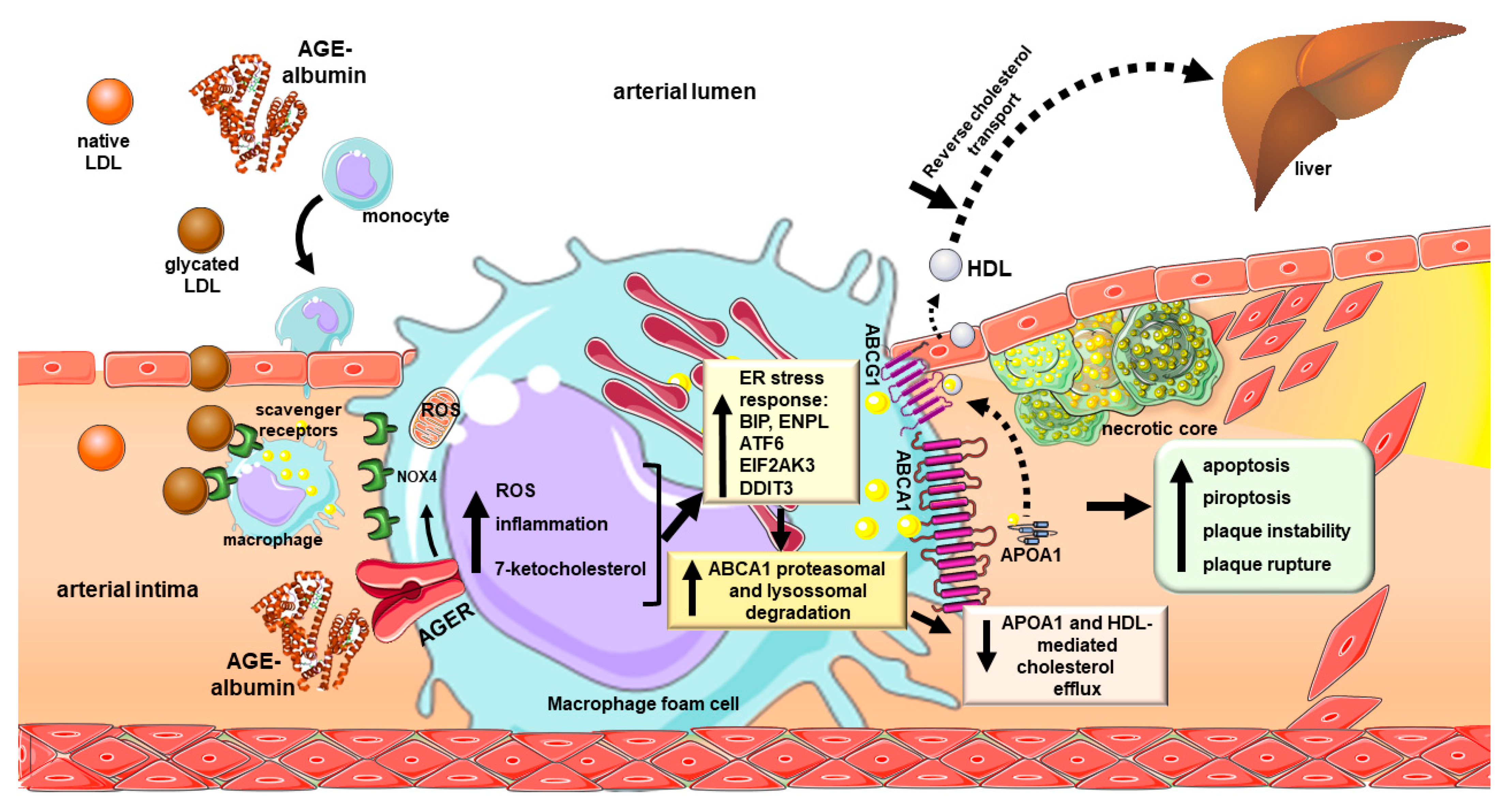
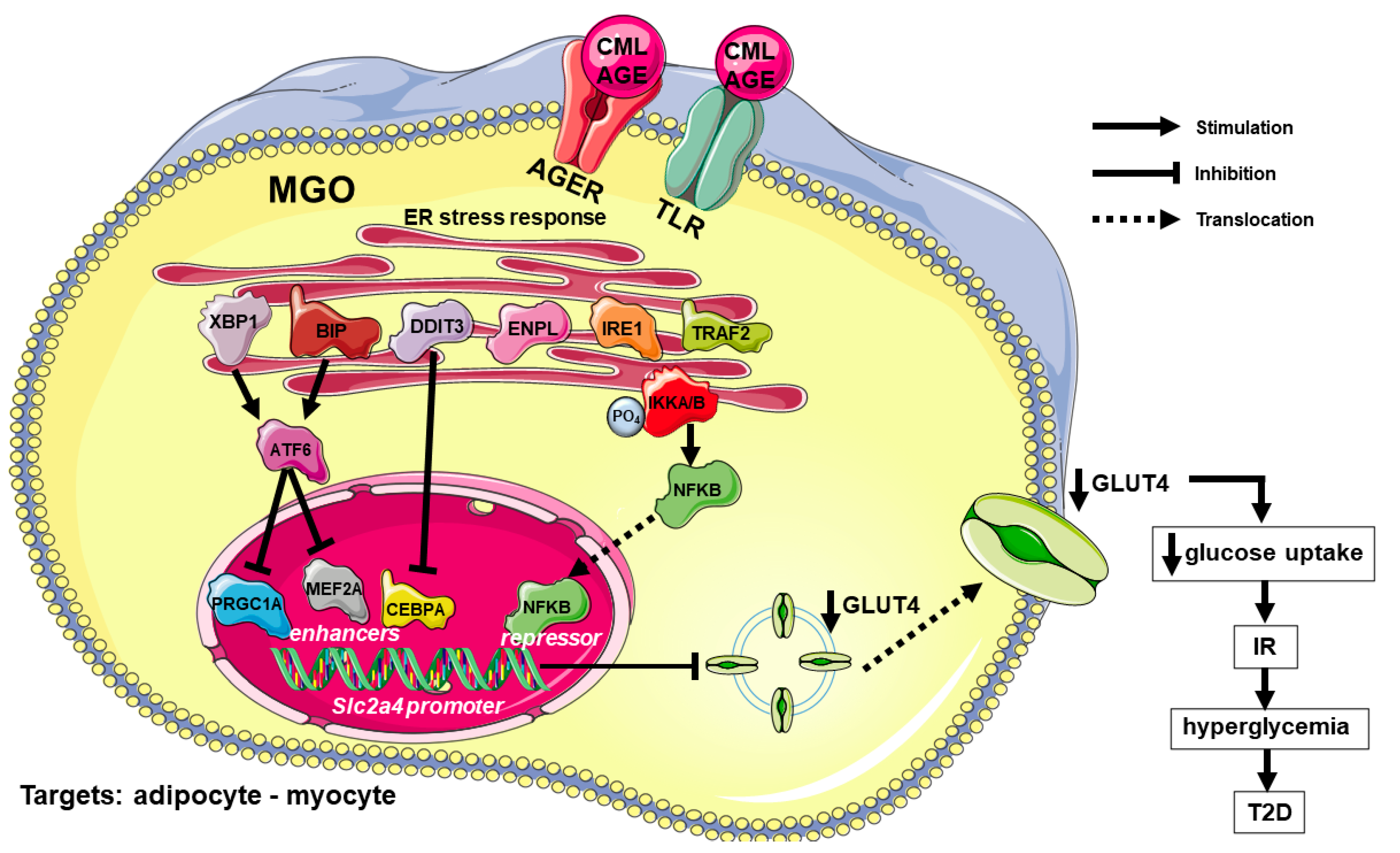
In recent decades, complex and exquisite pathways involved in the endoplasmic reticulum (ER) and inflammatory stress responses have been demonstrated to participate in the development and progression of numerous diseases, among them diabetes mellitus (DM). In those pathways, several players participate in both, reflecting a complicated interplay between ER and inflammatory stress. In DM, ER and inflammatory stress are involved in both the pathogenesis of the loss of glycemic control and the development of degenerative complications. Furthermore, hyperglycemia increases the generation of advanced glycation end products (AGEs), which in turn refeed ER and inflammatory stress, contributing to worsening glycemic homeostasis and to accelerating the development of DM complications. In this review, we present the current knowledge regarding AGEs-induced and ER/inflammation-mediated regulation of the expression of GLUT4 (solute carrier family 2, facilitated glucose transporter member 4), as a marker of glycemic homeostasis and of cardiovascular disease (CVD) development/progression, as a leading cause of morbidity and mortality in DM.
Keywords: diabetes mellitus; hyperglycemia; endoplasmic reticulum stress; GLUT4; atherogenesis; cardiovascular disease; advanced glycation end product diabetes mellitus; hyperglycemia; endoplasmic reticulum stress; GLUT4; atherogenesis; cardiovascular disease; advanced glycation end product