Review

Role of Nrf2 in Synaptic Plasticity and Memory in Alzheimer’s Disease
by
Don A. Davies
1,*,†,
Aida Adlimoghaddam
1,† and
Benedict C. Albensi
1,2,*
1
Division of Neurodegenerative Disorders, St. Boniface Hospital Research, Winnipeg, MB R2H 2A6, Canada
2
Department of Pharmacology & Therapeutics, University of Manitoba, Winnipeg, MB R3E 0T6, Canada
*
Authors to whom correspondence should be addressed.
These authors contributed to this work equally.
Cells 2021, 10(8), 1884; https://doi.org/10.3390/cells10081884
Submission received: 26 June 2021 / Revised: 20 July 2021 / Accepted: 23 July 2021 / Published: 25 July 2021
(This article belongs to the Special Issue Synaptic Dysfunction in Health and Disease)

Abstract

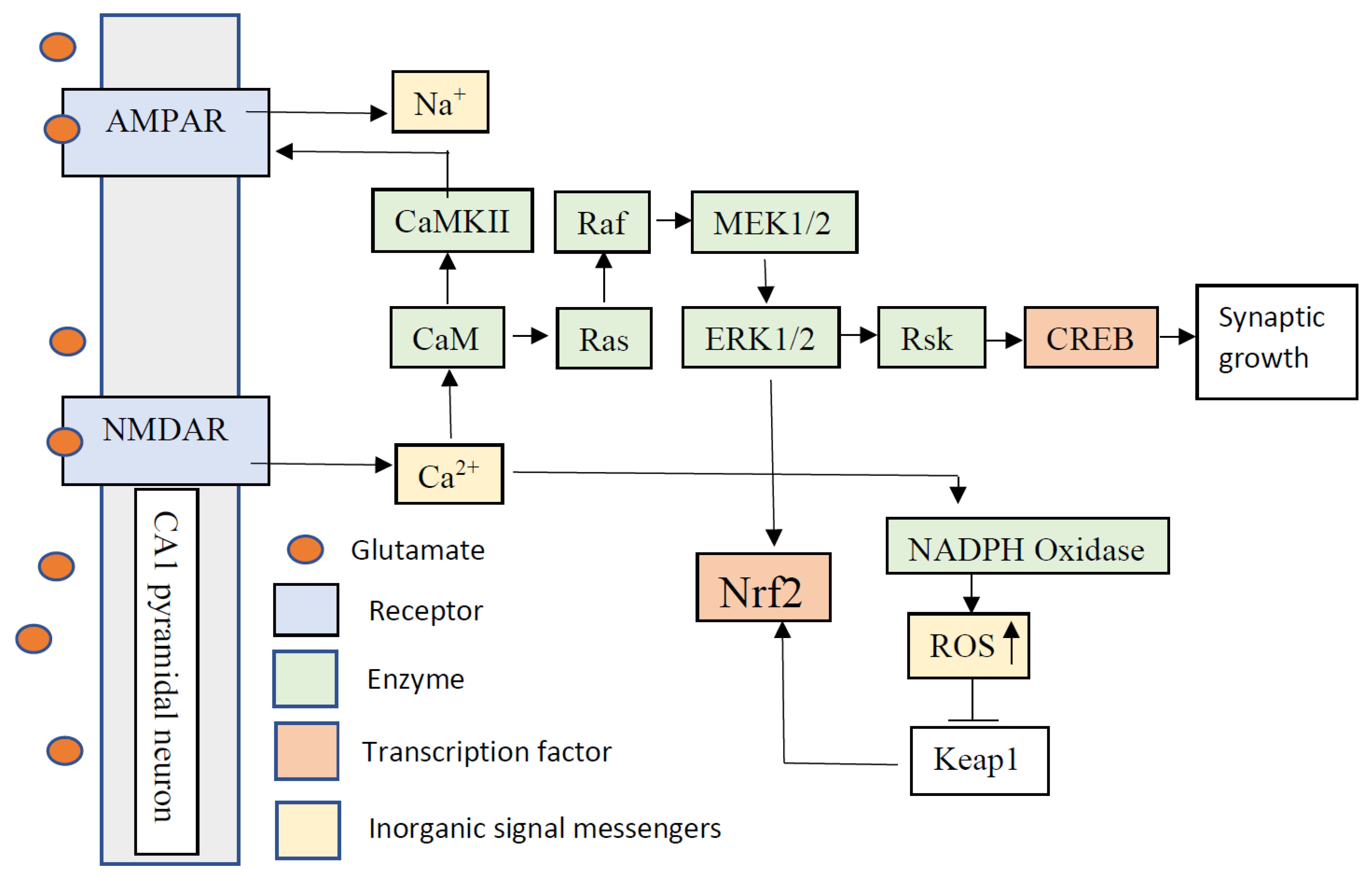
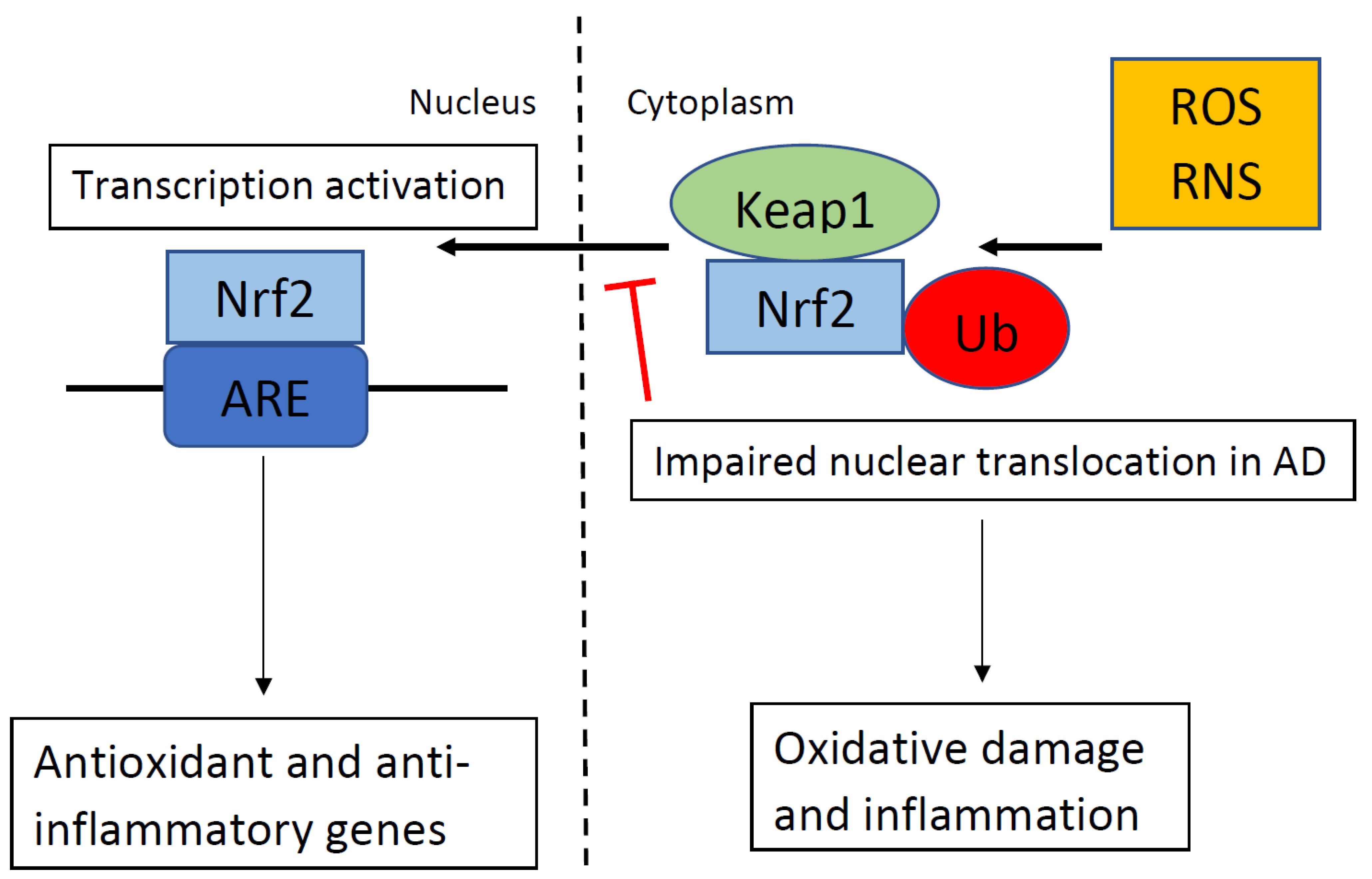
Nuclear factor erythroid 2-related factor 2 (Nrf2) is an important transcription factor that reduces oxidative stress. When reactive oxygen species (ROS) or reactive nitrogen species (RNS) are detected, Nrf2 translocates from the cytoplasm into the nucleus and binds to the antioxidant response element (ARE), which regulates the expression of antioxidant and anti-inflammatory genes. Nrf2 impairments are observed in the majority of neurodegenerative disorders, including Alzheimer’s disease (AD). The classic hallmarks of AD include β-amyloid (Aβ) plaques, and neurofibrillary tangles (NFTs). Oxidative stress is observed early in AD and is a novel therapeutic target for the treatment of AD. The nuclear translocation of Nrf2 is impaired in AD compared to controls. Increased oxidative stress is associated with impaired memory and synaptic plasticity. The administration of Nrf2 activators reverses memory and synaptic plasticity impairments in rodent models of AD. Therefore, Nrf2 activators are a potential novel therapeutic for neurodegenerative disorders including AD.
Keywords: NF-κB; neurodegeneration; oxidative stress; reactive oxygen species; inflammation NF-κB; neurodegeneration; oxidative stress; reactive oxygen species; inflammation