Article

Post-Translational Modification Networks of Contractile and Cellular Stress Response Proteins in Bladder Ischemia

1
Department of Surgery, VA Boston Healthcare System and Boston University School of Medicine, Boston, MA 02130, USA
2
Proteomics Laboratory, VA Boston Healthcare System, Boston, MA 02130, USA
3
Departments of Urology and Pathology, VA Boston Healthcare System and Boston University School of Medicine, Boston, MA 02130, USA
*
Authors to whom correspondence should be addressed.
Cells 2021, 10(5), 1031; https://doi.org/10.3390/cells10051031
Submission received: 23 February 2021 / Revised: 16 April 2021 / Accepted: 22 April 2021 / Published: 27 April 2021

Abstract

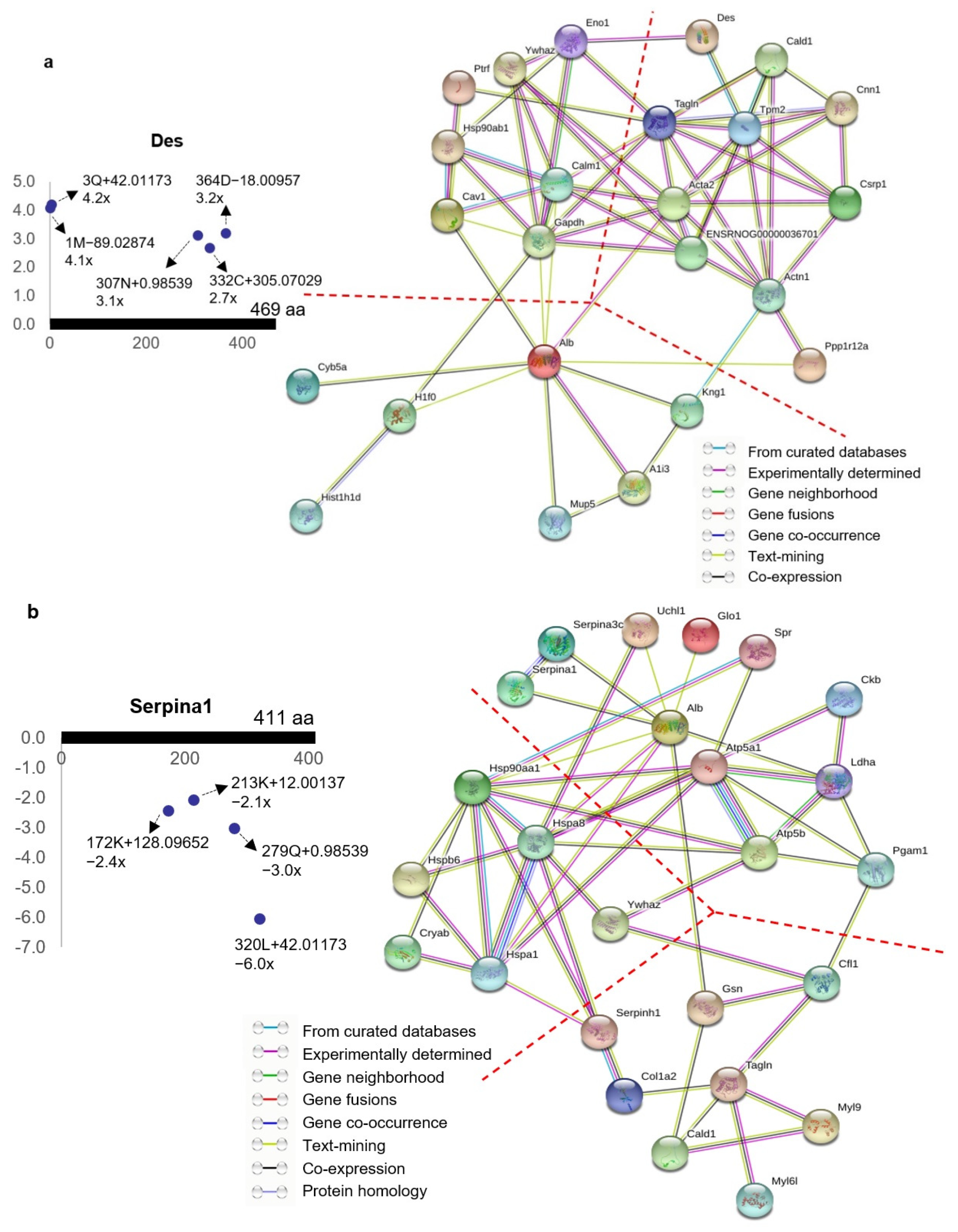
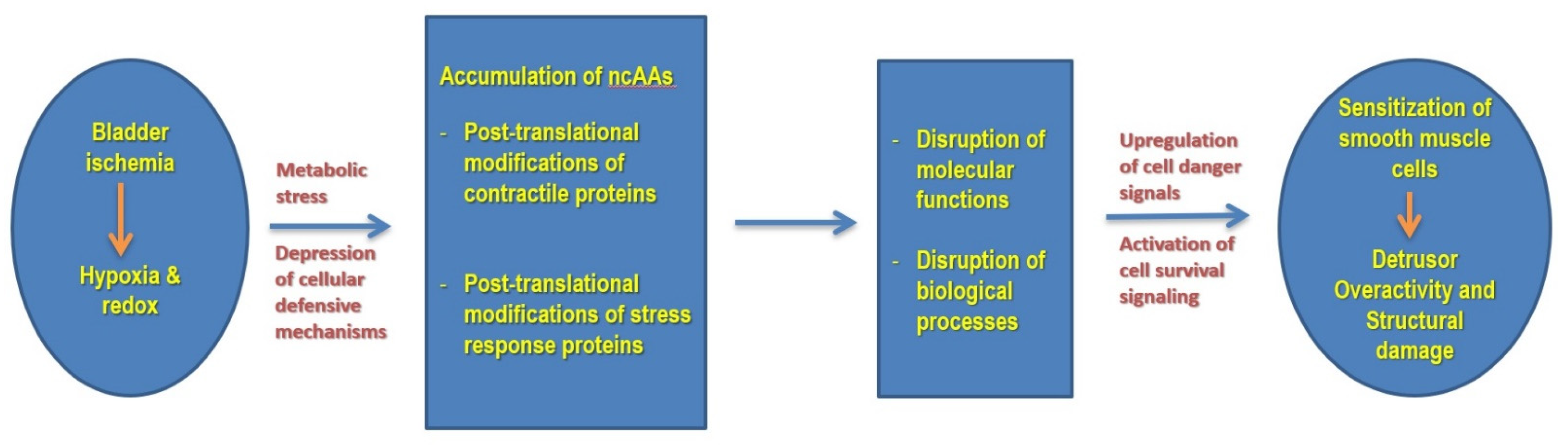
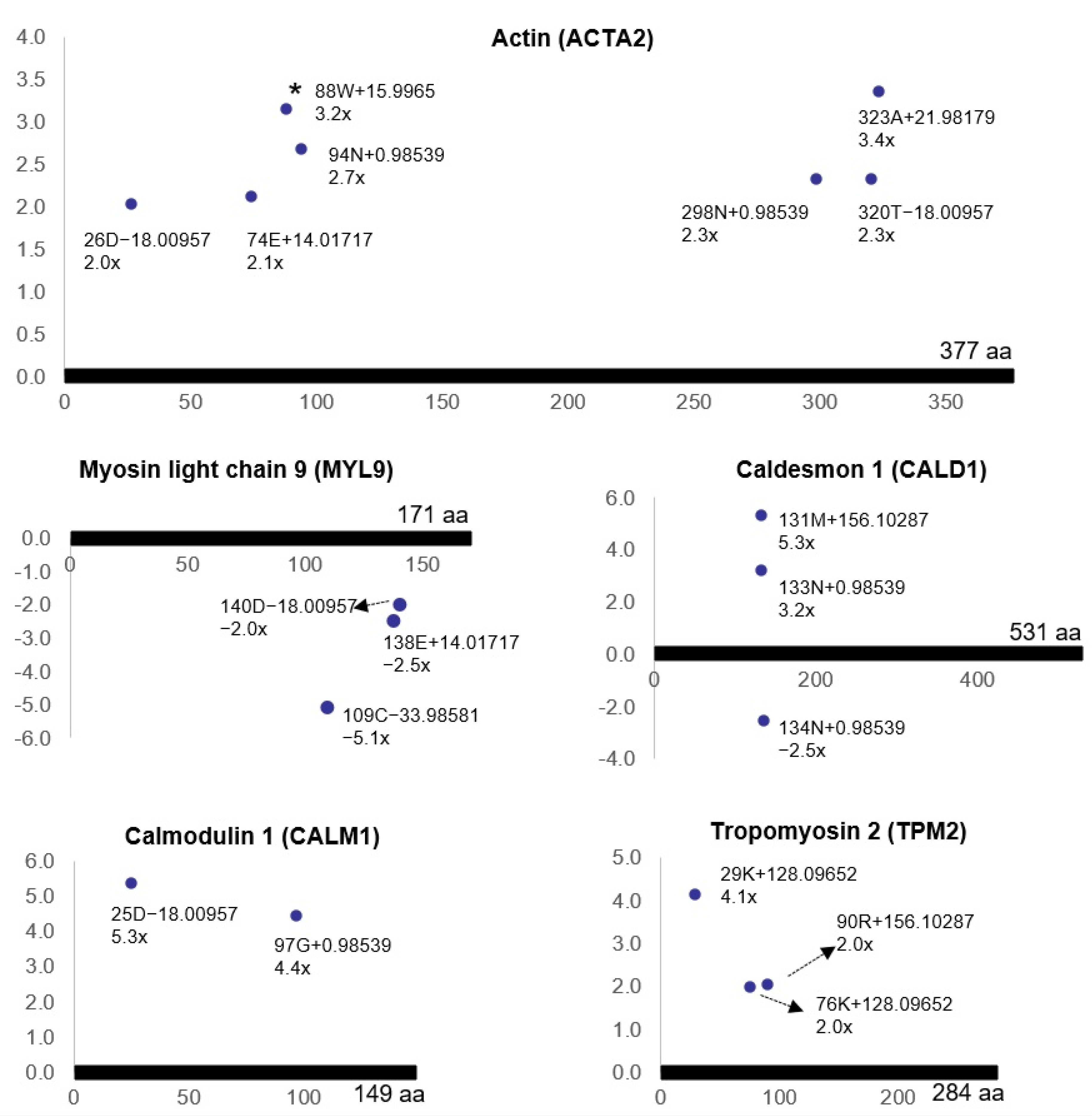
Molecular mechanisms underlying bladder dysfunction in ischemia, particularly at the protein and protein modification levels and downstream pathways, remain largely unknown. Here we describe a comparison of protein sequence variations in the ischemic and normal bladder tissues by measuring the mass differences of the coding amino acids and actual residues crossing the proteome. A large number of nonzero delta masses (11,056) were detected, spanning over 1295 protein residues. Clustering analysis identified 12 delta mass clusters that were significantly dysregulated, involving 30 upregulated (R2 > 0.5, ratio > 2, p < 0.05) and 33 downregulated (R2 > 0.5, ratio < −2, p < 0.05) proteins in bladder ischemia. These protein residues had different mass weights from those of the standard coding amino acids, suggesting the formation of non-coded amino acid (ncAA) residues in bladder ischemia. Pathway, gene ontology, and protein–protein interaction network analyses of these ischemia-associated delta-mass containing proteins indicated that ischemia provoked several amino acid variations, potentially post-translational modifications, in the contractile proteins and stress response molecules in the bladder. Accumulation of ncAAs may be a novel biomarker of smooth muscle dysfunction, with diagnostic potential for bladder dysfunction. Our data suggest that systematic assessment of global protein modifications may be crucial to the characterization of ischemic conditions in general and the pathomechanism of bladder dysfunction in ischemia.
Keywords: ischemia; bladder; contractile proteins; cellular stress response; protein modification; amino acid substitution; amino acid polymorphism ischemia; bladder; contractile proteins; cellular stress response; protein modification; amino acid substitution; amino acid polymorphism