Review

Epidermal Hyaluronan in Barrier Alteration-Related Disease
by
Céline Evrard
,
Catherine Lambert de Rouvroit
and
Yves Poumay
*
Research Unit for Molecular Physiology (URPhyM), Department of Medicine, Namur Research Institute for Life Sciences (NARILIS), University of Namur, B-5000 Namur, Belgium
*
Author to whom correspondence should be addressed.
Cells 2021, 10(11), 3096; https://doi.org/10.3390/cells10113096
Submission received: 14 October 2021 / Revised: 8 November 2021 / Accepted: 8 November 2021 / Published: 9 November 2021
(This article belongs to the Collection Molecular Determinants of Skin Integrity)

Abstract

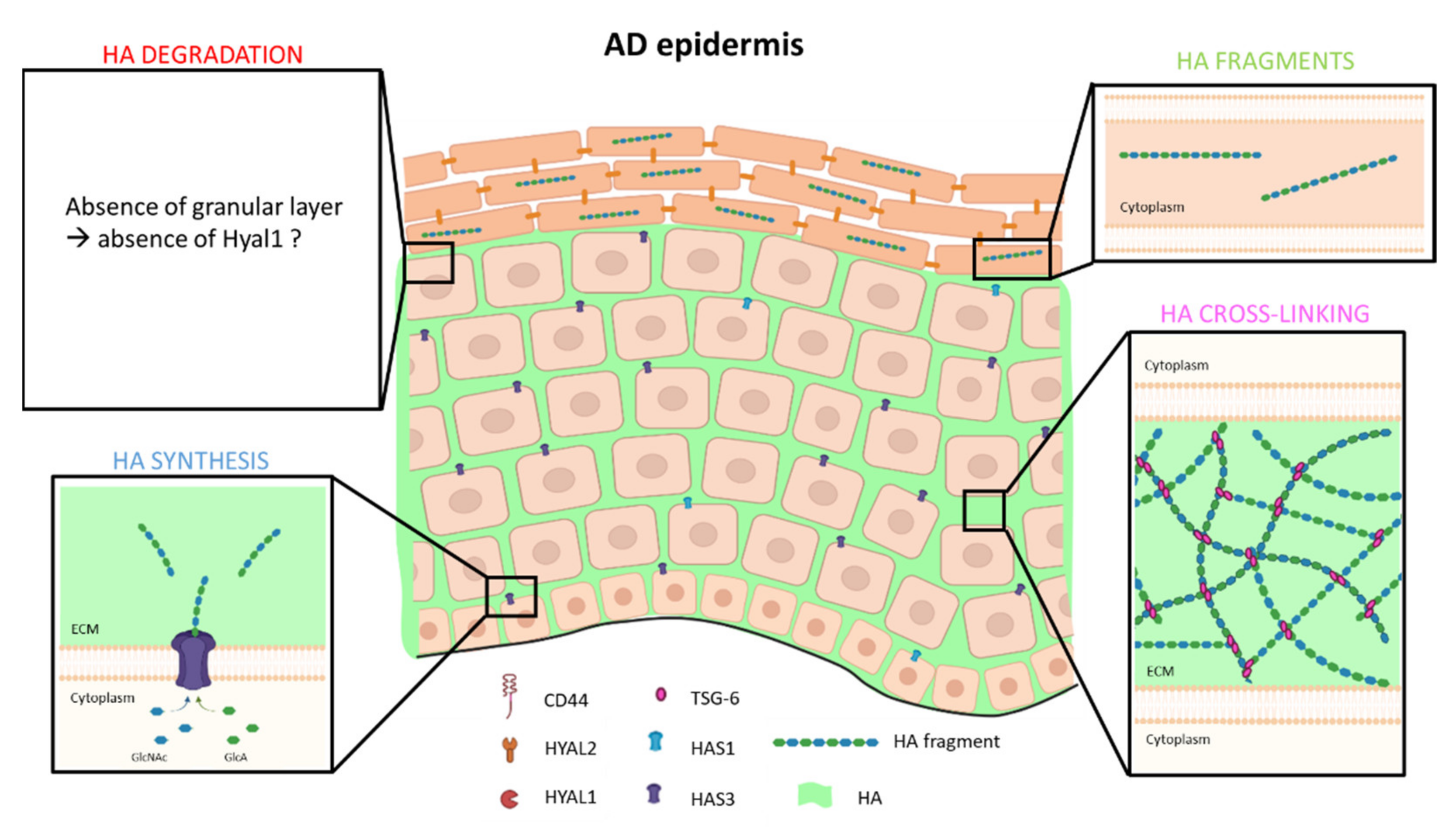
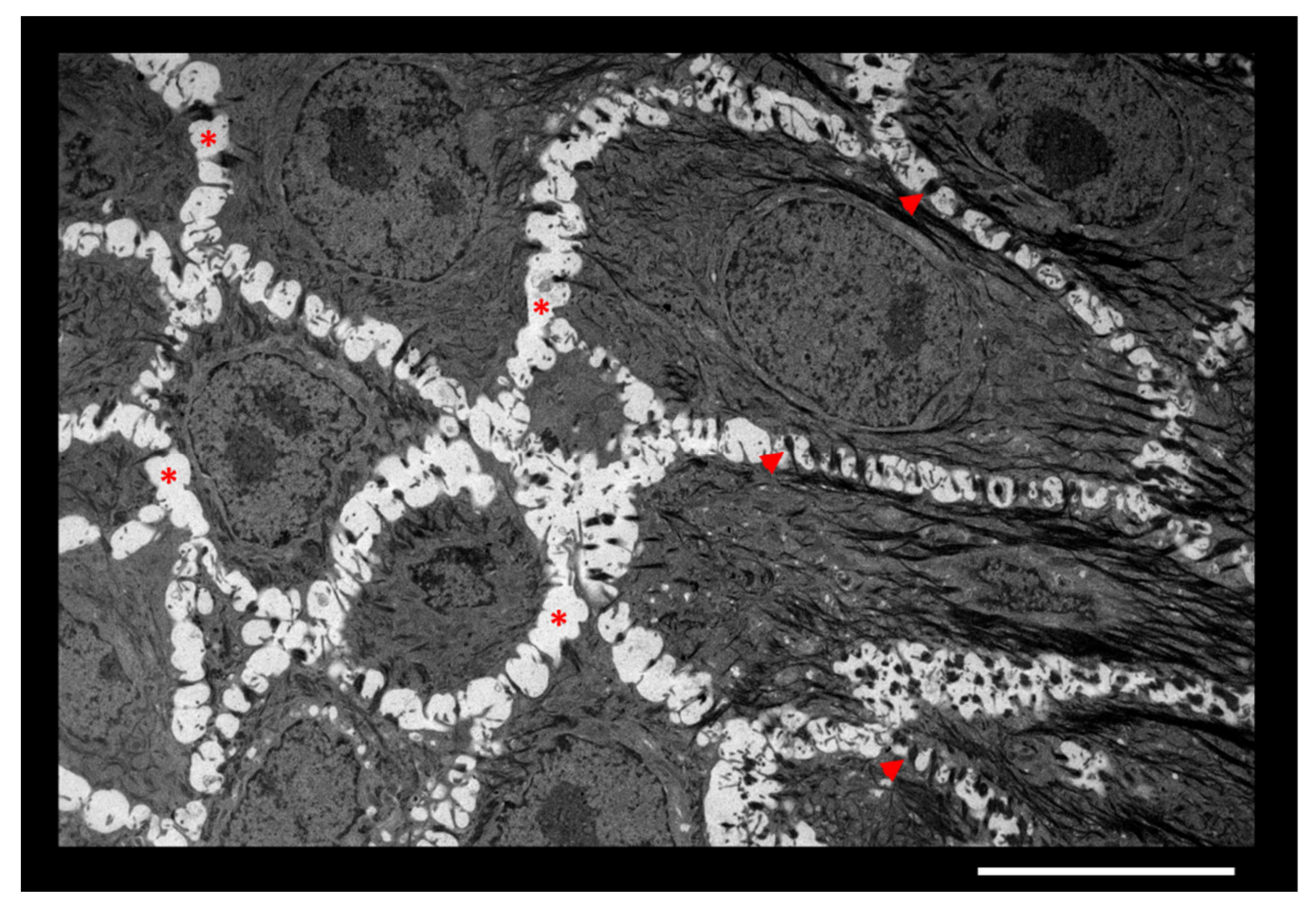
In skin, although the extracellular matrix (ECM) is highly developed in dermis and hypodermis, discrete intercellular spaces between cells of the living epidermal layers are also filled with ECM components. Herein, we review knowledge about structure, localization and role of epidermal hyaluronan (HA), a key ECM molecule. HA is a non-sulfated glycosaminoglycan non-covalently bound to proteins or lipids. Components of the basal lamina maintain some segregation between the epidermis and the underlying dermis, and all epidermal HA is locally synthesized and degraded. Functions of HA in keratinocyte proliferation and differentiation are still controversial. However, through interactions with partners, such as the TSG-6 protein, HA is involved in the formation, organization and stabilization of the epidermal ECM. In addition, epidermal HA is involved in the formation of an efficient epidermal barrier made of cornified keratinocytes. In atopic dermatitis (AD) with profuse alterations of the epidermal barrier, HA is produced in larger amounts by keratinocytes than in normal skin. Epidermal HA inside AD lesional skin is located in enlarged intercellular spaces, likely as the result of disease-related modifications of HA metabolism.
Keywords: hyaluronan; epidermal extracellular matrix; atopic dermatitis hyaluronan; epidermal extracellular matrix; atopic dermatitis