Review

The Impact of Oxidative Stress on Blood-Retinal Barrier Physiology in Age-Related Macular Degeneration


by
Annamaria Tisi
1,
Marco Feligioni
2,3,
Maurizio Passacantando
4,
Marco Ciancaglini
5 and
Rita Maccarone
1,*
1
Department of Biotechnological and Applied Clinical Sciences, University of L’Aquila, 67100 L’Aquila, Italy
2
European Brain Research Institute, 00161 Rome, Italy
3
Department of Neuroreabilitation Sciences, Casa di Cura Policlinico, 20144 Milano, Italy
4
Department of Physical and Chemical Sciences, University of L’Aquila, 67100 L’Aquila, Italy
5
Department of Life, Health and Environmental Sciences, University of L’Aquila, 67100 L’Aquila, Italy
*
Author to whom correspondence should be addressed.
Cells 2021, 10(1), 64; https://doi.org/10.3390/cells10010064
Submission received: 7 December 2020 / Revised: 26 December 2020 / Accepted: 30 December 2020 / Published: 4 January 2021
(This article belongs to the Special Issue Molecular Basis of the Macular Degeneration)

Abstract

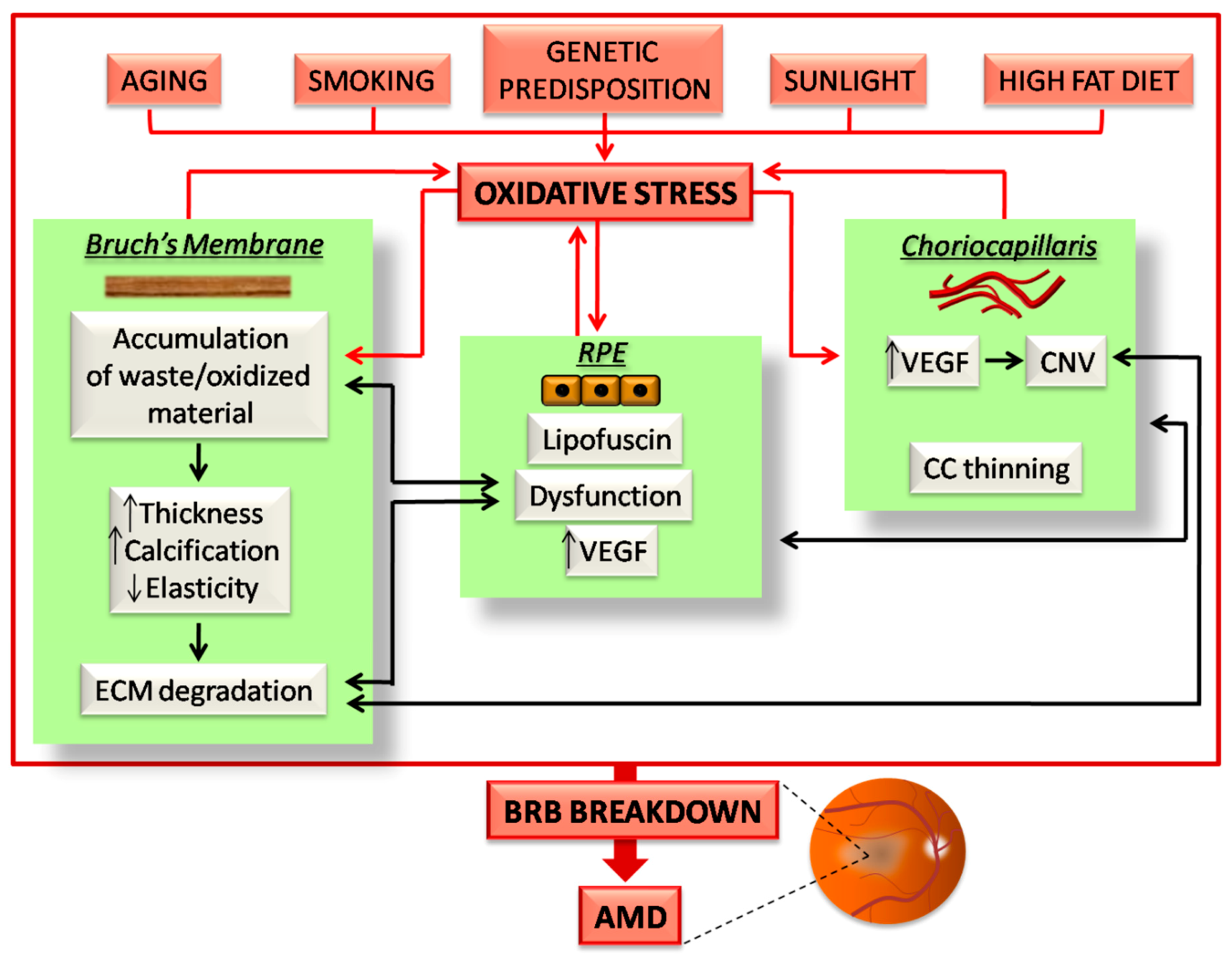
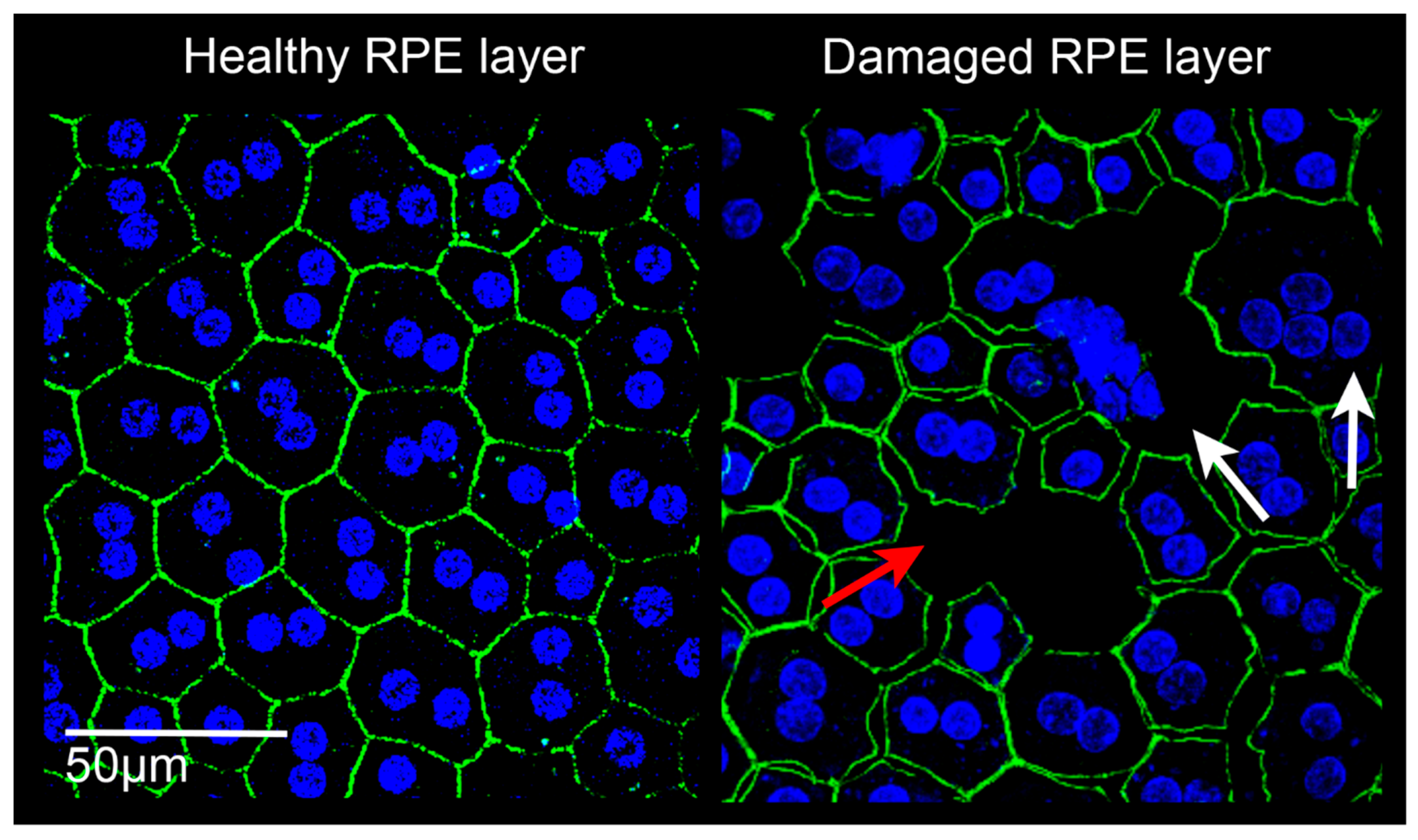
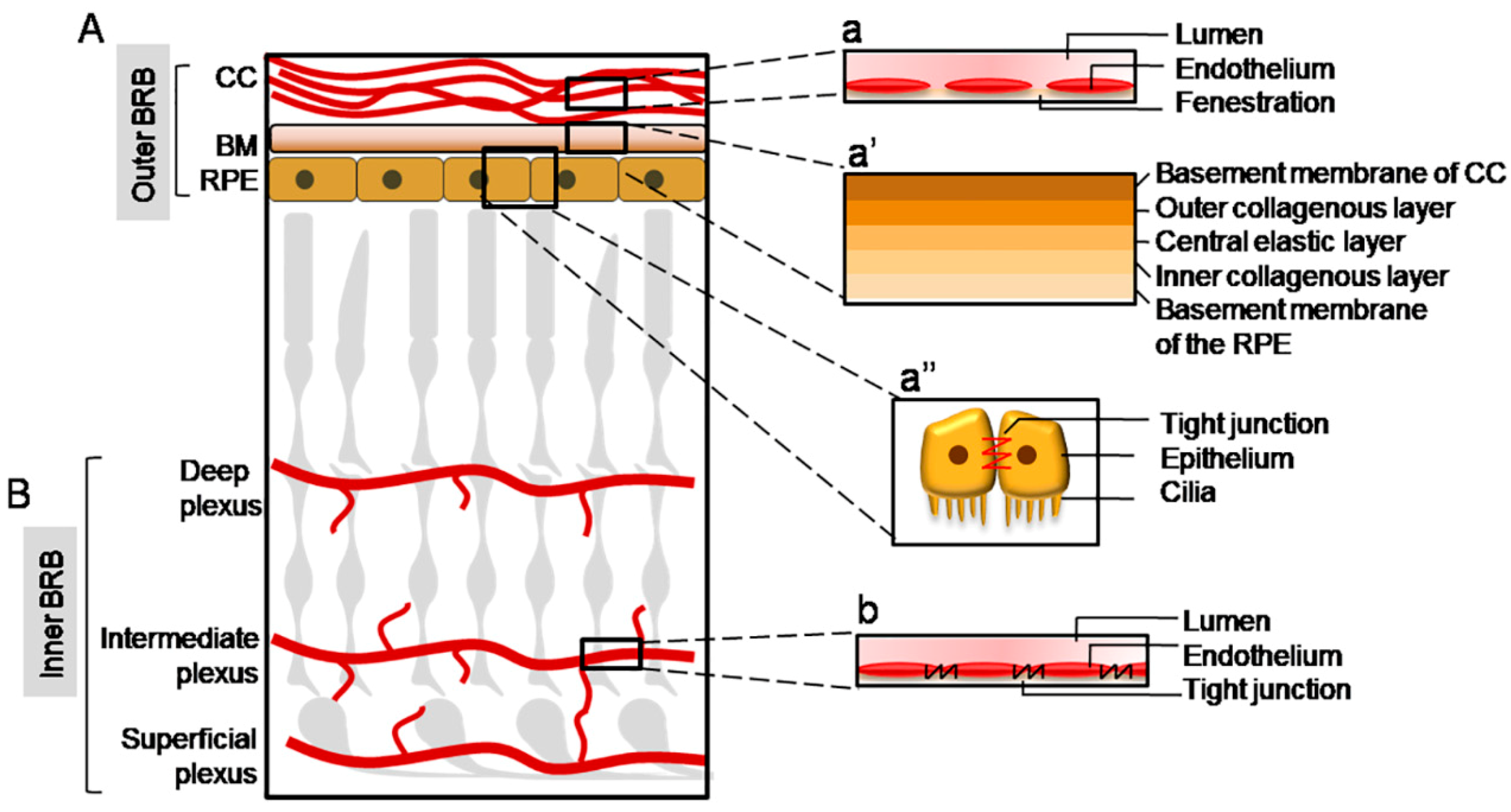
The blood retinal barrier (BRB) is a fundamental eye component, whose function is to select the flow of molecules from the blood to the retina and vice-versa, and its integrity allows the maintenance of a finely regulated microenvironment. The outer BRB, composed by the choriocapillaris, the Bruch’s membrane, and the retinal pigment epithelium, undergoes structural and functional changes in age-related macular degeneration (AMD), the leading cause of blindness worldwide. BRB alterations lead to retinal dysfunction and neurodegeneration. Several risk factors have been associated with AMD onset in the past decades and oxidative stress is widely recognized as a key factor, even if the exact AMD pathophysiology has not been exactly elucidated yet. The present review describes the BRB physiology, the BRB changes occurring in AMD, the role of oxidative stress in AMD with a focus on the outer BRB structures. Moreover, we propose the use of cerium oxide nanoparticles as a new powerful anti-oxidant agent to combat AMD, based on the relevant existing data which demonstrated their beneficial effects in protecting the outer BRB in animal models of AMD.
Keywords: blood retinal barrier; oxidative stress; physiology; age-related macular degeneration blood retinal barrier; oxidative stress; physiology; age-related macular degeneration