Article

Yield Prediction of Winter Wheat (Triticum aestivum) Varieties Using UAV-Derived Multispectral Vegetation Indices Across Growth Stages

by
Asparuh I. Atanasov
1 and
Atanas Z. Atanasov
2,*
1
Department of Mechanics and Elements of Machines, Technical University of Varna, 9010 Varna, Bulgaria
2
Department of Agricultural Machinery, Agrarian and Industrial Faculty, University of Ruse “Angel Kanchev”, 7017 Ruse, Bulgaria
*
Author to whom correspondence should be addressed.
Agronomy 2026, 16(9), 939; https://doi.org/10.3390/agronomy16090939
Submission received: 8 April 2026 / Revised: 1 May 2026 / Accepted: 3 May 2026 / Published: 6 May 2026
(This article belongs to the Section Precision and Digital Agriculture)

Abstract

This study investigates the potential for early yield prediction in nine winter wheat (Triticum aestivum) varieties using multispectral data acquired at different growth stages. The data were collected using an unmanned aerial vehicle (UAV) equipped with a multispectral sensor including a near-infrared (NIR) band and an RGB camera. An assessment of data acquisition and processing accuracy was conducted. The average ground sampling distance (GSD) was 0.42 cm, compared to the pre-flight planned value of 0.54 cm/pixel. The total processing error ranged between 0.34% and 0.45% of a pixel. Five vegetation indices were analyzed, including three NIR-based indices (NDVI, EVI2, and SAVI) and two RGB-based indices (MPRI and MGVRI). The strongest relationships between yield and NIR-based indices were observed on 26 April (spindle phase), with coefficients of determination (R2) ranging from 0.98 to 0.99, while the weakest relationships occurred in late March (R2 = 0.75–0.80). In contrast, RGB-based indices showed the strongest correlation in early December (R2 = 0.99) and the weakest on 26 April (R2 = 0.38–0.40). Regression models for yield prediction were developed based on both groups of vegetation indices. The results demonstrate that the predictive capability of vegetation indices varies significantly across growth stages, highlighting the importance of temporal data selection for accurate yield estimation.

1. Introduction

Field observations of crop phenology are labor-intensive and rely on representative sampling; therefore, various tools have been developed for remote sensing and for monitoring changes throughout the growing season. Reflectance-based vegetation indices derived from satellite data are widely used to quantify both the amount and condition of leaf biomass [1]. These indices enable the assessment of leaf greenness (chlorophyll content) at the onset of the growing season, as well as the detection of changes in leaf coloration during autumn [2,3,4].
With the advancement of technology, unmanned aerial vehicles (UAVs) have become widely used in precision agriculture [5,6,7] for acquiring information on crop health, detecting stress factors, and enabling yield prediction [8,9]. The collection of such data provides a comprehensive view of entire fields during the growing season, in contrast to traditional geophysical data. The availability of UAVs equipped with high-resolution sensors, along with advanced data processing tools, is a key prerequisite for the widespread adoption of this technology. Compared to satellite-based observations, UAV data offer significantly higher spatial resolution (on the order of centimeters rather than meters) and can be acquired below cloud cover, which is a major limitation of satellite remote sensing [10,11,12]. Furthermore, UAV technology allows for flexible data acquisition at user-defined times, optimized for specific observation conditions.
The primary limiting factors for UAV deployment are weather conditions, particularly rain and strong winds [13,14,15]. Nevertheless, UAVs are capable of collecting data over large areas in near real time, supporting informed decision-making processes.
The primary application of UAV-derived data is the assessment of crop health, stress, and pathogen presence. UAVs are widely used for monitoring crop condition using multispectral and visible-light sensors [16,17,18,19,20], diagnosing soil moisture in the topsoil layer [21,22,23,24,25,26,27], and predicting yield and stress in major crops such as wheat [9,28,29,30,31,32], maize [33,34], soybean [8,35,36], and rice [37,38]. Vegetation indices provide a direct indication of crop condition by quantifying the reflectance of green biomass across spectral bands, including red, green, blue, red-edge, and near-infrared wavelengths. These reflectance values are captured by sensor arrays and serve as proxies for chlorophyll content and overall plant status.
The significant potential of UAV-based monitoring across diverse agricultural terrains makes it an indispensable tool for precision agriculture [39,40]. Modern sensor arrays, in addition to standard RGB (visible spectrum) imaging, include a wide range of multispectral (3–7 bands), superspectral (7–20 bands), and hyperspectral (>20 bands) sensors. These technologies enable the generation of continuous and high-resolution maps of vegetation dynamics and weed distribution [41] using remote, non-invasive methods. Compared to high-altitude imaging platforms such as satellites, UAVs offer several advantages, including ultra-high spatial resolution (with pixel sizes on the order of centimeters), reduced temporal constraints, the ability to acquire data below cloud cover, and increased flexibility in flight planning and sensor configuration according to specific application needs. Furthermore, UAV systems contribute to reduced data acquisition and maintenance costs [42].
While UAV-based multispectral indices have been widely applied for crop monitoring and yield prediction in various regions worldwide, studies focusing on winter wheat varieties in South Dobruja remain limited. The specific climatic conditions, soil types, and cultivation practices in this area provide an ideal testbed for validating UAV-based methodologies. Importantly, the approach and findings presented here are broadly applicable to winter wheat cultivation under diverse environmental conditions [43,44,45].
Through multispectral imaging, which records reflected solar radiation at different wavelengths, it is possible to obtain detailed information on crop condition [46,47]. The analysis of spectral bands throughout the vegetation period provides key insights into crop development characteristics [48] and enables the detection of stress factors such as pest and disease presence, as well as supports water management decisions and other agronomic assessments.
Various vegetation indices derived from multispectral data are widely used to evaluate crop performance potential. These indices enable more precise crop diagnostics, which in turn support more accurate yield prediction and facilitate informed decision-making for subsequent agricultural practices [49].
Yield forecasting is increasingly integrated into precision agriculture systems. However, there is a need to consolidate existing knowledge and further adapt it for different crop types and specific agro-climatic conditions of the growing region. Ongoing research focused on advancing sensor technologies and improving data acquisition systems continues to enhance the capabilities of these methodologies, which include deep learning and multi-modal predictive frameworks [50,51,52,53].
By analyzing winter wheat varieties using UAV-derived multispectral indices across growth stages, this study provides insights relevant for both local application in South Dobruja and for broader implementation in similar wheat-growing regions.
The study evaluates the potential for yield prediction up to the stem elongation (booting) stage of winter wheat development, which represents an early stage of forecasting. In particular, the study investigates the applicability of various vegetation indices under the specific agro-climatic conditions of the Dobrudja region, Bulgaria.
The aim of this study is to evaluate the potential for predicting the yield of winter wheat varieties using UAV-derived multispectral data collected at different growth stages. To achieve this aim, the following objectives were established: (1) Acquisition of remote spectral data throughout the entire growing season; (2) Generation of reflectance-based vegetation indices; (3) Field measurement of physical characteristics of wheat, including yield; (4) Establishment of relationships between vegetation indices and yield.

2. Materials and Methods

2.1. Place and Subject of the Study

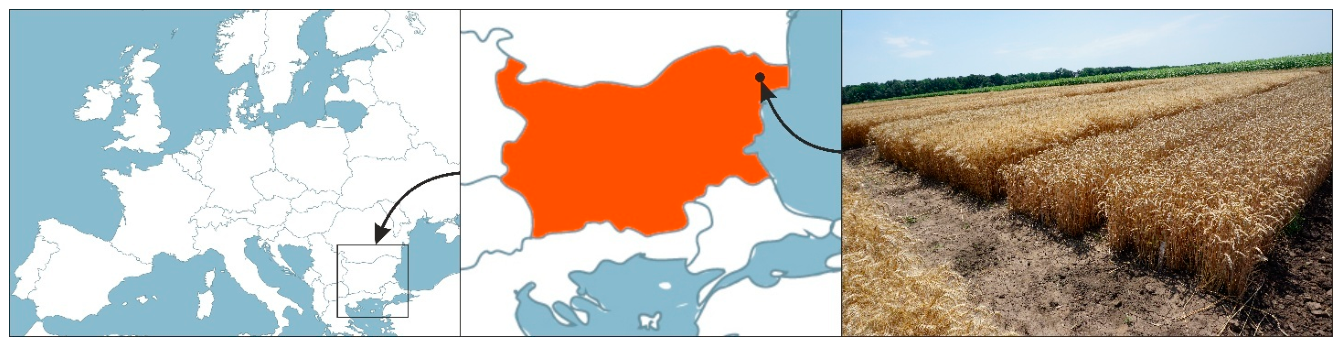
The study was conducted in the laboratory experimental field of the Dobrudzha Agricultural Institute, located in the village of Petleshkovo, General Toshevo Municipality, Dobrich District, Republic of Bulgaria. The field is situated at 43.656380° N latitude and 28.018015° E longitude (Figure 1). The region is characterized by temperate continental climatic conditions, with annual precipitation ranging from approximately 500 to 550 mm, often accompanied by prolonged dry periods and uneven rainfall distribution. These climatic characteristics, combined with limited natural water resources due to the absence of significant rivers, create substantial challenges for sustainable agricultural production. The region is also frequently influenced by strong northern and northeastern winds, particularly during winter, when wind speeds may reach 15–20 m/s, further contributing to environmental stress.
The predominant soils in the Dobrich District are leached chernozems, which are generally favorable for cereal cultivation but may present specific agronomic limitations under conditions of water deficit and climatic variability. Seasonal temperature fluctuations, irregular precipitation patterns, and periodic drought conditions represent key challenges for crop growth, productivity, and management in the region. These environmental and soil-related constraints make the study area particularly suitable for evaluating agricultural methodologies under challenging agroecological conditions.
The average meteorological features in the area are presented in Table 1 [54].
Long-term climatic data were analyzed to characterize the environmental conditions of the study region (Table 1). For the period 1991–2021, records included minimum and maximum air temperatures (°C), total precipitation (mm), relative humidity (%), and the number of rainy days, while average daily sunshine hours were recorded for the period 1999–2019. This comprehensive climatic characterization provides essential context for understanding the environmental challenges addressed in this study and supports the rationale for the selected experimental approach.
Therefore, the selected study area provides an appropriate natural framework for assessing the adaptability and effectiveness of the proposed methodology under conditions of environmental stress.
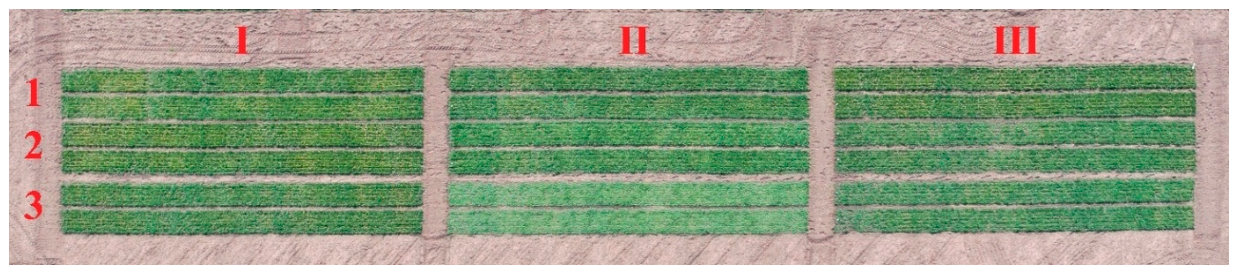
The experimental planting layout is presented in Figure 2. The preceding crop was soybeans. The field was not irrigated due to the absence of available water sources in the study area. The varieties included in the study are designated by Roman numerals for columns and Arabic numerals for rows, with each variety sown in two replicates. Each plot had an area of 25 m2. The variety codes are as follows: I1—Shibil, I2—GT 7-190, I3—Enola; II1—Chudomira, II2—Fedora, II3—Annapurna; III1—GT 7-50, III2—Androniya, III3—Avenue. For each variety, data from the two replicates were averaged.
The field tests conducted to evaluate the potential for yield prediction took place on 3 December 2021; 27 December 2021; 26 March 2022; 5 April 2022; and 26 April 2022. On each of these dates, meteorological, soil, and phenological parameters were measured. In addition, the experimental plots were surveyed using multispectral and RGB cameras, from which the relevant vegetation indices were derived. The overall study of vegetation index trends spanned the period from November 2021 to July 2022. At the end of this period, yield was measured in kilograms per plot (25 m2).

2.2. Methods for Obtaining and Processing Data

The primary data collection was conducted using a Survey3 multispectral reflectance camera (Mapir). The Survey3W model recorded reflectance in the Red, Green, and Near-Infrared (RGN, NDVI) bands, with spectral sensitivities of 850 nm (NIR), 660 nm (Red), and 550 nm (Green). The camera featured a 12-megapixel image sensor (4000 × 3000 px) with 87° HFOV lens optics (19 mm) and an f/2.8 aperture. The lens was a non-fisheye, extreme low-distortion glass lens (−1% distortion), paired with a Sony Exmor R IMX117 12 MP sensor (Bayer RGB) [55].
The camera is equipped with an Advanced V2 GNSS receiver (u-blox MAX-M10S) for recording the geocoordinates of each image [47], with a refresh rate of 10 Hz and a positioning accuracy of 1.5 m. To compensate for variations in solar radiation intensity, a Diffuse Reflectance Standard Calibration Target Package (T4-R125) was used [55].
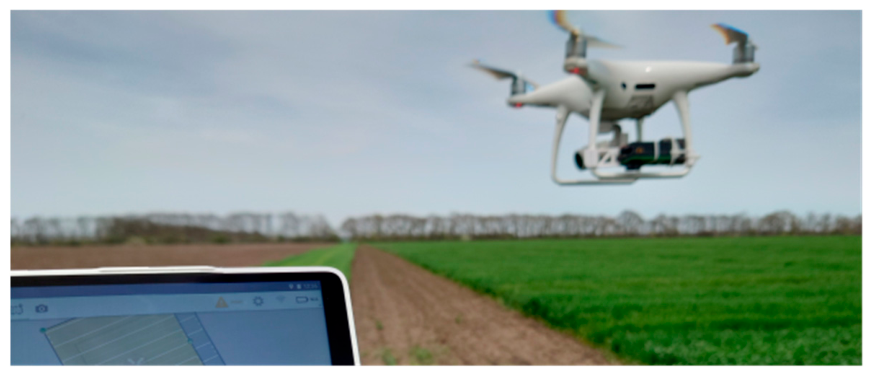
The camera carrier used in this study was a DJI Phantom 4 Pro+, equipped with a 4K/20 MP camera featuring a Sony Exmor 1″ CMOS RGB sensor, with 20 million effective pixels. The lens had a field of view (FOV) of 84°, 8.8 mm focal length (24 mm equivalent in 35 mm format), and an aperture range of f/2.8–f/11 with autofocus from 1 m to infinity. The maximum flight speed of the quadcopter was 72 km/h, with a flight time of up to 30 min. The total weight of the aircraft, including the battery and propellers, was 1388 g [56]. Figure 3 shows the UAV with the Survey3W camera mounted.
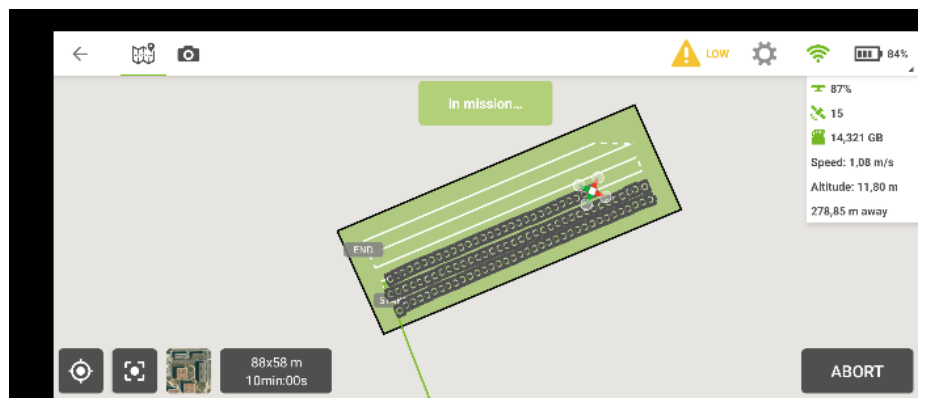
Flight missions for capturing wheat were planned using Pix4Dcapture software [57] (Figure 4). The flights were conducted at an altitude of 12 m above the field. The experimental area measured 58 × 88 m, with an 80% overlap set in both length and width. Each flight required approximately 10 min, with the UAV flying at speeds of up to 11 m/s. During the missions, both the RGB and RGN cameras captured images simultaneously.
The vegetation indices used in this study include the normalized difference vegetation index (NDVI) [58]. NDVI is commonly applied to assess vegetation density, monitor vegetation processes, detect stress factors such as weeds or diseases, and enable yield prediction. The index is derived from aerial images of agricultural crops by measuring the amount of reflected light in specific spectral bands. Vegetation absorbs electromagnetic radiation in the visible red range and strongly reflects it in the near-infrared range. In healthy plants, chlorophyll absorbs maximally in the red region (0.66 μm), while reflectance is high in the near-infrared region (0.85 μm). NDVI is calculated using the following formula:
NDVI   =   R n R r R n + R r
where R n is the amount of reflected light in the near-infrared region, and R r is the reflected light in the red region.
The NDVI reflects the condition of plants but does not explain the underlying causes of their status or variation. At the beginning of the growing season, NDVI primarily indicates how well plants have overwintered. NDVI values are most reliable during the middle of the season, at the stage of active crop growth.
The Enhanced Vegetation Index 2 (EVI2) was proposed by [59,60] to correct for the influence of atmospheric and soil background noise, which can significantly affect NDVI values in areas with dense vegetation. EVI2 ranges from –1 to +1, with values for healthy vegetation typically between 0.2 and 0.8. EVI2 can be calculated using sensors without a blue band, providing an index similar to EVI. The index is calculated as follows:
EVI 2   =   2.5 R n R r R n + 2.4 R r + 1
where R n is the amount of reflected light in the near-infrared region, and R r is the reflected light in the red region.
SAVI—Soil adjusted vegetation index [61]. The index is calculated as follows:
SAVI   =   ( 1 L ) ( R n R r ) R n + R r + 0.5
In the formula, L represents a control factor, with a value of 0.5, which has been shown to be the optimal correction factor for reducing soil background noise across the full range of vegetation densities. The multiplication factor (1 − L) preceding the index is necessary to preserve the dynamic range of the index. It has been demonstrated that the value of L decreases as vegetation density increases. For more precise analyses, three correction factors are recommended: L = 1 for very low vegetation densities, L = 0.5 for intermediate densities, and L = 0.25 for higher vegetation densities.
EVI2 is particularly suitable for the analysis of young crops and for dry areas with sparse vegetation (less than 15% canopy cover) or exposed soil surfaces.
The Modified Photochemical Reflectance Index (MPRI) [62] is useful for assessing variability in vegetation and soil cover, as it provides enhanced visual differentiation between these components. MPRI is sensitive to cloud shading, and shadows may correspond to more developed plants relative to neighboring areas. Areas affected by variations in sunlight reflectance should be excluded from agronomic analyses when applying this index to vegetation studies.
MPRI = R g R r R g + R r
where R g is the amount of reflected light in the green region, and R r is the reflected light in the red region.
MGVRI—Modified Green Red Vegetation Index [63] also gives good results, being able to effectively distinguish vegetation and soil, with results close to those obtained visually using MPRI.
MGRVI = R g 2 R r 2 R g 2 + R r 2
where R g is the amount of reflected light in the green region, and R r is the reflected light in the red region.
Data processing was performed using the Pix4Dmapper software [64]. The vegetation indices were derived through the following steps: First, the image data were imported into the software, with RGB and RGN files processed separately. A total of 250 images were acquired from the RGN camera and 140 from the RGB camera, reflecting differences in sensor size and resolution. Next, orthomosaics and corresponding sparse Digital Surface Models (DSMs) were generated. The formulas for the desired vegetation indices were then entered into the software. For each index, only the area corresponding to one replicate of a single variety was selected, and the resulting data were recorded. This procedure was repeated for all replicates of each variety and for all required vegetation indices.

2.3. Methods for Analyzing Results

When analyzing geocoordinates on the obtained images for 2D distance measurements, only the X and Y coordinates are considered, while the Z coordinate is disregarded. The total length is calculated as the sum of the 2D distances of each segment in the constructed plan. For any two consecutive points, V1 and V2, with coordinates ( X 1 ,   Y 1 ,   Z 1 ) and ( X 2 ,   Y 2 ,   Z 2 ), respectively, the 2D segment length is calculated as follows:
Δ X 2 + Δ Y 2
where ΔX = Χ2Χ1, ΔY = Υ2 − Υ1.
The spatial dimension of the terrain is defined by its length along the three coordinates ( X ,   Y ,   Z ), with each segment of the plan determined by two vertices, Vi and Vj Vertex Vi has coordinates (Xi, Yi, Zi), and vertex Vj has coordinates (Xj, Yj, Zj). The 3D length, Lij, of the segment is calculated as follows:
L i j = L x i j 2 + L y i j 2 + L z i j 2
where L x i , j = Χ j   Χ I ,   L y i , j =   Υ j   Υ I ,   L z i , j =   Ζ j   Ζ i .
The order defines the approach used to determine each point in space. X ,   Y , and Z represent the coordinates along the three axes in the Gaussian coordinate space, while “ i ” and “ j ” denote sequential indices.
The field size is calculated by adding the 3D length of each individual segment using the formula:
Lp = L1,2 + L2,3 + Li,j + … + Ln−1,n
where n is the number of vertices of the polyline, Lp is the total 3D length of the terrain along the polyline, and Lij is the 3D length of the segment defined by its two vertices, Vi and Vj.
The calculation of the error for the 3D terrain length is calculated by the error in each element of two or more images by their vertices according to the formula:
d L p =   d L 1,2 +   d L 2,3 +   d L 3,4 +     +   d L n 1 , n
where n is the number of vertices of the polyline, d L p is the terrain error 3D length of the polyline, and d L i , j is the error of element L i , j .
Mathematical analysis was performed using linear regression in Microsoft Excel [65] to determine the relationship between the studied variables Y (field measurements) and X (observed yields) and to calculate the linear correlation coefficient. This method was chosen to provide a mathematical description of the relationship between the dependent variable Y and the independent variable X , and to compute the regression coefficients b0 and b1 of the simple linear regression model, expressed as follows [66]:
Y i = b 0 + b 1 X i .
The relationships between vegetation indices obtained from RGB and RGN cameras and wheat yield were (kilogram from a plot of 25 m2) analyzed for periods of crop growth prior to maturity.


3. Results

3.1. Assessment of Photogrammetric Data Processing Accuracy

The average values obtained from the processing, reflecting uncertainties in camera position and orientation, are presented in Table 2. For the Survey3W_RGN camera, the results were as follows: the number of 2D keypoint observations used in the bundle block adjustment was 670,014; the number of 3D points for the adjustment was 273,659; and the mean reprojection error was 0.253 pixels.
The absolute geolocation variances, expressed as RMS error [m], were 0.456 for the X coordinate, 0.464 for Y , and 0.472 for Z . These results confirm the accuracy of the data used for calculating vegetation indices and the reliability of the derived relationships. The average ground sampling distance (GSD) was 0.42 cm, compared to the pre-flight planned value of 0.54 cm/pixel. This high precision enables the analysis of even the smallest variations in leaf-level vegetation within the crop.
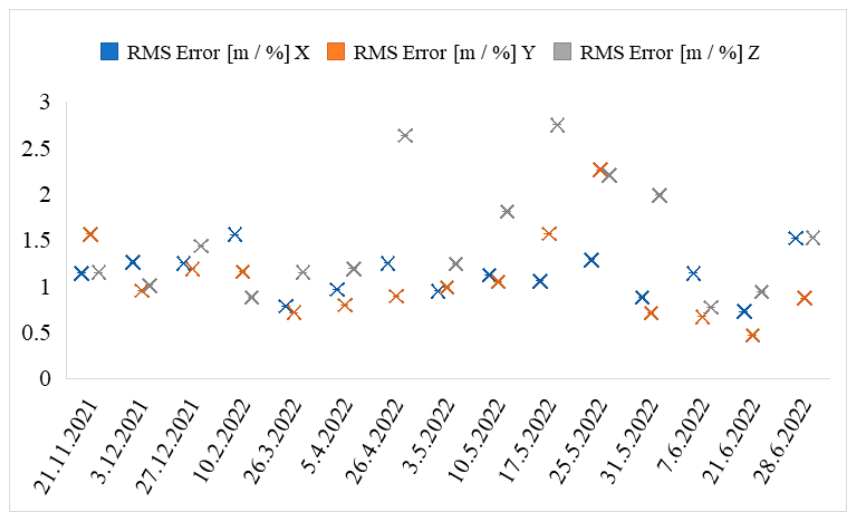
The root mean square error (RMSE) of the deviation between the given and calculated coordinates is shown in Figure 5. The positional error is relatively low in the X and Y directions, while slightly higher in the Z direction; however, its impact along this axis is minimal. The observed error does not affect the calculation of vegetation indices or the accurate positioning of the plots within the field.
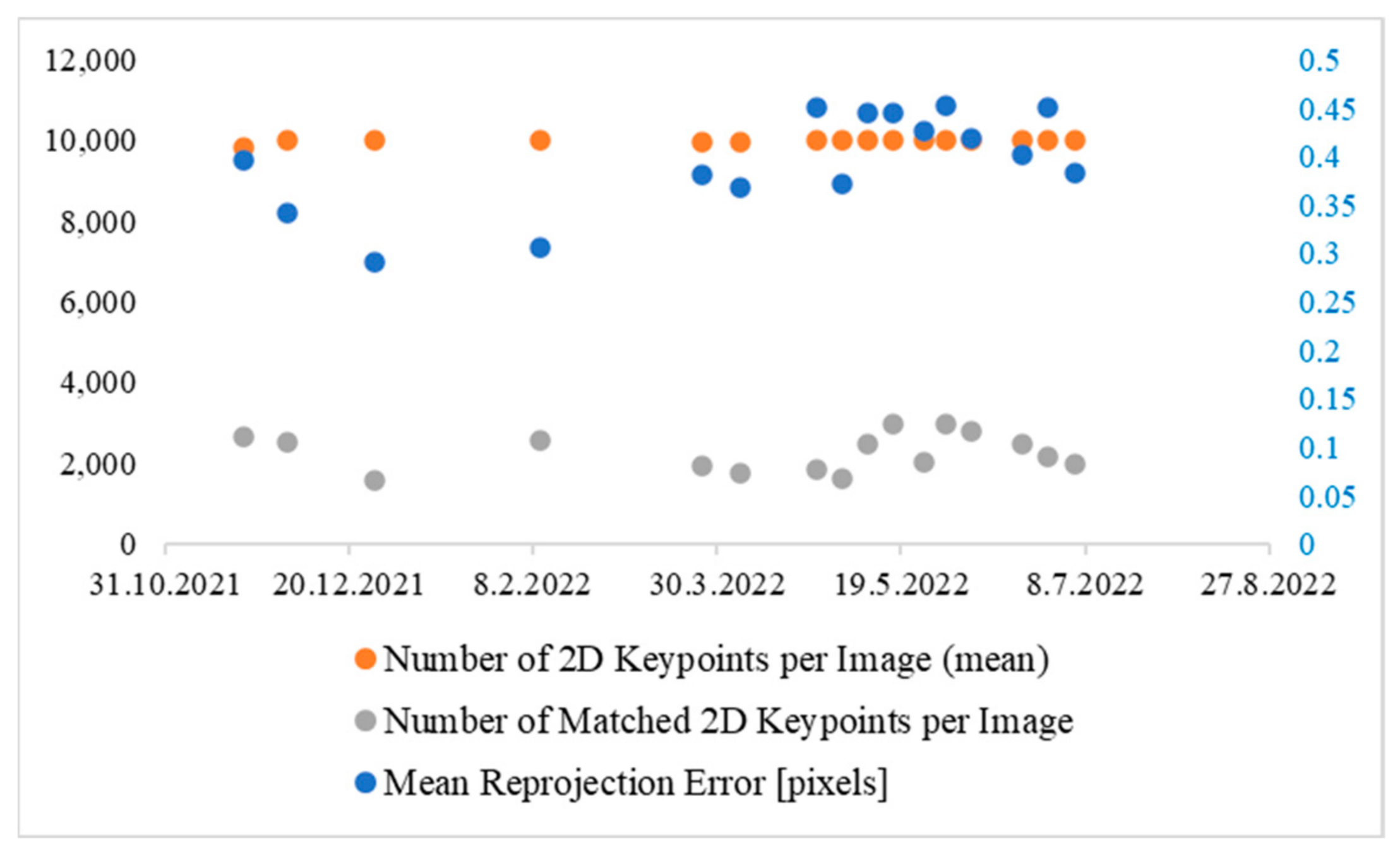
The number of 2D keypoints per image, the number of matched 2D keypoints per image, and the mean reprojection error are presented in Figure 6. The error ranges between 0.35 and 0.45 pixels, which is low and ensures the accuracy of the resulting vegetation index maps. Additionally, the large number of 2D keypoints contributes to minimizing the overall error.
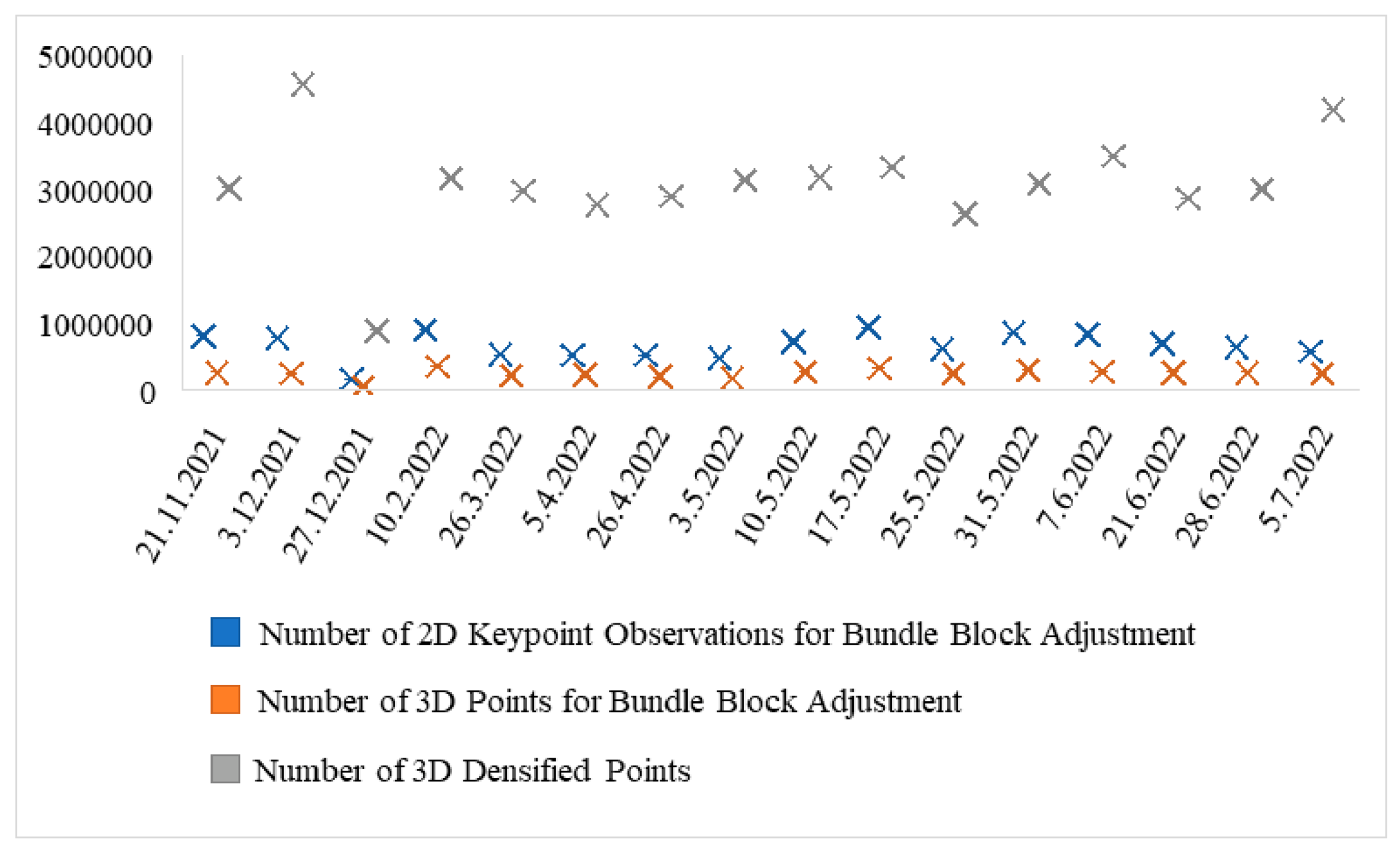
The results for the number of 2D keypoint observations for bundle block adjustment, the number of 3D points for bundle block adjustment, and the number of densified 3D points throughout the observation period are presented in Figure 7. The large number of points obtained further ensures the precision of the resulting data.

3.2. Obtained Vegetation Indices

The yield values were obtained from 25 m2 plots and averaged across the two replicates. Harvesting was conducted at the onset of productive maturity and at the required moisture content.
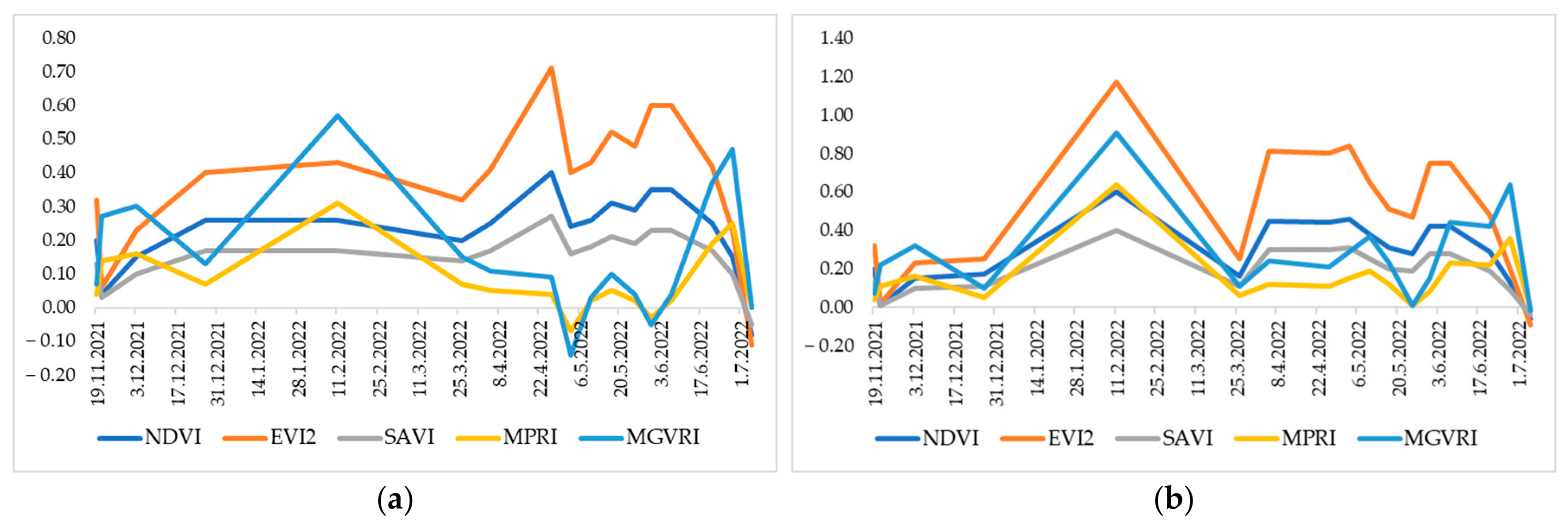
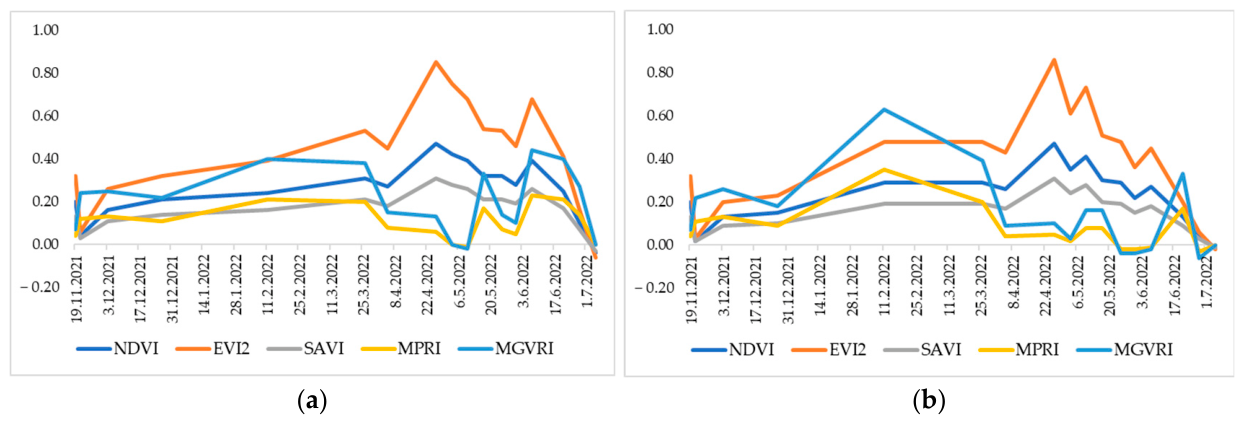
Figure 8 presents the vegetation indices throughout the growing period for the Shibil and GT 7-190 varieties, derived from both RGB and RGN cameras. The yield per 25 m2 plot was 24.75 kg for Shibil and 24.25 kg for GT 7-190.
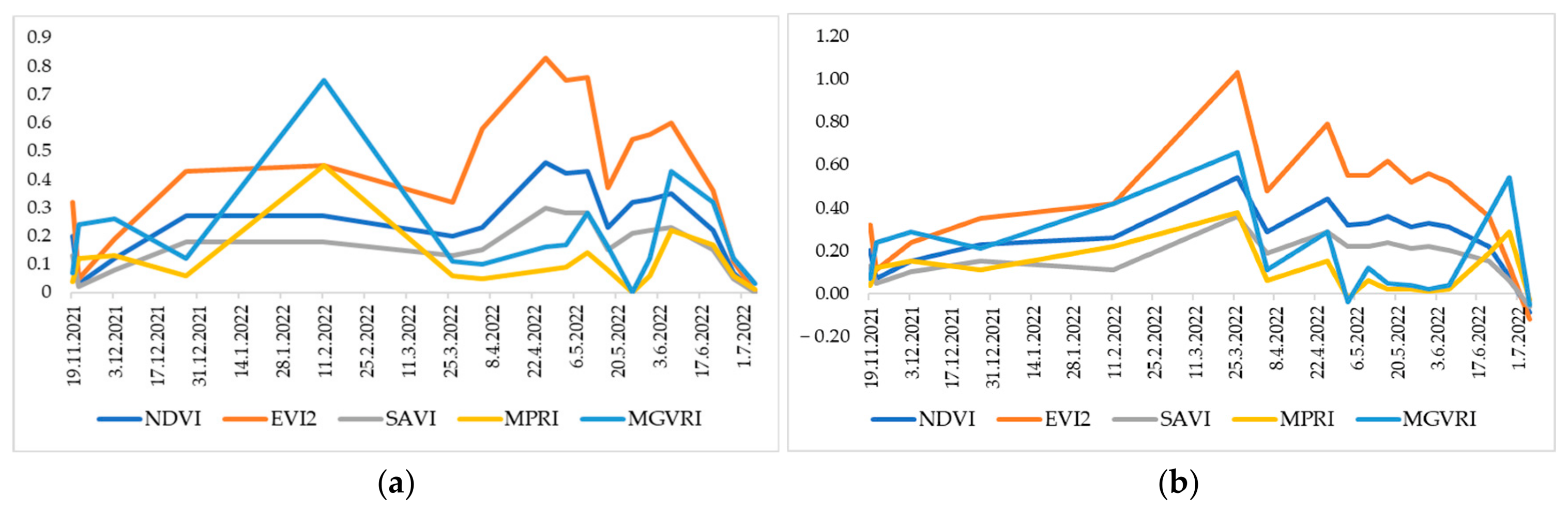
Figure 9 presents the vegetation indices throughout the growing period for the Enola and Chudomira varieties, derived from both RGB and RGN cameras. The yield per 25 m2 plot was 24.8 kg for Enola and 25.55 kg for Chudomira.
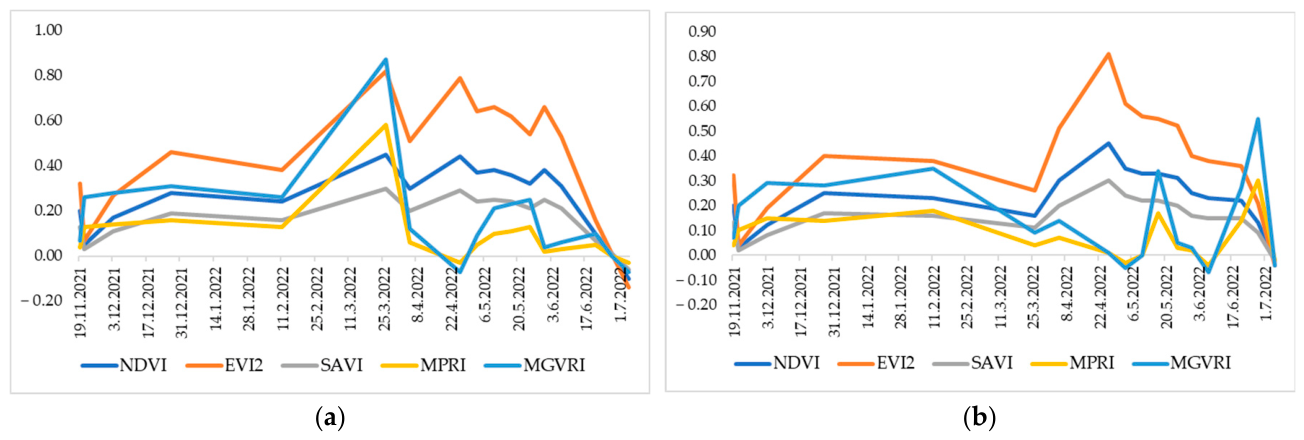
Figure 10 presents the vegetation indices throughout the growing period for the Fedora and Annapurna varieties, derived from both RGB and RGN cameras. The yield per 25 m2 plot was 21.55 kg for Fedora and 29.28 kg for Annapurna.
Figure 11 presents the vegetation indices throughout the growing period for the varieties GT 7-50 and Androniya, derived from both RGB and RGN cameras. The yield per 25 m2 plot was 26.3 kg for GT 7-50 and 25.5 kg for Androniya.
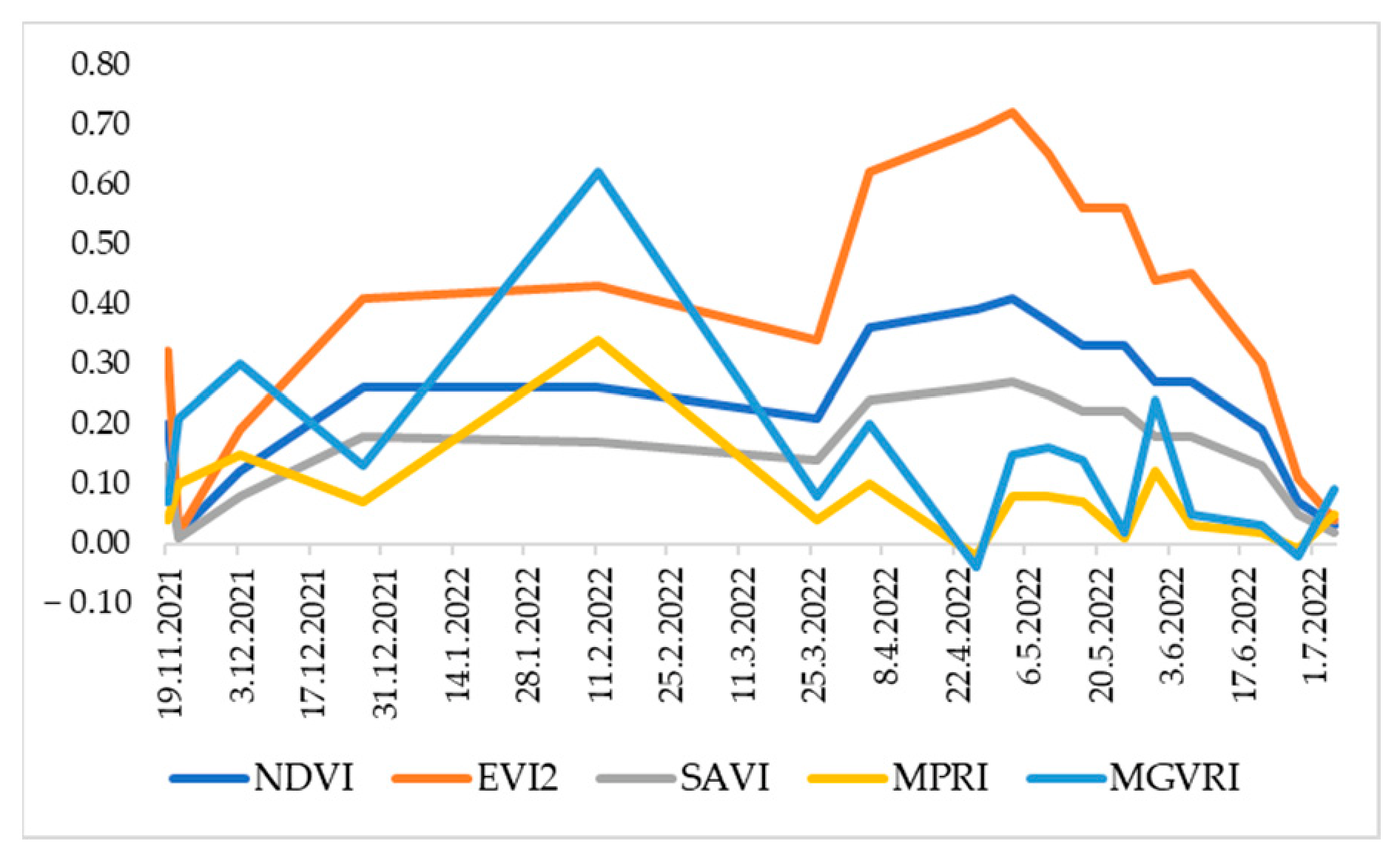
Figure 12 presents the vegetation indices throughout the growing period for the Avenue variety, derived from both RGB and RGN cameras. The yield per 25 m2 plot was 27.9 kg for Avenue.
All varieties exhibited the highest vegetation index values at the end of April (sowing is in the spinning phase), with another period of notable increase occurring in December (fraternization phase). After May, the indices generally decreased, although with some variability. Therefore, the period from December to the end of April was analyzed to evaluate the potential for yield prediction.
A series of independent linear regression analyses was performed to examine the relationship between each vegetation index and final yield at different phenological stages. For early prediction purposes, only observations up to the end of April were considered. The results are presented in Table 3, which shows the relationship between NDVI and yield across selected dates. The strongest relationship was observed on 26 April, while the weakest was recorded on 26 March, indicating substantial temporal variation in predictive performance.
The relationship between yield and EVI2 is presented in Table 4, showing a similar temporal pattern, with stronger correlations at later stages of development and weaker performance in the early growth phase.
The relationships obtained for the SAVI index exhibit trends similar to those observed for the previous two indices. The strongest relationship was recorded on 26 April, while the weakest was observed on 26 March. The results are presented in Table 5.
A multiple regression analysis was performed between the dependent variable (Y, yield) and the vegetation index values obtained from the infrared camera ( X 1 —NDVI, X 2 —EVI2, and X 3 —SAVI).
In the regression analysis for 26 April, the unstandardized coefficients indicate the amount by which the dependent variable changes relative to the independent variables. The resulting equation for predicting yield based on the three vegetation indices derived from near-infrared (NIR) reflectance is as follows:
Y = 346.612   X 1 + 146.086   X 2 70.681   X 3 41.664
where X 1 is NDVI, X 2 is EVI2, and X 3 is SAVI.
The vegetation indices obtained from the RGB camera were analyzed to assess their potential for early yield prediction. The results for the MPRI are presented in Table 6. The strongest relationship was observed on 3 December, while the weakest occurred on 26 April. In contrast to the NIR-based indices, the relationship here is moderate.
The results for the MGVRI index are presented in Table 7. The strongest relationship is observed on 3 December, similar to the previous RGB-based index. The weakest relationship occurs on 26 April, where a moderate correlation is observed.
A multiple linear regression analysis was conducted using yield (Y) as the dependent variable and vegetation indices derived from the RGB camera as independent variables, namely X 4 (MPRI) and X 5 (MGVRI).
Based on the strongest relationships observed on 3 December, a regression analysis was conducted to evaluate the dependence of yield on these vegetation indices. The resulting equation for predicting yield based on the two vegetation indices derived from the visible spectrum is as follows:
Y = 449.078   X 4 + 274.747   X 5 + 12.564
where X 4 is MPRI, and X 5 is MGVRI.

4. Discussion

Forecasting expected yield is crucial for assessing the economic viability of crops, as it enables the identification of critical growth stages and the planning of timely agricultural interventions. Non-destructive analysis techniques provide an opportunity to optimize nitrogen fertilization, which directly impacts yield [67,68,69].
This study demonstrates the potential of UAV-derived multispectral vegetation indices for early yield prediction of winter wheat varieties across multiple growth stages. By integrating data from nine varieties and monitoring from December to April (phenological stages from tillering to stem elongation), the study provides a comprehensive assessment that extends previous research, which often focused on single growth stages or fewer genotypes [70]. The accuracy of the data was confirmed, with a calculated average Ground Sampling Distance (GSD) of 0.42 cm, angular uncertainties between 0.014° and 0.029°, and a mean reprojection error per image ranging from 0.35 to 0.45 pixels, ensuring reliable vegetation index maps.
The relationships between yield and indices from the NIR camera (NDVI, EVI2, and SAVI) were strongest in the last ten days of April, coinciding with peak index values, while RGB-based indices (MPRI and MGVRI) showed the strongest correlations in December. These findings highlight the importance of selecting appropriate observation periods for accurate yield forecasting. Based on these results, predictive equations were developed that can reliably estimate yield potential.
Although the study was conducted under the temperate continental climate of Southern Dobrudja, the methodology is adaptable to other wheat-growing regions with similar environmental conditions. Minor uncertainties remain due to potential climatic variability, such as frost or extended dry periods, which could slightly affect the predictions. Further assessments are necessary to validate the use of spectral indices for yield estimation under variable climatic and soil conditions [71].
The results provide practical guidance for agronomists and farmers by identifying key periods when specific vegetation indices are most predictive of yield. This enables early assessment of variety yield, optimized nitrogen management, and timely interventions to mitigate stress factors. By focusing on the most informative growth stages, the approach supports efficient resource allocation and improved planning, directly aligning with the study’s objective of yield forecasting for winter wheat varieties.

5. Conclusions

The study demonstrated that UAV-derived multispectral remote sensing provides a reliable tool for assessing the production potential of winter wheat varieties (Triticum aestivum). Forecasting yield potential using a visible-spectrum camera revealed correlations between vegetation indices and yield as early as December, although this early-stage prediction cannot fully account for potential critical cold snaps or extended dry periods. In contrast, indices obtained from an NIR-range camera showed strong correlations with yield in April (stem elongation stage), coinciding with peak values reflecting active vegetation processes, enabling yield prediction with high certainty. Analysis of the accuracy of the acquired and processed data indicated that positional errors of 2D and 3D points did not significantly affect the results or the generated vegetation index maps. The findings highlight both the scientific novelty of integrating temporal and varietal variation for yield prediction and the practical implications for precision agriculture, allowing for early assessment of crop performance and informed management decisions. However, it is important to emphasize that the present study was conducted over only one cropping season; therefore, the results should be interpreted with caution, as seasonal variability in climatic and environmental conditions may influence the reproducibility of these findings in subsequent years. Future research should focus on validating these methods across different wheat-growing regions with varying climatic and soil conditions, incorporating additional spectral indices and machine learning approaches, and exploring higher-frequency temporal monitoring to further enhance the robustness and accuracy of early-stage yield predictions.

Author Contributions

Conceptualization, A.I.A. and A.Z.A.; methodology, A.I.A.; software, A.I.A.; validation, A.Z.A.; formal analysis, A.I.A.; investigation, A.I.A.; resources, A.I.A.; data curation, A.I.A.; writing—original draft preparation, A.I.A. and A.Z.A.; writing—review and editing, A.I.A. and A.Z.A.; visualization, A.I.A.; supervision, A.I.A.; project administration, A.Z.A.; funding acquisition, A.Z.A. All authors have read and agreed to the published version of the manuscript.

Funding

This study was financed by the European Union—NextGenerationEU, through the National Recovery and Resilience Plan of the Republic of Bulgaria, project № BG-RRP-2.013-0001.

Institutional Review Board Statement

Not applicable.

Data Availability Statement

Data are contained within the article.

Acknowledgments

The research reflects some results of the work on project No. 26-FAI-01, financed by the “Scientific Research” fund of the University of Ruse.

Conflicts of Interest

The authors declare no conflicts of interest.

Abbreviations

The following abbreviations are used in this manuscript:
NIRNear-infrared
NDVINormalized Difference Vegetation Index
EVI2Enhanced Vegetation Index 2
SAVISoil Adjusted Vegetation Index
GSDGround Sampling Distance
MPRIModified Photochemical Reflectance Index
MGVRIModified Green Red Vegetation Index

References

  1. Soudani, K.; François, C.; Le Maire, G.; Le Dantec, V.; Dufrêne, E. Comparative analysis of IKONOS, SPOT, and ETM+ data for leaf area index estimation in temperate coniferous and deciduous forest stands. Remote Sens. Environ. 2006, 102, 161–175. [Google Scholar] [CrossRef]
  2. Soudani, K.; Le Maire, G.; Dufrêne, E.; François, C.; Delpierre, N.; Ulrich, E.; Cecchini, S. Evaluation of the onset of green-up in temperate deciduous broadleaf forests derived from Moderate Resolution Imaging Spectroradiometer (MODIS) data. Remote Sens. Environ. 2008, 112, 2643–2655. [Google Scholar] [CrossRef]
  3. Zhang, X.; Goldberg, M. Monitoring fall foliage coloration dynamics using time-series satellite data. Remote Sens. Environ. 2011, 115, 382–391. [Google Scholar] [CrossRef]
  4. Zhang, X.; Friedl, M.A.; Schaaf, C.B.; Strahler, A.H.; Hodges, J.C.F.; Gao, F.; Reed, B.C.; Huete, A. Monitoring vegetation phenology using MODIS. Remote Sens. Environ. 2003, 84, 471–475. [Google Scholar] [CrossRef]
  5. Atanasov, A.I.; Atanasov, A.Z. Analysis of opportunities for agricultural area surveillance by UAV and satellite in precision agriculture. Acta Technol. Agric. 2025, 28, 88–96. [Google Scholar] [CrossRef]
  6. Hu, J.; Zhang, Y.; Zhao, D.; Yang, G.; Chen, F.; Zhou, C.; Chen, W. A Robust Deep Learning Approach for the Quantitative Characterization and Clustering of Peach Tree Crowns Based on UAV Images. IEEE Trans. Geosci. Remote Sens. 2022, 60, 4408613. [Google Scholar] [CrossRef]
  7. Jiang, P.; Zhou, X.; Liu, T.; Guo, X.; Ma, D.; Zhang, C.; Li, Y.; Liu, S. Prediction Dynamics in Cotton Aphid Using Unmanned Aerial Vehicle Multispectral Images and Vegetation Indices. IEEE Access 2023, 11, 5908–5918. [Google Scholar] [CrossRef]
  8. Maimaitijiang, M.; Sagan, V.; Sidike, P.; Hartling, S.; Esposito, F.; Fritschi, F.B. Soybean Yield Prediction from UAV Using Multimodal Data Fusion and Deep Learning. Remote Sens. Environ. 2020, 237, 111599. [Google Scholar] [CrossRef]
  9. Yang, S.; Hu, L.; Wu, H.; Ren, H.; Qiao, H.; Li, P.; Fan, W. Integration of Crop Growth Model and Random Forest for Winter Wheat Yield Estimation from UAV Hyperspectral Imagery. IEEE J. Sel. Top. Appl. Earth Obs. Remote Sens. 2021, 14, 6253–6269. [Google Scholar] [CrossRef]
  10. Berni, J.A.J.; Zarco-Tejada, P.J.; Suarez, L.; Fereres, E. Thermal and Narrowband Multispectral Remote Sensing for Vegetation Monitoring from an Unmanned Aerial Vehicle. IEEE Trans. Geosci. Remote Sens. 2009, 47, 722–738. [Google Scholar] [CrossRef]
  11. Bian, Z.; Roujean, J.-L.; Cao, B.; Du, Y.; Li, H.; Gamet, P.; Fang, J.; Xiao, Q.; Liu, Q. Modeling the Directional Anisotropy of Fine-Scale TIR Emissions over Tree and Crop Canopies Based on UAV Measurements. Remote Sens. Environ. 2021, 252, 112150. [Google Scholar] [CrossRef]
  12. Ma, Y.; Chen, H.; Zhao, G.; Wang, Z.; Wang, D. Spectral Index Fusion for Salinized Soil Salinity Inversion Using Sentinel-2A and UAV Images in a Coastal Area. IEEE Access 2020, 8, 159595–159608. [Google Scholar] [CrossRef]
  13. dos Santos, L.M.; de Souza Barbosa, B.D.; Diotto, A.V.; Andrade, M.T.; Conti, L.; Rossi, G. Determining the Leaf Area Index and Percentage of Area Covered by Coffee Crops Using UAV RGB Images. IEEE J. Sel. Top. Appl. Earth Obs. Remote Sens. 2020, 13, 6401–6409. [Google Scholar] [CrossRef]
  14. Sankey, J.B.; Sankey, T.T.; Li, J.; Ravi, S.; Wang, G.; Caster, J.; Kasprak, A. Quantifying Plant-Soil-Nutrient Dynamics in Rangelands: Fusion of UAV Hyperspectral-LiDAR, UAV Multispectral-Photogrammetry, and Ground-Based LiDAR-Digital Photography in a Shrub-Encroached Desert Grassland. Remote Sens. Environ. 2021, 253, 112223. [Google Scholar] [CrossRef]
  15. Zarco-Tejada, P.J.; González-Dugo, V.; Berni, J.A.J. Fluorescence, Temperature and Narrow-Band Indices Acquired from a UAV Platform for Water Stress Detection Using a Micro-Hyperspectral Imager and a Thermal Camera. Remote Sens. Environ. 2012, 117, 322–337. [Google Scholar] [CrossRef]
  16. Cuaran, J.; Leon, J. Crop monitoring using unmanned aerial vehicles: A review. Agric. Rev. 2021, 42, 121–132. [Google Scholar] [CrossRef]
  17. Matese, A.; Di Gennaro, S.F. Practical Applications of a Multisensor UAV Platform Based on Multispectral, Thermal and RGB High Resolution Images in Precision Viticulture. Agriculture 2018, 8, 116. [Google Scholar] [CrossRef]
  18. Quebrajo, L.; Perez-Ruiz, M.; Pérez-Urrestarazu, L.; Martínez, G.; Egea, G. Linking Thermal Imaging and Soil Remote Sensing to Enhance Irrigation Management of Sugar Beet. Biosyst. Eng. 2018, 165, 77–87. [Google Scholar] [CrossRef]
  19. Sagan, V.; Maimaitijiang, M.; Sidike, P.; Maimaitiyiming, M.; Erkbol, H.; Hartling, S.; Peterson, K.; Peterson, J., II; Burken, J.; Fritschi, F. UAV/Satellite Multiscale Data Fusion for Crop Monitoring and Early Stress Detection. ISPRS Int. Arch. Photogramm. Remote Sens. Spat. Inf. Sci. 2019, 42, 715–722. [Google Scholar] [CrossRef]
  20. Santesteban, L.G.; Di Gennaro, S.F.; Herrero-Langreo, A.; Miranda, C.; Royo, J.B.; Matese, A. High-Resolution UAV-Based Thermal Imaging to Estimate the Instantaneous and Seasonal Variability of Plant Water Status within a Vineyard. Agric. Water Manag. 2017, 183, 49–59. [Google Scholar] [CrossRef]
  21. Atanasov, A.I. Using NDWI for diagnosing moisture availability in agricultural areas surveyed with UAV. Acta Technol. Agric. 2026, 29, 51–60. [Google Scholar] [CrossRef]
  22. Baluja, J.; Diago, M.P.; Balda, P.; Zorer, R.; Meggio, F.; Morales, F.; Tardaguila, J. Assessment of Vineyard Water Status Variability by Thermal and Multispectral Imagery Using an Unmanned Aerial Vehicle (UAV). Irrig. Sci. 2012, 30, 511–522. [Google Scholar] [CrossRef]
  23. Bellvert, J.; Zarco-Tejada, P.J.; Girona, J.; Fereres, E. Mapping Crop Water Stress Index in a ‘Pinot-Noir’ Vineyard: Comparing Ground Measurements with Thermal Remote Sensing Imagery from an Unmanned Aerial Vehicle. Precis. Agric. 2014, 15, 361–376. [Google Scholar] [CrossRef]
  24. Pádua, L.; Marques, P.; Adão, T.; Guimarães, N.; Sousa, A.; Peres, E.; Sousa, J.J. Vineyard Variability Analysis through UAV-Based Vigour Maps to Assess Climate Change Impacts. Agronomy 2019, 9, 581. [Google Scholar] [CrossRef]
  25. Gil-Docampo, M.; Ortiz-Sanz, J.; Martínez-Rodriguez, S.; Marcos-Robles, J.; Arza-García, M.; Sánchez-Sastre, L. Plant survival monitoring with UAVs and multispectral data in difficult access afforested areas. Geocarto Int. 2020, 35, 128–140. [Google Scholar] [CrossRef]
  26. Johnstone, D.; Moore, G.; Tausz, M.; Nicolas, M. The measurement of plant vitality in landscape trees. Arboric. J. 2013, 35, 18–27. [Google Scholar] [CrossRef]
  27. Turner, D.; Lucieer, A.; Watson, C. Development of an Unmanned Aerial Vehicle (UAV) for Hyper-Resolution Vineyard Mapping Based on Visible, Multispectral and Thermal Imagery. In Proceedings of the 34th International Symposium on Remote Sensing of Environment, Sydney, Australia, 10–15 April 2011. [Google Scholar]
  28. Bian, C.; Shi, H.; Wu, S.; Zhang, K.; Wei, M.; Zhao, Y.; Sun, Y.; Zhuang, H.; Zhang, X.; Chen, S. Prediction of Field-Scale Wheat Yield Using Machine Learning Method and Multi-Spectral UAV Data. Remote Sens. 2022, 14, 1474. [Google Scholar] [CrossRef]
  29. Fei, S.; Hassan, M.A.; He, Z.; Chen, Z.; Shu, M.; Wang, J.; Li, C.; Xiao, Y. Assessment of Ensemble Learning to Predict Wheat Grain Yield Based on UAV-Multispectral Reflectance. Remote Sens. 2021, 13, 2338. [Google Scholar] [CrossRef]
  30. Hassan, M.A.; Yang, M.; Rasheed, A.; Yang, G.; Reynolds, M.; Xia, X.; Xiao, Y.; He, Z. A Rapid Monitoring of NDVI across the Wheat Growth Cycle for Grain Yield Prediction Using a Multi-Spectral UAV Platform. Plant Sci. 2019, 282, 95–103. [Google Scholar] [CrossRef]
  31. Atanasov, A.I.; Mihova, G.M.; Atanasov, A.Z.; Vlăduț, V. Long-term assessment of NDVI dynamics in winter wheat (Triticum aestivum) using a small unmanned aerial vehicle. Agriculture 2025, 15, 394. [Google Scholar] [CrossRef]
  32. Atanasov, A.; Mihova, G.; Mihaylov, R. Applicability and efficiency of remote sensing of agricultural areas. Bulg. J. Agric. Sci. 2022, 28, 933–943. [Google Scholar]
  33. Marques Ramos, A.P.; Prado Osco, L.; Elis Garcia Furuya, D.; Nunes Gonçalves, W.; Cordeiro Santana, D.; Pereira Ribeiro Teodoro, L.; Antonio da Silva Junior, C.; Fernando Capristo-Silva, G.; Li, J.; Henrique Rojo Baio, F.; et al. A Random Forest Ranking Approach to Predict Yield in Maize with Uav-Based Vegetation Spectral Indices. Comput. Electron. Agric. 2020, 178, 105791. [Google Scholar] [CrossRef]
  34. Olson, D.; Chatterjee, A.; Franzen, D.W.; Day, S.S. Relationship of Drone-Based Vegetation Indices with Corn and Sugarbeet Yields. Agron. J. 2019, 111, 2545–2557. [Google Scholar] [CrossRef]
  35. Figueiredo Moura da Silva, E.H.; Silva Antolin, L.A.; Zanon, A.J.; Soares Andrade, A.; Antunes de Souza, H.; dos Santos Carvalho, K.; Aparecido Vieira, N.; Marin, F.R. Impact Assessment of Soybean Yield and Water Productivity in Brazil Due to Climate Change. Eur. J. Agron. 2021, 129, 126329. [Google Scholar] [CrossRef]
  36. Yu, N.; Li, L.; Schmitz, N.; Tian, L.F.; Greenberg, J.A.; Diers, B.W. Development of Methods to Improve Soybean Yield Estimation and Predict Plant Maturity with an Unmanned Aerial Vehicle Based Platform. Remote Sens. Environ. 2016, 187, 91–101. [Google Scholar] [CrossRef]
  37. Wan, L.; Cen, H.; Zhu, J.; Zhang, J.; Zhu, Y.; Sun, D.; Du, X.; Zhai, L.; Weng, H.; Li, Y.; et al. Grain Yield Prediction of Rice Using Multi-Temporal UAV-Based RGB and Multispectral Images and Model Transfer—A Case Study of Small Farmlands in the South of China. Agric. For. Meteorol. 2020, 291, 108096. [Google Scholar] [CrossRef]
  38. Zhou, X.; Zheng, H.B.; Xu, X.Q.; He, J.Y.; Ge, X.K.; Yao, X.; Cheng, T.; Zhu, Y.; Cao, W.X.; Tian, Y.C. Predicting Grain Yield in Rice Using Multi-Temporal Vegetation Indices from UAV-Based Multispectral and Digital Imagery. ISPRS J. Photogramm. Remote Sens. 2017, 130, 246–255. [Google Scholar] [CrossRef]
  39. Malamiri, H.R.G.; Aliabad, F.A.; Shojaei, S.; Morad, M.; Band, S.S. A study on the use of UAV images to improve the separation accuracy of agricultural land areas. Int. J. Remote Sens. 2021, 184, 106079. [Google Scholar]
  40. Rodríguez, J.; Lizarazo, I.; Prieto, F.; Angulo-Morales, V. Assessment of potato late blight from UAV-based multispectral imagery. Comput. Electron. Agric. 2021, 184, 106061. [Google Scholar] [CrossRef]
  41. Cao, Y.; Li, G.L.; Luo, Y.K.; Pan, Q.; Zhang, S.Y. Monitoring of sugar beet growth indicators using wide-dynamic-range vegetation index (WDRVI) derived from UAV multispectral images. Comput. Electron. Agric. 2020, 171, 105331. [Google Scholar] [CrossRef]
  42. Torres-Sánchez, J.; López-Granados, F.; De Castro, A.I.; Peña, J.M. Multi-temporal mapping of the vegetation fraction in early-season wheat fields using images from UAV. Comput. Electron. Agric. 2014, 103, 104–113. [Google Scholar] [CrossRef]
  43. Vélez, S.; Martínez-Peña, R.; Castrillo, D. Beyond Vegetation: A Review Unveiling Additional Insights into Agriculture and Forestry through the Application of Vegetation Indices. J 2023, 6, 421–436. [Google Scholar] [CrossRef]
  44. Gaitán, J.J.; Bran, D.; Oliva, G.; Ciari, G.; Nakamatsu, V.; Salomone, J.; Ferrante, D.; Buono, G.; Massara, V.; Humano, G.; et al. Evaluating the Performance of Multiple Remote Sensing Indices to Predict the Spatial Variability of Ecosystem Structure and Functioning in Patagonian Steppes. Ecol. Indic. 2013, 34, 181–191. [Google Scholar] [CrossRef]
  45. Pan, W.; Wang, X.; Sun, Y.; Wang, J.; Li, Y.; Li, S. Karst Vegetation Coverage Detection Using UAV Multispectral Vegetation Indices and Machine Learning Algorithm. Plant Methods 2023, 19, 7. [Google Scholar] [CrossRef] [PubMed]
  46. Zhang, Y.Z.; Huang, J.P.; Zhang, Q.L.; Liu, J.W.; Meng, Y.L.; Yu, Y. Nondestructive determination of SSC in an apple by using a portable near-infrared spectroscopy system. Appl. Opt. 2022, 61, 3419–3428. [Google Scholar] [CrossRef]
  47. Zhu, Y.M.; Abdalla, A.; Tang, Z.; Cen, H.Y. Improving rice nitrogen stress diagnosis by denoising strips in hyperspectral images via deep learning. Biosyst. Eng. 2022, 219, 165–176. [Google Scholar] [CrossRef]
  48. El-Shikha, D.M.; Waller, P.; Hunsaker, D.; Clarke, T.; Barnes, E. Ground-based remote sensing for assessing water and nitrogen status of broccoli. Agric. Water Manag. 2007, 92, 183–193. [Google Scholar] [CrossRef]
  49. Diacono, M.; Rubino, P.; Montemurro, F. Precision nitrogen management of wheat. A review. Agron. Sustain. Dev. 2013, 33, 219–241. [Google Scholar] [CrossRef]
  50. Song, Y.; Ma, P.; Gao, Y.; Xiao, P.; Xu, L.; Liu, H. A bibliometrics analysis of metformin development from 1980 to 2019. Front. Pharmacol. 2021, 12, 645810. [Google Scholar] [CrossRef] [PubMed]
  51. Rejeb, A.; Abdollahi, A.; Rejeb, K.; Treiblmaier, H. Drones in agriculture: A review and bibliometric analysis. Comput. Electron. Agric. 2022, 198, 107017. [Google Scholar] [CrossRef]
  52. Chen, Y.; Xu, J. Deep learning for U.S. bond yield forecasting: An enhanced Lstm–Laglasso framework. ICCK Trans. Emerg. Top. Artif. Intell. 2026, 3, 61–75. [Google Scholar] [CrossRef]
  53. Yin, M.; Frank, L.F. Multi-modal fusion for yield optimization: Integrating wafer maps, metrology, and process logs with graph models. ICCK Trans. Emerg. Top. Artif. Intell. 2026, 3, 45–60. [Google Scholar] [CrossRef]
  54. Climate. 2026. Available online: https://en.climate-data.org (accessed on 18 February 2026).
  55. Mapir. 2026. Available online: https://www.mapir.camera/ (accessed on 18 February 2026).
  56. Dji. 2026. Available online: https://www.dji.com/bg/support/product/phantom-4-pro (accessed on 18 February 2026).
  57. Pix4D. 2026. Available online: https://www.pix4d.com/ (accessed on 18 February 2026).
  58. Rouse, J.W.; Haas, R.H.; Schell, J.A.; Deering, D.W.; Harlan, J.C. Monitoring the Vernal Advancement and Retrogradation of Natural Vegetation; NASA/GSFC: Greenbelt, MD, USA, 1974; p. 371.
  59. Jiang, Z.Y.; Huete, A.R.; Didan, K.; Miura, T. Development of a two-band enhanced vegetation index without a blue band. Remote Sens. Environ. 2008, 112, 3833–3845. [Google Scholar] [CrossRef]
  60. Stevens, F.R. Bridging the Landsat Data Gap: Evaluating ASTER as an Alternative. Master’s Thesis, University of Florida, Gainesville, FL, USA, 2009. [Google Scholar]
  61. Huete, A.R. A soil-adjusted vegetation index (SAVI). Remote Sens. Environ. 1988, 25, 295–309. [Google Scholar] [CrossRef]
  62. Yang, K.; Pinker, R.T.; Ma, Y.; Koike, T.; Wonsick, M.M.; Cox, S.J.; Zhang, Y.-C.; Stackhouse, P. Evaluation of satellite estimates of downward shortwave radiation over the Tibetan Plateau. J. Geophys. Res. 2008, 113, D17204. [Google Scholar] [CrossRef]
  63. Bendig, J.; Yu, K.; Aasen, H.; Bolten, A.; Bennertz, S.; Broscheit, J.; Gnyp, M.L.; Bareth, G. Combining UAV-based plant height from crop surface models, visible, and near infrared vegetation indices for biomass monitoring in barley. Int. J. Appl. Earth Obs. Geoinf. 2015, 39, 79–87. [Google Scholar] [CrossRef]
  64. Pix4Dmapper. Available online: https://support.pix4d.com/hc/en-us/articles/115005738363/ (accessed on 18 February 2026).
  65. Microsoft. Available online: https://www.microsoft.com/ (accessed on 18 February 2026).
  66. Dimitrov, S.D. Example application of single linear regression and correlation in transportation research using MS Excel. Mech. Transp. Commun. 2010, 2, BG-3.1-8. [Google Scholar]
  67. Guo, Y.; Wang, H.; Wu, Z.; Wang, S.; Sun, H.; Senthilnath, J.; Wang, J.; Bryant, C.R.; Fu, Y. Modified red blue vegetation index for chlorophyll estimation and yield prediction of maize from visible images captured by UAV. Sensors 2020, 20, 5055. [Google Scholar] [CrossRef]
  68. Qiao, L.; Tang, W.; Gao, D.; Zhao, R.; An, L.; Li, M.; Sun, H.; Song, D. UAV-based chlorophyll content estimation by evaluating vegetation index responses under different crop coverages. Comput. Electron. Agric. 2022, 196, 106775. [Google Scholar] [CrossRef]
  69. Shibayama, M.; Sakamoto, T.; Takada, E.; Inoue, A.; Morita, K.; Yamaguchi, T.; Takahashi, W.; Kimura, A. Estimating rice leaf greenness (SPAD) using fixed-point continuous observations of visible red and near infrared narrow-band digital images. Plant Prod. Sci. 2012, 15, 293–309. [Google Scholar] [CrossRef]
  70. Walsh, O.S.; Marshall, J.; Jackson, C.; Nambi, E.; Shafian, S.; Jayawardena, D.M.; Lamichhane, R.; Owusu Ansah, E.; McClintick-Chess, J.R. Wheat yield and protein estimation with handheld- and UAV-based reflectance measurements. Agrosyst. Geosci. Environ. 2022, 5, e20309. [Google Scholar] [CrossRef]
  71. Tian, Y.C.; Yao, X.; Yang, J.; Cao, W.X.; Hannaway, D.B.; Zhu, Y. Assessing newly developed and published vegetation indices for estimating rice leaf nitrogen concentration with ground- and space-based hyperspectral reflectance. Field Crops Res. 2011, 120, 299–310. [Google Scholar] [CrossRef]
Figure 1. Location and field of the experiment.
Agronomy 16 00939 g001
Figure 2. Seeding plan.
Agronomy 16 00939 g002
Figure 3. DJI Phantom 4pro+ with Survey3W camera mounted.
Agronomy 16 00939 g003
Figure 4. Flight plan.
Agronomy 16 00939 g004
Figure 5. RMSE along the three coordinate axes [m/%].
Agronomy 16 00939 g005
Figure 6. Number of 2D points in a photo and design error.
Agronomy 16 00939 g006
Figure 7. Number of 2D and 3D points from the project.
Agronomy 16 00939 g007
Figure 8. Vegetation indices for Shibil variety (a) and GT 7-190 variety (b).
Agronomy 16 00939 g008
Figure 9. Vegetation indices for Enola variety (a) and Chudomira variety (b).
Agronomy 16 00939 g009
Figure 10. Vegetation indices for Fedora variety (a) and Annapurna variety (b).
Agronomy 16 00939 g010
Figure 11. Vegetation indices for GT 7-50 variety (a) and Andronia variety (b).
Agronomy 16 00939 g011
Figure 12. Vegetation indices for the Avenue variety.
Agronomy 16 00939 g012
Table 1. Climatic features in the study area [54].
JanuaryFebruaryMarchAprilMayJuneJulyAugustSeptemberOctoberNovemberDecember
Avg. Temperature °C0.52.36.310.816.120.422.822.81812.47.92.5
Min. Temperature °C−2.8−1.51.85.910.915.417.717.713.58.54.6−0.7
Max. Temperature °C4.16.31115.8212527.627.922.816.711.66
Precipitation/Rainfall mm484155587379665256524748
Humidity (%)827773707068656369768081
Rainy days (d)657889755556
Avg. sun hours (hours)4.55.16.78.910.411.211.5118.55.94.94.7
In the table, the colors blue indicates low temperatures, white typical values, and yellow-orange-red high values.
Table 2. Relative camera position and orientation uncertainties.
X [m]Y [m]Z [m]Omega [Degree]Phi [Degree]Kappa [Degree]
Mean 0.0130.0110.0140.080.0760.038
Sigma 0.0090.0050.0080.0140.0290.023
Table 3. Results of the analysis of NDVI versus obtained yield on key days.
NDVI to Yield3.12.202127.12.202126.3.20225.4.202226.4.2022
Multiple R0.98850.97510.89520.98930.9945
R Square0.97720.95070.80130.97880.9891
Table 4. Results of the analysis of EVI2 versus the yield on key days.
EVI2 to Yield3.12.202127.12.202126.3.20225.4.202226.4.2022
Multiple R0.9887480.97075010.8646790.988720.994078
R Square0.9776230.94235580.747670.9775670.98819
Table 5. Results of the analysis of SAVI versus the yield on key days.
SAVI to Yield3.12.202127.12.202126.3.20225.4.202226.4.2022
Multiple R0.9892840.97382380.8975350.9885150.995126
R Square0.9786840.94833270.8055680.9771620.990276
Table 6. Results of the analysis of the relationship between MPRI and yield across selected key dates.
MPRI to Yield3.12.202127.12.202126.3.20225.4.202226.4.2022
Multiple R0.9946380.92437930.6886770.9587110.638378
R Square0.9893040.85447710.4742760.9191270.407526
Table 7. Results of the analysis of the relationship between MGVRI and yield across selected key dates.
MGVRI to Yield3.12.202127.12.202126.3.20225.4.202226.4.2022
Multiple R0.9967240.92296590.7289560.9612390.623984
R Square0.9934580.8518660.5313770.923980.389357
Disclaimer/Publisher’s Note: The statements, opinions and data contained in all publications are solely those of the individual author(s) and contributor(s) and not of MDPI and/or the editor(s). MDPI and/or the editor(s) disclaim responsibility for any injury to people or property resulting from any ideas, methods, instructions or products referred to in the content.