Article

Optimization of Key Techniques for In Vitro Rapid Propagation of New Edible and Ornamental Lily Cultivars

1
Institute of Horticulture, Zhejiang Academy of Agricultural Sciences, Hangzhou 310021, China
2
Hubei Key Laboratory of Natural Product Research and Utilization, College of Biology and Pharmacy, China Three Gorges University, Yichang 443002, China
*
Author to whom correspondence should be addressed.
Agronomy 2026, 16(9), 940; https://doi.org/10.3390/agronomy16090940
Submission received: 3 April 2026 / Revised: 27 April 2026 / Accepted: 1 May 2026 / Published: 6 May 2026
(This article belongs to the Section Horticultural and Floricultural Crops)

Abstract

Lilium, a traditional plant with dual medicinal and ornamental values, is restricted in its industrial development by the low natural propagation rate of bulbs and dependence on imported high-quality germplasm. To address this bottleneck, this study used new lines of LA hybrid lilies and Asiatic hybrid lilies (three cultivars) as experimental materials to establish an efficient and stable tissue culture and rapid propagation system. Key procedures including disinfection of different explants (bulb scales and capsules), adventitious bud induction and proliferation, rooting culture, as well as acclimatization and transplantation were systematically evaluated. The results showed that bulb scales were superior to capsule seeds as explants in tissue culture (contamination rate 9.44%, regeneration rate 11.92%). After disinfection with 75% ethanol combined with 10% sodium hypochlorite, the contamination rate could be controlled at 14.29–21.43%, and the regeneration rate reached 100%. Supplementation with 50 g·L−1 sucrose + 1 mg·L−1 6-BA + 0.1 mg·L−1 NAA (Treatment TA1), 50 g·L−1 sucrose + 2 mg·L−1 6-BA + 0.5 mg·L−1 NAA (Treatment TA4) in MS medium, combined with dark culture, could effectively promote adventitious bud induction, proliferation and bulblet enlargement. For the rooting stage, the optimal media were 1/2 MS + 0.5 g·L−1 activated charcoal + 2 mg·L−1 6-BA + 0.5 mg·L−1 NAA (Treatment TB4) or MS + 0.3 g·L−1 activated charcoal + 2 mg·L−1 6-BA + 0.5 mg·L−1 NAA (Treatment TB1), and the highest rooting rate of ‘Pink Renault’ reached 100%. When plantlets from all three cultivars were combined and acclimatized and transplanted into sterilized peat soil, the overall survival rate was 89.33%. The TOPSIS method was also adopted for comprehensive evaluation to screen out the optimal culture conditions for different varieties. Based on phenotypic observation and physiological index data, ‘Pink Renault’ showed great potential as an excellent propagation germplasm. The integrated and optimized technical system provides a feasible solution for large-scale and industrialized seedling production of medicinal and ornamental lilies, and is of great practical significance for the efficient utilization of germplasm resources and sustainable development of the lily industry.

1. Introduction

Lilium spp. are traditional bulbous plants with both ornamental and medicinal values [1]. This plant is rich in various bioactive components including flavonoids, alkaloids, polysaccharides and saponins, exhibiting diverse pharmacological activities such as antitussive and expectorant effects, sedation and hypnosis, as well as anti-tumor, antioxidant and anti-depressant properties [2]. LA hybrid lilies and Asiatic hybrid lilies are commercially important hybrid cultivars, widely grown as cut flowers and potted plants due to their brilliant flower colors, large blooms, and high market demand [3,4]. Moreover, some LA hybrids have been shown to possess nutritional properties comparable to traditional edible lilies, indicating their potential for both ornamental and edible purposes [5]. These hybrids possess remarkable horticultural properties but suffer from a long developmental cycle, low natural propagation rate, and high susceptibility to diseases and pests, making it difficult to meet the demands of industrial production. Therefore, establishing an efficient in vitro regeneration system and propagation techniques for these high-value cultivars is of great significance for large-scale production and commercial development.
In vitro culture of this genus originated in the 1950s, and various culture systems have been established worldwide to date [6,7,8]. Bulb seeds of lilies in China have long relied on imports, and industrial development is restricted by seed resource supply. Thus, advancing in vitro culture technology and promoting the localization of bulb seeds are the keys to the sustainable development of the lily industry. In vitro regeneration of lilies mainly involves three pathways: direct organogenesis, indirect organogenesis and somatic embryogenesis [9,10]. Direct organogenesis induces adventitious buds without a callus phase, resulting in a shorter culture cycle; indirect organogenesis regenerates buds via callus differentiation; somatic embryogenesis forms embryoids that develop into complete bulblets, offering significant value for genetic improvement and studies on developmental mechanisms [11]. Bulb scales are the most commonly used explants in lily in vitro culture, among which inner scales and basal scales possess strong regenerative capacity [12,13,14,15]. Since lily bulblets often harbor soil microorganisms, effective disinfection is a prerequisite for the success of in vitro culture. Disinfection methods need to be adjusted according to explant types; common disinfectants include sodium hypochlorite and mercuric chloride, and their concentrations and treatment durations must be precisely controlled to avoid explant damage [16,17]. MS and half-strength MS media are the most frequently used basal media for lily in vitro culture [10,18]. Culture conditions such as temperature, light and sucrose concentration exert important effects on regeneration efficiency. Liu et al. [19] found that although dark conditions are more conducive to callus formation from L. lancifolium scales, timely transfer to light culture conditions after a period of dark culture can better promote the growth and development of bulblet leaves and roots. In addition, a relatively high sucrose concentration is conducive to bulblet enlargement and metabolite accumulation [20,21,22]. Auxins (e.g., NAA, 2,4-D) and cytokinins (e.g., 6-BA) are the key plant growth regulators regulating lily regeneration. The combined application of the two can significantly improve the adventitious bud induction rate, with the concentration of 6-BA mostly ranging from 0.1 to 2 mg·L−1 and that of NAA from 0.05 to 1 mg·L−1 [23,24,25,26]. Other plant growth regulators such as TDZ also exhibit favorable induction effects [27]. Specifically, TDZ promotes adventitious bud formation and somatic embryogenesis by inhibiting cytokinin oxidase activity and increasing endogenous cytokinin levels [28]. Half-strength MS or MS medium is commonly used at the rooting stage, and an appropriate hormone concentration can significantly increase the rooting rate, root number and root length [29,30,31]. The addition of activated charcoal or paclobutrazol can further promote root development and seedling vigor [32,33,34]. Acclimatization and transplantation are the final key steps in in vitro culture, for which temperature, humidity, light and substrate ratio need to be strictly controlled. Common transplant substrates include peat soil, perlite, vermiculite, turfy soil and river sand [35,36,37]; mixing them in a proper ratio can improve the survival rate, and suitable environmental transition and substrate selection are the core of efficient transplantation for tissue-cultured lilies.
The lily industry is faced with bottlenecks such as low natural propagation rate and heavy reliance on imported seed resources. This study aims to construct an efficient in vitro regeneration system for lilies with both medicinal and ornamental values. By optimizing key technologies including explant disinfection, hormone ratio, culture conditions, rooting and transplantation, we intend to break through the bottleneck of large-scale bulb seed propagation and provide technical support for the high-quality and sustainable development of the lily industry.

2. Materials and Methods

2.1. Materials

Dual-purpose lily cultivars with both edible and ornamental values were used as test materials, including two series: LA hybrid lilies (‘Yellow Sully’, ‘Pink Renault’) and Asiatic hybrid lilies (‘Red Eagle’). The plant materials were obtained from the experimental field of Zhejiang Academy of Agricultural Sciences, Hangzhou, China. The explant organs used were bulb scales and seed pods.
The basal culture medium was MS [38] (Beekman Biotechnology Co., Ltd., Changde, Hunan, China) containing standard macroelements, microelements, and vitamins, supplemented with 40 g·L−1 sucrose (Sinopharm Chemical Reagent Co., Ltd., Shanghai, China) and 5 g·L−1 agar powder (Shanghai Macklin Biochemical Co., Ltd., Shanghai, China), with pH adjusted to 5.8 before autoclaving. The medium was autoclaved at 121 °C for 20 min. The chemical disinfectant was sodium hypochlorite (Yonghua Chemical Technology (Jiangsu) Co., Ltd., Suzhou, Jiangsu, China) with an available chlorine content of ≥5.2%. Fungicides used for substrate disinfection included mancozeb (80% wettable powder) (Shandong Xinxing Pesticide Co., Ltd., Zibo, Shandong, China) and carbendazim (50% wettable powder) (Anhui Jiesheng Biotechnology Co., Ltd., Hefei, Anhui, China).

2.2. Comparison of Disinfection Methods for Lily In Vitro Culture

2.2.1. Disinfection Test of Lily Bulb Scales

Based on previous studies on sodium hypochlorite disinfection, the disinfection procedure was further optimized in this experiment. After preliminary cleaning with dish soap for 3 min and rinsing under running water for 20 min, the bulb scales were placed in a laminar flow hood and treated in sequence according to the procedures listed in Table 1. The disinfected bulb scales were cut into 1.5 cm × 1.5 cm explant blocks, with their adaxial sides placed downward for inoculation on MS medium supplemented with 0.5 mg·L−1 6-BA and 0.1 mg·L−1 NAA, followed by dark culture (0 lx, 0 h light/24 h dark) at 24 °C. Three biological replicates were set up, with 2 explant blocks placed per flask and 3–7 culture flasks inoculated per replicate, each replicate contained at least 6 explants. The contamination rate (%) and sprouting rate (%) were recorded weekly over a 4-week culture period, and the bulb scales with the optimal disinfection effect were screened out according to the results for subsequent adventitious bud induction experiments.

2.2.2. Disinfection Test of Lily Seed Pods

Healthy seed pods of the LA hybrid lily ‘Yellow Sully’ (obtained through open pollination under natural field conditions) were used as explants. After cleaning with dish soap and running tap water, surface disinfection was conducted following the methods listed in Table 2. Subsequently, seeds with intact embryos were isolated from the disinfected seed pods and inoculated on MS medium supplemented with 0.5 mg·L−1 6-BA and 0.1 mg·L−1 NAA, followed by light culture (1500 lx, 12 h light/12 h dark) at 24 °C. Five to ten seeds were inoculated per culture flask, with three biological replicates set up for the experiment. The contamination rate (%) and induction rate (%) were determined and calculated after 4 weeks of culture.

2.3. Control of Induction Conditions for Lily Adventitious Buds

Aseptic bulblets obtained after propagation in the disinfection test were cut into explant blocks via the quartering method, and then inoculated on solid agar-based MS medium (containing 40 g·L−1 sucrose and 5 g·L−1 agar powder) supplemented with different hormone concentration ratios for adventitious bud induction. MS medium without any hormone addition was used as the blank control. The bulblet induction rate (%) and proliferation rate (%) were calculated following 4 weeks of dark culture (0 lx, 0 h light/24 h dark). The hormone concentrations set in the experiment are listed in Table 3. More than 10 bulb explant blocks were inoculated for each treatment, with three biological replicates performed.

2.4. Control of Proliferation and Enlargement Conditions for Lily Adventitious Bud-Derived Bulblets

2.4.1. Regulation of Sucrose and Hormone Concentrations

Based on previous studies on the synergistic effects of sucrose and hormones on bulblet enlargement [39], two MS media screened in Section 2.3 were combined with different sucrose concentrations, with a total of seven treatments established (Table 4). Bulblets were cut into bud-bearing explant blocks and individually inoculated onto the aforementioned media, with five culture flasks per treatment and three biological replicates set up. Prior to culture, six explant blocks were randomly selected to determine their initial fresh weight (g) and diameter (mm). After 4 weeks of dark culture (0 lx, 0 h light/24 h dark), the above indices were measured again, and the bulblet proliferation multiple (fold), enlargement coefficient (fold) and diameter increase multiple (fold) were calculated.

2.4.2. Regulation of Photoperiod

Aseptic bulblets were inoculated onto the medium with the optimal bulblet enlargement effect obtained in Section 2.4.1. The bulblets were divided into two groups, with five culture flasks inoculated for each group. The two groups were cultured at 24 °C under 1500 lx (12 h light/12 h dark) and 0 lx (0 h light/24 h dark) photoperiod conditions, respectively, with three biological replicates performed. After 4 weeks of culture, the relevant data were determined and calculated following the method described in Section 2.4.1.

2.5. Control of Rooting Conditions for Lily Adventitious Bud-Derived Bulblets

Robust-growing bulblets were selected and inoculated onto 1/2 MS, MS and WPM [40] media supplemented with different combinations of plant growth regulators and activated charcoal, respectively (Table 5). Three culture flasks were inoculated for each treatment, with three biological replicates set up. After 4 weeks of dark culture (0 lx, 0 h light/24 h dark), the rooting rate (%), root length (mm), root number (no.) and root diameter (mm) were determined and calculated.

2.6. Acclimatization and Transplantation

Due to insufficient transplantable plantlets from any single cultivar, plantlets from the three cultivars (‘Yellow Sully’, ‘Pink Renault’, and ‘Red Eagle’) were pooled for this experiment. Tissue-cultured lily plantlets with a diameter of more than 1 cm and well-developed root systems were selected and subjected to 60 days of low-temperature acclimatization at 4 °C, followed by transplantation into different substrates. Three substrate treatments were set up: (1) peat soil without disinfection; (2) peat soil with disinfection; (3) a mixture of peat soil and river sand (1:1, v/v) with disinfection. Fifty bulblets were transplanted per treatment, with three biological replicates set up. Routine cultural management was performed in the greenhouse of Zhejiang Academy of Agricultural Sciences, Hangzhou, China, under the following environmental conditions: temperature 24 ± 2 °C, relative humidity 70–80%, natural light, and photoperiod approximately 12 h light/12 h dark (varied with season). The survival rate (%) was determined and calculated after 30 days of transplantation.

2.7. Data Statistics and Analysis

All the above experiments were conducted with three biological replicates. The obtained data were expressed as mean ± standard error (Mean ± SE) or mean ± standard deviation (Mean ± SD). One-way analysis of variance (ANOVA) was performed for variance analysis using SPSS Statistics 26.0 (IBM Corp., Armonk, NY, USA), with the least significant difference determined at the level of p < 0.05. Data normalization and comprehensive evaluation via the Technique for Order Preference by Similarity to an Ideal Solution (TOPSIS) were conducted using the SPSSAU online analysis platform (spssau.com).
The formulas used in the experiments are as follows:
C o n t a m i n a t i o n   r a t e   ( % ) = N u m b e r   o f   c o n t a m i n a t e d   e x p l a n t s T o t a l   n u m b e r   o f   i n o c u l a t e d   e x p l a n t s × 100 %
I n d u c t i o n   r a t e   ( % ) = N u m b e r   o f   i n d u c e d   e x p l a n t s N u m b e r   o f   n o n - c o n t a m i n a t e d   e x p l a n t s × 100 %
B u l b l e t   p r o l i f e r a t i o n   r a t e   ( % ) = ( N u m b e r   o f   b u l b l e t s   a f t e r   c u l t u r e N u m b e r   o f   i n o c u l a t e d   b u l b l e t s ) N u m b e r   o f   i n o c u l a t e d   b u l b l e t s × 100 %
E n l a r g e m e n t   c o e f f i c i e n t   ( f o l d ) = F r e s h   w e i g h t   o f   b u l b l e t s   a f t e r   c u l t u r e I n i t i a l   f r e s h   w e i g h t   o f   b u l b l e t s
D i a m e t e r   i n c r e a s e   m u l t i p l e   ( f o l d ) = D i a m e t e r   o f   b u l b l e t s   a f t e r   c u l t u r e I n i t i a l   d i a m e t e r   o f   b u l b l e t s
P r o l i f e r a t i o n   m u l t i p l e   ( f o l d ) = N u m b e r   o f   n e w l y   f o r m e d   b u l b l e t s N u m b e r   o f   i n o c u l a t e d   b u l b l e t s
S e e d l i n g   s u r v i v a l   r a t e ( % ) = N u m b e r   o f   g e r m i n a t e d   b u l b l e t s   a f t e r   t r a n s p l a n t a t i o n T o t a l   n u m b e r   o f   t r a n s p l a n t e d   b u l b l e t s × 100 %

3. Results and Analysis

3.1. Comparison of Disinfection Methods for Lily In Vitro Culture

3.1.1. Disinfection Test of Lily Bulb Scales

Bulblet induction from tissue-cultured lily bulb scales exhibited distinct stage-specific developmental changes (Figure 1): at the initial inoculation stage, the bulb scales were morphologically intact with smooth surfaces, remaining in a stable state without obvious differentiation signs; at 7 days after culture (7 dac), the scale tissues responded to wounding with enhanced physiological activity and local protuberances, preparing for subsequent bulblet differentiation; at approximately 14 dac, bulblet primordia and root primordia initiated formation, the differentiation process accelerated, and distinct tissue protuberances were observed; at 21 dac, the bulblet primordia further enlarged with clear structures, multiple bulblets initially differentiated on some scales, accompanied by a tendency for early root and bud differentiation; at approximately 28 dac, the bulblets reached a high maturity level with plump morphologies and increased lateral proliferation, and the root systems grew significantly, achieving the coordinated development of bulblets and roots.
As shown in Table 6, the optimal disinfection treatment for ‘Pink Renault’ and ‘Red Eagle’ was Treatment 1 (75% ethanol for 3 min, 10% sodium hypochlorite for 30 min), with contamination rates of 14.29% and 21.43%, respectively. Scale contamination mainly occurred in the first to second weeks of culture and then remained stable, and the bulblet induction rate of non-contaminated scales reached 100% for both cultivars. Subsequently, the bulblets were subcultured and propagated in vitro for 2 months to prepare for the subsequent experiment on the regulation of adventitious bud growth conditions.

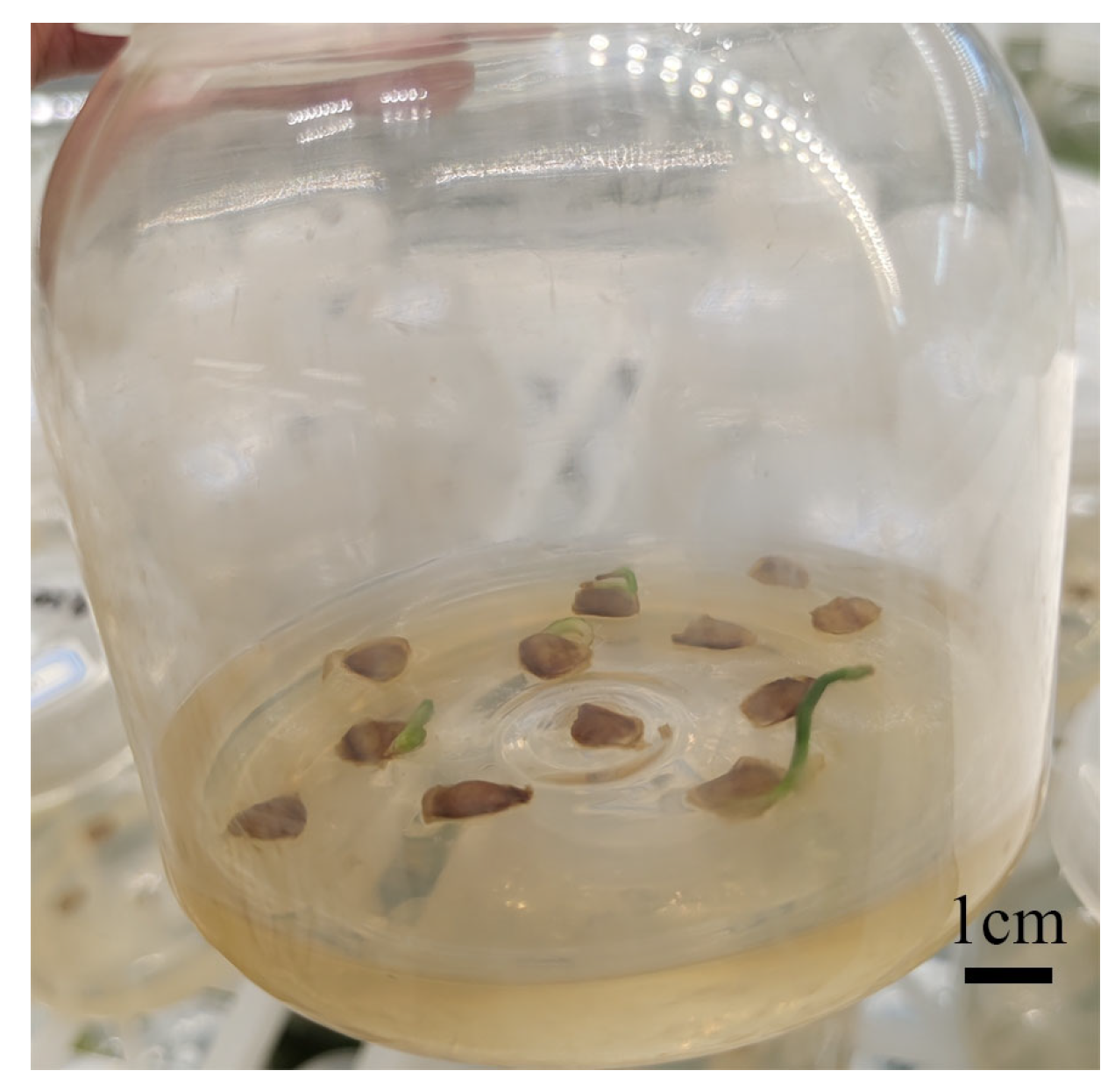
3.1.2. Disinfection Test of Lily Seed Pods

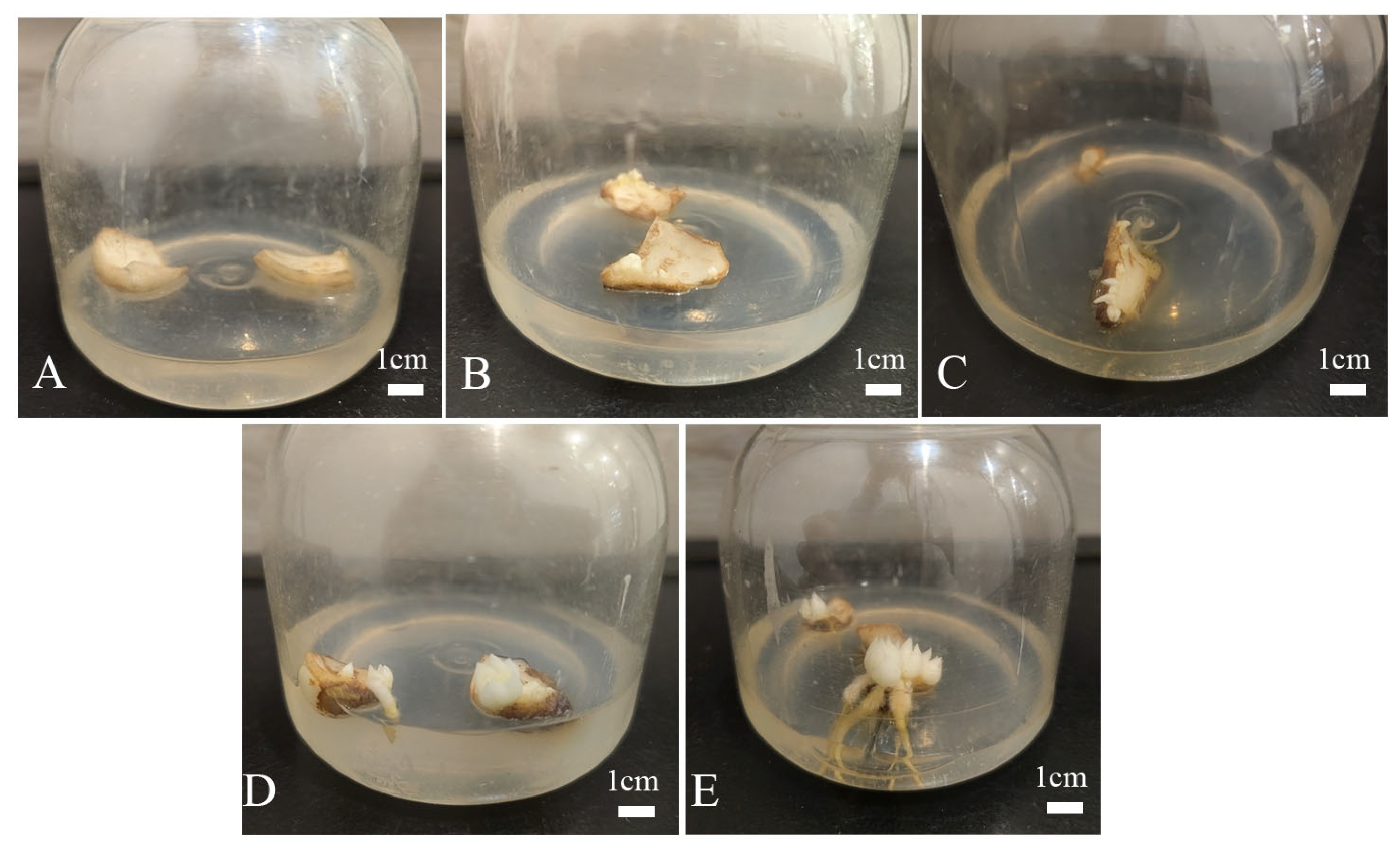
As shown in Figure 2, the seeds from the seed pods of ‘Yellow Sully’ required approximately 14 days of culture to germinate and develop into seedlings with radicles and plumules. The basal stem segments of the seedlings simultaneously induced the differentiation of leaf primordia and root primordia, yet with a significantly slower growth rate compared with the bulb scale explant induction method. As presented in Table 7, Treatment 1 resulted in a contamination rate of 33.43% and an induction rate of 8.34%; the contamination rate of Treatment 2 decreased to 20.95%, while the induction rate slightly declined to 5.87%. Treatment 3 (75% ethanol for 30 s, 50% sodium hypochlorite for 10 min) achieved the lowest contamination rate (9.44%) with the optimal disinfection effect and the highest induction rate (11.92%), showing the best comprehensive performance. However, the relatively high concentration of disinfectants caused browning in some seeds, which compromised the overall induction rate.

3.2. Control of Induction Conditions for Lily Adventitious Buds

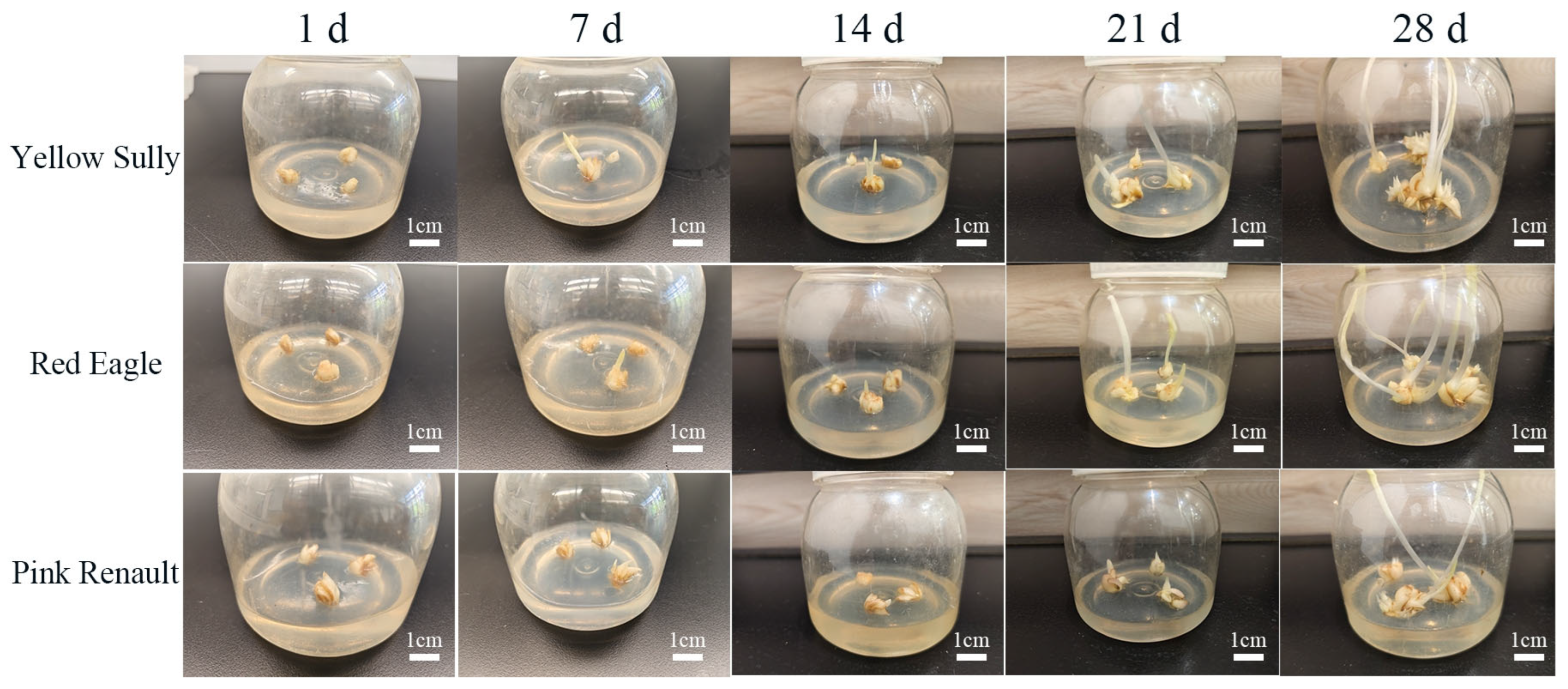
Phenotypic observations (Figure 3) revealed that: at 1 week of culture, most bulb scales uncurled and the cut sites initiated the regeneration process, with only a small number of adventitious buds forming at the basal parts of bulblets in ‘Yellow Sully’ and ‘Red Eagle’; at 2 weeks of culture, the number of adventitious buds increased, with an average of one bud per bulblet and slow growth, and the CK group initiated rooting; at 3 weeks of culture, except for the CK group of ‘Pink Renault’, the number of adventitious buds increased drastically in all other treatments (an average of two buds per bulblet), adventitious bud clusters formed with accelerated growth, and some buds differentiated into leaves; at 4 weeks of culture, adventitious buds were induced in all treatments, with an average of 2–3 buds per bulblet, the number of bud clusters increased further, a large number of buds differentiated into leaves and initiated rooting, and the root systems were denser than those in the CK group.
Within the 4-week culture period, all seven media (including the CK) listed in Table 8 successfully induced adventitious bud formation in the three lily cultivars. The addition of plant growth regulators (PGRs) at different concentration ratios promoted adventitious bud induction, yet significant cultivar-specific differences were observed. ‘Yellow Sully’ and ‘Red Eagle’ showed poor adaptability to the PGR ratios in T2 and T3, with their induction rates significantly lower than that of the CK group. The optimal media for ‘Yellow Sully’, ‘Red Eagle’ and ‘Pink Renault’ were T1, T4 and T5, respectively, with corresponding induction rates of 67.22%, 84.85% and 83.33%, and ‘Red Eagle’ exhibited the highest induction rate among the three. The number of adventitious buds increased gradually with the extension of culture time: ‘Yellow Sully’ and ‘Red Eagle’ showed a rapid increase in bud number at the second week, whereas ‘Pink Renault’ exhibited slow bud development in the early stage and only entered the rapid differentiation phase at the third week, reaching a similar bud number to the other two cultivars. Bulblet proliferation rate was identified as a secondary evaluation index, and could be combined with induction rate to serve as the basis for screening media suitable for adventitious bud proliferation. T1 and T5 showed the best comprehensive performance, with bulblet induction and proliferation rates significantly higher than the population average under these two treatments; thus, they could be used as the basal media for subsequent proliferation experiments.

3.3. Control of Proliferation and Enlargement Conditions for Lily Adventitious Bud-Derived Bulblets

3.3.1. Effects of Regulated Sucrose and Hormone Concentrations on Bulblets (Phenotypic Evaluation)

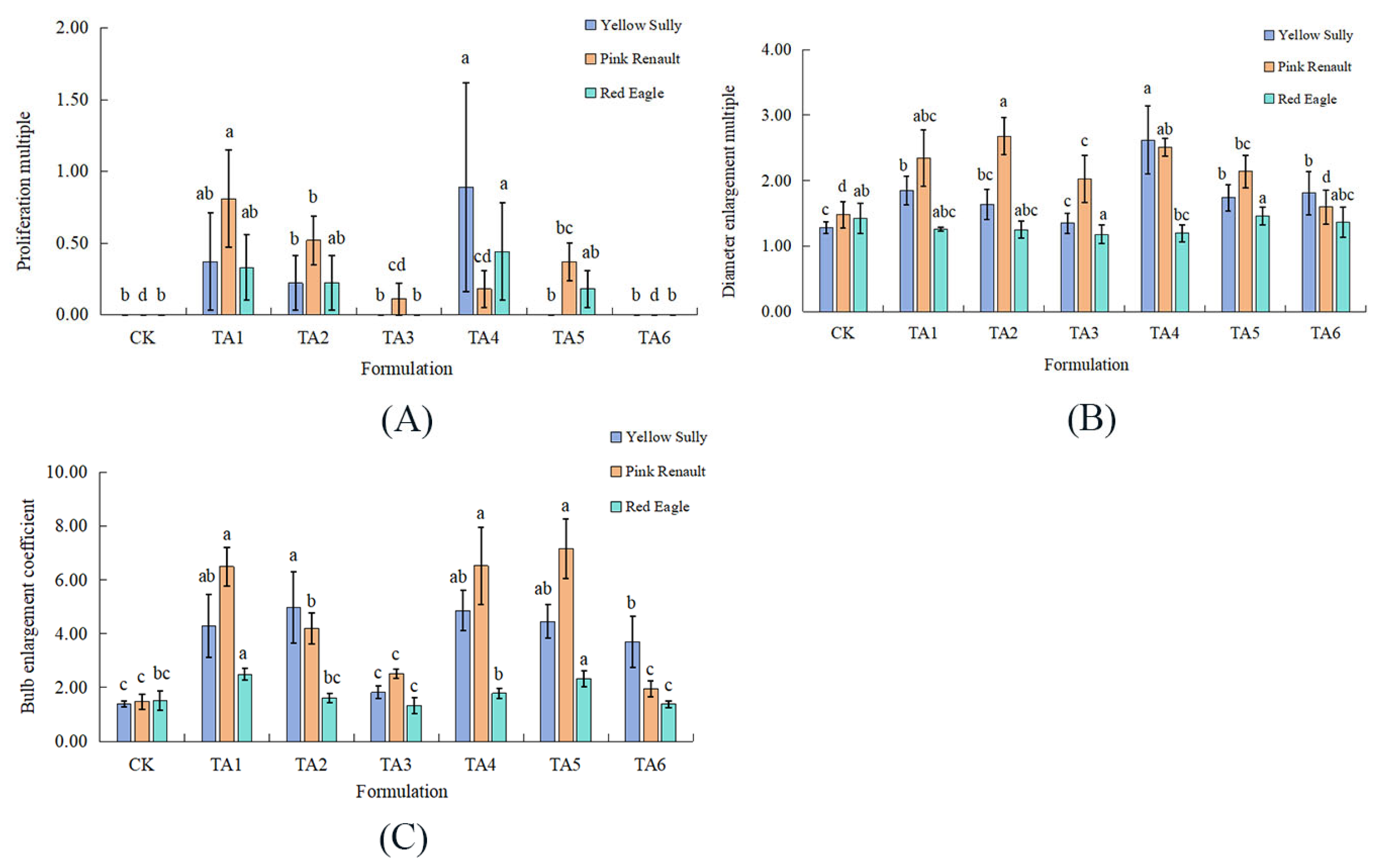
As shown in Figure 4, the formulations corresponding to the maximum proliferation multiples of ‘Yellow Sully’, ‘Red Eagle’ and ‘Pink Renault’ were TA4, TA1 and TA4, with the values of 0.89, 0.81 and 0.44, respectively; the formulations for the maximum diameter increase multiples were TA4, TA2 and TA5, with the values reaching 2.62, 2.68 and 1.46, respectively; the formulations for the maximum enlargement coefficients were TA2, TA5 and TA1, with the values of 4.98, 7.15 and 2.49, respectively. All growth indices of ‘Red Eagle’ were significantly lower than those of the other two cultivars. Combined with phenotypic observations, TA2 and TA5 exhibited superior performance only in individual cultivars with insufficient universality; for large-scale production, TA1 and TA4 are recommended for bulblet proliferation and propagation.
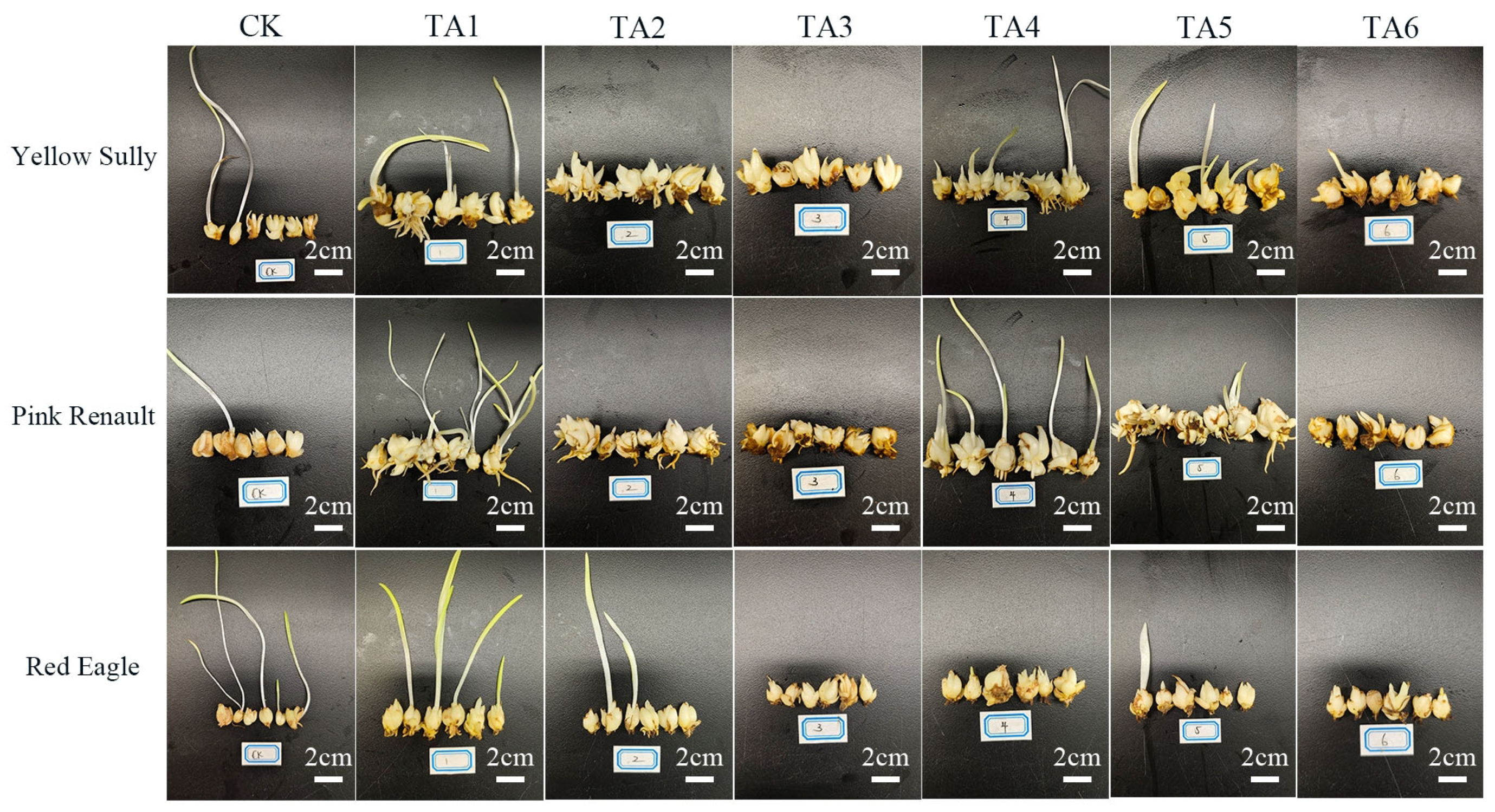
After 4 weeks of culture, the growth of bulblets of the three lily cultivars was significantly affected by sucrose and exogenous plant growth regulator (PGR) concentrations (Figure 5). TA1 and TA4 (supplemented with 50 g·L−1 sucrose) significantly promoted bulblet enlargement with favorable growth performance; TA2 and TA5 (100 g·L−1 sucrose) exerted a certain promoting effect on bulblet enlargement but inhibited the growth of ‘Pink Renault’; TA3 and TA6 (150 g·L−1 sucrose) showed poor enlargement efficacy, and high sucrose concentrations easily induced root browning and disrupted growth coordination; both bulblet enlargement and root development in the CK group were inferior to those in all effective treatments.

3.3.2. Effects of Regulated Sucrose and Hormone Concentrations on Bulblets (TOPSIS Evaluation)

Comprehensive phenotypic evaluation failed to accurately identify the optimal formulations suitable for each lily cultivar; thus, the TOPSIS method (Technique for Order Preference by Similarity to an Ideal Solution) was adopted for a comprehensive evaluation in this study, with the relative closeness degree (C value) used to assess the effects of different formulations on the proliferation and enlargement of lily bulblets. The results in Table 9 indicated that there were significant cultivar-specific differences in the effects of different formulations: TA4 was the optimal formulation for both ‘Yellow Sully’ and ‘Red Eagle’ (with C values of 0.988 and 0.813, respectively, both ranking first), while TA1 was the optimal formulation for ‘Pink Renault’ (with a C value of 0.919, ranking first). Therefore, the corresponding optimal formulations can be selected for the culture of different lily cultivars.

3.3.3. Effects of Regulated Light Conditions on Bulblets

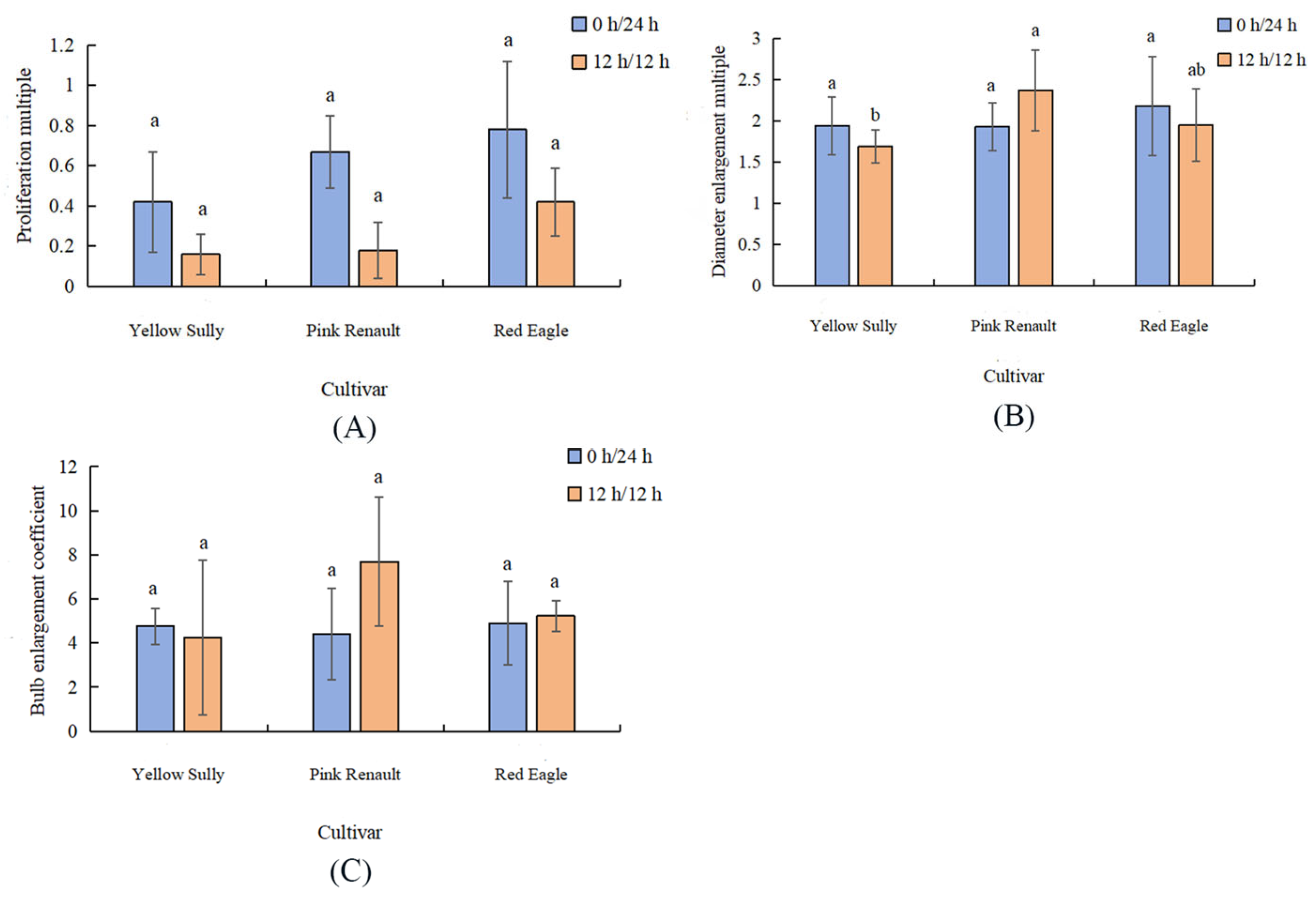
Based on the experimental results in Section 3.3.1, Treatment TA5 (MS + 50 g·L−1 sucrose + 2 mg·L−1 6-BA + 0.5 mg·L−1 NAA) was selected as the nutrient medium for bulblet culture in this experiment. As shown in Figure 6, under the 0 h/24 h dark culture condition, the proliferation multiples of ‘Yellow Sully’, ‘Red Eagle’ and ‘Pink Renault’ were significantly higher than those in the 12 h/12 h light/dark treatment group. Among the three cultivars, ‘Red Eagle’ exhibited excellent proliferation capacity under the same culture conditions.
Under the 12 h/12 h light/dark treatment, the enlargement coefficient and diameter increase multiple of ‘Pink Renault’ were significantly higher than those under the 0 h/24 h dark culture, reaching 7.69 and 2.37, respectively; no significant differences were observed for ‘Yellow Sully’ and ‘Red Eagle’ between the two light treatments.

3.4. Control of Rooting Conditions for Lily Adventitious Buds

3.4.1. Phenotypic Evaluation of Rooting Performance

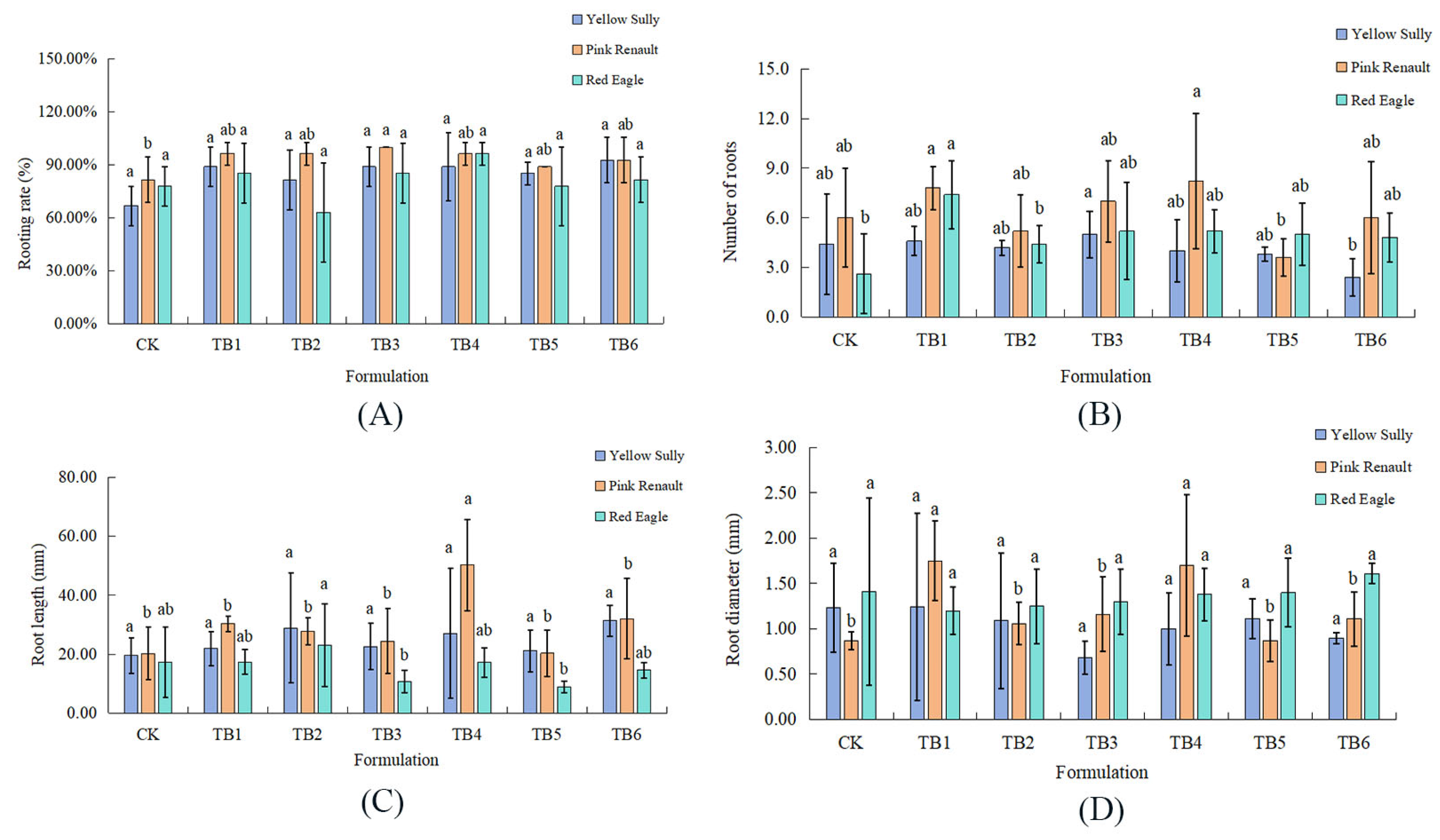
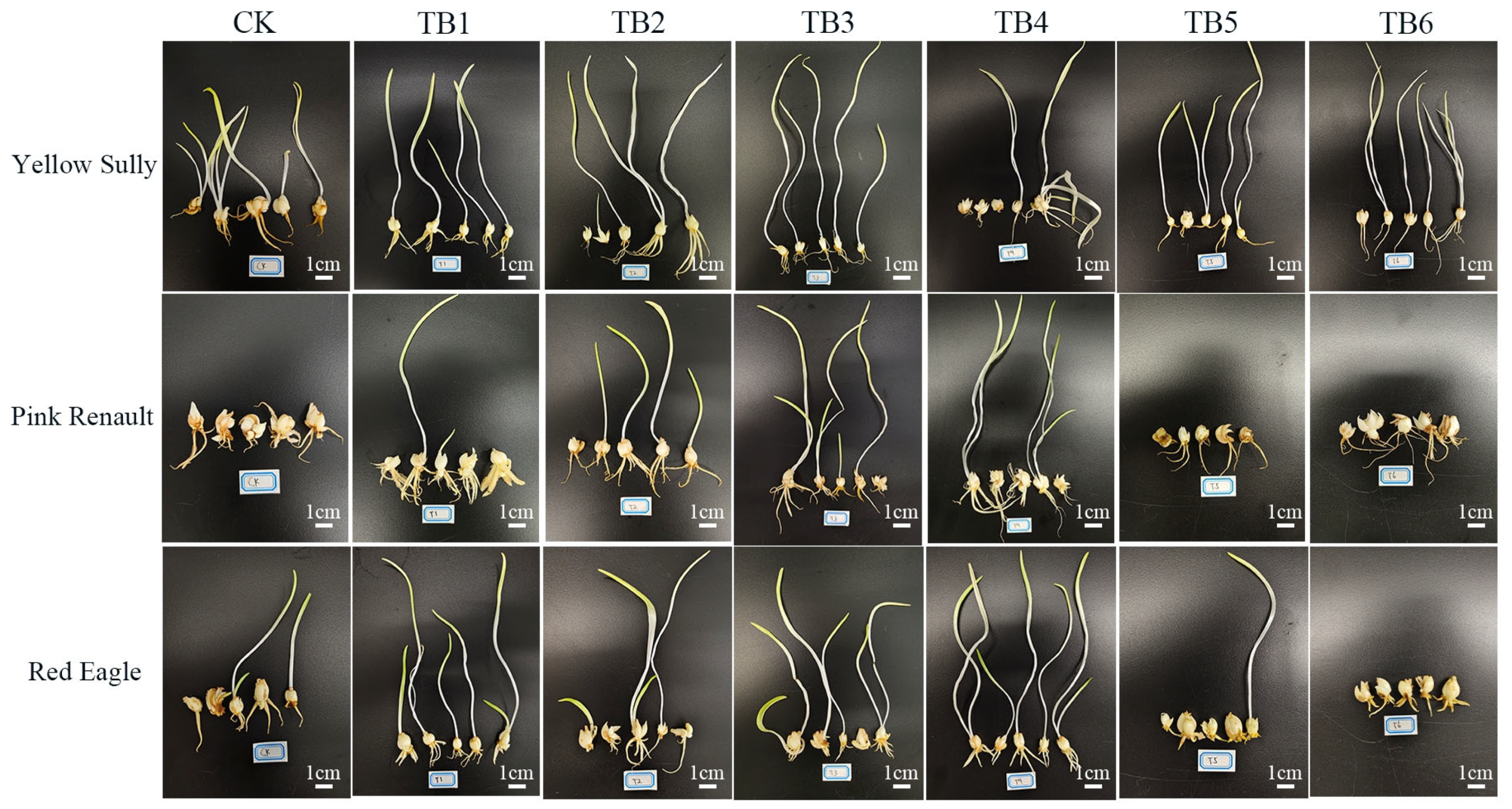
To investigate the effects of activated charcoal and exogenous plant growth regulators on the rooting of lily adventitious buds, uniform-sized bulblets were used as experimental materials. Based on the optimal hormone ratio (2 mg·L−1 6-BA + 0.5 mg·L−1 NAA) screened in Section 3.2, rooting culture was carried out in three basal media (MS, 1/2 MS and WPM) supplemented with activated charcoal at concentrations ranging from 0 to 0.5 g·L−1. As shown in Figure 7, the rooting rates under most treatments were higher than that of the CK control. The maximum rooting rates of ‘Yellow Sully’, ‘Pink Renault’ and ‘Red Eagle’ reached 92.59% (Treatment TB6), 100% (Treatment TB3) and 96.30% (Treatment TB4), respectively, indicating that appropriate addition of activated charcoal could significantly improve the rooting ability of lily bulblets. The optimal formulations and corresponding indices of root number, root length and root diameter varied among cultivars. With increasing activated charcoal concentration, the effects of MS, 1/2 MS and WPM on rooting generally showed trends of inhibition, promotion and promotion, respectively.
After 4 weeks of culture (Figure 8), all tested cultivars showed consistent response patterns to different media: the rooting effects of MS and 1/2 MS were significantly better than that of WPM. Activated charcoal at 0.3–0.5 g·L−1 was associated with reduced root browning and improved root growth. Bulblets in the CK group were shriveled with weak and slender roots. TB1 and TB4 resulted in plump bulblets and healthy, browning-free roots.

3.4.2. TOPSIS Evaluation of Rooting Performance

As shown in Table 10, significant differences were observed in the responses of different lily cultivars to rooting formulations: the optimal rooting formulations for ‘Yellow Sully’, ‘Pink Renault’ and ‘Red Eagle’ were TB2 (C = 0.711, ranked 1st), TB4 (C = 0.961, ranked 1st) and TB1 (C = 0.698, ranked 1st), respectively. The CK group performed poorly in all three cultivars, indicating that the optimized rooting formulations in this study were significantly superior to the blank control, which verified the effectiveness of the formulation optimization.

3.5. Acclimatization and Transplantation

In December 2025, bulblets with a diameter of more than 1 cm were selected for acclimatization and transplantation. A mixture of mancozeb (80% wettable powder, 0.2 g·kg−1 substrate) and carbendazim (50% wettable powder, 0.2 g·kg−1 substrate) was mixed with an appropriate amount of water and pre-applied to the soil substrates for disinfection before transplantation, and three substrate treatments were set up in the experiment. As shown in Table 11, different transplanting substrate treatments exerted significant effects on the survival rate of tissue-cultured lily plantlets at 30 days after transplantation. Seedlings cultured in disinfected substrates exhibited more prominent growth advantages, and their survival rates were significantly higher than those in non-disinfected treatments. The fungicide effectively eliminated pathogenic bacterial infection in the soil, resulting in robust overall growth. Among all treatments, the single disinfected substrate (peat soil) was more suitable for the transplanting and growth of dual-purpose medicinal and ornamental lily cultivars compared with the mixed substrate (peat soil: river sand = 1:1), with the seedling survival rate reaching 89.33% and the best growth performance.

4. Discussion

At present, most studies on lily breeding and application focus on ornamental lilies [41,42], with a long-term lack of diversity in edible lily cultivars [43], and systematic research on multifunctional lilies remains relatively insufficient. As medicinal and ornamental dual-purpose lilies gain increasing market popularity, their market demand continues to rise, gradually intensifying the contradiction between supply and demand of lily bulbs and posing severe challenges to bulb propagation. Tissue culture technology can effectively alleviate the pressure of seedling propagation.
Explant surface disinfection is the first step in tissue culture, aiming to eliminate microorganisms carried by explants [44]. Optimization of disinfection procedures helps reduce contamination rate and improve survival rate. HgCl2 and NaClO are the most widely used disinfectants in tissue culture [45,46]. However, HgCl2 is toxic to both plants and humans [47] and is subject to strict access control. Therefore, NaClO was selected in this study to disinfect different lily explants for the induction of aseptic bulblets. In tissue culture, NaClO is also commonly used for surface sterilization of important economic plants such as lily [30], Saussurea involucrata [48], sugarcane [49] and rose [50]. In the present study, when bulb scales were used as explants, Treatment 1 (75% ethanol for 3 min, 10% NaClO for 30 min) ensured the lowest contamination rate for ‘Pink Renault’ and ‘Red Eagle’, with the overall minimum contamination rate ranging from 14.29% to 21.43%. Zhang et al. [51] recommended a sterilization concentration of 10% and found that 20% NaClO for 15 min was also effective but aggravated scale browning and thus increased scale mortality, which is consistent with our results. In addition, we found that scale contamination mainly occurred during the first to second weeks of culture, and the remaining non-contaminated scales exhibited excellent differentiation ability with an induction rate of 100%. In an in vitro culture study, scales of L. monodelphum var. armenum could be surface-sterilized with 25% NaClO solution for 10 min [52], suggesting that appropriately increasing disinfectant concentration while reducing treatment time represents a novel adjustment strategy. Tian [53] successfully established an efficient disinfection protocol for L. pumilum seeds and found that sterilization with 75% ethanol for 5 min and 5% NaClO for 10 min significantly reduced the contamination rate to below 7% and achieved a germination rate of 96.67%. We disinfected and inoculated lily seed pod seeds and found that Treatment 3 (75% ethanol for 30 s, 50% NaClO for 10 min) performed well in both contamination rate (9.44%) and induction rate (11.92%), although partial seed browning occurred due to the high disinfectant concentration. By contrast, Jin et al. [54] treated ‘Zi Kui’ tea tree seeds with 20% NaClO and obtained a survival rate of 72.73%, which differs greatly from our results. This discrepancy may be attributed to differences in plant species and organ characteristics, and parameters such as concentration and treatment time can be further optimized in subsequent experiments. Compared with scale disinfection, seeds are naturally protected by seed pods and seed coats in a near-aseptic environment, thus showing a strong advantage in contamination control. However, seed disinfection in this experiment was associated with several limitations including low induction rate, insufficient bulblet proliferation, difficulty in material acquisition and a prolonged culture cycle. Therefore, for the industrial large-scale production of tissue-cultured lily bulblets, the bulb scale disinfection and induction method is more recommended, which has not been reported in previous lily studies. It can be seen that the disinfection efficiency of the same plant varies with disinfection time, disinfectant concentration, cultivar, growth environment and explant type [55].
The lily tissue culture system has been gradually optimized and successfully applied to various lily species, such as Asiatic hybrid lilies [56], L. leucanthum [57] and L. ledebourii [58]. Plant growth regulators (PGRs) play a key role in regulating plant growth and development, especially in bulb induction and development, which is controlled by a complex hormonal regulatory network [59]. Accordingly, PGRs are widely used in the in vitro propagation of bulbous plants. In this study, experiments on adventitious bud induction, proliferation, enlargement and rooting conditions were conducted on three cultivars: ‘Yellow Sully’, ‘Red Eagle’ and ‘Pink Renault’, and suitable media were screened for each cultivar at corresponding culture stages. Our results indicate that NAA and 6-BA are significant influencing factors, and different PGR ratios lead to considerable differences in the induction, proliferation and enlargement of lily bulblets, which is consistent with the findings reported by Kumar et al. [60]. In another study, Zhou et al. [61] suggested that 60 g·L−1 sucrose and dark culture were the optimal conditions for increasing bulb weight and enlargement, while light conditions inhibited bulb growth, which is not fully consistent with our conclusions. However, our study found that 50–100 g·L−1 sucrose effectively promoted bulblet enlargement, whereas high sucrose concentrations caused root browning and inhibited long-term growth; some scholars [39] also reported that high sucrose concentrations aggravate browning. Dark culture significantly increased bulblet number, while light culture only promoted obvious bulb enlargement in individual cultivars. This may be because light activates photosynthesis-related genes to produce large amounts of chlorophyll and photosynthetic enzymes, promoting the synthesis and accumulation of photosynthates to provide a material basis for bulb enlargement. The specific regulatory mechanisms warrant further investigation. Dark culture significantly increased bulblet proliferation by reducing nutrient consumption and promoting cell division and adventitious bud redifferentiation. For ‘Pink Renault’, light/dark treatment enhanced bulblet enlargement, likely because light activates photosynthesis-related genes and accumulates photosynthetic products. In contrast, ‘Yellow Sully’ and ‘Red Eagle’ showed no photoperiod-dependent size changes, indicating genotype-specific low dependence on photosynthates. Overall, dark culture is more suitable for the proliferation and enlargement of these dual-purpose lilies. In addition to the effects of photoperiod, light quality is also crucial; Palka et al. [62] demonstrated that different LED spectra significantly influenced bulblet formation, photosynthetic pigments, and soluble phenolics in L. candidum, with white LED being most efficient for bulblet production.
In the present study, supplementation of MS medium with 50 g·L−1 sucrose + 1 mg·L−1 6-BA + 0.1 mg·L−1 NAA (Treatment TA1) or 50 g·L−1 sucrose + 2 mg·L−1 6-BA + 0.5 mg·L−1 NAA (Treatment TA4), combined with dark culture, effectively promoted adventitious bud induction, proliferation and bulblet enlargement. For the Asiatic lily ‘Shuttle’, the optimal induction medium was MS + 0.5 mg·L−1 NAA + 0.5 mg·L−1 6-BA + 30 g·L−1 sucrose, and the optimal proliferation medium was MS + 0.1 mg·L−1 NAA + 1.0 mg·L−1 6-BA + 30 g·L−1 sucrose [63]. Similarly, Rashid et al. [64] reported that in Easter lily (L. longiflorum), the most effective callus induction from bulb explants was achieved on MS medium containing 1.5 mg·L−1 BAP and 0.5 mg·L−1 NAA, further demonstrating genotype-dependent responses to plant growth regulators in lily tissue culture. This discrepancy may be attributed to genetic background: LA hybrids, derived from L. longiflorum and Asiatic lilies, require higher cytokinin (6-BA), whereas Asiatic lily ‘Shuttle’ is more sensitive to auxin (NAA) and prefers lower sucrose, reflecting genotype-dependent responses. Using a temporary immersion bioreactor (RITA) with liquid medium, Palka et al. [65] found that immersion frequency and duration significantly influenced bulblet formation in L. candidum, highlighting the impact of both culture system and genotype on regeneration efficiency. Furthermore, ‘Red Eagle’ performed significantly worse than the other two cultivars under identical conditions, likely due to its narrower response range to PGRs, weaker cell division and carbon accumulation capacities associated with its genetic traits, as well as insufficient endogenous hormones, low explant nutrient reserves, and suboptimal medium matching. Activated charcoal (AC) is known to promote plant growth and development by adsorbing inhibitory compounds in the medium and significantly reducing the accumulation of toxic metabolites [66]. Studies have shown that adding AC to narcissus bulb culture significantly reduces browning and promotes bulb formation [67], which is similar to our conclusion that AC application not only effectively alleviates browning but also promotes bulb and root growth of medicinal and ornamental lilies. AC (0.3–0.5 g·L−1) alleviated root browning and promoted root growth. MS medium supported bulblet enlargement, while half-strength MS favored robust root development due to moderate osmotic pressure. WPM was poorly compatible, causing thin, short, browning-prone roots. The CK group (without hormones or activated charcoal) produced shriveled bulblets with weak roots, unsuitable for transplantation. Therefore, formulations TB1 and TB4 are recommended, as they produced plump, browning-free bulblets and robust roots. We also found, based on comprehensive phenotypic observations and physiological index data, that ‘Pink Renault’ outperforms the other two cultivars and holds great potential as a high-quality medicinal and ornamental lily germplasm. In this study, the disinfected single substrate of peat soil was most suitable for the transplanting and growth of medicinal and ornamental lilies, with a seedling survival rate of 89.33%. The mixed substrate (peat soil: river sand = 1:1) also performed well, with results similar to those of Chen et al. [68]. At the acclimatization and transplantation stage, both substrate type and disinfection treatment affect transplanting survival rate.

5. Conclusions

In this study, an efficient and stable in vitro regeneration system was successfully established for new edible and ornamental lily cultivars (LA hybrids and Asiatic hybrids). The main novelties of this work are: (1) systematic comparison of bulb scales versus seed pods as explants, demonstrating the clear superiority of bulb scales for industrial propagation; (2) optimization of disinfection protocols using NaClO instead of toxic HgCl2, achieving a contamination rate as low as 14.29% and 100% regeneration; (3) identification of cultivar-specific optimal media (TA1, TA4 for LA hybrids; TB1, TB4 for rooting) via TOPSIS-based comprehensive evaluation; (4) elucidation of genotype-dependent responses to PGRs, sucrose, and photoperiod, highlighting that dark culture promotes proliferation while light/dark enhances bulblet enlargement only in specific cultivars (e.g., ‘Pink Renault’).
Potential applications of this optimized system include: large-scale commercial production of disease-free lily bulbs, germplasm conservation of elite cultivars, and rapid propagation for the cut-flower and potted-plant markets. The protocol is particularly suitable for industrial seedling production in China, where lily bulb supply heavily relies on imports. Moreover, the use of environmentally friendly, low-toxicity disinfectants and clearly defined culture conditions facilitates technology transfer to commercial nurseries. Future work can extend this system to other Lilium species and to genetic transformation studies.


Author Contributions

Y.J. performed the experiments, analyzed the data, and wrote the manuscript. C.W. conceived and designed the research, analyzed the data, and wrote the manuscript. Z.H., M.F. and F.C. advised on the project and participated in the revision of the manuscript. All authors have read and agreed to the published version of the manuscript.

Funding

This study was supported by the Institute of Horticulture, Zhejiang Academy of Agricultural Sciences. It was also supported by the Zhejiang Provincial Major Agricultural Technology Collaborative Promotion Program (2023ZDXT11-2).

Data Availability Statement

The data supporting the findings of this study are available from the corresponding author upon reasonable request.

Conflicts of Interest

The authors declare no conflicts of interest.

References

  1. Wang, Y.; Chen, H.; Feng, P.; Wang, D.; Du, X. Traditional uses, nutritional properties, phytochemical metabolites, pharmacological properties, and potential applications of Lilium spp.: A systematic review. Front. Pharmacol. 2025, 16, 1713957. [Google Scholar] [CrossRef] [PubMed]
  2. Zhou, J.; An, R.; Huang, X. Genus Lilium: A review on traditional uses, phytochemistry and pharmacology. J. Ethnopharmacol. 2021, 270, 113852. [Google Scholar] [CrossRef] [PubMed]
  3. Lai, Y.S.; Shimoyamada, Y.; Nakayama, M.; Yamagishi, M. Pigment accumulation and transcription of LhMYB12 and anthocyanin biosynthesis genes during flower development in the Asiatic hybrid lily (Lilium spp.). Plant Sci. 2012, 193, 136–147. [Google Scholar] [CrossRef]
  4. Li, W.; Yong, Y.; Zhang, Y.; Lyu, Y. Transcriptional regulatory network of GA floral induction pathway in LA hybrid lily. Int. J. Mol. Sci. 2019, 20, 2694. [Google Scholar] [CrossRef]
  5. Yi, B.; Xu, Y.C.; Wu, Y.; Yu, X.H.; Yuan, C.; Lyu, Q.D.; Xia, Y.P. Evaluation of ornamental and edible LA lily cultivars based on principal component and cluster analyses. J. Zhejiang Agric. Sci. 2024, 65, 1639–1645. (In Chinese) [Google Scholar]
  6. Yin, Z.F. Plant Regeneration and Cryopreservation in Lily (Lilium spp.). Ph.D. Thesis, Northwest A&F University, Xi’an, China, 2014. (In Chinese) [Google Scholar]
  7. Liu, L. Establishment of a Genetic Transformation System for Lilium and Transformation with Antisense ACC Synthase Gene. Master’s Thesis, Dalian University of Technology, Dalian, China, 2006. (In Chinese) [Google Scholar]
  8. Youssef, N.M.; Shaaban, S.A.; Ghareeb, Z.F.; Taha, L.S. In vitro bulb formation of direct and indirect regeneration of Lilium orientalis cv. “Starfighter” plants. Bull. Natl. Res. Cent. 2019, 43, 211. [Google Scholar] [CrossRef]
  9. Su, J.H. Researches on Tissue Culture and Rapid Propagation of Lilium concolor and Lilium davidii. Master’s Thesis, Huazhong Agricultural University, Wuhan, China, 2014. (In Chinese) [Google Scholar]
  10. Qi, H.Y.; Ge, X.Q.; Xu, H.G.; Lv, W.Y.; Liu, T.Y.; Li, A.M.; Wang, Y.Y. Research progress in regeneration and genetic transformation of Lilium plants. J. Inn. Mong. Agric. Univ. (Nat. Sci. Ed.) 2023, 44, 78–84. (In Chinese) [Google Scholar]
  11. Méndez-Hernández, H.A.; Ledezma-Rodríguez, M.; Avilez-Montalvo, R.N.; Juárez-Gómez, Y.L.; Skeete, A.; Avilez-Montalvo, J.; De-la-Peña, C.; Loyola-Vargas, V.M. Signaling overview of plant somatic embryogenesis. Front. Plant Sci. 2019, 10, 77. [Google Scholar] [CrossRef]
  12. Bakhshaie, M.; Khosravi, S.; Azadi, P.; Bagheri, H.; van Tuyl, J.M. Biotechnological advances in Lilium. Plant Cell Rep. 2016, 35, 1799–1826. [Google Scholar] [CrossRef]
  13. Bhandari, N.S.; Aswath, C. Standardization of an effective protocol for in vitro culture of Lilium longiflorum Thunb cv. Pavia. Int. J. Curr. Microbiol. Appl. Sci. 2018, 7, 1183–1190. [Google Scholar] [CrossRef]
  14. Askari, N.; Visser, R.G. The role of scale explants in the growth of regenerating lily bulblets in vitro. Plant Cell Tissue Organ Cult. (PCTOC) 2022, 149, 589–598. [Google Scholar] [CrossRef]
  15. Rafiq, S.; Rather, Z.A.; Bhat, R.A.; Nazki, I.T.; Al-Harbi, M.S.; Banday, N.; Farooq, I.; Samra, B.N.; Khan, M.H.; Ahmed, A.F.; et al. Standardization of in vitro micropropagation procedure of oriental Lilium hybrid Cv. ‘Ravenna’. Saudi J. Biol. Sci. 2021, 28, 7581–7587. [Google Scholar] [CrossRef] [PubMed]
  16. Pang, X.J. Establishment of a Rapid Propagation System and Its Nutritional Value Evaluation for Dual-Use Lilium Seedlings. Master’s Thesis, Anhui Agricultural University, Hefei, China, 2022. (In Chinese) [Google Scholar]
  17. Arzate-Fernandez, A.M.; Nakazaki, T.; Okumoto, Y.; Tanisaka, T. Efficient callus induction and plant regeneration from filaments with anther in lily (Lilium longiflorum Thunb.). Plant Cell Rep. 1997, 16, 836–840. [Google Scholar] [CrossRef] [PubMed]
  18. Fu, Y.; Shu, L.; Li, H.; Zhang, X.; Liu, X.; Ou, Z.; Liang, X.; Qi, X.; Yang, L. Establishment of highly efficient plant regeneration, callus transformation and analysis of Botrytis cinerea-responsive PR promoters in Lilium brownii var. viridulum. Plants 2023, 12, 1992. [Google Scholar] [CrossRef]
  19. Liu, Y.Z.; Gao, X.Q.; Zhang, Y.C.; Chen, S.; Hao, J.; Lü, Y.J. Effects of plant hormones and light or dark culture conditions on the regeneration system of Lilium lancifolium Thunb. J. South. Agric. 2021, 52, 1300–1309. (In Chinese) [Google Scholar]
  20. Langens-Gerrits, M.; Kuijpers, A.M.; De Klerk, G.J.; Croes, A. Contribution of explant carbohydrate reserves and sucrose in the medium to bulb growth of lily regenerated on scale segments in vitro. Physiol. Plant. 2003, 117, 245–255. [Google Scholar] [CrossRef]
  21. Bonnier, F.J.M.; Van Tuyl, J.M. Long term in vitro storage of lily: Effects of temperature and concentration of nutrients and sucrose. Plant Cell Tissue Organ Cult. 1997, 49, 81–87. [Google Scholar] [CrossRef]
  22. Langens-Gerrits, M.; Lilien-Kipnis, H.; Croes, T.; Miller, W.; Kollöffel, C.; De Klerk, G.J. Bulb growth in lily regenerated in vitro. In VII International Symposium on Flowerbulbs 430; ISHS: Leuven, Belgium, 1996; pp. 267–274. [Google Scholar]
  23. Yuan, Z.C. The Study of Virus Detection and Isolated Culture on Lanceleaf Lily Bulb. Master’s Thesis, Hunan Agricultural University, Changsha, China, 2014. (In Chinese) [Google Scholar]
  24. Yin, X.; Wang, D.; Wang, Y.Y.; Zang, R.L.; Lu, Y.Z.; Lan, X.Z. Study on rapid propagation in vitro of Lilium lancifolium bulbs from Xizang. Seed 2024, 43, 149–156. (In Chinese) [Google Scholar]
  25. Ma, S.X.; Tian, Z.Q.; Kang, X.P. Study on tissue culture of squamae of wild Lilium lancifolium in Shanxi. Shanxi Agric. Sci. 2012, 40, 319–321, 377. (In Chinese) [Google Scholar]
  26. Jin, S.; Wang, J.; Wang, X.; Sun, D.; Li, G.; Genovesi, A.D.; Liu, S. Direct and indirect shoot and bulblet regeneration from cultured leaf explants of Lilium pumilum, an endangered species. Vitr. Cell. Dev. Biol.-Plant 2014, 50, 69–75. [Google Scholar] [CrossRef]
  27. Liu, X.; Yang, G. Adventitious shoot regeneration of oriental lily (Lilium orientalis) and genetic stability evaluation based on ISSR marker variation. Vitr. Cell. Dev. Biol.-Plant 2012, 48, 172–179. [Google Scholar] [CrossRef]
  28. Yasemin, S.; Beruto, M. A review on flower bulb micropropagation: Challenges and opportunities. Horticulturae 2024, 10, 284. [Google Scholar] [CrossRef]
  29. Qi, X.Y.; Zhang, W.L.; Yang, P.P.; Xu, L.F.; Ming, J. Optimization of high efficient tissue culture regeneration system for ornamental and edible dual purpose lily ‘Jinghe’. China Veg. 2022, 57–62. (In Chinese) [Google Scholar]
  30. Mir, J.I.; Ahmed, N.; Itoo, H.; Sheikh, M.A.; Rashid, R.; Wani, S.H. In vitro propagation of Lilium (Lilium longiflorum). Indian J. Agric. Sci. 2012, 82, 455. [Google Scholar] [CrossRef]
  31. Wu, R.J.; Ruan, S.N. Studies on the embryogenesis and plant regeneration of improved variety of Lilium. J. Fujian Coll. For. 2003, 23, 322–325. (In Chinese) [Google Scholar]
  32. Yuan, F.T.; Chen, L.Q. Leaf culture in vitro and plant regeneration of Lilium longiflorum Thunb. Hubei Agric. Sci. 2001, 50–51. (In Chinese) [Google Scholar]
  33. Ke, Y.Q.; Guo, P.H.; Ma, H.X.; Yang, X.H.; Gao, D.D.; Liu, X.J.; Ma, Z.R.; Ding, G.T. Rapid propagation system establishment of Lanzhou lily. Zhejiang Agric. Sci. 2020, 32, 1000–1008. (In Chinese) [Google Scholar]
  34. Sun, D.Q. Effect of Micro-Environment on the Growth of Tuber Flowers In Vitro and the Study on the Technique of Transplantation. Master’s Thesis, Northwest A&F University, Yangling, China, 2008. (In Chinese) [Google Scholar]
  35. Shi, Y.P. Research on Optimization of the Tissue Culture of Lilium brownii var. viridulum. Master’s Thesis, Guangxi University, Nanning, China, 2008. (In Chinese) [Google Scholar]
  36. Gong, X.K.; Zhao, X.Y.; Chen, X.L.; Hou, F.M.; Gao, F.Y. Study on improvement of survival rate of lily plantlets from tissue culture transplanted into soil. Acta Hortic. Sin. 1996, 73–77. (In Chinese) [Google Scholar]
  37. Zhao, H.M. Study on Asexual Reproduction and Nutritional Quality of Two Edible Lilies. Master’s Thesis, Inner Mongolia Agricultural University, Hohhot, China, 2024. (In Chinese) [Google Scholar]
  38. Murashige, T.; Skoog, F. A revised medium for rapid growth and bio assays with tobacco tissue cultures. Physiol. Plant 1962, 15, 473–497. [Google Scholar] [CrossRef]
  39. Zhang, M.H. Study on the Influencing Factors of Bulblets Enlargement In Vitro and the Effect of Breaking Dormancy at Low Temperature of Lilium amoenum. Master’s Thesis, Yunnan Agricultural University, Kunming, China, 2023. (In Chinese) [Google Scholar]
  40. McCown, B.H.; Lloyd, G. Woody Plant Medium (WPM)—A mineral nutrient formulation for microculture of woody plant species. HortScience 1981, 16, 453. [Google Scholar]
  41. Pourbeyrami Hir, Y.; Yuan, S.; Torabi Giglou, M.; Jun, M. QTLs position of some important ornamental traits in recently developed OO lily population. Physiol. Mol. Biol. Plants 2019, 25, 1419–1434. [Google Scholar] [CrossRef]
  42. Yang, J.; Meng, J.; Liu, X.; Hu, J.; Zhu, Y.; Zhao, Y.; Yuan, T. Integrated mRNA and small RNA sequencing reveals a regulatory network associated with flower color in oriental hybrid lily. Plant Physiol. Biochem. 2021, 166, 103–114. [Google Scholar] [CrossRef]
  43. Li, X.; Wang, C.; Cheng, J.; Zhang, J.; da Silva, J.A.T.; Liu, X.; Duan, X.; Li, T.; Sun, H. Transcriptome analysis of carbohydrate metabolism during bulblet formation and development in Lilium davidii var. unicolor. BMC Plant Biol. 2014, 14, 358. [Google Scholar] [CrossRef]
  44. Dalauleng, A.; Gusmiaty; Panannangan, F.D.; Restu, M. The optimization of in vitro sterilization on Ebony (Diospyros celebica Bakh) using shoot explants. IOP Conf. Ser. Earth Environ. Sci. 2020, 575, 012021. [Google Scholar] [CrossRef]
  45. Huang, T.; Zhang, H.; Zhao, R.; Zhu, Z. Establishing an efficient regeneration system for tissue culture in Bougainvillea buttiana ‘Miss Manila’. Plants 2022, 11, 2372. [Google Scholar] [CrossRef]
  46. Zhao, A.; Xu, W.; Xu, P.; Zhang, X.; Wu, Y.; Xu, A.; Zhang, X.; Oladipo, A.; Cao, F.; Fu, F. Establishment of tissue culture and regeneration system in Hippophae gyantsensis Lian. Horticulturae 2024, 10, 460. [Google Scholar] [CrossRef]
  47. Wen, T.C.; Qian, C.Y.; Li, B.Y. Research progress on explant sterilization technology of plant tissue culture. Mod. Agric. Sci. Technol. 2024, 72–76. (In Chinese) [Google Scholar]
  48. Guo, B.; Gao, M.; Liu, C.Z. In vitro propagation of an endangered medicinal plant Saussurea involucrata Kar. et Kir. Plant Cell Rep. 2007, 26, 261–265. [Google Scholar] [CrossRef] [PubMed]
  49. Tiwari, A.K.; Tripathi, S.; Lal, M.; Mishra, S. Screening of some chemical disinfectants for media sterilization during in vitro micropropagation of sugarcane. Sugar Tech 2012, 14, 364–369. [Google Scholar] [CrossRef]
  50. Kaviani, B.; Deltalab, B.; Kulus, D.; Khoddamzadeh, A.A.; Roque-Borda, C.A. In vitro shoot multiplication and rooting of ‘kashan’ and ‘hervy azerbaijan’ damask rose (Rosa damascena Mill.) genotypes for cosmetic and ornamental applications. Plants 2024, 13, 1364. [Google Scholar] [CrossRef]
  51. Zhang, Z.; Wei, J.; Xu, L.; Ming, J.; Yang, P. Induction and enlargement of bulblets in Lilium brownii var. viridulum in vitro. Agronomy 2025, 15, 2211. [Google Scholar] [CrossRef]
  52. Azeri, F.N.; Öztürk, G. Microbulb and plantlet formation of a native bulbous flower, Lilium monodelphum M. Bieb var. Armenum, through tissue culture propagation. Biotechnol. Rep. 2021, 32, e00665. [Google Scholar] [CrossRef]
  53. Tian, Y. Construction and Application of an Efficient Tissue Culture Propagation System for Lilium pumilum DC. Master’s Thesis, Shenyang Agricultural University, Shenyang, China, 2025. (In Chinese) [Google Scholar]
  54. Jin, J.; Chen, Y.; Cai, J.; Lv, L.; Zeng, X.; Li, J.; Asghar, S.; Li, Y. Establishment of an efficient regeneration system of ‘ZiKui’ tea with hypocotyl as explants. Sci. Rep. 2024, 14, 11603. [Google Scholar] [CrossRef]
  55. da Silva, J.A.T.; Winarto, B.; Dobránszki, J.; Cardoso, J.C.; Zeng, S. Tissue disinfection for preparation of Dendrobium in vitro culture. Folia Hortic. 2016, 28, 57–75. [Google Scholar] [CrossRef]
  56. Cardona Suárez, C.M.; Colla, G.; Cardarelli, M.; Nesi, B. Response to in vitro propagation of different Asiatic hybrid lilies. In II International Symposium on the Genus Lilium 900; ISHS: Leuven, Belgium, 2010; pp. 393–399. [Google Scholar]
  57. Tang, Y.P.; Liu, X.Q.; Gituru, R.W.; Chen, L.Q. Callus induction and plant regeneration from in vitro cultured leaves, petioles and scales of Lilium leucanthum (Baker) Baker. Biotechnol. Biotechnol. Equip. 2010, 24, 2071–2076. [Google Scholar] [CrossRef]
  58. Azadi, P.; Khosh-Khui, M. Micropropagation of Lilium ledebourii (Baker) Boiss as affected by plant growth regulator, sucrose concentration, harvesting season and cold treatments. Electron. J. Biotechnol. 2007, 10, 582–591. [Google Scholar] [CrossRef]
  59. Podwyszyńska, M. The mechanisms of in vitro storage organ formation in ornamental geophytes. Floric. Ornam. Biotechnol. Bulb. Ornam. 2012, 6, 9. [Google Scholar]
  60. Kumar, S.; Kanwar, J.K.; Chaudhary, V. In vitro propagation of oriental hybrid lily from root explant. Adv. Hortic. Sci. 2008, 22, 63–65. [Google Scholar]
  61. Zhou, L.; He, J.; Liu, Q. Effects of hormones, carbon sources, and photoperiod on bulblet development in Lilium fargesii Franch during in vitro culture. Plant Cell Tissue Organ Cult. 2024, 157, 30. [Google Scholar] [CrossRef]
  62. Pałka, P.; Cioć, M.; Hura, K.; Szewczyk-Taranek, B.; Pawłowska, B. Adventitious organogenesis and phytochemical composition of Madonna lily (Lilium candidum L.) in vitro modeled by different light quality. Plant Cell Tissue Organ Cult. (PCTOC) 2023, 152, 99–114. [Google Scholar] [CrossRef]
  63. Rashid, S.B.; Sarkar, M.A.R.; Hasan, N.; Akter, N.; Rida, R.J.; Rahman, S.M. Development of an Efficient In vitro Regeneration Protocol for Easter Lily (Lilium longiflorum Thunb.) Using Bulb Explants. Plant Tissue Cult. Biotechnol. 2025, 35, 417–426. [Google Scholar] [CrossRef]
  64. Ma, X.M.; Hu, Y.C.; Miao, J.; Zhang, S.; Wang, J.F.; Shi, S.C. Establishment of Lilium ‘Trensor’ in vitro rapid propagation system. North. Hortic. 2024, 4, 42–48. (In Chinese) [Google Scholar]
  65. Pałka, P.; Malik, M.; Pawłowska, B. Effects of pretreatment in a temporary immersion bioreactor on organogenesis efficacy of Lilium candidum L. bulbscales. Acta Soc. Bot. Pol. 2024, 93, 1–12. [Google Scholar] [CrossRef]
  66. Thomas, T.D. The role of activated charcoal in plant tissue culture. Biotechnol. Adv. 2008, 26, 618–631. [Google Scholar] [CrossRef] [PubMed]
  67. Steinitz, B.; Yahel, H. In vitro propagation of Narcissus tazetta 1. HortScience 1982, 17, 333–334. [Google Scholar] [CrossRef]
  68. Chen, J.; Chen, L.Y.; Chen, L.G.; Rong, J.D.; He, T.Y.; Zheng, Y.S. Study on tissue culture technology of Melia azedarach. J. Fujian Coll. For. 2014, 34, 48–51. (In Chinese) [Google Scholar]
Figure 1. Growth status of bulblets induced from disinfected scales at different periods. Note: (A) Cultured for 1 d; (B) Cultured for 7 d; (C) Cultured for 14 d; (D) Cultured for 21 d; (E) Cultured for 28 d.
Agronomy 16 00940 g001
Figure 2. Growth status of adventitious buds induced from lily pod seeds at 14 days.
Agronomy 16 00940 g002
Figure 3. Growth status of induced bulblets at different periods.
Agronomy 16 00940 g003
Figure 4. Effects of different medium formulations on proliferation and enlargement of adventitious buds. Note: Different lowercase letters in the figure indicate significant differences among treatments of the same cultivar at p < 0.05 level, with statistical significance. (A) Proliferation multiple, column = mean ± SE, the same below; (B) Diameter enlargement multiple; (C) Bulb enlargement coefficient.
Agronomy 16 00940 g004
Figure 5. Growth status of bulblets under different proliferation conditions after 4 weeks of culture.
Agronomy 16 00940 g005
Figure 6. Effects of photoperiod on proliferation and enlargement of adventitious buds. Note: Different lowercase letters in the figure indicate significant differences among cultivars under the same light treatment at the p < 0.05 level, with statistical significance. (A) Proliferation multiple, column = mean ± SE, the same below; (B) Diameter enlargement multiple; (C) Expansion coefficient.
Agronomy 16 00940 g006
Figure 7. Effects of different medium formulations on adventitious bud rooting. Note: Different lowercase letters in the figure indicate significant differences between treatments of the same cultivar at the p < 0.05 level, with statistical significance. (A) Rooting rate (%), column = mean ± SE, the same below; (B) Number of roots; (C) Root length (mm); (D) Root diameter (mm).
Agronomy 16 00940 g007
Figure 8. Growth status of bulblets in different rooting media after 4 weeks of culture.
Agronomy 16 00940 g008
Table 1. Disinfection protocols for lily scales.
TreatmentDetailed Procedures
175% ethanol for 3 min, followed by 10% sodium hypochlorite for 30 min
275% ethanol for 3 min, followed by 15% sodium hypochlorite for 30 min
375% ethanol for 3 min, followed by 20% sodium hypochlorite for 30 min
Note: Rinse three times with sterile distilled water after disinfection.
Table 2. Disinfection protocols for lily pods.
TreatmentDetailed Procedures
175% ethanol for 30 s
275% ethanol for 30 s, followed by 4% sodium hypochlorite for 10 min
375% ethanol for 30 s, followed by 50% sodium hypochlorite for 10 min
Note: Rinse three times with sterile distilled water after disinfection.
Table 3. Lily bulblet induction medium formulations.
Treatment6-BA Concentration (mg·L−1)NAA Concentration (mg·L−1)
CK00
T110.1
T210.5
T311
T420.1
T520.5
T621
Table 4. Lily bulblet proliferation and enlargement medium formulations.
Treatment6-BA Concentration (mg·L−1)NAA Concentration (mg·L−1)Sucrose Concentration (g·L−1)
CK000
TA110.150
TA210.1100
TA310.1150
TA420.550
TA520.5100
TA620.5150
Table 5. Lily bulblet rooting medium formulations.
TreatmentBasal Medium6-BA Concentration (mg·L−1)NAA Concentration (mg·L−1)Activated Carbon Concentration (g·L−1)
CKMS000
TB1MS20.50.3
TB2MS20.50.5
TB31/2 MS20.50.3
TB41/2 MS20.50.5
TB5WPM20.50.3
TB6WPM20.50.5
Table 6. Data comparison of disinfected lily scales after 4 weeks of tissue culture.
CultivarTreatmentPercentage of Contaminated Explants (%)Contamination Rate (%)Induction Rate (%)
1 Week2 Weeks3 Weeks4 Weeks
Pink Renault1009.514.314.29 ± 8.25 a100
29.519.119.123.823.81 ± 9.52 a
319.128.633.338.138.1 ± 12.6 a
Red Eagle12.416.716.721.421.43 ± 7.14 b100
214.323.828.635.735.71 ± 12.37 ab
338.157.159.559.559.53 ± 8.58 a
Note: Different lowercase letters in the table indicate significant differences among treatments at the p < 0.05 level, which is statistically significant.
Table 7. Data comparison of lily pod disinfection after 4 weeks of tissue culture.
TreatmentContamination Rate (%)Induction Rate (%)
133.43 ± 5.65 a8.34 ± 2.98 a
220.95 ± 9.18 ab5.87 ± 3.59 a
39.44 ± 2.22 b11.92 ± 6.88 a
Note: Different lowercase letters in the table indicate significant differences among treatments at the p < 0.05 level, which is statistically significant.
Table 8. Effects of different hormone formulations on adventitious bud induction.
CultivarFormulationPercentage of Induced Bulblets (%)Induction Rate (%)Proliferation Rate (%)
1 Week2 Weeks3 Weeks4 Weeks
Yellow SullyCK7.921.134.252.652.78 ± 7.35 abc7.54 ± 4.14 b
T112.547.547.567.567.22 ± 10.54 a15.2 ± 7.79 b
T2012.115.224.224.24 ± 6.06 c0 ± 0 b
T310.016.726.726.726.67 ± 8.82 bc6.67 ± 3.33 b
T415.936.443.263.662.8 ± 13.84 a4.76 ± 2.38 b
T520.040.050.066.766.67 ± 18.56 a56.67 ± 16.67 a
T624.343.248.759.559.4 ± 1.07 ab8.33 ± 4.81 b
Red EagleCK9.127.357.669.769.7 ± 3.03 ab6.06 ± 6.06 d
T13.021.248.572.772.73 ± 9.09 ab33.33 ± 6.06 bcd
T26.118.227.345.545.45 ± 13.89 b12.12 ± 8.02 cd
T39.425.043.856.357.27 ± 16.57 ab38.18 ± 12.11 bc
T415.236.469.784.984.85 ± 6.06 a54.55 ± 13.89 ab
T56.118.251.575.875.76 ± 8.02 ab69.7 ± 12.12 a
T610.026.750.073.373.33 ± 14.53 ab33.33 ± 3.33 bcd
Pink RenaultCK00023.323.33 ± 3.33 c0 ± 0 c
T103.346.780.080 ± 10 a33.33 ± 8.82 a
T206.713.343.343.33 ± 8.82 bc6.67 ± 3.33 bc
T30027.357.657.58 ± 10.93 ab27.27 ± 9.09 ab
T406.740.070.070 ± 11.55 ab26.67 ± 3.33 ab
T506.743.383.383.33 ± 8.82 a20 ± 11.55 abc
T60020.060.060 ± 10 ab20 ± 5.77 abc
Note: Different lowercase letters in the table indicate significant differences among treatments at the p < 0.05 level, which is statistically significant.
Table 9. TOPSIS evaluation ranking of lily growth and bulb expansion under different formulations.
CultivarFormulationDistance to Positive Ideal Solution (D+)Distance to Negative Ideal Solution (D)Relative Closeness (C)Rank
Yellow SullyCK1.006007
TA10.5540.4840.4662
TA20.7080.4210.3733
TA30.9880.0440.0436
TA40.0121.0020.9881
TA50.920.3140.2544
TA60.9240.2520.2145
Pink RenaultCK0.911007
TA10.0770.8760.9191
TA20.3590.5770.6162
TA30.7650.1630.1765
TA40.6010.4640.4364
TA50.4290.5750.5733
TA60.8890.0430.0466
Red EagleCK0.7390.080.0975
TA10.1870.5850.7582
TA20.4040.3610.4723
TA30.755007
TA40.1650.7170.8131
TA50.4210.3650.4644
TA60.7470.0560.0696
Note: In this table, C represents the degree of proximity of the evaluation object to the optimal scheme, and the larger the value, the closer it is to the optimal scheme. The same applies to Table 10 below.
Table 10. TOPSIS evaluation ranking of lily rooting under different formulations.
CultivarFormulationDistance to Positive Ideal Solution (D+)Distance to Negative Ideal Solution (D)Relative Closeness (C)Rank
Yellow SullyCK0.2190.2690.5524
TB10.1480.3030.6722
TB20.1100.2700.7111
TB30.2410.2620.5206
TB40.1430.2390.6263
TB50.1970.2180.5265
TB60.2680.2260.4587
Pink RenaultCK0.4760.1410.2296
TB10.2450.3860.6122
TB20.3880.1550.2855
TB30.3680.2360.3914
TB40.0210.5230.9611
TB50.5280.0300.0547
TB60.3230.2190.4043
Red EagleCK0.3940.2140.3526
TB10.1820.4190.6981
TB20.2880.3570.5533
TB30.3430.2250.3965
TB40.2210.3190.592
TB50.3890.1980.3377
TB60.2840.2540.4724
Table 11. Effects of different substrate treatments on transplantation of medicinal and ornamental lily tissue culture seedlings.
TreatmentSoil SubstrateDisinfection StatusSurvival Rate (%)Growth Status
1Peat soilNo74.67 ± 2.91 bModerate growth, relatively slender and short, plant height approx. 1 cm
2Peat soilYes89.33 ± 2.91 aVigorous growth, robust, plant height approx. 1.5–2 cm
3Peat soil:River sand (Volume ratio) = 1:1Yes84.67 ± 2.4 aVigorous growth, robust, plant height approx. 1.5 cm
Note: Different lowercase letters in the table indicate significant differences among treatments at the p < 0.05 level, which is statistically significant.
Disclaimer/Publisher’s Note: The statements, opinions and data contained in all publications are solely those of the individual author(s) and contributor(s) and not of MDPI and/or the editor(s). MDPI and/or the editor(s) disclaim responsibility for any injury to people or property resulting from any ideas, methods, instructions or products referred to in the content.