The Effect of Cultivation Techniques on the Antioxidant Properties and Phenolic Acid Content in the Roots of Five Sweet Potato (Ipomoea batatas L.) Cultivars Grown Under the Climatic and Soil Conditions of Southeastern Poland

 ,
,  ,
,  , , ,
, , ,  , , , , ,
  and
and
Abstract
1. Introduction
2. Materials and Methods
2.1. The Experimental Site and Design
2.1.1. Location and Climatic Conditions
2.1.2. Field Experiment
2.1.3. Cultivar Characteristics
2.1.4. Characteristics of Covering Materials
Polyethylene Film (PE)
Polypropylene Nonwoven Fabric (PP)
2.2. Agronomic Practices
2.3. Meteorological Conditions
2.4. Soil Conditions
Soil Sampling and Analysis

| Years | Macronutrients (mg·100 g−1) | CaCO3 (g·kg−1) | Humus (g·kg−1) | pH (in 1 M KCI) | Micronutrients (mg·kg−1) | |||||
|---|---|---|---|---|---|---|---|---|---|---|
| P2O5 | K2O | Mg | Cu | Mn | Zn | Fe | ||||
| 2021 | 18.6 | 31.1 | 24.3 | 0.03 | 27.8 | 5.54 | 6.7 | 175.9 | 13.6 | 1581 |
| 2022 | 1.9 | 31.4 | 2.9 | 0.04 | 29.2 | 6.68 | 6.1 | 181.1 | 15.7 | 1797 |
| 2023 | 18.2 | 34.5 | 26.5 | 0.06 | 29.8 | 6.71 | 6.7 | 182.9 | 16.5 | 1885 |
2.5. Chemical Analyses
2.5.1. Preparation of Plant Material for Analysis
2.5.2. Determination of Ascorbic Acid Content
2.5.3. Determination of Total Antioxidant Capacity (FRAP)
2.5.4. Free Radical Scavenging Ability Determination Using a Stable ABTS Radical Cation
2.5.5. Determination of Free Radical Scavenging Ability Using the DPPH Method
2.5.6. Determination of Total Phenolic Content (TPC)
2.6. Statistical Analysis
3. Results
3.1. Effect of Cultivation Method, Cultivar, and Year on Ascorbic Acid and Total Phenolics
3.2. Analysis of the Correlation Between Antioxidant Activity and Total Polyphenol Content in the Roots of Five Sweet Potato Cultivars
3.3. Evaluation of Phenolic Acid Content in Five Sweet Potato Cultivars Depending on Cultivation Technology, Genetic Characteristics of the Cultivars, and Years
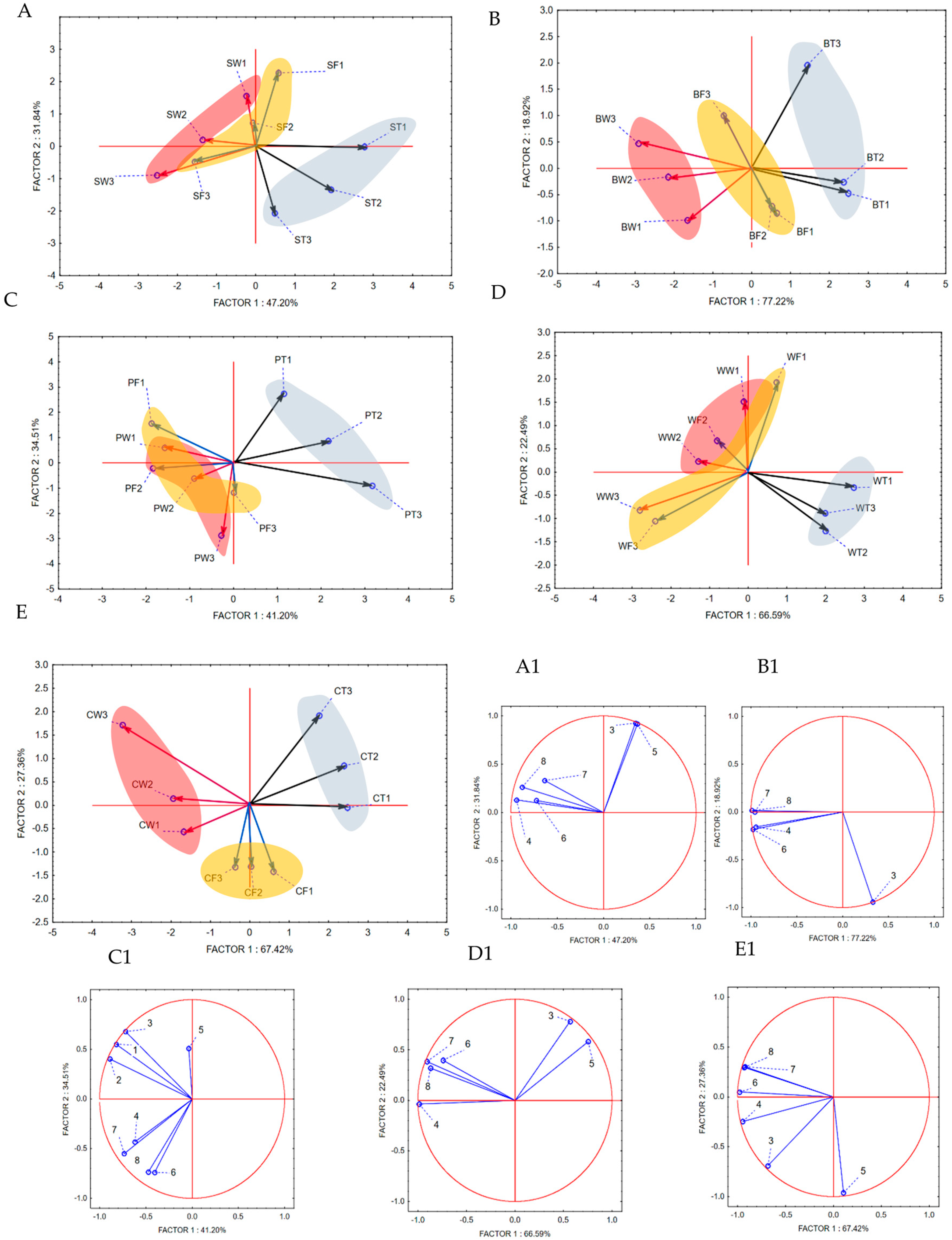
3.4. Principal Component Analysis (PCA) of Phenolic Compounds in the Roots of Five Sweet Potato Cultivars
3.4.1. Comparison of Cultivar Responses to Cultivation Technologies (PC1)
3.4.2. Comparison of Growing Season Effects (PC2)
3.4.3. Quantitative Relationship Between PC1 and PC2
3.4.4. Quantitative Structure of Phenolic Acid Correlations
3.5. Cluster Analysis and Heat Map
4. Discussion
4.1. The Effect of Cultivation Technology on the Antioxidant Properties and Phenolic Acid Content in the Roots of Five Sweet Potato Cultivars
4.2. The Effect of Genetic Characteristics of Sweet Potato Cultivars on Antioxidant Properties and Phenolic Acid Content in Sweet Potato Roots
4.3. The Effect of Growing Years on the Antioxidant Properties and Phenolic Acid Content in the Roots of Five Sweet Potato Cultivars
5. Conclusions
Author Contributions
Funding
Data Availability Statement
Conflicts of Interest
Abbreviations
| TPC | Total Phenolic Content |
| SAT | Active Temperatures Reguired |
| TC | Traditional cultivation without cover |
| FC | Polyethylene (PE) film cover |
| WC | Polypropylene (PP) nonwoven fabric |
| PAL | Phenylalanine Ammonia-Lyase |
| d.w. | dry weight |
| PCA | Principal Component Analysis |
| BBCH | scale for plant growth stages (Biologische Bundesanstalt, Bundessortenamt und Chemische Industrie) |
| LSD | Least Significant Difference |
| ND | Not Detected |
References
- Lim, S.; Xu, J.; Kim, J.; Chen, T.Y.; Su, X.; Standard, J.; Carey, E.; Griffin, J.; Herndon, B.; Katz, B.; et al. Role of anthocyanin-enriched purple-fleshed sweet potato P40 in colorectal cancer prevention. Mol. Nutr. Food Res. 2013, 57, 1908–1917. [Google Scholar] [CrossRef] [PubMed]
- Krochmal-Marczak, B.; Sawicka, B.; Słupski, J.; Cebulak, T.; Paradowska, K. Nutritional value of sweet potato (Ipomoea batatas (L.) Lam.) cultivated under south-eastern Polish conditions. Int. J. Agric. Res. 2014, 4, 169–178. [Google Scholar]
- Vizzotto, M.; Pereira, E.; Vinholes, J.R.; Munhoz, P.C.; Ferri, N.M.L.; Castro, L.; Krolow, A.R. Physicochemical and antioxidant capacity analysis of colored sweet potato genotypes: In natura and thermally processed. Cienc. Rural 2017, 47, e20151385. [Google Scholar] [CrossRef]
- Gonçalves, E.M.; Pereira, N.; Silva, M.; Alvarenga, N.; Ramos, A.C.; Alegria, C.; Abreu, M. Influence of air-drying conditions on quality, bioactive composition, and sensorial attributes of sweet potato chips. Foods 2023, 12, 1198. [Google Scholar] [CrossRef]
- Islam, S. Sweet potatoes (Ipomoea batatas (L.) Lam): The superfoods of the next century? CYTA J. Food 2024, 22, 2397553. [Google Scholar] [CrossRef]
- Krochmal-Marczak, B.; Sawicka, B.; Tobiasz-Salach, R. Impact of cultivation technology on the yield of sweet potato (Ipomoea batatas L.) tubers. Emir. J. Food Agric. 2018, 30, 978–983. [Google Scholar]
- Kassali, R.; Kolapo, A.; Ige, A.O.; Adebayo, K.E. Analysis of consumers’ preference and willingness to pay for orange-fleshed sweet potato in Osun State, Nigeria. Int. J. Agric. Res. Innov. Technol. 2024, 14, 53–61. [Google Scholar] [CrossRef]
- Abewoy, D.; Gudisa, M.H.; Tadesse, B.D.; Tolessa, L.D. Major nutritional content of orange-fleshed sweet potato (OFSP) and its importance: A review. Glob. Acad. J. Agric. Biosci. 2024, 6, 1–7. [Google Scholar] [CrossRef]
- Dutta, S. Sweet potatoes for diabetes mellitus: A systematic review. Pharmacophore 2015, 6, 60–72. [Google Scholar] [CrossRef]
- Eleazu, C.O.; Ironua, C. Physicochemical composition and antioxidant properties of a sweet potato variety (Ipomoea batatas L.) commercially sold in southeastern Nigeria. Afr. J. Biotechnol. 2015, 12, 720–727. [Google Scholar]
- Goda, Y. Two acylated anthocyanins from purple sweet potato. Phytochemistry 1995, 44, 183–186. [Google Scholar] [CrossRef] [PubMed]
- Mohanraj, R.; Sivasankar, S. Sweet potato (Ipomoea batatas (L.) Lam.). J. Med. Food 2014, 17, 733–741. [Google Scholar] [CrossRef]
- Sugata, M.; Lin, C.Y.; Shih, Y.C. Anti-inflammatory and anticancer activities of taiwanese purple-fleshed sweet potatoes (Ipomoea batatas L. Lam) extracts. BioMed Res. Int. 2015, 2015, 768093. [Google Scholar] [CrossRef]
- Krochmal-Marczak, B.; Cebulak, T.; Kapusta, I.; Oszmiański, J.; Kaszuba, J.; Żurek, N. The content of phenolic acids and flavonols in the leaves of nine varieties of sweet potatoes (Ipomoea batatas L.) depending on their development grown in Central Europe. Molecules 2020, 25, 3473. [Google Scholar] [CrossRef]
- Statistical Office in Rzeszów. Agriculture in Podkarpackie Voivodeship in 2023; Statistical Office: Rzeszów, Poland, 2024. Available online: https://rzeszow.stat.gov.pl (accessed on 9 January 2026).
- Wadas, W.; Kosterna, E.; Sawicki, M. Effect of perforated film and polypropylene nonwoven covering on the marketable value of early potato yield. J. Fruit Ornam. Plant Res. 2008, 16, 69–78. [Google Scholar] [CrossRef]
- Adamczewska-Sowińska, K.; Sowiński, J.; Anioł, M.; Ochodzki, P.; Warzecha, R. The effect of polyethylene film and polypropylene non-woven fabric cover on cobs parameters and nutritional value of two sweet maize (Zea mays L. var. saccharata Bailey) Hybrids. Agronomy 2021, 11, 539. [Google Scholar] [CrossRef]
- Hack, H.; Bleiholder, H.; Buhr, L.; Meier, U.; Schnock-Fricke, U.; Weber, E.; Witzenberger, A. Uniform coding of phenological growth stages of mono- and dicotyledonous plants—Extended BBCH scale. Nachrbl. Deut. Pflanzenschutzd. 1992, 44, 265–270. [Google Scholar]
- Skowera, B.; Kopcińska, J.; Kopeć, B. Changes in thermal and precipitation conditions in Poland in 1971–2010. Ann. Wars. Univ. Life Sci.—SGGW Land Reclaim 2014, 46, 153–162. [Google Scholar] [CrossRef]
- PN-R-04031:1997; Chemical and Agricultural Soil Analysis—Sampling. Polish Committee for Standardization: Warsaw, Poland, 1997.
- Myślińska, E. Laboratoryjne Badania Gruntów i Gleb; Wydawnictwo UW: Warsaw, Poland, 2010. [Google Scholar]
- Handzel, A.; Krawczyk, J.B.; Latawiec, A.E.; Pluta, K.; Malina, D.; Sobczak-Kupiec, A. Determination of element contents and physicochemical properties of selected soils. Infrastruct. Ecol. Rural Areas 2017, 1, 419–432. [Google Scholar]
- Ostrowska, A.; Gawliński, S.; Szczubiałka, Z. Methods of Analysis and Assessment of Soil and Plant Properties; Institute of Environmental Protection: Warsaw, Poland, 1991. [Google Scholar]
- Tarrago-Trani, M.T.; Phillips, K.M.; Cotty, M. Matrix-specific method validation for quantitative analysis of vitamin C in diverse foods. J. Food Compos. Anal. 2012, 26, 2–25. [Google Scholar] [CrossRef]
- Benzie, I.F.F.; Devaki, M. The ferric reducing antioxidant power (FRAP) assay for non-enzymatic antioxidant capacity. In Measurement of Antioxidant Activity and Capacity; Wiley: Hoboken, NJ, USA, 2018; pp. 77–104. [Google Scholar]
- Re, R.; Pellegrini, N.; Proteggente, A.; Pannala, A.; Yang, M.; Rice-Evans, C. Antioxidant activity applying an improved ABTS radical cation decolorization assay. Free Radic. Biol. Med. 1999, 26, 1231–1237. [Google Scholar] [CrossRef]
- Nenadis, N.; Tsimidou, M.Z. DPPH radical scavenging mixed-mode colorimetric assay(s). In Measurement of Antioxidant Activity and Capacity; Wiley: Hoboken, NJ, USA, 2018; pp. 141–161. [Google Scholar]
- Shahmohamadi, R.; Sariri, R.; Rasa, M.; Aghamali, M. Antioxidant activity of Mentha pulegium during growth. Pak. J. Biol. Sci. 2014, 17, 380–387. [Google Scholar] [CrossRef][Green Version]
- Shi, J.; Fang, D.; Sui, Y.; Xiong, T.; Chen, X.; Fan, C.; Zhou, D.; Cai, F.; Mei, X. Polyphenol content, antioxidant capacity, and composition in different varieties of sweet potato (Ipomoea batatas L.) leaves during growth stages. Sci. Hortic. 2025, 342, 113925. [Google Scholar] [CrossRef]
- Sun, Y.; Pan, Z.; Yang, C.; Jia, Z.; Guo, X. Comparative assessment of phenolic profiles, cellular antioxidant and antiproliferative activities in ten varieties of sweet potato (Ipomoea batatas) storage roots. Molecules 2019, 24, 4476. [Google Scholar] [CrossRef]
- Laveriano-Santos, E.P.; López-Yerena, A.; Jaime-Rodríguez, C.; González-Coria, J.; Lamuela-Raventós, R.M.; Vallverdú-Queralt, A.; Romanyà, J.; Pérez, M. Sweet potato is not simply an abundant food crop: A comprehensive review of its phytochemical constituents, biological activities, and the effects of processing. Antioxidants 2022, 11, 1648. [Google Scholar] [CrossRef] [PubMed]
- Wan, X.; Wu, J.; Wang, X.; Cui, L.; Xiao, Q. Accumulation patterns of flavonoids and phenolic acids in different colored sweet potato flesh revealed based on untargeted metabolomics. Food Chem. X 2024, 23, 101551. [Google Scholar] [CrossRef] [PubMed]
- Sokombela, A.; Ndhlala, A.R.; Bopape-Mabapa, M.P.; Eiasu, B.K.; Mpai, S.N. Colored plastic mulch impacts on soil properties, weed density and vegetable crop productivity: A meta-analysis. Sci. Rep. 2025, 15, 31891. [Google Scholar] [CrossRef]
- Amare, G.; Desta, B. Coloured plastic mulches: Impact on soil properties and crop productivity. Chem. Biol. Technol. Agric. 2021, 8, 4. [Google Scholar] [CrossRef]
- Shan, X.; Zhang, W.; Dai, Z.; Li, J.; Mao, W.; Yu, F.; Ma, J.; Wang, S.; Zeng, X. Comparative analysis of the effects of plastic mulch films on soil nutrient, yields and soil microbiome in three vegetable fields. Agronomy 2022, 12, 506. [Google Scholar] [CrossRef]
- Shen, R.; Zhang, X.; Cao, H.; Zuo, H.; Xu, J.; Shen, X.; Tian, F. Effects of different plastic film mulching on agronomic traits and yield of sweet potato. Chin. Agric. Sci. Bull. 2025, 41, 25–30. [Google Scholar] [CrossRef]
- Jiang, Y.; Shi, C.; Wang, Z.; Wang, C.; Liu, H. Effects of plastic film mulching on arable layer soil temperature, moisture and yield of sweet potato. Chin. J. Eco-Agric. 2014, 22, 627–634. [Google Scholar]
- Kong, M.; Huang, M.J.; Zhang, Z.X.; Long, J.; Siddique, K.H.M.; Zhang, D.M. Effects of plastic film mulching on soil microbial carbon metabolic activity and functional diversity at different maize growth stages in cool semi-arid regions. Front. Microbiol. 2024, 15, 1492149. [Google Scholar] [CrossRef]
- Wang, G.; He, N.; Li, Y.; Huang, W.; Cao, Y.; Wang, J.; Qian, X.; Yin, L.; Zeng, X. The Effects of different plastic film mulches on the physicochemical and microbiological properties of soils for protected pepper cultivation. Horticulturae 2025, 11, 710. [Google Scholar] [CrossRef]
- Balázs, V.; Helyes, L.; Daood, H.G.; Pék, Z.; Neményi, A.; Égei, M.; Takács, S. Effect of fertilization level on the yield, carotenoids, and phenolic content of orange- and purple-fleshed sweet potato. Horticulturae 2023, 9, 523. [Google Scholar] [CrossRef]
- Zhang, X.; Zhou, Q.; Liu, L.; Yang, Y.; An, J. Plastic film mulching and compound fertilizer ratios synergistically enhance potato yield, quality, and nutrient use efficiency in alpine regions of Southwestern China. Potato Res. 2026, 69, 2. [Google Scholar] [CrossRef]
- Sharma, A.; Shahzad, B.; Rehman, A.; Bhardwaj, R.; Landi, M.; Zheng, B. Response of phenylpropanoid pathway and the role of polyphenols in plants under abiotic stress. Molecules 2019, 24, 2452. [Google Scholar] [CrossRef]
- Rao, M.J.; Zheng, B. The role of polyphenols in abiotic stress tolerance and their antioxidant properties to scavenge reactive oxygen species and free radicals. Antioxidants 2025, 14, 74. [Google Scholar] [CrossRef] [PubMed]
- Pazos, J.; Zema, P.; Corbino, G.B.; Gabilondo, J.; Borioni, R.; Malec, L.S. Growing location and root maturity impact on phenolic compounds, antioxidant activity and nutritional profile of different sweet potato genotypes. Food Chem. Mol. Sci. 2022, 5, 100125. [Google Scholar] [CrossRef] [PubMed]
- Takenaka, M.; Nanayama, K.; Isobe, S.; Murata, M. Changes in caffeic acid derivatives in sweet potato (Ipomoea batatas L.) during cooking and processing. Biosci. Biotechnol. Biochem. 2006, 70, 172–177. [Google Scholar] [CrossRef] [PubMed][Green Version]
- Musilová, J.; Franková, H.; Fedorková, S.; Lidiková, J.; Vollmannová, A.; Sulírová, K.; Árvay, J.; Kasal, P. Comparison of polyphenols, phenolic acids, and antioxidant activity in sweet potato tubers after heat treatments. J. Agric. Food Res. 2024, 18, 101271. [Google Scholar] [CrossRef]
- Franková, H.; Šnirc, M.; Jančo, I.; Čeryová, N.; Ňorbová, M.; Lidiková, J.; Musilová, J. Total polyphenols and antioxidant activity in sweet potatoes (Ipomoea batatas L.) after heat treatment. J. Microbiol. Biotechnol. Food Sci. 2022, 11, e5356. [Google Scholar] [CrossRef]
- Kourouma, V.; Mu, T.H.; Zhang, M.; Sun, H.N. Comparative study on chemical composition, polyphenols, flavonoids, carotenoids and antioxidant activities of various cultivars of sweet potato. Int. J. Food Sci. Technol. 2020, 55, 369–378. [Google Scholar] [CrossRef]
- Xu, M.; Li, J.; Yin, J.; Wu, M.; Zhou, W.; Yang, X.; Zhang, R.; He, J. Color and nutritional analysis of ten different purple sweet potato varieties cultivated in China via principal component and cluster analysis. Foods 2024, 13, 904. [Google Scholar] [CrossRef] [PubMed]
- He, Y.; Mao, S.; Zhao, Y.; Yang, J. Research advances in the synthesis, metabolism, and function of chlorogenic acid. Foods 2025, 14, 1914. [Google Scholar] [CrossRef]
- Xia, L.; Song, W.; Liu, Z.; Mu, Y.; Li, J.; Liu, M.; Gao, J.; Li, Z.; Liu, P.; Wang, Z.; et al. Genome-wide analysis of BAHD gene family and in vivo characterization of HQT-like genes involved in chlorogenic acid synthesis in tobacco (Nicotiana tabacum L.). BMC Plant Biol. 2026, in press. [Google Scholar] [CrossRef]
- Cheng, J.; Chen, Y.; Guo, F.; Dong, P.; Zhou, C.; Liang, W.; Wang, H. Regulatory mechanisms and biosynthesis of chlorogenic acid in Lonicera japonica. Front. Plant Sci. 2025, 16, 1567140. [Google Scholar] [CrossRef]
- Li, R.; Xu, J.; Qi, Z.; Zhao, S.; Zhao, R.; Ge, Y.; Li, R.; Kong, X.; Wu, Z.; Zhang, X.; et al. High-resolution genome mapping and functional dissection of chlorogenic acid production in Lonicera maackii. Plant Physiol. 2023, 192, 2902–2922. [Google Scholar] [CrossRef]
- García-Martínez, R.M.; Rodiles-López, J.O.; Martínez-Flores, H.E. Nutritional value, phenolic compounds and antioxidant activity of different sweet potato (Ipomoea batatas L.) cultivars. Pol. J. Food Nutr. Sci. 2024, 74, 376–386. [Google Scholar] [CrossRef]
- Im, Y.R.; Kim, I.; Lee, J. Phenolic composition and antioxidant activity of purple sweet potato (Ipomoea batatas (L.) Lam.): Varietal comparisons and physical distribution. Antioxidants 2021, 10, 462. [Google Scholar] [CrossRef] [PubMed]
- Steed, L.E.; Truong, V.D. Anthocyanin content, antioxidant activity, and selected physical properties of flowable purple-fleshed sweet potato purees. J. Food Sci. 2008, 73, S215–S221. [Google Scholar] [CrossRef]
- Mohammed, N.; Stukes, J.B.; Wright, G. Determination of polyphenol, antioxidant activity, and individual phenolic compounds in tubers of sweet potato varieties grown in South Carolina. Eur. J. Bot. Plant Sci. Phytol. 2025, 9, 1–16. [Google Scholar] [CrossRef]
- Musilová, J.; Bystrická, J.; Árvay, J.; Harangóz, Ľ. Polyphenols and phenolic acids in sweet potato (Ipomoea batatas L.) roots. Potravinarstvo 2017, 11, 82–87. [Google Scholar] [CrossRef] [PubMed]
- Mounika, V.; Gowd, T.Y.M.; Lakshminarayana, D.; Krishna, G.V.; Reddy, I.V.S.; Soumya, B.K.; Chamuah, S.; Singh, Y.D.; Reddy, P.M. Sweet potato (Ipomoea batatas (L.) Lam): A comprehensive review of its botany, nutritional composition, phytochemical profile, health benefits, and future prospects. Eur. Food Res. Technol. 2025, 251, 3225–3239. [Google Scholar] [CrossRef]



| Specification | Cultivars | ||||
|---|---|---|---|---|---|
| ‘Satsumo Imo’ | ‘Beauregard’ | ‘Purple’ | ‘White Triumph’ | ‘Carmen Rubin’ | |
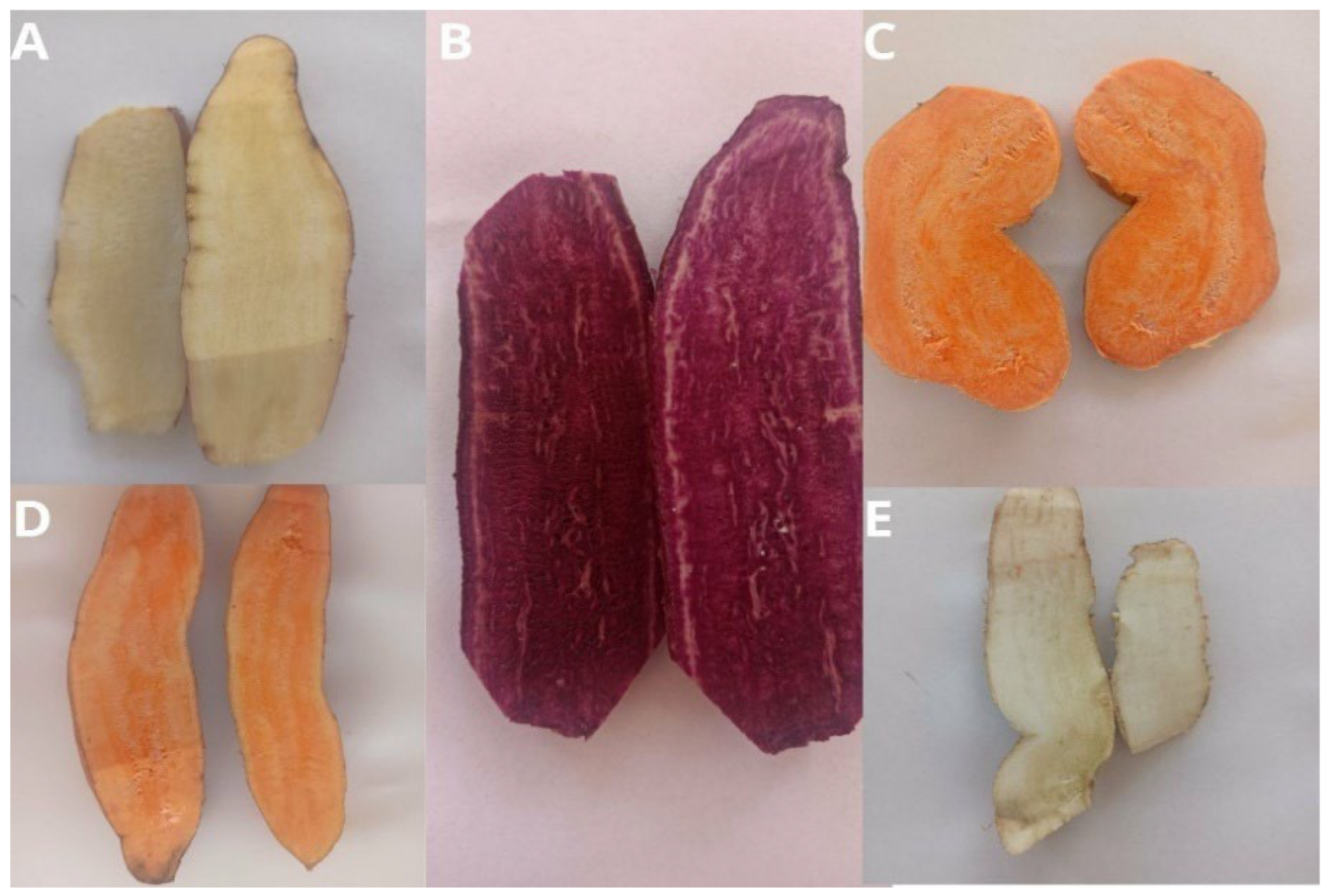
| Flesh color | Light yellow | Intense orange | Deep purple | White/Creamy | Light orange |
| Skin color | Purple | Light orange/Copper | Dark purple | Yellow-white | Red-pink |
| Root shape | Elongated, regular | Fusiform to elliptical | Oval-oblong | Irregular, blocky | Fusiform, slender |
| Years | Months | Mean | |||||
|---|---|---|---|---|---|---|---|
| April | May | June | July | August | September | ||
| Rainfalls (mm) | |||||||
| 2021 | 7.2 | 16.1 | 14.0 | 20.9 | 31.2 | 41.5 | 21.82 |
| 2022 | 23.7 | 61.4 | 6.5 | 16.1 | 13.8 | 10.2 | 21.95 |
| 2023 | 23.4 | 35.7 | 52.9 | 11.7 | 15.30 | 22.0 | 26.83 |
| The average sum of long-term (1989–2014) | 55.9 | 956 | 100.9 | 116.5 | 30.1 | 26.2 | 70.87 |
| Air Temperature (°C) | |||||||
| 2021 | 16.50 | 18.88 | 21.10 | 21.30 | 21.60 | 13.03 | 18.70 |
| 2022 | 10.60 | 13.70 | 22.93 | 20.20 | 20.63 | 12.44 | 16.80 |
| 2023 | 10.03 | 12.37 | 17.13 | 20.37 | 21.33 | 15.53 | 16.10 |
| Long-term average (1989–2014) | 9.2 | 13.6 | 16.4 | 19 | 19.4 | 18.6 | 16.03 |
| Hydrothermal Coefficient * | |||||||
| 2021 | 0.5 | 0.9 | 0.7 | 1 | 1.4 | 3.2 | 1.3 |
| 2022 | 2.2 | 4.5 | 0.3 | 0.8 | 0.6 | 0.8 | 1.5 |
| 2023 | 2.3 | 2.9 | 3.1 | 0.6 | 0.7 | 1.4 | 1.8 |
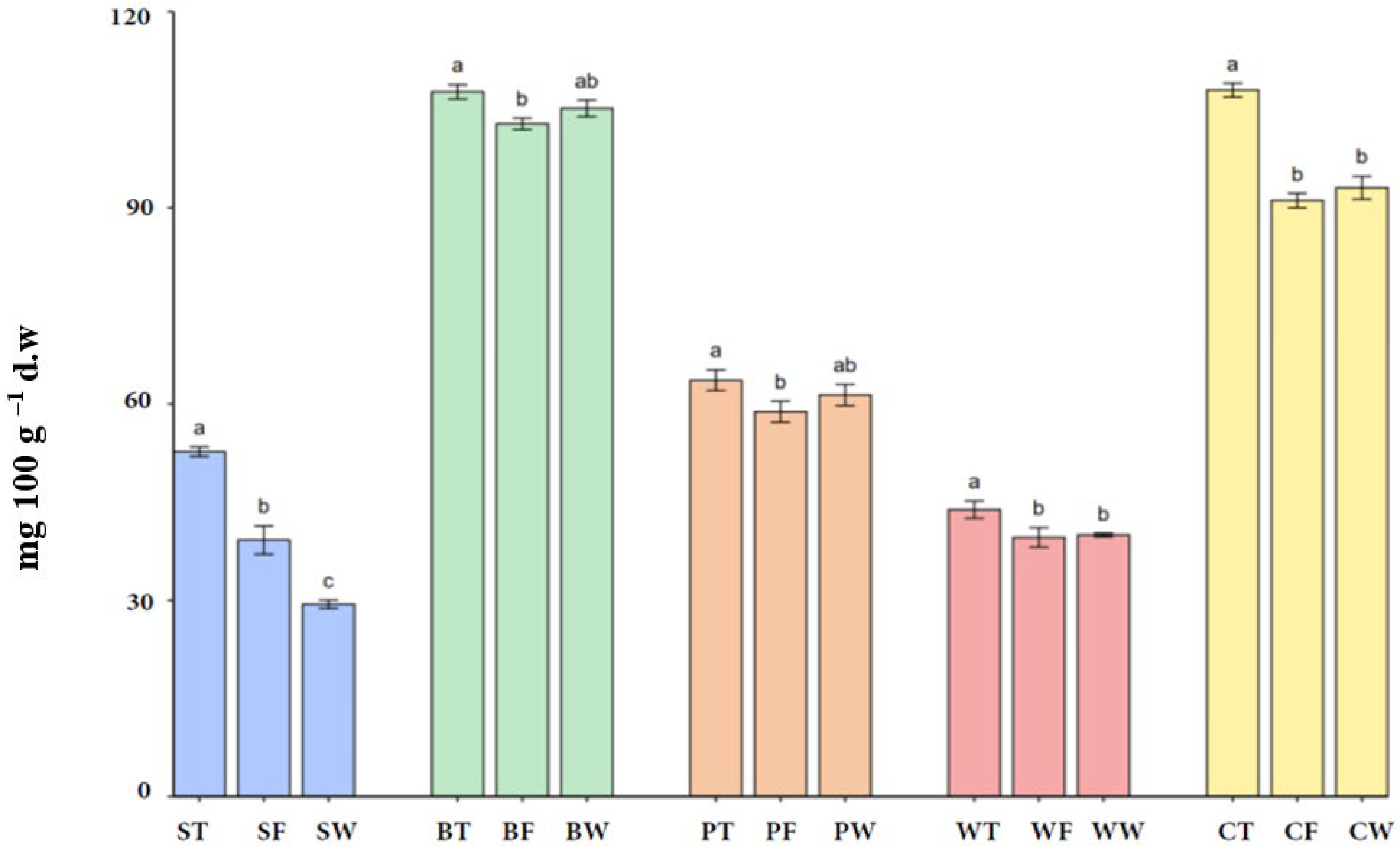
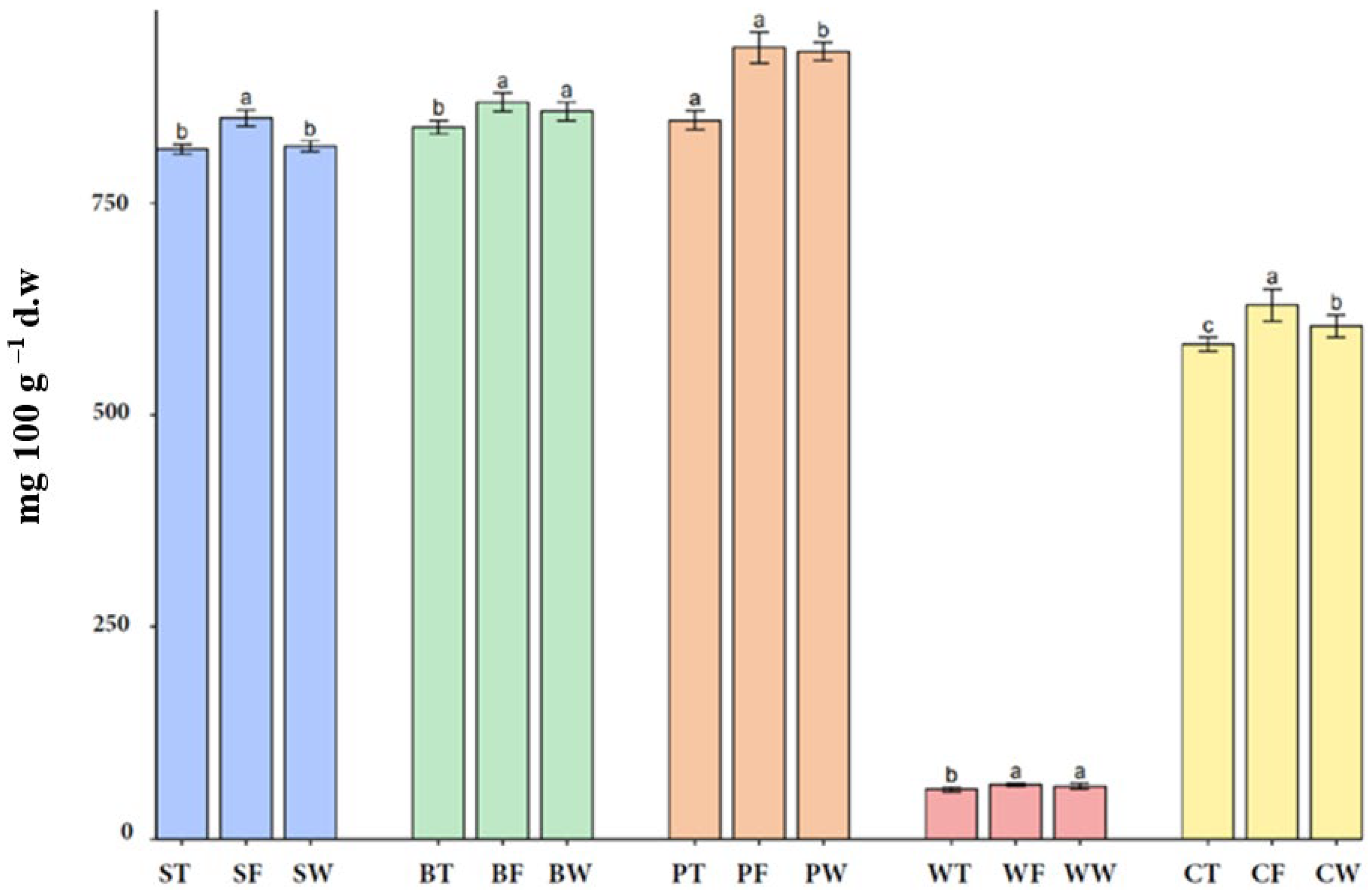
| Cultivars | Cultivation Method | Ascorbic Acid mg 100 g−1 d.w. | Total Polyphenols mg 100 g−1 d.w. | ||||
|---|---|---|---|---|---|---|---|
| Years of Research | Years of Research | ||||||
| 2021 | 2022 | 2023 | 2021 | 2022 | 2023 | ||
| S | TC ** | 51.01 ± 0.66 a,A | 54.79 ± 1.17 a,A | 52.34 ± 1.87 a,A | 834.1 ± 0.87 b,A | 812.8 ± 1.44 b,B | 794.4 ± 1.58 c,C |
| FC ** | 30.62 ± 0.40 b,B | 42.95 ± 0.69 a,AB | 44.02 ± 0.56 b,A | 883.3 ± 2.63 a,A | 850.6 ± 1.25 a,B | 817.9 ± 1.48 a,C | |
| WC ** | 31.62 ± 0.41 b,A | 29.34 ± 0.16 c,B | 27.22 ± 0.31 c,C | 838.9 ± 1.83 b,A | 806.5 ± 2.83 c,B | 807.5 ± 0.95 b,B | |
| B | TC ** | 104.0 ± 0.57 a,C | 107.8 ± 0.49 a,B | 111.4 ± 0.87 a,A | 864.5 ± 2.54 c,A | 844.5 ± 1.42 b,B | 810.8 ± 2.25 c,C |
| FC ** | 99.64 ± 0.50 b,C | 103.6 ± 0.57 b,B | 105.3 ± 0.80 b,A | 910.7 ± 2.47 a,A | 861.8 ± 1.58 a,B | 853.81 ± 1.28 a,C | |
| WC ** | 101.4 ± 0.41 c,C | 104.5 ± 0.57 b,B | 109.9 ± 1.06 ab,A | 895.5 ± 3.76 b,A | 860.3 ± 2.33 a,B | 820.4 ± 1.46 b,C | |
| P | TC ** | 57.81 ± 0.48 a,C | 64.64 ± 0.26 a,B | 68.48 ± 0.51 a,A | 888.1 ± 1.59 a,A | 845.3 ± 2.67 c,B | 810.8 ± 2.58 c,C |
| FC ** | 52.63 ± 0.44 b,C | 60.56 ± 0.16 b,B | 63.37 ± 1.04 c,A | 991.5 ± 2.77 b,A | 865.4 ± 2.11 b,C | 945.1 ± 2.36 b,B | |
| WC ** | 55.01 ± 0.38 ab,B | 63.81 ± 0.65 a,AB | 65.33 ± 0.83 b,A | 934.1 ± 2.28 c,C | 890.14 ± 1.36 a,B | 963.5 ± 2.84 a,A | |
| W | TC ** | 40.29 ± 0.57 a,B | 42.32 ± 0.38 a,B | 48.96 ± 0.68 a,A | 68.5 ± 0.48 b,A | 59.2 ± 0.85 b,B | 48.8 ± 1.04 b,C |
| FC ** | 35.53 ± 0.35 b,B | 37.89 ± 0.52 c,B | 45.43 ± 0.28 b,A | 69.2 ± 0.68 b,A | 65.7 ± 0.34 a,AB | 58.4 ± 0.76 a,B | |
| WC ** | 38.94 ± 0.51 b,B | 40.27 ± 0.64 b,A | 40.73 ± 0.33 c,A | 74.5 ± 0.63 a,A | 62.2 ± 0.47 b,B | 50.8 ± 0.58 b,C | |
| C | TC ** | 104.9 ± 1.27 a,C | 107.2 ± 0.86 a,B | 111.9 ± 0.83 a,A | 611.6 ± 0.53 c,A | 583.9 ± 1.03 c,B | 554.6 ± 1.86 a,C |
| FC ** | 90.96 ± 0.47 c,B | 87.37 ± 0.28 b,C | 94.99 ± 1.04 b,A | 691.9 ± 0.96 a,A | 635.3 ± 1.26 a,B | 561.8 ± 2.05 a,C | |
| WC ** | 99.52 ± 1.03 b,A | 87.37 ± 0.43 b,C | 92.26 ± 0.84 b,B | 651.2 ± 1.56 b,A | 605.6 ± 1.75 b,B | 558.7 ± 1.16 a,C | |
| Cultivars | Variable | ABTS | FRAP | DPPH | Total Polyphenols |
|---|---|---|---|---|---|
| ‘Satsumo Imo’ | ABTS | - | |||
| FRAP | 0.99 | - | |||
| DPPH | 0.90 | 0.88 | - | ||
| Total polyphenols | 0.88 | 0.86 | 0.74 | - | |
| ‘Beauregard’ | ABTS | - | |||
| FRAP | 0.84 | - | |||
| DPPH | 0.89 | 0.69 | - | ||
| Total polyphenols | 0.98 | 0.83 | 0.89 | - | |
| ‘Purple’ | ABTS | - | |||
| FRAP | 0.93 | - | |||
| DPPH | 0.85 | 0.93 | - | ||
| Total polyphenols | 0.52 | 0.28 | 0.05 | - | |
| ‘White Triumph’ | ABTS | 1 | 0.93 | 0.91 | 0.92 |
| FRAP | 0.95 | 1 | 0.96 | 0.90 | |
| DPPH | 0.92 | 0.97 | 1 | 0.89 | |
| Total polyphenols | 0.93 | 0.91 | 0.90 | 1 | |
| ‘Carmen Rubin’ | ABTS | - | |||
| FRAP | 0.86 | - | |||
| DPPH | 0.83 | 0.99 | - | ||
| Total polyphenols | 0.87 | 0.98 | 0.95 | - |
| Agronomic Factors | Neochlorogenic Acid | Caffeoyl-Tartaric Acid | Chlorogenic Acid | Cryptochlorogenic Acid | Caffeic Acid | 3,4-di-O-Caffeoylquinic Acid | 3,5-di-O-Caffeoylquinic Acid | Chicoric Acid | Total of Phenolic Acids |
|---|---|---|---|---|---|---|---|---|---|
| ‘Satsumo Imo’ | |||||||||
| ST1 | ND | ND | 662.28 ± 0.77 | 15.73 ± 0.04 | 395.79 ± 0.40 | 9.82 ± 0.07 | 141.50 ± 0.69 | 0.77 ± 0.08 | 1225.89 |
| ST2 | ND | ND | 562.44 ± 0.96 | 15.72 ± 0.16 | 291.61 ± 0.47 | 10.24 ± 0.11 | 146.23 ± 0.69 | 0.50 ± 0.07 | 1129.19 |
| ST3 | ND | ND | 482.11 ± 0.28 | 16.47 ± 0.54 | 211.73 ± 0.24 | 9.72 ± 0.21 | 138.23 ± 0.42 | 0.56 ± 0.03 | 858.82 |
| SF1 | ND | ND | 665.13 ± 0.37 | 17.39 ± 0.04 | 297.46 ± 0.63 | 10.01 ± 0.07 | 144.39 ± 0.47 | 0.92 ± 0.04 | 1135.30 |
| SF2 | ND | ND | 663.29 ± 0.47 | 15.72 ± 0.19 | 295.94 ± 0.75 | 8.91 ± 0.17 | 141.18 ± 0.53 | 0.87 ± 0.05 | 1125.91 |
| SF3 | ND | ND | 667.47 ± 0.68 | 16.97 ± 0.43 | 298.94 ± 0.95 | 9.74 ± 0.14 | 147.18 ± 1.09 | 0.73 ± 0.03 | 1141.03 |
| SW1 | ND | ND | 668.83 ± 0.61 | 18.39 ± 0.04 | 295.99 ± 0.87 | 10.94 ± 0.03 | 142.59 ± 0.36 | 0.91 ± 0.05 | 1137.65 |
| SW2 | ND | ND | 663.95 ± 0.94 | 17.72 ± 0.09 | 292.30 ± 1.71 | 12.71 ± 0.08 | 141.90 ± 0.45 | 0.77 ± 0.05 | 1129.35 |
| SW3 | ND | ND | 659.83 ± 0.47 | 19.83 ± 0.43 | 285.30 ± 1.27 | 11.71 ± 0.16 | 144.47 ± 1.16 | 0.87 ± 0.01 | 1122.01 |
| ‘Beauregard’ | |||||||||
| BT1 | ND | ND | 1114.57 ± 0.45 | 190.80 ± 0.63 | ND | 39.60 ± 0.98 | 191.65 ± 0.42 | 4.75 ± 0.05 | 1541.37 |
| BT2 | ND | ND | 1113.85 ± 1.67 | 196.80 ± 0.49 | ND | 37.24 ± 0.58 | 196.33 ± 0.68 | 4.34 ± 0.05 | 1548.56 |
| BT3 | ND | ND | 1117.85 ± 0.96 | 185.30 ± 0.93 | ND | 41.24 ± 0.71 | 186.33 ± 0.36 | 5.21 ± 0.03 | 1535.93 |
| BF1 | ND | ND | 1117.87 ± 2.02 | 193.11 ± 1.39 | ND | 40.77 ± 0.26 | 194.58 ± 0.49 | 5.00 ± 0.05 | 1551.33 |
| BF2 | ND | ND | 1114.19 ± 1.49 | 192.13 ± 0.89 | ND | 41.62 ± 0.34 | 192.84 ± 1.47 | 4.87 ± 0.06 | 1545.65 |
| BF3 | ND | ND | 1115.87 ± 1.59 | 195.61 ± 0.73 | ND | 42.43 ± 0.41 | 196.84 ± 0.76 | 5.88 ± 0.14 | 1556.63 |
| BW1 | ND | ND | 1139.89 ± 1.45 | 199.28 ± 0.84 | ND | 42.14 ± 0.47 | 194.82 ± 1.33 | 5.33 ± 0.05 | 1581.46 |
| BW2 | ND | ND | 1118.85 ± 1.39 | 197.63 ± 0.97 | ND | 41.95 ± 0.67 | 193.97 ± 0.77 | 5.13 ± 0.35 | 1557.53 |
| BW3 | ND | ND | 1119.87 ± 0.97 | 193.97 ± 0.45 | ND | 44.95 ± 0.41 | 189.87 ± 0.54 | 5.67 ± 0.26 | 1554.33 |
| ‘Purple’ | |||||||||
| PT1 | 476.05 ± 0.71 | 102.00 ± 0.52 | 11,524.77 ± 2.47 | 187.43 ± 0.84 | 167.87 ± 0.33 | 444.76 ± 0.26 | 3523.03 ± 0.47 | 351.12 ± 2.09 | 16,777.04 |
| PT2 | 479.38 ± 2.22 | 104.00 ± 0.49 | 11,634.43 ± 1.53 | 198.29 ± 0.61 | 169.87 ± 0.81 | 453.44 ± 0.26 | 3540.67 ± 0.47 | 342.73 ± 1.43 | 16,922.81 |
| PT3 | 483.72 ± 1.86 | 105.76 ± 0.66 | 11,728.77 ± 2.76 | 179.67 ± 0.84 | 173.55 ± 0.45 | 461.36 ± 0.34 | 3560.54 ± 3.61 | 366.47 ± 2.29 | 17,059.84 |
| PF1 | 476.05 ± 1.71 | 102.00 ± 0.52 | 11,552.10 ± 7.87 | 193.23 ± 0.49 | 171.24 ± 0.55 | 447.93 ± 0.48 | 3527.08 ± 3.48 | 355.61 ± 1.18 | 16,825.24 |
| PF2 | 482.72 ± 0.35 | 106.33 ± 0.36 | 11,433.09 ± 5.94 | 191.29 ± 0.07 | 168.88 ± 0.55 | 454.15 ± 0.48 | 3525.00 ± 4.71 | 350.60 ± 0.27 | 16,712.06 |
| PF3 | 486.53 ± 0.55 | 108.48 ± 0.54 | 11,736.77 ± 6.43 | 196.01 ± 0.80 | 174.88 ± 1.50 | 461.15 ± 0.96 | 3539.67 ± 1.47 | 363.93 ± 0.94 | 17,067.42 |
| PW1 | 476.05 ± 0.71 | 101.56 ± 0.52 | 11,549.77 ± 1.47 | 191.26 ± 0.74 | 170.91 ± 0.59 | 455.39 ± 0.48 | 3528.05 ± 2.82 | 368.92 ± 3.54 | 16,841.91 |
| PW2 | 485.38 ± 0.62 | 104.33 ± 0.06 | 11,530.45 ± 2.21 | 187.98 ± 0.49 | 169.57 ± 0.15 | 447.16 ± 0.13 | 3534.00 ± 1.27 | 362.60 ± 2.76 | 16,821.47 |
| PW3 | 493.38 ± 0.47 | 106.63 ± 0.37 | 11,599.10 ± 2.23 | 198.29 ± 0.76 | 176.20 ± 0.35 | 462.03 ± 5.34 | 3543.80 ± 2.88 | 374.43 ± 1.48 | 16,953.86 |
| Agronomic Factors | Neochlorogenic Acid | Caffeoyl-Tartaric Acid | Chlorogenic Acid | Cryptochlorogenic Acid | Caffeic Acid | 3,4-di-O-Caffeoylquinic Acid | 3,5-di-O-Caffeoylquinic Acid | Chicoric Acid | Total of Phenolic Acids |
|---|---|---|---|---|---|---|---|---|---|
| ‘White Triumph’ | |||||||||
| WT1 | ND | ND | 1097.10 ± 1.41 | 48.71 ± 0.44 | 109.02 ± 0.66 | 201.97 ± 1.12 | 476.27 ± 1.56 | 25.67 ± 0.42 | 1958.74 |
| WT2 | ND | ND | 1124.10 ± 1.53 | 49.71 ± 0.28 | 110.02 ± 1.06 | 206.79 ± 0.87 | 479.97 ± 1.23 | 24.63 ± 0.23 | 1995.22 |
| WT3 | ND | ND | 1136.10 ± 0.82 | 53.04 ± 0.62 | 114.06 ± 0.96 | 210.79 ± 1.15 | 483.97 ± 1.87 | 26.23 ± 0.61 | 2024.19 |
| WF1 | ND | ND | 1106.51 ± 3.49 | 51.01 ± 0.35 | 110.90 ± 0.40 | 204.89 ± 1.46 | 488.49 ± 2.43 | 26.91 ± 0.76 | 1988.71 |
| WF2 | ND | ND | 1097.79 ± 4.74 | 49.42 ± 1.08 | 109.70 ± 1.33 | 209.44 ± 0.86 | 478.20 ± 2.55 | 25.50 ± 0.28 | 1970.05 |
| WF3 | ND | ND | 1099.18 ± 5.19 | 54.04 ± 1.29 | 115.70 ± 0.67 | 212.44 ± 1.22 | 493.80 ± 2.33 | 28.90 ± 0.89 | 2004.06 |
| WW1 | ND | ND | 1102.02 ± 3.47 | 51.21 ± 1.07 | 110.59 ± 0.38 | 203.56 ± 1.33 | 492.84 ± 4.33 | 28.61 ± 0.47 | 1988,83 |
| WW2 | ND | ND | 1097.77 ± 4.72 | 49.90 ± 0.62 | 112.71 ± 0.67 | 201.15 ± 0.78 | 490.63 ± 4.42 | 27.83 ± 0.35 | 1979.99 |
| WW3 | ND | ND | 1099.02 ± 2.53 | 50.68 ± 1.00 | 118.71 ± 1.43 | 208.15 ± 1.51 | 497.63 ± 2.38 | 29.83 ± 0.78 | 2004.02 |
| ‘Carmen Rubin’ | |||||||||
| CT1 | ND | ND | 3911.57 ± 4.53 | 115.67 ± 1.23 | 226.80 ± 1.30 | 70.29 ± 1.07 | 971.15 ± 2.26 | 39.48 ± 0.45 | 5334.96 |
| CT2 | ND | ND | 3900.90 ± 4.71 | 117.60 ± 0.68 | 234.45 ± 0.70 | 73.23 ± 0.87 | 968.03 ± 2.65 | 37.83 ± 0.63 | 5332.04 |
| CT3 | ND | ND | 3933.57 ± 3.47 | 118.83 ± 1.26 | 243.45 ± 0.92 | 78.54 ± 0.62 | 977.03 ± 2.04 | 40.83 ± 0.62 | 5392.25 |
| CF1 | ND | ND | 3954.57 ± 4.11 | 115.82 ± 1.23 | 230.91 ± 0.83 | 72.12 ± 0.97 | 974.47 ± 1.41 | 39.51 ± 0.42 | 5387.40 |
| CF2 | ND | ND | 3940.57 ± 4.47 | 116.60 ± 0.20 | 226.79 ± 1.53 | 71.45 ± 1.47 | 968.80 ± 3.28 | 38.80 ± 0.47 | 5363.01 |
| CF3 | ND | ND | 3956.23 ± 5.47 | 119.00 ± 1.54 | 236.79 ± 0.75 | 75.44 ± 0.82 | 981.57 ± 9.43 | 40.43 ± 0.92 | 5409.46 |
| CW1 | ND | ND | 3968.2 ± 5.47 | 120.10 ± 0.86 | 229.78 ± 1.29 | 75.07 ± 0.87 | 992.70 ± 2.71 | 42.43 ± 0.47 | 5428.31 |
| CW2 | ND | ND | 3946.23 ± 3.89 | 118.93 ± 1.12 | 232.46 ± 0.89 | 73.18 ± 0.97 | 986.03 ± 1.71 | 40.43 ± 0.53 | 5397.26 |
| CW3 | ND | ND | 3972.57 ± 3.47 | 119.93 ± 0.88 | 236.46 ± 1.46 | 77.18 ± 0.76 | 996.03 ± 2.41 | 45.43 ± 0.74 | 5447.60 |
Disclaimer/Publisher’s Note: The statements, opinions and data contained in all publications are solely those of the individual author(s) and contributor(s) and not of MDPI and/or the editor(s). MDPI and/or the editor(s) disclaim responsibility for any injury to people or property resulting from any ideas, methods, instructions or products referred to in the content. |
© 2026 by the authors. Licensee MDPI, Basel, Switzerland. This article is an open access article distributed under the terms and conditions of the Creative Commons Attribution (CC BY) license.
Share and Cite
Krochmal-Marczak, B.; Cebulak, T.; Kapusta, I.; Sadowska, U.; Słupski, J.; Sawicka, B.; Betlej, I.; Stryjecka, M.; Krzysztofik, B.; Pszczółkowski, P.; et al. The Effect of Cultivation Techniques on the Antioxidant Properties and Phenolic Acid Content in the Roots of Five Sweet Potato (Ipomoea batatas L.) Cultivars Grown Under the Climatic and Soil Conditions of Southeastern Poland. Agronomy 2026, 16, 895. https://doi.org/10.3390/agronomy16090895
Krochmal-Marczak B, Cebulak T, Kapusta I, Sadowska U, Słupski J, Sawicka B, Betlej I, Stryjecka M, Krzysztofik B, Pszczółkowski P, et al. The Effect of Cultivation Techniques on the Antioxidant Properties and Phenolic Acid Content in the Roots of Five Sweet Potato (Ipomoea batatas L.) Cultivars Grown Under the Climatic and Soil Conditions of Southeastern Poland. Agronomy. 2026; 16(9):895. https://doi.org/10.3390/agronomy16090895
Chicago/Turabian StyleKrochmal-Marczak, Barbara, Tomasz Cebulak, Ireneusz Kapusta, Urszula Sadowska, Jacek Słupski, Barbara Sawicka, Izabela Betlej, Małgorzata Stryjecka, Barbara Krzysztofik, Piotr Pszczółkowski, and et al. 2026. "The Effect of Cultivation Techniques on the Antioxidant Properties and Phenolic Acid Content in the Roots of Five Sweet Potato (Ipomoea batatas L.) Cultivars Grown Under the Climatic and Soil Conditions of Southeastern Poland" Agronomy 16, no. 9: 895. https://doi.org/10.3390/agronomy16090895
APA StyleKrochmal-Marczak, B., Cebulak, T., Kapusta, I., Sadowska, U., Słupski, J., Sawicka, B., Betlej, I., Stryjecka, M., Krzysztofik, B., Pszczółkowski, P., Barbaś, P., & Siwiec, A. (2026). The Effect of Cultivation Techniques on the Antioxidant Properties and Phenolic Acid Content in the Roots of Five Sweet Potato (Ipomoea batatas L.) Cultivars Grown Under the Climatic and Soil Conditions of Southeastern Poland. Agronomy, 16(9), 895. https://doi.org/10.3390/agronomy16090895