Article

Bioactive Gum Arabic Enriched with Carvacrol or Caffeine Coatings Improve Antioxidant Capacity and Marketability of ‘Murcott’ Mandarins During Cold Storage


1
Department of Horticulture, Faculty of Agriculture, Tanta University, Tanta 31527, Egypt
2
Plant Sciences Department, California Polytechnic State University, San Luis Obispo, CA 93407, USA
3
Fruit Handling Department, Horticulture Research Institute, Agricultural Research Center, Giza 12619, Egypt
4
Department of Horticulture, Faculty of Agriculture, Menofia University, Shebin Elkom 32512, Egypt
5
Department of Arid Land Agriculture, College of Agricultural and Food Science, King Faisal University, Al-Ahsa 31982, Saudi Arabia
6
Food and Nutrition Sciences Department, College of Agricultural and Food Sciences, King Faisal University, Al-Ahsa 31982, Saudi Arabia
7
Department of Chemistry, College of Science, King Faisal University, Al-Ahsa 31982, Saudi Arabia
8
Horticulture Department, Faculty of Agriculture, Damietta University, Damietta 34517, Egypt
*
Authors to whom correspondence should be addressed.
Agronomy 2026, 16(8), 843; https://doi.org/10.3390/agronomy16080843
Submission received: 25 February 2026 / Revised: 12 April 2026 / Accepted: 13 April 2026 / Published: 21 April 2026

Abstract

Gum arabic (GA)-based edible coatings enriched with natural bioactive compounds offer a promising strategy for reducing postharvest losses and maintaining fruit quality. This study evaluated the effectiveness of GA coatings supplemented with carvacrol or caffeine in preserving the physicochemical quality, antioxidant status, and marketability of ‘Murcott’ mandarins during cold storage (5 ± 1 °C, 90–95% RH) for 60 days followed by 4 days of shelf life. Fruits were treated with distilled water (control), GA (10%), GA + imazalil (2000 ppm), GA + carvacrol (200 ppm), and GA + caffeine (200 ppm). Key quality parameters, including weight loss, decay incidence, firmness, electrolyte leakage, malondialdehyde (MDA), total soluble solids, titratable acidity, ascorbic acid, total phenolics, total flavonoids, and antioxidant enzyme activities of catalase (CAT) and peroxidase (POX), were evaluated. The results demonstrated that GA-based coatings, particularly GA + carvacrol, significantly reduced weight loss and decay while maintaining firmness and visual quality compared to the control. Coated fruits exhibited lower electrolyte leakage and MDA levels, indicating improved membrane integrity and reduced lipid peroxidation. In addition, the treatments enhanced antioxidant capacity, as reflected by increased phenolic and flavonoid contents and higher CAT and POX activities. Multivariate analysis further confirmed the strong association between coating treatments and improved quality attributes. In conclusion, GA coatings enriched with carvacrol or caffeine effectively improved postharvest quality and extended the shelf life of ‘Murcott’ mandarins, highlighting their potential as safe and eco-friendly alternatives to conventional postharvest treatments.

1. Introduction

Citrus is a major horticultural commodity cultivated extensively in tropical and subtropical regions worldwide. Among citrus fruits, tangor ‘Murcott’ (Citrus reticulata × Citrus sinensis L. Osbeck), commonly known as Honey Tangerine, holds significant commercial value in the global fresh fruit market due to its desirable flavor and high consumer acceptance [1,2,3]. In Egypt, mandarins rank as the second most important citrus crop after oranges in both production and export, contributing substantially to the national agricultural economy [4]. Despite their economic and nutritional importance, mandarins are highly perishable and prone to rapid postharvest deterioration during cold storage and subsequent shelf life [5,6]. These changes are primarily associated with physiological and biochemical disorders, including increased respiration, oxidative stress, membrane degradation, and decay development. Such processes lead to weight loss, softening, electrolyte leakage, lipid peroxidation, and ultimately a decline in fruit quality and marketability, particularly during prolonged storage required for export markets [7,8].
Postharvest physiological and pathological disorders, together with weight loss, significantly reduce the shelf life and marketability of fruits, particularly late-season harvests such as those collected in March [9,10]. Proper storage conditions are therefore essential to maintain fruit quality, extend marketing duration, and reduce postharvest losses during peak production periods [11,12]. Conventional packinghouse practices largely depend on synthetic fungicides to control decay; however, their intensive use has resulted in pathogen resistance, residue accumulation, and increasing concerns regarding consumer health and environmental safety [13,14]. In response, importing countries have enforced strict regulations on maximum residue levels in citrus fruits, while consumers increasingly prefer fungicide-free produce free from defects and diseases [15]. Consequently, there is a growing emphasis on developing alternative strategies to synthetic fungicides. Further research is thus required to improve the storability and postharvest quality of ‘Murcott’ fruits through effective, safe approaches such as edible coatings, antioxidant and antimicrobial treatments, and low-temperature storage [16].
The use of natural compounds such as essential oils is considered one of the safest and most effective approaches for controlling postharvest fruit decay [13,14]. Essential oils, derived from various plant species, are rich in secondary metabolites with well-documented antimicrobial, antioxidant, and bioregulatory properties [17]. Their high content of phenolic compounds confers strong antifungal activity against a wide range of postharvest pathogens, making them promising natural alternatives to synthetic fungicides [18]. In addition to suppressing microbial growth, essential oils can maintain the sensory quality and consumer acceptability of fresh fruits and vegetables [19,20].
Among these compounds, carvacrol (5-isopropyl-2-methylphenol), a major active component of oregano and thyme essential oils, has attracted particular attention due to its potent antimicrobial efficacy [21]. Carvacrol is classified as Generally Recognized as Safe (GRAS) by the United States Food and Drug Administration [22,23]. The chemical is recognized for its antibacterial properties and has the capacity to entirely suppress the mycelial growth of diverse phytopathogenic fungi [20,21]. The application of carvacrol, thymol, and wax markedly diminished the prevalence of yeast, mold, and rot, while also preserving the quality of lemons, oranges, blueberries, peaches, and grapefruit during cold storage [21,24,25,26].
Caffeine (1,3,7-Trimethylxanthine) is a bioactive natural compound derived from many plants, exhibiting numerous physiological effects [27,28]. It contains both phenolic and propenoic acid and has been shown to have many biological and pharmacological effects, such as being an antioxidant, antifungal, and improving nutritional quality [29,30]. It has been reported to inhibit lipid peroxidation, reduce oxidative stress, and contribute to plant defense mechanisms against pathogens and environmental stress [31,32,33].
Wax coating is an essential procedure in citrus fruit packinghouses, serving to create a protective barrier, enhance esthetic sheen and gloss, minimize weight loss, and postpone shrinkage [34,35,36]. Regrettably, these primarily consist of oxidized polyethylene and must be substituted with natural, safe, biodegradable edible coatings that preserve volatiles, retain moisture, and safeguard items from mechanical and microbiological deterioration due to increasing public apprehension surrounding human health, environmental concerns, and psychological safeguarding [34,37,38,39].
Gum arabic (GA) is a polysaccharide derived from the stems and branches of Acacia species. It comprises galactose, rhamnose, arabinose, and glucuronic acid [40,41]. It is regarded as a GRAS chemical and is extensively utilized in industry due to its emulsifying, film-forming, and encapsulating characteristics [42]. Postharvest coating with gum arabic considerably diminished decay rates and preserved fruit quality throughout the cold storage of apples [43], bananas and papayas [44], mangoes [45], navel oranges [46], and guavas [47]. Also, the GA coating kept the antioxidant and phenolic levels in fruits higher compared to not coating them [47,48,49].
Despite these advances, limited information is available on the combined application of GA with natural bioactive compounds such as carvacrol and caffeine, particularly in ‘Murcott’ mandarins. Moreover, the integrated effects of such treatments on physiological responses, membrane stability, antioxidant defense systems, and overall fruit marketability remain insufficiently understood. Therefore, the present study aimed to evaluate the effectiveness of gum arabic-based edible coatings enriched with carvacrol or caffeine in preserving postharvest quality and extending the storage life of ‘Murcott’ mandarins. The study integrates physicochemical, biochemical, enzymatic, and multivariate analyses to provide a comprehensive understanding of the underlying mechanisms and their practical implications for sustainable postharvest management.

2. Materials and Methods

2.1. Fruit Material and Chemicals

The present investigation was undertaken throughout the 2023 and 2024 growing seasons, utilizing mature ‘Murcott’ tangor mandarins. These were obtained from ten-year-old trees cultivated in a private orchard situated within El-Sharqia Governorate, Egypt, and were harvested at the point of commercial ripeness. The trees were grafted onto Volkamer lemon rootstock and planted at a spacing of 2 × 4 m in sandy soil, equipped with a drip watering system, while adhering to all optimal horticultural procedures as suggested by the Ministry of Agriculture and Land Reclamation. The fruits were harvested at the horticultural maturity stage as per Singh et al. [50]. In the third week of March, the uniform trees exhibited vigorous growth, size, and productivity and the fruit was then sorted to ensure consistency and the absence of visible defects. A total of 36 fruits were randomly selected as a representative sample for the initial quality assessment (day 0) and were allocated into three replicates of 12 fruits each. Prior to treatment application, all fruits were rinsed three times with deionized water to remove surface contaminants and minimize microbial load, then air-dried under ambient laboratory conditions (20 ± 2 °C and 65 ± 5% RH) for approximately 30 min. For the storage experiment, a total of 1080 fruits were used. The fruits were assigned to five treatment groups and evaluated at three cold storage intervals, followed by an additional four days of shelf life. The experiment was conducted using a completely randomized design (CRD). Each treatment × storage duration combination comprised three replicates, with each replicate consisting of a cardboard box containing 12 fruits, which was considered the experimental unit. Food-grade gum arabic (GA), caffeine (98% purity), and carvacrol (98% purity) were obtained from certified suppliers; Morgan Chemical Industrial Company, Noor Middle Chemical Company, 10th of Ramadan city, Egypt and Euromedex, Souffel weyersheim, France, respectively. The other chemicals of analytical grade were purchased from Techno Gene International Company, Doki, Giza, Egypt. The U.S. FDA has designated both carvacrol and caffeine as Generally Recognized as Safe (GRAS), thus validating compliance with international food safety standards and their suitability for inclusion in food products.

2.2. Postharvest Treatments and Storage

A 10% (w/v) gum arabic (GA) solution, as shown in Table 1, was prepared using the method described by [45]. The GA powder was dissolved in distilled water at 40 °C, with constant stirring for 60 min by using a hot plate with magnetic stirrer (Model: 502P-2 USA). Afterward, the solution was filtered through muslin cloth and allowed to cool to room temperature. Glycerol monostearate (1%, w/v) was then added as a plasticizer, and the pH was adjusted to 5.6 using 1 N NaOH using a digital pH meter (Model: AD1000, Romania). ‘Murcott’ mandarins were treated with five different postharvest methods: (1) distilled water, which served as the (1) control; (2) 10% GA solution; (3) 10% GA solution combined with imazalil at 2000 ppm; (4) 10% GA solution combined with carvacrol at 200 ppm; and (5) 10% GA solution combined with caffeine at 200 ppm. Each treatment solution included Tween-80 at a concentration of 0.05% (v/v) to act as a surfactant. Fruits were immersed in the respective coating solutions for five minutes and air-dried at room temperature for one hour. After drying, fruits were placed on foam trays (four fruits per tray), packed in perforated polyethylene bags, and stored in ventilated fiberboard cartons at 5 ± 1 °C and 90–95% relative humidity for 60 days. The selection of 5 °C represents a compromise between reducing metabolic activity and minimizing the risk of chilling injury, particularly in relatively tolerant mandarin cultivars. Sampling occurred at 0, 20, 40, and 60 days. Quality assessments were performed immediately after cold storage and after an additional four days at 21 ± 3 °C and 65 ± 5% RH to simulate shelf-life conditions. Initial fruit quality was determined at day zero.

2.3. Assessments Performed

2.3.1. Physical Attributes of Fruits

The percentage of fruit weight reduction was determined by comparing the starting fruit weight to the weight on the sampling date, relative to the initial weight. Decay incidence (DI) was calculated by determining the percentage of fruits exhibiting obvious fungal decay relative to the total number of stored fruits. The percentage of marketable fruit was determined using the following formula: Marketability (%) = [(weight of viable fruits at designated storage duration)/(initial weight of stored fruits) × 100]. Furthermore, the severity of degradation was evaluated by measuring the lesion area (mm2). Visual quality was assessed using a 9-point hedonic [46] scale, with results as follows: very good = 9, good = 7, acceptable = 5, undesirable = 3, and poor = 1. Firmness was assessed at two locations on the equator of each fruit (three fruits per replicate) following the removal of the peel, utilizing a digital force gauge (FT-327, Italy) equipped with an 8 mm probe; the outcomes were expressed in Newtons (N) [52]. The firmness value was measured in kilogram force (kgf) and converted to Newtons (N) using the method (1 N = 0.1 kgf).

2.3.2. Physio-Biochemical Attributes of Fruits

On each sampling day, juice and peel samples from twelve fruits per treatment (three replicates) were used for biochemical analyses. Electrolyte leakage (EL) was assessed using peel disks that were incubated in a mannitol solution. Conductivity was measured by using a manual conductivity meter (HI 98311, Hanna instruments, Mauritius, EUA) before and after heat-induced electrolyte release, and EL was subsequently expressed as a percentage of the overall conductivity [53]. Lipid peroxidation was assessed by measuring malondialdehyde (MDA) concentrations using the thiobarbituric acid technique [54], and the results were reported as µmol g−1 fresh weight (fw). In addition, the ascorbic acid (AsA) content was determined through titration with 2,6-dichlorophenol-indophenol dye, and the findings were presented as mg/100 mL juice [55]. Total soluble solids (TSS) were assessed with a digital refractometer (HI 96801, HANNA Instrument, USA) and reported in °Brix, while titratable acidity (TA) was measured via NaOH titration and expressed as a percentage of citric acid. Titratable acidity (TA) was quantified as a percentage of citric acid by titrating a juice aliquot with 0.1 N NaOH, employing phenolphthalein as an indicator to ascertain the endpoint, in accordance with the methodology described by [56]. The TSS/TA ratio was computed as a maturity index by dividing the observed values of juice TSS and TA. The total phenolic content (TPC) of the peel extracts was assessed via the Folin–Ciocalteu method, with results presented as g of gallic acid equivalents (GAE) per 100 g of fw, following the protocol of [57]. Additionally, total flavonoid content (TFC) was measured using a colorimetric assay, with the results reported as mg of quercetin equivalents (QE) per 100 g of fw, following the approach outlined in [58].

2.3.3. Total Antioxidant Capacity (TAC)

Radical scavenging assay using 2,2-diphenyl-1-picrylhydrazy (DPPH). The activities of free radical scavenging were measured as per reference [59]. The solution was then prepared as 0.1 mM l DPPH in methanol and 1 mL of the solution was used with 3 mL of the peel extract (0.50–150 mcg/mL). The absorbance was measured at 517 nm with an RT2 spectrophotometer (ThermoFisher Scientific, Waltham, MA, USA) after 30 min of incubation in darkness at an ambient temperature. Butylated hydroxytoluene (BHT) and butylated hydroxyanisole (BHA) are standard antioxidants and were used as positive controls. The scavenging effect was obtained based on the following expression:
DPPH scavenging effect = [(A0 − A1)/A0] × 100,
A0 is the absorbance of the control sample and A1 is the absorbance with the presence of the test extract.
Ferric reducing antioxidant power (FRAP). The evaluation of Frap was based on [60]. The phosphate buffer (0.2 M, PH 6.6), 1 percent trichloroacetic acid (TCA), and the ethanolic extracts were mixed at 50 degrees centigrade for 20 min and then cooled. After centrifugation (3000 rpm, 10 min), the supernatant was combined with distilled water and 0.1 percent ferric chloride. The absorbance was determined at 700 nm; the higher the absorbance, the greater the reducing power. Ascorbic acid (AsA) was used as the reference and the results are given as mg AsA equivalents per 100 g of fw.

2.3.4. Enzymes Specific Activities Assessment

The peel tissue enzyme activities were measured and the soluble protein content was determined with reference to bovine serum albumin [61]. Four fruits (three replicas of each treatment) were homogenized (5 g of peel) in 5 mL ice-cold 0.05 M potassium phosphate buffer (pH 7.8) containing 1 M KCl, 0.5% (w/v) polyvinylpyrrolidone, 0.1 M EDTA and 2 mM dithiothreitol. The homogenate was then filtrated with four layers of cheesecloth and then centrifuged at 20,000× g for 15 min at 4 °C. The crude enzyme extracts of catalase (CAT), peroxidase (POX), and pectin methylesterase (PME) were prepared, and the assays were done with the supernatant.
The catalase (CAT, EC 1.11.1.6) activity was measured based on the procedure suggested by Wu [62] and involving tracking the reduction in absorbance at 240 nm using a spectrophotometer (Model RT2, ThermoFisher Scientific, Waltham, MA, USA) throughout the breakdown of H2O2. In the calculations, the molar extinction coefficient of H2O2 (40 mM−1 cm−1) was used. The amount of enzyme to decompose one µmol H2O2 min−1 mg−1 protein is considered to be one unit of CAT activity.
The activity of peroxidase (POX, EC 1.11.1.7) was measured based on the protocol of Li et al. [61], with guaiacol as the electron donor and H2O2 as the substrate. The reaction was made up of 1% (v/v) guaiacol, 0.3 percent H2O2 and 50 mM sodium phosphate buffer at pH 6.4. After adding 200 μL of enzyme extract to 2.8 mL of the reaction mixture, the absorbance at 460 nm was measured after every 30 s up to a total of 3 min. A unit of POX activity is defined an increase in absorbance at 460 nm per min and the results was expressed as µmol H2O2 min−1 mg−1 protein.
Pectin methylesterase (PME) activity was assessed according to the protocol provided by Li et al. [61], but with alterations. The assay mixture was prepared by combining 2 mL citrus pectin (0.01 M), 0.2 mL NaCl (0.15 M), 0.1 mL bromothymol blue (0.01 M), 0.6 mL of distilled water, and 0.1 mL of enzyme extract, whose pH was adjusted to 7.5 using 0.1 M NaOH. At 620 nm and after 3 min, the absorbance was recorded. The activity of PME was measured by reference to a standard curve and in µmol of methyl ester released min−1 mg−1 protein.

2.4. Experimental Design and Statistical Analysis

The study was conducted in a factorial design of postharvest treatments and storage periods, in a completely randomized design (CRD), using three replicas. The Shapiro–Wilk and Levene tests were used to test the numerical normality and homogeneity of variances, respectively. The arcsine square root was used to transform the data that were represented as percentages before analysis of variance (ANOVA) was performed, and the data were reported as back-transformed means. The CoStat package of software was used to conduct ANOVA, using version 6.311 (CoHort Software, Monterey, CA, USA). The separation of treatment means was done by Tukey’s honestly significant difference (HSD) test at a significant level of p ≤ 0.05. Preliminary analysis indicated no significant differences between seasons for all parameters; therefore, data from both seasons were pooled, and a combined analysis was performed to assess the treatment effects comprehensively.

3. Results

3.1. Weight Loss %, Decay % and Lesion Area (mm2)

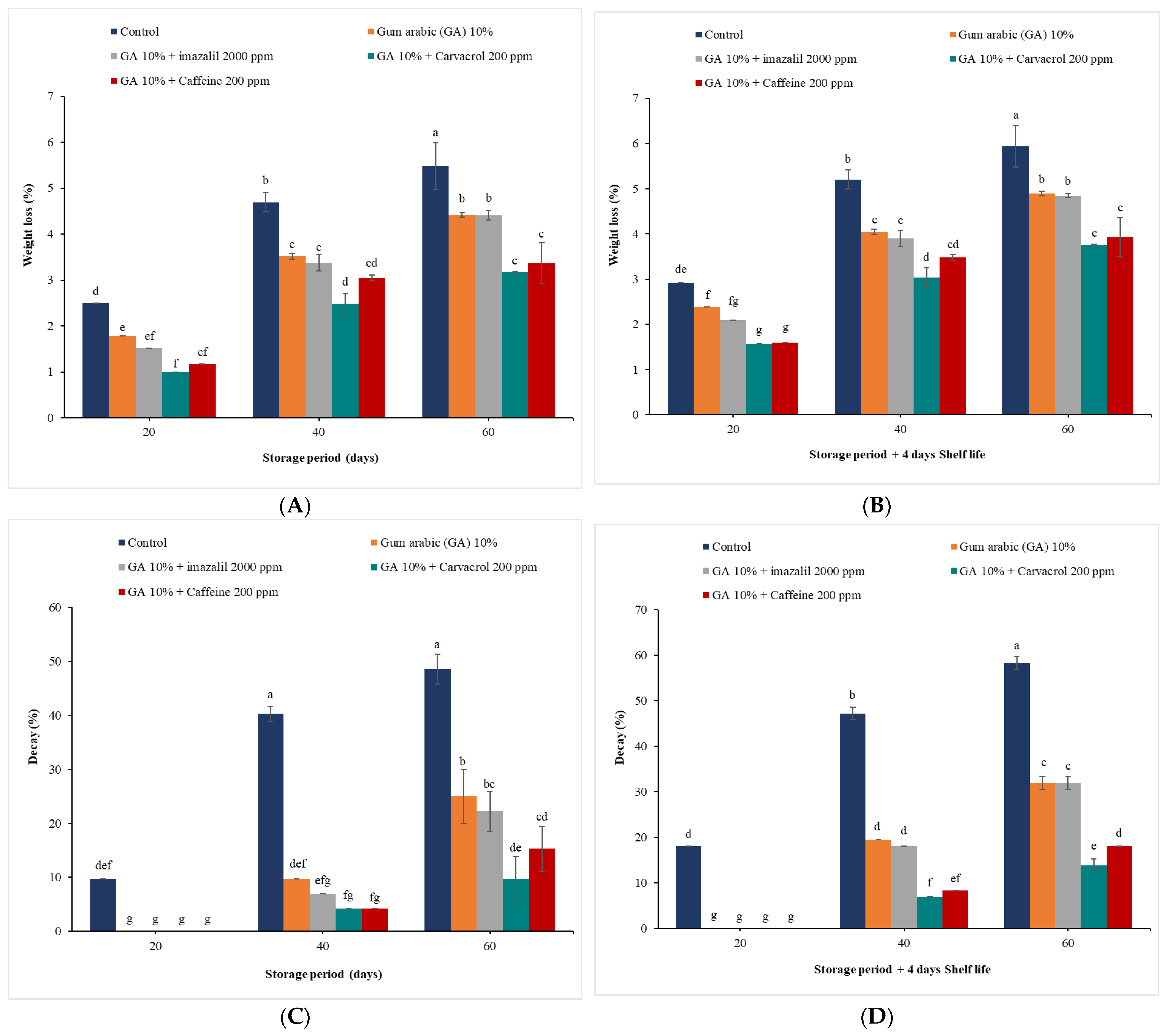
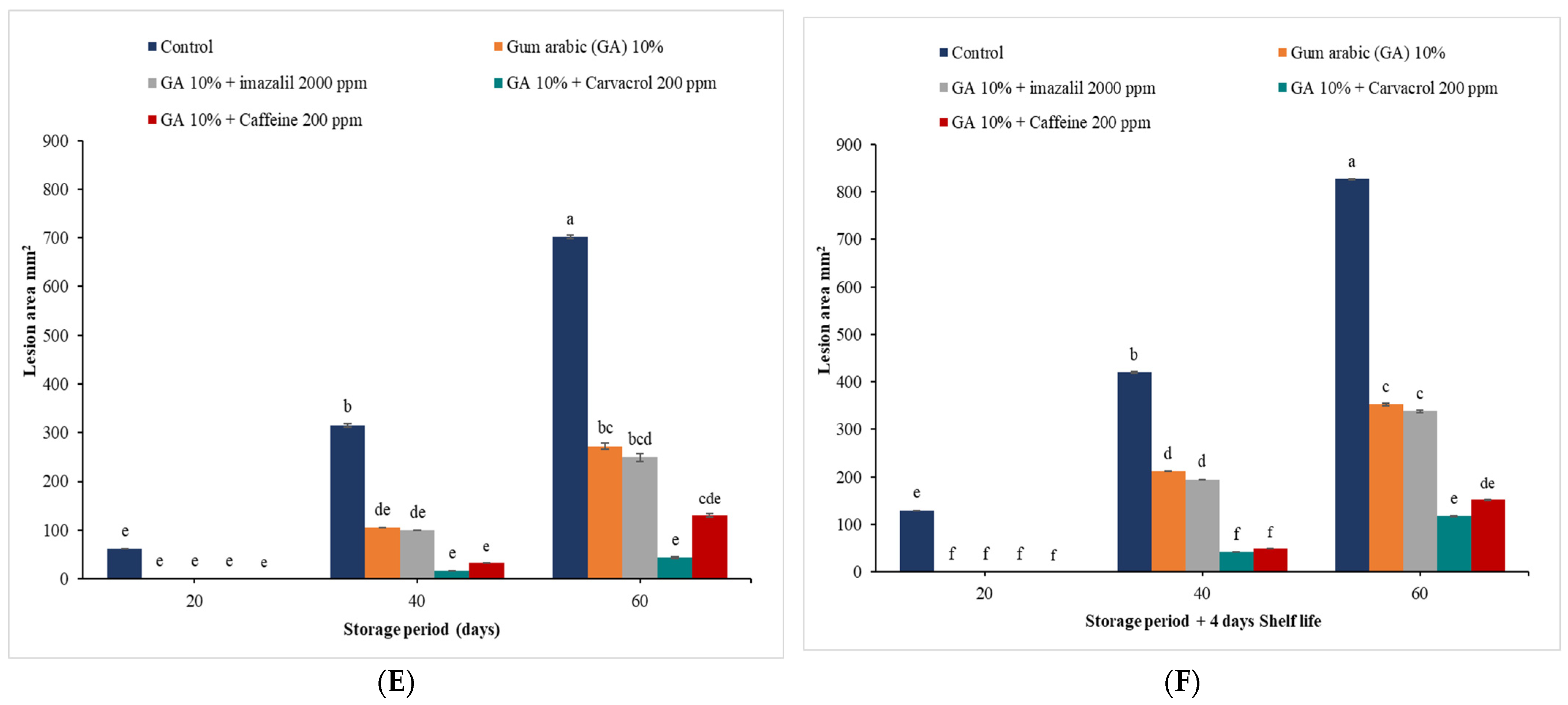
As shown in Figure 1A–D, the weight loss and decay % are essential indicators for evaluating quality and compliance with microbial safety regulations in postharvest fruits. The untreated fruits exceeded the 2.5% weight loss threshold, a factor associated with visible shriveling, which negatively impacts both marketability and Codex quality standards compared with treated fruits. A statistically significant increase in weight loss % was demonstrated with extended storage duration (p ≤ 0.05), reaching 3.09% after 60 days and 3.44% subsequent to the shelf-life period in the control group. Conversely, all GA-based coatings significantly reduced weight loss % as compared to the control; the lowest values (1.61–1.84% during cold storage; 2.03–2.19% post-shelf life) were displayed with GA + carvacrol and GA + caffeine, thus confirming their improved moisture retention properties and prolonged shelf life. Decay incidence and lesion area, as illustrated in Figure 1E,F, which are essential metrics for assessing microbial contamination and phytosanitary compliance, showed a marked escalation following a 40-day period (p ≤ 0.05). The control group exhibited a peak decay incidence of 21.53% during cold storage and 29.17% post-shelf life. Conversely, GA coatings displayed a considerable capacity to suppress decay; specifically, the GA + carvacrol formulations resulted in the lowest decay percentages (3.47% and 4.17%), followed by GA + caffeine. A similar trend was observed in lesion area; the control group exhibited diameters of 267.40 mm and 341.40 mm, whereas fruits subjected to GA + carvacrol treatment displayed diameters of 15.50 mm and 38.17 mm. These decreases align with international safety protocols designed to curtail fungal growth and cross-contamination during storage and distribution, thus supporting the effectiveness of GA bioactive coatings in reducing shriveling and pathogen spread under commercial conditions.

3.2. Firmness, Visual Appearance and Marketable Fruit %

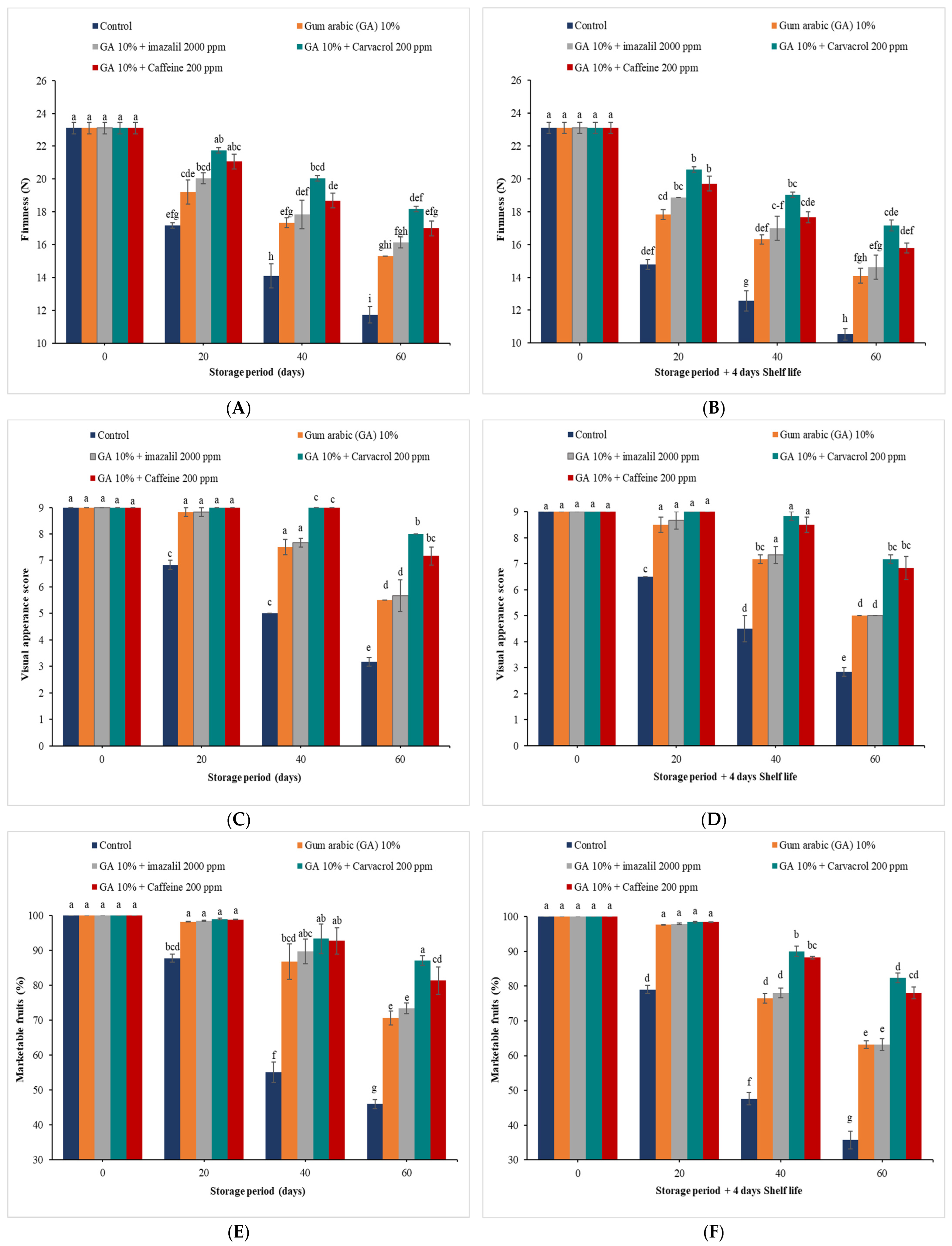
The changes in firmness, visual appearance, and marketable fruit % are observed in Figure 2A–F. Firmness and external appearance are closely associated with marketable fruit percentage, quality control measures, and consumer acceptance. Both firmness and visual evaluations revealed a significant association with prolonged cold storage and shelf life, leading to a gradual decline in marketable fruits (p ≤ 0.05). The fruits treated with water exhibited the most considerable softening, diminishing from 9.00 N at harvest to 3.33 N after 60 days and 3.00 N following shelf life, alongside noticeable rind disorders and shriveling (visual score: 22.43–10.19). Conversely, all GA-based coatings substantially delayed softening and maintained superior appearance scores. The most effective treatment involved using GA and carvacrol together. This combination kept the firmness between 8.00 and 7.33 N during cold storage and between 7.33 and 7.00 N after shelf life. Visual assessments consistently showed scores above 19, as shown in Figure 2. Notably, GA coatings enriched with carvacrol resulted in the highest marketable fruit percentages of 94.91 and 93.80% during cold storage and after shelf life, respectively, and were consistently associated with superior visual appearance scores and firmness retention during both cold storage and shelf life. The second most effective treatment was GA with caffeine, which supported its role in maintaining the peel’s quality. The observed improvements suggest that GA coatings possess semi-permeable properties. These properties reduce water loss and gas exchange, while the antifungal and antioxidant qualities of carvacrol and caffeine contribute to membrane stabilization and the prevention of enzymatic cell wall polysaccharide degradation. Therefore, these findings collectively demonstrate the efficacy of GA bioactive coatings in maintaining both textural and visual quality. This, in turn, supports compliance with industry standards for physical integrity and marketability during extended storage periods.

3.3. Ion Leakage % and Lipid Peroxidation MDA

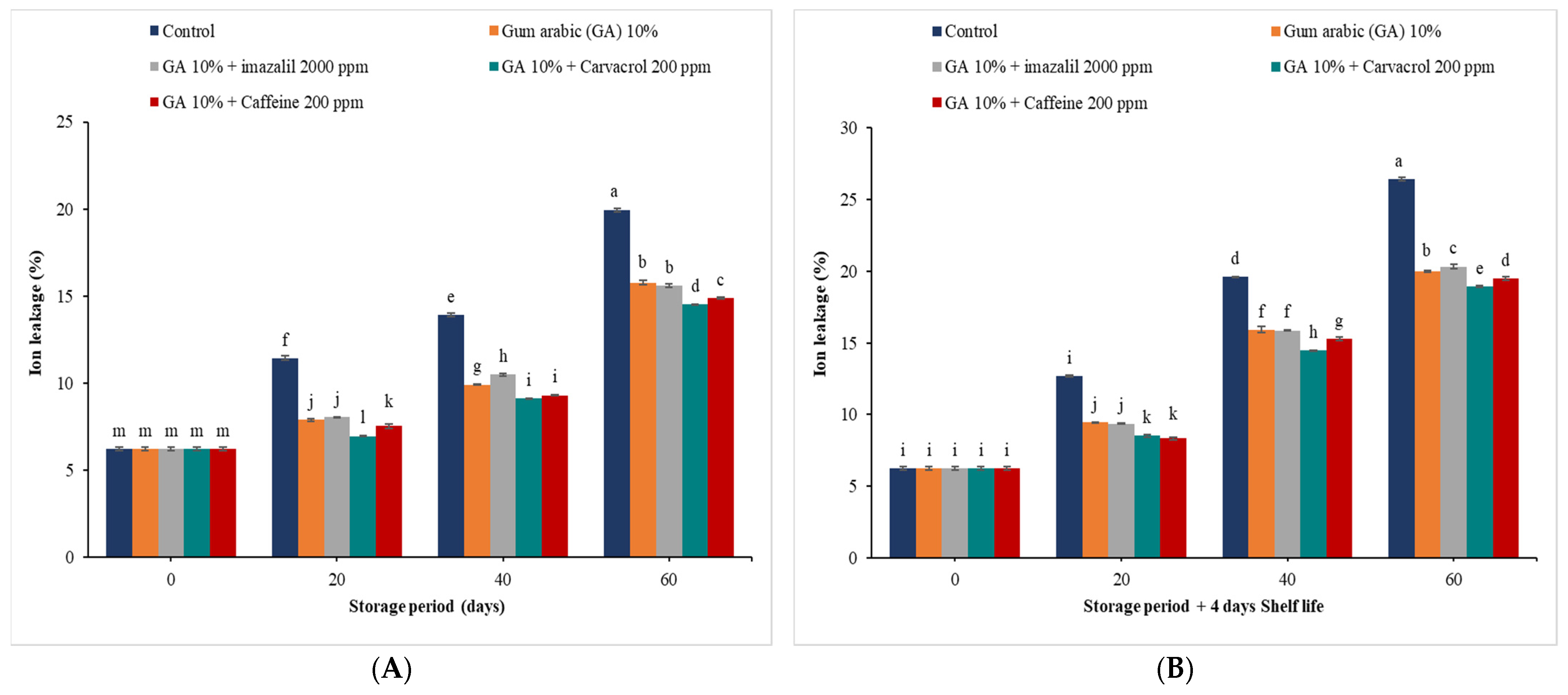
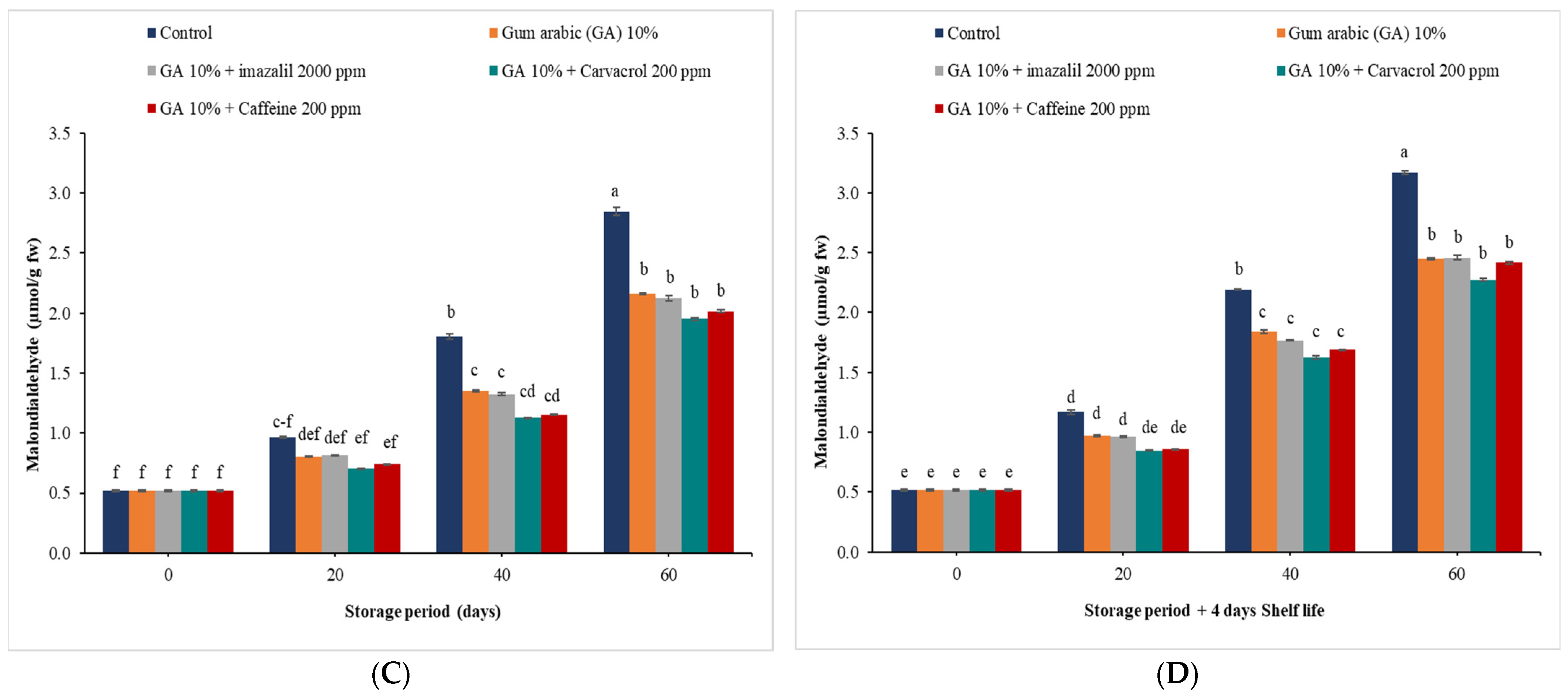
Increased ion leakage (IL) and malondialdehyde (MDA) are essential biochemical markers for assessing membrane integrity and oxidative stress. As illustrated in Figure 3A–D, IL showed a marked increase with prolonged cold storage and shelf life (p ≤ 0.05), reaching 19.61% after 60 days and 25.99% post-shelf life in the control fruits, compared to the 6.13% observed at harvest. This significant rise indicates considerable membrane damage stemming from dehydration, senescence, and pathogen invasion. Furthermore, all GA-based coatings demonstrably diminished IL, with GA + carvacrol consistently yielding the most reduced values, succeeded by GA + caffeine, thereby corroborating the improved membrane stability and diminished oxidative stress. In a similar vein, the control group showed a significant increase in malondialdehyde (MDA) levels. MAD levels increased from 2.776 µmol g−1 FW after cold storage to 3.096 µmol g−1 FW by the end of the shelf-life duration. These indicate considerable lipid peroxidation. In contrast, GA coatings with carvacrol effectively reduced MDA accumulation. The observed enhancements correlate with diminished weight loss and decay rates, alongside increased firmness and visual quality (illustrated in Figure 3). This underscores the efficacy of GA bioactive coatings in mitigating elements that facilitate pathogen entry.

3.4. Ascorbic Acid (AsA), Total Soluble Solids (TSS), TA and TSS/TA Ratio

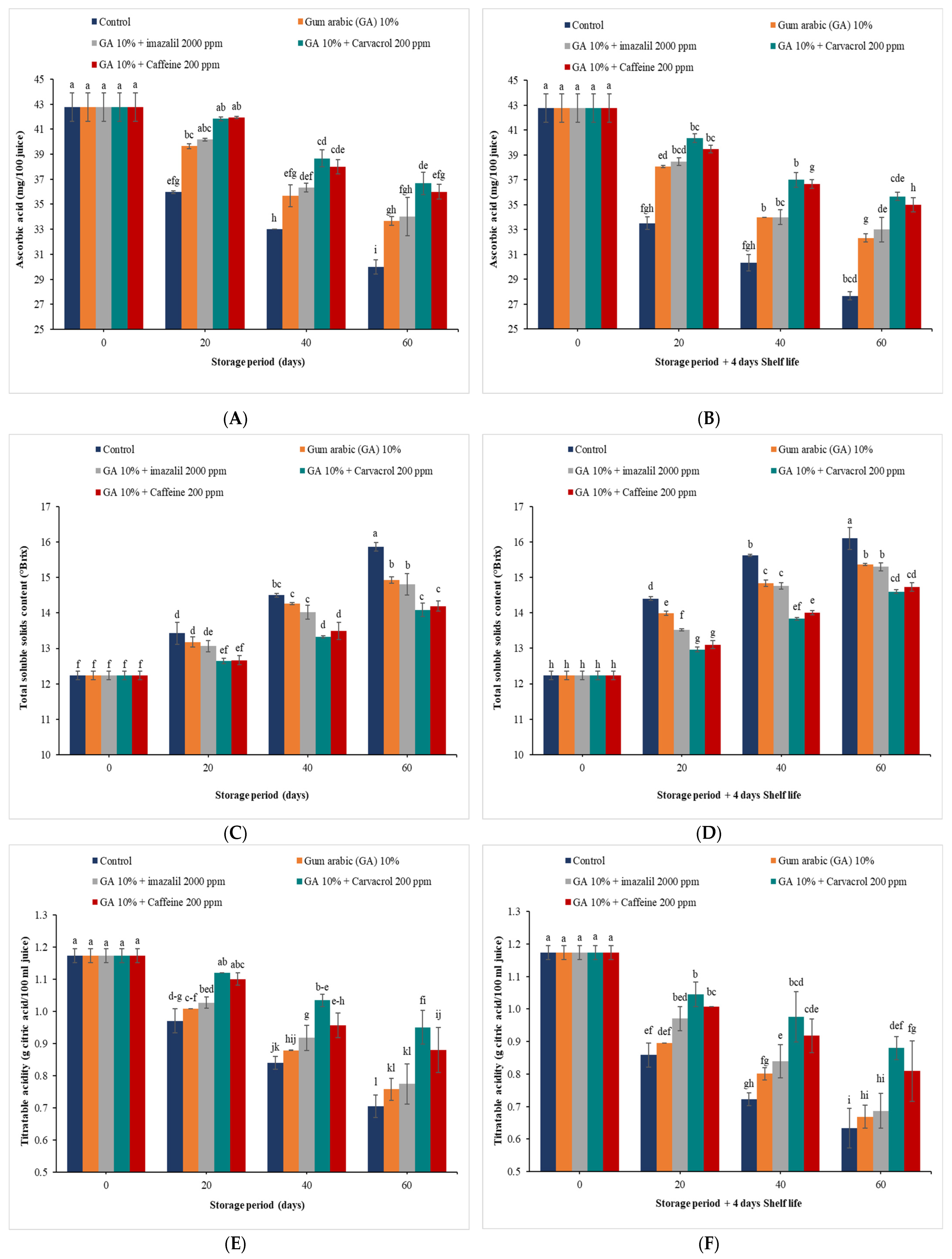
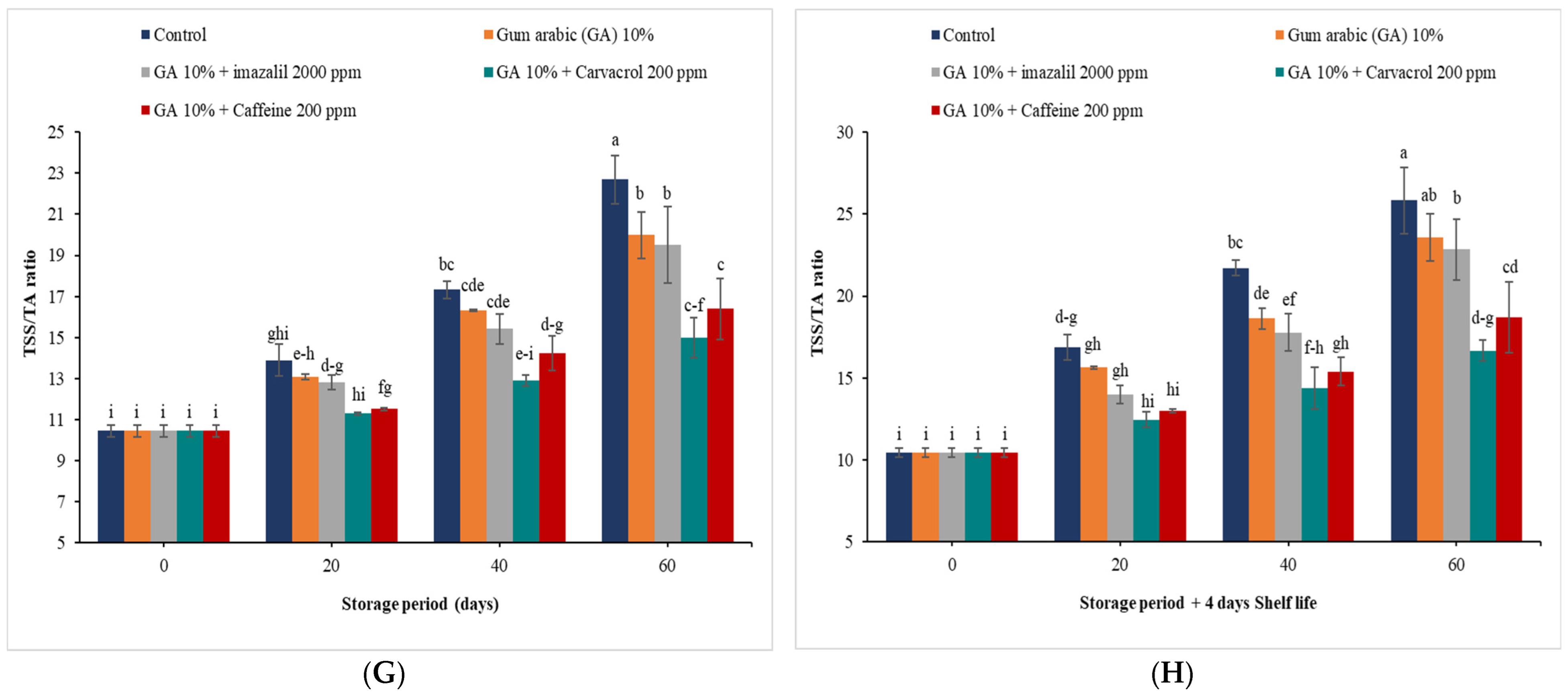
The eight plots shown in Figure 4A–H collectively illustrate the progressive metabolic changes occurring in ‘Murcott’ mandarins during cold storage at 5 °C and subsequent 4-day shelf life, and the extent to which postharvest coatings modulate these changes. Ascorbic acid (AsA) exhibited a persistent and significant decrease with extended storage and shelf life, indicating its pronounced susceptibility to oxidative degradation during senescence, as shown in Figure 4A,B. Fruits coated with 10% GA enriched with either carvacrol or caffeine consistently exhibited elevated AsA levels compared with the controls or GA alone. These bioactive coatings effectively mitigated oxidative stress and delayed vitamin C depletion. Total soluble solids (TSS) also steadily increased over time in storage, and this rise was most noticeable during shelf life; this is probably because moisture was lost and soluble sugars were concentrated (Figure 4C,D). GA-based coatings, especially those with carvacrol or caffeine added, slowed down the rise in TSS. This suggests that transpiration was lower and ripening metabolism was delayed. Titratable acidity (TA) declined gradually in all treatments, consistent with organic acid utilization during respiration and sugar–acid interconversion, as shown in Figure 4E,F. However, GA + carvacrol-coated fruits exhibited significantly higher TA at both cold storage and shelf-life stages compared with untreated fruit; such treatments may demonstrate improved preservation of acid components that contribute to flavor quality. The TSS/TA ratio, a key indicator of flavor balance and maturity progression, increased markedly with storage time, reaching its highest levels at 60 days and during shelf life, as shown in Figure 4G,H. Coatings enriched with carvacrol or caffeine produced the lowest TSS/TA ratios. Finally, these figures demonstrate that GA-based edible coatings significantly modify the metabolic progression of Murcott mandarins during storage by reducing water loss, slowing oxidative and respiratory processes, and maintaining a more favorable sugar–acid balance.

3.5. Total Phenolic Content (TPC) and Total Flavonoids

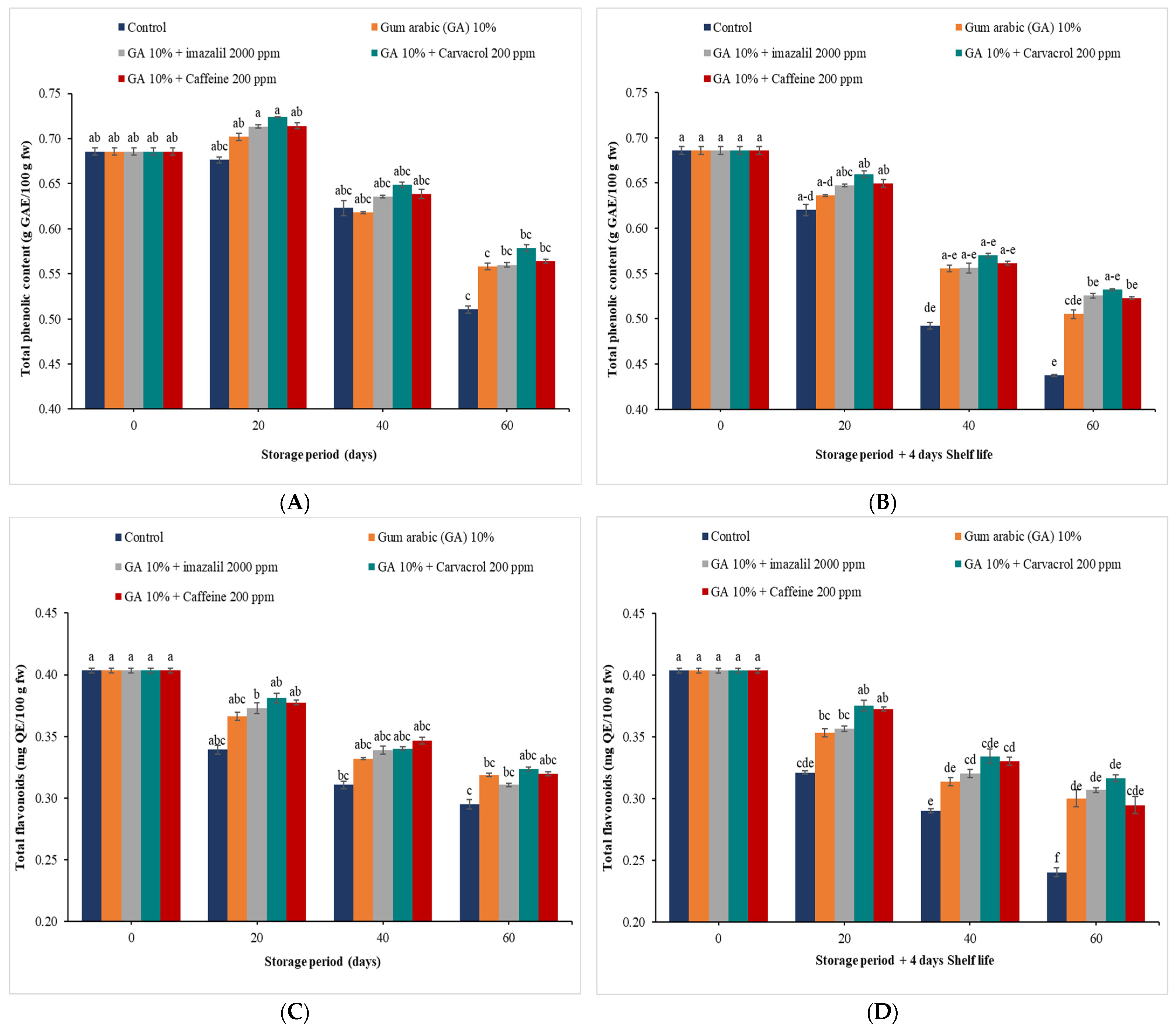
There was a significant reduction in TPC and total flavonoids during cold storage and the shelf life of treatments (p ≤ 0.05), as demonstrated in Figure 5A–D.. In contrast, all GA-based coatings substantially lessened their declines when compared to the control group. Specifically, the GA + carvacrol and GA + caffeine applications exhibited the highest concentrations of these compounds over the entire storage period. This retention is likely due to the semi-permeable barrier function of GA, which restricts both oxygen penetration and moisture loss, coupled with the intrinsic antioxidant characteristics of carvacrol and caffeine. At 60 days after treatment, and extending past the specified shelf life, fruits subjected to GA and carvacrol treatment exhibited improved preservation of phenolic antioxidants. As presented in Figure 5, these results were linked to reduced ion leakage, a decline in MDA accumulation, and enhanced membrane integrity. These findings underscore the critical role of phenolic antioxidants in preserving oxidative stability and inhibiting decay, thus reinforcing microbial safety and adherence to quality assurance standards. Therefore, GA bioactive coatings provide a functional safety mechanism by protecting antioxidant capacity and reducing susceptibility to fungal spoilage during commercial storage.

3.6. Ferric Reducing Antioxidant Power (FRAP) and Diphenyl-1-picrylhydrazy (DPPH) %

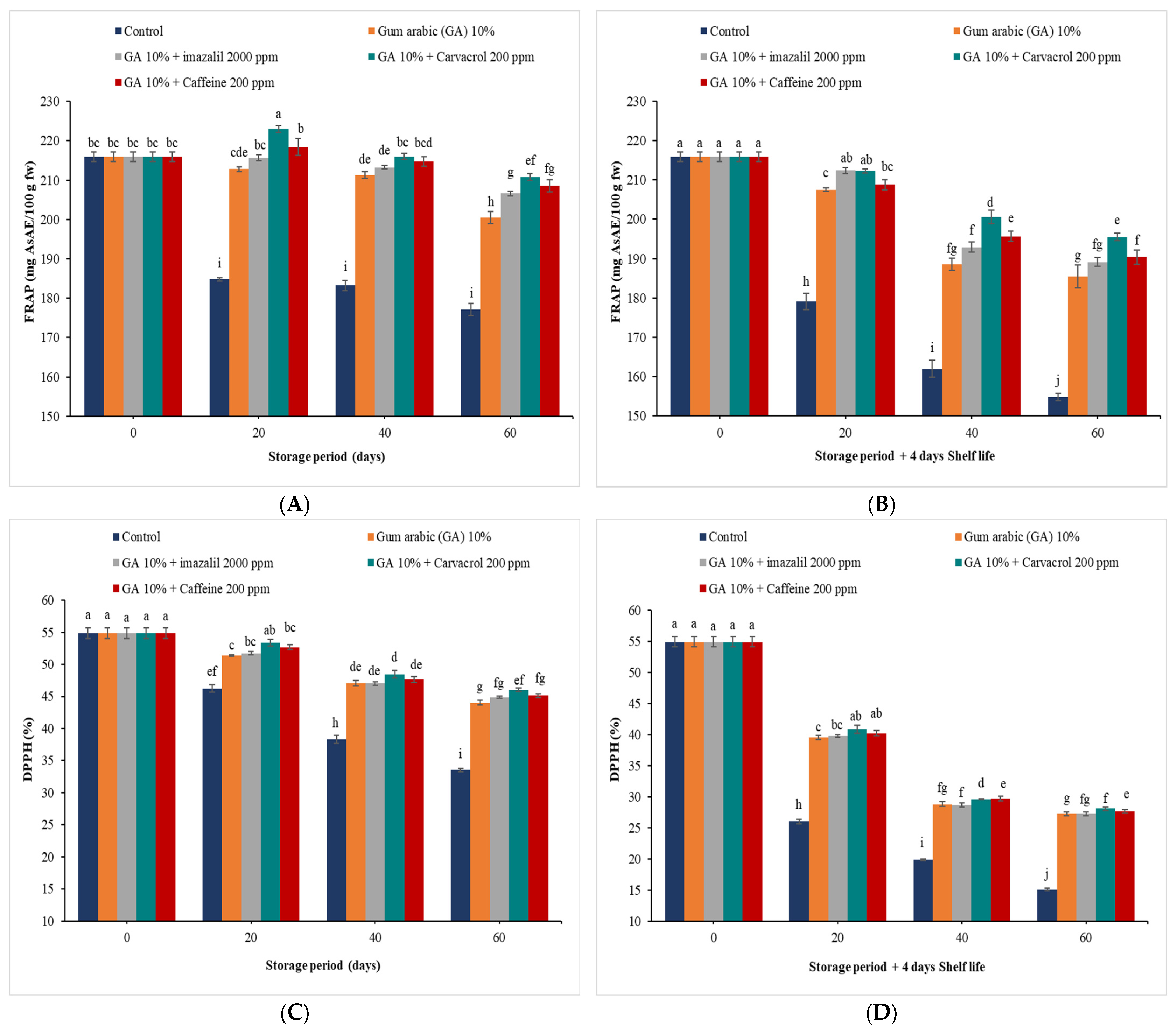
The control fruits displayed the most significant decreases due to increased oxidative stress and a decrease in antioxidant components. Figure 6A–D demonstrate a significant decline in the antioxidant capacity of ‘Murcott’ mandarins during cold storage and the ensuing shelf life (p < 0.05). The control fruits displayed the most significant decreases due to increased oxidative stress and a decrease in antioxidant components. Conversely, GA + carvacrol significantly reduced this drop, demonstrating the highest FRAP and DPPH values, succeeded by GA + caffeine. The elevated TAC and DPPH values reported in the GA bioactive coatings correspond with the augmented preservation of phenolic and flavonoid components (Figure 5) and the enhanced activity of antioxidant enzymes (CAT and POX), thus strengthening a synergistic defense mechanism against oxidative damage. The marked reduction in antioxidant capacity during shelf life, relative to cold storage settings, highlights the susceptibility of antioxidant systems to increased temperatures and expedited aging processes. Conversely, the coated fruits exhibited significantly improved antioxidant capacity, even when stored for extended periods, thus validating the effectiveness of these natural coatings in reducing oxidative damage and adhering to microbial safety protocols. As a result, GA coatings, when combined with bioactive substances, provide a functional safety advantage by diminishing oxidative degradation and preventing the growth of pathogens, aligning with international quality assurance benchmarks for fresh citrus fruits.

3.7. Enzyme Activities of Catalase (CAT), Peroxidase (POX), and Pectin Methylesterase (PME)

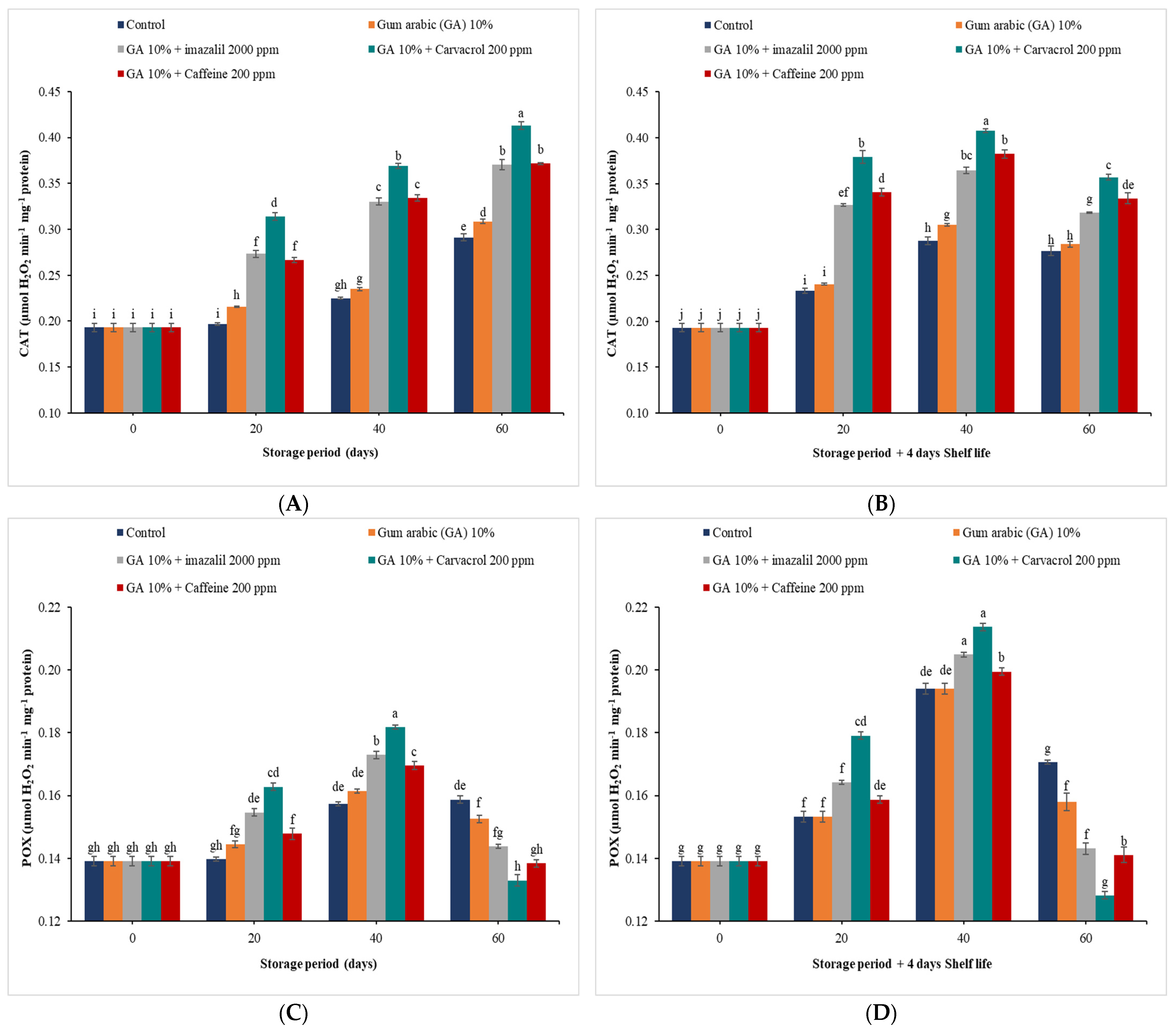
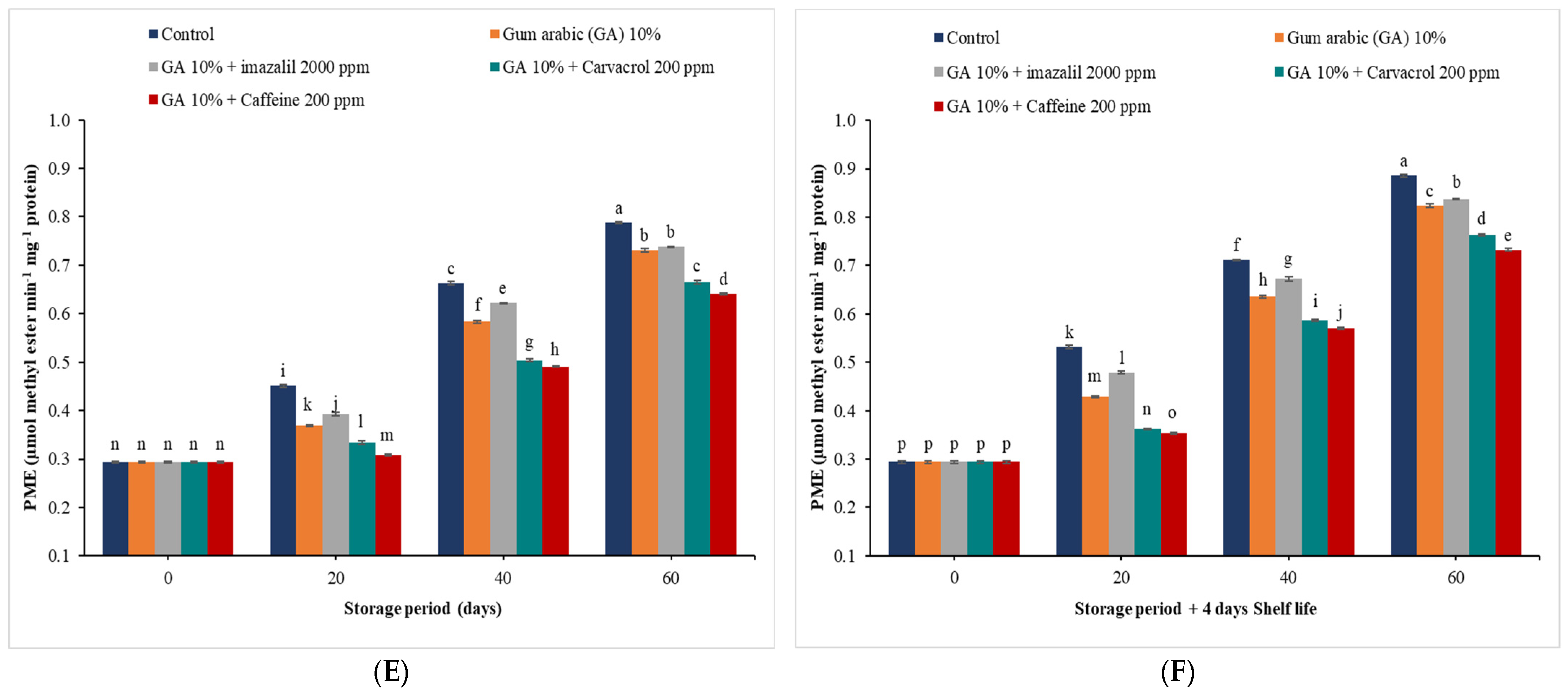
All antioxidant (CAT and POX) and cell-wall-modifying enzymes (PME) were significantly affected by all coating treatments and the duration of storage (p < 0.05). Figure 7A–F shows that the control fruits displayed only minor alterations in CAT and POX activity throughout cold storage; however, a substantial reduction was observed after shelf life, suggesting a decline in antioxidant enzymes. Conversely, GA-based coatings, specifically GA + carvacrol and GA + caffeine, sustained elevated CAT and POX activities throughout the storage period and shelf life, thereby facilitating ROS detoxification, mitigating lipid peroxidation, and maintaining membrane integrity. These observations align with the diminished MDA and ion leakage values observed within the identical treatments, thereby corroborating a unified antioxidant response. Conversely, PME activity, which is linked to pectin de-esterification and cell wall degradation, exhibited a significant increase in the control fruits. The application of GA coatings correlated with a marked reduction in hardness, an increase in lesion dimensions, and a heightened frequency of degradation. PME activity was decreased by all GA coatings; specifically, GA + carvacrol exhibited the most pronounced effect, consequently delaying degradation in the cell wall and causing the softening process. With all GA bioactive coatings, which function as protective mechanisms, there is an increase in CAT and POX, with the suppression of PME activity facilitated. As a result, these biochemical changes enhance adherence, thereby extending shelf life in commercial cold storage environments and ensuring quality assurance protocols are met.

3.8. Principal Component Analysis (PCA) Among Physiological, Biochemical, and Enzymatic Traits

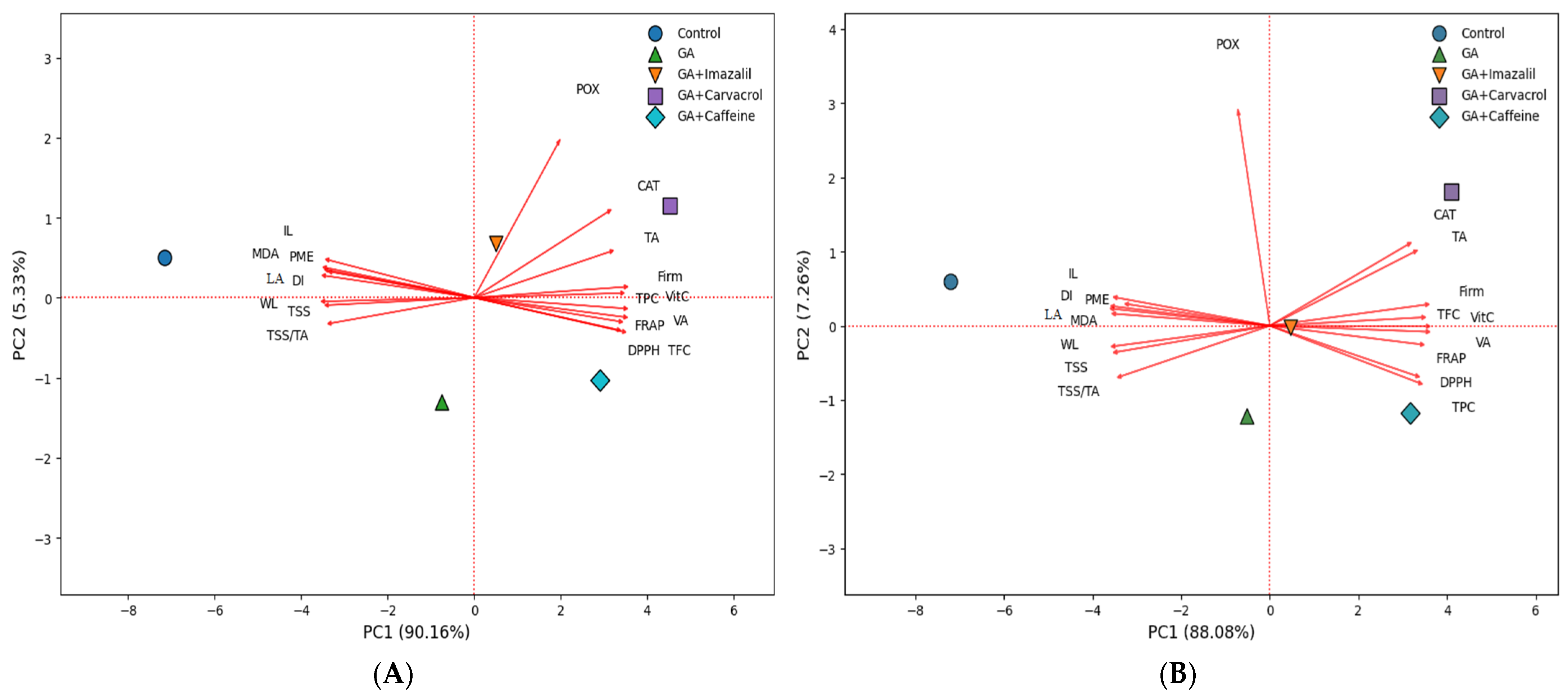
The principal component analysis (PCA) biplots demonstrated a robust positive correlation among marketable fruits (MF), visual appearance (VA), and firmness (Firm), thereby suggesting that treatments designed to preserve fruit firmness and visual quality directly enhanced marketability, as shown in Figure 8. Conversely, weight loss (WL), decay incidence (DI), electrolyte leakage (EL), and lipid peroxidation (MDA) were positioned in the opposite direction, which reflects their detrimental effects on fruit marketability. This observed pattern implies that membrane integrity and textural stability are critical factors influencing postharvest quality throughout storage and shelf life. Furthermore, the proximity of antioxidant-related variables (TPC, TFC, DPPH, and FRAP) to MF and VA implies that an increased antioxidant capacity contributes to the preservation of fruit quality and the extension of marketability.

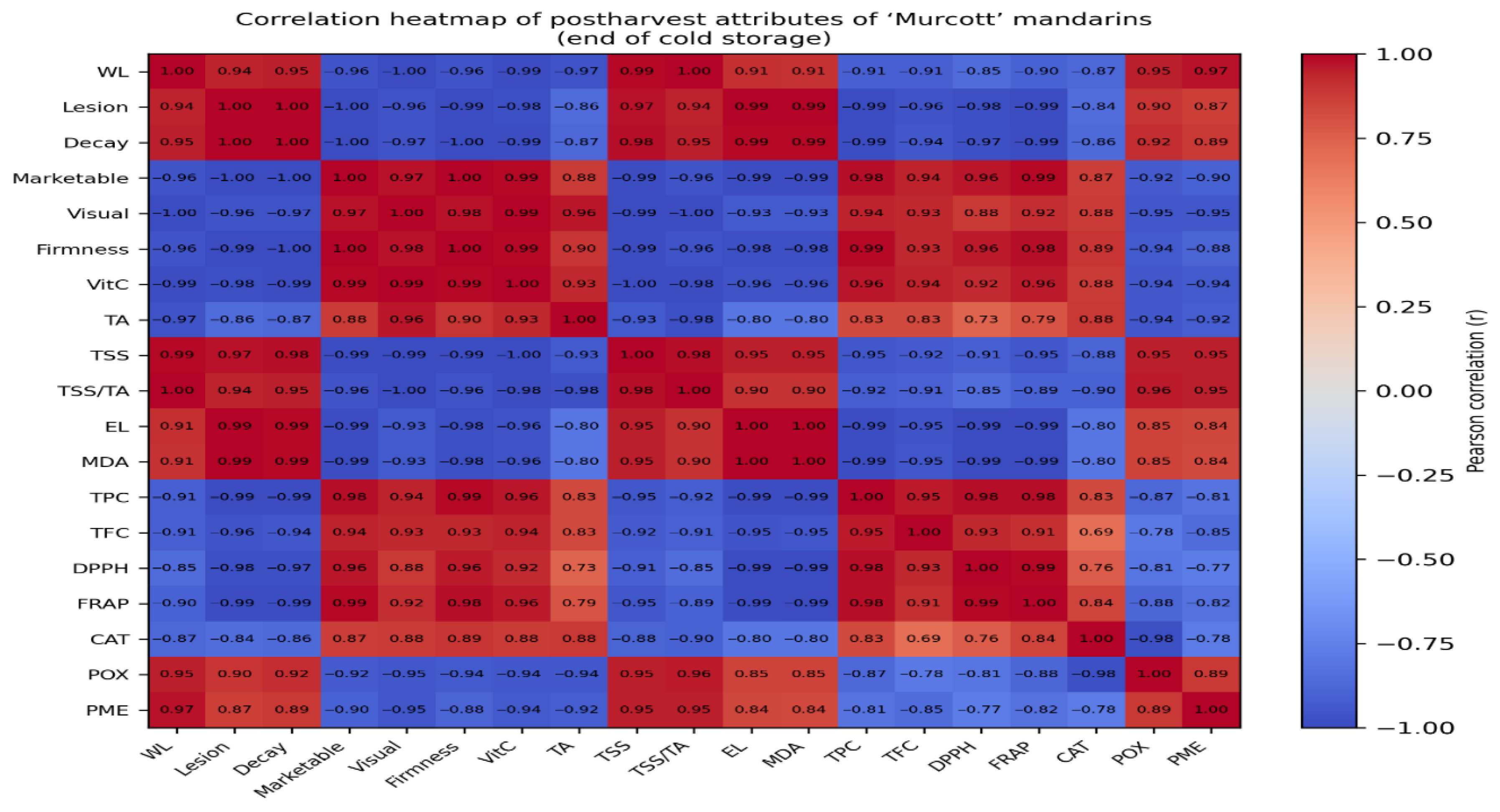
3.9. Pearson Correlation Heatmap Analysis of Postharvest Quality Attributes

The correlation heatmap shown in Figure 9 shows the Pearson’s r correlations between physical and chemical quality characteristics, indicators of oxidative damage, phenolic compounds, and antioxidant defense enzymes in ‘Murcott’ mandarin fruits after cold storage. The r values, which range from −1 to +1, signify the strength and direction of relationships; positive values approaching +1 denote a robust direct association, whereas negative values near −1 suggest a strong inverse relationship. Values approximating zero indicate a weak correlation. Figure 9 indicates that weight loss, lesion, and decay show almost perfect strong positive correlations among deterioration indicators (r ≈ 0.94–1.00). Strong negative correlations were found between deterioration and quality WL vs. marketable (r ≈ −0.96), WL vs. firmness (r ≈ −0.96), and lesion vs. visual (r ≈ −0.96). The findings suggest that greater weight loss and decay are associated with diminished visual quality and firmness. Moreover, EL and MDA demonstrated a strong relationship with degradation; the nearly perfect correlation between WL and EL (r ≈ 0.99) and WL and MDA (r ≈ 0.91) indicates that membrane damage and lipid peroxidation are exacerbated by decay. In addition, phytochemicals and antioxidant capacity, assessed through TPC, total flavonoid content (TFC), DPPH, and FRAP, demonstrated an inverse relationship with oxidative damage; specifically, TPC negatively correlated with malondialdehyde (MDA) (r ≈ −0.99), and TFC negatively correlated with electrolyte leakage (EL) (r ≈ −0.95). Therefore, a higher concentration of phenolics and flavonoids is linked to a decrease in oxidative stress. Antioxidant enzymes, such as catalase (CAT) and peroxidase (POX), exhibit a positive association with phytochemicals; specifically, CAT shows a correlation of approximately 0.83 with total phenolic content (TPC), while POX correlates with ferric reducing antioxidant power (FRAP) at roughly 0.89. Antioxidant enzymes, particularly catalase (CAT) and peroxidase (POX), reveal a positive correlation with phytochemicals; for example, CAT correlates with total phenolic content (TPC) (r ≈ 0.83), and POX correlates with ferric reducing antioxidant power (FRAP) (r ≈ 0.89). In contrast, the activity of PME shows a negative relationship with firmness, as indicated by the correlation between PME and firmness (r ≈ −0.94). The activity of PME facilitates the degradation of cell walls, thereby contributing to softening. Consequently, mandarins that experienced greater water loss and decay also exhibited significant membrane disruption and lipid peroxidation. TPC and flavonoids exhibited significant inverse associations with IL and MDA treatments that maintained high concentrations of phenolics and flavonoids; specifically, GA enhanced with carvacrol or caffeine demonstrably strengthened antioxidant defenses and delayed senescence. This supports the functional advantages of GA bioactive coatings, which help reduce physiological decline and ensure adherence to postharvest quality standards.

4. Discussion

4.1. Quality Assurance Implications: Decay Suppression and Marketability

Weight loss, rind shriveling, and decay are primary determinants of market rejection and consumer risk in fresh citrus supply chains. The progressive increase in weight loss and decay observed in the controls during cold storage and shelf life agrees with established thresholds for shriveling and loss of commercial value in citrus and other fruit commodities [63,64]. GA-based coatings, particularly GA + carvacrol and GA + caffeine, significantly reduced weight loss, decay incidence, and lesion expansion, thereby supporting microbial safety goals and fitness for market under extended storage [65,66]. Because fungal invasion is the major driver of postharvest losses and potential deterioration in sanitary quality, lowering decay directly advances compliance with packinghouse and export QA programs that emphasize decay control and hygienic handling [67,68]. In practical terms, suppressing lesion development limits sporulation and cross-contamination risks along distribution, contributing to safer produce at point of sale. The effectiveness of edible coatings in postharvest applications is not only determined by their physiological impact but also by their physical characteristics, which directly influence consumer acceptance and marketability. Gum arabic is known for its excellent film-forming properties, producing a thin, transparent, and uniform coating layer that adheres well to the fruit surface without causing undesirable visual changes. The high transparency of GA coatings ensures that the natural color and gloss of the fruit are preserved, which is a key quality attribute in citrus marketing. Moreover, the good adhesion and flexibility of the coating allow it to form a continuous barrier without cracking, thereby maintaining its functional integrity throughout storage. These physical attributes, combined with their semi-permeable nature, enable gum arabic coatings to simultaneously preserve internal fruit quality and external appearance. Similar observations have been reported in previous studies, where polysaccharide-based coatings maintained fruit gloss and visual quality while extending shelf life [34,69].

4.2. Gum Arabic Coatings Function as an Active Preservation System, Offering More than a Physical Barrier by Integrating Bioactive Compounds That Enhance Fruit Quality and Safety

Gum arabic (GA)-based edible coatings are widely recognized for their ability to act as semi-permeable barriers that modify the internal atmosphere surrounding fruit tissues. This modification is primarily achieved by restricting gas exchange, leading to reduced oxygen (O2) availability and a slight accumulation of carbon dioxide (CO2) at the fruit surface. Such changes effectively suppress the respiration rate, which is a key driver of postharvest senescence and metabolic degradation. A reduction in respiration slows down substrate utilization, delays the degradation of organic acids and sugars, and minimizes water loss through transpiration, thereby preserving fruit firmness and overall quality. Furthermore, the formation of this micro-modified atmosphere contributes to lowering ethylene biosynthesis and action, which in turn delays the ripening processes and associated physiological disorders [70,71,72,73]. Previous studies have demonstrated that polysaccharide-based coatings, including gum arabic, reduce respiration intensity and extend the storage life of citrus and other horticultural crops by maintaining cellular homeostasis and reducing oxidative stress [69,74]. The present data confirm this barrier function for GA; however, the bioactive-enriched formulations behaved as integrated functional systems: GA + carvacrol (and, secondarily, GA + caffeine) delivered the smallest lesions and lowest decay while maintaining high firmness and visual scores across storage phases. These utcomes are consistent with the antifungal properties of carvacrol and other essential oil components against citrus pathogens [17,20], including Penicillium spp., and with reports that essential oil actives maintain quality under cold storage and marketing simulations [21,26]. Similarly, phenolic acids and related bioactives (e.g., caffeine/caffeic acid derivatives) have shown preservative effects, antioxidant activity, and decay suppression in multiple fruit systems [28,30,75,76]. Collectively, this supports a dual mechanism: (i) physical limitation of moisture/gas fluxes by GA and (ii) bioactive suppression of pathogen growth and senescence-associated deterioration.

4.3. Mechanistic Safety Feature: Modulation of Antioxidant and Cell Wall Enzymes

A central, novel finding is the coordinated modulation of enzymatic defenses by the bioactive-enriched coatings. GA + carvacrol (and GA + caffeine) sustained higher catalase (CAT) and peroxidase (POX) activities while suppressing pectin methylesterase (PME) relative to controls. Elevated CAT/POX are hallmarks of improved ROS detoxification and are tightly associated with lower malondialdehyde (MDA) and ion leakage (IL), canonical indicators of membrane lipid peroxidation and loss of integrity [38,45]. Our correlation analyses (CAT/POX is negatively related to IL/MDA; PME is positively related) mechanistically link the enzymatic responses to the observed reductions in softening, lesion expansion, and decay. Similar relationships between antioxidant enzymes, membrane protection, and decay resistance under cold stress have been documented in fruit systems where coatings or phenolics reduced oxidative damage and improved storability [30,75,77]. In the present study, although SOD activity was not directly measured, the significant enhancement of CAT and POX activities strongly suggests an upregulated antioxidant defense system in coated fruits. This enzymatic activation is consistent with the observed reduction in malondialdehyde (MDA) content. From a quality-and-safety standpoint, this biochemical buffering should be recognized as a functional safety feature: by curbing oxidative membrane breakdown and cell wall de-esterification, the coatings reduce tissue maceration and host susceptibility to fungal ingress, thereby supporting microbial control targets without synthetic fungicides [45,71]. The observed decrease in POX activity at later storage stages (60 days) may be attributed to the reduced oxidative stress level resulting from the effectiveness of the coating system during earlier storage periods. As oxidative stress diminishes, the demand for elevated antioxidant enzyme activity correspondingly declines. This interpretation is consistent with the observed reduction in malondialdehyde (MDA) content and ion leakage, both of which are widely recognized indicators of improved membrane stability and reduced lipid peroxidation. Therefore, the decrease in POX activity does not indicate reduced protection, but rather reflects a lower requirement for enzymatic defense under stabilized cellular conditions [34,69,71,78].

4.4. Preservation of Nutritional and Sensory Quality

The higher retention of ascorbic acid and titratable acidity and moderation of the TSS/TA ratio in coated fruit indicate delayed senescence and improved flavor balance, consistent with GA-based films that slow oxidative and respiratory processes [71]. Maintenance of total phenolics and flavonoids, alongside enhanced TAC/FRAP and DPPH activity under GA + carvacrol and GA + caffeine, aligns with prior reports that edible coatings and phenolic bioactive stabilize endogenous antioxidants during storage [79,80]. The negative associations between phenolic metrics and IL/MDA further support a phenolic-mediated antioxidant shield that underpins both quality and resistance to decay.

4.5. Clean-Label and Regulatory Relevance

Gum arabic is widely used in foods for its film-forming and emulsifying properties [40,42]. Carvacrol and caffeine (and related phenolic derivatives) have been broadly investigated for antioxidant/antimicrobial functionality in food systems; their use here advances a clean-label approach that can reduce reliance on synthetic fungicides, responding to residue-limit constraints and consumer expectations [67,81]. The demonstrated reductions in decay and maintenance of quality are therefore congruent with packinghouse QA programs and phytosanitary requirements focused on minimizing microbial spoilage while preserving sensory/nutritional attributes [36,71,72]. While the study did not quantify residues or enumerate pathogens, the directionality of the outcomes (lower decay, smaller lesions, and improved antioxidant status) is consistent with enhanced microbial quality in the market.

4.6. Limitations and Directions for Application

Two practical considerations merit future work: (i) scaling and integration with commercial waxing/packaging and ventilation regimes, and (ii) verification of microbiological criteria (pathogen enumeration and mycotoxin screening) and residue assessments under pilot packinghouse trials. Additionally, sensory validation and cost benefit analyses under export logistics would facilitate adoption. Even so, the current data provide converging evidence physical, biochemical, and multivariate evidence that GA + carvacrol offers the most robust and safety-aligned performance among the treatments tested.

5. Conclusions

The findings of this investigation indicate that coatings derived from gum arabic, especially those incorporating carvacrol, are effective in maintaining the postharvest quality and safety of ‘Murcott’ mandarins throughout prolonged cold storage and subsequent shelf-life periods. These findings suggest that coatings containing gum arabic substantially diminished weight loss, decay occurrence, and membrane damage, concurrently preserving firmness, visual quality, and essential nutritional components, including ascorbic acid and titratable acidity. Furthermore, bioactive-enriched coatings carvacrol or caffeine augmented antioxidant capacity and regulated enzymatic activity by promoting catalase and peroxidase while inhibiting pectin methylesterase, thus alleviating oxidative stress and postponing senescence. These results offer a viable, environmentally sound approach for citrus exporters and packinghouses aiming to prolong shelf life, uphold quality assurance, and adhere to global benchmarks for chemical-free products. Subsequent investigations should concentrate on refining application methodologies and evaluating compatibility with commercial packaging technologies to promote widespread industry implementation.

Author Contributions

Conceptualization, A.F.A.E.-K., M.S.G. and B.S.S.; methodology, B.S.S., G.A.M. and A.F.A.E.-K.; software, M.S.G., N.M.R. and A.M.S.T.; validation, A.F.A.E.-K., B.S.S. and G.A.M.; formal analysis, N.M.R., M.S.G. and A.M.S.T.; investigation, B.S.S., N.M.R. and A.A.M.; resources, S.M.A., A.A.M., A.S.A. and A.M.S.T.; data curation, N.M.R., A.S.A. and A.A.M.; writing—original draft preparation, A.F.A.E.-K., A.M.S.T., M.S.G. and S.M.A.; writing—review and editing, A.S.A., S.M.A., A.M.S.T., A.A.M. and M.Y.N.; visualization, A.A.M. and S.M.A. supervision, N.M.R.; project administration, S.M.A., N.M.R., M.S.G. and M.Y.N.; funding acquisition, N.M.R. All authors have read and agreed to the published version of the manuscript.

Funding

This work was supported by the Deanship of Scientific Research, Vice Presidency for Graduate Studies and Scientific Research, King Faisal University, Saudi Arabia (KFU253609). And the APC was funded by the same organization.

Data Availability Statement

The original contributions presented in this study are included in the article. Further inquiries can be directed to the corresponding authors.

Acknowledgments

The authors gratefully acknowledge the Deanship of Scientific Research, Vice Presidency for Graduate Studies and Scientific Research, King Faisal University, Saudi Arabia (KFU253609), for supporting this research work.

Conflicts of Interest

The authors declare that the research was conducted in the absence of any commercial or financial relationships that could be construed as potential conflicts of interest.

References

  1. El-Khayat, H.M.; Aseel, D.G. Horticulture Performance and Genetic Diversity Based on RAPD Marker for Some Egyptian Mandarin Cultivars. J. Ecol. Health Environ. 2020, 8, 1–11. [Google Scholar]
  2. Stuchi, E.S.; Girardi, E.A.; da Silva, S.R.; Cantuarias-Avilés, T.; Parolin, L.G.; Reiff, E.T.; Sempionato, O.R. Satsuma Mandarins Grafted onto Swingle Citrumelo for Early Season Harvest in Subtropical Conditions in Brazil. Bragantia 2019, 78, 236–243. [Google Scholar] [CrossRef]
  3. Cristofani-Yaly, M.; Dezotti, A.L.; Cavichioli, T.M.; Roverssi, F.; Novelli, V.M.; Bastianel, M. Genetic Characterization and Fruit Quality Analysis of New Mandarin Hybrids. Agronomy 2024, 14, 2666. [Google Scholar] [CrossRef]
  4. FAO. The State of Food and Agriculture 2024; FAO: Rome, Italy, 2024. [Google Scholar]
  5. Muramatsu, N.; Takahara, T.; Ogata, T.; Kojima, K. Changes in Rind Firmness and Cell Wall Polysaccharides during Citrus Fruit Development and Maturation. HortScience 1999, 34, 79–81. [Google Scholar] [CrossRef]
  6. Rehal, J.; Kaur, G.J.; Bons, H.K. Studies on Physico-Mechanical Properties of W. Murcott Mandarin. J. Appl. Nat. Sci. 2017, 9, 80–84. [Google Scholar] [CrossRef]
  7. Ebrahimi, M.; Pakkish, Z.; Noori, H.; Nasibi, F.; Soufi, H.R.; Ghorbanpour, M. The Impact of Plasma-Activated Water and Selenium Nanoparticle Solution on the Shelf Life of Mandarin Cv. Orlando Tangelo in Storage. Sci. Rep. 2025, 15, 29930. [Google Scholar] [CrossRef]
  8. Gutiérrez-Villamil, D.A.; Balaguera-López, H.E.; Álvarez-Herrera, J.G.; Gutiérrez-Villamil, D.A.; Balaguera-López, H.E.; Álvarez-Herrera, J.G. Brassinosteroids Improve Postharvest Quality, Antioxidant Compounds, and Reduce Chilling Injury in ‘Arrayana’ Mandarin Fruits under Cold Storage. Horticulturae 2023, 9, 622. [Google Scholar] [CrossRef]
  9. Obenland, D.; Collin, S.; Sievert, J.; Arpaia, M.L. Mandarin Flavor and Aroma Volatile Composition Are Strongly Influenced by Holding Temperature. Postharvest Biol. Technol. 2013, 82, 6–14. [Google Scholar] [CrossRef]
  10. Obenland, D.; Collin, S.; Mackey, B.; Sievert, J.; Arpaia, M.L. Storage Temperature and Time Influences Sensory Quality of Mandarins by Altering Soluble Solids, Acidity and Aroma Volatile Composition. Postharvest Biol. Technol. 2011, 59, 187–193. [Google Scholar] [CrossRef]
  11. Fahmy, M.A.; Abd El-Razek, A.M.; Sultan, M.Z.; Abd-Alhafeez, A.A.; Elnaggar, I.A. Influence of Storage Temperature on Quality and Storability of Murcott Tangor [Citrus reticulata × Citrus sinensis (L.) Osbeck] Fruits. Nat. Sci. 2018, 16, 150–154. [Google Scholar]
  12. Liu, F.-W. Development and Application of Citrus Storage Technologies with Concurrent Consideration of Fruit Quality Preservation, Energy Use, and Costs. In Proceedings of the Technology on Reducing Post-Harvest Losses and Maintaining Quality of Fruits and Vegetables Proceedings of 2010 AARDO Workshop; Taiwan Agricultural Research Institute, Ministry of Agriculture: Taichung, Taiwan, 2010. [Google Scholar]
  13. Palumbo, M.; Attolico, G.; Capozzi, V.; Cozzolino, R.; Corvino, A.; De Chiara, M.L.V.; Pace, B.; Pelosi, S.; Ricci, I.; Romaniello, R. Emerging Postharvest Technologies to Enhance the Shelf-Life of Fruit and Vegetables: An Overview. Foods 2022, 11, 3925. [Google Scholar] [CrossRef]
  14. El Maazouzi, S.; Asfers, A.; Cano, A.; Hernández-Ruiz, J.; Hamdache, A.; Ait Houssa, A.; Ezziyyani, M.; Arnao, M.B. Peach Postharvest Fungal Diseases: Sustainable Management and an Integrative Review of Emerging Strategies. Crops 2025, 5, 84. [Google Scholar] [CrossRef]
  15. Palou, L.; Smilanick, J.L.; Droby, S. Alternatives to Conventional Fungicides for the Control of Citrus Postharvest Green and Blue Moulds. Stewart Postharvest Rev. 2008, 2, 1–16. [Google Scholar] [CrossRef]
  16. Kader, A.A. Postharvest Technology of Horticultural Crops; University of California Agriculture and Natural Resources: Davis, CA, USA, 2002; Publication 3311. [Google Scholar]
  17. Camele, I.; Altieri, L.; De Martino, L.; De Feo, V.; Mancini, E.; Rana, G.L. In Vitro Control of Post-Harvest Fruit Rot Fungi by Some Plant Essential Oil Components. Int. J. Mol. Sci. 2012, 13, 2290–2300. [Google Scholar] [CrossRef]
  18. Gharzouli, M.; Aouf, A.; Mahmoud, E.; Ali, H.; Alsulami, T.; Badr, A.N.; Ban, Z.; Farouk, A. Antifungal Effect of Algerian Essential Oil Nanoemulsions to Control Penicillium Digitatum and Penicillium Expansum in Thomson Navel Oranges (Citrus sinensis L. Osbeck). Front. Plant Sci. 2024, 15, 1491491. [Google Scholar] [CrossRef]
  19. Taghavi, T.; Kim, C.; Rahemi, A. Role of Natural Volatiles and Essential Oils in Extending Shelf Life and Controlling Postharvest Microorganisms of Small Fruits. Microorganisms 2018, 6, 104. [Google Scholar] [CrossRef]
  20. Pérez-Alfonso, C.O.; Martínez-Romero, D.; Zapata, P.J.; Serrano, M.; Valero, D.; Castillo, S. The Effects of Essential Oils Carvacrol and Thymol on Growth of Penicillium digitatum and P. italicum Involved in Lemon Decay. Int. J. Food Microbiol. 2012, 158, 101–106. [Google Scholar] [CrossRef]
  21. Castillo, S.; Pérez-Alfonso, C.O.; Martínez-Romero, D.; Guillén, F.; Serrano, M.; Valero, D. The Essential Oils Thymol and Carvacrol Applied in the Packing Lines Avoid Lemon Spoilage and Maintain Quality during Storage. Food Control 2014, 35, 132–136. [Google Scholar] [CrossRef]
  22. Sharifi-Rad, M.; Varoni, E.M.; Iriti, M.; Martorell, M.; Setzer, W.N.; Del Mar Contreras, M.; Salehi, B.; Soltani-Nejad, A.; Rajabi, S.; Tajbakhsh, M.; et al. Carvacrol and Human Health: A Comprehensive Review. Phytother. Res. 2018, 32, 1675–1687. [Google Scholar] [CrossRef] [PubMed]
  23. Kassem, N.O.; Strongin, R.M.; Stroup, A.M.; Brinkman, M.C.; El-Hellani, A.; Erythropel, H.C.; Etemadi, A.; Exil, V.; Goniewicz, M.L.; Kassem, N.O. A Review of the Toxicity of Ingredients in E-Cigarettes, Including Those Ingredients Having the FDA’s “Generally Recognized as Safe (GRAS)” Regulatory Status for Use in Food. Nicotine Tob. Res. 2024, 26, 1445–1454. [Google Scholar] [CrossRef]
  24. Sun, X.; Narciso, J.; Wang, Z.; Ference, C.; Bai, J.; Zhou, K. Effects of Chitosan-Essential Oil Coatings on Safety and Quality of Fresh Blueberries. J. Food Sci. 2014, 79, M955–M960. [Google Scholar] [CrossRef] [PubMed]
  25. Yan, J. Postharvest Treatments to Control Citrus Black Spot on Valencia Orange Fruit. Ph.D. Thesis, University of Florida, Gainesville, FL, USA, 2015. [Google Scholar]
  26. Yan, J.; Zhang, J.; Hu, C.; Deng, L.; Ritenour, M.A. Use of Carvacrol and Thymol in Shellac Coating to Control Stem-End Rot on ‘Ruby Red’Grapefruit and Maintain Fruit Quality during Simulated Storage and Marketing. Sci. Hortic. 2020, 272, 109606. [Google Scholar] [CrossRef]
  27. Gülçin, İ. Antioxidant Activity of Caffeic Acid (3, 4-Dihydroxycinnamic Acid). Toxicology 2006, 217, 213–220. [Google Scholar] [CrossRef]
  28. Wu, W.-M.; Lu, L.; Long, Y.; Wang, T.; Liu, L.; Chen, Q.; Wang, R. Free Radical Scavenging and Antioxidative Activities of Caffeic Acid Phenethyl Ester (CAPE) and Its Related Compounds in Solution and Membranes: A Structure–Activity Insight. Food Chem. 2007, 105, 107–115. [Google Scholar] [CrossRef]
  29. Sun-Waterhouse, D.; Zhou, J.; Miskelly, G.M.; Wibisono, R.; Wadhwa, S.S. Stability of Encapsulated Olive Oil in the Presence of Caffeic Acid. Food Chem. 2011, 126, 1049–1056. [Google Scholar] [CrossRef]
  30. Wang, J.; Gu, S.-S.; Pang, N.; Wang, F.-Q.; Pang, F.; Cui, H.-S.; Wu, X.-Y.; Wu, F.-A. Alkyl Caffeates Improve the Antioxidant Activity, Antitumor Property and Oxidation Stability of Edible Oil. PLoS ONE 2014, 9, e95909. [Google Scholar] [CrossRef] [PubMed]
  31. Ashihara, H.; Sano, H.; Crozier, A. Caffeine and Related Purine Alkaloids: Biosynthesis, Catabolism, Function and Genetic Engineering. Phytochemistry 2008, 69, 841–856. [Google Scholar] [CrossRef]
  32. Devasagayam, T.P.A.; Kamat, J.P.; Mohan, H.; Kesavan, P.C. Caffeine as an Antioxidant: Inhibition of Lipid Peroxidation Induced by Reactive Oxygen Species. Biochim. Biophys. Acta (BBA)-Biomembr. 1996, 1282, 63–70. [Google Scholar] [CrossRef]
  33. Mazzafera, P. Degradation of Caffeine by Microorganisms and Potential Use of Decaffeinated Coffee Husk and Pulp in Animal Feeding. Sci. Agric. 2002, 59, 815–821. [Google Scholar] [CrossRef]
  34. Dhall, R.K. Advances in Edible Coatings for Fresh Fruits and Vegetables: A Review. Crit. Rev. Food Sci. Nutr. 2013, 53, 435–450. [Google Scholar] [CrossRef] [PubMed]
  35. Fawole, O.A.; Riva, S.; Silue, Y.; Opara, U.L. Evaluating Commercial Viability of Gum Arabic-Based Edible Coatings for Enhancing Shelf Life of ‘African DelightTM’ plum under Simulated Packhouse Conditions. S. Afr. J. Bot. 2024, 174, 902–915. [Google Scholar] [CrossRef]
  36. López-Ortiz, L.; Quintana, S.E.; García-Zapateiro, L.A. Composite Edible Coating from Arabic Gum and Mango Peel Hydrocolloids Enriched with Mango Seed Extracts for the Preservation of Grapes (Vitis vinifera) During Storage. Coatings 2025, 15, 435. [Google Scholar] [CrossRef]
  37. Abd-El-Khalek, M.H.; Youssif, M.R.G. Correlation between Dough Rheological Properties and Pan Bread Crumb Quality Characteristics. Egypt. J. Agric. Sci. 2018, 69, 353–369. [Google Scholar] [CrossRef]
  38. Arnon, H.; Granit, R.; Porat, R.; Poverenov, E. Development of Polysaccharides-Based Edible Coatings for Citrus Fruits: A Layer-by-Layer Approach. Food Chem. 2015, 166, 465–472. [Google Scholar] [CrossRef]
  39. Saleem, M.S.; Ejaz, S.; Anjum, M.A.; Nawaz, A.; Naz, S.; Hussain, S.; Ali, S.; Canan, İ. Postharvest Application of Gum Arabic Edible Coating Delays Ripening and Maintains Quality of Persimmon Fruits during Storage. J. Food Process. Preserv. 2020, 44, e14583. [Google Scholar] [CrossRef]
  40. Prasad, N.; Thombare, N.; Sharma, S.C.; Kumar, S. Gum Arabic—A Versatile Natural Gum: A Review on Production, Processing, Properties and Applications. Ind. Crops Prod. 2022, 187, 115304. [Google Scholar] [CrossRef]
  41. Mohamed, S.A.; Elsherbini, A.M.; Alrefaey, H.R.; Adelrahman, K.; Moustafa, A.; Egodawaththa, N.M.; Crawford, K.E.; Nesnas, N.; Sabra, S.A. Gum Arabic: A Commodity with Versatile Formulations and Applications. Nanomaterials 2025, 15, 290. [Google Scholar] [CrossRef]
  42. Al-Hamayda, A.; Abu-Jdayil, B.; Ayyash, M.; Tannous, J. Advances in Microencapsulation Techniques Using Arabic Gum: A Comprehensive Review. Ind. Crops Prod. 2023, 205, 117556. [Google Scholar] [CrossRef]
  43. El-Anany, A.M.; Hassan, G.F.A.; Ali, F.R. Effects of Edible Coatings on the Shelf-Life and Quality of Anna Apple (Malus domestica Borkh) during Cold Storage. J. Food Technol. 2009, 7, 5–11. [Google Scholar]
  44. Maqbool, M.; Ali, A.; Alderson, P.G.; Mohamed, M.T.M.; Siddiqui, Y.; Zahid, N. Postharvest Application of Gum Arabic and Essential Oils for Controlling Anthracnose and Quality of Banana and Papaya during Cold Storage. Postharvest Biol. Technol. 2011, 62, 71–76. [Google Scholar] [CrossRef]
  45. Khaliq, G.; Mohamed, M.T.M.; Ghazali, H.M.; Ding, P.; Ali, A. Influence of Gum Arabic Coating Enriched with Calcium Chloride on Physiological, Biochemical and Quality Responses of Mango (Mangifera indica L.) Fruit Stored under Low Temperature Stress. Postharvest Biol. Technol. 2016, 111, 362–369. [Google Scholar] [CrossRef]
  46. Abd El-Khalek, A.F. Effectiveness of Gum Arabic, Potassium Salts and Their Incorporation in the Control of Postharvest Diseases and Maintaining Quality of ‘Washington’ Navel Oranges during Long Term Cold Storage. Egypt. J. Hortic. 2018, 45, 185–203. [Google Scholar] [CrossRef]
  47. El-Abbasy, U.; Abd El-Khalek, A.; Maswada, H.; Abou-Ismail, A. Response of Physical and Physio-Chemical Attributes in Guava Fruits to Gum Arabic and Calcium Chloride Treatments Under Cold Storage. J. Product. Dev. 2019, 24, 705–725. [Google Scholar] [CrossRef]
  48. Elnagar, I.; Fahmy, M.A.; Abd-Alrazik, A.M.; Sultan, M.Z. Effect of Some Postharvest Treatments with Edible Coating Materials on Storability and Quality of Murcott Tangor Fruits during Cold Storage. Al-Azhar J. Agric. Res. 2021, 46, 16–27. [Google Scholar] [CrossRef]
  49. Nxumalo, K.A.; Fawole, O.A.; Oluwafemi, O.S. Evaluating the Efficacy of Gum Arabic-Zinc Oxide Nanoparticles Composite Coating on Shelf-Life Extension of Mandarins (Cv. Kinnow). Front. Plant Sci. 2022, 13, 953861. [Google Scholar] [CrossRef] [PubMed]
  50. Singh, N.; Sharma, R.M.; Dubey, A.K.; Awasthi, O.P.; Porat, R.; Saha, S.; Bharadwaj, C.; Sevanthi, A.M.; Kumar, A.; Sharma, N. Harvesting Maturity Assessment of Newly Developed Citrus Hybrids (Citrus maxima Merr. × Citrus sinensis (L.) Osbeck) for Optimum Juice Quality. Plants 2023, 12, 3978. [Google Scholar] [CrossRef]
  51. Ghasemizad, S.; Pirsa, S.; Amiri, S.; Abdosatari, P. Optimization and Characterization of Bioactive Biocomposite Film Based on Orange Peel Incorporated with Gum Arabic Reinforced by Cr2O3 Nanoparticles. J. Polym. Environ. 2022, 30, 2493–2506. [Google Scholar] [CrossRef]
  52. Jonkers, N.; Van Dommelen, J.A.W.; Geers, M.G.D. Intrinsic Mechanical Properties of Food in Relation to Texture Parameters. Mech. Time-Depend. Mater. 2022, 26, 323–346. [Google Scholar] [CrossRef]
  53. Hatsugai, N.; Katagiri, F. Quantification of Plant Cell Death by Electrolyte Leakage Assay. Bio-Protocol 2018, 8, e2758. [Google Scholar] [CrossRef]
  54. Tsikas, D. Assessment of Lipid Peroxidation by Measuring Malondialdehyde (MDA) and Relatives in Biological Samples: Analytical and Biological Challenges. Anal. Biochem. 2017, 524, 13–30. [Google Scholar] [CrossRef]
  55. Dominique, C.Z.M.; Alban, H.G.; Habib, G.; Mathias, A.; Djimon, G.J.; Fernand, G. Development and Validation of HPTLC-Densitometric Method Compared to Titrimetric Method for Determination of L-Ascorbic Acid in Citrus Fruits. Asian J. Chem. Sci. 2021, 10, 40–48. [Google Scholar] [CrossRef]
  56. Tsegay, Z.T. Total Titratable Acidity and Organic Acids of Wines Produced from Cactus Pear (Opuntia-ficus-indica) Fruit and Lantana camara (L. camara) Fruit Blended Fermentation Process Employed Response Surface Optimization. Food Sci. Nutr. 2020, 8, 4449–4462. [Google Scholar] [CrossRef]
  57. Kupina, S.; Fields, C.; Roman, M.C.; Brunelle, S.L. Determination of Total Phenolic Content Using the Folin-C Assay: Single-Laboratory Validation, First Action 2017.13. J. AOAC Int. 2018, 101, 1466–1472. [Google Scholar] [CrossRef]
  58. Shraim, A.M.; Ahmed, T.A.; Rahman, M.M.; Hijji, Y.M. Determination of Total Flavonoid Content by Aluminum Chloride Assay: A Critical Evaluation. Lwt 2021, 150, 111932. [Google Scholar] [CrossRef]
  59. Chen, Y.; Wu, S.; Ho, K.; Lin, S.; Huang, C.; Chen, C. Characterisation of Taiwanese Propolis Collected from Different Locations and Seasons. J. Sci. Food Agric. 2008, 88, 412–419. [Google Scholar] [CrossRef]
  60. Savić, I.; Nikolić, V.D.; Savić-Gajić, I.; Kundaković, T.; Stanojković, T.; Najman, S.J. Chemical Composition and Biological Activity of the Plum Seed Extract. Adv. Technol. 2016, 5, 38–45. [Google Scholar] [CrossRef]
  61. Li, S.; Zheng, Y.; Li, M.; Zeng, L.; Sang, Y.; Liu, Q.; Zhang, H.; Lin, H.; Fan, Z. Quantitative Analyses of Major Enzyme Activities in Postharvest Fruit. Future Postharvest Food 2024, 1, 213–221. [Google Scholar] [CrossRef]
  62. Wu, L.-M.; Wang, C.; He, L.-G.; Wang, Z.-J.; Tong, Z.; Song, F.; Tu, J.-F.; Qiu, W.-M.; Liu, J.-H.; Jiang, Y.-C. Transcriptome Analysis Unravels Metabolic and Molecular Pathways Related to Fruit Sac Granulation in a Late-Ripening Navel Orange (Citrus sinensis Osbeck). Plants 2020, 9, 95. [Google Scholar] [CrossRef] [PubMed]
  63. Abdul Fahim, M.; Kamrul Hassan, M.; Akhther, N.; Howlader, N.C.; Sarker, S.; Hossain, M.S.; Sheikh, M.H.; Rokon, A.H. Prolonging Shelf Life and Preserving Quality: A Study on Orange Varieties Under Different Storage Conditions. Acta Hortic. Regiotect. 2025, 28, 89–98. [Google Scholar] [CrossRef]
  64. Alahakoon, A.R.I.S.; Sarananda, K.H. Development of Edible Coating Using Coconut Oil and Bee Wax to Extend Shelf Life of Lime (Citrus aurantiifolia). J. Food Agric. 2024, 17, 34–45. [Google Scholar] [CrossRef]
  65. Smilanick, J.L.; Brown, G.E.; Eckert, J.W. The Biology and Control of Postharvest Diseases. In Fresh Citrus Fruits; Florida Science Source, Inc.: Longboat Key, FL, USA, 2006; pp. 339–396. [Google Scholar]
  66. Strano, M.C.; Altieri, G.; Allegra, M.; Di Renzo, G.C.; Paterna, G.; Matera, A.; Genovese, F. Postharvest Technologies of Fresh Citrus Fruit: Advances and Recent Developments for the Loss Reduction during Handling and Storage. Horticulturae 2022, 8, 612. [Google Scholar] [CrossRef]
  67. Antunes, M.D.C.; Cavaco, A.M. The Use of Essential Oils for Postharvest Decay Control. A Review. Flavour Fragr. J. 2010, 25, 351–366. [Google Scholar] [CrossRef]
  68. Bhatta, U.K. Alternative Management Approaches of Citrus Diseases Caused by Penicillium digitatum (Green Mold) and Penicillium italicum (Blue Mold). Front. Plant Sci. 2022, 12, 833328. [Google Scholar] [CrossRef]
  69. Ali, A.; Maqbool, M.; Ramachandran, S.; Alderson, P.G. Gum Arabic as a Novel Edible Coating for Enhancing Shelf-Life and Improving Postharvest Quality of Tomato (Solanum lycopersicum L.) Fruit. Postharvest Biol. Technol. 2010, 58, 42–47. [Google Scholar] [CrossRef]
  70. Alemu, T.T.; Intipunya, P.; Gebeyo, B.A. A Comprehensive Review of Edible Coatings for Postharvest Management of Fruits and Vegetables: Enhancing Food and Nutrition Security. Discov. Agric. 2025, 3, 190. [Google Scholar] [CrossRef]
  71. Huang, Q.; Wan, C.; Zhang, Y.; Chen, C.; Chen, J. Gum Arabic Edible Coating Reduces Postharvest Decay and Alleviates Nutritional Quality Deterioration of Ponkan Fruit During Cold Storage. Front. Nutr. 2021, 8, 717596. [Google Scholar] [CrossRef]
  72. Moradinezhad, F.; Adiba, A.; Ranjbar, A.; Dorostkar, M. Edible Coatings to Prolong the Shelf Life and Improve the Quality of Subtropical Fresh/Fresh-Cut Fruits: A Review. Horticulturae 2025, 11, 577. [Google Scholar] [CrossRef]
  73. Sharma, P.; Kotiyal, A.; Thoudam, J. Arabic/Acacia Gum: Intensify the Physiological Life and Postharvest Quality of Different Horticultural Crops. Ann. Phytomed. 2023, 12, 148–159. [Google Scholar] [CrossRef]
  74. Valencia-Chamorro, S.A.; Pérez-Gago, M.B.; Del Río, M.A.; Palou, L. Curative and Preventive Activity of Hydroxypropyl Methylcellulose-Lipid Edible Composite Coatings Containing Antifungal Food Additives to Control Citrus Postharvest Green and Blue Molds. J. Agric. Food Chem. 2009, 57, 2770–2777. [Google Scholar] [CrossRef] [PubMed]
  75. Carreño, A.L.; Alday, E.; Quintero, J.; Pérez, L.; Valencia, D.; Robles-Zepeda, R.; Valdez-Ortega, J.; Hernandez, J.; Velazquez, C. Protective Effect of Caffeic Acid Phenethyl Ester (CAPE) against Oxidative Stress. J. Funct. Foods 2017, 29, 178–184. [Google Scholar] [CrossRef]
  76. Wang, J.; Lu, D.; Zhao, H.; Ling, X.; Jiang, B.; Ouyang, P. Application of Response Surface Methodology Optimization for the Production of Caffeic Acid from Tobacco Waste. Afr. J. Biotechnol. 2009, 8, 1416–1424. [Google Scholar]
  77. Zhou, D.; Wei, Y.; Peng, J.; Tu, S.; Wang, Z.; Tu, K. Carvacrol and Eugenol Inhibit Postharvest Soft Rot Disease by Enhancing Defense Response in Peaches during Storage. J. Food Process. Preserv. 2019, 43. [Google Scholar] [CrossRef]
  78. Hodges, D.M.; DeLong, J.M.; Forney, C.F.; Prange, R.K. Improving the Thiobarbituric Acid-Reactive-Substances Assay for Estimating Lipid Peroxidation in Plant Tissues Containing Anthocyanin and Other Interfering Compounds. Planta 1999, 207, 604–611. [Google Scholar] [CrossRef]
  79. Abeysinghe, D.C.; Li, X.; Sun, C.; Zhang, W.; Zhou, C.; Chen, K. Bioactive Compounds and Antioxidant Capacities in Different Edible Tissues of Citrus Fruit of Four Species. Food Chem. 2007, 104, 1338–1344. [Google Scholar] [CrossRef]
  80. Singh, A.K.; Kim, J.Y.; Lee, Y.S. Phenolic Compounds in Active Packaging and Edible Films/Coatings: Natural Bioactive Molecules and Novel Packaging Ingredients. Molecules 2022, 27, 7513. [Google Scholar] [CrossRef] [PubMed]
  81. Ding, P.; Lee, Y.L. Use of Essential Oils for Prolonging Postharvest Life of Fresh Fruits and Vegetables. Int. Food Res. J. 2019, 26, 363–366. [Google Scholar]
Figure 1. Influence of GA-based coatings on weight loss % (A,B), decay % (C,D), and lesion area (E,F) of ‘Murcott’ mandarin fruits during cold storage (5 °C) and 4-day shelf life (21 °C). Different letters above data points indicate significant differences among treatments within each storage period according to Tukey’s HSD test at p ≤ 0.05. Data are presented as means ± SE for three replicates.
Agronomy 16 00843 g001aAgronomy 16 00843 g001b
Figure 2. Influence of GA-based coatings on firmness (A,B), visual appearance score (C,D) and marketable fruit % (E,F) of ‘Murcott’ mandarin fruits during cold storage at 5 ± 1 °C and shelf life at 21 ± 3 °C. Different letters above data points indicate significant differences among treatments within each storage period according to Tukey’s HSD test at p ≤ 0.05. Data are presented as means ± SE for three replicates.
Agronomy 16 00843 g002
Figure 3. Influence of GA-based coatings on ion leakage % (A,B), and malondialdehyde (C,D) of ‘Murcott’ mandarin fruits during cold storage at 5 ± 1 °C and after shelf life at 21 ± 3 °C. Different letters above data points indicate significant differences among treatments within each storage period according to Tukey’s HSD test at p ≤ 0.05. Data are presented as means ± SE for three replicates.
Agronomy 16 00843 g003aAgronomy 16 00843 g003b
Figure 4. Influence of GA-based coatings on ascorbic acid content (A,B), total soluble solids (TSS) (C,D), titratable acidity (TA) (E,F) and TSS/TA ratio (G,H) of ‘Murcott’ mandarins during cold storage at 5 ± 1 °C and after shelf life at 21 ± 3 °C. Different letters above the points indicate significant differences among treatments within each storage period according to Tukey’s HSD test at p ≤ 0.05. Data are presented as means ± SE for three replicates.
Agronomy 16 00843 g004aAgronomy 16 00843 g004b
Figure 5. Influence of GA-based coatings on total phenolic content (A,B) and total flavonoids (C,D) of ‘Murcott’ mandarin fruits during cold storage at 5 ± 1 °C and following a 4-day shelf life at 21 ± 3 °C. Different letters above data points indicate significant differences among treatments within each storage period according to Tukey’s HSD test at p ≤ 0.05. Data are presented as means ± SE for three replicates.
Agronomy 16 00843 g005
Figure 6. Influence of GA-based coatings on FRAP (A,B) and DPPH% (C,D) of ‘Murcott’ mandarin fruits during cold storage at 5 ± 1 °C and following a 4-day shelf life at 21 ± 3 °C. Different letters above data points indicate significant differences among treatments within each storage period according to Tukey’s HSD test at p ≤ 0.05. Data are presented as means ± SE for three replicates.
Agronomy 16 00843 g006
Figure 7. Influence of GA-based coatings on changes in enzyme activities CAT (A,B), POX (C,D) and PME (E,F) of ‘Murcott’ mandarin fruits during cold storage at 5 ± 1 °C and following a 4-day shelf life at 21 ± 3 °C. Different letters above data points indicate significant differences among treatments within each storage period according to Tukey’s HSD test at p ≤ 0.05. Data are presented as means ± SE for three replicates.
Agronomy 16 00843 g007aAgronomy 16 00843 g007b
Figure 8. Principal component analysis (PCA) among physiological and biochemical attributes of ‘Murcott’ mandarins during cold storage (A) and shelf life (B).
Agronomy 16 00843 g008
Figure 9. Pearson correlation heatmap showing relationships among physicochemical quality attributes, oxidative damage indicators (EL and MDA), phytochemical traits (TPC and TFC), antioxidant capacity (DPPH and FRAP), and defense-related enzymes (CAT, POX, and PME) of ‘Murcott’ mandarins at the end of cold storage. Values within cells represent Pearson’s correlation coefficients (r), red = strong positive correlation (close to +1), blue = strong negative correlation (close to −1), and white/light = near zero correlation.
Agronomy 16 00843 g009
Table 1. Characterization of the gum arabic (GA) materials used in the study [51].
Parameters
Tensile strength (MPa)8
Viscosity (cP)900
Specific gravity (g cm−3)1.05
Surface cohesion (MPa)8
Coating thickness (μm)70
Water vapor permeability (g m−1 s−1 Pa−1)1.2 × 10⁻¹⁰
Disclaimer/Publisher’s Note: The statements, opinions and data contained in all publications are solely those of the individual author(s) and contributor(s) and not of MDPI and/or the editor(s). MDPI and/or the editor(s) disclaim responsibility for any injury to people or property resulting from any ideas, methods, instructions or products referred to in the content.