Article

Nitrogen Form Regulates Aluminum Partitioning and Physiological Responses in Young Highbush Blueberry Plants Grown in Acidic Volcanic Soil


by
Pamela Artacho
1,
Paulina Fernández
1,
María Ignacia Arias
2 and
Claudia Bonomelli
2,*
1
Instituto de Producción y Sanidad Vegetal, Facultad de Ciencias Agrarias y Alimentarias, Universidad Austral de Chile, Campus Isla Teja, Valdivia 5090000, Chile
2
Departamento de Fruticultura y Enología, Facultad de Agronomía y Sistemas Naturales, Pontificia Universidad Católica de Chile, Vicuña Mackenna 4860, Macul 7820436, Chile
*
Author to whom correspondence should be addressed.
Agronomy 2026, 16(8), 842; https://doi.org/10.3390/agronomy16080842
Submission received: 21 March 2026 / Revised: 11 April 2026 / Accepted: 18 April 2026 / Published: 21 April 2026

Abstract

Aluminum (Al) toxicity constrains plant performance in acidic volcanic soils, yet nitrogen (N) fertilization may influence Al availability and plant responses. This study evaluated the effects of N source and rate under contrasting soil liming conditions on vegetative growth, mineral nutrition, and physiological performance of non-bearing northern highbush blueberry (Vaccinium corymbosum L. cv. Blue Ribbon®) plants. A split–split-plot experiment was conducted in southern Chile using urea or potassium nitrate applied at 0, 20, or 40 kg N ha−1 to plants grown in unlimed soil or soil amended with calcium carbonate or magnesium oxide. Vegetative growth, tissue mineral composition, stomatal conductance, chlorophyll fluorescence, and leaf chlorophyll were monitored during the first season. Growth responded primarily to soil liming rather than N supply, indicating low N demand and substantial soil N mineralization under the experimental conditions. Foliar N increased from 1.36 to 1.70% with increasing N rates. Urea nutrition reduced foliar Al concentration by 12% compared with nitrate. Under unlimed conditions, representing maximal soil Al availability, urea fertilization was associated with 70% higher Al retention in roots relative to nitrate. Chlorophyll content was consistently higher under urea supply, while the maximum photochemical efficiency of photosystem II remained unaffected. These findings indicate that N form influences plant Al partitioning independently of growth responses. Although the underlying mechanisms were not directly assessed, the observed patterns suggest that urea fertilization may reduce Al translocation to shoots under conditions of high Al availability.

1. Introduction

Chile is the world’s fourth largest producer of blueberries (Vaccinium corymbosum L.), behind Peru, China, and the USA, with a cultivated area of 15,200 hectares and a production volume of 150,540 metric tons during 2024/2025 [1]. Most of this area occurs in southern Chile, where volcanic soils dominate commercial production systems [2]. These soils have exceptional physical properties, including low bulk density, high organic matter content, porosity, friability and water retention, and high resilience to compaction and erosion [3,4]. In addition, Andisols are chemically characterized by inherently low pH, high aluminum (Al) availability and phosphate retention, and low base content [2,3,5].
Nitrogen (N) is the most essential mineral nutrient for blueberry growth and development, significantly affecting vegetative vigor, biomass accumulation, and fruit production and quality [6,7,8,9]. Blueberry uses N in organic and inorganic forms but shows a preference for ammonium (NH4+) over nitrate (NO3), possibly due to diminished nitrate reductase activity in roots [10,11]. Across different types of blueberries, multiple studies have suggested that plants display higher growth and/or greater N accumulation with NH4+ as the N source [12]. Consequently, ammonium- and urea-based fertilizers are the most used in blueberry production.
In acidic soils, the form of N supplied can strongly influence rhizosphere pH and, consequently, the availability of toxic elements such as Al. Ammonium- and urea-based fertilization typically promotes rhizosphere acidification through nitrification and proton release during plant uptake, whereas nitrate nutrition can induce a relative alkalinization effect [13,14]. These pH shifts directly affect Al solubility, as a lower pH increases the concentration of phytotoxic Al3+ species in the soil solution. Thus, N form not only determines plant nutritional status but also modulates the chemical environment governing Al availability and toxicity. Under such conditions, Al3+ toxicity becomes a major constraint to plant growth, as even micromolar concentrations of soluble Al3+ can inhibit root elongation, impair nutrient and water uptake, and reduce biomass accumulation [15,16,17,18,19]. Root growth inhibition is accompanied by oxidative stress responses and metabolic adjustments involving antioxidant enzyme regulation and organic acid exudation mechanisms that mitigate Al injury [20,21]. These adaptive responses are particularly relevant for blueberries, which possess shallow root systems that are efficient in acidic substrates yet potentially vulnerable to elevated metal solubility [22].
Despite the recognized interactions between N form, soil acidification, and Al3+ toxicity, relatively few studies have evaluated how fertilization N source and rate interact with soil acidity to influence physiological performance in young blueberry plants. This knowledge gap is especially relevant during the establishment phase, when vegetative growth and root system development strongly determine long-term productivity and stress resilience [23]. Therefore, the objective of this study was to evaluate the effects of N fertilization rate and source under contrasting soil acidity conditions on the vegetative growth and physiological performance of ‘Blue Ribbon®’ blueberry plants during their first growing season in an acidic volcanic soil. We hypothesize that young plants of Vaccinium corymbosum grown in an acidic volcanic soil exhibit limited physiological responsiveness to increasing N supply, and that urea-based fertilization enhances Al phytotoxicity by promoting soil acidification and increasing Al availability in the rhizosphere. By integrating growth measurements with physiological indicators, this work aims to contribute to an improved understanding of nutrient–metal interactions and to support the optimization of fertilization strategies for sustainable blueberry production systems.

2. Materials and Methods

2.1. Experimental Site and Plant Material

An outdoor field trial was conducted during 2023–2024 growing season at the Experimental Station of the Universidad Austral de Chile (39°47′14″ S; 73°13′53″ W, 17 m a.s.l.) in southern Chile. Plants of the ‘Blue-Ribbon®’ highbush blueberry (Vaccinium corymbosum L.), a high-chill cultivar with early harvest maturity, were established in October 2023. Plants were propagated in vitro by Fall Creek Farm and Nursery, Inc. (Lowell, OR, USA), and obtained from Hijuelas Nursery, Valparaíso, Chile (32°49′58.44″ S, 71°07′48.95″ W, 281 m a.s.l.). Before planting, plants were maintained for four weeks in a greenhouse at the Experimental Station, where minimal pruning was performed to remove flower buds or weak and low-growing shoots.
According to the Köppen–Geiger Climate Classification [24], the regional climate is temperate oceanic (Cfb). Mean monthly air temperature ranges from 24.5 °C in January to 4.3 °C in July. The site accumulates approximately 1137 growing degree days annually (base 10–30 °C) and 918 chilling hours (<7.2 °C) by July 31. The 30-year mean annual precipitation is 1947 mm, with no dry season [25].
The soil is classified as Duric Hapludands (Valdivia Series) according to USDA soil taxonomy. It is a moderately deep volcanic ash-derived soil developed over tuffaceous material locally known as ‘cancagua’, characterized by compacted volcanic deposits mixed with weathered clasts. The terrain presents complex topography with 5–8% slope and good drainage. Surface texture is silty loam, transitioning to sandy loam at depth [26].

2.2. Field Experiment

Blueberry plants were established in north–south oriented beds covered by black high-density polyethylene mulch. Bushes were spaced 3 × 1 m (3333 plants ha−1) and irrigated through a double-drip line system with 4 L h−1 emitters located every 0.5 m along the rows. Irrigation scheduling maintained soil water content near field capacity based on monitoring with time-domain reflectometry sensors. Plants were irrigated daily from planting (October) through late March, totaling approximately 8714 m3 ha−1 of applied water. No pruning other than pre-planting trimming was conducted.
Prior to the planting (5 May 2023), soil chemical properties were analyzed at the Agroanalysis Service Laboratory of the Pontificia Universidad de Chile (PUC) using standardized Chilean procedures [27]. The soil exhibited high organic matter content and elevated extractable Al, typical of young volcanic soils. Concentrations of K, S (13 mg kg−1) and cation micronutrients (Fe 73 mg kg−1, Cu 1.77 mg kg−1, Mn 4.55 mg kg−1) were adequate, whereas soil pH was strongly acidic, with high exchangeable Al and Al saturation and low availability of P, Ca, Mg, B, and Zn (Table 1). Based on these results, a basal fertilization was applied before bed construction (late August 2023) following regional recommendations for blueberry cultivation on volcanic soils [2]. Fertilizers equivalent to 600 kg P2O5 ha−1, 140 kg MgO ha−1, and 10 kg B ha−1 were broadcast and incorporated into the soil using triple superphosphate (46% P2O5), magnesium sulfate (13% S; 16% MgO), and calcium borate (7% B; 15% CaO) as sources, respectively.
The experiment followed a split–split-plot design with three replicate blocks and one plant per experimental unit. Given the use of clonally propagated and phenotypically uniform material, individual plants were considered independent experimental units. Soil liming (CaCO3, MgO or no lime) was the main plot, N source (urea or nitrate) the sub-plot, and N rate (0, 20 or 40 kg N ha−1) the sub-sub-plot. Liming materials were applied on September 4, 2023 at rates equivalent to 2100 kg CaCO3 ha−1 and incorporated before bed formation. N fertilizers (urea, 46% N; potassium nitrate, 14% N; and 45% K2O) were applied in three split applications (December 6, January 5, February 14). Fertilizers were dissolved in water, applied manually below emitters, and immediately incorporated through irrigation.

2.3. Measured Variables

Meteorological variables were obtained from an ATMOS 41 weather station connected to a ZL6 datalogger (Meter Group, Pullman, WA, USA) located 40 m from the experimental site. Soil temperature and volumetric water content at 10 cm depth were recorded hourly using a TEROS 11 sensor connected to an Em50G solar datalogger (Meter Group, USA).
From early November 2023 through mid-March 2024, vegetative growth and physiological traits were measured periodically. Shoot length was measured on two shoots per plant from base to apex, and plant height from crown to apex of central stems, using a measuring tape.
Physiological status was evaluated by measuring stomatal conductance, chlorophyll fluorescence, and relative chlorophyll content between 12:00 and 15:00 h on fully expanded and healthy leaves located in the middle third of current-season shoots.
Stomatal conductance was measured on one leaf per plant using an SC-1 porometer (Meter Group, USA) following instrument calibration. Chlorophyll fluorescence was measured on one leaf per plant using a Pocket PEA portable fluorometer (Hansatech Instruments Ltd., King’s Lynn, UK). Minimum (Fo) and maximum (Fm) fluorescence were recorded after 15–20 min dark adaptation, and variable fluorescence was calculated as Fv = Fm − Fo. Measurements were conducted at 2,000 μmol m−2 s−1 light intensity [28]. Relative chlorophyll content was estimated using a SPAD-502 meter (Konica Minolta Holdings, Inc., Tokyo, Japan); three readings per plant were averaged. Measurements were taken biweekly and one week after each N application.
Soil chemical characteristics were assessed in composite samples (0–20 cm depth) before planting (5 May 2023) and 88 days after corrective fertilization and liming (11 December 2023) (Table 1). Plant nutritional status was determined via foliar and root mineral analyses. Leaf samples were collected in late February from the middle third of non-fruiting shoots. Due to plant size limitations, 18 composite samples were generated across liming levels and N sources without N rate separation. Root samples were collected in late March exclusively from the no-lime plot considering N source and rate combinations. This decision was made to prioritize the assessment under conditions of maximum Al availability, thereby enhancing the detection of potential differences associated with N source (nitrate vs. urea). Plant tissues were oven-dried (65 °C, 48 h), ashed (500 °C), digested in 2 M HCl, and analyzed for mineral content using a 5110 ICP-OES (Agilent Technologies, Santa Clara, CA, USA) at the Agroanalysis Services Laboratory (PUC).

2.4. Statistical Analysis

Means and standard errors were calculated from triplicate measurements. Effects of liming, N source, N rate, and interactions were assessed by factorial ANOVA (α = 0.05) for each sampling date. When interactions were nonsignificant, factors were analyzed independently. In cases where sampling constraints prevented separation by N rate, data were analyzed by grouping across liming levels and N sources only when these factors, as well as their interactions with N rate, were not significant. Mean separation was performed using Tukey’s test (95% confidence).
Seasonal shoot length and plant height dynamics were analyzed using nonlinear regression with sigmoidal growth models fitted for each liming treatment. The suitability of a common model across liming treatments was also evaluated, using the extra sum-of-squares F test. Instantaneous shoot growth rates (cm day−1) were obtained from first derivatives of fitted curves. Seasonal variation in leaf chlorophyll content was evaluated via linear regression fitted by N source and N rate. Regression analyses were performed independently for each treatment combination to describe temporal trends, and model adequacy was assessed based on goodness-of-fit statistics.
All statistical analyses were conducted using STATISTICA 10 (StatSoft Inc., Tulsa, OK, USA), and figures were generated with GraphPad Prism 9.5.1 (GraphPad Software Inc., Boston, MA, USA). The dataset underlying all statistical analyses is provided as Supplementary Material (Dataset S1).

3. Results

3.1. Soil and Climate Variables

Approximately three months after application, the effects of the basal fertilization and liming were evaluated through soil analysis (Table 1). The results indicated clear increases in P, Mg, and B levels across the main plots, exceeding the expected variability associated with laboratory analysis and soil heterogeneity, and thus reflecting the effect of the corrective treatments. In limed plots, soil acidity parameters were adjusted to levels considered suitable for blueberry cultivation, with exchangeable Al concentrations well below critical thresholds reported for volcanic soils [2]. In the MgO limed plot, soil pH exceeded the target value (5.8) due to their higher neutralizing value compared to CaCO3. As expected, Ca concentration only increased in the plot limed with CaCO3, whereas Mg concentration was markedly elevated in the MgO-treated plot (Table 1).
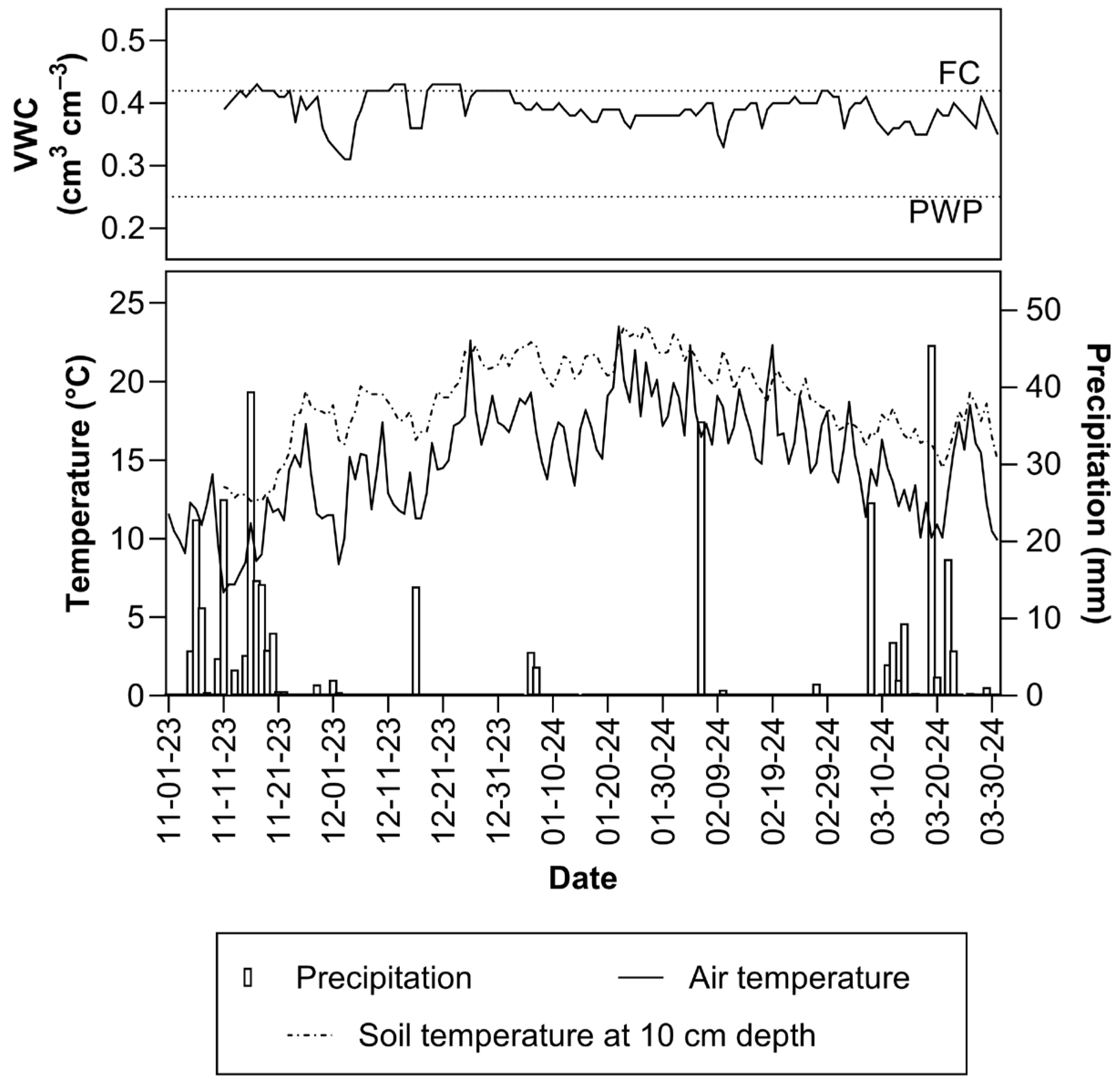
Meteorological records from the on-site weather station indicated a typical seasonal temperature pattern for a temperate environment (Figure 1). Mean air temperature reached 23.5 °C in late January and then declined to below 15 °C by early autumn (March). Minimum temperatures remained above freezing but were low early in the season, reaching 0.6 °C on 12 November 2023. Mean daily soil temperature at 10 cm depth followed a similar trend, with smaller diurnal variation, ranging from approximately 13 °C early in the season to 23 °C in early February.
Cumulative precipitation between November and March totaled 161 mm and occurred primarily at the beginning and end of the growing season. During dry periods, irrigation maintained the soil volumetric water content close to field capacity (Figure 1).

3.2. Vegetative Growth

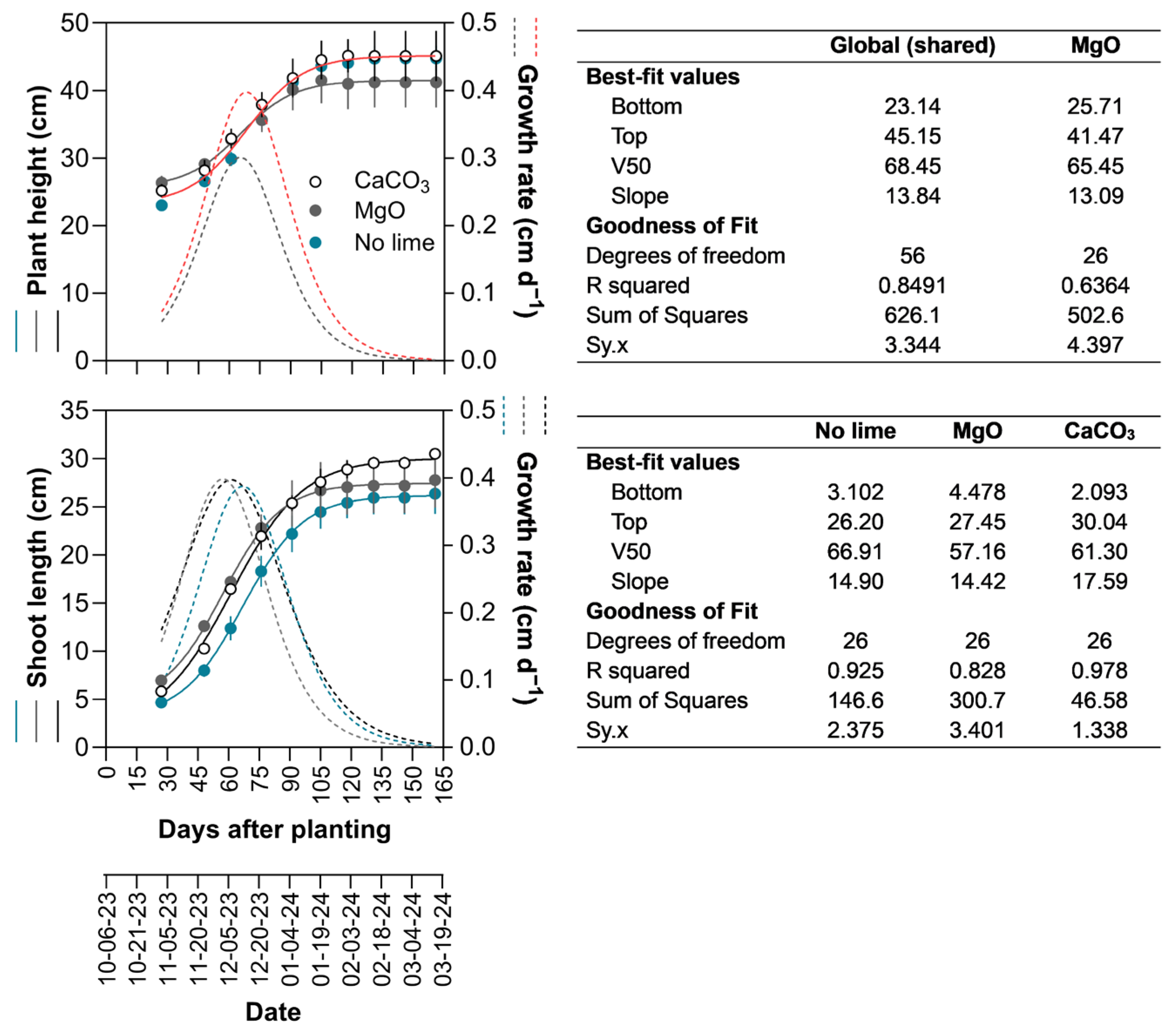
Vegetative growth, expressed as shoot length and plant height, was affected only by soil liming, with no interaction with N source or rate (Figure 2). Separate nonlinear growth curves were required for each shoot-length dataset, reflecting differences in growth dynamics. By the end of the season, plants grown in the CaCO3-limed plot produced longer shoots (30.0 cm) than those in the MgO-limed (27.5 cm) or unlimed plots (26.2 cm). These differences were primarily associated with variations in the duration of the growth period rather than differences in the maximum growth rate (Figure 2).
In contrast, plant height was lower in the MgO-limed plot than in CaCO3-limed or unlimed plots. The latter two datasets were adequately described by a shared curve, indicating similar growth dynamics. Final plant height was greater in the unlimed and CaCO3-limed plots (45.2 cm) than in the MgO-limed plot (41.5 cm), reflecting a reduced growth rate and earlier growth cessation under MgO treatment (Figure 2).

3.3. Nutritional Status

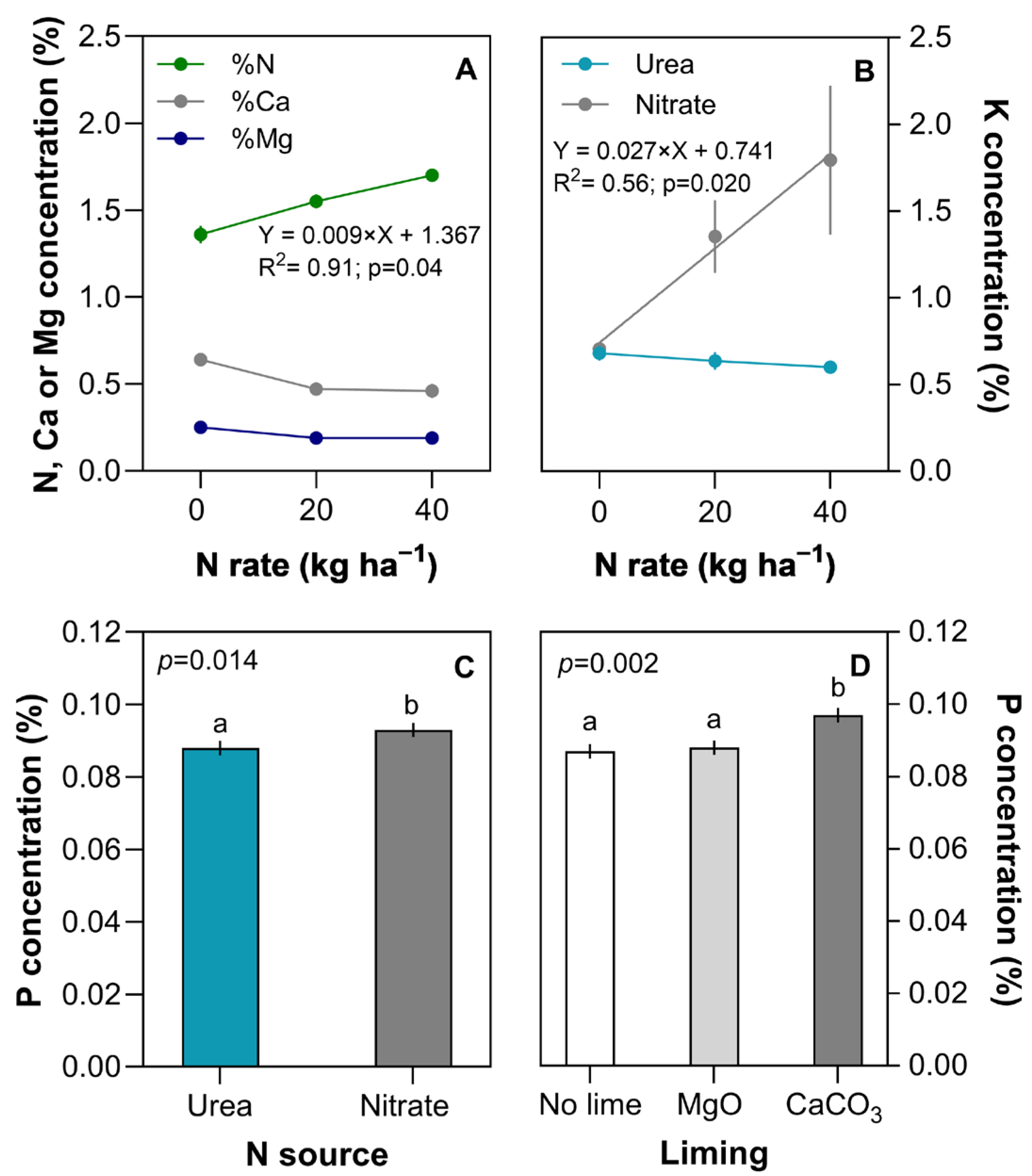
Foliar concentrations of N, Ca, and Mg were significantly affected only by the N rate without significant interactions (Figure 3A). Foliar N concentration increased linearly with increasing N supply, ranging from 1.36% to 1.70% between 0 and 40 kg N ha−1, regardless of the N source. Foliar Ca and Mg concentrations exhibited negative linear trends with increasing N rates; however, the slopes were not significantly different from zero.
Foliar K concentration was influenced by both N source and N rate, with a significant interaction between factors (Figure 3B). Regression analysis showed that K concentration increased with N rate in nitrate-fertilized plants, whereas no significant relationship was observed in urea-fertilized plants.
Foliar P concentration was affected independently by N source and liming (Figure 3C,D). Plants receiving nitrate exhibited higher foliar P levels than those receiving urea. Similarly, the CaCO3-limed plot resulted in a higher foliar P concentration compared with unlimed or MgO-limed plots.
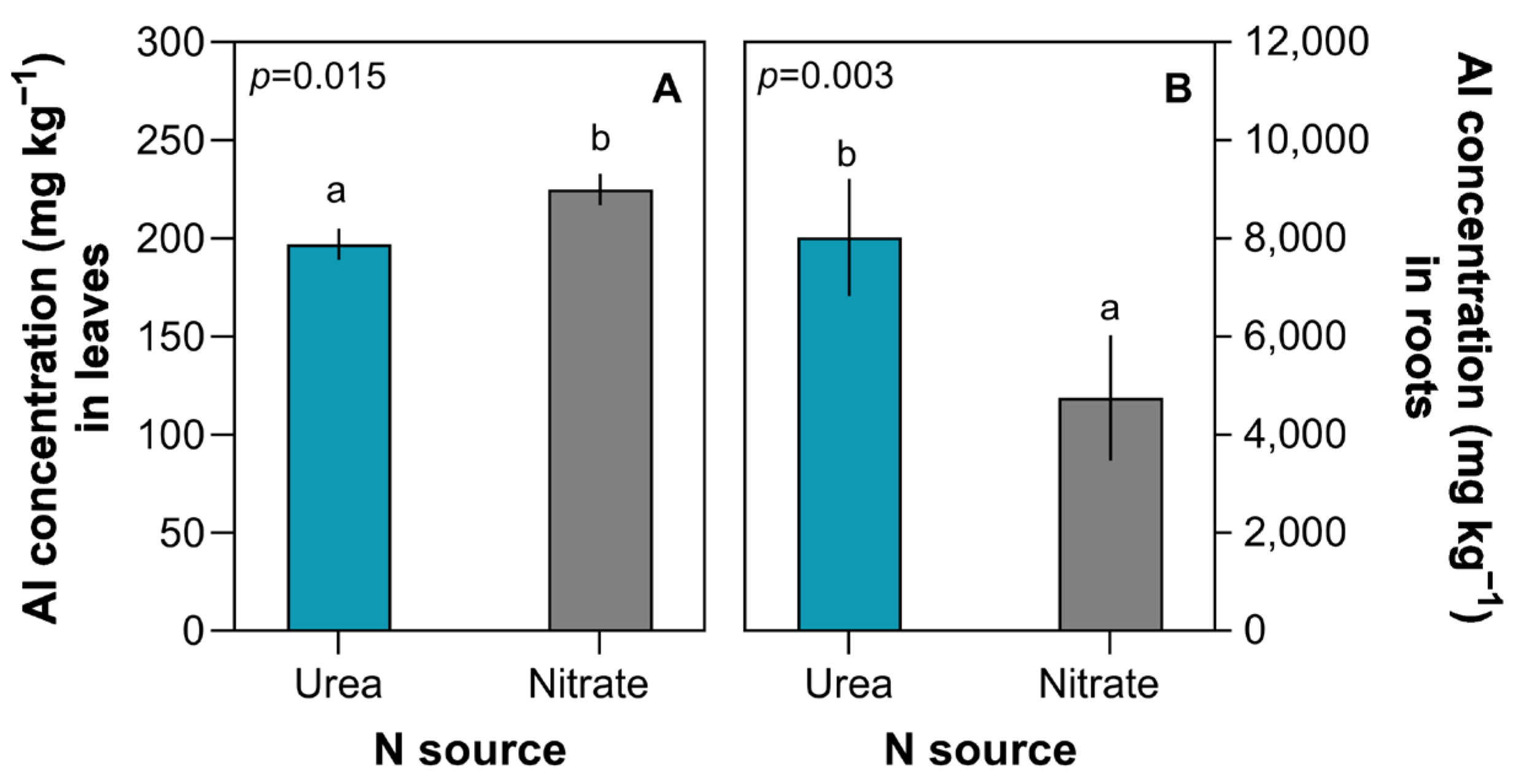
Foliar Al concentration was not influenced by liming but was affected by the N source, with a significant interaction with the N rate (Figure 4A). Overall, plants fertilized with urea showed a lower foliar Al concentration than those fertilized with nitrate (197 vs. 225 mg kg−1). Root analysis in the unlimed plot indicated greater Al accumulation in roots of urea-fertilized plants compared with nitrate-fertilized plants (8024 vs. 4753 mg kg−1; Figure 4B).

3.4. Physiological Status

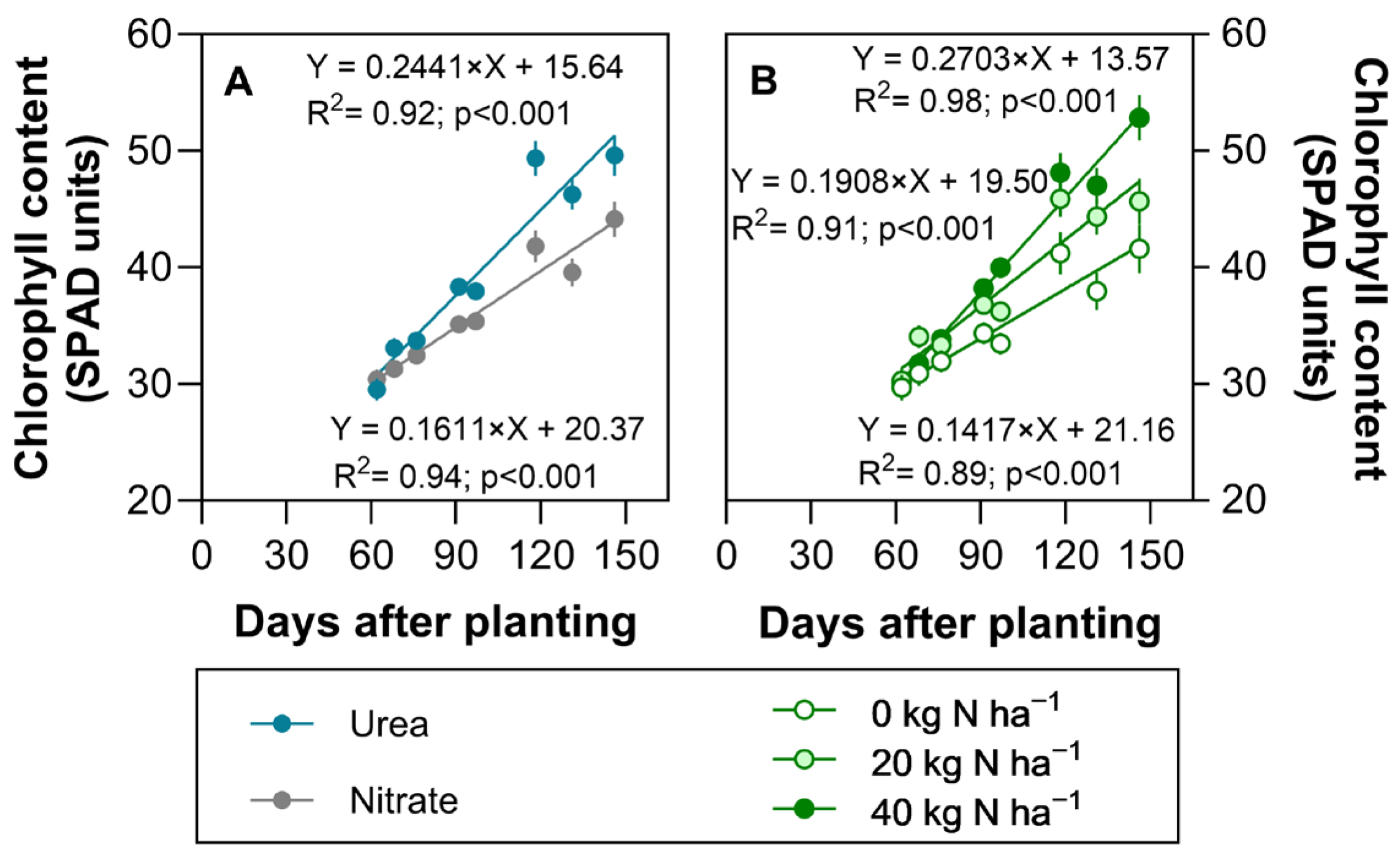
Leaf chlorophyll content (SPAD units) was significantly influenced by the N source and N rate, with no interaction between factors (Figure 5). Regression analysis indicated a linear seasonal increase in SPAD values, with higher values observed for urea-based fertilization (Figure 5A) and for N rates different than zero (Figure 5B).
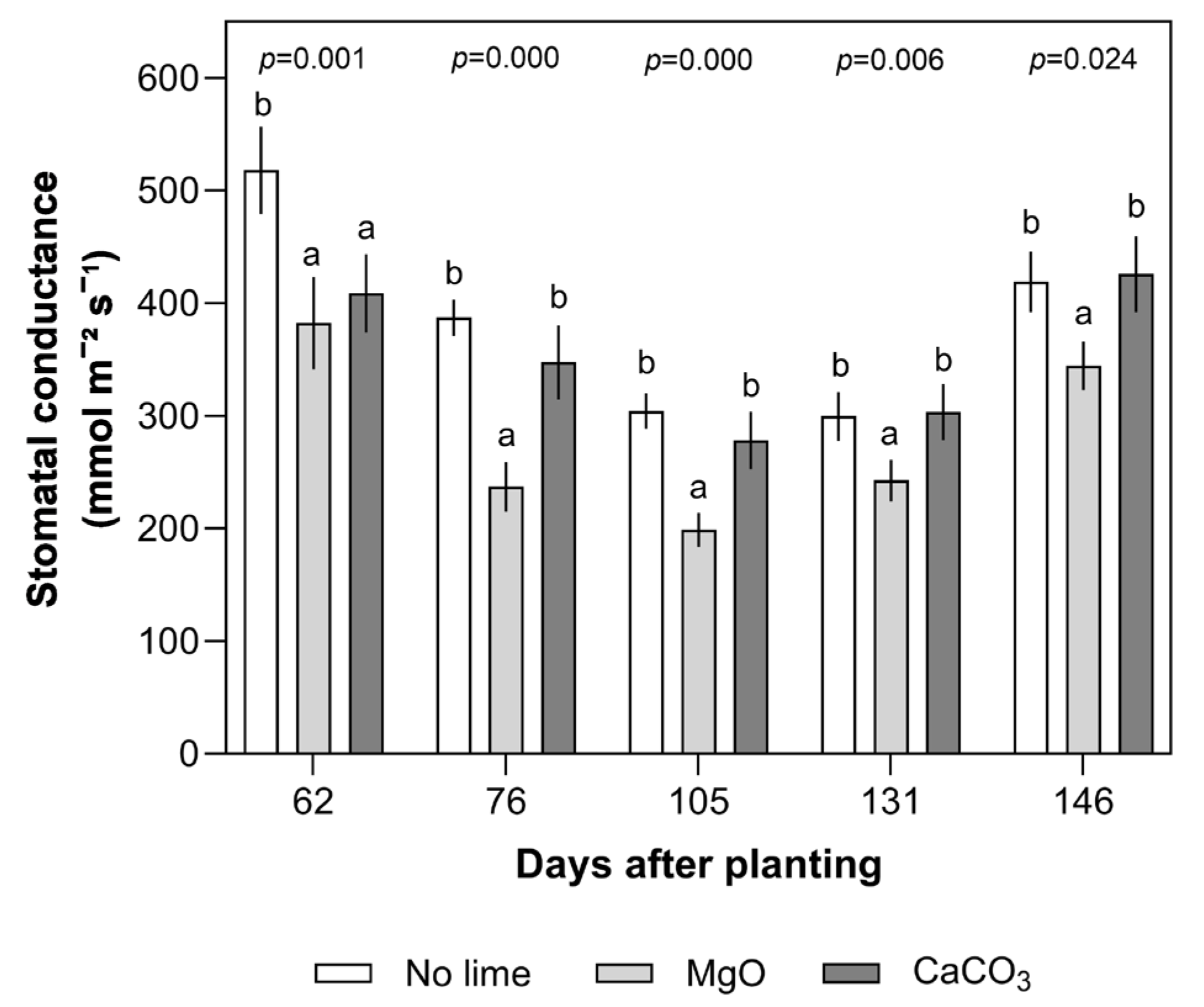
Stomatal conductance was consistently affected by soil liming and N rate throughout the growing season, with no interaction between factors (Figure 6). Plants grown in unlimed or CaCO3-limed plots generally exhibited higher conductance than those in the MgO-limed plot. The only exception occurred early in the season (7 December 2023; 62 days after planting), when conductance was greater under MgO liming. A mid-season decline in conductance was observed across all liming treatments (Figure 6).
None of the experimental factors consistently affected chlorophyll fluorescence expressed as maximum photochemical efficiency of PSII (Fv/Fm), which ranged from 0.69 to 0.83 across measurements. The only significant effect occurred late in the season (14 February 2024; 131 days after planting), when nitrate-fertilized plants exhibited lower Fv/Fm values than urea-fertilized plants (0.72 vs. 0.75; p < 0.01).

4. Discussion

In accordance with what was initially hypothesized, higher N rates were not required to maximize vegetative growth in ‘Blue Ribbon®’ blueberry plants during the first season after planting, regardless of N source or soil liming. These findings confirm that young, non-bearing blueberry plants have a moderate N demand on the order of tens of kg N ha−1 yr−1 [6,29,30]. Indeed, it was reported that the total plant N content in ‘Bluecrop’ at the end of the first growing season ranged from 1559 to 4215 mg plant−1 across N rates, corresponding to approximately 4.3 to 11.7 kg N ha−1 yr−1 when adjusting for planting density [29]. Similarly, another study estimated a net requirement of 34.8 kg N ha−1 for the same plants over the two first growing seasons, including the first fruit harvest [6].
The experimental soil was volcanic with high organic matter content (17.8%), and plant N demand was likely met largely through soil net N mineralization. This process would have been favored by mild soil temperatures (13 °C to 23 °C; Figure 1) and moist conditions during the experimental period [31]. For example, in a Chilean Andisol with similar properties, N mineralization reached 218 kg NH4+-N ha−1 yr−1, even without irrigation or recent N fertilization [32]. Consistently, Ref. [33] highlighted that mineralization from organic matter substantially contributes to N in mature blueberry systems, reducing the responsiveness to fertilizer inputs even under low organic matter conditions Thus, the combination of a modest N demand and high soil mineralization plausibly explains the lack of a vegetative growth response to N source and rate.
In contrast, soil liming affected shoot length and plant height with improved performance in the CaCO3-limed plot. This likely reflects both enhanced soil pH and reduced Al availability, as well as increased Ca availability (Table 1). Although MgO produced a comparable acidity correction, it resulted in lower Ca and higher Mg levels in soil (Table 1). Blueberry, a calcifuge species, typically exhibits relatively low foliar Ca concentrations yet maintains adequate growth through efficient uptake and use [12,22]. However, nutritional imbalances may arise when Ca and other elements dominate. While Ca-Mg antagonism for uptake has not been documented specifically in blueberry, excessive Mg has been shown to impair K+ and Ca2+ uptake in tomato and cucumber [34,35]. In the present study, foliar Ca and Mg concentrations were unaffected by soil liming, yet plants in the MgO-limed plot exhibited reduced height due to slower growth rates and earlier cessation of elongation (Figure 2). Comparable growth retardation has been observed in cucumber under Mg excess, attributed to physiological stress affecting photosynthesis [36]. Although maximum PSII efficiency (Fv/Fm) was not reduced here, potential sublethal effects cannot be excluded and warrant further study.
The influence of experimental factors on foliar nutrient concentration varied among elements. Leaf N concentration increased linearly with N rate and was unaffected by the N source or liming. Concentrations were within a sufficient range at non-zero rates but deficient at 0 kg N ha−1 according to guidelines for mature northern highbush blueberry in Oregon, USA (1.76% to 2.00% [8]). Given that growth responses to increasing N rate were absent, indicating that the growth was not N-limited [37], current sufficiency thresholds may require adjustment for plant age and regional conditions [38]. Unexpectedly, higher soil Ca and Mg availability and lower Al levels in limed plots (Table 1) were not reflected in foliar concentrations (Figure 3A and Figure 4A). Instead, Ca and Mg exhibited negative trends with increasing N rates, independent of the N form (Figure 3A). This pattern contrasts with general models of cation–anion uptake balance [39], although such effects are typically demonstrated under hydroponic conditions. Even more, nitrification of NH4+ from urea decomposition would have been favored by mild, moist and well-aerated conditions of the soil (3–14 days after NH4+ liberation [13]), which should have stimulated Ca and Mg uptake [39,40]. These effects were not observed in this experiment.
Foliar Al concentration was influenced by the N source, with lower values under urea fertilization (Figure 4A). Concentrations were comparable to those reported for both sensitive and relatively resistant cultivars exposed to Al in hydroponic systems [41,42]. Plants with a lower foliar Al concentration (urea-fertilized) also showed higher chlorophyll content (Figure 5A), yet no differences in Fm/Fv were observed, consistent with evidence that this parameter may lack sensitivity to Al stress [41]. Other photosynthetic indicators like effective quantum yield of PSII, electron transport rate or non-photochemical quenching, not measured here, may provide greater sensitivity. The absence of stomatal conductance differences between N sources (Figure 6) further suggests a degree of tolerance in ‘Blue Ribbon®’, similar to responses reported in newer cultivars under short-term Al exposure [41].
Foliar K increased linearly with nitrate fertilization due to the use of potassium nitrate as NO3 source, whereas no such trend occurred with urea (Figure 3B). Elevated foliar K should not confound interpretation because soil K was previously corrected to sufficient levels and growth responses remained absent [37]. Foliar P concentrations were higher under nitrate nutrition and CaCO3 liming (Figure 3C,D). The increase associated with nitrate may reflect synergistic uptake interactions linked to enhanced K acquisition, as observed in grapevine [43]. Again, the adequate soil P status and lack of growth response suggest that these shifts were nutritionally non-limiting.
Al tolerance involves both restricted uptake and limited translocation to shoots [15,44]. In this context, several findings indicate that ‘Blue Ribbon®’ plants accumulate Al primarily in the root, restricting translocation to the aerial organs: (i) foliar Al was unaffected by liming despite wide variations in soil Al availability (Table 1); (ii) in unlimed conditions, urea-fertilized plants exhibited lower foliar but higher root Al concentrations, with less variability observed in the leaves than in the roots (Figure 4); and, (iii) root Al concentrations exceeded those in the leaves by more than 20-fold (Figure 4). It should be noted that root-level responses were assessed only in the no-lime treatment, representing conditions of maximal Al availability; therefore, potential bias cannot be excluded, and extrapolation across liming treatments should be made with caution pending further validation.
The Al partitioning observed for blueberry plants (Figure 4) is consistent with patterns reported in sweet cherry and citrus [21,44]. This behavior would be explained by Al binding to negatively charged carboxylic groups in the pectin matrix of the root cell [18], and exclusion through organic acid exudation to the rhizosphere where they chelate Al ions, forming non-toxic compounds that are not readily taken up by roots [19,45]. In fact, blueberry studies showed that the root exudation of oxalate plays an important role in the Al resistance of highbush blueberry genotypes [20], although it does not necessarily correspond with reduced shoot Al accumulation [41], leaving the mechanistic interpretation unresolved.
Specifically, the present study suggests that urea nutrition partially alleviated Al stress in young ‘Blue Ribbon®’ blueberry plants by limiting shoot Al accumulation while promoting retention in the roots. This response, contrary to the initial hypothesis, may be tentatively explained by processes that were not directly assessed in this study. Potential mechanisms could include transient rhizosphere alkalinization during urea hydrolysis [46], as well as ammonium-mediated alterations in root cell surface charge or Al-binding sites [47,48]. Analogous nutrient–metal interactions have been described for cadmium, where ammonium-regulated signaling pathways enhance antioxidant activity and reduce metal accumulation [49]. Whether comparable molecular pathways operate in blueberry remains to be elucidated. However, these findings support a role for ammonium-driven physiological and molecular processes in modulating metal stress.
On the other hand, the use of potassium nitrate as the NO3 source in the nitrate treatment, without balancing K inputs in urea-fertilized plants, may represent a limitation of the experimental design, despite soil K levels being within a sufficient range. The higher foliar K concentrations observed under nitrate fertilization indicate that K supply was indeed increased in these plants and may have exerted a measurable nutritional effect. To address this potential confounding factor, supplemental K was applied to urea-fertilized plants in subsequent growing seasons. To our knowledge there is no direct evidence indicating that K interferes with Al uptake and transport. In contrast, the literature consistently demonstrates that Al toxicity reduces K uptake by impairing the function of K transport proteins [50,51]. However, the possibility of K displacement or competition with Al for binding sites on the root cell wall or on the plasma membrane cannot be entirely excluded, as has been reported for other cations such as Mg+2 [52] and Ca+2 [53]. Nevertheless, such interactions are less likely in the case of K+ and Al+3 due to the greater differences in charge and hydrated ionic radius between these ions [39,54,55]. Therefore, the lower Al concentration observed in the roots of plants fertilized with potassium nitrate are more likely attributable to the effect of nitrate rather than to the K supply.

5. Conclusions

Overall, N fertilization exerted a limited influence on the vegetative growth of highbush blueberry plants during the first growing season, likely reflecting substantial soil N mineralization, whereas liming and N form affected mineral nutrition and Al partitioning. Specifically, urea fertilization was associated with greater Al retention in roots and lower Al concentrations in shoots compared with nitrate supply. These results are consistent with the hypothesis that early-stage blueberry plants have relatively low N requirements but do not support the hypothesis that urea-based fertilization enhances Al phytotoxicity. While the underlying mechanisms were not directly assessed, the observed patterns suggest that N form may influence Al dynamics at the plant level under conditions of high Al availability. Therefore, these findings contribute to a broader understanding of nutrient–metal interactions in Andisols and indicate that N form could be a relevant factor to consider in the management of Al stress in perennial fruit crops, although further studies are required to confirm these responses and elucidate the mechanisms involved.

Supplementary Materials

The following supporting information can be downloaded at: https://www.mdpi.com/article/10.3390/agronomy16080842/s1, Dataset S1: Table S1: Soil analysis data; Table S2: Foliar analysis data; Table S3: Root analysis data; Table S4: Plant height data; Table S5: Shoot length data; Table S6: Leaf chlorophyll content data; Table S7: Stomatal conductance data; Table S8: Fm/Fv data.

Author Contributions

Conceptualization, C.B., M.I.A. and P.A.; Methodology, C.B., M.I.A. and P.A.; Field Experimentation, P.F. and P.A.; Formal Analysis, C.B. and P.A.; Investigation, M.I.A., P.F. and P.A.; Resources, C.B.; Data Curation, P.A.; Writing—Original Draft Preparation, P.A.; Writing—Review and Editing, C.B., M.I.A. and P.F.; Supervision, C.B.; Project Administration, M.I.A.; Funding Acquisition, C.B. All authors have read and agreed to the published version of the manuscript.

Funding

This research was funded by Agencia Nacional de Investigación y Desarrollo (ANID), through the Fondo Nacional de Desarrollo Científico y Tecnológico (FONDECYT), Chile, grant number 1231665.

Data Availability Statement

The data presented in this study are available in the Supplementary Material (Dataset S1).

Acknowledgments

The authors gratefully acknowledge the expert assistance of the technical staff of the Experimental Station of the Universidad Austral de Chile.

Conflicts of Interest

The authors declare no conflicts of interest.

References

  1. International Blueberry Organization. Global State of the Blueberry Industry Report 2025; International Blueberry Organization: El Dorado Hills, CA, USA, 2025; Available online: https://www.internationalblueberry.org/2025-report/ (accessed on 11 February 2026).
  2. Pinochet, D.; Artacho, P.; Maraboli, A. Manual de Fertilización de Arándanos Cultivados en el sur de Chile; America Printing Press: Valdivia, Chile, 2014. [Google Scholar]
  3. Dörner, J.; Dec, D.; Peng, X.; Horn, R. Effect of Land Use Change on the Dynamic Behaviour of Structural Properties of an Andisol in Southern Chile under Saturated and Unsaturated Hydraulic Conditions. Geoderma 2010, 159, 189–197. [Google Scholar] [CrossRef]
  4. Takahashi, T.; Dahlgren, R.A. Nature, Properties and Function of Aluminum-Humus Complexes in Volcanic Soils. Geoderma 2016, 263, 110–121. [Google Scholar] [CrossRef]
  5. Takahashi, T. The Diversity of Volcanic Soils: Focusing on the Function of Aluminum–Humus Complexes. Soil Sci. Plant Nutr. 2020, 66, 666–672. [Google Scholar] [CrossRef]
  6. Bryla, D.R.; Strik, B.C.; Bañados, M.P.; Righetti, T.L. Response of Highbush Blueberry to Nitrogen Fertilizer during Field Establishment-II. Plant Nutrient Requirements in Relation to Nitrogen Fertilizer Supply. HortScience 2012, 47, 917–926. [Google Scholar] [CrossRef]
  7. Hanson, E.J.; Retamales, J.B. Effect of Nitrogen Source and Timing on Highbush Blueberry Performance. HortScience 1992, 27, 1265–1267. [Google Scholar] [CrossRef]
  8. Hart, J.; Strik, B.; White, L.; Yang, W.; Hart, J. Nutrient Management for Blueberries in Oregon; Oregon State University Extension Service: Corvallis, OR, USA, 2006; EM 8918; Available online: https://ir.library.oregonstate.edu/concern/open_educational_resources/08612n997 (accessed on 11 February 2026).
  9. Zhang, X.; Li, S.; An, X.; Song, Z.; Zhu, Y.; Tan, Y.; Guo, X.; Wang, D. Effects of Nitrogen, Phosphorus and Potassium Formula Fertilization on the Yield and Berry Quality of Blueberry. PLoS ONE 2023, 18, e0283137. [Google Scholar] [CrossRef]
  10. Poonnachit, U.; Darnell, R. Effect of Ammonium and Nitrate on Ferric Chelate Reductase and Nitrate Reductase in Vaccinium Species. Ann. Bot. 2004, 93, 399–405. [Google Scholar] [CrossRef]
  11. Xu, J.; Fang, Y.; Tavakkoli, E.; Pan, X.; Liao, F.; Chen, W.; Guo, W. Preferential Ammonium: Nitrate Ratio of Blueberry Is regulated by Nitrogen Transport and Reduction Systems. Sci. Hortic. 2021, 288, 110345. [Google Scholar] [CrossRef]
  12. Doyle, J.W.; Nambeesan, S.U.; Malladi, A. Physiology of Nitrogen and Calcium Nutrition in Blueberry. Agronomy 2021, 11, 765. [Google Scholar] [CrossRef]
  13. Norton, J.; Ouyang, Y. Controls and Adaptive Management of Nitrification in Agricultural Soils. Front. Microbiol. 2019, 10, 1931. [Google Scholar] [CrossRef]
  14. Schroder, J.L.; Zhang, H.; Girma, K.; Raun, W.R.; Penn, C.J.; Payton, M.E. Soil Acidification from Long-Term Use of Nitrogen Fertilizers on Winter Wheat. Soil Sci. Soc. Am. J. 2011, 75, 957–964. [Google Scholar] [CrossRef]
  15. Chen, L.S.; Yang, L.T.; Guo, P.; Jiang, H.X.; Tang, N. Aluminum Toxicity and Fruit Nutrition. In Fruit Crops: Diagnosis and Management of Nutrient Constraints; Srivastava, A.K., Hu, C., Eds.; Elsevier: Amsterdam, The Netherlands, 2020; pp. 223–240. [Google Scholar] [CrossRef]
  16. Kinraide, T.B. Identity of the Rhizotoxic Aluminium Species. Plant Soil 1991, 134, 167–178. [Google Scholar] [CrossRef]
  17. von Uexküll, H.R.; Mutert, E. Global Extent, Development and Economic Impact of Acid Soils. Plant Soil 1995, 171, 1–15. [Google Scholar] [CrossRef]
  18. Horst, W.J.; Wang, Y.; Eticha, D. The Role of the Root Apoplast in Aluminium-Induced Inhibition of Root Elongation and in Aluminium Resistance of Plants: A Review. Ann. Bot. 2010, 106, 185–197. [Google Scholar] [CrossRef] [PubMed]
  19. Kochian, L.V.; Hoekenga, O.A.; Piñeros, M.A. How Do Crop Plants Tolerate Acid Soils? Mechanisms of Aluminum Tolerance and Phosphorous Efficiency. Annu. Rev. Plant Biol. 2004, 55, 459–493. [Google Scholar] [CrossRef]
  20. Cárcamo-Fincheira, P.; Reyes-Díaz, M.; Omena-García, R.P.; Vargas, J.R.; Alvear, M.; Florez-Sarasa, I.; Rosado-Souza, L.; Rengel, Z.; Fernie, A.R.; Nunes-Nesi, A.; et al. Metabolomic Analyses of Highbush Blueberry Cultivars Revealed Mechanisms of Resistance to Aluminum Toxicity. Environ. Exp. Bot. 2021, 183, 104338. [Google Scholar] [CrossRef]
  21. Guo, P.; Qi, Y.P.; Cai, Y.T.; Yang, T.Y.; Yang, L.T.; Huang, Z.R.; Chen, L.S. Aluminum Effects on Photosynthesis, Reactive Oxygen Species and Methylglyoxal Detoxification in Two Citrus Species Differing in Aluminum Tolerance. Tree Physiol. 2018, 38, 1548–1565. [Google Scholar] [CrossRef]
  22. Korcak, R.F. Nutrition of Blueberry and Other Calcifuges. Hortic. Rev. (Am. Soc. Hortic. Sci.) 1988, 10, 183–227. [Google Scholar] [CrossRef]
  23. Dhanyasree, K.; Rafeekher, M.; Premachandran, A. Abiotic Stress Management in Fruit Crops: A Review. Agric. Rev. 2025, 46, 451–456. [Google Scholar] [CrossRef]
  24. Kottek, M.; Grieser, J.; Beck, C.; Rudolf, B.; Rubel, F. World Map of the Köppen-Geiger Climate Classification Updated. Meteorol. Z. 2006, 15, 259–263. [Google Scholar] [CrossRef]
  25. Santibáñez, F.; Santibáñez, P.; Caroca, C.; González, P. Atlas Agroclimático de Chile: Estado Actual y Tendencias Del Clima. Tomo V: Regiones de Los Ríos y Los Lagos; Centro de Agricultura y Medioambiente (AGRIMED), Universidad de Chile: Santiago, Chile, 2017. [Google Scholar]
  26. Centro de Información de Recursos Naturales (CIREN). Estudio Agrológico de La X Región: Descripciones de Suelos, Materiales y Símbolos; Centro de Información de Recursos Naturales: Santiago, Chile, 2003. [Google Scholar]
  27. Sadzawka, A.; Grez, R.; Carrasco, M.A.; Mora, M. Métodos Recomendados Para Suelos Chilenos; Comisión Nacional de Normalización y Acreditación, Sociedad Chilena de la Ciencia del Suelo: Santiago, Chile, 2006. [Google Scholar]
  28. Logan, B.A.; Adams, W.W.; Demmig-Adams, B. Viewpoint: Avoiding Common Pitfalls of Chlorophyll Fluorescence Analysis under Field Conditions. Funct. Plant Biol. 2007, 34, 853–859. [Google Scholar] [CrossRef]
  29. Bañados, P.; Strik, B.; Righetti, T. The Uptake and Use Of 15N-Nitrogen in Young and Mature Field-Grown Highbush Blueberries. Acta Hortic. 2006, 715, 357–364. [Google Scholar] [CrossRef]
  30. Fang, Y.; Williamson, J.; Darnell, R.; Li, Y.; Liu, G. Nitrogen Uptake and Allocation at Different Growth Stages of Young Southern Highbush Blueberry Plants. HortScience 2017, 52, 905–909. [Google Scholar] [CrossRef]
  31. Wang, C.; Wan, S.; Xing, X.; Zhang, L.; Han, X. Temperature and Soil Moisture Interactively Affected Soil Net N Mineralization in Temperate Grassland in Northern China. Soil Biol. Biochem. 2006, 38, 1101–1110. [Google Scholar] [CrossRef]
  32. Martínez-Lagos, J.; Salazar, F.; Alfaro, M.; Rosas, M.; Macías, F. Nitrogen Mineralization in a Silandic Andosol Fertilized with Dairy Slurry and Urea. J. Soil Sci. Plant Nutr. 2015, 15, 60–75. [Google Scholar] [CrossRef]
  33. Sloan, C.; DeVetter, L.W.; Griffin-LaHue, D.; Benedict, C.; Bryla, D.R.; LaHue, G.T. Nitrogen Supply from Soil Organic Matter: Predictors and Implications for Recommended Nitrogen Application Rates in Northern Highbush Blueberry. HortScience 2024, 59, 725–735. [Google Scholar] [CrossRef]
  34. Ahmed, N.; Zhang, B.; Bozdar, B.; Chachar, S.; Rai, M.; Li, J.; Li, Y.; Hayat, F.; Chachar, Z.; Tu, P. The Power of Magnesium: Unlocking the Potential for Increased Yield, Quality, and Stress Tolerance of Horticultural Crops. Front. Plant Sci. 2023, 14, 1285512. [Google Scholar] [CrossRef]
  35. Qu, S.; Li, H.; Zhang, X.; Gao, J.; Ma, R.; Ma, L.; Ma, J. Effects of Magnesium Imbalance on Root Growth and Nutrient Absorption in Different Genotypes of Vegetable Crops. Plants 2023, 12, 3518. [Google Scholar] [CrossRef]
  36. Xie, X.Y.; Liu, H.T.; Cheng, Z.W. Effects of Magnesium Stress on Photosynthetic Character of Cucumber in Greenhouse. China Veg. 2009, 6, 36–40. [Google Scholar]
  37. Römheld, V. Diagnosis of Deficiency and Toxicity of Nutrients. In Marschner’s Mineral Nutrition of Higher Plants; Marschner, P., Ed.; Academic Press: London, UK, 2012; pp. 299–312. [Google Scholar]
  38. Retamales, J.B.; Hancock, J.F. Blueberries; CABI: Wallingford, UK, 2018. [Google Scholar]
  39. White, P.J. Ion Uptake Mechanisms of Individual Cells and Roots: Short-Distance Transport. In Marschner’s Mineral Nutrition of Higher Plants; Academic Press: London, UK, 2012; pp. 7–47. [Google Scholar]
  40. Van Beusichem, M.L.; Kirkby, E.A.; Baas, R. Influence of Nitrate and Ammonium Nutrition on the Uptake, Assimilation, and Distribution of Nutrients in Ricinus communis. Plant Physiol. 1988, 86, 914–921. [Google Scholar] [CrossRef]
  41. Cárcamo, M.P.; Reyes-Díaz, M.; Rengel, Z.; Alberdi, M.; Omena-Garcia, R.P.; Nunes-Nesi, A.; Inostroza-Blancheteau, C. Aluminum Stress Differentially Affects Physiological Performance and Metabolic Compounds in Cultivars of Highbush Blueberry. Sci. Rep. 2019, 9, 11275. [Google Scholar] [CrossRef] [PubMed]
  42. Reyes-Díaz, M.; Inostroza-Blancheteau, C.; Millaleo, R.; Cruces, E.; Wulff-Zottele, C.; Alberdi, M.; De La, M.; Mora, L. Long-Term Aluminum Exposure Effects on Physiological and Biochemical Features of Highbush Blueberry Cultivars. J. Am. Soc. Hortic. Sci. 2010, 135, 212–222. [Google Scholar] [CrossRef]
  43. Hu, W.; Wang, J.; Deng, Q.; Liang, D.; Xia, H.; Lin, L.; Lv, X. Effects of Different Types of Potassium Fertilizers on Nutrient Uptake by Grapevine. Horticulturae 2023, 9, 470. [Google Scholar] [CrossRef]
  44. Bonomelli, C.; Artacho, P. Aluminum Toxicity in Sweet Cherry Trees Grown in an Acidic Volcanic Soil. Agronomy 2021, 11, 1259. [Google Scholar] [CrossRef]
  45. Kochian, L.V.; Piñeros, M.A.; Liu, J.; Magalhaes, J.V. Plant Adaptation to Acid Soils: The Molecular Basis for Crop Aluminum Resistance. Annu. Rev. Plant Biol. 2015, 66, 571–598. [Google Scholar] [CrossRef]
  46. Qing-Ru, Z.; Bo-Han, L.; Li-Tian, Z.; Xi-Hong, Z.; Hong-Xiao, T. Short-Term Alleviation of Aluminum Phytotoxicity by Urea Application in Acid Soils from South China. Chemosphere 2006, 63, 860–868. [Google Scholar] [CrossRef]
  47. Zhao, X.Q.; Shen, R.F. Aluminum–Nitrogen Interactions in the Soil–Plant System. Front. Plant Sci. 2018, 9, 807. [Google Scholar] [CrossRef]
  48. Shilpha, J.; Song, J.; Jeong, B.R. Ammonium Phytotoxicity and Tolerance: An Insight into Ammonium Nutrition to Improve Crop Productivity. Agronomy 2023, 13, 1487. [Google Scholar] [CrossRef]
  49. Di, D.W.; Li, T.T.; Yu, Z.L.; Cheng, J.; Wang, M.; Liu, C.F.; Wang, Y.; Kronzucker, H.J.; Yu, M.; Shi, W. Ammonium Mitigates Cadmium Toxicity by Activating the BZIP20-APX2/CATA Transcriptional Module in Rice Seedlings in an ABA-Dependent Manner. J. Hazard. Mater. 2024, 480, 135874. [Google Scholar] [CrossRef]
  50. Kar, D.; Pradhan, A.A.; Datta, S. The role of solute transporters in aluminum toxicity and tolerance. Physiol. Plant. 2021, 171, 638–652. [Google Scholar] [CrossRef]
  51. Ofoe, R.; Thomas, R.H.; Asiedu, S.K.; Wang-Pruski, G.; Fofana, B.; Abbey, L. Aluminum in plant: Benefits, toxicity and tolerance mechanisms. Front. Plant Sci. 2023, 13, 1085998. [Google Scholar] [CrossRef]
  52. Bose, J.; Babourina, O.; Rengel, Z. Role of magnesium in alleviation of aluminium toxicity in plants. J. Exp. Bot. 2011, 62, 2251–2264. [Google Scholar] [CrossRef]
  53. Postma, J.W.; Keltjens, W.G.; Van Riemsdijk, W.H. Calcium-(organo) aluminum-proton competition for adsorption to tomato root cell walls: Experimental data and exchange model calculations. Environ. Sci. Technol. 2005, 39, 5247–5254. [Google Scholar] [CrossRef]
  54. Grauer, U.E.; Horst, W.J. Modeling cation amelioration of aluminum phytotoxicity. Soil Sci. Soc. Am. J. 1992, 56, 166–172. [Google Scholar] [CrossRef]
  55. Shomer, I.; Novacky, A.J.; Pike, S.M.; Yermiyahu, U.; Kinraide, T.B. Electrical potentials of plant cell walls in response to the ionic environment. Plant Physiol. 2003, 133, 411–422. [Google Scholar] [CrossRef]
Figure 1. Daily data of volumetric water content (VWC) at 10 cm depth, precipitation, and air and soil temperature at 10 cm depth at the experimental site (Valdivia, Chile). FC, field capacity; PWP, permanent wilting point.
Agronomy 16 00842 g001
Figure 2. Effect of soil liming on plant height and shoot length in blueberry plants during first growing season. Continuous lines indicate sigmoidal curve fitted to each data set (Y = Bottom + (Top − Bottom)/(1 + exp((V50 − X)/Slope)). The dotted lines indicate the first derivative of fitted curves or the growth rate. Red line indicates that a single curve (global or shared) was suitable for two data sets (no lime and CaCO3). Source data are available in Supplementary Dataset S1.
Agronomy 16 00842 g002
Figure 3. Effects of the experimental factors on foliar nutrient concentration in blueberry plants during first growing season. (A) N rate on N, Ca and Mg concentration, (B) N rate × N source on K concentration, (C) N source and (D) soil liming on P concentration. Different letters indicate significant differences between N source or soil liming (Tukey’s test, p ≤ 0.05). Source data are available in Supplementary Dataset S1.
Agronomy 16 00842 g003
Figure 4. Effects of N source on (A) foliar Al concentration and (B) root Al concentration in blueberry plants during first growing season. Different letters indicate significant differences between N sources (Tukey’s test, p ≤ 0.05). Note the different x-scale for each figure. Source data are available in Supplementary Dataset S1.
Agronomy 16 00842 g004
Figure 5. Effects of (A) N source and (B) N rate on chlorophyll content in blueberry plants during the first growing season. Different color lines indicate lines fitted to each data set. Source data are available in Supplementary Dataset S1.
Agronomy 16 00842 g005
Figure 6. Effects of soil liming on stomatal conductance in blueberry plants during first growing season. Different letters for a given sampling time indicate significant differences between soil liming treatments (Tukey’s test, p ≤ 0.05). Source data are available in Supplementary Dataset S1.
Agronomy 16 00842 g006
Table 1. Soil analysis (0–20 cm depth) before trial establishment (May 2023) and three months after liming and basal fertilization (December 2023).
Soil VariablesPre-Planting
(May 2023)
After Planting (December 2023)
No Lime
Plot
CaCO3-Limed PlotMgO-Limed Plot
Organic matter (%)17.816.317.017.3
pH water (1:2.5)5.605.565.776.11
pH CaCl24.724.775.105.45
Olsen-P (mg kg−1)12333539
K (mg kg−1)166185233256
Ca (cmol kg−1)1.482.135.182.49
Mg (cmol kg−1)0.631.111.337.46
Na (cmol kg−1)0.080.120.110.13
Exchangeable Al (cmol kg−1)0.520.350.130.08
Al saturation (%)16.618.301.760.74
B (mg kg−1)0.533.094.934.88
Zn (mg kg−1)0.630.771.360.99
Extractable Al (mg kg−1)1665151515431393
Disclaimer/Publisher’s Note: The statements, opinions and data contained in all publications are solely those of the individual author(s) and contributor(s) and not of MDPI and/or the editor(s). MDPI and/or the editor(s) disclaim responsibility for any injury to people or property resulting from any ideas, methods, instructions or products referred to in the content.