1. Introduction
The rapid growth of the world’s population is accompanied by a number of problems, such as climate change, the degradation of arable lands and the growing pressure on the world’s natural resources [
1]. The global community is focused on the dual challenge of ensuring the world’s food supply while maintaining a healthy planet [
2]. The adoption of precision agriculture is meant to meet these challenges by advancing flexible crop management based on the capabilities of advanced sensors, analytics and decision support technologies [
3]. The goal of precision agriculture is to enhance productivity and profitability while decreasing the negative impact of agriculture by optimizing input, including water, fertilizers and pesticides, based on the heterogeneity of a given area over time and space [
4]. The optimization of the various inputs is the core of the different planning technologies. Remote sensing, as one of the varied planning technologies, provides an effective means of collecting data about an agricultural system [
5]. In the growing area of agricultural remote sensing, there are many different types of systems, such as satellite missions (including Landsat and Sentinel), unmanned aerial vehicles (UAVs) and various proximal sensors, each with the potential to provide the different types of data (multispectral, hyperspectral, thermal and radar) necessary to evaluate a crop and determine the level of water stress in the soil and the crops [
6,
7].
Such data is becoming more advanced and complex, which has encouraged the use of machine learning and, more recently, deep learning in agricultural research [
8]. These methods work well for classifying crops [
9,
10,
11], estimating yields and detecting diseases [
12,
13], as well as for digital soil mapping [
14,
15,
16]. These approaches provided capabilities for learning complex relationships, including spectral and temporal models. There has also been a rising interest in deep learning methods, including Convolutional Neural Networks, recurrent neural networks and transformer-based architectures [
17,
18]. Currently, deep learning methods are the most advanced for large datasets, also being the most able to capture attributes that are both spatial and temporal [
19]. These methods have been successfully used for estimation and prediction tasks for biomass and yield forecasting and for detecting the phenological stages and mapping the crop types [
20]. However, studies that compared machine and deep learning for the same objectives produced mixed results on the relative superiority of either of these methods, claiming that their performance heavily depends on the properties and quantity of input datasets [
21]. While deep learning models have the potential to be refined to achieve high predictive accuracy, they are often limited by their computational requirements, as well as their complexities, to be adopted in agricultural systems [
22]. Moreover, the use of deep learning and machine learning techniques in the agricultural sector, particularly in the use of remote sensing for crop monitoring, raises concerns regarding the quality and generalization of models, as well as the practicality of their implementation [
23,
24]. To address the questions of model generalizability and transferability, there have been studies that focus on both spatial and temporal scales and situational aspects, such as the growing conditions, the variety of the crops and the different geographic locations [
25,
26].
Many studies in precision agriculture aimed to understand the synergy of optical and radar data, the integration of weather and soil data and the application of data in multiple time periods and at different scales [
8,
27]. Model transparency and the use of artificial intelligence for actionable insights in agriculture have been addressed more through the evolving fields of interpretable machine learning [
28]. A rapid increase in the number of published studies has both advantages and disadvantages, as an increase in published materials makes synthesizing them all and studying the advancements more difficult. This is the fragmented state, in which the literature and studies of the different data sources, their algorithms, multiple scientific applications and how they were assessed are currently located. The use of bibliometric analysis is an effective way to detect and quantify these areas and many of the challenges the literature currently presents [
29]. These types of analyses can identify methodological innovation and practical application and highlight areas that require additional study [
30]. Most of the previous review studies in precision agriculture have focused on summarizing particular applications and making comparisons of the performance of algorithms [
31,
32,
33,
34]. Although the mentioned reviews are important to understand the different methods, they usually depend on subjective sets of inclusion and are constrained in their ability to identify overarching patterns.
Considering that the present literature lacks a recent quantitative assessment of the rapid development of machine and deep learning methods in precision agriculture based on remote sensing data, there is a research gap related to the present knowledge in the in-depth analysis of the internal connection between algorithm evolution and technical bottlenecks, the interdisciplinary literature and geographical distribution of research. This study aims to provide a detailed, comprehensive bibliometric analysis of machine and deep learning advances for remote sensing-based precision agriculture. The specific objectives of the review include: (1) to measure the impact of machine and deep learning in remote sensing-based precision agriculture growth; (2) to determine the significant contributors in terms of countries, temporal trends and dominant drivers of the research topic based on bibliometrics and thematic evolution; (3) to examine the literature on quantitative co-citation and keyword analysis and determine the thematic development, identifying and explaining the potential gaps and suggest future research guidelines.
2. Materials and Methods
The bibliometric analysis was performed based on publications indexed in the Web of Science Core Collection (WoSCC). The database was queried using the advanced search expression TS = ((“machine learning” OR “deep learning”) AND (“remote sensing” OR “satellite image” OR ((UAV OR drone* OR “unmanned aerial vehicle*” OR UAS*) NEAR/3 image*)) AND (“precision agriculture”)). The search was constructed to identify studies where a form of machine or deep learning has been integrated with remote sensing imagery in precision agriculture studies. This was performed to create a distinction within a rapidly evolving study topic and to give preference to studies where some form of algorithmic modeling derived from imagery is a research focus rather than being integrated into the larger context of agricultural management studies. Only studies in English, and designated as articles or proceeding papers, were considered. This search produced 1087 publications from a single export of the WoSCC. Since the dataset was from a single bibliographic source, the records were not manually deduplicated. The cited documents within the dataset were published between 2000 and 2025, and this timeframe resulted in 1056 documents being selected for a bibliometric analysis. The available metadata included titles (TI), abstracts (AB), author keywords (DE), Keywords Plus (ID), publication year (PY), total citation count (TC), and author affiliation countries (AU_CO). For each rule-based classification, a single text field was constructed by joining TI, AB, DE, and ID, and the resulting string was lowercased to standardize matching.
The global publication count and respective citation impact (both total and average) were used to characterize the available data retrieval research activity on an annual basis. Citation counts adjusted to the scale of publications were used to analyze the global impact of publications and the H-index for the respective countries. The analysis of publication impact for each country was conducted by retrieving data from the AU_CO field. Where multiple countries were listed for a single article, the article was counted for each of the respective countries only once. Country names were standardized for geo-spatial analysis and over the globe for publication count.
The relationships between research topics were analyzed using author keywords. A co-occurrence matrix was created after the terms were converted to lowercase and split by delimiters. The association-strength normalization was used to focus on the more meaningful conceptual relationships to reduce the impact of very common and generic terms. The resultant keywords were then mapped to a thematic network. The compositional shift in the themes was analyzed by the changes in keywords in the two adjacent periods of 2015–2020 and 2020–2024. The merged keyword field, constructed from DE and ID, was subjected to the same pre-processing in the two intervals, which made it possible to analyze the continuity, transformation and emergence of research topics.
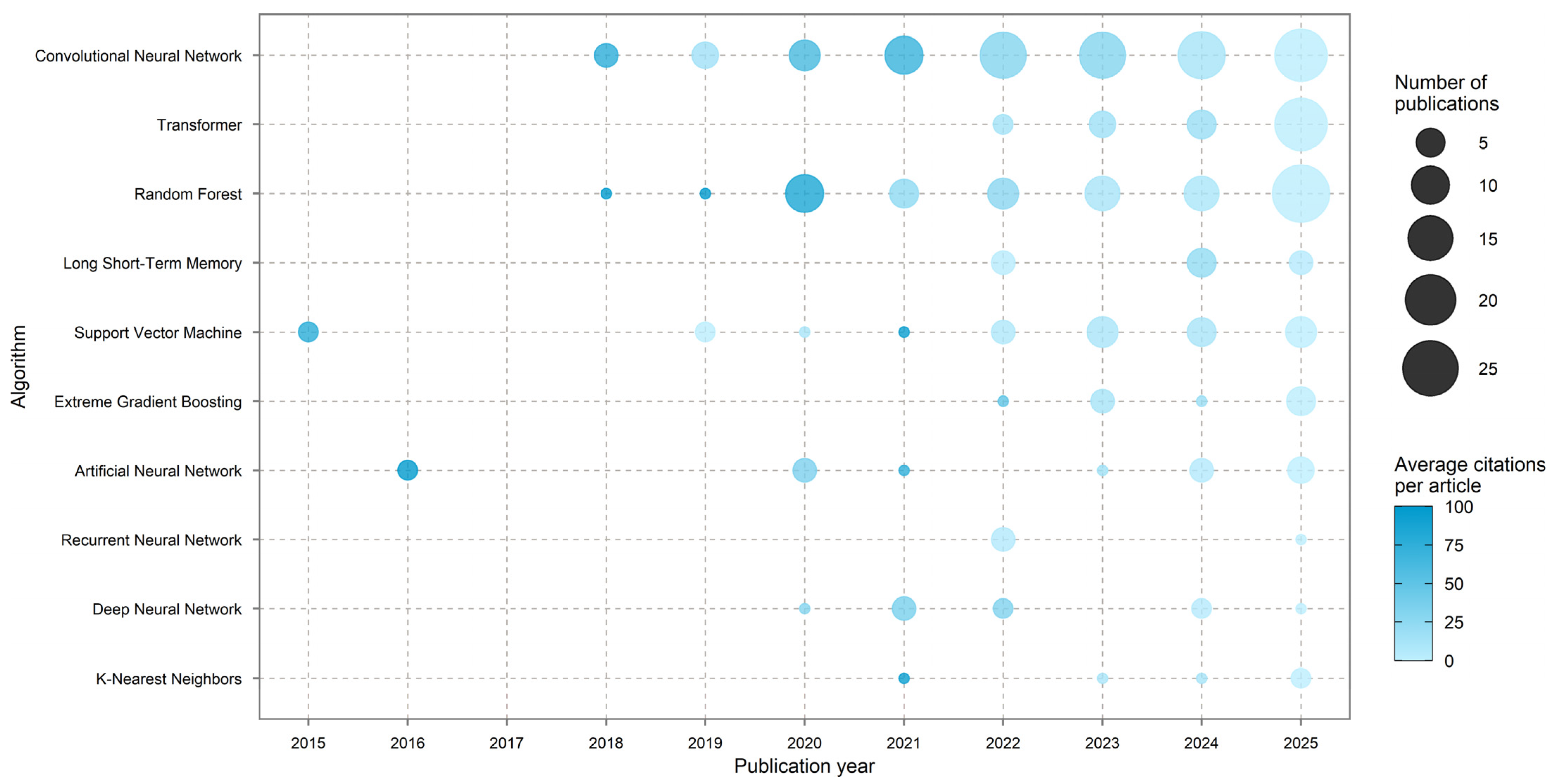
Automated text screening was conducted for machine learning and deep learning methodologies in the combined fields of TI, AB, DE, and ID. A publication was considered to include machine learning if the text contained expressions referring to general machine learning terminology or widely used algorithms, including the phrases “machine learning”, “random forest”, “rf”, “support vector machine”, “svm”, “xgboost”, “gradient boosting”, “knn”, “k-nearest” or “decision tree”. Deep learning usage was recorded when the text included terms “deep learning”, “cnn”, “convolutional neural network”, “lstm”, “recurrent neural network”, “rnn”, “transformer”, “autoencoder”, “deep neural network”, “dnn”, “long short-term memory” or “lstm”. If at least one term from each group was detected, the study was classified as using both approaches. Annual frequencies were subsequently computed to compare the expansion of traditional machine learning, deep learning, and hybrid modeling strategies. To obtain a more detailed view of methodological preferences, synonymous expressions were consolidated into standardized algorithm families. For instance, occurrences of “random forest”, “random forests” or “rf” were assigned to the Random Forest class, while references to “support vector machine (s)” or “svm” were grouped under Support Vector Machine class, “artificial neural network (s)” or “ann” defined the Artificial Neural Network class, and “extreme gradient boosting”, “xgboost”, “xgb”, or “xgboost” were classified as Extreme Gradient Boosting. Transformer architectures were identified through the words “transformer”, “vision transformer” or “vit”. The K-Nearest Neighbors class captured “k-nearest neighbor”, “k nearest neighbor” and “knn”. Convolutional neural approaches were grouped from “convolutional neural network (s)”, “cnn” or “convnet”, whereas recurrent models relied on “recurrent neural network (s)” or “rnn”. The Long Short-Term Memory class was derived from “long short-term memory” and “lstm” and explicit mentions of “deep neural network (s)” or “dnn” formed the Deep Neural Network group. Publications referring to several techniques were allowed to contribute to multiple classes.
Information on data sources was extracted from titles, abstracts, and keywords by applying structured string detection. Sentinel usage was identified through the appearance of “sentinel-1” or “sentinel-2”. Landsat missions were recognized from “landsat-5”, “landsat-7”, or “landsat-8”, while moderate-resolution products were captured by the term “modis”. Commercial high-resolution imagery was detected when expressions such as “planetscope”, “worldview”, “pleiades”, “quickbird” or “ikonos” were present. Unmanned aerial systems equipped with RGB sensors were identified by the co-occurrence of UAV-related wording, including “uav.*rgb| drone.*rgb| unmanned aerial vehicle.*rgb| rgb camera” or “uav rgb Camera”. UAV multispectral or hyperspectral acquisitions were recognized through combinations of UAV terminology with words including “uav.*multi| uav.*multispectral| drone.*multi| drone.*multispectral| hyperspectral| nir| red edge” or “uav multispectral”. Additional satellite or sensor classes were grouped under a residual category when terms including “terra”, “aqua”, “radarsat” or “proba” appeared. When multiple platforms were mentioned, publications were counted in each applicable class.
3. Bibliometric Analysis of Precision Agriculture Studies Based on Remote Sensing and Machine or Deep Learning
3.1. Temporal Dynamics of Research Based on Publication and Citation Count
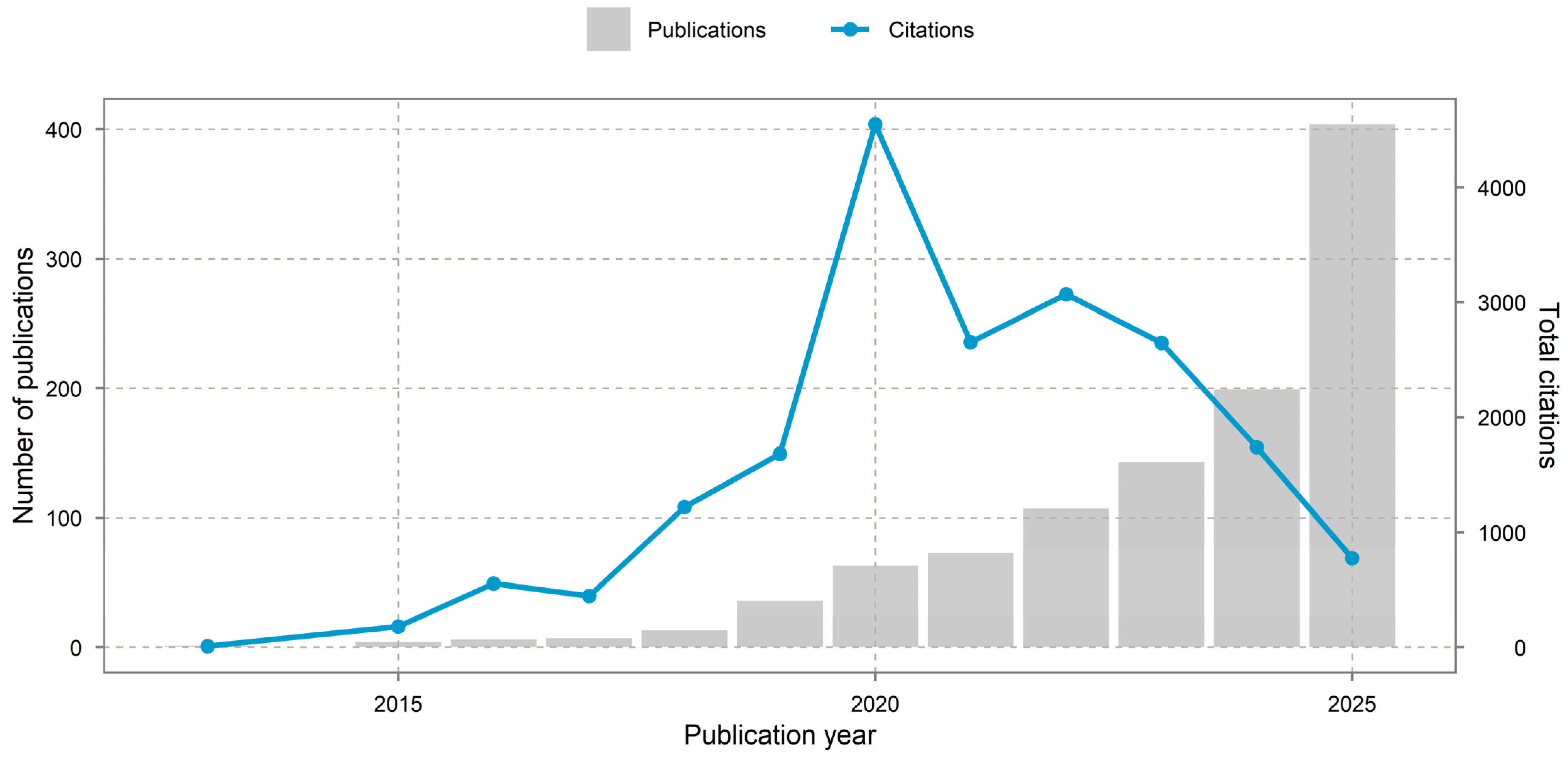
The temporal analysis of the publications from the WoSCC showcases a rapid and continuous growth of research combining machine learning and remote sensing in precision agriculture (
Figure 1). The annual publications dynamics include three distinct phases, with an initial phase of research from the first indexed publication in 2013 up to 2020, a phase of consolidation (2020–2024), and a more recent phase of rapid growth (since 2025). Earlier years recorded a handful of publications annually that discussed the fusion of artificial intelligence with remote sensing for precision agriculture [
35,
36,
37]. This phenomenon can be explained by a combination of inadequate data availability and the absence of advanced analytics, which is an exhaustive and highly technical barrier. The subsequent years recorded a significant increase in publications, peaking just before the end of the study period. The acceleration can be attributed to technological advancements such as open access satellite data, advanced and more accessible cloud computing and machine learning [
38]. The total citations lag behind the publication counts, reaching the most citations in 2020. Discrepancy is normal in bibliometric systems [
39], as published articles have not had the time to accumulate, but older articles have had time to be influential. Because of this, the drop in citations in more recent published articles can be attributed more to time rather than the articles’ relevance or importance. The combination of increasing publications and the decline of total citations demonstrates that the research community is transitioning from creating pioneering work to operationalizing the processes. As time goes on, the emphasis goes from creating new algorithms to optimizing the created ones and then customizing them to fit the needs of the specific domain.
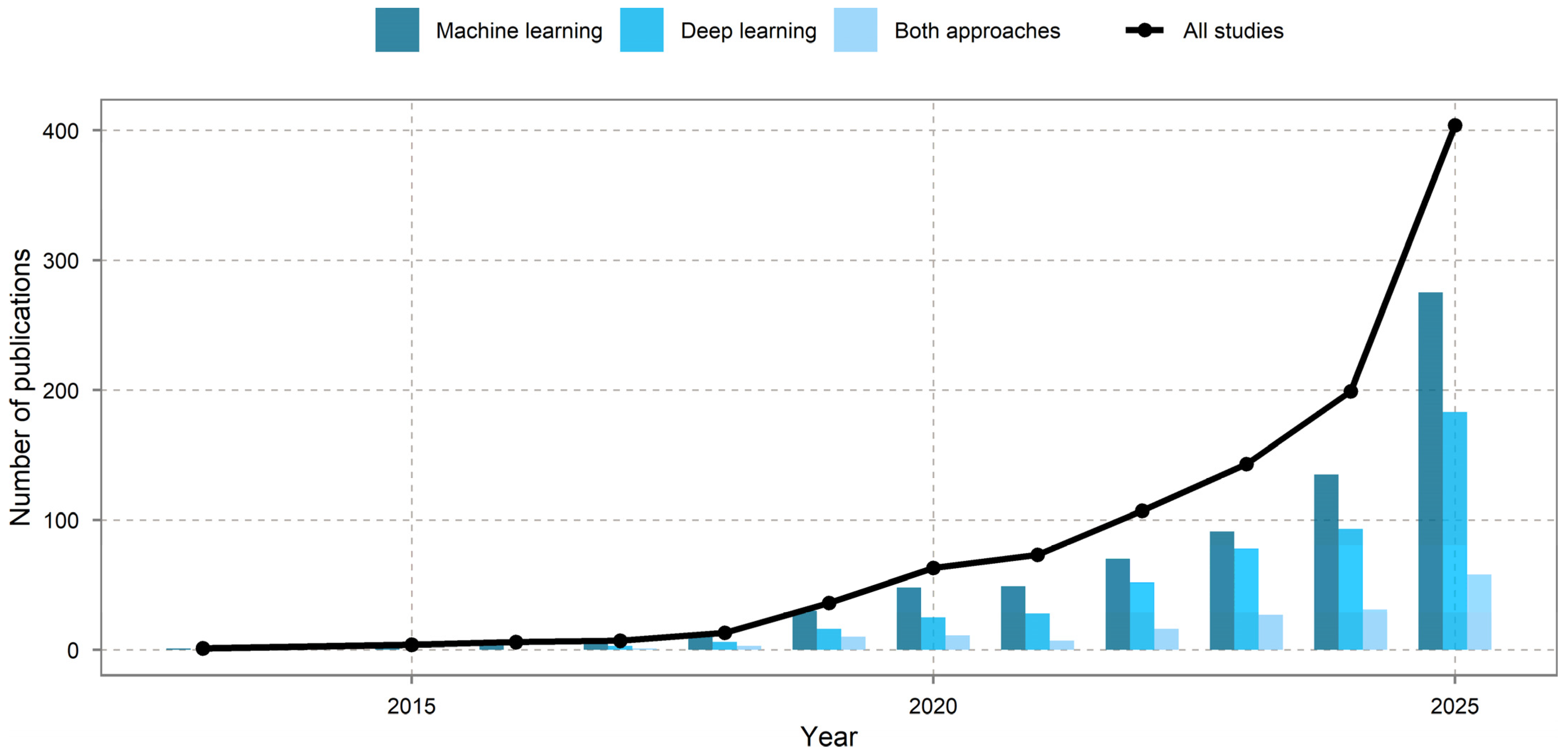
Figure 2 shows another shift in the preference of methodology. In the past, most of the published articles considered conventional machine learning. Algorithms such as Random Forest and Support Vector Machine were able to dominate because they required limited training data and being robust in high-dimensional and data-sparse environments [
40]. These constraints further aligned with the earlier datasets in remote sensing datasets with defined features as opposed to volumes of images. Although deep learning begins to be included in the earlier years of the study period, there is a later acceleration at a higher degree. This increase in studies and research in the fields of deep learning contributed to the gap being closed for conventional machine learning studies for the years to come. This increased activity can be attributed to the availability of better and more modern GPUs, the increased volume of datasets with labels and the increased activity of the use of open-source software available to the public for use in machine learning [
41]. The availability of modern convolutional architectures more easily allows for the processing of images and data, as opposed to feature engineering, which results in the limitation of the model being developed [
42]. One point of significant interest is the existence of studies that use a combination of machine learning and deep learning. This hybridization suggests that the scientific community is not merely replacing older paradigms but also integrating them. In the combined studies, there has been increased use of deep learning networks for representation learning and data segmentation, while ensemble methods and other probabilistic methods are employed for regression, uncertainty estimation, and model interpretability [
43,
44]. Hence, the increase in the collective combined studies shows the levels of maturity in the field of data analysis as opposed to the fragmentation of methodologies in artificial intelligence.
3.2. Main Topics and Keyword Co-Occurrences in the Literature
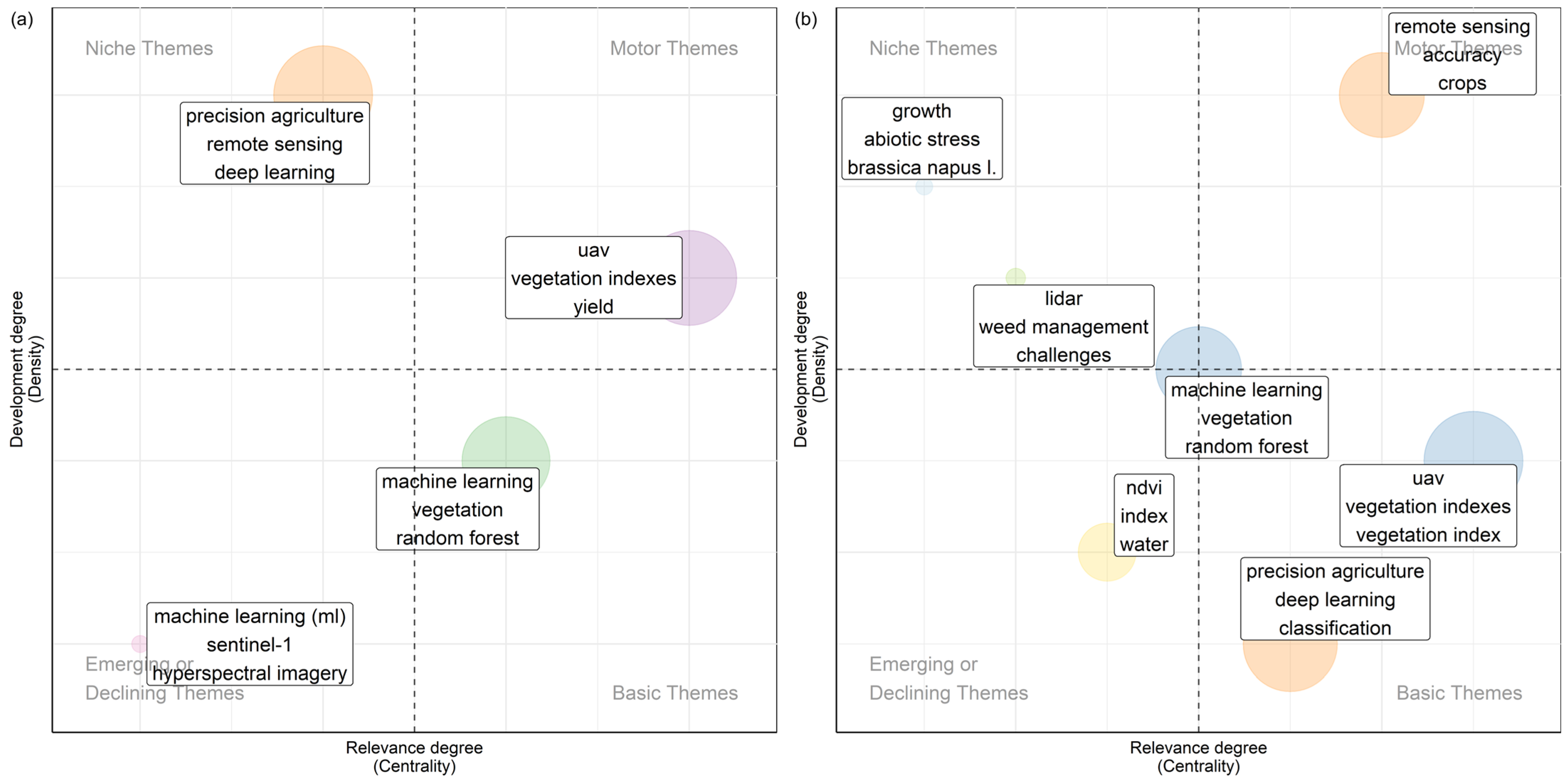
Thematic maps created using co-word analysis were used to break down the conceptual structure and evolution of the research field (
Figure 3). The first major result is the conceptual shift in deep learning and machine learning. In previous iterations of the analysis of technology in agriculture, deep learning was considered a highly specialized, niche application. However, crossing into the basic themes quadrant shows that it has become a primary component of agricultural data analysis. This is consistent with the findings of Kamilaris and Prenafeta-Boldú, who pointed out that, in the field of agriculture, deep learning has quickly replaced all other methods of image analysis as it outperforms other methods in complicated tasks such as the identification of weeds and the prediction of yield [
45]. The maps’ consistent use of UAVs and vegetation indices, and the continuity from border themes to foundational (basic) themes, underscores the uniformity of these elements as operational standards in contemporary agronomy. As Maes and Steppe point out, the availability of drone technology has alleviated the challenge of relying on the sparse and expensive satellite images and the painstaking process of field scouting [
46]. The thematic maps illustrate this well, as UAVs are no longer a “new” motor theme, but a basic, transversal necessity for high-resolution crop monitoring [
47]. The growing interest in remote sensing and its associated accuracy challenges, along with crops as a dominant motor theme, signifies a new frontier in the field. The community is no longer “just testing to see if remote sensing works; the dominant focus has shifted to determining the best possible way to scale up the use” [
48]. Moreover, the highly targeted niche themes (such as LiDAR for weed management, and monitoring abiotic stress in specific crops like
Brassica napus L.) indicate that the fundamental technologies have matured enough for use in specific, localized agronomic problems [
49].
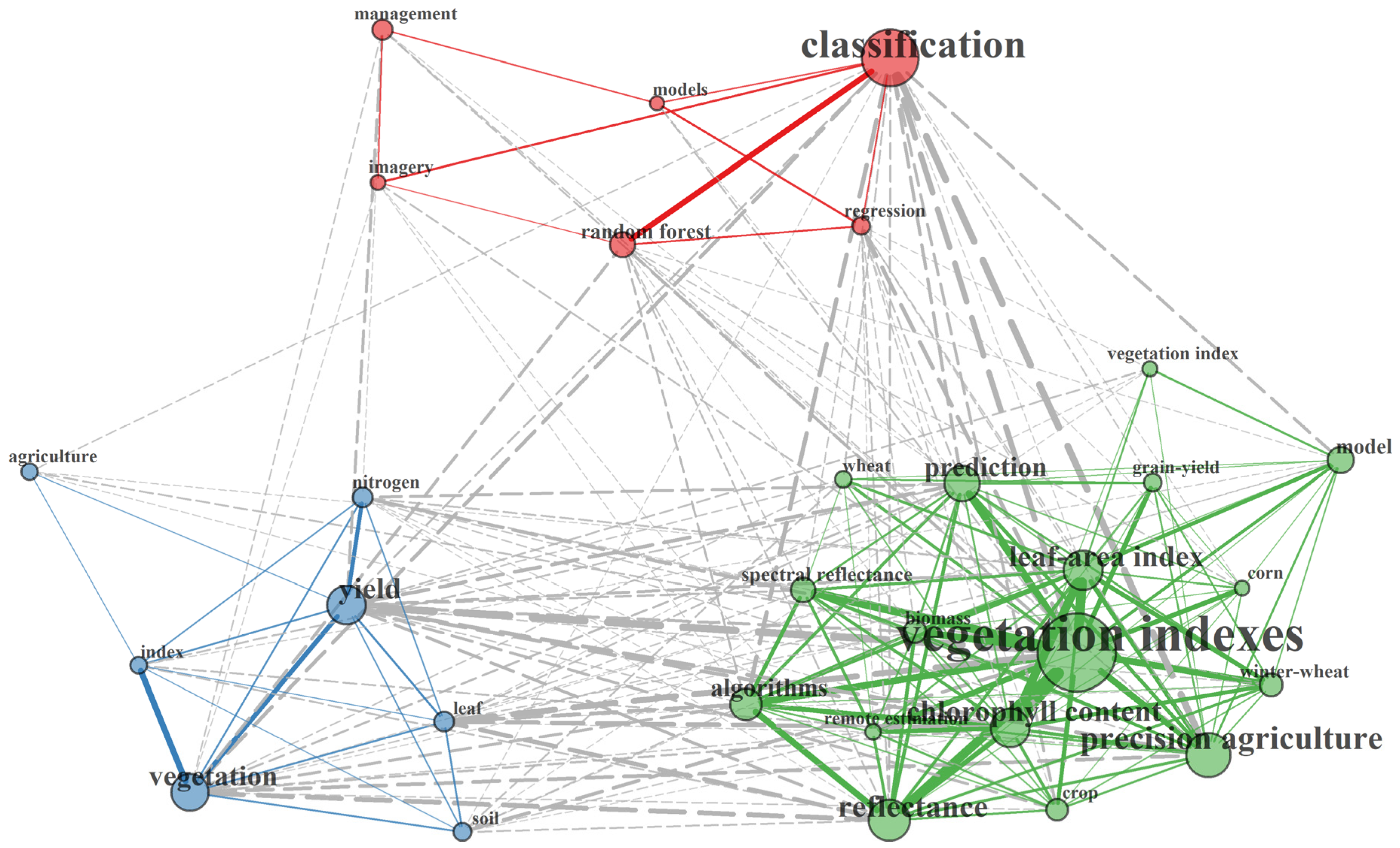
In order to visualize how the literature is structured and identify the main themes of the research, a keyword co-occurrence network was created (
Figure 4). Each node of the network corresponds to a keyword, the size of the node increasing with the keyword’s frequency. The network’s edges indicate that the pair of keywords co-occur in the same publication, and the width of each edge is proportional to the number of co-occurrences. The multispectral and optical remote sensing data collection methods being used to generate the data in the “vegetation indexes” node of the green cluster visual dominance confirm the data relevance in the field. The nodes “chlorophyll content” and “leaf-area index” and “vegetation indexes” show strong internal connections, meaning that researchers are using these indexes in calculations as substitutes to assess and measure, in a non-invasive manner, biophysical attributes of other phenomena [
50]. From the data network, the edge of the strong dominance of the connection between the nodes “classification” and “Random Forest” in the red cluster stands out. The terms “algorithms” and “models” are used more widely, so this connection is a strong alignment in the field concerning the literature. The simplicity that stems from random forest algorithms in dealing with the high-dimensional and noisy data from agricultural imagery and spectral reflectance data makes them a preference when classifying data [
51]. The greatest strength of the network is the inter-cluster linkage as a representation of the workflow in the field. The blue cluster (agronomic outcomes) is not independent, and the central node “yield” (blue) is linked to “prediction” and “vegetation indexes” (green) as well as to the methods “random forest” and “regression” (red), so that the linkage is highly interconnected. These examples illustrate the typical structure of contemporary research: employing computational classification and regression models (red) to assess remote sensing metrics (green) for the purpose of forecasting and controlling core agronomic variables such as yield and nitrogen (blue). The network provides additional evidence that the field has advanced beyond mere description to an emphasis on predictive models to support precision agriculture in a more targeted manner [
52].
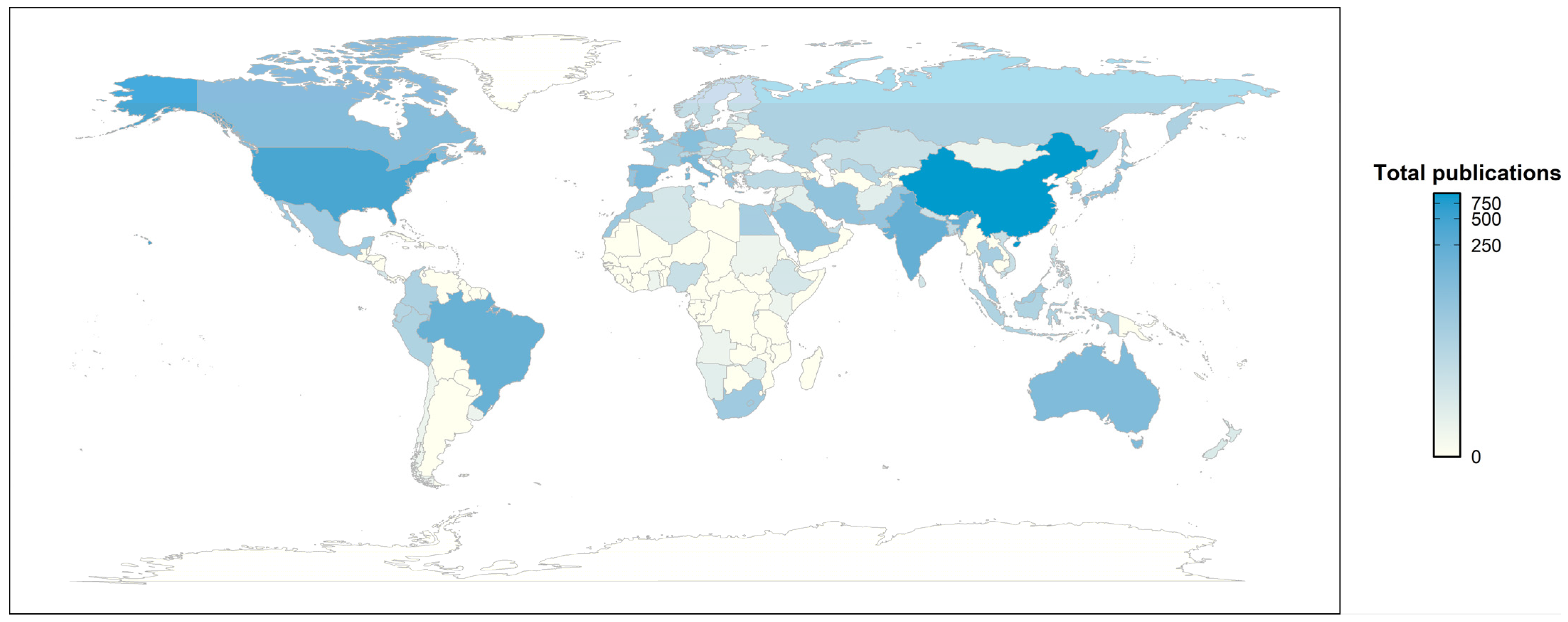
3.3. Global Geographical Research Distribution for Analyzing Global Scientific Impact
Figure 5 shows the growing global dependence on remote sensing and machine and deep learning in precision agriculture research, along with the unevenness in research activity. The stark contrast between China and the rest of the world shows publications’ dominance, with 957 publications indexed in WoSCC having at least one co-author from China, followed by the United States of America (USA) with 413 publications. The USA research ecosystem is a product of early integration of machine learning and robust cross-disciplinary cooperation between agronomy, computer and environmental sciences [
53,
54]. Due to its population count, India’s rapid growth in output is notable. In many cases, India’s researchers focus on approaches that aim to be scalable and cost-effective using open and free satellite, and therefore, machine learning-based remote sensing approaches are within the reach of smallholder farmers [
55,
56]. In South America, Brazil’s presence is dominant, being one of the largest producers of agricultural products in the world. As a result, Brazil’s research is mainly on big data for large-scale agriculture, such as crop monitoring of soybean and maize, sugar cane, and the deforestation that comes from agriculture [
57,
58]. Research activity in Europe is more evenly distributed, mainly in the UK, Germany, Spain, and Italy. In Europe, the focus of research is to provide evidence for the sustainable, climate-resilient approaches for precision nutrient and irrigation management [
59]. Furthermore, the presence in Australia indicates that this research is large in scope, particularly in dryland farming and water use. Africa and Central Asia are some of the regions that have contributed notably less to this research topic. This suggests that, even though there may be smaller research capacity, funding constraints, or even a lack of interest, there are still promising areas where remote sensing solutions using machine learning as a technology could grow significantly in the future. This imbalance indicates that the global spread of precision agriculture development is affected more by technology and economic development than by the geographic distribution of farming activities. On the other hand, the lack of representation in Africa and certain South American regions is likely associated with constraints in financial resources, access to data and technical potential, despite possibly high agricultural demand.
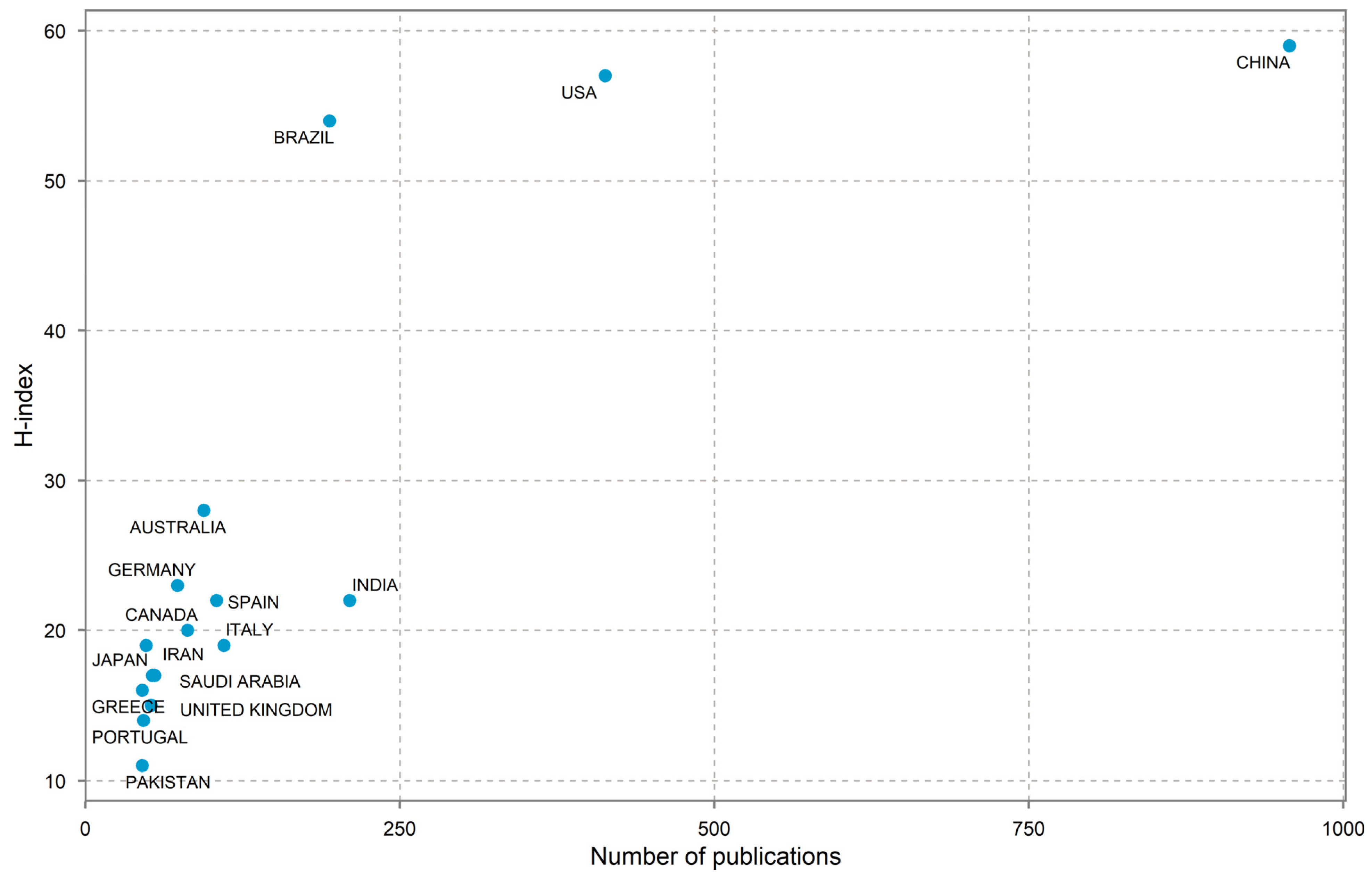
Figure 6 displays total publications and H-index for major countries, reflecting the relationship between volume of research and impact in terms of citation counts. China leads the world in the total volume of publications and the highest H-index of 59, which reflects that the country is conducting research that is not only abundant but is also being widely cited. Although the USA is grossly outnumbered in publications, it has a close second-ranked H-index of 57. Despite being outnumbered in terms of publication count compared to China and the USA, Brazil’s H-index is 54, which shows that the research conducted in the country has a very high impact due to applied research in large-scale agricultural systems and collaboration with other countries. While India is third-ranked in terms of publication count, its H-index is 22, ranking behind Australia, Germany and tied with Spain. Despite how the high publication count generally correlates with H-index rates, the slope of the scatterplot is rarely steep, which is indicative of the varying citation rate of countries.
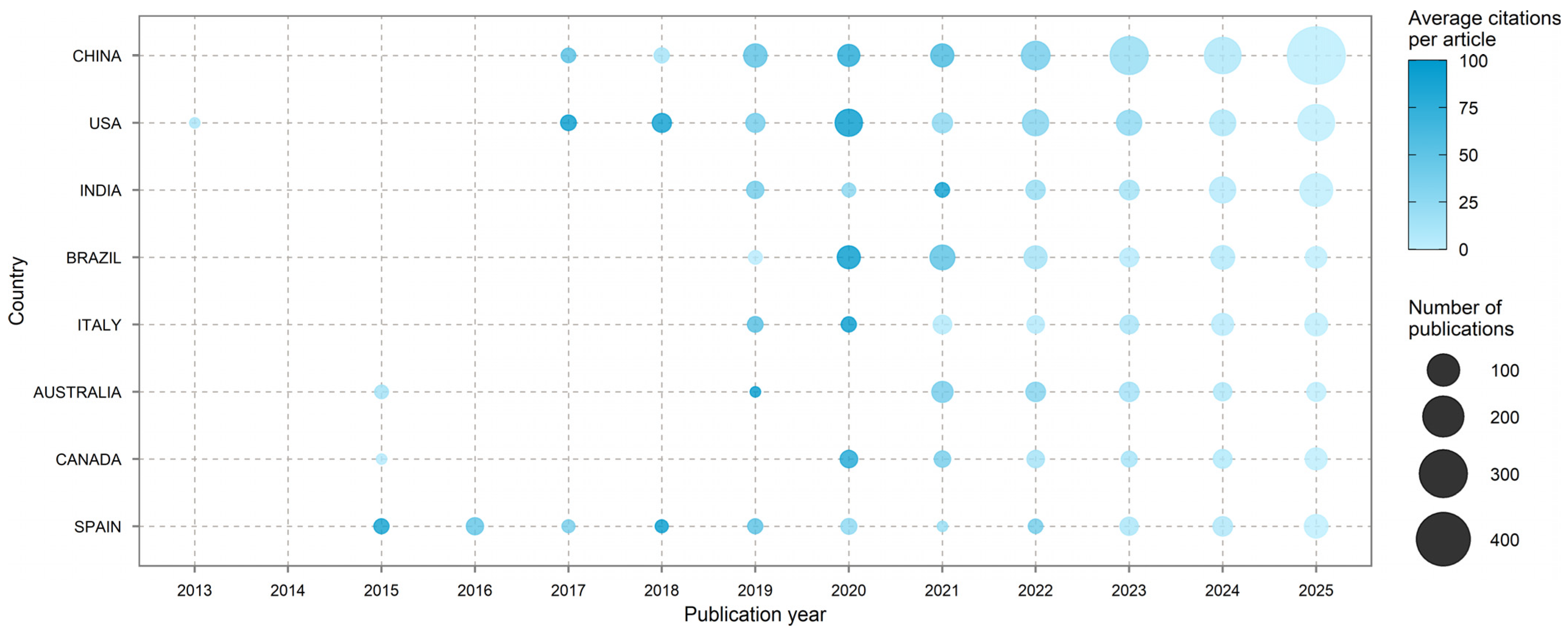
Figure 7 captures the temporal trends from 2013 to 2025, documenting the total number of publications and the average citations per article. This figure shows the developmental milestones of machine and deep learning with remote sensing in precision agriculture, generally consisting of the initial stage (2013–2016), prevalent stage (2017–2020) and acceleration stage (2021–2025). The initial stage has shown to have a low volume of publications recorded from all countries. Spain, Australia, and Canada were some of the first contributors. There were a low number of publications, but the average citations per publication were relatively high. There is a visible increase in publication rate starting from 2017, associated with a number of technological and methodological innovations, including widespread adoption of satellite remote sensing from Sentinel-2 and Landsat-8, as well as machine and deep learning algorithms [
60,
61,
62]. The prevalent stage was characterized by a rapid increase in publication volume from China and the USA, with India and Brazil also showing a significant increase. With an increase in the number of publications, especially from 2017 to 2018, the number of citations per article also decreased. This was caused by the dilution effect in a new field of study, which rapidly expanded, so that the increased publication count increased competition for the attention of the readers and is cited slightly less [
29]. However, the rapid increase in the number of publications is not accompanied by a comparable increase in the number of citations. The causes for this are likely that the publications are too recent to have accumulated citations or that the rapid increase in publications is too large relative to the existing body of literature. The sustained intensity of citations for the leading contributors is a clear sign that impactful research is still being produced.
3.4. Dominant Remote Sensing Sensors and Deep or Machine Learning Algorithms
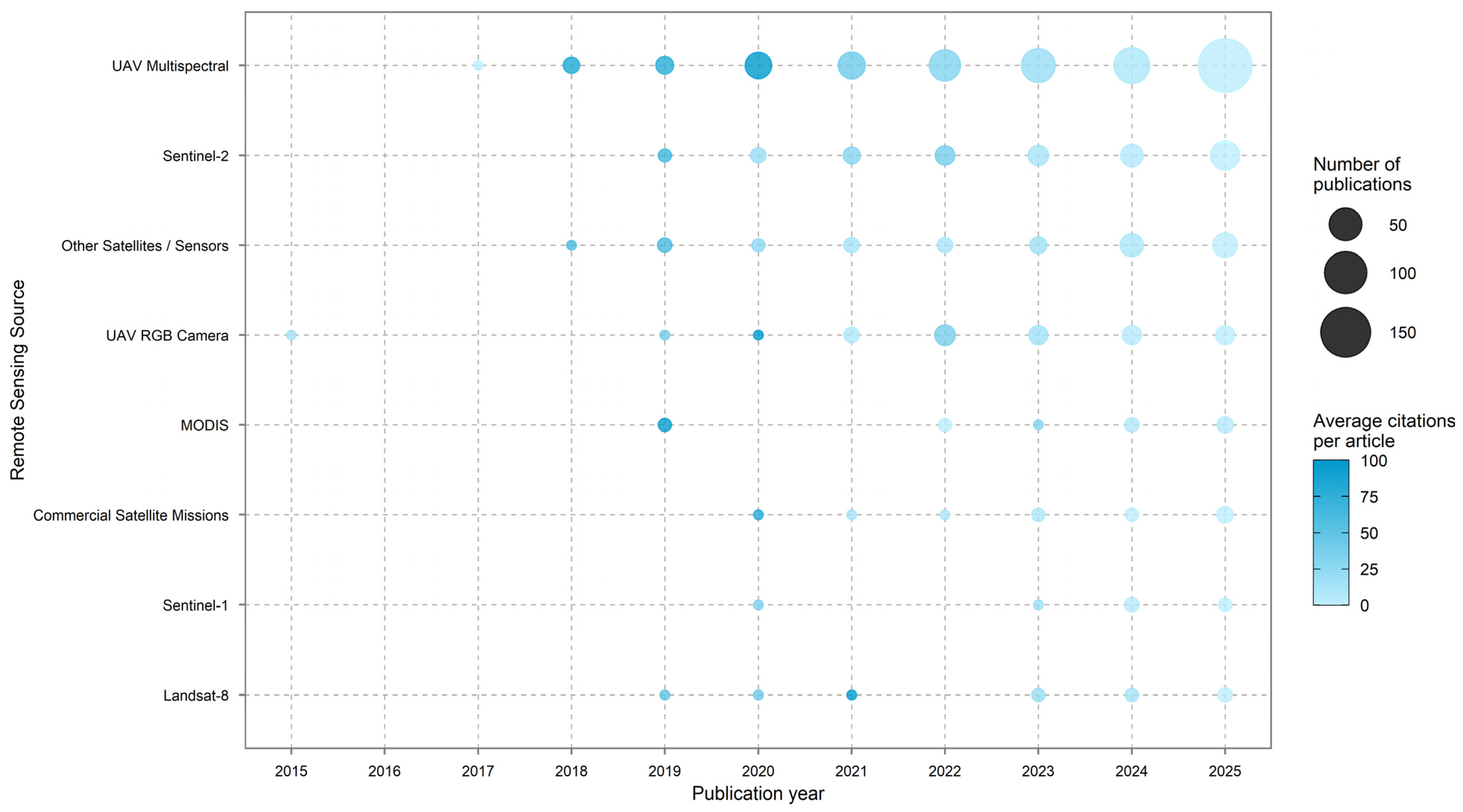
Figure 8 displays the time series distribution of the main sources of remote sensing imaging from 2015 to 2025. Research focused on machine learning in precision agriculture between 2015 and 2018 was largely derived from satellite images, especially from the MODIS and Landsat platforms, providing a stable but not a large number of publications. Landsat-8 has a moderate spatial resolution of 30 m, which is appropriate for the assessment of regional-scale mapping of crops and analysis of vegetation indices [
63], while MODIS has a high temporal resolution, which makes it possible to monitor phenology at large scales [
64]. This made the two platforms invaluable for early machine learning applications in crop classification, yield estimation, and drought assessment using the Random Forest and Support Vector Machine models. This can be, in large part, the result of these studies being fundamental and providing the base for the first generation of studies that dealt with the integration of spectral indices and supervised learning. The value of a number of early studies is to establish a standard that would be used in the next generation of studies that were based on deep learning. Nonetheless, post-2019, despite the presence of Landsat-8 and MODIS, their contributions comparatively shrink relative to other data sources, indicating a gradual shift towards systems with higher spatial resolution and more adaptive data collection capabilities.
There is a notable increase in the number of publications that use Sentinel-2 imagery that starts in 2019 and shows a steady increase until 2025. This increase closely matches the increasing use of Sentinel-2 free and accessible multispectral data with a 10–20 m spatial resolution and a higher revisit frequency than Landsat-8 [
65], as well as the presence of red edge bands to improve the detection of stressed vegetation [
66]. In contrast, Sentinel-1 has a presence in publication history that is increasing but more gradually due to more complicated processes of pre-processing and interpreting synthetic aperture radar (SAR) data [
67]. Interest in optical and radar data fusion is increasing, especially in regions with frequent cloud cover where all-weather monitoring is needed, as evidenced by the increase in publications from 2020 onward. Sentinel-based studies have moderate to high citation intensity, which indicates both methodological relevance and practicable applicability. UAV-based imagery has seen the most dramatic increase in publications, particularly UAV multispectral data, since 2019. By 2023–2025, UAV multispectral platforms had become the most consequential from a sensing perspective, showing a continued interest and funding growth in multispectral UAVs and the tightly coupled changes with multiple precision agriculture structural changes, such as real-time monitoring of crop health, ultra-high spatial resolution demand and integration with deep learning-based object detection and segmentation [
68,
69]. Even though RGB data have lower spectral resolution than multispectral and hyperspectral data, they are more affordable and are more likely to be used with standard vision-based deep learning frameworks due to the dataset size used for pretraining data [
70]. With the initial increase in the number of UAV-based studies, it appears that there is a continued deviation from the mean value. As the number of studies increases, the moderate number of citations becomes evident and is consistent with bibliometric saturation. Due to their historical archives and temporal consistency, MODIS is mainly utilized for monitoring objectives at the macro level, including crop classification by region and analysis of crop phenology, in contrast to other sensors. Higher-resolution platforms like UAV-based imagery and Sentinel-2 were more commonly linked to field-scale applications such as stress detection, yield estimation and variable rate application. This shows clear scale-dependent adaptation, where the choice of the sensor is determined by the spatial resolution needs of the agronomic decision-making process. UAV imagery is also capable of acquiring imagery in centimeter resolution so that minor differences in crop properties can be identified that would not be identified by satellite data. Also, UAVs have the advantage of providing temporal imaging flexibility, allowing them to be used to capture data at important phenological stages. However, the satellite platforms provide uniform coverage at the regional level, extensive coverage, as well as durably long-term continuity, and thus may be more appropriate for monitoring the region, detecting trends, and scalable applications.
Commercial satellite missions have shown consistent growth every year from 2020 to the present. These satellites provide very high spatial resolution (sub-meter to 5 m), which allows for detailed analysis of crops and the boundaries of fields [
71]. Despite the lower publication volume compared to UAV and Sentinel-2, their increasing presence indicates that there is a demand for high-resolution images to be used for regional-scale mapping. There has also been a consistent increase in the category of other sensors across the timeline, primarily including hyperspectral sensors, thermal, LiDAR, and multi-sensor systems [
72,
73,
74]. The increase in this category after 2021 indicates a turn toward fusion approaches and sensor integration. This suggests the field is advancing from analyses conducted using a single sensor to analyses using integrated frameworks based on big data.
The algorithms that have been most dominant in the field of precision agriculture research using remote sensing have shown significant temporal changes (
Figure 9), with a notable shift from classical machine learning techniques to deep learning and transformer-based architectures. Support Vector Machines (SVMs), Artificial Neural Networks (ANNs), Random Forest (RF) and K-Nearest Neighbors (KNNs) were predominantly used in the field during the early years. SVM ranks among the very first popular algorithms, particularly because of its applicability to high-dimensional spectral data. RF has had steady growth since 2018 and is currently the most popular classical machine learning algorithm. It allows adjustment to different types of relationships in data and noise robustness, as well as interpretability in terms of the importance of different variables, which has been well documented in the field of agricultural remote sensing [
75]. ANNs, particularly the shallow neural networks, had early moderate use and did not dominate because their performance was limited compared to contemporary algorithms in many cases, particularly because of the shallow learning architecture, as opposed to the deep learning architecture. The greatest paradigm shift was the use of Convolutional Neural Networks (CNNs) that started to dominate the field from 2018 to 2019. From the modest initial use, CNNs outcompeted the previously popular algorithms to become the leading and most published algorithm from 2022 to 2025. Success in using CNNs can be attributed to the many UAVs available, the abundance of satellite imagery in high resolution, the inherent ability of CNNs to extract features in a spatial manner, the ability to refine a task through transfer learning and the ability of the CNN architecture to outperform all others in tasks of classification and segmentation [
76,
77]. CNNs allow the automatic derivation of hierarchical spatial patterns of high-resolution imagery, unlike more traditional methods of machine learning. Moreover, the availability of high-resolution data from UAVs and Sentinel-2, in addition to improvements in the field of the GPU computing as well as transfer learning, has considerably reduced the hurdle of implementing the deep learning models.
The period after the year 2020 recorded an increase in the number of publications that referred to Recurrent Neural Networks (RNNs) and Long Short-Term Memory (LSTM) networks. Even with a smaller number of publications in this field as compared to CNNs, the emerging literature suggests an increasing interest in understanding temporal dynamics for agricultural monitoring. Transformer-based models have come to dominate the research of the last few years (2022–2025), and there is expected to be a significant increase in the number of publications in 2025. Even though there are still fewer examples than in the case of CNNs, the rapid increase indicates a methodological shift. Promising areas for transformers include long-range temporal dependencies, multimodal integration, and attention-based interpretability [
78].
3.5. Study Limitations
This study includes some limitations of this bibliometric analysis, despite being able to offer an extensive summary of emerging research patterns involving machine learning and deep learning technologies for remote sensing-based precision agriculture. The first limitation is the use of one bibliographic database, the WoSCC, for this analysis. Although WoSCC is accepted for the quality of its indexing and the selection of the scientific material, using one database leads to the omission of potentially relevant publications. Other large databases, including Scopus, Dimensions, or Google Scholar, cover a wider scope of conference papers, regional journals and other publications, as well as preprints, and early-access publications that are not yet included in WoSCC. As a result, relevant studies published in new, emerging, or interdisciplinary publications may not be included in the analysis. Such limitations may potentially impact the distribution of publication, citation, and research geography metrics. Another limitation stems from the specific keyword-centered queries that were used to pinpoint relevant publications. Some relevant works may be omitted because authors employed different terms or alternative phrasings to describe the same idea. On the other hand, some works may be included where only part of the research problem was addressed, but were included because of their use of the chosen keywords somewhere in the title, abstract, or keywords. Although there was an attempt to create an all-encompassing search expression and include some of the common names for algorithms and any terminology from remote sensing, it is impossible to completely avoid the potential for incomplete retrieval. Machine learning methods, deep learning models, and remote sensing technologies were identified through title, abstract, and keyword text string-based rule-capture. This method, while useful for analyzing large sets of data, may gloss over the particulars of each study.
Another specific property of bibliometric analyses is that they typically do not capture all aspects of the publication age, leading to citations that might be biased for older documents as they have had more time to increase citations. Recent publications in the quickly changing fields of artificial intelligence and remote sensing may seem to have lower citation counts only because they are newer and have not had time to accumulate citations. Another example of this is when geographical contributions to research are aggregated. In this research, publications were linked to certain countries based on the countries of the authors. This means that countries with large publication counts because of their large collaborative networks will be seen as more research-dominant than countries with research groups that comprise smaller teams. Additionally, the bibliometric approach has a tendency to rely too heavily on quantitative measures to the detriment of a more qualitative analysis of scientific work. While publication and citation count show important information about the trajectory of research, they cannot quantify the methodological sophistication, practical relevance, or scientific originality of particular works.
Spatial autocorrelation is one of the most fundamental challenges that is often overlooked within the context of integrating machine learning and deep learning with remote sensing data in precision agriculture. This goes against the assumption of independent and identically distributed samples that most machine learning algorithms rely on [
79]. Therefore, traditional evaluation methods, especially random cross-validation, can produce overly optimistic estimates of model performance because training and testing samples may be spatially correlated [
75]. While some studies have started to work around this limitation using methods such as spatial cross-validation, block sampling, or geographically separated training and testing datasets [
80], there is still a lack of consistent adoption of such approaches across the field.
Regardless of the stated limitations, the study analyzed significant trends, dominant methods and methodologies, and geographical distribution of research, providing the analytical framework necessary to set the stage for future research and providing context for the ongoing rapid technological advancements in this ever-expanding field.
4. Conclusions and Future Considerations
While this study follows a conventional bibliometric analysis workflow, the results highlight important limitations of current approaches when applied to the highly interdisciplinary domain of precision agriculture, with a special focus on remote sensing and machine learning aspects. Existing bibliometric analyses typically rely on generic dimensions, including publication counts, keyword co-occurrence, and citation metrics, which do not fully capture the domain-specific structure of agricultural research.
The publications in the WoSCC were analyzed according to the temporal publication progression, the primary algorithms, sensors, the development of themes and the distribution of the research geographically. The temporal assessment of the publications in this research topic over the previous decade, based on bibliometric analysis, showed a steep and sustained incremental increase. The earlier research focused on traditional machine learning techniques, which included RF, SVM and ANN. These algorithms were shown to be successful in the classification of crops, estimating yield, and monitoring vegetation using remote sensing, in which the derived spectral features were multi-dimensional and were obtained using multispectral satellite imagery [
81]. With the growth of remote sensing datasets and the improvement in processing power, interest turned to deep learning approaches for analyzing the datasets. Based on quantitative results from the bibliometric analysis, Convolutional Neural Networks have become the predominant architecture used in studies within precision agriculture. The ability of these models to learn spatial features makes them suitable for high-resolution imagery from satellites and UAVs. Applications included with these features are the mapping of crop types, the detection of crop diseases, the estimation of crop biomass, and the prediction of crop yields. Meanwhile, recurrent neural networks and long short-term memory models have become popular for looking at the temporal dynamics of multi-temporal datasets. Recently, transformer-based models have started to become an emerging trend for their ability to model long-range dependencies and combine heterogeneous datasets.
The bibliometric results also point out the impact of remote sensing platform advancements. Previous studies focused on the use of moderate-resolution satellite sensors such as Landsat and MODIS. However, with the development of Sentinel satellite missions, Sentinel-2 multispectral imagery provided improved spatial, temporal and spectral imaging resolution. Additionally, the use of UAVs with multispectral or RGB sensors has increased, especially for the purposes of high-resolution crop monitoring and field-level detailed studies. The geographical analysis of bibliometric results shows that research is concentrated mainly in large scientific hubs in the world. China and the USA lead the world in quantity and impact of citations, which is a reflection of the research funding in the remote sensing, artificial intelligence, and agriculture technology domains. Other countries such as India, Brazil, Australia, and some European countries are also major contributors in this area. However, the underrepresentation of poorer countries suggests a need for research and technology in precision agriculture in places where the benefits could be substantial.
While there has been an increase in studies focused on this area, a number of challenges still exist. The use of fused optical and radar satellite imagery, UAV imagery, weather and soil datasets can improve the representation of agricultural systems. Data fusion and multimodal deep learning are promising for enhancing predictive and monitoring models for agriculture due to their increased use in recent years. Although deep learning models are capable of generating accurate predictions, their complexities inhibit use in agricultural management. Therefore, developing actionable, interpretable machine learning models and decision support systems will be critical for the future development of precision agriculture based on remote sensing and machine learning.