Review

Towards Stress-Resilient Canola via Genetic Engineering Approaches

The UWA Institute of Agriculture, The University of Western Australia, Perth, WA 6000, Australia
*
Author to whom correspondence should be addressed.
Agronomy 2026, 16(8), 769; https://doi.org/10.3390/agronomy16080769
Submission received: 12 March 2026 / Revised: 3 April 2026 / Accepted: 6 April 2026 / Published: 8 April 2026
(This article belongs to the Special Issue Crop Agronomic Traits and Performances Under Stress)

Abstract

Climate change has adversely affected grain production and quality of canola, the second-largest oilseed crop, which contributes 13–16% of total vegetable oil. Multiple biotic and abiotic stresses significantly limit canola production due to rapid climate change, and conventional breeding alone is insufficient to meet global demand. Therefore, several advanced biotechnologies have been developed to cope with this change. Among these, genetic modification, gene editing, and RNA interference are particularly significant for rapid cultivar development in a cost-effective, efficient, and convenient way. Recent findings in gene editing applications have revealed “prospective sites”, highlighting regions amenable to precise editing without compromising canola plant growth or development. Pan-genome analyses have further guided gene editing target selection, enabling the validation of key stress-resilience genes across diverse canola cultivars, while the CRISPR-epigenetic regulatory connection enables targeted control of gene expression and trait modulation. A hypothetical application of genomic selection is also suggested, which could complement gene editing to accelerate the development of superior cultivars. Accordingly, this review focuses on the latest studies of genetic modification, gene editing, and RNA interference to strengthen canola resilience under rapid climate change and discusses the major concerns. Taken together, these genome-editing strategies offer precise approaches for improving biotic and abiotic stress tolerance, although careful consideration of both off-target effects and regulatory compliance remains essential for their practical implementation in canola improvement.

1. Introduction

1.1. Global Significance of Brassica napus

Rapeseed (Brassica napus L.) is an important oilseed crop in the Cruciferous family used for human consumption, animal feed, biofuel production, and medicinal use [1]. Cytogenetically, B. napus (AACC, 2n = 38) originated approximately 7500 years ago through interspecific hybridization of B. oleracea and B. rapa, followed by doubling of the chromosomes. Archeological records indicate that it was discovered in India around 2000 BC, and its cultivation began in Europe during the Middle Ages and then spread worldwide, ultimately leading to diversifying selection for oil, food, and fodder purposes [2,3,4].
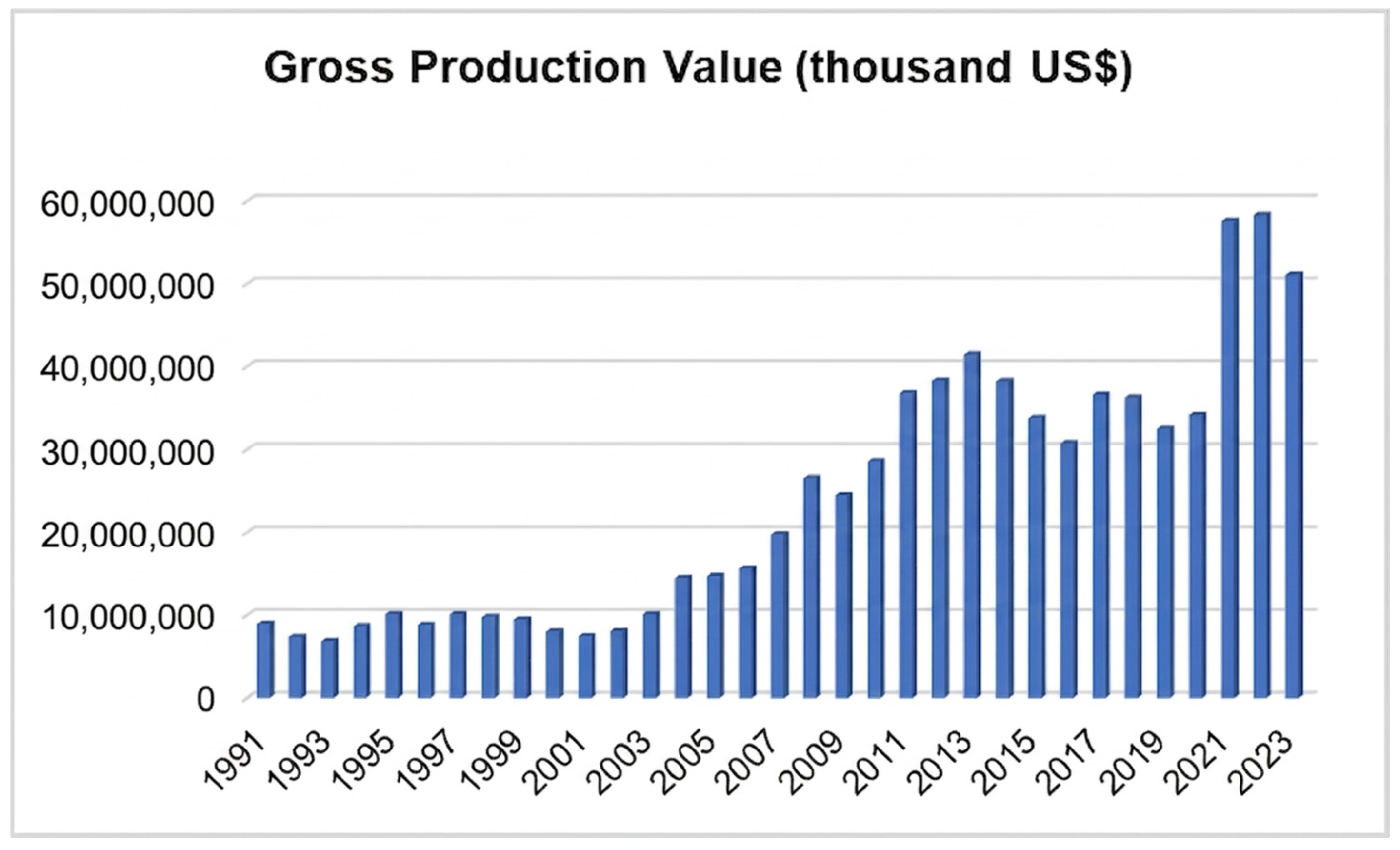
Currently, B. napus ranks as the second largest oilseed crop, accounting for 13–16% of global vegetable oil production [5]. As of 2023, approximately 43.45 million hectares were cultivated worldwide with 91.88 million tons of production (Figure 1). Over the past six decades, canola production has increased dramatically worldwide. Canada has emerged as a leading producer with 18–20 million tonnes annually, followed by China (15–16 million tonnes) and India (12–13 million tonnes). Australia has shown remarkable growth over the last five years, with production increasing from 2.3 million tonnes in 2020 to 8.9 million tonnes in 2025, reflecting an impressive overall increase of about 6 million tonnes (Figure 1). Taken together, this rise in global production indicates the importance of canola for food, feed, and biofuel industries (Figure 1).
It contains 40–50% of edible oil, 17–26% of protein, 35% carbohydrates, vitamins, and anti-nutritional compounds such as glucosinolates, sinapine, and its derivatives (tannin, phytic acid, and crude fiber) [6,7,8]. In canola oil, there are nine components (ferulic acid, vitamin E, glucoraphanin, phospholipids, flavonoids, indole-3-carbinol, squalene, sterols, and carotenoids) that exhibit very important anti-inflammatory, anti-obesity, anti-cancer, anti-microbial, anti-diabetic, cardioprotective, and neuroprotective properties [9]. In 1979, ‘Canola’ was officially introduced, characterized by erucic acid level below 2% and glucosinolate below 30 μmol g−1. It contains a lower proportion of saturated fat (7%), 11% alpha-linolenic acid, 21% linoleic acid, and 61% oleic acid [10]. Its oil promotes human health by lowering cholesterol, increasing antioxidant levels, and improving insulin sensitivity [11]. While rapeseed refers to all forms of B. napus, canola specifically represents low-erucic acid and low-glucosinolate cultivars.
Most canola proteins are storage proteins; cruciferin (300–350 kDa) and napin (12–16 kDa) are the predominant proteins. Cruciferin (11/12 s globulin) contains about 60%, while napin (1.7/2 s albumin) occupies 15–45% of total proteins, and these proteins are encoded by 9–12 genes and 10–16 genes, respectively [12]. Along with proteins, it also contains 0.2% monosaccharides, 8.8% sucrose, 3.1% oligosaccharides (0.6% raffinose, 2.6% stachyose), 0.4% starch, and 30.1% dietary fiber [7]. Some anti-nutritional compounds include glucosinolates, isothiocyanates, sinapine, sinapic acid, tannins, phytic acid, mucilage, trypsin inhibitors, and erucic acid [13]. These compounds reduce quality (bitterness and off-flavors), nutritional profile (protein), mineral digestibility, and toxicity.

1.2. Impact of Stresses on Yield and Quality

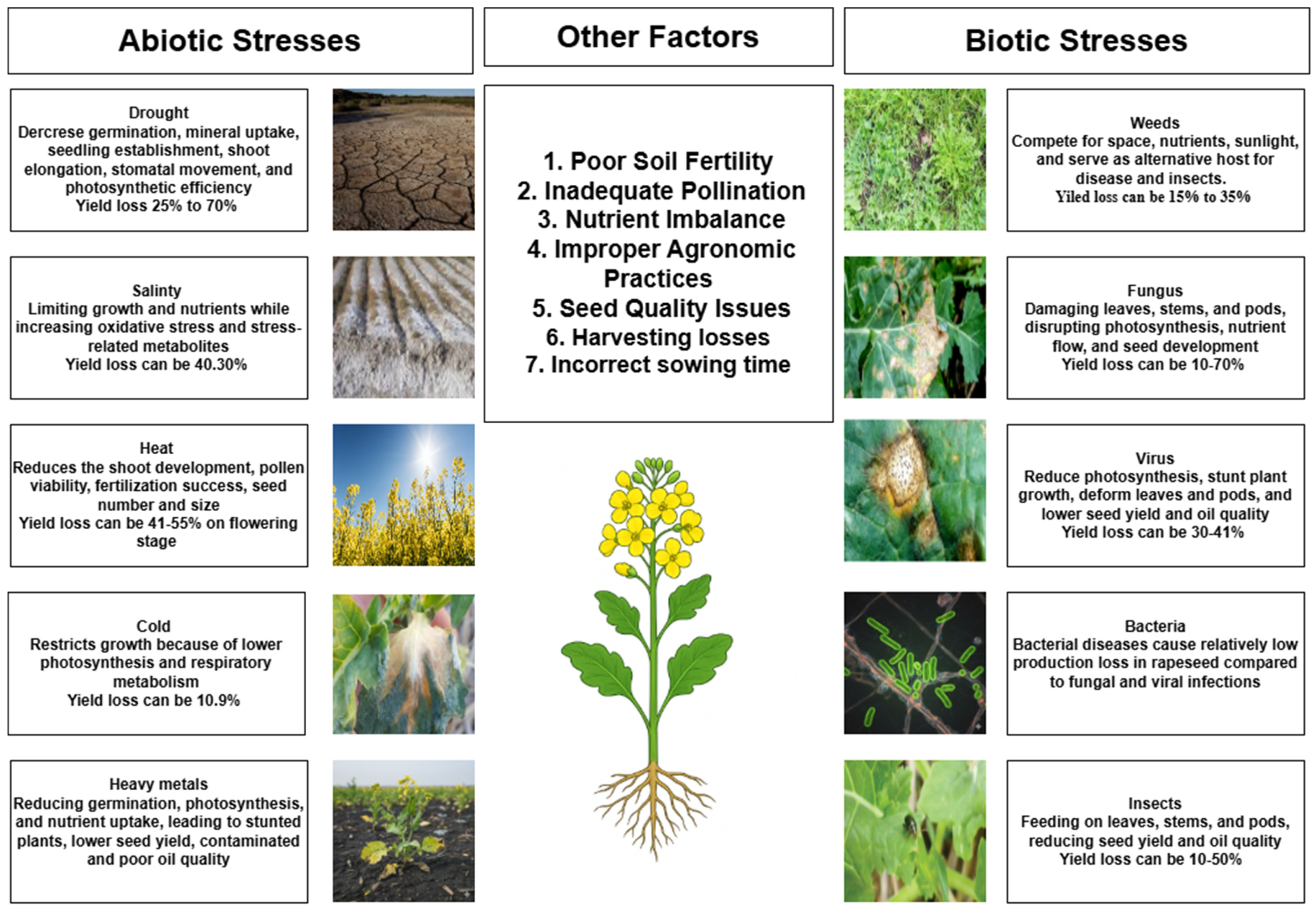
Climate change is one of the most alarming threats to the world, particularly to crop production. Approximately 50%, 38%, 34%, and 10–25% of yield losses are due to abiotic factors, biotic factors (insect pests), weeds, and climate change worldwide, respectively [14]. Canola yield is mainly reduced by abiotic factors such as drought, salinity, temperature extremes (heat and cold), waterlogging, and heavy metals [15]. In addition, biotic factors (fungi, bacteria, viruses, weeds, and insect pests) also contribute to production losses [16,17,18,19] (Figure 2).
Drought adversely affects canola plants at every growth stage, including germination, mineral uptake, seedling establishment, shoot elongation, stomatal movement, and photosynthetic efficiency (due to loss of chlorophyll contents and damaged thylakoid membranes), as well as seed development and quality [20,21]. Notably, drought stress at the early flowering stage (1–2 weeks after flowering) is more destructive because it promotes flower shedding, induces seed sterility, and reduces both pod formation and seed size [22]. Moreover, it deteriorates the quality of oil by increasing anti-nutritional components (glucosinolate content) while decreasing oil and protein contents, i.e., 17% reduction in oil content [23]. Overall, a yield loss of up to 25–70% due to drought (depending on severity) in canola has been recorded [15,24].
Salinity refers to the concentration of soluble salts in the soil, particularly sodium chloride. Around 1 billion ha of land worldwide is salt-affected, representing 7% of the total global land area. Approximately 30% of the salinity in irrigated areas is due to human activities, and yield loss can reach 40.30% in highly saline soil [25,26]. Furthermore, the concentration above 150 mM NaCl has adverse effects on the growth and development of canola [27]. Salt stress significantly decreases yield by reducing plant biomass, relative water content (RWC), plant height, leaf area, nitrogen, magnesium, potassium, phosphorus, calcium, and chlorophyll contents while enhancing sodium accumulation, H2O2 and O2− generation, activities of antioxidant enzymes, and production of osmolyte, proline, and endogenous salicylic and jasmonic acids [15,28,29].
Rising temperature has the most visible impact of climate change and is expected to increase by 0.3–4.8 °C by the end of this century. Heat stress is unavoidable and can affect the plant at every stage [30]. In canola, temperatures above 27 °C cause yield loss due to floral sterility, especially during the early flowering stage (41–55% yield loss) [31,32,33]. Notably, an average increase of 1 °C could cause a yield loss of 113 (±21) kg per hectare [34]. It affects the yield and quality by altering oil composition, glucosinolate profiles, fatty acid profile, and simultaneously increasing the carbohydrate content, ROS production, omega-6/omega-3 ratios, while decreasing the oil accumulation, chlorophyll content, photochemical efficiency, and inactivating Rubisco [35,36,37,38]. High temperature reduces shoot development, pollen viability, fertilization success, seed number and size, which ultimately results in lower production [31,39]. On the other hand, low temperature also affects yield by up to 10.9% due to stunted growth, while chilling stress (0–15 °C) can result in restricted growth because of lower photosynthesis and respiratory metabolism. Moreover, freezing temperature (<0 °C) causes ice crystal formation and mechanical injury, eventually leading to plant death [40].
Among biotic factors, diseases such as blackleg (Leptosphaeria maculans), downy mildew (Hyaloperonospora brassicae), clubroot (Plasmodiophora brassicae), alternaria leaf spot (Alternaria brassicae), white rust (Albugo candida), and sclerotinia stem rot (Sclerotinia sclerotiorum) are more damaging than others, as blackleg alone can result in yield losses ranging from 18% to 99% [18,19]. Insects have a significant impact on the growth, yield, and quality of plants. Major insects are flea beetles (Phyllotreta cruciferae and Phyllotreta striolata), cutworms (Agrotis ipsilon), root maggots (Delia radicum), aster leafhopper (Macrosteles quadrilineatus), cabbage seedpod weevil (Ceutorhynchus obstrictus), lygus bugs (Lygus spp.), Bertha armyworm (Mamestra configurata), diamondback moth (Plutella xylostella), red turnip beetle (Entomoscelis americana), turnip aphid (Lipaphis erysimi), grasshopper (Melanoplus spp.), swede midge (Contarinia nasturtii), canola flower midge (Contarinia brassicola), common pollen beetle (Brassicogethes aeneus), and cabbage stem flea beetle (Psylliodes chrysocephala). For example, there is an approximate 10% industry yield loss due to flea beetles, and more than 50% loss by swede midge [41,42]. Besides insects and diseases, weeds are also an important biotic stress factor as they compete with canola for space, nutrients, and sunlight [43]. Moreover, they act as alternative hosts for pathogens and insects; for instance, Cirsium arvense has the associated pathogen Leptosphaeria maculans. Common weeds affecting canola are Tripleurospermum inodorum, Sonchus arvensis, Capsella bursa-pastoris, and Descurainia sophia [44]. The average yield loss due to weeds could be 15% to 35%, depending on weed type and infestation intensity [45].

1.3. Climate Change and the Need for Resilient Crops

Climate change can be defined as a change in the statistical properties of the climate that persists over a long period. It may be due to natural or external forces. Since the Industrial Revolution in the last two centuries, greenhouse gas emissions have increased significantly. As a result, more heat is trapped in the atmosphere, and consequently, it enhances the temperature of the planet. Comparing the 50-year period (1850–1900) with the 10-year period (2010–2019), the temperature has risen by about 1.07 °C [46]. The global temperature is rising about 0.2 °C per decade and is expected to increase by 1.5 °C by 2050. An estimated 5–10% yield loss occurs for every 1 °C temperature increase [47].
The global population is increasing rapidly and is expected to reach 10 billion by 2050. With nearly one billion people facing hunger, global food production must increase by 28% and 60%, respectively, by 2035 and 2050 [48]. Consequently, the production area needs to increase from 1.4 billion hectares to 1.5 billion hectares [49,50]. It is nearly impossible to reverse the drastic effect of climate change; therefore, the only solution is to develop climate-resilient cultivars to cope with a changing environment. To achieve this, different breeding strategies have been used to develop crops adapted to challenging conditions. Some conventional breeding methods include selection and hybridization, marker-assisted selection, genomic selection, and mutation breeding. Moreover, some advanced technologies, including genetic modification and genetic engineering, have been extensively used.

2. Limitations in Conventional Breeding and Need for Genetic Engineering

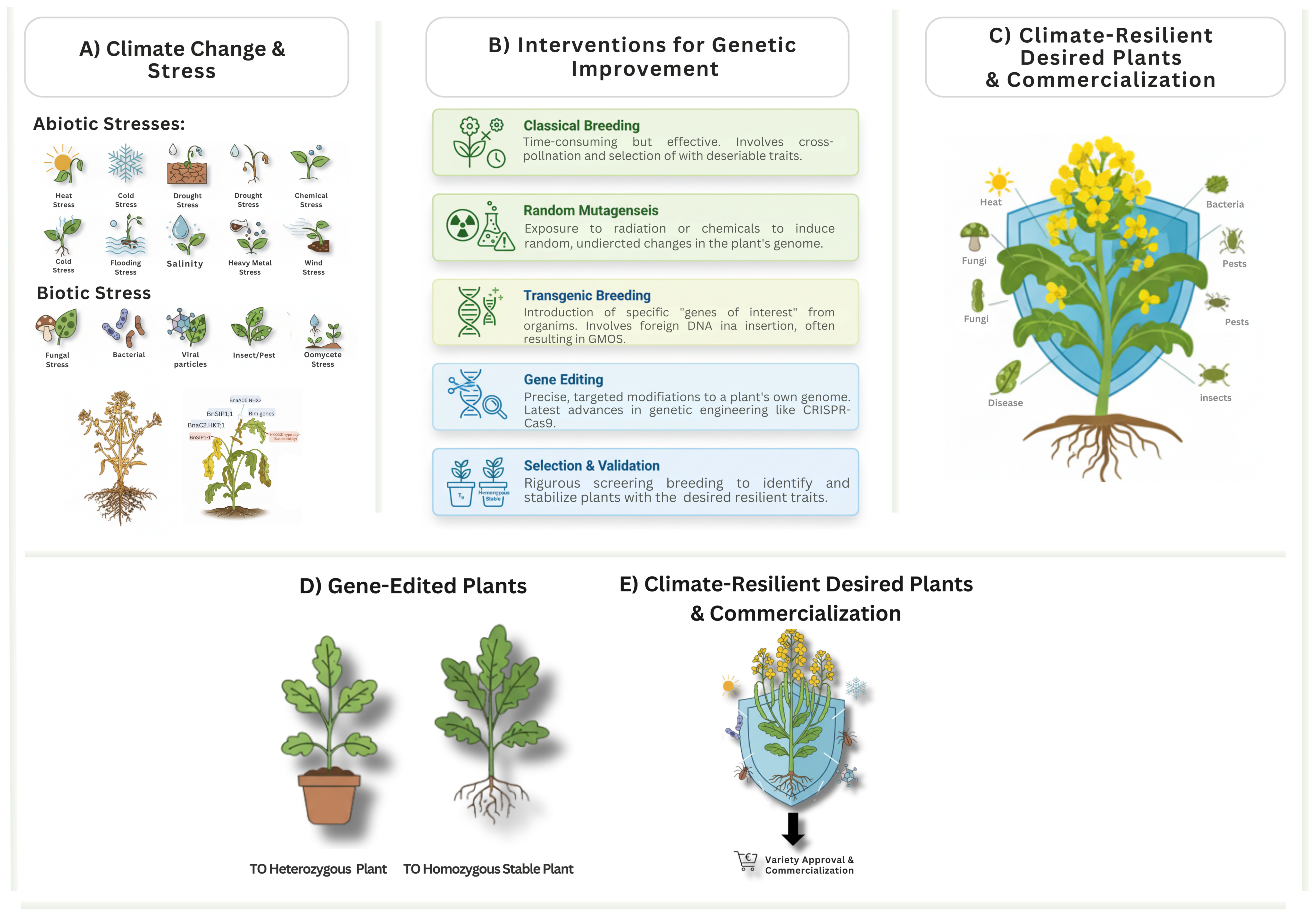
Plant breeding originated with human domestication approximately 10,000 years ago, and since then, conventional breeding has achieved great successes in every crop. Nevertheless, in the era of rapid climate change, traditional breeding is not enough to meet the global food demand. However, despite the population increasing over time, crop improvement with the typical method requires about 8–10 years to develop a new variety [51]. Furthermore, several other limitations exist, including environmental factors influencing the phenotypic traits (making selection difficult), the transfer of undesirable genes, and resistance breakdown against evolved pathogen races [52]. In addition to these limitations, narrow plant diversity is also a major constraint in conventional breeding since there is continuous selection for uniform plants. The bottleneck effect of domestication limits genetic diversity, particularly for stress tolerance. To overcome this, interspecific hybridization with wild relatives could help broaden the genetic base of populations; however, its success rate is very low and limited to a few crops. In addition, it is very difficult to make backcrosses to attain high yield and remove unwanted traits like anti-nutritional compounds, i.e., erucic acid [53]. Taken together, conventional breeding alone is not enough to meet the requirements, and molecular, genomics, and biotechnological approaches are essential for future crop improvement (Figure 3).
Recent biotechnological approaches, particularly gene editing techniques, provide a fast solution to develop climate-resilient varieties. Gene editing provides target mutagenesis through CRISPR (Clustered Regularly Interspaced Short Palindromic Repeats), zinc-finger nucleases (ZFNs), and transcription activator-like effector nucleases (TALENs) [54]. CRISPR allows the improvement of stress tolerance by editing only the target genes, while RNAi could selectively silence negative regulators of stress-responsive genes. Among gene editing techniques, CRISPR/Cas9 is widely used for crop improvement. It enables precise, efficient, and targeted modification in plants to improve yield-related traits, nutritional value, and biotic and abiotic stress tolerance without incorporating foreign DNA. The candidate gene is targeted by the guide RNA, which allows the precise editing of specific genes in the genome (Figure 4). The combined application of these systems with suitable delivery vectors (such as tissue-specific promoters, morphogenic regulators, and transgene-free approaches via grafting) provides a high degree of efficient heritable modification, and thus potentially transgene-free modification. In combination with pan-genomic and multi-omics analysis to identify key select quantitative trait loci and regulatory hubs, CRISPR and RNAi-based interventions may provide further avenues for the future generation of high-stress-tolerance canola cultivars with stable yield over a range of conditions, as well as enhanced nutritional and oil quality profiles, in line with agronomic and global food security goals.

3. Genetic Modified Approach

Genetic modification has been extensively applied in B. napus to enhance tolerance to both biotic and abiotic stresses (Table 1). Transgenic approaches targeting antifungal genes (e.g., chitinases, thaumatin-like proteins, oxalate oxidases, defensins) and defense regulators (e.g., WRKY, NPR1, MPKs) have significantly improved resistance against pathogens such as Sclerotinia sclerotiorum, L. maculans, Botrytis cinerea, Pseudomonas syringae, as well as insect pests. For abiotic stresses, overexpression of genes involved in cuticle formation, stomatal regulation, ROS detoxification, and stress-responsive signaling has enhanced drought, salinity, cold, and waterlogging tolerance. These modifications often confer multiple protective effects simultaneously, such as reduced lesion size, higher antioxidant activity, improved water-use efficiency, and strengthened cell walls. Genetic engineering in canola provides a versatile strategy to bolster plant resilience against diverse environmental challenges.

3.1. Biotic Stress

S. sclerotiorum is one of the most destructive pathogens, and many studies have been conducted to mitigate it. The primary and most reproducible mechanism against this pathogen is the involvement of direct enzymatic degradation of fungal cell wall polymers. The fungal cell wall is mainly composed of chitin and β-glucans, which are necessary for the maintenance of hyphal structure, integrity, and growth. By increasing the activities of chitinase and glucanase in the host, it weakens the hyphal wall that limits penetration and decreases colonization efficiency. Several transgenic studies support this mechanism, such as chit33 [55], chit36 [56], chit42 [60], Trichoderma chimeric chitinase gene and a rice thaumatin-like protein (tlp) gene [57], tlp [58,59], co-expression of defensin gene and chimeric chit42 [70], and bgn13.1 [68]. All these studies converge mechanistically on fungal structural disruption, which enzymatically weakens fungal cell walls, reducing lesion size and fungal growth. However, despite consistent success, these strategies often provide partial resistance rather than complete immunity because of pathogens’ adaptability and redundancy in the composition of fungal cell walls.
Another mechanism by which plant protects its cell walls from degradation by S. sclerotiorum is the secretion of proteins that inhibit polygalacturonases that degrade pectin of the plant cell wall. Polygalacturonase-inhibiting proteins (PGIPs) protect cell wall integrity and restrict pathogen penetration. Several studies support this mechanism, such as the overexpression of BnPGIP2 [72], OsPGIP6 [65], and the co-expression of chit42 + pgip2 [61] support the concept that inhibiting fungal polygalacturonases reduces lesion expansion and enhances resistance. Comparatively, PGIP-based approaches seem to be more effective when combined with cell wall-degrading enzymes as a multi-layered strategy targeting different virulence factors of the pathogen, which could be more effective than a single-gene strategy.
Another key virulence determinant of S. sclerotiorum is oxalic acid (OA), which acidifies host tissue, suppresses oxidative burst, chelates calcium, and promotes programmed cell death. Detoxification of OA disrupts the pathogen’s virulence and simultaneously restores the redox-dependent immune responses. Oxalate oxidase converts oxalate into CO2 and H2O2, linking toxin degradation with activation of oxidative signaling. Several transgenic studies have demonstrated this defense mechanism, such as barley oxalate oxidase [66], wheat OXO [67], and lipid transfer protein (LTP), improving OA tolerance and antioxidant activity [64]. This is particularly successful because it directly targets a major pathogenicity factor, suggesting that targeting virulence determinants may be more effective at conferring strong and stable resistance than simply producing structural defense.
A fourth major resistance mechanism involves reprogramming of endogenous immune signaling pathways instead of directly targeting the pathogen. This includes modulation of SA, JA, ET, ROS, and MAPK signaling cascades. These pathways regulate defense gene expression, oxidative responses, and immune prioritization. For example, overexpression of BnaNPR1 [63], AtGDSL1 [69], hrf2 [71], antimicrobial peptide MSI-99m [62], BnaMPK3 and BnaMPK6 [73,74] enhances resistance against various pathogens. However, manipulation of signaling pathways can have “trade-offs” such as growth penalties or constitutive defense activation that limit their agronomic applicability relative to more targeted approaches.
Transgenic studies targeting other pathogens have also demonstrated the effectiveness of expressing antimicrobial proteins that directly inhibit pathogen growth, such as the MiAMP1 antimicrobial peptide, which confers resistance against Leptosphaeria maculans [75]. Similarly, sporamin and PjChi-1 chitinase protect against S. sclerotiorum and the insect pest Plutella xylostella [80], while DRR206 protects against L. maculans, Rhizoctonia solani, and S. sclerotiorum [81]. Broad-spectrum antimicrobial proteins confer resistance to multiple pathogens; however, their effectiveness can vary depending on lifestyle and infection strategies of pathogens. Another resistance strategy involves regulating the host immune signaling pathways through transcription factors and MAP kinases that activate defense-related genes. For instance, transgenic canola having BnNAC19 and BnMKS1 genes showed improved resistance against Leptosphaeria maculans [76,77], BnaWRKY53 enhanced resistance against Pseudomonas syringae [78], and BnMPK4 against S. sclerotiorum and Botrytis cinerea [79]. While these regulatory genes can confer broad-spectrum resistance, their results are often variable due to complex network interactions and cross-talks between signaling pathways.
A widely used strategy for controlling insect pests in transgenic plants is the expression of insecticidal proteins in transgenic plants that directly affect insect feeding and survival. Examples include the expression of insect-specific chitinase (chi) and scorpion toxin gene (BmkIT) against Plutella maculipennis [82], the Cry1C gene against Plutella xylostella [83], and cry1Ab against lepidopteran pests [84]. This strategy is highly effective due to its direct mode of action; however, there are considerable long-term risks due to the rapid evolution of insect resistance under continued selective pressure. Another approach is to modify the morphological traits like trichome density, which significantly reduced feeding by P. cruciferae and P. striolata larvae by the overexpression of AtGL3 [85]. Compared to toxin-based approaches, modification of morphology confers longer-lasting but generally lower levels of resistance, suggesting a trade-off between resistance level and evolutionary stability.

3.2. Abiotic Stress

The most common mechanism for drought tolerance is structural adaptations, such as increased cuticular wax deposition and reduction in stomatal density, which can significantly reduce water loss in drought conditions. These adaptations improve water use efficiency while limiting transpiration during water shortage conditions. Several transgenic studies support this mechanism, such as the overexpression of the following genes: BnaC9.MYB46 [86], Bna.EPF2 [87], BnaC6.ARGOS [95], BnKCS1-1, BnKCS1-2, and BnCER1-2 [91] in transgenic canola’s enhanced drought tolerance. These structural modifications are generally stable and effective under field conditions. Another mechanism involves the regulation of stress signaling and hormonal responses, particularly related to abscisic acid (ABA) and calcium-mediated signaling that activate drought-responsive genes and physiological adaptations. For example, overexpression of BnPLC2 [88], BnPtdIns-PLC2 [96], BnaCPK5 [92], BnaA01.CIPK6 [93], and BnRH6, which increased ABA sensitivity [94], and miR393, which enhanced stress-responsive gene expression and anthocyanin accumulation [98]. ABI1-overexpressing plants showed lower RWC, reduced photosynthetic pigments, and suppressed expression of ABA-responsive drought marker genes, ultimately decreasing the drought resilience [97]. This study suggests that not all signaling manipulations are beneficial for stress tolerance, and precise regulation of hormonal pathways is critical for achieving positive results. Drought stress frequently induces excessive production of ROS that can damage the cellular components. To tackle this situation, an important mechanism involves the strengthening of antioxidant systems (increased antioxidant enzyme activities (SOD and POD)) and accumulation of protective metabolites (proline and anthocyanin accumulation) that reduce oxidative damage. For example, overexpression of BnMAPK1 [90], BnaPDX1.3 [99], and LEA3 and VOC genes [89]. Antioxidants have been successfully used as a protective strategy but typically provide indirect protection, and their effectiveness depends on the duration and intensity of stress.
Similarly to drought stress, ROS production is enhanced during salt stress, and a mechanism is required to detoxify ROS and strengthen the antioxidant system. Improved ROS-scavenging capacity could protect cellular components while maintaining the membrane stability during stressed conditions. To cope with salinity, genes such as tAPX [100] and Deinococcus genes (IrrE, Csp, and WHy) [102] successfully improved stress tolerance in transgenic canola. In contrast, overexpression of BnaA10.WRKY75 in canola caused higher accumulation of ROS, leading to increased sensitivity to cadmium and salt stress [106]. This contrasting study emphasizes that gene function is highly context-dependent, and overexpression does not always result in improved tolerance. Ion homeostasis and osmotic regulation are other mechanisms that involve maintaining ion balance and decreasing cytosolic sodium toxicity. Genes such as AtNHX1 [103], 1-aminocyclopropane-1-carboxylate (ACC) deaminase gene [101,104], YHem1 [105] exemplify this mechanism. Ion transport-based strategies are one of the most successful approaches for salt tolerance due to their direct role in maintaining cellular homeostasis. Salt tolerance can also be improved through structural and metabolic modifications. For example, overexpression of BnWIN1 enhanced cuticular wax deposition, oil content, and promoted plant growth under salt stress [101]. In addition to conferring stress tolerance, this modification improves agronomically important traits such as biomass and seed oil content through structural modifications.
A common mechanism for cold and freezing tolerance is stabilizing cellular membranes and activating antioxidant defense to cope with oxidative stress caused by low temperatures. These responses include the upregulation of cold-responsive genes and protection against membrane damage. Overexpression of BNCBF5 and BNCBF17 [107], AtACBP6 [111], and LuSAD1 and LuSAD2 [108] enhanced freezing and chilling tolerance in transgenic canola. These strategies are generally effective because they target fundamental cellular stability or stress defense mechanisms; however, as with other abiotic stress responses, plant performance may be affected by stress level and developmental stage.
In addition to stress-tolerance traits, the transgenic strategy has also been employed to introduce herbicide resistance and reporter genes in canola. Transgenic B. napus was transformed to confer herbicide glyphosate resistance using a synthetic glyphosate oxidoreductase (GOX) gene [109]. Transgenic plants conferring herbicide resistance are very efficient for current agricultural practices; there is a risk for the rapid appearance of herbicide-resistant weed populations, which would affect the long-term sustainability of such approaches. Canola was genetically transformed using Agrobacterium tumefaciens to introduce uidA (GUS) [110]. For assessment of crop performance in controlled environments, and for determining the efficiency of transformation for crop improvement, reporter genes are useful mainly for functional studies rather than for agronomic gain.

4. RNA Interference (RNAi) Approach

RNAi has been widely used in B. napus to manipulate gene expression and study stress responses (Table 2). For biotic stresses, RNAi-mediated silencing of genes such as TTG1, BnMYB43, BnMYB69, BnaMPK3/6, BnaNPR1, and BnaWRKY75 has revealed their roles in defense regulation, affecting hormone signaling (SA, JA, ET), reactive oxygen species (ROS) accumulation, and structural barriers like lignin, cellulose, and cuticle thickness. These modifications influence resistance against pathogens, including S. sclerotiorum, white rust, and blackleg disease, as well as insect herbivory. For abiotic stresses, RNAi targets negative regulators or stress-responsive genes, such as BnFTA, BnaJAZ3, BnaC9.MYB46, LEA3, and PEPCase, and modulates drought tolerance by altering ABA sensitivity, stomatal conductance, cuticle properties, and oxidative stress management. Overall, RNAi studies highlight common mechanistic themes, hormone regulation, ROS balance, and structural defenses, offering valuable insights into how gene regulation shapes stress resilience in canola.

4.1. Biotic Stress

Following RNAi-based downregulation of the TTG1 gene, the leaves of plants exhibited a change in the insect interactions, as evidenced by the feeding behavior (reduced feeding) of flea beetles and decreased oviposition of diamondback moth. Furthermore, its downregulation also reprogrammed metabolism and altered glucosinolate pathways [112].
RNAi has also proved to be an effective control for pathogens (Table 2). Studies showed that genes affecting cell wall composition and cuticle integrity are important for resistance. Silencing of these genes weakens the structural barrier of resistance and ultimately leads to increased disease susceptibility. Some studies, such as silencing of BnMYB69 [114] and BnGPAT19/21 [117] genes, altered lignin, cellulose, and protopectin content, and thinning the cuticle, led to compromising defense, while silencing the BnMYB43 gene increased resistance against S. sclerotiorum with many morphological disorders. These contrasting results suggest that structural genes play a dual role in growth and defense. Therefore, their silence may result in trade-offs between resistance and normal plant development. Regulation of ROS homeostasis is an important mechanism for defense signaling and regulating hormone-mediated defense pathways. Silencing of these genes impairs SA-, JA-, and ET-dependent signaling, resulting in compromised resistance. RNAi-mediated silencing of BnaMPK3 and BnaMPK6 [73,74], BnaNPR1 [115], and BnaWRKY75 [116] resulted in increased susceptibility of canola against S. sclerotiorum. Suppression of these key regulatory genes results in loss of resistance, confirming their essential role in defense signaling pathways.
RNAi suppressed the EDS1 expression in a white rust-resistant canola breeding line made fully susceptible to Albugo candida [118]. Notably, the BnTX1 gene negatively regulates BnNCED3 expression; therefore, its downregulation through RNAi elevated BnNCED3 transcript levels and improved defense against blackleg disease by promoting ABA biosynthesis [119]. These findings demonstrate that RNAi can not only be used to down-regulate positive regulators but also enhance plant resistance by silencing negative regulators of defense pathways.

4.2. Abiotic Stress

RNAi was extensively used to downregulate gene expression for the development of drought-tolerant plants. One important mechanism underlying drought tolerance is the regulation of abscisic acid (ABA) signaling and stomatal behavior, which control transpiration. For example, silencing of the BnFTA gene improved drought avoidance by enhancing stomatal conductance and reducing water loss [120]. On the other hand, silencing of BnaJAZ3 decreased drought tolerance [123]. Another mechanism involves structural barriers and cuticular protection; wax and cutin layers reduce water loss and protect plants. Disruption in these structures often leads to decreased tolerance. For example, RNAi silencing of BnaC9.MYB46 reduced wax crystal density, and led to a 43% thinner cuticle, a 17–18% reduction in wax, and a 25–33% decrease in cutin monomers, which ultimately led to lower survival in water shortage conditions [86]. These results highlight that structural integrity is crucial for stress adaptation, and its disruption generally results in negative phenotypic consequences. Drought tolerance also relies on osmotic regulation and metabolic adjustments that maintain cellular stability under water shortage. Studies corresponding to this mechanism include RNAi knockdown of the PEPCase gene (BNPE15) [121] and LEA3 and VOC [89]. However, metabolic pathway manipulation often produces moderate effects, suggesting that these pathways contribute to tolerance in combination with other mechanisms. Regulation of antioxidant enzymes and stress signaling pathways is also an important mechanism that protects the cells from oxidative damage during drought stress. RNAi-mediated silencing of BnMAPK2 reduced drought tolerance, as evidenced by more leaf dehydration, malondialdehyde (MDA) content, together with lower proline accumulation, and peroxidase (POD) activity [122]. These results highlight the critical role of antioxidant defense and signaling pathways in drought stress adaptation, and their suppression consistently leads to increased sensitivity.

5. Gene Editing Approach

CRISPR–Cas9 genome editing has emerged as a powerful tool in B. napus to dissect gene function and enhance tolerance to both biotic and abiotic stresses (Table 3). For biotic stresses, targeted knockout or editing of genes such as WRKY, MPK3/6, CERKs, ICS1, and PMR4 has revealed key regulators of defense signaling, including salicylic acid (SA), jasmonic acid (JA), ethylene pathways, ROS production, lignin/cell wall composition, and callose deposition. These modifications have improved resistance against a range of pathogens, including S. sclerotiorum, V. longisporum, P. brassicae, powdery mildew, and clubroot disease. For abiotic stresses, CRISPR–Cas9-mediated editing of genes involved in drought, salinity, temperature, and heavy metal tolerance, such as PUB18/19, ABI5, NF-YA7, VTC, and HKT1, has highlighted mechanisms of water-use efficiency, stomatal regulation, antioxidant activity, osmotic balance, and ABA signaling. These studies demonstrate that CRISPR–Cas9 allows precise manipulation of stress-responsive pathways, uncovering both positive and negative regulators, and provides a versatile platform to strengthen canola resilience against multiple environmental challenges.

5.1. Biotic Stress

Many CRISPR–Cas9 studies have been conducted to develop resistance against S. sclerotiorum. Different resistance mechanisms have been explored, many of which involve transcription factors that regulate immune signaling pathways such as salicylic acid (SA), jasmonic acid (JA), and phytoalexin biosynthesis. Depending on their specific roles within the defense network, these factors can either enhance or compromise plant resistance. CRISPR-mediated editing of BnWRKY70 [124], WRKY28 [125], and BnWRKY15 [126] enhanced resistance while knocking out BnaA07.WRKY40 [127] and BnaWRKY75 [128] reduced resistance. These contrasting outcomes highlight that transcription factors that play crucial roles in plant defense have been shown to have both positive and negative functions, leading to variable effects following their editing. Modifying cell wall composition (alterations in lignin composition) is another mechanism to strengthen the structural barriers that limit pathogen penetration. Two studies were conducted to knock out the BnF5H gene [129] and the BnaIDA gene [130], which resulted in enhanced resistance. Compared to regulatory genes, structural modifications can provide more stable and predictable resistance by physically reinforcing barriers to pathogen invasion. Some CRISPR studies target genes that are involved in immune signaling cascades and pathogen recognition pathways that regulate downstream defense responses. Three genes were edited, BnMPK3 [131], BnaCERKs [132], and BnaSTOP2s [133], resulting in compromised resistance. This indicates that disruption of key immune signaling components generally results in loss of resistance, emphasizing their critical role in defense. Another mechanism involves genes associated with lipid metabolism and cellular defense processes that influence membrane integrity and ROS-related signaling during the attack of pathogens. CRISPR/Cas9-mediated editing of BnaC07.GLIP1 negatively affected the resistance against S. sclerotiorum. Edited plants had significantly reduced length, leaf size, and seed size, along with larger lesion areas. It also affected the lipid composition and promoted the formation of phospholipids, which correlated with reduced ROS levels and increased defense-related gene expression [134]. This suggests that genes that are involved in primary metabolism and membrane dynamics are highly likely to have pleiotropic functions; thus, their manipulation could reduce growth and defense capability, and as such, may not be suitable as editing targets.
Some edited genes regulate hormone-mediated immune pathways, such as jasmonic acid (JA) and ethylene signaling, which are necessary for defense against necrotrophic pathogens. Resistance could be enhanced by targeting these genes. The knockout of RLK902 improved resistance against S. sclerotiorum and Botrytis cinerea [135], the knockout of BnMLO6 enhanced resistance to powdery mildew, and the knockout of S. sclerotiorum [136] and CRT1a conferred resistance to Verticillium longisporum [137], supporting this resistance mechanism. Some genes act as negative regulators of disease resistance, such as the loss of function of the BnQCR8 gene, which conferred resistance to both S. sclerotiorum and B. cinerea [138].
Certain resistance genes are essential for the recognition of pathogens and activation of immune responses. Knocking out these genes will result in decreased resistance. In one study, Rcr-1 was knocked out through CRISPR–Cas9, which converted a resistant plant against clubroot to a susceptible one [139]. In addition, some host genes function as susceptibility factors during pathogen attack. Loss of function of these genes could stop pathogen development and enhance resistance. Disruption of Bna-APS4 enhanced resistance to clubroot [140], and PMR4 orthologs conferred resistance to both clubroot and powdery mildew [141]. This further supports that CRISPR-based loss-of-function approaches are generally most effective when targeting genes facilitating pathogen infection rather than those required for defense.
Some genes contribute to resistance by regulating the nutrient transport and structural barriers in roots to prevent pathogen penetration. For example, loss of functions of NPF5.12 and MLP6 increased susceptibility to V. longisporum. The susceptibility was associated with impaired nitrate transport and defective suberin barrier formation, allowing successful root infection by the pathogen [142]. These findings indicate that physiological processes such as nutrient transport and barrier formation are tightly linked to defense, and their disruption can indirectly increase susceptibility. Some genes are involved in the function of cellular organelles that can indirectly activate plant defense pathways by triggering stress-related signaling. CRISPR/Cas9 knockout of BnHva22c reduced plant susceptibility to V. longisporum. This is due to impairment of endoplasmic reticulum and Golgi functions that activate defense-related and phytohormone-responsive genes [143]. Transcription factors have a critical role in the regulation of defence-related gene expression during pathogen attack [169]. For example, CRISPR/Cas9 knockout of BnERF019 reduced resistance to Leptosphaeria biglobosa [144]. Transcription factor-based editing has both potential benefits and risks due to its crucial regulatory roles; therefore, targeted, pathway-informed approaches need to be taken.

5.2. Abiotic Stress

Modification of hormone-mediated signaling pathways (abscisic acid (ABA), ethylene, and gibberellin signaling), which are involved in stomatal closure, growth inhibition, and stress-responsive gene expression, is a major mechanism for drought tolerance. Many studies have been conducted, such as editing of BnaABI5, which improved germination and drought tolerance by reshaping the transcriptional landscape, notably through activation of transposable element (TE)-derived protein-coding genes and lncRNAs. This modification resulted in improved seed germination and drought resilience, thereby uncovering novel TE- and lncRNA-mediated mechanisms of stress adaptation [145,146]. This finding demonstrates that CRISPR-mediated genome editing can reveal novel regulatory layers of stress adaptation; however, such complex transcriptional reprogramming may lead to unpredictable downstream effects. Loss of function in BnaCERK [147] and BnaRGA (DELLA proteins) [148] led to higher ion leakage, membrane damage, MDA content, and water loss, along with less sensitivity to stomatal closure. Cumulatively, the results confirm that mutants were hypersensitive to drought. These findings highlight that disruption of central hormonal regulators often leads to negative phenotypes. Stomatal regulation and water conservation are important mechanisms that directly affect plant water loss during drought. Editing BnaJUL1, BnaTBCC1 [149], and BnaA9.NF-YA7 [150] demonstrated that stomatal morphology strongly influences drought tolerance. Several studies highlight the role of antioxidant systems and osmotic balance in drought tolerance. Knockout of BnPUB18 and BnPUB19 exhibited less electrolytic leakage and MDA content of leaves, while showing more total antioxidant activity after drought treatment [151]. In contrast, editing BnaC09.OGT has a negative impact on osmotic stress [152]. This contrast indicates that both antioxidant and metabolic pathways make significant contributions to stress tolerance, but their manipulation can yield variable outcomes depending on gene function and pathway integration. Some genes influence tolerance indirectly by maintaining normal plant development and structural integrity during drought stress. Mutations of BnaPLDα1 [153] and BnSGI [154] resulted in a reduction in plant height, silique number, and length of inflorescence, effective branches, silique length, and silique seed number under drought stress. Similarly, loss of function of BnaTARs caused severe developmental abnormalities and reduced drought tolerance [155]. In contrast, upstream open reading frame (uORF) gene editing of the BnVTC gene resulted in conferred higher ascorbic acid (AsA) in leaves, stems, and buds, as well as increased plant and first branch height, and silique length. In addition, BnVTC2-uORF-edited plants exhibit tolerance to drought, low temperature, and salinity [164]. Overall, these findings suggest that developmental stability and antioxidant metabolite production play important roles in drought adaptation.
Hormonal signaling plays a crucial role in regulating plant responses to salinity stress, particularly during germination and early growth. For example, Zinc finger transcription factor BnaWIP2 is involved in germination, and by knocking out BnaWIP2 through CRISPR–Cas9, the germination was significantly reduced under NaCl treatment, whereas its overexpression enhanced germination. Furthermore, it suppressed the accumulation of ABA by inhibiting the expression of BnaA05.NCED3; therefore, its overexpression promotes germination [156]. Similarly, stress signaling pathways are also important for maintaining cellular homeostasis. For example, knocking out BnaMPK6 resulted in plants that were hypersensitive to salt stress. Salt treatment significantly reduced the growth, plant height, and fresh weight, while enhancing free proline, ROS, and MDA accumulation [157]. These findings reinforce that key signaling genes are essential for stress tolerance, and disruption of these genes enhances stress sensitivity. Another important mechanism for salt tolerance involves maintaining ion balance and nutrient uptake. CRISPR/Cas9 knockout of BnGRP1Hap1 in canola could enhance the susceptibility against low phosphorus stress. The mutants exhibited a reduction in root length, root weight, and shoot dry weight [158]. Similarly, knockout of BnaA2.HKT1 through CRISPR–Cas9 in B. napus resulted in increased plant sensitivity to salt stress. Consequently, the mutants exhibited higher Na+ accumulation in the shoot, which in turn led to a reduction in the biomass production even under high Boron conditions [159]. Ion transport-related genes directly regulate cellular homeostasis; however, their disruption consistently leads to severe sensitivity. These findings highlight the importance of ion transport and nutrient acquisition in maintaining plant growth under stress conditions.
Photosynthetic efficiency and chlorophyll biosynthesis are critical processes influencing plant growth and responses to heat stress. The BnaCHLI1 gene was knocked out through CRISPR–Cas9, resulting in mutants exhibiting yellow leaves at the seedling and flowering stages. In addition, the edited plants showed shorter height, irregular mesophyll cell arrangement and shape with reduced photosynthesis efficiency, chlorophyll contents, stomatal conductance, and transpiration rate, whereas increased tolerance to high light intensity and heat dissipation efficiency [160]. This indicates a trade-off between growth and stress tolerance, where reduced photosynthetic capacity may enhance survival under extreme conditions but limit overall productivity.
Cold tolerance in canola is often associated with the regulation of stress-responsive pathways, membrane stability, and osmoprotectant accumulation. Several gene-edited studies, such as the BnHOS1 gene, were modified through CRISPR–Cas9, which acts as a negative regulator of cold tolerance. The edited plant showed higher tolerance to freezing temperature by decreasing the relative leakage, MDA, and total chlorophyll content after freezing injury [161]. Likewise, BnaLAC2 is a negative regulator of low temperature, and loss of its function led to growth, greater biomass accumulation, and higher proline contents; consequently, the edited plants exhibited enhanced cold tolerance [162]. Similarly, targeted mutation of the BnTTG1 gene through CRISPR–Cas9 improved seed germination under cold and salt stress by altering ABA-responsive gene expression [163]. These findings collectively highlight the role of regulatory genes controlling stress signaling and metabolic adjustments in improving cold tolerance. Notably, many of these genes act as negative regulators, and their disruption consistently improves tolerance.
Genome editing has also been used to develop herbicide-tolerant canola varieties by targeted mutations in genes associated with herbicide sensitivity or metabolic pathways. The Cytidine base editing was performed in the BnaA06.RGA and BnaALS genes through CRISPR–Cas9, and the edited plants exhibited a dwarf phenotype and resistance to sulfonylurea herbicides [165]. Similarly, to confer herbicide tolerance, the endogenous BnaC04EPSPS gene was modified using sgRNAs processed by the Csy4 endoribonuclease from Pseudomonas aeruginosa to create targeted double-strand breaks, combined with a donor template carrying synonymous mutations and a geminiviral replicon for efficient and precise editing. Consequently, the resulting seedlings were tolerant to glyphosate [166]. These studies highlight the potential of precise and predictable gene modifications, making it one of the most successful applications of CRISPR technology for developing herbicide-tolerant crops.
Genome editing has also been applied to reduce heavy metal accumulation by targeting genes involved in metal uptake and transport. Loss of function of the BnCUP1 gene through CRISPR–Cas9 resulted in decreased accumulation of cadmium (Cd) in the root and shoot of edited plants by 52% and 77%, respectively. Moreover, biomass was enhanced by 42% and yield by 47% [167]. Similarly, BnaNRAMP1 was targeted for editing through CRISPR–Cas9; the resulting mutants (particularly targeting the seventh exon) showed a significant reduction in Cd accumulation. With treating Cd at 2 and 4 µmol L−1, the levels of H2O2, MDA, and glutathione were lower compared to the control [168]. CRISPR/Cas-mediated improvement of heavy metal tolerance in B. napus remains largely limited to cadmium-focused studies. Other heavy metals, such as arsenic and lead, are also a serious threat to canola yield and quality. However, gene editing approaches have not targeted these genes so far. Several studies have been conducted in other plant species that target genes involved in metal transport and detoxification, including heavy metal ATPases (HMAs) [170], OsPMEI [171], OsLsi1, OsLsi2, and OsNIP3;1 [172,173], which play critical roles in regulating the uptake, sequestration, and detoxification of multiple heavy metals. Therefore, these genes could be promising targets for future CRISPR/Cas-based engineering in B. napus.

6. Insights from Cross-Technology Gene Manipulation

Across diverse gene-manipulation methods, common biological themes emerge. Despite differences in methodology, effective strategies often converge on a core set of processes such as reinforcing structural defenses (cell wall reinforcement, lignification, cuticular wax accumulation), activating immune signaling networks (SA, JA, ET, MAPK cascades), maintaining redox balance via ROS and antioxidant systems, and regulating hormonal and osmotic responses to preserve water and ion homeostasis under abiotic stress [55,56,57,58,59,60,68,70,86,87,88,91,92,93,95,96,124,125,126,127,128,129,130,131,132,133].
Transgenic overexpression studies frequently produce clear and reproducible outcomes, particularly when genes encoding antifungal or detoxification enzymes, such as chitinases, glucanases, and oxalate oxidases, are introduced [55,56,57,58,59,60,61,62,63,64] (Table 1). Because these genes add new biochemical activities rather than simply modifying existing regulatory networks, their effects are easier to detect and interpret [174,175]. This often results in measurable phenotypic improvements, including reduced lesion development, restricted pathogen growth, and enhanced defense activation [55,56,57,58,59,60,61,62,63,64,73,74].
In contrast, RNAi is primarily used to reveal gene function by silencing endogenous regulators, but outcomes are more variable. Suppression of key signaling genes, such as MAPKs, NPR1, and WRKY transcription factors, often compromises resistance, emphasizing their central roles in defense networks [73,74,115,116] (Table 2). Silencing genes involved in structural protection or stress signaling can also produce pleiotropic effects, including altered growth, weaker structural integrity, or reduced stress tolerance [86,114,117]. These results highlight the relationship of plant regulatory systems with many genes participating in multiple pathways, leading to complex and unpredictable phenotypic outcomes [73,74,115,116,118,119,120,123].
Genome editing with CRISPR–Cas systems offers precise control over target loci, enabling functional validation and trait improvement without introducing foreign DNA. Positive outcomes often involve disruption of negative regulators of defense or susceptibility genes, such as MLO or QCR8, which enhance resistance by limiting pathogen exploitation of host pathways [135,138,140,141] (Table 3). However, disrupting essential immune signaling or recognition genes can reduce resistance or increase susceptibility [131,132,139,144]. These contrasting outcomes underscore the complexity of stress-response networks and the importance of functional redundancy and pathway interactions, particularly in polyploid crops like B. napus [124,125,126,127,128,129,130,131,132,133,134].
These studies show that diverse genetic technologies converge on shared stress-adaptation mechanisms. By targeting these common pathways, through the combined introduction of structural defense genes and precise editing of regulatory nodes, resistance and stress tolerance in canola can be enhanced. Although manipulating multifunctional regulatory genes can produce complex or unpredictable phenotypes, iterative testing and careful target selection allow these outcomes to be refined over time. This approach not only improves current stress resilience but also lays the foundation for developing more predictable, durable, and resilient canola varieties in the future.

7. Mapping Gene-Altered and WRKY Putative Targets Reveal ‘Prospective Sites’ in Brassica napus Genome

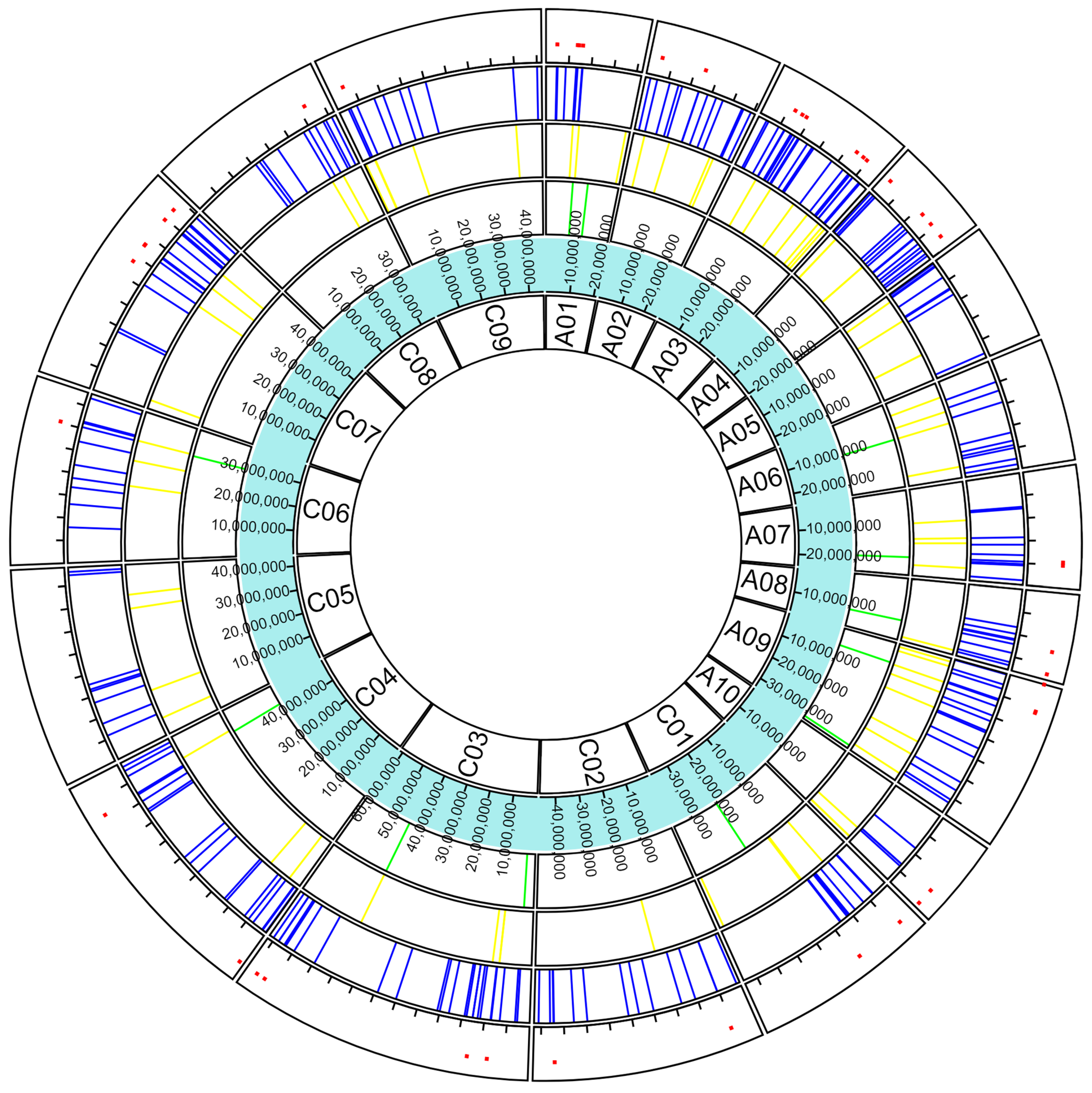
Protein sequences of the altered genes in B. napus were collected, and most genes were annotated in the B. napus cv Darmor-bzh v4.1 genome, and their positions were retrieved for physical mapping. For a few genes absent in Darmor-bzh v4.1, protein sequences were used to query the genome using online CoGeBLAST tBLASTn (https://genomevolution.org/coge/CoGeBlast.pl, accessed on 27 February 2026) to identify their corresponding loci. This approach enabled mapping of all altered genes physically within the reference genome, providing a complete overview of their genomic locations (Figure 5). A total of 68 altered genes (RNAi and CRISPR) were compiled, including WRKY transcription factors, MAPKs, and others from stress-responsive families such as ubiquitin-related proteins, transporter genes, immune resistance genes, and sugar metabolism-related genes. To assess physical clustering, these mapped genes were examined alongside previously genome-wide identified WRKY genes in B. napus [127] (Supplementary Table S1). WRKY genes were highlighted because they represented the largest group of altered genes and contain characteristic WRKY domains, making them particularly relevant for stress-related regulatory functions.
The predominance of transcription factors is expected, as they act as master regulators of stress signaling pathways, coordinating multiple downstream genes, for example, BnSnRK2.6 functions downstream of BnNAC038. Sugar metabolism genes are also prominent because sugar signaling is central to stress responses, energy allocation, and osmoprotection, exemplified by BnNAC038 [176].
Physical mapping of these genes onto the genome revealed several clustered regions, which may reflect coordinated regulation, shared cis-regulatory elements, or functional modules. A total of 43 gene clusters were found, based on the genomic distribution analysis across the B. napus genome. These clusters were categorized according to their composition into homogeneous and heterogeneous groups. Among them, 15 clusters were heterogeneous, containing a mixture of WRKY, CRISPR-edited, or RNAi-targeted genes, indicating potential genomic regions where different gene-modification approaches converge. In contrast, 28 clusters were homogeneous, including 25 clusters composed exclusively of WRKY genes and three clusters consisting only of CRISPR-edited genes (Figure 5, Supplementary Table S1). This clustering pattern highlights potential genomic “prospective sites” where gene editing and regulatory genes are concentrated, present strategic targets where multiplex editing or regulatory interventions could simultaneously modify multiple genes, enhancing stress resilience more efficiently than editing dispersed genes individually. Physical clustering often corresponds to co-regulation through shared promoters, enhancers, or chromatin domains, forming metabolic or stress-response modules [177]; thus, editing a single regulatory element or applying CRISPRa/i could influence multiple clustered genes and produce coordinated phenotypic effects. Conceptual support from studies by Pacalin et al. [178] and Gasperini et al. [179], although not specific to B. napus, further informs such approaches. These physically clustered genes may therefore represent prospective sites for targeted modification, highlighting promising candidates for future genome editing, although this hypothesis-generating observation remains to be validated.
Multiplex CRISPR targeting is more efficient with clustered genes [180], which is advantageous when improving multiple traits simultaneously, such as drought and heat tolerance. Tandem duplications and paralogs, including physically clustered response regulator proteins that negatively regulate drought, salinity, and cold [181,182,183], highlight the importance of multiplex targeting to avoid functional compensation and maximize editing efficiency.

8. Bridging Gene Alteration Techniques with Modern Crop Improvement Tools: The Case for CRISPR Applications

8.1. CRISPR and Epigenetic Regulatory Roles

The CRISPR activation (CRISPRa) uses the CRISPR–Cas system to activate gene expression, which does not involve DNA cutting. The dCas9 protein functions without catalytic activity because it contains transcriptional activation domains from VP64, p65, and Rta. The dCas9–activator complex uses a single guide RNA (sgRNA) to target specific genomic sites, including promoters and enhancers, where it attracts native transcriptional machinery [184]. Different studies have been conducted, such as the AREB1 gene in Arabidopsis thaliana [185], the SlPR-1 gene in tomato [186], and three genes (PvD1, Pv-thionin, and Pv-lectin) in Phaseolus vulgaris [187]. Similarly, CRISPR/dCas12a-mediated activation of the SlPAL2 gene enhanced resistance against bacterial canker in tomato [188]. The system enables researchers to activate target genes precisely through programmable control, making it suitable for studies of gene function.
On the other hand, CRISPR interference (CRISPRi) is a modified CRISPR–Cas system that represses or silences gene expression without cutting DNA. It employs a dCas9 fused to transcriptional repressors (such as KRAB). Guided to a promoter or coding region by a gRNA, the dCas9–repressor complex blocks RNA polymerase binding or elongation, resulting in strong, programmable gene knockdown [189,190]. For instance, CRISPRi was used to silence the NtC4H gene in Nicotiana tabacum [191] and the sgt1 gene in Solanum tuberosum [192].
The gene expression system in multicellular organisms depends on multiple complex regulatory systems, which include epigenetic elements that control transcription through DNA methylation, histone acetylation, and chromatin remodeling. The development of CRISPR–Cas9 technology has transformed research by allowing scientists to edit regulatory elements precisely, which has helped them understand how chromatin dysregulation causes diseases [193]. Epigenetic modifications regulate gene activity without altering the DNA sequence. These reversible marks can cause heritable phenotypic changes and offer powerful opportunities for crop improvement and therapeutic applications [194]. Stress-induced changes in DNA methylation patterns through hypermethylation and hypomethylation result in gene expression suppression. The methyltransferase domains rearranged methyl transferase2 (DRM2) and chromomethylase2 (CMT3) perform different DNA modification functions based on sequence context (CNN, CNG, CG) during stress responses [195,196,197,198]. Gene activation occurs through acetylation, phosphorylation, and ubiquitination, but deacetylation and biotinylation lead to gene repression. The production of antisense transcripts and siRNAs occurs under abiotic stress conditions to support RNA-directed DNA methylation pathways [195,199,200]. Plants achieve better environmental stress tolerance through their ability to modify DNA methylation patterns, histone marks, and RNA-mediated regulatory systems.

8.2. From Pan-Genome Discovery to Precise CRISPR Validation

The relationship between pangenomics and CRISPR is increasingly forming a mutually reinforcing cycle, particularly valuable in the Brassica genus, where extensive genome duplication, homoeology, and structural variation complicate trait discovery [201]. A Brassica pangenome captures the full spectrum of genetic diversity across B. napus and its relatives in the Brassicaceae family, allowing researchers to pinpoint trait-relevant genes with high precision, distinguish functional copies from redundant paralogues, and minimize off-target effects inherent to the crop’s polyploid genome. For example, in B. napus, disease-resistance gene variants have been identified not only across multiple B. napus genomes [202] but also among broader Brassicaceae relatives [203,204]. CRISPR can then be used to validate these pangenome-derived candidates, providing direct evidence of gene function and clarifying the biological role of duplicated or structurally variable loci.
A well-characterized example in canola involves the glucosinolate transporter BnaGTR2. A structural variation-resolved B. napus pangenome uncovered extensive diversity in this gene, which controls the partitioning of glucosinolates between leaves and seeds. The analysis predicted that achieving a “true zero-glucosinolate” canola would require nonfunctional BnaGTR2 across all narrow loci. This was experimentally validated through CRISPR–Cas9 editing of BnaA09.GTR2, which reduced seed glucosinolates while maintaining or even increasing leaf glucosinolate levels [205]. This example illustrates the practical value of pangenome-guided editing for optimizing both seed quality and plant defense.
Evidence from other crops further underscores the effectiveness of this pangenome-to-CRISPR strategy approach. In rice, a graph-based pan-genome identified GL11 and GW10.2, with CRISPR knockouts confirming their predictable effects on grain size [206]. In Solanum, pan-genome analysis revealed paralogue diversification of CLV3, and CRISPR edits across species validated dosage-dependent fasciation phenotypes [207]. Tomato pan-genomes resolved complex NSGT1/NSGT2 haplotypes controlling smoky flavor, functionally confirmed through targeted analyses [208], while the TomLoxC allele’s role in volatile production was validated in mutant lines [209]. Even in groundcherry, pan-genomic insights from tomato enabled CRISPR editing of AGO7 and SELF-PRUNING to reproduce predicted domestication traits [210].
Together, these studies provide a clear roadmap for canola improvement. The pangenome offers a comprehensive catalog of candidate variants–structural variants, homologues, and dispensable genes-while CRISPR provides functional validation to identify the true drivers of agronomic traits. This integrated approach is poised to become a central strategy for resolving trait complexity in Brassicaceae and accelerating the development of climate-resilient and quality-enhanced canola varieties.

8.3. Intersection of CRISPR and Genomic Selection

Currently, there is no concrete experimental evidence of genomic selection (GS) predictions being directly validated by CRISPR within the same breeding program. However, several reviews have discussed the potential of integrating these approaches [211,212,213]. In these frameworks, GS provides a genome-wide predictive model to identify promising alleles and elite genetic backgrounds, which CRISPR could then edit to functionally validate predictions and utilize available genetic resources for crop improvement [214].
While this approach is currently hypothetical in canola, GS-guided CRISPR could, in principle, be applied to precisely edit key genes associated with yield, stress tolerance, and quality traits, accelerating the development of superior varieties while maintaining favorable genetic backgrounds and maximizing the use of existing genetic diversity.

9. Biosafety and Regulation

The risk-assessment framework for GM canola biosafety and regulation follows a systematic process that verifies environmental safety and food and feed safety before market entry. The regulatory process examines three main aspects of GM canola: the molecular structure of inserted genes and their potential to cause allergic reactions or toxicity, and their ability to transfer genes to Brassica species. The evaluation of GM canola requires field tests in controlled environments to determine its agricultural characteristics, its effects on ecosystems, and interactions with other species. The approval process includes stewardship activities that track herbicide-resistant weed populations and sustain product tracing systems and labeling requirements to support ongoing sustainability. The regulatory framework combines scientific assessment with ongoing monitoring after release to confirm GM canola safety and proper management and environmental compatibility.
One of the most devastating risks of CRISPR/Cas is unintended off-targets, in which gRNA can lead the Cas protein to the regions where no cleavage is required in the DNA sequence. This could be a result of high similarities in the sequence of target or irrelevant off-target sites. Several studies related to this have been reported, but they have very few (<10%) unwanted alterations in the genome. To cope with this problem, several methods have been successfully used to detect the off-targets [215]. Task-specific software includes Cas-OFFinder (http://www.rgenome.net/cas-offinder) [216], CRISPOR (http://crispor.org) [217], CHOPCHOP (https://chopchop.cbu.uib.no) [208,218], E-CRISP (http://www.e-crisp.org/) [219], CRISPR-P (http://cbi.hzau.edu.cn/crispr) [220], CCTop (http://crispr.cos.uni-heidelberg.de) [221], and DeepCRISPR (http://www.deepcrispr.net/) [222]. Likewise, some methods have been developed to detect these mutations, such as in vitro (CIRCLE-seq [223], Digenome-seq [224], and SITE-seq [225]) and in vivo methods (GUIDE-seq [226] and DISCOVER-seq [227]). In addition, Cas9 variants such as eSpCas9, SpCas9-HF1, and HypaCas9 (proofreading mechanism) should be used as they showed the highest accuracy. Double-standard break (DSB) is also one of the most significant factors contributing to off-target mutations. Notably, DSB-independent editors like base editors (ABE, CBE) and epigenetic editors improve CRISPR specificity by avoiding the DSB [228]. Additionally, epigenetic characteristics such as DNA methylation and chromatin opening could also influence the cleavage by limiting or increasing DNA accessibility for CRISPR–Cas9 [229]. Several tools, such as ATAC-seq (chromatin openness) [230], ChIP-seq (Histone modification mapping), and bisulfite sequencing (DNA methylation profiling), can be used to check the epigenetic influence [231]. Importantly, toxicity effects may be growth impairments, cell abnormalities, or death due to Cas9 expression, DSBs, and pleiotropic effects of genes [215].
Beyond genomic precision, significant practical limitations also hinder the commercial pipeline of gene-edited B. napus. The most important constraints are the low efficiency of transformation and the high recalcitrance of elite germplasm [232]. While lab-scale experiments in model cultivars such as ‘Westar’ may achieve laboratory success, there remains a strong genotype dependence for regeneration and editing that limits direct improvement of high-yielding, commercially important cultivars that have been adapted to local environments over many years [233,234]. There is also a lack of longer-term field trials to assess the stability of edited traits, particularly complex multigenic traits such as heat and drought tolerance that are to be tested under variable and often unpredictable agro-climatic conditions for realistic commercial application [235].
Similarly, RNAi off-target effects may arise due to high similarity in the sequences of siRNAs or dsRNAs and non-target mRNAs; even short stretches or near-identity (few matches) could lead to unintended gene silencing [236]. For example, Tribolium castaneum, a dsRNA targeting CYP6BQ6, also silenced other CYP genes due to sequence overlap [237]. Furthermore, cross-kingdom RNAi could be risky as dsRNAs and small RNAs can move between different kingdoms, such as plants, animals, and pathogens (fungi, bacteria, etc.), causing unwanted gene silencing [238]. To maximize on-target specificity, the dsRNA should have minimum homology to non-target transcripts, which reduces off-target effects. In addition, the DICER endonuclease enzyme attaches to longer dsRNA for accurate cleavage into shorter siRNA. The DICER cleavage site could enhance the effectiveness many times [239,240]. Different tools, such as siDirect 2.0 (http://siDirect2.RNAi.jp/) [241], can be used to design high-knockdown-efficiency siRNA with low off-target potential. Moreover, nano-biotechnology offers an effective approach for dsRNA stability, uptake, and delivery in RNAi applications with protection against degradation and efficient gene silencing [242].
CRISPR/Cas9 has been proven to be an effective technique for crop improvement, but its acceptance varies globally. For instance, the USA, Australia, Argentina, and Brazil follow a product-based approach and often exempt transgene-free gene-edited crops from GMOs. Conversely, Europe and New Zealand consider all GE crops as GMOs [243,244]. Specifically in the USA, crops developed using site-directed nucleases (SDN1 and SDN2) are mostly deregulated if they are free of foreign DNA, while the regulatory status of SDN3 varies from case to case. Notably, several crops, including maize, tomato, soybean, mushroom, and flax, have already been deregulated [245]. In Australia, SDN1 is deregulated while SDN2 and SDN3 are subject to regulatory approval [246]. Meanwhile, in China, the specific regulations for SND1, SND2, and SND3 are under review. Furthermore, in 2023, the Chinese Ministry of Agriculture and Rural Affairs approved bio-fortified GE soybean with a safety certificate [247]. In developing countries like Pakistan and India, the regulations are under process [248]. Likewise, RNAi-edited crops for agronomic traits such as drought, heat, and diseases are approved after a complete assessment, including environmental safety, allergenicity, and non-target impacts. There are many commercially approved RNAi-based transgenic crops, such as bio-fortified soybean, low-lignin alfalfa, insect-resistant maize, and Arctic apple [215].

10. Future Perspective

Among all gene editing technologies, CRISPR–Cas9 has proven to be the most effective and globally adopted, with high accuracy in modifying target genes, robustness, and a large number of crops without hurdles. Several innovations include the pHNR binary vector to preserve T-DNA integrity with artificial promoter P35SIC47, with optimal gene expression at a polyA length of approximately 150 bps for Cas9 mRNA. This resulted in a significant improvement in gene editing efficiency. By using pHNRhCas9NG, ten genes were knocked out with about 100% gene editing efficiency [249]. Adopting the advancement in gene editing approaches facilitates the development of transgene-free editing by using highly efficient Cas endonucleases, delivery through DNA-independent ribonucleoprotein complexes or viral vectors, morphogenetic regulators, and grafting-mediated transgene-free strategies [250]. The utilization of compact and diverse variants such as Cas12a, Cas12b, Cas13, and Cas3 could be used for multiplexing; the Cascade–Cas3 complex is now being used for large deletions of up to the kb level. These variants could be very beneficial for canola improvement.
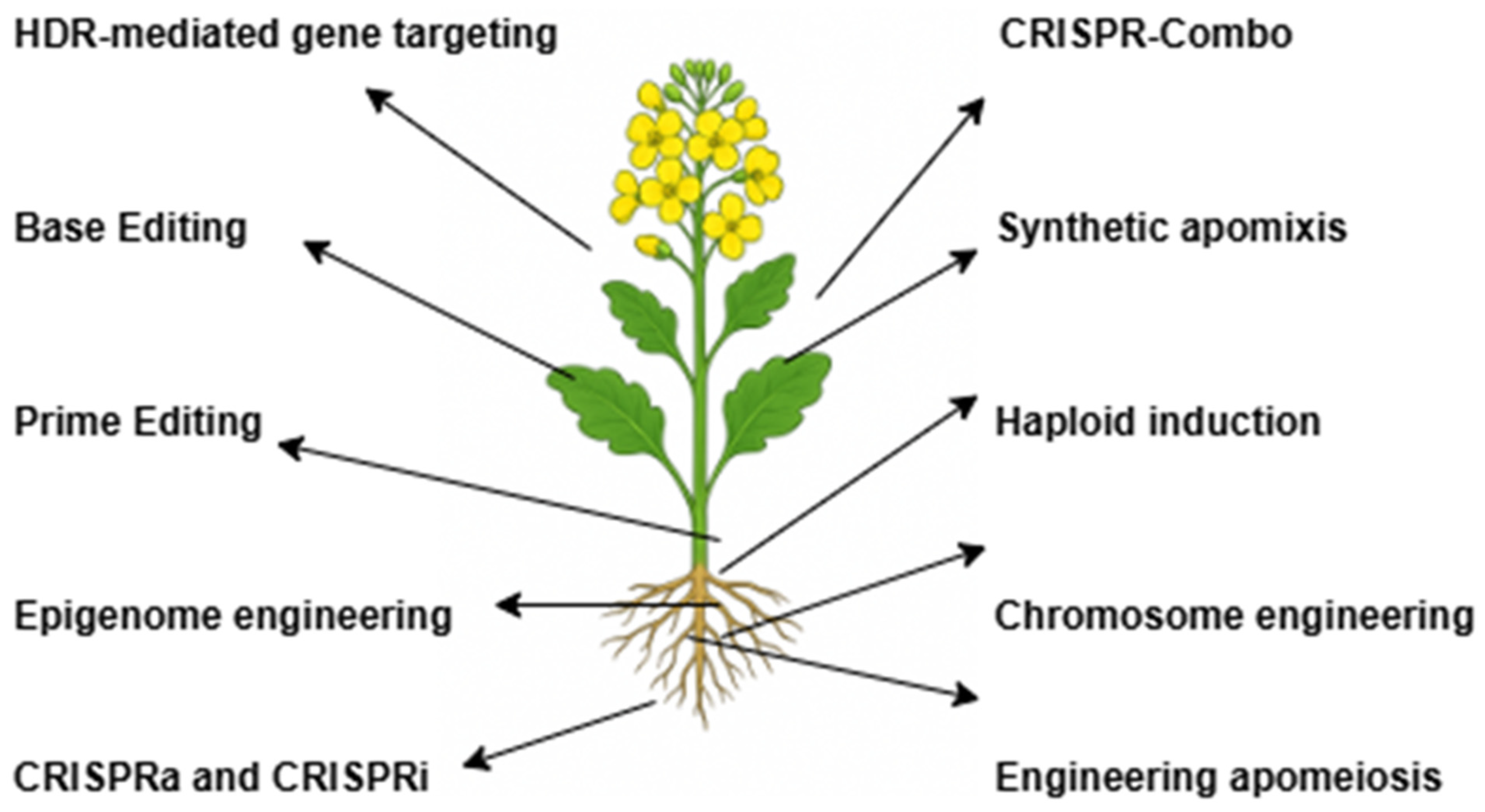
In addition, PAM-flexible variants like SpRY, SpCas9-NG, and LbCas12a-RVR can be used to increase the number of target genomic sites for precise modification of metabolic and regulatory pathways, thereby improving stress tolerance and oil quality. Integrating next-generation CRISPR platforms, such as homology-directed repair (Cas12a-induced staggered cuts; to overcome the insufficient spatiotemporal availability of a donor DNA template at target sites, the geminivirus replicons could be used as a donor template), base editing, and precise editing to introduce substitution, small insertion, and deletion of targeted nucleotide. Dead Cas (dCas) protein could be used for transcriptional and post-transcriptional gene regulation. Emerging CRISPR Cas technologies could be very beneficial to make climate-resilient canola (Figure 6). These advanced strategies could allow for editing multiple genes simultaneously to improve traits, for instance, multiple stresses, including drought, salt, and heat. Furthermore, the use of genomic and pan-genome information with CRISPR can speed up the climate resilient, bio-fortified, and high-yielding cultivars of canola with improved tolerance to biotic and abiotic stresses.
Usually, the CRISPR–Cas system is used to knock out and knock down gene expression by targeting the promoter. However, some studies have been conducted by Liu et al. [251], Park et al. [252], Yao et al. [167], Zhou et al. [253], and Patel-Tupper et al. [254] for gene knock-in through CRISPR–Cas. Transgene-free knock-in via CRISPR technology could be very beneficial to improve canola stress tolerance because many genes mentioned in Table 1 and Table 2 are positive regulators of stress. Therefore, the advancement in gene knock-in through CRISPR–Cas could enhance the expression of these genes without inserting foreign DNA, selectable markers, or vector backbone sequences as in typical transgenic methods. Public acceptance of these GE plants is significantly higher than that of conventional GMOs, as they do not have any foreign DNA. Editing untranslated regions (UTRs) is another promising strategy for fine-tuning the gene expression for stress tolerance in canola. Targeting upstream open reading frames (uORFs) in the 5′ UTR using CRISPR-based tools could modulate translation efficiency of stress-responsive genes, optimizing protein production without altering coding sequence. For example, uORF-based genome editing of the BnVTC gene involved ascorbic acid (AsA) biosynthesis. BnVTC2-uORF-edited mutants showed tolerance to abiotic stresses such as drought, cold, and salinity without yield loss. Moreover, the VTC2-uORF sequence is highly conserved in the Brassica genus, along with the lack of frameshift mutations in natural germplasm. So alone, uORF-targeted gene editing could serve as an effective approach for abiotic stress tolerance [164]. Editing inhibitory sequences in the 3′ UTR could upregulate beneficial stress-related proteins. CRISPR-based editing has proven effective for uORF engineering in plants that enable both the use of natural uORF variation and the creation of novel non-natural uORF to improve complex quantitative traits. As demonstrated in rice, engineered uORF variants generated graded phenotypes in plant height and tiller number [255,256]. In addition to stress tolerance, it has also been proven to improve quality traits such as sugar contents in strawberry, as evidenced by Xing et al. [257], sugar and amino acid contents in tomato [258], and tanshinone biosynthesis in Salvia miltiorrhiza [259], highlighting uORF editing as a powerful and precise breeding strategy for future crop improvement. This strategy could be used to improve canola stress resilience and quality as well.
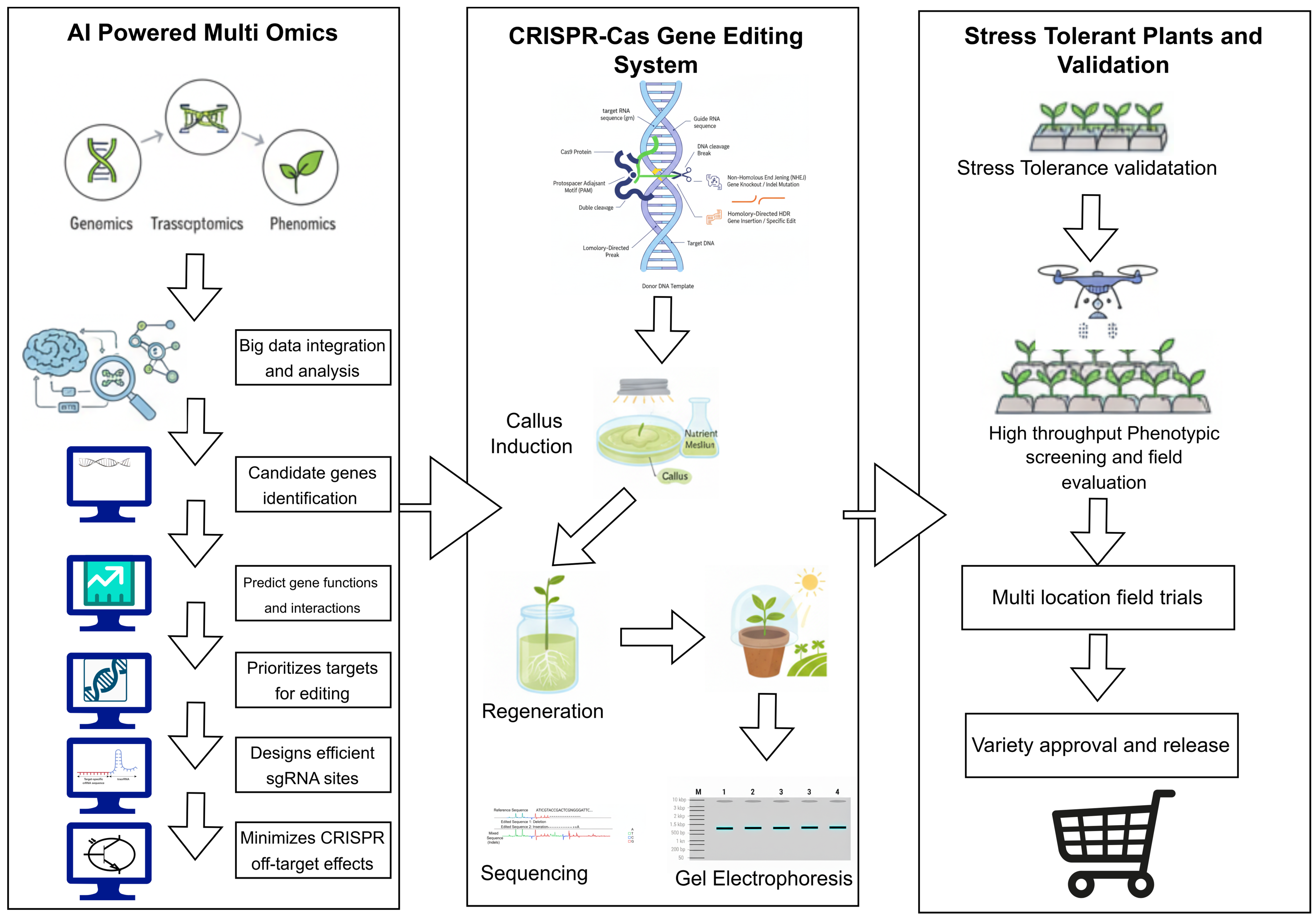
In the era of artificial intelligence (AI), its integration with CRISPR could prove a pivotal approach to accelerate precision genome editing (Figure 7). AI-driven algorithms can be very helpful to design the most efficient guide RNAs with minimum off-targets and predict insertion or deletion to increase efficiency. It can also analyze multi-omics data to identify the key genes and regulatory network for stress tolerance, targeting multi-gene editing to simultaneously target more than one stress. Through predictive modeling and phenotypic screening, the gene editing strategies could be improved further. For canola, the combination of CRISPR and AI could revolutionize the development of climate-resilient cultivars.
AI systems analyze extensive genomic, transcriptomic, epigenomic, and metabolomic data to reveal complex trait patterns, which enable researchers to discover essential regulatory elements and gene interactions and stress-response pathways that standard methods cannot detect. Machine learning algorithms enable users to predict the best editing approaches for enhancing plant traits through simulations of base editing, prime editing, and multiplex CRISPR techniques. The combination of AI-based image processing with high-speed plant performance measurement enables fast data collection, which improves predictive model accuracy for target selection. The combination of CRISPR technology with AI systems enables scientists to create precise genetic edits for canola crop improvement through single-gene and network-level modifications, which surpass traditional breeding and CRISPR methods.
While the commercialization of genome-edited crops depends largely on government investment and adoption of adapted regulatory frameworks, progress with CRISPR–Cas raises new questions about global regulatory regimes; increased public acceptance, higher than for transgenic crops, is encouraging. The continued advancement of CRISPR tools, with different kinds of regulations evolving with public view, combined with further developments of novel and new technologies, will lead to a new era of sustainable agriculture and food security.
Overall, the rapid advancements in CRISPR technologies, ranging from PAM-flexible nucleases, compact Cas variants, multiplexing tools, and high-efficiency DNA-independent delivery systems to sophisticated uORF- and UTR-targeted regulatory editing, collectively position genome editing as a transformative platform for next-generation canola improvement. The ability to perform transgene-free knock-in and large-fragment deletions and precise nucleotide substitutions allows scientists to modify structural genes and optimize regulatory networks without adding foreign DNA, which leads to better public acceptance and simplified regulatory processes. The combination of geminivirus replicons for the enhancement of homology-directed repair with morphogenic regulators and ribonucleoprotein complex (RNP) or virus-based delivery methods expands the practical applications of CRISPR editing for elite germplasm improvement. The combination of artificial intelligence with genome engineering enables scientists to make better decisions about complex trait development through optimized gRNA design and off-target reduction, trait prediction, network modeling, and high-speed phenotyping. The combination of new technologies enables scientists to create climate-resistant, high-yielding, bio-fortified, stress-tolerant canola varieties through precision breeding, which merges molecular genome editing with computational intelligence.

Supplementary Materials

The following supporting information can be downloaded at: https://www.mdpi.com/article/10.3390/agronomy16080769/s1, Table S1. Genomic localization and clustering of gene-edited and candidate WRKY target genes.

Author Contributions

A.I.A. led data acquisition and analysis, and contributed to writing (original draft preparation, review, and editing), validation, methodology design, investigation, and conceptualization. A.Y.C. contributed to writing (original draft preparation, review, and editing), validation, methodology design, investigation, and conceptualization. S.C. contributed to writing (original draft preparation, review, and editing), validation, methodological development, project administration, investigation, and conceptualization. All authors have read and agreed to the published version of the manuscript.

Funding

This research was supported by the national project “Development of new genetic sources for canola heat tolerance” (UWA2404-011RTX), funded by the Grains Research and Development Corporation and co-funded by The University of Western Australia.

Data Availability Statement

No new data were created or analyzed in this study. Data sharing is not applicable to this article.

Conflicts of Interest

The authors declare no conflict of interest. The funding sponsors had no role in the design of the study; in the collection, analyses, or interpretation of data; in the writing of the manuscript, and in the decision to publish the results.

References

  1. Saeidnia, S.; Gohari, A.R. Importance of Brassica napus as a medicinal food plant. J. Med. Plants Res. 2012, 6, 2700–2703. [Google Scholar] [CrossRef]
  2. Tileuberdi, N.; Turgumbayeva, A.; Yeskaliyeva, B.; Sarsenova, L.; Issayeva, R. Extraction, Isolation of Bioactive Compounds and Therapeutic Potential of Rapeseed (Brassica napus L.). Molecules 2022, 27, 8824. [Google Scholar] [CrossRef]
  3. Chalhoub, B.; Denoeud, F.; Liu, S.; Parkin, I.A.; Tang, H.; Wang, X.; Chiquet, J.; Belcram, H.; Tong, C.; Samans, B. Early allopolyploid evolution in the post-Neolithic Brassica napus oilseed genome. Science 2014, 345, 950–953. [Google Scholar] [CrossRef] [PubMed]
  4. Beszterda, M.; Nogala-Kałucka, M. Current research developments on the processing and improvement of the nutritional quality of rapeseed (Brassica napus L.). Eur. J. Lipid Sci. Technol. 2019, 121, 1800045. [Google Scholar] [CrossRef]
  5. Tan, Z.; Han, X.; Dai, C.; Lu, S.; He, H.; Yao, X.; Chen, P.; Yang, C.; Zhao, L.; Yang, Q.Y. Functional genomics of Brassica napus: Progress, challenges, and perspectives. J. Integr. Plant Biol. 2024, 66, 484–509. [Google Scholar] [CrossRef]
  6. Negawoldes, T. Review on nutritional limitations and opportunities of using rapeseed meal and other rape seed by-products in animal feeding. J. Nutr. Health Food Eng. 2018, 8, 43–48. [Google Scholar]
  7. Chmielewska, A.; Kozłowska, M.; Rachwał, D.; Wnukowski, P.; Amarowicz, R.; Nebesny, E.; Rosicka-Kaczmarek, J. Canola/rapeseed protein–nutritional value, functionality and food application: A review. Crit. Rev. Food Sci. Nutr. 2021, 61, 3836–3856. [Google Scholar] [CrossRef]
  8. Long, C.; Qi, X.-L.; Venema, K. Chemical and nutritional characteristics, and microbial degradation of rapeseed meal recalcitrant carbohydrates: A review. Front. Nutr. 2022, 9, 948302. [Google Scholar] [CrossRef]
  9. Shen, J.; Liu, Y.; Wang, X.; Bai, J.; Lin, L.; Luo, F.; Zhong, H. A comprehensive review of health-benefiting components in rapeseed oil. Nutrients 2023, 15, 999. [Google Scholar] [CrossRef]
  10. Rempel, C.B.; Hutton, S.N.; Jurke, C.J. Clubroot and the importance of canola in Canada. Can. J. Plant Pathol. 2014, 36, 19–26. [Google Scholar] [CrossRef]
  11. Lin, L.; Allemekinders, H.; Dansby, A.; Campbell, L.; Durance-Tod, S.; Berger, A.; Jones, P.J. Evidence of health benefits of canola oil. Nutr. Rev. 2013, 71, 370–385. [Google Scholar] [CrossRef]
  12. Du, Z.; Zheng, P.; Yu, J.; Yan, H.; Wu, A.; Yu, B.; Chen, D. Rapeseed protein as a sustainable source of protein in humans: Modification of rapeseed meal by physical and chemical methods. Crit. Rev. Food Sci. Nutr. 2025, 65, 8790–8800. [Google Scholar] [CrossRef] [PubMed]
  13. Axentii, M.; Codină, G.G. Exploring the Nutritional Potential and Functionality of Hemp and Rapeseed Proteins: A Review on Unveiling Anti-Nutritional Factors, Bioactive Compounds, and Functional Attributes. Plants 2024, 13, 1195. [Google Scholar] [CrossRef] [PubMed]
  14. Junaid, M.; Gokce, A. Global agricultural losses and their causes. Bull. Biol. Allied Sci. Res. 2024, 2024, 66. [Google Scholar] [CrossRef]
  15. Raza, A. Eco-physiological and Biochemical Responses of Rapeseed (Brassica napus L.) to Abiotic Stresses: Consequences and Mitigation Strategies. J. Plant Growth Regul. 2021, 40, 1368–1388. [Google Scholar] [CrossRef]
  16. Nooh, S. An overview of oilseed rape (canola) virus diseases in Iran. Int. Res. J. Microbiol. 2012, 3, 024–028. [Google Scholar]
  17. Congdon, B.S.; Baulch, J.R.; Coutts, B.A. Impact of turnip yellows virus infection on seed yield of an open-pollinated and hybrid canola cultivar when inoculated at different growth stages. Virus Res. 2020, 277, 197847. [Google Scholar] [CrossRef]
  18. Neik, T.X.; Amas, J.; Barbetti, M.; Edwards, D.; Batley, J. Understanding host–pathogen interactions in Brassica napus in the omics era. Plants 2020, 9, 1336. [Google Scholar] [CrossRef]
  19. Wang, Y.; Strelkov, S.E.; Hwang, S.-F. Yield losses in canola in response to blackleg disease. Can. J. Plant Sci. 2020, 100, 488–494. [Google Scholar] [CrossRef]
  20. Batool, M.; El-Badri, A.M.; Hassan, M.U.; Haiyun, Y.; Chunyun, W.; Zhenkun, Y.; Jie, K.; Wang, B.; Zhou, G. Drought stress in Brassica napus: Effects, tolerance mechanisms, and management strategies. J. Plant Growth Regul. 2023, 42, 21–45. [Google Scholar]
  21. Lohani, N.; Jain, D.; Singh, M.B.; Bhalla, P.L. Engineering multiple abiotic stress tolerance in canola, Brassica napus. Front. Plant Sci. 2020, 11, 3. [Google Scholar] [CrossRef] [PubMed]
  22. Raza, M.A.S.; Shahid, A.M.; Saleem, M.F.; Khan, I.H.; Salman Ahmad, S.A.; Muhammad Ali, M.A.; Rashid Iqbal, R.I. Effects and management strategies to mitigate drought stress in oilseed rape (Brassica napus L.): A review. Zemdirb.-Agric. 2017, 104, 85–94. [Google Scholar] [CrossRef]
  23. Jensen, C.; Mogensen, V.; Mortensen, G.; Fieldsend, J.; Milford, G.; Andersen, M.N.; Thage, J. Seed glucosinolate, oil and protein contents of field-grown rape (Brassica napus L.) affected by soil drying and evaporative demand. Field Crops Res. 1996, 47, 93–105. [Google Scholar]
  24. Zirgoli, M.H.; Kahrizi, D. Effects of end-season drought stress on yield and yield components of rapeseed (Brassica napus L.) in warm regions of Kermanshah Province. Biharean Biol. 2015, 9, 133–140. [Google Scholar]
  25. Hopmans, J.W.; Qureshi, A.S.; Kisekka, I.; Munns, R.; Grattan, S.R.; Rengasamy, P.; Ben-Gal, A.; Assouline, S.; Javaux, M.; Minhas, P.S.; et al. Chapter One—Critical knowledge gaps and research priorities in global soil salinity. In Advances in Agronomy; Sparks, D.L., Ed.; Academic Press: Cambridge, MA, USA, 2021; Volume 169, pp. 1–191. [Google Scholar]
  26. Wang, H.; Li, Y.; Huang, Y.; Wang, Y.; Qu, W.; Lin, Y.; Wang, L.; Lin, G.; Zuo, Q. Response of rapeseed growth to soil salinity content and its improvement effect on coastal saline soil. Front. Plant Sci. 2025, 16, 1601627. [Google Scholar] [CrossRef]
  27. Naheed, R.; Aslam, H.; Kanwal, H.; Farhat, F.; Gamar, M.I.A.; Al-Mushhin, A.A.; Jabborova, D.; Ansari, M.J.; Shaheen, S.; Aqeel, M. Growth attributes, biochemical modulations, antioxidant enzymatic metabolism and yield in Brassica napus varieties for salinity tolerance. Saudi J. Biol. Sci. 2021, 28, 5469–5479. [Google Scholar] [CrossRef]
  28. Farhangi-Abriz, S.; Tavasolee, A.; Ghassemi-Golezani, K.; Torabian, S.; Monirifar, H.; Rahmani, H.A. Growth-promoting bacteria and natural regulators mitigate salt toxicity and improve rapeseed plant performance. Protoplasma 2020, 257, 1035–1047. [Google Scholar] [CrossRef]
  29. Sabagh, A.E.; Hossain, A.; Barutçular, C.; Islam, M.S.; Ratnasekera, D.; Kumar, N.; Meena, R.S.; Gharib, H.S.; Saneoka, H.; Da Silva, J.A.T. Drought and salinity stress management for higher and sustainable canola (‘Brassica napus’ L.) production: A critical review. Aust. J. Crop Sci. 2019, 13, 88–96. [Google Scholar]
  30. Jagadish, S.K.; Way, D.A.; Sharkey, T.D. Plant heat stress: Concepts directing future research. Plant Cell Environ. 2021, 44, 1992–2005. [Google Scholar]
  31. Morrison, M.J.; Stewart, D.W. Heat stress during flowering in summer Brassica. Crop Sci. 2002, 42, 797–803. [Google Scholar] [CrossRef]
  32. Koscielny, C.; Hazebroek, J.; Duncan, R. Phenotypic and metabolic variation among spring Brassica napus genotypes during heat stress. Crop Pasture Sci. 2018, 69, 284–295. [Google Scholar]
  33. Wu, W.; Duncan, R.W.; Ma, B.L. The stage sensitivity of short-term heat stress to lodging-resistant traits and yield determination in canola (Brassica napus L.). J. Agron. Crop Sci. 2021, 207, 74–87. [Google Scholar]
  34. Brown, J.K.M.; Beeby, R.; Penfield, S. Yield instability of winter oilseed rape modulated by early winter temperature. Sci. Rep. 2019, 9, 6953. [Google Scholar] [CrossRef] [PubMed]
  35. Kourani, M.; Anastasiadi, M.; Hammond, J.P.; Mohareb, F. Prolonged heat stress in Brassica napus during flowering negatively impacts yield and alters glucosinolate and sugars metabolism. Front. Plant Sci. 2025, 16, 1507338. [Google Scholar] [CrossRef] [PubMed]
  36. Lohani, N.; Singh, M.B.; Bhalla, P.L. Short-term heat stress during flowering results in a decline in Canola seed productivity. J. Agron. Crop Sci. 2022, 208, 486–496. [Google Scholar]
  37. Huang, R.; Liu, Z.; Xing, M.; Yang, Y.; Wu, X.; Liu, H.; Liang, W. Heat Stress Suppresses Brassica napus Seed Oil Accumulation by Inhibition of Photosynthesis and BnWRI1 Pathway. Plant Cell Physiol. 2019, 60, 1457–1470. [Google Scholar] [CrossRef]
  38. Markie, E.; Khoddami, A.; Liu, S.Y.; Chen, S.; Tan, D.K. The Impact of Heat Stress on Canola (Brassica napus L.) Yield, Oil, and Fatty Acid Profile. Agronomy 2025, 15, 1511. [Google Scholar] [CrossRef]
  39. Canales, J.; Verdejo, J.F.; Calderini, D.F. Transcriptome and physiological analysis of Rapeseed Tolerance to Post-flowering temperature increase. Int. J. Mol. Sci. 2023, 24, 15593. [Google Scholar] [CrossRef]
  40. Yan, L.; Shah, T.; Cheng, Y.; LÜ, Y.; Zhang, X.-k.; Zou, X.-l. Physiological and molecular responses to cold stress in rapeseed (Brassica napus L.). J. Integr. Agric. 2019, 18, 2742–2752. [Google Scholar] [CrossRef]
  41. Cornelsen, J.E.; Ort, N.W.; Gabert, R.K.; Epp, I.; Rempel, C.B. Current and potential pest threats for canola in the Canadian Prairies. Pest. Manag. Sci. 2024, 80, 2220–2234. [Google Scholar] [CrossRef]
  42. Soroka, J.J.; Olivier, C.; Wist, T.J.; Grenkow, L. Present and potential impacts of insects on camelina and crambe. In Integrated Management of Insect Pests on Canola and Other Brassica Oilseed Crops; CABI: Wallingford, UK, 2017; pp. 316–340. [Google Scholar]
  43. Hussain, M.; Adnan, M.; Khan, B.A.; Bilal, H.M.; Javaid, H.; Rehman, F.; Ahmad, R.; Jagtap, D.N. Impact of row spacing and weed competition period on growth and yield of rapeseed; A review. Ind. J. Pure App. Biosci. 2020, 8, 1–11. [Google Scholar] [CrossRef]
  44. Vykydalová, L.; Barroso, P.M.; Děkanovský, I.; Neoralová, M.; Lumbantobing, Y.R.; Winkler, J. Interactions between weeds, pathogen symptoms and winter rapeseed stand structure. Agronomy 2024, 14, 2273. [Google Scholar] [CrossRef]
  45. Geddes, C.M.; Tidemann, B.D.; Ikley, J.T.; Dille, J.A.; Soltani, N.; Sikkema, P.H. Potential spring canola yield losses due to weeds in Canada and the United States. Weed Technol. 2022, 36, 884–890. [Google Scholar] [CrossRef]
  46. Kopeć, P. Climate Change—The Rise of Climate-Resilient Crops. Plants 2024, 13, 490. [Google Scholar] [CrossRef] [PubMed]
  47. Bibi, F.; Rahman, A. An overview of climate change impacts on agriculture and their mitigation strategies. Agriculture 2023, 13, 1508. [Google Scholar] [CrossRef]
  48. Xie, X.; Hu, Y.; Li, X.; Li, S.; Li, X.; Li, Y. Measuring and Enhancing Food Security Resilience in China Under Climate Change. Systems 2025, 13, 1054. [Google Scholar] [CrossRef]
  49. Benitez-Alfonso, Y.; Soanes, B.K.; Zimba, S.; Sinanaj, B.; German, L.; Sharma, V.; Bohra, A.; Kolesnikova, A.; Dunn, J.A.; Martin, A.C.; et al. Enhancing climate change resilience in agricultural crops. Curr. Biol. 2023, 33, R1246–R1261. [Google Scholar] [CrossRef]
  50. Raza, A.; Khare, T.; Zhang, X.; Rahman, M.M.; Hussain, M.; Gill, S.S.; Chen, Z.H.; Zhou, M.; Hu, Z.; Varshney, R.K. Novel strategies for designing climate-smart crops to ensure sustainable agriculture and future food security. J. Sustain. Agric. Environ. 2025, 4, e70048. [Google Scholar]
  51. Acquaah, G. Conventional Plant Breeding to Modern Plant Breeding: Evolution, Achievements, and Limitations. In Plant Molecular Breeding in Genomics Era: Concepts and Tools; Springer: Cham, Switerzland, 2024; pp. 1–42. [Google Scholar]
  52. Khan, A.H.; Hassan, M.; Khan, M.N. Conventional plant breeding program for disease resistance. In Plant Disease Management Strategies for Sustainable Agriculture Through Traditional and Modern Approaches; Springer: Berlin/Heidelberg, Germany, 2020; pp. 27–51. [Google Scholar]
  53. Rauf, S.; da Silva, J.T.; Khan, A.A.; Naveed, A. Consequences of plant breeding on genetic diversity. Int. J. Plant Breed. 2010, 4, 1–21. [Google Scholar]
  54. Zhang, Y.; Massel, K.; Godwin, I.D.; Gao, C. Applications and potential of genome editing in crop improvement. Genome Biol. 2018, 19, 210. [Google Scholar] [CrossRef]
  55. Solgi, T.; Moradyar, M.; Zamani, M.R.; Motallebi, M. Transformation of canola by chit33 gene towards improving resistance to Sclerotinia sclerotiorum. Plant Prot. Sci. 2015, 51, 6. [Google Scholar] [CrossRef]
  56. Golijani Moghadam, R.; Yazdanpanah-Samani, M.; Zamani, M.; Motallebi, M. Heterologous expression of chit36 gene from Trichoderma atroviride in canola reduces development of lesion caused by Sclerotinia sclerotiorum. Iran. J. Sci. 2015, 39, 331–339. [Google Scholar]
  57. Aghazadeh, R.; Zamani, M.; Motallebi, M.; Moradyar, M.; Moghadassi Jahromi, Z. Co-transformation of canola by chimeric chitinase and tlp genes towards improving resistance to Sclerotinia sclerotiorum. World J. Microbiol. Biotechnol. 2016, 32, 144. [Google Scholar] [CrossRef]
  58. Aghazadeh, R.; Zamani, M.; Motallebi, M.; Moradyar, M. Agrobacterium-mediated transformation of the Oryza sativa thaumatin-like protein to canola (R Line Hyola308) for enhancing resistance to Sclerotinia sclerotiorum. Iran. J. Biotechnol. 2017, 15, 201. [Google Scholar] [CrossRef]
  59. Zamani, A.; Motallebi, M.; Jonoubi, P.; Ghafarian-Nia, N.S.; Zamani, M.R. Heterologous expression of the Secale cereal thaumatinlike protein in transgenic canola plants enhances resistance to stem rot disease. Iran. J. Biotechnol. 2012, 10, 87–95. [Google Scholar]
  60. Kowsari, M.; Zamani, M.R.; Motallebi, M. Enhancement of Trichoderma harzianum activity against Sclerotinia sclerotiorum by overexpression of Chit42. Iran. J. Biotechnol. 2014, 12, 26–31. [Google Scholar] [CrossRef]
  61. Ziaei, M.; Motallebi, M.; Zamani, M.R.; Panjeh, N.Z. Co-expression of chimeric chitinase and a polygalacturonase-inhibiting protein in transgenic canola (Brassica napus) confers enhanced resistance to Sclerotinia sclerotiorum. Biotechnol. Lett. 2016, 38, 1021–1032. [Google Scholar] [CrossRef]
  62. Sang, X.; Jue, D.; Yang, L.; Bai, X.; Chen, M.; Yang, Q. Genetic transformation of Brassica napus with MSI-99m gene increases resistance in transgenic plants to Sclerotinia sclerotiorum. Mol. Plant Breed. 2013, 4, 247–253. [Google Scholar] [CrossRef]
  63. Wang, Z.; Zhang, W.-H.; Ma, L.-Y.; Li, X.; Zhao, F.-Y.; Tan, X.-L. Overexpression of Brassica napus NPR1 enhances resistance to Sclerotinia sclerotiorum in oilseed rape. Physiol. Mol. Plant Pathol. 2020, 110, 101460. [Google Scholar] [CrossRef]
  64. Fan, Y.; Du, K.; Gao, Y.; Kong, Y.; Chu, C.; Sokolov, V.; Wang, Y. Transformation of LTP gene into Brassica napus to enhance its resistance to Sclerotinia sclerotiorum. Russ. J. Genet. 2013, 49, 380–387. [Google Scholar] [CrossRef]
  65. Yin, M.; Wang, R.; Li, S.; Luo, M.; Wei, W.; Wang, M.; Jiang, J.; Lin, Y.; Zhao, Y. High Sclerotinia sclerotiorum resistance in rapeseed plant has been achieved by OsPGIP6. Front. Plant Sci. 2022, 13, 970716. [Google Scholar] [CrossRef]
  66. Liu, F.; Wang, M.; Wen, J.; Yi, B.; Shen, J.; Ma, C.; Tu, J.; Fu, T. Overexpression of barley oxalate oxidase gene induces partial leaf resistance to Sclerotinia sclerotiorum in transgenic oilseed rape. Plant Pathol. 2015, 64, 1407–1416. [Google Scholar] [CrossRef]
  67. Dong, X.; Ji, R.; Guo, X.; Foster, S.J.; Chen, H.; Dong, C.; Liu, Y.; Hu, Q.; Liu, S. Expressing a gene encoding wheat oxalate oxidase enhances resistance to Sclerotinia sclerotiorum in oilseed rape (Brassica napus). Planta 2008, 228, 331–340. [Google Scholar] [CrossRef]
  68. Kheiri, H.-R.; Motallebi, M.; Zamani, M.R.; Deljo, A. Beta glucanase (Bgn13. 1) expressed in transgenic Brassica napus confers antifungal activity against Sclerotinia sclerotiorum. J. Crop Prot. 2014, 3, 31–42. [Google Scholar]
  69. Ding, L.N.; Li, M.; Guo, X.J.; Tang, M.Q.; Cao, J.; Wang, Z.; Liu, R.; Zhu, K.M.; Guo, L.; Liu, S.Y. Arabidopsis GDSL1 overexpression enhances rapeseed Sclerotinia sclerotiorum resistance and the functional identification of its homolog in Brassica napus. Plant Biotechnol. J. 2020, 18, 1255–1270. [Google Scholar] [CrossRef]
  70. Zarinpanjeh, N.; Motallebi, M.; Zamani, M.R.; Ziaei, M. Enhanced resistance to Sclerotinia sclerotiorum in Brassica napus by co-expression of defensin and chimeric chitinase genes. J. Appl. Genet. 2016, 57, 417–425. [Google Scholar] [CrossRef]
  71. Huo, R.; Wang, Y.; Ma, L.-L.; Qiao, J.-Q.; Shao, M.; Gao, X.-W. Assessment of inheritance pattern and agronomic performance of transgenic rapeseed having harpinXooc-encoding hrf2 gene. Transgenic Res. 2010, 19, 841–847. [Google Scholar]
  72. Wang, Z.; Wan, L.; Zhang, X.; Xin, Q.; Song, Y.; Hong, D.; Sun, Y.; Yang, G. Interaction between Brassica napus polygalacturonase inhibition proteins and Sclerotinia sclerotiorum polygalacturonase: Implications for rapeseed resistance to fungal infection. Planta 2021, 253, 34. [Google Scholar] [CrossRef]
  73. Wang, Z.; Bao, L.-L.; Zhao, F.-Y.; Tang, M.-Q.; Chen, T.; Li, Y.; Wang, B.-X.; Fu, B.; Fang, H.; Li, G.-Y. BnaMPK3 is a key regulator of defense responses to the devastating plant pathogen Sclerotinia sclerotiorum in oilseed rape. Front. Plant Sci. 2019, 10, 91. [Google Scholar] [CrossRef]
  74. Wang, Z.; Zhao, F.-Y.; Tang, M.-Q.; Chen, T.; Bao, L.-L.; Cao, J.; Li, Y.-L.; Yang, Y.-H.; Zhu, K.-M.; Liu, S. BnaMPK6 is a determinant of quantitative disease resistance against Sclerotinia sclerotiorum in oilseed rape. Plant Sci. 2020, 291, 110362. [Google Scholar] [CrossRef]
  75. Kazan, K.; Rusu, A.; Marcus, J.P.; Goulter, K.C.; Manners, J.M. Enhanced quantitative resistance to Leptosphaeria maculans conferred by expression of a novel antimicrobial peptide in canola (Brassica napus L.). Mol. Breed. 2002, 10, 63–70. [Google Scholar] [CrossRef]
  76. Zou, Z.; Fernando, W.D. Overexpression of BnNAC19 in Brassica napus enhances resistance to Leptosphaeria maculans, the blackleg pathogen of canola. Plant Pathol. 2024, 73, 104–114. [Google Scholar]
  77. Zou, Z.; Liu, F.; Huang, S.; Fernando, W.D. Genome-wide identification and analysis of the valine-glutamine motif-containing gene family in Brassica napus and functional characterization of BnMKS1 in response to Leptosphaeria maculans. Phytopathology 2021, 111, 281–292. [Google Scholar]
  78. Ma, Z.; Amdouni, A.; Xu, X.; Liu, Y.; Zhao, J.; Zhao, P.; Chen, Q.; Imran, M.; Fan, Y.; Jiang, Y.-Q.; et al. Rapeseed WRKY53 regulates pattern-triggered immunity (PTI) through modulating the transcription of salicylic acid biosynthetic genes. Plant Physiol. Biochem. 2026, 230, 110716. [Google Scholar] [CrossRef]
  79. Wang, Z.; Mao, H.; Dong, C.; Ji, R.; Cai, L.; Fu, H.; Liu, S. Overexpression of Brassica napus MPK4 enhances resistance to Sclerotinia sclerotiorum in oilseed rape. Mol. Plant-Microbe Interact. 2009, 22, 235–244. [Google Scholar]
  80. Liu, H.; Guo, X.; Naeem, M.S.; Liu, D.; Xu, L.; Zhang, W.; Tang, G.; Zhou, W. Transgenic Brassica napus L. lines carrying a two gene construct demonstrate enhanced resistance against Plutella xylostella and Sclerotinia sclerotiorum. Plant Cell Tissue Organ Cult. (PCTOC) 2011, 106, 143–151. [Google Scholar] [CrossRef]
  81. Wang, Y.; Fristensky, B. Transgenic canola lines expressing pea defense gene DRR206 have resistance to aggressive blackleg isolates and to Rhizoctonia solani. Mol. Breed. 2001, 8, 263–271. [Google Scholar] [CrossRef]
  82. Wang, J.; Chen, Z.; Du, J.; Sun, Y.; Liang, A. Novel insect resistance in Brassica napus developed by transformation of chitinase and scorpion toxin genes. Plant Cell Rep. 2005, 24, 549–555. [Google Scholar] [CrossRef]
  83. Wang, Y.; Zhang, Y.; Wang, F.; Liu, C.; Liu, K. Development of transgenic Brassica napus with an optimized cry1C* gene for resistance to diamondback moth (Plutella xylostella). Can. J. Plant Sci. 2014, 94, 1501–1506. [Google Scholar] [CrossRef]
  84. Rahnama, H.; Sheykhhasan, M. Transformation and light inducible expression of cry1Ab gene in oilseed rape (Brassica napus L.). J. Sci. Islam. Repub. Iran 2016, 27, 313–319. [Google Scholar]
  85. Alahakoon, U.; Adamson, J.; Grenkow, L.; Soroka, J.; Bonham-Smith, P.; Gruber, M. Field growth traits and insect-host plant interactions of two transgenic canola (Brassicaceae) lines with elevated trichome numbers. Can. Entomol. 2016, 148, 603–615. [Google Scholar] [CrossRef]
  86. Jin, S.; Wang, Y.; Song, Y.; Fan, S.; Luo, N.; Gan, Q.; Fan, Y.; Guo, Y.; Ni, Y. Dual regulation of cuticle and cell wall biosynthesis by BnaC9. MYB46 confers drought tolerance in Brassica napus. Plant Biotechnol. J. 2025, 23, 5335–5350. [Google Scholar] [CrossRef] [PubMed]
  87. Jiao, P.; Liang, Y.; Chen, S.; Yuan, Y.; Chen, Y.; Hu, H. Bna. EPF2 enhances drought tolerance by regulating stomatal development and stomatal size in Brassica napus. Int. J. Mol. Sci. 2023, 24, 8007. [Google Scholar] [CrossRef] [PubMed]
  88. Nokhrina, K.; Ray, H.; Bock, C.; Georges, F. Metabolomic shifts in Brassica napus lines with enhanced BnPLC2 expression impact their response to low temperature stress and plant pathogens. GM Crops Food 2014, 5, 120–131. [Google Scholar] [CrossRef][Green Version]
  89. Liang, Y.; Kang, K.; Gan, L.; Ning, S.; Xiong, J.; Song, S.; Xi, L.; Lai, S.; Yin, Y.; Gu, J. Drought-responsive genes, late embryogenesis abundant group3 (LEA 3) and vicinal oxygen chelate, function in lipid accumulation in Brassica napus and Arabidopsis mainly via enhancing photosynthetic efficiency and reducing ROS. Plant Biotechnol. J. 2019, 17, 2123–2142. [Google Scholar] [CrossRef]
  90. Weng, C.-m.; Lu, J.-x.; Wan, H.-f.; Wang, S.-w.; Wang, Z.; Lu, K.; Liang, Y. Over-Expression of BnMAPK1 in Brassica napus Enhances Tolerance to Drought Stress. J. Integr. Agric. 2014, 13, 2407–2415. [Google Scholar] [CrossRef]
  91. Wang, Y.; Jin, S.; Xu, Y.; Li, S.; Zhang, S.; Yuan, Z.; Li, J.; Ni, Y. Overexpression of BnKCS1-1, BnKCS1-2, and BnCER1-2 promotes cuticular wax production and increases drought tolerance in Brassica napus. Crop J. 2020, 8, 26–37. [Google Scholar] [CrossRef]
  92. Cheng, H.; Pan, G.; Zhou, N.; Zhai, Z.; Yang, L.; Zhu, H.; Cui, X.; Zhao, P.; Zhang, H.; Li, S. Calcium-dependent Protein Kinase 5 (CPK5) positively modulates drought tolerance through phosphorylating ABA-Responsive Element Binding Factors in oilseed rape (Brassica napus L.). Plant Sci. 2022, 315, 111125. [Google Scholar] [CrossRef]
  93. Fang, S.; Zhao, P.; Tan, Z.; Peng, Y.; Xu, L.; Jin, Y.; Wei, F.; Guo, L.; Yao, X. Combining Physio-Biochemical Characterization and Transcriptome Analysis Reveal the Responses to Varying Degrees of Drought Stress in Brassica napus L. Int. J. Mol. Sci. 2022, 23, 8555. [Google Scholar] [CrossRef]
  94. Zhang, X.D.; Han, Y.; Yang, Z.M.; Sun, D. DEAD-box RNA helicase 6 regulates drought and abscisic acid stress responses in rapeseed (Brassica napus). Gene 2023, 886, 147717. [Google Scholar] [CrossRef]
  95. Tian, T.; Long, Z.; Gong, X.; Wang, Z.; Zhang, C.; Miao, L. ARGOS homolog evolution in brassicaceae and the role of BnaC6. ARGOS in conferring drought tolerance via expression-responsive localization and reduced seed porosity in rapeseed. BMC Plant Biol. 2025, 25, 1254. [Google Scholar] [CrossRef] [PubMed]
  96. Georges, F.; Das, S.; Ray, H.; Bock, C.; Nokhrina, K.; Kolla, V.A.; Keller, W. Over-expression of Brassica napus phosphatidylinositol-phospholipase C2 in canola induces significant changes in gene expression and phytohormone distribution patterns, enhances drought tolerance and promotes early flowering and maturation. Plant Cell Environ. 2009, 32, 1664–1681. [Google Scholar] [PubMed]
  97. Babula-Skowrońska, D.; Ludwików, A.; Cieśla, A.; Olejnik, A.; Cegielska-Taras, T.; Bartkowiak-Broda, I.; Sadowski, J. Involvement of genes encoding ABI1 protein phosphatases in the response of Brassica napus L. to drought stress. Plant Mol. Biol. 2015, 88, 445–457. [Google Scholar] [CrossRef] [PubMed]
  98. Zhu, H.; Jiang, K.; Meng, J.; Kuang, L.; Zhu, S.; Zhang, Y.; Wang, Y.; Jiang, J. Overexpression of miR393 improves anthocyanin accumulation and osmotic stress tolerance of Brassica napus. Plant Sci. 2025, 357, 112523. [Google Scholar] [CrossRef]
  99. Yao, M.; Hong, B.; Ji, H.; Guan, C.; Guan, M. Genome-wide identification of PDX and expression analysis under waterlogging stress exhibit stronger waterlogging tolerance in transgenic Brassica napus plants overexpressing the BnaPDX1. 3 gene compared to wild-type plants. Front. Plant Sci. 2025, 16, 1533219. [Google Scholar]
  100. Wang, J.; Fan, Z.; Liu, Z.; Xiang, J.; Chai, L.; Li, X.; Yang, Y. Thylakoid-bound ascorbate peroxidase increases resistance to salt stress and drought in Brassica napus. Afr. J. Biotechnol. 2011, 10, 8039–8045. [Google Scholar] [CrossRef]
  101. Liu, N.; Chen, J.; Wang, T.; Li, Q.; Cui, P.; Jia, C.; Hong, Y. Overexpression of WAX INDUCER1/SHINE1 gene enhances wax accumulation under osmotic stress and oil synthesis in Brassica napus. Int. J. Mol. Sci. 2019, 20, 4435. [Google Scholar] [CrossRef]
  102. Dai, Q.; Zhang, L.; Jiang, S.; Su, B.; Li, Z.; Shuai, Y.; Wang, J. Improved Salt Tolerance in Brassica napus L. Overexpressing a Synthetic Deinocuccus Stress-Resistant Module DICW. Int. J. Mol. Sci. 2025, 26, 2500. [Google Scholar] [CrossRef]
  103. Doranie Uliaie, E.; Ghareyazi, B.; Farsi, M.; Kogel, K.-H. Improved salt tolerance in canola (Brasica napus) plants by overexpression of Arabidopsis Na+/H+ antiporter gene AtNHX1. J. Plant Mol. Breed. 2012, 1, 34–42. [Google Scholar]
  104. Sergeeva, E.; Shah, S.; Glick, B.R. Growth of transgenic canola (Brassica napus cv. Westar) expressing a bacterial 1-aminocyclopropane-1-carboxylate (ACC) deaminase gene on high concentrations of salt. World J. Microbiol. Biotechnol. 2006, 22, 277–282. [Google Scholar]
  105. Sun, X.e.; Feng, X.x.; Li, C.; Zhang, Z.p.; Wang, L.j. Study on salt tolerance with YHem1 transgenic canola (Brassica napus). Physiol. Plant. 2015, 154, 223–242. [Google Scholar] [CrossRef]
  106. Ping, X.; Ye, Q.; Yan, M.; Wang, J.; Zhang, T.; Chen, S.; Siddique, K.H.; Cowling, W.A.; Li, J.; Liu, L. Overexpression of BnaA10. WRKY75 decreases cadmium and salt tolerance via increasing ROS accumulation in Arabidopsis and Brassica napus L. Int. J. Mol. Sci. 2024, 25, 8002. [Google Scholar] [PubMed]
  107. Savitch, L.V.; Allard, G.; Seki, M.; Robert, L.S.; Tinker, N.A.; Huner, N.P.; Shinozaki, K.; Singh, J. The effect of overexpression of two Brassica CBF/DREB1-like transcription factors on photosynthetic capacity and freezing tolerance in Brassica napus. Plant Cell Physiol. 2005, 46, 1525–1539. [Google Scholar] [CrossRef] [PubMed]
  108. Wang, J.; Shao, Y.; Yang, X.; Zhang, C.; Guo, Y.; Liu, Z.; Chen, M. Heterogeneous expression of stearoyl-acyl carrier protein desaturase genes SAD1 and SAD2 from Linum usitatissimum enhances seed oleic acid accumulation and seedling cold and drought tolerance in Brassica napus. J. Integr. Agric. 2024, 23, 1864–1878. [Google Scholar] [CrossRef]
  109. Hadi, F.; Mousavi, A.; Salmanian, A.H.; Akbari Noghabi, K. Glyphosate tolerance in transgenic canola by a modified glyphosate oxidoreductase (gox) gene. Prog. Biol. Sci. 2012, 2, 50–58. [Google Scholar]
  110. Kim, H.-J.; Lee, H.-J.; Go, Y.-S.; Roh, K.-H.; Lee, Y.-H.; Jang, Y.-S.; Suh, M.-C. Development of herbicide-tolerant Korean rapeseed (Brassica napus L.) cultivars. J. Plant Biotechnol. 2010, 37, 319–326. [Google Scholar] [CrossRef]
  111. Alahakoon, A.Y.; Tongson, E.; Meng, W.; Ye, Z.-W.; Russell, D.A.; Chye, M.-L.; Golz, J.F.; Taylor, P.W.J. Overexpressing Arabidopsis thaliana ACBP6 in transgenic rapid-cycling Brassica napus confers cold tolerance. Plant Methods 2022, 18, 62. [Google Scholar] [CrossRef]
  112. Gruber, M.; Alahakoon, U.; Taheri, A.; Nagubushana, N.; Zhou, R.; Aung, B.; Sharpe, A.; Hannoufa, A.; Bonham-Smith, P.; Hegedus D, D.D. The biochemical composition and transcriptome of cotyledons from Brassica napus lines expressing the AtGL3 transcription factor and exhibiting reduced flea beetle feeding. BMC Plant Biol. 2018, 18, 64. [Google Scholar] [CrossRef]
  113. Jiang, J.; Liao, X.; Jin, X.; Tan, L.; Lu, Q.; Yuan, C.; Xue, Y.; Yin, N.; Lin, N.; Chai, Y. MYB43 in oilseed rape (Brassica napus) positively regulates vascular lignification, plant morphology and yield potential but negatively affects resistance to Sclerotinia sclerotiorum. Genes 2020, 11, 581. [Google Scholar] [CrossRef]
  114. Lin, N.; Wang, M.; Jiang, J.; Zhou, Q.; Yin, J.; Li, J.; Lian, J.; Xue, Y.; Chai, Y. Downregulation of Brassica napus MYB69 (BnMYB69) increases biomass growth and disease susceptibility via remodeling phytohormone, chlorophyll, shikimate and lignin levels. Front. Plant Sci. 2023, 14, 1157836. [Google Scholar] [CrossRef]
  115. Wang, Z.; Ma, L.-Y.; Li, X.; Zhao, F.-Y.; Sarwar, R.; Cao, J.; Li, Y.-L.; Ding, L.-N.; Zhu, K.-M.; Yang, Y.-H.; et al. Genome-wide identification of the NPR1-like gene family in Brassica napus and functional characterization of BnaNPR1 in resistance to Sclerotinia sclerotiorum. Plant Cell Rep. 2020, 39, 709–722. [Google Scholar] [CrossRef] [PubMed]
  116. Yu, K.; Zhang, Y.; Fei, X.; Ma, L.; Sarwar, R.; Tan, X.; Wang, Z. BnaWRKY75 positively regulates the resistance against Sclerotinia sclerotiorum in ornamental Brassica napus. Hortic. Plant J. 2024, 10, 784–796. [Google Scholar] [CrossRef]
  117. Wang, J.; Singh, S.K.; Geng, S.; Zhang, S.; Yuan, L. Genome-wide analysis of glycerol-3-phosphate O-acyltransferase gene family and functional characterization of two cutin group GPATs in Brassica napus. Planta 2020, 251, 93. [Google Scholar] [CrossRef] [PubMed]
  118. Borhan, M.H.; Holub, E.B.; Kindrachuk, C.; Omidi, M.; Bozorgmanesh-Frad, G.; Rimmer, S.R. WRR4, a broad-spectrum TIR-NB-LRR gene from Arabidopsis thaliana that confers white rust resistance in transgenic oilseed brassica crops. Mol. Plant Pathol. 2010, 11, 283–291. [Google Scholar]
  119. Zou, Z.; Liu, F.; Huang, S.; Fernando, W.D. BnTX1–BnNCED3 interaction contributes to the ABA biosynthesis response in the Brassica napusLeptosphaeria maculans pathosystem. Plant Pathol. 2024, 73, 1859–1873. [Google Scholar] [CrossRef]
  120. Wang, Y.; Beaith, M.; Chalifoux, M.; Ying, J.; Uchacz, T.; Sarvas, C.; Griffiths, R.; Kuzma, M.; Wan, J.; Huang, Y. Shoot-specific down-regulation of protein farnesyltransferase (α-subunit) for yield protection against drought in canola. Mol. Plant 2009, 2, 191–200. [Google Scholar]
  121. Chen, M.; Tang, Y.; Zhang, J.; Yang, M.; Xu, Y. RNA Interference-based Suppression of Phosphoenolpyruvate Carboxylase Results in Susceptibility of Rapeseed to Osmotic Stress. J. Integr. Plant Biol. 2010, 52, 585–592. [Google Scholar] [CrossRef]
  122. Yuan, D.-S.; Zhang, X.-L.; Zhu, D.-M.; Yang, Y.-H.; Yao, M.-N.; Liang, Y. Effects of BnMAPK2 on drought tolerance in Brassica napus. Acta Agron. Sin. 2023, 49, 1518–1531. [Google Scholar]
  123. Zhao, P.; Zheng, J.; Xu, Q.; Zhao, S.; Li, J.; Zhu, Y.; Yan, J.; Chen, Q.; Yang, B.; Li, C.; et al. Genome-Wide Identification and Analysis of the JAZ Gene Family in Rapeseed Reveal JAZ2 and JAZ3 Roles in Drought and Salt Stress Tolerance. J. Agric. Food Chem. 2025, 73, 20955–20971. [Google Scholar] [CrossRef]
  124. Sun, Q.; Lin, L.; Liu, D.; Wu, D.; Fang, Y.; Wu, J.; Wang, Y. CRISPR/Cas9-mediated multiplex genome editing of the BnWRKY11 and BnWRKY70 genes in Brassica napus L. Int. J. Mol. Sci. 2018, 19, 2716. [Google Scholar] [CrossRef]
  125. Zhang, K.; Liu, F.; Wang, Z.; Zhuo, C.; Hu, K.; Li, X.; Wen, J.; Yi, B.; Shen, J.; Ma, C. Transcription factor WRKY28 curbs WRKY33-mediated resistance to Sclerotinia sclerotiorum in Brassica napus. Plant Physiol. 2022, 190, 2757–2774. [Google Scholar] [CrossRef] [PubMed]
  126. Zhang, Y.; Tang, M.; Zhang, Y.; Cheng, Q.; Liu, L.; Chen, W.; Xie, J.; Cheng, J.; Fu, Y.; Li, B. An enhancer–promoter-transcription factor module orchestrates plant immune homeostasis by constraining camalexin biosynthesis. Mol. Plant 2025, 18, 95–113. [Google Scholar] [CrossRef] [PubMed]
  127. Lin, C.; Shen, X.; Zhu, T.; Liu, D.; Zhang, Z.; Zhang, Z.; Long, Y.; Zhang, J.; Sun, Q.; Dun, X. BnaA07. WRKY40 transcription factor confers enhanced defensive response to Sclerotinia sclerotiorum in Brassica napus. J. Exp. Bot. 2025, 76, 6094–6113. [Google Scholar] [PubMed]
  128. Liu, D.; Fan, J.; Ye, Y.; Liu, Y.; Ren, S.; Lei, W.; Zhang, X.; He, A.; Xing, J.; Sun, Q. The transcription factor BnaWRKY75 enhances resistance to the necrotrophic pathogen Sclerotinia sclerotiorum by promoting salicylic acid biosynthesis in oilseed rape. J. Exp. Bot. 2025, 76, 5877–5893. [Google Scholar] [CrossRef]
  129. Cao, Y.; Yan, X.; Ran, S.; Ralph, J.; Smith, R.A.; Chen, X.; Qu, C.; Li, J.; Liu, L. Knockout of the lignin pathway gene BnF5H decreases the S/G lignin compositional ratio and improves Sclerotinia sclerotiorum resistance in Brassica napus. Plant Cell Environ. 2022, 45, 248–261. [Google Scholar]
  130. Geng, R.; Shan, Y.; Li, L.; Shi, C.-L.; Zhang, W.; Wang, J.; Sarwar, R.; Xue, Y.-X.; Li, Y.-L.; Zhu, K.-M. CRISPR-mediated BnaIDA editing prevents silique shattering, floral organ abscission, and spreading of Sclerotinia sclerotiorum in Brassica napus. Plant Commun. 2022, 3, 100452. [Google Scholar] [CrossRef]
  131. Zhang, K.; Zhuo, C.; Wang, Z.; Liu, F.; Wen, J.; Yi, B.; Shen, J.; Ma, C.; Fu, T.; Tu, J. BnaA03. MKK5-BnaA06. MPK3/BnaC03. MPK3 module positively contributes to Sclerotinia sclerotiorum resistance in Brassica napus. Plants 2022, 11, 609. [Google Scholar]
  132. Ouyang, Z.; Tan, Z.; Ali, U.; Zhang, Y.; Li, B.; Yao, X.; Yang, B.; Guo, L. Ceramide-1-phosphate enhances defense responses against Sclerotinia sclerotiorum in Brassica napus. Plant Physiol. 2025, 197, kiae649. [Google Scholar]
  133. Dai, L.; Xie, Z.; Ai, T.; Jiao, Y.; Lian, X.; Long, A.; Zhang, J.; Yang, G.; Hong, D. Zinc finger transcription factors BnaSTOP2s regulate sulfur metabolism and confer Sclerotinia sclerotiorum resistance in Brassica napus. J. Integr. Plant Biol. 2025, 67, 101–116. [Google Scholar]
  134. Ding, L.-N.; Hu, Y.-H.; Li, T.; Li, M.; Li, Y.-T.; Wu, Y.-Z.; Cao, J.; Tan, X.-L. A GDSL motif-containing lipase modulates Sclerotinia sclerotiorum resistance in Brassica napus. Plant Physiol. 2024, 196, 2973–2988. [Google Scholar] [CrossRef]
  135. Zhao, C.; Zhang, Y.; Gao, L.; Xie, M.; Zhang, X.; Zeng, L.; Liu, J.; Liu, Y.; Zhang, Y.; Tong, C. Genome editing of RECEPTOR-LIKE KINASE 902 confers resistance to necrotrophic fungal pathogens in Brassica napus without growth penalties. Plant Biotechnol. J. 2023, 22, 538. [Google Scholar]
  136. Shi, Y.-Q.; Sun, M.-D.; Chen, F.; Cheng, H.-T.; Hu, X.-Z.; Fu, L.; Hu, Q.; Mei, D.-S.; Li, C. Genome editing of BnMLO6 gene by CRISPR/Cas9 for the improvement of disease resistance in Brassica napus L. Acta Agron. Sin. 2021, 48, 801–811. [Google Scholar] [CrossRef]
  137. Pröbsting, M.; Schenke, D.; Hossain, R.; Häder, C.; Thurau, T.; Wighardt, L.; Schuster, A.; Zhou, Z.; Ye, W.; Rietz, S. Loss of function of CRT1a (calreticulin) reduces plant susceptibility to Verticillium longisporum in both Arabidopsis thaliana and oilseed rape (Brassica napus). Plant Biotechnol. J. 2020, 18, 2328–2344. [Google Scholar] [PubMed]
  138. Zhang, X.; Cheng, J.; Lin, Y.; Fu, Y.; Xie, J.; Li, B.; Bian, X.; Feng, Y.; Liang, W.; Tang, Q. Editing homologous copies of an essential gene affords crop resistance against two cosmopolitan necrotrophic pathogens. Plant Biotechnol. J. 2021, 19, 2349–2361. [Google Scholar] [CrossRef] [PubMed]
  139. Hu, H.; Yu, F. Studies on the temporal, structural, and interacting features of the clubroot resistance gene Rcr1 using CRISPR/Cas9-based systems. Hortic. Plant J. 2024, 10, 1035–1048. [Google Scholar] [CrossRef]
  140. Zhou, X.; Zhong, T.; Wu, M.; Li, Q.; Yu, W.; Gan, L.; Xiang, X.; Zhang, Y.; Shi, Y.; Zhou, Y. Multiomics analysis of a resistant European turnip ECD04 during clubroot infection reveals key hub genes underlying resistance mechanism. Front. Plant Sci. 2024, 15, 1396602. [Google Scholar] [CrossRef]
  141. Luo, B.; Wang, L.; Wen, R.; Yang, K.; Liu, X.; Tu, J.; Dumonceaux, T.; Wei, Y.; Peng, G.; Xiao, W. Loss of PMR4 callose synthase results in salicylic acid-independent and broad-spectrum resistance to clubroot in Arabidopsis and Brassica napus. bioRxiv 2024. [Google Scholar] [CrossRef]
  142. Dölfors, F.; Ilbäck, J.; Bejai, S.; Fogelqvist, J.; Dixelius, C. Nitrate transporter protein NPF5. 12 and major latex-like protein MLP6 are important defense factors against Verticillium longisporum. J. Exp. Bot. 2024, 75, 4148–4164. [Google Scholar]
  143. Ye, W.; Hossain, R.; Pröbsting, M.; Ali, A.A.M.; Han, L.; Miao, Y.; Rietz, S.; Cai, D.; Schenke, D. Knock-out of BnHva22c reduces the susceptibility of Brassica napus to infection with the fungal pathogen Verticillium longisporum. Crop J. 2024, 12, 503–514. [Google Scholar] [CrossRef]
  144. Chen, G.; Yong, P.; Meng-jiao, Y.; Yu-long, W.; Zhi-dan, S.; Sheng-guo, W. Genome editing of BnERF019 gene by CRISPR/Cas9 for reduced blackleg disease resistance in Brassica napus L. Chin. J. Oil Crop Sci. 2025, 47, 319–327. [Google Scholar]
  145. Chen, M.; Luo, D.; Kong, H.; Lv, Y.; Li, C.; Zhao, Y.; Huang, Q.; Lu, G. Drought-induced transposon expression reveals complex drought response mechanisms in Brassica napus. Front. Plant Sci. 2025, 16, 1614169. [Google Scholar] [CrossRef]
  146. Luo, D.; Huang, Q.; Chen, M.; Li, H.; Lu, G.; Feng, H.; Lv, Y. ABA Enhances Drought Resistance During Rapeseed (Brassica napus L.) Seed Germination Through the Gene Regulatory Network Mediated by ABA Insensitive 5. Plants 2025, 14, 1276. [Google Scholar] [CrossRef] [PubMed]
  147. Ali, U.; Ouyang, Z.; Li, Y.; Yuan, R.; Guo, L.; Fang, S.; Yao, X. Genome-wide characterization of sphingolipid metabolism pathway under abiotic stresses reveals BnaCERK playing a positive role in drought resistance in Brassica napus. Plant Physiol. Biochem. 2025, 226, 109884. [Google Scholar] [CrossRef] [PubMed]
  148. Wu, J.; Yan, G.; Duan, Z.; Wang, Z.; Kang, C.; Guo, L.; Liu, K.; Tu, J.; Shen, J.; Yi, B. Roles of the Brassica napus DELLA protein BnaA6. RGA, in modulating drought tolerance by interacting with the ABA signaling component BnaA10. ABF2. Front. Plant Sci. 2020, 11, 577. [Google Scholar] [CrossRef] [PubMed]
  149. Hu, J.; Luo, M.; Zhou, X.; Wang, Z.; Yan, L.; Hong, D.; Yang, G.; Zhang, X. RING-type E3 ligase BnaJUL1 ubiquitinates and degrades BnaTBCC1 to regulate drought tolerance in Brassica napus L. Plant Cell Environ. 2024, 47, 1023–1040. [Google Scholar] [CrossRef]
  150. Wang, J.; Mao, L.; Li, Y.; Lu, K.; Qu, C.; Tang, Z.; Li, J.; Liu, L. Natural variation in BnaA9. NF-YA7 contributes to drought tolerance in Brassica napus L. Nat. Commun. 2024, 15, 2082. [Google Scholar]
  151. Linghu, B.; Song, M.; Mu, J.; Huang, S.; An, R.; Chen, N.; Xie, C.; Zhu, Y.; Guan, Z.; Zhang, Y. Comprehensive analysis of U-box E3 ubiquitin ligases gene family revealed BnPUB18 and BnPUB19 negatively regulated drought tolerance in Brassica napus. Ind. Crops Prod. 2023, 200, 116875. [Google Scholar]
  152. Liu, C.; Li, Q.; Peng, S.; He, L.; Lin, R.; Zhang, J.; Cui, P.; Liu, H. O-Glycosyltransferase Gene BnaC09.OGT Involved in Regulation of Unsaturated Fatty Acid Biosynthesis for Enhancing Osmotic Stress Tolerance in Brassica napus L. Plants 2024, 13, 1964. [Google Scholar] [CrossRef]
  153. Lu, S.; Fadlalla, T.; Tang, S.; Li, L.; Ali, U.; Li, Q.; Guo, L. Genome-Wide Analysis of Phospholipase D Gene Family and Profiling of Phospholipids under Abiotic Stresses in Brassica napus. Plant Cell Physiol. 2019, 60, 1556–1566. [Google Scholar] [CrossRef]
  154. Liu, J.; Liu, J.; Deng, L.; Liu, H.; Liu, H.; Zhao, W.; Zhao, Y.; Sun, X.; Fan, S.; Wang, H.; et al. An intrinsically disordered region-containing protein mitigates the drought–growth trade-off to boost yields. Plant Physiol. 2023, 192, 274–292. [Google Scholar] [CrossRef]
  155. Hao, M.; Wang, W.; Liu, J.; Wang, H.; Zhou, R.; Mei, D.; Fu, L.; Hu, Q.; Cheng, H. Auxin biosynthesis genes in allotetraploid oilseed rape are essential for plant development and response to drought stress. Int. J. Mol. Sci. 2022, 23, 15600. [Google Scholar] [CrossRef]
  156. He, S.; Yang, S.; Min, Y.; Ge, A.; Liu, J.; Liu, Z.; Guo, Y.; Chen, M. Brassica napus BnaWIP2 transcription factor promotes seed germination under salinity stress by repressing ABA biosynthesis and signaling. Crop J. 2025, 13, 444–455. [Google Scholar] [CrossRef]
  157. Zhang, W.-X.; Liang, X.-M.; Dai, C.; Wen, J.; Yi, B.; Tu, J.-X.; Shen, J.-X.; Fu, T.-D.; Ma, C.-Z. Genome editing of BnaMPK6 gene by CRISPR/Cas9 for loss of salt tolerance in Brassica napus L. Acta Agron. Sin. 2023, 49, 321–331. [Google Scholar]
  158. Xu, P.; Li, H.; Xu, K.; Cui, X.; Liu, Z.; Wang, X. Genetic variation in BnGRP1 contributes to low phosphorus tolerance in Brassica napus. bioRxiv 2022. [Google Scholar] [CrossRef]
  159. Hua, Y.; Pei, M.; Song, H.; Liu, Y.; Zhou, T.; Chao, H.; Yue, C.; Huang, J.; Qin, G.; Feng, Y. Boron confers salt tolerance through facilitating BnaA2. HKT1-mediated root xylem Na+ unloading in rapeseed (Brassica napus L.). Plant J. 2024, 120, 1326–1342. [Google Scholar] [PubMed]
  160. Zhang, H.; Zhang, W.; Xiang, F.; Zhang, Z.; Guo, Y.; Chen, T.; Duan, F.; Zhou, Q.; Li, X.; Fang, M. Photosynthetic characteristics and genetic mapping of a new yellow leaf mutant crm1 in Brassica napus. Mol. Breed. 2023, 43, 80. [Google Scholar] [CrossRef] [PubMed]
  161. Song, M.; Linghu, B.; Huang, S.; Hu, S.; An, R.; Wei, S.; Mu, J.; Zhang, Y. Identification of nuclear pore complexes (NPCs) and revealed outer-ring component BnHOS1 related to cold tolerance in B. napus. Int. J. Biol. Macromol. 2022, 223, 1450–1461. [Google Scholar] [CrossRef]
  162. Hussain, M.A.; Huang, Y.; Luo, D.; Mehmood, S.S.; Raza, A.; Duan, L.; Zhang, X.; Cheng, Y.; Cheng, H.; Zou, X. Integrative analyses reveal Bna-miR397a–BnaLAC2 as a potential modulator of low-temperature adaptability in Brassica napus L. Plant Biotechnol. J. 2025, 23, 1968–1987. [Google Scholar]
  163. Cheng, H.; Cai, S.; Hao, M.; Cai, Y.; Wen, Y.; Huang, W.; Mei, D.; Hu, Q. Targeted mutagenesis of BnTTG1 homologues generated yellow-seeded rapeseed with increased oil content and seed germination under abiotic stress. Plant Physiol. Biochem. 2024, 206, 108302. [Google Scholar] [CrossRef]
  164. Hao, M.; Li, Y.; Sang, S.; Song, M.; Wen, Y.; Wang, H.; Wang, W.; Mei, D.; Liu, J.; Li, C.; et al. CRISPR/Cas9-mediated editing of uORFs in the BnVTC2 facilitates abiotic stress resilience without yield penalty. Plant Stress 2025, 18, 101004. [Google Scholar] [CrossRef]
  165. Hu, L.; Amoo, O.; Liu, Q.; Cai, S.; Zhu, M.; Shen, X.; Yu, K.; Zhai, Y.; Yang, Y.; Xu, L.; et al. Precision Genome Engineering Through Cytidine Base Editing in Rapeseed (Brassica napus. L). Front. Genome Ed. 2020, 2, 605768. [Google Scholar] [CrossRef] [PubMed]
  166. Wang, Z.; Wan, L.; Xin, Q.; Zhang, X.; Song, Y.; Wang, P.; Hong, D.; Fan, Z.; Yang, G. Optimizing glyphosate tolerance in rapeseed by CRISPR/Cas9-based geminiviral donor DNA replicon system with Csy4-based single-guide RNA processing. J. Exp. Bot. 2021, 72, 4796–4808. [Google Scholar] [CrossRef] [PubMed]
  167. Yao, J.; Bai, J.; Liu, S.; Fu, J.; Zhang, Y.; Luo, T.; Ren, H.; Wang, R.; Zhao, Y. Editing of a novel cd uptake-related gene CUP1 contributes to reducing cd accumulations in Arabidopsis thaliana and Brassica napus. Cells 2022, 11, 3888. [Google Scholar] [CrossRef] [PubMed]
  168. Zhang, Y.; Wang, R.; Luo, T.; Fu, J.; Yin, M.; Wang, M.; Zhao, Y. CRISPR-mediated editing of BnaNRAMP1 homologous copies creates a low Cd-accumulation oilseed rape germplasm with unaffected yield. J. Integr. Agric. 2025, 24, 1704–1717. [Google Scholar] [CrossRef]
  169. Wang, M.; Du, P.; Xi, L.; Lin, H.; Zhang, S. Dynamic Coordination: How ERF Transcription Factors Coordinate Plant Development and Adaptive Stress Responses. Biomolecules 2026, 16, 466. [Google Scholar] [CrossRef]
  170. Pan, L.; Li, R.; Wu, J.; Li, Y. The petunia heavy metal P-type ATPase PhHMA5II1 interacts with copper chaperons and regulate Cu detoxification. Plant Cell Rep. 2025, 44, 29. [Google Scholar] [CrossRef]
  171. Li, Z.; Rao, M.J.; Li, J.; Wang, Y.; Chen, P.; Yu, H.; Ma, C.; Wang, L. CRISPR/Cas9 mutant rice Ospmei12 involved in growth, cell wall development, and response to phytohormone and heavy metal stress. Int. J. Mol. Sci. 2022, 23, 16082. [Google Scholar] [CrossRef]
  172. Singh, P.; Kumar, A.; Singh, T.; Anto, S.; Indoliya, Y.; Tiwari, P.; Behera, S.K.; Chakrabarty, D. Targeting OsNIP3; 1 via CRISPR/Cas9: A strategy for minimizing arsenic accumulation and boosting rice resilience. J. Hazard. Mater. 2024, 471, 134325. [Google Scholar]
  173. Singh, Y.; Sharma, S.; Kumar, U.; Dhankher, O.P. CRISPR/Cas9-mediated editing of OsLsi1 and OsLsi2 genes reduce arsenic uptake and accumulation in Indica rice (Oryza sativa L.). Physiol. Mol. Biol. Plants 2026, 32, 245–260. [Google Scholar]
  174. Akinci, E.; Hamilton, M.C.; Khowpinitchai, B.; Sherwood, R.I. Using CRISPR to understand and manipulate gene regulation. Development 2021, 148, dev182667. [Google Scholar] [CrossRef]
  175. Park, J.; Wang, H.H. Systematic and synthetic approaches to rewire regulatory networks. Curr. Opin. Syst. Biol. 2018, 8, 90–96. [Google Scholar] [CrossRef]
  176. Chen, Y.; Wang, Y.; Liu, L.; Yu, X.; Zhang, Y.; Xi, M.; Xu, J.; Yang, H.; Xie, C.; Wang, D. Targeting BnNAC038 improves drought tolerance with low yield penalty in Brassica napus. Plant J. 2025, 124, e70571. [Google Scholar] [CrossRef]
  177. Razin, S.V.; Ioudinkova, E.S.; Kantidze, O.L.; Iarovaia, O.V. Co-regulated genes and gene clusters. Genes 2021, 12, 907. [Google Scholar] [CrossRef] [PubMed]
  178. Pacalin, N.M.; Steinhart, Z.; Shi, Q.; Belk, J.A.; Dorovskyi, D.; Kraft, K.; Parker, K.R.; Shy, B.R.; Marson, A.; Chang, H.Y. Bidirectional epigenetic editing reveals hierarchies in gene regulation. Nat. Biotechnol. 2025, 43, 355–368. [Google Scholar] [CrossRef] [PubMed]
  179. Gasperini, M.; Hill, A.J.; McFaline-Figueroa, J.L.; Martin, B.; Kim, S.; Zhang, M.D.; Jackson, D.; Leith, A.; Schreiber, J.; Noble, W.S. A genome-wide framework for mapping gene regulation via cellular genetic screens. Cell 2019, 176, 377–390.e19. [Google Scholar] [CrossRef] [PubMed]
  180. McCarty, N.S.; Graham, A.E.; Studená, L.; Ledesma-Amaro, R. Multiplexed CRISPR technologies for gene editing and transcriptional regulation. Nat. Commun. 2020, 11, 1281. [Google Scholar] [CrossRef]
  181. Nakamichi, N.; Kusano, M.; Fukushima, A.; Kita, M.; Ito, S.; Yamashino, T.; Saito, K.; Sakakibara, H.; Mizuno, T. Transcript profiling of an Arabidopsis PSEUDO RESPONSE REGULATOR arrhythmic triple mutant reveals a role for the circadian clock in cold stress response. Plant Cell Physiol. 2009, 50, 447–462. [Google Scholar] [CrossRef]
  182. Nguyen, K.H.; Ha, C.V.; Nishiyama, R.; Watanabe, Y.; Leyva-González, M.A.; Fujita, Y.; Tran, U.T.; Li, W.; Tanaka, M.; Seki, M. Arabidopsis type B cytokinin response regulators ARR1, ARR10, and ARR12 negatively regulate plant responses to drought. Proc. Natl. Acad. Sci. USA 2016, 113, 3090–3095. [Google Scholar]
  183. Li, W.; Li, H.; Lin, Y.; Li, Y.; Xie, X.; Zheng, X.; Wu, W.; Zhou, Y.; Zheng, Y. Genome-wide identification and analysis of SmRR gene family in eggplant (Solanum melongena L.) and their response to abiotic stress and auxin. BMC Genom. 2025, 26, 689. [Google Scholar]
  184. Ding, X.; Yu, L.; Chen, L.; Li, Y.; Zhang, J.; Sheng, H.; Ren, Z.; Li, Y.; Yu, X.; Jin, S. Recent progress and future prospect of CRISPR/Cas-derived transcription activation (CRISPRa) system in plants. Cells 2022, 11, 3045. [Google Scholar] [CrossRef]
  185. de Melo, B.P.; Lourenço-Tessutti, I.T.; Paixão, J.F.R.; Noriega, D.D.; Silva, M.C.M.; de Almeida-Engler, J.; Fontes, E.P.B.; Grossi-de-Sa, M.F. Transcriptional modulation of AREB-1 by CRISPRa improves plant physiological performance under severe water deficit. Sci. Rep. 2020, 10, 16231. [Google Scholar] [CrossRef]
  186. García-Murillo, L.; Valencia-Lozano, E.; Priego-Ranero, N.A.; Cabrera-Ponce, J.L.; Duarte-Aké, F.P.; Vizuet-de-Rueda, J.C.; Rivera-Toro, D.M.; Herrera-Ubaldo, H.; de Folter, S.; Alvarez-Venegas, R. CRISPRa-mediated transcriptional activation of the SlPR-1 gene in edited tomato plants. Plant Sci. 2023, 329, 111617. [Google Scholar] [CrossRef] [PubMed]
  187. Maximiano, M.R.; de Sousa, L.J.; Feitosa, G.C.; Lopes, M.E.M.; Ortega, B.; Madeiro, R.d.S.; Tavora, F.T.P.K.; Pereira, B.M.; Brilhante de Oliveira Neto, O.; Ulhoa, C.J. Unlocking Nature’s Shield: The Promising Potential of CRISPRa in Amplifying Antimicrobial Peptide Expression in Common Bean (Phaseolus vulgaris L.). ACS Omega 2025, 10, 5909–5918. [Google Scholar] [CrossRef] [PubMed]
  188. Rivera-Toro, D.M.; de Folter, S.; Alvarez-Venegas, R. CRISPR/dCas12a-mediated activation of SlPAL2 enhances tomato resistance against bacterial canker disease. PLoS ONE 2025, 20, e0320436. [Google Scholar] [CrossRef] [PubMed]
  189. Ghavami, S.; Pandi, A. CRISPR interference and its applications. Prog. Mol. Biol. Transl. Sci. 2021, 180, 123–140. [Google Scholar]
  190. Cai, R.; Lv, R.; Shi, X.e.; Yang, G.; Jin, J. CRISPR/dCas9 tools: Epigenetic mechanism and application in gene transcriptional regulation. Int. J. Mol. Sci. 2023, 24, 14865. [Google Scholar] [CrossRef]
  191. Karlson, C.K.S.; Mohd Noor, S.N.; Khalid, N.; Tan, B.C. CRISPRi-mediated down-regulation of the cinnamate-4-hydroxylase (C4H) gene enhances the flavonoid biosynthesis in Nicotiana tabacum. Biology 2022, 11, 1127. [Google Scholar] [CrossRef]
  192. Bhatt, R.; Tiwari, B.S. CRISPRi/dCas9-KRAB mediated suppression of Solanidine galactosyltransferase (sgt1) in Solanum tuberosum leads to the reduction in α-solanine level in potato tubers without any compensatory effect in α-chaconine. Biocatal. Agric. Biotechnol. 2024, 58, 103133. [Google Scholar] [CrossRef]
  193. Martella, A.; Fisher, D.I. Regulation of gene expression and the elucidative role of CRISPR-based epigenetic modifiers and CRISPR-induced chromosome conformational changes. Cris. J. 2021, 4, 43–57. [Google Scholar]
  194. Shin, H.; Choi, W.L.; Lim, J.Y.; Huh, J.H. Epigenome editing: Targeted manipulation of epigenetic modifications in plants. Genes Genom. 2022, 44, 307–315. [Google Scholar] [CrossRef]
  195. Kumar, M.; Rani, K. Epigenomics in stress tolerance of plants under the climate change. Mol. Biol. Rep. 2023, 50, 6201–6216. [Google Scholar] [CrossRef]
  196. Viggiano, L.; de Pinto, M.C. Dynamic DNA methylation patterns in stress response. In Plant Epigenetics; Springer: Berlin/Heidelberg, Germany, 2017; pp. 281–302. [Google Scholar]
  197. Qiao, S.; Song, W.; Hu, W.; Wang, F.; Liao, A.; Tan, W.; Yang, S. The role of plant DNA methylation in development, stress response, and crop breeding. Agronomy 2024, 15, 94. [Google Scholar] [CrossRef]
  198. Yin, M.; Wang, S.; Wang, Y.; Wei, R.; Liang, Y.; Zuo, L.; Huo, M.; Huang, Z.; Lang, J.; Zhao, X. Impact of abiotic stress on rice and the role of DNA methylation in stress response mechanisms. Plants 2024, 13, 2700. [Google Scholar] [CrossRef] [PubMed]
  199. Bej, S.; Basak, J. Abiotic stress induced epigenetic modifications in plants: How much do we know? In Plant Epigenetics; Springer: Berlin/Heidelberg, Germany, 2017; pp. 493–512. [Google Scholar]
  200. O’Garro, C.; Igbineweka, L.; Ali, Z.; Mezei, M.; Mujtaba, S. The biological significance of targeting acetylation-mediated gene regulation for designing new mechanistic tools and potential therapeutics. Biomolecules 2021, 11, 455. [Google Scholar] [CrossRef] [PubMed]
  201. Song, J.-M.; Guan, Z.; Hu, J.; Guo, C.; Yang, Z.; Wang, S.; Liu, D.; Wang, B.; Lu, S.; Zhou, R. Eight high-quality genomes reveal pan-genome architecture and ecotype differentiation of Brassica napus. Nat. Plants 2020, 6, 34–45. [Google Scholar]
  202. Dolatabadian, A.; Bayer, P.E.; Tirnaz, S.; Hurgobin, B.; Edwards, D.; Batley, J. Characterization of disease resistance genes in the Brassica napus pangenome reveals significant structural variation. Plant Biotechnol. J. 2020, 18, 969–982. [Google Scholar]
  203. Cantila, A.Y.; Thomas, W.J.; Bayer, P.E.; Edwards, D.; Batley, J. Predicting cloned disease resistance gene homologs (CDRHs) in radish, underutilised oilseeds, and wild Brassicaceae species. Plants 2022, 11, 3010. [Google Scholar] [CrossRef]
  204. Cantila, A.Y.; Neik, T.X.; Tirnaz, S.; Thomas, W.J.; Bayer, P.E.; Edwards, D.; Batley, J. Mining of cloned disease resistance gene homologs (CDRHs) in Brassica species and Arabidopsis thaliana. Biology 2022, 11, 821. [Google Scholar] [CrossRef]
  205. Zhang, Y.; Yang, Z.; He, Y.; Liu, D.; Liu, Y.; Liang, C.; Xie, M.; Jia, Y.; Ke, Q.; Zhou, Y. Structural variation reshapes population gene expression and trait variation in 2,105 Brassica napus accessions. Nat. Genet. 2024, 56, 2538–2550. [Google Scholar] [CrossRef]
  206. Yang, L.; He, W.; Zhu, Y.; Lv, Y.; Li, Y.; Zhang, Q.; Liu, Y.; Zhang, Z.; Wang, T.; Wei, H. GWAS meta-analysis using a graph-based pan-genome enhanced gene mining efficiency for agronomic traits in rice. Nat. Commun. 2025, 16, 3171. [Google Scholar] [CrossRef]
  207. Benoit, M.; Jenike, K.M.; Satterlee, J.W.; Ramakrishnan, S.; Gentile, I.; Hendelman, A.; Passalacqua, M.J.; Suresh, H.; Shohat, H.; Robitaille, G.M. Solanum pan-genetics reveals paralogues as contingencies in crop engineering. Nature 2025, 640, 135–145. [Google Scholar] [CrossRef]
  208. Alonge, M.; Wang, X.; Benoit, M.; Soyk, S.; Pereira, L.; Zhang, L.; Suresh, H.; Ramakrishnan, S.; Maumus, F.; Ciren, D. Major impacts of widespread structural variation on gene expression and crop improvement in tomato. Cell 2020, 182, 145–161.e23. [Google Scholar] [CrossRef] [PubMed]
  209. Gao, L.; Gonda, I.; Sun, H.; Ma, Q.; Bao, K.; Tieman, D.M.; Burzynski-Chang, E.A.; Fish, T.L.; Stromberg, K.A.; Sacks, G.L.; et al. The tomato pan-genome uncovers new genes and a rare allele regulating fruit flavor. Nat. Genet. 2019, 51, 1044–1051. [Google Scholar] [CrossRef] [PubMed]
  210. Lemmon, Z.H.; Reem, N.T.; Dalrymple, J.; Soyk, S.; Swartwood, K.E.; Rodriguez-Leal, D.; Van Eck, J.; Lippman, Z.B. Rapid improvement of domestication traits in an orphan crop by genome editing. Nat. Plants 2018, 4, 766–770. [Google Scholar] [CrossRef]
  211. Ahmar, S.; Hensel, G.; Gruszka, D. CRISPR/Cas9-mediated genome editing techniques and new breeding strategies in cereals–current status, improvements, and perspectives. Biotechnol. Adv. 2023, 69, 108248. [Google Scholar] [CrossRef]
  212. Awan, M.J.A.; Pervaiz, K.; Rasheed, A.; Amin, I.; Saeed, N.A.; Dhugga, K.S.; Mansoor, S. Genome edited wheat-current advances for the second green revolution. Biotechnol. Adv. 2022, 60, 108006. [Google Scholar]
  213. Kumar, R.; Das, S.P.; Choudhury, B.U.; Kumar, A.; Prakash, N.R.; Verma, R.; Chakraborti, M.; Devi, A.G.; Bhattacharjee, B.; Das, R. Advances in genomic tools for plant breeding: Harnessing DNA molecular markers, genomic selection, and genome editing. Biol. Res. 2024, 57, 80. [Google Scholar] [CrossRef] [PubMed]
  214. Thomson, M.J.; Biswas, S.; Tsakirpaloglou, N.; Septiningsih, E.M. Functional allele validation by gene editing to leverage the wealth of genetic resources for crop improvement. Int. J. Mol. Sci. 2022, 23, 6565. [Google Scholar] [CrossRef]
  215. Touzdjian Pinheiro Kohlrausch Távora, F.; de Assis dos Santos Diniz, F.; de Moraes Rêgo-Machado, C.; Chagas Freitas, N.; Barbosa Monteiro Arraes, F.; Chumbinho de Andrade, E.; Furtado, L.L.; Osiro, K.O.; Lima de Sousa, N.; Cardoso, T.B. CRISPR/Cas-and topical RNAi-based technologies for crop management and improvement: Reviewing the risk assessment and challenges towards a more sustainable agriculture. Front. Bioeng. Biotechnol. 2022, 10, 913728. [Google Scholar] [CrossRef]
  216. Bae, S.; Park, J.; Kim, J.-S. Cas-OFFinder: A fast and versatile algorithm that searches for potential off-target sites of Cas9 RNA-guided endonucleases. Bioinformatics 2014, 30, 1473–1475. [Google Scholar]
  217. Concordet, J.-P.; Haeussler, M. CRISPOR: Intuitive guide selection for CRISPR/Cas9 genome editing experiments and screens. Nucleic Acids Res. 2018, 46, W242–W245. [Google Scholar] [CrossRef]
  218. Labun, K.; Montague, T.G.; Krause, M.; Torres Cleuren, Y.N.; Tjeldnes, H.; Valen, E. CHOPCHOP v3: Expanding the CRISPR web toolbox beyond genome editing. Nucleic Acids Res. 2019, 47, W171–W174. [Google Scholar] [CrossRef]
  219. Heigwer, F.; Kerr, G.; Boutros, M. E-CRISP: Fast CRISPR target site identification. Nat. Methods 2014, 11, 122–123. [Google Scholar] [CrossRef] [PubMed]
  220. Lei, Y.; Lu, L.; Liu, H.-Y.; Li, S.; Xing, F.; Chen, L.-L. CRISPR-P: A Web Tool for Synthetic Single-Guide RNA Design of CRISPR-System in Plants. Mol. Plant 2014, 7, 1494–1496. [Google Scholar] [CrossRef] [PubMed]
  221. Stemmer, M.; Thumberger, T.; del Sol Keyer, M.; Wittbrodt, J.; Mateo, J.L. CCTop: An intuitive, flexible and reliable CRISPR/Cas9 target prediction tool. PLoS ONE 2015, 10, e0124633. [Google Scholar] [CrossRef] [PubMed]
  222. Chuai, G.; Ma, H.; Yan, J.; Chen, M.; Hong, N.; Xue, D.; Zhou, C.; Zhu, C.; Chen, K.; Duan, B.; et al. DeepCRISPR: Optimized CRISPR guide RNA design by deep learning. Genome Biol. 2018, 19, 80. [Google Scholar] [CrossRef]
  223. Tsai, S.Q.; Nguyen, N.T.; Malagon-Lopez, J.; Topkar, V.V.; Aryee, M.J.; Joung, J.K. CIRCLE-seq: A highly sensitive in vitro screen for genome-wide CRISPR–Cas9 nuclease off-targets. Nat. Methods 2017, 14, 607–614. [Google Scholar] [CrossRef]
  224. Kim, D.; Bae, S.; Park, J.; Kim, E.; Kim, S.; Yu, H.R.; Hwang, J.; Kim, J.-I.; Kim, J.-S. Digenome-seq: Genome-wide profiling of CRISPR-Cas9 off-target effects in human cells. Nat. Methods 2015, 12, 237–243. [Google Scholar] [CrossRef]
  225. Cameron, P.; Fuller, C.K.; Donohoue, P.D.; Jones, B.N.; Thompson, M.S.; Carter, M.M.; Gradia, S.; Vidal, B.; Garner, E.; Slorach, E.M.; et al. Mapping the genomic landscape of CRISPR–Cas9 cleavage. Nat. Methods 2017, 14, 600–606. [Google Scholar] [CrossRef]
  226. Tsai, S.Q.; Zheng, Z.; Nguyen, N.T.; Liebers, M.; Topkar, V.V.; Thapar, V.; Wyvekens, N.; Khayter, C.; Iafrate, A.J.; Le, L.P.; et al. GUIDE-seq enables genome-wide profiling of off-target cleavage by CRISPR-Cas nucleases. Nat. Biotechnol. 2015, 33, 187–197. [Google Scholar] [CrossRef]
  227. Wienert, B.; Wyman, S.K.; Richardson, C.D.; Yeh, C.D.; Akcakaya, P.; Porritt, M.J.; Morlock, M.; Vu, J.T.; Kazane, K.R.; Watry, H.L. Unbiased detection of CRISPR off-targets in vivo using DISCOVER-Seq. Science 2019, 364, 286–289. [Google Scholar] [CrossRef]
  228. Guo, C.; Ma, X.; Gao, F.; Guo, Y. Off-target effects in CRISPR/Cas9 gene editing. Front. Bioeng. Biotechnol. 2023, 11, 1143157. [Google Scholar] [CrossRef]
  229. Kang, J.G.; Park, J.S.; Ko, J.-H.; Kim, Y.-S. Regulation of gene expression by altered promoter methylation using a CRISPR/Cas9-mediated epigenetic editing system. Sci. Rep. 2019, 9, 11960. [Google Scholar] [CrossRef] [PubMed]
  230. Daer, R.M.; Cutts, J.P.; Brafman, D.A.; Haynes, K.A. The impact of chromatin dynamics on Cas9-mediated genome editing in human cells. ACS Synth. Biol. 2017, 6, 428–438. [Google Scholar] [PubMed]
  231. Isaac, R.S.; Jiang, F.; Doudna, J.A.; Lim, W.A.; Narlikar, G.J.; Almeida, R. Nucleosome breathing and remodeling constrain CRISPR-Cas9 function. Elife 2016, 5, e13450. [Google Scholar] [PubMed]
  232. Azhar, M.; Cahill, D.M.; Khan, G.A. A Brief History of Canola Genetic Gains: From Classical Breeding to Genome Editing. Physiol. Plant. 2025, 177, e70644. [Google Scholar] [CrossRef]
  233. Ozturk, M.; Khan, N.A.; Gill, S.S.; Altay, V. Propagation and Production of Brassica. In Climate-Resilient Brassicas: A Pathway to Food Security; Springer: Berlin/Heidelberg, Germany, 2026; pp. 189–203. [Google Scholar]
  234. Banerjee, S.; Mukherjee, A.; Kundu, A. The current scenario and future perspectives of transgenic oilseed mustard by CRISPR-Cas9. Mol. Biol. Rep. 2023, 50, 7705–7728. [Google Scholar] [CrossRef]
  235. Chen, F.; Chen, L.; Yan, Z.; Xu, J.; Feng, L.; He, N.; Guo, M.; Zhao, J.; Chen, Z.; Chen, H. Recent advances of CRISPR-based genome editing for enhancing staple crops. Front. Plant Sci. 2024, 15, 1478398. [Google Scholar] [CrossRef]
  236. Neumeier, J.; Meister, G. siRNA Specificity: RNAi Mechanisms and Strategies to Reduce Off-Target Effects. Front. Plant Sci. 2020, 11, 526455. [Google Scholar] [CrossRef]
  237. Chen, J.; Peng, Y.; Zhang, H.; Wang, K.; Zhao, C.; Zhu, G.; Reddy Palli, S.; Han, Z. Off-target effects of RNAi correlate with the mismatch rate between dsRNA and non-target mRNA. RNA Biol. 2021, 18, 1747–1759. [Google Scholar] [CrossRef]
  238. Zeng, J.; Gupta, V.K.; Jiang, Y.; Yang, B.; Gong, L.; Zhu, H. Cross-kingdom small RNAs among animals, plants and microbes. Cells 2019, 8, 371. [Google Scholar] [CrossRef]
  239. Cooper, A.M.; Song, H.; Yu, Z.; Biondi, M.; Bai, J.; Shi, X.; Ren, Z.; Weerasekara, S.M.; Hua, D.H.; Silver, K. Comparison of strategies for enhancing RNA interference efficiency in Ostrinia nubilalis. Pest Manag. Sci. 2021, 77, 635–645. [Google Scholar] [CrossRef]
  240. Nguyen, T.D.; Trinh, T.A.; Bao, S.; Nguyen, T.A. Secondary structure RNA elements control the cleavage activity of DICER. Nat. Commun. 2022, 13, 2138. [Google Scholar] [CrossRef] [PubMed]
  241. Naito, Y.; Yoshimura, J.; Morishita, S.; Ui-Tei, K. siDirect 2.0: Updated software for designing functional siRNA with reduced seed-dependent off-target effect. BMC Bioinform. 2009, 10, 392. [Google Scholar] [CrossRef] [PubMed]
  242. Imran, M.; Feng, X.; Sun, Z.; Al Omari, H.; Zhang, G.; Zhu, J.; Aldayel, M.F.; Li, C. Nanotechnology-driven gene silencing: Advancements in SIGS–dsRNA technology for sustainable disease management. Chem. Biol. Technol. Agric. 2025, 12, 31. [Google Scholar] [CrossRef]
  243. Adeel, M.; Jones, M.G.K. Chapter 20—Challenges and prospects in the regulation of CRISPR-edited crops. In Global Regulatory Outlook for CRISPRized Plants; Abd-Elsalam, K.A., Ahmad, A., Eds.; Academic Press: Cambridge, MA, USA, 2024; pp. 447–459. [Google Scholar]
  244. Ahmad, A.; Ghouri, M.Z.; Munawar, N.; Ismail, M.; Ashraf, S.; Aftab, S.O. Regulatory, Ethical, and Social Aspects of CRISPR Crops. In CRISPR Crops: The Future of Food Security; Ahmad, A., Khan, S.H., Khan, Z., Eds.; Springer: Singapore, 2021; pp. 261–287. [Google Scholar]
  245. Wolt, J.D.; Wolf, C. Policy and governance perspectives for regulation of genome edited crops in the United States. Front. Plant Sci. 2018, 9, 1606. [Google Scholar] [CrossRef]
  246. Turnbull, C.; Lillemo, M.; Hvoslef-Eide, T.A. Global regulation of genetically modified crops amid the gene edited crop boom–a review. Front. Plant Sci. 2021, 12, 630396. [Google Scholar] [CrossRef]
  247. Gao, S.; Chen, J.; Yang, Y.; Wang, G. Understanding the Factors Driving Consumers’ Willingness to Pay for Gene-Edited Foods in China. Foods 2024, 13, 2348. [Google Scholar] [CrossRef]
  248. Ahmad, A.; Jamil, A.; Munawar, N. GMOs or non-GMOs? The CRISPR Conundrum. Front. Plant Sci. 2023, 14, 1232938. [Google Scholar] [CrossRef]
  249. Hu, N.; Tian, H.; Li, Y.; Li, X.; Li, D.; Li, L.; Wang, S.; Zhang, Y.; Shi, X.; Huang, B. pHNRhCas9NG, single expression cassette-based dual-component dual-transcription unit CRISPR/Cas9 system for plant genome editing. Trends Biotechnol. 2025, 43, 1788–1808. [Google Scholar]
  250. Lokya, V.; Singh, S.; Chaudhary, R.; Jangra, A.; Tiwari, S. Emerging trends in transgene-free crop development: Insights into genome editing and its regulatory overview. Plant Mol. Biol. 2025, 115, 84. [Google Scholar] [CrossRef] [PubMed]
  251. Liu, L.; Gallagher, J.; Arevalo, E.D.; Chen, R.; Skopelitis, T.; Wu, Q.; Bartlett, M.; Jackson, D. Enhancing grain-yield-related traits by CRISPR–Cas9 promoter editing of maize CLE genes. Nat. Plants 2021, 7, 287–294. [Google Scholar] [CrossRef] [PubMed]
  252. Park, J.-J.; Dempewolf, E.; Zhang, W.; Wang, Z.-Y. RNA-guided transcriptional activation via CRISPR/dCas9 mimics overexpression phenotypes in Arabidopsis. PLoS ONE 2017, 12, e0179410. [Google Scholar] [CrossRef] [PubMed]
  253. Zhou, J.; Liu, G.; Zhao, Y.; Zhang, R.; Tang, X.; Li, L.; Jia, X.; Guo, Y.; Wu, Y.; Han, Y.; et al. An efficient CRISPR–Cas12a promoter editing system for crop improvement. Nat. Plants 2023, 9, 588–604. [Google Scholar] [CrossRef]
  254. Patel-Tupper, D.; Kelikian, A.; Leipertz, A.; Maryn, N.; Tjahjadi, M.; Karavolias, N.G.; Cho, M.-J.; Niyogi, K.K. Multiplexed CRISPR-Cas9 mutagenesis of rice PSBS1 noncoding sequences for transgene-free overexpression. Sci. Adv. 2024, 10, eadm7452. [Google Scholar] [CrossRef]
  255. Tuncel, A.; Pan, C.; Clem, J.S.; Liu, D.; Qi, Y. CRISPR–Cas applications in agriculture and plant research. Nat. Rev. Mol. Cell Biol. 2025, 26, 419–441. [Google Scholar] [CrossRef]
  256. Wang, J.; Liu, J.; Guo, Z. Natural uORF variation in plants. Trends Plant Sci. 2024, 29, 290–302. [Google Scholar] [CrossRef]
  257. Xing, S.; Chen, K.; Zhu, H.; Zhang, R.; Zhang, H.; Li, B.; Gao, C. Fine-tuning sugar content in strawberry. Genome Biol. 2020, 21, 230. [Google Scholar] [CrossRef]
  258. Nguyen, N.H.; Bui, T.P.; Le, N.T.; Nguyen, C.X.; Le, M.T.T.; Dao, N.T.; Phan, Q.; Van Le, T.; To, H.M.T.; Pham, N.B.; et al. Disrupting Sc-uORFs of a transcription factor bZIP1 using CRISPR/Cas9 enhances sugar and amino acid contents in tomato (Solanum lycopersicum). Planta 2023, 257, 57. [Google Scholar] [CrossRef]
  259. Shao, J.; Peng, B.; Zheng, H.; Li, L.; Li, D.; Hu, X.; Huang, L.; Tang, K. CRISPR/Cas9-mediated uORF engineering enhances tanshinone biosynthesis in Salvia miltiorrhiza. Hortic. Res. 2025, 13, uhaf249. [Google Scholar] [CrossRef]
Figure 1. Global gross production value of Brassica napus (in thousands of US dollars) from 1991 to 2023 (https://www.fao.org/faostat/en/, accessed on 12 March 2026).
Agronomy 16 00769 g001
Figure 2. Impact of abiotic, biotic stresses, and management factors (poor soil fertility, nutrient imbalance, improper agronomic practices) contributing to yield losses and quality of canola. This figure was made using draw.io (https://app.diagrams.net).
Agronomy 16 00769 g002
Figure 3. Schematic representation of developing stress-resilient Brassica napus under climate change. (A) Depicts various abiotic and biotic stresses affecting B. napus. (B) Shows a susceptible B. napus plant with associated susceptibility/tolerance genes. (C) Illustrates different genetic improvement interventions: classical breeding, random mutagenesis (with associated risks), transgenic breeding (involving foreign DNA insertion), and advanced gene editing. (D) Highlights the transition from T0 heterozygous to homozygous stable gene-edited plants. (E) Presents a robust, climate-resilient Brassica napus plant ready for variety approval and commercialization, showcasing enhanced tolerance to multiple stresses.
Agronomy 16 00769 g003
Figure 4. Schematic representation of the CRISPR–Cas9-mediated gene editing strategy in canola: (a) selection of a susceptible plant, (b) target gene identification involving a 20 nt target sequence and PAM site, (c) gRNA designing, (d) formation of the gRNA and Cas9 complex, (e) construction of the Cas9 sgRNA vector, (f) transformation through tissue culture, (g) growth of regenerated plants on selection medium, (h) generation of T0 plants, (i) screening of CRISPR–Cas9-mutated plants via gel electrophoresis, (j) sequencing to confirm gene editing by identifying indels, (k) selfing of T0 plants, and (l) phenotypic screening of T1 generation comparing a control to the gene editing plant.
Agronomy 16 00769 g004
Figure 5. Circos plot showing the genomic distribution and clustering of RNAi-, CRISPR-edited, and candidate WRKY target genes in Brassica napus. Circos plot illustrates the genomic localization of gene-edited and candidate gene targets across the B. napus cv. Darmor-bzh v4.1 genome. Tracks: (1st inner) chromosomes A01-C09, (2nd) genomic coordinates in base pairs (scientific notation), (3rd) positions of RNAi-edited genes in green color, (4th) CRISPR-edited genes in yellow color, (5th) WRKY genes identified as potential targets for gene editing in blue color, and (6th, the last one) gene clusters (red dot “.”), indicating regions where RNAi-edited, CRISPR-edited, and WRKY target genes occur within 200 kb and form physical clusters.
Agronomy 16 00769 g005
Figure 6. Emerging CRISPR–Cas technologies could offer innovative strategies for precise genome manipulation in B. napus (HDR: homology-directed repair, CRISPRa: CRISPR activation, and CRISPRi: CRISPR interference).
Agronomy 16 00769 g006
Figure 7. Integrated workflow combining artificial intelligence (AI)-powered multi-omics and CRISPR–Cas9 gene editing for developing stress-tolerant Brassica napus. AI aids in data integration, candidate gene identification, and sgRNA design, followed by CRISPR-mediated editing, plant regeneration, and validation through phenotypic screening, multi-location field trials, and variety release.
Agronomy 16 00769 g007
Table 1. List of genes to develop genetically modified Brassica napus for biotic and abiotic stress (AMT indicates agrobacterium-mediated transformation).
Stress FactorGeneDonorTransformation SystemResultReference
Sclerotinia sclerotiorumChit33Trichoderma atrovirideAMTEnhanced resistance[55]
chit36T. atrovirideAMTExhibited strong antifungal activity[56]
Chimeric chitinase and tlpT. atroviride and Oryza sativaAMT55–62% fungal growth inhibition[57]
tlpO. sativaAMT49.98–51.9% fungal growth inhibition[58]
tlpSecale cerealAMTSignificantly reduced lesion size[59]
Chit42T. harzianumprotoplast-mediated cotransformationIncrease pathogen inhibition[60]
chit42 and pgip2T. atroviride and Phaseolus vulgarisAMT44% fungal growth inhibition[61]
MSI-99mXenopus laevisAMTIncreased resistance[62]
BnaNPR1B. napusAMTImproved disease resistance[63]
LTPO. sativaAMTElevated host resistance [64]
OsPGIP6O. sativaAMTReduced lesion areas and stem infection[65]
BOXO, Y14203Hordeum vulgareAMT15–61% fewer leaf lesions[66]
OXOTriticum aestivumAMT90.2% reductions in disease severity[67]
bgn13.1Trichoderma virens-10AMTImproved antifungal activity[68]
AtGDSL1Arabidopsis thalianaAMTImproved resistance [69]
Defensin and chit42Raphanus sativus and T. atrovirideAMT47–49% inhibition of S. sclerotiorum[70]
hrf2Xanthomonas oryzaeAMTStrongly enhanced resistance[71]
BnPGIP2B. napusAMTInhibiting fungal polygalacturonase activity[72]
BnaMPK3B. napusAMTElevated resistance[73]
BnaMPK6B. napusAMTBoosted resistance[74]
Leptosphaeria maculansMiAMP1Macadamia integrifoliaAMTEnhanced resistance[75]
BnNAC19B. napusAMTIncreased resistance[76]
BnMKS1B. napusAMTImproved disease resistance[77]
Pseudomonas syringaeBnaWRKY53B. napusAMTEnhanced host defense[78]
S. sclerotiorum and Botrytis cinereaBnMPK4B. napusAMTElevated disease resistance[79]
S. sclerotiorum and Plutella xylostellasporamin and PjChi-1Ipomoea batatas and Paecilomyces javanicusAMTStrong resistance to both fungal infection and insect feeding[80]
L. maculans, Rhizoctonia solani, and S. sclerotiorumDRR206Pisum sativumAMTBroad-spectrum resistance[81]
Plutella maculipennisChi and BmkITManduca sexta and Buthus martensiiAMTHigh resistance to insect infestation[82]
P. xylostellacry1CBacillus thuringiensisAMTHighly effective against Plutella xylostella[83]
lepidopteran pestscry1AbB. thuringiensisAMTProtocol established[84]
Phyllotreta cruciferae and P. striolataAtGL3A. thalianaAMTSignificantly reduced feeding [85]
DroughtBnaC9.MYB46B. napusAMTImproves plant drought resilience[86]
Bna.EPF2B. napusAMTEnhanced plant survival in drought[87]
BnPLC2B. napusAMTIncreased drought tolerance[88]
LEA3 and VOCB. napusAMTImprove drought tolerance and seed oil content[89]
BnMAPK1B. napusAMTSignificantly enhanced drought tolerance[90]
BnKCS1-1, BnKCS1-2, and BnCER1-2B. napusAMTIncreased drought-resilient[91]
BnaCPK5B. napusAMTEnhanced drought tolerance[92]
BnaA01.CIPK6B. napusAMTImproved drought tolerance[93]
BnRH6B. napusAMTEnhances drought tolerance[94],
BnaC6.ARGOSB. napusAMTImproved seed germination under drought[95]
BnPtdIns-PLC2B. napusAMTIncreased drought tolerance[96]
ABI1A. thalianaAMTReduced drought tolerance[97]
Oxidative and osmotic stressesmiR393B. napusAMTTolerance to oxidative and osmotic stresses[98]
WaterloggingBnaPDX1.3B. napusAMTEnhanced waterlogging tolerance[99]
Drought and SalttAPXB. napusAMTImproved tolerance[100]
SaltBnWIN1B. napusAMTImproved survival under salt stress[101]
IrrE, Csp, and WHyDeinococcus sp.AMTEffectively conferred salt tolerance[102]
AtNHX1A. thalianaAMTEnhanced salt tolerance[103]
ACC deaminasePseudomonas putida UW4AMTImprove tolerance[104]
YHem1Saccharomyces cerevisiaeAMTEnhanced salt tolerance[105]
Salt and cadmiumBnaA10.WRKY75B. napusAMTIncreased sensitivity to cadmium and salt[106]
ColdBNCBF5 and BNCBF17B. napusAMTImproved freezing tolerance[107]
Cold and droughtLuSAD1 and LuSAD2Linum usitatissimumAMTImprove stress resilience[108]
Herbicide toleranceGOXBacterial origin for GOX (synthetic version)AMTGlyphosate-tolerant[109]
uidAEscherichia coliAMTDeveloped an efficient transformation system[110]
Table 2. Summary of stress-related gene targets in Brassica napus, their functional roles, gene-silencing approach, and the resulting phenotypic outcomes.
Stress FactorGene TargetedGene Nature/FunctionGene Edited System/gRNAResultReference
Flea beetle and diamondback mothTTG1Involved in metabolic pathwaysRNAiDecreased leaf feeding[112]
S. sclerotiorumBnMYB43Negative regulatorRNAiEnhanced resistance [113]
BnMYB69Positive regulator RNAiCompromised resistance[114]
BnaMPK3Positive regulatorRNAiIncreased disease susceptibility[73]
BnaNPR1Involved in plant defenseRNAi Decreased resistance [115]
BnaWRKY75Transcription factorRNAiCompromised resistance[116]
BnGPAT19 and 21Involved in cuticular wax biosynthesisRNAiReduced resistance[117]
BnaMPK6Involved in plant defenseRNAiWeakened resistance[74]
Albugo candidaEDS1lipase-like defense regulatorRNAiFully susceptible[118]
Leptosphaeria maculansBnTX1Negatively regulates BnNCED3RNAiIncreased resistance[119]
DroughtBnFTANegative regulator of ABA signaling RNAiImproved drought avoidance[120]
BnaC9.MYB46Transcription factorRNAiDecreased drought tolerance[86]
LEA3 and VOCDrought-responsive geneRNAiReduced drought adaptability[89]
BNPE15Osmotic stress-responsiveRNAiSensitive to osmotic stress[121]
BnMAPK2Positive regulatorRNAiReduced drought tolerance[122]
BnaJAZ3Positive regulatorRNAiReduced drought tolerance[123]
Table 3. Summary of stress-related gene targets in Brassica napus, their functional roles, gene editing approach, and the resulting phenotypic outcomes.
Stress FactorGene TargetedGene Nature/FunctionGene Edited System/gRNAResultReference
S. sclerotiorumBnWRKY11 and BnWRKY70Expressed during fungal infectionCRISPR–Cas9/two gRNAsIncreased resistance[124]
WRKY28Negative regulatorCRISPR–Cas9/six gRNAsIncreased resistance[125]
BnWRKY15Negative regulatorCRISPR–Cas9/two gRNAsElevated resistance[126]
BnaA07.WRKY40Positive regulatorCRISPR–Cas9, RNAiEnhanced susceptibility [127]
BnaWRKY75Transcription factorCRISPR–Cas9/four gRNAsIncreased susceptibility [128]
BnF5HNegative regulatorCRISPR–Cas9/single gRNAEnhanced resistance[129]
BnaIDANegative regulatorCRISPR–Cas9/two gRNAsReduced the severity of the pathogen[130]
BnMPK3Positive regulatorCRISPR–Cas9/two gRNAsIncreased sensitivity[131]
BnaCERKPositive regulatorCRISPR–Cas9/two gRNAsDecreased resistance[132]
BnaSTOP2sInvolved in sulfur metabolismCRISPR–Cas9/single gRNAEnhanced susceptibility[133]
BnaC07.GLIP1Positive regulatorCRISPR–Cas9/single gRNAHyper-susceptible[134]
S. sclerotiorum and Botrytis cineraRLK902Negative regulatorCRISPR–Cas9/two gRNAsImproved resistance[135]
Erysiphe cichoracearum, E. orontii, and S. sclerotiorumBnMLO6Negative regulatorCRISPR–Cas9/two gRNAsIncreased resistance[136]
Verticillium longisporumCRT1aNegative regulator CRISPR–Cas9/single gRNADecreased susceptibility[137]
S. sclerotiorum and Botrytis cineraBnQCR8Negative regulatorCRISPR–Cas9/two gRNAsEnhanced resistance[138]
Plasmodiophora brassicaeRcr-1Positive regulatorCRISPR–Cas9/two pairs of sgRNAsCompromised resistance[139]
Bna-APS4Negative regulatorCRISPR–Cas9/single gRNAElevated defense[140]
P. brassicae, E. cichoracearum, and E. orontiiPMR4Involved in callose depositionCRISPR–Cas9/two gRNAsResistance improved[141]
Verticillium longisporumNPF5.12 and MLP6Positive regulatorCRISPR–Cas9/two gRNAsIncreased susceptibility[142]
BnHva22cNegative regulatorCRISPR–Cas9/single gRNAReduced susceptibility[143]
L. biglobosaBnERF019positive regulator CRISPR–Cas9/four gRNAsEnhanced susceptibility[144]
DroughtBnaABI5Transcription factor, Negative regulatorCRISPR–Cas9/single gRNAImproved germination and drought tolerance[145]
BnABI5Negative regulatorCRISPR–Cas9/two gRNAsImproved germination and drought tolerance[146]
BnaCERKPositive regulatorCRISPR–Cas9/single gRNADecreased drought tolerance[147]
BnaRGAPositive regulatorCRISPR–Cas9/two gRNAsHypersensitivity to drought[148]
BnaJUL1 and BnaTBCC1Regulator of droughtCRISPR–Cas9/two gRNAsGene editing of BnaJUL1 reduced tolerance, and Gene editing of BnaTBCC1 improved tolerance[149]
BnaA9.NF-YA7Negative regulatorCRISPR–Cas9/single gRNAEnhanced drought tolerance[150]
BnPUB18 and BnPUB19Negative regulatorCRISPR–Cas9/two gRNAsImproved drought tolerance[151]
BnaC09.OGTPositive regulatorCRISPR–Cas9/two gRNAsDrought sensitivity [152]
BnaPLDα1Positive regulatorCRISPR–Cas9/two gRNAsIncreased drought susceptibility [153]
BnSGIPositive regulatorCRISPR–Cas9/single gRNAEnhanced drought susceptibility[154]
BnaTARsInvolved in auxin biosynthesisCRISPR–Cas9/single gRNADevelopmental effects, less auxin production[155]
Salt stressBnaWIP2Transcription factor, positive regulatorCRISPR–Cas9/single gRNAPoor germination under salt stress[156]
BnaMPK6Positive regulator CRISPR–Cas9/two gRNAsHypersensitive to salt stress[157]
BnGRP1Hap1Positive regulatorCRISPR–Cas9/single gRNAsusceptibility to low phosphorus stress[158]
BnaA2.HKT1Positive regulatorCRISPR–Cas9/two gRNAsHypersensitivity to salt stress[159]
Heat BnaCHLI1Negative regularCRISPR–Cas9/single gRNAHeat tolerance improved[160]
ColdBnHOS1Negative regulatorCRISPR–Cas9/two gRNAsEnhanced tolerance to freezing[161]
BnaLAC2Negative regulatorCRISPR–Cas9/two gRNAsImproved tolerance to cold stress[162]
Cold and saltBnTTG1Negative regulatorCRISPR–Cas9/two gRNAsIncreased tolerance [163]
Drought, salinity, and coldBnVTCinvolved in AsA biosynthesisuORF genome editing, CRISPR–Cas9/two gRNAsImproved tolerance to drought, salinity, and cold[164]
HerbicideBnaA06.RGA and BnaALSGrowth negative regulator, Herbicides susceptibleCRISPR–Cas9 base editingImprove herbicide tolerance and dwarf phenotype[165]
BnaC04EPSPSHerbicide geneCsy4-based CRISPR–Cas9/single gRNAEnhance glyphosate tolerance[166]
Heavy metalsBnCUP1Involved in Cd uptakeCRISPR–Cas9/single gRNADecreased Cd accumulation[167]
BnaNRAMP1Involved in Cd uptakeCRISPR–Cas9/two gRNAsReduced Cd accumulation[168]
Disclaimer/Publisher’s Note: The statements, opinions and data contained in all publications are solely those of the individual author(s) and contributor(s) and not of MDPI and/or the editor(s). MDPI and/or the editor(s) disclaim responsibility for any injury to people or property resulting from any ideas, methods, instructions or products referred to in the content.