Article

Heterologous Expression of Potato StCML19 Enhances Drought Tolerance in Transgenic Arabidopsis
1
College of Agronomy/State Key Laboratory of Aridland Crop Science, Gansu Agricultural University, Lanzhou 730070, China
2
Seed Industry Research Institute of Gansu Provincial University, Gansu Agricultural University, Lanzhou 730070, China
3
Dingxi Agricultural Science Research Institute, Dingxi 743000, China
4
Institute of Economic Crop and Beer Material, Gansu Academy of Agricultural Science, Lanzhou 730070, China
*
Authors to whom correspondence should be addressed.
Agronomy 2026, 16(6), 674; https://doi.org/10.3390/agronomy16060674
Submission received: 28 January 2026 / Revised: 13 March 2026 / Accepted: 19 March 2026 / Published: 23 March 2026

Abstract

Calmodulin-like proteins (CMLs) serve as core components in plant calcium signal transduction pathways, and they extensively modulate plant growth, development, and adaptive responses to various abiotic stresses. In this study, we cloned the StCML19 gene from potato and generated stable transgenic Arabidopsis thaliana lines constitutively expressing this gene to investigate its functional role under drought stress. Transcriptome analysis revealed that StCML19 was up-regulated under drought conditions. Phenotypic assays showed that overexpressing StCML19 notably increased the seed germination rate and root length of transgenic Arabidopsis under mannitol-induced osmotic stress, and greatly improved the plant survival rate under severe soil drought stress. Physiological analysis showed that when put under drought stress, transgenic plants had higher proline content, better SOD, CAT, and POD activities, and significantly less malondialdehyde (MDA) accumulation than wild-type plants. In addition, overexpression of StCML19 led to greater plant sensitivity to exogenous ABA, with inhibited root growth and delayed seed germination as indicators. Conclusively, this study is the first to make sense of the biological function of potato StCML19 in the drought stress response and views StCML19 as a promising candidate gene for the genetic improvement of drought-tolerant potato varieties.

1. Introduction

Plants are constantly exposed to a variety of abiotic stresses during their entire growth and development cycle, among which drought stress is one of the most severe environmental constraints that limits crop yield and quality worldwide [1]. Notably, drought stress can cause a significant reduction in potato yield by 30–50% under moderate to severe drought conditions, and even up to 70% in extreme cases [2], severely impairing crop yield and quality, as well as threatening agricultural production and global food security. To cope with drought stress, plants have evolved sophisticated adaptive mechanisms involving comprehensive physiological and biochemical reprogramming, including phytohormone signaling, reactive oxygen species (ROS) homeostasis, calcium signal transduction, and transcriptional regulation of stress-responsive genes [3]. Uncovering the molecular mechanisms underlying plant drought tolerance and identifying key functional genes are therefore of great theoretical significance and practical value for the genetic improvement of drought-tolerant crops.
Calcium ions (Ca2+) play a central regulatory role in plant growth, development, and stress response as important second messengers [4]. Drought stress rapidly triggers specific and spatiotemporally regulated changes in cytosolic Ca2+ concentration, which are further decoded by distinct Ca2+-sensing proteins to initiate downstream adaptive responses [5]. For example, under drought stress, plants initiate adaptive responses such as stomatal closure by regulating the content of osmoregulatory substances in mesophyll cells and guard cells, changing cell water potential and turgor pressure [6]; these processes are tightly coupled with dynamic Ca2+ signals [7]. These Ca2+ signals are recognized and bound by specific calcium-sensing proteins, thereby activating downstream transcriptional and metabolic regulatory networks. Calcium-binding proteins in plants can be mainly divided into four categories: calmodulin (CaM), calmodulin-like protein (CML), calcium-dependent protein kinase (CDPK), and calmodulin phosphatase B-like protein (CBL) [8]. Among these sensors, CMLs typically contain conserved EF-hand Ca2+-binding domains. Upon binding Ca2+, CMLs undergo conformational changes that promote interactions with downstream target proteins, thereby activating Ca2+-dependent signaling cascades [9]. At present, the CML gene family has been fully identified and characterized in multiple species, including Arabidopsis [10], Vitis vinifera [11], Solanum lycopersicum [12], Medicago sativa [13], Ginkgo biloba L. [14], Oryza sativa [15], and Maluspumila Mill [16]. These studies provide important evidence for revealing the role of CML genes in plant evolution and functional diversity.
Accumulating studies have demonstrated that CML genes play crucial regulatory roles in plant growth, development, and stress responses, and family members can act as either positive or negative regulators in plant abiotic stress adaptation. In terms of positive regulation, Arabidopsis AtCML8 was significantly upregulated by NaCl induction [17]. Heterologous expression of OsMSR2 in Arabidopsis can enhance plant tolerance to high salt and drought [18]. OsCML16 positively regulates rice drought tolerance and responds to cold stress [19,20]. Rice OsCML31 positively regulates drought and salt tolerance by responding to Abscisic Acid (ABA) signals [21]. In terms of negative regulation, Arabidopsis AtCML13 and AtCML14 act as salt stress negative regulatory factors [22]. AtCML9 negatively regulates salt and drought response by mediating the ABA signaling pathway [23]. AtCML18 participates in salt stress response [24]. Arabidopsis AtCML20 negatively regulates ABA signaling transduction under drought stress [25]. Notably, numerous studies have reported that CML genes participate in drought stress responses mainly through regulating ABA signal transduction or rate of oxidation (ROS) homeostasis, providing important clues for exploring the functional mechanism of CML genes in drought adaptation.
Potato (Solanum tuberosum L.) ranks as the world’s fourth most important staple food crop, sustaining over 1.3 billion people and playing an indispensable role in global food security. Due to its shallow root system, however, the crop is highly susceptible to drought stress, a major constraint that not only limits tuber yield and quality but also poses a significant threat to food security worldwide [26,27,28]. In recent years, although several genes related to drought tolerance in potatoes have been identified (such as StNF-YC9 [29], StDRO1 [30], StABF1 [31], StRFP2 [32], and STMAPK10 [33]), the molecular links between Ca2+ signaling, CMLs, and drought tolerance remain poorly understood in this crop. Despite these advances, the functional roles of most CML family genes in potato stress responses are still largely unknown, and there are no relevant reports on the StCML19 gene to date.
In our previous transcriptomic analysis [34], we found that StCML19 was significantly upregulated under drought stress conditions, which provided a direct basis for us to select this gene for further study. Based on the existing literature that CML genes are involved in drought stress responses through the ABA signal pathway and ROS regulation [35,36], we hypothesized that StCML19, as a Ca2+ sensor, participates in potato drought stress response by regulating ABA sensitivity and ROS homeostasis, thereby affecting plant drought tolerance. This study aims to clarify the molecular characteristics and biological function of StCML19 in drought response, providing a valuable candidate gene resource for drought tolerance genetic improvement in potato.
In this study, we systematically analyzed the molecular structure, conserved domains, phylogenetic relationships, and expression patterns of the StCML19 gene. RNA sequencing data revealed that StCML19 was significantly upregulated under drought stress conditions. By generating transgenic Arabidopsis plants overexpressing StCML19, we further investigated its biological function. The results demonstrated that StCML19 enhances drought tolerance in Arabidopsis; the transgenic lines exhibited significantly increased reactive oxygen species (ROS) scavenging capacity and antioxidant enzyme activities, as well as enhanced sensitivity to abscisic acid (ABA). This study provides the first functional characterization of the StCML19 gene in drought response, offering a promising candidate gene resource for drought tolerance genetic improvement in potato and other crops.

2. Materials and Methods

2.1. Plant Materials and Treatments

The research used the potato cultivar “Qingshu 9”, a variety with good drought tolerance grown widely in Northwest China, and Arabidopsis thaliana ecotype Columbia-0 (Col-0). Plants were grown under controlled chamber conditions featuring 16 h light/8 h dark photoperiod, photosynthetically active radiation (PAR) of 250 μmol photons m−2 s−1, a constant temperature of 22 ± 2 °C, and 60% relative humidity.
In the practice of potato tissue culture, sterile plantlets of “Qingshu 9” were propagated in vitro on full-strength Murashige-Skoog Medium (MS medium) for 3 weeks. To simulate drought stress, 3-week in vitro potato plantlets were moved to MS medium, which was supplemented with 200 mM mannitol. Every whole seedling was harvested at 0, 2, 6, 12, and 24 h after treatment for gene expression analysis [37]. When doing tissue-specific expression analysis, “Qingshu 9” plants were planted in pots (30 cm in diameter and 40 cm in height) filled with a mix of nutrient soil and vermiculite (2:1, v/v), with 10 plants per replicate. After the plants were watered well, they were grown under regular watering. At 65 days post-sowing, which is the tuber bulking stage, the roots, stems, leaves, flowers, and tubers were sampled, quickly frozen in liquid nitrogen, and stored at −80 °C until use. All the samples were collected to have three biological replicates.
To look into the expression of stress-responsive genes in transgenic and wild-type Arabidopsis, aseptically, the stem segments of uniformly grown transgenic lines were transferred to basal MS medium or MS medium to which 200 mM mannitol was added. After 30 days of growing the plants, the aboveground tissues were cut for RNA isolation and then qRT-PCR analysis. All samples had three biological replicates.
First, Arabidopsis seeds were put into stratification at 4 °C for 3 days. Next, they were surface sterilized by dipping in 75% ethanol for 1 min and then 10% sodium hypochlorite for 1 min, and then given five rinses with sterile water. The sterilized seeds were either placed on 1/2 MS medium (pH 5.8) for culture or directly planted in a sterilized substrate made by mixing nutrient soil and vermiculite at a 3:1 volume ratio.

2.2. Phylogenetic Analysis of StCML19 Proteins

Phylogenetic analysis of StCML19 and CML homologous proteins from other plant species was done using the Maximum Likelihood (ML) method in MEGA7 software (11.0). We aligned amino acid sequences by means of DNAMAN 9. The LynnonBiosoft (San Ramon, CA, USA) was used, and BLAST (2.17.0) analysis of the StCML19 protein sequence was carried out on the NCBI database. Protein sequences that are homologous and show the highest alignment similarity were obtained from NCBI for further analysis. The ML tree was put together under the Poisson model that had a gamma-distributed rate (G) and 95% site coverage. The confidence support was examined by 1000 repetitions, and the tree was output in Newick format. By means of the ProtParam tool (1.0.1) on the ExPasy online platform (https://web.expasy.org/protparam/, accessed on 3 April 2025), the physicochemical properties of the StCML19 protein, including amino acid sequence length, molecular weight, and theoretical isoelectric point, were estimated [38].

2.3. Construction of Genetic Materials

To generate the overexpression construct, the full-length coding sequence (CDS) of StCML19 was amplified via PCR using gene-specific primers (Forward: 5′-CGATGAACGATTGCAAGAAGATG-3′; Reverse: 5′-CAATGGAATCCGAGGAGGTTTC-3′). The obtained amplicon was inserted into the binary vector pCAMBIA1304 under the sway of the CaMV 35S promoter. The recombinant plasmid named pCAMBIA1304-StCML19 was introduced into Agrobacterium tumefaciens strain GV3101 and then transferred into wild-type Arabidopsis thaliana (ecotype Col-0) by means of the floral dip method.
The transgenic Arabidopsis seeds were selected on 1/2 MS medium, to which 50 mg/L hygromycin was added. Tolerant seedlings were transplanted into sterilized soil (peat: vermiculite = 3:1, v/v) and cultivated under controlled conditions, as detailed in Section 2.1. T1 plants were harvested on an individual level, and T2 seeds were germinated on medium having hygromycin to evaluate the segregation ratios. Lines that showed a 3:1 (tolerance:sensitive) segregation ratio were regarded as single-copy insertion lines. Further validation of T3 homozygous lines, in which all seedlings lived on hygromycin-containing medium, was done by PCR. Three lines, OE3, OE4, and OE7, that expressed high levels of StCML19 were chosen for subsequent functional analyses under drought stress.

2.4. Drought Treatment of Transgenic Arabidopsis

For the germination rate analysis, the wild-type (WT) and transgenic Arabidopsis seeds were sterilized and inoculated on a 1/2 MS medium (pH adjusted to 5.8) containing 0 or 200 mM mannitol for drought simulation and 0 or 1 μM abscisic acid (ABA) for ABA sensitivity assessment. These treatments were applied separately rather than in combination. The concentration of 200 mM mannitol was selected because it is a widely used concentration for simulating drought stress in potato and Arabidopsis research [39], and 1 μM ABA concentration was chosen as it is commonly used to evaluate ABA sensitivity in Arabidopsis and produces a stable and reliable phenotype [40].
A seven-day culture of plants was carried out under the conditions in Section 2.1. Then, the germination rate (defined as radicle emergence being at least 2 mm) and primary root length were measured. The experiment had three biological replicates (n = 3), with 50 seeds in each replicate. Subsequently, root morphological parameters, including total root length, surface area, and volume, were measured using an EPSON Perfection V700/V750 scanner and analyzed with RHIZO (2017) root analysis software. Every experiment had three biological sample replicates (n = 3). The leaves under 0 mM mannitol and 200 mM mannitol conditions were stained with 3,3′-Diaminobenzidine (DAB) [41] and Nitroblue Tetrazolium (NBT) [42], an O2 detection kit (SA-1-G, Kemin Biotechnology, Suzhou, China), and a H2O2 detection kit (H2O2-1-Y, Kemin Biotechnology, Suzhou, China). All the above detection methodologies were performed exactly as described in the corresponding references without any modification.
For the drought stress experiment (water stress), the transgenic and wild-type seeds were sown in sterilized growth media (soil:vermiculite = 3:1, volume ratio) and grown for three weeks according to the conditions described in Section 2.1. To ensure experimental uniformity, all plants were cultivated in pots (10 cm × 10 cm) of identical size containing equal amounts of a homogeneous soil mixture. Throughout the growth period, each pot was watered with the same volume to maintain consistent soil moisture conditions. After 21 days of growth under these controlled conditions, uniformly developed seedlings of comparable size and growth status were selected from each line for subsequent stress treatments. Then, a 15-day water deprivation was applied to impose moderate and persistent drought stress, followed by 3 days of re-watering for the recovery assay. This treatment intensity was sufficient to cause lethal damage to wild-type plants, allowing assessment of the drought tolerance conferred by StCML19 Transgenic lines.
The selection of this treatment regime took into account standard Arabidopsis drought stress protocols and our pre-experiments [43]. Each drought treatment was made up of three biological replicates (n = 3), with 10 plants in each of them. Three days after re-watering, physiological responses were evaluated, and the following indicators were measured with three biological replicates for each assay: survival rate (percentage of plants with green and turgid leaves after rehydration); shoot fresh weight (FW) of aboveground tissues (weighed with an analytical balance after blotting surface moisture); leaf relative water content (RWC) (calculated using the following formula: RWC (%) = [(FW − DW)/(TW − DW)] × 100%, where FW = fresh weight, TW = turgid weight, and DW = dry weight); proline (Pro) content determined by the acidic ninhydrin method (absorbance at 520 nm) [44]; malondialdehyde (MDA) content measured via the thiobarbituric acid colorimetric method (absorbance at 532 nm) [44]; superoxide dismutase (SOD) activity assayed using the nitroblue tetrazolium reduction method (absorbance at 560 nm) [42]; peroxidase (POD) activity detected by the guaiacol oxidation method (absorbance at 470 nm) [42]; and catalase (CAT) activity measured through the ultraviolet absorption method (absorbance at 240 nm) [45]. All methods were performed exactly as described in the corresponding references, with no modifications.

2.5. Quantitative Real-Time PCR (qRT-PCR) Analysis

qRT-PCR was performed to check and study the tissue-specific expression pattern and stress-responsive expression level of StCML19, together with the expression of stress-responsive genes in transgenic Arabidopsis. Gene-specific primers were designed using Primer Premier 7 software; potato StEF1α was used as the internal reference gene for potato gene expression analysis (validated as a stable reference gene in potato under abiotic stress [46], and Arabidopsis AtActin was used as the internal reference gene for Arabidopsis gene expression analysis. A 10 µL qRT-PCR reaction was made up of 5 µL of TB Green® Premix Ex Taq™ II. (Kusatsu, Japan), 0.5 µL each of forward and reverse primers with a 10 µM concentration, 1 µL of diluted cDNA (equivalent to 100 ng of total RNA), and 3 µL of ddH2O. Thermal cycling was performed on an Applied Biosystems® QuantStudio® 5 Real-Time PCR System under the following conditions: initial denaturation at 95 °C for 3 min, followed by 45 cycles of 95 °C for 5 s and 60 °C for 30 s. We did a melting curve analysis from 60 °C to 95 °C to ensure amplification specificity. We used the 2−∆∆CT method to measure relative expression levels. All the reactions were carried out with three biological replicates and three technical replicates. Supplementary Table S1 gives the details of all primer sequences, including that of StEF1α.

2.6. Statistical Analysis

Data are expressed as means ± standard deviation (SD) from three independent biological replicates, each derived from distinct plant individuals. Statistical analysis was carried out using SigmaPlot 10.1. Comparisons between two groups were evaluated by a two-tailed Student’s t-test, while multiple-group comparisons were analyzed using two-way ANOVA followed by Tukey’s post hoc test. Significance levels were set at p < 0.05 and p < 0.01 for statistically significant and highly significant differences, respectively.

3. Results

3.1. The StCML19 Is Strongly Induced by Drought Stress

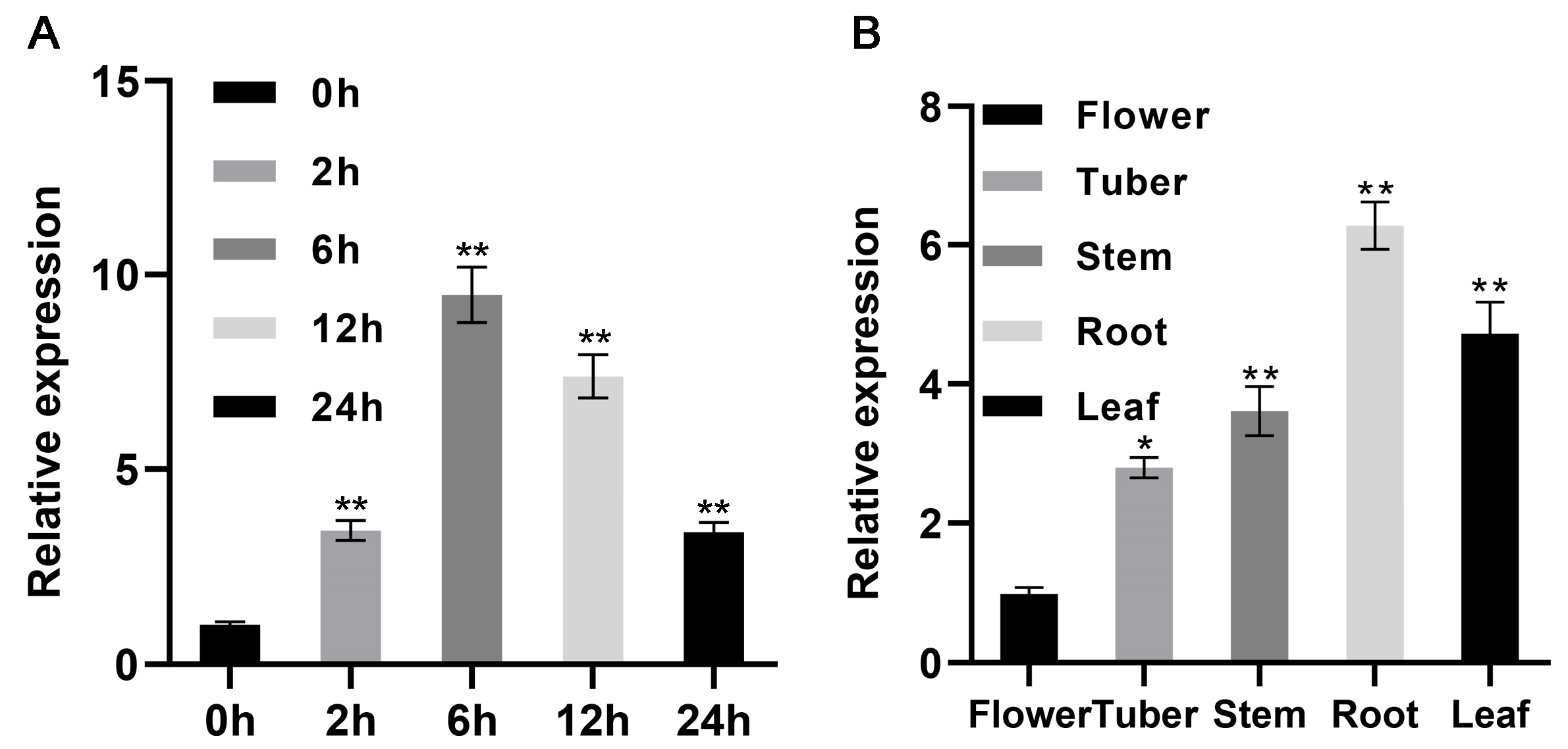
In order to understand the drought response features of this gene family, we analyzed the expression pattern of StCML19 under drought stress with the use of transcriptome data. The results showed that StCML19 was significantly upregulated in the process of drought stress. This finding was further backed up by qPCR, which showed a consistent expression trend compared to the transcriptomic data. Significantly, for the analysis of drought stress induced expression, StCML19 expression reached its highest point at the mid phase of stress exposure (6 h), reaching levels 9.3-fold. Three times more than the control group, and then it declined gradually as stress duration went up (Figure 1). In this study, drought stress refers to water deficit under natural conditions, whereas osmotic stress induced by 200 mM mannitol was used to simulate drought-induced cellular water loss. These findings suggest that StCML19 may function importantly in potato adaptation to drought stress and may be a key component in the drought response regulatory network, worthy of further functional analysis. For the tissue-specific expression analysis, qPCR analysis was performed across multiple organs, showing marked variation in StCML19 transcript levels. The highest relative expression was observed in roots, followed by leaves, tubers, and stems, while the lowest expression was detected in floral tissues (Figure 1). These results indicate that StCML19 may play a crucial role in root and leaf tissues, which are the primary plant organs involved in water absorption and transpiration, and further suggest its potential function in the drought stress response.

3.2. Molecular Characteristics of the StCML19 Gene

The full-length genomic sequence of StCML19 is 907 nucleotides, with a coding region (CDS) of 585 bp encoding a polypeptide of 195 amino acids. The predicted molecular weight of the protein is about 22.33 kDa, the isoelectric point (PI) is 4.86, the molecular formula is C958H1547N257O318S18, and the average hydrophobicity index is −0.426, indicating that it is a hydrophilic protein. Sequence analysis revealed that StCML19 has typical structural characteristics of the CML family, including two EF-hand domains located at amino acid positions 61–122 and 170–195, respectively, and a Ca2+ binding region spanning 62–194 aa that contains a pair of EF-hand domains; these conserved EF-hand structural motifs together constitute the Ca2+-binding functional region of StCML19.
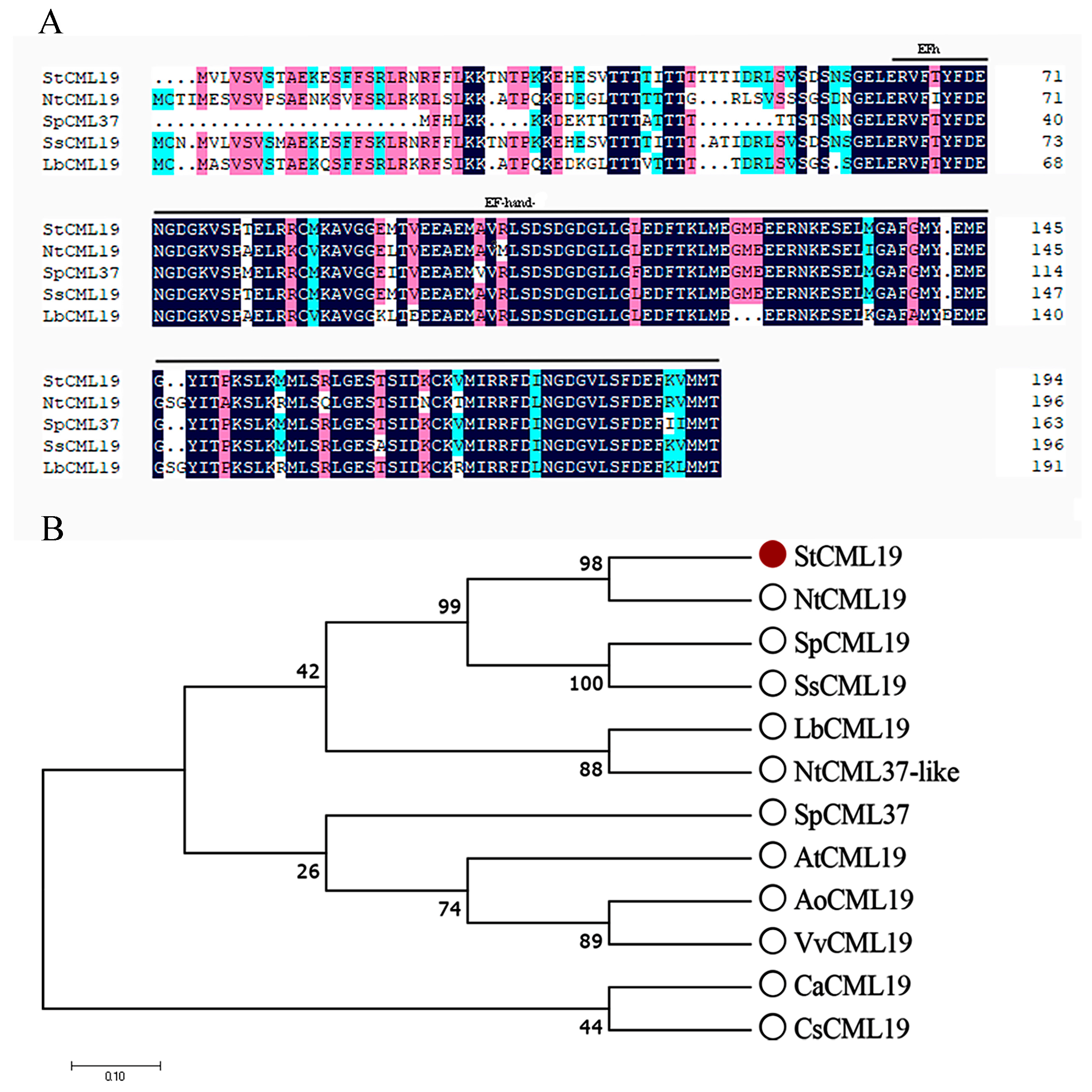
Phylogenetic analysis showed that StCML19 was closely related to NtCML19 derived from tobacco (Nicotiana tabacum) (Figure 2). Further sequence alignment analysis using DNAMAN 9.0 software showed that StCML19, NtCML19, SpCML37, SsCML19, and LbCML19 all contained typical EF hand domains. The amino acid sequences of these proteins are highly similar, with a consistency of 84%, indicating that their structures and functions are highly conserved in the process of evolution.

3.3. Generation of Transgenic Arabidopsis

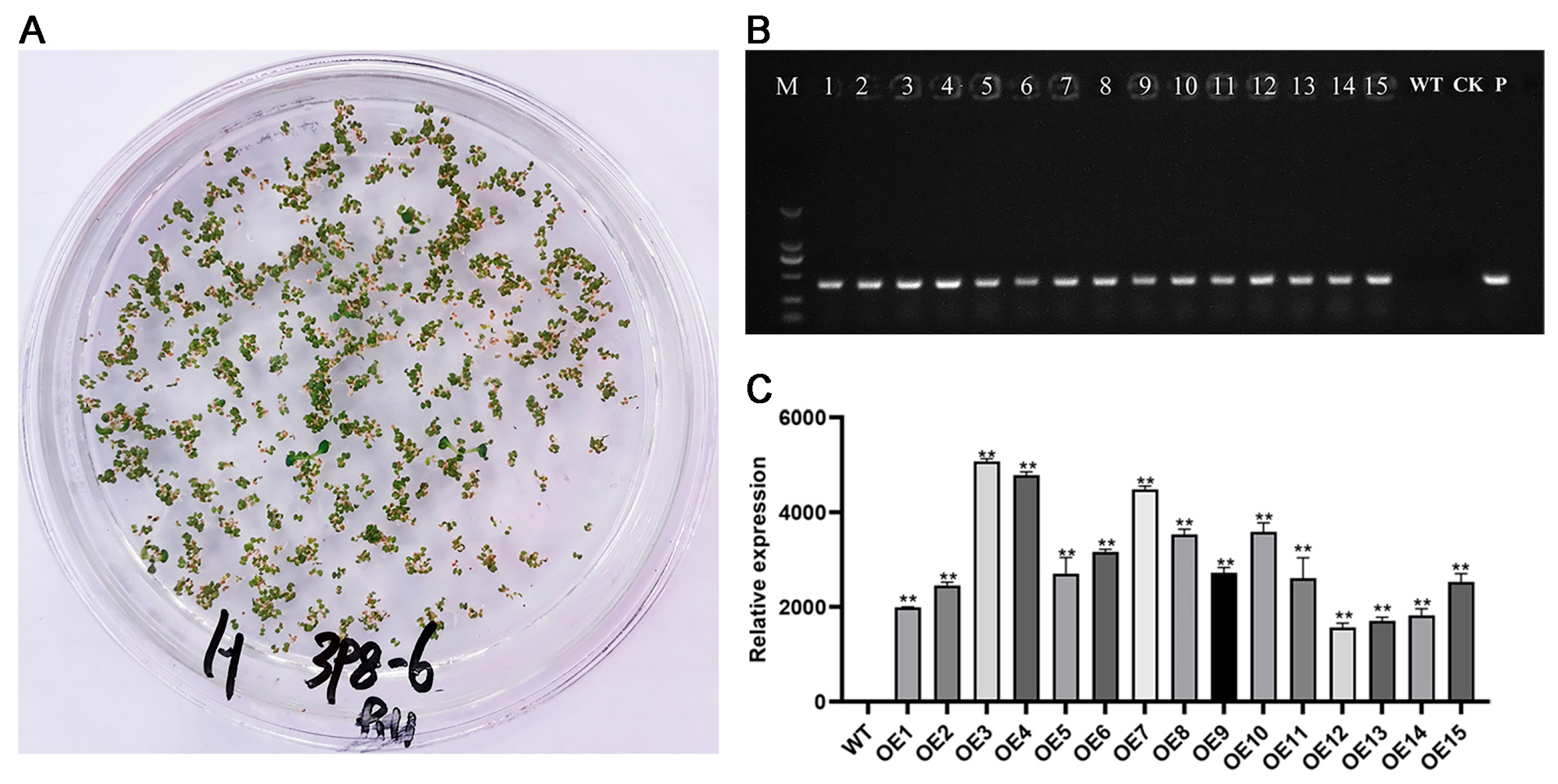
To study the role of StCML19 in drought response, we made an overexpression vector pCAMBIA1304-StCML19 and used Agrobacterium to perform the transformation of Arabidopsis thaliana (Figure 3A). By means of 50 mg/L hygromycin screening and PCR verification, 15 independent T1 generation transgenic lines were obtained (Figure 3B). The results of qRT-PCR analysis showed that StCML19 was expressed only in the transgenic plants, and its expression level was considerably higher than that of the wild type. Positive transgenic lines were named “OE” (short for overexpression). After identifying homozygous lines, we picked three independent transgenic lines (OE3, OE4, and OE7) with the highest StCML19 expression levels for subsequent functional characterization under drought stress (Figure 3C).

3.4. StCML19 Enhances the Tolerance of Transgenic Plants to Drought Stress

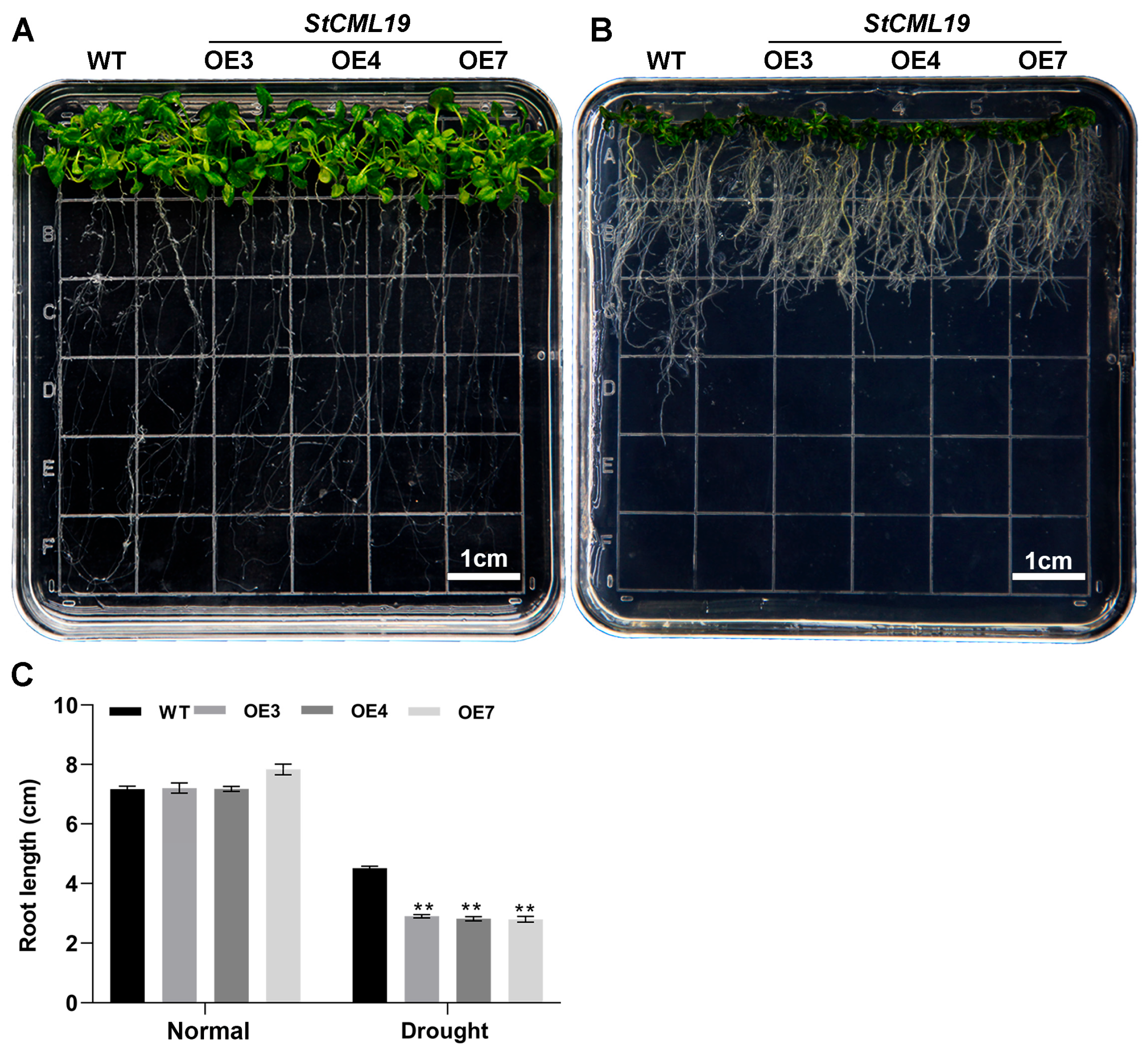
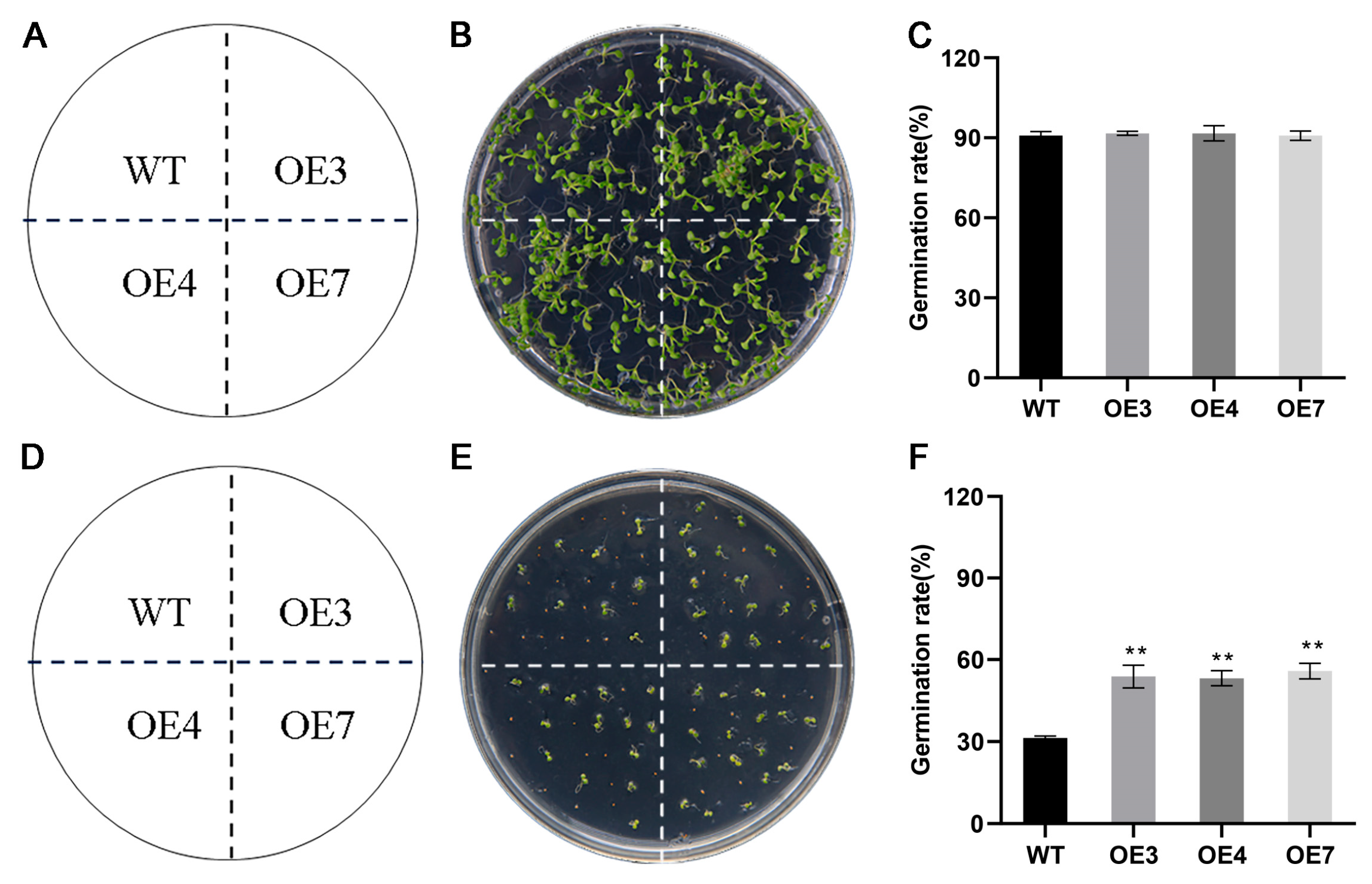
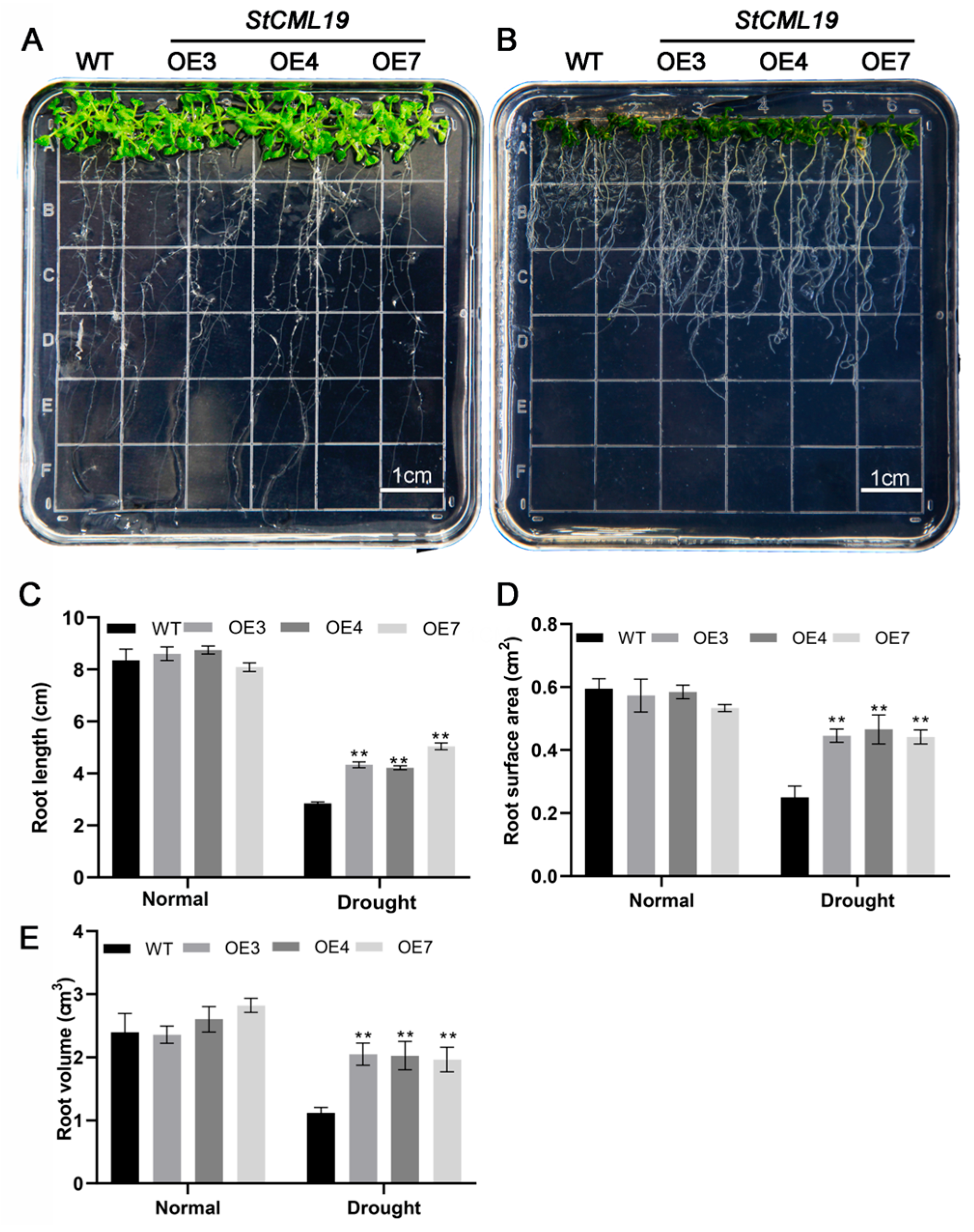
To judge if StCML19 is involved in the drought stress process, the germination rate was measured. The results under non-stress circumstances are shown in Figure 4A–C. But Figure 4D–F show the results under stress conditions treated with 200 mM mannitol. A germination test carried out under simulated drought stress (200 mM mannitol) revealed a significant increase in the germination rate of the transgenic lines (Figure 4). The plating design was such that there were four lines per plate (WT, OE3, OE4, and OE7), with 30 seeds per line. Each treatment was provided with three biological replicates (three plates). Analysis of 7-day-old seedlings that were grown on 200 mM mannitol medium showed significant variations in root morphology between transgenic and wild-type plants. The primary root length of transgenic lines was 1.2–1.5 times longer than that of the wild-type specimen. Quantitative analysis of root morphological parameters further revealed that the root surface area and root volume of transgenic lines were approximately 1.8 and 1.79 times those of the wild type, respectively (Figure 5). The results show that overexpressing StCML19 can notably increase the seed germination rate and boost root growth of Arabidopsis under osmotic stress, thus improving plant tolerance to osmotic stress.
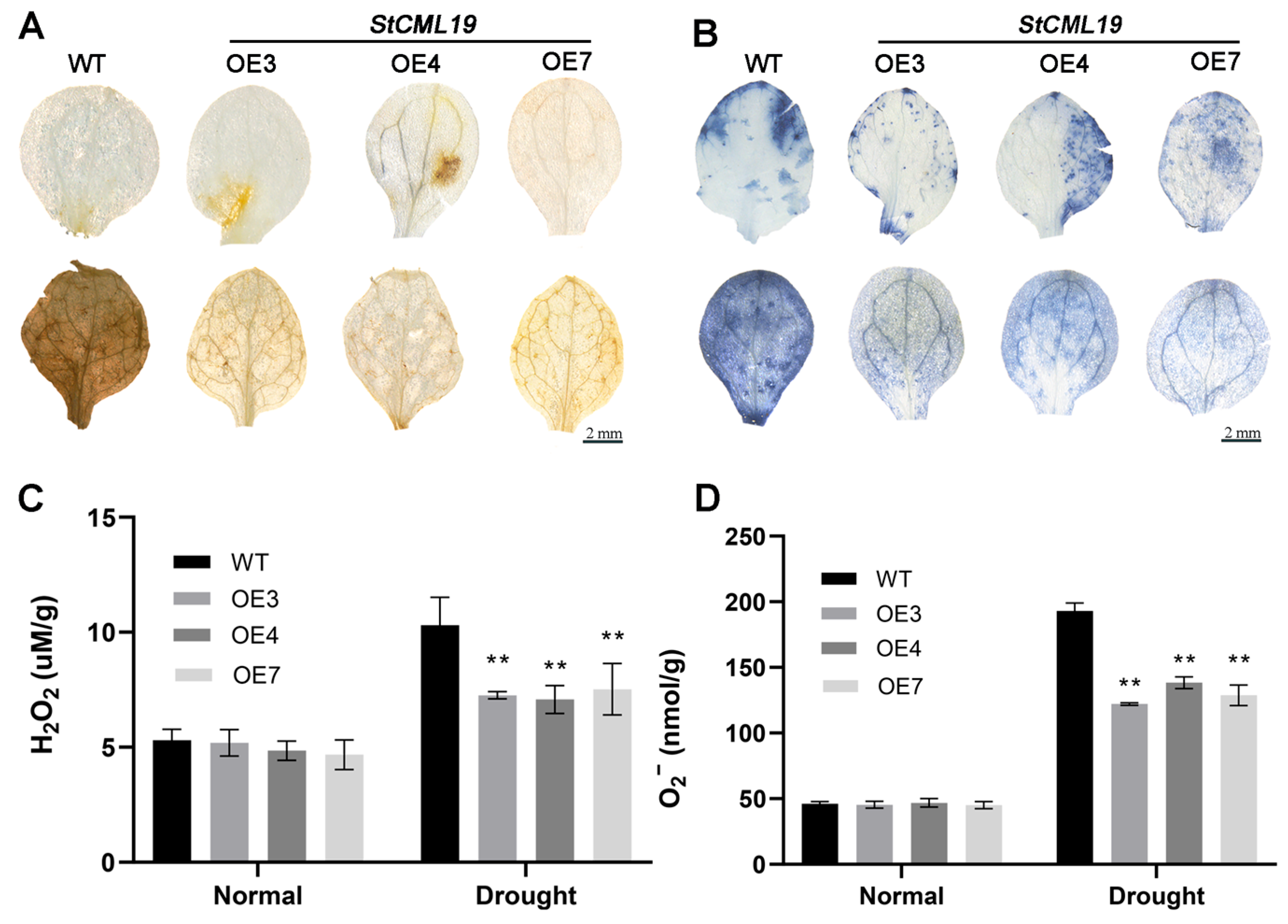
Histochemical staining with 3,3′-diaminobenzidine (DAB) and Nitroblue tetrazolium (NBT) revealed that the accumulation of reactive oxygen species (ROS) in the leaves of transgenic plants was significantly reduced, indicating enhanced drought tolerance (Figure 6). Quantitative analysis further confirmed that under stress conditions, the O2 content in the leaves of wild-type plants was significantly higher than that in the transgenic lines; the H2O2 content in wild-type leaves was also significantly higher than that in transgenic lines. These results demonstrate that overexpression of StCML19 can effectively reduce ROS accumulation in Arabidopsis leaves under osmotic stress, alleviate oxidative damage caused by stress, and thus enhance plant osmotic stress tolerance.

3.5. Overexpression of StCML19 Enhances the Tolerance of Transgenic Plants to Drought Stress

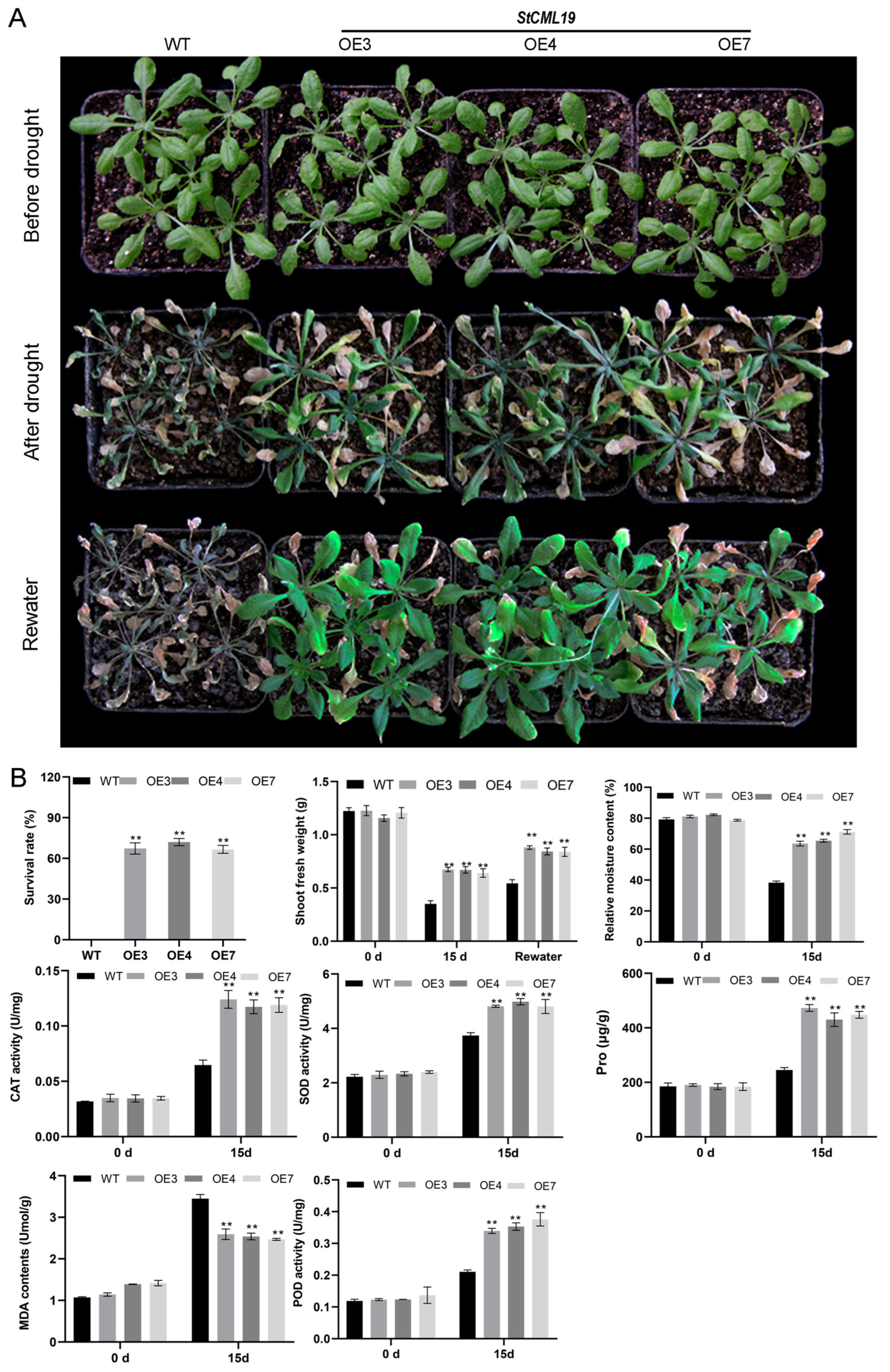
In an attempt to systematically evaluate the drought tolerance conferred by StCML19 overexpression, we ran a comprehensive soil experiment with 3-week-old transgenic lines and their wild-type (WT) control. In conditions of sufficient water, no marked phenotypic differences were found among various genotypes. But, after 15 days of water stress treatment, the growth of all wild-type strains was clearly suppressed. By comparing with transgenic lines, we find that wild-type plants had more severe stress induced damage. Phenotypic observation revealed that while some transgenic plants exhibited leaf curl and chlorophyll deficiency (yellowing), the entire leaf structure of wild-type plants was nearly completely necrotic (Figure 7). After 3 days of rewatering, the survival rate of transgenic lines was 60–80%, while all wild-type plants died as a result of acute drought damage. The results clearly show that overexpressing StCML19 can notably improve the soil drought tolerance of transgenic Arabidopsis.
The physiological and biochemical analysis of the StCML19 overexpression line revealed its mechanism of drought tolerance. Although in the control conditions, the MDA content and antioxidant enzyme activities of the transgenic plants and the wild-type plants did not show significant differences. Under drought stress, the transgenic line exhibited various changes. Firstly, the MDA accumulation decreased by approximately 23.29%, indicating reduced lipid peroxidation; secondly, the proline content increased to 2.56-fold that of stressed wild-type plants, suggesting enhanced osmotic adjustment. Furthermore, the water loss rate also decreased by 20.12%, suggesting an improved water retention ability of the plants. In terms of antioxidant enzyme activities, under stress conditions, the transgenic plants compared to the wild-type plants, the activities of superoxide dismutase, peroxidase, and catalase increased by 0.32 times, 0.692 times, and 0.856 times, respectively. These results collectively indicate that StCML19 can enhance the antioxidant defense, improve osmotic regulation, and protect the cell membrane, thereby improving the drought tolerance of Arabidopsis thaliana.

3.6. Expression Analysis of Stress-Responsive Genes in Plants

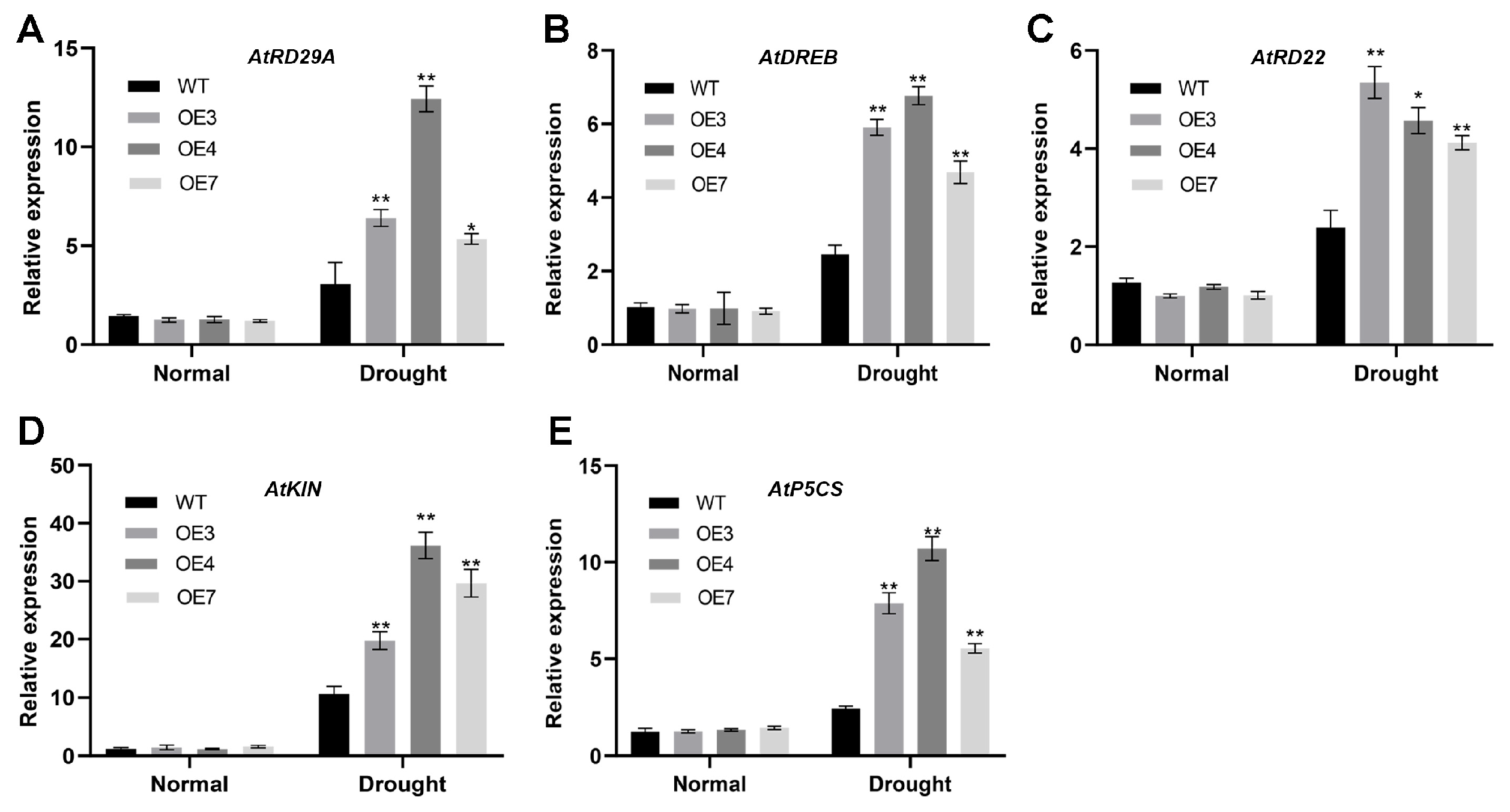
We tried to study the molecular mechanism of StCML19-mediated drought response and compared the expression levels of stress-related genes in transgenic and wild-type plants under normal and drought conditions. Under normal conditions, no significant differences in gene expression were found between StCML19 overexpressing lines and wild-type plants. In the event of drought stress, these genes were upregulated differently in the StCML19 transgenic lines as well as wild-type plants. It is worth noting that in Arabidopsis overexpressing StCML19, the expression of drought stress related genes such as AtRD29A (participates in drought adaptation), AtDREB (regulates the expression of downstream stress response genes as a transcription factor), AtRD22 (encodes a dehydration response protein that participates in cell dehydration protection), AtP5CS (a key enzyme in proline synthesis and plays a central role in osmotic regulation), and AtKIN (participates in ABA signal transduction and amplification as a protein kinase) significantly increased (Figure 8).

3.7. StCML19 Enhances ABA Sensitivity in Transgenic Arabidopsis thaliana

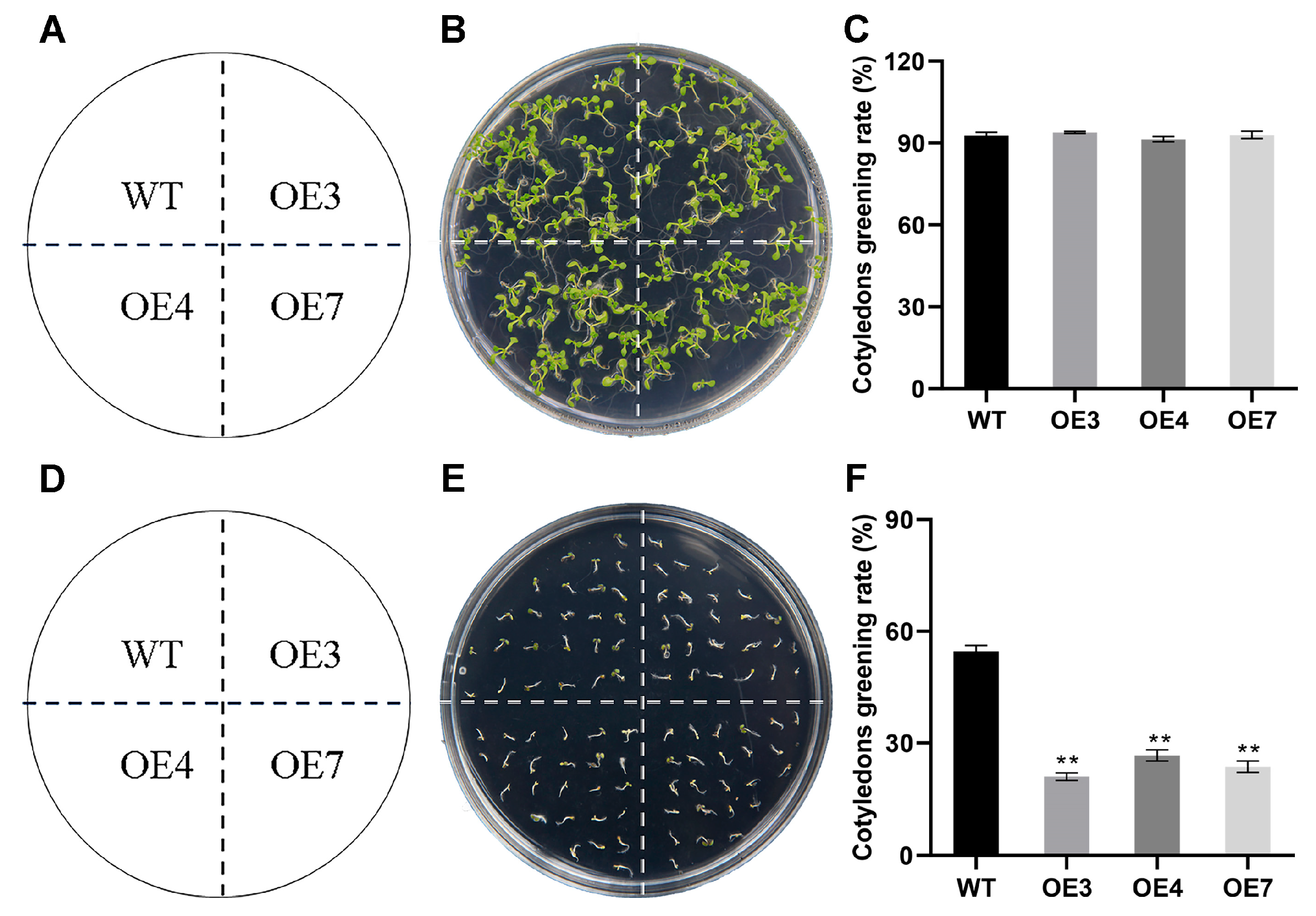
In order to find out StCML19’s role in the ABA signaling pathway, we carried out a comprehensive root elongation test on transgenic lines to measure their ABA sensitivity. Under the control state of affairs, the germination rate and root structure parameters of transgenic and wild-type plants did not have a significant difference. However, in the medium having ABA, the seed germination and root growth of the two genotypes were clearly inhibited. The transgenic strains exhibited a greater phenotypic change, which means they were more sensitive to ABA. The plating design adhered to the above description: four lines (WT, OE3, OE4, and OE7) per plate, with 50 seeds per line and three biological replicates. Specifically, when encountering 1 μM ABA, the cotyledon green rate of transgenic lines was 43.50–56.50% less than that of WT (Figure 9), and the taproot had a length of 40. 96–59.4% shorter than WT, as shown in Figure 10. The data showed that overexpressing StCML19 made the plant more sensitive to ABA, leading to more severe growth inhibition after ABA perception. The results propose that StCML19 may be involved in the stress response of potato mediated by ABA.

4. Discussion

Calcium ions (Ca2+) and reactive oxygen species (ROS), being important signaling molecules, pass information through a complex signaling network, finally leading to the activation of stress tolerance protein synthesis and accumulation [47]. A core regulatory factor for plant growth, development, and stress response, calcium signaling allows plants to respond to external stimuli by means of transient, sustained, or oscillatory changes in intracellular calcium ion concentration [48]. Calcium-binding proteins are essential for this signaling process and are widely engaged in a variety of physiological processes, including plant stress tolerance, cell differentiation, and stomatal movement [49]. Of particular note, Arabidopsis intermediate source proteins AtCML8 [50], AtCML9 [23], and AtCML13 [22] have been reported to be associated with responses to abiotic stress (drought/salt), suggesting that StCML19 may have similar functions. Furthermore, studies have shown that the transcription of SpCaM6 in stems and roots is highly induced by drought, salt, and ABA treatments [51]. This study analyzed StCML19 expression across tissues, with the highest levels in roots and lowest in flowers (Figure 1), suggesting its involvement in growth and development. Transcriptome data further revealed drought-induced up-regulation, indicating a potential role in stress response and development (Figure 1). This result is similar to the up-regulated expression patterns of CML21 in grape facing cold stress and GsCML27 under high-salt conditions in earlier research [52,53], which jointly support the potentially important role of StCML19 in potato response to drought stress.
Calmodulin-like proteins (CMLs) are calcium sensors that are well conserved in eukaryotes and have specificities particular to plants. Typically, these proteins contain only the EF-hand domain and lack other functional modules. Right now, the MsCML46 gene, which encodes CML-like proteins, has been determined to increase tobacco’s tolerance to abiotic stresses. Nevertheless, the identification and functional analysis of particular members, say CML19 genes in non-model species, are still relatively deficient and call for further in-depth study. However, the identification and functional analysis of the CML19 gene in non-model species have not been completely examined. In particular, the plant-specific calmodulin-like proteins (CMLs) show an amino acid similarity of more than 16% with calmodulin (CaM) and are crucial for calcium-dependent signal transduction pathways [54]. Sequence alignment showed that the amino acid sequence of this protein was highly similar to characterized CML homologs across various plant species. StCML19 was significantly upregulated under drought stress. Under normal conditions, no phenotypic differences were observed between transgenic lines and wild-type plants. Under drought stress, however, transgenic lines maintained greener cotyledons, developed more vigorous roots, and displayed a significantly higher survival rate (Figure 7). These results indicate that StCML19 overexpression confers enhanced drought tolerance without obvious growth penalties or fitness costs, which is in agreement with previous reports. It showed plants with specific root lengths are more adapted to dry conditions and have better water absorption power [55]. Taken together, these reproducible phenotypic data show that StCML19 may have a positive regulatory effect on the plant’s reaction to drought stress. We need to note that our data show a link between StCML19 overexpression and enhanced drought tolerance. As the link is not direct, more mechanistic studies are required to confirm StCML19’s direct regulatory role in this process. Moreover, the more advanced root growth seen in transgenic lines might enhance their survival during drought. However, this possible connection needs more verification since we have not yet determined a direct causal link between root phenotype and drought survival.
At the physiological level, the drought tolerance induced by StCML19 is a result of its combined activation of multiple cellular protective pathways. At first, in the aspect of oxidative stress defense, the activity of important antioxidant enzymes such as SOD, POD, and CAT generally goes up in transgenic plants. Spread over different stages of reactive oxygen species metabolism, these enzymes clear the drought-induced accumulated ROS via synergistic action, so as to maintain the balance of the intracellular redox state [56]. The 3,3-Diaminobenzidine (DAB) and Nitroblue tetrazolium (NBT) staining methods also showed an abundant accumulation of H2O2 and O2 in WT plants under drought stress [35]. Accordingly, the quantity of malondialdehyde, an important sign of membrane lipid peroxidation, was significantly diminished in transgenic plants. Biochemically, it was shown that it can reduce oxidative and membrane structure damage caused by drought in Arabidopsis transgenic lines. Second, about osmotic balance and cell protection, transgenic lines boosted the accumulation of osmotic regulator proline (Figure 7). Proline keeps turgor pressure and water absorption by reducing cell water potential. In addition, it stabilizes protein structure and has direct antioxidant functions, which can alleviate cell dehydration damage in different ways [57]. So then, the gathering of proline complements the above-described enzymatic antioxidant system, jointly establishing a two-way protective system that mitigates oxidation and keeps moisture. According to reports, Ricinus communis [58], Pisum sativum [59], and Setaria italica [60] all exhibit the accumulation of free proline under drought stress. In addition, the stability of the cell membrane system is an important foundation for plant drought tolerance. The maintenance of membrane stability enables key cellular activities such as ion transport and signal transmission to continue during drought periods [61]. A decrease in MDA content directly reveals less membrane damage, suggesting that StCML19 helps preserve membrane structure and normal function in transgenic Arabidopsis lines under stress conditions. It is thought that StCML19 may have alike functions in potato lines. It is important to note that osmotic stress induced by mannitol only mimics the osmotic part of drought stress and cannot fully represent natural soil drought. Besides this in vitro assay, soil drought experiments were also performed. The union of these two systems gives a more reliable evaluation of drought tolerance in StCML19-overexpressing plants.
The abscisic acid (ABA) signaling pathway plays a central role in the regulatory network, coordinating a series of physiological and molecular responses. Recent studies have found that members of the calcium-binding protein family often play key roles in the ABA pathway, thereby influencing the plant’s stress tolerance. For instance, SlCML39, as a negative regulatory factor, mediates tomato’s tolerance to high temperatures through ABA signaling [12]. Arabidopsis CML20 negatively regulates ABA signal transduction in guard cells and brings about an effect on the stress response [62]. Also, AtCPK9 has a negative effect on regulating ABA signaling in stomatal movement [63]. These findings imply functional conservation of calcium-binding proteins in ABA-mediated stress responses, suggesting StCML19 may act via a similar mechanism (Figure 2). Under 1 µM ABA treatment, overexpression of StCML19 significantly inhibited seed germination and root length in Arabidopsis, indicating increased ABA sensitivity. Expression analysis of key ABA and stress-responsive marker genes further supported these observations (Figure 9 and Figure 10). These genes like RD29A participates in drought adaptation [64], DREB regulates the expression of downstream stress response genes as a transcription factor [65], P5CS is a key enzyme in proline synthesis and plays a central role in osmotic regulation [66], RD22 encodes a de-hydration response protein that participates in cell dehydration protection [67], and KIN participates in ABA signal transduction and amplification as a protein kinase [68]. Use qRT-PCR to look into expression changes under drought stress.
To sum it up, the StCML19 gene improves plant drought adaptability on multiple physiological levels. It does so by simultaneously enhancing the ability to clear ROS, osmotic regulation ability, and membrane protection ability in transgenic Arabidopsis lines. The results of this study point out that StCML19 is a candidate gene for the genetic improvement of crop drought tolerance. Its capacity to combine multiple cooperative response pathways implies it could be a crucial regulatory node in drought response networks. We should note that this study made use of a heterologous Arabidopsis expression system. The results provide important clues about StCML19’s function in drought tolerance, yet further functional verification with transgenic potato plants is required to fully understand its physiological role in the original species. Subsequent studies can further explore the regulatory mechanism of StCML19 itself, its interaction with calcium signaling components, and the target gene network it directly controls, in order to verify its function in potatoes and fully elucidate its role in plant drought tolerance at the system level, and provide new ideas and resources for crop stress tolerance breeding.
Future mechanistic studies are needed to clarify the molecular function of StCML19, including in vitro Ca2+-binding assays, identification of interacting proteins via yeast two-hybrid, Co-IP, or mass spectrometry, and measurements of stomatal aperture, transpiration rate, and water-use efficiency. Direct quantification of endogenous ABA content and expression of core ABA biosynthetic genes will also help establish a more definitive causal link between StCML19 and ABA signaling. Ultimately, functional verification in potato using transgenic or gene-editing approaches, combined with controlled-environment and field trials, will be essential to fully elucidate the role of in potato drought tolerance and support its application in crop breeding for enhanced stress tolerance.

5. Conclusions

In this study, we cloned and did the characterization of StCML19, a calmodulin-like protein obtained from potato. A functional analysis of a heterologous Arabidopsis system found that StCML19 gives enhanced drought tolerance. Transgenic lines overexpressing StCML19 exhibited better stress tolerance. From a mechanistic view, StCML19-mediated drought tolerance was related to the upregulated expression of genes taking part in ABA signaling, proline biosynthesis, reactive oxygen species scavenging, and drought response pathways in Arabidopsis. The findings broaden our early understanding of the functional prospects of the StCML19 gene. We must recognize that our present results rely on a heterologous expression system and simulated drought treatments, which have limitations in showing the actual physiological responses in potato. So, more reverse genetic studies in potato are still necessary to verify the actual function and direct regulatory role of StCML19 during drought stress. All in all, this study not only widens our understanding of CML family genes in potato but also gives a promising candidate gene for the genetic improvement of drought tolerance in potato breeding.

Supplementary Materials

The following supporting information can be downloaded at: https://www.mdpi.com/article/10.3390/agronomy16060674/s1. Table S1. Cloning primer sequences for StCML19. Table S2. qPCR primer sequences for StCML19.

Author Contributions

Conceptualization, X.S. (Xianglin Sun), Z.B., Y.L. (Yuhui Liu), Z.L., J.B., P.Y. and C.S.; Methodology, J.C., J.M., Y.L. (Yajie Li) and P.Y.; Software, J.W., X.S. (Xinglong Su), Z.B., Y.Z., Y.L. (Yajie Li), F.Z. and J.B.; Validation, J.W., X.S. (Xinglong Su), J.C., X.S. (Xianglin Sun), J.M., Z.B., Z.L. and Y.Z.; Formal analysis, J.W., X.S. (Xinglong Su), J.C., X.S. (Xianglin Sun), J.M., Z.B., Y.L. (Yuhui Liu), Z.L., Y.Z. and F.Z.; Investigation, J.W., J.C., X.S. (Xianglin Sun), Y.L. (Yuhui Liu) and J.B.; Resources, J.M., Y.L. (Yuhui Liu), Z.L., Y.L. (Yajie Li), F.Z., J.B., P.Y. and C.S.; Data curation, J.W., X.S. (Xinglong Su), J.C., X.S. (Xianglin Sun), J.M., Z.L. and Y.Z.; Writing—original draft, J.W. and P.Y.; Writing—review & editing, P.Y. and C.S.; Visualization, J.W., X.S. (Xinglong Su), J.C., J.M., Z.B., Y.L. (Yuhui Liu), Y.L. (Yajie Li) and F.Z.; Supervision, P.Y. and C.S.; Project administration, P.Y. and C.S.; Funding acquisition, P.Y. and C.S. All authors have read and agreed to the published version of the manuscript.

Funding

This project was supported by the China Agricultural University Corresponding Support Research Joint Fund (No. GSAU-DKZY-2024-005); the University Industry Support Program (No. 2024CYZC-29); the Funding Support From the Natural Science Foundation of Gansu Province of China (No. 24JRRA838, 26JRRA080); the Key Talent Program of Gansu Province (No. 2025RCXM117); the Earmarked Fund for China Agriculture Research System (CARS-09-P14); the Research Program Sponsored by the State Key Laboratory of Aridland Crop Science of China (No. GSCS-2025-06) and the National Natural Science Foundation of China (32560446).

Institutional Review Board Statement

Not applicable.

Informed Consent Statement

Not applicable.

Data Availability Statement

The original contributions presented in this study are included in the article. Further inquiries can be directed to the corresponding authors.

Conflicts of Interest

The authors declare no conflicts of interest.

References

  1. Wang, Y.; Pruitt, R.N.; Nürnberger, T.; Wang, Y. Evasion of plant immunity by microbial pathogens. Nat. Rev. Microbiol. 2022, 20, 449–464. [Google Scholar] [CrossRef] [PubMed]
  2. Sharma, M.; Kumar, P.; Verma, V.; Sharma, R.; Bhargava, B.; Irfan, M. Understanding plant stress memory response for abiotic stress resilience: Molecular insights and prospects. Plant Physiol. Biochem. 2022, 179, 10–24. [Google Scholar] [CrossRef] [PubMed]
  3. Ahmad, P.; Latef, A.A.A.; Abd Allah, E.F.; Hashem, A.; Sarwat, M.; Anjum, N.A.; Gucel, S. Calcium and potassium supplementation enhanced growth, osmolyte secondary metabolite production, and enzymatic antioxidant machinery in cadmium-exposed chickpea (Cicer arietinum L.). Front. Plant Sci. 2016, 27, 513–524. [Google Scholar] [CrossRef] [PubMed]
  4. Anguita, E.; Villalobo, A. Src-family tyrosine kinases and the Ca2+ signal. Biochim. Biophys. Acta BBA—Mol. Cell Res. 2017, 1864, 915–932. [Google Scholar] [CrossRef]
  5. Yang, H.; Shu, Y. Cadmium transporters in the kidney and cadmium-induced nephrotoxicity. Int. J. Mol. Sci. 2015, 16, 1484–1494. [Google Scholar] [CrossRef]
  6. Batistič, O.; Kudla, J. Analysis of calcium signaling pathways in plants. Biochim. Biophys. Acta BBA—Gen. Subj. 2012, 1820, 1283–1293. [Google Scholar] [CrossRef]
  7. Shi, S.J.; Li, S.G.; Asim, M.; Mao, J.J.; Xu, D.Z.; Ullah, Z.; Liu, G.S.; Wang, Q.; Liu, H.B. The calcium-dependent protein kinases (cdpks) and their roles in plant growth regulation and abiotic stress responses. Int. J. Mol. Sci. 2018, 19, 1900. [Google Scholar] [CrossRef]
  8. Mohanta, T.K.; Yadav, D.; Khan, A.L.; Hashem, A.; Abd Allah, E.F.; Al-Harrasi, A. Molecular players of ef-hand containing calcium signaling event in plants. Int. J. Mol. Sci. 2019, 20, 1476. [Google Scholar] [CrossRef]
  9. Mohanta, T.K.; Kumar, P.; Bae, H.H. Genomics and evolutionary aspect of calcium signaling event in calmodulin and calmodulin-like proteins in plants. BMC Plant Biol. 2017, 17, 38. [Google Scholar] [CrossRef]
  10. Vanderbeld, B.; Snedden, W.A. Developmental and stimulus-induced expression patterns of arabidopsis calmodulin-like genes cml37, cml38 and cml39. Plant Mol. Biol. 2007, 64, 683–697. [Google Scholar] [CrossRef]
  11. Aleynova, O.A.; Kiselev, K.V.; Ogneva, Z.V.; Dubrovina, A.S. The grapevine calmodulin-like protein gene cml21 is regulated by alternative splicing and involved in abiotic stress response. Int. J. Mol. Sci. 2020, 21, 7939. [Google Scholar] [CrossRef]
  12. Ding, H.; Qian, Y.; Fang, Y.; Ji, Y.; Sheng, J.; Ge, C. Characteristics of slcml39, a tomato calmodulin-like gene, and its negative role in high temperature tolerance of Arabidopsis thaliana during germination and seedling growth. Int. J. Mol. Sci. 2021, 22, 11479. [Google Scholar] [CrossRef]
  13. Du, B.H.; Chen, N.Y.; Song, L.L.; Wang, D.; Cai, H.S.; Yao, L.; Li, X.T.; Guo, C.H. Alfalfa (Medicago sativa L.) mscml46 gene encoding calmodulin-like protein confers tolerance to abiotic stress in tobacco. Plant Cell Rep. 2021, 40, 1907–1922. [Google Scholar] [CrossRef] [PubMed]
  14. Zhang, X.X.; Tian, J.; Li, S.; Liu, Y.Y.; Feng, T.; Wang, Y.Y.; Li, Y.J.; Huang, X.X.; Li, D.H. Characterization of the calmodulin/calmodulin-like protein (cam/cml) family in Ginkgo biloba, and the influence of an ectopically expressed gbcml gene (gb30819) on seedling and fruit development of transgenic Arabidopsis. Plants 2022, 11, 1506. [Google Scholar] [CrossRef] [PubMed]
  15. Ma, Q.P.; Zhou, Q.Q.; Chen, C.M.; Cui, Q.Y.; Zhao, Y.X.; Wang, K.; Arkorful, E.; Chen, X.; Sun, K.; Li, X.H. Isolation and expression analysis of CsCML genes in response to abiotic stresses in the tea plant (Camellia sinensis). Sci. Rep. 2019, 9, 8211. [Google Scholar] [CrossRef] [PubMed]
  16. Gao, T.T.; Zhang, Z.J.; Liu, X.M.; Wu, Q.; Chen, Q.; Liu, Q.W.; van Nocker, S.; Ma, F.W.; Li, C. Physiological and transcriptome analyses of the effects of exogenous dopamine on drought tolerance in apple. Plant Physiol. Biochem. 2020, 148, 260–272. [Google Scholar] [CrossRef]
  17. Park, H.C.; Park, C.Y.; Koo, S.C.; Cheong, M.S.; Kim, K.E.; Kim, M.C.; Lim, C.O.; Lee, S.Y.; Yun, D.J.; Chung, W.S. Atcml8, a calmodulin-like protein, differentially activating cam-dependent enzymes in Arabidopsis thaliana. Plant Cell Rep. 2010, 29, 1297–1304. [Google Scholar] [CrossRef]
  18. Xu, G.Y.; Rocha, P.S.C.F.; Wang, M.L.; Xu, M.L.; Cui, Y.C.; Li, L.Y.; Zhu, Y.X.; Xia, X.J. A novel rice calmodulin-like gene, osmsr2, enhances drought and salt tolerance and increases aba sensitivity in Arabidopsis. Planta 2011, 234, 47–59. [Google Scholar] [CrossRef]
  19. Yang, J.; Ji, L.X.; Zhu, B.H.; Yuan, X.J.; Jin, D.M.; Xie, G.S. Oscml16 interacts with a novel cc-nbs-lrr protein ospi304 in the Ca/Mg dependent and independent manner in rice. Biochem. Biophys. Res. Commun. 2018, 504, 346–351. [Google Scholar] [CrossRef]
  20. Jung, H.; Chung, P.J.; Park, S.H.; Redillas, M.C.F.R.; Kim, Y.S.; Suh, J.W.; Kim, J.K. Overexpression of causes regulation of, a calmodulin-like protein gene that enhances root growth and drought tolerance. Plant Biotechnol. J. 2017, 15, 1295–1308. [Google Scholar] [CrossRef]
  21. Liu, J.; Zhang, J.Q.; Wei, Y.; Su, W.; Li, W.; Wang, B.; Peng, D.L.; Gheysen, G.; Peng, H.; Dai, L.Y. The nematode effector calreticulin competes with the high mobility group protein oshmgb1 for binding to the rice calmodulin-like protein oscml31 to enhance rice susceptibility to Meloidogyne graminicola. Plant Cell Environ. 2024, 47, 1732–1746. [Google Scholar] [CrossRef]
  22. Hau, B.; Symonds, K.; Teresinski, H.; Janssen, A.; Duff, L.; Smith, M.; Benidickson, K.; Plaxton, W.; Snedden, W.A. Arabidopsis calmodulin-like proteins cml13 and cml14 interact with calmodulin-binding transcriptional activators and function in salinity stress response. Plant Cell Physiol. 2024, 65, 282–300. [Google Scholar] [CrossRef]
  23. Magnan, F.; Ranty, B.; Charpenteau, M.; Sotta, B.; Galaud, J.P.; Aldon, D. Mutations in atcml9, a calmodulin-like protein from arabidopsis thaliana, alter plant responses to abiotic stress and abscisic acid. Plant J. 2008, 56, 575–589. [Google Scholar] [CrossRef] [PubMed]
  24. Yamaguchi, T.; Aharon, G.S.; Sottosanto, J.B.; Blumwald, E. Vacuolar Na+/H+ antiporter cation selectivity is regulated by calmodulin from within the vacuole in a Ca2+- and ph-dependent manner. Proc. Natl. Acad. Sci. USA 2005, 102, 16107–16112. [Google Scholar] [CrossRef] [PubMed]
  25. Wu, X.M.; Qiao, Z.; Liu, H.P.; Acharya, B.R.; Li, C.L.; Zhang, W. Cml20, an Arabidopsis calmodulin-like protein, negatively regulates guard cell aba signaling and drought stress tolerance. Front. Plant Sci. 2017, 8, 824. [Google Scholar] [CrossRef]
  26. Andrivon, D. Potato facing global challenges: How, how much, how well? Potato Res. 2018, 60, 389–400. [Google Scholar] [CrossRef]
  27. Birch, P.R.J.; Bryan, G.; Fenton, B.; Gilroy, E.M.; Hein, I.; Jones, J.T.; Prashar, A.; Taylor, M.A.; Torrance, L.; Toth, I.K. Crops that feed the world 8: Potato: Are the trends of increased global production sustainable? Food Secur. 2012, 4, 477–508. [Google Scholar] [CrossRef]
  28. Uddin, N.; Li, X.; Ullah, M.W.; Sethupathy, S.; Ma, K.Y.; Zahoor; Elboughdiri, N.; Khan, K.A.; Zhu, D.C. Lignin developmental patterns and casparian strip as apoplastic barriers: A review. Int. J. Biol. Macromol. 2024, 260, 129595. [Google Scholar] [CrossRef]
  29. Li, S.G.; Zhang, N.; Zhu, X.; Ma, R.; Liu, S.Y.; Wang, X.; Yang, J.W.; Si, H.J. Genome-wide identification of cold-tolerance genes and functional analysis of ibbhlh116 gene in sweet potato. Front. Plant Sci. 2021, 12, 146690. [Google Scholar]
  30. Sun, C.; Liang, W.J.; Yan, K.; Xu, D.R.; Qin, T.Y.; Fiaz, S.; Kear, P.; Bi, Z.Z.; Liu, Y.H.; Liu, Z.; et al. Expression of potato stdro1 in arabidopsis alters root architecture and drought tolerance. Front. Plant Sci. 2022, 13, 836063. [Google Scholar] [CrossRef]
  31. Muñiz García, M.N.; Giammaria, V.; Grandellis, C.; Téllez-Iñón, M.T.; Ulloa, R.M.; Capiati, D.A. Characterization of stabf1, a stress-responsive bzip transcription factor from Solanum tuberosum L. That is phosphorylated by stcdpk2 in vitro. Planta 2011, 235, 761–778. [Google Scholar] [CrossRef] [PubMed]
  32. Qi, X.; Tang, X.; Liu, W.; Fu, X.; Luo, H.; Ghimire, S.; Zhang, N.; Si, H. A potato ring-finger protein gene strfp2 is involved in drought tolerance. Plant Physiol. Biochem. 2020, 146, 438–446. [Google Scholar] [CrossRef] [PubMed]
  33. Majeed, Y.; Zhang, N.; Zhu, X.; Liu, S.Y.; Si, H.J. Stmapk10 gene functional identification and analysis in drought resistance of potato crop (Solanum tuberosum L.). Physiol. Plant. 2024, 176, e14362. [Google Scholar] [CrossRef] [PubMed]
  34. Pu, Z.F.; Qin, T.Y.; Wang, Y.H.; Wang, X.D.; Shi, N.F.; Yao, P.F.; Liu, Y.H.; Bai, J.P.; Bi, Z.Z.; Sun, C. Genome-wide analysis of the gene family in potato and functional verification of under drought stress. Int. J. Mol. Sci. 2025, 26, 2360. [Google Scholar] [CrossRef]
  35. Soltabayeva, A.; Sagi, M. Determination of ros generated by arabidopsis xanthine dehydrogenase1 (atxdh1) using nitroblue tetrazolium (nbt) and 3,3′-diaminobenzidine (dap). Methods Mol. Biol. 2024, 2798, 65–77. [Google Scholar]
  36. Wang, C.; Luan, S. Calcium homeostasis and signaling in plant immunity. Curr. Opin. Plant Biol. 2024, 77, 102485. [Google Scholar] [CrossRef]
  37. Shi, N.; Fan, Y.; Zhang, W.; Zhang, Z.; Pu, Z.; Li, Z.; Hu, L.; Bi, Z.; Yao, P.; Liu, Y.; et al. Genome-wide identification and drought-responsive functional analysis of the gst gene family in potato (Solanum tuberosum L.). Antioxidants 2025, 14, 239. [Google Scholar] [CrossRef]
  38. Letunic, I.; Bork, P. 20 years of the smart protein domain annotation resource. Nucleic Acids Res. 2018, 46, D493–D496. [Google Scholar] [CrossRef]
  39. Zhang, X.; Duan, W.; Wang, Y.; Jiang, Z.; Li, Q. Mfwrky40 positively regulates drought tolerance in arabidopsis thaliana by scavenging reactive oxygen species. Int. J. Mol. Sci. 2025, 26, 8495. [Google Scholar] [CrossRef]
  40. Wang, W.; Chen, Q.; Xu, S.; Liu, W.C.; Zhu, X.; Song, C.P. Trehalose-6-phosphate phosphatase e modulates aba-controlled root growth and stomatal movement in arabidopsis. J. Integr. Plant Biol. 2020, 62, 1518–1534. [Google Scholar] [CrossRef]
  41. Kong, F.; Deng, Y.; Zhou, B.; Wang, G.; Wang, Y.; Meng, Q. A chloroplast-targeted dnaj protein contributes to maintenance of photosystem ii under chilling stress. J. Exp. Bot. 2014, 65, 143–158. [Google Scholar] [CrossRef]
  42. Fernando, C.D.; Soysa, P. Optimized enzymatic colorimetric assay for determination of hydrogen peroxide (H2O2) scavenging activity of plant extracts. MethodsX 2015, 2, 283–291. [Google Scholar] [CrossRef] [PubMed]
  43. Shan, Y.J.; Li, D.; Cao, J.J.; Zhang, L.; Han, L.Q.; Zhang, M.P.; Shen, Z.G. Over-expression of arabidopsis orange gene enhances drought stress tolerance through aba-dependent pathway in arabidopsis thaliana. Plant Growth Regul. 2022, 96, 91–101. [Google Scholar] [CrossRef]
  44. Soltys-Kalina, D.; Plich, J.; Strzelczyk-Żyta, D.; Śliwka, J.; Marczewski, W. The effect of drought stress on the leaf relative water content and tuber yield of a half-sib family of ‘katahdin’-derived potato cultivars. Breed Sci. 2016, 66, 328–331. [Google Scholar] [CrossRef] [PubMed]
  45. Heath, R.L.; Packer, L. Photoperoxidation in isolated chloroplasts. I. Kinetics and stoichiometry of fatty acid peroxidation. Arch. Biochem. Biophys. 1968, 125, 189–198. [Google Scholar] [CrossRef] [PubMed]
  46. Nicot, N.; Hausman, J.-F.; Hoffmann, L.; Evers, D. Housekeeping gene selection for real-time rt-pcr normalization in potato during biotic and abiotic stress. J. Exp. Bot. 2005, 56, 2907–2914. [Google Scholar] [CrossRef]
  47. Janakiraman, A.; Lesser, C.F. How to manage stress: Lessons from an intracellular pathogen. Virulence 2016, 8, 359–361. [Google Scholar] [CrossRef][Green Version]
  48. Chen, H.; Shu, F.; Yang, S.; Li, Y.; Wang, S. Competitive inhibitory effect of calcium polypeptides on cd enrichment of Brassia campestris L. Int. J. Environ. Res. Public Health. 2019, 16, 4472. [Google Scholar] [CrossRef]
  49. Fini, A.; Tattini, M.; Esteban, R. Editorial: Plants’ responses to novel environmental pressures. Front. Plant Sci. 2017, 8, 2000. [Google Scholar] [CrossRef]
  50. Zielinski, R.E. Characterization of three new members of the Arabidopsis thaliana calmodulin gene family: Conserved and highly diverged members of the gene family functionally complement a yeast calmodulin null. Planta 2004, 614, 446–455. [Google Scholar] [CrossRef]
  51. Shi, J.Y.; Du, X.G. Identification, characterization and expression analysis of calmodulin and calmodulin-like proteins in solanum pennellii. Sci. Rep. 2020, 10, 7474. [Google Scholar] [CrossRef]
  52. Aleynova, O.A.; Kiselev, K.V.; Suprun, A.R.; Ananev, A.A.; Dubrovina, A.S. Involvement of the calmodulin-like protein gene VaCML92 in grapevine abiotic stress response and stilbene production. Int. J. Mol. Sci. 2023, 24, 15827. [Google Scholar] [CrossRef] [PubMed]
  53. Chen, C.; Sun, X.; Duanmu, H.; Zhu, D.; Yu, Y.; Cao, L.; Liu, A.; Jia, B.; Xiao, J.; Zhu, Y. Gscml27, a gene encoding a calcium-binding ef-hand protein from glycine soja, plays differential roles in plant responses to bicarbonate, salt and osmotic stresses. PLoS ONE 2015, 10, e0141888. [Google Scholar] [CrossRef] [PubMed]
  54. Sarwat, M.; Ahmad, P.; Nabi, G.; Hu, X. Ca(2+) signals: The versatile decoders of environmental cues. Crit. Rev. Biotechnol. 2013, 33, 97–109. [Google Scholar] [CrossRef] [PubMed]
  55. Henry, A.; Cal, A.J.; Batoto, T.C.; Torres, R.O.; Serraj, R. Root attributes affecting water uptake of rice (Oryza sativa) under drought. J. Exp. Bot. 2012, 63, 4751–4763. [Google Scholar] [CrossRef]
  56. Dong, H.; Wu, C.; Luo, C.; Wei, M.; Qu, S.; Wang, S. Overexpression of mdcpk1a gene, a calcium dependent protein kinase in apple, increase tobacco cold tolerance via scavenging ros accumulation. PLoS ONE 2020, 15, e0242139. [Google Scholar] [CrossRef]
  57. Xu, J.; Tian, Y.-S.; Peng, R.-H.; Xiong, A.-S.; Zhu, B.; Jin, X.-F.; Gao, F.; Fu, X.-Y.; Hou, X.-L.; Yao, Q.-H. Atcpk6, a functionally redundant and positive regulator involved in salt/drought stress tolerance in arabidopsis. Planta 2010, 231, 1251–1260. [Google Scholar] [CrossRef]
  58. Babita, M.; Maheswari, M.; Rao, L.M.; Shanker, A.K.; Rao, D.G. Osmotic adjustment, drought tolerance and yield in castor (Ricinus communis L.) hybrids. Environ. Exp. Bot. 2010, 69, 243–249. [Google Scholar] [CrossRef]
  59. Cui, Y.N.; Yan, S.J.; Zhang, Y.N.; Wang, R.; Song, L.L.; Ma, Y.; Guo, H.; Yang, P.Z. Physiological, metabolome and gene expression analyses reveal the accumulation and biosynthesis pathways of soluble sugars and amino acids in sweet sorghum under osmotic stresses. Int. J. Mol. Sci. 2024, 25, 8942. [Google Scholar] [CrossRef]
  60. Mukami, A.; Ngetich, A.; Mweu, C.; Oduor, R.O.; Muthangya, M.; Mbinda, W.M. Differential characterization of physiological and biochemical responses during drought stress in finger millet varieties. Physiol. Mol. Biol. Plants 2019, 25, 837–846. [Google Scholar] [CrossRef]
  61. Wang, S.J.; Zhuang, K.Y.; Zhang, S.; Yang, M.M.; Kong, F.Y.; Meng, Q.W. Overexpression of a tomato carotenoid ε-hydroxylase gene (sllut1) improved the drought tolerance of transgenic tobacco. J. Plant Physiol. 2018, 222, 103–112. [Google Scholar] [CrossRef] [PubMed]
  62. Scholz, S.S.; Reichelt, M.; Vadassery, J.; Mithöfer, A. Calmodulin-like protein CML37 is a positive regulator of ABA during drought stress in Arabidopsis. Plant Signal. Behav. 2015, 10, e1011951. [Google Scholar] [CrossRef] [PubMed]
  63. Chen, D.-H.; Liu, H.-P.; Li, C.-L. Calcium-dependent protein kinase cpk9 negatively functions in stomatal abscisic acid signaling by regulating ion channel activity in arabidopsis. Plant Mol. Biol. 2018, 99, 113–122. [Google Scholar] [CrossRef] [PubMed]
  64. Liu, W.S.; Thapa, P.; Park, S.W. Rd29a and rd29b rearrange genetic and epigenetic markers in priming systemic defense responses against drought and salinity. Plant Sci. 2023, 337, 111895. [Google Scholar] [CrossRef]
  65. Wang, J.X.; Pan, J.T.; Duan, Y.D.; Wang, L.W.; Jing, D.L.; Dang, J.B.; Guo, Q.G. Characterization of dreb family genes in loquat and their co-expression network analysis in response to drought. BMC Plant Biol. 2025, 25, 1385. [Google Scholar] [CrossRef]
  66. Luan, Y.T.; An, H.L.; Chen, Z.J.; Zhao, D.Q.; Tao, J. Functional characterization of the paeonia ostii p5cs gene under drought stress. Plants 2024, 13, 2145. [Google Scholar] [CrossRef]
  67. Yue, Y.S.; Zhang, M.C.; Zhang, J.C.; Tian, X.L.; Duan, L.S.; Li, Z.H. Overexpression of the gene increased abscisic acid level and drought tolerance in transgenic cotton. J. Exp. Bot. 2012, 63, 3741–3748. [Google Scholar] [CrossRef]
  68. Zhang, Z.Y.; Yang, Q.; Zhang, C.L.; Wei, L.L.; Yue, R.; Li, G.J.; Lin, X.F.; Wang, R.G. A ckdreb1 gene isolated from Caragana korshinskii kom. Enhances arabidopsis drought and cold tolerance. Braz. J. Bot. 2019, 42, 97–105. [Google Scholar] [CrossRef]
Figure 1. (A) Analysis of the expression of StCML19 under osmotic stress mimicking drought-like conditions. Uniformly grown 21-day-old in vitro potato seedlings were moved to 1/2 MS medium having 200 mM mannitol added to induce osmotic stress. Whole seedlings were picked at 0, 2, 6, 12, and 24 h after treatment, immediately frozen in liquid nitrogen to keep RNA’s integrity, and used for qPCR analysis. (B) Study of tissue-specific expression of the StCML19 gene. Roots, leaves, tubers, stems, and flowers of 65-day-old potato plants grown in pots were obtained. Data are presented as mean ± SD from three independent biological replicates (n = 3). Asterisks indicate significant differences compared to the control or as indicated: * p < 0.05, ** p < 0.01.
Agronomy 16 00674 g001
Figure 2. (A) The amino acid sequence alignment of StCML19 with the designated homologous CML19 protein of the specified plant species (black lines: calmodulin-like domain containing EF-hand motifs; EFH: EF-hand domain, the conserved calcium-binding structural unit of CMLs). (B) Phylogenetic tree of StCML19 and its homologs from different plant species (St: Solanum tuberosum; Nt: Nicotiana tabacum; Sp: Solanum pennellii1; Ss: Solanum stenotomum; Lb: Lycium barbarum; At: Arabidopsis; Ao: Asparagus officinalis; Vv: Vitis vinifera; Ca: Capsicum annuum; and Cs: Camellia sinensis). Use DNAMAN to compare the full-length amino acid sequences of four plant CML, and use MEGA 7 to construct a phylogenetic tree. 0 is gotten from files generated by means of the maximum likelihood method with 1000 bootstrap repeats.
Agronomy 16 00674 g002
Figure 3. Proof and examination of StCML19 expression in transgenic Arabidopsis. (A) The act of screening transgenic seeds is done on 1/2 MS medium with 50 mg/L hygromycin. Seedlings showing well-developed true leaves and normal growth of the root system were determined to be positive transgenic plants. (B) Validating transgenic plants by means of PCR. Lane M shows the presence of the DL2000 DNA marker. Lanes 1 through 15 are transgenic lines. Lane WT is for the wild-type plants. Lane P has the pCAMBIA1304-StCML19 plasmid (positive control). Lane CK has water functioning as a negative control. (C) The expression levels of StCML19 in transgenic lines and WT plants were measured by means of qRT-PCR. They made use of the Arabidopsis actin gene as an internal reference. Data are presented as mean ± SD from three independent biological replicates (n = 3). Asterisks indicate significant differences compared to the control or as indicated: ** p < 0.01, confirming that StCML19 was successfully overexpressed in transgenic lines.
Agronomy 16 00674 g003
Figure 4. Leaf greening rate of StCML19 transgenic and wild-type lines under 200 mM mannitol stress. (A) An image showing normal conditions. (B) Phenotype of the germination process under normal conditions. (C) Evaluation of the cotyledon greening rate in normal situations. (D) Representative picture under 200 mM mannitol stress. (E) Germination phenotype in the presence of 200 mM mannitol stress. (F) Evaluation of cotyledon greening rate under 200 mM mannitol stress. There are 50 seeds in a line and 200 seeds on a plate. Data are presented as mean ± SD from three independent biological replicates (n = 3). Asterisks indicate significant differences compared to the control or as indicated: ** p < 0.01.
Agronomy 16 00674 g004
Figure 5. The root phenotypes of StCML19 transgenic lines and wild-type controls under drought conditions induced by 200 mM mannitol. (A) Root phenotypic features of different lines under normal circumstances. (B) The phenotypes of the roots of different lines under stress. The black grid background uses a scale of 1 cm per single grid. The quantitative review of root structure parameters (C), namely, root length. (D) The surface area of the root system. (E) The volume of the root system. OE3, OE4, and OE7, respectively, stand for the three positive transgenic lines that have the highest expression levels of StCML19. Data are presented as mean ± SD from three independent biological replicates (n = 3). Asterisks indicate significant differences compared to the control or as indicated: ** p < 0.01.
Agronomy 16 00674 g005
Figure 6. Peroxide staining in StCML19 transgenic Arabidopsis lines and WT lines under stress treatments as indicated. (A) DAB (3,3′-Diaminobenzidine); (B) NBT (Nitroblue Tetrazolium). (C) The content of H2O2. (D) The content of O2. Control: under normal conditions. WT, wild-type. OE3, OE4, and OE7 represent the three positive transgenic lines with the highest expression levels of StCML19, respectively. Data are presented as mean ± SD from three independent biological replicates (n = 3). Asterisks indicate significant differences compared to the control or as indicated: ** p < 0.01.
Agronomy 16 00674 g006
Figure 7. StCML19 overexpression enhanced drought tolerance in transgenic plants through physiological and biochemical modulation. (A) Comparative morphological phenotypes of wild-type and transgenic lines under controlled drought conditions. (B) Quantitative evaluation of drought tolerance capacity and drought-responsive physiological markers. Survival rates following 15-day drought treatment initiated at 21 days post-germination. Post-rehydration recovery after 3 days of water restoration. OE3, OE4, and OE7 represent the three positive transgenic lines with the highest expression levels of StCML19, respectively. Data are presented as mean ± SD from three independent biological replicates (n = 3). Asterisks indicate significant differences compared to the control or as indicated: ** p < 0.01.
Agronomy 16 00674 g007
Figure 8. A comparison of the expression of genes responding to stress in transgenic and wild-type plants. The stem segments of transgenic lines with uniform growth were aseptically transferred to basal MS medium or MS medium to which 200 mM mannitol was added. After 30 days of treatment, the plants grew enough for effective RNA extraction. Then, the whole aerial tissues were harvested for RNA isolation and subsequent qRT-PCR analysis. The following shows the expression profiles of key stress-related genes: (A) AtRD29A, (B) AtDREB, (C) AtRD22, (D) AtKIN, and (E) AtP5CS. Data are presented as mean ± SD from three independent biological replicates (n = 3). Asterisks indicate significant differences compared to the control or as indicated: * p < 0.05, ** p < 0.01.
Agronomy 16 00674 g008
Figure 9. Germination rates of StCML19 transgenic and WT lines under ABA stress. (A) Pattern diagram of germination rate phenotype under normal conditions. (B) Germination phenotypes under normal conditions. (C) Statistics of cotyledon greening rate under normal conditions. (D) Pattern diagram of germination rate phenotype under ABA stress. (E) Germination phenotypes under ABA conditions. (F) Statistics of cotyledon greening rate under ABA conditions. A total of 50 seeds per line, with 200 seeds per plate. Data are presented as mean ± SD from three independent biological replicates (n = 3). Asterisks indicate significant differences compared to the control or as indicated: ** p < 0.01.
Agronomy 16 00674 g009
Figure 10. Root phenotypes of StCML19 transgenic and WT lines under ABA stress. (A) The root phenotype of different lines under normal conditions. (B) The root phenotype of different lines under ABA conditions. The black grid background has a scale of 1 cm per grid. (C) Root characteristics and statistical analysis under ABA stress. Data are presented as mean ± SD from three independent biological replicates (n = 3). Asterisks indicate significant differences compared to the control or as indicated: ** p < 0.01.
Agronomy 16 00674 g010
Disclaimer/Publisher’s Note: The statements, opinions and data contained in all publications are solely those of the individual author(s) and contributor(s) and not of MDPI and/or the editor(s). MDPI and/or the editor(s) disclaim responsibility for any injury to people or property resulting from any ideas, methods, instructions or products referred to in the content.