Article

Sustained-Release Abm@TPP/CMCS Nanopesticide for Enhanced Efficacy Against Cydia pomonella and Reduced Non-Target Toxicity


1
College of Agronomy, Xinjiang Agricultural University, Urumqi 830000, China
2
Key Laboratory of Pest Monitoring and Safe Control of Agriculture and Forestry, Urumqi 830000, China
3
Key Laboratory of Prevention and Control of Invasive Alien Species in Agriculture and Forestry of Northwest Desert Oasis, Ministry of Agriculture and Rural Affairs, Urumqi 830000, China
*
Author to whom correspondence should be addressed.
Agronomy 2026, 16(6), 599; https://doi.org/10.3390/agronomy16060599

Submission received: 10 February 2026 / Revised: 5 March 2026 / Accepted: 7 March 2026 / Published: 11 March 2026
(This article belongs to the Section Pest and Disease Management)

Abstract

Abamectin is a widely used insecticide for controlling various pests, including the codling moth (Cydia pomonella). However, with the increasing emphasis on green agriculture, its potential risks to beneficial insects such as honeybees have attracted growing concern. To tackle these challenges, we established a novel nanopesticide delivery system. Specifically, a nanopesticide (Abm@TPP/CMCS) based on carboxymethyl chitosan (CMCS) cross-linked with sodium tripolyphosphate (TPP) was constructed to improve insecticidal efficacy while lowering environmental risks. The prepared nanoparticles presented a spherical and monodisperse morphology with an average size of 85.12 nm (at 0.3 mg/mL) and an encapsulation efficiency of 23.1%. Laboratory bioassays indicated that the nanopesticide exhibited significantly higher toxicity against C. pomonella (LC50 = 0.371 μg/mL) than technical-grade abamectin (LC50 = 0.580 μg/mL), with a corresponding toxicity ratio of 1.563. Its excellent control effect was further confirmed in field trials, with a control efficacy of 85.71% at 10 days after application, which was markedly higher than that of conventional formulations. Notably, nanoencapsulation significantly reduced environmental toxicity: the LC50 value for Apis cerana increased from 0.312 μg/mL (highly toxic) for technical abamectin to 4.162 μg/mL (moderately toxic), and from 684.28 μg/mL to 1484.30 μg/mL for Eisenia fetida. In addition, the nanopesticide showed favorable biosafety toward wheat, maize, and beans, and even promoted root growth in maize. In summary, Abm@TPP/CMCS enhances insecticidal activity against C. pomonella, reduces toxicity to non-target organisms, and enables controlled release, which provides a promising strategy for eco-friendly pest management.

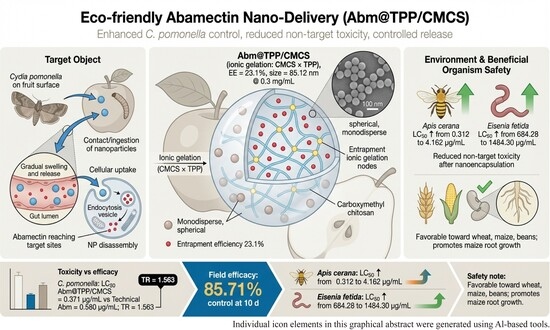
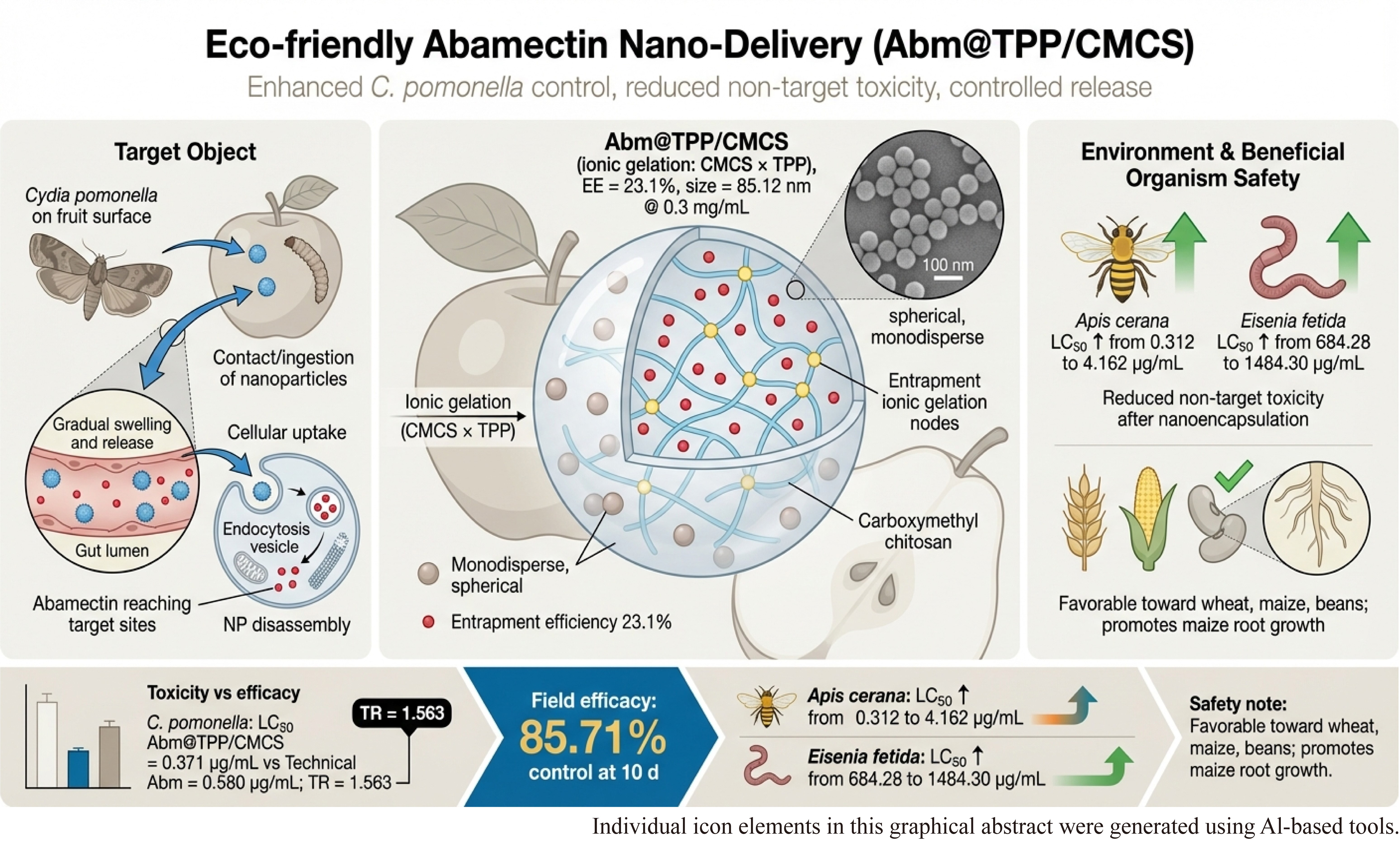
Graphical Abstract

1. Introduction

The codling moth, Cydia pomonella (Lepidoptera: Tortricidae), is a globally invasive and highly destructive pest affecting pome and stone fruits, and is classified as a key quarantine species of significant phytosanitary concern in China [1]. Its larvae exhibit concealed feeding behavior, boring into fruits immediately post-hatching, which triggers premature fruit drop, decay, and substantial economic losses [2]. Although integrated pest management (IPM) strategies—incorporating pest monitoring [3], cultural practices [4], pheromone mating disruption [5], and biological control via using natural enemies [6,7]—are extensively implemented, the pest’s high reproductive potential and robust adaptability frequently constrain their overall efficacy. Consequently, chemical intervention remains the predominant strategy for suppressing population outbreaks [8,9].
Abamectin (Abm), a macrocyclic lactone insecticide derived from Streptomyces avermitilis, is extensively used to control lepidopteran and sap-sucking pests. It exerts its insecticidal activity by targeting glutamate-gated chloride channels and γ-aminobutyric acid receptors, thereby disrupting neuronal signaling and causing paralysis and death [10]. However, its practical application is constrained by several physicochemical and biological limitations [11,12]. Abm has extremely low water solubility, requiring large amounts of organic solvents in conventional formulations, which increases environmental risks and compromises application safety [13]. In addition, its conjugated double-bond structure is highly susceptible to ultraviolet radiation, resulting in rapid photodegradation. Specifically, its half-life (t1/2) on sunlit foliage is remarkably short, typically ranging from just a few hours to a couple of days [13]. Under the principles of integrated pest management (IPM), frequent reapplication of the same active ingredient is heavily restricted to prevent the development of resistance. Consequently, such rapid degradation quickly reduces the field concentration of Abm to sublethal levels within its rotation window, which not only leaves crops transiently unprotected but also significantly drives the evolution of pesticide resistance [14].
More critically, Abm exhibits high acute toxicity to pollinators such as bees (Apis cerana) and to beneficial soil organisms like earthworms, posing serious non-target risks that conflict with sustainable agriculture objectives [15,16]. Furthermore, the ecological hazards of current commercial formulations must be emphasized. In agricultural practice, Abm is frequently applied in traditional formulations such as emulsifiable concentrates (ECs) or wettable powders (WPs). However, because these conventional formulations rely heavily on harsh organic solvents and toxic adjuvants, the toxicity of the formulations themselves is often higher than that of the active ingredient [17,18,19]. Specifically, traditional EC and WP formulations are highly incompatible with natural biocontrol agents, severely harming non-target natural enemies such as Trichogramma parasitoids, predatory bugs, and ladybugs (Coccinellidae). Therefore, there is an urgent need to develop advanced delivery systems that improve the bioactivity and environmental compatibility of Abm.
Nanocarrier technology offers a promising solution to these challenges. Unlike conventional formulations that suffer from massive field losses due to rainwash and wind drift—leading to poor utilization efficiency where the majority of the active ingredient fails to reach the target pests—nanoscale systems can significantly improve foliage adhesion and site-specific delivery. Furthermore, traditional formulations typically exhibit uncontrolled burst release, which not only causes a rapid decline in efficacy but also leads to the massive accumulation of wasted active ingredients in the soil and water. Carboxymethyl chitosan (CMCS), an amphoteric derivative of chitosan, has attracted considerable attention as a nanocarrier material due to its excellent water solubility, biocompatibility, biodegradability, and abundance of modifiable functional groups [20]. CMCS can be readily cross-linked into stimuli-responsive (e.g., pH-sensitive) nanogels through ionic interactions. Previous studies have shown that CMCS-based nanocarriers can form protective barriers around encapsulated agents, shielding them from ultraviolet degradation and thereby prolonging field efficacy [21]. Furthermore, by exploiting pH gradients—such as the alkaline environment in the midgut of lepidopteran larvae compared with the near-neutral conditions in non-target organisms—these systems enable the stimuli-responsive release of active ingredients, stimuli-responsive release of active ingredients. For instance, CMCS hydrogels have been reported to enhance the alkaline-triggered release of spinosad in lepidopteran larval midguts [22] and to improve the wetting and adhesion of pesticide solutions on leaf surfaces, thereby reducing runoff and off-target losses [23].
While various nanomaterials have been explored for pesticide delivery, CMCS offers distinct advantages for agricultural applications when compared to other conventional nanocarriers. For instance, poly(lactic-co-glycolic acid) (PLGA) is highly biocompatible but prohibitively expensive for large-scale field applications [24]. Mesoporous silica nanoparticles (MSNs) possess high loading capacities but lack inherent leaf-adhesive properties and require complex chemical modifications to achieve stimuli-responsive release [25]. Similarly, although lignin nanoparticles are cost-effective, they lack the amphoteric nature that allows CMCS to easily form pH-responsive hydrogels via a green, simple ionic cross-linking process [26]. Furthermore, while several previous studies have reported Abm nanoformulations (such as solid lipid nanoparticles or synthetic polymer microcapsules) primarily to improve its UV stability [27], there is extremely limited research on designing a completely solvent-free, ultra-adhesive, and pest-midgut-targeted (pH-responsive) Abm nanocarrier [28]. Therefore, utilizing CMCS to encapsulate Abm fills a critical gap by providing a superior balance of cost-effectiveness, smart controlled release, and environmental safety.
The primary objective of this study was to augment the insecticidal efficacy of abamectin (Abm) against C. pomonella while simultaneously minimizing its toxicity to non-target organisms, such as honeybees and earthworms. Most existing research focuses on general pest control or basic characterization, frequently lacking a systematic evaluation of the trade-off between pest-specific toxicity and environmental safety within this specific biological context. To address this gap, in the present study, an Abm nano-delivery system (Abm@TPP/CMCS) was fabricated via ionic gelation, utilizing CMCS cross-linked with sodium tripolyphosphate (TPP) as the nanocarrier. This system was designed to enhance the bioactivity activity of Abm against C. pomonella through improved penetration and photoprotection while exploiting the sustained-release behavior and surface charge properties of the carrier to mitigate non-specific toxicity to A. cerana and E. fetida. The system was systematically evaluated in terms of (i) physicochemical characterization, (ii) insecticidal efficacy, and (iii) environmental safety. These findings are expected to provide both theoretical insights and a practical nano-based strategy for the precise and environmentally sustainable management of C. pomonella, contributing to the development of low-risk pesticide technologies.

2. Materials and Methods

2.1. Insect Source and Rearing

A C. pomonella laboratory strain was established from infested apples collected in Shihezi, China. Larvae reared were maintained on an artificial diet composed of 20 g yeast powder, 60 g soybean flour, 40 g wheat germ, 30 g sucrose, 15 g agar, 3 g ascorbic acid, 1 g sorbic acid, and 1 g methyl paraben per liter of distilled water. To ensure population stability, the strain was maintained for a minimum of three generations without any insecticide exposure to stabilize the strain. All rearing procedures were conducted in a growth chamber (LRH-250-GS, Taihong Medical Instruments Co., Ltd., Shaoxing, China) set at 26 ± 0.5 °C, 75 ± 5% RH, and a 16:8 h (L:D) photoperiod.

2.2. Chemicals and Reagents

Technical-grade abamectin (Abm, purity ≥ 95%, batch no. SJC20240218) was supplied by Shuangji Chemical Co., Ltd. (Xiaogan, China). Carboxymethyl chitosan (CMCS; CAS No. 83512-85-0; substitution degree ≥ 90.4%, as verified by potentiometric titration; molecular weight 12,340 g/mol) was purchased from Shanghai Macklin Biochemical Technology Co., Ltd. (Shanghai, China) Its molecular structure was confirmed to be consistent with previous reports [19,29]. Sodium tripolyphosphate (TPP) and all other analytical-grade solvents and reagents were obtained from Xinjiang Worthen Biotechnology Co., Ltd. (Urumqi, China).

2.3. Preparation of Abm@TPP/CMCS Nanopesticide

The Abm@TPP/CMCS nanopesticide was synthesized via the ionic gelation method. Briefly, a 1% (w/v) CMCS aqueous solution was prepared and blended with a 0.5% (w/v) composite emulsifier (Tween 80:Span 80, 1:1, w/w) under magnetic stirring for 30 min using a magnetic stirrer (MS-H-S, DLAB Scientific Co., Ltd., Beijing, China). An Abm solution in dimethyl sulfoxide (DMSO, 10 mg/mL) was then added dropwise. The mixture was emulsified by overhead stirring at 1000 rpm for 30 min using an overhead stirrer (OS20-S, DLAB Scientific Co., Ltd., Beijing, China). Subsequently, a 1% (w/v) TPP aqueous solution was added dropwise (CMCS:TPP mass ratio = 1:0.5) under continuous stirring to induce ionic cross-linking. After reacting for 1 h, the dispersion was centrifuged at 8000× g for 10 min using a high-speed centrifuge (5804 R, Eppendorf SE, Hamburg, Germany). The precipitate was washed three times with deionized water to remove residual components and then freeze-dried using a freeze-dryer (FreeZone 2.5, Labconco Corp., Kansas City, MO, USA) to obtain the final nanopesticide powder.

2.4. Characterization of the Nanopesticide

The morphology of the nanoparticles was examined using scanning electron microscopy (SEM, JSM-6390LV, JEOL, Tokyo, Japan). Samples were fixed on stubs using conductive adhesive tape, sputter-coated with gold for 45 s to enhance conductivity, and subsequently imaged at an accelerating voltage of 15 kV. Furthermore, the surface elemental composition and chemical states were analyzed via X-ray photoelectron spectroscopy (XPS, AXIS Supra, Kratos Analytical, Manchester, UK). to elucidate the potential interactions between the carrier and Abm.

2.5. In Vitro Release and Drug Loading

The sustained-release profile was evaluated by dispersing 0.05 g of Abm@TPP/CMCS in phosphate-buffered saline (PBS) at various pH values (pH 5.0, 7.0, and 9.0). The dispersion (5 mL) was sealed in a dialysis bag (MWCO: 3500 Da, Spectrum Laboratories, Inc., Rancho Dominguez, CA, USA) and immersed in 30 mL of the respective PBS buffer under gentle agitation using a thermostatic shaking water bath (SHA-C, Changzhou Jibao Instrument Co., Ltd., Changzhou, China). At predetermined time intervals, 0.5 mL of the external medium was sampled and immediately replaced with an equal volume of fresh buffer. The concentration of Abm was quantified via high-performance liquid chromatography (HPLC Agilent 1260 Infinity II, Agilent Technologies, Santa Clara, CA, USA) equipped with a C18 column (4.6 × 250 mm, 5 μm, Agilent Technologies, Santa Clara, CA, USA). The mobile phase consisted of methanol water (90:10, v/v) as the mobile phase at a flow rate of 0.8 mL/min, with UV detection at 236 nm to plot cumulative release curves. Drug loading (DL%) was determined by dispersing 10 mg of the nanoformulation in 3 mL of anhydrous ethanol, followed by 4 h of ultrasonication using an ultrasonic cleaner (KQ-500DB, Kunshan Ultrasonic Instruments Co., Ltd., Kunshan, China) and centrifugation at 8000× g using a high-speed centrifuge (5804 R, Eppendorf SE, Hamburg, Germany). The supernatant was analyzed via HPLC, and the DL was calculated using the following equation: DL% = (Mass of encapsulated Abm/Total mass of nanoparticles) × 100%.

2.6. Laboratory Toxicity Bioassay

The insecticidal activity against third-instar C. pomonella larvae was assessed using a diet incorporation method. Technical Abm was initially dissolved in dimethyl sulfoxide (DMSO) and serially diluted to concentrations of 0.25, 0.375, 0.5, 0.75, and 1.0 µg/mL before being uniformly mixed into an artificial diet. For each concentration, ten previously starved larvae were introduced per replicate, with three conducted replicates per treatment. Mortality was recorded at 12, 24, 48, and 72 h post-exposure under controlled conditions (25 ± 1 °C, 75 ± 5% RH, and a 16L:8D photoperiod). The median lethal concentration (LC50) values and 95% confidence intervals were calculated using PoloPlus software (v2.0, Leora Software, Berkeley, CA, USA). Larval midgut tissues from selected treatments were fixed, sectioned using a rotary microtome (RM2235, Leica Biosystems, Wetzlar, Germany), and stained with hematoxylin–eosin (H&E) for histopathological observation using an optical microscope (Eclipse Ni-U, Nikon, Tokyo, Japan).

2.7. Toxicity to Non-Target Organisms

Acute oral toxicity to A. cerana was evaluated using actively foraging worker bees (aged > 2 weeks post-emergence), which were collected from a pathogen-free and healthy colony at a local experimental apiary in Shihezi, China. After 24 h of acclimation, the bees were fed with test solutions mixed 1:1 (v/v) with a 50% (w/v) sucrose solution using a micro-applicator (MMP-1, Shijiazhuang Star Light Technology Co., Ltd., Shijiazhuang, China). Mortality was recorded at 24 h and 48 h to determine the LC50 values. Adult earthworms (Eisenia fetida) with well-developed clitella were obtained from a standard laboratory culture in Urumqi, China. Individuals were selected based on a uniform body weight ranging from 300–450 mg using an electronic analytical balance (BSA224S, Sartorius, Göttingen, Germany). Prior to the bioassay, the earthworms were acclimatized in artificial soil (comprising 10% sphagnum peat, 20% kaolin clay, and 70% industrial sand, purchased from Jiangsu Zhongsheng Agricultural Technology Co., Ltd., Nanjing, China) for 7 d at 20 ± 1 °C in the dark and placed on moist filter paper for 24 h to void their gut contents, in strict accordance with the OECD Guideline for the Testing of Chemicals No. 207: (Earthworm, Acute Toxicity Tests). Acute contact toxicity to E. fetida was evaluated using the filter paper method, whereby earthworms were exposed qualitative filter paper (Grade 1, GE Healthcare Life Sciences, Buckinghamshire, UK) evenly treated with test solutions and maintained in darkness. Mortality was recorded at 24 h and 48 h for LC50 calculation.

2.8. Crop Safety Assessment

To assess the phytotoxicity on leaves and fruits, healthy walnut leaves and fruits were sprayed with the recommended doses of the nanopesticide or its individual components using a manual pressure sprayer (SX-ST100, Seapeak Co., Ltd., Taizhou, China). Symptoms such as chlorosis and necrosis were visually monitored at 1, 3, 5, and 14 d post-treatment.
For the seedling growth response assay, surface-sterilized seeds of bean (Phaseolus vulgaris), wheat (Triticum aestivum), and maize (Zea mays) (purchased from Gansu Dunhuang Seed Group Co., Ltd., Jiuquan, China) were surface-sterilized with 75% ethanol and 1% sodium hypochlorite (Shanghai Macklin Biochemical Technology Co., Ltd., Shanghai, China), then germinated and grown to the two-leaf stage. Seedlings were then sprayed with the test formulations using a micro-sprayer (SX-601, Seapeak Co., Ltd., Taizhou, China), with deionized water serving as the control. Growth parameters and phytotoxicity symptoms were evaluated at 5 d post-treatment.

2.9. Field Efficacy Trials

Field trials were conducted in a walnut orchard located in Layika Township, Hotan City, using a randomized complete block design with three replicates. Each replicated plot covered an area of 553.33 m2, separated by protective rows, and comprised 12 walnut trees (15–20 years old, 5 m × 6 m spacing, with consistent growth vigor). No other pesticides were applied throughout the trial period.
Treatments included: (1) a water control, (2) a commercial 5% abamectin emulsifiable concentrate (EC, produced by Shandong Lutian Chemical Co., Ltd., Weifang, China, batch no. 20240315; with a recommended field application rate of 9 g a.i./ha, containing xylene as the organic solvent and sodium dodecylbenzene sulfonate as the emulsifier), and (3) the Abm@TPP/CMCS nanoformulation, applied at the same dosage (9 g a.i./ha) as the commercial EC. The trial was initiated during the peak hatching stage of C. pomonella larvae under favorable weather conditions (no rainfall or strong wind within 48 h post-application; average temperature 24 ± 2 °C, relative humidity 50 ± 5%). All formulations were applied via fruit-directed spray using a 3WBD-16 backpack electric sprayer (Taizhou Guangfeng Sprayer Co., Ltd., Taizhou, China) operating at a working pressure of 0.3 MPa) equipped with a fan-shaped nozzle at a uniform volume of 750 L/ha, with each tree receiving a single application.
The initial pest density prior to treatment was recorded. Adult population dynamics were monitored using pheromone traps (Beijing Zhongjie Lucky Technology Co., Ltd., Beijing, China), and fruit infestation rates were assessed at 1, 5, 10, and 15 d after application. Control efficacy was calculated based on population reduction rates. All data were analyzed via one-way ANOVA followed by LSD or Duncan’s multiple range tests (α = 0.05) using SPSS version 27.0 (IBM Corp., Armonk, NY, USA).

2.10. Artificial Intelligence Tool Usage

During the preparation of this manuscript, the generative AI tool Nano Banana 2 (Web version) was utilized to generate individual illustrative elements and icons for the Graphical Abstract. The generated elements were subsequently reviewed, heavily edited, and assembled by the authors to accurately reflect the scientific mechanisms and data proposed in this study.

3. Results and Discussion

3.1. Morphological Characteristics of Abm@TPP/CMCS

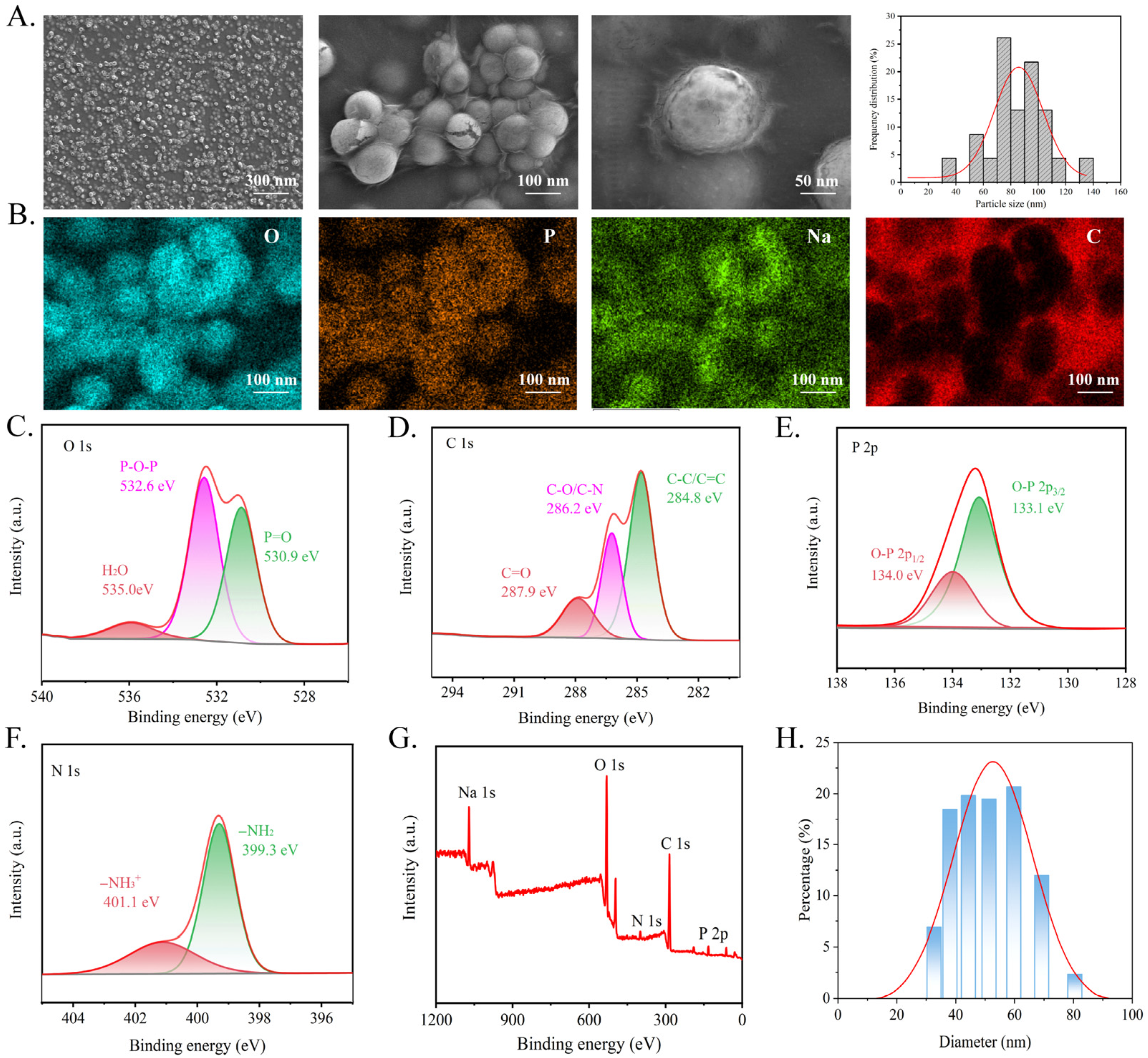
Morphological evaluation via SEM demonstrated that the Abm@TPP/CMCS nanoparticles (prepared at 0.63 mg/mL) possessed a well-defined spherical structure, a narrow size distribution, and an average diameter of approximately 85.12 nm (Figure 1A). While high-magnification imaging revealed generally smooth surfaces, minor cracking was noted, presumably an artifact of the high-vacuum environment. The uniform and densely packed dispersion of the nanoparticles on the substrate further highlighted their robust colloidal stability. Energy-dispersive X-ray spectroscopy (EDS) mapping characterized the spatial distribution of essential elements (C, O, P, and Na). Notably, carbon signals were concentrated within the particle core, substantiating the successful encapsulation of lipophilic Abm. Conversely, the enrichment of O, P, and Na at the particle periphery indicated the surface accumulation of hydrophilic components, thereby verifying the cross-linking function of TPP.
Dynamic light scattering (DLS) measurements revealed a concentration-dependent hydrodynamic diameter. At 0.3 mg/mL, particle sizes ranged from 32.30 to 92.89 nm (Figure 1H and Table S1). The moderate increase in size at higher concentrations aligns with the concentration is consistent with practical requirements for foliar spray applications. The hydrodynamic diameter of the nanocarrier exhibited clear concentration dependence, with lower polymer concentrations favoring nanoparticle formation. This phenomenon is consistent with the principles of polymer chain entanglement and ionic cross-linking kinetics [30,31,32]. At low concentrations, reduced chain entanglement promotes intramolecular rather than intermolecular cross-linking, resulting in tightly folded, compact spherical nanostructures [33,34]. Such nanoscale dimensions are critical for improving bioavailability. In lepidopteran insects, the peritrophic membrane serves as a major barrier to macromolecule uptake, and studies indicate that when the carrier size is significantly smaller than the membrane pore diameter, penetration efficiency rises drastically [35,36]. Furthermore, reduced particle size increases specific surface area and surface energy, thereby strengthening van der Waals interactions and enhancing bio-adhesion to insect gut microvilli [37,38]. This improved permeation and retention facilitates the more efficient transport of Abm across biological barriers and its internalization by enterocytes, which explains the superior potency of the nanopesticide compared with conventional micron-scale formulations.
Compared with CMCS, the zeta potential of Abm@TPP/CMCS decreased from −10.755 mV to −24.631 mV, indicating enhanced colloidal stability due to surface functionalization. XPS was employed to analyze the surface elemental composition and chemical states that displayed characteristic peaks for C, O, N, and P in the survey spectrum (Figure 1B). High-resolution C1s spectra were deconvoluted into three peaks at 284.8 eV (C–C/C=C), 286.3 eV (C–N/C–O), and 287.9 eV (C=O) (Figure 1D). The N1s spectrum showed peaks at 399.3 eV and 401.1 eV, corresponding to ionic cross-linking between CMCS and TPP (Figure 1F). The O1s spectrum exhibited signals at 535.0 eV (H2O), 532.6 eV (P–O), and 530.9 eV (P=O) (Figure 1C). Furthermore, the P2p spectrum contained peaks at 134.0 eV and 133.1 eV, confirming the presence of P–O bonds (Figure 1E). Additionally, the broader survey spectrum confirmed the presence of characteristic peaks for C, O, N, Na, and P (Figure 1G).
In summary, SEM, EDS, DLS, and XPS analyses confirmed the successful fabrication of Abm@TPP/CMCS nanoparticles with uniform size, a defined core–shell structure, and excellent dispersion stability, supporting their application as a nanopesticide delivery system.

3.2. Responsive Release of Abm@TPP/CMCS

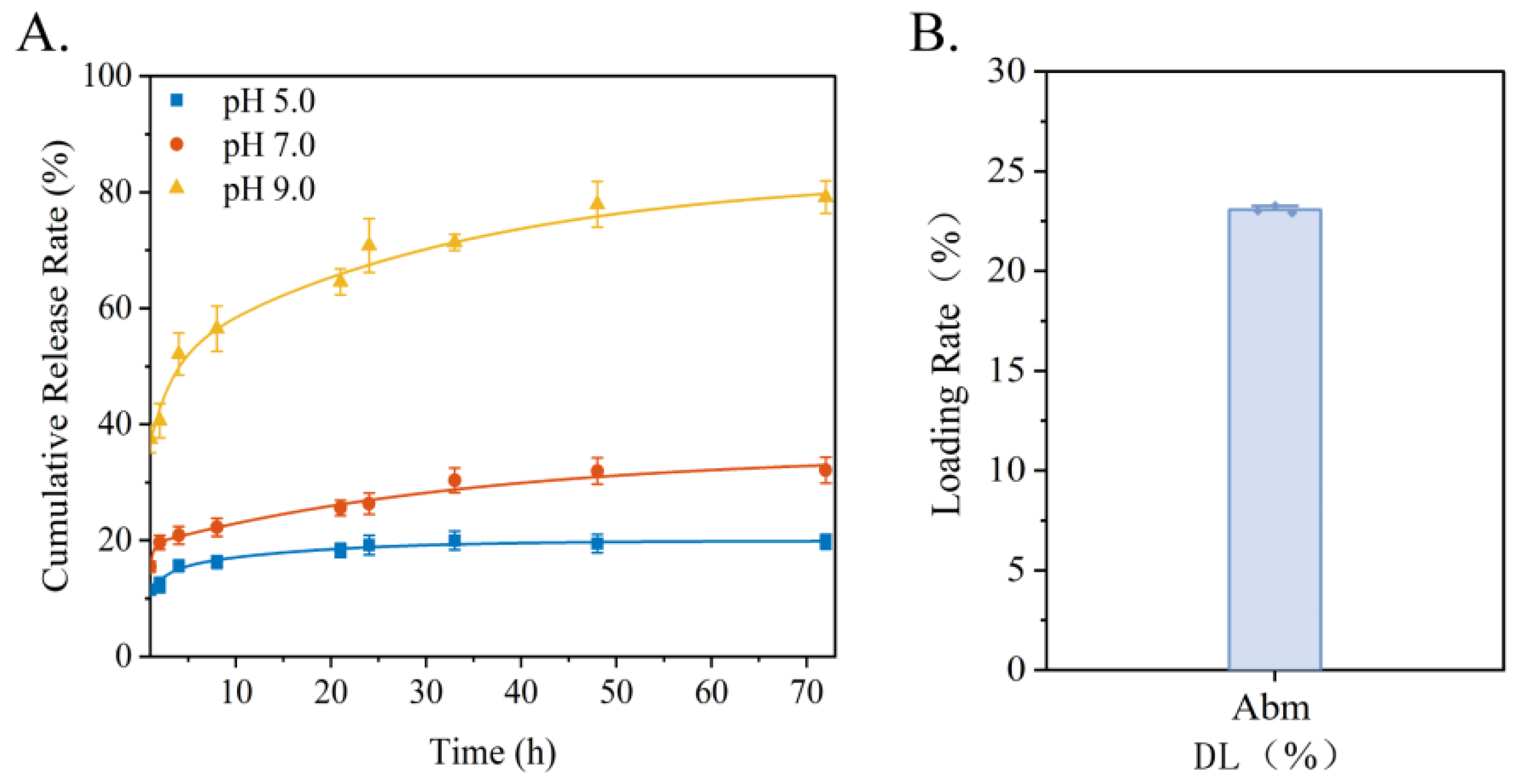
In vitro release studies demonstrated pronounced pH-dependent release behavior. Under alkaline conditions (pH 9.0), which simulate the pest midgut environment, cumulative Abm release reached 37.5–79.2% within 72 h. This value was significantly higher than those observed under neutral (pH 7.0, 17.8–32.1%) or weakly acidic (pH 5.0, <20%) conditions (Figure 2A). The enhanced release under alkaline pH is attributed to the deprotonation of carboxyl groups, which leads to electrostatic repulsion and consequent swelling of the hydrogel network. Notably, this dual strategy of enhancing efficacy while reducing the toxicity strategy exploits interspecific physiological differences, including digestive-tract pH and cuticle surface charge, providing a theoretical foundation for the rational design of next-generation green nanopesticides [39,40]. Furthermore, HPLC analysis determined the loading capacity of Abm in the nanoparticles to be 23.1% (Figure 2B and Figure S2).

3.3. Efficacy of Abm@TPP/CMCS Against C. pomonella

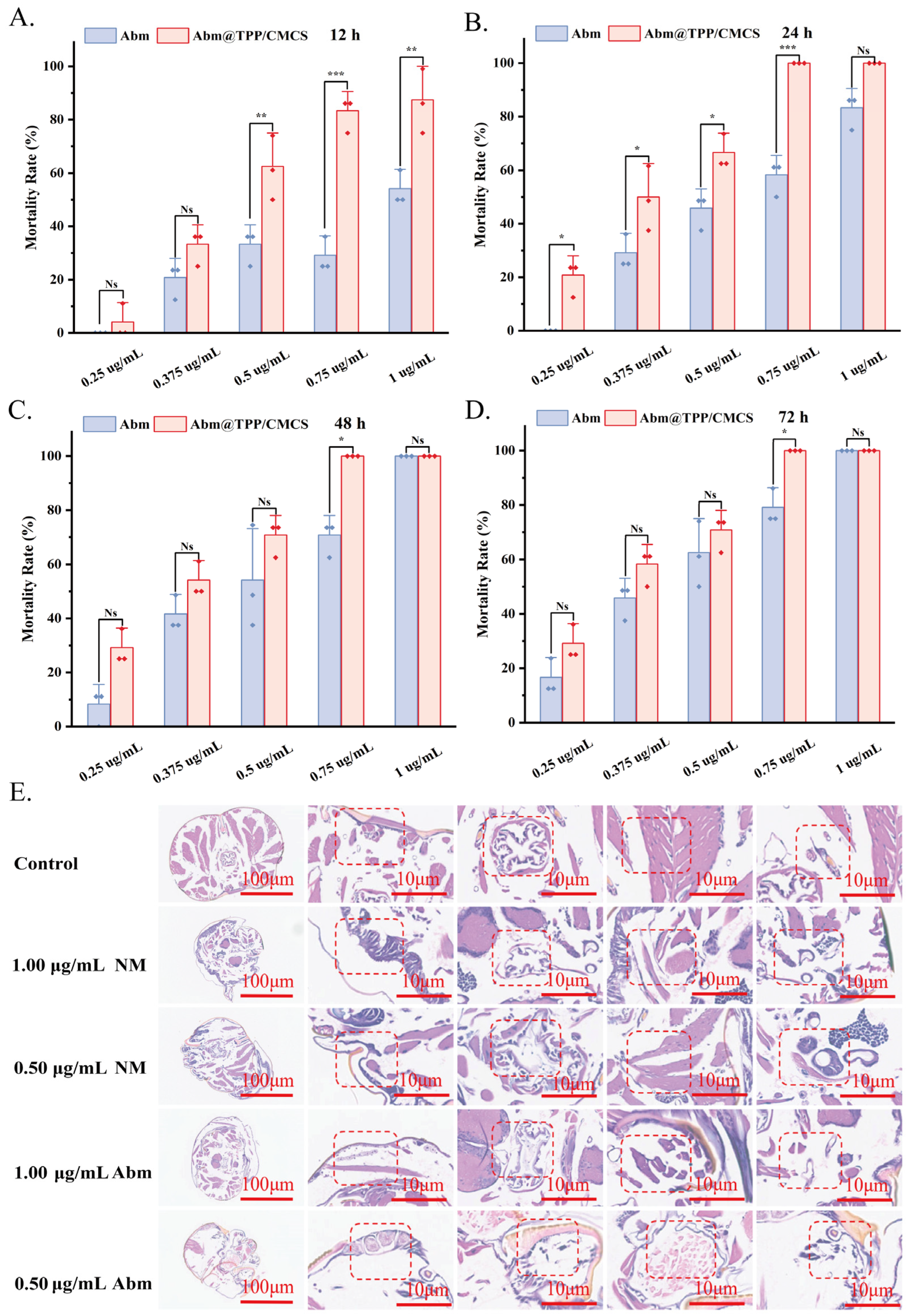
The toxicity assay results (Table 1 and Figure 3) demonstrated that the Abm@TPP/CMCS nanopesticide exhibited significantly enhanced insecticidal activity compared to technical-grade Abm, which is primarily attributable to the formulation effect of the nanocarrier system. Across all tested concentrations, the Abm@TPP/CMCS group consistently showed higher larval mortality. At 12 h after treatment, mortality differences between Abm (0.0–20.8%) and Abm@TPP/CMCS (4.1–33.3%) were not statistically significant at low concentrations (0.25 and 0.375 μg/mL). However, at elevated concentrations of 0.5, 0.75, and 1 μg/mL, Abm@TPP/CMCS elicited significantly higher mortality (62.5–87.5%) than Abm (33.3–54.1%) (Figure 3A). After 24 h, the mortality rate in the Abm@TPP/CMCS group (20.8–100%) remained significantly higher than that of the Abm group (0.0–83.3%) across all concentrations, with the exception of 0.375 μg/mL (Figure 3B). At 48 h, Abm@TPP/CMCS yielded significantly greater mortality at 0.25 μg/mL (29.1% vs. 8.3%) and 0.75 μg/mL (100% vs. 70.8%), while no significant differences were observed at the remaining concentrations (Figure 3C). After 72 h, a significant difference was only detected at 0.75 μg/mL, with Abm@TPP/CMCS reaching 100% mortality compared to 79.1% for Abm (Figure 3D). These results indicate that the nano-delivery system maintains considerable bioactivity even at low concentrations, confirming its notable synergistic properties.
Further validation through LC50 analysis showed that the LC50 of Abm@TPP/CMCS against C. pomonella was 0.371 μg/mL, significantly lower than that of Abm (0.580 μg/mL). This corresponds to a synergy ratio of 1.563 (Table 1), thereby confirming the pronounced synergistic toxicity of Abm@TPP/CMCS. The midgut of C. pomonella is highly alkaline, which induces the deprotonation of CMCS carboxyl groups (-COOH → -COO). According to polyelectrolyte gel theory, the resulting high density of negative charges induces strong electrostatic repulsion between polymer chains, triggering nanogel swelling, pore expansion, and potentially partial network disassembly [41]. This alkaline-triggered response enables the rapid release of Abm at the target site, achieving a localized high concentration that likely contributes to severe and irreversible physiological disruption in the pest.
Histopathological sections of C. pomonella larvae demonstrated that Abm@TPP/CMCS induced dose-dependent damage to insect tissues, with a significantly increased frequency of tissue and cellular impairment correlated with increased concentrations (Figure S3). A clear gradient of tissue degradation was observed as the formulation concentration transitioned from low to high.
In the low-concentration group (0.25 μg/mL Abm@TPP/CMCS), the tissue structure remained relatively intact, cellular integrity was largely preserved, and muscle tissue showed no obvious disruption. However, when the concentration was increased to 0.375 μg/mL, damage to digestive organs, muscles, and epidermal cells became more pronounced; specifically, with Malpighian tubules and muscle fibers becoming disorganized, with most tissues undergoing lysis or dissolution. At 0.5 μg/mL, the larval digestive tissues exhibited atrophy, Malpighian tubules were disrupted, and muscle fibers showed irregular arrangement. At 0.75 μg/mL, numerous white spots appeared within the disrupted Malpighian tubules, certain tissues became fragmented, certain tissues showed vacuolation, and muscle fibers remained disorganized. Under the high concentration of 1 μg/mL, the muscle architecture was further disrupted, extensive tissue vacuolation occurred, and inter-tissue boundaries were obliterated, indicating severe systemic destruction (Figure S3).
Comparative analysis of cross-sectional tissue images of third-instar C. pomonella larvae treated with Abm and Abm@TPP/CMCS revealed clear treatment-related alterations. In the control group, muscle fibers were orderly arranged, digestive tissues were clearly visible with distinct boundaries from surrounding tissues, and epidermal cells were tightly attached to the cuticle. In larvae treated with 0.5 μg/mL of either Abm or Abm@TPP/CMCS, muscle fibers appeared fragmented, the space between epidermal cells and the cuticle widened, tissues showed inward atrophy, residual muscle tissues were reduced, digestive organs began to rupture, and tissue misalignment was observed. At 1 μg/mL, both Abm and Abm@TPP/CMCS caused the extensive disruption of digestive organs, with gaps appearing in the tissue periphery, further atrophy of epidermal tissues, extensive vacuolation, and sparsely distributed muscle tissues (Figure 3E).

3.4. Safety Assessment of Abm@TPP/CMCS on Non-Target Organisms

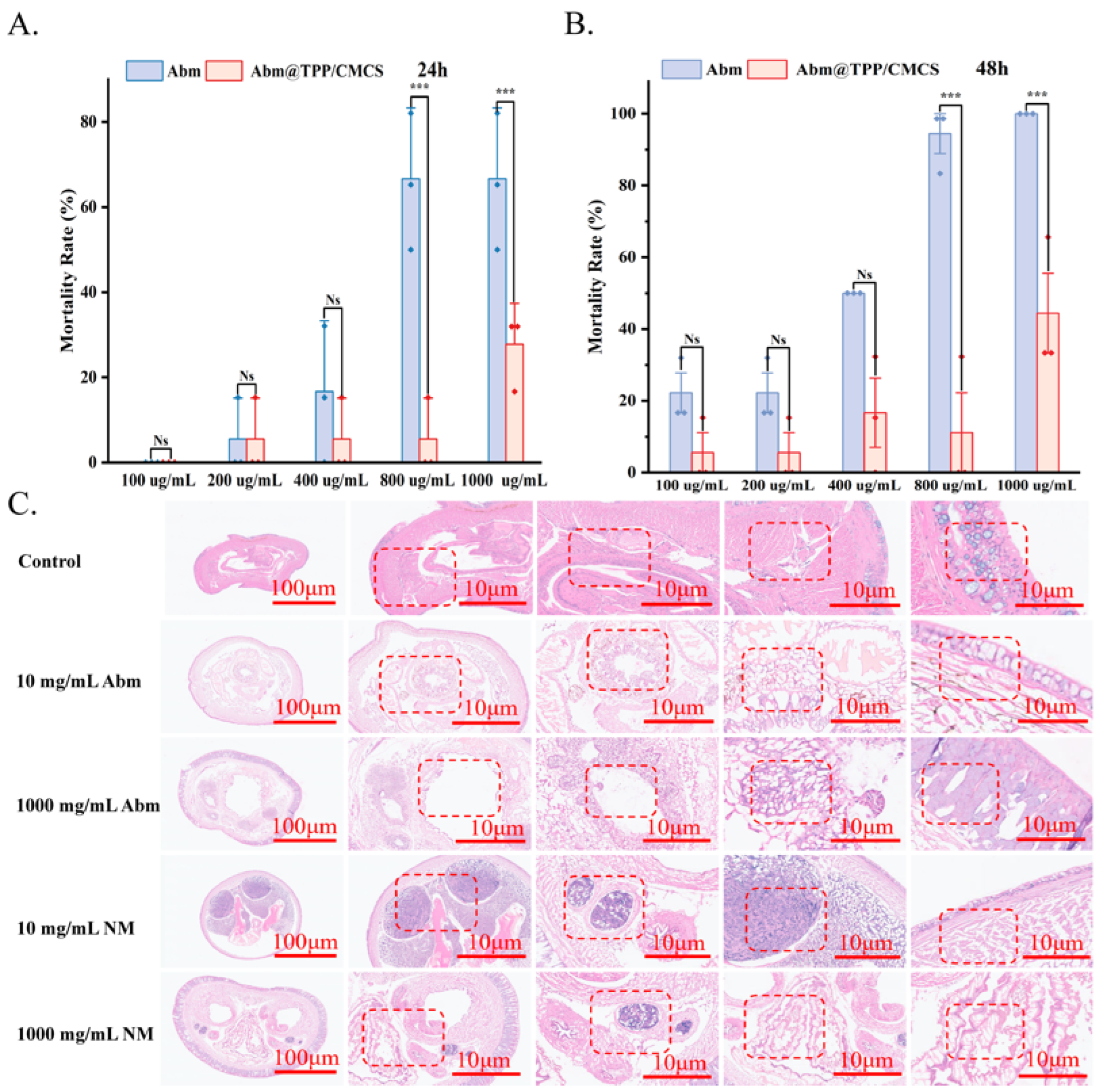
Toxicological analysis revealed that the LC50 of Abm against E. fetida was 684.28 μg/mL with a 95% confidence interval (CI) ranging from 541.36 to 908.84 μg/mL (Table 2). According to environmental safety assessment standards, this value is categorized as moderately toxic. In contrast, the LC50 of Abm@TPP/CMCS nanopesticide was 1484.30 μg/mL, with a broader 95%CI (904.43–13,392.00 μg/mL), suggesting a substantially lower acute toxicity to E. fetida compared to technical Abm. This increased LC50 value indicates that the nanopesticide can markedly reduce adverse effects on E. fetida (Table 2). At low concentrations (100 and 200 μg/mL), no significant difference in mortality was observed between the Abm and Abm@TPP/CMCS treatments. However, at higher concentrations (400, 800, and 1000 μg/mL), the mortality caused by Abm (50.0–100.0%) was significantly higher than that induced by the nano-formulation (16.7–44.4%) (Figure 4A and Figure S4). The reduced toxicity exhibited by the nanopesticide can be attributed to the sustained-release characteristics of the nanocarrier and its regulatory effect on the bioavailability of the loaded insecticide, thereby offering improved environmental compatibility in practical applications. The epidermis of E. fetida is coated with a negatively charged, mucopolysaccharide-rich mucus layer [42,43]. Due to the presence of surface carboxyl groups, Abm@TPP/CMCS nanoparticles also exhibit a negative zeta potential. The resulting electrostatic repulsion between the nanoparticles and the earthworm cuticle impedes nonspecific adsorption and passive diffusion [44,45]. In contrast, hydrophobic technical Abm readily penetrates biological membranes through lipid-mediated diffusion. Additionally, surface-charges are subject to environmental passivation in soil, where they can adsorb onto clay minerals or humic substances, or undergo aggregation within the pore water [46]. These processes reduce the bioavailable concentration of the free insecticide in the soil solution, further limiting toxicological exposure to soil invertebrates [47].
Histopathological analysis revealed distinct tissue alterations in E. fetida exposed to different pesticide formulations. Conventional Abm demonstrated markedly higher toxicity compared to the nano-formulation, the latter of which better preserved tissue integrity (Figure 4C). In the control group, E. fetida exhibited a well-organized tissue architecture: the body wall, comprising circular and longitudinal muscle layers, was orderly arranged, the intestinal structure remained intact, and enterocytes showed clear morphology without signs of necrosis or vacuolation. Furthermore, tissue connections were tight, reflecting normal physiological conditions (Figure 4C). Exposure to Abm at 10 μg/mL induced vacuolation and the loss of distinct cellular boundaries in intestinal and muscular tissues. Escalating concentrations led to pronounced tissue disruption: near-complete fragmentation of muscle layers, extensive cellular necrosis, collapse of the intestinal wall, and abundant cellular debris within the lumen, confirming the severe toxicity of Abm (Figure 4C). In contrast, E. fetida treated with 10 μg/mL Abm@TPP/CMCS maintained largely intact tissue morphology, displaying only localized mild cellular swelling and limited granular deposits. The intestinal epithelium remained closely associated with the underlying muscle layers, with no evident necrosis or cavity formation (Figure 4C). Even at 1000 μg/mL Abm@TPP/CMCS, overall tissue structure was preserved, showing only slight loosening of tissue architecture and minor membrane disruption in isolated cells, while the integrity of intestinal wall remained largely unaffected. These observations indicated substantially lower tissue toxicity and favorable biocompatibility of the nano-formulation towards E. fetida. (Figure 4C). These findings underscore the potential of Abm@TPP/CMCS as a promising strategy for sustainable agriculture, providing a viable approach to balancing pest control efficacy with pollinator conservation.
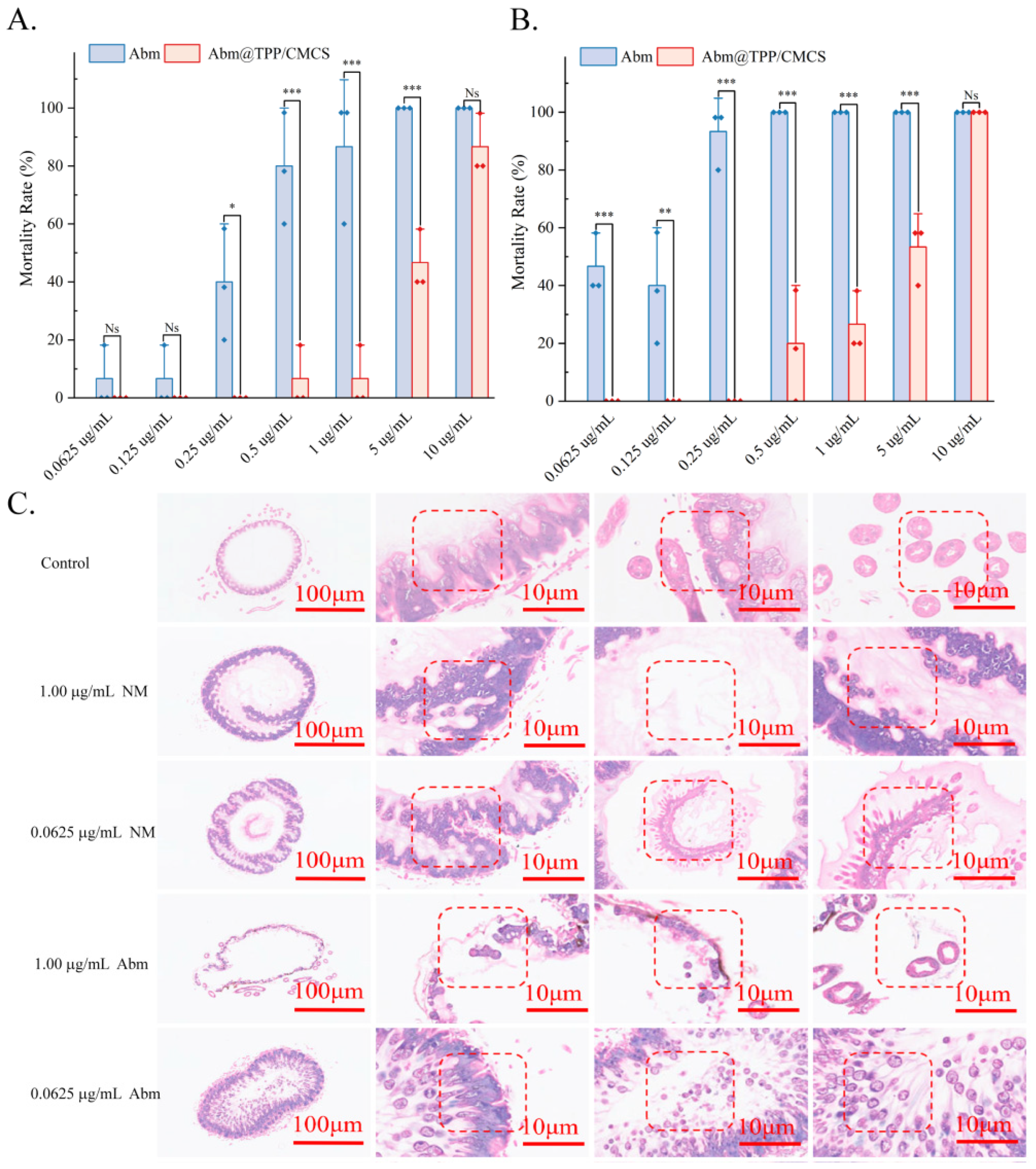
The acute oral toxicities of Abm and the Abm@TPP/CMCS nanopesticide to the A. cerana were systematically evaluated. The results revealed that Abm exhibited high toxicity to A. cerana, with an LC50 of 0.312 μg/mL with a 95% confidence interval of 0.204–0.495 μg/mL, categorizing it as highly toxic. This further confirms the evident environmental risk posed by Abm to pollinating insects (Table 3). In contrast, the Abm@TPP/CMCS nanopesticide displayed an LC50 of 4.162 μg/mL and a 95% confidence interval of 2.698–6.988 μg/mL, which was significantly higher than that of technical Abm, indicating a substantially reduced acute toxicity to A. cerana (Table 3). Across various concentration gradients (0.0625, 0.125, 0.25, 0.5, and 1 μg/mL), the cumulative mortality of A. cerana in the Abm@TPP/CMCS treatment group (0–26.7%) was significantly lower than that in the Abm group (46.7–100.0%) (Figure 5 and Figure S5). It is hypothesized that the nanocarrier modulates the release kinetics of the active ingredient, thereby reducing its instantaneous exposure and mitigating direct toxic effects on A. cerana. The digestive tract of honey bee is near-neutral to weakly acidic [48,49,50,51,52]. Under these conditions, CMCS remains protonated, and hydrogen-bonding maintains a compact gel matrix that significantly restricts insecticide diffusion, producing an entrapment effect [53]. Consequently, even when ingested, most Abm remains encapsulated and unavailable in its bioactive free form, ultimately being excreted without exerting toxic effects on neural targets [54]. This pH-dependent passive targeting strategy effectively exploits physiological differences between pests and pollinators, thereby minimizing off-target toxicity.
The results of this study clearly demonstrate that loading Abm onto carboxymethyl chitosan significantly reduces its acute toxicity against A. cerana, enhancing environmental compatibility while maintaining pesticidal efficacy. This approach provides an effective strategy for advancing pesticide reduction and protecting non-target organisms.

3.5. Crop Safety of Abm@TPP/CMCS

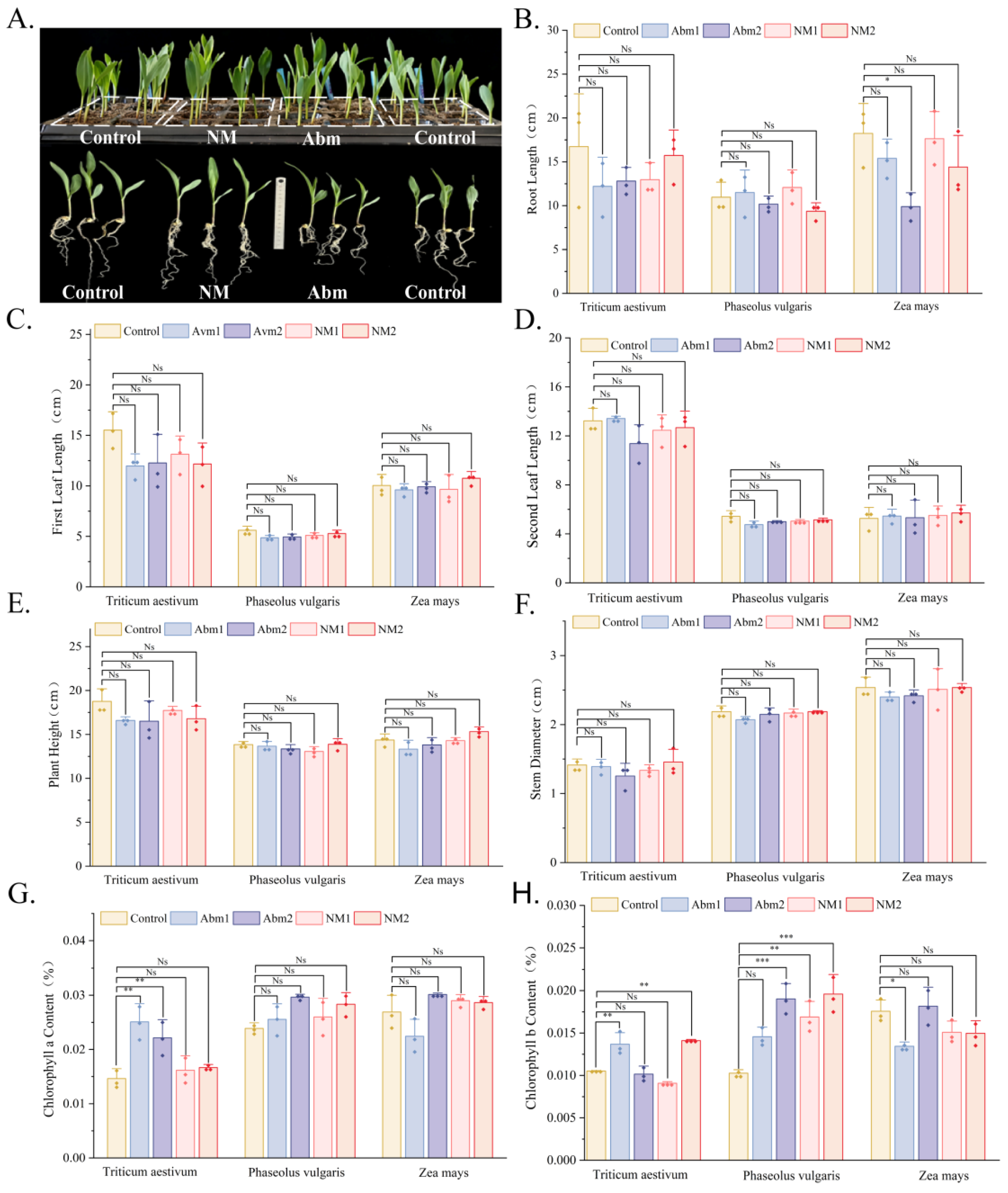
In wheat, no significant differences were observed between the treatment groups (1 μg/mL and 2 μg/mL) and the control in terms of root length, first leaf length, second leaf length, plant height, or stem diameter (Figure 6B and Figure S6C,D). The values ranged from 8.70–17.82 cm for root length, 11.97–15.53 cm for first leaf length, 9.91–15.41 cm for second leaf length, 14.60–19.10 cm for plant height, and 1.04–1.66 cm for stem diameter (Figure 6B–F). Similarly, in green bean, all growth parameters including root length (8.24–14.18 cm), first leaf length (4.67–5.64 cm), second leaf length (4.57–5.29 cm), plant height (12.45–14.28 cm), and stem diameter (2.02–2.23 cm) showed no significant difference from the control (Figure 6B and Figure S6A,B).
Representative photographs of maize seedlings after 7 d of treatment (Figure 6A, with the upper panel showing above-ground parts and the lower panel showing root systems) provide a visual assessment of overall plant growth. Maize seedlings exposed to Abm@TPP/CMCS exhibited robust growth: their root systems were well-developed with abundant branches (lower panel), and the above-ground parts had strong stems and vibrant green leaves (upper panel). In contrast, maize seedlings treated with Abm (especially at 2 μg/mL) displayed pronounced growth inhibition, including stunted and sparsely branched roots (lower panel), as well as slight leaf chlorosis and weak above-ground growth (upper panel). In maize, root length in the 2 μg/mL Abm treatment group (9.89 cm) was significantly lower than both the control (18.24 cm) and 1 μg/mL Abm@TPP/CMCS group (17.63 cm). Root lengths in the remaining treatments ranged from 8.25 to 20.82 cm, with no significant differences among them (Figure 6D). The first leaf length in the 2 μg/mL Abm group (9.91 cm) was lower than the control (10.03 cm) and 2 μg/mL Abm@TPP/CMCS group (10.75 cm), while other treatments showed no significant differences, with values ranging from 8.45 to 11.22 cm (Figure 6C). None of the treatments significantly affected the second leaf length (4.07–6.89 cm) or stem diameter (2.21–2.58 cm) of maize (Figure 6F). Notably, plant height in the 1 μg/mL and 2 μg/mL Abm@TPP/CMCS groups (14.29 cm and 15.32 cm, respectively) and the control (14.36 cm) was higher than in the Abm groups (13.32 cm at 1 μg/mL and 13.80 cm at 2 μg/mL) (Figure 6B). Chlorophyll content analysis revealed that none of the treatments significantly influenced the chlorophyll a (0.0237–0.0273 mg/g) or chlorophyll b (0.0128–0.0162 mg/g) levels in maize leaves (Figure 6G,H). This study confirms that the Abm@TPP/CMCS nanopesticide possesses good growth compatibility within the tested crop systems and shows a growth-promoting effect in maize, providing important evidence for its application as an environmentally friendly pesticide carrier.
Notably, the nano-formulation exhibited no adverse effects on crop growth and even showed a mild growth-promoting effect in maize. Beyond confirming its biosafety, this finding suggests the bio-stimulant potential of chitosan derivatives. Previous studies have reported that chitosan-derived oligosaccharides can act as plant immune elicitors by activating defense-related enzymes such as chitinase and glucanase, as well as auxin-signaling pathways, thereby promoting root development and enhancing photosynthetic efficiency [55,56]. This property may enable Abm@TPP/CMCS to provide dual functionality as both a pesticide and a growth enhancer.

3.6. Field Efficacy of Abm@TPP/CMCS Against C. pomonella

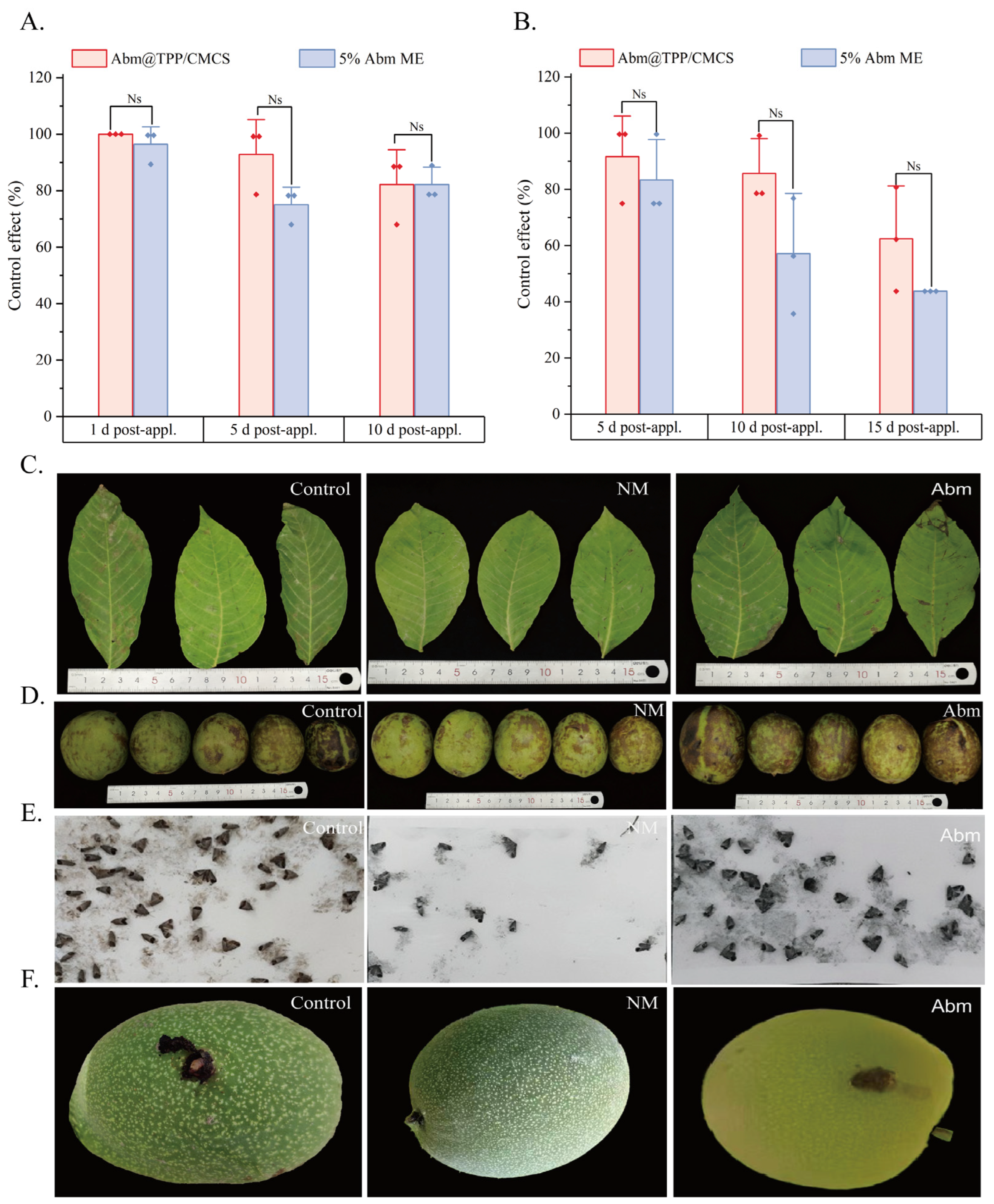
Following the application of Abm and Abm@TPP/CMCS, plant leaves maintained normal morphology and coloration without any phytotoxic lesions (Figure 7C). The morphological development and size of the walnut fruits showed no significant inhibition across all treatment groups, indicating favorable environmental compatibility of the tested formulations with walnut growth under the experimental conditions (Figure 7D). In terms of pest control, all treatments significantly reduced both the fruit infestation rate and the number of adult C. pomonella captured in pheromone traps. Analysis based on fruit infestation revealed that at 5 d post-application, the control efficacy of Abm@TPP/CMCS (91.67%) was numerically higher than Abm (83.33%), though the difference was not statistically significant. By 10 d, the efficacy of Abm@TPP/CMCS reached 85.71%, significantly surpassing that of Abm (57.14%) while keeping this improved efficiency up to 15 d, with Abm@TPP/CMCS again showing higher efficacy (56.25%) compared to Abm (Figure 7B,F). Based on adult trap catches, control efficacy exceeded 96.44% for all formulations on the first day after treatment, with no significant differences among groups. At 5 and 10 d of post-application, efficacy levels ranged from 71.10% to 92.89%. Although inter-group differences during this period were not statistically significant, Abm@TPP/CMCS consistently demonstrated higher efficacy than Abm (Figure 7A,E).
In summary, the Abm@TPP/CMCS nanopesticide ensures crop safety while delivering significant and sustained control of C. pomonella. Its efficacy, stability, and persistence outperform the conventional formulations, providing a substantive basis for the practical application of nanopesticides in integrated orchard pest management.

4. Conclusions

Abamectin (Abm), a potent macrocyclic lactone insecticide, faces constraints in widespread agricultural applications due to its pronounced toxicity to non-target organisms. The Abm@TPP/CMCS nanopesticide developed in this study exhibits significantly attenuated non-target toxicity while retaining high insecticidal efficacy; specifically, it markedly enhances activity against C. pomonella and substantially mitigates hazards to A. cerana and E. fetida. As a stimuli-responsive delivery system, Abm@TPP/CMCS leverages physicochemical principles and physiological differences to achieve sustained release governed by its nanocarrier properties. Further investigations will focus on the long-term degradation dynamics of this nano-delivery system under field conditions and its potential ecological impacts on non-target microbial communities, thereby providing a comprehensive foundation for its large-scale agricultural application.

Supplementary Materials

The following supporting information can be downloaded at: https://www.mdpi.com/article/10.3390/agronomy16060599/s1. Table S1: Particle size characteristics of Abm@TPP/CMCS nanoparticles at different concentrations; Figure S1: Characterization of physicochemical properties of Abm@TPP/CMCS nanoparticles. (A) Hydrodynamic size distribution and polydispersity index of Abm@TPP/CMCS nanoparticles at concentrations of 0.3 mg/mL and 0.12 mg/mL. (B) Zeta potential values of Abm@TPP/CMCS and CMCS; Figure S2: HPLC analysis of the loading efficiency of Abamectin in Abm@TPP/CMCS nanoparticles. (A) HPLC chromatogram for determining the loading efficiency of Abamectin. (B-D) HPLC chromatograms showing the loading efficiency of Abamectin under pH conditions of 5.0, 7.0, and 9.0, respectively; Figure S3: Representative histopathological sections of the median sagittal plane of C. pomonella larvae following treatment with varying concentrations of Abm@TPP/CMCS nanoparticles; Figure S4: Body surface and overall morphological observations of E. fetida in various formulation treatment groups; Figure S5: Body surface and overall morphological observations of A. cerana cerana in various formulation treatment groups; Figure S6: Effects of different pesticide treatments on the growth safety of kidney bean and wheat plants. (A, B) Phenotype and growth response of kidney bean seedlings after foliar spray with different formulations. (C, D) Impact of different pesticide treatments on the growth of wheat plants.

Author Contributions

Y.P.: Writing—original draft, Investigation, Formal analysis, Data curation. C.G.: Resources, Methodology. W.X.: Methodology, Formal analysis. Y.L.: Writing—review & editing, Writing—original draft, Supervision, Project administration, Funding acquisition. All authors have read and agreed to the published version of the manuscript.

Funding

This research was funded by the National Key Research and Development Program of China (14th Five-Year Plan) under the project entitled “Mechanisms of Expansion and Spread of Major Invasive Agricultural Organisms and Research on Efficient Prevention and Control Technologies” (Grant No. 2021YFD1400200). The APC was funded by the same grant.

Data Availability Statement

The original contributions presented in this study are included in the article/Supplementary Materials. Further inquiries can be directed to the corresponding author.

Acknowledgments

We gratefully acknowledge Qubo Lili for the comprehensive investigation that laid the foundation for this study. Special thanks are also extended to Quanwei Guo and Xinlei Ren for their insightful contributions to the formal analysis and data visualization, which were instrumental in interpreting our findings. During the preparation of this manuscript, the authors used Nano Banana 2 (Web version) in order to generate icon elements for the Graphical Abstract. The authors have reviewed and edited the output and take full responsibility for the content of the publication.

Conflicts of Interest

The authors declare no conflicts of interest.

References

  1. Kadoić Balaško, M.; Bažok, R.; Mikac, K.M.; Lemic, D.; Pajač Živković, I. Pest management challenges and control practices in codling moth: A review. Insects 2020, 11, 38. [Google Scholar] [CrossRef]
  2. Wearing, C.H. Distribution characteristics of eggs and neonate larvae of codling moth, Cydia pomonella (L.) (Lepidoptera: Tortricidae). Int. J. Insect Sci. 2016, 8, 33–53. [Google Scholar] [CrossRef] [PubMed]
  3. Johnson, J.A.; Hansen, J.D. Evidence for the non-pest status of codling moth on commercial fresh sweet cherries intended for export. Crop Prot. 2008, 27, 1415–1420. [Google Scholar] [CrossRef]
  4. Nissar, T.; Shrivastava, P. Control of codling moth (Cydia pomonella) infestation rate by different cultural methods. Int. J. Eng. Appl. Sci. (IJEAS) 2020, 7, 13–18. [Google Scholar] [CrossRef]
  5. Horner, R.M.; Lo, P.L.; Rogers, D.J.; Walker, J.T.S.; Suckling, D.M. Combined effects of mating disruption, insecticides, and the sterile insect technique on Cydia pomonella in New Zealand. Insects 2020, 11, 837. [Google Scholar] [CrossRef]
  6. Lacey, L.A.; Unruh, T.R. Biological control of codling moth (Cydia pomonella, Lepidoptera: Tortricidae) and its role in integrated pest management, with emphasis on entomopathogens. Vedalia 2005, 12, 33–60. Available online: https://www.ars.usda.gov/research/publications/publication/?seqNo115=186162 (accessed on 5 January 2026).
  7. Sigsgaard, L.; Herz, A.; Korsgaard, M.; Wührer, B. Mass release of Trichogramma evanescens and T. cacoeciae can reduce damage by the apple codling moth Cydia pomonella in organic orchards under pheromone disruption. Insects 2017, 8, 41. [Google Scholar] [CrossRef] [PubMed]
  8. Stará, J.; Kocourek, F.; Falta, V. Control of codling moth (Cydia pomonella L., Lepidoptera: Tortricidae) by the “attract and kill” strategy. J. Plant Dis. Prot. 2008, 115, 75–79. [Google Scholar] [CrossRef]
  9. Whitfield, E.C.; Fountain, M.T. Future semiochemical control of codling moth, Cydia pomonella. Front. Hortic. 2024, 3, 1446806. [Google Scholar] [CrossRef]
  10. Zhao, X.; Salgado, V.L. The role of GABA and glutamate receptors in susceptibility and resistance to chloride channel blocker insecticides. Pestic. Biochem. Physiol. 2010, 97, 153–160. [Google Scholar] [CrossRef]
  11. Ismail, T.; Keratum, A.; El-Hetawy, L. Formulation of abamectin and plant oil-based nanoemulsions with efficacy against the two-spotted spider mite Tetranychus urticae (Acari: Tetranychidae) under laboratory and field conditions. Appl. Biol. Chem. 2022, 65, 61. [Google Scholar] [CrossRef]
  12. Cui, B.; Lv, Y.; Gao, F.; Wang, C.; Zeng, Z.; Wang, Y.; Sun, C.; Zhao, X.; Shen, Y.; Liu, G.; et al. Improving abamectin bioavailability via nanosuspension constructed by wet milling technique. Pest Manag. Sci. 2019, 75, 2756–2764. [Google Scholar] [CrossRef]
  13. Escalada, J.P.; Gianotti, J.; Pajares, A.; Massad, W.A.; Amat-Guerri, F.; García, N.A. Photodegradation of the acaricide abamectin: A kinetic study. J. Agric. Food Chem. 2008, 56, 7355–7359. [Google Scholar] [CrossRef]
  14. Villacis-Perez, E.; Xue, W.; Vandenhole, M.; De Beer, B.; Dermauw, W.; Van Leeuwen, T. Intraspecific diversity in the mechanisms underlying abamectin resistance in a cosmopolitan pest. Evol. Appl. 2023, 16, 863–879. [Google Scholar] [CrossRef]
  15. De Souza, R.B.; Guimarães, J.R. Effects of avermectins on the environment based on its toxicity to plants and soil invertebrates—A review. Water Air Soil Pollut. 2022, 233, 259. [Google Scholar] [CrossRef]
  16. Li, X.-X.; He, L.-F.; Pang, X.-Y.; Gao, Y.-Y.; Liu, Y.; Zhang, P.; Wei, G.; Mu, W.; Li, B.-X.; Liu, F. Tank-mixing adjuvants enhanced the efficacy of fludioxonil on cucumber anthracnose by ameliorating the penetration ability of active ingredients on target interface. Colloids Surf. B Biointerfaces 2021, 204, 111804. [Google Scholar] [CrossRef] [PubMed]
  17. Mesnage, R.; Antoniou, M.N. Ignoring adjuvant toxicity falsifies the safety profile of commercial pesticides. Front. Public Health 2017, 5, 361. [Google Scholar] [CrossRef] [PubMed]
  18. Mullin, C.A.; Fine, J.D.; Reynolds, R.D.; Frazier, M.T. Toxicological risks of agrochemical spray adjuvants: Organosilicone surfactants may not be safe. Front. Public Health 2016, 4, 92. [Google Scholar] [CrossRef]
  19. Ding, X.; Gao, F.; Cui, B.; Du, Q.; Zeng, Z.; Zhao, X.; Sun, C.; Wang, Y.; Cui, H. The key factors of solid nanodispersion for promoting the bioactivity of abamectin. Pestic. Biochem. Physiol. 2024, 201, 105897. [Google Scholar] [CrossRef] [PubMed]
  20. Zhang, H.-G.; Zhu, P.; Li, G.-B.; Li, W.-K.; Liu, J.-L.; Xu, C.-Y.; Kong, X.-P.; Wang, J. Fabrication of alginate-carboxymethyl chitosan hydrogel granules for achieving anti-photolysis and controlled release of spinosad. React. Funct. Polym. 2025, 216, 106430. [Google Scholar] [CrossRef]
  21. Wang, Y.; Wan, M.; Zhao, Y.; Sun, L. Carboxymethyl chitosan-encapsulated sulfur-functionalized cubic silica: Enhanced leaf adhesion and stimuli-responsive pesticide delivery. Int. J. Biol. Macromol. 2025, 322, 146725. [Google Scholar] [CrossRef]
  22. Wu, Z.; Chen, Y.; Xue, H.; Yang, S.; Pan, C.; Zhang, D.; Xie, Y. Dual-stimuli-responsive carboxymethyl chitosan/sodium lignosulfonate microcapsules from oppositely charged biopolymers for smart pesticide release. Int. J. Biol. Macromol. 2025, 299, 140102. [Google Scholar] [CrossRef]
  23. Kong, X.-P.; Li, W.-K.; Liu, J.-H.; Zhao, P.; Ge, J.-C.; Jiang, S.; Li, W.; Luo, L.; Wang, J. A simple approach to fabricate chitosan-delivered avermectin controlled release microparticles for improved efficacy and reduced residues. Int. J. Biol. Macromol. 2025, 301, 140422. [Google Scholar] [CrossRef]
  24. Lim, Y.W.; Tan, W.S.; Ho, K.L.; Mariatulqabtiah, A.R.; Abu Kasim, N.H.; Abd. Rahman, N.; Wong, T.W.; Chee, C.F. Challenges and complications of poly(lactic-co-glycolic acid)-based long-acting drug product development. Pharmaceutics 2022, 14, 614. [Google Scholar] [CrossRef] [PubMed]
  25. Wang, Y.; Tang, Z.; Tabusibieke, C.; Dong, J.; Tang, Q.; Lu, W. Recent advances in the application of mesoporous silica nanoparticles in nano-pesticides: A review. Microporous Mesoporous Mater. 2026, 404, 114044. [Google Scholar] [CrossRef]
  26. Lu, S.; Yang, D.; Wang, M.; Yan, M.; Qian, Y.; Zheng, D.; Qiu, X. Pickering emulsions synergistic-stabilized by amphoteric lignin and SiO2 nanoparticles: Stability and pH-responsive mechanism. Colloids Surf. A Physicochem. Eng. Asp. 2020, 585, 124158. [Google Scholar] [CrossRef]
  27. Zhang, H.; Yu, B.; Fang, Y.; Xie, Z.; Xiong, Q.; Zhang, D.; Cheng, J.; Guo, Q.; Su, Y.; Zhao, J. Long-lasting, UV shielding, and cellulose-based avermectin nano/micro spheres with dual smart stimuli-microenvironment responsiveness for Plutella xylostella control. Carbohydr. Polym. 2024, 345, 122553. [Google Scholar] [CrossRef]
  28. Song, S.; Wang, Y.; Xie, J.; Sun, B.; Zhou, N.; Shen, H.; Shen, J. Carboxymethyl chitosan modified carbon nanoparticle for controlled emamectin benzoate delivery: Improved solubility, pH-responsive release, and sustainable pest control. ACS Appl. Mater. Interfaces 2019, 11, 34258–34267. [Google Scholar] [CrossRef]
  29. Gong, C.; Wang, W.; Ma, Y.; Zhan, X.; Peng, A.; Pu, J.; Yang, J.; Yuan, X.; Wang, X. siRNA self-assembled carboxymethyl chitosan and pymetrozine nucleic pesticides for enhanced control of Sogatella furcifera: Bidirectional transduction and detoxification inhibition. Carbohydr. Polym. 2025, 354, 123328. [Google Scholar] [CrossRef]
  30. Fan, W.; Yan, W.; Xu, Z.; Ni, H. Formation mechanism of monodisperse, low molecular weight chitosan nanoparticles by ionic gelation technique. Colloids Surf. B Biointerfaces 2012, 90, 21–27. [Google Scholar] [CrossRef] [PubMed]
  31. Desai, K.G. Chitosan nanoparticles prepared by ionotropic gelation: An overview of recent advances. Crit. Rev. Ther. Drug Carr. Syst. 2016, 33, 107–158. [Google Scholar] [CrossRef]
  32. Algharib, S.A.; Dawood, A.; Zhou, K.; Chen, D.; Li, C.; Meng, K.; Zhang, A.; Luo, W.; Ahmed, S.; Huang, L.; et al. Preparation of chitosan nanoparticles by ionotropic gelation technique: Effects of formulation parameters and in vitro characterization. J. Mol. Struct. 2022, 1252, 132129. [Google Scholar] [CrossRef]
  33. Omar Zaki, S.S.; Ibrahim, M.N.; Katas, H. Particle size affects concentration-dependent cytotoxicity of chitosan nanoparticles towards mouse hematopoietic stem cells. J. Nanotechnol. 2015, 2015, 1–5. [Google Scholar] [CrossRef]
  34. Shapi’i, R.A.; Othman, S.H.; Naim, M.N.; Basha, R.K. Effect of initial concentration of chitosan on the particle size of chitosan nanoparticle. Int. J. Nanotechnol. 2019, 16, 680–691. [Google Scholar] [CrossRef]
  35. McGraw, E.; Roberts, J.D.; Kunte, N.; Westerfield, M.; Streety, X.; Held, D.; Avila, L.A. Insight into cellular uptake and transcytosis of peptide nanoparticles in Spodoptera frugiperda cells and isolated midgut. ACS Omega 2022, 7, 10933–10943. [Google Scholar] [CrossRef] [PubMed]
  36. An, G.E.; Mu, R.; Ma, J.L.; Hao, S.X.; Gao, Y. Sensitivity analysis of Cydia pomonella larvae to six insecticides. Liaoning For. Sci. Technol. 2024, 41–44. Available online: https://kns.cnki.net/KCMS/detail/detail.aspx?dbcode=CJFQ&dbname=CJFDLAST2024&filename=LNLK202403009 (accessed on 2 March 2026).
  37. Wang, Z.; Fan, N.; Li, X.; Yue, L.; Wang, X.; Liao, H.; Xiao, Z. Trophic transfer of metal oxide nanoparticles in the tomato-Helicoverpa armigera food chain: Effects on phyllosphere microbiota, insect oxidative stress, and gut microbiome. ACS Nano 2024, 18, 26631–26642. [Google Scholar] [CrossRef] [PubMed]
  38. Jiang, S.; Teng, C.P.; Puah, W.C.; Wasser, M.; Win, K.Y.; Han, M.-Y. Oral administration and selective uptake of polymeric nanoparticles in Drosophila larvae as an in vivo model. ACS Biomater. Sci. Eng. 2015, 1, 1077–1084. [Google Scholar] [CrossRef]
  39. Wang, D.; Saleh, N.B.; Byro, A.; Zepp, R.; Sahle-Demessie, E.; Luxton, T.P.; Ho, K.T.; Burgess, R.M.; Flury, M.; White, J.C.; et al. Nano-enabled pesticides for sustainable agriculture and global food security. Nat. Nanotechnol. 2022, 17, 347–360. [Google Scholar] [CrossRef] [PubMed]
  40. Grillo, R.; Fraceto, L.F.; Amorim, M.J.B.; Scott-Fordsmand, J.J.; Schoonjans, R.; Chaudhry, Q. Ecotoxicological and regulatory aspects of environmental sustainability of nanopesticides. J. Hazard. Mater. 2021, 404, 124148. [Google Scholar] [CrossRef]
  41. Zhou, Y.; Wu, J.; Zhou, J.; Lin, S.; Cheng, D. pH-responsive release and washout resistance of chitosan-based nano-pesticides for sustainable control of plumeria rust. Int. J. Biol. Macromol. 2022, 222, 188–197. [Google Scholar] [CrossRef]
  42. Lahive, E.; Jurkschat, K.; Shaw, B.J.; Handy, R.D.; Spurgeon, D.J.; Svendsen, C. Toxicity of cerium oxide nanoparticles to the earthworm Eisenia fetida: Subtle effects. Environ. Chem. 2014, 11, 268–278. [Google Scholar] [CrossRef]
  43. Garcia-Velasco, N.; Gandariasbeitia, M.; Irizar, A.; Soto, M. Uptake route and resulting toxicity of silver nanoparticles in Eisenia fetida earthworm exposed through Standard OECD tests. Ecotoxicology 2016, 25, 1543–1555. [Google Scholar] [CrossRef] [PubMed]
  44. Bendersky, M.; Davis, J.M. DLVO interaction of colloidal particles with topographically and chemically heterogeneous surfaces. J. Colloid Interface Sci. 2011, 353, 87–97. [Google Scholar] [CrossRef]
  45. Dukhin, A.S.; Ulberg, Z.R.; Karamushka, V.I.; Gruzina, T.G. Peculiarities of live cells’ interaction with micro- and nanoparticles. Adv. Colloid Interface Sci. 2010, 159, 60–71. [Google Scholar] [CrossRef]
  46. Popova, I.E.; Bair, D.A.; Tate, K.W.; Parikh, S.J. Sorption, leaching, and surface runoff of beef cattle veterinary pharmaceuticals under simulated irrigated pasture conditions. J. Environ. Qual. 2013, 42, 1167–1175. [Google Scholar] [CrossRef]
  47. Dubroca, J.; Ducrot, P.H.; Alvinerie, M.; Galtier, P.; Mougin, C.; Kollmann, A. Fate of the veterinary medicine ivermectin in soil. Environ. Chem. Lett. 2003, 1, 131–134. [Google Scholar] [CrossRef]
  48. Li, X.; Wang, X.; Sun, C.; Wang, A.; An, C.; Li, N.; Shen, Y.; Hu, J.; Liu, H.; Xie, J.; et al. A unimolecule nanopesticide delivery system applied in field scale for enhanced pest control. Nat. Commun. 2025, 16, 6809. [Google Scholar] [CrossRef]
  49. Nicolson, S.W. Water homeostasis in bees, with the emphasis on sociality. J. Exp. Biol. 2009, 212, 429–434. [Google Scholar] [CrossRef] [PubMed]
  50. Copeland, D.C.; Maes, P.W.; Mott, B.M.; Anderson, K.E. Changes in gut microbiota and metabolism associated with phenotypic plasticity in the honey bee Apis mellifera. Front. Microbiol. 2022, 13, 1059001. [Google Scholar] [CrossRef] [PubMed]
  51. Zhang, Y.; Liu, J.; Shi, J.; Wu, B.; He, Z.; Wu, X. The interaction and response of gut microbes to exposure to chiral ethiprole in honeybees (Apis mellifera). J. Hazard. Mater. 2025, 486, 137112. [Google Scholar] [CrossRef] [PubMed]
  52. Callegari, M.; Crotti, E.; Fusi, M.; Marasco, R.; Gonella, E.; De Noni, I.; Romano, D.; Borin, S.; Tsiamis, G.; Cherif, A.; et al. Compartmentalization of bacterial and fungal microbiomes in the gut of adult honeybees. npj Biofilms Microbiomes 2021, 7, 42. [Google Scholar] [CrossRef]
  53. Yang, L.-Q.; Lan, Y.-Q.; Guo, H.; Cheng, L.-Z.; Fan, J.-Z.; Cai, X.; Zhang, L.-M.; Chen, R.-F.; Zhou, H.-S. Ophthalmic drug-loaded N,O-carboxymethyl chitosan hydrogels: Synthesis, in vitro and in vivo evaluation. Acta Pharmacol. Sin. 2010, 31, 1625–1634. [Google Scholar] [CrossRef]
  54. Su, C.; Ji, Y.; Liu, S.; Gao, S.; Cao, S.; Xu, X.; Zhou, C.; Liu, Y. Fluorescence-labeled abamectin nanopesticide for comprehensive control of pinewood nematode and Monochamus alternatus Hope. ACS Sustain. Chem. Eng. 2020, 8, 16555–16564. [Google Scholar] [CrossRef]
  55. Shahrajabian, M.H.; Chaski, C.; Polyzos, N.; Tzortzakis, N.; Petropoulos, S.A. Sustainable agriculture systems in vegetable production using chitin and chitosan as plant biostimulants. Biomolecules 2021, 11, 819. [Google Scholar] [CrossRef] [PubMed]
  56. Verma, K.K.; Joshi, A.; Song, X.-P.; Singh, S.; Kumari, A.; Arora, J.; Singh, S.K.; Solanki, M.K.; Seth, C.S.; Li, Y.-R. Synergistic interactions of nanoparticles and plant growth promoting rhizobacteria enhancing soil-plant systems: A multigenerational perspective. Front. Plant Sci. 2024, 15, 1376214. [Google Scholar] [CrossRef]
Figure 1. Morphological and structural characterization of Abm@TPP/CMCS nanoparticles. (A) SEM image, illustrating the particle morphology. (B) Corresponding EDS analysis and surface elemental distribution. (CG) High-resolution XPS spectra of (C) O1s, (D) C1s, (E) P2p, (F) N1s, and (G) XPS survey spectrum of the Abm@TPP/CMCS composite. (H) Particle size distribution of nanoparticles at concentrations of 0.3 mg/mL. The red solid lines represent the normal distribution fitting of the particle size.
Agronomy 16 00599 g001
Figure 2. In vitro release profiles of Abm from Abm@TPP/CMCS under different pH conditions and the loading efficiency of Abm. (A) In vitro release curves of Abm from Abm@TPP/CMCS at different pH values. (B) Drug loading of Abm in Abm@TPP/CMCS.
Agronomy 16 00599 g002
Figure 3. Laboratory toxicity analysis of different formulations against C. pomonella. (A) Mortality of C. pomonella larvae 12 h after treatment with Abm and Abm@TPP/CMCS at different concentrations. At 12 h post-treatment, at 0.25 μg/mL, p = 0.374; at 0.375 μg/mL, p = 0.101; at 0.5 μg/mL, p = 0.025; at 0.75 μg/mL, p = 0.001; at 1.0 μg/mL, p = 0.016. (B) Mortality 24 h after treatment. At 24 h post-treatment, at 0.25 μg/mL, p = 0.007; at 0.375 μg/mL, p = 0.067; at 0.5 μg/mL, p = 0.024; at 0.75 μg/mL, p = 0.001; at 1.0 μg/mL, p = 0.016. (C) Mortality 48 h after treatment. At 48 h post-treatment, at 0.25 μg/mL, p = 0.024; at 0.375 μg/mL, p = 0.101; at 0.5 μg/mL, p = 0.230; at 0.75 μg/mL, p = 0.002; at 1.0 μg/mL, p > 0.05. (D) Mortality 72 h after treatment. At 72 h post-treatment, at 0.25 μg/mL, p = 0.101; at 0.375 μg/mL, p = 0.101; at 0.5 μg/mL, p = 0.374; at 0.75 μg/mL, p = 0.007; at 1.0 μg/mL, p > 0.05. (E) Representative histopathological sections of the maximum cross-sectional area of C. pomonella larvae treated with different concentrations of Abm and Abm@TPP/CMCS. Data are presented as mean ± SE (n = 3 independent experiments). Individual data points are shown to represent each replicate. Statistical differences were analyzed by one-way ANOVA followed by Tukey’s HSD test. *** indicates p < 0.001, ** indicates p < 0.01, * indicates p < 0.05, and NS indicates p > 0.05 (not significant). NM: Abm@TPP/CMCS nanomaterial; Scale bars: 100 μm, 10 μm.
Agronomy 16 00599 g003
Figure 4. Acute toxicity evaluation of different pesticide formulations on the non-target organism E. fetida. (A) Mortality of E. fetida at 24 h post-treatment with different concentrations of each formulation. At 24 h post-treatment, at 10 mg/mL, p > 0.05; at 200 μg/mL, p > 0.05; at 400 mg/mL, p = 0.374; at 800 mg/mL, p = 0.005; at 1000 mg/mL, p = 0.025. (B) Mortality of E. fetida at 48 h post-treatment with different concentrations of each formulation. At 48 h post-treatment, at 10 mg/mL, p = 0.101; at 200 μg/mL, p = 0.101; at 400 mg/mL, p = 0.026; at 800 mg/mL, p = 0.003; at 1000 mg/mL, p = 0.007. (C) Histopathological sections of various tissues of E. fetida after treatment with different concentrations of the formulations. Data are presented as mean ± SE (n = 3 independent experiments). Individual data points are shown to represent each replicate. *** indicates p < 0.001, and NS indicates p > 0.05 (not significant) NM: Abm@TPP/CMCS nanomaterial; Scale bars: 100 μm, 10 μm.
Agronomy 16 00599 g004
Figure 5. Acute toxicity assessment of different pesticide formulations on the non-target organism, the A. cerana. (A) Mortality of A. cerana at 24 h post-treatment with different concentrations of each formulation. At 24 h post-treatment, at 0.0625 μg/mL, p = 0.374; at 0.125 μg/mL, p = 0.026; at 0.25 μg/mL, p = 0.005; at 0.5 μg/mL, p = 0.006; at 1.0 μg/mL, p = 0.001. (B) Mortality of A. cerana at 48 h post-treatment with different concentrations of each formulation. At 48 h post-treatment, at 0.0625 μg/mL, p = 0.002; at 0.125 μg/mL, p = 0.026; at 0.25 μg/mL, p >0.05; at 0.5 μg/mL, p = 0.002; at 1.0 μg/mL, p >0.05. (C) Histopathological sections of the midgut of A. cerana after treatment with different concentrations of the formulations. Data are presented as mean ± SE (n = 3 independent experiments). Individual data points are shown to represent each replicate. *** indicates p < 0.001, ** indicates p < 0.01, * indicates p < 0.05, and NS indicates p > 0.05 (not significant) NM: Abm@TPP/CMCS nanomaterial; Scale bars: 100 μm, 10 μm.
Agronomy 16 00599 g005
Figure 6. Evaluation of the effects of different pesticide formulations on crop growth safety. (A) Morphological changes and growth performance of maize seedlings after spraying with the same formulation. (BF) Effects of different concentrations of each formulation on root length, first leaf length, second leaf length, and growth development in three crop species. (G,H) Chlorophyll a and chlorophyll b contents in the three crop species after treatment with different formulations. Abm1 and Abm2 denote Abm at 1 μg/mL and 2 μg/mL, respectively; NM1 and NM2 denote Abm@TPP/CMCS at 1 μg/mL and 2 μg/mL, respectively. Data are presented as mean ± SE (n = 3 independent experiments). Individual data points represent each replicate *** indicates p < 0.001, ** indicates p < 0.01, * indicates p < 0.05, and NS indicates p > 0.05 (not significant).
Agronomy 16 00599 g006
Figure 7. Evaluation of field control efficacy of different formulations against C. pomonella based on pheromone trap catches and fruit infestation rate statistics. (A) Assessment of field efficacy of different formulations based on the number of pheromone trap catches. (B) Comparison of field control effects of different formulations based on fruit infestation rate. (C) Phenotypic changes in walnut leaves after treatment with various formulations. (D) Comparison of the external morphology of walnut fruits among different treatment groups. (E) Statistics of adult moth catches using pheromone-baited traps across treatment plots. (F) Typical fruit damage symptoms caused by C. pomonella larval feeding. Data are presented as mean ± SE (n = 3 independent experiments). Individual data points represent each replicate. ns, not significant. NS indicates p > 0.05 (not significant).
Agronomy 16 00599 g007
Table 1. Laboratory toxicity bioassay of Abm and Abm@TPP/CMCS against C. pomonella at 24 h.
TreatmentSlope
(±SE)
LC50
(μg/mL)
LC50 95%CI a
(μg/mL)
X2 (df)p-ValueSynergism
Ratio
Abm3.78 ± 0.6740.5800.496–0.6904.820 (13)0.979-
Abm@TPP/
CMCS
5.69 ± 0.9590.3710.323–0.4185.053 (13)0.9741.563 b
Notes: a CI: confidence interval; b Synergy ratio relative to Abm, calculated as the ratio of the LC50 of Abm to the LC50 of Abm@TPP/CMCS. LC50 values and slope parameters were computed using PoloPlus software.
Table 2. Acute toxicity results of different formulations on E. fetida.
TreatmentSlope
(±SE)
LC50
(μg/mL)
LC50
95%CI·(μg/cm2)
X2 (df)p-Value
Abm3.36 ± 0.707684.28541.361–908.8389.226
(13)
0.756
Abm@TPP/CMCS2.16 ± 0.6941484.30904.43–13,392.0013.359
(13)
0.420
Note: CI = confidence interval; LC50 values and slope parameters were calculated using PoloPlus software.
Table 3. Acute toxicity results of different formulations on A. cerana.
TreatmentTimeSlope
(±SE)
LC50
(μg/mL)
LC50
95%CI·(μg/mL)
X2 (df)p-Value
Abm24 h2.63 ± 0.4820.3110.226–0.43517.476
(19)
0.557
48 h2.72 ± 0.6750.0920.054–0.1279.594
(19)
0.962
Abm@TPP/CMCS24 h2.13 ± 0.4124.1622.698–6.98810.733
(19)
0.932
48 h1.753 ± 0.2992.5711.641–4.45711.516
(19)
0.905
Note: CI, confidence interval; LC50 values and slope parameters were calculated using PoloPlus software.
Disclaimer/Publisher’s Note: The statements, opinions and data contained in all publications are solely those of the individual author(s) and contributor(s) and not of MDPI and/or the editor(s). MDPI and/or the editor(s) disclaim responsibility for any injury to people or property resulting from any ideas, methods, instructions or products referred to in the content.