Article

Potassium as a Key Limiting Factor: Foliar Application Improves Cold Tolerance in Augustinegrass via CAT Activation


1
School of Environmental Science and Engineering, Yancheng Institute of Technology, Yancheng 224051, China
2
The National Forestry and Grassland Administration Engineering Research Center for Germplasm Innovation and Utilization of Warm-Season Turfgrasses, Jiangsu Key Laboratory for Conservation and Utilization of Plant Resources, Institute of Botany, Jiangsu Province and Chinese Academy of Sciences (Nanjing Botanical Garden Mem. Sun Yat-Sen), Nanjing 210014, China
3
Department of Agronomy and Horticulture, Jiangsu Vocational College of Agriculture and Forest, Jurong 212400, China
*
Author to whom correspondence should be addressed.
Agronomy 2026, 16(5), 563; https://doi.org/10.3390/agronomy16050563
Submission received: 21 January 2026 / Revised: 22 February 2026 / Accepted: 25 February 2026 / Published: 4 March 2026

Abstract

Identifying the factors limiting cold resistance in augustinegrass is essential for expanding this shade-tolerant tropical turfgrass into temperate regions. We hypothesized that leaf potassium content is closely associated with its cold tolerance. To test this, we first analyzed the correlation between leaf potassium content and cold resistance across 30 germplasms, which confirmed a positive relationship and suggested that low potassium may limit cold tolerance. We then applied foliar potassium at 0, 15, 30, and 60 mM to increase leaf potassium content and evaluate its effect on cold resistance. The 15 mM treatment was most effective, increasing whole-plant fresh weight by 91.5% under cold stress compared to the control. To understand the underlying physiological mechanism, we measured the impact of foliar potassium on four key processes: photosynthesis (chlorophyll content, fluorescence, enzyme activity, stomatal aperture, gas exchange, and carbon assimilation products), osmotic adjustment (proline), membrane stability (relative conductivity and MDA), and ROS scavenging (SOD and CAT activity). Foliar potassium significantly enhanced photosynthetic performance; increased soluble sugars, starch, and proline; reduced MDA; and boosted both SOD and CAT activities. Pearson correlation analysis linked most physiological indicators to improved fresh weight. Critically, multiple linear regression identified leaf CAT activity as the primary factor, explaining 80% of the variation in cold resistance. qPCR analysis confirmed that CAT gene expression matched the increased enzyme activity. Field trials validated that a 15 mM potassium foliar spray effectively enhances cold tolerance. These findings demonstrate that leaf potassium is a major limiting factor for cold resistance in augustinegrass, and that foliar application of 15 mM potassium represents an effective management strategy, primarily by enhancing leaf CAT activity to improve ROS scavenging and overall stress tolerance.

1. Introduction

As a superior shade-tolerant turfgrass species, the tropical grass augustinegrass (Stenotaphrum Trin.) is widely used in landscaping and ecological restoration under shaded conditions [1,2]. It significantly outperforms other temperate shade-tolerant grasses in shade tolerance, green period duration, and landscape quality (uniformity, establishment speed), making it the preferred material for shaded landscapes. However, its poor cold resistance limits its application in temperate regions [3,4,5]. Briefly, augustinegrass is originally a perennial turfgrass that is widely favored in tropical regions for its strong shade tolerance and low maintenance costs. However, in temperate regions, its inability to survive the winter naturally necessitates replanting each year, resulting in a substantial increase in the costs of use. Constrained by these high maintenance inputs, augustinegrass is less competitive in the temperate turfgrass market, often leaving potential users hesitant due to cost concerns. Analyzing the limiting factors for cold resistance in augustinegrass is crucial for developing cold-tolerant germplasm and formulating cold-resistant agronomic practices. This will ultimately expand its application from tropical/subtropical regions to colder temperate zones. Current research primarily focuses on evaluating cold resistance across different germplasm resources [6,7,8], while mechanistic studies remain in their infancy and require urgent investigation. This knowledge gap severely impedes the breeding of cold-tolerant germplasm and the development of effective cold-resistance agronomic measures.
Low-temperature stress not only inhibits plant growth and development but also serves as a primary factor limiting plant geographical distribution [9,10]. Major morphological symptoms of cold stress encompass chlorosis, leaf curling, discoloration, wilting, and necrosis; seedling stunting; tissue damage manifested as surface lesions, stem cracking, and metabolite leakage; poor or absent germination; lack of vigor; and delayed regeneration with inhibited growth in vegetatively propagated clones [11]. At the cellular level, cold stress induces membrane damage (commonly measured indicators: relative conductivity, malondialdehyde), diminished reactive oxygen species (ROS) scavenging enzyme activity (commonly measured indicators: superoxide dismutase and catalase activity), energy loss in photosynthetic systems (commonly measured indicators: chlorophyll content, chlorophyll fluorescence, activity of rate-limiting enzymes for carbon assimilation, stomatal aperture, photosynthetic parameters, and photosynthetic products), and osmotic disturbance (commonly measured indicator: proline). Enhanced cold resistance in plants is accompanied by improvements in these indicators. Therefore, these four physiological processes are considered the primary mechanisms underlying plant cold tolerance [12]. However, which of these physiological indicators plays a paramount role in cold resistance remains to be elucidated.
The macronutrients nitrogen, phosphorus, and potassium play important roles in regulating plant cold resistance. Previous studies have shown that the concentration, timing, and form of nitrogen fertilizer application can all regulate plant cold resistance [13,14,15,16]. Exogenous application of phosphorus fertilizer can significantly enhance plant cold resistance [17,18], and adequate potassium supply is crucial for plant cold-stress protection [19,20,21]. The aforementioned findings provide critical clues for investigating cold resistance limiting factors in augustinegrass. Preliminary evaluation of 80 augustinegrass germplasm resources under colder temperate conditions revealed significant inter-germplasm variation in cold tolerance [22]. Given that poor cold resistance is the main factor limiting the expansion of excellent shade-tolerant augustinegrass from tropical to temperate regions, and the underlying mechanisms remain insufficiently systematically studied—thereby hindering the development of cold-resistant augustinegrass breeding and related cold resistance measures—this study hypothesizes that leaf potassium content is closely related to the cold resistance of augustinegrass. To test this hypothesis, a series of experiments were performed with the following objectives: (1) Analyze the correlation between leaf potassium content and the cold resistance of different augustinegrass germplasms to clarify the relationship between them; (2) Increase leaf potassium content through foliar application of different potassium concentrations, and further confirm the relationship between leaf potassium content and cold resistance by examining its impact on the cold resistance of augustinegrass; (3) Investigate the effects of potassium application under cold stress on four key physiological processes related to cold resistance in augustinegrass—photosynthesis (chlorophyll content, chlorophyll fluorescence, activity of rate-limiting enzymes for carbon assimilation, stomatal aperture, photosynthetic parameters, photosynthetic products), osmotic adjustment capacity (proline), cell membrane stability (relative conductivity and malondialdehyde), and ROS scavenging capacity (superoxide dismutase and catalase activity)—to preliminarily reveal its physiological mechanisms; (4) Employ Pearson correlation analysis and multiple linear regression analysis to identify the relationships between various physiological indicators and the phenotype, and more importantly, to pinpoint the physiological indicators among them that play a decisive role in determining the phenotype; (5) Utilize quantitative PCR technology to analyze the molecular response patterns of core physiological indicators, preliminarily elucidating the molecular mechanism by which foliar potassium application regulates cold resistance in augustinegrass; (6) Finally, under field plot conditions, supplement the limiting factor for cold resistance in augustinegrass identified in this study (foliar potassium application), intending to apply the findings to production through field evaluation. This research is anticipated to identify key limiting factors and mechanisms underlying augustinegrass cold resistance, providing theoretical guidance and technical references for breeding cold-tolerant germplasm and developing agronomic practices.

2. Materials and Method

2.1. General Idea

Poor cold resistance limits the use of superior tropical shade-tolerant turfgrass, augustinegrass, in temperate regions. Identifying the limiting factors of its cold resistance is of great significance for addressing this issue. We propose the research hypothesis that leaf potassium content is a key determinant of cold resistance in augustinegrass. To test this hypothesis, this study first measured the leaf potassium content and key cold resistance indicators of different augustinegrass germplasm resources. Subsequently, a correlation analysis between leaf potassium content and the cold resistance of different augustinegrass germplasms was conducted to clarify the direct relationship between the two. Secondly, leaf potassium content was increased by foliar application of different potassium concentrations to study its effect on the cold resistance of augustinegrass, further elucidating the relationship between leaf potassium content and cold resistance. Furthermore, by measuring the effects of foliar potassium application on four key physiological indicators of augustinegrass under cold stress—photosynthesis, osmotic adjustment capacity, cell membrane stability, and ROS scavenging capacity (which are the four major physiological mechanisms currently reported for plant cold tolerance)—the physiological reasons for the enhancement of cold resistance by foliar potassium application were clarified. Then, through Pearson correlation analysis and multiple linear regression, the relationships between various physiological indicators and the phenotype were identified, and more importantly, the physiological indicators among them that play a decisive role in determining the phenotype were pinpointed. Subsequently, the molecular response patterns of core physiological indicators were clarified using quantitative PCR. Ultimately, the reasons for the poor cold resistance of augustinegrass were determined. Finally, under field plot conditions, the limiting factor for cold resistance in augustinegrass identified in this study (foliar potassium application) was supplemented, with the intention of applying the research findings to production through field evaluation. This study aims to identify the limiting factors underlying the poor cold resistance of augustinegrass through the aforementioned research and to develop a method that can be directly applied in production.

2.2. Correlation Analysis Between LT50 and Leaf Potassium Content Across Augustinegrass Germplasm Resources

To determine whether there is a correlation between leaf potassium content and the cold resistance of augustinegrass, a correlation study was first conducted between the two. Correlation analysis between LT50 (the lethal temperature killing 50% of the plants) and leaf potassium content across augustinegrass germplasm resources was conducted in fall 2023 using 30 accessions (detailed resource information is provided in Table S1). Plants were pot-cultivated at Nanjing Botanical Garden Mem. Sun Yat-Sen (Nanjing, China) in containers (18 cm bottom diameter) filled with 1:1 soil:sand mixture, with three replicates per accession. A compound fertilizer (N:P2O5:K2O = 15:15:15) was applied monthly at a rate of 0.5 g per pot. When the temperature was ~15 °C in autumn (18 November), healthy third fully expanded leaves from each augustinegrass accession were collected for determination of LT50 and potassium content. LT50 was determined by the electrolyte leakage method according to our previous study [22]. Briefly, the leaves were cut into small pieces and subjected to five low-temperature treatments (4 °C, −1 °C, −6 °C, −11 °C, and −16 °C). The electrolyte leakage was measured by determining the electrical conductivity of the leaf solution before and after boiling. The obtained electrolyte leakage data were then fitted using a logistic growth equation to derive the LT50 value. It should be noted that the LT50 data have been previously presented in our earlier publication [22]. For potassium quantification, the third fully expanded leaves were harvested, de-enzymed at 105 °C, and oven-dried at 80 °C to constant weight. Samples underwent H2SO4-H2O2 digestion followed by potassium measurement via flame photometry, with three biological replicates per accession. Correlation between leaf potassium content and LT50 was determined through linear regression analysis using Graphpad Prism software (version 9.5, https://www.graphpad.com/, accessed on 15 November 2024).

2.3. Plant Cultivation and Low-Temperature Treatment

To study the effect of increasing leaf potassium content through foliar application of different potassium concentrations on the cold resistance of augustinegrass, and to further clarify the relationship between leaf potassium content and cold resistance, the following experiment was conducted. Cold-resistant augustinegrass germplasm S13 was hydroponically cultivated using the first two nodes of stolons in IRRI nutrient solution (pH 5.8) composed of 0.5 mM NH4NO3, 0.3 mM KH2PO4, 0.35 mM K2SO4, 1 mM CaCl2, 1 mM MgSO4·7H2O, 20 μM EDTA-Fe, 20 μM H3BO3, 9 μM MnCl2·4H2O, 0.77 μM ZnSO4·7H2O, 0.32 μM CuSO4·5H2O, and 0.39 μM Na2MoO4·2H2O [23]. The reason for choosing S13 as the experimental material was as follows: in our previous comprehensive evaluation of 80 augustinegrass germplasm resources [22], we found that S13 exhibits the advantages of late discoloration and early regreening (ranking second among the 80 accessions), making it an ideal material for landscaping. Additionally, among 30 accessions, S13 ranked fourth in terms of LT50 value (Table S1), indicating that its LT50 has room for improvement. Therefore, we selected the S13 germplasm as the experimental material for foliar potassium application. Stolons were precultured in water for 5 days to induce root growth. Then, uniform seedlings were cultured in nutrient solution renewal every 3 days. The growth chamber conditions were maintained at a temperature of 30 °C, 70% relative humidity, a light intensity of 300 μmol·m−2·s−1, and a 12/12 h light/dark photoperiod. After 15 days, uniform seedlings received four foliar pretreatments: 0 mM (CK), 15 mM (LK1), 30 mM (LK2), and 60 mM (LK3) potassium in the form of K2SO4, with three replicate buckets per treatment. Foliar applications (10 mL per bucket) were administered using a watering can and were synchronized with the nutrient solution renewal every 3 days. During the spraying application, cardboard barriers were used around the plants to prevent interference with adjacent samples. After 6 days of pretreatment, temperature was reduced to 6 °C for low-temperature treatment while maintaining other conditions. Nutrient renewal and foliar applications continued until sampling at day 14 for photosynthetic parameters and physiological indices.

2.4. Growth Parameter Measurement

To determine whether increasing leaf potassium content can enhance the cold resistance of augustinegrass, the growth indicators of the plants were measured following foliar potassium application. The details are as follows: Following 14 days of low-temperature treatment, three plants per treatment were selected for analysis. Leaves and roots were excised and scanned using a plant imaging system to quantify leaf number, leaf area, root length, and root surface area [23]. Separately, three additional plants per treatment were weighed on a milligram-scale balance for fresh weight determination. Samples were then de-enzymed at 105 °C, oven-dried at 80 °C for 3 days to constant weight, and reweighed for dry mass. Relative water content was calculated as (dry weight/fresh weight) × 100%.

2.5. Chlorophyll Determination

To clarify the physiological mechanism by which foliar potassium application enhances cold resistance, the chlorophyll content of the plants was measured after foliar potassium treatment. After 14 days of low-temperature treatment, the third fully expanded leaves of augustinegrass were harvested, and chlorophyll a and b concentrations were quantified using kit #BC0995 (Solarbio, Beijing, China) following the manufacturer’s protocol [24]. In brief, 0.1 g of fresh sample was cut into pieces, mixed with Reagent 1 (provided in the kit), ground uniformly, and then extracted with the extraction solution in the dark for 3 h until the tissue residue appeared nearly white. Subsequently, 200 μL of the supernatant was placed in a 96-well plate, and the absorbance values were measured at 663 nm and 645 nm using a microplate reader (Shanghai Spectrum, Shanghai, China). Finally, the contents of chlorophyll a, chlorophyll b, and total chlorophyll were calculated according to the formula provided in the kit.

2.6. Chlorophyll Fluorescence Measurement

To clarify the physiological mechanism by which foliar potassium application enhances cold resistance, the chlorophyll fluorescence of the plants was measured after foliar potassium treatment. Briefly, following 14 days of low-temperature treatment, healthy third fully expanded leaves of augustinegrass were dark-adapted for 30 min, after which the maximum photochemical efficiency of PSII (Fv/Fm) was measured using an OS1p portable modulated fluorometer (OPTI-Sciences, Inc., Hudson, NY, USA) with three replicates per treatment [25].

2.7. Stomatal Aperture and Photosynthetic Parameters Measurement

To clarify the physiological mechanism by which foliar potassium application enhances cold resistance, the stomatal aperture and photosynthetic indicators of the plants were measured after foliar potassium treatment. The experiment followed our established protocol [26]. Briefly, after 14 days of low-temperature treatment, healthy third fully expanded leaves of augustinegrass were harvested and immersed in 0.5% KCl (pH 5.8) for 1.5 h. After carefully removing surface solution, nail polish impressions were made on the adaxial epidermis. Temporary slides were prepared after drying, and images were captured at 40× magnification using an Mshot Image Analysis System. Stomatal length and width were measured with ImageJ software (version 2023, https://imagej.net/ij/download.html, accessed on 20 November 2023), with aperture calculated as width/length ratio. Data represent ≥10 stomata per treatment.
The determination of photosynthetic parameters was carried out according to our previous methods [23]. Briefly, gas-exchange measurements were conducted in the totally expanded top third leaves of plants receiving 14 days of low-temperature treatment using a Li-COR 6800 portable photosynthesis system (LI-COR Biosciences, Lincoln, NE, USA). The rate of CO2 assimilation (Pn) and stomatal conductance (Gs) were determined under light-saturated conditions with a photosynthetic photon flux density (PPFD) of 1200 mmol·m−2·s−1 at 6 °C and with a reference CO2 concentration of 400 ppm.

2.8. Phosphoenolpyruvate Carboxylase (PEPC) Activity Assay

To clarify the physiological mechanism by which foliar potassium application enhances cold resistance, the PEPC activity of the plants was measured after foliar potassium treatment. After 14 days of low-temperature treatment, PEPC activity was quantified in the third fully expanded leaves of augustinegrass using commercial assay kit #A130-1-1 (Jiancheng Bioengineering company, Nanjing, China) according to the manufacturer’s protocol [27], with three replicates per treatment. In brief, 0.1 g of fresh sample was mixed with 1 mL of extraction buffer and homogenized at low temperature. The supernatant was obtained after centrifugation (8000× g, 10 min, 4 °C). Five reagents and the supernatant were sequentially added according to the reaction system provided in the instructions, and the initial absorbance value and the absorbance value after 5 min were recorded at a wavelength of 340 nm. PEPC activity was then calculated according to the formula provided in the kit.

2.9. Soluble Sugar and Starch Content Determination

To clarify the physiological mechanism by which foliar potassium application enhances cold resistance, the photosynthetic products of the plants were measured after foliar potassium treatment. After 14 days of low-temperature treatment, soluble sugar content was quantified in both the third fully expanded leaves and root systems of augustinegrass using assay kit #BC0035 (Solarbio, Beijing, China) following the manufacturer’s protocol [23]. Briefly, 0.1 g of fresh sample was weighed and homogenized in 1 mL of ultrapure water. After sealing the tube mouth with sealing film, it was heated in a 100 °C water bath for 10 min. After cooling to room temperature, the mixture was centrifuged at 8000× g for 10 min, and the supernatant was collected and made up to a constant volume of 10 mL with ultrapure water. The working solution (anthrone) and concentrated sulfuric acid were added according to the kit instructions, mixed thoroughly, and then reacted in a 95 °C water bath for 10 min. Finally, the absorbance value was measured at a wavelength of 620 nm. The soluble sugar content was then calculated according to the formula provided in the kit.
After 14 days of low-temperature treatment, starch content was quantified in the third fully expanded leaves and roots of augustinegrass using assay kit #BC0700 (Solarbio, Beijing, China) according to the manufacturer’s protocol [23]. Briefly, 0.1 g of the sample was weighed, ground, and homogenized with 1 mL of Reagent 1. The mixture was transferred to an EP tube, incubated in an 80 °C water bath for 30 min, and then centrifuged at 3000× g for 5 min. The supernatant was discarded, and the precipitate was retained. Then, 0.5 mL of double-distilled water was added, and the tube was tightly capped and heated in a boiling water bath for 15 min for gelatinization. After cooling, 0.35 mL of Reagent 2 was added, and the mixture was extracted at room temperature for 15 min (with shaking 3–5 times). Subsequently, 0.85 mL of double-distilled water was added, mixed thoroughly, and centrifuged at 3000× g for 10 min. The supernatant was collected. A 100 μL aliquot of this supernatant was mixed with 700 μL of distilled water to prepare the test sample. Next, 0.2 mL of the sample and 1 mL of working solution were added to a tube, tightly capped to prevent water loss, and incubated in a 95 °C water bath for 10 min. After naturally cooling to room temperature, the absorbance value was measured at a wavelength of 620 nm. Meanwhile, a 10 mg·mL−1 standard glucose solution was sequentially diluted into 8 concentration gradients. Using the same procedure as for the test samples, 0.2 mL of each standard concentration was used to obtain absorbance values, which were used to generate a standard curve. The absorbance value of the sample was then substituted into the standard curve to determine its concentration.

2.10. Relative Electrolyte Leakage Determination

To clarify the physiological mechanism by which foliar potassium application enhances cold resistance, the relative conductivity of the plants was measured after foliar potassium treatment. After 14 days of low-temperature treatment, the third fully expanded leaves and roots of augustinegrass were rinsed with distilled water and placed in centrifuge tubes containing 20 mL distilled water. Following overnight incubation, initial conductivity (V1) was measured. Samples were then boiled for 15 min, and final conductivity (V2) recorded. Relative electrolyte leakage was calculated as V1/V2, with three replicates per treatment [22].

2.11. Proline and Malondialdehyde Content Determination

To clarify the physiological mechanism by which foliar potassium application enhances cold resistance, the proline and malondialdehyde contents of the plants were measured after foliar potassium treatment. After 14 days of low-temperature treatment, proline content in the third fully expanded leaves and roots of augustinegrass was quantified using assay kit #BC0290 (Solarbio, Beijing, China), while malondialdehyde (MDA) content was determined with kit #BC0025 (Solarbio, Beijing, China), both following the manufacturer’s protocols [25]. The method for proline determination is briefly as follows: 0.1 g of tissue was weighed, mixed with 1 mL of extraction solution, and homogenized on an ice bath. Subsequently, it was placed in a boiling water bath with shaking for 10 min for extraction, then centrifuged at 10,000× g for 10 min at room temperature. The supernatant was collected and cooled for testing. According to the reaction system provided in the instructions, the test solution and two other reagents provided in the kit were added sequentially. The mixture was then placed in a boiling water bath for 30 min. After cooling, 1 mL of Reagent 3 was added. After standing, the upper layer solution was collected, and its absorbance was measured at a wavelength of 520 nm. Simultaneously, absorbance values were measured using a proline standard solution, and a standard curve was generated. The proline content was calculated by substituting the absorbance value of the test solution into the standard curve. The method for MDA determination is briefly as follows: 0.1 g of fresh sample was weighed, mixed with 1 mL of extraction solution, and homogenized on an ice bath. It was then centrifuged at 8000× g for 10 min at 4 °C. The supernatant was collected and kept on ice for testing. The solutions for the assay tube and the blank tube were prepared according to the reaction system and reagents provided in the kit. The prepared solutions were incubated in a 100 °C water bath for 1 h, then cooled in an ice bath. They were centrifuged at 10,000× g for 10 min at room temperature. A 200 μL aliquot of the supernatant was taken, and its absorbance was measured at wavelengths of 532 nm and 600 nm. Finally, the MDA content was calculated according to the formula provided in the instructions.

2.12. Superoxide Dismutase and Catalase Activity Assay

To clarify the physiological mechanism by which foliar potassium application enhances cold resistance, the superoxide dismutase and catalase activities of the plants were measured after foliar potassium treatment. After 14 days of low-temperature treatment, superoxide dismutase (SOD) activity in the third fully expanded leaves and roots of augustinegrass was quantified using assay kit #BC5165 (Solarbio, Beijing, China), while catalase (CAT) activity was determined with kit #BC0205 (Solarbio, Beijing, China), both following manufacturer-specified protocols (SOD: [28]; CAT: [25]). Briefly, for the SOD activity assay, 0.1 g of fresh sample was weighed, mixed with 1 mL of extraction solution, and homogenized at 4 °C. It was then centrifuged at 8000× g for 10 min. The reaction solution was then added according to the system provided in the kit. After incubation in a 37 °C water bath for 30 min, the absorbance value was measured at 450 nm using a microplate reader. Finally, the SOD enzyme activity was calculated according to the formula provided in the kit. For the CAT activity assay, 0.1 g of fresh sample was weighed, mixed with 1 mL of extraction solution, and homogenized at 4 °C. It was then centrifuged at 8000× g for 10 min. The reaction system was prepared according to the instructions. A microplate reader was used to record the initial absorbance value and the absorbance value after 1 min at 240 nm. Finally, the CAT enzyme activity was calculated according to the formula provided in the instructions.

2.13. Pearson Correlation Analysis

To clarify the relationship between various physiological indicators and the change in cold resistance caused by foliar potassium application, a Pearson correlation analysis was conducted. The methodology followed established protocols [29]. Briefly, import all data into R software (version 4.5.1, https://www.r-project.org/, accessed on 31 October 2025), and then use Pearson correlation analysis and plotting commands to create graphs. Indicators with significant correlations are marked with ellipses in different colors, while those without significant correlations are left blank. Darker colors indicate stronger correlations.

2.14. Contribution of Physiological Indicators to Cold Resistance: A Multiple Linear Regression Model

To quantify the relative contribution of various physiological indicators to cold resistance, we performed a stepwise multiple linear regression analysis following established methods. Specifically, from a total of 34 measured parameters, six biomass indicators (root fresh weight, shoot fresh weight, whole plant fresh weight, root dry weight, shoot dry weight, and whole plant dry weight) were excluded. The remaining 28 physiological indicators were used as independent variables, with whole plant fresh weight serving as the dependent variable representing cold resistance. The model was fitted using the stepwise procedure in SPSS software (version 19.0, https://www.ibm.com/support/pages/spss-statistics-190-fix-pack-2, accessed on 20 October 2023).

2.15. Gene Expression Pattern Analysis

To clarify the molecular basis for the change in CAT activity, the following experiment was conducted. Leaves from plants subjected to 14 days of cold stress under hydroponic conditions were collected for gene expression analysis. The experimental procedure was performed according to our previously established method [30]. Briefly, total RNA was extracted from leaves ground to a powder in liquid nitrogen and subsequently reverse-transcribed into cDNA. This cDNA served as the template for quantitative PCR (qPCR) with gene-specific primers listed in Table S2, following a standard amplification protocol. The relative expression levels of CBF/DREB, CAT, and SOD genes were calculated using the 2−ΔΔCT method with ACTIN as the endogenous reference.

2.16. Field Experiments

To evaluate the application value of the foliar potassium spraying method developed in this study in production, the following experiment was conducted. Field experiments were conducted over two consecutive years (2024 and 2025) to validate the effect of foliar potassium application on enhancing cold resistance in the augustinegrass germplasm S13.
Experiment in 2024: The turfgrass was established in June 2024. A compound fertilizer (N:P2O5:K2O = 15:15:15) was applied every 1.5 months at a rate of 15 g per pot. On 15 October 2024, the established turf was subjected to three treatments: CK (control, no potassium), LK1 (7.5 mM K2SO4), and LK2 (15 mM K2SO4). Each treatment was replicated three times in 1 m × 1 m plots. The LK1 and LK2 solutions were applied as a foliar spray at 250 mL per plot between 4:00 p.m. and 5:00 p.m. Phenotypic assessments were recorded on 20 November 2024.
Experiment in 2025: The turfgrass was re-established in June 2025, following the same fertilization regimen as in 2024. On 15 October 2025, individual 1 m × 3 m plots were split into two equal subplots (0.5 m × 3 m) to compare two treatments: CK (control, no potassium) and LK1 (7.5 mM K2SO4). The solution was applied at 375 mL per subplot during the same afternoon time window. Cardboard barriers were used between adjacent subplots during application to prevent spray drift. Each treatment was replicated three times. Phenotypic assessments were recorded on 14 November 2025.

2.17. Statistical Analysis and Graph Preparation

All data (excluding Pearson correlation results) underwent one-way analysis of variance (ANOVA) with Duncan’s post hoc multiple comparison tests (significance threshold p < 0.05). Figures were generated using GraphPad Prism 9.5, with data presented as mean ± standard error (SE) from ≥3 independent measurements.

3. Results

3.1. Positive Correlation Between Leaf Potassium Content and Cold Resistance (LT50) Across Augustinegrass Germplasms

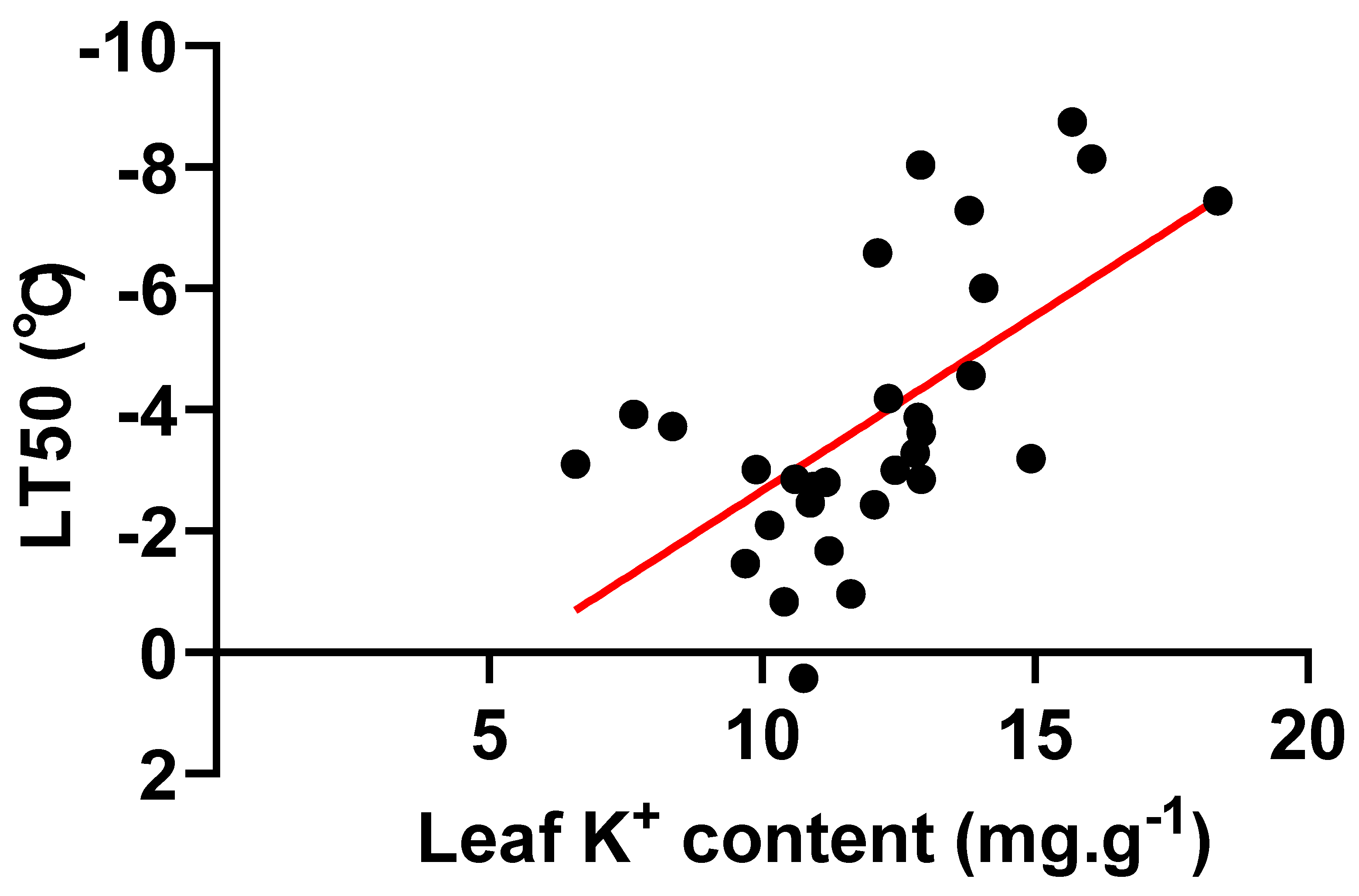
To verify whether our proposed hypothesis that low leaf potassium content is the cause of poor cold resistance in augustinegrass is valid, we first conducted a correlation analysis between leaf potassium content and cold resistance among different augustinegrass germplasms. The details are as follows: LT50, a key indicator of plant cold resistance [31], was evaluated alongside leaf potassium content in 30 germplasm resources. Results demonstrated that higher leaf potassium content corresponded with more negative LT50 values (indicating enhanced cold resistance; Figure 1). Linear regression analysis revealed a statistically significant positive correlation between leaf potassium content and LT50 (p = 0.003, R2 = 0.38).

3.2. Foliar Potassium Application Enhances Cold Resistance in Augustinegrass

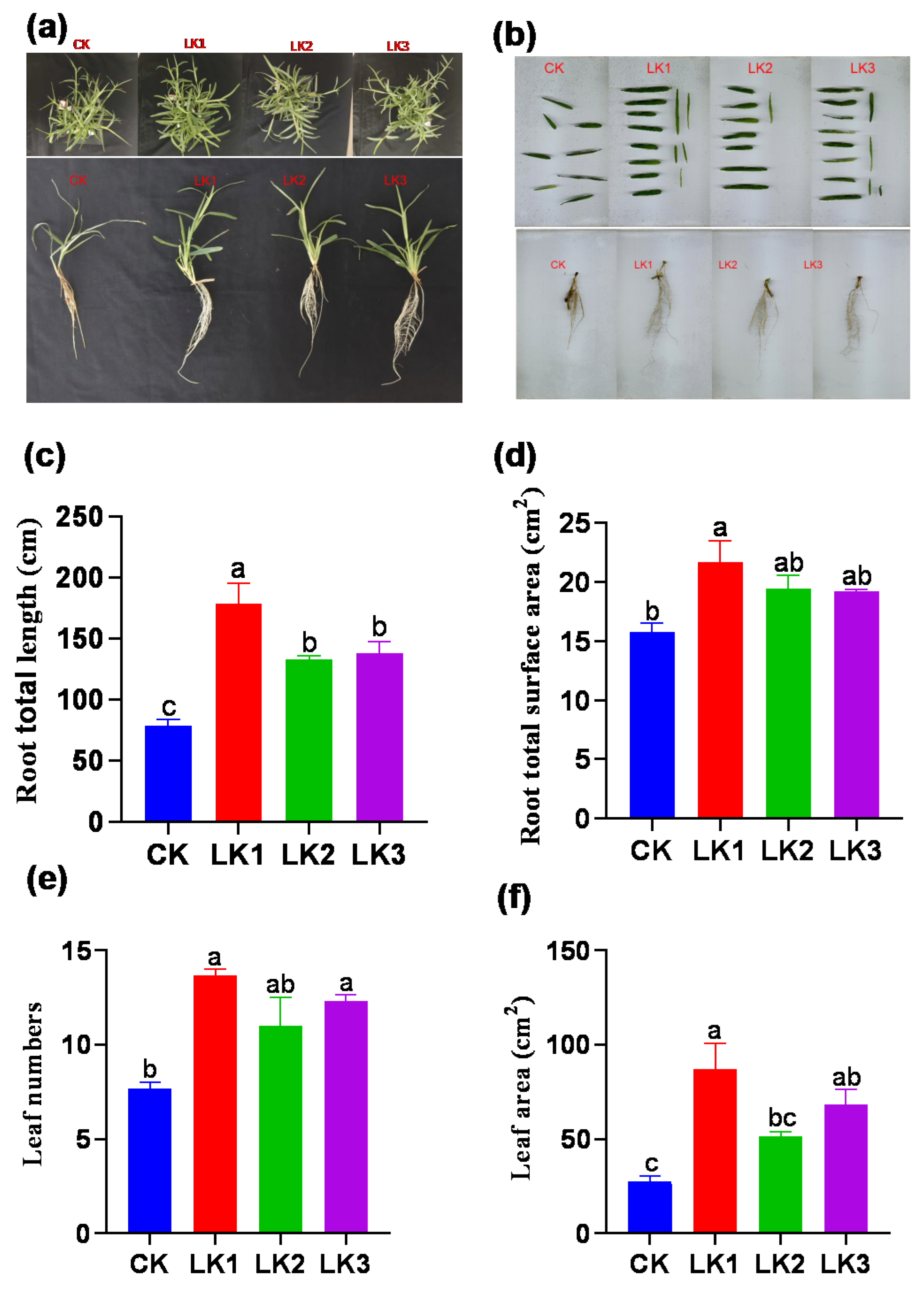
Building on the positive correlation between leaf potassium content and cold resistance (Figure 1), foliar potassium application was hypothesized to improve cold tolerance via elevated leaf potassium content. Under low-temperature conditions, untreated controls exhibited severe cold stress symptoms: stunted growth, leaf wilting, reduced leaf count, and inhibited root development (Figure 2a,b). In contrast, potassium-sprayed plants demonstrated significantly improved growth: increased plant size, expanded leaves, higher leaf numbers, and accelerated root growth (Figure 2a,b). Notably, the enhancement diminished with increasing potassium concentrations, peaking at LK1 treatment. Quantitative analysis revealed that compared to controls, the LK1 (15 mM K) treatment increased: total root length by 126.8% (Figure 2c), root surface area by 37.2% (Figure 2d), leaf number by 78.3% (Figure 2e), and leaf area by 217%) (Figure 2f).
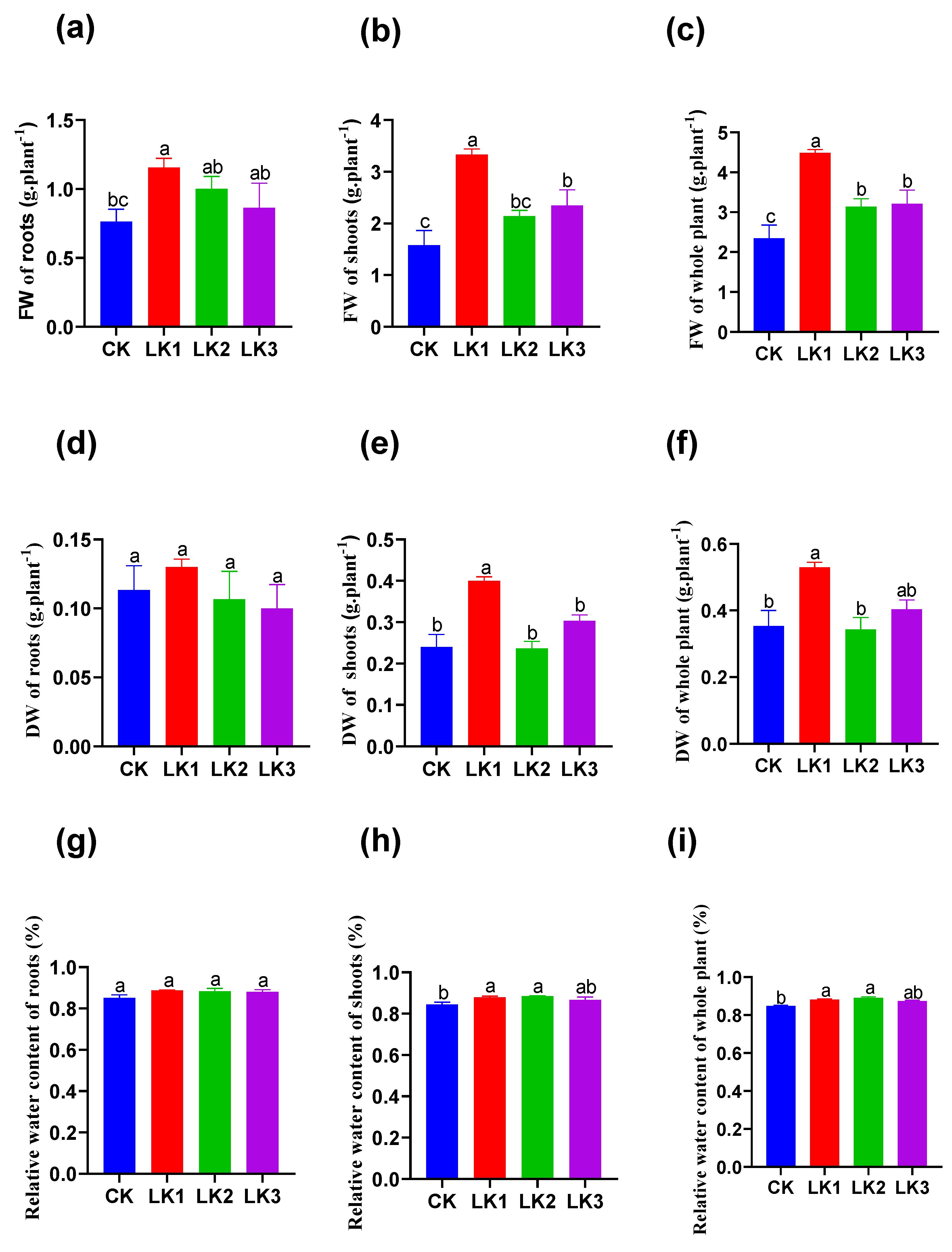
Biomass and water content measurements revealed that foliar potassium application significantly enhanced these parameters in cold-stressed augustinegrass, with the LK1 treatment producing the maximal values. Compared to the non-potassium control (CK), the LK1 (15 mM K) treatment increased root, shoot, and whole-plant fresh weight by 51.6% (Figure 3a), 110.7% (Figure 3b), and 91.5% (Figure 3c), respectively. Similarly, dry weight increased by 14.8% for roots (Figure 3d), 66.7% for shoots (Figure 3e), and 50.0% for whole plants (Figure 3f). Relative water content (RWC) also rose, with increases of 4.1% in roots (Figure 3g), 4.2% in shoots (Figure 3h), and 3.9% in whole plants (Figure 3i).

3.3. Foliar Potassium Application Enhances Photosynthetic Capacity of Augustinegrass Under Cold Stress

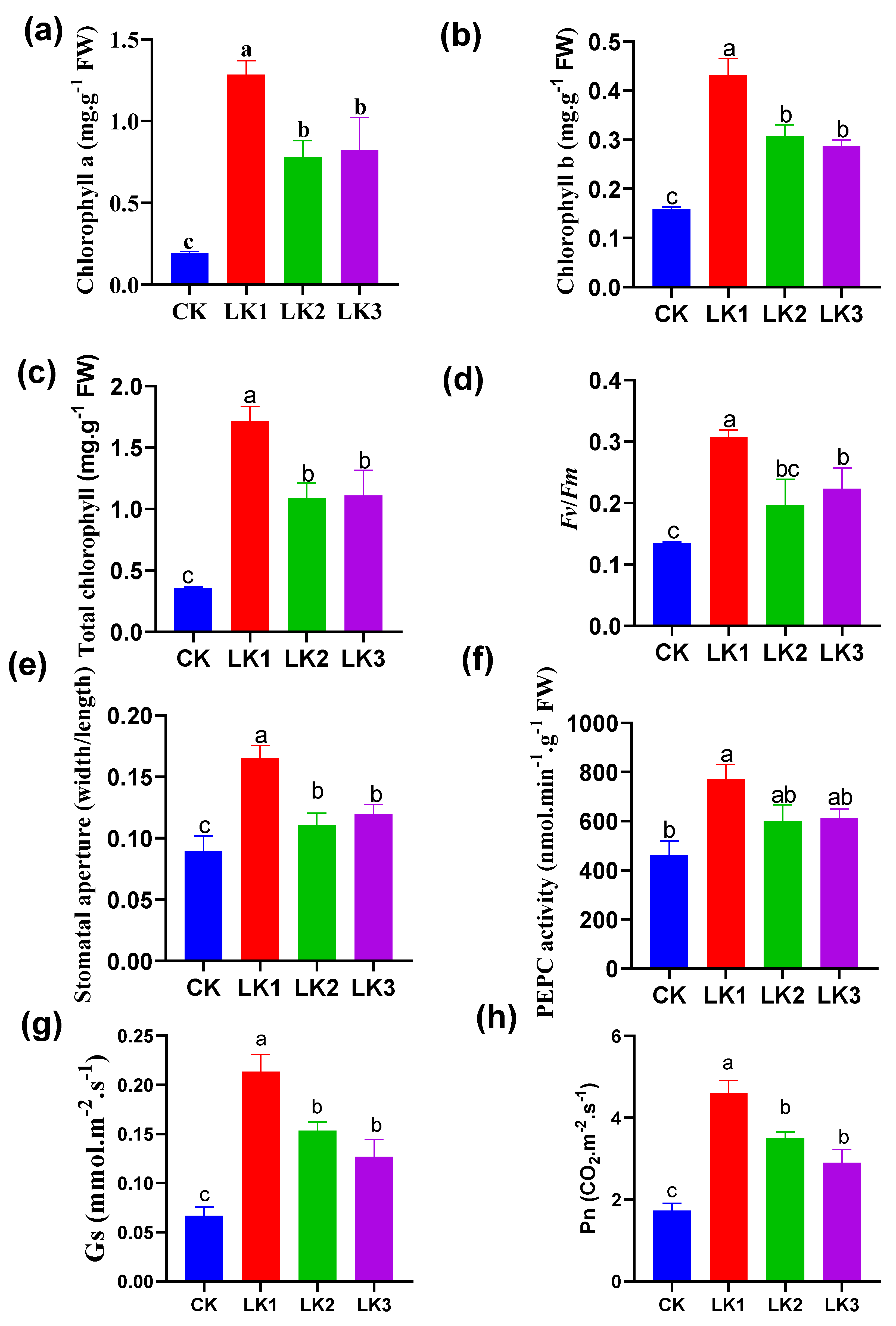
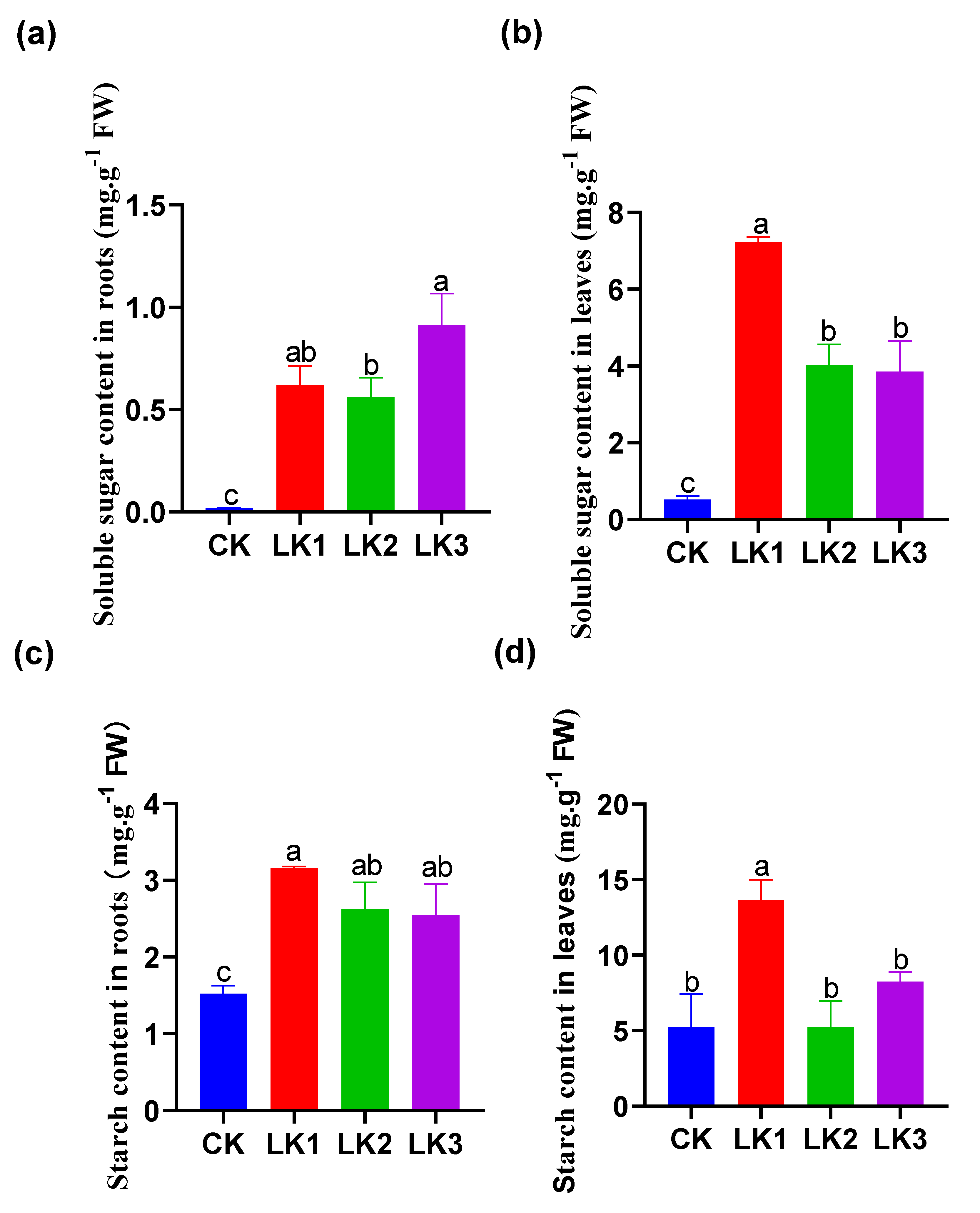
To clarify the physiological mechanism by which foliar potassium application enhances cold resistance in augustinegrass, we measured the four major physiological processes affected by cold damage (photosynthesis, cell membrane integrity, osmotic adjustment capacity, and ROS scavenging capacity). Analysis of photosynthetic parameters revealed that foliar potassium sprays at varying concentrations induced an initial increase followed by a decrease in chlorophyll a, chlorophyll b, total chlorophyll, maximum PSII photochemical efficiency (Fv/Fm), stomatal aperture, PEPC activity, Gs, and Pn in cold-stressed augustinegrass, with peak values observed under the LK1 treatment (15 mM K). Compared to the non-potassium spraying control, foliar spraying of 15 mM K increased chlorophyll a by 565.3% (Figure 4a); chlorophyll b by 171.0% (Figure 4b); total chlorophyll by 387.2% (Figure 4c); Fv/Fm by 128.0% (Figure 4d); stomatal aperture by 83.7% (Figure 4e); PEPC activity by 66.9% (Figure 4f); Gs by 219.9% (Figure 4g); and Pn by 165.4% (Figure 4h). Measurements of photosynthetic products showed that foliar spraying of 15 mM K achieved the maximal photosynthate, elevating root soluble sugars by 3343.6% (Figure 5a); leaf soluble sugars by 1297.2% (Figure 5b); root starch by 106.8% (Figure 5c); and leaf starch by 160.8% (Figure 5d) relative to the control.

3.4. Foliar Potassium Application Enhances Cell Membrane Stability of Augustinegrass Under Cold Stress

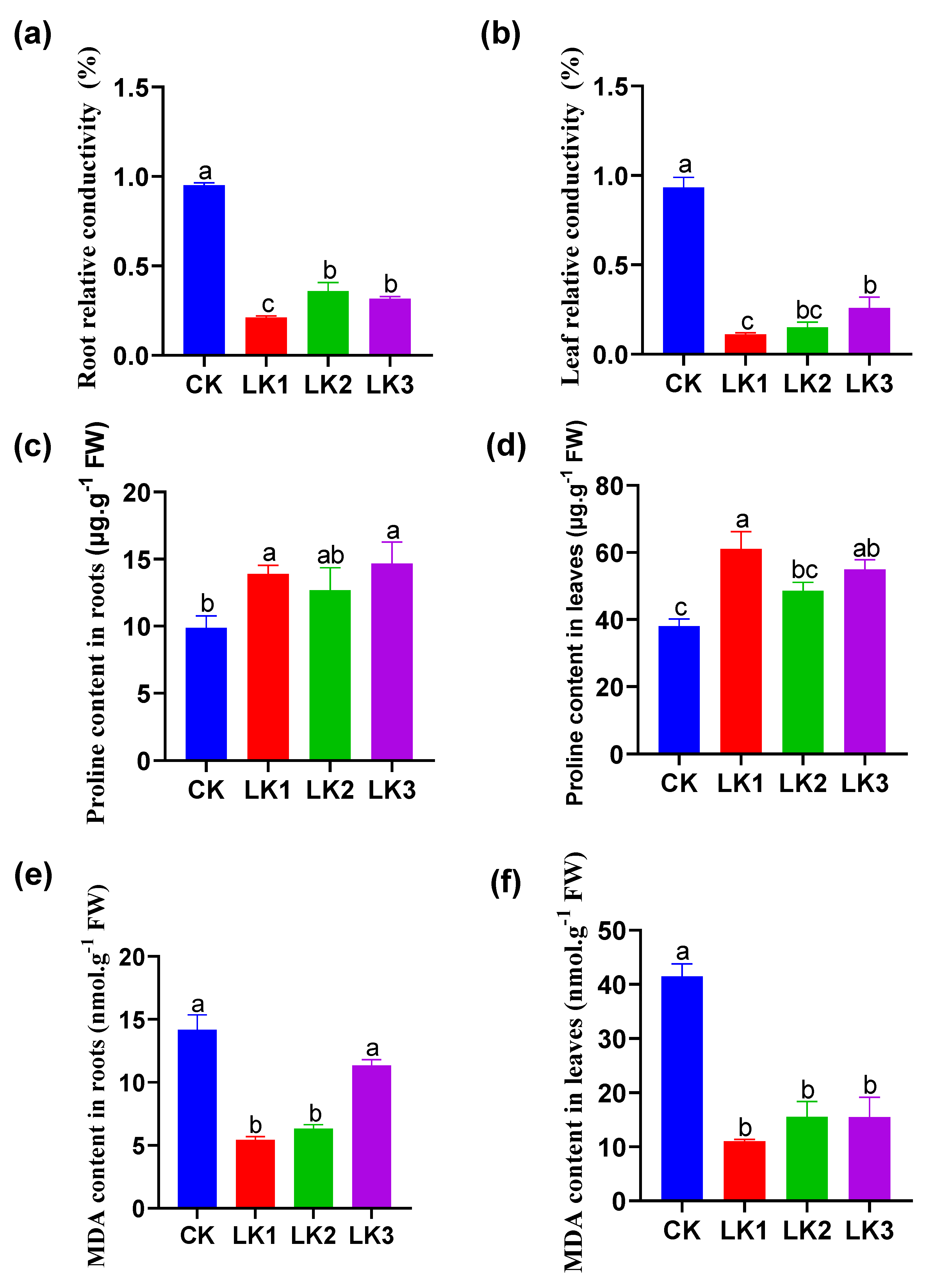
Next, cell membrane integrity and osmotic adjustment capacity were determined. Measurement of relative conductivity across treatments revealed that foliar potassium application significantly reduced root and leaf relative conductivity in cold-stressed augustinegrass, with the magnitude of reduction decreasing as potassium concentration increased, reaching minimal root and leaf values under the LK1 treatment (Figure 6a,b). Compared to the non-potassium spraying control, foliar spraying of 15 mM K reduced root relative conductivity by 77.7% (Figure 6a) and leaf relative conductivity by 88.0% (Figure 6b).
Measurement of proline content across treatments revealed that foliar potassium application increased proline levels in both roots and leaves of cold-stressed augustinegrass (Figure 6c,d). Root proline content plateaued with increasing potassium concentrations, reaching its maximum under the LK1 treatment. Compared to the non-potassium spraying control (CK), LK1 treatment increased root proline content by 40.7% (Figure 6c). Leaf proline content exhibited an initial increase followed by a decrease with rising potassium concentrations, peaking under the LK1 treatment. Relative to the control, LK1 treatment elevated leaf proline content by 60.6% (Figure 6d).
Measurement of MDA content across treatments revealed that foliar potassium application significantly reduced MDA levels in both roots and leaves of cold-stressed augustinegrass, but exhibited differential concentration responses: the magnitude of reduction in root MDA diminished with increasing potassium concentrations, while the reduction in leaf MDA plateaued beyond certain concentrations, collectively reaching minimal MDA content under the LK1 treatment (Figure 6e,f). Compared to the non-potassium spraying control (CK), LK1 treatment reduced root MDA content by 61.8% (Figure 6e) and leaf MDA content by 73.4% (Figure 6f).

3.5. Foliar Potassium Application Enhances Reactive Oxygen Scavenging Enzyme Activity in Cold-Stressed Augustinegrass

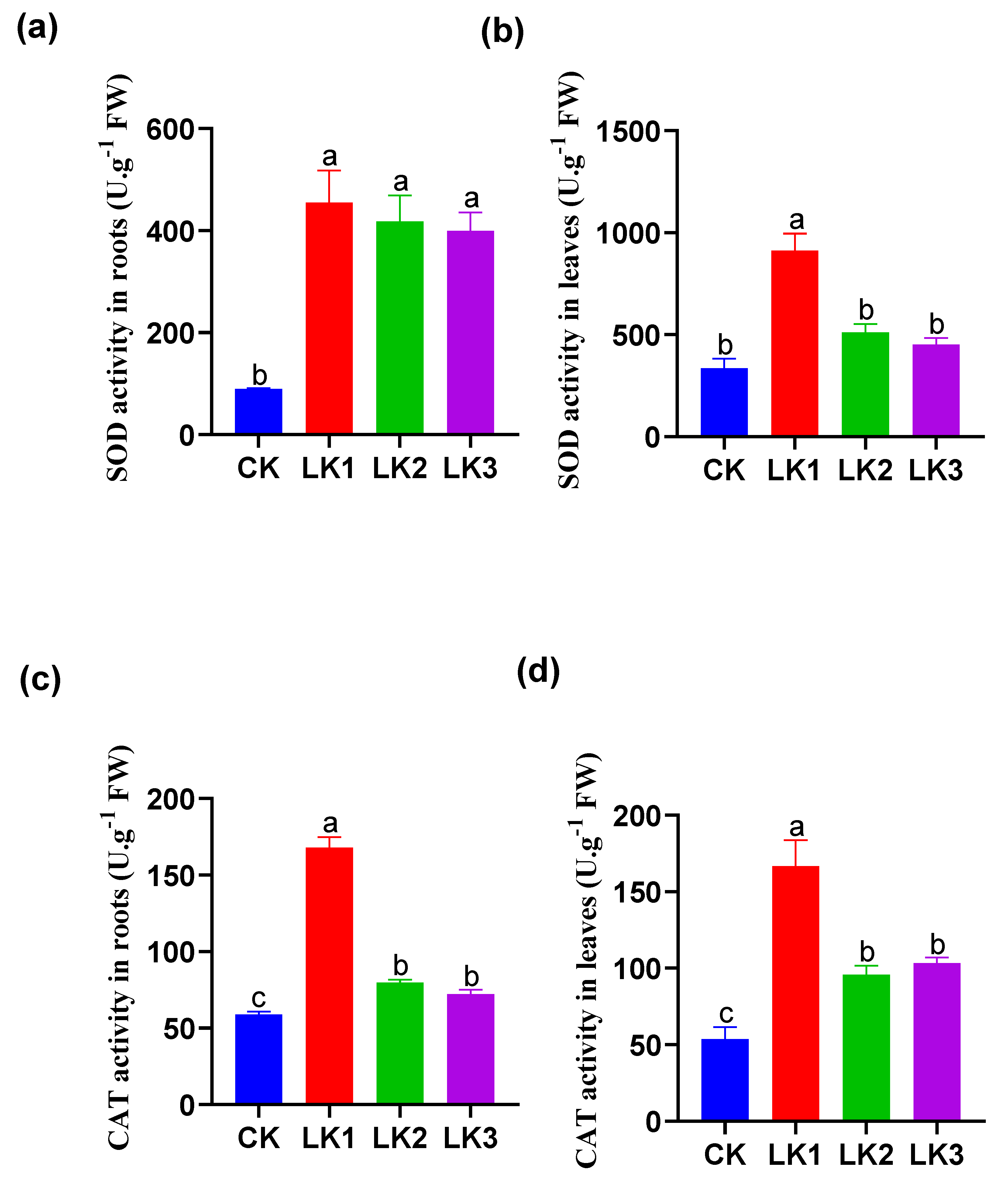
Finally, the reactive oxygen species scavenging capacity was measured. Analysis of SOD activity across treatments revealed that foliar potassium application significantly increased SOD activity in both roots and leaves of cold-stressed augustinegrass, but with differential concentration responses: the enhancement magnitude of root SOD activity plateaued with increasing potassium concentrations (Figure 7a), while that of leaf SOD activity diminished with additional concentration increases (Figure 7b), collectively reaching maximal SOD activity under the LK1 treatment. Compared to the non-potassium spraying control (CK), LK1 treatment increased root SOD activity by 407.2% (Figure 7a) and leaf SOD activity by 172.1% (Figure 7b).
Measurement of CAT activity across treatments revealed that foliar potassium application significantly increased CAT activity in both roots and leaves of cold-stressed augustinegrass, with the enhancement magnitude decreasing as potassium concentrations increased (Figure 7c,d), collectively reaching maximal CAT activity under the LK1 treatment. Compared to the non-potassium spraying control (CK), LK1 treatment increased root CAT activity by 185.2% (Figure 7c) and leaf CAT activity by 210.4% (Figure 7d).

3.6. Pearson Correlations Among Parameters

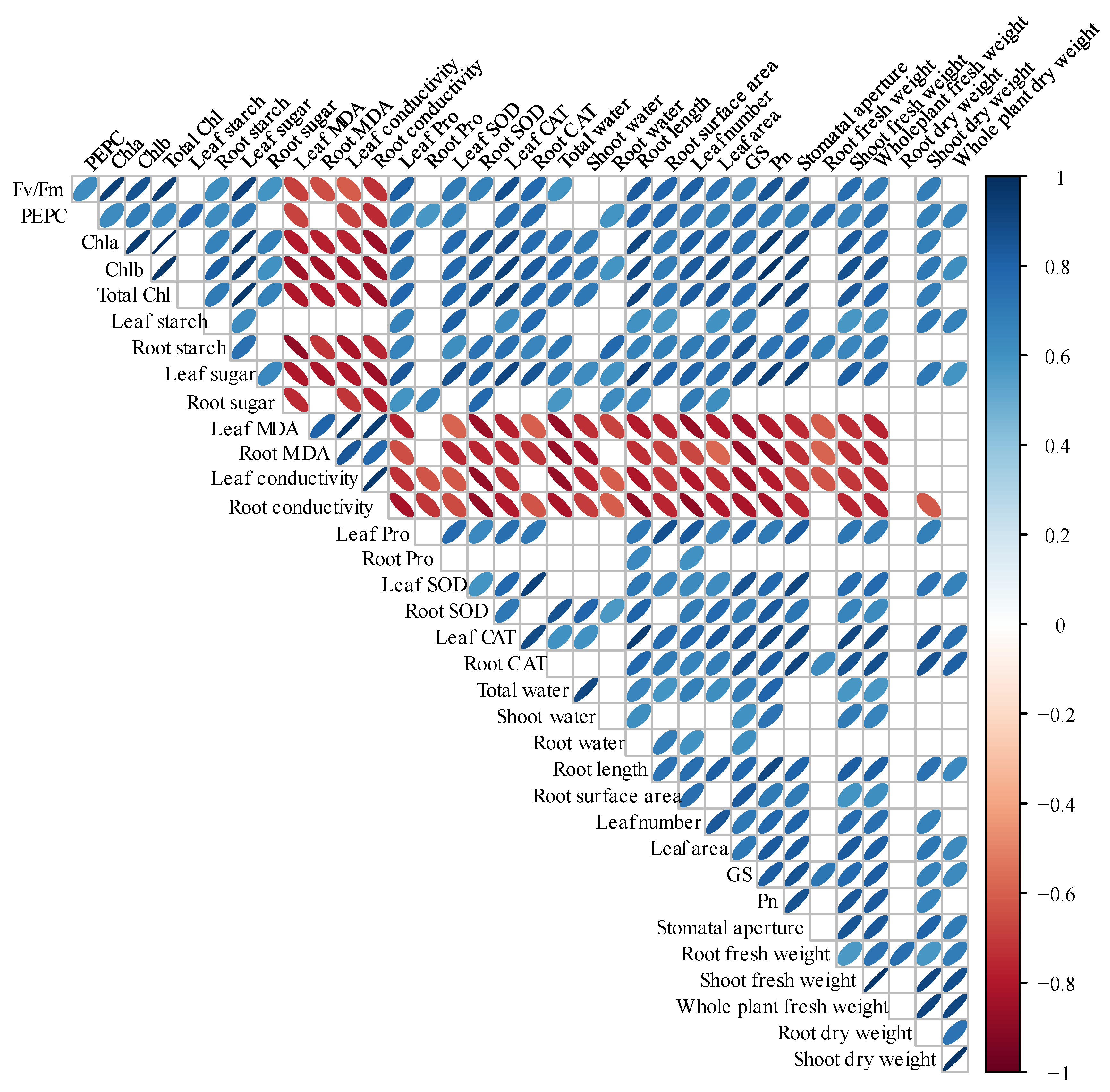
To clarify the relationships between various physiological indicators and the cold resistance of augustinegrass, Pearson correlations were conducted. Pearson correlation analysis revealed significant correlations among multiple indicators, though the number of correlated parameters varied across different metrics (Figure 8). Among the 34 indicators included in the Pearson correlation analysis, 12 showed a correlation with root fresh weight, while 30 indicators were correlated with both shoot fresh weight and whole-plant fresh weight. With the exception of MDA and relative conductivity, which were negatively correlated with fresh weight, all other indicators showed a positive correlation. These results indicate that the changes in physiological indicators induced by foliar potassium application play an important role in influencing the cold resistance of augustinegrass (with fresh weight as the evaluation metric).

3.7. Model Evaluating the Contribution of Physiological Indicators to Cold Resistance

To identify the key determinants of cold resistance from over 30 physiological indicators, a stepwise multiple linear regression was performed using whole plant fresh weight as the dependent variable. The F-test criterion for a variable to enter the model was p < 0.05, and the removal criterion was p > 0.10. Except for the Leaf CAT activity indicator, the F-values of the other 28 physiological indicators were all greater than 0.1 (Supplementary Table S3), and therefore they were removed. The analysis yielded an optimal model: Y = 1.429 + 0.018 × (leaf CAT activity). This model exhibits strong explanatory power, with an R2 of 0.798 (Table 1 and Table 2), indicating that leaf CAT activity alone accounts for 79.8% of the variation in whole plant fresh weight. The adjusted R2 is 0.778, confirming the model’s robustness after accounting for the number of predictors. Furthermore, a Durbin-Watson statistic of 2.668 suggests no significant autocorrelation among the residuals, meeting the assumption of independent errors. This model conclusively demonstrates that differences in leaf CAT activity, induced by the foliar potassium application, are the primary factor driving the variation in cold resistance among the treatments.

3.8. Response Patterns of CBF/DREB, CAT and SOD to Foliar Potassium Application Under Cold Stress

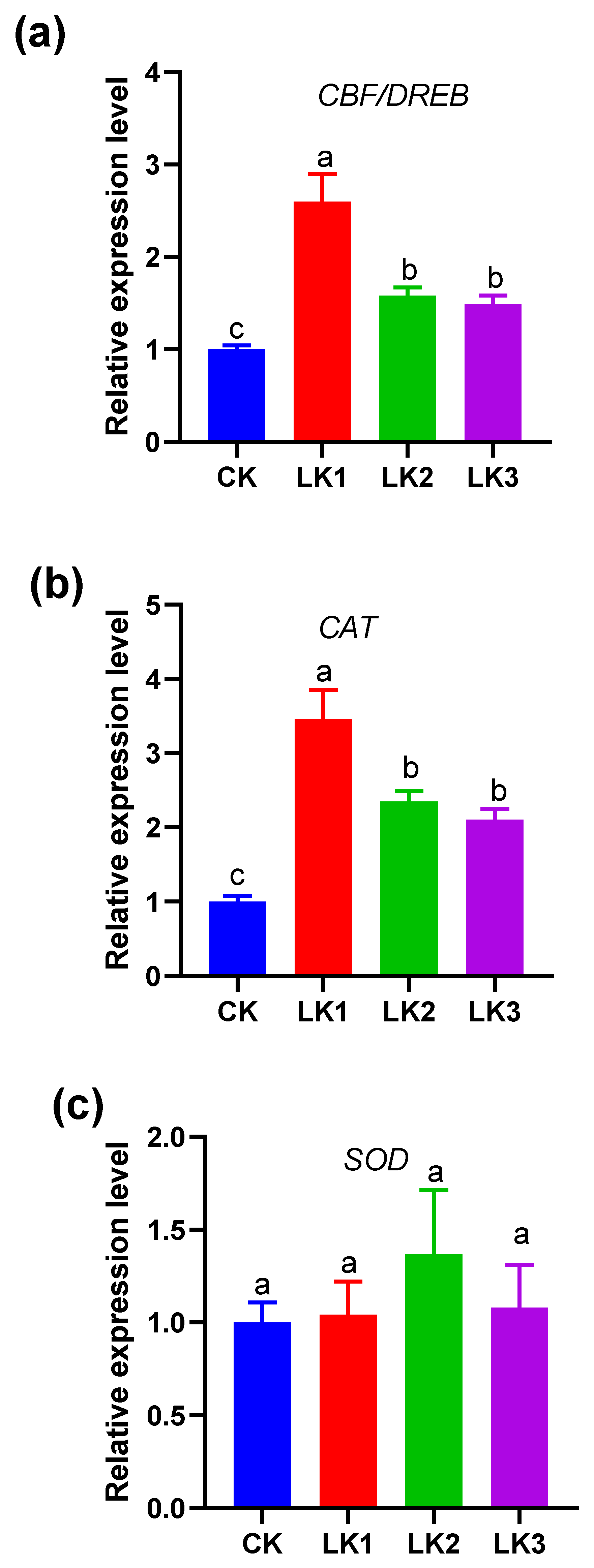
Given that the increase in CAT activity resulting from foliar potassium application is the primary reason for the enhanced cold resistance of augustinegrass, the expression of the CAT gene was investigated to clarify the molecular basis underlying the change in CAT activity. C-repeat binding factor/dehydration-responsive element-binding protein1 (CBF/DREB1) transcription factors are central regulators of plant cold resistance, directly activating downstream COLD-RESPONSIVE (COR) genes to mitigate chilling injury [32]. qPCR analysis revealed that foliar potassium application directly modulates the expression of these key regulators. Specifically, the expression of CBF/DREB1 exhibited a concentration-dependent response, increasing initially and then decreasing, with peak abundance observed under the LK1 treatment compared to the potassium-free control (Figure 9a). Furthermore, the gene expression of CAT—identified as the primary contributor to cold resistance in our physiological model—showed an identical pattern, also peaking at the LK1 treatment (Figure 9b). This coordinated transcriptional response corresponds with the observed changes in CAT enzyme activity. In contrast, the expression of a gene encoding another crucial ROS-scavenging enzyme, POD, was not regulated by potassium treatment (Figure 9c). This suggests that the previously noted changes in POD enzyme activity are likely independent of transcriptional regulation.

3.9. Field Validation of the Cold-Resistance Effect Induced by Foliar Potassium Application

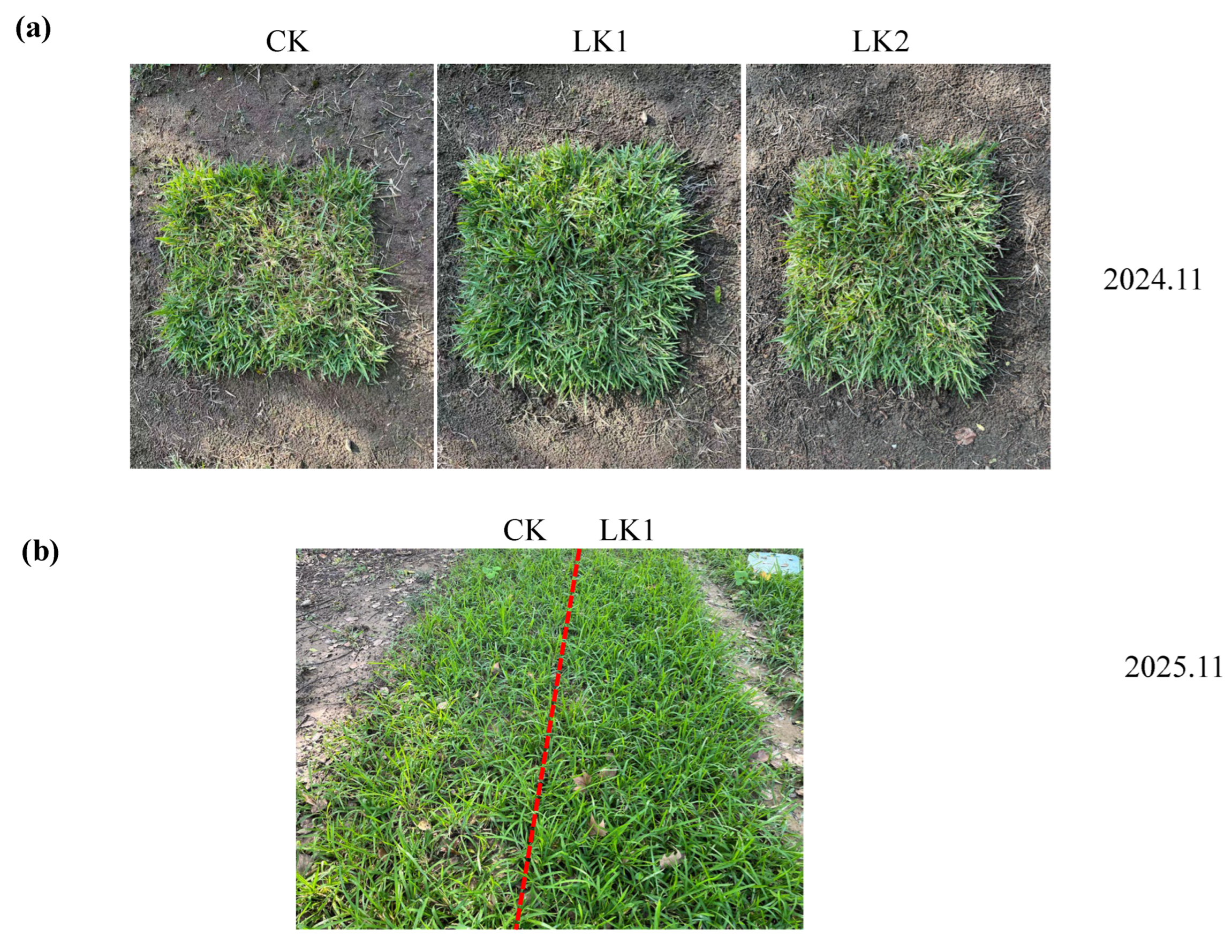
To validate the effect of foliar potassium application on cold resistance under actual field conditions, a two-year field plot experiment was conducted. The results demonstrated that potassium application significantly enhanced cold resistance in augustinegrass. However, this positive effect was concentration-dependent, with the medium concentration (LK1, 15 mM) providing the most pronounced enhancement, rather than the highest concentration (Figure 10a). The consistent results from both years of field trials confirmed the significant benefit of the LK1 treatment (Figure 10), aligning with the findings from the indoor hydroponic experiment. Together, the phenotypic observations from both hydroponic and field studies substantiate that foliar application of 15 mM potassium is an effective agronomic strategy for improving cold resistance in augustinegrass.

4. Discussion

4.1. Low Leaf Potassium Is a Critical Limiting Factor for Cold Tolerance in Augustinegrass, Which Can Be Effectively Ameliorated via Foliar Application of Potassium at 15 mM

Poor cold tolerance constitutes a primary constraint limiting the application of high-quality shade-tolerant augustinegrass in temperate regions. Elucidating the limiting factors and mechanisms underlying its cold resistance holds significant importance for developing cold-tolerant germplasm and formulating agronomic strategies. Although cold-tolerance research in multiple species provides valuable references [10,11,12,33,34,35,36,37,38,39,40,41], systematic studies on augustinegrass remain scarce, severely hindering its industry development in temperate zones. Our correlation analysis between LT50 (key cold-tolerance indicator) and leaf potassium content across 30 germplasms revealed a positive correlation, demonstrating enhanced cold tolerance with increasing leaf potassium levels (Figure 1). Further elevation of leaf potassium through foliar sprays significantly improved cold tolerance, albeit with diminishing returns beyond optimal concentrations (Figure 2 and Figure 3). Among them, foliar application of 15 mM potassium is the optimal concentration for improving the cold resistance of augustinegrass. The two-year field plot experiment further demonstrated the direct application value of foliar-applied 15 mM potassium in enhancing the cold resistance of augustinegrass (Figure 10). Collectively, these findings establish low leaf potassium as a critical factor underlying poor cold tolerance, identifying potassium enhancement as a potent pathway for improvement. Practically, foliar application of 15 mM potassium conferred maximal cold tolerance, providing an effective agronomic solution. This study employed cold-tolerant germplasm S13 [22] to demonstrate that integrating elite germplasm with optimized practice (15 mM potassium foliar spray) enables expansion of augustinegrass cultivation from tropical/subtropical to temperate regions.

4.2. Enhanced Cold Resistance by Foliar Potassium Application Is Primarily Attributable to Increased Leaf CAT Activity

Under cold stress, plants typically exhibit growth inhibition, a phenotype also observed in augustinegrass in this study (Figure 1). Foliar potassium application significantly improved various physiological parameters under cold stress, including photosynthetic characteristics, osmotic adjustment capacity, cell membrane stability, and reactive oxygen species (ROS) scavenging (Figure 4, Figure 5, Figure 6, Figure 7 and Figure 8), thereby enhancing cold resistance. Although these findings align with the known physiological mechanisms of cold tolerance in plants [10,11,12,33,42], it remains unclear which factor plays the central role among them. Therefore, to identify the dominant factor governing cold hardiness, we conducted the following experiments and analyses using augustinegrass as a model. Firstly, at the molecular level, the upregulation of the key cold-resistance gene CBF further confirmed the beneficial effect of potassium application on cold tolerance (Figure 9). Secondly, a model evaluating the contribution of various physiological indicators to cold resistance revealed that the potassium-induced increase in leaf CAT activity was the major factor responsible for the improved cold resistance, accounting for nearly 80% of the variation (Table 1 and Table 2). Thirdly, the qPCR results showed that the expression pattern of the CAT gene aligned with the observed changes in CAT enzyme activity (Figure 7d and Figure 9b), indicating that the enhanced CAT activity is closely linked to the transcriptional regulation of its encoding gene in response to potassium application. In comparison with previous reports, the enhancement in cold tolerance is primarily attributed to the increased leaf CAT activity mediated by potassium spray, rather than general terms such as photosynthesis, osmotic adjustment, cell membrane integrity, or ROS scavenging. Therefore, this study enhances our understanding of the physiological mechanisms underlying plant cold tolerance. However, the issue of how potassium regulates CAT expression needs further investigation. While ROS scavenging is a well-known mechanism for coping with cold stress, and CAT is one of the three key enzymes (alongside SOD and POD) in this process, the novel insight from this study is the predominant role of CAT—explaining approximately 80% of the improvement in cold resistance—compared to the relatively minor contributions from other ROS-scavenging enzymes like SOD (Table 1 and Table 2). Research showing that SOD overexpression leads to increased activities of both SOD and CAT, thereby enhancing cold tolerance [43], indicates a role for CAT in plant cold resistance. However, direct evidence establishing CAT as a genetic engineering target for enhancing cold resistance is still lacking. Integrating transcriptomic/metabolomic analyses to identify key transcription factors involved in potassium-mediated CAT regulation, or using gene editing (e.g., CRISPR-Cas9 knockout of CAT), will be crucial for deepening the mechanistic understanding of plant cold tolerance and developing new germplasm with superior cold resistance.
Furthermore, this study revealed a decline in the cold resistance of augustinegrass with increasing concentrations of foliar potassium application (Figure 2, Figure 3 and Figure 10). This pattern can be attributed to the observed reduction in key physiological parameters under higher potassium concentrations, including photosynthetic performance, osmotic adjustment capacity, cell membrane stability, and ROS scavenging. Notably, leaf CAT activity—the primary contributor to cold resistance—and its corresponding gene expression were particularly suppressed (Figure 4, Figure 5, Figure 6, Figure 7, Figure 8 and Figure 9). This decline in the cold resistance of augustinegrass with increasing concentrations of foliar potassium application contrasts with findings in other reported species such as grapevine, olive, and tomato, where cold resistance progressively improved with higher foliar potassium concentrations, even at levels substantially exceeding the maximum concentration applied in this study [44,45,46]. The underlying cause for this discrepancy may be associated with species-specific characteristics, growth conditions, timing and frequency of potassium application, etc. Further investigation involving foliar potassium treatments across different species under standardized experimental conditions will be essential to elucidate this issue.

5. Conclusions

Poor cold tolerance is a major constraint limiting the use of shade-tolerant augustinegrass in temperate zones. Understanding its underlying mechanisms is crucial for developing cold-tolerant germplasms and corresponding cultivation practices. We hypothesized that leaf potassium content is closely related to the cold resistance of augustinegrass. This study demonstrates that low leaf potassium content is a key reason for the poor cold resistance of augustinegrass, and that foliar application of 15 mM K+ can effectively enhance its cold tolerance in both hydroponic and field conditions. The enhancement is primarily attributed to the increased leaf CAT activity mediated by potassium spray, rather than general terms such as photosynthesis, osmotic adjustment, cell membrane integrity, or ROS scavenging. In summary, this work deepens our understanding of the cold resistance mechanisms in augustinegrass and broadens the knowledge of plant cold tolerance. Moreover, the identified method of foliar application with 15 mM K+ (applied once annually on 15 October), combined with the previously selected improved variety (S13), constitutes a practical approach to extending the application range of augustinegrass from tropical to temperate regions.

Supplementary Materials

The following supporting information can be downloaded at: https://www.mdpi.com/article/10.3390/agronomy16050563/s1, Table S1: The basic information of 30 accessions; Table S2: Primers used in qPCR; Table S3. Significance of excluded variables in stepwise multiple linear regression.

Author Contributions

Conceptualization, D.-L.H. and Y.Z.; formal analysis, J.-Y.Z. (Jun-Yi Zhai); data curation, Y.Z., J.Q. and D.-L.H.; writing—original draft preparation, D.-L.H. and Y.Z.; writing—review and editing, J.-Y.Z. (Jin-Yan Zhou), L.-H.S. and J.-Q.Z.; supervision, D.-L.H. All authors have read and agreed to the published version of the manuscript.

Funding

This research was funded by the Forestry Science and Technology Innovation and Promotion Project of Jiangsu Province (LYKJ [2023]17), the Funding for school-level research projects of Yancheng Institute of Technology (xjr2023038), and the Jiangsu Provincial Double-Innovation Doctor Program (Grant No. JSSCBS20221643).

Data Availability Statement

The original contributions presented in this study are included in the article/Supplementary Materials. Further inquiries can be directed to the corresponding author.

Conflicts of Interest

The authors declare no conflicts of interest.

References

  1. Cai, X.; Trenholm, L.E.; Kruse, J.; Sartain, J.B. Response of ‘Captiva’ St. Augustinegrass to Shade and Potassium. HortScience Horts 2011, 46, 1400–1403. [Google Scholar] [CrossRef]
  2. Wherley, B.; Chandra, A.; Genovesi, A.; Kearns, M.; Pepper, T.; Thomas, J. Developmental Response of St. Augustinegrass Cultivars and Experimental Lines in Moderate and Heavy Shade. HortScience Horts 2013, 48, 1047–1051. [Google Scholar] [CrossRef]
  3. Li, R.; Qu, R.; Bruneau, A.H.; Livingston, D.P. Selection for freezing tolerance in St. Augustinegrass through somaclonal variation and germplasm evaluation. Plant Breed. 2010, 129, 417–421. [Google Scholar] [CrossRef]
  4. Kimball, J.A.; Tuong, T.D.; Arellano, C.; Livingston, D.P., III; Milla-Lewis, S.R. Assessing freeze-tolerance in St. Augustinegrass: Temperature response and evaluation methods. Euphytica 2017, 213, 110. [Google Scholar] [CrossRef]
  5. Moseley, D.O.; Trappe, J.M.; Milla-Lewis, S.R.; Chandra, A.; Kenworthy, K.E.; Liu, W.; Patton, A.J. Characterizing the growth and winter survival of commercially available and experimental genotypes of St. Augustinegrass. Crop Sci. 2021, 61, 3097–3109. [Google Scholar] [CrossRef]
  6. Kimball, J.A.; Tuong, T.D.; Arellano, C.; Livingston, D.P.; Milla-Lewis, S.R. Linkage analysis and identification of quantitative trait loci associated with freeze tolerance and turf quality traits in St. Augustinegrass. Mol. Breed. 2018, 38, 67. [Google Scholar] [CrossRef]
  7. Kimball, J.A.; Isleib, T.G.; Reynolds, W.C.; Zuleta, M.C.; Milla-Lewis, S.R. Combining ability for winter survival and turf quality traits in St. Augustinegrass. HortScience 2016, 51, 810–815. [Google Scholar] [CrossRef]
  8. McCarty, L.B.; Gambrell, N.J. Screening Cold Tolerance in St. Augustinegrass (Stenotaphrum secundatum (Walt.) Kuntze) for USDA Hardiness Zone 7. Int. J. Agric. Res. Environ. Sci. 2023, 4, 1–4. [Google Scholar] [CrossRef]
  9. Caturegli, L.; Ramazani, R.; Volterrani, M.; Grossi, N.; Magni, S.; Macolino, S.; Pornaro, C.; La Bella, S.; Tuttolomondo, T.; Minelli, A.; et al. St. Augustinegrass accessions planted in northern, central and southern Italy: Growth and morphological traits during establishment. Ital. J. Agron. 2018, 13, 1294. [Google Scholar] [CrossRef]
  10. Ding, Y.; Shi, Y.; Yang, S. Advances and challenges in uncovering cold tolerance regulatory mechanisms in plants. New Phytol. 2019, 222, 1690–1704. [Google Scholar] [CrossRef]
  11. Adhikari, L.; Baral, R.; Paudel, D.; Min, D.; Makaju, S.O.; Poudel, H.P.; Acharya, J.P.; Missaoui, A.M. Cold stress in plants: Strategies to improve cold tolerance in forage species. Plant Stress 2022, 4, 100081. [Google Scholar] [CrossRef]
  12. Manasa, S.L.; Panigrahy, M.; Panigrahi, K.C.S.; Rout, G.R. Overview of Cold Stress Regulation in Plants. Bot. Rev. 2021, 88, 359–387. [Google Scholar] [CrossRef]
  13. DeHayes, D.H.; Ingle, M.A.; Waite, C.E. Nitrogen fertilization enhances cold tolerance of red spruce seedlings. Can. J. For. Res. 1989, 19, 1037–1043. [Google Scholar]
  14. Cao, X.; Zhong, C.; Zhu, L.; Zhang, J.; Sajid, H.; Wu, L.; Jin, Q. Glycine increases cold tolerance in rice via the regulation of N uptake, physiological characteristics, and photosynthesis. Plant Physiol. Biochem. 2017, 112, 251–260. [Google Scholar] [CrossRef]
  15. Raese, J.T. Cold tolerance, yield, and fruit quality of ‘d’Anjou’ pears influenced by nitrogen fertilizer rates and time of application. J. Plant Nutr. 1997, 20, 1007–1025. [Google Scholar] [CrossRef]
  16. Pompeiano, A.; Guglielminetti, L.; Volterrani, M. Freeze tolerance of Zoysia matrella (L.) Merrill as affected by late-season nitrogen application, and changes in carbohydrates during cold acclimation. Plant Biosyst.—Int. J. Deal. All Asp. Plant Biol. 2011, 145, 885–892. [Google Scholar]
  17. Wang, Y.; Sun, Z.; Wang, Q.; Xie, J.; Yu, L. Transcriptomics and metabolomics revealed that phosphate improves the cold tolerance of alfalfa. Front. Plant Sci. 2023, 14, 1100601. [Google Scholar] [CrossRef]
  18. Nie, Z.; Li, S.; Hu, C.; Sun, X.; Tan, Q.; Liu, H. Effects of Molybdenum and Phosphorus Fertilizers on Cold Resistance in Winter Wheat. J. Plant Nutr. 2015, 38, 808–820. [Google Scholar] [CrossRef]
  19. Cakmak, I. The role of potassium in alleviating detrimental effects of abiotic stresses in plants. J. Plant Nutr. Soil Sci. 2005, 168, 521–530. [Google Scholar] [CrossRef]
  20. Wang, M.; Zheng, Q.; Shen, Q.; Guo, S. The critical role of potassium in plant stress response. Int. J. Mol. Sci. 2013, 14, 7370–7390. [Google Scholar] [CrossRef]
  21. Jungers, J.M.; Kaiser, D.E.; Lamb, J.F.S.; Lamb, J.A.; Noland, R.L.; Samac, D.A.; Wells, M.S.; Sheaffer, C.C. Potassium Fertilization Affects Alfalfa Forage Yield, Nutritive Value, Root Traits, and Persistence. Agron. J. 2019, 111, 2843–2852. [Google Scholar] [CrossRef]
  22. Qu, J.; Hao, D.-L.; Zhou, J.-Y.; Chen, J.-B.; Sun, D.-J.; Liu, J.-X.; Zong, J.-Q.; Wang, Z.-Y. Evaluating the Cold Tolerance of Stenotaphrum Trin Plants by Integrating Their Performance at Both Fall Dormancy and Spring Green-Up. Horticulturae 2024, 10, 761. [Google Scholar] [CrossRef]
  23. Hao, D.-L.; Zhou, J.-Y.; Li, L.; Qu, J.; Li, X.-H.; Chen, R.-R.; Kong, W.-Y.; Li, D.-D.; Li, J.-J.; Guo, H.-L.; et al. An appropriate ammonium: Nitrate ratio promotes the growth of centipedegrass: Insight from physiological and micromorphological analyses. Front. Plant Sci. 2023, 14, 1324820. [Google Scholar] [CrossRef] [PubMed]
  24. Wu, J.; Jiao, Y.; Ran, M.; Li, J. The role of an Sb-oxidizing bacterium in modulating antimony speciation and iron plaque formation to reduce the accumulation and toxicity of Sb in rice (Oryza sativa L.). J. Hazard. Mater. 2024, 469, 133897. [Google Scholar] [CrossRef] [PubMed]
  25. Xu, X.; Wang, H.; Zhang, B.; Zhang, L.; Li, X.; Hao, D.; Chen, J.; Zong, J.; Guo, H.; Liu, J.; et al. Micromorphological and Physiological Responses of Two Contrasting Centipedegrass (Eremochloa ophiuroides (Munro) Hack.) Genotypes in Response to Aluminum Toxicity. J. Soil Sci. Plant Nutr. 2023, 23, 2174–2189. [Google Scholar] [CrossRef]
  26. Hao, D.L.; Zhou, J.Y.; Qu, J.; Lu, H.L.; Li, L.; Yao, X.; Chen, J.B.; Liu, J.X.; Guo, H.L.; Zong, J.Q. Screening of environmental stimuli for the positive regulation of stomatal aperture in centipedegrass. Plant Physiol. Biochem. 2024, 213, 108838. [Google Scholar] [CrossRef]
  27. Hao, D.-L.; Zhou, J.-Y.; Li, X.-H.; Qu, J.; Kong, W.-Y.; Chen, R.-R.; Li, D.-D.; Li, J.-J.; Guo, H.-L.; Liu, J.-X.; et al. A Higher Stomatal Aperture is Associated with the Growth Promotion of Centipedegrass (Eremochloa ophiuroides (Munro) Hack.) Under High Concentrations of Ammonium. J. Soil Sci. Plant Nutr. 2024, 24, 3298–3314. [Google Scholar] [CrossRef]
  28. Cao, P.; Yang, J.; Xia, L.; Zhang, Z.; Wu, Z.; Hao, Y.; Liu, P.; Wang, C.; Li, C.; Yang, J.; et al. Two gene clusters and their positive regulator SlMYB13 that have undergone domestication-associated negative selection control phenolamide accumulation and drought tolerance in tomato. Mol. Plant 2024, 17, 579–597. [Google Scholar] [CrossRef]
  29. Li, L.; Zhang, L.; Dong, Y. Seed priming with cold plasma mitigated the negative influence of drought stress on growth and yield of rapeseed (Brassica napus L.). Ind. Crops Prod. 2025, 228, 120899. [Google Scholar] [CrossRef]
  30. Hao, D.-L.; Qu, J.; Wang, Z.-Y.; Sun, D.-J.; Yang, S.-N.; Liu, J.-X.; Zong, J.-Q.; Lu, H.-L. Identification of Shaker Potassium Channel Family Members and Functional Characterization of SsKAT1.1 in Stenotaphrum secundatum Suggest That SsKAT1.1 Contributes to Cold Resistance. Int. J. Mol. Sci. 2024, 25, 9480. [Google Scholar] [CrossRef]
  31. Thapa, R.; Hanson, S.; Hua, J.; Moore, V.M. Breeding for cold tolerance in common annual legume cover crops. Crop Sci. 2025, 65, e70059. [Google Scholar] [CrossRef]
  32. Peng, Y.; Ming, Y.; Jiang, B.; Zhang, X.; Fu, D.; Lin, Q.; Zhang, X.; Wang, Y.; Shi, Y.; Gong, Z.; et al. Differential phosphorylation of Ca2+-permeable channel CYCLIC NUCLEOTIDE-GATED CHANNEL20 modulates calcium-mediated freezing tolerance in Arabidopsis. Plant Cell 2024, 36, 4356–4371. [Google Scholar] [CrossRef] [PubMed]
  33. Rihan, H.Z.; Al-Issawi, M.; Fuller, M.P. Advances in physiological and molecular aspects of plant cold tolerance. J. Plant Interact. 2017, 12, 143–157. [Google Scholar] [CrossRef]
  34. Guo, H.; Li, J.; Gao, S.; Ye, W.; Su, R.; Gu, Y.; Zou, A.; Li, Y.; Li, Z.; Li, J. Cold tolerance in rice: Insights into genetic basis, molecular mechanisms, and adaptive strategies. J. Integr. Plant Biol. 2025, 1–19. [Google Scholar] [CrossRef]
  35. Shahzad, N.; Nabi, H.G.; Qiao, L.; Li, W. The Molecular Mechanism of Cold-Stress Tolerance: Cold Responsive Genes and Their Mechanisms in Rice (Oryza sativa L.). Biology 2024, 13, 442. [Google Scholar] [CrossRef]
  36. Leotta, L.; Toscano, S.; Ferrante, A.; Romano, D.; Francini, A. New Strategies to Increase the Abiotic Stress Tolerance in Woody Ornamental Plants in Mediterranean Climate. Plants 2023, 12, 2022. [Google Scholar] [CrossRef]
  37. Chen, Q.; Gao, K.; Xu, Y.; Sun, Y.; Pan, B.; Chen, D.; Luo, C.; Cheng, X.; Liu, H.; Huang, C. Research advance on cold tolerance in chrysanthemum. Front. Plant Sci. 2023, 14, 1259229. [Google Scholar] [CrossRef]
  38. Ahad, A.; Gul, A.; Batool, T.S.; Huda, N.U.; Naseeer, F.; Abdul Salam, U.; Abdul Salam, M.; Ilyas, M.; Turkyilmaz Unal, B.; Ozturk, M. Molecular and genetic perspectives of cold tolerance in wheat. Mol. Biol. Rep. 2023, 50, 6997–7015. [Google Scholar] [CrossRef]
  39. Hassan, M.A.; Xiang, C.; Farooq, M.; Muhammad, N.; Yan, Z.; Hui, X.; Yuanyuan, K.; Bruno, A.K.; Lele, Z.; Jincai, L. Cold Stress in Wheat: Plant Acclimation Responses and Management Strategies. Front. Plant Sci. 2021, 12, 676884. [Google Scholar] [CrossRef]
  40. Zhou, X.; Muhammad, I.; Lan, H.; Xia, C. Recent Advances in the Analysis of Cold Tolerance in Maize. Front. Plant Sci. 2022, 13, 866034. [Google Scholar] [CrossRef]
  41. Zhou, Y.; Sommer, M.L.; Hochholdinger, F. Cold response and tolerance in cereal roots. J. Exp. Bot. 2021, 72, 7474–7481. [Google Scholar] [CrossRef]
  42. Wang, Y.; Wang, J.; Sarwar, R.; Zhang, W.; Geng, R.; Zhu, K.M.; Tan, X.L. Research progress on the physiological response and molecular mechanism of cold response in plants. Front. Plant Sci. 2024, 15, 1334913. [Google Scholar] [CrossRef]
  43. Che, Y.; Zhang, N.; Zhu, X.; Li, S.; Wang, S.; Si, H. Enhanced tolerance of the transgenic potato plants overexpressing Cu/Zn superoxide dismutase to low temperature. Sci. Hortic. 2020, 261, 108949. [Google Scholar] [CrossRef]
  44. Saadati, S.; Baninasab, B.; Mobli, M.; Gholami, M. Foliar application of potassium to improve the freezing tolerance of olive leaves by increasing some osmolite compounds and antioxidant activity. Sci. Hortic. 2021, 276, 109765. [Google Scholar] [CrossRef]
  45. Sarikhani, H.; Haghi, H.; Ershadi, A.; Esna-Ashari, M.; Pouya, M. Foliar application of potassium sulphate enhances the cold-hardiness of grapevine (Vitis vinifera L.). J. Hortic. Sci. Biotechnol. 2015, 89, 141–146. [Google Scholar] [CrossRef]
  46. Donderalp, V.; Dursun, A. Improvement of frost tolerance in tomato by foliar application of potassium sulphate. Sci. Hortic. 2022, 295, 110868. [Google Scholar] [CrossRef]
Figure 1. Correlation between leaf potassium content and the cold hardiness indicator LT50 across different germplasms of augustinegrass. Scatter points represent the lethal temperature (LT50) values corresponding to mean leaf potassium (K+) content for individual germplasm accessions (n = 30). The red oblique line indicates the linear regression fit between foliar potassium content and LT50, with regression parameters R2 = 0.38 and p = 0.0003, demonstrating a statistically significant positive correlation.
Agronomy 16 00563 g001
Figure 2. Effects of foliar potassium application on cold resistance growth indicators in augustinegrass. (a) Photographs showing growth responses under low-temperature stress with different foliar potassium concentrations: top panel displays pot-level growth conditions, bottom panel shows individual plant morphology. (b) Images illustrating leaf and root growth under varying potassium treatments: top panel features detached leaves arranged from individual plants per treatment, bottom panel presents excised roots similarly arranged. (cf) Impact of foliar potassium concentrations on root total length (c), root total surface area (d), leaf numbers (e), and leaf area (f). Different letters indicate significant differences among treatments (n = 3, p < 0.05, LSD). Treatment codes: CK (non-K+ spraying), LK1 (15 mM K+), LK2 (30 mM K+), LK3 (60 mM K+). Data shown are mean ± SE.
Agronomy 16 00563 g002
Figure 3. Effects of foliar potassium application on biomass and relative water content in cold-stressed augustinegrass. (ac) Fresh weights of roots (a), shoots (b), and whole plants (c) under different treatments. (df) Dry weights of roots (d), shoots (e), and whole plants (f) under treatments. (gi) Relative water content (RWC) in roots (g), shoots (h), and whole plants (i) under treatments. Different letters denote significant differences among treatments (n = 3, p < 0.05, LSD). Treatment codes: CK (non-K+ spraying), LK1 (15 mM K+), LK2 (30 mM K+), LK3 (60 mM K+). Data shown are mean ± SE.
Agronomy 16 00563 g003
Figure 4. Effects of foliar potassium application on photosynthetic capacity in cold-stressed augustinegrass. (ah) Chlorophyll a (a), chlorophyll b (b), total chlorophyll (c), maximum PSII photochemical efficiency (Fv/Fm) (d), stomatal aperture (e), PEPC activity (f), Gs (g), and Pn (h) under foliar potassium treatments. Different letters indicate significant differences among treatments (n = 3, p < 0.05, LSD). Treatment codes: CK (non-K+ spraying), LK1 (15 mM K+), LK2 (30 mM K+), LK3 (60 mM K+). Data shown are mean ± SE.
Agronomy 16 00563 g004
Figure 5. Effects of foliar potassium application on photosynthetic rate and photosynthetic products in cold-stressed augustinegrass. (ad) Soluble sugar content in roots (a) and leaves (b), and starch content in roots (c) and leaves (d) under foliar potassium treatments. Different letters indicate significant differences among treatments (n = 3, p < 0.05, LSD). Treatment codes: CK (non-K+ spraying), LK1 (15 mM K+), LK2 (30 mM K+), LK3 (60 mM K+). Data shown are mean ± SE.
Agronomy 16 00563 g005
Figure 6. Effects of foliar potassium application on membrane stability indicators in cold-stressed augustinegrass. (af) Relative electrical conductivity in roots (a) and leaves (b); proline content in roots (c) and leaves (d); MDA content in roots (e) and leaves (f) under foliar potassium treatments. Different letters indicate significant differences among treatments (n = 3, p < 0.05, LSD). Treatment codes: CK (non-K+ spraying), LK1 (15 mM K+), LK2 (30 mM K+), LK3 (60 mM K+). Data shown are mean ± SE.
Agronomy 16 00563 g006
Figure 7. Effects of foliar potassium application on ROS-scavenging enzyme activities in cold-stressed augustinegrass. (ad) SOD activity in roots (a) and leaves (b); CAT activity in roots (c) and leaves (d) under foliar potassium treatments. Different letters indicate significant differences among treatments (n = 3, p < 0.05, LSD). Treatment codes: CK (non-K+ spraying), LK1 (15 mM K+), LK2 (30 mM K+), LK3 (60 mM K+). Data shown are mean ± SE.
Agronomy 16 00563 g007
Figure 8. Correlation coefficients among physiological index with growth traits under cold stress conditions. Blue indicates positive correlation, while red represents negative correlation. Note: PEPC: Phosphoenolpyruvate carboxykinase (PEPC) activity; Chla: chlorophyll a; Chlb: chlorophyll b; Total Chl: Total chlorophyll; Leaf starch: leaf starch content; Root starch: Root starch content; Leaf sugar: Leaf soluble sugar content; Root sugar: Root soluble sugar content; Leaf MDA: Leaf malondialdehyde (MDA) content; Root MDA: Root malondialdehyde (MDA) content; Leaf conductivity: Leaf relative conductivity; Root conductivity: Root relative conductivity; Leaf Pro: Leaf proline content; Root Pro: Root proline content; Leaf SOD: Leaf superoxide dismutase (SOD) activity; Root SOD: Root superoxide dismutase (SOD) activity; Leaf CAT: Leaf catalase (CAT) activity; Root CAT: Root catalase (CAT) activity; Total water: Total relative water content in whole plants; Shoot water: Shoot relative water content; Root water: Root relative water content; Gs: Gas conductance; Pn: Net photosynthesis rate.
Agronomy 16 00563 g008
Figure 9. Effects of foliar potassium application on the expression of CBF/DREB and reactive oxygen species scavenging enzyme genes under low temperature growth conditions. (ac) Gene expression abundance of CBF/DREB (a), CAT (b), and SOD (c) under foliar potassium treatment during low temperature conditions. Different letters indicate significant differences among treatments (n = 3, p < 0.05, LSD). Treatment codes: CK (non-K+ spraying), LK1 (15 mM K+), LK2 (30 mM K+), LK3 (60 mM K+). Data shown are mean ± SE.
Agronomy 16 00563 g009
Figure 10. Field validation of the foliar potassium application effect. (a,b) Impact of foliar application of different potassium concentrations on cold tolerance of augustinegrass in 2024 (a) and 2025 (b). In 2024, independent plots were used with three treatments: CK and LK1. In 2025, a split-plot design was adopted to directly demonstrate the enhancing effect of the LK1 treatment on cold tolerance of augustinegrass.
Agronomy 16 00563 g010
Table 1. The model of contribution degrees of various physiological indicators to cold tolerance developed using the multiple linear regression equation.
ModeR2Adjusted R2Standard Error of the EstimateDurbin-Watson
10.7980.7780.41906712.668
Table 2. The coefficients of the multiple linear regression model presented in Table 1.
ModeUnstandardized CoefficientStandardized CoefficienttSignificanceCollinearity Statistics
BStandard Error ToleranceVIF
1Constant1.4290.32 4.4610.001
Leaf CAT activity0.0180.0030.8946.294011
Disclaimer/Publisher’s Note: The statements, opinions and data contained in all publications are solely those of the individual author(s) and contributor(s) and not of MDPI and/or the editor(s). MDPI and/or the editor(s) disclaim responsibility for any injury to people or property resulting from any ideas, methods, instructions or products referred to in the content.