1. Introduction
Plant stems and stalks play a critical role in the growth and development of many vital crops. They hold the plant upright, enabling efficient light capture, nutrient transport, and successful grain development, all of which are essential for high yields and harvest efficiency. However, stalks are frequently subjected to significant mechanical stress from high winds and support heavy grain heads, which can lead to lodging. Stalk lodging, the failure of plant stalks before harvest, represents a significant yield-reducing factor in cereal crop production worldwide. Annual yield losses due to stalk lodging range from 5–25% in typical growing conditions and can exceed 60% in severe weather years [
1,
2]. In addition, stalk lodging reduces grain quality, hinders harvest efficiency, and increases susceptibility to diseases [
3,
4]. Understanding the factors that influence stalk strength is important for developing more resilient crop varieties and ultimately ensuring better food security.
Stalk lodging occurs when bending stresses exceed the stalk’s bending strength. Bending strength is determined by the stalk’s geometric features and tissue-level material properties. Geometrical features such as stalk diameter and rind thickness increase bending strength by influencing the cross-sectional moment of inertia [
5,
6,
7,
8]. Tissue-level material properties, including stiffness and strength of rind and pith tissues, are influenced by the composition and architecture of plant cell walls. Within cell walls, cellulose microfibrils serve as the primary load-bearing elements. These microfibrils, crystalline bundles of cellulose chains typically 3–5 nm in diameter and several micrometers in length, are embedded within a matrix of hemicellulose, lignin, and pectin. These complex structures form a natural composite material that provides structural rigidity and resistance to bending forces [
9,
10,
11,
12,
13].
The orientation of cellulose microfibrils within the cell wall influences the mechanical behavior of plant stalk tissues [
14,
15]. The microfibril angle is quantified as the cellulose microfibrils’ orientation relative to the cell’s longitudinal axis. Lower microfibril angles (more parallel to the cell axis) are associated with increased tissue bending stiffness and strength [
15,
16]. In comparison, higher microfibril angles (more perpendicular to the cell axis) can enhance flexibility and support cell elongation. In the context of stalk lodging resistance, the microfibril angle in secondary cell walls of supporting tissues is believed to be a key determinant of stalk tissue failure. Previous studies have demonstrated strong correlations between the microfibril angle and the tissue strength and tissue stiffness of plant stalks [
11,
17,
18]. This makes the microfibril angle an essential parameter for predicting and improving stalk performance.
The microscopic scale and complex three-dimensional arrangement of cell wall components require advanced methods to measure microfibril angles accurately. Various advanced microscopy, diffraction, and spectroscopy techniques have been used for microfibril angle measurement [
19,
20,
21], with X-ray diffraction being widely used for plant stalks. However, most X-ray diffraction studies of microfibril angles have focused on woody tissues, with relatively less attention given to cereal crop stalks despite their agricultural and economic significance. Given that experimental setup and data analysis can influence accuracy, there is a need to validate whether these methods provide reliable and meaningful data for cereal crops.
The principle of X-ray diffraction is based on the diffraction of X-rays by the arrangement of atoms in crystalline materials. According to Bragg’s law, the diffraction patterns produced reflect the orientation and spacing of cellulose crystals within cell walls. The average microfibril angle within a sample can be determined by analyzing the diffraction patterns associated with cellulose microfibril reflections [
22,
23]. This study used the T-parameter method to determine microfibril angles [
24]. This method uses a cubic polynomial equation to convert the T-parameter (derived from the width of the cellulose reflection profiles) to microfibril angles. While the method has been successfully applied to various wood species (including softwoods such as spruce and pine and hardwoods such as poplar and eucalyptus), studies have reported mixed results regarding its universal applicability. For instance, a significant correlation between microfibril angles and wood stiffness was reported, while another study showed that microfibril angles decrease with tree age [
25,
26]. However, studies have also reported limitations of the method, including underestimation or overestimation of microfibril angle values, as well as unrealistically high angle values that contradict typical measurements [
27,
28,
29]. Limitations have also been observed in non-wood fibers [
30,
31], where species-specific calibrations are often required to obtain reliable measurements. These findings highlight the need for careful evaluation when the method is applied to new material types.
The relationship between microfibril angle and tissue properties can be used to validate the effectiveness of X-ray diffraction methods. Considering previous studies have established that lower angles typically correlate with increased tissue stiffness and strength [
17,
18], the presence or absence of this expected correlation would indicate the sensitivity of the measurement technique to capture meaningful biological variation in cereal crops.
The primary objectives of this study were: (1) to determine microfibril angles in maize (Zea mays) and sorghum (Sorghum bicolor) stalks using the T-parameter X-ray diffraction method, (2) to evaluate the method’s sensitivity by assessing whether measured microfibril angles correlate with stalk tissue properties, and (3) to assess the method’s applicability and limitations for cereal crop tissues. Ultimately, this study evaluates the utility of X-ray-based microfibril angle measurements for understanding and improving stalk lodging resistance in cereal crops.
2. Materials and Methods
Plant materials from cereal crops were used in this study. X-ray diffraction tests were conducted to investigate microfibril angle variations in cereal crops.
Maize specimens were categorized into three groups: (I) field-grown plants from a previous study (Maize Hybrids) [
7], (II) greenhouse-grown plants (Maize Mutants and Inbreds), and (III) an additional field-grown plant (Maize Inbred). All maize specimens were cultivated at Clemson University’s Calhoun Field Laboratory and greenhouse laboratory. The greenhouse-grown plants included B73 lines and stalk mutant varieties, while field-grown plants were cultivated at the Calhoun Field Laboratory. Samples were collected from internodes of 12 stalks in the Maize Hybrid group, a single stalk each in the Maize Mutant and Inbred group, and a single stalk in the Maize Inbred group.
The sorghum specimens were sourced from two locations. Sweet sorghum samples (Sorghum Mutant and Inbred), including REDforGreen mutants (harvested in 2018) and Della variety (harvested in 2019), were collected from the University of Kentucky’s Horticulture Research Farm in Lexington, Kentucky. Sorghum inbred lines (harvested in 2023) were collected from Texas Tech University’s New Deal Research Farm in Lubbock, Texas. Sorghum samples were collected from internodes of a single stalk in the Sorghum Mutant and Inbred group and a single stalk in the Sorghum inbred group.
Table 1 provides a summary of the plant samples used in this study.
The plants were grown under typical field and greenhouse conditions at their respective sites. Field-grown plants were managed according to standard agronomic practices, including nitrogen fertilization (typically 180 kg/ha N) and supplemental irrigation as needed to prevent moisture stress. Greenhouse-grown plants were maintained at 25–30 °C with a 16 h photoperiod. For all groups, samples were harvested at physiological maturity.
2.1. Sample Preparation
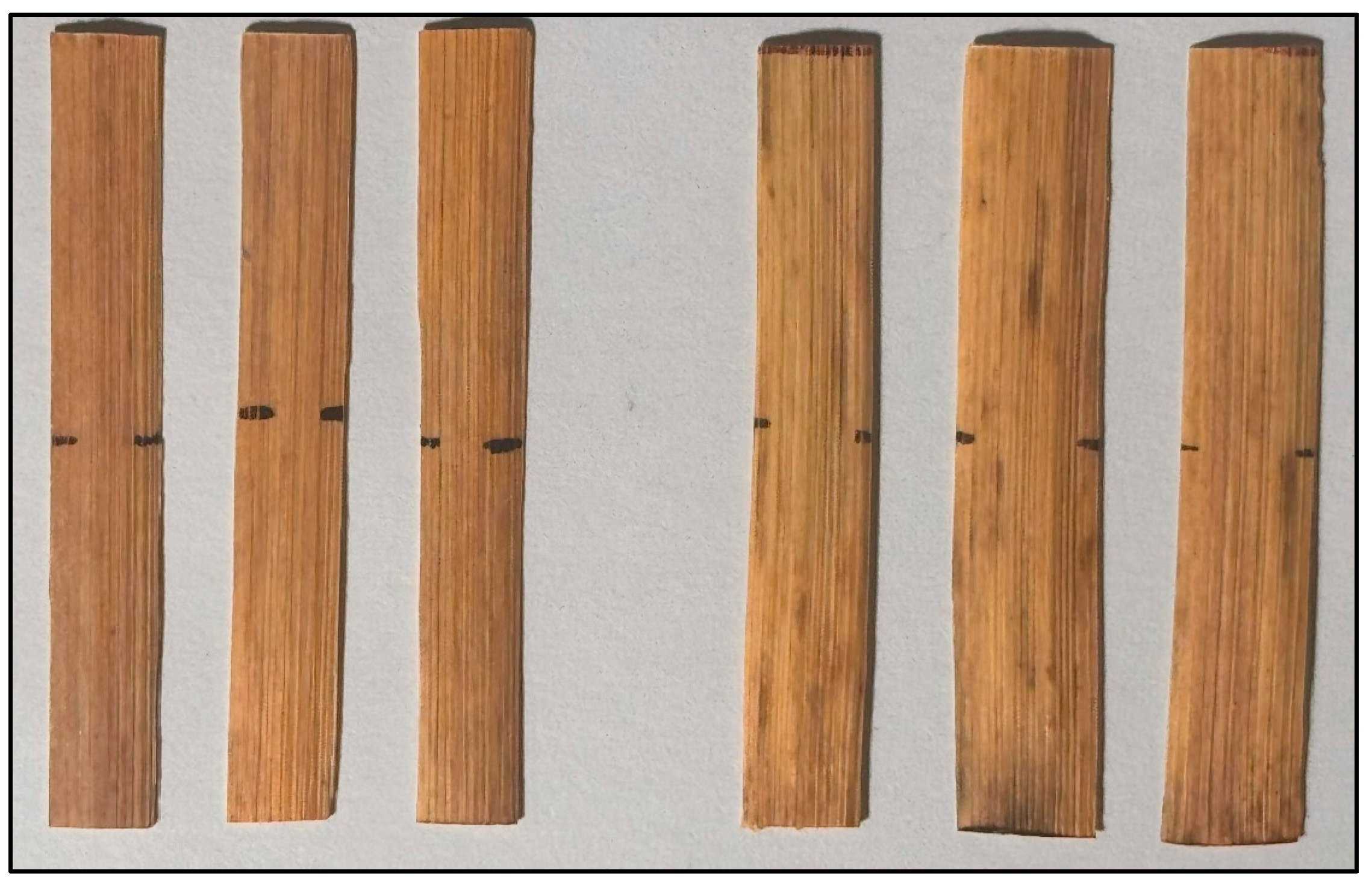
Strips of rind tissue were excised from internodes of maize and sorghum stalks using a razor blade (
Figure 1). Samples were cut from the middle of each internode, ensuring the sample’s longitudinal axis aligned with the stalk’s longitudinal direction. Final sample length, width, and thickness dimensions ranged from 30–48 mm, 3–5 mm, and 0.7–1.1 mm, respectively. All samples were dried to avoid the influence of moisture on the X-ray diffraction measurements.
2.2. X-Ray Diffraction Analysis
X-Ray Diffraction measurements were performed using two diffractometers to explore potential differences related to wavelength. The Bruker D8 (Bruker AXS LLC, Madison, WI, USA) Discover was equipped with a copper (Cu-Kα) radiation source (λ = 1.54 Å), and the Bruker D8 Quest (Bruker AXS LLC, Madison, WI, USA) was equipped with a molybdenum (Mo-Kα) radiation source (λ = 0.71 Å). The copper source operated at 40 kV and 20 mA, while the molybdenum source operated at 50 kV and 30 mA. For both instruments, samples were mounted to ensure the X-ray beam was directed perpendicular to the sample (as shown in
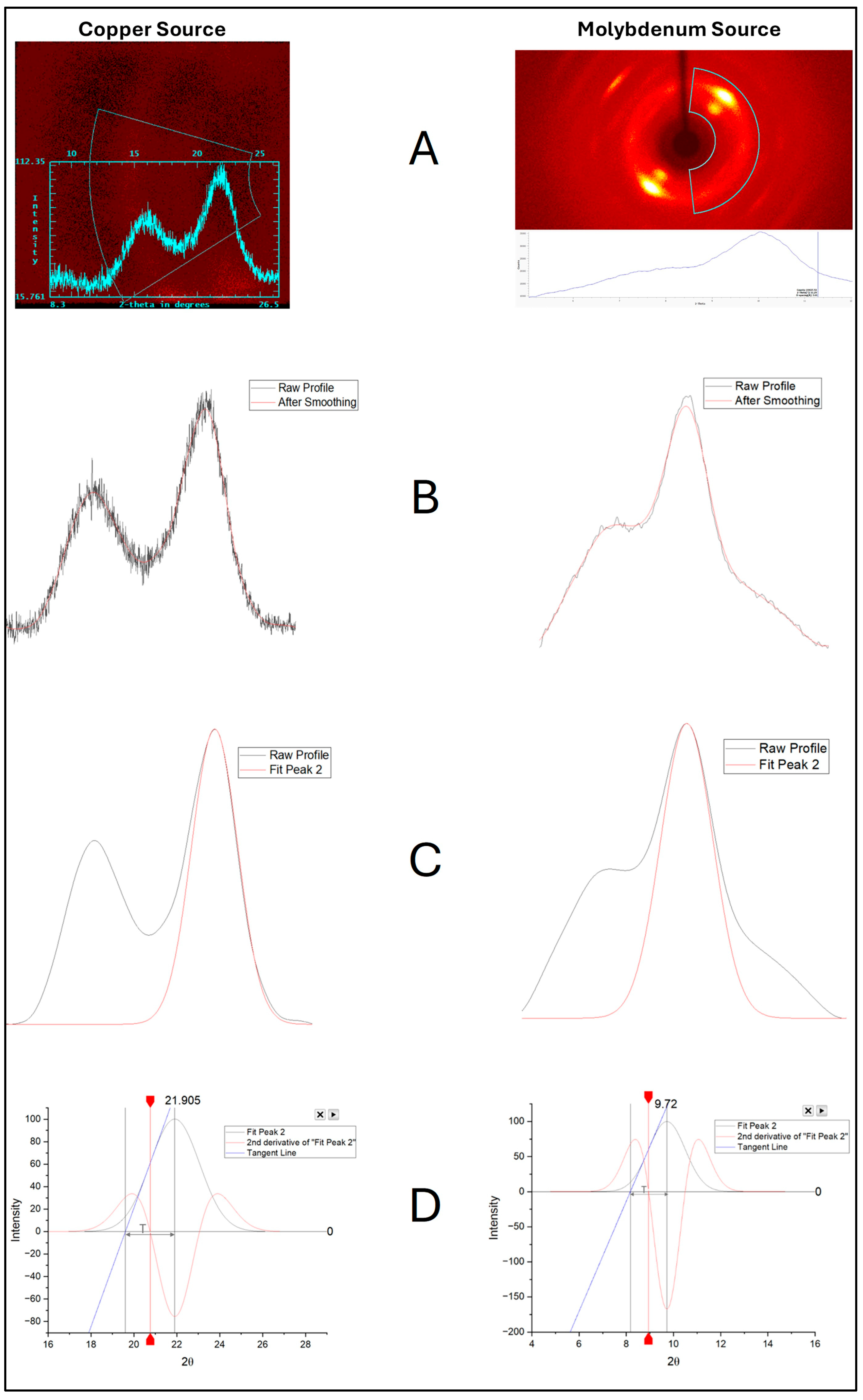
Figure 1). Samples were scanned over an angular range (2θ) of 4–34° and 1–18° to capture the cellulose (002) reflection, which is the major peak from the crystalline structure of cellulose, between 21–23° for the copper and 9–11° molybdenum radiation, respectively. The detector-to-sample distance was set to 10 cm for both pieces of equipment. The two-dimensional diffraction patterns corresponding to the overlapping (110) and (200) crystallographic planes of cellulose were collected using a Vantec-500 area detector for the D8 Discover and a Photon III detector for the D8 Quest. These diffraction patterns were integrated using the DIFFRAC.EVA software to obtain one-dimensional diffractograms (intensity versus 2θ) (
Figure 2A). Diffraction data were collected using an area detector with an exposure time of 300 s per frame and a 2θ step size of 0.05° for copper radiation and 0.02° for molybdenum radiation. Acquisition parameters, including detector integration settings, were held constant for all samples measured on each instrument. These raw diffractograms were converted to intensity and angle data for further analysis in OriginLab software (Version 2024b) [
32].
2.3. Post-Processing and Microfibril Angle Calculation
The microfibril angle was calculated based on the T parameter method described by a previous study [
24]. The T parameter represents the width of the major peak intensity distribution at half maximum intensity. The following processing steps were performed in OriginLab, as performed by previous studies [
24,
28]:
Smoothing of the raw diffractogram to enhance the signal-to-noise ratio using an FFT filter with varying suitable window frames per sample diffractogram dataset (
Figure 2B).
Background subtraction using manually selected baseline points across the entire 2θ range to isolate the diffraction signal.
Peak deconvolution of the processed diffractogram, focusing on isolating the second major peak (
Figure 2C).
Fitting the isolated major peak with a Gaussian function to accurately determine peak characteristics.
Calculation of the fitted peak’s second derivative. The maximum slope point of the calculated second derivative curve is used to draw tangent lines to the fitted peak (
Figure 2D).
Figure 2.
X-ray diffraction data processing workflow for cellulose microfibril angle measurement in plant stalks using copper and molybdenum radiation: (A) Raw two-dimensional diffraction patterns are integrated to generate one-dimensional intensity vs. 2θ diffractograms. (B) Signal smoothing is applied to the raw diffractogram to reduce noise and enhance signal clarity. (C) Peak deconvolution is applied to extract the cellulose (002) diffraction peak. (D) Determination of the T-parameter using tangents drawn at the points of maximum slope of the fitted peak.
Figure 2.
X-ray diffraction data processing workflow for cellulose microfibril angle measurement in plant stalks using copper and molybdenum radiation: (A) Raw two-dimensional diffraction patterns are integrated to generate one-dimensional intensity vs. 2θ diffractograms. (B) Signal smoothing is applied to the raw diffractogram to reduce noise and enhance signal clarity. (C) Peak deconvolution is applied to extract the cellulose (002) diffraction peak. (D) Determination of the T-parameter using tangents drawn at the points of maximum slope of the fitted peak.
The angular separation (T parameter) between the tangent line and the maximum intensity intersection points with the baseline of the fitted peak was measured in degrees (2θ) (
Figure 2D). The microfibril angle was then calculated using the polynomial equation [
24]:
Microfibril angles (in degrees) were determined from three samples per internode for all sample groups except the Maize Hybrids tested with a copper X-ray source, which was based on two samples. The average of the two or three samples was reported as the internode microfibril angle value.
2.4. Material Properties Testing
To assess the validity of the X-ray diffraction measurements, material properties were tested to serve as a benchmark for comparison. This approach uses the principle that microfibril angle values should correlate with the tissue properties of the stalk. The lack of a significant correlation would indicate limitations of the microfibril angle measurement technique for these materials.
Internodes were tested to determine material bending strength, material bending stiffness, and rind penetration resistance. Samples tested for material properties were collected from the same internodes used for the X-ray diffraction tests. The material properties were determined following the methods of a previous study [
7]. Briefly, rind penetration resistance was measured using an Instron universal testing machine to puncture each internode with a 2 mm diameter probe. The maximum force during puncture was recorded as the resistance value. To determine tissue-level properties, strips of rind (approximately 18 mm long, 2.8 mm wide, and 0.7 mm thick) were excised from each internode. These strips were then subjected to micro three-point bending tests, where they were loaded until failure. The material bending strength (flexural stress at failure) and material bending stiffness (Young’s modulus) for each internode were calculated from the resulting force-displacement data from these tests. For complete experimental details, the reader is referred to [
7].
All sample groups were tested. The Maize Hybrids and Maize Mutant and Inbred groups were tested for all three properties, the Maize Inbred and Sorghum Inbred groups were tested for rind penetration resistance only, and the Sorghum Mutant and Inbred group was tested for material bending stiffness and strength. To maximize the range of material property values for correlation analysis, stalks in sample groups were selected based on different material property categories. Maize hybrids were categorized according to the whole stalk rind penetration resistance—low, medium, or high rind penetration resistance stalks. Stalks in the Maize and Sorghum Mutant and Inbred groups were selected based on the highest and lowest material bending strength and material bending stiffness internodes. The Maize and Sorghum Inbred group stalks were selected based on their stalk rind penetration resistance gradient from the top to bottom internodes. These sampling approaches, including genotypes with limited biological variation, were designed to test the sensitivity of the X-ray diffraction method on distinct samples.
4. Discussion
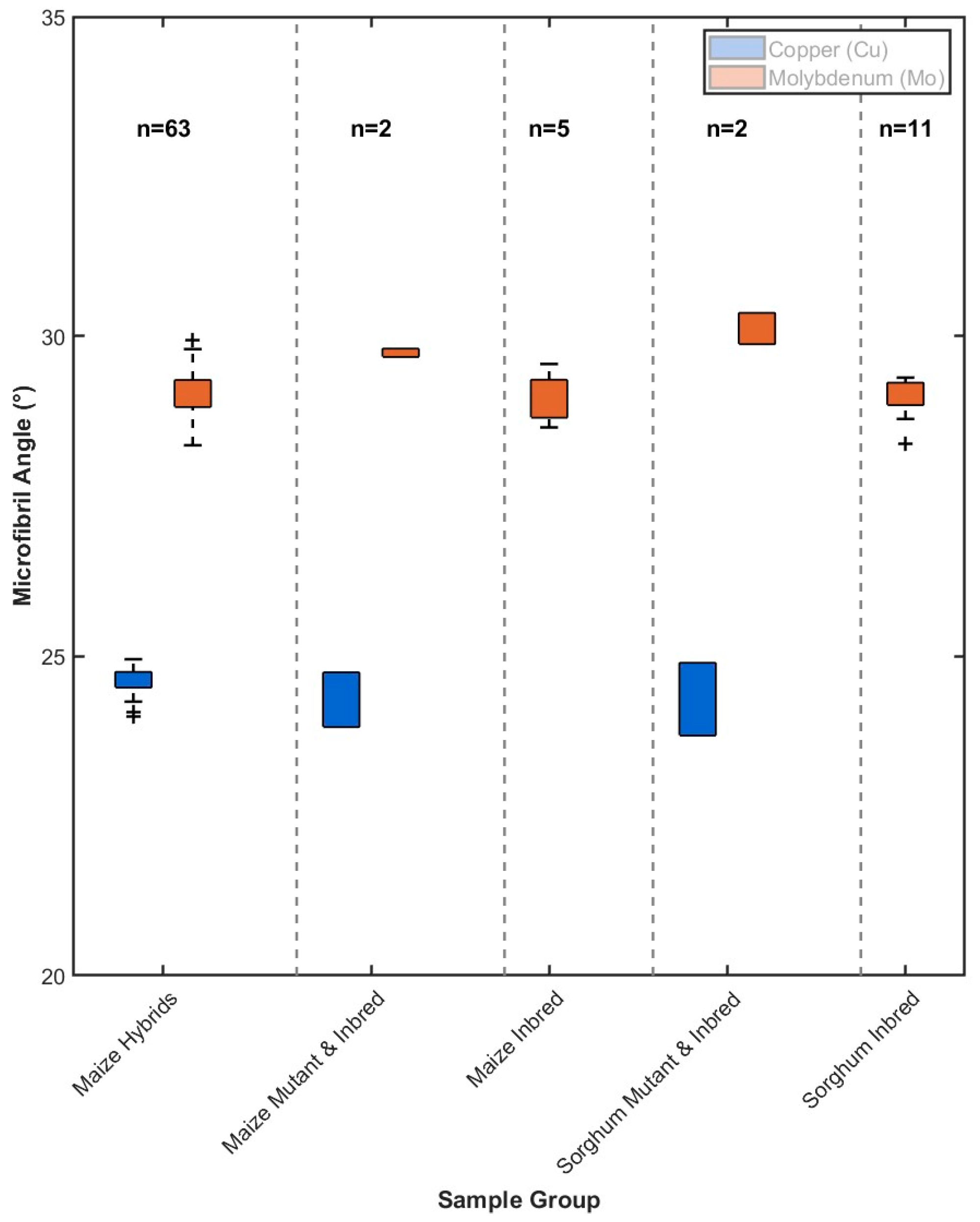
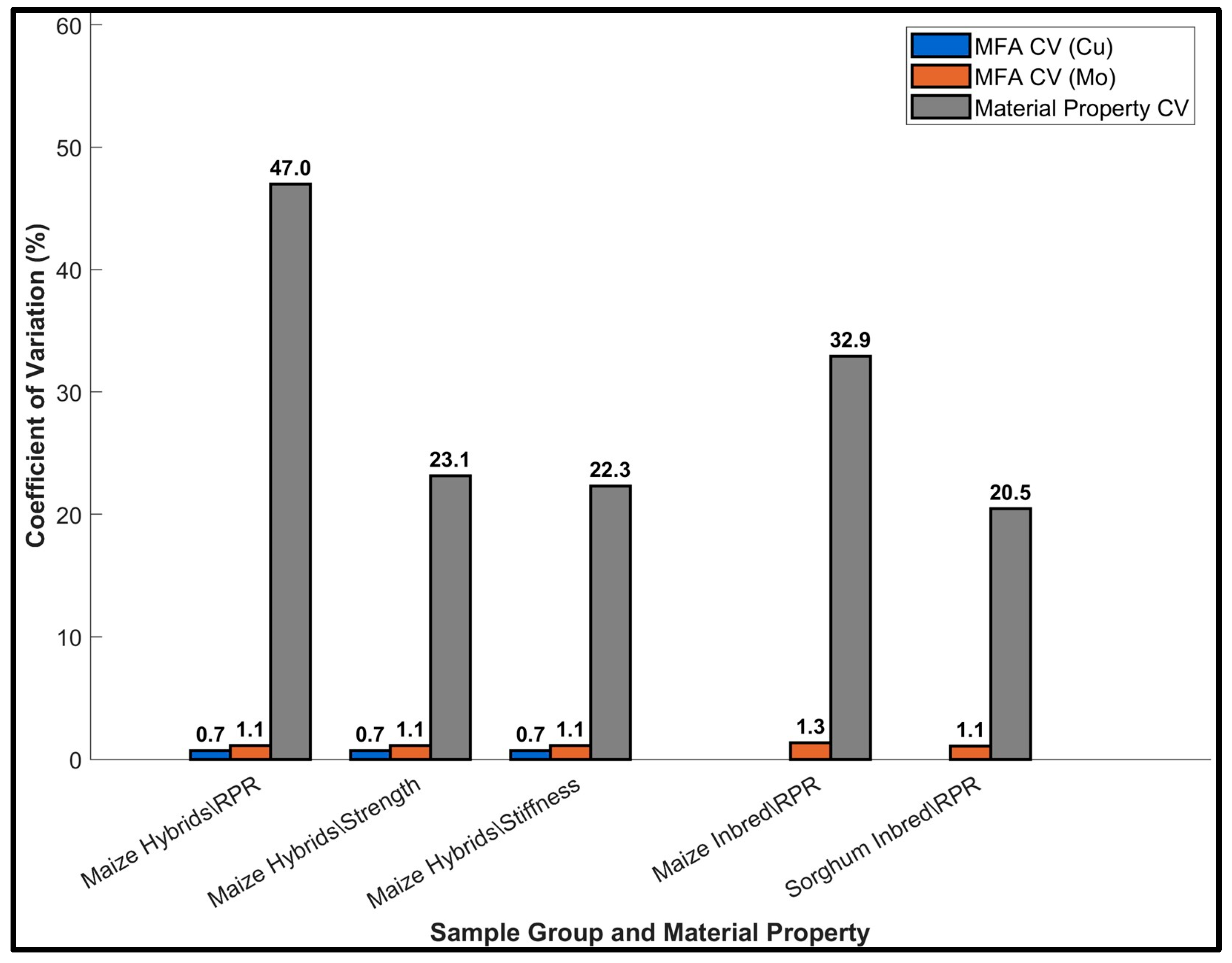
This study evaluated the application of X-ray diffraction methods for measuring microfibril angles in maize and sorghum stalks to assess their utility for understanding stalk lodging resistance. Key findings revealed: (I) uniform microfibril angle values across cereal crops, with maize averaging 24.5 ± 0.4° (copper) and 29.1 ± 0.4° (molybdenum), and sorghum averaging 24.3 ± 0.8° (copper) and 29.4 ± 0.5° (molybdenum), (II) low measurement variability (coefficient of variation < 3.3%) for microfibril angle across different sample groups, in contrast to substantially higher variability in material properties (coefficient of variation = 20–47%) including rind penetration resistance, bending strength, and stiffness, (III) consistent differences in microfibril angle values of approximately 20% between copper (24°) and molybdenum (29°) X-ray sources, and (IV) minimal to no correlations between microfibril angle and material properties. These results diverge from commonly reported trends in plant science literature and raise questions about the suitability of the T-parameter X-ray diffraction methods for microfibril angle determination in cereal crops.
The microfibril angle values obtained for maize and sorghum stalks are comparable to those obtained in the existing literature but lack observed variation. Previous studies have reported the microfibril angle of corn and sorghum stalks as 33–39° and 21–30°, respectively [
33,
34]. These values are comparable to the average microfibril angles of 24.5° (copper) and 29° (molybdenum) obtained for both cereal crops in this study. While the narrow range observed (>±1°) in this study contrasts with these reports, some studies that used the T-parameter methods have also reported a similar range for non-wood plant fibers like flax (6.2–7.2°) and coconut (27.32 ± 0.41°) [
31,
35]. The uniformity of measurements across diverse samples suggests the method does not capture realistic biological variation.
The low variability in microfibril angle measurements (CV = 0.3–3.3%) contradicts the inherent heterogeneity of plant tissues. Material properties from the same sample groups showed expected biological variation (CV = 20–47%). This difference in variability suggests the method may be insensitive to structural variations. Plant cell walls have been shown to have distinct microfibril angles within individual cells and between cell types [
20,
36]. A cell’s secondary cell wall contains three distinct layers: The microfibril angles in the S1 layer have been reported to typically be 50–70°, while the dominant microfibril angles in the S2 layer are reported to be 10–30°, and the microfibril angle in the S3 layer is reported to be 60–90° [
20]. This multilayered architecture presents a challenge for bulk X-ray diffraction microfibril angle measurements. The X-ray beam simultaneously samples all three secondary wall layers (S1, S2, S3), each with distinct microfibril orientations. The resulting diffraction peak represents a convolution of these layer-specific signals. The S2 layer, typically the thickest and most cellulose-rich, dominates the signal, but contributions from the adjacent S1 and S3 layers may influence the peak in ways the T-parameter equation may not accurately interpret. While the stalk rind tissues analyzed in this study consist predominantly of sclerenchyma fibers, these tissues also contain vascular bundles with different cell wall architectures. Each component likely contributes differently to the X-ray diffraction signal based on its volume fraction and cellulose content. However, the X-ray diffraction method averages signals across all cell types and wall layers, potentially masking biological differences. This signal convolution explains the narrow range of T-parameter values (2–3°) across samples with substantial material property differences.
The observed insensitivity of calculated microfibril angles to stalk material properties variations points to limitations of the T-parameter method. A primary concern from our results is the insufficient variation of the T-parameter across diverse internodes. Processed diffractograms revealed T-parameter values within a narrow range (approximately 2–3°), translating to less than 2° difference in calculated microfibril angles using the cubic polynomial. The inherent assumption of the T-parameter method is that the width of the diffraction profile reflects the average orientation of cellulose microfibrils in the S2 layer [
22,
23]. However, the peak profile of cereal stalks might be influenced by multiple factors such as contributions from the S1 and S3 layers of various cell types, cellulose crystallite size, or the arrangement of microfibrils within cell walls [
20]. In addition, the method was calibrated using wood samples, and studies have documented similar limitations when T-values fall outside the calibration range or show restricted variation. Existing literature has shown that the equation can overestimate microfibril angle, requires species-specific recalibration, or results in unrealistic values when T-values fall outside its optimal calibration range [
25,
28,
29]. Therefore, the consistency of T-values across diverse samples suggests the method cannot resolve subtle structural differences in these materials or these stalks have different cellulose organizations than woody tissues, making woody calibrated equations unapplicable.
Multiple studies have questioned the validity of X-ray diffraction for microfibril angle measurement in plant materials (
Table 3). The major recurring theme across these studies highlights the signal averaging over volumes containing thousands of cells with varying orientations. Additional limitations include poor spatial resolution with the X-ray diffraction beam exceeding cellular dimensions, inability to capture local variations at the cell and subcellular scales, and inability to distinguish between different cell types or cell wall layers. To address these limitations, studies listed in
Table 3 have used various alternative approaches ranging from optical methods like polarization confocal microscopy to advanced X-ray approaches including microbeam diffraction, synchrotron-based measurements, and novel analysis methods such as pole figure X-ray diffraction.
The X-ray source wavelength substantially affected microfibril angle measurements across all sample groups. Molybdenum radiation resulted in approximately 20% higher microfibril angle values across sample groups than copper radiation. This is a notable finding of this study, highlighting the method’s sensitivity to radiation choice. A Bland–Altman analysis confirmed that the two sources are not interchangeable, exhibiting a fixed bias of 4.66° and limits of agreement (3.38–5.95°) that span a wider range than the biological variation observed in the plant tissues themselves. Theoretically, shorter X-ray wavelengths (like Mo Kα at 0.71 Å vs. Cu Kα at 1.54 Å) provide better theoretical resolution limits according to Bragg’s law and offer better penetration depth into materials. This was observed from the less noisy intensity curves from the molybdenum analysis (
Figure 2). In addition, the cellulose reflection appeared at different angular positions (21–23° for copper vs. 9–11° for molybdenum). However, these wavelength-specific effects translated to unexpected differences of approximately 1° on average in the determined T-parameter value. Consequently, the T-parameter method, developed primarily for copper radiation in wood samples, may not adequately compensate for these effects without wavelength-specific calibration. This need for calibration further supports what was stated earlier for significant recalibration requirements when the T-parameter method was applied to different microfibril angle ranges or wood types. Despite the deep sample penetration by the molybdenum X-ray source, the insensitivity to microfibril angle variation persists. This further strengthens the argument that the bulk averaging inherent in the standard beam X-ray diffraction approach limits its utility for these materials. Understanding the microfibril angle to mechanical property linkage in cereal stalks likely requires techniques with significantly improved spatial resolution. Studies utilizing micro-focused X-ray techniques have successfully obtained diffraction data from single cell walls [
38,
39,
41]. Such approaches enable better determination of microfibril angles at the cellular or subcellular level, thereby avoiding the confounding effects of signal averaging [
20].
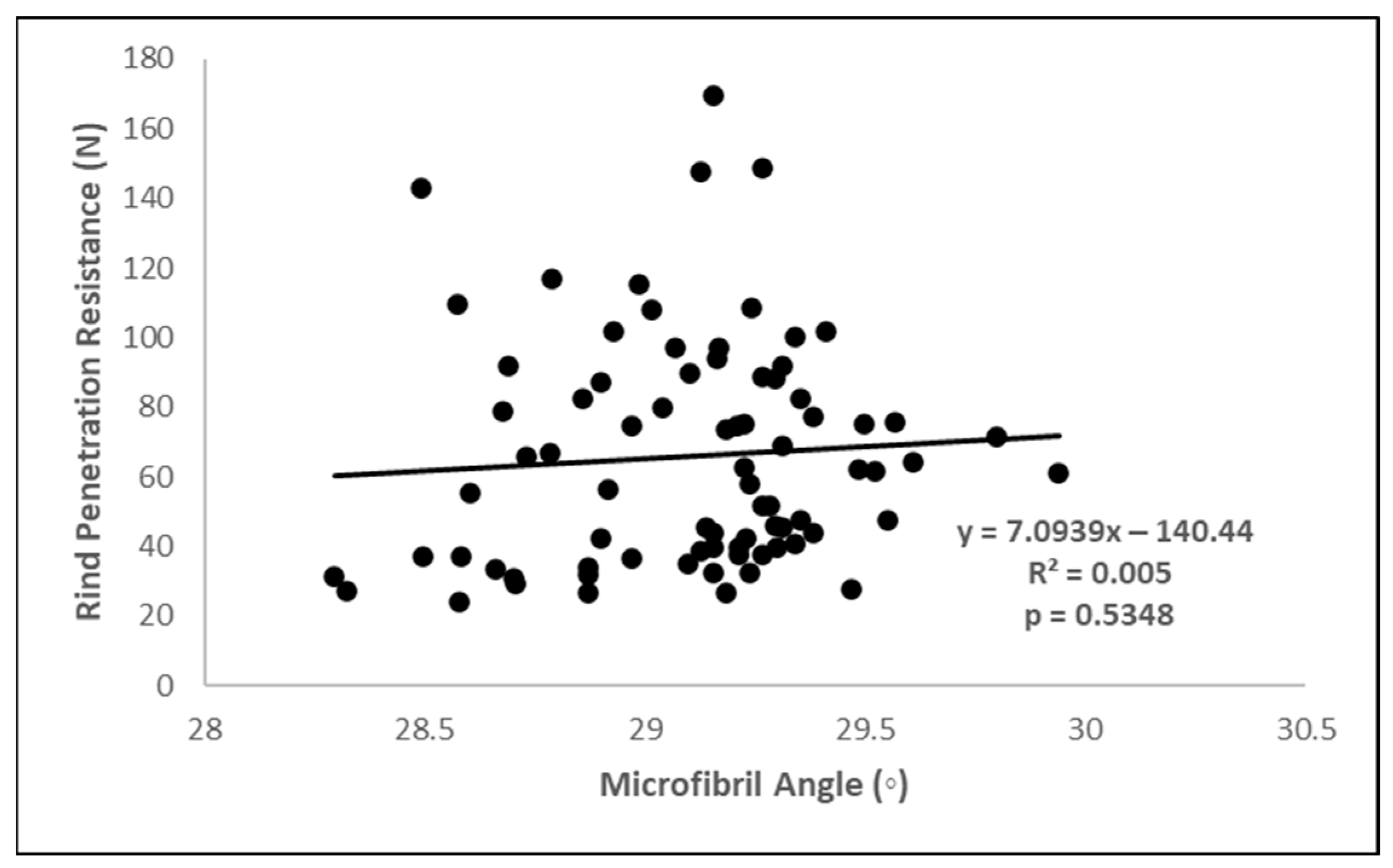
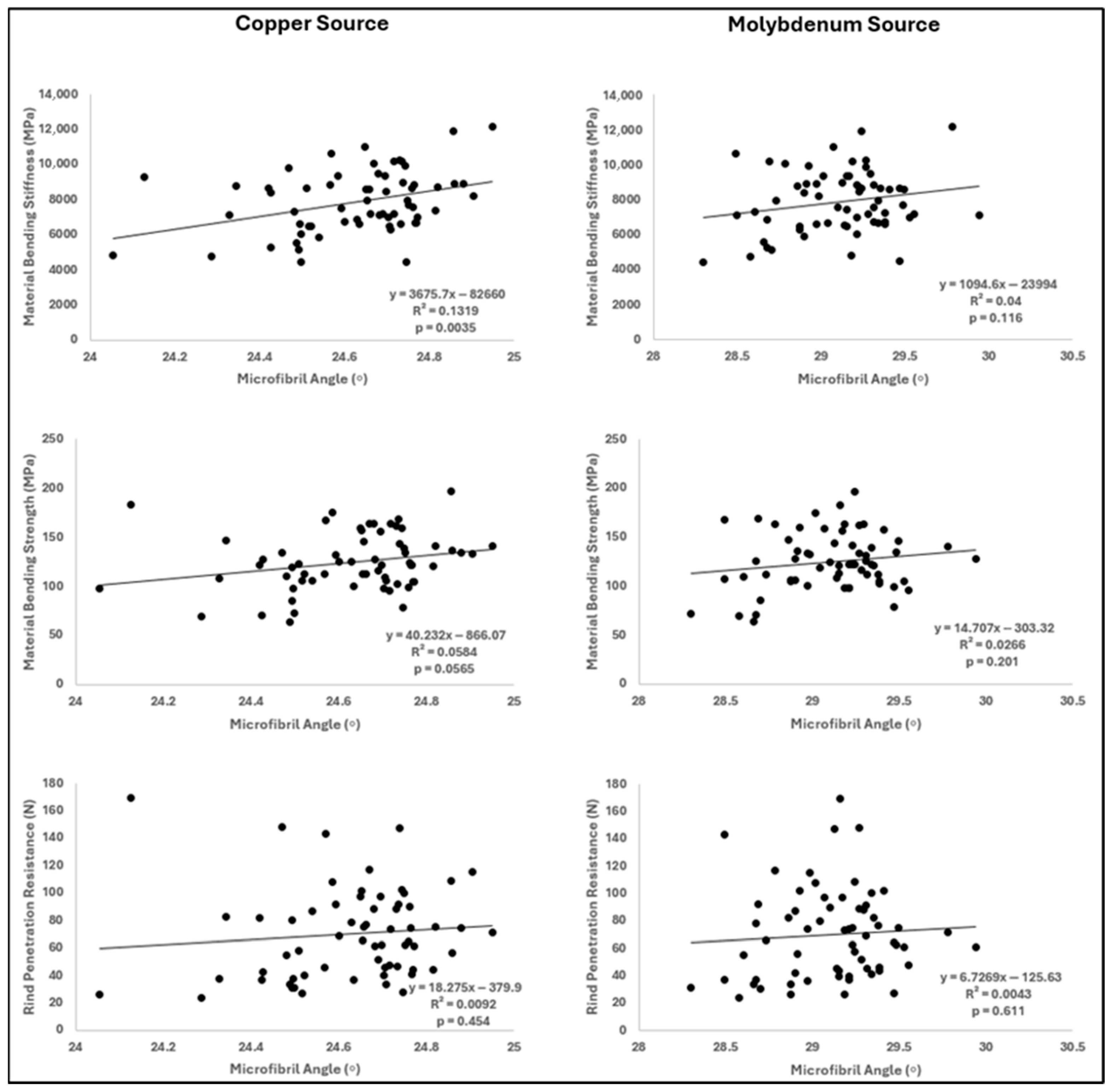
Microfibril angle measurements failed to show meaningful correlations with material properties. Despite substantial material property variations in maize hybrids, copper source measurements produced weak correlations with material bending stiffness (R
2 = 0.13,
p = 0.0035) and marginal correlations with strength (R
2 = 0.06,
p = 0.0565). Also, molybdenum measurements did not correlate with any material properties. In particular, where rind penetration resistance varied nearly 7-fold (25–170 N), microfibril angle values remained limited to a 2° range (28–30°). These findings contradict literature reporting strong negative correlations between microfibril angle and material properties, including material stiffness and strength. Additional properties reported to correlate with microfibril angle include density, shrinkage behavior, and lignin distribution [
20,
25,
26,
42]. However, the absence of correlation may also reflect the inherent complexity of stalk mechanical performance. Cereal stalks exhibit heterogeneous, multi-scale structural organization that includes layered secondary cell walls, multiple cell types, and complex fibril networking. Hence, mechanical performance in these systems can be influenced by a combination of microfibril orientation, interfibrillar bonding, cell wall thickness, tissue geometry, and the spatial distribution of reinforcing tissues. While biological and structural differences between cereal stalks and wood are well-established, our findings suggest that the results presented here are primarily due to the X-ray diffraction method’s limitations and are not a true reflection of those biological distinctions.
The findings of this study suggest being cautious of X-ray diffraction-derived microfibril angle values, particularly using the methods employed here. The lack of correlation with stalk material properties in maize and sorghum suggests that the methods cannot capture relevant variations. For breeding programs seeking to improve stalk lodging resistance in maize and sorghum, alternative approaches focusing on other phenotypes (diameter, rind thickness, stalk bending strength, cell wall thickness) [
5,
6,
7,
9,
10] have proven more reliable than microfibril angle measurements. Given the methodological challenges identified in this study and the multifactorial nature of lodging resistance, breeding strategies should prioritize these more directly measurable traits. Stalk diameter and rind thickness can be assessed rapidly and provide consistent heritability. These geometric features offer more targets for genetic improvement than microfibril angle measurements using current X-ray diffraction methods. The significant influence of the X-ray source and the low variability of microfibril angle highlights the need for further methodological refinement and a better understanding of what X-ray diffraction microfibril angle represents in these specific tissues. It reinforces that stalk lodging resistance is a complex phenotype influenced by multiple factors, from macro-scale geometry to micro-scale tissue properties and cellular architecture.
Future Improvements for X-Ray Diffraction Measurement of Microfibril Angle
Addressing the limitations identified in this study will require multiple approaches focused on improving spatial resolution, developing crop-specific calibrations, and exploring complementary techniques.
The signal averaging inherent to conventional X-ray diffraction requires adopting higher spatial resolution methods. Scanning X-ray microdiffraction, particularly using synchrotron sources, could measure microfibril angle with micrometer-scale resolution across different tissue types and within single cell walls. These spatially resolved techniques are essential for determining insight that is currently lost in bulk measurements, particularly the limited T-parameter variation (2–3°) observed across diverse samples.
Development of cereal crop-specific calibrations for X-ray diffraction data is needed. This would potentially involve correlating X-ray diffraction parameters from a large and diverse set of cereal stalk samples against their measured mechanical properties. The calibration should also span the full range of microfibril angle values expected in cereal crops. Advanced computational models could be used to analyze the full one-dimensional diffraction patterns. Such applications may identify overlooked features related to microfibril orientation.
The systematic difference between X-ray sources should be investigated. Controlled studies should compare microfibril angle measurements from multiple X-ray sources on the same samples. This investigation should clarify the effects of wavelength-dependent penetration depth and scattering, potentially leading to source-specific correction factors. Standardization of measurement protocols is essential. Specifications of sample preparation methods, adequate sample dimensions, X-ray source parameters, and data analysis procedures are urgently required in the field.
A limitation of this study is the use of limited biological replicates for some sample groups. In this context, the consistency of findings across all sample groups, including the Maize Hybrids with 12 biological replicates spanning 63 internodes, suggests that the observed uniformity in microfibril angle measurements and weak correlations with material properties are more strongly associated with methodological limitations than with sampling variability.
Imaging techniques to verify microfibril angle variation at the cellular scale were not included in this study. Future validation studies should implement techniques with higher spatial resolution, including field emission scanning electron microscopy, polarized confocal microscopy, or synchrotron microbeam diffraction to confirm cellular-level microfibril angle variation and provide independent benchmarks against which X-ray diffraction-based measurements can be evaluated.