1. Introduction
Grafting is one of the oldest horticultural practices, historically applied since at least 2000 BC, and it continues to evolve through advances in plant science and breeding technologies. Grafting provides an effective means to exploit natural genetic variation in root traits, thereby influencing scion growth, development, and overall phenotype [
1]. Today, grafting is widely recognized as an effective strategy to enhance horticultural crop production by improving plant growth, yield stability, and tolerance to biotic and abiotic stresses. Beyond its agronomic benefits, grafting represents a sustainable tool for pest and disease management, particularly in production systems where conventional control strategies are limited or economically unfeasible [
2,
3]. This approach is particularly relevant for soil-borne pathogens, for which genetic resistance or cultivar tolerance may be unavailable or constrained by commercial requirements [
4,
5].
In this context, grafting assumes a strategic role in sustainable and organic agriculture, where the use of synthetic chemical inputs is strictly regulated or prohibited. By reducing dependence on chemical pesticides and soil fumigants, grafted plants offer an eco-friendly alternative that contributes to soil health preservation and long-term agroecosystem sustainability [
6]. Consequently, grafting has strong potential as a valuable tool for organic farming systems, where the use of synthetic chemical products is strictly prohibited [
7,
8]. This technique is particularly beneficial for high-value
Solanaceae and
Cucurbitaceae cultivars that are highly susceptible to root-system pathogens [
9,
10,
11]. In grafted plants, the scion is selected for its desirable commercial and quality traits, whereas the rootstock is chosen for its vigorous root system and resistance to biotic and abiotic stresses. The scion is subsequently cut and grafted onto the rootstock, allowing the two plantlets to develop as a single, integrated plant. This approach enables the combination of scion-related agronomic traits with rootstock-mediated root vigor, ultimately resulting in plants with enhanced strength and resilience. Tomato (
Solanum lycopersicum L.) is one of the most important vegetable crops cultivated under greenhouse conditions in the Mediterranean region. For tomato production, grafting has become increasingly important as it can provide several benefits to growers. Specifically, by grafting a susceptible scion onto a resistant rootstock, it is possible to protect the crop from a range of soil-borne diseases, such as
Fusarium wilt,
Verticillium wilt, and bacterial wilt [
12,
13,
14]. Grafting can also improve the overall vigor and productivity of tomato plants. This is because the rootstock can provide a stronger and more extensive root system, which in turn can support better plant growth and development [
15].
The Mediterranean basin is widely recognized as a climate change hotspot, characterized by rising temperatures, reduced precipitation, prolonged dry periods, and an increasing frequency of extreme climatic events. These trends pose major challenges to agricultural systems, including protected cultivation, which plays a central role in Mediterranean agro-economies [
16]. Although greenhouse production partially buffers open-field climatic variability, its performance remains strongly influenced by external conditions, particularly in structures with limited cooling capacity and passive ventilation. Ongoing climatic shifts are exacerbating water scarcity, microclimatic instability, and biotic pressure within greenhouses, negatively affecting yield stability, fruit quality, and resource use efficiency. Consequently, the adoption of climate-resilient cultivation strategies is increasingly required to ensure sustainable greenhouse vegetable production in Mediterranean environments [
17,
18].
The selection of appropriate rootstocks plays a crucial role in improving water and nutrient uptake and use efficiency in grafted tomato plants. Several studies have demonstrated that grafted tomatoes exhibit a superior capacity to absorb and utilize mineral nutrients compared with non-grafted plants [
19]. Beyond physiological benefits, grafting has also been shown to positively affect fruit quality and flavor; indeed, multiple authors have reported increases in soluble solid content, titratable acidity, and the accumulation of phenolic compounds in grafted tomato fruits [
20,
21,
22]. These advantages are particularly relevant under Mediterranean greenhouse conditions, which are characterized by high solar radiation, elevated temperatures, limited water availability, and increasing salinity of irrigation water constraints that are further intensified in organic production systems due to the restricted use of synthetic inputs. Under such conditions, crops are more exposed to abiotic and soil-borne stresses, often resulting in reduced plant vigor and yield stability [
17]. Consequently, the selection of rootstocks specifically adapted to Mediterranean organic environments represents a key agronomic strategy to enhance stress tolerance, optimize resource use efficiency, and ensure sustainable tomato productivity in resilient greenhouse systems.
Despite the extensive literature on tomato grafting, most studies have evaluated only single or a limited number of rootstocks, often under conventional management systems or in non-Mediterranean environments. Comprehensive assessments that synchronously examine plant growth, yield performance, and fruit quality across multiple commercial rootstocks remain scarce, particularly under Mediterranean greenhouse conditions managed according to organic farming protocols. Notably, comparative evaluations integrating both interspecific and intraspecific rootstocks developed through different breeding strategies are largely absent from the literature. This knowledge gap limits the identification of rootstock scion combinations specifically optimized for organic greenhouse tomato production in Mediterranean climates.
The use of interspecific rootstocks is more common in tomato grafting, due to their broad-spectrum disease resistance, often achieved through the pyramiding of several resistant genes, as well as their ability to enhance the plant vigor. However, intraspecific rootstocks may also represent a valuable alternative, particularly when the objective is to improve specific agronomic or quality-related traits. The aim of the present study was to provide a comparative and integrated evaluation of both interspecific and intraspecific tomato rootstocks under Mediterranean greenhouse conditions managed according to organic farming protocols. The evaluated rootstocks were developed using different breeding approaches, including conventional breeding and marker-assisted selection for resistance traits. Their effects were assessed through a synchronous analysis of plant bio-morphometric traits, yield performance, and fruit quality, using three widely cultivated commercial F1 tomato hybrids (Barbarela, Cherry, and Vittorio). This approach ensures both scientific robustness and direct practical relevance for organic tomato production systems.
2. Materials and Methods
2.1. Plant Material
The plant material consisted of three experimental tomato rootstocks and one commercial control rootstock. The experimental rootstocks included two interspecific hybrids (BT02220 × BT00230 and BT10170 × BT00120) and one intraspecific hybrid (BT04060 × BT02310), while the commercial interspecific rootstock Optifort (De Ruiter) was used as control. Details on rootstock origin, parental lines, and classification are reported in
Table 1.
All experimental rootstocks were developed within the framework of the H2020 Breeding for Resilient, Efficient, and Sustainable Organic Vegetable Production (BRESOV) project by the Polytechnic University of Valencia (UPV). Parental lines were selected based on tolerance to major soil-borne pathogens; specifically, BT02220 and BT04060 show tolerance to
Fusarium wilt, whereas BT00230 and BT00120 are tolerant to
Phytophthora root and crown rot. All experimental and control rootstocks were previously screened for resistance to
Fusarium oxysporum f. sp.
lycopersici race 2 (Fol2) by means of marker-assisted selection targeting the I-2 resistance locus, according to the molecular protocol described in [
23]. Genomic DNA was extracted from young leaf tissue, and the presence of the I-2 locus was molecularly confirmed prior to grafting.
In addition, rootstock hybrids were genotyped at UPV for the detection of major resistance genes as part of the breeding and selection process. The molecular characterization (
Table 2) was performed to define the genetic background of the materials and was not considered an experimental factor in the present study.
No artificial inoculation assays or field disease evaluations were conducted; therefore, disease incidence and severity data are not reported.
Rootstocks were selected following a preliminary evaluation conducted in 2021 in Pachino (SR, Sicily) and Almería, carried out by the University of Catania (UNICT) and the University of Almería (UAL), respectively, among 21 inter- and intraspecific hybrids developed by UPV. The Sicilian trial has been previously reported [
24]. Three commercial tomato F
1 hybrids were used as scions: Barbarela F
1 (Vilmorin), Cherry F
1 (Green Seeds), and Vittorio F
1 (Blumen). In addition to grafted combinations, self-grafted (SG) and non-grafted (NG) plants of Barbarela F
1 were included as controls.
2.2. Experimental Location and Greenhouse Environment
Sowing was carried out on 6 September 2022 in a commercial nursery (Area Verde Vivai; 36°42′02″ N, 15°04′28″ E). Grafting was performed in the same nursery on 22 September 2022 by combining the three experimental rootstocks and the commercial control rootstock Optifort with the selected scions. Non-grafted (NG) and self-grafted (SG) plants were also included as control. A stan cut manual grafting was performed and the junction of the rootstock and scion was made with a plastic clip. Seedlings were then healed for 5 days in a growing chamber at 25 °C starting with 95% HR for the first 48 h and then at 75% HR for the remaining three days, following the grafting protocol of the nursery. Seedlings were then transplanted on 3 October 2022 into a cold greenhouse located at the organic farm ECONATURA S.S. Agricola (36°48′04″ N, 14°35′09″ E), in southeastern Sicily (Italy).
The experiment was conducted in a single-span cold greenhouse covered with transparent polyethylene film, designed for Mediterranean conditions and equipped with passive ventilation. Natural air exchange was ensured through lateral roll-up openings protected by insect-proof nets, while no active heating or cooling systems were installed. The greenhouse was oriented along its longitudinal axis to optimize solar radiation interception.
Plants were grown directly in soil under organic management. Crop rows were covered with plastic mulch for weed control, and plants were trained to a single stem using vertical trellising systems. Internal climatic conditions were largely influenced by external environmental conditions, as typical of passively ventilated Mediterranean greenhouses.
Irrigation was supplied through a drip irrigation system, with drip lines positioned along each plant row to ensure uniform water distribution and efficient water use. Fertigation and irrigation practices were managed in accordance with European organic farming regulations (EU Regulation 2018/848 and subsequent amendments).
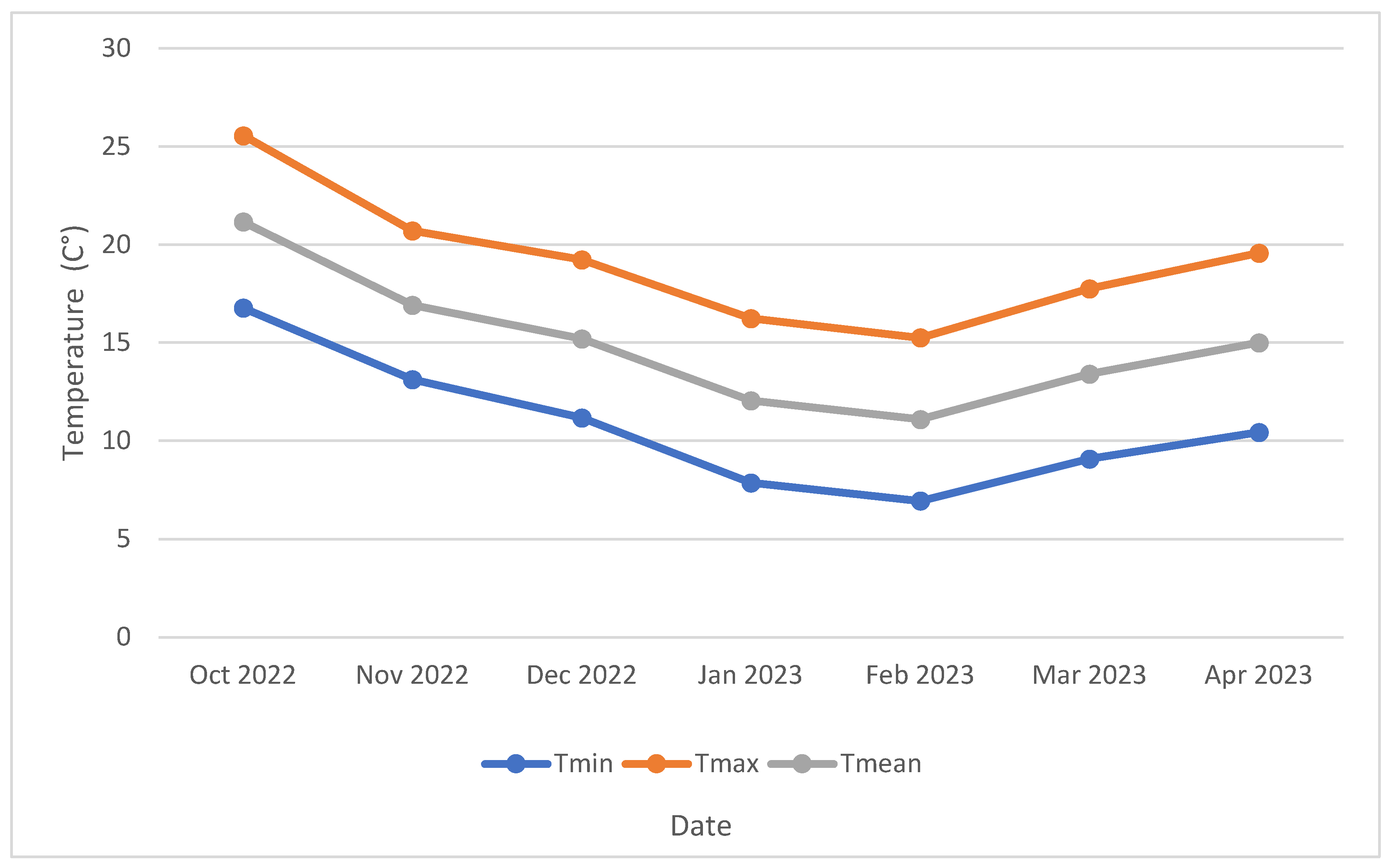
During the growing cycle (October 2022–April 2023), external air temperature followed a typical seasonal pattern for the Mediterranean area, with minimum, mean, and maximum values decreasing from autumn to winter and increasing toward spring (
Figure 1). During the growing cycle (October 2022–April 2023), air temperature recorded outside the greenhouse followed a typical seasonal pattern, with minimum, mean, and maximum values decreasing from autumn to winter and increasing toward spring (
Figure 1). Climatic data were retrieved from the Servizio Informativo Agrometeorologico Siciliano (SIAS) (
http://www.sias.regione.sicilia.it/) (accessed on 17 June 2023).
During the growing cycle, the number of fruits per truss was recorded for each of the eight trusses evaluated. The final fruit-per-truss (FT) value was calculated as the mean of the eight trusses. Fruit morphological traits, including fruit weight (FW), fruit longitudinal diameter (FLD), and fruit transverse diameter (FTD), were assessed across all trusses, as no significant differences were detected among them.
Qualitative fruit traits were evaluated on fruits harvested from the seventh and eighth trusses, corresponding to the second half of March and April 2023. These trusses were selected to account for potential seasonal effects on soluble solids content (SSC, °Brix) and fruit acidity during the later stages of the production cycle. All fruits were evaluated at the full-ripening stage. Destructive analysis for the plants and roots was performed by the end of the cycle (April 2023), plant length (PHt) and root width (RWI) were recorded with measure tape (±0.1 cm), and diameters were measured with a digital vernier caliper. The fresh weight of the plants and roots were registered with a precision scale and the percentage of dry matter in the stem and roots was calculated after the measurement of the dry weight obtained after drying for stable weight (hot drying for 48 h for the stems and 72 h for the roots) at 72 °C.
2.3. Experimental Design and Cultivation Management
Plants were transplanted following a randomized complete block design (RCBD), with three replicates for rootstock–scion combination, each replicate consisting of four plants. Plants were established at a density of 0.30 m × 1.5 m (approximately 3 plants m−2). Plants were trained to a single stem from transplanting and maintained under a vertical trellising system. Axillary shoots were manually removed throughout the growing cycle to preserve the single-stem architecture. Pruning was carried out according to plant development, with lateral shoots removed once they reached approximately 20 cm in length. Pest management was conducted in accordance with European organic farming regulations (EU Regulation 2018/848 and subsequent amendments), using only plant protection products authorized for organic agriculture. Preventive treatments in October included copper-based products (e.g., copper oxychloride) and sulfur to control major fungal diseases (Peronospora spp. and Alternaria spp.) and powdery mildew. A neem-based formulation containing azadirachtin, Oikos® (Sipcam Italia SpA, Milan, Italy), was applied for its acaricidal and nematicidal activity. Throughout the growing cycle, biological control of lepidopteran pests was achieved using Bacillus thuringiensis-based products, including Costar WG® (Certis Belchim, Saronno, Varese, Italy) and Lepinox® WG (BIOGARD®, Grassobbio, Italy). In addition, PREV-AM® PLUS (Oro Agri International Ltd. Saronno, Varese, Italy) was applied for its insecticidal, fungicidal, and acaricidal activity. Nutrient management included the application of DYNAMIC® (Hydro Fert, Barletta, taly), an organic nitrogen fertilizer with biostimulant properties, aimed at enhancing nutrient use efficiency, vegetative growth, and stress tolerance.
2.4. Data Collection
2.4.1. Growth and Phenological Traits
Growth and phenological traits were recorded throughout the growing cycle to characterize vegetative development and plant responses among the different rootstock–scion combinations. The date of anthesis of the third open flower on each truss was recorded from the first to the eighth truss. In addition, the morphometric traits listed in
Table 3 were measured for each grafting combination. Qualitative traits were evaluated according to the International Board for Plant Genetic Resources (IBPGR) Descriptors for Tomato (
Lycopersicon spp.). Plant vigor (PV; 1–9) was visually assessed using a nine-point ordinal scale, where 1 indicated very weak plants with poor growth and low biomass, 5 indicated intermediate vigor, and 9 indicated very vigorous plants with robust growth and high biomass. Scoring was based on overall plant development, canopy size, and stem robustness. Root system architecture was evaluated through visual scoring. Root ramification (RRS; 1–9) was assessed using a nine-point scale, where 1 corresponded to very low branching and 9 to very high branching intensity, with intermediate values representing progressive increases in lateral root development. Nematode damage (RNS) was quantified using a six-class severity scale (0–5), where 0 indicated the absence of visible symptoms and 5 indicated very severe damage or plant death.
2.4.2. Yield and Fruit Quality Traits
To characterize yield performance and fruit quality across the different rootstock–scion combinations, fruit traits were evaluated at commercial maturity. Predominant fruit shape (FS) was visually assessed at full color development according to the qualitative descriptors reported by the IBPGR for tomato, using a nine-point ordinal scale: 1 = flattened (oblate); 2 = slightly flattened; 3 = round; 4 = highly rounded; 5 = heart-shaped; 6 = cylindrical (long oblong); 7 = pyriform; 8 = ellipsoid (plum-shaped); 9 = other.
Fruit chromatic parameters (L*, a*, b*) were measured using a colorimeter (Chroma meter CR-200, MINOLTA, Osaka, Japan). Fruit firmness (FFN) was determined using a digital penetrometer (Promeiq FHT-1122, Marathon 1315, Bodega 7C, Ñuñoa, Santiago, Chile), by manually penetrating the fruit at the equatorial region and recording the maximum resistance force. Fruit soluble solids content (SSC) was measured using a digital refractometer (DBX-55A, ATAGO, Merlino, Italy), while fruit acidity (pH) was assessed by measuring hydrogen ion activity with a pH meter (inoLab level 3 with level 3 terminal, WTW Group, Xylem Analytics, Weilheim, Germany) (
Table 4).
2.5. Statistical Analysis
Data were analyzed using two-way ANOVA (rootstock × scion interaction) considering three biological replicates per rootstock–scion combination. Mean separation was performed using Tukey’s HSD test at α = 0.05. All statistical analyses were conducted in RStudio (R version 4.4).
Histograms were generated with mean ± standard deviation. Pearson’s correlation analysis and Principal Component Analysis (PCA) were performed on the mean values of the three replicates for each combination. PCA was conducted based on the extraction of the first three principal components.
3. Results
3.1. The Effect of Rootstock on Scion Growth and Plant Architecture
Vegetative growth and plant architectural traits are key determinants of crop performance under organic greenhouse conditions, where limited external inputs increase the relevance of rootstock-mediated effects on plant development.
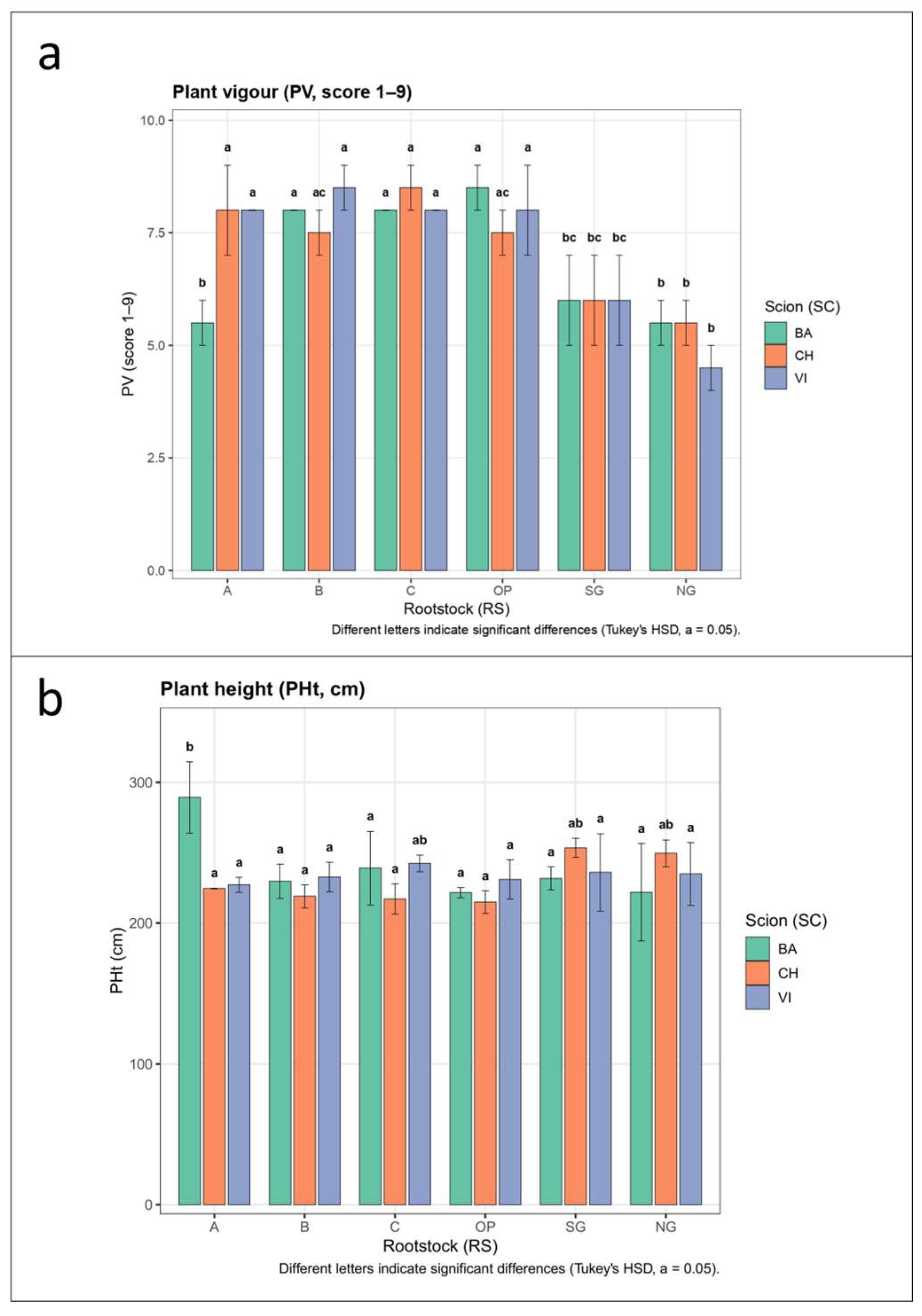
Plant vigor (PV) was strongly enhanced by grafting, with experimental rootstocks B and C reaching values comparable to or exceeding the commercial control (OP). For PV, a significant interaction between rootstock (RS) and scion (SC) was observed (
Figure 2a). PV scores ranged from 8.0 to 8.5 in combinations involving rootstocks B and C (B–VI, C–CH), matching the highest value observed in OP–BA (PV = 8.5), whereas self- and non-grafted plants consistently showed lower vigor (PV ≤ 6.0, with a minimum of 4.5 in NG–VI;
Table S1).
Overall, rootstocks B and C ranked as the most effective for promoting plant vigor, clearly outperforming self- and non-grafted plants and equaling the commercial control.
Plant height (PHt) was significantly affected by the interaction between rootstock and scion (RS × SC;
Figure 2b). Mean PHt values ranged from 215.0 cm in OP–CH to 289.3 cm in A–BA combinations, with grafted plants generally showing higher stature than non-grafted controls (
Table S1).
Plant stem diameter (PSD) differed significantly among the tested rootstocks, ranging from 1.76 cm in non-grafted (NG) genotypes to 2.22 cm in rootstock C. Across the different rootstock–scion combinations, PSD values ranged from 1.65 cm in non-grafted CH to 2.40 cm in genotype BA grafted onto experimental rootstock C. Conversely, plant basal diameter (PBD) varied significantly according to the rootstock used, with values ranging from 1.68 cm in non-grafted (NG) genotypes to 2.17 cm in the control rootstock OP. Among the rootstock–scion combinations, PBD ranged from 1.65 cm in non-grafted CH to 2.35 cm in the OP–VI combination (
Table S1).
Stem weight (PSW) was strongly influenced by rootstock selection, with experimental rootstock C clearly outperforming the commercial control. Mean PSW reached 636.72 g in rootstock C, exceeding OP (572.94 g), whereas self- and non-grafted plants showed the lowest values (470 and 428.2 g, respectively;
Table S1). These results indicate a superior capacity of rootstock C to enhance stem biomass accumulation under organic greenhouse conditions.
Plant stem dry matter (PSDM) varied from 11.13% in BA grafted onto rootstock C to 23.78% in scion CH grafted onto OP (
Table S1).
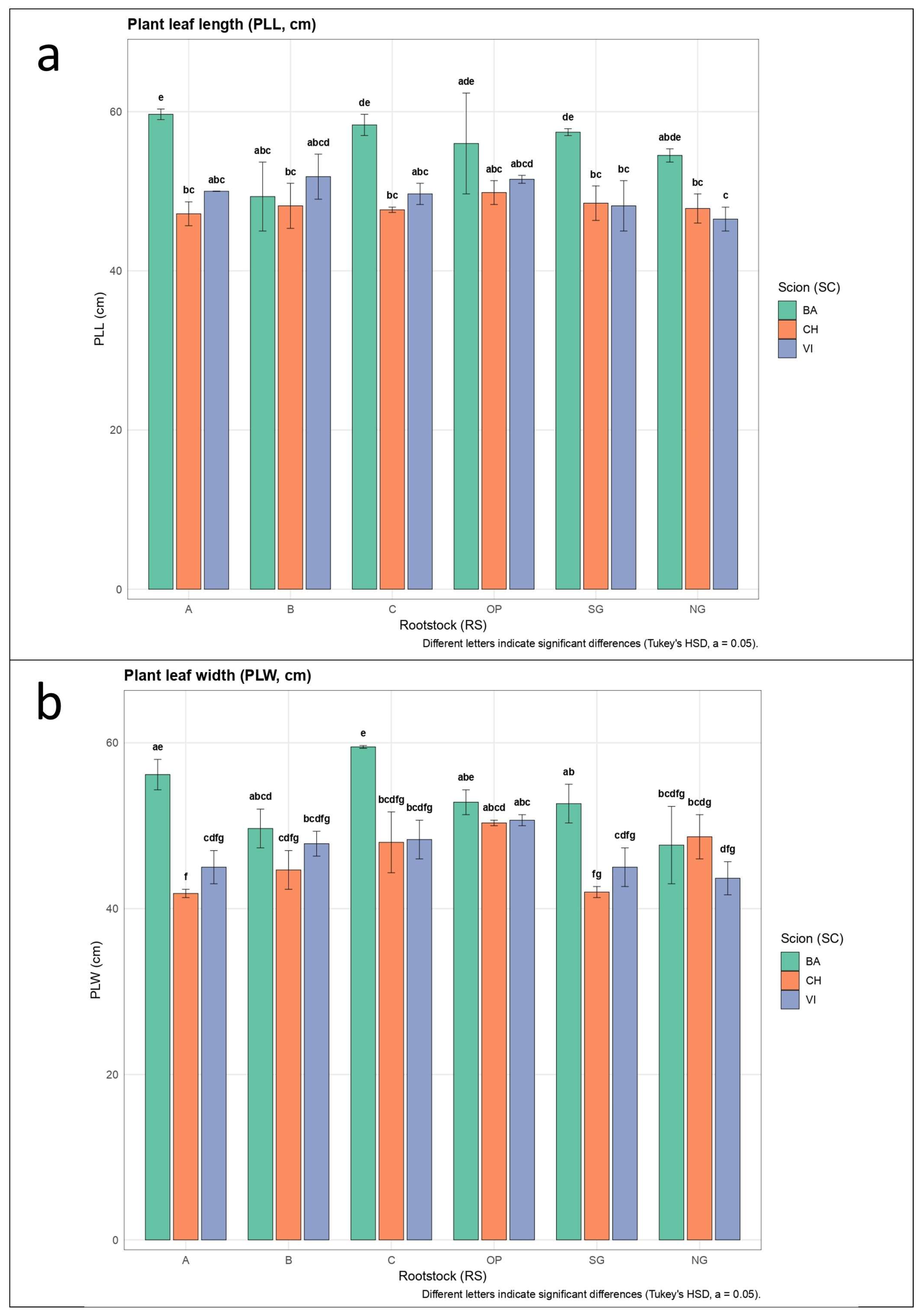
For plant leaf lamina length (PLL), a significant RS × SC interaction was detected, with values ranging from 47.17 cm in genotype CH to 59.67 cm in genotype BA, both grafted onto the experimental rootstock A (
Figure 3a). Similarly, plant leaf lamina width (PLW) was significantly affected by the interaction between the two experimental factors, with values ranging from 41.83 cm for rootstock A combined with scion CH to 59.50 cm for rootstock C combined with genotype BA (
Figure 3b). Overall, among the experimental materials, rootstock C consistently matched or exceeded the performance of the commercial control for key vegetative traits, while rootstock B showed comparable performance for plant vigor, indicating their strong application potential in organic greenhouse systems.
3.2. The Influence of Rootstock on Root Development Characteristics
Root system architecture is a critical component of crop adaptation in organic greenhouse systems, where nutrient availability, water supply, and soil health largely depend on root exploration capacity rather than on external chemical inputs. Root traits were mainly shaped by specific rootstock–scion combinations rather than by rootstock alone; however, root weight (RWE) and ramification (RRS) showed clear rootstock-dependent differences, with the commercial control OP consistently ranking highest and experimental rootstock C being the closest performer. Root weight (RWE) was the only trait strongly and directly affected by rootstock. OP ranked first (226.67 g), followed by C (172.50 g), B (123.00 g), A (113.72 g), SG (106.83 g), and NG (77.50 g). Thus, although none of the experimental rootstocks surpassed OP, rootstock C reached the closest biomass values and clearly outperformed SG and NG. Similarly, root ramification score (RRS) was significantly influenced by rootstock, with OP again ranking highest (6.83), followed by C (6.33), A (5.33), B and SG (5.00), and NG (4.50). Experimental rootstock C approached the control level and markedly exceeded non-grafted plants. This pattern highlights that biomass accumulation and architectural complexity were the primary root traits differentiating rootstocks under the tested conditions.
In contrast, no significant differences were detected for the root nematode score (RNS) in relation to either rootstock or scion, as nematode infection affected all plants without measurable effects on fruit yield. Similarly, root dry matter (RDM) was not significantly influenced by RS or SC, with values ranging from 15.06% in the OP–BA combination to 32.84% in self-grafted BA (
Table S2).
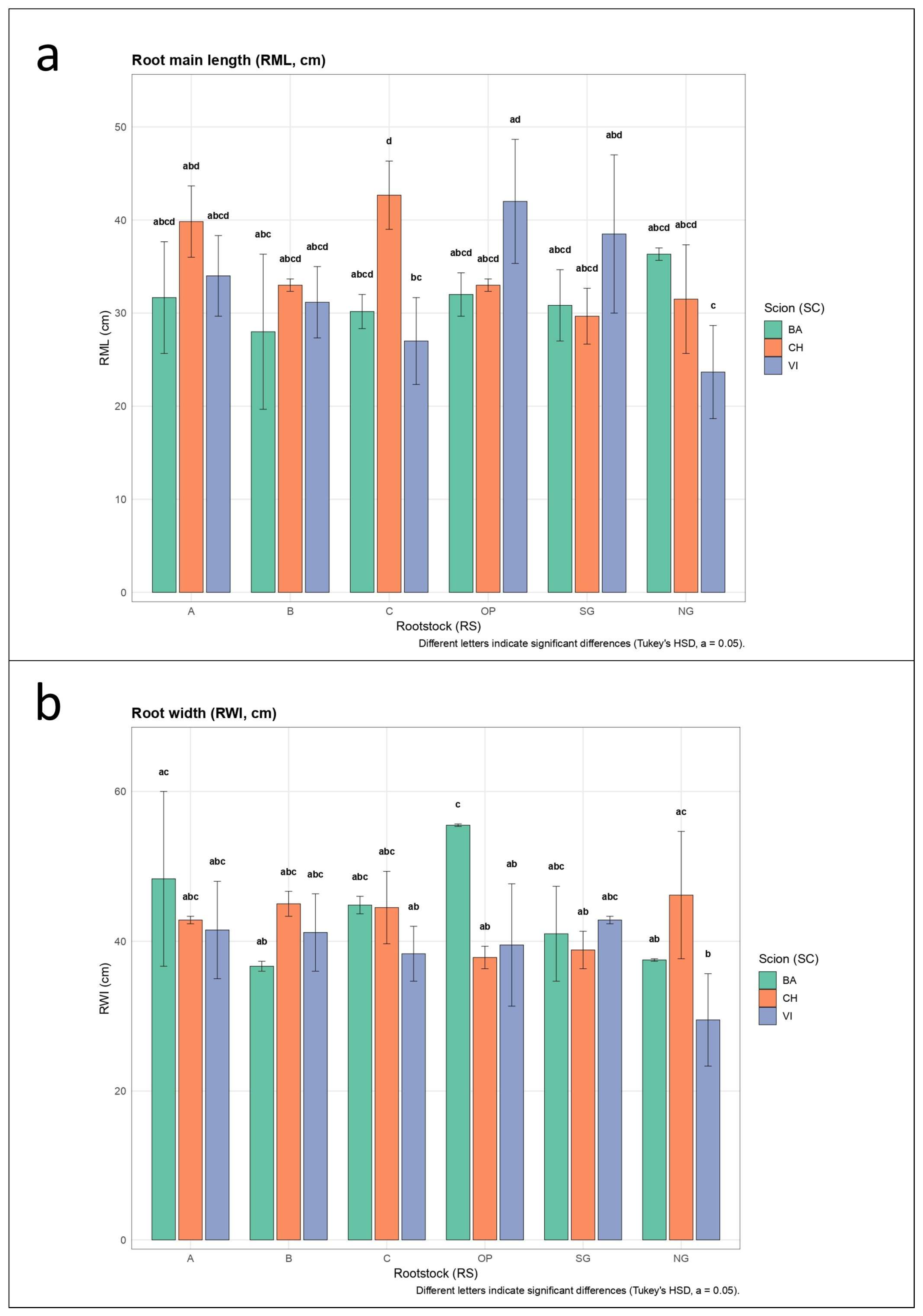
With respect to root length (RML), significant RS × SC interaction effects were observed (
Figure 4a), indicating genotype-dependent responses. RML ranged from 23.67 cm (NG–VI) to 42.62 cm (C–CH), with high values also observed in A–CH and in some BA combinations (
Figure 4a;
Table S2). At the rootstock mean level, A and OP showed comparable RML (35.17 vs. 35.67 cm), whereas B and NG ranked lowest (30.72 and 30.50 cm;
Table S2). This indicates that experimental rootstock A reached the control level for root elongation, while C exceeded OP in specific scion combinations.
Regarding root diameter of the first main root (R1MD), a significant variation was detected among the different scions. R1MD values ranged from 0.59 cm in BA to 1.14 cm in CH, while the hybrid VI exhibited an intermediate value of 0.75 cm (
Table S2). Across all tested rootstock–scion combinations, R1MD values ranged from 0.38 cm in non-grafted VI to 1.55 cm in genotype CH grafted onto rootstock OP. R1MD values exceeding 1.00 cm were observed for all rootstocks combined with scion CH, including the self-grafted treatment, with the exception of the non-grafted plants.
In addition, the second and third main root diameters (R2MD and R3MD, respectively) were significantly affected by the scion used. R2MD values ranged from 0.26 cm in non-grafted VI to 1.13 cm in scion CH grafted onto rootstock OP, while R3MD values varied from 0.17 cm in non-grafted VI to 1.02 cm in scion CH grafted onto rootstock OP (
Table S2). Concerning main root angle (RMA), values ranged from 92.33° to 145.00° for the experimental rootstocks A and C, respectively, both grafted with the scion BA (
Table S2). Overall, these results suggest that scion genotype was the main driver of root thickening, whereas grafting per se conferred a clear structural advantage compared to non-grafted plants.
Regarding root width (RWI), significant RS × SC interaction effects were observed (
Figure 4b), with scion contributing significantly to the observed variability (
Table S2). RWI ranged from 29.50 cm (NG–VI) to 55.50 cm (OP–BA), while most grafted combinations showed wider root systems than non-grafted VI (
Figure 4b). Across rootstock means, A and OP were comparable (44.22 to 44.28 cm), whereas NG showed the narrowest roots (37.72 cm;
Table S2). This indicates that experimental rootstock A fully reached the control level for lateral root expansion, while C maintained intermediate but superior values compared to SG and NG.
Overall, OP confirmed the highest performance in terms of root biomass and ramification. However, experimental rootstock C consistently ranked second and closely approached the control level, while rootstock A matched OP for root length and root width. Importantly, both A and C clearly outperformed self-grafted and non-grafted plants across the main structural root traits. Taken together, these results demonstrate the pivotal role of rootstock selection in determining root system efficiency under organic greenhouse conditions, where enhanced soil exploration and root vigor directly support improved resource acquisition and contribute to yield stability in the absence of synthetic fertilizers.
3.3. The Effect of Rootstock on Flowering Phenology
Flowering phenology is a key determinant of yield stability in organic greenhouse systems, where rootstock-mediated effects on plant vigor and resource acquisition can influence the timing and uniformity of reproductive development. Across trusses, none of the experimental rootstocks did not promote earlier flowering compared to the commercial control OP. Conversely, non-grafted plants consistently exhibited earlier flowering, while rootstock C tended to delay reproductive development. A significant RS × SC interaction was detected in all trusses except the third. In the third truss, although no interaction was observed, both rootstock and scion independently affected the interval from transplanting (DAT) to the opening of the third flower.
For the first truss, the earliest flowering was observed in CH grafted onto B and in non- and self-grafted VI (7.0–7.5 DAT), whereas the latest flowering occurred in OP–BA (18.3 DAT). At the rootstock mean level, NG and SG showed the shortest intervals (9.4–9.5 DAT), while OP and C ranked highest (11.0–10.9 DAT), indicating a slight delay associated with grafting, particularly in BA (
Table S3).
In the second truss, NG again showed the earliest flowering (16.0 DAT), whereas B and OP ranked among the latest (20.7 and 20.0 DAT, respectively). Rootstock C showed intermediate values (20.0 DAT), comparable to OP (
Table S3).
In the third truss, despite the absence of RS × SC interaction was detected, both rootstock and scion significantly affected flowering time. At the rootstock level, NG showed the earliest flowering (26.0 DAT), while C ranked highest (32.6 DAT), slightly exceeding OP (31.2 DAT). Thus, experimental rootstock C tended to delay flowering compared to the commercial control (
Table S3).
From the fourth to the eighth truss, the same pattern was maintained. In the fourth truss, flowering occurred at 34.4 DAT in non-grafted VI and was delayed up to 53.8 DAT in BA grafted onto rootstock A (
Table S3). In the fifth and sixth trusses, the earliest flowering was again recorded in non-grafted VI (48.5 and 63.9 DAT, respectively), whereas combinations involving rootstock C showed the longest intervals, reaching 71.0 DAT in the fifth and 85.4 DAT in the sixth truss. A comparable trend was observed in the seventh and eighth trusses, where non-grafted VI flowered at 79.5 and 91.0 DAT, while BA grafted onto C reached 98.1 and 109.8 DAT, respectively. Overall, grafting was generally associated with a slight delay in flowering, particularly in combinations involving BA. Among experimental rootstocks, C consistently showed equal or slightly longer intervals than OP, whereas A and B were generally comparable to the control. Importantly, none of the experimental rootstocks flowering relative to OP, indicating that their potential application should be evaluated in relation to vegetative vigor and yield performance rather than earliness.
3.4. The Effect of Rootstock on Fruit Yield and Quality
Fruit yield and quality represent major determinants of economic performance in organic greenhouse tomato production. Fruit yield was predominantly driven by the scion genotype, and among the experimental rootstocks, A demonstrated the highest yield potential when combined with BA, surpassing the commercial control OP in total production per plant. In contrast, C improved fruit size but did not enhance soluble solids content.
Fruit predominant shape (FS) varied according to the scion used. A circular fruit shape was observed for hybrids CH and VI, in agreement with the qualitative descriptors reported by the International Board for Plant Genetic Resources (IBPGR), whereas hybrid BA exhibited a slightly flattened shape (
Table S4). No significant differences in fruit shape were detected as a result of the different grafting combinations.
Fruit weight (FW) was strongly determined by the scion, with BA producing substantially heavier fruits (mean 99.45 g) than CH (22.87 g) and VI (20.44 g). At the rootstock level, SG showed the highest mean FW (54.18 g), followed by OP (48.60 g) and C (48.77 g), whereas NG ranked lowest (42.87 g). None of the experimental rootstocks exceeded the control OP in mean FW (
Table S4).
Fruit size parameters, fruit longitudinal diameter (FLD) and fruit transversal diameter (FTD), were significantly influenced by the RS × SC interaction. The highest absolute values were recorded in BA grafted onto rootstock C (FLD = 51.38 mm; FTD = 64.56 mm), exceeding OP–BA. Thus, experimental rootstock C surpassed the commercial control in fruit size when combined with BA (
Table S4).
Chromatic traits measured in the “CIELab” color space were differentially influenced by rootstock. The lightness parameter (L*) was significantly affected by rootstock, with self-grafted plants showing the highest mean value (49.61), followed by A (45.43) and NG (43.09), whereas B ranked lowest (35.78). Across individual combinations, L* values ranged from 24.46 in B–CH to 66.41 in self-grafted VI. Overall, experimental rootstocks did not consistently surpass OP in terms of fruit lightness.
In contrast, the red–green coordinate (a*) was not significantly affected by rootstock, showing limited variation among treatments (10.82–16.29). Conversely, the yellow–blue coordinate (b*) exhibited a significant RS × SC interaction, with values ranging from 19.09 in CH grafted onto A to 31.15 in non-grafted CH (
Table S4).
The analysis of fruit locule number (FLN) revealed no significant effects of either rootstock (RS) or scion (SC). Across all grafting combinations involving CH and VI, an average of two locules per fruit was observed. In contrast, grafting combinations involving BA showed a slightly higher mean FLN value (2.35), due to the occurrence of fruits with three locules. This deviation was confined to BA scions and was not observed in CH or VI. Fruit peel thickness (FPT) varied significantly according to the scion grafted onto the different rootstocks. The highest FPT value was recorded for scion BA (5.75 mm), whereas lower values were observed for the cherry tomato hybrids VI (4.21 mm) and CH (4.33 mm). Fruit firmness (FFN) was significantly affected by the RS × SC interaction, with values ranging from 1.09 N in self-grafted BA to 2.29 N in non-grafted VI (
Table S4).
Soluble solids content (SSC) showed a significant RS × SC interaction. The highest value was recorded in non-grafted CH (7.10 °Brix), whereas BA combinations showed the lowest values (3.63–4.07 °Brix). None of the experimental rootstocks increased °Brix compared to OP (
Table S4).
Fruit acidity (pH) was also significantly influenced by the RS × SC interaction, with values ranging from 4.17 in self-grafted CH to 4.58 in self-grafted BA (
Table S4).
The number of fruits per truss varied significantly in response to the RS × SC interaction, with values ranging from 11.05% in CH grafted onto rootstock B to 54.83% in BA grafted onto experimental rootstock A (
Table S4).
Fruit production per plant (FPP) was mainly determined by the scion. BA showed the highest yield (mean 5616 g plant−1), followed by CH (2610 g plant−1) and VI (2404 g plant−1). At the combination level, A–BA achieved the highest FPP (6472 g plant−1), exceeding OP–BA (5768 g plant−1). Thus, experimental rootstock A surpassed the commercial control in total yield when combined with BA. Conversely, B–VI showed the lowest production (1842 g plant−1).
Fruit yield and quality were largely determined by the scion genotype. Among the experimental rootstocks, A showed the highest yield potential when combined with BA, surpassing OP in total production per plant. In contrast, rootstock C enhanced fruit size but did not improve soluble solids content, and none of the experimental rootstocks consistently increased sugar levels compared with the commercial control. These findings suggest that the application potential of the tested rootstocks lies primarily in yield optimization rather than in intrinsic improvements of fruit quality. Overall, the results confirm that rootstock–scion interactions can substantially modulate yield components and selected quality traits under organic greenhouse conditions, supporting grafting as a strategic tool to enhance productivity while maintaining acceptable quality standards in low-input systems.
3.5. Correlation Analysis Between Traits
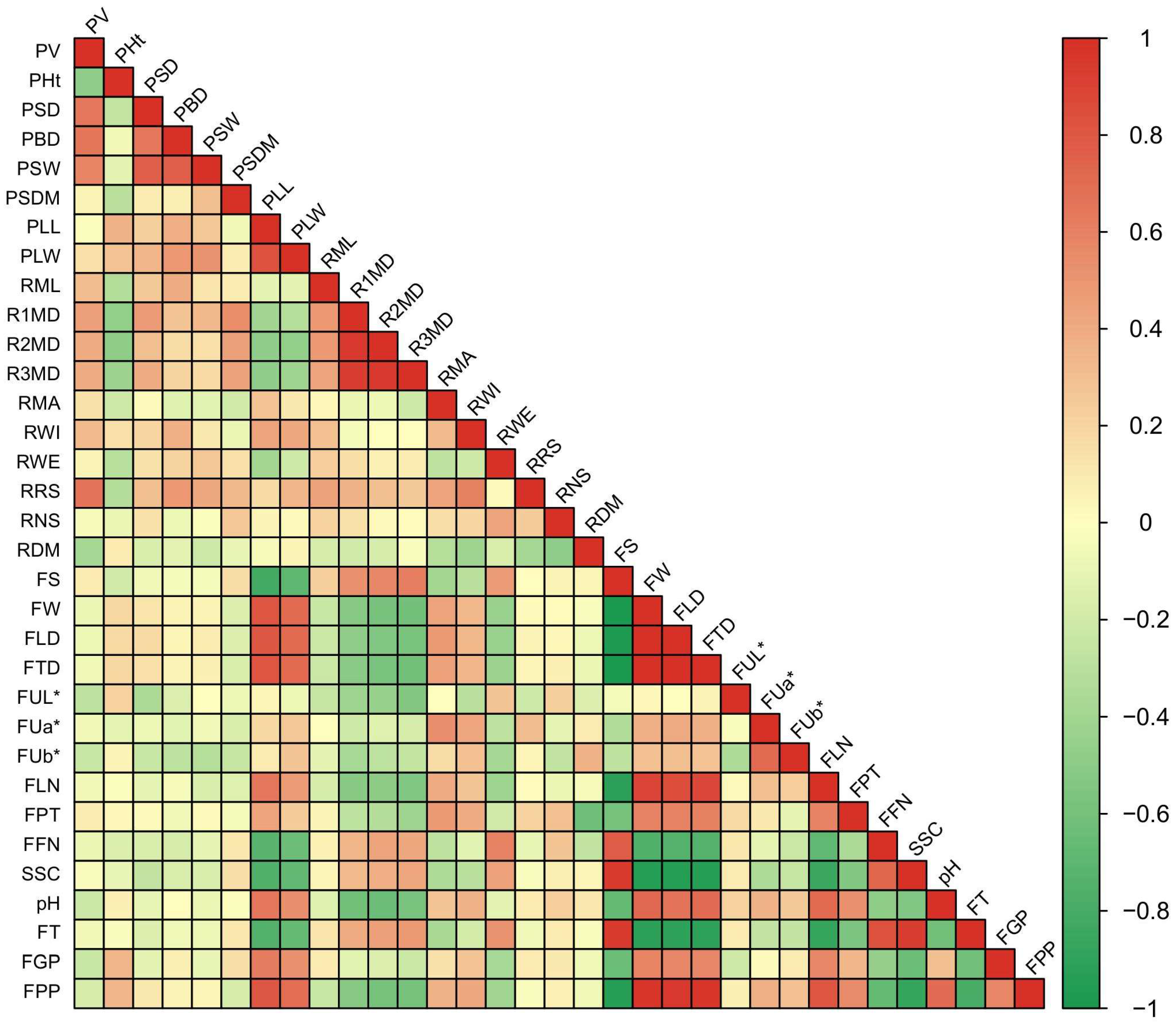
Correlation analysis was performed to identify functional relationships among vegetative, root, and fruit traits under organic greenhouse conditions, where limited external inputs make the coordination between growth efficiency and yield performance particularly critical. Among plant-related traits, leaf lamina length (PLL) showed the highest number of significant correlations (
Figure 5). PLL was positively correlated with leaf width (PLW), root width (RWI), fruit weight (FW), fruit longitudinal and transversal diameters (FLD and FTD, respectively), number of fruit locules (FLN), fruit peel thickness (FPT), fruit acidity (pH), percentage of green fruits (FGP), and fruit production per plant (FPP). In contrast, PLL was negatively correlated with the first, second, and third main root diameters (R1MD, R2MD, and R3MD, respectively), fruit shape (FS), fruit firmness (FFN), soluble solid content (SSC), and number of fruits per truss (FT).
Among root traits, the third main root diameter (R3MD) exhibited the strongest correlation pattern. R3MD was positively correlated with plant stem dry matter (PSDM), main root length, diameter, and weight (RML, RMD, R2MD, and RWE, respectively), as well as with fruit shape (FS), firmness (FFN), soluble solid content (SSC), and number of fruits per truss (FT) (
Table S1). Conversely, R3MD was negatively correlated with plant height (PHt), leaf lamina length (PLL), fruit weight (FW), fruit longitudinal and transversal diameters (FLD and FTD, respectively), chromatic lightness (FUL*), number of locules (FLN), fruit peel thickness (FPT), fruit acidity (pH), and fruit production per plant (FPP) (
Figure 5). With respect to fruit traits, fruit longitudinal diameter (FLD) was the most strongly correlated parameter. FLD showed positive correlations with leaf length and width (PLL and PLW, respectively), main root angle (RMA), fruit weight and transversal diameter (FW and FTD, respectively), chromatic coordinate a (Fua*), number of locules (FLN), fruit peel thickness (FPT), fruit acidity (pH), percentage of green fruits (FGP), and fruit production per plant (FPP). In contrast, FLD was negatively correlated with root diameters (R1MD, R2MD, and R3MD), fruit shape (FS), fruit firmness (FFN), soluble solid content (SSC), and number of fruits per truss (FT) (
Figure 5).
3.6. Comprehensive Classification Model Revealed by Principal Component Analysis
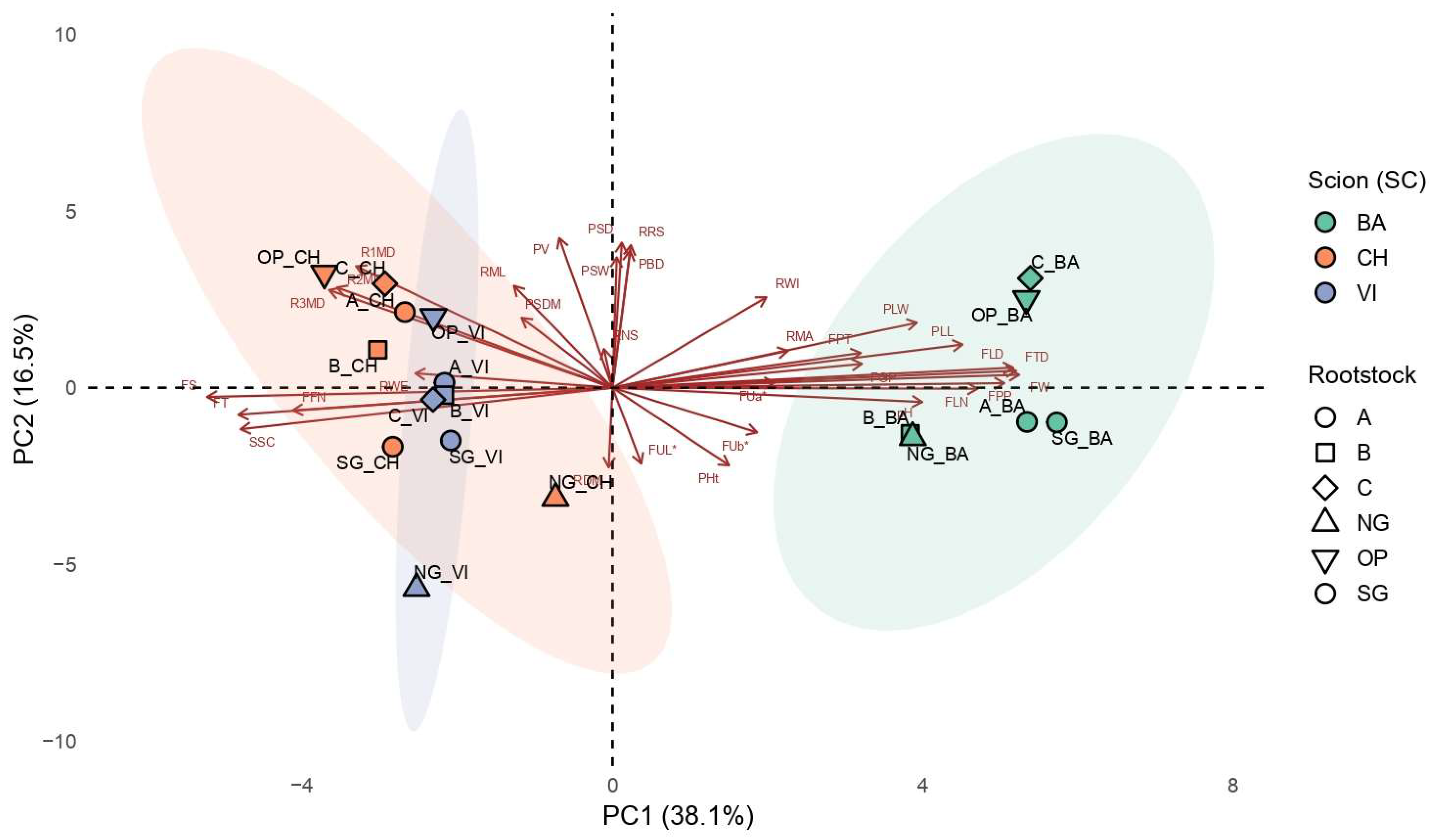
Principal component analysis (PCA) was applied to integrate multiple vegetative, root, and fruit traits and to visualize the overall performance of rootstock–scion combinations under organic greenhouse conditions. The PCA confirmed that fruit yield and size were predominantly scion-driven, whereas rootstock effects were mainly associated with vegetative vigor and root system architecture. Among experimental rootstocks, A–BA clustered with the highest yield values, surpassing OP–BA, while C–BA was positioned closer to fruit size–related variables. In contrast, non-grafted combinations were separated along PC2 and associated higher soluble solids and reduced vegetative vigor (
Figure 6).
PCA explained 54.6% of the total variance across the first two components (PC1 38.1% and PC2 = 16.5%). PC1 clearly separated BA combinations from CH and VI, reflecting the strong contribution of fruit weight, fruit size, and total production per plant. Notably, A–BA was located at the extreme positive side of PC1, consistent with its superior yield performance compared to OP–BA, whereas C–BA grouped with fruit size traits but not with soluble solids. This confirms that yield enhancement and sugar accumulation were not simultaneously improved (
Figure 6). PC2 differentiated combinations according to vegetative vigor and root development. OP–CH, OP–VI, and C–CH clustered in the upper quadrant and were associated with higher root weight, ramification, and plant vigor. This indicates that experimental rootstock C achieved a vegetative and root performance comparable to the commercial control OP. In contrast, non-grafted combinations were positioned in the lower region of PC2 and were associated with reduced root biomass and vigor. Overall, the PCA confirmed a predominant influence of the scion on fruit-related traits along PC1, whereas rootstock effects were mainly associated with vegetative vigor and root system architecture along PC2. In particular, experimental rootstock A maximized yield performance when combined with BA, while rootstock C exhibited a vegetative and root profile comparable to the commercial control OP. However, none of the experimental rootstocks simultaneously enhanced total yield and soluble solids content. Taken together, these multivariate results indicate that the practical value of the tested experimental rootstocks lies primarily in yield optimization rather than in intrinsic improvements of fruit quality, providing a comprehensive framework for selecting rootstock–scion combinations better suited to organic greenhouse production systems.
4. Discussion
In this study, we evaluated the agronomic performance and production related traits of different tomato rootstock–scion combinations under Mediterranean greenhouse organic farming conditions, characterized by restricted use of synthetic inputs. Grafting is generally recognized as an effective strategy to improve plant vigor, yield and disease resistance through the use of inter- and intra-specific rootstocks [
25,
26,
27]. Under organic greenhouse systems, where nutrient availability and plant protection options are limited, the selection of appropriate rootstocks is therefore crucial to stabilize yield and maintain fruit quality. In this context, the commercial rootstock Optifort (OP), used as a control in the present study, is known for promoting high plant vigor and conferring tolerance to several abiotic and biotic stresses when combined with tomato or eggplant scions [
4]. Additionally, several studies have reported that Optifort rootstock confers resistance to various abiotic and biotic stresses in tomato plants, which affects their growth and development [
28,
29].
Rootstock significantly influenced vegetative performance and root system architecture under Mediterranean organic greenhouse conditions, confirming its functional relevance in low-input systems. Differences in plant vigor and stem development were associated with variations in root morphometric traits. In particular, root weight (RWE) was significantly lower in non-grafted plants compared with grafted combinations, supporting the role of grafting in enhancing belowground development. A more structured and heavier root system, characterized by increased diameter and ramification, likely improved soil exploration capacity and nutrient and water uptake efficiency—an essential trait in organic production, where nutrient availability largely depends on soil mineralization rather than readily soluble fertilizers. Although root galling was observed across all treatments due to nematode presence in the cultivation area, the root nematode score (RNS) did not differ significantly among rootstocks or scions, indicating comparable tolerance levels. These findings demonstrate that rootstock selection modulated belowground construction and indirectly sustained aboveground growth without exacerbating nematode susceptibility, representing a strategic agronomic tool for optimizing plant performance in organic greenhouse systems.
In our work, the rootstock Optifort, exhibited a plant vigor (PV), and a plant stem diameter (PSD) comparable to the ones of the experimental rootstocks (A, B and C) tested. On the other hand, the control Optifort, showed the highest plant basal diameter (PBD). The results that we achieved in this work are consistent with former findings [
30], who evaluated the agronomic performance of inter and intraspecific tomato rootstocks developed through traditional breeding strategies and incorporating resistant genes for soil-borne and airborne diseases. Specifically, our results regarding the key agronomic traits such as plant height (PHt), plant stem diameter (PSD), and root main length (RML) are consistent with their findings. Significant differences in plant stem diameter (PSD) related to the rootstock were also reported [
31], with lower values in self- and non-grafted plants, in agreement with our results. In agreement with previous studies [
32], a significant rootstock × scion interaction was observed for plant height, with grafted plants showing higher values compared to self-grafted and self-rooted plants. Our findings were consistent to the ones obtained in the previous-cited work, and we observed no particular difference for the plant height at the end of the growing cycle. We also evaluated the plant stem dry matter (PSDM) of the different rootstock–scion combinations and found no significant variation between them, either individually or in interaction.
Our results were consistent with previous findings on the effects of different nitrogen applications across grafting combinations [
33]. Specifically, no significant variation in PSDM content was observed among self-grafted plants, suggesting that grafting did not affect PSDM percentage. Similarly, no significant differences in root dry matter (RDM) content were detected among the grafting combinations tested, including self-grafted plants, in agreement with previous reports [
33].
Regarding plant earliness, expressed as days to flowering, we observed a significant reduction in flowering time in non-grafted plants, followed by self-grafted ones, partially contrasting with previous studies reporting earlier flowering in grafted plants [
32]. The early flowering observed in non-grafted plants may be explained by the absence of tissue recognition and regeneration processes, which are instead activated in grafted and self-grafted plants and may delay the transition to the reproductive phase. With respect to fruit weight (FW), our results did not align with previous findings [
34], as no significant rootstock effect was detected.
Although no significant rootstock effect was detected on single fruit weight, this outcome should be interpreted positively. The experimental rootstocks, developed primarily for stress and disease tolerance, preserved the intrinsic fruit size determined by the scion genotype. At the same time, the thicker and more structured root systems observed in several grafted combinations may have enhanced hydraulic conductance and nutrient uptake, potentially influencing dry matter accumulation and soluble sugar concentration. Root-derived hormonal signaling, particularly involving cytokinins and abscisic acid, could further modulate assimilate partitioning and fruit sink strength [
35,
36], suggesting a functional connection between belowground vigor and aboveground quality traits. From a commercial perspective, maintaining cultivar-specific fruit standards while improving vegetative and root performance strengthens the practical applicability of these rootstocks in organic greenhouse systems.
Flowering phenology should also be interpreted in relation to the environmental constraints of Mediterranean winter greenhouses, where low temperatures and reduced light intensity can limit photosynthetic activity and assimilate availability. This physiological adjustment may partially explain differences observed in flowering timing among grafting combinations. From a production standpoint, even small shifts in anthesis under winter conditions can influence harvest scheduling and market windows.
Rootstock effects on yield composition, commodity quality, and intrinsic fruit attributes were strongly dependent on the scion genotype, highlighting a consistent and significant rootstock × scion interaction for several market-relevant traits. Fruit size parameters, including longitudinal and transversal diameters (FLD and FTD), exhibited a clear interaction pattern, confirming that fruit dimensional development was not exclusively scion-driven but modulated by the rootstock background, in agreement with previous studies on grafting and seasonal influences in tomato production [
31]. Similarly, soluble solids content (SSC) and fruit acidity (pH) two primary determinants of taste balance—were significantly influenced by the rootstock × scion interaction [
34]. It is important to consider that organic consumers generally prioritize flavor and overall sensory quality over yield alone. Therefore, the ability of specific rootstock–scion combinations to modulate soluble solids and acidity represents a strategic opportunity to enhance taste perception and increase the added value of organic tomatoes in premium market segments. Given that consumer perception of tomato flavor relies largely on the sugar–acid equilibrium, these results demonstrate that grafting can indirectly shape sensory quality under organic greenhouse conditions. Fruit firmness (FFN) showed limited variability among grafting combinations and no significant overall differences, supporting previous reports that firmness is predominantly genotype-dependent [
28]. Nevertheless, scion-specific responses were evident: the F
1 cherry hybrids CH and VI displayed firmness values consistent with literature data under different irrigation regimes, whereas the F
1 BA genotype, characterized by a slightly flattened fruit shape, exhibited significantly lower FFN values [
32], suggesting that intrinsic morphological traits may partially override rootstock effects on texture. Fruit peel thickness (FPT) was significantly higher in the evaluated hybrids compared with previously reported values [
33]. Because increased peel thickness has been associated with reduced radial cracking, the absence of cracking symptoms in our trial may be partially explained by this structural trait, which contributes to improved postharvest integrity and shelf life. In addition, chromatic parameters (CIE L*, a*, b*) were enhanced relative to values reported under osmotic dehydration during autumn–winter cycles [
37], indicating favorable visual appearance under our cultivation conditions. Although fruit production per plant (FPP) did not differ significantly among grafting treatments, including self-grafted plants [
29], qualitative and compositional traits clearly showed that yield quantity was mainly scion-determined, whereas rootstock selection modulated both commodity and intrinsic quality attributes.
PCA provided a clear synthesis of the genotype effects observed in this study. Fruit-related traits (fruit weight, size, and total production per plant) were mainly associated with PC1, confirming that yield performance was predominantly scion-driven. In contrast, PC2 was strongly linked to vegetative vigor and root morphometric traits, indicating that rootstock genotype primarily modulated plant growth and belowground development. The separation of yield traits from soluble solids content further showed that increased productivity did not coincide with enhanced sugar accumulation.
Despite these results, this study has some limitations. The evaluation was conducted over a single growing cycle under controlled conditions, which is insufficient to definitively identify the optimal rootstock–scion combination. Moreover, the absence of pre- and post-cultivation soil analyses limited the assessment of nutrient uptake, soil microbial communities and nematode dynamics, which represent a major constraint in the cultivation area. Future multi-season and multi-environment trials are thus necessary to assess the stability, adaptability, and stress responsiveness of the evaluated rootstocks across contrasting agronomic scenarios. It is also worth noting that all Barbarela F1 (BA) combinations exhibited higher fruit yield components compared with the Cherry F1 (CH) and Vittorio F1 (VI) combinations. For example, the average fruit weight (FW) of BA was approximately 4.5-fold higher than the corresponding average values of CH and VI. This inherent difference among scion types may represent a potential source of bias in the interpretation of the results. Nevertheless, although BA inherently produces larger fruits than CH and VI, the primary objective of this study was to evaluate rootstock effects within individual scion backgrounds rather than to directly compare scion cultivars with contrasting fruit types. In addition, the tomato hybrids were selected within the framework of the H2020 BRESOV project with the aim of testing inter- and intraspecific rootstocks in combination with scions representative of the national tomato market. All rootstocks were developed at the University of Valencia (UPV) within the framework of the same project. Accordingly, Barbarela F1 was chosen to represent the Spanish market, while Cherry F1 and Vittorio F1 were selected for their representativeness of the Italian market, where Sicily is one of the leading regions for cherry tomato production.
Although self-grafted combinations showed higher fruit production per plant (FPP) than those grafted onto the experimental rootstocks, further evaluation is imperative. Rootstock effects are known to be strongly influenced by environmental conditions and often become more evident under biotic or abiotic stress or over longer cultivation periods. Moreover, self-grafting may confer short-term yield advantages that do not necessarily reflect long-term performance or yield stability. Since the experimental rootstocks evaluated in this study were newly developed within the H2020 BRESOV project, multi-season and multi-environment trials are required to fully assess their agronomic potential and resilience. As such, it represents a pioneering contribution that establishes a foundational dataset for future agronomic optimization and supports the strategic selection of rootstock–scion combinations tailored to specific organic production systems.
5. Conclusions
This study demonstrates that recently developed inter- and intraspecific tomato rootstocks can enhance vegetative vigor and root system architecture under Mediterranean winter organic greenhouse conditions without compromising scion-specific fruit size standards. In low-input systems characterized by limited nutrient availability, reliance on soil mineralization, and reduced winter radiation, improved root functionality represents a key adaptive trait to sustain plant growth and stabilize yield performance.
Among the experimental materials, rootstock A showed the highest production potential when combined with BA, surpassing the commercial control Optifort (OP) in total fruit yield per plant. Rootstock C exhibited vegetative and root performance comparable to the control, particularly in terms of root biomass and structural development, although it did not consistently improve soluble solids content. Across combinations, fruit yield and size were predominantly scion-driven, whereas rootstock effects were mainly associated with vegetative vigor and belowground traits. Multivariate and correlation analyses further suggested a functional decoupling between fruit size and soluble solids content under the tested conditions.
The absence of significant rootstock effects on single fruit weight confirms that stress-oriented rootstock breeding did not alter intrinsic market-class fruit size standards. This is particularly relevant for organic winter greenhouse production, where maintaining established fruit typologies and quality parameters is essential for market acceptance.
From an applied perspective, the evaluated rootstocks especially A in combination with BA represent promising candidates for yield-oriented Mediterranean organic winter greenhouse production. Future multi-season and multi-environment trials, particularly under biotic and abiotic stress scenarios, are required to validate long-term performance and further refine rootstock–scion selection strategies for sustainable organic horticulture.



 ,
,