1. Introduction
Lawns represent a crucial component of urban landscapes, serving esthetic, recreational, and environmental functions that enhance residents’ quality of life and urban biodiversity [
1]. The quality of turfgrass depends primarily on field conditions and maintenance intensity, particularly fertilization practices and the sustainable management of soil resources. However, excessive application of mineral fertilizers, especially nitrogen, can lead to soil acidification, reduced fertility, and a decline in beneficial soil microorganisms [
2]. Therefore, there is a growing interest in strategies that maintain high turf quality while reducing or complementing conventional chemical inputs [
3].
Recent advances in research on biostimulants and microbial soil inoculants suggest that microorganisms can positively influence plant metabolism, nutrient availability, and resistance to abiotic stress and pathogens [
4,
5,
6]. Preparations containing bacteria from the genera
Bacillus and
Azotobacter, as well as arbuscular mycorrhizal fungi from the genus
Glomus, may enhance atmospheric nitrogen fixation, mobilize phosphorus and potassium from insoluble mineral compounds, and stimulate root system development, ultimately improving turf condition [
7,
8,
9,
10]. Furthermore, these microorganisms can increase plant tolerance to environmental stresses such as periodic water deficits and disease incidences [
11,
12,
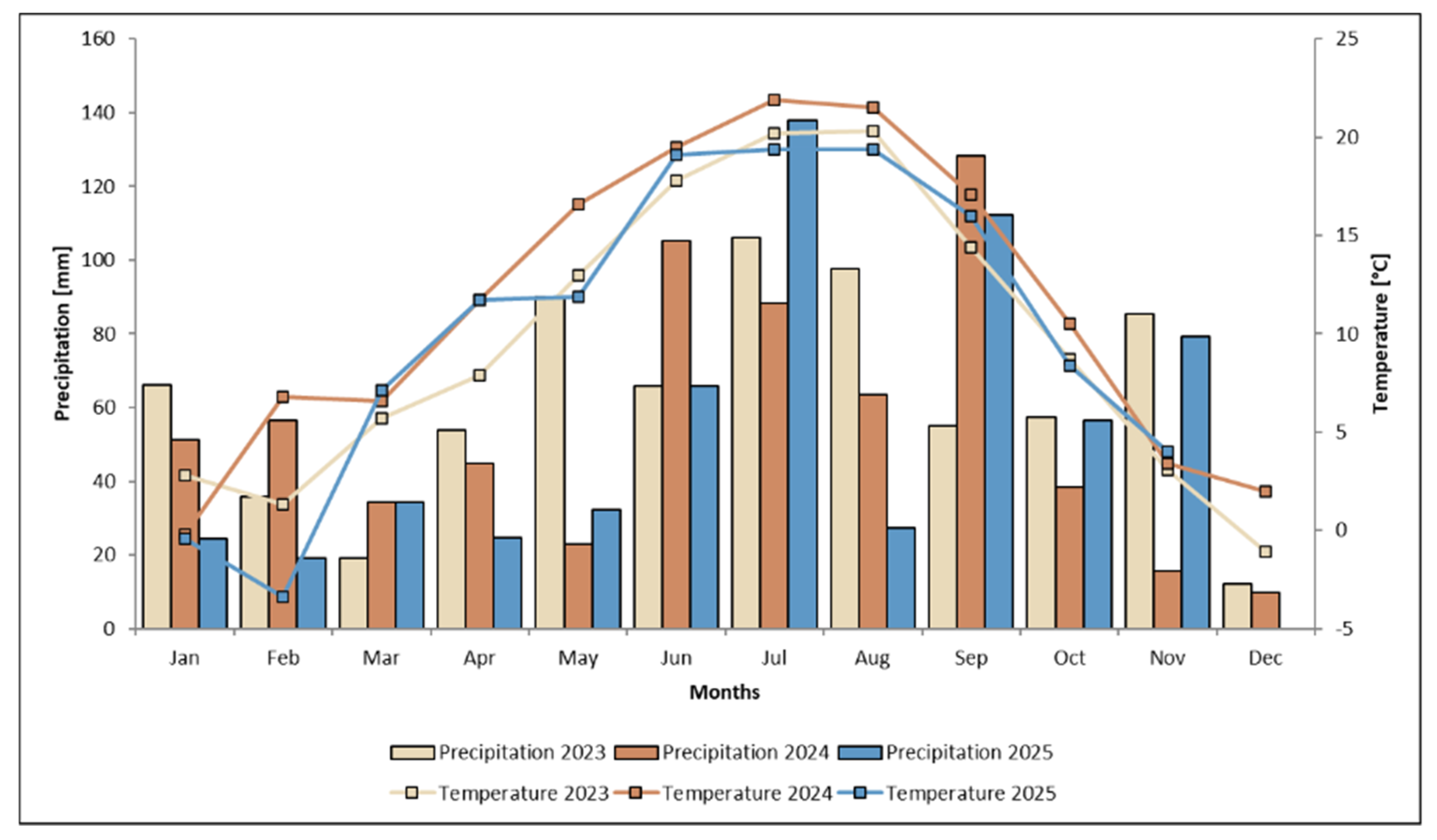
13]. Nevertheless, the effectiveness of microbial preparations in turfgrass cultivation is variable and influenced by numerous factors, including soil and climatic conditions, maintenance intensity, and the specific composition of the bioformulation. Under Central European temperate conditions, intensively managed turfgrass systems are exposed to pronounced seasonal fluctuations in temperature and precipitation, including periodic summer droughts that may limit nutrient availability, root activity, and overall turf resilience. In high-maintenance lawns established on anthropogenically modified or previously degraded soils with moderate fertility and variable water-holding capacity, sustaining dense canopy structure and consistent visual quality often requires elevated nutrient inputs. These site-specific constraints underscore the importance of management strategies that enhance nutrient use efficiency and plant stress tolerance, particularly in turfgrass systems maintained under conventional high-input regimes. Comprehensive studies on the effects of various microbial soil inoculants on turf quality under the temperate climatic conditions of Poland are still lacking [
14].
Previous research on the use of biostimulants and organic preparations in turf maintenance has confirmed their potential benefits; however, there remains a shortage of publications simultaneously assessing both visual and functional parameters of turfgrass under Poland’s temperate climate [
15]. Recent studies have demonstrated that the application of amino acids and humic acids can improve leaf color and structure, increase the normalized difference vegetation Index (NDVI), and reduce the occurrence of fungal diseases in turfgrass [
16]. Similar findings have been reported regarding improvements in turf quality ratings under the influence of organic biostimulants [
17,
18].
Given the growing need to develop sustainable management technologies for urban green space, it is justified to conduct experiments evaluating the effects of microbial soil inoculants on turf quality. The present study aimed to assess the impact of selected microbial fertilizers on the turf quality index, including both esthetic and functional traits, according to the COBORU (Research Centre for Cultivar Testing) methodology [
19].
4. Discussion
Across all three years of study, the microbial inoculants consistently improved turfgrass quality compared with the untreated control. The greatest benefits occurred with BioVitaGrass and NitroGrass, which enhanced the overall visual quality of the turf, increased canopy density, and improved leaf color and fineness. These treatments also reduced the severity of common turf diseases (pink snow mold, leaf spot, and stem rust), with BioVitaGrass exhibiting the best disease resistance performance (mean score >8.8). Such improvements are consistent with well-documented mechanisms of plant growth-promoting microorganisms. In particular,
Bacillus spp.,
Azotobacter spp., and arbuscular mycorrhizal fungi are known to support photosynthetic activity, increase chlorophyll content, and improve the availability and uptake of key nutrients. They also stimulate the production of plant hormones that regulate growth and help activate plant defense pathways. The strong responses observed in this study therefore reflect the combined effects of nutrient mobilization, root stimulation, and enhanced resilience provided by multi-species microbial consortia [
24,
25,
26].
The role of phosphate- and potassium-solubilizing microorganisms in improving nutrient uptake and plant performance has been documented previously. These species improve plant nutrition by converting forms of phosphorus and potassium in the soil that are normally unavailable into soluble forms that roots can absorb. They achieve this mainly by releasing organic acids and enzymes that break down mineral-bound phosphorus and potassium [
27,
28]. In our trials, StymGrass P+K, which contains only
Bacillus strains with this function, improved turf performance but to a lesser extent than the multi-species formulations, highlighting the advantage of functional consortia which is consistent with previous reports [
29,
30,
31,
32]. These observations suggest that combining nitrogen-fixing bacteria,
Bacillus spp., and arbuscular mycorrhizal fungi can confer broader benefits than single inoculants by enhancing nutrient acquisition, root development, and observed short-term drought stress resilience, corresponding with prior studies [
33,
34,
35].
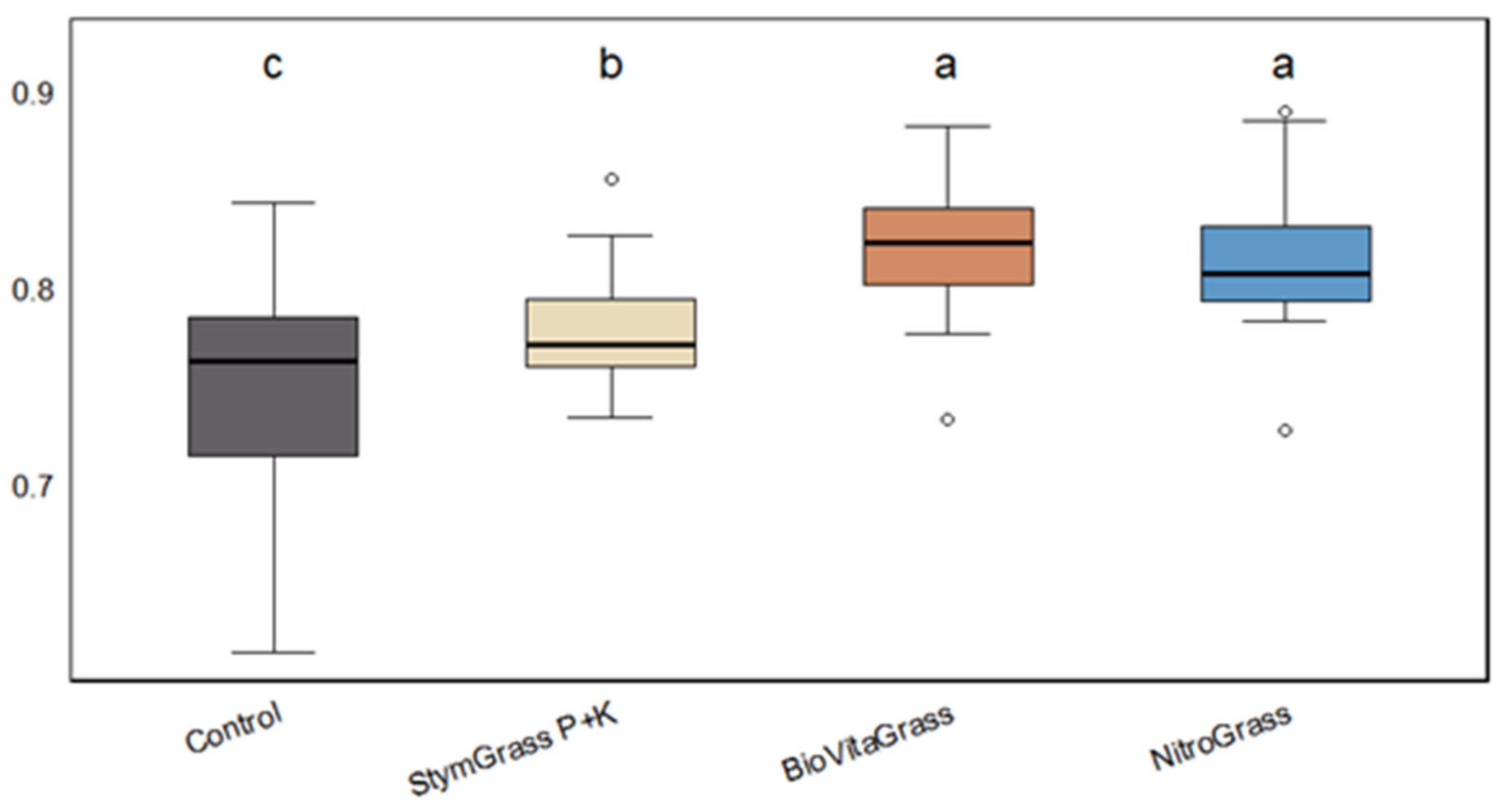
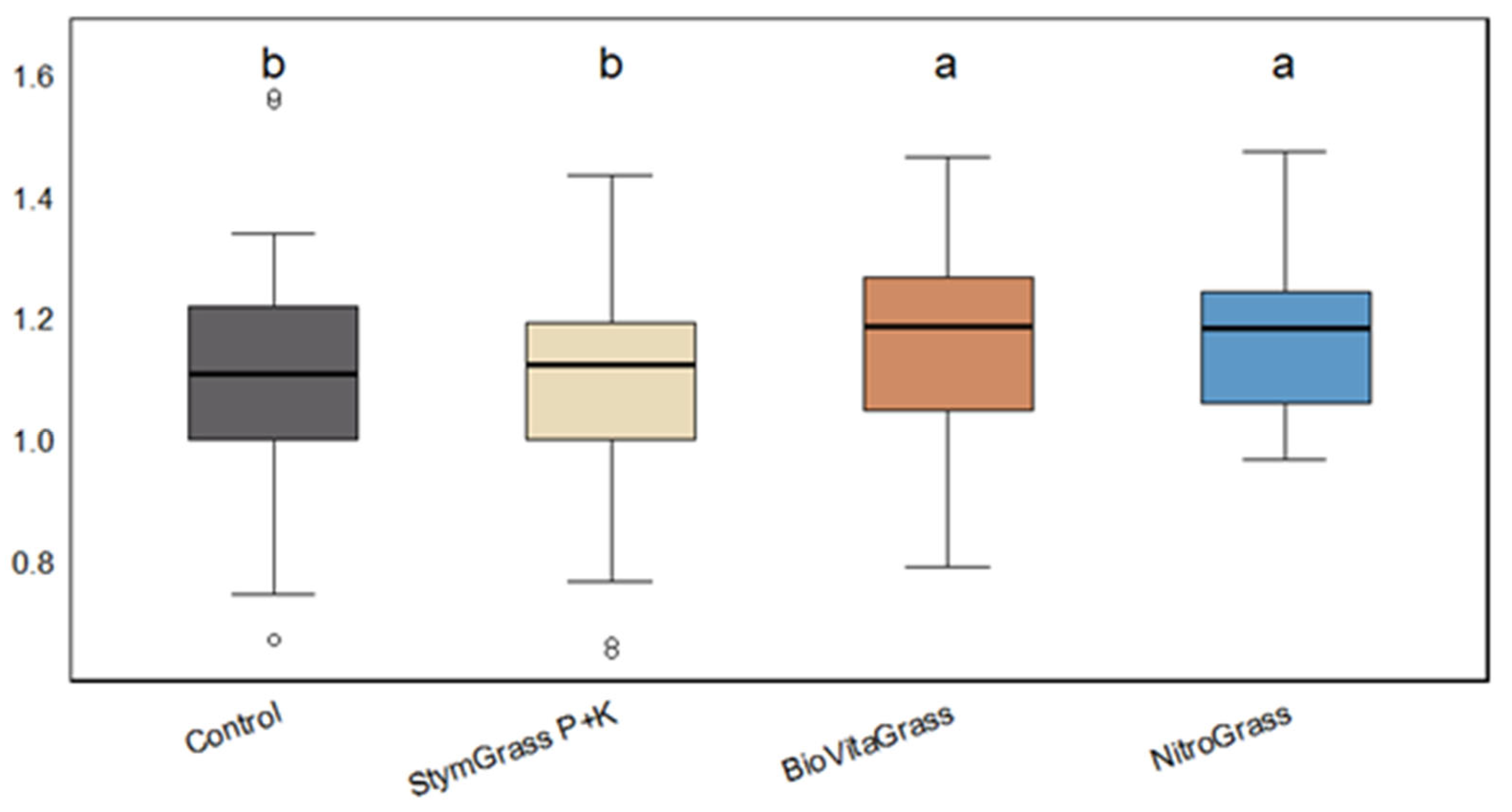
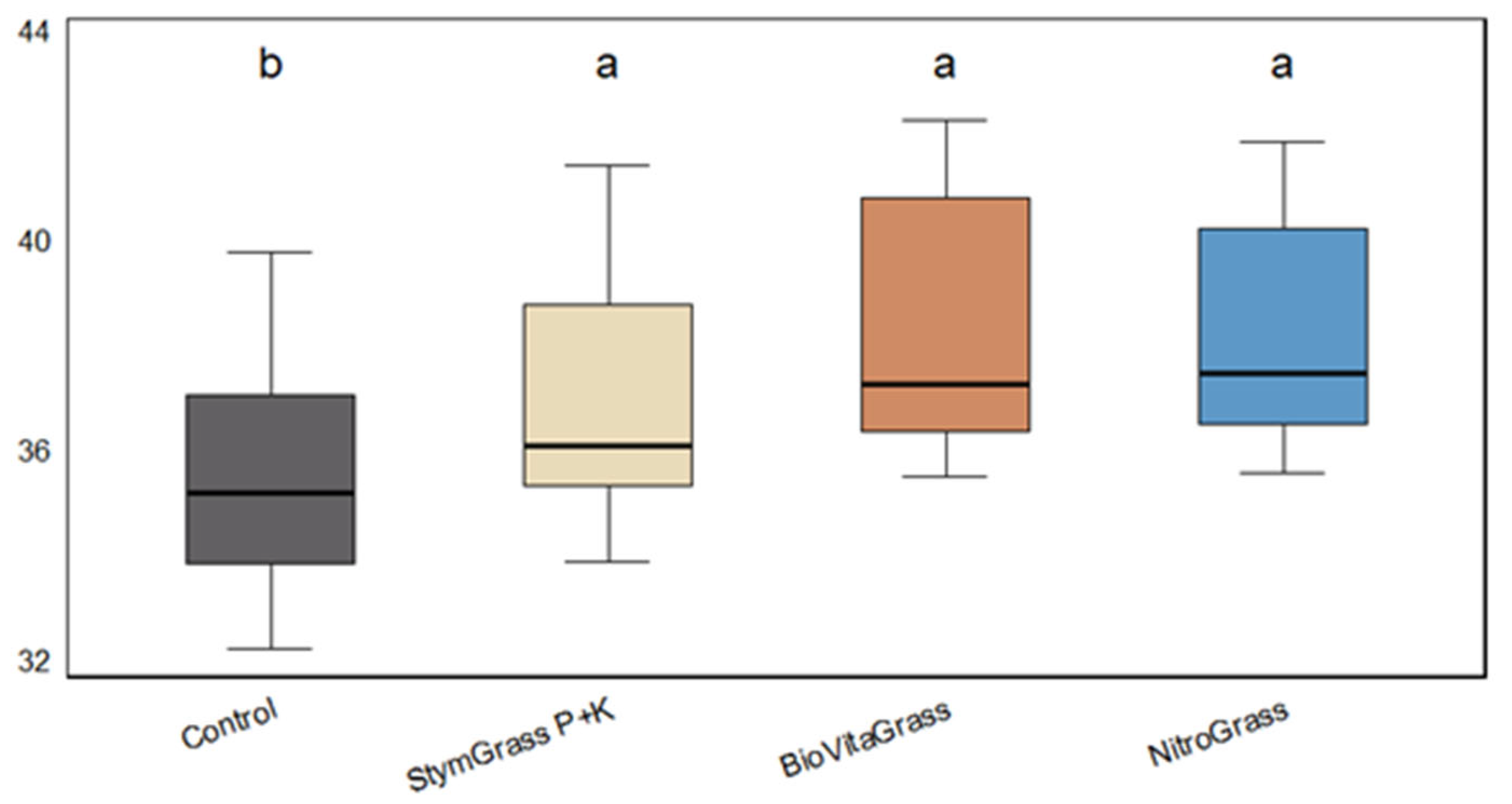
The superior effects of BioVitaGrass and NitroGrass were reflected in physiological indices. Higher NDVI (0.82 compared to 0.75, p < 0.001) values indicated improved canopy greenness and photosynthetic activity, while increased LAI (1.16 and 1.17 compared to 1.09, p < 0.001) reflected the greater leaf surface area available for light capture. The higher SPAD (38.13 and 38.11 compared to 35.42, p < 0.001) readings measured increased the chlorophyll content in the leaves. These functional enhancements are consistent with the visual assessments and reflect improved structural and physiological turfgrass traits.
While most empirical evidence for
Bacillus + AMF consortia benefits comes from crop species such as maize and wheat [
36,
37], the observed improvements in root architecture, nutrient uptake, and drought tolerance provide a mechanistic basis for expecting similar effects in turfgrass.
Some studies have confirmed positive effects of bacterial consortia on cool- and warm-season turfgrasses: weekly application of root-colonizing bacterial blends increased the shoot biomass of ‘Tifway’ Hybrid Bermudagrass by 2.3–3.5 times in growth chamber trials [
38], and inoculation with
Bacillus strains significantly improved turf color and clipping yield in perennial ryegrass and tall fescue in a two-year field experiment [
39]. These results show that root-associated bacteria can improve aboveground traits that are important for turf quality, such as root growth and the visual and functional appearance of the grass.
Mahdavi et al. also reported positive effects on tall fescue physiological traits following application of
Pseudomonas fluorescens, showing that inoculation enhanced the plant’s ability to maintain essential metabolic processes under drought stress [
40]. Corresponding findings were reported by Sullins et al. in bermudagrass, where treatments with
Bacillus and
Paenibacillus strains increased forage biomass and improved overall forage quality [
41]. However, prior work on warm-season turfgrass, including bermudagrass, reported inconsistent responses to single-strain microbial inoculants, with limited improvements in turf quality, NDVI, or root/shoot growth, likely due to competition with endemic microbial communities [
42]. In contrast, our results with NitroGrass, a multi-species inoculant containing
Azotobacter spp. and
Bacillus spp., consistently enhanced turfgrass visual quality, canopy density, nutrient uptake, and disease resistance. This indicates that multi-functional consortia may overcome the limitations of single-strain inoculants and offer a more reliable strategy for perennial turfgrass improvement.
Mineral analyses confirmed that multi-species microbial consortia substantially enhanced macro- and micronutrient uptake compared with the single-function inoculant. BioVitaGrass, containing
Bacillus spp. and arbuscular mycorrhizal fungi, significantly increased P, K, Ca and micronutrient (Mn, Fe, Zn) contents in plant biomass (
p < 0.01), which aligns with well-documented AMF-mediated nutrient mobilization via extensive extraradical hyphal networks that expand the soil volume explored by roots and improve the acquisition of poorly mobile nutrients such as P, Zn, and Cu [
43,
44]. The presence of
Bacillus spp. likely amplified these effects through the solubilization of mineral phosphates and metal ions via organic acid secretion, proton extrusion, and phosphatase activity [
45,
46]. Similarly, NitroGrass combining
Azotobacter spp. and
Bacillus spp. enhanced most nutrients, particularly Mn, Fe, Zn, and Cu, reflecting the contribution of biological nitrogen fixation by
Azotobacter spp.—which promotes root growth and thus expands the root absorption area—alongside siderophore production [
47]. By contrast, StymGrass P+K induced only modest improvements, consistent with the notion that single-mechanism inoculants offer narrower functional benefits compared with multi-species consortia, which provide synergistic combinations of nutrient solubilization, chelation, hyphal transport, and root system enhancement.
Because field experiments are subject to substantial variability in environmental and soil conditions that can differ across study years, the influence of the ‘year’ factor was evaluated. The analyses indicated that the year of study had little effect on the measured indicators and no consistent trend emerged across the three seasons. Importantly, no significant interaction between year and treatment was detected, indicating that the plant growth-promoting effects were stable across years. These results suggest that the observed treatment responses were not confounded by inter-annual variability and can therefore be considered significant.
Overall, the integration of visual, physiological, and mineral data confirms that multi-species microbial inoculants provide a robust and reliable strategy for improving turfgrass growth, canopy development, nutrient status, and disease resistance under temperate Polish conditions, surpassing the efficacy of single-function microbial preparations. From a practical management perspective, the consistent improvements achieved with BioVitaGrass and NitroGrass, particularly in turf quality, physiological condition, and nutrient uptake, suggest that multi-species microbial inoculants may offer a favorable cost–benefit balance for turf maintenance. Although a detailed economic analysis was not performed in this study, the observed enhancements imply that such products can support high turf performance under standard fertilization regimes, potentially reducing the need for additional corrective treatments and contributing to more sustainable long-term turf management. However, the present study did not assess whether microbial inoculants could reduce mineral fertilizer inputs, and such claims require further targeted research.




 ,
,