Biochar Improves Soil Fertility in Sandy Nutrient-Poor Soil, While Wood Distillate Modulates Nutrient Dynamics and Plant Physiological Responses in Basil (Ocimum basilicum L.) Plants



Abstract
1. Introduction
2. Materials and Methods
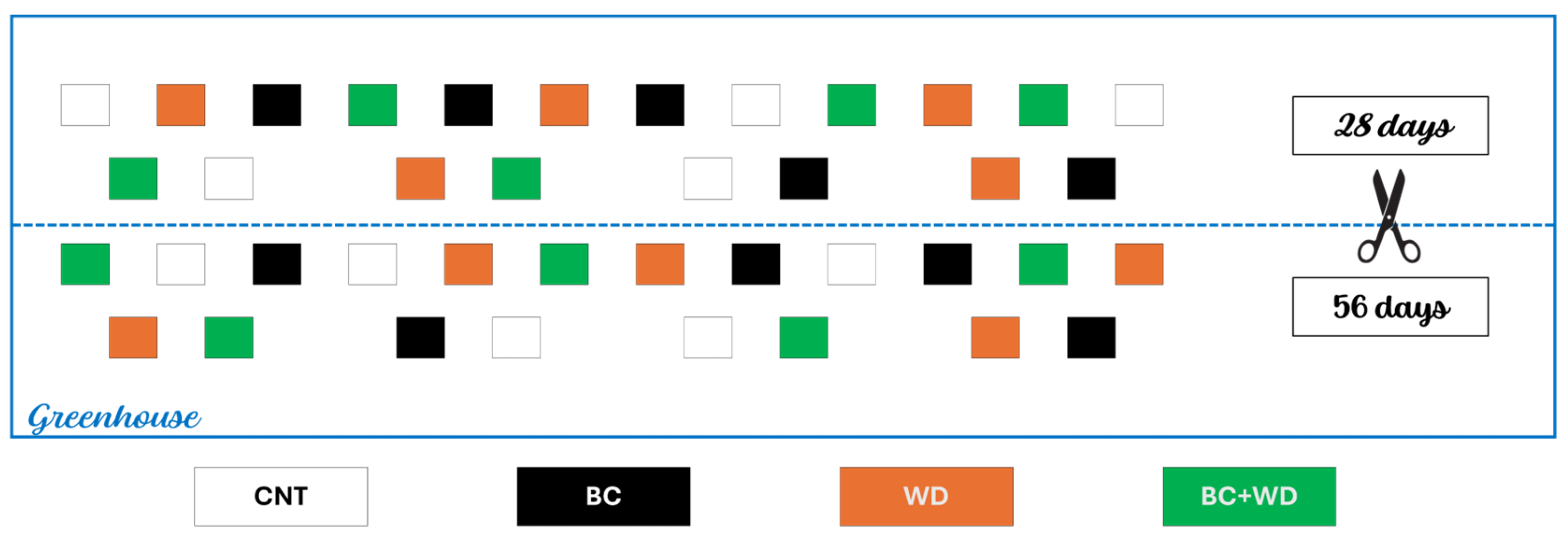
2.1. Experimental Set Up
2.2. Biochar and Wood Distillate
2.3. Soil Analysis
Soil Enzymatic Activities
2.4. Plant Analysis
2.4.1. Plant Fresh and Dry Weight
2.4.2. Leaf Relative Water Content (RWC)
2.4.3. NPK in Leaves
2.4.4. Gas Exchange and Photosynthetic Pigments
2.4.5. Oxidative Stress Marker
2.4.6. Antioxidant Enzymes
2.4.7. Antioxidant Molecules
2.5. Statistical Analysis
3. Results
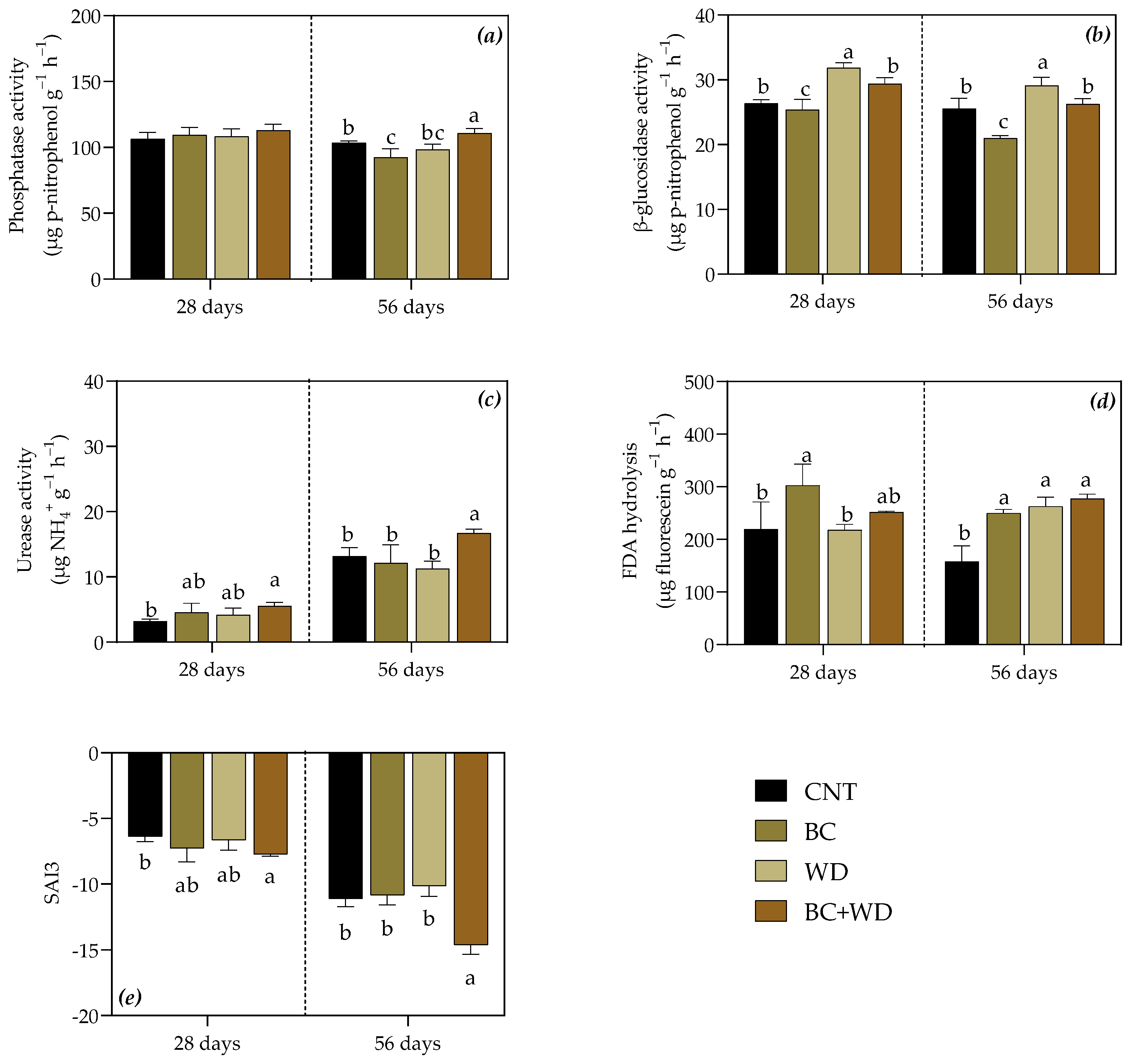
3.1. Soil
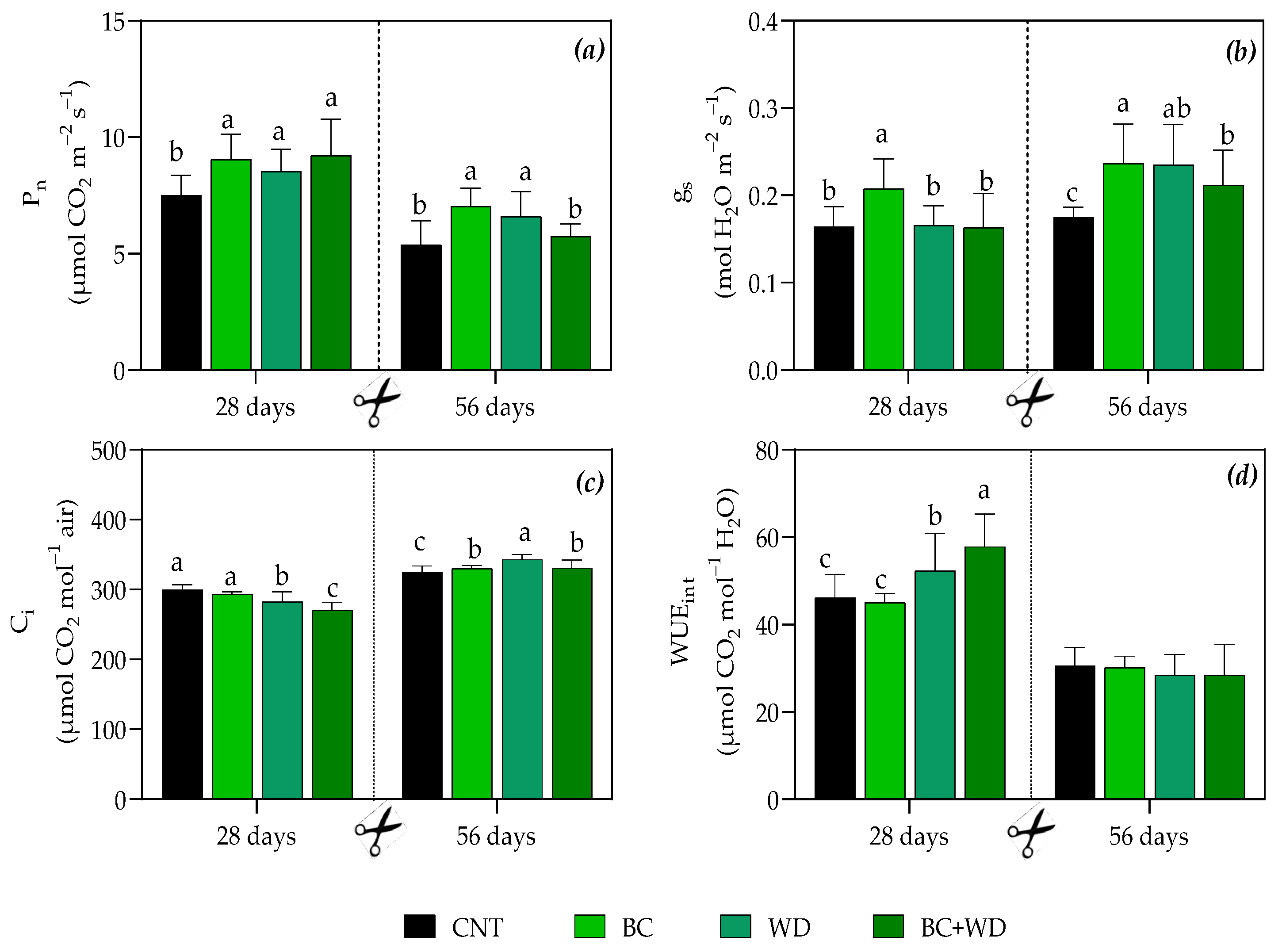
3.2. Plant
3.2.1. Plant Yield, Physiology and Elemental Results
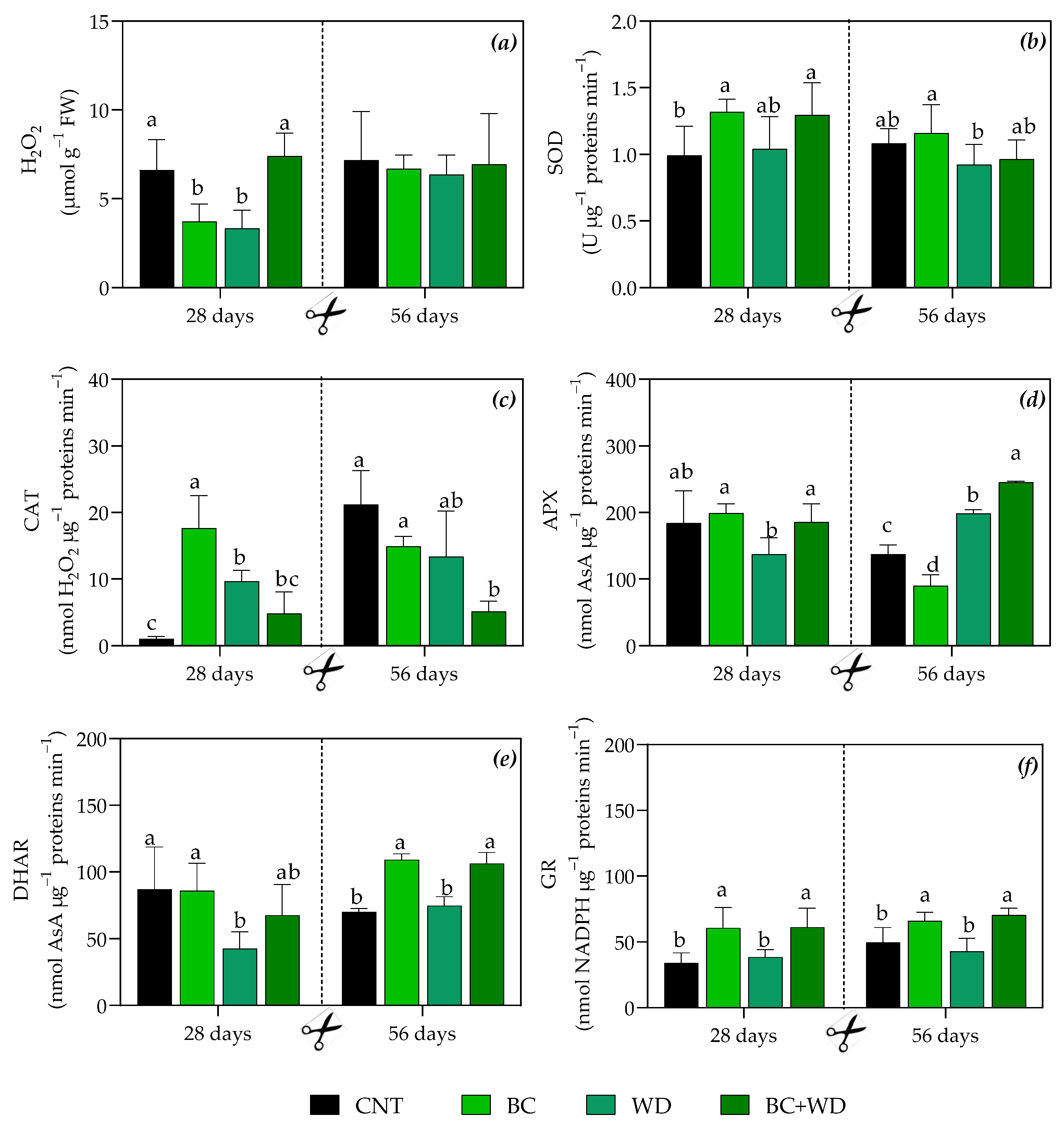
3.2.2. Reactive Oxygen Species (ROS) and Antioxidant Responses
4. Discussion
4.1. The Combination of BC and WD Induces an Increase in Available P and Exchangeable K in a Nutrient-Poor Soil After 56 Days of Treatment, Even Though the Effect of BC Is More Remarkable than That of WD
4.2. BC Induces More Positive Effects on Physiological and Biochemical Mechanisms than WD in Basil Plants
5. Conclusions
Author Contributions
Funding
Data Availability Statement
Conflicts of Interest
References
- Cataldo, E.; Fucile, M.; Mattii, G.B. A review: Soil management, sustainable strategies and approaches to improve the quality of modern viticulture. Agronomy 2021, 11, 2359. [Google Scholar] [CrossRef]
- He, L.; Geng, K.; Li, B.; Li, S.; Gustave, W.; Wang, J.; Jeyakumar, P.; Zhang, X.; Wang, H. Enhancement of nutrient use efficiency with biochar and wood vinegar: A promising strategy for improving soil productivity. J. Sci. Food Agric. 2025, 105, 465–472. [Google Scholar] [CrossRef] [PubMed]
- Khater, E.S.; Bahnasawy, A.; Hamouda, R.; Sabahy, A.; Abbas, W.; Morsy, O.M. Biochar production under different pyrolysis temperatures with different types of agricultural wastes. Sci. Rep. 2024, 14, 2625. [Google Scholar] [CrossRef] [PubMed]
- Joseph, S.; Cowie, A.L.; Van Zwieten, L.; Bolan, N.; Budai, A.; Buss, W.; Cayuela, M.L.; Graber, E.R.; Ippolito, J.A.; Kuzyakov, Y.; et al. How biochar works, and when it doesn’t: A review of mechanisms controlling soil and plant responses to biochar. GCB Bioenergy 2021, 13, 1731–1764. [Google Scholar] [CrossRef]
- Omokaro, G.O.; Kornev, K.P.; Nafula, Z.S.; Chikukula, A.A.; Osayogie, O.G.; Efeni, O.S. Biochar for sustainable soil management: Enhancing soil fertility, plant growth and climate resilience. Farm. Sys. 2025, 3, 100167. [Google Scholar] [CrossRef]
- Liu, D.; Feng, Z.; Zhu, H.; Yu, L.; Yang, K.; Yu, S.; Zhang, Y.; Guo, W. Effects of corn straw biochar application on soybean growth and alkaline soil properties. BioResources 2020, 15, 1463–1481. [Google Scholar] [CrossRef]
- Premalatha, R.P.; Malarvizhi, P.; Parameswari, E. Effect of biochar doses under various levels of salt stress on soil nutrient availability, soil enzyme activities and plant growth in a marigold crop. Crop Pasture Sci. 2022, 72, 66–78. [Google Scholar] [CrossRef]
- Phares, C.A.; Atiah, K.; Frimpong, K.A.; Danquah, A.; Asare, A.T.; Aggor-Woananu, S. Application of biochar and inorganic phosphorus fertilizer influenced rhizosphere soil characteristics, nodule formation and phytoconstituents of cowpea grown on tropical soil. Heliyon 2020, 6, e05255. [Google Scholar] [CrossRef]
- Ferrarin, M.; Becagli, M.; Guglielminetti, L. Wood distillate, a review over past application and future perspective on soil and plant research. Agrochimica 2021, 65, 17–24. [Google Scholar] [CrossRef]
- Grewal, A.; Abbey, L.; Gunupuru, L.R. Production, prospects and potential application of pyroligneous acid in agriculture. J. Anal. Appl. Pyrolysis 2018, 135, 152–159. [Google Scholar] [CrossRef]
- Cantini, V.; Becagli, M.; Mattonai, M.; Degano, I.; Cardelli, R. Wood distillate interactions with urea in soil: A first step to developing a slow-release next-generation fertilizer. J. Agric. Food Chem. 2024, 72, 17455–17464. [Google Scholar] [CrossRef]
- Zhou, X.; Shi, A.; Rensing, C.; Yang, J.; Ni, W.; Xing, S.; Yang, W. Wood vinegar facilitated growth and Cd/Zn phytoextraction of Sedum alfredii Hance by improving rhizosphere chemical properties and regulating bacterial community. Environ. Pollut. 2022, 305, 119266. [Google Scholar] [CrossRef]
- Koc, I.; Yardim, E.N.; Akca, M.O.; Namli, A. Impact of pesticides and wood vinegar, used in wheat agro ecosystems, on the soil enzyme activities. Fresenius Environ. Bull. 2018, 27, 2442–2448. [Google Scholar]
- Gu, S.; Zhu, W.; Ren, L.; Sun, B.; Ren, Y.; Niu, Y.; Li, X.; He, Q. New insights into the impact of wood vinegar on the growth and rhizosphere microorganisms of cherry radish (Raphanus sativus L.). PeerJ 2024, 12, e18505. [Google Scholar] [CrossRef]
- Carril, P.; Bianchi, E.; Cicchi, C.; Coppi, A.; Dainelli, M.; Gonnelli, C.; Loppi, S.; Pazzagli, L.; Colzi, I. Effects of wood distillate (pyroligneous acid) on the yield parameters and mineral composition of three leguminous crops. Environments 2023, 10, 126. [Google Scholar] [CrossRef]
- Becagli, M.; Santin, M.; Cardelli, R. Co-application of wood distillate and biochar improves soil quality and plant growth in basil (Ocimum basilicum). J. Plant Nutr. Soil. Sci. 2022, 185, 120–131. [Google Scholar] [CrossRef]
- Feng, Y.; Li, D.; Sun, H.; Xue, L.; Zhou, B.; Yang, L.; Liu, J.; Xing, B. Wood vinegar and biochar co-application mitigates nitrous oxide and methane emissions from rice paddy soil: A two-year experiment. Environ. Pollut. 2020, 267, 115403. [Google Scholar] [CrossRef]
- Pan, X.; Shi, M.; Chen, X.; Kuang, S.; Ullah, H.; Lu, H.; Riaz, L. An investigation into biochar, acid-modified biochar, and wood vinegar on the remediation of saline-alkali soil and the growth of strawberries. Front. Environ. Sci. 2022, 10, 1057384. [Google Scholar] [CrossRef]
- Bajomo, E.M.; Aing, M.S.; Ford, L.S.; Niemeyer, E.D. Chemotyping of commercially available basil (Ocimum basilicum L.) varieties: Cultivar and morphotype influence phenolic acid composition and antioxidant properties. NFS J. 2022, 26, 1–9. [Google Scholar] [CrossRef]
- Branca, F.; Treccarichi, S.; Ruberto, G.; Renda, A.; Argento, S. Comprehensive morphometric and biochemical characterization of seven basil (Ocimum basilicum L.) genotypes: Focus on light use efficiency. Agronomy 2024, 14, 224. [Google Scholar] [CrossRef]
- Celletti, S.; Fedeli, R.; Ghorbani, M.; Aseka, J.M.; Loppi, S. Exploring sustainable alternatives: Wood distillate alleviates the impact of bioplastic in basil plants. Sci. Total Environ. 2023, 900, 166484. [Google Scholar] [CrossRef] [PubMed]
- Sparks, D.L.; Page, A.L.; Helmke, P.A.; Loeppert, R.H.; Soltanpour, P.N.; Tabatabai, M.A.; Johnston, C.T.; Sumner, M.E. (Eds.) Methods of Soil Analysis: Part 3—Chemical Methods; Soil Science Society of America: Madison, WI, USA, 1996. [Google Scholar] [CrossRef]
- Colombo, C.; Miano, T. (Eds.) Metodi di Analisi Chimica del Suolo; Società Italiana della Scienza del Suolo: Palermo, Italy, 2015. [Google Scholar]
- Saviozzi, A.; Vanni, G.; Cardelli, R. Carbon mineralization kinetics in soils under urban environment. Appl. Soil. Ecol. 2014, 73, 64–69. [Google Scholar] [CrossRef]
- Walkley, A.; Black, I.A. An examination of the Degtjareff method for determining soil organic matter, and a proposed modification of the chromic acid titration method. Soil. Sci. 1934, 37, 29–38. [Google Scholar] [CrossRef]
- Bremner, J.M. Determination of nitrogen in soil by the Kjeldahl method. J. Agric. Sci. 1960, 55, 11–33. [Google Scholar] [CrossRef]
- Olsen, S.R. Estimation of Available Phosphorus in Soils by Extraction with Sodium Bicarbonate (No. 939); US Department of Agriculture: Washington, DC, USA, 1954. [Google Scholar]
- Eivazi, F.; Tabatabai, M.A. Phosphatases in soils. Soil. Biol. Biochem. 1977, 9, 167–172. [Google Scholar] [CrossRef]
- Eivazi, F.; Tabatabai, M.A. Glucosidases and galactosidases in soils. Soil. Biol. Biochem. 1988, 20, 601–606. [Google Scholar] [CrossRef]
- Kandeler, E.; Gerber, H. Short-term assay of soil urease activity using colorimetric determination of ammonium. Biol. Fertil. Soils 1988, 6, 68–72. [Google Scholar] [CrossRef]
- Green, V.S.; Stott, D.E.; Diack, M. Assay for fluorescein diacetate hydrolytic activity: Optimization for soil samples. Soil. Biol. Biochem. 2006, 38, 693–701. [Google Scholar] [CrossRef]
- Puglisi, E.; Del Re, A.A.M.; Rao, M.A.; Gianfreda, L.J.S.B. Development and validation of numerical indexes integrating enzyme activities of soils. Soil. Biol. Biochem. 2006, 38, 1673–1681. [Google Scholar] [CrossRef]
- Kachout, S.S.; BenYoussef, S.; Ennajah, A.; Abidi, S.; Zoghlami, A. Physiological and morphological traits associated with germinative and reproductive stage of garden orache (A. hortensis L. var. rubra) under water stress. Chem. Biol. Technol. Agric. 2021, 8, 1–16. [Google Scholar] [CrossRef]
- Murphy, J.; Riley, J.P. A modified single solution method for the determination of phosphate in natural waters. Anal. Chim. Acta 1962, 27, 31–36. [Google Scholar] [CrossRef]
- Benini, O.; Saba, A.; Ferretti, V.; Gianfaldoni, D.; Kalantar-Zadeh, K.; Cupisti, A. Development and analytical evaluation of a spectrophotometric procedure for the quantification of different types of phosphorus in meat products. J. Agric. Food Chem. 2014, 62, 1247–1253. [Google Scholar] [CrossRef] [PubMed]
- Papadakis, I.E.; Tsiantas, P.I.; Tsaniklidis, G.; Landi, M.; Psychoyou, M.; Fasseas, C. Changes in sugar metabolism associated to stem bark thickening partially assist young tissues of Eriobotrya japonica seedlings under boron stress. J. Plant Physiol. 2018, 231, 337–345. [Google Scholar] [CrossRef] [PubMed]
- Gisbert-Mullor, R.; Ceccanti, C.; Gara Padilla, Y.; López-Galarza, S.; Calatayud, Á.; Conte, G.; Guidi, L. Effect of grafting on the production, physico-chemical characteristics and nutritional quality of fruit from pepper landraces. Antioxidants 2020, 9, 501. [Google Scholar] [CrossRef]
- Velikova, V.; Yordanov, I.; Edreva, A. Oxidative stress and some antioxidant system in acid rain-treated bean plants: Protective role of exogenous polyamines. Plant Sci. 2000, 151, 59–66. [Google Scholar] [CrossRef]
- Bradford, M.M. A rapid and sensitive method for the quantitation of microgram quantities of protein utilizing the principle of protein-dye binding. Anal. Biochem. 1976, 72, 248–254. [Google Scholar] [CrossRef]
- Beauchamp, C.; Fridovich, I. Superoxide dismutase: Improved assays and an assay applicable to acrylamide gels. Anal. Biochem. 1976, 44, 276–287. [Google Scholar] [CrossRef]
- Lyons, T.; Ollerenshaw, J.H.; Barnes, J.D. Impacts of ozone on Plantago major: Apoplastic and symplastic antioxidant status. New Phytol. 1999, 141, 253–263. [Google Scholar] [CrossRef]
- Kampfenkel, K.; Vanmontagu, M.; Inze, D. Extraction and determination of ascorbate and dehydroascorbate from plant tissue. Anal. Biochem. 1995, 225, 165–167. [Google Scholar] [CrossRef]
- De Pinto, M.C.; Francis, D.; De Gara, L. The Redox state of the ascorbate-dehydroascorbate pair as a specific sensor of cell division in tobacco BY-2 cells. Protoplasma 1999, 209, 90–97. [Google Scholar] [CrossRef]
- Becagli, M.; Arduini, I.; Cantini, V.; Cardelli, R. Soil and foliar applications of wood distillate differently affect soil properties and field bean traits in preliminary field tests. Plants 2022, 12, 121. [Google Scholar] [CrossRef] [PubMed]
- Fang, D.; Yue, Y.; Lu, X.; Liu, H.; Zheng, Z.; Liu, Z.; Ma, H. Enhanced soil phosphorus availability via combined biochar and wood vinegar application. J. Soils Sedim. 2025, 25, 751–758. [Google Scholar] [CrossRef]
- Sheng, Y.; Zhu, L. Biochar alters microbial community and carbon sequestration potential across different soil pH. Sci. Tot. Environ. 2018, 622, 1391–1399. [Google Scholar] [CrossRef]
- Joseph, S.; Husson, O.; Graber, E.R.; Van Zwieten, L.; Taherymoosavi, S.; Thomas, T.; Nielsen, S.; Ye, J.; Pan, G.; Chia, C.; et al. The electrochemical properties of biochars and how they affect soil redox properties and processes. Agronomy 2015, 5, 322–340. [Google Scholar] [CrossRef]
- Feng, Z.; Zhu, L. Impact of biochar on soil N2O emissions under different biochar-carbon/fertilizer-nitrogen ratios at a constant moisture condition on a silt loam soil. Sci. Tot. Environ. 2017, 584, 776–782. [Google Scholar] [CrossRef]
- Geisseler, D.; Horwath, W.R.; Joergensen, R.G.; Ludwig, B. Pathways of nitrogen utilization by soil microorganisms–a review. Soil. Biol. Biochem. 2010, 42, 2058–2067. [Google Scholar] [CrossRef]
- Guo, J.; Peng, Y.; Wang, S.; Ma, B.; Ge, S.; Wang, Z.; Huang, H.; Zhang, J.; Zhang, L. Pathways and organisms involved in ammonia oxidation and nitrous oxide emission. Crit. Rev. Environ. Sci. Technol. 2013, 43, 2213–2296. [Google Scholar] [CrossRef]
- Khadem, A.; Raiesi, F.; Besharati, H.; Khalaj, M.A. The effects of biochar on soil nutrients status, microbial activity and carbon sequestration potential in two calcareous soils. Biochar 2021, 3, 105–116. [Google Scholar] [CrossRef]
- Meyer, A.H.; Wooldridge, J.; Dames, J.F. Relationship between soil alteration index three (AI3), soil organic matter and tree performance in a Cripps Pink/M7 apple orchard. S. Afr. J. Plant Soil. 2014, 31, 173–175. [Google Scholar] [CrossRef]
- Paz-Ferreiro, J.; Trasar-Cepeda, C.; Leirós, M.C.; Seoane, S.; Gil-Sotres, F. Biochemical properties in managed grassland soils in a temperate humid zone: Modifications of soil quality as a consequence of intensive grassland use. Biol. Fert. Soils 2009, 45, 711–722. [Google Scholar] [CrossRef]
- Ghosh, A.; Singh, A.B.; Kumar, R.V.; Manna, M.C.; Bhattacharyya, R.; Rahman, M.M.; Sharma, P.; Rajput, P.S.; Misra, S. Soil enzymes and microbial elemental stoichiometry as bio-indicators of soil quality in diverse cropping systems and nutrient management practices of Indian Vertisols. Appl. Soil. Ecol. 2020, 145, 103304. [Google Scholar] [CrossRef]
- Sharma, T.; Dreyer, I.; Kochian, L.; Piñeros, M. A The ALMT family of organic acid transporters in plants and their involvement in detoxification and nutrient security. Front. Plant Sci. 2016, 7, 1488. [Google Scholar] [CrossRef] [PubMed]
- Seok, Y.J.; Park, J.H. Reducing nitrogen leaching using wood vinegar treated in urea-fertilized soil. Env. Environ. Sci. Pollut. Res. 2024, 31, 7138–7145. [Google Scholar] [CrossRef] [PubMed]
- Glaser, B.; Lehr, V.I. Biochar effects on phosphorus availability in agricultural soils: A meta-analysis. Sci. Rep. 2019, 9, 9338. [Google Scholar] [CrossRef]
- Silber, A.; Levkovitch, I.; Graber, E.R. pH-dependent mineral release and surface properties of cornstraw biochar: Agronomic implications. Environ. Sci. Technol. 2010, 44, 9318–9323. [Google Scholar] [CrossRef]
- Marschner, H. Mineral Nutrition of Higher Plants; Academic Press: San Diego, CA, USA, 1995. [Google Scholar]
- Sardans, J.; Peñuelas, J. Potassium control of plant functions: Ecological and agricultural implications. Plants 2021, 10, 419. [Google Scholar] [CrossRef]
- Lentini, M.; Ciriello, M.; Rouphael, Y.; Campana, E.; Vaccari, F.P.; De Pascale, S. Harnessing biochar for sustainable horticulture: Strategies to cope with abiotic stress. Horticulturae 2025, 11, 73. [Google Scholar] [CrossRef]
- Mannan, M.; Mia, S.; Halder, E.; Dijkstra, F.A. Biochar application rate does not improve plant water availability in soybean under drought stress. Agric. Water Manag. 2021, 253, 106940. [Google Scholar] [CrossRef]
- Gharred, J.; Derbali, W.; Derbali, I.; Badri, M.; Abdelly, C.; Slama, I.; Koyro, H.W. Impact of biochar application at water shortage on biochemical and physiological processes in Medicago ciliaris. Plants 2022, 11, 2411. [Google Scholar] [CrossRef]
- Khan, F.; Siddique, A.B.; Shabala, S.; Zhou, M.; Zhao, C. Phosphorus plays key roles in regulating plants’ physiological responses to abiotic stresses. Plants 2023, 12, 2861. [Google Scholar] [CrossRef]
- Gil, M.I.; Aguayo, E.; Kader, A.A. Quality changes and nutrient retention in fresh-cut versus whole fruits during storage. J. Agric. Food Chem. 2006, 54, 4284–4296. [Google Scholar] [CrossRef]
- Chen, R.; Zheng, L.; Zhao, J.; Ma, J.; Li, X. Biochar application maintains photosynthesis of cabbage by regulating stomatal parameters in salt-stressed soil. Sustainability 2023, 15, 4206. [Google Scholar] [CrossRef]
- Murtaza, G.; Usman, M.; Iqbal, J.; Tahir, M.N.; Elshikh, M.S.; Alkahtani, J.; Toleikiene, M.; Iqbal, R.; Akram, M.I.; Gruda, N.S. The impact of biochar addition on morpho-physiological characteristics, yield and water use efficiency of tomato plants under drought and salinity stress. BMC Plant Biol. 2024, 24, 356. [Google Scholar] [CrossRef]
- Mahmoud, A.W.M.; Samy, M.M.; Sany, H.; Eid, R.R.; Rashad, H.M.; Abdeldaym, E.A. Nanopotassium, nanosilicon, and biochar applications improve potato salt tolerance by modulating photosynthesis, water status, and biochemical constituents. Sustainability 2022, 14, 723. [Google Scholar] [CrossRef]
- Duan, S.; Al-Huqail, A.A.; Alsudays, I.M.; Younas, M.; Aslam, A.; Shahzad, A.N.; Qayyum, M.F.; Rizwan, M.; Hamoud, Y.A.; Shaghaleh, H.; et al. Effects of biochar types on seed germination, growth, chlorophyll contents, grain yield, sodium, and potassium uptake by wheat (Triticum aestivum L.) under salt stress. BMC Plant Biol. 2024, 24, 487. [Google Scholar] [CrossRef]
- Noctor, G. Hydrogen peroxide, ascorbate, and glutathione: Building the Foyer–Halliwell–Asada pathway. Planta 2025, 261, 132. [Google Scholar] [CrossRef]



| Unit | Value | |
|---|---|---|
| Sand | % | 94.5 |
| Silt | % | 5.0 |
| Clay | % | 0.5 |
| pH | 8.74 | |
| EC | μS cm−1 | 188.5 |
| TOC | % | 0.37 |
| Total N | mg kg−1 | 390.12 |
| C/N ratio | 9.5 | |
| Available P | mg kg−1 | 12.15 |
| 28 Days | 56 Days | |
|---|---|---|
| pH | ||
| CNT | 8.40 ± 0.04 c | 8.57 ± 0.04 c |
| BC | 8.58 ± 0.01 a | 8.72 ± 0.01 a |
| WD | 8.35 ± 0.01 d | 8.56 ± 0.02 c |
| BC + WD | 8.50 ± 0.02 b | 8.62 ± 0.02 b |
| EC (μS cm−1) | ||
| CNT | 228.00 ± 22.61 | 206.00 ± 6.24 b |
| BC | 237.00 ± 12.29 | 248.33 ± 34.96 a |
| WD | 235.67 ± 20.79 | 182.60 ± 10.39 b |
| BC + WD | 266.67 ± 42.52 | 281.00 ± 20.66 a |
| Total N (mg kg−1) | ||
| CNT | 501.67 ± 45.00 b | 499.33 ± 10.69 b |
| BC | 485.33 ± 35.92 b | 529.67 ± 26.50 ab |
| WD | 567.00 ± 37.04 a | 480.67 ± 21.39 b |
| BC + WD | 525.00 ± 7.00 ab | 557.67 ± 42.19 a |
| Available P (mg kg−1) | ||
| CNT | 15.62 ± 0.52 a | 18.18 ± 1.64 b |
| BC | 12.75 ± 1.47 b | 17.59 ± 3.36 b |
| WD | 13.81 ± 0.99 ab | 24.73 ± 0.63 a |
| BC + WD | 13.18 ± 0.86 b | 24.86 ± 1.31 a |
| Exchangeable K (mg kg−1) | ||
| CNT | 69.58 ± 1.28 b | 35.53 ± 1.51 b |
| BC | 239.62 ± 4.05 a | 148.45 ± 7.60 a |
| WD | 75.60 ± 3.01 b | 32.47 ± 1.50 b |
| BC + WD | 237.77 ± 5.02 a | 166.97 ± 31.19 a |
| 28 Days | 56 Days | |
|---|---|---|
| Total plant fresh weight (g plant−1) | ||
| CNT | 5.29 ± 1.10 | 3.25 ± 0.26 b |
| BC | 5.63 ± 0.86 | 4.36 ± 0.56 a |
| WD | 5.47 ± 0.96 | 3.81 ± 0.28 ab |
| BC + WD | 4.96 ± 0.74 | 3.70 ± 0.48 b |
| Total plant dry weight (g plant−1) | ||
| CNT | 0.91 ± 0.21 | 0.65 ± 0.20 ab |
| BC | 0.97 ± 0.12 | 0.77 ± 0.10 a |
| WD | 0.91 ± 0.15 | 0.65 ± 0.04 ab |
| BC + WD | 0.80 ± 0.15 | 0.60 ± 0.10 b |
| RWC | ||
| CNT | 85.77 ± 1.67 a | 81.83 ± 3.88 a |
| BC | 85.70 ± 3.03 a | 65.38 ± 10.32 b |
| WD | 83.53 ± 2.43 b | 67.14 ± 7.37 b |
| BC + WD | 86.62 ± 1.44 a | 74.39 ± 26.38 b |
| Leaf N (mg g−1 DW) | ||
| CNT | 14.96 ± 0.15 a | 12.37 ± 1.80 |
| BC | 12.24 ± 1.43 b | 11.67 ± 1.41 |
| WD | 13.54 ± 1.16 ab | 11.32 ± 1.13 |
| BC + WD | 12.30 ± 0.70 b | 12.83 ± 1.41 |
| Leaf P (mg g−1 DW) | ||
| CNT | 3.47 ± 0.06 | 1.95 ± 0.07 a |
| BC | 3.58 ± 0.26 | 1.59 ± 0.18 b |
| WD | 3.65 ± 0.22 | 1.73 ± 0.12 ab |
| BC + WD | 3.96 ± 0.13 | 1.65 ± 0.11 b |
| Leaf K (mg g−1 DW) | ||
| CNT | 8.48 ± 0.95 c | 14.03 ± 7.57 bc |
| BC | 22.65 ± 3.96 b | 19.39 ± 0.89 b |
| WD | 9.25 ± 0.93 c | 8.31 ± 1.36 c |
| BC + WD | 29.33 ± 3.40 a | 24.51 ± 5.03 a |
| 28 Days | 56 Days | |
|---|---|---|
| Total chlorophyll content (μg g−1FW) | ||
| CNT | 265.31 ± 51.60 b | 226.72 ± 30.91 b |
| BC | 418.62 ± 91.67 a | 295.99 ± 35.29 a |
| WD | 301.59 ± 34.63 b | 234.88 ± 56.61 b |
| BC + WD | 335.60 ± 35.76 b | 218.52 ± 26.04 b |
| Total carotenoid content (μg g−1FW) | ||
| CNT | 58.24 ± 6.39 ab | 46.15 ± 16.25 b |
| BC | 52.03 ± 13.00 ab | 69.43 ± 12.93 a |
| WD | 62.70 ± 9.44 a | 47.78 ± 16.49 b |
| BC + WD | 49.97 ± 4.37 b | 55.03 ± 12.64 ab |
Disclaimer/Publisher’s Note: The statements, opinions and data contained in all publications are solely those of the individual author(s) and contributor(s) and not of MDPI and/or the editor(s). MDPI and/or the editor(s) disclaim responsibility for any injury to people or property resulting from any ideas, methods, instructions or products referred to in the content. |
© 2026 by the authors. Licensee MDPI, Basel, Switzerland. This article is an open access article distributed under the terms and conditions of the Creative Commons Attribution (CC BY) license.
Share and Cite
Bianchini, G.; D’Asaro, L.; Ceccanti, C.; Guidi, L.; Cardelli, R. Biochar Improves Soil Fertility in Sandy Nutrient-Poor Soil, While Wood Distillate Modulates Nutrient Dynamics and Plant Physiological Responses in Basil (Ocimum basilicum L.) Plants. Agronomy 2026, 16, 498. https://doi.org/10.3390/agronomy16050498
Bianchini G, D’Asaro L, Ceccanti C, Guidi L, Cardelli R. Biochar Improves Soil Fertility in Sandy Nutrient-Poor Soil, While Wood Distillate Modulates Nutrient Dynamics and Plant Physiological Responses in Basil (Ocimum basilicum L.) Plants. Agronomy. 2026; 16(5):498. https://doi.org/10.3390/agronomy16050498
Chicago/Turabian StyleBianchini, Giacomo, Lorenzo D’Asaro, Costanza Ceccanti, Lucia Guidi, and Roberto Cardelli. 2026. "Biochar Improves Soil Fertility in Sandy Nutrient-Poor Soil, While Wood Distillate Modulates Nutrient Dynamics and Plant Physiological Responses in Basil (Ocimum basilicum L.) Plants" Agronomy 16, no. 5: 498. https://doi.org/10.3390/agronomy16050498
APA StyleBianchini, G., D’Asaro, L., Ceccanti, C., Guidi, L., & Cardelli, R. (2026). Biochar Improves Soil Fertility in Sandy Nutrient-Poor Soil, While Wood Distillate Modulates Nutrient Dynamics and Plant Physiological Responses in Basil (Ocimum basilicum L.) Plants. Agronomy, 16(5), 498. https://doi.org/10.3390/agronomy16050498